ARTICLE
Adolescents and MP3 Players: Too Many Risks, Too
Few Precautions
Ineke Vogel, MSca, Hans Verschuure, PhDb, Catharina P. B. van der Ploeg, PhDc, Johannes Brug, PhDa,d, Hein Raat, MD, PhDa
Departments ofaPublic Health andbOtolaryngology, Erasmus Medical Center, Rotterdam, Netherlands;cDepartment of Prevention and Healthcare, Quality of Life, Netherlands Organization for Applied Scientific Research, Leiden, Netherlands;dInstitute for Research in Extramural Medicine, Free University Medical Center, Amsterdam, Netherlands
The authors have indicated they have no financial relationships relevant to this article to disclose.
What’s Known on This Subject
Prolonged exposure to loud music can induce hearing loss. Adolescents are increasingly exposed to loud music.
What This Study Adds
When using MP3 players, adolescents are much more likely to engage in risky behaviors than protective behaviors. Frequent use of MP3 players indicates the prevalence of MP3 player-related risky behaviors and the absence of preventive behaviors.
ABSTRACT
OBJECTIVE.The goal was to assess risky and protective listening behaviors of adolescent users of MP3 players and the association of these behaviors with demographic characteristics and frequency of use.
METHODS.In 2007, 1687 adolescents (12–19 years of age) in 68 classes in 15 Dutch secondary schools were invited to complete questionnaires about their music-listen-ing behaviors.
RESULTS.Ninety percent of participants reported listening to music through earphones on MP3 players; 32.8% were frequent users, 48.0% used high volume settings, and only 6.8% always or nearly always used a noise-limiter. Frequent users were ⬎4 times more likely to listen to high-volume music than were infrequent users, and adolescents in practical prevocational schools were more than twice as likely to listen to high-volume music as were those attending preuniversity education.
CONCLUSIONS.When using MP3 players, adolescents are very likely to engage in risky listening behaviors and are unlikely to seek protection. Frequent MP3 player use is an indicator of other risky listening behaviors, such as listening at high volumes and failing to use noise-limiters.Pediatrics2009;123:e953–e958
T
HE HUGE INCREASE in the popularity of portable MP3 players has increased young people’s exposure to highsound levels dramatically.1–3Various studies reported that increasing numbers of adolescents and young adults
now experience symptoms indicative of poor hearing, such as distortion, tinnitus, hyperacusis, or threshold shifts.4–6
The Hearing Alliance of America reported that levels of hearing loss in 15% of college graduates are now equal to or greater than those of their parents, largely because of listening to music at high volumes.7Currently, use of MP3
players may be the most important risk factor for music-induced hearing loss in young people.
The rapid development of digital technology has led to the production of new kinds of portable music players whose sound quality at higher volumes is much better, because the sound is no longer distorted.3Because the music
players are equipped with improved earphones, sound leakage is almost absent, which means that the music players can be played at hazardous high volumes in most environments without disturbing other people.3,8 The use of
earbud-style earphones increases the volume level by another⬃5.5 dB,3,9because of the smaller ear canal volume.
Also, the recordings are made with much stronger compression, which allows for an average sound level closer to the maximal output level.
In noisy environments, listeners are especially likely to choose high volume settings,10which, over longer periods,
are potentially hazardous.11The frequent use of an MP3 player is regarded as potentially hazardous in combination
with other MP3 player-related, risky behaviors, particularly being exposed to high volumes. Besides risky behaviors such as using high volumes, increasing the volume after a period of listening because of a temporary threshold shift, and using earbud-style earphones, there are also protective behaviors, such as reducing the volume, taking breaks from listening, using a noise-limiter, and heeding warnings against the risks of high-volume music.
Some potential target groups and acceptable preventive measures were identified in a small qualitative study (N⫽
73) exploring adolescents’ perceptions regarding MP3 player-related topics such as risk perception and behavioral intentions.1 For quantitative identification of important target groups and behaviors for hearing loss prevention,
www.pediatrics.org/cgi/doi/10.1542/ peds.2008-3179
doi:10.1542/peds.2008-3179
Key Words
adolescents, MP3 player-related behaviors, prevention and control
Abbreviations
OR— odds ratio CI— confidence interval
Accepted for publication Jan 30, 2009
Address correspondence to Ineke Vogel, MSc, Department of Public Health, Erasmus Medical Center Rotterdam, PO Box 2040, 3000 CA Rotterdam, Netherlands. E-mail: i.vogel@ erasmusmc.nl
more insight into adolescents’ actual risky listening be-haviors and actual protective listening bebe-haviors is needed. Because no studies have provided such insight to date,2we examined (1) the extent to which, in their
exposure to music through earphones on MP3 players, adolescents engage in risky behaviors such as listening at high volume settings (ie, more than three fourths), in-creasing the volume after a period of listening, and using earbud-style earphones; (2) the extent to which, in their exposure to music through earphones on MP3 players, adolescents engage in protective behaviors such as using a noise-limiter, reducing the volume after a period of listening, taking breaks from listening, and heeding warnings against the risks of high-volume music; and (3) any associations between both risky behaviors and pro-tective behaviors, and both sociodemographic factors and using mode (frequency of use).
METHODS
Study Population
In 2007, we invited 1687 adolescents (age: 12–19 years) in 68 classes in 15 Dutch secondary schools to complete questionnaires on their music-listening behaviors, under supervision at school. Adolescents and parents received written information about the study; parents could refuse their child’s participation, and participation by adolescents was voluntary and anonymous. The medical ethics committee of the Erasmus Medical Center (Rot-terdam, Netherlands) approved the study.
Questionnaire
Overall music-listening habits were assessed on the basis of 2 items (yes/no), that is, listening to music and listen-ing to music for ⬎3 hours/day. MP3 player use was assessed on the basis of 9 items, that is, use of MP3 player (yes/no), frequency of use (days per week), exposure time per day, level of volume control (very low,⬃25%,
⬃50%, ⬃75%, or 100%), always or nearly always in-creasing the volume after a period of listening (yes/no), kind of earphone used (earbud-style, supraaural, or both types in alternation), always or nearly always using a noise-limiter (yes/no), always or nearly always reducing the volume level after a period of listening (yes/no), and always or nearly always taking breaks from listening (yes/no). We also recorded whether warnings against the risks of high-volume music were given byⱖ1 person (yes/no) and, if so, whether such warnings always or nearly always were heeded (yes/no).
The questionnaire included items on the participant’s gender, age, and educational level (practical prevoca-tional, theoretical prevocaprevoca-tional, senior general, or preuniversity), whether the participant shared a house-hold with both his or her own father and mother (yes/ no), and the country of birth of the participant and both parents (Appendix). Ethnicity (Dutch, Western migrant, or non-Western migrant) was determined on the basis of the country of birth of the mother and father, according to definitions of Statistics Netherlands.12
Assessment of Using Mode
Users of MP3 players were classified according to 3 cat-egories, that is, infrequent users (those who reported using their MP3 players an average of⬍1 hour/week), moderate users (those who reported using their MP3 players between 1 hour/week and 1 hour/day), and frequent users (those who reported using their MP3 players⬎1 hour/day).
Analyses
Statistical analyses were performed by using SPSS 15 (SPSS Inc, Chicago, IL). Frequency tables were used to explore the characteristics of the total study population and MP3 player users. Mean and frequency differences of the total study population characteristics were exam-ined through univariate analysis of variance and2 sta-tistics, respectively.
Within the subpopulation of MP3 player users, fre-quency tables and multiple logistic regression analyses were used to explore the associations between risky and protective listening behaviors and the using mode and sociodemographic characteristics. Any Pvalues of⬍.05 were considered to be statistically significant.
RESULTS
Study Populations
The response rate was 89.9%. Four questionnaires were excluded because of incomplete data; 1512 question-naires were used in the initial analyses. Participants’ ages ranged from 12 to 19 years (mean: 14.7 years; SD: 1.21 years). Of the participants, 50.5% were male, 49.7% were attending prevocational secondary education, 86.4% were Dutch or a Western migrant, and 82.0% were living with both parents. The participants’ sociode-mographic characteristics reflected those of adolescents in the general Dutch population.12 Of the participants,
89.9% reported listening to music through earphones on MP3 players.
Table 1 presents an overview of the characteristics of the total study population. Briefly, it shows that 73.7% of nonusers of MP3 players were male, 92.1% listened to music in general, and 16.4% listened to music for⬎3 hours/day. Slightly less than one half of MP3 player users were male (47.9%), 100% listened to music in general, and 26.1% listened for⬎3 hours/ day (all P⬍.01).
Using Mode, Risky Listening Behaviors, and Protective Listening Behaviors
Correlates of Risky Listening Behaviors
Although more boys than girls listened to music at high volumes (odds ratio [OR]: 1.35 [95% confidence inter-val [CI]: 1.07–1.70]), fewer boys used earbud-style ear-phones (OR: 0.51 [95% CI: 0.32– 0.80]) (Table 3). Rel-ative to those attending preuniversity education, adolescents in practical prevocational schools listened to
high-volume music more often (OR: 2.63 [95% CI: 1.83–3.79]) and were more likely to increase the volume after a period of listening (OR: 3.14 [95% CI: 2.16 – 4.57]) (Table 3). In addition to listening to high-volume music more often than did those who lived with both parents, adolescents who did not live with both parents were more likely to increase the volume after a period of listening (both OR: 1.41 [95% CI: 1.03–1.93]). However, fewer of those adolescents used earbud-style earphones (OR: 0.56 [95% CI: 0.34 – 0.93]) (Table 3). Frequent users listened to high-volume music more often than did infrequent users (OR: 4.90 [95% CI: 3.64 – 6.61]), were more likely to increase the volume after some time (OR: 4.26 [95% CI: 3.10 –5.86]), and were greater users of earbud-style earphones (OR: 1.99 [95% CI: 1.13–3.51]) (Table 3).
Correlates of Protective Listening Behaviors
When listening, adolescents 15.6 to 19.5 years of age took fewer breaks from music than did those 12.0 to 13.5 years of age (OR: 0.66 [95% CI: 0.44 – 0.99]) and were less likely to heed warnings against the risks of high-volume music (OR: 0.46 [95% CI: 0.30 – 0.70]) (Table 4). Non-Western migrants took more breaks than did Dutch individuals and Western migrants (OR: 1.61 [95% CI: 1.09 –2.40]) (Table 4). Adolescents who did not live with both parents took fewer breaks than did those who lived with both parents (OR: 0.66 [95% CI: 0.44 – 0.99]) (Table 4). In addition to reducing the volume less often while listening, compared with infrequent users (OR: 0.43 [95% CI: 0.24 – 0.78]), frequent users took fewer breaks (OR: 0.35 [95% CI: 0.24 – 0.52]) and were less likely to heed warnings against the risks of high-volume music (OR: 0.47 [95% CI: 0.33– 0.68]) (Table 4).
TABLE 1 Characteristics of the Study Population (Nⴝ1512) Total
(Nⴝ1512)
Not MP3 Player Users (Nⴝ152)
MP3 Player Users (Nⴝ1360)
Pa
Sociodemographic characteristics
Age, y .33
Mean⫾SD 14.7⫾1.21 14.8⫾1.29 14.7⫾1.20
Range 12–19 12–18 12–19
Male, % 50.5 73.7 47.9 ⬍.001
Secondary school type, % .81
Practical prevocational 18.5 18.4 18.5
Theoretical prevocational 31.2 34.2 30.9
Senior general secondary 25.6 23.0 26.0
Preuniversity 24.7 24.3 24.7
Dutch or Western migrant, % 86.4 86.2 86.4 .91
Living with both parents, % 82.0 81.6 82.1 .83
General music exposure characteristics
Listens to music (in general), % 99.2 92.1 100.0 ⬍.001
Listens to music for⬎3 h/d, % 25.1 16.4 26.1 ⬍.01
Listens to music through earphones on MP3 players, %
89.9 0.0 100.0 NA
Warned byⱖ1 person against risks of high-volume music, %
72.3 67.1 72.9 .13
NA indicates not applicable.
aMP3 player users in comparison with non-MP3 player users.
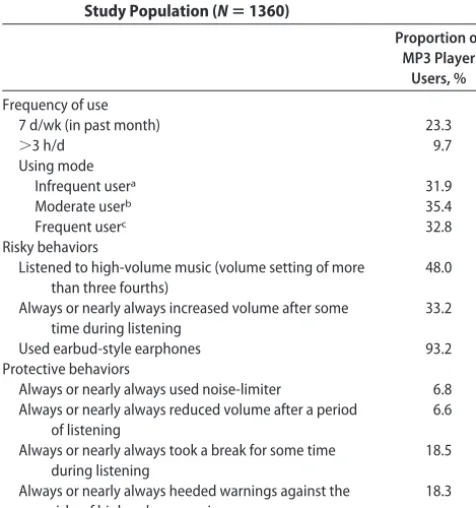
TABLE 2 Behavioral Characteristics of MP3 Player Users in the Study Population (Nⴝ1360)
Proportion of MP3 Player
Users, %
Frequency of use
7 d/wk (in past month) 23.3
⬎3 h/d 9.7
Using mode
Infrequent usera 31.9
Moderate userb 35.4
Frequent userc 32.8
Risky behaviors
Listened to high-volume music (volume setting of more than three fourths)
48.0
Always or nearly always increased volume after some time during listening
33.2
Used earbud-style earphones 93.2
Protective behaviors
Always or nearly always used noise-limiter 6.8 Always or nearly always reduced volume after a period
of listening
6.6
Always or nearly always took a break for some time during listening
18.5
Always or nearly always heeded warnings against the risks of high-volume music
18.3
aMP3 player use for⬍1 hour/week.
DISCUSSION
This study provides useful information on the preva-lence of adolescents’ risky and protective behaviors with regard to using MP3 players and on the associations between such behaviors and both demographic charac-teristics and using mode. Overall, our results demon-strate that, in their use of MP3 players, adolescents are much more likely to engage in risky behaviors than protective behaviors. Although longer exposure times are not dangerous by themselves, frequent use was as-sociated positively with risky behaviors and was associ-ated negatively with protective behaviors.
The participation rate in this study was high, and the characteristics of the study group were representative of those of the general population of Dutch adolescents.12
We did not assess the hearing thresholds of the partici-pants. Furthermore, we did not measure actual volume levels to which the adolescents were exposed. We relied on adolescents’ self-reports. Because no studies on the reliability and validity of self-reports in this research area are available, there is a risk for both overreporting and underreporting.13Because the use of MP3 players might
vary through the week and over time, future studies might consider the use of diaries to record use14; this
might be a more-valid way of assessing risky and pro-tective behaviors.
Although girls listened to music on MP3 players rel-atively more often than did boys and also used earbud-style earphones more often, boys listened at high vol-ume relatively more often than did girls. This means that both genders were likely to be at risk of hearing loss. It
is not clear what poses the greatest threat to hearing conservation.
This study indicated that 2 important target groups for hearing loss prevention are adolescents in prevocational education and adolescents not living with both parents. The former result is in line with previous research,2,15in
which adolescents at prevocational schools reported a lower level of parental influence than did their counter-parts in preuniversity education. The likelihood that dif-ferent adolescent groups will or will not engage in risky and protective behaviors may be influenced in part by parental monitoring.2
Parental monitoring is widely recognized as playing an important role in reducing adolescent risky health behavior.16This also might help explain the MP3
player-related behaviors of adolescents not living with both parents, especially if it is assumed that a single parent might find it more difficult than 2 parents to monitor a child’s behavior. We recommend that future studies ex-amine the role of parental monitoring in adolescents’ music-listening behaviors. It is promising is that we found that parents often did warn their children against the aural dangers of high-volume music; within the heeded warnings, the warnings by parents were heeded most often (data not shown).
Regardless of sociodemographic characteristics, fre-quent users reported a much higher frequency of risky listening behaviors than did infrequent users, ranging from twice as high to nearly 5 times as high. These users also reported a frequency of protective listening behav-iors that was 2 to nearly 3 times lower than that of
TABLE 3 Frequencies and Multivariate ORs for Risky Behaviors According to Sociodemographic Factors and Using Mode (Nⴝ1353)
Subgroups Listened at Volume Setting of
More Than Three Fourths
Always or Nearly Always Increased Volume After
Period of Listening
Used Earbud-Style Earphones
Frequency, %
OR (95% CI) Frequency,
%
OR (95% CI) Frequency,
%
OR (95% CI)
Age
12.0–13.5 y 38.4 1.00 27.3 1.00 93.5 1.00
13.6–14.5 y 46.6 1.13 (0.79–1.61) 33.0 1.01 (0.69–1.47) 92.4 0.79 (0.41–1.52)
14.6–15.5 y 51.8 1.29 (0.90–1.83) 36.1 1.09 (0.74–1.59) 93.4 0.98 (0.50–1.92)
15.6–19.5 y 52.0 1.30 (0.91–1.84) 34.6 1.00 (0.68–1.46) 93.7 0.99 (0.51–1.94)
Gender
Female 44.4 1.00 30.6 1.00 95.3 1.00
Male 52.0 1.35 (1.07–1.70) 36.0 1.21 (0.95–1.55) 90.8 0.51 (0.32–0.80)
Educational level
Practical prevocational 64.1 2.63 (1.83–3.79) 52.2 3.14 (2.16–4.57) 90.4 0.51 (0.26–1.00)
Theoretical prevocational 52.4 1.63 (1.19–2.22) 36.0 1.64 (1.17–2.29) 93.3 0.74 (0.39–1.41)
Senior general secondary 41.9 1.13 (0.81–1.56) 26.3 1.09 (0.76–1.57) 92.9 0.67 (0.35–1.29)
Preuniversity 36.9 1.00 22.9 1.00 95.2 1.00
Ethnicity
Dutch or Western migrant 46.3 1.00 31.7 1.00 93.4 1.00
Non-Western migrant 59.6 1.30 (0.92–1.83) 43.7 1.29 (0.91–1.82) 91.3 0.81 (0.45–1.45)
Home situation
Living with both parents 45.8 1.00 31.0 1.00 93.9 1.00
Not living with both parents 58.8 1.41 (1.03–1.93) 43.8 1.41 (1.03–1.93) 89.6 0.56 (0.34–0.93) Using mode
Infrequent user 29.4 1.00 18.3 1.00 91.7 1.00
Moderate user 46.1 1.99 (1.50–2.64) 30.7 1.93 (1.41–2.67) 92.9 1.27 (0.77–2.10)
infrequent users. Assessment of the frequency with which adolescents use an MP3 player might be a feasible first step in the screening procedure for identifying ad-olescents most at risk for hearing loss. The frequency also might be a good screening variable for promoting education and protection.
In a focus group study, some adolescents reported not thinking consciously about their MP3 player-related lis-tening behavior.1 Therefore, we hypothesize that the
frequency with which adolescents listen is automatically combined with specific risky listening behaviors when the adolescents start listening to their MP3 players. These automatic associations are plausibly explained through the concepts of habitual behavior and habit strength.17 These MP3 player-related listening patterns
might be a natural part of adolescents’ everyday lives that do not require any intentional effort to be set in motion; the behaviors seem to be habitual and therefore might be difficult to change.18 Future research should
include investigation of the role of habit strength in MP3 player-related behaviors.
Given the high prevalence of risky behaviors and the low prevalence of protective behaviors, the results sug-gest that the levels at which adolescents engage in these behaviors justify the development and implementation of strategies for prevention and intervention. Informa-tion about the prevalence of adolescents’ risky and pro-tective behaviors and the associations of such behaviors with demographic characteristics and frequency of use, as provided in this study, is necessary to enhance both health education aimed at promotion of protective
be-haviors among the adolescents themselves and health protection measures aimed at rules, regulations, and facilities to protect adolescents from such exposure. For the development of effective health education, however, further research on specific motivating factors for and barriers to protective behaviors and how these differ between target groups and other adolescent groups is needed.
Because the use of MP3 players starts early in life, we suggest that prevention at elementary school age would be the most effective way of increasing children’s aware-ness of the risks of high-volume music. Before the risky behaviors became habitual, children could gain an un-derstanding of healthy listening behaviors, the conse-quences of hearing loss, and the protective measures that are possible. Teachers and other involved profes-sionals, including pediatricians and general practitioners, might play important roles in modifying and intervening in children’s awareness and behaviors and in promoting parental involvement.
ACKNOWLEDGMENTS
This work was supported by grant 2100.0107 from the Netherlands Organization for Health Research and De-velopment Prevention Research Program. The work was performed entirely independently from the funder.
We are grateful to the students who participated in the study and to the employees of the Municipal Health Services Fryslaˆn and Nieuwe Waterweg Noord who
TABLE 4 Frequencies and Multivariate ORs for Protective Behaviors According to Sociodemographic Factors and Using Mode (Nⴝ1353)
Subgroups Always or Nearly Always
Used Noise-Limiter
Always or Nearly Always Reduced Volume After
Period of Listening
Always or Nearly Always Took Break for Some Time
During Listening
Always or Nearly Always Heeded Warnings Against Risks of High-Volume Music
Frequency, %
OR (95% CI) Frequency, %
OR (95% CI) Frequency, %
OR (95% CI) Frequency, %
OR (95% CI)
Age
12.0–13.5 y 6.9 1.00 7.3 1.00 24.9 1.00 26.5 1.00
13.6–14.5 y 8.2 1.19 (0.64–2.24) 7.4 1.12 (0.60–2.09) 18.8 0.79 (0.53–1.18) 20.4 0.77 (0.52–1.14) 14.6–15.5 y 5.2 0.75 (0.38–1.50) 4.7 0.59 (0.29–1.21) 16.0 0.63 (0.41–0.95) 15.7 0.57 (0.38–0.87) 15.6–19.5 y 7.1 1.06 (0.56–2.02) 7.1 1.05 (0.56–1.97) 16.8 0.66 (0.44–0.99) 13.4 0.46 (0.30–0.70) Gender
Female 6.5 1.00 6.2 1.00 18.5 1.00 18.9 1.00
Male 7.2 1.12 (0.73–1.72) 7.1 1.20 (0.77–1.86) 18.6 1.03 (0.78–1.36) 17.6 0.96 (0.72–1.27)
Educational level
Practical prevocational 6.8 1.10 (0.56–2.15) 6.0 0.91 (0.45–1.85) 18.3 0.97 (0.63–1.49) 10.8 0.40 (0.25–0.65) Theoretical prevocational 5.0 0.79 (0.42–1.48) 7.1 1.14 (0.64–2.05) 18.8 0.94 (0.65–1.36) 19.8 0.79 (0.56–1.13) Senior general secondary 9.6 1.60 (0.90–2.82) 6.2 0.99 (0.53–1.84) 16.1 0.75 (0.51–1.12) 15.3 0.54 (0.37–0.80)
Preuniversity 6.3 1.00 6.8 1.00 20.8 1.00 25.3 1.00
Ethnicity
Dutch or Western migrant 7.1 1.00 6.3 1.00 18.0 1.00 18.2 1.00
Non-Western migrant 5.5 0.76 (0.38–1.51) 8.2 1.55 (0.85–2.81) 22.4 1.61 (1.09–2.40) 18.6 1.20 (0.79–1.83) Home situation
Living with both parents 6.9 1.00 6.8 1.00 19.6 1.00 18.3 1.00
Not living with both parents 6.7 1.00 (0.57–1.78) 5.0 0.72 (0.38–1.36) 13.8 0.66 (0.44–0.99) 18.3 1.06 (0.73–1.54) Using mode
Infrequent user 5.6 1.00 9.3 1.00 26.2 1.00 25.0 1.00
helped to recruit and to motivate secondary schools to participate in this project.
REFERENCES
1. Kasper CA.The Simple Guide to Optimum Hearing Health for the MP3 Generation. New York, NY: Kasper; 2006
2. Vogel I, Brug J, Hosli EJ, van der Ploeg CPB, Raat H. MP3 players and hearing loss: adolescents’ perceptions of loud music and hearing conservation.J Pediatr.2008;152(3):400 – 404 3. European Commission, Scientific Committee on Emerging and
Newly Identified Health Risks.Potential Health Risks of Exposure to Noise From Personal Music Players and Mobile Phones Including a Music Playing Function: Preliminary Report. Brussels, Belgium:
European Commission; 2008. Available at: http://
ec.europa.eu/health/ph㛭risk/committees/04㛭scenihr/docs/ scenihr㛭o㛭017.pdf. Accessed June 30, 2008
4. Chung JH, Des Roches CM, Meunier J, Eavey RD. Evaluation of noise-induced hearing loss in young people using a Web-based survey technique.Pediatrics.2005;115(4):861– 867 5. Crandell C, Mills TL, Gauthier R. Knowledge, behaviors, and
attitudes about hearing loss and hearing protection among racial/ethnically diverse young adults.J Natl Med Assoc.2004; 96(2):176 –186
6. Niskar AS, Kieszak SM, Holmes AE, Esteban E, Rubin C, Brody DJ. Estimated prevalence of noise-induced hearing threshold shifts among children 6 to 19 years of age: the Third National Health and Nutrition Examination Survey, 1988 –1994, United States.Pediatrics.2001;108(1):40 – 43
7. Fausti SA, Wilmington DJ, Helt PV, Helt WJ, Konrad-Martin D. Hearing health and care: the need for improved hearing loss prevention and hearing conservation practices.J Rehabil Res Dev.2005;42(4 suppl 2):45– 62
8. Hellstro¨m PA, Axelsson A. Sound levels, hearing habits and hazards of using portable cassette players.J Sound Vib.1988; 127(3):521–528
9. Portnuff CDF, Fligor BJ. Sound output levels of the iPod and other MP3 players: is there potential risk to hearing? Available at: www. hearingconservation.org/docs/virtualPressRoom/portnuff.htm. Ac-cessed February 22, 2007
10. Fligor BJ, Ives T. Does earphone type affect risk for recre-ational noise-induced hearing loss? Available at: www. hearingconservation.org/docs/virtualPressRoom/FligorIves. pdf. Accessed February 22, 2007
11. Rosanowski F, Eysholdt U, Hoppe U. Influence of leisure-time noise on outer hair cell activity in medical students.Int Arch Occup Environ Health.2006;80(1):25–31
12. Statistics Netherlands.Statline.Heerlen, Netherlands; Statistics Netherlands; 2007
13. Brener ND, Billy JO, Grady WR. Assessment of factors affecting the validity of self-reported health-risk behavior among adolescents: evidence from the scientific literature. J Adolesc Health.2003;33(6):436 – 457
14. Bernhardt JM, Usdan S, Mays D, et al. Alcohol assessment using wireless handheld computers: a pilot study.Addict Behav. 2007;32(12):3065–3070
15. Vogel I, Brug J, Van der Ploeg CPB, Raat H. Young people’s exposure to loud music: a summary of the literature.Am J Prev Med.2007;33(2):124 –133
16. Steinberg L, Fletcher A, Darling N. Parental monitoring and peer influences on adolescent substance use.Pediatrics.1994; 93(6):1060 –1064
17. Verplanken B, Orbell S. Reflections on past behavior: a self-report index of habit strength.J Appl Soc Psychol.2003;33(6): 1313–1330
18. Kremers SP, van der Horst K, Brug J. Adolescent screen-viewing behaviour is associated with consumption of sugar-sweetened beverages: the role of habit strength and perceived parental norms.Appetite.2007;48(3):345–350
APPENDIX Survey Items Sociodemographic characteristics
Are you a boy or a girl? What is your date of birth?
What kind of education do you attend? With whom do you share a household? What is your country of birth? What is your father’s country of birth? What is your mother’s country of birth? Music exposure
Overall music exposure Do you ever listen to music?
How long do you normally listen to music each day? MP3 player exposure
Do you ever listen to music through earphones on a portable music player (MP3 player)?
On average in the past month, on how many days per week did you listen to music on an MP3 player?
How long do you normally use your MP3 player each day? At what volume-control level do you normally listen?
When listening to music through earphones, how often do you increase the volume after a period of listening?
What kind of earphones do you normally use?
How often do you use a noise-limiter on your MP3 player?
When listening to music through earphones, how often do you reduce the volume after a period of listening?
When listening to music through earphones, how often do you take breaks from listening?
Who has ever warned you that listening to very high-volume music can be dangerous to your hearing?
DOI: 10.1542/peds.2008-3179
2009;123;e953
Pediatrics
Hein Raat
Ineke Vogel, Hans Verschuure, Catharina P. B. van der Ploeg, Johannes Brug and
Adolescents and MP3 Players: Too Many Risks, Too Few Precautions
Services
Updated Information &
http://pediatrics.aappublications.org/content/123/6/e953
including high resolution figures, can be found at:
References
http://pediatrics.aappublications.org/content/123/6/e953#BIBL
This article cites 13 articles, 3 of which you can access for free at:
Subspecialty Collections
http://www.aappublications.org/cgi/collection/media_sub
Media
icine_sub
http://www.aappublications.org/cgi/collection/adolescent_health:med
Adolescent Health/Medicine
following collection(s):
This article, along with others on similar topics, appears in the
Permissions & Licensing
http://www.aappublications.org/site/misc/Permissions.xhtml
in its entirety can be found online at:
Information about reproducing this article in parts (figures, tables) or
Reprints
http://www.aappublications.org/site/misc/reprints.xhtml
DOI: 10.1542/peds.2008-3179
2009;123;e953
Pediatrics
Hein Raat
Ineke Vogel, Hans Verschuure, Catharina P. B. van der Ploeg, Johannes Brug and
Adolescents and MP3 Players: Too Many Risks, Too Few Precautions
http://pediatrics.aappublications.org/content/123/6/e953
located on the World Wide Web at:
The online version of this article, along with updated information and services, is
by the American Academy of Pediatrics. All rights reserved. Print ISSN: 1073-0397.