R E S E A R C H
Open Access
Contribution of antimicrobial stewardship
programs to reduction of antimicrobial
therapy costs in community hospital with 429
Beds
--
before-after comparative two-year trial
in Japan
Tetsuya Fukuda
1*, Hidemi Watanabe
2, Saeko Ido
1and Makoto Shiragami
1Abstract
Objectives:Do antimicrobial stewardship programs (ASPs) contribute to reduction of antimicrobial therapy costs in Japanese community hospitals? To answer this health economic question, a before-after comparative two-year trial in a community hospital in the country was designed.
Methods:The study was conducted at National Hospital Organization Tochigi Medical Center, a community hospital with 429 beds. We compared six-month period before-ASP (January 2010 to June 2010) and 24-month period after ASP (July 2010 to June 2012) in primary and secondary outcome measures. Three medical doctors, three pharmacists and two microbiology technologists participate in the ASPs. The team then provided recommendations based on the supplemental elements to primary physicians who prescribed injectable antimicrobials. Prospective audit with intervention and feedback was applied in the core strategy while dose optimization, de-escalation and recommendations for alternate agents and blood cultures were applied in the supplemental elements. The primary outcome was measured by the antimicrobial therapy costs (USD per 1,000 patient-days), while the secondary outcomes included the amount of antimicrobials used (defined daily doses per 1,000 patient-days), sensitivity rates (%) of
Pseudomonas aeruginosa (P. aeruginosa) to Meropenem (MEPM), Ciprofloxacin (CPFX) and Amikacin (AMK), length of stay (days) and detection rates (per 1,000 patient-day) of methicillin-resistantStaphylococcus aureus(MRSA) and extended spectrum beta-lactamase-producing organisms (ESBLs) through blood cultures.
Results:In the study, recommendations were made for 465 cases out of 1,427 cases subject to the core strategy, and recommendations for 251 cases (54.0%) were accepted. After ASP, the antimicrobial therapy costs decreased by 25.8% (P= 0.005) from those before ASP. Among the secondary outcomes, significant changes were observed in the amount of aminoglycosides used, which decreased by 80.0% (P< 0.001) and the detection rate of MRSA, which decreased by 48.3% (P< 0.001).
Conclusions:The study suggested the possibility that ASPs contributed to the reduction of the antimicrobial therapy costs in a community hospital with 429 beds.
Keywords:Antimicrobial stewardship, Community hospital, Cost, Team medicine, Pharmacist
* Correspondence:[email protected]
1
Social and Administrative Pharmacy Science, School of Pharmacy, Nihon University, 7-7-1 Narashinodai, Funabashi 2748555, Japan
Full list of author information is available at the end of the article
Introduction
The emergence of drug-resistant strains of bacteria has become a global issue, and it is critical to promote appro-priate use of antimicrobials in order to prevent the emergence of drug-resistant strains of bacteria. In 2007, Infectious Diseases Society of America and the Society for Healthcare Epidemiology of America published Guidelines for Developing an Institutional Program to Enhance Anti-microbial Stewardship [1]. The Guidelines recommend prospective audit and formulary restriction and preauthor-ization for core strategy of Antimicrobial Stewardship Pro-grams (ASPs) where dose optimization and de-escalation are listed as supplemental elements for the core strategy. ASPs generally have two goals [1,2]. One is to optimize clinical outcome while minimizing the emergence of drug-resistant bacteria and incidence of adverse reac-tions to antimicrobials by promoting appropriate use of antimicrobials, and the other is to reduce healthcare costs. To date, several reports, including studies con-ducted in Intensive Care Units [3,4], an World Wide Web-based antimicrobial stewardship program [5] and reports on antimicrobial therapy cost reduction by anti-microbial stewardship teams at university hospitals [6,7], demonstrated economic effects of ASPs, which are be-coming a critical program of team medicine in terms of health economics.
Although the effectiveness of ASPs has been con-firmed in many Japanese university hospitals [8,9], health economic effects of ASPs have not been demonstrated in small-to-medium sized community hospitals, which account for a large proportion of medical institutions in the country.
In other countries, there is a growing recognition of the need for ASPs in community hospitals [10,11], and it is expected that ASPs will also bring benefits to small-to-medium sized community hospitals in Japan. Do ASPs contribute to reduction of antimicrobial therapy costs in Japanese community hospitals? To answer this health eco-nomic question, a before-after comparative two-year trial in a community hospital in the country was designed.
Methods
Setting and study design
The study was conducted at National Hospital Organi-zation Tochigi Medical Center, a community hospital with 429 beds. National Hospital Organization Tochigi Medical Center introduced ASPs in July 2010. We com-pared six-month period before-ASP (January 2010 to June 2010) and 24-month period after ASP (July 2010 to June 2012) in primary and secondary outcome measures.
Medical practice in the study period was carried out under the Japanese National Health Insurance system (NHI). Therefor all medical costs were covered by NHI and patients bear part of the cost based on the NHI rule.
Hospitalized patients subject to ASP were selected from those admitted to High Care Unit and internal medicine, surgery, orthopedics, cerebral surgery, ophthalmology, ob-stetrics and gynecology, otolaryngology and oral surgery units where pediatric inpatients were excluded.
Three medical doctors (an infection control doctor and two general internists) and three pharmacists, includ-ing a trained pharmacist for infectious disease treatment, and two microbiology technologists participate in the ASPs. The team made rounds of patients to ensure appro-priate use of antimicrobials for at least once a week.
Core strategy and supplemental elements of ASPs
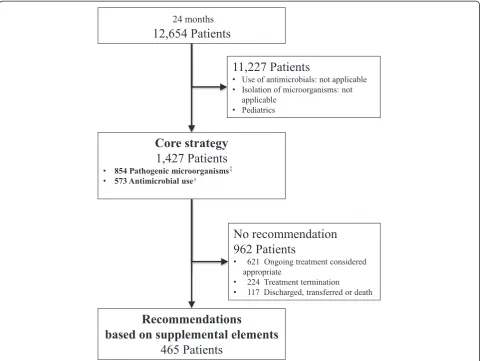
Figure 1 describes the flowchart of the ASPs conducted in the study.
In the ASPs conducted in the study, prospective audit with intervention and feedback was applied in the core strategy for hospitalized patients. Patients subject to the core strategy were selected based on the status of anti-microbial use and isolation of pathogenic microorganisms. According to the status of antimicrobial use, core strat-egy were performed in patients who used Glycopeptides or Carbapenems or those who used 3,4-Generation Ceph-alosporins or Quinolones for 14 days or more. According to the status of isolation of pathogenic microorganisms, core strategy were conducted in patients with positive blood cultures, patients in which methicillin-resistant
Staphylococcus aureus(MRSA), extended spectrum beta-lactamase-producing organisms (ESBLs) orAcinetobacter baumannii was detected and patients in which Pseudo-monas aeruginosa(P. aeruginosa) resistant to at least one among Carbapenems, Quinolones or Aminoglycosides was detected.
Dose optimization, de-escalation and recommendations for alternate agents and blood cultures were applied in the supplemental elements for the ASPs. Dose optimization involved drug administration planning based on pharma-cokinetics and pharmacodynamics, renal function and drug level monitoring. De-escalation included discon-tinuation of empiric antimicrobial therapy depending on negative blood culture results. Alternate agents were recommended in consideration of the transition and sensitivity of antimicrobials. Additional blood cultures were recommended to verify sterilization.
Data collection
The primary outcome was measured by the antimicro-bial therapy costs (USD per 1,000 patient-days). Manu-facturer list prices were referred to for the antimicrobial drug prices.
The secondary outcomes included the amount of anti-microbials used (defined daily doses per 1,000 patient-days), sensitivity rates (%) ofP. aeruginosato Meropenem (MEPM), Ciprofloxacin (CPFX) and Amikacin (AMK) and
Fukudaet al. Journal of Pharmaceutical Policy and Practice2014,7:10 Page 2 of 7
detection rates (per 1,000 patient-day) of MRSA and ESBLs through blood cultures. Defined daily doses (DDDs) per 1,000 patient-days were calculated to esti-mate the amount of antimicrobials used. Anatomical Therapeutic Chemical/DDD Index 2012 of the World Health Organization (WHO) Center for Drugs Statistics Methodology was used in the calculation of DDDs. VITEK 2 (Sysmex-bioMérieux Japan, Kobe, Japan) was referred to identify bacterial species and measure drug sen-sitivity. Minimum inhibitory concentration (MIC) break-points were defined in compliance with Clinical Laboratory Standards Institute (CLSI) Standards.
In the study, existing data processed every month by the pharmaceutical department system in the medical center were used to estimate the antimicrobial therapy costs and amount of antimicrobials used. Existing data processed every month by the clinical laboratory depart-ment system were used to identify the sensitivity rates ofP. aeruginosato MEPM, CPFX and AMK and the de-tection rates of MRSA and ESBLs. Existing data proc-essed every month by the accounting system were used to identify the number of hospitalized patients, patient-days and length of stay. Patients cannot be identified through these data.
Statistical analysis
The differences of median values before ASP and after ASP in the antimicrobial therapy costs, amount of antimi-crobials used, sensitivity rates ofP. aeruginosato MEPM, CPFX and AMK, length of stay and detection rates of MRSA and ESBLs were assessed by the nonparametric Mann–Whitney U-tests. It was regarded as statistically significant when theP-value < 0.05. Two-tailed tests were conducted for all the assessments. PASW Statistics (Ver. 18, SPSS Inc., Chicago, IL, USA) for Windows was used in all the statistic calculations.
Ethical consideration
This study was approved by the Research Ethics Com-mittee of National Hospital Organization Tochigi Med-ical Center, Utsunomiya.
Results
Patients suitable for ASPs
The number of hospitalized patients and patient-days in the six-month period before-ASP totaled 3,025 and 56,479 respectively. The number of hospitalized patients and patient-days in the 24-month period after-ASP totaled 12,654 and 222,388 respectively.
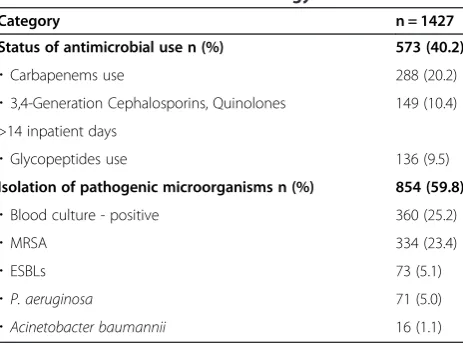
Table 1 shows 1,427 cases (822 males and 605 females, average age of 78.3 years) who underwent core strategy in the 24-month period after-ASP. Among them, 573 cases were selected based on the status of antimicrobial drug use. Of them, 288 cases used Carbapenems, which was most commonly administered among all the anti-microbial drugs used in the study. The remaining 854 cases were selected based on the status of isolation of pathogenic microorganisms. Of them, 360 cases were blood culture positive, which was most commonly ob-served in the 854 cases.
Recommendations
Figure 2 describes the flow of the recommendation process. Recommendations were provided based on the supplemen-tal elements to 465 cases out of 1,427 cases subject to the core strategy in the 24-month period after-ASP.
Table 2 describes the details of the recommendations provided. Recommendations were accepted for 251 cases (54.0%). Dose optimization was accepted for 110 cases out of 162 cases recommended (67.9%) and de-escalation was accepted for 81 cases out of 208 cases recommended (38.9%).
Primary outcome
Figure 3 shows the antimicrobial therapy costs during the study period. The costs decreased by 25.8% after ASP compared to those before ASP. The mean monthly costs significantly decreased to 4,555.0 from 6,133.5 USD per 1,000 patient-days (P= 0.005) (1USD = 98.265JPY).
Secondary outcomes
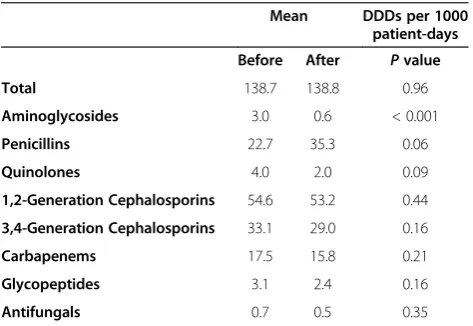
Table 3 indicates the amount of antimicrobials used. The mean monthly amount of Aminoglycosides used signifi-cantly decreased to 0.6 DDDs per 1,000 patient-days
after ASP from 3.0 before ASP (P< 0.001). The mean monthly amount of Quinolones used decreased to 2.0 DDDs per 1,000 patient-days after ASP from 4.0 before ASP (P= 0.09). The amount of Penicillins used increased to 35.3 DDDs per 1,000 patient-days after ASP from 22.7 before ASP (P= 0.06).
The mean monthly sensitivity rate of P. aeruginosato MEPM changed to 88.5% after ASP from 84.0% before ASP (P= 0.21) while that to CPFX changed to 75.3% from 74.8% (P= 1.00) and that to AMK changed to 99% from 100% (P= 0.37).
The mean monthly length of stay declined to 15.9 days after ASP from 16.6 days before ASP (P= 0.09). The monthly detection rate of MRSA significantly decreased from 2.9 to 1.5 per 1,000 patient-days (P< 0.001) while that of ESBLs decreased from 0.4 to 0.3 per 1,000 patient-days (P= 0.38).
Discussion
The study revealed two findings. Firstly, ASPs contrib-uted to the reduction of antimicrobial therapy costs in the Japanese community hospital with 429 beds. Sec-ondly, ASPs possibly helped prevent reduction in the sensitivity rates of P. aeruginosa to MEPM, CPFX and AMK and contributed to decreasing the detection rate of MRSA.
The antimicrobial therapy costs decreased after ASP, which indicated the significance of ASPs in the community hospitals with 429 beds. In response to the recommenda-tions, including de-escalation and dose optimization, which were provided for the cases selected through the prospect-ive audits, the use of less expensprospect-ive Penicillins was on the increase while the use of other antimicrobials decreased or was on the decrease. As a result, the antimicrobial therapy costs significantly decreased after ASP compared to those before ASP. In another study conducted in a community hospital with 535 beds, Malani et al. reported a 13.3% re-duction of antimicrobial therapy costs in cost-per patient-days through prospective audits of some antimicrobial drugs for 12 months [12]. Storey et al. also reported a 25% reduction of antimicrobial therapy costs in cost per patient-days through 16-month ASP in a community hospital with 100 beds [13]. In this study conducted at Tochigi Medical Center, the antimicrobial therapy costs decreased by 25.8%. The length of the investigation period, which extended for two years, added credibility to the study.
In the study, the amount of Aminoglycosides used sig-nificantly decreased and that of Quinolones was on the decrease after ASP. Defez et al. suggested that an odds ratio of 4.7 in the history of Quinolones use until seven days before can be a risk factor for hospital-acquired in-fections with multidrug-resistant Pseudomonas aerugi-nosain P. aeruginosainfected patients [14]. In the light
Table 1 Characteristics of core strategy
Category n = 1427
Status of antimicrobial use n (%) 573 (40.2)
・Carbapenems use 288 (20.2)
・3,4-Generation Cephalosporins, Quinolones 149 (10.4) >14 inpatient days
・Glycopeptides use 136 (9.5)
Isolation of pathogenic microorganisms n (%) 854 (59.8)
・Blood culture - positive 360 (25.2)
・MRSA 334 (23.4)
・ESBLs 73 (5.1)
・P. aeruginosa 71 (5.0)
・Acinetobacter baumannii 16 (1.1)
MRSA: methicillin-resistantStaphylococcus aureus.
ESBLs: extended spectrum beta-lactamase-producing organisms.
P. aeruginosa:Pseudomonas aeruginosaresistant to at least one among Carbapenems, Quinolones and Aminoglycosides.
Fukudaet al. Journal of Pharmaceutical Policy and Practice2014,7:10 Page 4 of 7
of the risk factor reported by Defez et al., the results of the study were considered to be preferable. In addition, it was suggested that the study possibly prevented reduc-tion in the sensitivity rates of P. aeruginosa to MEPM, CPFX and AMK. The study results also supported the report made by Dunbar LM et al., which indicated the possiblity that dose optimization contributed to decreas-ing resistant bacteria [15]. The study results were con-siderd to be clinicially significant as Carmeli Y et al. reported increases in the mortality rate and length of stay associated with the emergence of resistantP. aerugi-nosa[16]. As the length of stay was on the decrease after ASP in the study, ASPs were expected to bring about economic effects while a prospective payment system on a fixed fee basis is being introduced more widely in in-patient care. Furthermore, Fraser GL et al. reported a decrease in the length of stay from 24.7 days to 20 days due to recommendations given by infectious disease spe-cialists and pharmacists for optimal use of antimicrobials
Figure 2Recommendation processs flowchart.†Antimicrobial use: used Glycopeptides or Carbapenems used 3,4-Generation Cephalosporins or Quinolones for 14 days or more‡Pathogenic microorganisms: Positive blood cultures, Methicillin-resistantStaphylococcus aureusExtended spectrum beta-lactamase-producing organisms,Acinetobacter baumannii Pseudomonas aeruginosaresistant to at least one among Carbapenems, Quinolones or Aminoglycosides.
Table 2 Recommendations based on supplemental elements
Category Recommendations Accepted Accepted rate (%)
Total 465 251 54.0
Optimize dose 162 110 67.9
・PK/PD based dose 80 38 47.5
・Renal dose adjustments 67 60 89.6
・Drug level monitoring 15 12 80.0
De-escalation 208 81 38.9
Other 95 60 63.2
・Blood cultures 74 44 59.5
・Alternate agents 21 16 76.2
PK/PD: Pharmacokinetic and Pharmacodynamics.
Drug level monitoring: Vancomycin and Aminoglycosides were subject to monitoring.
[17]. In the study, it was considered that the team rounds to promote appropriate use of antimicrobials contributed to enhancing the compliance with standard prevention measures among healthcare professionals, which ultim-ately led to the reduction in the detection rate of MRSA through blood cultures.
In addition to ASPs, the Antimicrobial Stewardship Guidelines provided by the Infectious Diseases Society of America and the Society for Healthcare Epidemiology of America [1] strongly recommend formulary restric-tion and preauthorizarestric-tion as well as conversion of anti-microbials from parental to oral. Furthermore, Bauer KA et al. reported a 1.7-day reduction in the length of stay in patients with Staphylococcus aureus bacteremia through rapid diagnosis using rapid PCR testing [18]. Yam P et al.
also reported a decreae of Clostridium difficile infections from 5.5 cases per 10,000 patient-days to 1.6 cases through the application of telemedicine technology in a rural hos-pital [19]. By combining these initiatives with ASPs, more effective prevention of resistant bacteria and greater eco-nomic effects can be expected.
This study has limitations in three aspects. Firstly, only one facility was considered in the study. As clinical know-ledge varies by individual medical doctors and pharmacists and isolation frequency of bacteria and drug sensitivity vary among facilities, the study involves selection bias. Secondly, costs other than the antimicrobial therapy costs were not examined in the study. By inhibiting development of
P. aeruginosa resistance, additional treatment costs were possibly contained. However, the association with cost con-tainment cannot be defined as costs other than the anti-microbial therapy costs were not investigated. Lastly, the relation between ASPs and primary diagnosis or co-morbidities was not considered.
Conclusion
The study suggested the possibility that ASPs contrib-uted to the reduction of the antimicrobial therapy costs in the community hospital with 429 beds. It is likely that more effective prevention of resistant bacteria and greater economic effects can be achieved through a combination of other ASPs. It is considered worthwhile to study patient prognosis and changes in the incidence of adverse reac-tions with enhanced ASPs.
Competing interests
All authors declare that they have no competing interests.
P = 0.005
Figure 3Antimicrobial cost.ASPs: antimicrobial stewardship programs.Pvalues are used for comparisons of After with Before by Mann–WhitneyU-test.
Table 3 Antimicrobial use
Mean DDDs per 1000 patient-days
Before After Pvalue
Total 138.7 138.8 0.96
Aminoglycosides 3.0 0.6 < 0.001
Penicillins 22.7 35.3 0.06
Quinolones 4.0 2.0 0.09
1,2-Generation Cephalosporins 54.6 53.2 0.44
3,4-Generation Cephalosporins 33.1 29.0 0.16
Carbapenems 17.5 15.8 0.21
Glycopeptides 3.1 2.4 0.16
Antifungals 0.7 0.5 0.35
DDDs: Defined Daily Doses (WHO Center for Drug Statistics Methodology).
Pvalues are used for comparisons of After with Before by Mann–WhitneyU-test.
Fukudaet al. Journal of Pharmaceutical Policy and Practice2014,7:10 Page 6 of 7
Authors’contributions
TF and MS conceived of the study, and participated in designing the study. TF and HW has reviewed the data. TF performed the statistical analyses. SI helped to draft the manuscript. All authors read and approved the final manuscript.
Acknowledgment
We would like to acknowledge Mr. Kentaro Tanuma (National Hospital Organization, Nishisaitama-chuo Hospital), Mr. Hiroki Kawajiri, Mr. Yuya Motosugi, Dr. Jyunpei Komagamine, Dr. Taku Yabuki and Dr. Akihiko Tamura (National Hospital Organization, Tochigi Medical Center).
Author details
1Social and Administrative Pharmacy Science, School of Pharmacy, Nihon
University, 7-7-1 Narashinodai, Funabashi 2748555, Japan.2Department of Pharmacy, National Hospital Organization, Tochigi Medical Center, 1-10-37 Nakatomatsuri, Utsunomiya 3208580, Japan.
Received: 4 November 2013 Accepted: 15 July 2014 Published: 5 August 2014
References
1. Dellit TH, Owens RC, McGowan JE Jr, Gerding DN, Weinstein RA, Burke JP, Huskins WC, Paterson DL, Fishman NO, Carpenter CF, Brennan PJ, Billeter M, Hooton TM:Infectious Diseases Society of America and the Society for Healthcare Epidemiology of America guidelines for developing an institutional program to enhance antimicrobial stewardship.Clin Infect Dis2007,44:159–177.
2. Society for Healthcare Epidemiology of America; Infectious Diseases Society of America; Pediatric Infectious Diseases Society:Policy Statement on Antimicrobial Stewardship by the Society for Healthcare Epidemiology of America (SHEA), the Infectious Diseases Society of America (IDSA), and the Pediatric Infectious Diseases Society (PIDS).Infect Control Hosp Epidemiol2012,33:322–327.
3. Ding H, Yang Y, Wei J, Fan S, Yu S, Yao K, Wang A, Shen X:Influencing the use of antibiotics in a Chinese pediatric intensive care unit.Pharm World Sci2008,30:787–793.
4. Fox BC, Imrey PB, Voights MB, Norwood S:Infectious disease consultation and microbiologic surveillance for intensive care unit trauma patients: a pilot study.Clin Infect Dis2001,33:1981–1989.
5. Agwu AL, Lee CK, Jain SK, Murray KL, Topolski J, Miller RE, Townsend T, Lehmann CU:A World Wide Web-based antimicrobial stewardship program improves efficiency, communication, and user satisfaction and reduces cost in a tertiary care pediatric medical center.Clin Infect Dis 2008,47:747–753.
6. Standiford HC, Chan S, Tripoli M, Weekes E, Forrest GN:Antimicrobial stewardship at a large tertiary care academic medical center: cost analysis before, during, and after a 7-year program.Infect Control Hosp Epidemiol2012,33:338–345.
7. Nowak MA, Nelson RE, Breidenbach JL, Thompson PA, Carson PJ:Clinical and economic outcomes of a prospective antimicrobial stewardship program.Am J Health Syst Pharm2012,69:1500–1508.
8. Miyawaki K, Miwa Y, Tomono K, Kurokawa N:Impact of antimicrobial stewardship by infection control team in a Japanese teaching hospital.
Yakugaku Zasshi2010,130:1105–1111.
9. Niwa T, Shinoda Y, Suzuki A, Ohmori T, Yasuda M, Ohta H, Fukao A, Matsuura K, Sugiyama T, Murakami N, Itoh Y:Outcome measurement of extensive implementation of antimicrobial stewardship in patients receiving intravenous antibiotics in a Japanese university hospital.Int J Clin Pract2012,66:999–1008.
10. Septimus EJ, Owens RC Jr:Need and potential of antimicrobial stewardship in community hospitals.Clin Infect Dis2011,53(Suppl 1):S8–S14.
11. Philmon C, Smith T, Williamson S, Goodman E:Controlling use of antimicrobials in a community teaching hospital.Infect Control Hosp Epidemiol2006,27:239–244.
12. Malani AN, Richards PG, Kapila S, Otto MH, Czerwinski J, Singal B:Clinical and economic outcomes from a community hospital’s antimicrobial stewardship program.Am J Infect Control2013,41:145–148. 13. Storey DF, Pate PG, Nguyen AT, Chang F:Implementation of an
antimicrobial stewardship program on the medical-surgical service of a 100-bed community hospital.Antimicrob Resist Infect Control2012,1:32.
14. Defez C, Fabbro-Peray P, Bouziges N, Gouby A, Mahamat A, Daures JP, Sotto A:Risk factors for multidrug-resistant Pseudomonas aeruginosa nosocomial infection.J Hosp Infect2004,57:209–216.
15. Dunbar LM, Wunderink RG, Habib MP, Smith LG, Tennenberg AM, Khashab MM, Wiesinger BA, Xiang JX, Zadeikis N, Kahn JB:High-dose, short-course levofloxacin for community-acquired pneumonia: a new treatment paradigm.Clin Infect Dis2003,37:752–760.
16. Carmeli Y, Troillet N, Karchmer AW, Samore MH:Health and economic outcomes of antibiotic resistance in Pseudomonas aeruginosa.
Arch Intern Med1999,159:1127–1132.
17. Fraser GL, Stogsdill P, Dickens JD Jr, Wennberg DE, Smith RP Jr, Prato BS:
Antibiotic optimization. An evaluation of patient safety and economic outcomes.Arch Intern Med1997,157:1689–1694.
18. Bauer KA, West JE, Balada-Llasat JM, Pancholi P, Stevenson KB, Goff DA:An antimicrobial stewardship program’s impact with rapid polymerase chain reaction methicillin-resistant Staphylococcus aureus/S. aureus blood culture test in patients with S. aureus bacteremia.Clin Infect Dis2010,
51:1074–1080.
19. Yam P, Fales D, Jemison J, Gillum M, Bernstein M:Implementation of an antimicrobial stewardship program in a rural hospital.Am J Health Syst Pharm2012,69:1142–1148.
doi:10.1186/2052-3211-7-10
Cite this article as:Fukudaet al.:Contribution of antimicrobial stewardship programs to reduction of antimicrobial therapy costs in community hospital with 429 Beds--before-after comparative two-year trial in Japan.Journal of Pharmaceutical Policy and Practice20147:10.
Submit your next manuscript to BioMed Central and take full advantage of:
• Convenient online submission
• Thorough peer review
• No space constraints or color figure charges
• Immediate publication on acceptance
• Inclusion in PubMed, CAS, Scopus and Google Scholar
• Research which is freely available for redistribution