Original Article
Polymerization Shrinkage of Five Bulk-Fill Composite Resins in Comparison
with a Conventional Composite Resin
Mahdi Abbasi 1, Zohreh Moradi 2, Mansoureh Mirzaei 3, Mohammad Javad Kharazifard 4, Samaneh Rezaei 5
1
Assistant Professor, Dental Research Center, Dentistry Research Institute, Tehran University of Medical Sciences, Tehran, Iran; Department of Restorative Dentistry, School of Dentistry, Tehran University of Medical Sciences, Tehran, Iran
2
Assistant Professor, Department of Restorative Dentistry, School of Dentistry, Tehran University of Medical Sciences, Tehran, Iran
3
Associate Professor, Department of Restorative Dentistry, School of Dentistry, Tehran University of Medical Sciences, Tehran, Iran
4 Research Member, Dental Research Center, Dentistry Research Institute, Tehran University of Medical Sciences, Tehran, Iran 5
Postgraduate Student, Department of Restorative Dentistry, School of Dentistry, Tehran University of Medical Sciences, Tehran, Iran
Abstract
Objectives: The polymerization shrinkage of methacrylate-based composites is among the most important causes of failure of composite restorations. The manufacturers claim that bulk-fill composites have a lower polymerization shrinkage than conventional composites. This study aimed to assess the polymerization shrinkage of five bulk-fill composites in comparison with a conventional composite.
Materials and Methods: In this in-vitro experimental study, composite discs (n=30) were fabricated using everX Posterior (EXP), Filtek Bulk-Fill Posterior (FBP), SonicFill 2 (SF2), Tetric N-Ceram Bulk-Fill (TNB), X-tra fil (XF), and Filtek Z250 conventional composite at the center of a metal ring bonded to a microscope slide and were covered with a coverslip. This assembly was transferred to a linear variable differential transformer (LVDT). Light-curing (1200 mW/cm2) was performed from underneath the slide for 30 seconds. The deflecting disc method and LVDT were used to assess the dimensional changes of the samples (indicative of polymerization shrinkage) at 1, 30, 60, and 1800 seconds following the onset of light irradiation. Data were analyzed using one-way analysis of variance (ANOVA) and Tukey’s test.
Results: The groups were significantly different regarding polymerization shrinkage (P<0.002). The polymerization shrinkage of the tested composites following the onset of light irradiation ranged from 0.19 to 3.03. EXP showed a significantly higher polymerization shrinkage than other composites at 30, 60, and 1800 seconds after light irradiation, while XF showed the lowest polymerization shrinkage at the aforementioned time points.
Conclusions: The tested bulk-fill composites had a polymerization shrinkage similar to that of the conventional composite.
Key words: Filtek Bulk Fill; Composite Resins; Polymerization
Journal of Dentistry, Tehran University of Medical Sciences, Tehran, Iran (2018; Vol. 15, No. 6)
Corresponding author:
S. Rezaei, Department of Restorative Dentistry, School of Dentistry, Tehran University of Medical Sciences, Tehran, Iran
Received: 28 May 2018 Accepted: 27 October 2018
INTRODUCTION
Composite resins are increasingly used for dental restoration due to their favorable features including low costs, conservative technique, and acceptable esthetics [1]. The physical and mechanical properties of composite resins have been greatly improved over the past couple of
years; however, they still have some
shortcomings [1]. Polymerization shrinkage is a common problem associated with light-cure composite resins [1,2].
the conversion of monomer molecules to a polymer structure through the replacement of van der Waals spaces with covalent bonds, leading to a decreased free volume [4]. The defects at the bonding interface are due to the polymerization shrinkage stress generated during restoration and subsequent thermal, functional, and mechanical stresses. The polymerization process and the magnitude of the volumetric shrinkage are influenced by the composition of the restorative material [4]. Stress generation is influenced by
the reaction kinetics since a higher
polymerization rate is associated with a greater polymerization stress. Moreover, there is a direct correlation between the increased amount of
fillers and reduction of polymerization
shrinkage. Thus, the addition of pre-polymerized resin fillers (organic fillers) decreases the volumetric reduction of polymerized resins and the consequent polymerization shrinkage [4]. The shrinkage stress can affect the marginal integrity and can result in marginal leakage, debonding, secondary caries, and postoperative tooth hypersensitivity [4-6]. Moreover, the curing stress can result in the formation of enamel microcracks and cuspal deflection in direct composite restorations with a high C-factor such as extensive Class I and mesio-occluso-distal (MOD) Class II cavities [4-6]. The magnitude of this shrinkage is influenced by factors such as the curing time, high intensities of the curing light, the matrix composition, the filler content, and the concentration of photo-initiators in composite resins [4-6].
Several methods have been proposed to minimize polymerization shrinkage including the incremental application of the composite, use of liners with a low modulus of elasticity as stress absorber, and soft-start polymerization [5]. Incremental application of composite resins has been suggested as a standard technique to decrease the polymerization shrinkage stress and to achieve an optimal degree of conversion. However, void formation, contamination, bond
failure between the increments, and the time-consuming nature are among the drawbacks of this technique [5].
Considering the formulations of composite resins, light irradiation time may vary from 20 to 40 seconds for each increment, which is time-consuming and can cause patient dissatisfaction. However, despite the use of the incremental application technique, postoperative tooth hypersensitivity is still a common finding, which is mainly related to the polymerization shrinkage stress [5,7,8].
Considering the shortcomings of conventional composite resins, bulk-fill composites were introduced to the market aiming to save time and lower the costs [9]. The main advantage of bulk-fill composites is their bulk application into the cavity with a thickness of up to 4 mm. Bulk-fill composites do not require an incremental application, longer curing times, or a higher light intensity for curing [9,10]. The manufacturers claim that bulk-fill composites have a polymerization shrinkage lower than that of flowable and conventional composites [11]. Bulk-fill composites have chemically altered monomers in their structure. The modifications made in the composition of the monomer and organic matrix of composites have resulted in over 70% reduction in the polymerization shrinkage stress [11].
Considering the relatively recent introduction of bulk-fill composites into the market, studies on the polymerization shrinkage of different brands of bulk-fill composites are limited. Thus, the present study aimed to assess the polymerization shrinkage of five bulk-fill composites in comparison with a conventional composite resin.
MATERIALS AND METHODS
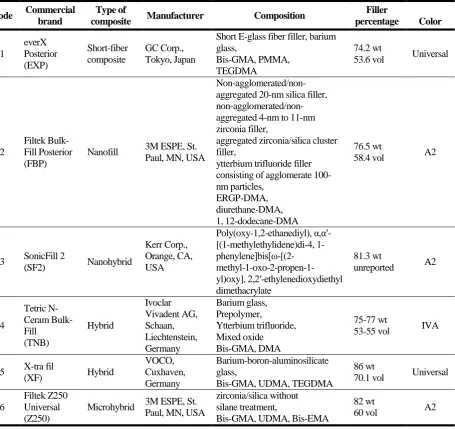
assuming alpha=0.05, beta=0.2, standard deviation (SD)=0.04, and effect size=0.28 according to a study by Benetti et al [12]. The present study evaluated the polymerization shrinkage of five bulk-fill composites including everX Posterior (EXP), Filtek Bulk-Fill Posterior (FBP), SonicFill 2 (SF2), Tetric N-Ceram Bulk-Fill (TNB), and X-tra fil (XF), and one conventional composite, namely, Filtek Z250 as the control (n=5). Table 1 shows the characteristics of the composite resins used in the present study.
Polymerization shrinkage was evaluated using the bonded disc or the deflecting disc technique which evaluates the dimensional changes of the samples during polymerization using the linear variable differential transformer device (LVDT; RDP Electronics Ltd., Wolverhampton, UK). For this purpose, 0.2 mg of each composite resin, in the form of an uncured paste, was applied on a
microscope slide measuring 1×25×75 mm3 at the
center of a metal ring with the diameter of 16 mm and the height of 1.5 mm.
Table 1. Characteristics of the composite resins used in this study
Color Filler
percentage Composition
Manufacturer Type of
composite Commercial
brand Code
Universal 74.2 wt
53.6 vol Short E-glass fiber filler, barium
glass,
Bis-GMA, PMMA, TEGDMA GC Corp.,
Tokyo, Japan Short-fiber
composite everX
Posterior (EXP) 1
A2 76.5 wt
58.4 vol
Non-agglomerated/non-aggregated 20-nm silica filler, non-agglomerated/non-aggregated 4-nm to 11-nm zirconia filler,
aggregated zirconia/silica cluster filler,
ytterbium trifluoride filler consisting of agglomerate 100-nm particles,
ERGP-DMA, diurethane-DMA, 1, 12-dodecane-DMA 3M ESPE, St.
Paul, MN, USA Nanofill
Filtek Bulk-Fill Posterior (FBP) 2
A2 81.3 wt
unreported Poly(oxy-1,2-ethanediyl),
α,α′-[(methylethylidene)di-4, 1-phenylene]bis[ω-[(2- methyl-1-oxo-2-propen-1-yl)oxy], 2,2′-ethylenedioxydiethyl dimethacrylate
Kerr Corp., Orange, CA, USA Nanohybrid SonicFill 2
(SF2) 3
IVA 75-77 wt
53-55 vol Barium glass,
Prepolymer,
Ytterbium trifluoride, Mixed oxide Bis-GMA, DMA Ivoclar
Vivadent AG, Schaan, Liechtenstein, Germany Hybrid
Tetric N-Ceram Bulk-Fill (TNB) 4
Universal 86 wt
70.1 vol Barium-boron-aluminosilicate
glass,
Bis-GMA, UDMA, TEGDMA VOCO,
Cuxhaven, Germany Hybrid
X-tra fil (XF) 5
A2 82 wt
60 vol zirconia/silica without
silane treatment,
Bis-GMA, UDMA, Bis-EMA 3M ESPE, St.
Paul, MN, USA Microhybrid
Filtek Z250 Universal (Z250) 6
Fig. 1: A sample of a packed composite resin
Another slide was compressed over the paste to pack the composite sample into the ring (Fig. 1). The surfaces of the sample and the metal ring were then covered with a coverslip (0.13 mm in thickness), and the assembly was placed on the jig of the LVDT.
The transducer was positioned in contact with the center of the coverslip and was fixed in place using two screws. A high-intensity light was irradiated using Bluephase N light-curing unit (Ivoclar Vivadent AG, Schaan, Liechtenstein, Germany) for 30 seconds from beneath the microscope slide. Upon light irradiation, the composite discs underwent shrinkage and a subsequent flexure, which were monitored by the transducer with the accuracy of 0.01 µm. The changes were recorded by a recorder on a computer. Since the shrinkage is mainly vertical in this method, only the changes in the thickness of the samples occurring within 30
Table 2. Mean polymerization shrinkage (µm) of composite resins at 1, 30, 60, and 1800 seconds following the onset of irradiation
Std. Deviation Mean Maximum Minimum Composite Group 0.48 0.85 1.49 0.37 1 s EXP 1 0.09 2.37 2.53 2.31 30 s 0.09 2.53 2.70 2.46 60 s 0.15 3.03 3.27 2.84 1800 s 0.13 0.61 0.76 0.40 rate 0.07 0.19 0.29 0.07 1 s FBP 2 0.10 1.47 1.55 1.28 30 s 0.10 1.66 1.73 1.47 60 s 0.12 2.15 2.28 1.97 1800 s 0.03 0.24 0.27 0.19 rate 0.18 0.22 0.42 0.02 1 s SF2 3 0.04 1.39 1.45 1.32 30 s 0.03 1.56 1.62 1.54 60 s 0.09 2.03 2.13 1.88 1800 s 0.01 0.33 0.35 0.31 rate 0.07 0.60 0.70 0.52 1 s TNB 4 0.07 1.55 1.64 1.46 30 s 0.07 1.72 1.82 1.62 60 s 0.06 2.21 2.30 2.12 1800 s 0.05 0.45 0.49 0.38 rate 0.18 0.38 0.55 0.07 1 s XF 5 0.04 1.37 1.43 1.31 30 s 0.05 1.50 1.56 1.44 60 s 0.07 1.87 1.98 1.80 1800 s 0.05 0.36 0.43 0.31 rate 0.13 0.39 0.52 0.18 1 s Z250 6 0.04 1.47 1.51 1.40 30 s 0.03 1.64 1.68 1.57 60 s 0.07 2.14 2.21 2.04 1800 s 0.04 0.45 0.49 0.38 rate
minutes following the onset of light irradiation were recorded. One-way ANOVA and post-hoc Tukey’s test were used to compare the polymerization shrinkage at 1, 30, 60, and 1800 seconds following the onset of irradiation.
RESULTS
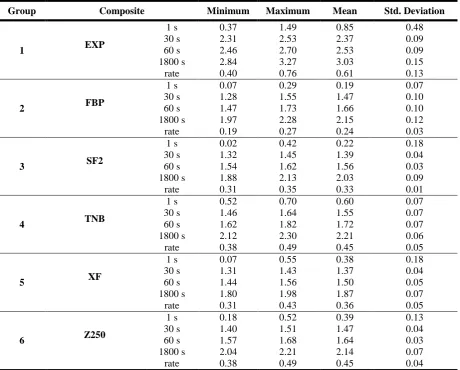
Table 2 shows the mean polymerization shrinkage of the composite resins at 1, 30, 60, and 1800 seconds following the onset of irradiation. One-way ANOVA indicated a significant difference in the polymerization shrinkage of different composites at 1, 30, 60, and 1800 seconds (P<0.002). Thus, post-hoc Tukey’s honestly significant difference (HSD) test was applied for pairwise comparisons of the groups.
Table 3. Pairwise comparisons of the polymerization shrinkage of composites at 1 second following the onset of irradiation
Z250 XF
TNB SF2
FBP EXP
1
second
*
EXP
* P=0.002
FBP
* P=1.000 P=0.004
SF2
* P=0.161 P=0.105
P=0.550
TNB
* P=0.679 P=0.904
P=0.806 P=0.042
XF
* P=1.000 P=0.749
P=0.856 P=0.741
P=0.054
Z250
EXP=everX Posterior, FBP=Filtek Bulk-Fill Posterior, SF2=SonicFill 2, TNB=Tetric N-Ceram Bulk-Fill, XF=X-tra fil, Z250=Filtek Z250
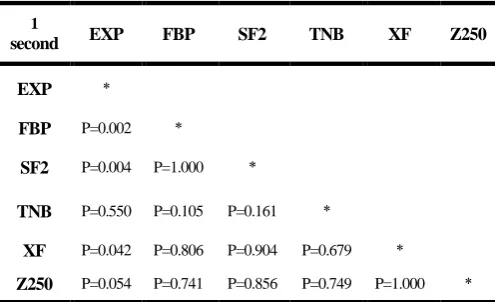
The results of pairwise comparisons of the composite resins at 1 second after the onset of irradiation are presented in Table 3. As presented, at 1 second, EXP exhibited a significantly higher polymerization shrinkage compared to XF, SF2, and FBP (P<0.042). TNB and Z250 had no significant difference with the other groups. FBP showed the lowest polymerization shrinkage at 1 second (0.19±0.07 µm). Table 4 shows the results of pairwise comparisons of the composite resins at 30 seconds following the onset of irradiation.
Table 4. Pairwise comparisons of the polymerization shrinkage of composites at 30 seconds following the onset of irradiation
Z250 XF
TNB SF2
FBP EXP
30 seconds
*
EXP
* P<0.001
FBP
* P=0.499 P<0.001
SF2
* P=0.020 P=0.528
P<0.001
TNB
* P=0.010 P=1.000
P=0.334 P<0.001
XF
* P=0.310 P=0.559
P=0.469 P=1.000
P<0.001
Z250
EXP=everX Posterior, FBP=Filtek Bulk-Fill Posterior, SF2=SonicFill 2, TNB=Tetric N-Ceram Bulk-Fill, XF=X-tra fil, Z250=Filtek Z250
As shown, EXP showed a significantly higher polymerization shrinkage compared to the other groups (P<0.001). TNB exhibited a significantly higher polymerization shrinkage than SF2 and XF (P<0.020). XF experienced the lowest polymerization shrinkage (1.37±0.04 µm) at this time point with an insignificant difference with SF2 (1.39±0.04 µm).
Table 5 shows the results of pairwise comparisons of the polymerization shrinkage of the composites at 60 seconds after the onset of light-curing. EXP
had a significantly higher polymerization
shrinkage than the other groups at this time point (P<0.001). TNB had a significantly higher polymerization shrinkage than SF2 and XF (P<0.026). FBP showed a significantly higher polymerization shrinkage than XF (P=0.023). XF exhibited the lowest polymerization shrinkage at this time point (1.50±0.05 µm).
Table 5. Pairwise comparisons of the polymerization shrinkage of composites at 60 seconds following the onset of irradiation
EXP=everX Posterior, FBP=Filtek Bulk-Fill Posterior, SF2=SonicFill 2, TNB=Tetric N-Ceram Bulk-Fill, XF=X-tra fil, Z250=Filtek Z250
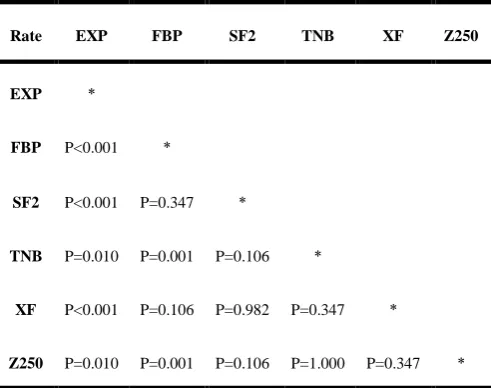
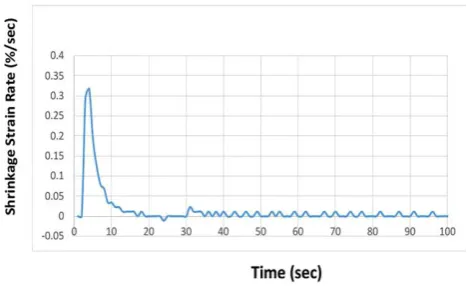
TNB, FBP, and Z250 experienced a significantly higher polymerization shrinkage compared to XF (P<0.004). XF showed the lowest polymerization shrinkage at this time point (1.87±0.07 µm). Moreover, EXP showed a significantly higher speed of polymerization compared to the other groups (P<0.010). TNB and Z250 showed a significantly higher speed of polymerization compared to FBP as well (P=0.001). The lowest polymerization speed was noted with FBP (0.24±0.03 µm).
Table 6. Pairwise comparisons of the polymerization shrinkage of composites at 1800 seconds following the onset of irradiation
Z250 XF
TNB SF2
FBP EXP
1800 seconds
*
EXP
* P<0.001
FBP
* P=0.469 P<0.001
SF2
* P=0.108 P=0.944
P<0.001
TNB
* P<0.001 P=0.170
P=0.003 P<0.001
XF
* P=0.004 P=0.914
P=0.532 P=1.000
P<0.001
Z250
EXP=everX Posterior, FBP=Filtek Bulk-Fill Posterior, SF2=SonicFill 2, TNB=Tetric N-Ceram Bulk-Fill, XF=X-tra fil, Z250=Filtek Z250
Table 7 shows the results of Tukey’s test in comparing the shrinkage strain rate of the composite resins.
Table 7. Comparison of the shrinkage strain rate of composite resins
Z250 XF
TNB SF2
FBP EXP
Rate
*
EXP
* P<0.001
FBP
* P=0.347 P<0.001
SF2
* P=0.106 P=0.001
P=0.010
TNB
* P=0.347 P=0.982
P=0.106 P<0.001
XF
* P=0.347 P=1.000
P=0.106 P=0.001
P=0.010
Z250
EXP=everX Posterior, FBP=Filtek Bulk-Fill Posterior, SF2=SonicFill 2, TNB=Tetric N-Ceram Bulk-Fill, XF=X-tra fil, Z250=Filtek Z250
Figures 2 and 3 illustrate the shrinkage strain and shrinkage strain rate of the composite resins evaluated in the current study.
DISCUSSION
The present study assessed the polymerization shrinkage of five bulk-fill composites in comparison with a conventional composite. The
Z250 XF
TNB SF2
FBP EXP
60 seconds
* EXP
* P<0.00
1 FBP
* P=0.306
P<0.00 1 SF2
* P=0.026
P=0.804 P<0.00
1 TNB
* P=0.001
P=0.779 P=0.023
P<0.00 1 XF
* P=0.067 P=0.519
P=0.578 P=0.996
Fig. 2. Shrinkage strain of composite resins
groups were significantly different regarding
polymerization shrinkage (P<0.002). The
polymerization shrinkage of the tested
composites following the onset of light irradiation ranged from 0.19 to 3.03. EXP showed a significantly higher polymerization shrinkage than the other composites at 30, 60, and 1800 seconds after the onset of light irradiation, while XF experienced the lowest polymerization shrinkage at the aforementioned time points.
The bonded disc technique was used to quantify the changes in the height of the composite samples, which indicate their polymerization shrinkage during and after light-curing. The main advantage of this technique is that it enables a fast assessment of polymerization shrinkage and allows the use of different intensities of light, especially at different temperatures [13,14]. In this technique, the volumetric shrinkage is estimated according to the axial shrinkage, and the C-factor of the samples should be >5 in order to be able to evaluate the conditions causing the highest polymerization shrinkage in the clinical setting. However, the consistency of the composite resin is also important in this respect [13]. In this method, upon light irradiation, the composite disc undergoes flexion as a result of shrinkage, which is recorded by the transducer of the device; the volumetric shrinkage of the sample is determined as such.
Fig. 3. Shrinkage strain rate of composite resins
The volumetric shrinkage of composite resins depends on factors such as the amount, type, and size of fillers [15]. In general, increasing the number of fillers in the resin matrix decreases the overall shrinkage of composite resins due to the reduced amount of monomers available for the curing reaction. However, it can also increase the elastic modulus of the material and lead to a high shrinkage stress [15,16].
On the other hand, it has been suggested that the addition of great amounts of fillers to decrease the resin volume is not an efficient approach to decrease the polymerization shrinkage and stress. Thus, chemical modification is another adopted approach to slow down the polymerization rate and to decrease the polymerization shrinkage
stress [17]. Other factors affecting
polymerization shrinkage include the type of resin matrix, the concentration of monomers, and the type of the initiators as they determine the polymer structure of composite resins [18]. Moreover, all factors controlling the degree of conversion also affect polymerization shrinkage, including the reactivity of monomers and cross-linking [19,20]. For example, triethylene glycol dimethacrylate (TEGDMA), which is present in the composition of highly flowable restorative materials, has a high reactivity and results in a higher conversion of double bonds and consequently a higher shrinkage [21-24].
the amount of generated stress during the polymerization reaction of composite resins are the main factors causing poor marginal adaptation, postoperative pain, and secondary caries in vivo [19].
Tsujimoto et al [25] showed that volumetric shrinkage started immediately after the initiation of light irradiation and continued even after its discontinuation. Continuation of shrinkage after the completion of light irradiation may be due to the post-polymerization reaction of residual monomers. Yu et al [26] stated that the mean shrinkage of bulk-fill composite resins ranges from 1.5% to 3.4%, while this range is 2.1% to
4.3% for conventional composites. The
shrinkage rate of composite resins evaluated in our study was within the range for conventional composite resins. In the study by Jang et al [27], TNB showed the minimum polymerization shrinkage stress. Several factors may affect the results in this respect. These composites contain a shrinkage stress reliever, which is a filler functionalized with saline. It has a lower modulus of elasticity, and therefore, acts as a microscopic spring, neutralizing the forces generated during shrinkage. These composites also contain pre-polymerized fillers. Composite resins containing pre-polymerized fillers often show a relatively low modulus of elasticity [27,28].
Our findings regarding the higher polymerization shrinkage of EXP are in agreement with those reported by Fronza et al [29]. They showed that despite having a high percentage of debonded areas, EXP has a relatively small marginal gap (about 15 µm). It is believed that during polymerization, composites cannot contract along the long fibers in their composition; consequently, they preserve their original horizontal dimensions although the resin matrix tries to contract vertically [29]. This behavior has not been seen with TNB, despite its high mineral content. In fact, this composite showed less polymerization shrinkage stress and a potential
for marginal gap formation in the study by Fronza et al [29], which may be due to the presence of stress relievers in its composition [30].
In the current study, at 1 second (the initiation of polymerization), FBP showed the lowest polymerization shrinkage; it showed the lowest polymerization rate as well. In fact, the manufacturers claim that FBP has novel
monomers that act to decrease the
CONCLUSION
Within the limitations of the present in-vitro study, the results showed that the polymerization shrinkage of the evaluated bulk-fill composites was not significantly different from that of the conventional composite. XF showed the lowest polymerization shrinkage among the bulk-fill composites.
ACKNOWLEDGMENT
This study was derived from a thesis (No.917 T) for a dental specialist degree in Restorative Dentistry submitted to Tehran University of Medical Sciences, School of Dentistry and was financially supported by a grant from the Dental Research Center, Dentistry Research Institute, Dentistry Research Institute, Tehran University of Medical Sciences, Tehran, Iran (96-03-70-36890).
REFERENCES
1- Langalia A, Buch A, Khamar M, Patel P. Polymerization shrinkage of composite resins: a review. J Med Dent Sci Res. 2015 Oct;2(10):23-7. 2- Alrahlah A, Silikas N, Watts DC. Post-cure depth of cure of bulk fill dental resin-composites. Dent Mater. 2014 Feb;30(2):149-54.
3- Yap AU, Wang HB, Siow KS, Gan LM. Polymerization shrinkage of visible-light-cured composites. Oper Dent. 2000 Mar-Apr;25(2):98-103. 4- Al Sunbul H, Silikas N, Watts DC. Polymerization shrinkage kinetics and shrinkage-stress in dental resin-composites. Dent Mater. 2016 Aug;32(8):998-1006.
5- Rosatto CM, Bicalho AA, Veríssimo C, Bragança GF, Rodrigues MP, Tantbirojn D, et al. Mechanical properties, shrinkage stress, cuspal strain and fracture resistance of molars restored with bulk-fill composites and incremental filling technique. J Dent. 2015 Dec;43(12):1519-28.
6- Goracci C, Cadenaro M, Fontanive L, Giangrosso G, Juloski J, Vichi A, et al. Polymerization efficiency and flexural strength of low-stress restorative composites. Dent Mater. 2014 Jun;30(6):688-94.
7- Finan L, Palin WM, Moskwa N, McGinley EL, Fleming GJ. The influence of irradiation potential on the degree of conversion and mechanical properties of two bulk-fill flowable RBC base materials. Dent Mater. 2013 Aug;29(8):906-12.
8- Abed YA, Sabry HA, Alrobeigy NA. Degree of conversion and surface hardness of bulk-fill composite versus incremental-fill composite. Tanta Dent J. 2015 Jun;12(2):71-80.
9- Vinagre A, Ramos J, Alves S, Messias A, Alberto N, Nogueira R. Cuspal Displacement Induced by Bulk Fill Resin Composite Polymerization: Biomechanical Evaluation Using Fiber Bragg Grating Sensors. Int J Biomater. 2016;2016:7134283. 10- Farahat F, Daneshkazemi AR, Hajiahmadi Z. The Effect of Bulk Depth and Irradiation Time on the Surface Hardness and Degree of Cure of Bulk-Fill Composites. J Dent Biomater. 2016 Sep;3(3):284-291.
11- Garcia D, Yaman P, Dennison J, Neiva G. Polymerization shrinkage and depth of cure of bulk fill flowable composite resins. Oper Dent. 2014 Jul-Aug;39(4):441-8.
12- Benetti AR, Havndrup-Pedersen C, Honoré D, Pedersen MK, Pallesen U. Bulk-fill resin composites: polymerization contraction, depth of cure, and gap formation. Oper Dent. 2015 Mar-Apr;40(2):190-200. 13- Lee IB, Cho BH, Son HH, Um CM, Lim BS. The effect of consistency, specimen geometry and adhesion on the axial polymerization shrinkage measurement of light cured composites. Dent Mater. 2006 Nov;22(11):1071-9.
14- Watts DC, Marouf AS. Optimal specimen geometry in bonded-disk shrinkage-strain measurements on light-cured biomaterials. Dent Mater. 2000 Nov;16(6):447-51.
15- Labella R, Lambrechts P, Van Meerbeek B, Vanherle G. Polymerization shrinkage and elasticity of flowable composites and filled adhesives. Dent Mater. 1999 Mar;15(2):128-37.
17- Ferracane JL. Developing a more complete understanding of stresses produced in dental composites during polymerization. Dent Mater. 2005 Jan;21(1):36-42.
18- Ferracane JL. Buonocore Lecture. Placing dental composites--a stressful experience. Oper Dent. 2008 May-Jun;33(3):247-57.
19- Patel MP, Braden M, Davy KW. Polymerization shrinkage of methacrylate esters. Biomaterials. 1987 Jan;8(1):53-6.
20- Venhoven BA, de Gee AJ, Davidson CL. Light initiation of dental resins: dynamics of the polymerization. Biomaterials. 1996 Dec;17(24):2313-8.
21- Sideridou I, Tserki V, Papanastasiou G. Effect of chemical structure on degree of conversion in light-cured dimethacrylate-based dental resins. Biomaterials. 2002 Apr;23(8):1819-29.
22- Braga RR, Ferracane JL. Contraction stress related to degree of conversion and reaction kinetics. J Dent Res. 2002 Feb;81(2):114-8.
23- Atai M, Watts DC, Atai Z. Shrinkage strain-rates of dental resin-monomer and composite systems. Biomaterials. 2005 Aug;26(24):5015-20.
24- Sideridou ID, Karabela MM, Vouvoudi ECh. Physical properties of current dental nanohybrid and nanofill light-cured resin composites. Dent Mater. 2011 Jun;27(6):598-607.
25- Tsujimoto A, Barkmeier WW, Takamizawa T, Latta MA, Miyazaki M. Mechanical properties, volumetric shrinkage and depth of cure of short fiber-reinforced resin composite. Dent Mater J. 2016;35(3):418-24.
26- Yu P, Yap A, Wang XY. Degree of Conversion and Polymerization Shrinkage of Bulk-Fill Resin-Based Composites. Oper Dent. 2017 Jan-Feb;42(1):82-89.
27- Jang JH, Park SH, Hwang IN. Polymerization shrinkage and depth of cure of bulk-fill resin composites and highly filled flowable resin. Oper Dent. 2015 Mar-Apr;40(2):172-80.
28- Blackham JT, Vandewalle KS, Lien W. Properties of hybrid resin composite systems containing prepolymerized filler particles. Oper Dent.
2009 Nov-Dec;34(6):697-702.
29- Fronza BM, Rueggeberg FA, Braga RR, Mogilevych B, Soares LE, Martin AA, et al. Monomer conversion, microhardness, internal marginal adaptation, and shrinkage stress of bulk-fill resin composites. Dent Mater. 2015 Dec;31(12):1542-51.
30- Dewaele M, Truffier-Boutry D, Devaux J, Leloup G. Volume contraction in photocured dental resins: the shrinkage-conversion relationship revisited. Dent Mater. 2006 Apr;22(4):359-65.