IMPLEMENTING WATER SAFETY PLANS IN NORTH CAROLINA: BRIDGES, BARRIERS, AND POTENTIAL BENEFITS
Rachel Baum
A Master’s thesis submitted to the faculty at the University of North Carolina at Chapel Hill in partial fulfillment of the requirements for the degree of Master of Science in Public Health in the
Department of Environmental Sciences and Engineering in the Gillings School of Global Public Health.
Chapel Hill
2016
Approved by: Jamie Bartram
ABSTRACT
Rachel Baum: Implementing water safety plans in North Carolina: Bridges, barriers, and potential benefits
(Under the direction of Jamie Bartram)
While developed countries are often thought to have assured safe drinking water, periodic contamination events and outbreaks still occur. Many countries have implemented water safety plans (WSPs), a preventive risk management approach, to improve drinking water quality, with documented benefits. However, WSPs are not widespread in the US. This study examines the enabling environment promoting the adoption of WSPs, the added value of preventive risk management, and the willingness and ability of water utilities to implement WSPs in North Carolina (NC). Results show that guidelines, regulations, contextual evidence, and public health focus create the enabling environment. US regulations and WSP steps align in most areas, but gaps exist in a few. In NC, implementation of WSPs would require: time and resources,
ACKNOWLEDGEMENTS
TABLE OF CONTENTS
LIST OF TABLES ……….. viii
LIST OF FIGURES ………... ix
LIST OF ABBREVIATIONS ………... x
INTRODUCTION ………...1
CHAPTER 1: A SYSTEMATIC LITERATURE REVIEW OF THE ENABLING ENVIRONMENT TO PROMOTE IMPLEMENTATION OF WATER SAFETY PLANS IN DEVELOPED COUNTRIES …..………...………….. 4
1.1 Introduction ……..………..………...……..……….. 4
1.2 Methods ……..………..………...……..…………...6
1.3 Results ……..………..………...……..………..………….... 6
Search Results………..………. 6
Qualitative Synthesis..………..………. 7
International-scale promotion and adoption of WSPs……….…... 8
National-scale promotion and adoption of WSPs………...……….…... 9
Local-scale promotion and adoption of WSPs……….... 14
1.4 Discussion……..………..………...……..…………... 15
1.5 Conclusion ……..………..………...……..………. 16
CHAPTER 2: AN EXAMINATION OF THE POTENTIAL ADDED VALUE OF WATER SAFETY PLANS TO THE UNITED STATES NATIONAL DRINKING WATER LEGISLATION ………..……. 18
History of US Drinking Water Regulations ……..………..………... 19
Voluntary US Drinking Water Quality Optimization Programs ……..…………. 21
World Health Organization and Water Safety Plans ……..………... 23
2.2 Materials and Methods ……..………..………...……..……….. 25
2.3 Results ……..………..………...……..………..………... 27
2.4 Discussion ……..………..………...……..………..……… 36
Risk assessment and prioritization ……..………..………. 37
Management procedures and plans ……..………..………...38
Team procedures and training ……..………..………...………….... 40
2.5 Conclusion …..…..………..………...……..………..……. 41
CHAPTER 3: WATER SAFETY PLANS: BRIDGES AND BARRIERS TO IMPLEMENTATION IN NORTH CAROLINA…….………. 44
3.1 Introduction ……..………..………...……..………..……. 44
3.2 Methods ……..………..………...……..………..………... 48
Water utility selection ……..………..………...……..………... 49
Data collection ……..………..………...……..………... 49
Data analysis ……..………..………...……..………. 50
3.3 Results ……..………..………...……..………..…………. 51
Small water utilities ……..………..………...……..……….. 51
Medium water utilities ……..………..………...……..………. 53
Large water utilities ……..………..………...……..……….. 56
Very large water utility ……..………..………...……..………. 58
DISCUSSION………... 65
CONCLUSION ………..……….. 67
APPENDIX: SUPPORTING INFORMATION ………...………. 69
LIST OF TABLES
TABLE 1.1 – OECD Country guidelines and regulations promoting the
adoption of systematic risk management practices for improved drinking water quality………. 10
TABLE 2.1 – US water regulations parallel to WSP Step 1: ……….. 27
TABLE 2.2 – US water regulations parallel to WSP Step 2:... ……….... 28
TABLE 2.3 – US water regulations parallel to WSP Steps 3, 4, and 5:………... 30
TABLE 2.4 – US water regulations parallel to WSP Step 6:... ……….... 31
TABLE 2.5 – US water regulations parallel to WSP Step 7:... ……….32
TABLE 2.6 – US water regulations parallel to WSP Step 8:... ……….... 33
TABLE 2.7 – US water regulations parallel to WSP Step 9:... ……….... 34
TABLE 2.8 – US water regulations parallel to WSP Step 10:... ………... 35
TABLE 2.9 – US water regulations parallel to WSP Step 11:... ……….. 36
TABLE 2.10 – Contributing factors detected, investigated, and reported in waterborne disease outbreaks in the US, 2009-2010………... 37
TABLE 3.1 – Characteristics of North Carolina water utilities interviewed ………... 49
TABLE 3.2 – Summary of small water utilities’ views on implementing WSPs .……… 53
TABLE 3.3 – Summary of medium water utilities’ views on implementing WSPs………….… 54
TABLE 3.4 – Summary of large water utilities’ views on implementing WSPs…………..…… 57
LIST OF FIGURES
Figure 1.1 – PRISMA systematic literature review article on the
LIST OF ABBREVIATIONS ANSI American National Standards Institute
AWOP Area Wide Optimization Program AWWA American Water Works Association
CDC Centers for Disease Control and Prevention CFR Code of Federal Regulations
DWD Drinking Water Directive
EPA Environmental Protection Agency EU European Union
HACCP Hazard Analysis and Critical Control Point IWA International Water Association
MCL Maximum Contaminant Level NC North Carolina
ORC Operator in Responsible Charge
PRISMA Preferred Reporting Items for Systematic Reviews and Meta-Analyses RAMCAP Risk Analysis and Management for Critical Asset Protection
SCADA Supervisory Control and Data Acquisition SDWA Safe Drinking Water Act
SOP Standard Operating Procedure US United States
INTRODUCTION
The consistent delivery of safe drinking water is a primary goal for all water systems. In order to attain this goal, effective risk management practices are critical. In the United States, these risk management practices are guided by regulations demanding specific water quality standards, treatment processes, system management, and external communication. Despite these regulations, water contamination events still occur, contributing to waterborne disease that affects an estimated 19.5 million people per year (Reynolds et al., 2008).
In order to reduce the incidence of waterborne disease from community water systems (public water systems supplying water to the same population year-round) in the US, steps must be taken to improve the safety of drinking water by preventing contamination events. This can be accomplished by adopting risk management practices that reach beyond current regulations.
Water safety plans (WSPs) offer a potential path for improvement, through their systematic risk management approach that has documented benefits in improving
In order to attain the benefits of WSPs in the US, an enabling environment is needed that includes formal rules (regulations and policies) and conditions (norms, culture) that promote the scaling up and sustainability of WSPs (Amjad et al., 2015; Ojomo et al., 2016). An enabling environment for enhanced drinking water safety should not only incorporate policies and institutional behaviors that promote WSPs but should also offer resources to achieve positive, clearly defined outcomes (Amjad et al., 2015).
The purpose of this research was to determine whether, and to what extent, WSPs could benefit US water systems and what barriers and bridges exist to implementing WSPs. Since other developed countries have successfully implemented WSPs, the first objective of this research was to conduct a systematic literature review to determine the rules and conditions of the enabling environment in other countries that led to the adoption and implementation of WSPs. This information can help to highlight the support and conditions that could help promote
adoption of WSPs in the US. These other developed countries have not only implemented WSPs, but have also realized improvements in drinking water safety from the implementation of WSPs. Therefore, the second objective of this research was to compare current US drinking water regulations to WSPs to determine whether there are differences between them and then assess whether there might be added value from WSPs to assist in improving drinking water quality. Through this comparative analysis, I first assessed the potential benefits of implementing WSPs and then determined the extent to which WSPs could help to reduce future waterborne disease in the US. For the third objective, I examined the willingness and ability of water utilities to
implementation of an improved risk management system, like WSPs, for water systems in the US.
CHAPTER 1: A SYSTEMATIC LITERATURE REVIEW OF THE ENABLING ENVIRONMENT TO PROMOTE IMPLEMENTATION OF WATER SAFETY PLANS
IN DEVELOPED COUNTRIES
1.1 INTRODUCTION
Safe drinking water is consistently expected in developed countries. However,
waterborne disease and outbreaks still occur (Hrudey & Hrudey 2004). In order to reduce the incidence of waterborne disease and outbreaks, enhanced risk management practices, such as water safety plans (WSPs) can be implemented. WSPs are a preventive risk management strategy to ensure safe drinking water from catchment to tap (Davison et al. 2005; Bartram et al. 2009). WSPs have been implemented in Australia, Austria, Belgium, Canada, France, Germany,
Hungary, Iceland, Japan, Portugal, The Netherlands, New Zealand, Slovenia, Spain, Switzerland, and the United Kingdom (Brauer et al. 2014; Gunnarsdottir et al. 2012b; Japan Ministry of Health, Labour, and Welfare 2008; Malzer et al. 2010, Davidovits 2014; Martel et al. 2008; Davison et al. 2005). WSPs have shown benefits in improving regulatory compliance, water quality, communication, asset management, and public health outcomes (Gunnarsdottir et al., 2012a). While WSPs have evolved from individual water system practices to national guidelines to regulatory requirements in some of these developed countries, the United States (US) has limited experience with WSPs (Martel et al., 2006; Hamilton et al., 2006).
2008). The Environmental Protection Agency (EPA) is the national government agency of the US charged with protecting public health and the environment. In this role, EPA officials create regulations to ensure safe drinking water to protect public health (Summerill et al., 2010; Vierira, 2011; Hrudey et al., 2006). Many drinking water regulations overlap with components of a WSP, however gaps exist between them (Baum et al. 2015). Given these gaps between US drinking water regulations and WSPs, there are benefits to be realized in improving the risk management practices of drinking water systems in the US.
While formal rules (regulations or policies), can promote the uptake of risk management practices such as WSPs, other conditions, such as cultures and norms, or the physical
environment, can also influence risk management practices. Together, these formal rules,
conditions, and physical environment that affect the achievement of objectives are considered the enabling environment (Amjad et al., 2015; Ojomo et al., 2016). To improve drinking water safety, an enabling environment can be created that supports that goal.
The objective of this systematic literature review was to assess the enabling environment through regulations, guidelines, conditions, and experiences that promoted the adoption and implementation of WSPs in drinking water systems in developed countries (defined as high-income Organization for Economic Cooperation and Development (OECD) member states as classified by the World Bank1).
1.2 METHODS
To conduct the systematic literature review, the Preferred Reporting Items for Systematic Reviews and Meta-Analyses (PRISMA) guidelines were used (Moher et al., 2009). Study articles were identified from: Web of Science, ScienceDirect, Water Safety Portal, and the drinking water quality agency website of each high-income OECD member country. Bibliographies from these articles were searched to identify other relevant studies or grey literature that were not found directly through the search. This search was conducted between March 1, 2016 and April 6, 2016.
Search terms were chosen so as to include articles that discussed any experiences related to water safety plans or other risk management plans for water systems in high-income OECD countries. Only articles in English were included. Since many water systems used HACCP as a risk management practice comparable to WSPs, HACCP was used as a synonym for WSP when searching. The search terms used were: “drinking water ” AND regulat*2 OR legislat* OR adopt* OR implement* OR experience* (included in the article) AND “water safety plan*” OR “HACCP” OR “risk management” OR “safety plan*” AND water (included in the title).
1.3 RESULTS
Search Results
the inclusion of 72 articles that discussed the enabling environment through regulations, institutional arrangements, or experiences of a water system or set of water systems that led to the adoption of a WSP or similar risk management practice in a high-income OECD country. Two articles were excluded based upon full text review, in which it was revealed that the content was unrelated to the implementation or experience of a WSP or HACCP. A total of 70 articles were included in the synthesis of the literature review.
Figure 1.1 PRISMA systematic literature review articles on the enabling environment for drinking water risk management experiences
Qualitative Synthesis
The literature review revealed many individual case studies of WSP experiences.
However, there were few articles that compared different drinking water safety experiences. This literature review synthesizes the regulations, institutions, and conditions of the enabling
Records identified through database searching
(n = 135)
Records identified through other sources
(n = 12)
Records after duplicates removed (n = 142)
Records screened
(n = 142) Records excluded (n = 70)
Full-text articles assessed for
eligibility (n = 72)
Full-text articles excluded, with reasons
(n = 2)
Not related to experience in adopting or implementing
WSPs Studies included in
environment across all WSP experiences at international, national, and local levels that led to the adoption and implementation of WSPs.
International-scale promotion and adoption of WSPs
On an international level, many systematic risk management practices for water systems in developed countries began as HACCP practices that were first used in the food industry to assure food safety (Havelaar, 1994). HACCP practices for the food industry began in the 1970s in the US and by the 1990s were practiced globally (Mortimore and Wallace, 2013). Havelaar first noted the potential application of HACCP practices to drinking water systems in 1994 (Havelaar, 1994). Since then, some countries, such as Switzerland, Iceland, Australia, France, and Slovenia have held water systems to the same standards as food processing centers, requiring water systems to institute HACCPs (Beir et al., L., 2003; Bosshart, U., 2003; Cunliffe, D., 2003).
While HACCP was a strong initial driver for improved risk management of drinking water systems, given its global application in the food industry, widespread application of HACCP for drinking water safety did not exist. From 1994 through 2004, the World Health Organization (WHO) worked towards developing formal rules (international guidelines) for an enhanced systematic risk management plan for drinking water systems through an extensive design and consultation process. The WHO contributed to the conditions for an enabling
environment that promoted the adoption of similarly aligned national guidelines and ultimately regulations requiring systematic risk management practices (Hamilton, 2006; Martel et al. 2006). The WHO Guidelines and the Bonn Charter suggested that not only are hazard analysis and controls needed (like HACCP practices), but also risk assessments of the entire water system are necessary to ensure the safety of drinking water (WHO, 2004; IWA, 2004).
National-scale promotion and adoption of WSPs
While HACCP was common practice in the food industry internationally, the
consideration of water as a food and the subsequent introduction of HACCPs to water systems was often driven on a national level by the country’s public health agency, as they were charged with creating national regulations to improve public health (Hamilton, 2006; Jayaratne, 2008). These national public health agencies were influenced by international discussion and guidelines that recognized that end-point testing was insufficient to guarantee safe drinking water
Following the publication of the WHO Guidelines and the Bonn Charter, many countries responded to this formal rule and amended their drinking water quality regulations to include specific risk assessment components of WSPs in addition to hazard analysis (Martel et al., 2006; Brauer et al., 2014). In many countries, national agencies first introduced WSPs as pilot projects in a few individual utilities before creating national guidelines and regulations that led to large-scale implementation of WSPs or similar risk management practices (Table 1). In other cases, such as Australia, individual water utilities led their own initiatives to implement WSPs before national agencies introduced WSP pilot projects, guidelines, or regulations (Jayaratne, 2008; Mullenger et al. 2002). While national guidelines are not legally enforceable, like regulations are, they provide the standards for due diligence and help to create the conditions of an enabling environment that supports the scale up of WSPs.
Table 1.1 High-income OECD Country guidelines and regulations promoting the adoption of systematic risk management practices for drinking water quality
COUNTRY REGULATIONS GUIDELINES SOURCES
Australia HACCP – regulated as food (1999)
By state: Safe Drinking Water Regulations (Victoria, 2012); Water Supply Act (Queensland, 2008) require risk
management plans
National Health and Medical Research Council – Drinking Water Guidelines (2004) promoting WSPs
SDWA (2003); Martel et al. (2006); Jayaratne (2008)
Canada By province: Drinking water safety plans
(Alberta, 2011) requiring WSPs
Health Canada (2010) – Drinking water
guidelines promoting multi-barrier approach
Martel et al. (2006); Perrier et al. (2014); Health Canada (2010); Reid et al. (2014)
Chile Ministry of the
Environment – no guidelines on risk management procedures
European Union3
Drinking Water Directive EU 2015/1787 (many member states had previously implemented WSPs or HACCPs)
Commission Directive 2015/1787 (2015)
Iceland HACCP – regulated as food (1997)
Gunnarsdottir (2008); Gunnarsdottir
(2012b);
Brauer et al. (2014)
Israel Ministry of Health –
annual sanitary surveys but no systematic risk management plan
Israel Ministry of Health Public Health Regulations (2013); (Winston et al., 2003)
Japan Ministry of Health,
Labour and Welfare – Waterworks Act includes guidelines for WSP
Japan Ministry of Health, Labour, and Welfare (2008)
Korea Water Supply and Waterworks Installation Act (2008) has many components similar to WSP;
K-Water and WHO, WSPortal (2015)
New Zealand
Health Amendment Act (2007) requiring Public Health Risk Management Plans for drinking water
Health Amendment Act (2007);
NZ Ministry of Health (2014)
Martel et al. (2006) Norway Drinking Water
Regulations No. 1372, Sec. 10 (2001)
Drinking Water Regulations No. 1372 (2001)
Switzerland HACCP – regulated as food; Hygiene Ordinance (SR 817.051 HyV, Article 11), (1995)
Hygiene Ordinance 817.051 (1995); Brauer et al. (2014); Martel et al. (2006)
International and national rules and conditions together helped in forming the enabling environment that led to an increased uptake of HACCPs or WSPs for drinking water systems. Australia, Iceland, and Switzerland all instituted regulatory requirements for HACCPs for water
systems, adding formal rules to their enabling environments (Table 1.1) (Brauer et al., 2014; Martel et al., 2006; Hygiene Ordinance 817.051, 1995; Gunnarsdottir 2008; Gunnarsdottir 2012b; Martel et al., 2006; Jayaratne, 2008). The WHO’s promotion of WSPs over this period also contributed to establishing an enabling environment that increased adoption of WSPs. Several countries that are now part of the European Union (France, Portugal, Slovenia, England and Wales, Hungary) were enabled to implement WSPs by national regulations and international guidelines prior to the European Union’s (EU) Drinking Water Directive (DWD) 2015/1787 requiring WSPs for water systems (Brauer et al., 2014; Vierira, 2007; Beir et al., 2003; Metge et al., 2003; May, 2010; England and Wales Statutory Instruments No. 2734, 2007; Hungary Regulation 65/2009, 2009).
The EU established the DWD in 1998, which provides the minimum requirements for each country’s national legislation. In 2015, the DWD passed Commission Directive 2015/1787, which made systematic risk management plans compulsory for all water systems (EU
2015/1787, 2015). This supranational directive further enhances the enabling environment to help increase the spread of adoption of WSPs. Each country has until 2017 to ensure that its regulations comply with the DWD legislation.
In Norway, national regulations crafted the enabling environment that led to the scale up of WSPs. Drinking Water Regulations No. 1372, Sec. 10 requires water systems to submit recommendations for water sampling and analysis based upon a risk assessment of the water system. While a WSP is not specifically required, hazard analysis, risk assessment, and continual development are.
Amendment Act, 2007; Martel et al., 2006; NZ Ministry of Health, 2014). New Zealand’s Ministry of Health has published various documents to help both large and small water systems adopt WSPs (NZ Ministry of Health, 2014).
In both Australia and Canada, the National Health departments created guidelines for drinking water promoting the adoption of WSPs, however it is each state/province’s
responsibility to create state regulations if they want to require WSPs (Martel et al., 2006; Perrier et al., 2014; Health Canada, 2010; SDWA, 2003). These National Health departments created the conditions for an enabling environment that promotes the adoption of formal regulations in each state/province. In Australia, both Victoria and Queensland require drinking water risk
management plans and in Canada, Alberta requires WSPs by law. In both of these countries, pilot WSPs were tested in water systems to determine their applicability, feasibility, and benefits prior to implementing regulations requiring WSPs (Jayaratne, 2008; Reid et al., 2014; Perrier et al., 2014).
In Korea, the state-owned drinking water utility introduced WSPs into the risk
management plans of water systems in order to comply with the Water Supply and Waterworks Installation Act. This Act, part of the formal rules of the enabling environment, requires the practice of many risk management components similar to WSPs, so WSPs were implemented to determine their specific benefits to water systems in Korea
(Water Supply and Waterworks Installation Act, 2008; WSPortal, 2015).
annually at each water system, however these surveys are not part of the daily culture of the risk management of the water system, like WSPs are (Israel Ministry of Health Public Health
Regulations, 2013). They are used to identify hazards and risks throughout the drinking water system, but a team of water utility personnel to continually assess and manage these risks is not required. In Japan, specific water quality standards and treatments are regulated by the
Waterworks Act, however only guidelines for WSPs exist from the Ministry of Health (Japan Ministry of Health, Labour, and Welfare, 2008). In Chile, the Ministry of Health creates water quality regulations, however there are no regulations or guidelines for risk management plans for water systems (Chile Ministry of the Environment, 2012).
Local-scale promotion and adoption of WSPs
managers in Germany saw the benefits of formal rules requiring WSPs, in order to garner resources and support from stakeholders (Schmoll et al., 2011). While Germany did not
implement regulations requiring WSPs prior to EU 2015/1787, many water systems had by then recognized the potential benefits of WSPs.
1.4 DISCUSSION
In the US, similar to these other developed countries, there is substantive overlap between existing regulations and WSPs. However pilot projects of WSPs have not been implemented in the US (Martel et al., 2006). Similar to German water system operators, US water system operators would most likely also realize the similarities between their current practices and WSPs, making the adoption of WSPs less daunting. In fact, with institutional support, the tools and training to smoothly implement a WSP could make water system managers more willing and able to do so (Schmoll et al., 2011). In Alberta, Canada, the Environment and Sustainable Resource Development group developed a template with notes to assist water system managers in implementing their WSPs, which could be revised to apply to US water systems (Reid et al., 2014). Crafting the formal rules and conditions of the enabling environment to create greater institutional support could lead to greater uptake of WSPs and enhanced drinking water safety.
There are benefits for improved waterborne disease prevention in water systems in the United States and resources should be dedicated to create the formal rules and conditions of an enabling environment that supports the implementation of WSPs to improve public health
and local governments of the importance of preventive risk management to reduce waterborne disease and protect the health of their communities (Jetoo et al., 2015; Bellinger, 2016). The recent state of emergency declared in Toledo, Ohio in 2014 that involved a “do not drink” water advisory due to high levels of toxic microcystin might have been prevented, had a WSP been in place (Jetoo et al., 2015).
It is important for US water system managers and lawmakers to consider the public health concerns of drinking water safety, which can be addressed through WSPs (Jetoo et al., 2015; Hamilton, 2006; Jayaratne, 2008). While many other developed countries, such as Australia, New Zealand, Iceland, Switzerland, and Canada have Ministries of Health through which water quality regulations are passed, the US has an Environmental Protection Agency that has a dual mission to protect both human health and the environment. Carrying out this mission of protecting human health is important to ensure safe drinking water practices and waterborne disease prevention.
1.5 CONCLUSION
International, national, and local rules and conditions interact to create the enabling environment for drinking water safety. International guidelines promote the creation of national regulations that depend on the support of public health agencies and local implementation and cooperation to show evidence of the benefits of WSPs in improving drinking water safety. These elements collectively lead to the scale up and impact of WSPs and promote their sustainability.
similar. A focus on the public health benefits of improved drinking water safety was key as were benefits in management, communication, and finances of water systems.
CHAPTER 2: AN EXAMINATION OF THE POTENTIAL ADDED VALUE OF WATER SAFETY PLANS TO THE UNITED STATES NATIONAL DRINKING
WATER LEGISLATION4
2.1 INTRODUCTION
The effective management of drinking water systems is critical to ensure the delivery of safe drinking water. Water safety plans (WSPs) offer an internationally recognized systematic risk management approach to enhance water quality from source to tap that has been used in both developed and developing countries (Bartram et al., 2009 and Mahumud et al., 2007). Through the implementation of this risk management approach, water systems have seen improved water quality, regulatory compliance, communication, asset management, and public health outcomes (Gunnarsdottir et al., 2012a).
Despite the documented benefits of WSPs, they have had limited application in the United States (US). Accordingly, the purpose of our research was to compare current US drinking water regulations to WSPs. Given the regulations that exist in the US, we explored the differences between current regulations and WSPs and whether there might be added value from WSPs to assist in improving drinking water quality. This article begins with descriptions of US drinking water regulations, voluntary US drinking water enhancement programs, and WSPs. It continues with a comparative analysis between US drinking water regulations and WSP steps in
4This chapter previously appears as an article in the International Journal of Hygiene and Environmental Health. The
order to identify the differences between the two, followed by a discussion on the potential of addressing these differences to improve the safety of US drinking water systems.
History of US Drinking Water Regulations
In 1914, the US Public Health Service set microbiological drinking water quality standards for water systems providing water to interstate transporters. By 1962, the US Public Health Service was regulating 28 contaminants in an effort to control end product water quality. Although these standards did not apply to public water systems, most states adopted these standards as guidelines (USEPA, 2013). As treated water quality testing became more frequent, more water system deficiencies were found and water contamination became increasingly recognized (USEPA, 2013). As a result of these findings, environmental concerns came to the forefront of Congress, resulting in the passage of the Water Pollution Control Act, National Environmental Policy Act, and the Safe Drinking Water Act (SDWA). The SDWA and its amendments are the main sources in the US from which drinking water regulations were created to ensure the quality of drinking water treated and delivered from public water systems (Title XIV, 2002). The Environmental Protection Agency (EPA), an agency of the federal government, is responsible for writing regulations to enforce this legislation and as a result, has established the National Primary Drinking Water Regulations, National Primary Drinking Water Regulations Implementation, and National Secondary Drinking Water Regulations (Code of Federal
Regulations Title 40, Parts 141-143) (Code of Federal Regulations, 2013).
2002). Primacy agencies (regulation enforcers for the states) then develop regulations based upon the SDWA, which sets the foundation on which water suppliers act, with the goal of meeting developed regulations. Public water system operators must submit reports to primacy agencies identifying violations of drinking water standards, violations in monitoring, and violations in consumer notification (Title XIV, 2002). Based upon these reports, primacy agencies issue compliance orders against the system supplier (Title XIV, 2002) (SDWA, Sec. 1414). Enforcement is prioritized by targeting water system suppliers with a history of violations and systems that most immediately and significantly compromise public health. Primacy
agencies are in charge of enforcement and penalties, however the EPA will step in when needed. The goal of the EPA, in regard to water systems, is for all water systems to attain compliance levels or return to compliance levels within six months of a violation (USEPA Office of Enforcement and Compliance Assurance, 2009).
Cyanotoxins are currently on the Contaminant Candidate List to be considered for regulation in the next five years, however until cyanotoxin testing becomes regulated, some drinking water systems may not test for these compounds and thereby not take precautions against them.
Voluntary US Drinking Water Quality Optimization programs
Voluntary initiatives to improve drinking water quality in the US, such as the Partnership for Safe Water and the Area-Wide Optimization Program have reported success in improving drinking water quality (AWWA, 2013 and Sadkosky, 2013), suggesting that enhancement programs lead to benefits. These voluntary programs have similar goals to US regulations and WSPs (i.e., to improve drinking water quality). All of these voluntary programs aim to improve drinking water quality through additional monitoring and controls beyond current drinking water regulatory requirements in the US. The purpose of the following discussion of voluntary
programs is to show how such non-required guidelines complement the regulations stemming from the SDWA. Examining this relationship between existing voluntary standards and
regulations is useful in setting up the comparative analysis to follow, as WSPs are an example of voluntary guidelines that would potentially complement existing US regulations of drinking water quality.
on four indicators - turbidity, disinfectant residuals, pressure, and main break frequency – and thus differs from WSPs as the number of indicators for WSPs is tailored for each system. Additionally, the Partnership for Safe Water focuses on an annual data analysis process that differs from the WSP emphasis on continually documenting changes and revising approaches. AWWA also created AWWA Standard G200-04 – Distribution Systems Operation and
Management in 2004 to further improve water quality management in a water system (AWWA, 2004). This standard was very similar to a WSP, in that it called for the assessment of hazards throughout the water system and the creation of operational and maintenance plans for water system management (Kirmeyer, 2007). While pilot studies were conducted to evaluate this Standard, it was ultimately not pursued nation-wide.
to see the results of optimization, while WSPs focus on improving monitoring and documentation through management processes to prevent contamination.
The American National Standards Institute (ANSI) and AWWA recently produced the J100 Risk Analysis and Management for Critical Asset Protection (RAMCAP) Standard for Risk and Resilience Management of Water and Wastewater Systems (Sadosky, 2013). The J100 RAMCAP is focused on assessment of not only water quality, but also water quantity and public confidence. The foundation of the assessment is in the RAMCAP process, which consists of: asset characterization, threat characterization, consequence analysis, vulnerability analysis, threat analysis, risk/resilience analysis, and risk/resilience management. This seven-step process aligns with the WSP identification of hazards, risks, and controls, however RAMCAP has a particular focus on risk and resilience, with less emphasis on team development, communication, and documentation. There has been limited adoption of the J100 in the US, as it was developed in 2010, and the benefits resulting from J100 adoption have not been assessed yet.
World Health Organization and Water Safety Plans
Davidovits, 2014). Although WSPs have been implemented in more countries, a lack of
documented cases in these areas suggests more research needs to be done in order to successfully advertise the benefits of the WSP approach throughout different regions of the world. WSPs were developed by the World Health Organization (WHO) from 1994–2003 and were published in its Guidelines for Drinking-water Quality in 2003 to ensure that all hazards and risks that could adversely affect drinking water safety are managed to assure the safety of drinking water.
WSPs have three components: system assessment, operational monitoring, and management and communication, which are implemented through an 11-step process: (1) Assemble the team, (2) Describe the water supply system, (3) Identify hazards and hazardous events and assess the risks, (4) Determine and validate control measures, reassess and prioritize the risks, (5) Develop, implement and maintain an improvement/upgrade plan, (6) Define monitoring of the control measures, (7) Verify the effectiveness of the WSP, (8) Prepare management procedures, (9) Develop supporting programs, (10) Plan and carry out periodic review of the WSP, and (11) Revise the WSP following an incident.
Studies have shown that water systems which have implemented WSPs or their equivalent have seen an increase in regulatory compliance, improvements in microbiological water quality, decreases in the incidence of clinical cases of diarrhea, greater customer
2.2 MATERIALS AND METHODS
In order to evaluate the similarities and differences between WSPs and US regulations, all US legislation and regulations on drinking water treatment and drinking water quality standards were examined. US legislation and regulations on drinking water quality were retrieved from the EPA website. The primary source from the EPA website on water quality legislation was the Safe Drinking Water Act and its amendments. The regulations from the SDWA were found in the National Primary Drinking Water Regulations, National Primary Drinking Water Regulations Implementation, and National Secondary Drinking Water
Regulations (Code of Federal Regulations (CFR) Title 40 – Protection of the Environment, Parts 141-143).
The eleven steps of the WSP process served as the organizing principle for the
comparative analysis. Legislation and regulations were retrieved from the SDWA and CFR 141-143 water quality standards and regulations, and each rule was categorized by the step of the WSP to which it applied, based upon its similarity with keywords found in each step of the WSP Manual, following a compare and contrast approach (Miles et al., 2014). The keywords used for matching were:
WSP Step 1Assemble the WSP team: senior management, financial and resource support, expertise and size of team, training, certification and skills, team leader, roles and
responsibilities, time frame to development
WSP Step 2Describe the water supply system: Water quality standards, sources of water (runoff and/or recharge processes, alt. sources), conditions affecting source water quality,
storage, tankers), description of materials in contact with water, users and uses of water, trained staff availability, existing procedure documentation)
WSP Step 3Identify hazards and hazardous events and assess the risks: hazards, hazardous events (site visits and desk studies, historic information, age of pipes, specific chemicals, etc.), assessment of risk, likelihood of occurrence, monitoring and reporting requirements, severity of consequences
WSP Step 4 Determine and validate control measures, reassess and prioritize the risks: Control identification, validation of effectiveness of controls, risk reassessment, prioritization of risks
WSP Step 5Develop, implement and maintain an improvement/upgrade plan: improvement or upgrade plan, short-, medium-, and long-term controls, implementation, recalculation of risks
WSP Step 6Define monitoring of the control measures: what is measured, how it is measured, frequency of measurements, who monitors, who analyzes, corrective action implementation
WSP Step 7Verify the effectiveness of the WSP: Compliance monitoring, meeting targets, internal and external auditing, ensured implementation, management oversight, effectiveness, consumer satisfaction
WSP Step 8Prepare management procedures: Standard Operating Procedures and ‘Incident’ Procedures must be documented that address: response actions, operational monitoring, responsibilities of utility, communication protocols and strategies, emergency situation responsibilities, review and revisions plans, distribution of emergency supplies of water, staff ownership and implementation of procedures
WSP Step 9Develop supporting programs: training, research, development, continuing education courses, equipment calibration, preventive maintenance, supporting programs
WSP Step 11Revise the WSP following an incident: revision after incident, emergency, near miss, determining cause of incident, response adequacy, incorporation of lessons learned.
2.3 RESULTS
Comparison of US Regulations to WSP Step 1: Assemble the WSP team
The first step of the WSP involves assembling a team to develop and carry out the WSP. As seen in Table 2.1, US regulations do not specify staff to develop risk management approaches for the water systems. While regulations do require operator certification and an Operator in Responsible Charge (ORC) to have knowledge of the workings of the entire system,
requirements to have a full team with senior management, outside stakeholders, and team members with clear roles and responsibilities do not exist.
Table 2.1 US water regulations parallel to WSP Step 1: Assemble the WSP Team.
Water Safety Plan Feature United States Regulation Description of Regulation
Identify team members with appropriate training,
certifications, and skills
40–CFR 141.70(c) Operator certification required for the operator in responsible charge
Engage senior management, secure financial and
resource support
Not specified Not specified
Identify required expertise and appropriate size of team
Not specified Not specified
Define roles and responsibilities of team members
Not specified Not specified
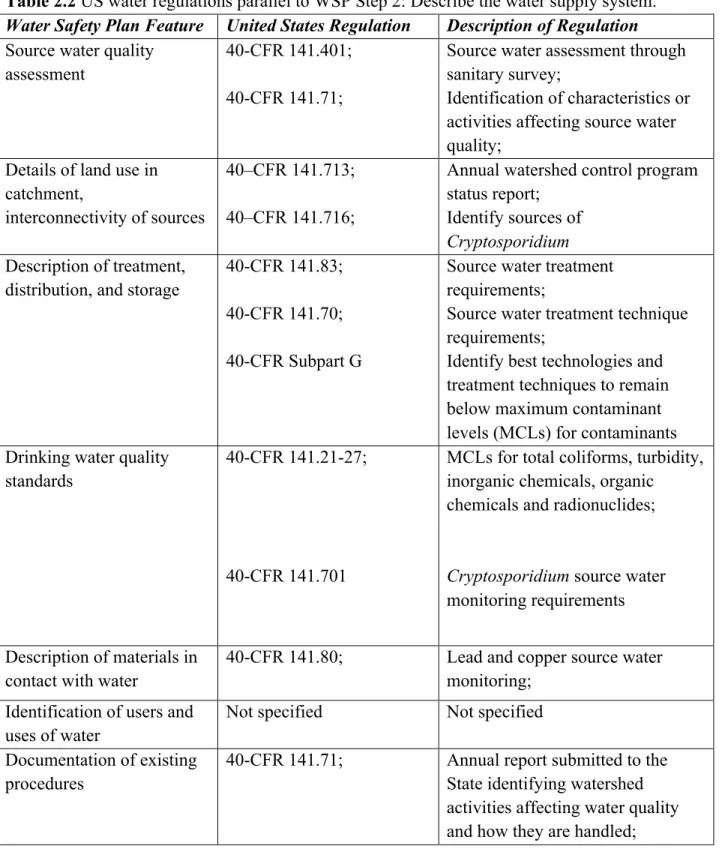
Comparison of US Regulations to WSP Step 2: Describe the water supply system
Table 2.2 US water regulations parallel to WSP Step 2: Describe the water supply system.
Water Safety Plan Feature United States Regulation Description of Regulation
Source water quality assessment
40-CFR 141.401;
40-CFR 141.71;
Source water assessment through sanitary survey;
Identification of characteristics or activities affecting source water quality;
Details of land use in catchment,
interconnectivity of sources
40–CFR 141.713;
40–CFR 141.716;
Annual watershed control program status report;
Identify sources of
Cryptosporidium
Description of treatment, distribution, and storage
40-CFR 141.83;
40-CFR 141.70;
40-CFR Subpart G
Source water treatment requirements;
Source water treatment technique requirements;
Identify best technologies and treatment techniques to remain below maximum contaminant levels (MCLs) for contaminants Drinking water quality
standards
40-CFR 141.21-27;
40-CFR 141.701
MCLs for total coliforms, turbidity, inorganic chemicals, organic chemicals and radionuclides;
Cryptosporidium source water monitoring requirements
Description of materials in contact with water
40-CFR 141.80; Lead and copper source water monitoring;
Identification of users and uses of water
Not specified Not specified
Documentation of existing procedures
Comparison of US Regulations to WSP Steps 3, 4, and 5: Identify hazards and hazardous events
and assess the risks, Determine and validate control measures, reassess and prioritize the risks,
Develop, implement and maintain an improvement/upgrade plan
The third, fourth, and fifth steps of the WSP are grouped together since they focus on the hazards, risks, and controls, which are assessed collectively in WSPs. US regulations require water systems to identify hazards, specifically as they relate to potential terrorist attacks. However, US regulations differ from WSPs because US regulations do not require internal assessments of risks, internal identification of controls, or prioritization of risks by the individual water systems, while WSPs do. Rather, US regulations control for risks by determining
maximum contaminant levels and appropriate treatment technologies to minimize risk of contaminants, at a national level. US regulations individualize the risk assessment through requiring an external auditor from the state to conduct a sanitary survey by assessing the source water, water treatment process, distribution system, finished water storage, pumping facilities, monitoring and reporting, water system management and operations, and operator compliance with state requirements (USEPA Sanitary Survey, 2008). Once these risks are assessed,
Table 2.3 US water regulations parallel to WSP Steps 3, 4, and 5: Identify hazards and hazardous events and assess the risks; determine and validate control measures, reassess and prioritize the risks; develop, implement and maintain an improvement/upgrade plan.
Water Safety Plan Feature United States Regulation Description of Regulation
Identify hazards and hazardous events; Identify controls
40-CFR 142.16(b);
40-CFR 141.21-26;
40-CFR 141.61-66, 110-111, 135
Sanitary surveys identify hazards and hazardous events through external audits of water systems;
Hazards are identified by MCLs;
Controls are identified by EPA through best available technologies and treatment techniques
Assess risks 40-CFR 141.21-26 Risks are assessed (at a national level) through determining MCLs and treatment technologies Validate effectiveness of
controls
40-CFR 141.21-26, 61-66, 110-111
Determine if contaminant levels are below MCLs and best treatment techniques and technologies are used
Reassess and prioritize the risks
40-CFR 142.16(b); Sanitary surveys prioritize risks, as determined by the external auditor (not done internally)
Prioritize all identified risks Not specified Not specified
Comparison of US Regulations to WSP Step 6: Define monitoring of the control measures
While US regulations do not require water systems to identify hazards on their own, which WSPs do require, US regulations enforce treatment, monitoring and reporting
Table 2.4. US water regulations parallel to WSP Step 6: Define monitoring of the control measures.
Water Safety Plan Feature United States Regulation Description of Regulation
Determine what will be measured and how
40-CFR 141.21-26
40-CFR 141.40
40-CFR 141.50-55;
40-CFR 141.60-66;
40-CFR 620-627;
40-CFR 141.700-723;
40-CFR 143.3
Monitoring and compliance requirements established for total coliforms, turbidity, inorganic chemicals, organic chemicals, radionuclide sampling, and radioactivity analytical methods;
Monitoring requirements for unregulated contaminants established;
MCLs and treatment techniques established for
organic, inorganic, microbiological, disinfection byproducts,
disinfectants, and radionuclide indicators;
MCLs established for organic, inorganic, microbiological, disinfection byproducts, disinfectants, and radionuclide contaminants;
Stage 2 disinfection byproduct requirements and monitoring;
Enhanced treatment for
Cryptosporidium requirements, sampling schedules, and monitoring;
Comparison of US Regulations to WSP Step 7: Verify the effectiveness of the WSP
Table 2.5 shows how water systems in the US are driven by compliance and can measure their achievements in this manner through meeting EPA requirements. State institutions and the EPA ensure that targets are met and can assess progress on these targets through annual reports and a six-year review of national primary drinking water regulations. Additionally, sanitary surveys assess the risk management and operations of water systems at least every 3-5 years.
Table 2.5 US water regulations parallel to WSP Step 7: Verify the effectiveness of the WSP.
Water Safety Plan Feature United States Regulation Description of Regulation
Check consumer satisfaction
40-CFR 151-155 Consumer confidence reports
Internal and external auditing of operational activities
40-CFR 142.16(b) Sanitary surveys assess risk management and operational activities (external)
Compliance monitoring to ensure meeting targets
EPA SDWA 1414C, 114A Annual report on violations;
EPA SDWA 1412(b)(9);
40-CFR 141.31;
40-CFR 141.33;
40-CFR 141.622
Water systems must report monitoring results to the state;
The EPA must review and revise 40-CFR 140-143 every six years;
Water systems report regular and failure reports to the State;
Water quality analysis records must be maintained for 5 years
(microbiological) or 10 years (chemical);
Comparison of US Regulations to WSP Step 8: Prepare management procedures
US regulations require that water systems must prepare an emergency response plan based on the vulnerability assessments to terrorist attacks, however as seen in Table 2.6, standard operating procedures and other incidence procedures are not required in legislation. For WSPs, response plans are required for all incident types.
Table 2.6 US water regulations parallel to WSP Step 8: Prepare management procedures.
Water Safety Plan Feature United States Regulation Description of Regulation
SOPs and ‘Incident Procedures’
EPA SDWA Sec 1433 (Public Health Security and Bioterrorism Preparedness and Response Act -
Drinking water security and safety);
Emergency response plan based upon vulnerability assessment
Determine specific staff responsibilities
Not specified Not specified
Comparison of US Regulations to WSP Step 9: Develop supporting programs
Table 2.7 US water regulations parallel to WSP Step 9: Develop supporting programs.
Water Safety Plan Feature United States Regulation Description of Regulation
Water system specific supporting programs are developed
Not specified Not specified
Training, research, development and
maintenance programs are developed
40-CFR 141.70(c);
40-CFR Part 35;
EPA SDWA Sec 1420A, 119;
EPA SDWA 1452A1G, 130;
EPA SDWA Sec 1420C, 119
Operators are trained through operator certification;
Drinking water state revolving fund identifies needs of water systems through research;
New water systems must have technical, financial, managerial capacity to meet drinking water regulations;
State capacity development – assist all systems in technical, financial, and management capacities;
State capacity development, encouragement of partnerships, assistance in training.
Comparison of US Regulations to WSP Step 10: Plan and carry out periodic review of the WSP
Table 2.8 US water regulations parallel to WSP Step 10: Plan and carry out periodic review of the WSP.
Water Safety Plan Feature United States Regulation Description of Regulation
Regularly report, revise and update
EPA SDWA 1412(b)(9);
EPA SDWA Sec 1420C3-119;
40-CFR 142.16(b);
40-CFR 141.23;
40-CFR 141.83;
40-CFR 141.621;
The EPA must review and revise 40-CFR 140-143 every six years;
Reports to governor every 3 years on efficacy of capacity
development strategy;
Sanitary surveys identify hazards and hazardous events through external audits of water systems;
State revises reporting frequency of inorganic contaminants based upon records;
State revises optimal corrosion control programs and treatment for copper and lead when appropriate;
State approves monitoring changes for Stage 2 disinfection byproducts
Comparison of US Regulations to WSP Step 11: Revise the WSP following an incident
Regulations establish that only in a few cases must procedures or documentation be revised following an incident, as Table 2.9 shows. Only in the case of missed sampling dates for
Table 2.9. US water regulations parallel to WSP Step 11: Revise the WSP following an incident.
Water Safety Plan Feature United States Regulation Description of Regulation
Revise the WSP following an incident or emergency
40-CFR 141.702 Cryptosporidium
monitoring must be revised if sampling schedule dates are missed
2.4 DISCUSSION
Our findings show that US drinking water regulations align fairly well with WSPs, however, differences exist that highlight the potential added benefits of WSPs to US water systems. US regulations focus on setting national standards for maximum contaminant levels, best treatment processes, and best available technologies for contaminant reduction, by which each utility determines the safety of their water through the detection of pathogens and toxins in treated water. By the time these contaminant levels have been detected, contaminated water may already be distributed and cause exposure. In contrast, WSPs have an additional focus of
preventing contamination, resulting in the potential to prevent distribution of contaminated water. This difference in focus between US drinking water regulations and WSPs can be seen in three main areas: internal risk assessment and prioritization, management procedures and plans, and team procedures and training.
data is only available for the cases associated with these 28 outbreaks. Five types of contributing factors that were under the jurisdiction of the water system, and which contributed to the
outbreak, were identified for 13 of these sites (See Table 2.10) (CDC National Outbreak Reporting System, 2013). These were: backflow from cross-connection, corrosion and aging of pipes or storage tanks, distribution monitoring and maintenance failures, lack of treatment and disinfection, and source water contamination. As described below, gaps in US regulations that WSPs could address help to control these contributing factors from occurring and causing waterborne disease.
Table 2.10 Contributing factors detected, investigated, and reported in waterborne disease outbreaks in the US, 2009-2010.
Contributing Factor Number of Outbreaks Caused (in part or whole)
Backflow from cross-connection 2
Corrosion and aging of pipes or storage tanks 2 Distribution monitoring and maintenance failures 4
Lack of treatment and disinfection 4
Source water contamination 3
Risk assessment and prioritization
and backflow contamination would be identified, and control measures would be developed and monitored (Step 4) (Mahmud et al., 2010).
As for risk analysis and prioritization, the EPA requires operators to know the system risks, however a specific risk analysis is not conducted, nor are risks prioritized. As a result, knowledge of risks has little impact on system management. Although the Vulnerability Assessment (SDWA Sec 1433) was added as a mandatory assessment in 2002, requiring water systems to assess their vulnerability to terrorist attacks, it only looks specifically at threats from terrorist activities. Current practices do not always recognize all of the everyday hazards and risks that can directly affect the quality of drinking water. On the other hand, WSPs emphasize that all hazards and risks of the system are recognized and controlled to ensure safe drinking water. Operational plans and incident plans are both prepared in advance to respond to
predictable and emergency events. Improvement plans are created, based upon the controls that need to be in place to mitigate risks.
Management procedures and plans
The remaining contributing factors to waterborne disease outbreaks, detailed below, are controlled through US regulations, but improved controls and monitoring are needed to prevent these outbreaks. WSPs emphasize defining monitoring of control measures rather than of system failures (Step 7), developing management procedures (Step 8), and developing supporting programs (Step 9) to enhance control measures and monitoring.
Two waterborne disease outbreaks were partially caused by corrosion and aging of pipes or storage tanks. While regulations require a ‘Corrosion Control’ program, frequent monitoring and updating may not be part of a water system’s standard operations. WSPs have been shown to lead to better management of assets, monitoring, and documentation which would help ensure that normal corrosion and pressure differentials from aging of pipes does not lead to
contamination of water systems (Gunnardottir et al., 2012). Based upon the comparative
mapping, WSPs require more documentation, revision, and review of reports and plans than US regulations. Expanding beyond monitoring for corrosion control programs, WSPs monitor to determine if the WSP aids the water system in meeting its targets, and internal and external auditing of system operations ensures effective implementation of risk reduction plans.
Lack of treatment and failure of disinfection contributed in part to four outbreaks. While the SDWA and the regulations developed under SDWA have specific treatment and disinfection requirements, improved documentation and monitoring of these procedures may have helped to prevent the outbreaks. With emphasis on documentation and monitoring, WSPs potentially offer an approach that might help to improve these controls.
details of staff activities, fostering ownership and implementation of procedures. While the SDWA requires that water systems must have certified operators, there is no requirement for SOPs, which might provide greater clarity, institutional memory, and sense of ownership. In order to ensure that everyone knows their role and how to operate the system, studies have shown that SOPs improve the understanding of potential incidents, thereby reducing errors and mitigating potential risks (Gunnarsdottir et al., 2012a; Mullenger et al., 2002).
Review and revision of the WSP annually, and after incidents, will help maintain its relevance, and keep operators aware of any changes or updates in the system. In the US, however, after water systems pass their initial assessment, the SDWA does not require them to update the system frequently nor to revise their practices. Rather, the SDWA mandates that they must keep up with contaminant regulation, which is reassessed every 5 years at the national level to determine which contaminants to regulate (SDWA Sec 1412). The SDWA’s broad application in regulation at the national level may not address system-specific contaminants-of-concern, which may leave certain systems more vulnerable to water contamination.
Team procedures and training
employees take greater responsibility for the system and understand the other responsible
members’ roles (Byleveld et al., 2008). Understanding one individual’s role in the water system, and the roles of everyone else, aids in understanding the system as a whole and why procedures are carried out throughout the water system. Also, lessons from international examples of waterborne disease outbreaks for over 60 cases can be applied to the US, which indicate that a major cause of outbreaks stems from a lack of knowledge of the water system from operators and managers (Hrudey and Hrudey, 2004 and Hrudey and Hrudey, 2014). This improved awareness and understanding from WSPs helps to further reduce risks from source water contamination, even though both WSPs and regulations require source water assessments.
Individual roles and trainings are further emphasized by supporting programs in WSPs that ensure that the WSP approach is a part of training, research, development, and preventive maintenance in addition to daily operations. In contrast, US regulations require operators to be re-certified and update their training, but they do not require supporting programs to further embed this training into the system operations.
2.5 CONCLUSION
Potential added benefits of WSPs may help reduce future waterborne disease. However, the national regulation-based system of the US does not provide clear incentives for a voluntary approach that emphasizes preventive management. While voluntary optimization programs have been used in the US, the differences between WSPs and US regulations may be too great to expect voluntary initiatives to prompt these changes that may require a large investment of time and resources. Given the regulation-based environment of the US, it may be realistic to expect adoption of WSPs if the law requires them.
Current nation-wide regulations impose one set of standards for all drinking water systems, which in some cases does not promote the identification of system specific risks. The EPA regulates 114 contaminants to be monitored to specific maximum contaminant levels (MCL). While the EPA updates and adds to these contaminants every five years, there are many contaminants that are not monitored. Only contaminants that are deemed important nationally are regulated, while context specific risks are not accounted for or prioritized. As an example, from the drinking water quality test results from water systems since 2004, 49 contaminants that are not regulated by the EPA were found in drinking water at levels above government established health guidelines (Environmental Working Group, 2009). While the regulatory-based responsive approach to water quality risk management in the US has contributed to the substantially
The documented successful results of WSPs in improving water quality, increasing regulatory compliance, improving public health, and increasing system cost savings may help improve the management of water systems in the US. Implementation of WSPs may help reduce future waterborne disease in the US, but how to encourage water systems to adopt this approach remains a challenge. The US could assess its rule-based risk management system and national level enforcement of regulations to determine if there is room for additional regulations or alternative approaches. Given the similarities of sanitary surveys to WSPs, the US could also explore the option of requiring WSPs for each water system to replace or enhance parts of the sanitary surveys.
Acknowledgments
We would like to thank the Centers for Disease Control and Prevention (CDC) and the National Environmental Health Association for their financial support in carrying out this study. We would especially like to thank Raquel Sabogal (CDC), Rick Gelting (CDC), Donald Reid (Environment and Sustainable Resource Development, Alberta), and Kenneth Rotert (US EPA) for their comments on a draft of this paper.
Conflicts of Interest
CHAPTER 3: WATER SAFETY PLANS: BRIDGES AND BARRIERS TO IMPLEMENTATION IN NORTH CAROLINA5
3.1 INTRODUCTION
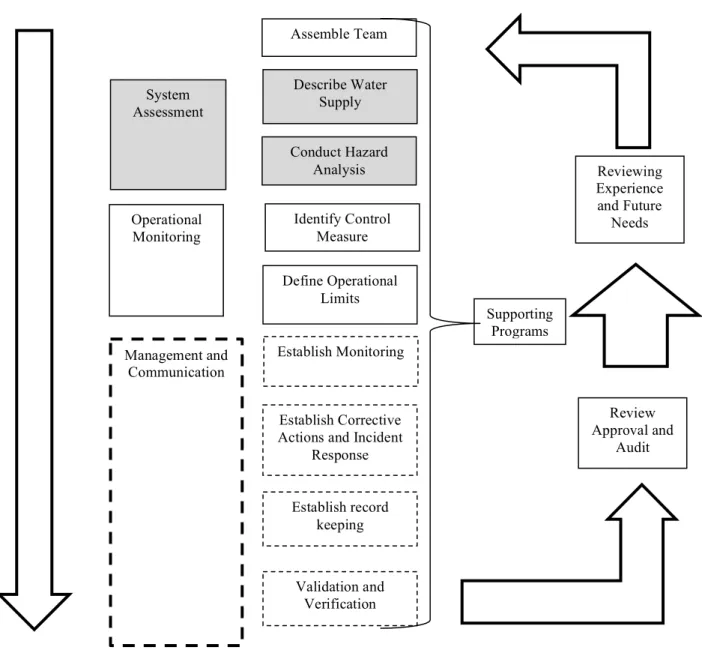
Water Safety Plans (WSPs) are a comprehensive drinking water quality risk management process, emphasizing prevention, instead of reaction, to hazardous events (Bartram 2009; WHO 2004, 2005, 2012; Howard and Bartram 2014). WSPs require the proactive identification and management of risks in a drinking water system through six primary steps: (1.) Assembling a team; (2.) System analysis (3.) Operational monitoring (4.) Management and communication (5.) Review, approval and audit; and (6.) Assessing experience and future needs (Bartram et al 2009; see Figure 1). Benefits of using WSPs include increased regulatory compliance, decreased microbial growth in the water system, and lower incidence of clinical diarrhoea (Gunnarsdottir et al 2012). The goal of WSPs is to provide safe drinking water through: effective water supply practices, prevention of source water contamination, adequate water treatment to meet water quality targets, and prevention of re-contamination during storage and distribution of drinking water (WHO 2005, 11).
A dynamic methodology, a WSP is embedded in the daily operations and culture of a water system. Implementing a WSP requires a team that drives the plan, understands the water catchment area, treatment and distribution systems, has the capacity to maintain the water
5 This chapter is under review at Journal of Water and Health. Amjad, U., Luh, J., Baum, R., Bartram, J. 2016.
system, continues internal training and consumer awareness, and pursues continuous review and refinement of the WSP. While a WSP is a large undertaking for a water system team, the World Health Organization (WHO) points out that, “The time it will take to establish a water safety plan [WSP] will depend upon a number of factors: staff experience; amount of data available on the water supply; size and complexity of the supply; and other systems that have already been adopted” (WHO 2005, 126).
Figure 3.1. Water Safety Plan (adapted from WHO 2005, 20)
Assemble Team Conduct Hazard
Analysis Describe Water
Supply
Establish Monitoring Define Operational
Limits Identify Control
Measure
Establish record keeping Establish Corrective Actions and Incident
Response System
Assessment Management and
Communication Operational Monitoring
Supporting Programs
Review Approval and
Audit Reviewing Experience and Future
Needs
For a detailed step-by-step guide to implementing WSPs please see Bartram et al (2009). Organizational culture, or shared assumptions about work practices, influences the adoption and implementation of WSPs (Summerill et al 2010a). Examples of enabling
characteristics of organizational culture are: proactive, involved leaders, attention to staff and stakeholder needs, accountability, and commitment to continual improvement. Disabling cultural characteristics include poor communication, inflexibility, and complacency. Challenges in the implementation of WSPs are partly due to the difficulty in evaluating the benefits of WSPs, although frameworks for evaluation have been suggested, as shown in Iceland, Bangladesh and Latin America (Gunnarsdottir et al 2012; Mudaliar 2012; Gelting et al 2014).
WSPs have been used in water systems in diverse countries such as Iceland, Bangladesh, New Zealand, and England (Gunnarsdottir et al 2012; Mahmud et 2007; Parker and Summerill 2013; Nijhawan et al 2014), thus demonstrating their use in both developed and developing countries. For countries that have consistently high compliance with water safety standards, WSP implementation arose from a desire to improve public health, especially following a
WSPs (Health Amendment Act, 2007; Schmoll et al., 2011). For the successful implementation of WSPs, clear public health messages and goals are critical (Summerill et al., 2010b).
The focus on improving public health and the involvement of the Ministry of Health in countries such as Australia, New Zealand, and Germany differs in attitude from the United States. While the US develops water quality standards based upon protecting public health, regulations reflect an environment of meeting regulatory standards for contaminant levels rather than preventing contamination at each water system. Additionally, the Environmental Protection Agency (EPA) of the US regulates 114 contaminants across the country and does not specify different contaminants for different contexts (USEPA). While these regulations have
substantially reduced the risk of waterborne disease, system-specific risks exist and can cause contamination events that pose a risk to public health. Since these risks are different depending on the water system, it becomes important to identify specific public health hazards and risks for each water system in addition to meeting national guidelines and regulations.
In the US, many water utility operators, while unfamiliar with the term ‘water safety plan’, were already practicing many parts of a WSP that are required by US drinking water regulations, such as the National Primary Drinking Water Regulations and National Secondary Drinking Water Regulations (Code of Federal Regulations Title 40 – Protection of the