cover image here
FOCUS:
Cloud Computing
Developer testing (also called
unit testing) can help ensure the
devel-opment of high-quality cloud applica-tions. However, unit testing normally can’t take into account all possible in-puts because the input space is too large or even infinite. So, developers need cri-teria to decide which test inputs to use and when to stop testing. Effective use
of criteria such as structural-code cov-erage can help reveal faults.
Manually writing test cases to achieve high structural coverage re-quires developers to consider imple-mentation details, making this task laborious and time-consuming. Also, developers sometimes have problems providing specific combinations of test
inputs and cloud states to cover spe-cific paths or blocks. To reduce the manual effort, they can employ auto-mated test generation tools that use
dynamic symbolic execution (DSE),1
such as Pex (http://research.microsoft. com/projects/pex), a constraint-solving technique based on path exploration. But these tools fail to generate high-covering test inputs because they can’t generate a required cloud state or can’t control the cloud state.
Using stub cloud models could help alleviate these issues (see “Related Work” sidebar). With such models, de-velopers can simulate a real cloud envi-ronment with a fake stub that provides default or user-defined return values to cloud-related API method calls. How-ever, these values won’t help achieve high structural coverage, and writing such a model requires much manual effort.
A parameterized cloud model ex-tends a stub cloud model to enable gen-eration of appropriate return values for covering different paths or blocks. Typ-ically, a simple parameterized model would assume that every return value was possible as long as it could lead to a new path, even when this return value wasn’t feasible in a real cloud environ-ment. Without reflecting the actual cloud environment’s logic or state con-sistency, such a model could cause false warnings among reported failing tests.
To achieve high structural coverage for cloud applications while causing few false warnings, we’ve developed an approach that combines a simulated cloud model and DSE. It uses
• a test-driven-development (TDD) process of environmental modeling to simulate the cloud environment, • a reusable cloud model to test cloud
applications, and
• an automated technique that gener-ates test inputs and cloud stgener-ates.
Environmental
Modeling for
Automated Cloud
Application
Testing
Linghao Zhang, Xiaoxing Ma, and Jian Lu, Nanjing University
Tao Xie, North Carolina State University
Nikolai Tillmann and Peli de Halleux, Microsoft Research
//
Simulating environmental behavior and applying
dynamic symbolic execution can help generate
test inputs and cloud states to achieve high
structural coverage for cloud applications.
//
We’ve applied this approach success-fully to several open-source cloud ap-plications running in Microsoft’s Win-dows Azure platform (www.microsoft. com/windowsazure), which employs the platform as a service (PaaS) model.
empirical investigations
We studied 21 open-source Azure proj-ects from CodePlex and Google Code (for a list, see our project website, https://sites.google.com/site/asergrp/ projects/cloud). Five of them included unit tests. We manually investigated the results from the Lokad Cloud proj-ect because it includes three classes that heavily interact with the cloud environ-ment and because testers have written test cases to check almost every method in them. The unit tests achieved 80 percent block coverage for the class
BlobStorageProvider, 79 percent for the class
QueueStorageProvider, and 93 percent for the class TableStorageProvider.
We carefully inspected the blocks that these three classes didn’t cover. Of the 141 uncovered blocks, 78 per-cent (111 blocks) weren’t covered be-cause the existing test cases didn’t pro-vide specific cloud states or program
inputs. Whether the test-writing de-velopers used a white-box approach to construct the test cases or not, most of those blocks weren’t covered because they required specific cloud states. Even when the test writers adopted the same coverage criterion as block coverage to generate the test cases, they generated the test cases manually. Different unit execution paths require different com-binations of program inputs and cloud states, and developers can miss some combinations when writing test cases (including setting up cloud states).
The remaining 30 uncovered blocks weren’t covered either because no test case executed the method the block belonged to or because covering the block depended on other business logic.
As our results show, generating test inputs and cloud states manually can prove challenging. In the next section, we use a real code example to illustrate similar challenges in automated testing.
the Challenge of
Automated testing
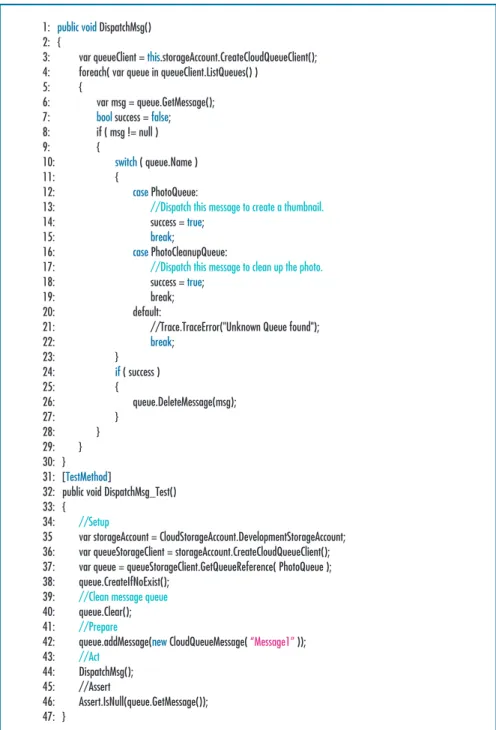
Figure 1 illustrates the testing chal-lenge. The code snippet is a simpli-fied method with a unit test from
PhluffyFotos, an open-source project (http://phluffyfotos.codeplex.com). The method DispatchMsg first acquires a
CloudQueueClient from the storageAccount at line 3 and gets a list of all existing Mes-sageQueues at line 4. It then fetches one message from each queue at line 6 and dispatches the message to another mes-sage-processing method according to the type of each queue at lines 10–23. The flag success is true if the message has been successfully dispatched and pro-cessed at lines 14 and 18. Finally, the method deletes the message at line 26 if
success is true.
To write test cases to check this method, developers must first clean up the cloud to ensure that the old cloud state doesn’t affect the results. Then, they must prepare an appropri-ate cloud stappropri-ate before execution. An il-lustrative manually written test case at lines 31–47 first gets a reference of the
CloudQueuePhotoQueue at line 37, cleans all
the messages in the queue at line 40, inserts a new message into the queue at line 42, and then executes the method under test at line 44. The assertion at line 46 checks whether the message has been deleted.
actual cloud-related API methods for substitution, stub techniques can automatically generate stub methods that include behavior.2
However, a stub object generally can’t reflect an object’s actual behavior, resulting in false warnings. In contrast, our cloud model can simulate the real cloud environment’s behavior.
MODA (Mock Object-Based Test Generation for Database Applications) automatically tests database applications, using a simulated database represented by tables.3 In contrast, our cloud
model provides a simulated cloud environment, which is more complex than a database.
coverage.
references
1. M. Fowler, “Mocks Aren’t Stubs,” 2 Jan. 2007; www.martinfowler.com/ articles/mocksArentStubs.html.
2. N. Tillmann and W. Schulte, “Mock-Object Generation with Behavior,” Proc.
21st IEEE/ACM Int’l Conf. Automated Software Eng. (ASE 06), IEEE CS, 2006, pp. 365–368.
3. K. Taneja, Y. Zhang, and T. Xie, “MODA: Automated Test Generation for
Database Applications via Mock Objects,” Proc. 25th IEEE/ACM Int’l Conf.
FOCUS:
Cloud Computing
However, if the developers want to cover all this method’s branches, they must provide various cloud states. In particular, to cover the true branch at line 8, at least one queue should be empty. To cover the true branch at line
24, at least one example of the Photo-Queue or PhotoCleanupQueue should exist in at least one message in the queue. For this relatively simple method under test, developers must expend nontriv-ial effort to construct the cloud state.
Covering some branches of a more complex method might require specifi c cloud states that can’t be easily con-structed manually owing to the com-plex execution logic.
Automated test generation tools usually must execute cloud-related API methods to collect information (by in-strumenting these methods). Some tools, such as Pex, use symbolic execu-tion to track the usage of the value a cloud-related API method returns. De-pending on the subsequent branching conditions on the returned value, these tools execute the unit under test mul-tiple times, using different values to ex-plore new execution paths. However, directly applying these tools would fail because the return values of cloud-re-lated API methods depend on the cloud environment’s state, which these tools can’t control, as we mentioned before.
Using stubs can isolate the unit un-der test from the cloud environment; however, the developer still must sim-ulate possible return values for each stub method. For example, developers manually provide a list CloudQueue as the return value of the method ListQueues(). A stub method lets tools such as Pex automatically generate various inputs and stub-method return values to ex-plore different execution paths. How-ever, such stubs generally can’t refl ect state changes of the cloud environ-ment. For example, after the method
DeleteMessage(msg) at line 26 in Figure 1
executes, the message msg should be
deleted from the queue, and the return value of method GetMessage() at line 46 should be null. If a stub or fake object can’t capture this behavior, GetMessage()
could return a non-null value even af-ter DeleteMessage() has executed.
Con-sequently, this test case would fail in the assertion at line 46, causing a false warning.
Addressing the Challenge
Given a unit of a cloud application under test, our approach models the 1: public void DispatchMsg()
2: {
3: var queueClient = this.storageAccount.CreateCloudQueueClient(); 4: foreach( var queue in queueClient.ListQueues() )
5: {
6: var msg = queue.GetMessage(); 7: bool success = false; 8: if ( msg != null ) 9: {
10: switch ( queue.Name ) 11: {
12: case PhotoQueue:
13: //Dispatch this message to create a thumbnail. 14: success = true;
15: break;
16: case PhotoCleanupQueue:
17: //Dispatch this message to clean up the photo. 18: success = true;
19: break; 20: default:
21: //Trace.TraceError("Unknown Queue found"); 22: break; 23: } 24: if ( success ) 25: { 26: queue.DeleteMessage(msg); 27: } 28: } 29: } 30: } 31: [TestMethod]
32: public void DispatchMsg_Test() 33: {
34: //Setup
35 var storageAccount = CloudStorageAccount.DevelopmentStorageAccount; 36: var queueStorageClient = storageAccount.CreateCloudQueueClient(); 37: var queue = queueStorageClient.GetQueueReference( PhotoQueue ); 38: queue.CreateIfNoExist();
39: //Clean message queue 40: queue.Clear(); 41: //Prepare
42: queue.addMessage(new CloudQueueMessage( “Message1” )); 43: //Act
44: DispatchMsg(); 45: //Assert
46: Assert.IsNull(queue.GetMessage()); 47: }
FiguRE 1. A method under test with a unit test in the PhluffyFotos project. This fi gure is
ods that simulate the corresponding API methods’ effect on the real cloud by performing the same operations on the cloud model. Our model cur-rently focuses on providing simulated Azure storage services and classes in the Microsoft.WindowsAzure.StorageClient
namespace, which provides interac-tions with Windows Azure storage services. These services provide three kinds of storage:
• Queue storage transports messages
between applications.
• Blob (binary large object) storage
stores entities such as images, docu-ments, and videos.
• Table storage provides structured
storage that users can query to store collections of entities and properties.
To construct such a model, we care-fully read API documents from the Mi-crosoft Developer Network and code examples from open source projects. We use a TDD process in which we write stubs for different classes incre-mentally on the basis of unit demand rather than writing all the stub storage services at once. Each stub class’s name starts with Stub and ends with its origi-nal name. For example, we named the stub class for the class CloudQueue in our model StubCloudQueue. Each method re-tains its original name.
We build up the three kinds of stor-age on the basis of on C# generic col-lections. We’ve written stubs for all the main classes and API methods in the three storage services. We simu-late queue storage using an instance of List<StubCloudQueue>, in which we simulate each StubCloudQueue using an
instance of List<StubCloudMessage>. We sim-ulate blob storage using an instance of
List<StubCloudBlobContainer> and simulate each StubCloudBlobContainer using an
in-stance of List<StubIBlobItem>. We simulate the table storage similarly.
Transforming the Code under Test
With the cloud model, we execute a unit under test with the simulated en-vironment rather than the actual cloud environment. The code transformer redirects a unit under test to interact with the simulated environment. Pre-processing the unit under test makes this process possible. Specifi cally, if the target unit under test refers to class A from the Microsoft.WindowsAzure. StorageClient namespace, the code trans-former redirects the reference to class
StubA. When a method M of class A is in-voked, the code transformer replaces the invocation with an invocation of the simulated method M of class StubA. Thus, the unit now interacts with our cloud model.
Generating Test Inputs and Cloud States
The test generator incorporates Pex to generate both test inputs and cloud states for a unit under test. Specifi -cally, Pex generates values for not only symbolic program inputs but also sym-bolic cloud states. The generated valuesfor symbolic cloud states include vari-ous storage items (such as containers, blobs, messages, and queues) to be inserted into the simulated cloud before test execution. Pex produces a fi -nal suite in which each test includes a test input and a cloud state (our proj-ect website includes an illustrative ex-ample, in which we explain how our approach works step-by-step). Figure 2 shows the algorithm for generating queue storage states.
To ensure that Pex can choose a valid value for each storage item’s fi eld, we add various constraints. For exam-ple, if we test a cloud application us-ing the DevelopmentStorageAccount, the URI address for any blob container should be http://127.0.0.1:10000/devstoreac-count1/containerName. Pex will choose only the name for each container, mak-ing the URI address fi eld valid. We use a similar algorithm to generate blob storage states.
However, the algorithm to gener-ate table storage stgener-ates differs slightly. A real cloud table can store instances of TableServiceEntity from different sub-classes of TableServiceEntity, but in most open source projects, each cloud table stores instances of TableServiceEntity from only a specifi c subclass of TableServiceEn-tity. So, we restrict each StubCloudTable to store instances from only one subclass 8. StubCloudMessagesij <– Create a new instance of StubCloudMessage
9. Pex chooses values for each field in StubCloudMessagesij 10. StubCloudQueuei. MessageList.MessageAdd(StubCloudMessagesij)
11. end for
12. QueueList.Add(StubCloudQueuei)
13. end for
FiguRE 2. The algorithm for generating queue storage states. This algorithm describes how
FOCUS:
Cloud Computing
of StubTableServiceEntity. (All user-defined types of table service entity are in-herited from the class TableServiceEntity, which is similar to database schema but much simpler). Such simplification lets Pex easily generate table storage states without losing much applicability.
Transforming Generated Unit Tests
Although our cloud model can simu-late cloud storage’s basic behavior, it can’t provide a cloud application with the actual cloud’s execution en-vironment. To gain high confidence on code correctness, we must test the code with either a local emulated cloud environment or the actual cloud environment. In addition, for regres-sion testing or third-party reviewers’ requirements, we must provide a gen-eral format of our generated unit tests, which could set up cloud states for the emulated or actual cloud environment before execution.The test transformer transforms a generated unit test and a generated cloud state into a general unit test. Specifically, it converts a cloud state created by the test generator to a se-quence of real cloud-related API meth-ods that could construct the same state in the emulated or actual cloud environment.
testing our Approach
We conducted unit testing to ensure our cloud model’s correctness. For each method, we wrote a number of unit tests (see our project website). Each test passes using either the real cloud or our simulated cloud. Although our simu-lated cloud can’t replace a local cloud emulator that provides a cloud appli-cation with an execution environment, it can simulate the basic behavior of cloud storage.
We applied our approach to the PhluffyFotos project because its code frequently interacts with cloud stor-age services. We focused on testing the units that interact with the cloud. In
total, we tested 17 methods, and our approach achieved 76.9 percent block coverage. In contrast, Pex achieved only 6.87 percent block coverage with-out using our cloud model.
We also applied our approach to two other open source projects. It increased block coverage from 74.3 to 100 per-cent on the AzureMembership project and from 50 to 91.6 percent on the disi-box project. Our project website shows the details of our testing results.
Currently, our approach has two main limitations. First, the underlying constraint solver’s lack of power limits the ability to generate test inputs and cloud states. If the constraint solver can’t solve a certain path constraint, our approach can’t generate test in-puts or cloud states to cover that path. Second, our approach works only on cloud applications that adopt the PaaS model. To provide substantial empirical evidence, we must apply our approach to more cloud applications to evaluate our model and approach’s validity and effectiveness.
lessons learned
During the development of our cloud model, we learned several lessons that might prove helpful to other developers.
Stateful vs. Stateless Cloud Model
By employing a stateful cloud model, we assume that other clients or pro-cesses haven’t modified the cloud con-currently. However, some might argue that a simplistic, stateless cloud model is enough and that any return value of a cloud-related API method should prove valid, considering that other clients or processes can concurrently manipulate the cloud. Also, a stateless cloud model is much easier to construct.We should conduct thorough test-ing that includes all possible scenarios. However, in practice, developer test-ing focuses mostly on realistic common scenarios, which a stateful cloud model represents.
TDD
After we test a new program unit, we extend our cloud model with that unit’s new behavior and then retest the unit. Some generated test inputs and cloud states failed initially, so we manually investigated the reported failures. Some failures resulted from the cloud mod-el’s insufficiency. In such cases, we im-proved the cloud model on the basis of the failures.
Faults in the cloud application code can cause another type of failure. How-ever, we haven’t found any real faults in the well-tested applications we investigated.
Testable API Method Alternatives
We’ve found that developers often com-bine methods from other API librar-ies—such as ADO.NET (ActiveX Data Objects for .NET) and System.Linq— with Azure API methods (for example, methods that access the cloud state). Such methods from other API librar-ies aren’t quite testable—that is, Pex will have trouble exploring them ow-ing to their method implementations’ high complexity. For example, a com-mon way to make a query to a table storage service is to invoke IQueryable<T>. Where<T>(Func<TSource, bool>), which returns the query results, but this method isn’t quite testable.We’ve observed that for some API methods, alternative methods exist that are functionally equivalent in the con-text in which the unit under test used them and that might be more testable. For example, because our cloud model implements the table service using
List<MockTableEntity>, one alternative way to access the table service storage is
IEnumerable<T>.Where<T>(Func<TSource, bool>). ToList(), which is more testable because its implementation is simpler. Instead of spending nontrivial effort to construct a sophisticated model for these API methods, we substitute their call sites with those of more testable alternatives. Our project website lists API methods
A
cloud applications, it’s ap-plicable to any cloud application that adopts the PaaS model. You could also use it to construct different cloud mod-els. In addition, our approach can em-ploy other test generation tools and techniques.We plan to conduct more unit test-ing on our cloud model and select more cloud applications for further evalua-tion. We also plan to continue compil-ing our list of untestable API methods and their behaviorally equivalent alter-natives. This list could help developers improve the effectiveness of unit test-ing with our approach. In addition, we plan to extend our cloud model to more closely imitate the actual cloud envi-ronment, such as simulating classes in the Microsoft.WindowsAzure.ServiceRuntime and
Microsoft.WindowsAzure namespaces.
Acknowledgments
US National Science Foundation grants CCF-0725190, CCF-0845272 (and its CiC Supplement), CCF-0915400, and CNS-0958235; US Army Research Offi ce grant W911NF-08-1-0443; National Natural Sci-ence Foundation of China grants 60973044, 60736015, and 61021062; and the 973 Pro-gram of China (2009CB320702) supported this research.
reference
1. P. Godefroid, N. Klarlund, and K. Sen, “DART: Directed Automated Random Test-ing,” Proc. 2005 ACM SIGPLAN Conf. Pro-gramming Language Design and Implementa-tion (PLID 05), ACM, 2005, pp. 213–223.
him at [email protected].
tAo Xie is an associate professor in the Department of Computer Sci-ence at North Carolina State University. His research interests include software engineering, particularly software testing, analysis, and analytics. Xie received a PhD in computer science from the University of Washington at Seattle. He’s a member of IEEE and ACM. Contact him at [email protected].
nikolAi tillMAnn is a principal research software design engi-neer at Microsoft Research. His research involves combining dynamic and static program analysis techniques for automatic test-case generation. Tillmann has an MS in computer science from the Technical University of Berlin. Contact him at [email protected].
peli De HAlleUX is a senior software design engineer at Microsoft Research. His research involves combining dynamic and static program analysis techniques for automatic test-case generation and making those accessible to the masses of developers. de Halleux has a PhD in applied mathematics from the Catholic University of Louvain. Contact him at [email protected].
XiAoXing MA is a professor in the State Key Laboratory for Novel Software Technology and the Department of Computer Science and Technology at Nanjing University. His current research interests include self-adaptive software systems, middleware systems, and cloud com-puting. Ma has a PhD in computer science from Nanjing University. He’s a member of IEEE. Contact him at [email protected].
JiAn lU is a professor in the State Key Laboratory for Novel Software Technology Department of Computer Science and Technology and the director of the State Key Laboratory for Novel Software Technology at Nanjing University. His research interests include software methodolo-gies, software automation, software agents, and middleware systems. Lu has a PhD in computer science from Nanjing University. He also serves as the director of the Software Engineering Technical Committee of the China Computer Federation. Contact him at [email protected].
AB
o
u
t t
H
E A
Selected CS articles and columns are also available for free at http://ComputingNow.computer.org.