Contents
Executive Summary ... ES‐1
Chapter I: Introduction ... 1
Chapter II: Economic Impacts of the Human Genome Project ... 5
Chapter III: Functional Impacts of the Human Genome Project...17
Chapter IV: Into the Future...53
Certain technologies discussed in this report have not received regulatory approval or clearance for clinical uses. In this regard, sequencers are currently intended for research or investigational uses.
Battelle Memorial Institute (Battelle) does not endorse or recommend particular companies, products, services, or technologies nor does it endorse or recommend financial investments and/or the purchase or sale of securities. Battelle makes no warranty or guarantee, express or implied, including without limitation, warranties of fitness for a particular purpose or merchantability, for any report, service, data or other information provided herein.
Copyright 2011 Battelle Memorial Institute. Use, duplication, or distribution of this document or any part thereof is prohibited without the written permission of Battelle Memorial Institute. Unauthorized use may violate the copyright laws and result in civil and/or criminal penalties.
This report aims to fill a gap in the literature regarding the Human Genome Project by assessing its economic and
functional impacts. The HGP required the development of advanced equipment, technologies, data
analysis tools, and specialized analysis techniques that has
facilitated the growth of an expanding “genomics industry.”
Today this industry is empowering further scientific
discovery, progress and commercial innovation on a broad range of fronts. From human healthcare to veterinary
medicine, from industrial biotechnology to high productivity agriculture, the
knowledge, tools and technologies supported through
the sequencing of the human genome form a foundation of advanced economic and social progress for the United States
and humankind.
Executive Summary
Introduction
The sequencing of the human genome represented the largest single undertaking in the history of biological science and stands as a signature scientific achievement.1 All of history in the making, human DNA took just 13 years to sequence under the Human Genome Project (HGP), an international public project led by the United States, and a complementary private program. Sequencing the human genome—determining the complete sequence of the 3 billion DNA base pairs and identifying each human gene—required advanced technology development and the assembly of an interdisciplinary team of biologists, physicists, chemists, computer scientists, mathematicians and engineers.
Scientists are using the reference genome, the knowledge of genome structure, and the data resulting from the HGP as the foundation for fundamental advancements in medicine and science with the goals of preventing, diagnosing, and treating human disease. Also, while foundational to the understanding of human biological systems, the knowledge and advancements embodied in the human genome sequencing, and the sequencing of model organisms, are useful beyond human biomedical sciences. The resulting “genomic revolution” is influencing renewable energy development, industrial biotechnology, agricultural biosciences, veterinary sciences, environmental science, forensic science and homeland security, and advanced studies in zoology, ecology, anthropology and other disciplines. In the ten years since the first sequences were published, much has been written about the scientific consequences of mapping the genome but little analysis has been done of the economic significance of the achievement. For this reason, Battelle has produced, with support from Life Technologies
Foundation, this first comprehensive analysis of the economic impact of the HGP.
The full report provides multiple analyses and information resources to spur consideration and discussion. It includes
• A quantitative measurement of the direct and indirect economic impacts in the United
States derived from actual expenditures of the HGP project and follow‐on federal
expenditures in major genomic science programs. This is quantified using the regional
economic analysis technique of input/output analysis.
• A quantitative estimate of the economic impact of the U.S. “genomics and genomics‐
enabled industry”, with acknowledgement that those within the industry credit the HGP
and related programs as being integral components in the development of the industry.
• Specific examples and case studies of “genomics in action”—highlighting the functional
application of genomics tools, technologies and knowledge in a range of economically
relevant fields such as healthcare, veterinary medicine, agriculture, the environment,
industrial biotechnology, and security and justice.
• A look into the potential for future impacts along various genomic pathways. The first
human genome sequences were an important step in the development of these
pathways, paving the way for much of what is expected in the “post‐genomic” future.
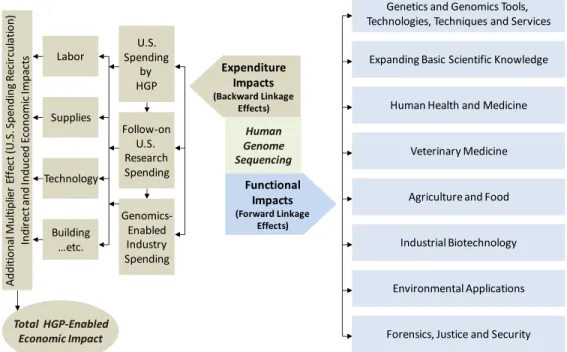
The general structure of impacts is shown in Figure ES‐1.
1
The Human Genome Project (HGP) typically refers to the federally‐funded program that ran from 1990 to 2003 (though it also included initial funding in 1988 and 1989). Part of our economic analysis focuses just on this essential and galvanizing component of the total effort to unravel the human genome. But the total effort to decode the human genome involved many public and private players over many more years, and the work of entities such as Celera Genomics played an important part. Our analysis of the functional impacts of the HGP necessarily includes all these contributions, and in general our reference to the effort to map the genome should be understood to encompass numerous contributions made by multiple parties to our current understanding.
Between 1988 and 2010 the human genome sequencing projects and associated research and industry activity directly and indirectly generated: $796 billion in U.S. economic output $244 billion in personal income for Americans 3.8 million job‐years of employment. Figure ES‐1: The Structure of Forward and Backward Linkage Impacts Associated with the Human Genome Sequencing
Battelle’s detailed analysis produced five overarching conclusions:
1. The economic and functional impacts generated by the sequencing of the human genome are already large and widespread. Between 1988 and 2010 the human genome sequencing projects, associated research and industry activity—directly and indirectly—generated an economic (output) impact of $796 billion, personal income exceeding $244 billion, and 3.8 million job‐years of employment.2
2. The federal government invested $3.8 billion in the HGP through its completion in 2003 ($5.6 billion in 2010 $). This investment was foundational in generating the economic output of $796 billion above, and thus shows a return on investment (ROI) to the U.S. economy of 141 to 1—every $1 of federal HGP investment has
contributed to the generation of $141 in the economy.
3. In 2010 alone, the genomics‐enabled industry generated over $3.7 billion in federal taxes and $2.3 billion in U.S. state and local taxes. Thus in one year, revenues returned to government nearly equaled the entire 13‐year investment in the HGP. 4. Overall, however, the impacts of the human genome sequencing are just
beginning—large scale benefits in human medicine, agriculture, energy, and environment are still in their early stages. The best is truly yet to come.
5. The HGP is arguably the single most influential investment to have been made in modern science and a foundation for progress in the biological sciences moving forward.
2
A “job‐year” is equivalent to one person employed full time for one year. Personal income consists of both employee and proprietor income and includes wages and other financial benefits (e.g., retirement funds).
Expenditure
Impacts
(Backward Linkage Effects) U.S. Spending by HGP Labor Supplies Technology Building …etc. A ddi ti o n al M u lt ip lier Ef fe ct (U .S . Sp en di ng Re ci rc u la ti o n ) Ind ir ec t an d In duc ed Ec o n o m ic Im p ac ts Total HGP‐Enabled Economic Impact
Genetics and Genomics Tools, Technologies, Techniques and Services
Functional
Impacts
(Forward Linkage Effects)
Expanding Basic Scientific Knowledge
Human Health and Medicine
Veterinary Medicine
Industrial Biotechnology
Forensics, Justice and Security Environmental Applications Human
Genome Sequencing
Agriculture and Food Follow‐on
U.S. Research Spending Genomics‐ Enabled Industry Spending
In 2010 alone, the human genome sequencing projects and associated research and industry activity directly and indirectly generated:
$67 billion in U.S. economic
output
$20 billion in personal
income for Americans
310 thousand jobs.
The
Economic
Impacts
of
Human
Genome
Project
The human genome sequencing programs had direct expenditures totaling almost $3.8 billion ($5.6 billion in constant 2010 dollars). In addition, beyond the original HGP investments, both the National Institutes of Health (NIH) and the Department of Energy (DOE) made and continue to make significant investments in the science, instrumentation, and related applications stemming from the human genome work. In fact, in both current and constant 2010 dollars the federal investment in human genomics‐related or enhanced research over the last seven years (2004–2010) has actually exceeded the federal investment in the HGP by 28 percent. These additional expenditures also generated direct and indirect (multiplier effect) economic impacts in the U.S economy.
The decoding of the human genome was both a technological as well as scientific achievement. The technologies that have empowered genome sequencing range from the gene sequencers themselves, to sample preparation technologies, sample amplification technologies, and a range of analytical tools and technologies. An industry has grown up to supply the scientific research community in the private sector, government and academia with the equipment, supplies and services required to conduct genomics research and development (R&D) and associated product development. This industry, of course, generates additional economic impacts.
To evaluate these genomics‐enabled industry impacts in the U.S., Battelle constructed a “from the ground‐up” database of individual companies engaged within the sector. The employment of this industry base was used as the foundation for an input/output analysis to quantify the total impacts of these firms (in terms of direct and indirect output and employment and their multiplier effect). The results of the analysis show that—spurred by the original investment and technological development impetus of the human genome sequencing projects—a substantial economic sector has developed thereby benefiting the U.S. economy in terms of business volume, jobs, and personal income supporting American families.
Battelle’s analysis of the impact of human genome sequencing includes separate assessments of the HGP impacts, post‐HGP expenditure impacts, and the impacts of the genomics‐enabled industry sector. These separate results are contained in the full report. Table ES‐1 provides a summation of the combined impacts from these analyses for the 1988–2010 period.3
Table ES‐1: Cumulative Economic Impact of Human Genome Sequencing, 1988–2010 (in Billions, 2010 $)
The direct impacts include nearly 711,000 direct job‐years, a combined personal income direct impact of more than $71 billion, and direct genomics‐driven output of nearly $265 billion. In combined direct tax revenue more than $3.5 billion has been generated in state/local taxes and more than $13 billion in federal taxes. From just the perspective of federal revenue and expenses,
3
While 1988 and 1989 are outside of the official time period of the HGP, federal funding statistics record related expenditures for these years and thus are included in this analysis. Additionally, federal HGP funded continued until 2003.
Impact Employment
(Job‐Years)
Personal
Income Output
State/Local Tax Revenue
Federal Tax
Revenue
Direct Effect 710,819 71.4 264.8 3.5 13.0 Indirect Impacts 1,298,216 89.2 265.8 10.8 18.0 Induced Impacts 1,818,459 83.3 265.7 15.2 17.9
Total Impact 3,827,495 243.9 796.3 29.5 48.9
the direct federal taxes generated to date (in 2010 $) have exceeded the HGP and post‐HGP federal investments ($12.8 billion) by $166 million.
The total employment impact exceeds 3.8 million job‐years over the 23‐year period examined. With an employment multiplier of 5.38, genomics research and associated industries generated an additional 4.38 jobs in the U.S. economy for every “genomics” job. This total level of impacted employment generated nearly $244 billion in personal income over the period—in 2010 dollars amounting to an average of $63,700 in personal income per job‐year. The genome sequencing projects, associated research and industry activity generated a total economic (output) impact of more than $796 billion over the 1988–2010 period. Considering the federal investment of $3.8 billion in the Human Genome Project from 1988–2003 ($5.6 billion in 2010 $) the HGP generated a return on investment (ROI) to the U.S. economy of 141 to 1—every $1 of HGP investment has helped to generate $141 in the economy.
The
Functional
Impacts
of
the
Human
Genome
Project
While the economic impacts of the sequencing of the human genome are impressive, the ultimate goal of the HGP was to improve our biological understanding, and our health and wellbeing. The economic impact may be viewed as a “bonus” that has occurred in addition to the primary functional impacts. The programs sought to create benefits for humankind by elucidating basic molecular processes governing life and via the application of knowledge gained to human healthcare and multiple other fields that would benefit from advancements in genomics knowledge and technology.
Figure ES‐1 also illustrates Battelle’s representation of the structure of functional impacts generated by the sequencing of the human genome. These functional impacts include the development of genomics tools, technologies and techniques—an area of fundamental importance to making the sequencing feasible. Significant advancement was made over the course of human genome sequencing across a broad range of technology fronts and these have, in many cases, been commercialized and form the foundation for a highly active and growing commercial genomics‐based industry.
The application of these genomic tools, technologies and techniques resulted in a truly dramatic expansion of basic biological knowledge. The full human genome sequence unveiled a complex biological system unanticipated by most in science, and has been a paradigm shifting event for biology. As the sequencing information from the HGP was posted publically on a daily basis to the World Wide Web, the data contained could be immediately put to use advancing application of knowledge across a broad range of scientific disciplines and applied fields. Revealing the human genome structure and sequence had a direct impact on biomedical science. It also had a transformational effect on the identification of mechanisms of disease, diagnosis of genetic diseases and disorders, elucidation of pathways and potentially involved biological elements in complex diseases and disorders, and detection of specific targets for drugs and biologics. Furthermore, having the full human sequence has served to advance additional human biomedical applications in R&D in areas such as gene therapy, vaccine development, regenerative medicine and stem cell therapy, and the refined matching of organs and tissue from donors to patients.
With the first full draft of the human sequence in hand, new areas of biomedical science have opened—with pharmacogenomics and companion diagnostics, for example, being used to identify appropriate drugs based on patient genomic profiling and to refine the dosing of therapies, thereby maximizing effectiveness and reducing negative side‐effects. Already being applied in the treatment of some cancers, pharmacogenomics, empowered by the sequencing of the human genome, holds promise for revolutionizing the practice of medicine in the 21st Century.
Modern genomics, the reference human genome sequences, and comparative organism sequences, have empowered a new view of biological processes. In turn, these new views are being translated into biomedical applications, such as those shown in Table ES‐2.
In medicine, genomics has provided the first systematic approaches to discover the genes and cellular pathways underlying disease. Whereas candidate gene studies yielded slow progress, comprehensive approaches have
resulted in identification of ~2,850 genes underlying rare Mendelian diseases, ~1,100 loci
affecting common polygenic disorders and ~150 new recurrent
targets of somatic mutation in cancer. These discoveries are propelling research throughout
academia and industry Eric Lander Nature. Vol. 470. 2011
From an impact standpoint, developments in pharmacogenomics and personalized medicine hold significant promise for more accurate diagnosis of disease,
elucidation of preventive measures to avoid disease, more
refined disease treatment and avoidance of costs associated with adverse drug reactions. The federal investment of $3.8 billion in the Human Genome Project ($5.6 billion in 2010 $) enabled the generation of more than $796 billion in economic output for a return on investment to the U.S. economy of 141 to 1—every $1 of investment has helped to
Table ES‐2: Biomedical Applications of Genomics and Human Genome Sequencing
Potential Application Genomics Advances Today Hope for the Future
Diagnosis of single gene, Mendelian diseases and disorders
Specific genes for over 3,000 Mendelian monogenic diseases discovered. Genomic tests are being used to accurately diagnose rare diseases and disorders, many of which were previously misdiagnosed with inappropriate courses of treatment prescribed.
Prenatal genetic screening is being performed to inform potential parents of risks for catastrophic inheritable disorders.
Gene therapies will achieve success in repairing genetic abnormalities leading to diseases and disorders.
Custom therapeutic products will block or change expressed activity of defective genes.
Knowledge of predisposition towards specific diseases
Multiple genes and biomarkers have been identified for predisposition to multiple diseases such as cancers, neurological diseases, psychiatric disease and cardiovascular disease.
Understanding of risk for disease based upon multi‐gene tests will likely lead to appropriate therapeutic interventions and personal behavior/lifestyle modification.
Environmental components of disease emergence and progression will be teased‐out from genomic factors and addressed appropriately.
Genomics driven drug discovery, known as rational drug development
New drug targets have been identified. Cancer drugs based on the genomics of tumors are on the market, including Gleevec (for chronic myelogenous leukemia), Herceptin (breast cancer), Tarceva (lung cancer) and Avastin (colon, lung and other cancers).
Many new drugs and biologics will be developed to successfully exploit elucidated drug targets.
Therapeutic products custom prescribed based on patient genomics, to maximize effect and reduce or eliminate side effects
Already being applied in the treatment of some forms of cancer and cardiovascular disease.
Genetic tests are used for dosage levels in prescription of some drugs such as Coumadin (warfarin).
Routine sequencing of a patient’s entire genome wil guide treatment selection and dose for the optimum response. Potential adverse reactions to drugs and treatment regimens, identified via genomic markers, will result in the avoidance of adverse events. Repurposing or revitalization of some drugs shelved in development because of impact on a “genomic few”
Successful discovery of subpopulations for which previously unapproved drugs are efficacious. Iressa, for example, has been approved with patents testing positive for the EGFR mutation.
There will be a substantial volume of existing drugs found to be efficacious in selected sub‐populations, and drug companies will have mined their previously “failed” R&D pipelines to bring forward previously non‐ marketable drugs to work in selected sub‐populations.
Identification of means to combat infectious organisms
Multiple infectious organisms have had their whole genomes sequenced. Public health professionals sequence emerging infectious disease organisms to monitor migrations and mutations. Genetic testing already being applied to direct therapy for HIV/AIDS patients.
Rapid, real‐time sequencing of pathogens twill direct public health efforts to combat disease outbreaks in humans and zoonotic disease outbreaks in animals. DNA vaccines will come to the market to impart immunity to infectious diseases. Genetic profiling of patient viruses will assist in customizing treatment regimens.
Gene therapies for inherited genetic diseases and disorders
After publicized setbacks, gene therapies are now achieving success. For example, the fatal brain disorder adrenoleukodystrophy has been treated, with progression stopped, in a sample of children.
Gene therapy may be routinely provided to newborns with identified genomic profiles to correct defective genes, particularly in conditions associated with devastating monogenic disorders.
Beyond human healthcare, the technologies, tools and basic biological knowledge embodied in the human genome sequencing programs have found applications across a wide range of life‐science and related disciplines. Agriculture and global food security are being significantly enhanced through the
We are on the leading edge of a true revolution in medicine, one that promises to transform the traditional “one size fits all” approach into a much more powerful strategy that considers each individual as unique and as having special characteristics that should guide an approach to
staying healthy. Francis Collins, “The Language of Life,” New York: Harper Collins, 2010 “Modern medicine arose when scientists learned to fight some of
the worst infectious disease with vaccines and drugs. This strategy
has not worked with AIDS, malaria, and a range of other
diseases because of their complexity and the way they
infiltrate processes in cells. Curing such infectious diseases, cancer, and the health problems that arise from defective genes
will require a new type of medicine based on a thorough understanding of how cells work
and the development of new methods to manipulate what happens inside them.”* The HGP was and is one of the central projects leading to this “understanding of how cells work” and opening the way for
new applications of molecular medicine.
*
Russ Hodge. 2010. “The Future of Genetics: Beyond the Human
application of genomics to plant and livestock improvement—positively altering both organismal input traits (such as nutrient uptake, pest resistance, drought tolerance, etc.) and output traits (such as nutrient content, chemical composition, quality and quantity of food produced). Genomics is also being applied in the tracing of food contamination and associated pathogenic events.
The benefits being felt in human healthcare also translate into veterinary medicine. The concurrent sequencing of various animal genomes during the HGP, and subsequent whole animal genome sequencing undertaken after completion of the human genome, has been as revolutionary for veterinary medicine as it has been for human biomedical sciences.
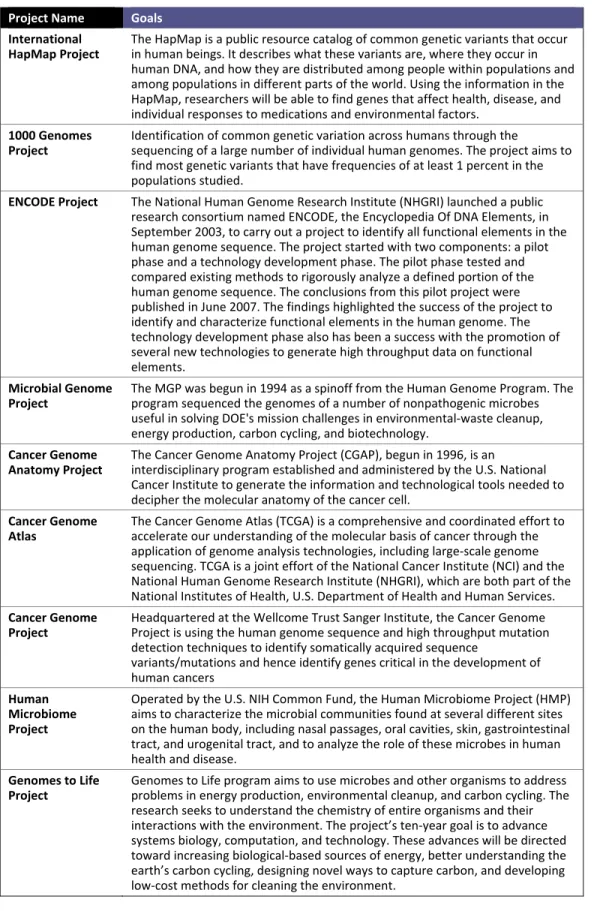
Early in the HGP, the U.S. Department of Energy began applying genomics tools and technologies resulting from the human genome sequencing program to the sequencing of microbes for functionality in environmental remediation and for investigation of their use in other applications such as
bioprocessing and biofuels production. The Microbial Genome Project and the recent Genomes to Life Project have specifically applied genomics to a range of environmental and industrial applications. Likewise commercial enterprises across a series of product categories in biotechnology, biofuels, food processing, drug and vitamin production, and biobased materials are applying advanced genomic knowledge and technologies to bring to market new and more efficient industrial processes to power the U.S. and global economies.
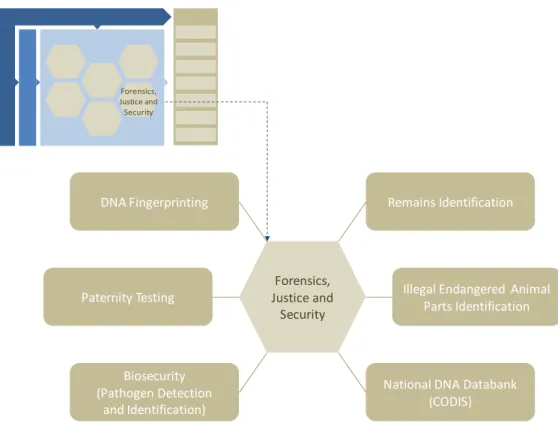
Genomics has also become a tool for applications in the field of justice and security. For homeland security, the ability to genotype suspicious infectious pathogens and trace their origin is a national security priority. Law enforcement is also using genomics in identification of human remains in instances of natural disasters (such as the Haitian and Japanese earthquakes) or terrorist events (such as 9/11’s ground zero), and for tracing illegal trade in endangered animals.
It would be impossible to quantify each and every impact being generated across the field of genomics and its application to such a broad range of scientific fields and technological disciplines. Battelle has not attempted to do that. Rather Battelle examined each of the key fields of application shown in Figure ES‐1 and discusses within the full report the ways in which genomics is being applied within these fields, and provides case studies of genomics in action within these fields.
Into
the
Future
The advancement of knowledge and the technologies resulting from human genome sequencing have formed the platform for nothing less than a medical revolution. The primary impacts of this revolution in quantitative and personalized medicine may not yet be felt in daily clinical practice (although in some areas of cancer it is), but that day is accelerating towards us.
One of the key realizations that must be understood regarding the human genome sequencing is that its usefulness is perpetual. While other major big science projects have a life attached to them the human genome sequence will not wear out or become obsolete.4 Rather, the reference human genome is akin to chemistry’s periodic table, a perpetually useful fundamental platform for understanding and advancing science.
The impact on human medicine and health is profound and important but, as shown, the benefits of performing the HGP and related projects extend into areas of far beyond human health. Our fundamental understanding of genomics, the sequencing and genomic technologies whose development was spurred by the HGP, and the advanced “omics” disciplines created through these efforts, will continue to make contributions on a broad range of fronts. We can expect a variety of genomics‐enabled enhancements, for example:
4
For example, the $11 billion Superconducting Super Collider has an estimated life span of 30 years and the $1.5 billion Hubble Space Telescope has an estimated 15–20 year life.
The reference human genome is akin to chemistry’s periodic table, a
perpetually useful fundamental platform for understanding and
Agricultural productivity to increase considerably, working towards the challenge of
feeding the world’s rapidly expanding population in a sustainable manner.
Not only will food availability increase, but the impact of its production on the global
environment will reduce as crops and livestock are developed with traits suited to
nitrogen use efficiency, no‐till agriculture, water use efficiency and reduced waste
production.
Currently low‐value biomass, especially low‐value cellulosic biomass, will be converted
into higher‐value liquid fuels, energy sources, biobased chemicals, plastics and materials.
These products will increasingly displace petroleum and other fossil‐based inputs,
contributing to reduced carbon emissions and associated climate and environmental
benefits.
An increasingly two‐way flow of diagnostics, therapeutics and prevention tools will move
between human medicine, veterinary medicine and agriculture as the cost of genomic
technologies reduces and the applications of discoveries in one area can be applied to
another because of comparative genomics and other genomic advancements.
The legacy of pollution on the planet caused by human activity will be addressed
increasingly through the application of genetically engineered, modified or synthetic
organisms designed to perform remediation and mitigation functions.
From an economic standpoint, the impact of applied genomics will be equally profound. Modern developed societies are driven forward by innovation—typically technological innovation. The HGP and associated sequencing projects have advanced the state of innovation and technology and resulted in broad economic impacts as highlighted in the report. These positive economic impacts will continue to ripple outwards and expand. Personalized medicine approaches for the prevention and optimized treatment of diseases and disorders holds promise for reducing the future burden of disease and associated healthcare costs.
In the developing world the promise contained within applied genomics is fundamental to basic economic progress. Without affordable and sustainable food supplies, development will be highly limited as malnutrition reduces developing societies’ productivity and incomes. Without higher productivity crops, we will see more and more marginal lands pressed into production and
environmental degradation will become increasingly more widespread. Without enhanced abilities to combat current and emerging infectious and endemic diseases, developing societies will again be held back and progress limited. Applied genomics, built upon the foundation of the HGP and associated projects, holds promise for the provision of solutions to each and every one of these challenges and more.
In Battelle’s interview with Lee Hood he called the HGP “the single most transformative event in the history of biological science.” It would be difficult not to concur with that statement. In advancing basic scientific knowledge; in opening new pathways to enhanced human health; in spurring technologies for economic development; in providing solutions to widespread challenges in global food production and environmental sustainability, the $3.8 billion spent on the HGP may well represent the best single investment ever made in science.
Chapter I: Introduction
A.
Background
The sequencing of the human genome and the mapping of human genes represented the largest single undertaking in the history of biological science and stands as a preeminent scientific achievement.
Along with Bach’s music, Shakespeare’s sonnets, and the Apollo Space Programme,
the Human Genome Project is one of those achievements of the human spirit that
makes me proud to be human. Richard Dawkins
It is humbling for me and awe inspiring to realize that we have caught the first glimpse
of our own instruction book, previously known only to God.
Francis Collins, at the White House launch of the human genome draft sequences.
The Human Genome Project (HGP) was an international public project led by the United States, coordinated by the National Institutes of Health (NIH) and U.S. Department of Energy (DOE), and complemented by the private efforts of Celera Genomics. The goal of the project was to discover the thousands of human genes, complete the sequence of the billions of DNA subunits, and make these results accessible to all researchers for further scientific study.
DNA’s chemical language of four repeated letters A, T, G and C elegantly produces the complete compendium of life, staggering in its scale, diversity and complexity. From single cell organisms drifting in our oceans to sentient self‐aware human beings, DNA codes all life on Earth. Mapping the complete genome of a human would provide a new view into the inner workings of the most complex and advanced organism on the planet. Some thought it simply could not be done.
The task of decoding the genome dictated a new approach to biological science—a large‐scale, “big science” team approach. Requiring $3.8 billion in total public funding, the HGP sought to:
• Identify all the approximately 20,000–25,000 genes in human DNA,
• Determine the sequences of the 3 billion chemical base pairs that make up human DNA,
• Store this information in databases,
• Improve tools for data analysis,
• Transfer related technologies to the private sector, and
• Address the ethical, legal, and social issues that may arise from the project.5
It achieved all of these goals, with only the last one being still in progress. It also went further, generating sequences of other scientifically‐valuable organisms (the E. coli bacterium, the fruit fly and the laboratory mouse) to enable comparative genomics studies to be performed which would facilitate the identification of gene function. Likewise, Celera met its goals to validate a new approach to sequencing (shotgun sequencing), prove the technique via the sequencing of model organism genomes, and concurrently produce a draft human sequence of its own alongside the public sequencing effort.
5
U.S. Department of Energy – Human Genome Project Information. “About the Human Genome Project.” Accessed online at http://www.ornl.gov/sci/techresources/Human_Genome/project/about.shtml
“The Human Genome Project (HGP) refers to the international 13‐year effort, formally begun in October 1990 and completed in
2003, to discover all the estimated 20,000–25,000 human genes and make them accessible
for further biological study. Another project goal was to determine the complete sequence of the 3 billion DNA subunits (bases in the human genome). As part of the HGP, parallel studies were carried out
on selected model organisms such as the bacterium E. coli and
the mouse to help develop the technology and interpret human
gene function. The DOE Human Genome Program and the NIH
National Human Genome Research Institute (NHGRI) together sponsored the U.S.
Human Genome Project.” Human Genome Project
Information at www.genomics.energy.gov. Oak Ridge National Laboratory
“It’s one small piece of man... one giant leap for mankind.”
The Mirror UK newspaper headline upon
announcement of the draft sequence.
Figure 1: Timeline of Genome Sequencing
Source: National Human Genome Research Institute
Not only did the HGP and Celera programs achieve their goals, they generated and heralded unforeseen breakthroughs in scientific knowledge and technological development. Consider “just” the following, for example:
• While finding that the human genome comprises fewer
genes than had previously been estimated (circa 21,000
distinct protein coding genes6 versus some previous estimates
of more than 100,000), the project enabled scientists to find
unforeseen complexity in the genome—with individual genes
interacting with one another and reading into multiple RNAs
to produce more protein products than previously imagined.7
Rather than the expected “one‐gene one‐protein”
relationship, it was found that individual genes are able to
encode multiple proteins.
• Non‐coding DNA, previously termed “junk DNA” because it
was thought to be a relic of evolution with little biological
function, was instead confirmed to have specific functionality
in transcription and translational regulation of protein‐
coding—i.e., most of it is not junk at all, it is central to life
functions. This finding alone supports the vision of
undertaking whole genome sequencing, since prior to the
HGP some detractors argued that the budget would be better
spent simply studying known protein coding genes and
ignoring the rest. Eric Lander points out that “it has reshaped our view of genome physiology, including the role of proteins‐
coding genes, non‐coding RNAs and regulatory sequences.”8
Leroy Hood, a pioneer in sequencing technology, notes that
human genome sequencing brought to biology a new
paradigm of discovery‐driven science, stepping outside the
bounds of traditional hypothesis‐driven science and enabling
a new view.9
• The HGP’s technology development program, and the work
of Celera, planted the seeds for, and accomplished,
advancements in genome and gene sequencing technology, to
the extent that acceleration of sequencing speeds in
successive generations of equipment has exceeded even
computer processing’s Moore’s Law.
Scientists in government laboratories, academe and industry will be using the reference genome, the knowledge of genome structure, and the publically published genome data resulting from the HGP (as well as Celera’s data) as the foundation for fundamental advancements in science and the development of applied genomics and genetics tools, techniques and technologies.
6
Clamp, M. et al. 2007. “Distinguishing protein‐coding and noncoding genes in the human genome.” Proceedings of the National Academy of Sciences USA. 104. 2007.
7
Stewart Scherer. 2008. “A Short Guide to the Human Genome.” Section on how many protein‐coding genes are present in the genome. Cold Spring Harbor Laboratory Press, New York.
8
Eric S. Lander. 2011. “Initial impact of the sequencing of the human genome.” Nature. Volume 470, February 10, 2011. 9
Leroy Hood. 2002. “After the Genome: Where Should We Go?” Chapter in Michael Yudell and Rob DeSalle (editors) “The Genomic Revolution: Unveiling the Unity of Life.” 2002. Joseph Henry Press, Washington DC with the American Museum of Natural History.
1990 1991 1992 1993 1994 1995 1996 1997 1998 1999 2000 2001 2002 2003 2004 2005 2006
Launch of the Human Genome Project
HGP produces detailed human genetic map DOE Microbial Genome Project begins
Physical map of the human genome completed
Mouse genetic map completed
Yeast and Archaea genomes sequenced
E. coli genome sequenced
M. tuberculosis and C. elegans genomes sequenced
SNP Initiative begins
Full‐scale human genome sequencing
Working draft of the human genome sequence Drosophila and Arabidopsis genomes sequenced First drafts of human genome sequence released
Mouse and Rice genomes sequenced
International HapMap Project announced
DOE Genomes to Life project launched
Human Genome Project completed
ENCODE Program begins
Rat and Chicken genomes sequenced FDA approves first microarray for clinical use
Chimpanzee, Dog and Trypanosomatid genomes sequenced
Cancer Genome Atlas Project sequenced
Rhesus macaque monkey genome sequenced
NIH Genes and the Environment Initiative launched Celera announces plans for shotgun sequencing the genome
It is also very important to note that, while foundational to the understanding of human biological systems, the knowledge and advancements embodied in the human genome sequencing and the sequencing of model organisms are not only applicable to human biomedical sciences. The scientific and technological impact extends far beyond this, and the resulting “genomic revolution” is influencing agricultural biosciences, veterinary sciences, environmental science, forensic science, renewable energy development, industrial biotechnology and advanced studies in evolution, zoology, anthropology and other academic disciplines.
As a foundation for knowledge expansion, scientific advancement, and technological development few would argue that the sequencing of the human genome represents a pinnacle of science and a milestone in human history. The statements of early proponents of whole human genome sequencing about the likely growth of a genomics industry are now holding‐up to scrutiny. Noted venture capitalist G. Steven Burrill states that “the genomics revolution is here now.”10 There should be little doubt that the “post‐genomic” era is here, that significant impacts are being realized in the present, and tremendous impacts will be realized in the future.
B.
Purpose
of
This
Report
This report aims to fill a gap in the literature regarding human genome sequencing and its outcomes– an assessment of the economic impact of sequencing. Beyond the achievement of knowledge embodied in the HGP and Celera projects, these programs required the development of advanced equipment, technologies, data analysis tools, specialized analysis techniques and know‐how that has facilitated the growth of an expanding genomics industry. Today this industry is empowering further scientific discovery, progress and commercial innovation on a broad‐range of fronts. From human healthcare to veterinary medicine, from industrial biotechnology to high productivity agriculture, the knowledge, tools and technologies supported through the sequencing of the human genome form a foundation of advanced economic and social progress for the United States and humankind.
It should be noted that economic impact is just one measure of the “success” of a program. It may not necessarily be the best measure, and rarely should it be the sole measure of a publically supported program aiming at meeting public interests. The HGP in particular was not undertaken with the primary goal of generating economic impacts, although one of the program’s stated goals, namely “transfer related technologies to the private sector” certainly does imply a commercial benefit in terms of business activity. There is always a risk in undertaking an economic impact study that, in doing so, a project may only be judged on its economic merits.
As such, Battelle has chosen herein not solely to address economic impacts in this report.11 Rather, this report takes a more holistic view of human genome sequencing impacts—addressing the HGP’s
expenditure impacts(or backward linkage effects) certainly, but also examining in detail the HGP’s
functional impacts (or forward linkage effects) and implications of these impacts across a broad range of fields as illustrated in Figure 2.
10
Rob Waters. 2011. “Boom Times for Genomic Startups: Investment is picking up as sales of gene sequencing machines surge.” BusinessWeek. March 17, 2011. Accessed online at
http://www.businessweek.com/magazine/content/11_13/b4221058333104.htm 11
Typically, when institutions or regions release an economic impact report, backward linkage or “expenditure” impacts are the most frequently quantified economic impacts.
Using the latest machines from genomics companies, an entire human genome can now be sequenced in under a day for less
than $3,000. The efficiency gains in gene mapping are leading to new uses
for the technology. Agricultural companies use genomics to help
design genetically modified plants that are sturdier or more resistant to parasites. Cleantech entrepreneurs are splicing genes in search of greener fuels. And
the U.S. Food and Drug Administration is ordering a $695,000 sequence… to compare
E.coli and other bacteria from across the country. The machine
will help agency scientists determine the source
of outbreaks Rob Waters
Figure 2: The Structure of Forward and Backward Linkage Impacts Associated with the Human Genome Sequencing
Thus, this report provides multiple analyses and information resources to spur consideration and discussion. It provides:
• A quantitative measurement of the direct and indirect economic impacts in the United
States derived from a) actual expenditures of the specific HGP project and its consortium
institution, b) additional follow‐on federal investments in genomics‐related and enabled
research, s and
• A quantitative estimate of the economic impact of the U.S. “genomics industry”, with
acknowledgement that those within the industry credit the HGP and Celera programs as
being integral components in the development of the industry.
• Specific examples and case studies of “genomics in action”—the functional application
of genomics tools, technologies and knowledge in a range of economically relevant fields
such as healthcare, veterinary medicine, agriculture, the environment, industrial
biotechnology, and security and justice.
• A look into the potential for future impacts along the various genomic pathways. The first human
genome sequences were an important step in the development of these pathways, paving the way
for much of what is expected in the “post‐genomic” future.
Acknowledgements
Battelle thanks Life Technologies Foundation for the vision shown in initiating this project and for funding the performance of the impact study. Janet Lambert and Heather Virdo of the Life Technologies Foundation, in particular, contributed to the project’s scope and direction. Battelle thanks the many individuals who took time to participate in interviews and who responded to information requests during performance of this project. Battelle also thanks all of those individuals who made up the Human Genome Project team and the project team at Celera Genomics—without their efforts on behalf of science and mankind, the impacts described in this report would be greatly lessened. Expenditure Impacts
(Backward Linkage Effects) U.S. Spending by HGP Labor Supplies Technology Building …etc. A ddi ti o n al M u lt ip lier Ef fe ct (U .S . Sp en di ng Re ci rc u la ti o n ) Ind ir ec t an d In duc ed Ec o n o m ic Im p ac ts Total HGP‐Enabled Economic Impact
Genetics and Genomics Tools, Technologies, Techniques and Services
Functional
Impacts
(Forward Linkage Effects)
Expanding Basic Scientific Knowledge
Human Health and Medicine
Veterinary Medicine
Industrial Biotechnology
Forensics, Justice and Security Environmental Applications Human
Genome Sequencing
Agriculture and Food Follow‐on
U.S. Research Spending Genomics‐ Enabled Industry Spending
Chapter II: Economic Impacts of the Human Genome Project
Determing the full “current” economic impact of a program as complex and game‐changing as the sequencing of the human genome requires analysis of a time series of investments and organizational information extending back to the formal initiation of the Human Genome Project in 1990 and even slightly before.
Table 1 shows the annual federal funding for the HGP.12 The combined annual federal investment in the HGP reached $3.8 billion in current dollars, and when adjusted for inflation totals more than $5.6 billion in constant 2010 dollars.
Table 1: U.S. Human Genome Project Federal Funding (in Millions $)
Fiscal Year DOE
(Current $) NIH (Current $)
U.S. Federal Total (Current $)
U.S. Federal Total (Constant
2010 $)
1988
10.7
17.2
27.9 54.0
1989
18.5
28.2
46.7 88.2
1990
27.2
59.5
86.7 160.0
1991
47.4
87.4
134.8 243.1
1992
59.4
104.8
164.2 289.5
1993
63.0
106.1
169.1 291.6
1994
63.3
127.0
190.3 321.2
1995
68.7
153.8
222.5 367.6
1996
73.9
169.3
243.2 390.5
1997
77.9
188.9
266.8 425.5
1998
85.5
218.3
303.8 448.5
1999
89.9
225.7
315.6 453.6
2000
88.9
271.7
360.6 490.1
2001
86.4
308.4
394.8 523.3
2002
90.1
346.7
434.3 548.4
2003
64.2
372.8
437.0 552.9
Totals 1,015.0 2,785.8 3,798.3 5,647.9
12
The expenditure impacts (or backward linkage effects) stemming from the HGP are those impacts generated in the
economy from the direct investments in the HGP, the investments in follow‐on HGP‐ enabled research, and through the genomics‐enabled industry that has been developed and fostered through the science and
technological requirements of the HGP.
These economic impacts are estimated in this chapter.
A.
Methodology
and
Assumptions
As illustrated in Figure 2, the expenditure impacts (or backward linkage effects) stemming from the HGP are those impacts generated in the economy from the direct investments in the HGP, the investments in follow‐on HGP‐enabled research, and through the genomics‐enabled industry that has been developed and fostered through the science and technologicalrequirements of the HGP. The economic impact analysis reported herein uses an I/O model to represent the interrelationships among economic sectors. I/O data show the flow of commodities to industries from producers and institutional consumers for any given region (in this case the United States as a whole). The data also model consumption activities by workers, owners of capital, and imports from outside the region. These trade flows built into the model permit estimating the impacts of one sector on other sectors. The impacts consist of three impact types: direct (the specific expenditures impact of the program and/or sector(s) in question, indirect (the impact on suppliers to the focus industry or program), and
induced (the additional economic impact of the spending of these suppliers and employees in the overall economy).
The estimated impacts of sequencing the human genome were calculated using a U.S.‐specific I/O model, the IMPLAN system, from MIG, Inc.13 IMPLAN provides a software system and geographic specific data regarding economic sector interactions for calculating economic impacts. The model incorporates detail of more than 420 individual industry sectors that cover the entire national economy. With this coverage of 420 sectors, Battelle is able to model the cross‐sector economic activity that occurred throughout the economy as a result of the human genome sequencing work. Additionally, the IMPLAN model has built in economic “inflators” and “deflators” to allow for the development of a cumulative multi‐year impact estimation for the 23 years included in the analysis. Six key economic sectors were used in the development of the overall impact analysis as shown in Table 2. The unique nature of federal R&D investment, and the associated economic transactions and impacts flowing from these investments, caused Battelle to select a single industry component “Scientific R&D services” as the most representative of these economic impacts.14
Table 2: Sectors Used in Overall Genomics Impact Assessment
“Genomics” Sectors IMPLAN Modeling Sector (Sector #s)
Genomics‐Related Bioinformatics Custom computer programming services (371)
Genomic & Related Testing Medical and diagnostic labs (396)
Genomic‐Related Biologics & Diagnostic Substances Biologics & diagnostics (133 & 134)
Genomic Instruments & Equipment Analytical laboratory instrument mfg (254)
Genomics R&D/Genomics Biotech Scientific R&D services (376)
Drugs & Pharmaceuticals Drugs & pharmaceuticals (131 & 132)
Two metrics are used to drive the economic interactions within the models: R&D funding and investment (treated as “output” from the performing sectors) and employment. The presentation of output values as part of an impact assessment are commonly referred to as the “economic impact” of an industry or activity.
13
IMPLAN is one of the most widely used models in regional economics and can be used to analyze the economic impacts of companies, projects, or entire industries.
14
The use of this sector was determined in consultation with Doug Olson, Founder and Principal of MIG, Inc. and is typically used as most representative of the expenditure of federal research funds by research organizations (whether private sector R&D firms, university research labs or federal intramural research funds).
Historical R&D funding data includes federal HGP investments (Table 1) and additional external and intramural federal investments in genomics areas after the 2003 end of the HGP by the NIH and DOE.15 To conservatively estimate additional genomics research investments by the major pharmaceutical manufacturers, an increasing share of the sector’s R&D funds was used over the 2004–2010 period.16 This was determined to be the most appropriate approximation of the pharmaceutical industry’s genomics involvement. While sales of genomics‐based drugs (or their related diagnostics) were considered, this would leave out significant past efforts and pipeline investments that have yet to yield sales.
Historical employment data were developed using the unique properties of the National Establishment Time‐Series (NETS) database developed by Walls & Associates (built upon annual records from Dun & Bradstreet). Using a variety of current and historical sources and listings of genomics firms, a database of firms (where genomics‐specific activities, products, and services are the principal activity of the firm) was compiled. Using the NETS database a longitudinal set of employment metrics (1993–2010) were developed for each of the five“genomics” sectors listed in Table 2. The impact of genomics on the drugs and pharmaceuticals sector is estimated using only the R&D performance as described in the previous paragraph and not using employment. The NETS database allowed Battelle to capture the recent and historic employment of genomics firms, including those firms that were acquired or that have gone out of business over the last two decades. Another key component of the NETS database for this purpose is the “establishment” level information allowing for the inclusion of “genomic‐specific” operations of larger multiestablishment firms to be included without having to include the firm’s total employment. This feature was particularly important in the Genomic & Related Testing sector. In the analysis that follows Battelle presents the direct effect values driving the model; additional estimated indirect, and induced impacts; and a summation of the total impacts (direct, indirect, and induced). The following data are provided for each impact estimation: employment, personal income (including both wages and benefits), economic output, state and local tax revenue (including income and property taxes), and federal tax revenue (including contributions to Social Security). An impact
multiplier is also provided for each type of data—for every one (job or dollar) of direct effect, the multiplier number will equal the total (including the direct effect) number of jobs or dollars created in the U.S. economy.
Note: Unless specified, all dollar values in the following analyses and tables are in millions of 2010 dollars for comparability over time.
B.
Impacts
of
the
Direct
NIH/DOE
Funding
of
the
HGP
This section examines the impacts generated by the entire federal HGP funding period, including 1988 and 1989 which are outside of the formal definition of the HGP, but nevertheless included in federal funding figures.
15
For NIH these data were estimated using key word searches of extramural and intramural awards in the NIH RePORT database. For DOE these data were estimated using annual DOE budget documents for select genomics‐ related operations.
16
Overall pharmaceutical industry R&D was estimated by Battelle for the post HGP years (2004–2010) using the National Science Foundation’s industry R&D data as available supplemented by other sources. To establish a “genomics” share we set a conservative 3 percent share in 2004 based upon anecdotal research described in the World Survey of Genomics (2000) report from the Stanford‐in‐Washington program. The actual share in 2004 was likely higher. We set the current share (2010) at a conservative 20 percent based upon recent work by the Tufts Center for the Study of Drug Development that estimates that personalized medicine accounts for between 12 percent and 50 percent of pharmaceutical companies’ R&D pipelines. We used a linear increase in share from 3 percent to 20 percent over the seven year period to estimate the growth in importance and impact of genomics on pharmaceutical R&D.