1
SOMF 2.1 Specifications: Service-Oriented Discovery and Analysis Model Methodologies Corporation, All Rights Reserved © 2008-2011SERVICE-ORIENTED MODELING FRAMEWORK™ (SOMF™)
VERSION 2.1
SERVICE-ORIENTED DISCOVERY AND ANALYSIS MODEL
LANGUAGE SPECIFICATIONS
2
SOMF 2.1 Specifications: Service-Oriented Discovery and Analysis Model Methodologies Corporation, All Rights Reserved © 2008-2011TABLE OF CONTENTS
INTRODUCTION ... 3
About The Service-Oriented Modeling Framework (SOMF)... 4
About The Service-Oriented Discovery and Analysis Model ... 6
NOTATION SECTION ... 7
Analysis Assets... 8
Modeling Spaces ... 10
Contextual Modeling Connectors ... 11
Structural Modeling Connectors ... 13
Cloud Typing Tags ... 16
EXAMPLES SECTION ... 17
Analysis Proposition Diagram: Contextual Analysis Model ... 18
3
SOMF 2.1 Specifications: Service-Oriented Discovery and Analysis Model Methodologies Corporation, All Rights Reserved © 2008-2011INTRODUCTION
4
SOMF 2.1 Specifications: Service-Oriented Discovery and Analysis Model Methodologies Corporation, All Rights Reserved © 2008-2011ABOUT THE SERVICE-ORIENTED MODELING FRAMEWORK (SOMF)
The service-oriented era has begun. New technologies have emerged to support the "service" notion that signifies, today more than ever, a shift in modern computing whose driving aspects are business imperatives and innovative technological implementations. The service paradigm is not a new concept; however, it emboldens the business perspective of every software development life cycle. Furthermore, unlike the object-oriented approach, which is founded to support modeling of object-based computer programming languages, the service-oriented modeling framework embodies distinct terminology to foster loose coupling of software assets, reuse of software components, acceleration of time-to-market, reduction of organizational expenditure, and more.
SUPPORTING THE SERVICE-ORIENTED MODELING NOTION
Thus, to support service-oriented modeling activities, SOMF depicts the term "service" as a holistic entity that may encapsulate business requirements, and from a technological perspective, is identified with a software component. This organizational software entity, namely a "service" that is subject to modeling activities, may be any software construct that the enterprise owns, such as an application, software system, system software, Web service, software library, store procedure, database, business process, enterprise service bus, object, cloud computing service, and more.
SO WHAT IS SOMF?
SOMF is a model-driven engineering methodology whose discipline-specific modeling language and best practices focus on software design and distinct architecture activities employed during stages in the software development life cycle. Moreover, architects, analysts, modelers, developers, and managers employ SOMF standalone capabilities or mix them with other industry standard modeling languages to enrich the language syntax, set software development priorities during life cycle stages, and enhance the 360º software implementation view.
5
SOMF 2.1 Specifications: Service-Oriented Discovery and Analysis Model Methodologies Corporation, All Rights Reserved © 2008-2011 SOMF DISCIPLINES AND MODELSSOMF offers a 360º view of any software development life cycle, starting at the conceptualization phase, supporting design and architecture activities, and extending modeling best practices for service operations in a production environment. To achieve these underpinning milestones, six distinct software development disciplines offer corresponding models whose language notation guides practitioners as they design, architect, and support a service ecosystem:
1. Service-Oriented Conceptualization Model
2. Service-Oriented Discovery and Analysis Model
3. Service-Oriented Business Integration Model
4. Service-Oriented Logical Design Model
5. Service-Oriented Software Architecture Model
6. Cloud Computing Toolbox Model
MODELING GENERATIONS
SOMF diagrams support three chief modeling generations, each of which depicts a different time perspective of a software life cycle. These views help practitioners to depict business and architectural decisions made at any time during the life span of a software product:
1. Used-to-Be. Design and architecture past state of a software product and its related
environment that were deployed, configured, and operated in production
2. As-Is. Design and architecture current state of a software product and its
corresponding environment that are being operated in production
3. To-Be: Design and architecture future state of a software product and its associated
6
SOMF 2.1 Specifications: Service-Oriented Discovery and Analysis Model Methodologies Corporation, All Rights Reserved © 2008-2011ABOUT THE SERVICE-ORIENTED DISCOVERY AND ANALYSIS MODEL
This specifications document focuses on the Service-Oriented Discovery and Analysis Model language notation whose best practices enable practitioners to ascertain services for a project and help analyze their feasibility and level of contribution to organizational problems. Moreover, use the provided language for discovery and analysis purposes to enable traceability of the software development process, increase software reuse, reduce time-to-market, and control expenditure.
Consider the chief benefits of the Service-Oriented Discovery and Analysis Model language:
Discovering services for a project or a business initiative
Founding preliminary contracts between services and related consumers
Proposing a service-oriented solution
Establishing service granularity levels
Providing business and ROI traceability
Justifying architecture and technological decisions
Tracing service life span evolution
Increasing software assets reuse
Abstracting technologies and architectural capabilities
Enabling technological traceability
Categorizing services according to their technical or business affiliations
Depicting service internal architecture structure
Illustrating external service architecture
7
SOMF 2.1 Specifications: Service-Oriented Discovery and Analysis Model Methodologies Corporation, All Rights Reserved © 2008-2011NOTATION SECTION
8
SOMF 2.1 Specifications: Service-Oriented Discovery and Analysis Model Methodologies Corporation, All Rights Reserved © 2008-2011ANALYSIS ASSETS
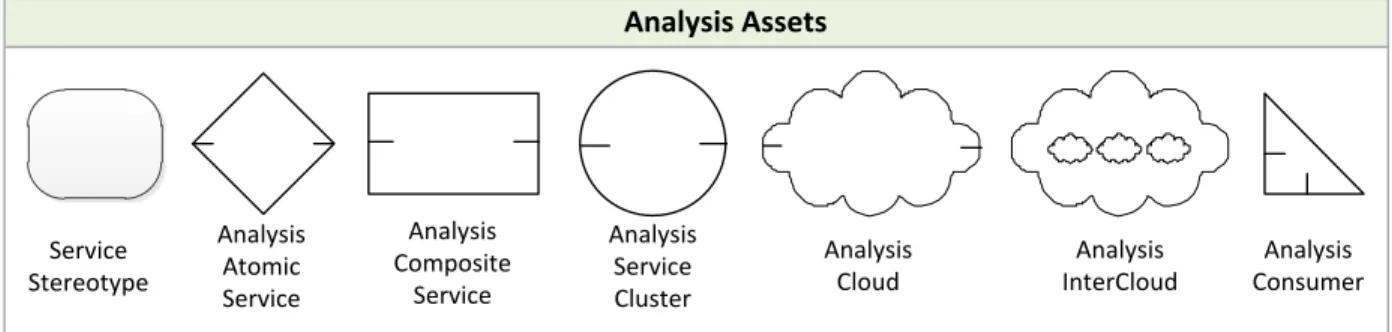
Figure 1 illustrates analysis assets that are subject to discovery and examination activities that take place during the discovery and analysis phase of a project. This phase of the modeling effort is dedicated to exploring services’ capabilities and feasibility to justify their existence in a service ecosystem. These analysis assets, whether a standalone entity such as an analysis atomic service, or a group of services akin to the analysis service cluster or analysis cloud, may play significant roles in a solution to organizational concerns.
Analysis Assets Analysis Atomic Service Analysis Composite Service Analysis Service Cluster Analysis Cloud Service Stereotype Analysis InterCloud Analysis Consumer
FIGURE 1: ANALYSIS ASSETS
Service Stereotype. A generic service that does not identify any particular service structure pattern
Analysis Atomic Service. A fine-grained service that is impractical to decompose because of its suggested limited capabilities or processes
Analysis Composite Service. A coarse-grained service comprised of internal fine-grained atomic or composite services, forming hierarchical parent-child associations
Analysis Service Cluster. An association of services grouped by related business or technical processes that collaborate to offer solutions
Analysis Cloud. Represents a collection of analysis services in three different categories: Software as Service (SaaS), Platform as Service (PaaS), and Infrastructure as Service (IaaS). Additional types can be added on demand
9
SOMF 2.1 Specifications: Service-Oriented Discovery and Analysis Model Methodologies Corporation, All Rights Reserved © 2008-2011
Consumer. Any entity that is identified with service consumption activities. This definition may include consuming applications or services
InterCloud.Represents the term “cloud-of- clouds.” A superior cloud that identifies a group of related clouds, working together to offer collaborative solutions10
SOMF 2.1 Specifications: Service-Oriented Discovery and Analysis Model Methodologies Corporation, All Rights Reserved © 2008-2011MODELING SPACES
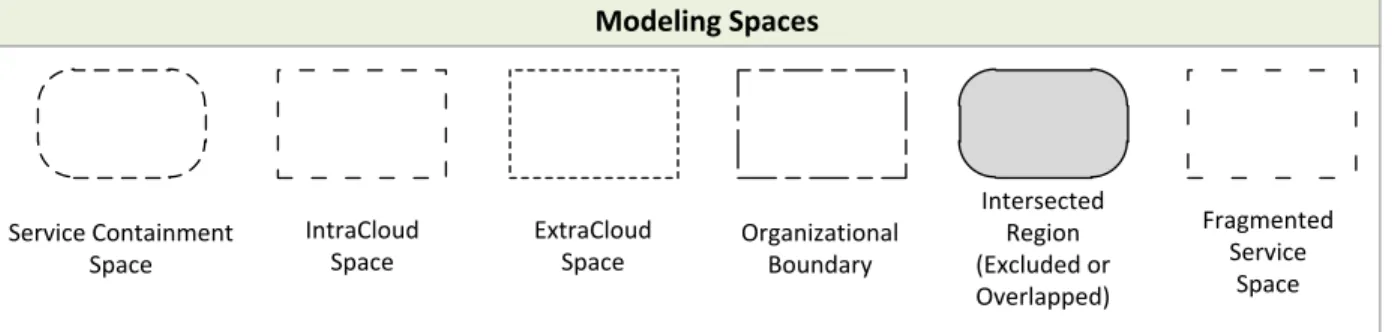
A modeling space (illustrated in Figure 2) is a defined area in which modeling activities take place. This area also identifies boundaries of organizations, and containment scope of services, service clusters, or cloud computing environments.
IntraCloud Space ExtraCloud Space Service Containment Space Organizational Boundary Modeling Spaces Intersected Region (Excluded or Overlapped) Fragmented Service Space
FIGURE 2: MODELING SPACES
Service Containment Space. An area that identifies the aggregated child services contained in a parent composite service or service cluster. This space can also define any collaboration of grouped services that are gathered to offer a solution
IntraCloud Space. A modeling area that depicts services that operate in a cloud
ExtraCloud Space. A modeling area that depicts services that operate outside of a cloud
Organizational Boundary. A computing area of an organization, such as a division, department, company, partner company, consumer, or community
Intersected Region. A common space to two or more intersecting composite, compounded, cluster, or cloud entities
Fragmented Service Space. A modeling space that is dedicated to a service that has been decomposed into smaller services and then retired
11
SOMF 2.1 Specifications: Service-Oriented Discovery and Analysis Model Methodologies Corporation, All Rights Reserved © 2008-2011CONTEXTUAL MODELING CONNECTORS
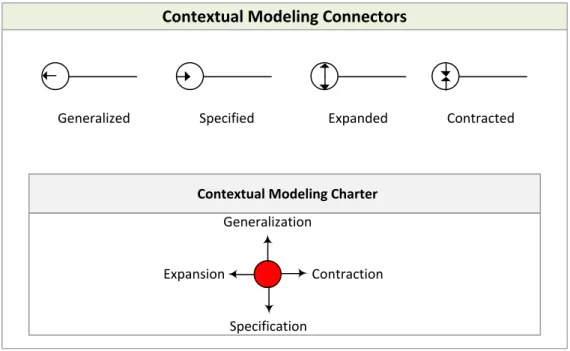
The term “Contextual Modeling” pertains to modeling activities performed on an analysis asset or its corresponding environment to assess and adjust their capabilities, or discover additional services. Alteration to service responsibilities, operational scope, or consumer scale can also be pursued during the contextual modeling process. Use the depicted connectors in Figure 3 to generalize, specify, expand, or contract a service, service environment, or architecture scope.
Generalized Specified Expanded Contracted
Contextual Modeling Connectors
Contextual Modeling Charter Generalization
Specification
Expansion Contraction
FIGURE 3: CONTEXTUAL MODELING CONNECTORS AND CHARTER
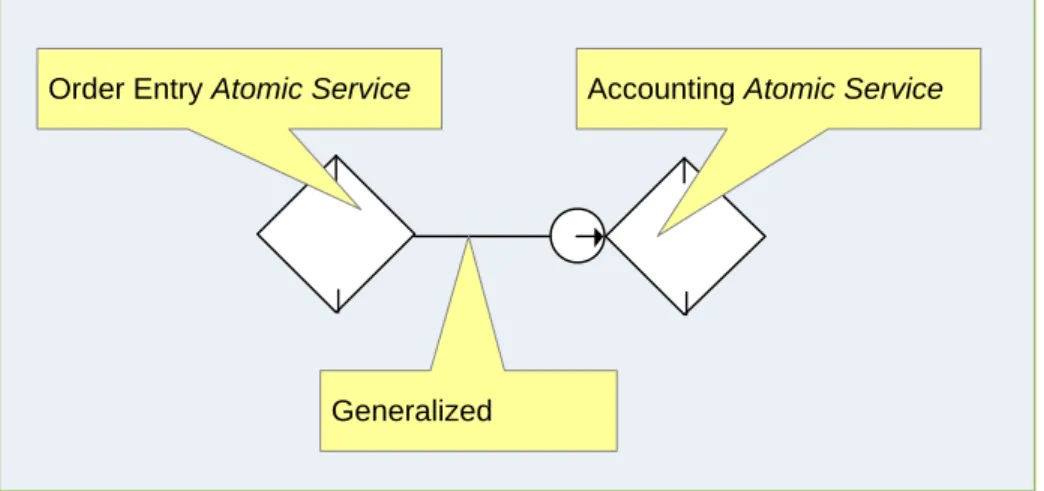
Generalized. A modeling activity that is performed on a service to raise its abstraction level and increase its scope of operations and capabilities
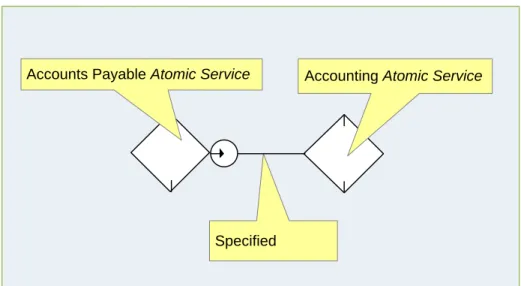
Specified. A modeling activity that is performed on a service to reduce its abstraction level and decrease its scope of operations and capabilities
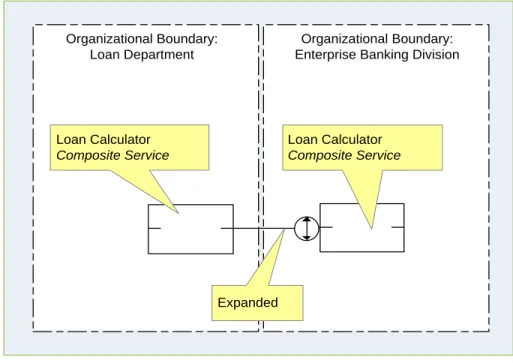
Expanded. A modeling activity that is performed on a service’s environment to expand the architecture and technology capabilities
12
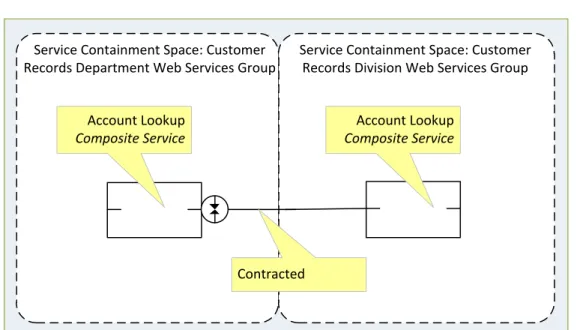
SOMF 2.1 Specifications: Service-Oriented Discovery and Analysis Model Methodologies Corporation, All Rights Reserved © 2008-2011 Contracted. A modeling activity that is performed on a service’s environment to reduce the architecture and technology capabilities
13
SOMF 2.1 Specifications: Service-Oriented Discovery and Analysis Model Methodologies Corporation, All Rights Reserved © 2008-2011STRUCTURAL MODELING CONNECTORS
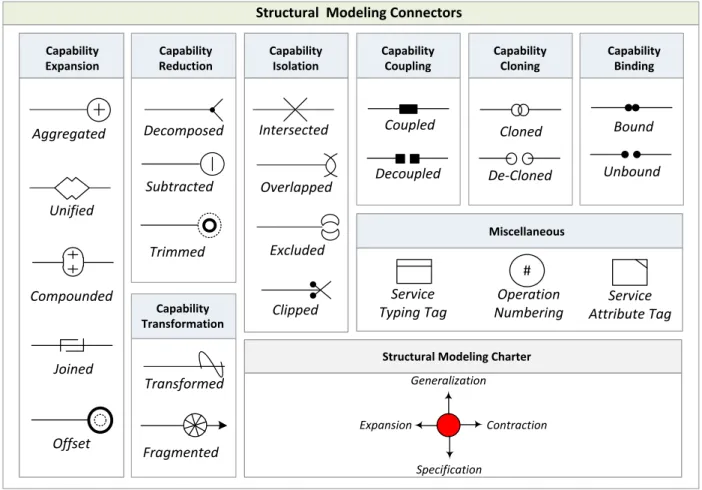
Use the connectors that are illustrated in Figure 4 to perform structural manipulation of an
analysis asset, such as an atomic service, composite service, service cluster, or cloud of services. Furthermore, structural alterations can be performed to the environments in which these modeling entities operate. The changes to these internal and external structures should be pursued to discover services, analyze their feasibility, and propose a superior solution to organizational problems.
Capability Expansion Aggregated Unified Compounded Service Transformation Capability Reduction Decomposed Subtracted Capability Isolation Intersected Overlapped Excluded Clipped Transformed Capability Transformation Coupled Decoupled Capability Coupling Capability Cloning Bound Unbound Cloned De-Cloned Operation Numbering Service Typing Tag Service Attribute Tag Miscellaneous Capability Binding
Structural Modeling Connectors
Fragmented Joined
Offset
Trimmed
Structural Modeling Charter
Generalization
Specification
Expansion Contraction
#
14
SOMF 2.1 Specifications: Service-Oriented Discovery and Analysis Model Methodologies Corporation, All Rights Reserved © 2008-2011 Aggregated. Inserts a fine-grained analysis asset into a coarse-grained analysis asset
Unified. Merges two or more analysis assets into a single analysis asset
Compounded. Groups two or more analysis assets to collaborate on providing a solution
Joined. Joins two analysis assets to provide permanent or temporary solutions
Offset. Increases the structural scale of an analysis asset
Decomposed. Separates an analysis asset from another analysis asset
Subtracted. Retires an analysis asset
Trimmed. Reduces the structural scale of an analysis asset
Transformed. Converts a structure of an analysis asset to a different structure
Fragmented. Breaks down an analysis asset into smaller finer-grained analysis assets. The source entity then retires
Intersected. Intersects two analysis assets
Overlapped. Identifies common analysis assets that reside in an overlapped region of intersected analysis assets
Excluded. Identifies uncommon analysis assets that reside in an overlapped region of intersected analysis assets
Clipped. Extracts analysis assets that are aggregated in composite, cluster, cloud, or compounded service formations
15
SOMF 2.1 Specifications: Service-Oriented Discovery and Analysis Model Methodologies Corporation, All Rights Reserved © 2008-2011 De-Coupled. Unlinks two analysis assets
Cloned. Duplicates an analysis asset
De-Cloned. Unties cloned relationship between two analysis assets
Bound. Establishes a formal contract between two analysis assets
Unbound. Cancels a contract between two or more analysis assets
Service Typing Tag. Classifies a services based on technical or business categories
Operation Numbering Tag. Identifies the modeling operation sequence
16
SOMF 2.1 Specifications: Service-Oriented Discovery and Analysis Model Methodologies Corporation, All Rights Reserved © 2008-2011CLOUD TYPING TAGS
If a project or an architecture initiative involves cloud computing modeling activities, any individual cloud may require typing. The term “typing” pertains to cloud categorization to help understand the design model that is applied to a production environment. Tagging a cloud by the proper tag (illustrated in Figure 5) would also indicate the form of consumers that are allowed to utilize a cloud facility and its offered services.
Cloud Typing Tags
Public Cloud Private Cloud Community Cloud
PU
PR
CO
HY
Hybrid Cloud
Blank Tag
FIGURE 5: CLOUD TYPING TAGS
Public Cloud Tag. Identifies a cloud that is maintained by an off-site party service provider, which offers configurable features and deployments charged to subscribed Internet consumers
Private Cloud Tag: Indicates a cloud of services that is sponsored, maintained, and operated by an organization, available only on private networks, and is utilized exclusively by internal consumers
Community Cloud Tag. Identifies a cloud whose services are consumed by two or more organizations that share similar business or technical requirements
Hybrid Cloud Tag. Depicts a cloud that combines the properties of two or more cloud types described on this list
17
SOMF 2.1 Specifications: Service-Oriented Discovery and Analysis Model Methodologies Corporation, All Rights Reserved © 2008-2011EXAMPLES SECTION
18
SOMF 2.1 Specifications: Service-Oriented Discovery and Analysis Model Methodologies Corporation, All Rights Reserved © 2008-2011ANALYSIS PROPOSITION DIAGRAM: CONTEXTUAL ANALYSIS MODEL
Create a Contextual Analysis Model to communicate a semantic alteration to a service or to its related operating environment. The term “semantic alteration” implies that the modification to an analysis asset, whether it is an atomic service, composite service, service cluster, or cloud of services, influences its scope of operations, scale of responsibilities, or range of its client base. A Contextual Analysis Model can illustrate four different modeling directions:
1. Contextual Generalization. Raises the abstraction level of an analysis asset 2. Contextual Specification. Reduces the abstraction level of an analysis asset
3. Contextual Expansion. Widens the influence and scope of operations and capabilities of an analysis asset in the organization
4. Contextual Contraction. Trims the influence and scope of operations and capabilities of an analysis asset in the organization
CONTEXTUAL MODELING DIAGRAM COMPONENTS (FIGURE 6)
a. Services: Order Entry Atomic Service, Accounting Atomic Service
b. Connector: Generalized
Order Entry Atomic Service Accounting Atomic Service
Generalized
19
SOMF 2.1 Specifications: Service-Oriented Discovery and Analysis Model Methodologies Corporation, All Rights Reserved © 2008-2011 CONTEXTUAL MODELING DIAGRAM COMPONENTS (FIGURE 7)a. Services: Accounts Payable Atomic Service, Accounting Atomic Service
b. Connector: Specified
Accounts Payable Atomic Service Accounting Atomic Service
Specified
FIGURE 7: CONTEXTUAL MODELING DIAGRAM USING THE “SPECIFIED” CONNECTOR
20
SOMF 2.1 Specifications: Service-Oriented Discovery and Analysis Model Methodologies Corporation, All Rights Reserved © 2008-2011 CONTEXTUAL MODELING DIAGRAM COMPONENTS (FIGURE 8)a. Organizational boundaries: Loan Department, Enterprise Banking Division
b. Service: Loan Calculator Composite Service
c. Connector: Expanded
Organizational Boundary: Enterprise Banking Division Organizational Boundary:
Loan Department
Expanded Loan Calculator
Composite Service
Loan Calculator
Composite Service
FIGURE 8: CONTEXTUAL MODELING DIAGRAM USING THE “EXPANDED” CONNECTOR ACROSS TWO ORGANIZATIONAL BOUNDARIES
21
SOMF 2.1 Specifications: Service-Oriented Discovery and Analysis Model Methodologies Corporation, All Rights Reserved © 2008-2011 CONTEXTUAL MODELING DIAGRAM COMPONENTS (FIGURE 9)a. Service Containment Spaces: Customer Records Department Web Services Group,
Customer Records Division Web Services Group
b. Service: Account Lookup Composite Service
c. Connector: Contracted
Service Containment Space: Customer Records Department Web Services Group
Service Containment Space: Customer Records Division Web Services Group
Account Lookup Composite Service
Account Lookup Composite Service
Contracted
FIGURE 9: CONTEXTUAL MODELING DIAGRAM USING THE “CONTRACTED” CONNECTOR ACROSS TWO SERVICE CONTAINMENT SPACES
22
SOMF 2.1 Specifications: Service-Oriented Discovery and Analysis Model Methodologies Corporation, All Rights Reserved © 2008-2011ANALYSIS PROPOSITION DIAGRAM: STRUCTURAL ANALYSIS MODEL
Create a Structural Analysis Model to communicate structural modifications to an analysis asset, whether it is an atomic service, composite service, service cluster, or cloud of services. The term “structural modification” pertains to a logical or physical state alteration of an analysis asset. This transformation typically renders design and architecture changes of an analysis asset and its corresponding operating environment. A Structural Analysis Model illustrates four distinct directions of a modeling effort:
1. Structural Generalization. Extends the capabilities and processes of an analysis asset across an organization by altering its logical or physical structure
2. Structural Specification. Reduces the capabilities and processes of an analysis asset and trims its scope in a production environment by altering its logical or physical structure
3. Structural Expansion. Widens the scope of an architectural environment within an organization
4. Structural Contraction. Trims the scope of an architectural environment within an organization
23
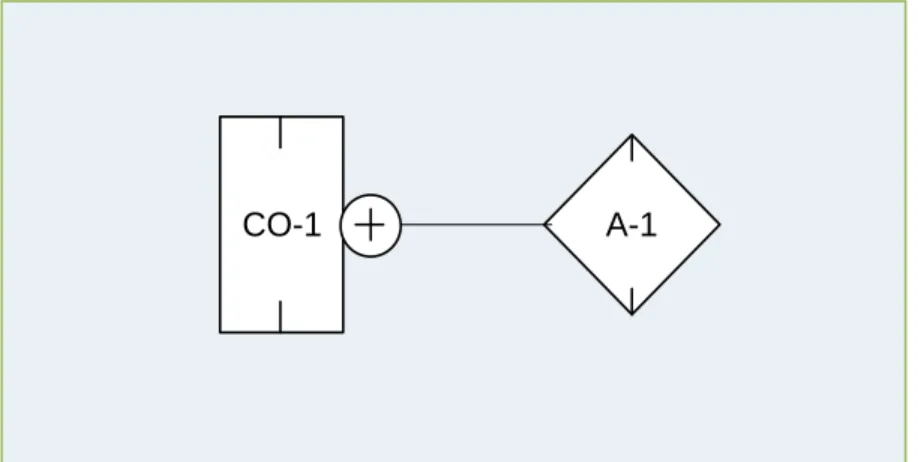
SOMF 2.1 Specifications: Service-Oriented Discovery and Analysis Model Methodologies Corporation, All Rights Reserved © 2008-2011 STRUCTURAL ANALYSIS MODEL COMPONENTS (FIGURE 10)a. Services: composite service CO-1, atomic service A-1
b. Connector: Aggregated
CO-1 A-1
24
SOMF 2.1 Specifications: Service-Oriented Discovery and Analysis Model Methodologies Corporation, All Rights Reserved © 2008-2011 STRUCTURAL ANALYSIS MODEL COMPONENTS (FIGURE 11)a. Services: composite service CO-1, atomic service A-1
b. Connector: Decomposed
CO-1 A-1
FIGURE 11: A-1 IS DECOMPOSED FROM CO-1 TO ENABLE ARCHITECTURE OR BUSINESS TRACEABILITY
25
SOMF 2.1 Specifications: Service-Oriented Discovery and Analysis Model Methodologies Corporation, All Rights Reserved © 2008-2011 STRUCTURAL ANALYSIS MODEL COMPONENTS (FIGURE 12)a. Services: atomic services A-1 and A-2 b. Connector: Coupled
A-2 A-1
26
SOMF 2.1 Specifications: Service-Oriented Discovery and Analysis Model Methodologies Corporation, All Rights Reserved © 2008-2011 STRUCTURAL ANALYSIS MODEL COMPONENTS (FIGURE 13)a. Services: atomic services A-1 and A-2
b. Connector: Decoupled
A-2 A-1
FIGURE 13: A-1 AND A-2 ARE DECOUPLED
27
SOMF 2.1 Specifications: Service-Oriented Discovery and Analysis Model Methodologies Corporation, All Rights Reserved © 2008-2011 STRUCTURAL ANALYSIS MODEL COMPONENTS (FIGURE 14)a. Services: atomic services A-1 and A-2, composite service CO-1
b. Connector: Compounded
CO-1
A-1
A-2
28
SOMF 2.1 Specifications: Service-Oriented Discovery and Analysis Model Methodologies Corporation, All Rights Reserved © 2008-2011 STRUCTURAL ANALYSIS MODEL COMPONENTS (FIGURE 15)a. Services: atomic services A-1, A-2, and unified A12
b. Connector: Unified
A-2 A-1
A12
29
SOMF 2.1 Specifications: Service-Oriented Discovery and Analysis Model Methodologies Corporation, All Rights Reserved © 2008-2011 STRUCTURAL ANALYSIS MODEL COMPONENTS (FIGURE 16)a. Services: clusters CLU-1 and CLU-2, atomic services A-1 and A-2
b. Connectors: Intersected and Overlapped
CLU-1 CLU-2
A-1
A-2
FIGURE 16: CLU-1 AND CLU-2 ARE INTERSECTED, A-1 AND A-2 RESIDE IN THE OVERLAPPED REGION
30
SOMF 2.1 Specifications: Service-Oriented Discovery and Analysis Model Methodologies Corporation, All Rights Reserved © 2008-2011 STRUCTURAL ANALYSIS MODEL COMPONENTS (FIGURE 17)a. Service/Consumer: atomic service A-1, consumer CON-1
b. Connector: Bound
A-1 CON-1
31
SOMF 2.1 Specifications: Service-Oriented Discovery and Analysis Model Methodologies Corporation, All Rights Reserved © 2008-2011 STRUCTURAL ANALYSIS MODEL COMPONENTS (FIGURE 18)a. Services: composite service CO-1, atomic service A-1
b. Connector: Joined
CO-1 A-1
32
SOMF 2.1 Specifications: Service-Oriented Discovery and Analysis Model Methodologies Corporation, All Rights Reserved © 2008-2011 STRUCTURAL ANALYSIS MODEL COMPONENTS (FIGURE 19)a. Service: atomic service A-1
b. Connector: Offset
A-1 A-1
33
SOMF 2.1 Specifications: Service-Oriented Discovery and Analysis Model Methodologies Corporation, All Rights Reserved © 2008-2011 STRUCTURAL ANALYSIS MODEL COMPONENTS (FIGURE 20)a. Service: atomic service A-1
b. Connector: Trimmed
A-1 A-1
34
SOMF 2.1 Specifications: Service-Oriented Discovery and Analysis Model Methodologies Corporation, All Rights Reserved © 2008-2011 STRUCTURAL ANALYSIS MODEL COMPONENTS (FIGURE 21)a. Fragmented service space contains:
i. Atomic services A-1, A-2, and A-3
b. Services: composite service CO-1
c. Connectors: Fragmented, Subtracted
d. Operations: 1) CO-1 is fragmented 2) CO-1 is subtracted (retired)
A-1
A-2
A-3 CO-1
2
Fragmented Service Space
1
35
SOMF 2.1 Specifications: Service-Oriented Discovery and Analysis Model Methodologies Corporation, All Rights Reserved © 2008-2011 STRUCTURAL ANALYSIS MODEL COMPONENTS (FIGURE 22)a. Service Containment Space Accounting Composite Service contains:
i. Services: composite service CO-1, atomic services A-1, A-2, and A-3
ii. Connectors: Decomposed, Decoupled, Transformed
iii. Operations: 1) Service decomposition, 2) Service decomposition 3) Service
transformation
b. Outside consumer: CON-1
c. Consumer CON-1 is bound by a contract (using the Bound connector) to the
Accounting Composite Service
Service Containment Space: Accounting Composite Service
CON-1 A-3
A-2 CO-1
A-1
1
2 3
36
SOMF 2.1 Specifications: Service-Oriented Discovery and Analysis Model Methodologies Corporation, All Rights Reserved © 2008-2011 STRUCTURAL ANALYSIS MODEL COMPONENTS (FIGURE 23)a. IntraCloud Space Public Cloud contains:
i. Services: service clusters CLU-1 and CLU-2, composite service CO-1
ii. Connectors: Bound
b. Extracloud Space contains:
i. Services/Consumers: composite service CO-2, atomic service A-1, and
consumers CONS-1 and CONS-2
ii. Connectors: Bound, Aggregated, Decompose
c. IntraCloud Space is linked to the ExtraCloud Space by the contract formed between
service cluster CLU-2 and atomic service CO-2
IntraCloud Space ExtraCloud Space
CLU-1 CLU-2
CO-1
A-1
CONS-2
CO-2
CONS-1
PU
37
SOMF 2.1 Specifications: Service-Oriented Discovery and Analysis Model Methodologies Corporation, All Rights Reserved © 2008-2011 STRUCTURAL ANALYSIS MODEL COMPONENTS (FIGURE 24)a. Clouds: Hybrid Cloud CLO-1, Private Cloud CLO-2
b. Connector: cloud CLO-1 and CLO-2 are intersected by using the Intersected
connector
c. Overlapping region contains:
i. Services: service cluster CLU-1, composite service CO-1, atomic services A-1
and A-2 aggregated into CO-1
b. Connectors: Overlapped, Coupled, Aggregated
CO-1 CLU-1
A-1 A-2
CLO-1 CLO-2
PR HY
FIGURE 24: AN OVERLAPPING REGION FORMED BY THE INTERSECTION OF CLO-1 AND CLO-2
38
SOMF 2.1 Specifications: Service-Oriented Discovery and Analysis Model Methodologies Corporation, All Rights Reserved © 2008-2011 STRUCTURAL ANALYSIS MODEL COMPONENTS (FIGURE 25)a. Cloud: Hybrid Cloud CLO-1
b. Cloud CLO-1 structure contains:
i. Service clusters: CLU-1 and CLU-2
ii. Services: composite service CO-3, atomic service A-1
c. Cluster CLU-1 contains:
a. Services: atomic service A-2, composite service CO-1
d. Composite service CO-2 is subtracted from cloud CLO-1
e. Connectors: Aggregated, Subtracted
CO-3 A-1
CLU-1
CO-1 A-2
CLU-2
HY
CO-2 CLO-1
39
SOMF 2.1 Specifications: Service-Oriented Discovery and Analysis Model Methodologies Corporation, All Rights Reserved © 2008-2011 STRUCTURAL ANALYSIS MODEL COMPONENTS (FIGURE 26)a. Organizational Boundary Public Cloud Inc. contains:
a. Space: IntraCloud Space Public Cloud
b. Services: atomic service A-1, composite service CO-2
c. Connector: Aggregated
b. IntraCloud Space Public Cloud contains:
a. Services: composite service CO-1, service cluster CLU-1
b. Connectors: Aggregated
c. Service cluster CLU-1 is linked to composite service CO-2 by the Bound connector in
the Organizational Boundary Space Public Cloud Inc.
d. Organizational Boundary Space New York Computers Inc. contains:
a. Cloud: Private Cloud
b. Service: composite service CO-3
e. Private Cloud in the Organizational Boundary Space New York Computers Inc.
contains:
a. Services: service cluster CLU-2, composite service CO-4
b. Connectors: Aggregated
f. Composite service CO-5 is decomposed from Private Cloud
g. Composite services CO-3 and CO-4 are bound by a contract by the Bound connector
Organizational Boundary: Public Cloud Inc.
Organizational Boundary: New York Computers Inc. IntraCould Space Extra-Cloud Space CO-2 CO-3 CLU-1 CO-1 A-1 PU PR CLU-2 CO-4 Private Cloud
Public Cloud CO-5
FIGURE 26: PUBLIC CLOUD AND PRIVATE CLOUD INTERACTIONS ACROSS ORGANIZATIONAL BOUNDARIES