ISSN 1479-4403 291 ©ACPIL Welcome to this special issue of EJEL focusing on research methodologies in e-learning. The call for the special issue was inspired by the large range of research methods and approaches within e-learning research. These vary in respect to the approach taken in studies reported on, for example action research or design based research, correlation research focusing on evaluation and effectiveness. Studies can further vary in respect to their point of departure; for instance, being based on single case studies while other studies may cover several cases and be more longitudinally oriented. Further variation can be observed in respect to the research methodologies used where some studies are quantitative, some qualitative and some use mixed methods. Adding to this is the broad variety of pedagogical approaches, domains and contexts approached.
Given this rich variation and that the research reported contributes to produce knowledge about e-learning, the call aimed to further explore the research methodologies used in producing this knowledge by formulating the following questions;
How and why do we chose and motivate our methodological approaches, and are there specific arguments that are vital to deal with when choosing a research design in e-Learning contexts? How do we identify and qualify criteria for suitable construction of research designs according to a
current study on e-Learning?
What do we need to consider in our field of e-Learning, when we align a research design with the current research questions?
How do we manage reliability and validity in e-Learning research - and how do we become aware of blind spots and links between research objectives and relevant findings?
What are the options for generalisation of findings in various approaches and are there special concerns to take into account in e-Learning research?
How are the criteria for research design and research findings negotiated between other research communities (paradigms) and our field of e-Learning?
Are there new instances and new uses of e-Learning that lead to a need for new research designs and new research methods, tools and techniques?
The articles in this special issue relate to one or several of these questions and therefore contribute to reflect upon and further our knowledge on these issues. The three first contributions report on the use of mixed methods and motivations for the choice of mixed methods in research designs, albeit in different ways. The contribution by Gelareh Roushan, Debbie Holley and David Biggins describe a two-spiral action research approach to the analysis of experiences of informing institutional e-learning policy. Approaching a complex and burning issue, the approach that is proposed moves away from traditional top-down management approaches and argues for greater coordination of several key stakeholders in processes of change and development. The second contribution by Timos Almpanis makes an argument for mixed-methods approaches in e-learning contexts, and more specifically as a result of having analysed the heads of e-learning and their perspectives of technology enhanced learning (TEL) at several universities. The third contribution by Caroline Stockman presents to us a study where the use of mixed-methods design aided in becoming aware of blind spots - in this case revealing the importance of power and knowledge in technology acceptance research. Although a research design may be well suited to a research question, the author argues we need to remain open to emerging insights.
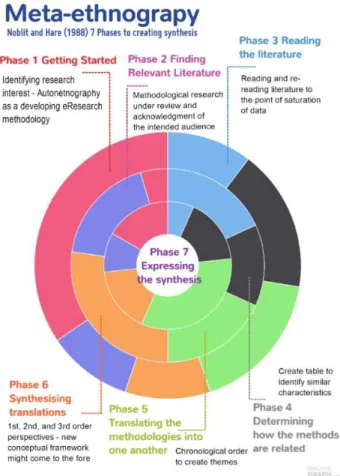
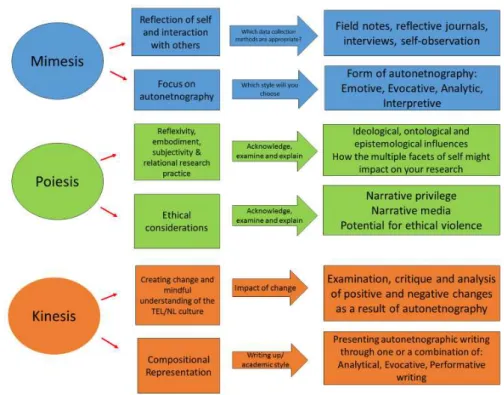
While the first three contributions report on experiences and benefits from mixed methods design, contribution four by Lyz Howard presents a theory-practice gap and more specifically makes the argument that there is currently no theory upon which to practice autonetnography (ANG). From a qualitative perspective with the use of meta-ethnography, methodology relating to autonetnography is examined as a step towards developing a framework using ANG as an eResearch methodology.
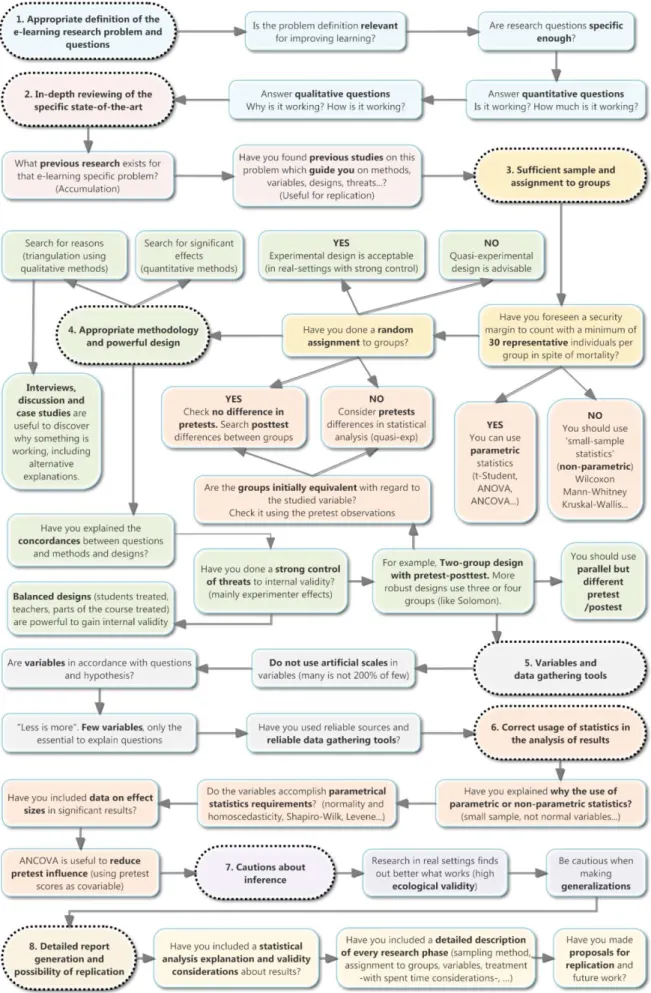
Contribution five by Javier Sarsa and Tomás Escudero acknowledge many of the problems and difficulties involved in e-learning research, and particularly quantitatively oriented research striving to measure the effects of e-learning. The multitude of features and factors involved in e-learning research complicate coming
to conclusions regarding expected benefits. The authors present and discuss a roadmap meant to highlight crucial aspects to consider and reflect on to increase the validity and reproducibility of results.
The contributions in this special issue thus ranges from articles building on qualitative methodology to quantitative methodology, and a mix of both. The scope varies from reflecting on use of methodology and results to anchoring and proposing new approaches to e-learning research. As such, the contributions vary in the very way that was originally phrased in the call for the special issue. However, as intended, the reflections and arguments presented by the authors make a valuable contribution to an ongoing critical discussion and challenging of established approaches and paradigms.
Robert Ramberg Guest Editor
ISSN 1479-4403 293 ©ACPIL
Informing Institutional e-Learning Policy
Gelareh Roushan
1, Debbie Holley
2and David Biggins
2 1Faculty of Management, Bournemouth University
2
Centre for Excellence in Learning, Bournemouth University
[email protected]
[email protected]
[email protected]
Abstract: This paper describes a two-spiral action research approach (AR) in its analysis of the experience of a British University endeavouring to change and reposition itself in the context of fast pace external change in terms of innovation. Taking the European Union (EU) 2020 digital competence framework (Ferrari 2013), with its drive to address the huge EU digital skills gap as technological adaptation and use speed up and the call from the UK Government, employers, and students themselves to produce digitally competent graduates Higher Institutions need to consider their proposition. An action research approach, with its reflective stance, is relevant for complex and policy based studies, we argue, as the
I P E -leaders
drawn from industry and academia, and incorporating a strong student voice, we believe the AR approach is key to offering insights and transparency in the quest for change. The transition from an initial top-down management approach to a kaleidoscopic middle-out partnership of the executive team with key internal stakeholders, including students, academic staff, librarians, learning technologists and IT specialists offers a new and inclusive approach offering the agility and the synergy that traditional models lack. Results indicate that strong research and technological leadership, building internal
“
Union all contribute to a transformational and shared approach to institution-wide change at a time of complexity and contestation in Higher Education policy.
Keywords: Higher Education, Action Research, Digital Competencies, Technology Enhanced Learning.
Introduction
1.
Digital skills and the lack of these across the EU has been highlighted as a major issue in the Measuring Digital Skills study (European Commission 2014, EU policy framework 2020); estimating 39% of the workforce had insufficient digital skills, while 64% of those in disadvantaged groups have insufficient digital skills for the workspace. Digital competence and capability are seen as essential for enhancing immediate and enabling life-long learning (EC DIGICOMP, 2013). This policy agenda is reflected in recent UK Government policy documents on the new skills needed to be fostered in the UK (The House of Lords Digital Britain, 2015). The Labour Force study (UKCES, 2015) indicates 300,000 recruits are needed to invent and apply new technologies, reflecting earlier work by Frey and Osborne (2013); their model shows that as technology adaptation and use speeds up, low-skill workers will be replaced. The challenge for Higher Educational Institutions (HEIs) is how best to embed these skills, and enable and facilitate institutional change?
This paper draws from the experience of a single university and examines and evaluates their approach to managing change. Our methodology is located within an action research framework (Pedler, 2011; Raelin, 2011; Pedler and Abbott, 2008; Norton, 2009). Informed in conjunction with a voice, we believe this approach is relevant for complex and policy based studies, as the framework can encompass a mixed methods technique (Johnson and Onwuegbuzie, 2004). This theme is addressed D
G
s as
“ D “
work within the scope of a deliberate, solution-orientated investigation, as advocated by Kemmis, McTaggart and Retallick (2004), which is characterised by spiralling cycles of problem identification, systematic data collection, analysis and reflection, data-driven action and problem redefinition that the work can be recognised as theory based, relevant and improving practice (Holley and Boyle, 2012). Thus, the development of policy within its context recognises that knowledge is socially developed, as suggested by McNiff (2013).
1.1
The UK policy environment: contested and complex
Narratives of difficulty, isolation and compromise are reported by widening, participatory students as
HE S
Universities have found themselves in an increasing competitive global marketplace (Hemsley-Brown and Oplatka, 2006) and a response to this has been a fragmentation in strategic and operational management,
D N
as a disguise to commercialisation of education and this move toward marketisation of HE is well documented (Jongbloed, 2003; Molesworth et al, 2010; Brown and Carasso, 2013). Cruickshank (2016) identified the shift in
UK C
2016). Th UK G H E G P H
2015) with the proposed Teaching Excellence Framework (TEF) (BIS, 2015) introduced to bring reform to the sector and introducing a measure for raising standards of teaching. The far-reaching Competition and Markets Authority (2015 CMA) issued new guidelines for the Higher Education sector with a new Consumer Rights Act. A main focus on this act has been to ensure that the accurate and timely information is presented to potential student applicants with implications for changes in policy (Wilkins et al, 2013). One response to the challenge has been the investment in new buildings, regarded as a direct response to competition and offering a better student experience (BBC, 2014). Universities have the further challenge in developing appropriate strategies in response to a new generation of digital students expecting different physical and virtual spaces to harness new ways of learning (Temple, 2014; Jisc 2014; Brownet al, 2013). The digital native, a term coined by Prensky devices (BYOD) and expecting far more engagement with technology throughout their studies (Jisc, 2012). The role of digital technologies is regarded as a paradigm shift to learning (Beetham and Sharpe, 2013).
1.2
Institutional policy agenda
The approach at Bournemouth University (BU) to Technology Enhanced learning (TEL) is led by its Vision & Values to create a world-class learning community through a Fusion of Research, Education and Professional Practice and delivered through excellence in student learning (BU2018, 2012). This initiative is led and delivered through the Centre of Excellence for Learning, thus there is a space for the development of supportive collaborative communities to inspire excellence in learning practice across BU and the wider sector. TEL has gathered momentum at BU following a re-establishment of the TEL Strategy Forum (TELSF) TELSF is responsible for development and promotion of innovative practices using TEL in pedagogical enhancement and to enable and support an excellent virtual learning experience for BU staff and students. In its initial stages TELSF focused chiefly on developing awareness and promoting shared practice followed by a program of engaging academics in innovative education and learning approaches. Once levels of engagement span wider to include cross-faculty collaboration it was apparent that more confidence in the available systems was required to assist staff and students in extending the adoption of learning technologies to enhance learning practices. The journey for TEL strategy has now evolved to a stage where the focus is on developing consistency in the user experience of TEL from both academics and student perspective. Central to taking the
T B
offering a medium and acting as the catalyst for developing a different type of institutional change (Beetham, 2015). As a response to the more vocal student voice, as well as acknowledging external policy drivers, a shift change in thinking and approaches to TEL strategy occurred, enabling a broader and partner action research approach, informed by sector and stakeholder voices. As McDougall, Readman and Wilkinson (2016) argue,
Methodology
2.
This research adopts an action research approach as a response to national and institutional policy drivers that in an age of austerity tend to lead to a top-down management approach (Shattock 2013; Feigenbaum and Iqani, 2015; Batini et al, 1989). Action research draws upon the work of Lewin (1946), who challenged the
U“A U“A H
in a cyclical process of fact finding, planning, exploratory action and evaluation. He considered this approachas the way to improve social formations and regarded this to be an area of significance to him as a refugee from the Nazi occupation of Europe (Lewin, 1948). It is noteworthy that he knew and was familiar with the work of
Vygotsky (1980), sharing a desire to share and understand ways to scaffolding learning and thus these principles are still of interest to educators today.
Attempting to deliver institutional benefits through an IT structured approach proved problematical because a set of propositions for staff around, for example, minimal engagement with the Virtual Learning Environment (VLE) has resulted in VLEs across the sector being used primarily for content storage, not student engagement (Browne et al, 2006); and a measured approach fails to account for innovation and pedagogy. McNiff (2013) suggests that action research for managing organisational change can be particularly challenging for educational managers as people need a new way of working embodying the concept of collective involvement. Action research approaches involve a genuine sense of partnership despite differing responsibilities and professional expertise. It is a creative dialogue of equals. As researchers uniquely poised at the tipping point between the more traditional management approaches to institutional policy development and the imagined new futures outlined by Somekh and Zeichner (2009). As critical reflection is an almost-universal component of action research (Dick, 2015) we are well positioned for the critical reflection required by action research. Thus the action research approach is one within which we can surface and capture the tensions between the old/new approaches at institutional level, the institutional/national policy tensions, as well as the national/international drivers of the neo-liberal agenda. Oralnd-Barak (2009) and Getz (2009) both argue that action research is a useful approach for considering practice in depth, and enabling academics to reflect on
t “ ) -crossing nature of action research also
makes it a particularly well suited methodology for educational transformation in the
twenty-and that the interpenetrating twenty-and spiral values of action research deliberately causes discourses twenty-and that this makes a unique contribution to educational reform. For McNiff (op.cit.) the key benefit of these systematic evaluation procedures is that the voices of others come through to explain how their learning has improved because of the intervention. It is with these underpinning values we approach this study.
Our paper works through two action research spirals (Kemmis et al, 2000) as illustrated in Figure 1 below, to enable analysis of institutional TEL challenges with more scrutiny. The first describes our initial institutional
-learning efforts, consisting of a set of
VLE “
-charged with diffusion throughout the institution. The second cycle is the transformative change offered by
B U F BU rch,
education and professional practice.
Figure 1: Kemmis, McTaggart and Retallick (2000)
2.1
S
P
S
An internal audit, delivered through the auspices of the Leadership Foundation for Higher Education (2015),
C L
engagement was accelerated by increasing levels of expectations of technology. Academics were becoming increasingly engaging with a wider range of technologies to promote their activities and support their own, and student engagement within a discipline. Building capacity through shared staff/student ownership and use of such technologies should have created enhanced learning opportunities, where staff and students were
empowered in the creation and co-creation of enhanced learning opportunities. However, it became apparent that this was not a systematic and consistent offering, and that a series of technological malfunctions with the VLE and other technologies had dented staff confidence in delivering innovation. A short term response to this dip in engagement by academic staff resulted in a drawing together of a consolidated approach involving both the central technology service and staff development strategies; however this was recognised as unsustainable in the longer term. The new approach did offer a more data-driven perspective, and enabled the identification
- encouraged (but not adequately resourced) to
share and disseminate change.
T
informing our e-learning efforts, consisting of a set of proposition VLE
- T
B U FU“ION
practice (BU2018, 2012), where the institution uses a discourse founded on innovation and partnership with students to meet their digital literacies expectations and needs. Accordingly, a shift change in thinking and approaches to strategy occurred, enabling a broader and partner action research approach, informed by sector and stakeholder voices. This kaleidoscope of voices offers myriad lenses by which to view the development of
B t, 2016b).
2.2
Reflection and Data-driven action
The EU competence framework with well-being proposes a broadening of academic program development to incorporating a framework for digital competencies (Ferrari 2013) and the increasing drive for embedding employability attributes in higher education curricula (Helyer and Lee, 2014; Khanna et al, 2014). Internally, BU has implemented a University-wide student survey, Mid-Unit Student Evaluation (MUSE), including questions on how satisfied students are with technology/innovation and this has provided underpinning evidence to reflect a change in strategy by TELSF. The findings mapped those of the UCISA studies between 2007 and 2015 (2016) showing an increase in Universities investment in VLEs, yet evidencing most use as a static repository for materials.
2.3
Spiral 2 Problem identification, systematic data collection and analysis
Spiral one enabled the University to identify the extent to which student and staff expectation had evolved in adoption of technology. The evidence in Spiral one indicated the need for a sustainable offering to enable staff to engage in innovate pedagogies through the adoption of technology and achieve excellence in student
T “ BU TEL TEL
service.
Thus the first action research spiral, that of a top down approach to managing the successful implementation
TEL
C BU
to inform the 2014 proposal to resume an evaluation of the existing platform. This lead to a wider visioning piece to develop understanding of the requirements for BU to achieve its strategic goals. Vision 4 Learning
(V4L) is the project that is leading th BU TEL “
BU E T “ U
BU ement is outlined in BU 2018
and this is used as a driver to realise learning excellence through the voice of the key stakeholder, the student. Accordingly, the University has developed an exemplary relationship with its student union, SUBU, to work in
par I “UBU
U TEL TEL
surveys and debates on the alignment of Education Co U TEL
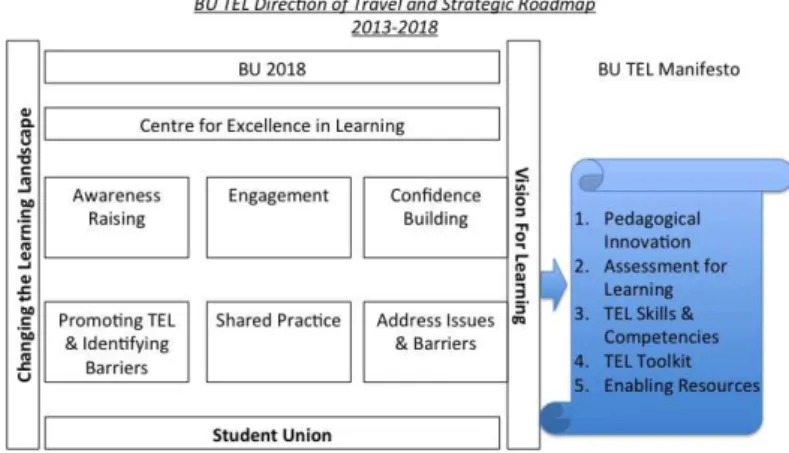
implementation. Figure 2 represents the multi-facet view of TEL at BU as well as the context within which it operates.
Figure 2: BU TEL Roadmap
A consolidated approach has been adopted by senior management to develop an environment for TEL which harnesses a culture of confidence in positive engagement with excellent learning. Internal and institutional guidelines and benefit realisations are developed to evidence the value of TEL investment and working with stakeholders to contextualize the emerging trends in education technologies. Underpinned by BU 2018 and informed by macro policies (TEF) and drivers (NSS), some key institutional strategic documents include;
B ‘ V L BU TEL‘ BU IT “
Discussion: the kaleidoscope of voices and Impact
3.
B
approaches for change obsolete to meet the needs of agile learners B BU
B -down and bottom-up approaches lack
T BU
diverse group of TEL stakeholders (internal thought leaders, SUBU, TELSF, CEL, IT department, Library and Learning Support etc.) with a common purpose to deploy TEL in realising learning excellence. The unity of purpose amongst the kaleidoscope of voices has been as a direct result of space created for dialogue contribution through formal and strategic channels (TELSF, CEL) as well as the more informal tactical avenues for example, the TEL Toolkit Working Group that collectively feed into the TEL leadership and decision making. Student Union representation is reflected across both strategic and tactical arenas, and is seen as a key element in ensuring that our efforts are directed at the ultimate users, our students. Alongside the university processes, workshops with students develop both their expertise, and feed into our evaluation; findings are
BU
university level. This research shows that the contrast between old and new approaches is nuanced and that the more a corporate approach is used the quicker institutional benchmarks can be achieved resulting in a top-down spread. The challenge in this case is to harness the management element in terms of setting overall strategic direction, and to emphasise the relevance of external drivers such as NSS, TEF, CMA, and enabling the
bottom-
agenda.
In the context of BU, the first Spiral has occurred in a top-down leadership environment. The second Spiral saw the emergence of a bottom up approach and the problem reflection realised a middle out attitude and
BU lues and vision. This approach has resulted
in increasing staff buy-in as demonstrated in engagement with the online and self-managed pedagogical
TEL T BU TEL
BU
Postgraduate Certificate in Education (Biggins et al, 2016). A significant institutional impact has been in the area of ownership of VLE services, and the leading service providers in this matter have been the IT services and the learning technologists who provide an institutional-managed service VLE. The service ownership continues to be joint however, clearer demarcations reinforced by routine evaluation and monitoring has resulted in a more robust set of guiding principles.
This paper evidences the need for greater coordination of key stakeholders to manage a cultural change in universities if they are to realise the full potential of their students in the development of digital competencies for greater learning experiences as well as being better prepared for employability. In order to achieve this,
collaboration. Bournemouth University achieves positive rates of graduate employment and is known to exceed the national average in a number of its disciplines however, more effort needs to be made for a greater number of graduates to achieve high skilled employment (BIS, 2016) and BU recognises the significance of TEL as a key skill attribute for its students. Our revised approach to the roll out and implementation of TEL across the institution is seen as a significant contribution to continuing efforts to address this key agenda.
The policy framing is a derivative of institutional drivers and is represented through the internal stakeholder standpoint. Subsequently, our challenge to research the experience and learning of the University is complex, nuanced and politicised. A qualitative (case study) or quantitative approach would not be sufficient to capture and articulate institutional values; to offer a sharp and critical lens onto our own practice and to encompass
TEL H
to frame and make the body of work more transparent.
Final conclusions
4.
Our paper draws upon a number of examples of action research approach in educational practice that pose
BU “ )
values and has discursive power in that it embodies a collision of terms; in this work we have identified a
- T ents of Orland-Barak
(2009) suggesting that practitioner inquiry approach in education enables change to take place within the paradigm that impacts practice, and the work of Getz (2009) who argued that action learning research in
education allows academic T
“ BU
together and this in itself has been a positive outcome, which Schwabenland (2009) would perceive as change as a positive source for intervention and our learning endorses this view. An action research approach has enabled this research to track the journey of BU to record and reflect the evolution of TEL leadership and impact on the way key stakeholders worked together to overcome their diverse and overlapping agenda. A key learning from the journey has been to focus efforts of all stakeholders in a shared understanding of student learning enhancement. A further positive outcome to date has been clear boundary lines for decision and ownership of the VLE to ensure appropriate service support is in place for academics and students. This new approach has fed into new ways of engagement as we procure a new VLE, involving a far wider stakeholder engagement.
There are, of course, limitations to this work. A potential short coming of the research is that the three
TEL
TEL. Another issue is the focus on the experiences of a single UK university thus offering a limited assessment
A BU
benchmark against the evaluations of comparator institutions.
T
process. However, the action research approach has brought to the fore the emergence of a common theme, albeit expressed differently by different stakeholders, of the desire to offer students TEL enhanced excellent learning experiences that will contribute to their future success.
References
Batini, C., Ceri, S. and Navathe, S., 1989. Entity Relationship Approach. Elsevier Science Publishers BV (North Holland). BBC, 2014. Universities say £9bn building boom will boost economy. [online] Available at:
<http://www.bbc.co.uk/news/education-27491037 > [Accessed 28 August 2016]. Beetham, H., 2015. Revisiting digital capability for 2015. [online] Available at:
http://digitalcapability.Jiscinvolve.org/wp/2015/06/11/revisiting-digital-capability-for-2015/ [Accessed 28 August 2016].
Biggins, D., Holley, H., Evangelinos, G., Zezulkova, M., 2016. Digital Competencies and Capability Frameworks in the Context of Learning, Self-Development and HE Pedagogy. [online] Available at: <http://eleot.org/2016/show/accepted-papers> [Accessed 29 August 2016].
BIS, 2015. Fulfilling Our Potential: Teaching Excellence, Social Mobility and Student Choice. [online] Available at:
<https://www.gov.uk/government/uploads/system/uploads/attachment_data/file/474227/BIS-15-623-fulfilling-our-potential-teaching-excellence-social-mobility-and-student-choice.pdf> [Accessed 29 August 2016].
BIS, 2016. Graduate Labour Market Statistics: 2015. [online] Available at:
https://www.gov.uk/government/uploads/system/uploads/attachment_data/file/518654/bis-16-232-graduate-labour-market-statistics-2015.pdf [Accessed 29 August 2016].
Brown, R. and Carasso, H., 2013. Everything for sale?: the marketisation of UK higher education. Routledge.
Browne, T., Jenkins, M. and Walker, R., 2006. A longitudinal perspective regarding the use of VLEs by higher education institutions in the United Kingdom. Interactive Learning Environments, 14(2), pp.177-192. [online] Available at: https://www.ucisa.ac.uk/~/media/groups/tlig/vle_surveys/VLEsurvey%20pdf.ashx [Accessed 28 August 2016]. Bryant, P., 2016a. From the Middle Out making pedagogical change happen in a complex, messy world. [online] Available
at: < http://peterbryant.smegradio.com/?p=600 > [Accessed 28 August 2016].
Bryant, P., 2016b. Challenging educational paradigms: The changing role of the learning technologist. [online] Available at: <https://microsites.bournemouth.ac.uk/cel/2016/04/27/challenging-educational-paradigms-the-changing-role-of-the-learning-technologist/> [Accessed 29 August 2016].
BU2018., 2012. Bournemouth University Vision and Values. [online] Available at: https://2018.bournemouth.ac.uk/fusion/ [Accessed 29 August 2016].
CEL., 2016. [online] Available at: <(https://www1.bournemouth.ac.uk/about/centre-excellence-learning/about-cel > [Accessed 29 August 2016].
Competition and Markets Authority (CMA)., 2015. Competition and regulation in higher education in England. [Online] Available at: <https://www.gov.uk/cma-cases/competition-and-regulation-in-higher-education-in-england > [Accessed 18 August 2016].
Cruickshank, J., 2016. Putting Business at the Heart of Higher Education: On Neoliberal Interventionism and Audit Culture in UK Universities.Open Library of Humanities, 2(1).
Denzin, N.K., 2008. The Elephant in the Living Room: or extending the conversation about the
politics of evidence, in Satterthwaite, J., Watts, M. and Piper, H., (eds). Talking Truth, Confronting Power. Trentham Books. UK, pp. 1-15.
Deem, R., Hillyard, S. and Reed, M., 2007. Knowledge, higher education, and the new managerialism: The changing management of UK universities. Oxford University Press.
Dick, B., 2015. Reflections on the SAGE Encyclopedia of Action Research and what it says about action research and its methodologies. Action Research December 1, 13: 431-444.
European Commission., 2010. A strategy for smart, sustainable and inclusive growth. [online] Available at:
http://ec.europa.eu/eu2020/pdf/COMPLET%20EN%20BARROSO%20%20%20007%20-%20Europe%202020%20-%20EN%20version.pdf [Accessed 31 October 2016].
European Commission., 2014. Measuring Digital Skills across the EU: EU wide indicators of Digital Competence. [online] Available at: <http://ec.europa.eu/newsroom/dae/document.cfm?doc_id=5406>[Accessed 28 August 2016]. European Commission., 2013. DIGCOMP: A Framework for Developing and Understanding Digital Competence in Europe.
[online] Available at: <http://ipts.jrc.ec.europa.eu/publications/pub.cfm?id=6359> [Accessed 28 August 2016].
Feigenbaum, A. and Iqani, M., 2015. Q H
.Journal of Further and Higher Education, 39(1), pp.46-66. Ferrari, A., 2013. DIGCOMP:A framework for developing and understanding digital competence in Europe. Frey, C.B. and Osborne, M.A., 2013. The Future of Employment. [online] Available at:
<http://www.oxfordmartin.ox.ac.uk/downloads/academic/The_Future_of_Employment.pdf > [Accessed 31 March 2016].
Getz, C., 2009. Teaching leadership as exploring sacred space.Educational Action Research, 17(3), pp.447-461. Helyer, R. and Lee, D., (2014). The role of work experience in the future employability of higher education
graduates. Higher Education Quarterly,68(3), pp.348-372.
Hemsley-Brown, J. and Oplatka, I., 2006. Universities in a competitive global marketplace: A systematic review of the literature on higher education marketing. International Journal of Public Sector Management,19(4), pp.316-338. Heppell, S., 2016. Education Technology Action Group. [online] Available at:
<http://www.heppell.net/etag/media/ETAG_reflections.pdf > [Accessed 18 August 2016]. Hill, W., 1990. Learning: a survey of psychological interpretations. New York: Harper Collins. Holley, D. and Boyle, T., 2012. E
thinking. European Journal of Open and Distance Learning. [online] Available at:
<http://www.eurodl.org/materials/contrib/2012/Holley_Boyle.pdf > [Accessed 28 August 2016].
H L M B B D F Available at:
<http://www.parliament.uk/business/committees/committees-a-z/lords-select/digital-skills-committee/news/report-published/ > [Accessed 28 August 2016].
Jisc, 2014. What do students entering HE expect? [Online] Available at: <ahttps://www.Jisc.ac.uk/blog/what-do-students -entering-he-expect> [Accessed 29 August 2016).
Jisc, 2012. Bring your own device [Online] Available at: <https://www.Jisc.ac.uk/blog/bring-your-own-device-byod-23-nov-2012 > [Accessed 29 August 2016]
Johnson, R.B. and Onwuegbuzie, A.J., 2004. Mixed methods research: A research paradigm whose time has come. Educational researcher, 33(7), pp.14-26.
Jongbloed, B., 2003. Marketisation in higher education, Clark's triangle and the essential ingredients of markets. Higher Education Quarterly, 57(2), pp.110-135.
Kemmis, S., McTaggart, R. and Retallick, J., 2004. The Action Research Planner. (2nd ed. rev.). Springer. Australia, pp.61-68. Khanna, M., Jacob, I. and Yadav, N., 2014. Identifying and analyzing touchpoints for building a higher education
brand.Journal of Marketing for Higher Education, 24(1), pp.122-143.
Lewin, K., 1946. Action research and minority problems.Journal of social issues,[e-journal] 2(4), pp.34-46. Available through Bournemouth University Library website <https://www1.bournemouth.ac.uk/discover/library/support-staff-researchers> [Accessed 18 August 2016].
Lewin, K., 1948. Resolving social conflicts; selected papers on group dynamics. [e-book] Available through: Bournemouth University Library Website <https://www1.bournemouth.ac.uk/discover/library/support-staff-researchers> [Accessed 18 August 2016].
Leadership Foundation for Higher Education., 2015. Changing the Learning Landscape, [online] Available at: <https://www.lfhe.ac.uk/en/research-resources/resource-hub/cll/> [Accessed 29 August 2016]. McDougall, J. Readman, M. and Wilkinson, P., (2016). From Digital Literacy to Capability [online] Available at:
<http://www.cemp.ac.uk> [Accessed 28 August 2016].
McNiff, J., 2013. Action research: Principles and practice. Routledge, UK. pp.22-24.
Molesworth, M., Scullion, R. and Nixon, E. eds., 2010. The marketisation of higher education. Routledge.
Noble, D.F., 1998. Digital diploma mills: The automation of higher education. Science as culture, 7(3), pp.355-368. Norton, L.S., 2009. Action Research in Teaching and Learning. Routledge. UK. pp. 2-7.
Orland Barak, L., 2009. Unpacking variety in practitioner inquiry on teaching and teacher education.Educational Action Research, 17(1), pp.111-119.
Pedler, M., 2011. Action learning in practice. Gower Publishing, Ltd..
Pedler, M. and Abbott, C., 2008. Am I doing it right? Facilitating action learning for service improvement.Leadership in Health Services, 21(3), pp.185-199.
Prensky, M., 2001. Digital natives, digital immigrants part 1. On the horizon, 9(5), pp.1-6.
Raelin, J. A., 2011. A . In M. Pedler
(Ed.),Action learning in practice (4th ed., pp. 369 379). Farnham, Surrey: Gower.
Schwabenland, C., 2009. An exploration of the use of disruption as a pedagogic intervention.Educational Action Research, 17(2), pp.293-309.
Shattock, M., 2013. University governance, leadership and management in a decade of diversification and uncertainty.Higher Education Quarterly, 67(3), pp.217-233.
Sinfield, S., Burns, T. and Holley, D., 2004. Outsiders looking in or insiders looking out? Widening Participation in a post 1992 University, in The Disciplining of Education: new languages of power and resistance. Satterthwaite, J., Atkinson, A. and Martin, W. (eds) pp. 137-152, Trentham books.
Somekh, B. and Zeichner, K., 2009. Action research for educational reform: Remodelling action research theories and practices in local contexts. Educational action research, 17(1), pp.5-21.
The TEL Toolkit., 2016. [online] Available at: <https://www1.bournemouth.ac.uk/about/centre-excellence-learning/tel-toolkit> [Accessed 28 August 2016].
Temple, P., 2014. The physical university: Contours of space and place in higher education. Routledge.
UCISA., 2016. Management and implementation of Virtual Learning Environments A UCISA funded survey. [Online] Available at: <https://www.ucisa.ac.uk/~/media/groups/tlig/vle_surveys/VLEsurvey%20pdf.ashx> [Accessed 28 August 2016].
UKCES., 2015. The Labour Market Story. UK Commission for Employment and Skills. [Online] Available at:
<https://www.gov.uk/government/uploads/system/uploads/attachment_data/file/525444/UKCESS_2015_Report_fo r_web__May_.pdf> [Accessed 28 April 2016].
Vygotsky, L.S., 1980. Mind in Society: The Development of Higher Psychological Processes. Harvard Univ Press. Cambridge/Mass.
Wilkins, S., Shams, F. and Huisman, J., 2013. The decision-making and changing behavioural dynamics of potential higher education students: the impacts of increasing tuition fees in England. Educational Studies, 39(2), pp.125-141.
ISSN 1479-4403 301 ©ACPIL
H
-Learning
P
T
Enhanced Learning
Timos Almpanis
Southampton Solent University, Southampton, UK
[email protected]
Abstract: This paper outlines the research design, methodology and methods employed in research conducted in the context of Higher Education Institutions (HEIs) and focuses on the Heads of e-Learning (HeLs) perspective about Technology Enhanced Learning (TEL) by campus-based UK institutions. This paper aims to expand on the research design and the research methodology that was followed as part of this research, making a justified argument for mixed methods approaches in e-learning contexts. The background of this research and its research questions is outlined first to provide the context of this research. Following a review of the literature on TEL that informed this research, this paper provides an
explanation T
their generalisability based on the chosen methodology are then discussed. The research findings show that most universities represented in the survey offered various staff development opportunities to their academic staff in the effective use of TEL and that examples of innovative use of technology are evident in some areas in all participating “ pled with a pedagogical underpinning as well as a supportive
TEL H L
informed responses. The paper is summarised and concluded making a case for the adoption of Mixed Methods Research (MMR) in e-learning settings.
Keywords: Mixed methods research, technology enhanced learning, staff development, HEIs.
Introduction - Research questions
1.
This research focuses on the staff development needs in the use of learning technologies and on a range of institutional approaches to TEL, providing the Heads of e-Learning (HeLs) perspective. The research questions are:
1. What provision do a range of UK HEIs make for staff development in the area of TEL?
2. What do HeLs think lecturers need to know in order to deliver blended and online courses effectively? Are these needs addressed by a range of UK HEIs?
3. According to HeLs, what institutional approaches are required for TEL to be effectively embedded in the curriculum?
4. H H L L
learning technologies?
The first research question is mostly addressed in this study based on quantitative data gathered via an online questionnaire, while the second, third and fourth questions are addressed qualitatively, based on data gathered via semi-structured interviews with thirteen HeLs, drawing on their expert informed responses. The term staff development has been preferred here over the term training as it encompasses staff training but also includes other forms of professional development such as the Postgraduate Certificate in Teaching and Learning or Postgraduate Certificate in Academic Practice (PGCTL/PGCAP) course. Data gathered from the questionnaires plus some questions from the interviews address these staff development needs that include, pedagogic, technical and curriculum design skills. As the participants of this research provide a high level institutional perspective, the data gathered do not focus on particular subject areas or faculties.
Review of the literature on staff development will TEL
2.
Since the last decade, institutions have been challenged to not only employ technologies to enhance learning, teaching and assessment but also to move beyond capital investment and invest further in staff development on the appropriate pedagogical use of the technologi
Aimard (2011) points out five main dimensions of learning: a) technology (internet, world-widweb, e-learning platforms); b) content access and production (instructional design, content production, open source content); c) communication and interaction (asynchronous and synchronous online communications, access to peers, scholars and experts); d) e-pedagogy (e-tutoring, problem solving, project-based learning, metacognition and reflective learning, socio-constructivist learning); and e) organisational and cultural dimensions (looking at the ways the four aforementioned dimensions come together and interact with each other). These dimensions are interlinked and equally important in the implementation of e-learning courses. It has been found that blended and online provision takes a lot of planning and requires IT infrastructure, platforms, administrative processes and online tutors-moderators in order to succeed. Many authors (Garrison and Vaughan 2008, Laurillard 2002, MacDonald 2008, Palloff and Pratt 2007, Salmon 2011, Tait and Mills 1999, 2003) have highlighted the fact that, for online learning to succeed, staff development is of crucial importance. According to MacDonald (2008, p.177):
The effectiveness of a blended course will be greatly influenced by the skill, enthusiasm and availability of the staff who work on it. They will need staff development to be effective, unless they already possess the relevant experience.
Moreover, Salmon (2011) argues that an online tutor-moderator needs to develop technical skills but also become aware of new teaching practices that can be implemented in online environments. Currently, there is a plethora of approaches to staff development on TEL including staff training sessions, workshops, seminars, CPD short courses and online resources. Moreover, pedagogical aspects of online learning are often covered as part of the PGCTL/PGCAP course aimed at lecturers who are new to HE. These approaches currently in use by
UK HEI H L
of this research.
L the
need for an effective organisational infrastructure to be in place. According to her, a learning organisation
L
process that takes place on two levels: the discursive level with a particular focus on theory and conceptualising, and the experiential level where the focus is on practice, activity and procedure building. In
‘ amework for the effective use of
L
L T L
adds learning through inquiry and learning through collaboration as ways that learning can arise. Inquiry learning is based on uses of learning resources but the learners need to actively engage with the material by adopting a critical and analytical approach. L
questions regarding staff development needs around TEL and regarding institutional approaches around TEL.
Ontology Epistemology - Worldview
3.
T worldview is of paramount importance in any research as it
can dictate the research design, the main research questions and subsequently the chosen methodology and methods employed. Therefore, it is common for researchers to explicitly express their philosophical ontological - stance and their epistemological worldview in order to frame their research and explain the chosen methodology. Creswell (2009) notes that although philosophical ideas remain largely hidden, they still need to be identified as they influence the research practice. Furthermore, as Feilzer (2010, p.7) acknowledges:
The choice of research questions and methods, albeit sometimes dictated by research funders, is a
ven if it is not articulated or
made explicit.
Therefore, in order to justify the selection of the MMR paradigm, a brief description of the advantages and limitations of the two other paradigms is going to be attempted in the following sub-section.
3.1
Discussion of research paradigms
3.1.1 The positivist postpositivist paradigm
Positivist/postpositivist assumptions have represented the traditional form of research (Creswell 2009) which is sometimes called the scientific method. Positivism dominated the westernised world following the French revolution and it was characterised by an overly confident belief that everything can be known through science (Cohen et al. 2007, Creswell 2009). The term postpositivism challenges the certainty of positivism arguing that we cannot be positive about the absolute truth of knowledge but we need to be able to replace established knowledge when new knowledge emerges, always following the scientific paradigm (Popper 2004). Postpositivists hold a deterministic worldview which emphasises the cause and effect relationship in studying various phenomena with experiments; postpositivists are also reductionists as they are trying to compartmentalise ideas in small sets of testable variables in order to test their hypotheses (Creswell 2009).
A C
F
or abandoning some of them for ne
exists out there (Creswell 2009).
3.1.2 Critique of the positivist postpositivist paradigm
D apparent success, especially in natural sciences, its ontological and epistemological base has been scrutinised due to its mechanistic and reductionist view of nature which, some critics have claimed, defines life in measurable terms rather than inner experience, undermining life itself (Cohen et al. 2007). One of the early critics of positivism in the 19th century was the Danish philosopher Kierkegaard who is regarded as one of the main originators of existentialism (Cohen et al. 2007). Kierkegaard adopted an Aristotelian view of the meaning of existence, according to which the meaning lies in realising H recognised that many characteristics of his time, such
scientific and technological progress, contribute to the dehumanisation of the individual, giving people illusions. Objectivity, as perceived by the postpositivist paradigm, is a dangerous illusion that could reduce a person to an observer - in a Skinnerian behaviouristic way - trying to discover general laws governing human behaviour, according to Kierkegaard (Cohen et al. 2007). In the 20th century, other well-known thinkers who criticised positivism/postpositivism include Habermas, Horkheimer and Wittgenstein (Cohen et al. 2007). Habermas criticised the scientific mentality for being elevated almost to the level of religion, praising scientific knowledge alone and rejecting all other forms of knowledge such as moral, aesthetic, hermeneutic and creative, and reducing behaviour to technicism. Habermas, Horkheimer and Wittgenstein (Cohen et al. 2007) all argued that positivism/postpositivism is unable to address many important areas of life and that as scientific explanation seems to be the only means of explaining behaviour, it diminishes many of the characteristics that make humans human.
3.1.3 The constructivist interpretivist paradigm
Contrary to the positivist/postpositivist paradigm, the constructivist/interpretivist paradigm puts an emphasis on the subjective experience and meanings that are multiple and varied. This paradigm holds the worldview that meanings are constructed by humans as they engage with the world and, in doing so, humans are influenced by social and historical perspectives (Creswell 2009). Meaning is generated socially for constructivists/interpretivists, a notion which challenges the main positivist idea that there is an objective
‘ terested in detailed accounts about reality as it is
constructed by certain individuals and they recognise that their own backgrounds shape their interpretations of the experiences of others. Sociologist Karl Mannheim was one of the founders of this paradigm (Cohen et al. 2007).
3.1.4 Critique of the constructivist interpretivist paradigm
Criticisms of this paradigm include the view that subjective reports may be incomplete and misleading as anti-positivists have abandoned scientific procedures of verification (Cohen et al. 2007). Interpretivism has also been criticised due to the fact that it often overlooks the fact that the process during which one interprets a situation is itself a product of the circumstances in which one is placed (Cohen et al. 2007).
3.1.5 The mixed methods research (MMR) paradigm
Integrating quantitative and qualitative research strategies does not fall comfortably within one or the other worldview (Feilzer 2010). Purists of either side claim that quantitative and qualitative research belong to totally different paradigms and are underpinned by different philosophical positions in relation to ontology and epistemology; furthermore, purists claim that they address different questions, which dictate different approaches in data collection and analysis (Cohen et al. 2007, Creswell 2009, Feilzer 2010). At the other extreme, MMR literature can sometimes lead to the conclusion that by introducing an additional element in the research, some form of holism can be achieved; this, according to Bergman (2011) is not a valid assumption, as the additional element is not what makes MMR interesting but rather its fundamental characteristic; furthermore, it could be argued that no matter how many theoretical approaches, data sets and analyses are part of a project, a research question will never be addressed in all its complexity. The focus of MMR should be to improve on the findings of both quantitative and qualitative methods rather than illustrate the limitations of quantitative or qualitative methods per se (Bergman 2011).
According to Bergman (2011) MMR has generated a critical mass of both theoretical and empirical contributions in social sciences and education; however, there are still many theorists that consider this type of research as insufficiently rigorous (Bergman 2011). This apparent contradiction is, according to Bergman (2011), due to the absence of the right terminology and process description that characterised MMR before the 1990s, when the current generation of mixed methods researchers emerged. Some theorists have gone as
mixed but blended or meshed. As the term mixed is now established, moving away from it would most probably cause confusion rather than clarification, according to Bergman (2011).
While it cannot be argued that MMR is better than monomethod research in principle, MMR often offers considerable advantages compared to monomethod research. On the one hand, there are good reasons to limit a research project to a particular data set and a particular analysis, such as time and cost, complexity and ease of reporting the findings in print; but on the other hand, careful implementation of MMR can cross-validate and complement individual findings and the researcher can become more knowledgeable and critical towards research as they assess the possibilities and limitations of each research technique (Bergman 2011). Pragmatism is the philosophical underpinning for the MMR paradigm (Bergman 2011, Creswell 2009, Denscombe 2008, Feilzer 2010, Johnson, Onwuegbuzie and Turner 2007) as it focuses its attention on a particular situation and is utilising pluralistic approaches to derive knowledge about that situation. Pragmatism sidesteps the contentious issues of truth and reality; it accepts philosophically that there are both singular (positivism/postpositivism) and multiple (interpretivism/constructivism) realities out there that are open to empirical inquiry and focuses on solving practical problems in the real world (Feilzer 2010, Rorty 1999). Pragmatists often reject the representational view of the world that attempts to match epistemology with ontology and focus more on the experiential world with its different layers, some objective, some subjective and others both subjective and objective.
Denscombe (2008) has identified four facets of the way in which pragmatism underlies the practice of MMR. He states that these four facets are not necessarily mutually exclusive but a degree of overlap between them may be evident in various MMR projects. The first facet of pragmatism as the underpinning theory in MMR is that it can provide a fusion of approaches, challenging dualisms as sterile and unproductive and looking for a level of compatibility between them. The second facet is that pragmatism can provide a third alternative in cases where researchers decide that neither quantitative nor qualitative approaches alone will provide adequate findings in the particular research question they have in mind. The third facet of pragmatism is more radical and pragmatism is seen as:
paradigms of research but it is also desirable to do so because good social research will almost inevitably require the use of both quantitative and qualitative research to provide an adequate answer (Denscombe 2008, p.274).
Finally, the fourth facet of pragmatism is when the word pragmatic is treated in its common sense way as
MM‘
D
Research design
4.
A research design has been selected in order to align with the main research questions of this study, which focus on the staff development needs of the academic staff involved in blended and online course delivery. A MMR design was adopted for this research as it can best address the complexity of the four research questions as outlined in an earlier section of this paper. The first research question is mostly addressed based on quantitative data gathered via an online questionnaire, while the second, third and fourth questions are addressed qualitatively, based on data gathered via semi-structured interviews with thirteen heads of e-learning (HeLs). The sequence for data gathering used was: the questionnaire was sent out in late October 2011 and it was open for three weeks until the middle of November 2011, while the initial set of interviews (eight) took place between January and March 2012. Five additional interviews were carried out in January and February 2015. Both data collection methods used the same informants, the HeLs, for consistency purposes, as H L TEL H ever, the interviews used a smaller sample thirteen compared to the questionnaire, which returned 27 responses, which is approximately 20% of the HeL population subscribing to the HeL Forum at the time (27 out of 118). More details on the informants of this research, and the specifics of the triangulation mixed methods design used in this research, are discussed below.
The informants of this research were the HeLs in various UK HEIs. Most UK HEIs have a nominated contact to that group which meet on a quarterly basis and use a closed mailing list to communicate. An email was sent to
-
questionnaire. One hundred and eighteen (118) UK institutions each have a single representative as a member of that group (HeLF Membership 2013). The questionnaire was completed by 27 participants, eight of which were subsequently interviewed. Purposive sampling was used in the first round of the interviews as eight volunteers from those who completed the questionnaire were interviewed with an aim to achieve representativeness of both pre-1992 and post-1992 institutions, as purposive sampling techniques involve
T T
C
T Y the five
additional interviews as these interviewees were selectively targeted directly via email.
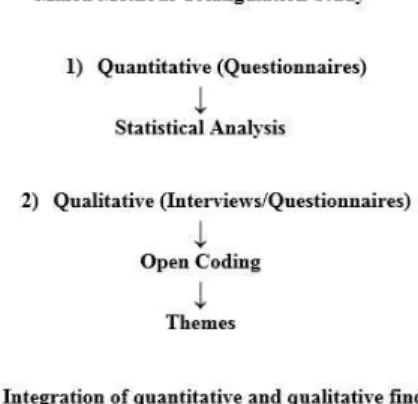
Quantitative and qualitative methods were deployed as part of this research: data handled in a quantitative way were gathered via the online questionnaire and qualitative data were gathered via the semi-structured interviews, but also via some open-ended questions of the questionnaire. The whole research design is depicted diagrammatically in Figure 1.
Keeping the research data gathering to a specific group of people (HeLs) made the research more manageable. The selection of the HeLs to be informants of this research provided a number of advantages such as fair representation of UK HEIs, as each UK institution can have only one representative in the H L group. This means that the responses to the questionnaire reflect the perceived approach to e-learning by HeLs of 27 UK HEIs. Furthermore, the selection of the HeLs as informants of this research also provided expert input in the way TEL is approached institutionally in a number of HEIs in the UK, as these people are likely to be the most
TEL
wider institutional issues around TEL implementation, due to their most senior position in the specific post areas they hold.
4.1
Data collection methods
Data were gathered sequentially, in two phases. The first part of the research utilised an online survey; following some initial desk-based research, a questionnaire was the main tool for data gathering. The questionnaire was first piloted with two people in order to be tested for clarity as well as fitness for purpose. Taking into account the feedback provided by those who piloted the questionnaire, minor amendments in the wording of a couple of the questions subsequently took place for clarity.
This questionnaire, which was emailed to the HeLs in UK HEIs, was asking for information on the training sessions, workshops, seminars, courses and support offered to academic staff in their institution in the area of TEL. The questionnaire also tried to establish whether there were any staff development requirements for academic staff before they get involved in blended or fully online courses and attempted to highlight the
TEL TEL PGCTL PGCAP course.
Most questions asked for responses that could be handled in a simple quantitative way, asking informants to identify whether their institutions were offering specific sessions and events or not; additionally, open-ended questions were part of the questionnaire where informants could provide more information about duration, uptake and frequency of those events as well as general comments about CPD in the area of TEL in their own institution.
During the second part of the research, utilising semi-structured interviews, the area of staff development in online learning was explored in more depth, to allow creation of, initially, eight illustrative case studies on how those HEIs in the UK were tackling the issue of staff development in TEL. These interviews with the HeLs focused on developing further understanding in the area of blended and distance learning provision, including staff development for TEL. The interviews were semi-structured in order to allow for more detailed data to be collected. The questions tried to explore the main targets and obstacles in the institution-wide implementation of TEL, to articulate the main ways that TEL is currently used and the staff development needed in order to enable academic staff to make the most of TEL. Furthermore, the interview questions approached other
TEL -learning costing models. Subsequently, five additional interviews took place at a later stage that included additional questions in order to gain more clarity
H L L r the
effective institutional deployment of learning technologies.
Equal emphasis was placed on both the wide survey and the selective in-depth interview data and it was initially thought that both types of data would be gathered concurrently, as this is common in triangulation mixed method designs (Creswell and Plano Clark 2007). However, this was not possible due to time limitations, as the whole research was conducted by a single researcher; furthermore, by administering the online questionnaire first, the informants for the interviews could be self-selected on a voluntary basis, by optionally providing their e-mail address at the end of the questionnaire. A possible disadvantage of this could be that the self-selected informants might not have been representative of different UK institutions. It turned out that this was not the case, as the interview participants were equally split between pre-1992 and post-1992 universities, but also represented institutions that differed in many other ways, including, size of the institution in terms of student and staff numbers, geographical location and mission, as some were research-led while others were teaching-research-led, with a focus on vocational subjects. This plurality in terms of the participating institutions represents the different types of UK HEIs.
This research employed electronic methods for data gathering; the survey was delivered electronically to the heads of e-learning via a link which was embedded in the email-invitation to the research. All interviews took place via Skype.
4.2
Data analysis
Initially, quantitative data were gathered on the various ways that the staff development needs of the lecturers in blended and online learning had been addressed by UK HEIs. Simple frequencies and cross tabulations were applied to the data. As no individual universities are named, HEIs are divided into two groups, pre-1992 and post-1992 institutions.
The interview case studies have been written as descriptive narratives first and following that, the interview data were coded by open-coding, a procedure by which the data were conceptualised. Subsequently, a list of conceptual categories was created (Strauss and Corbin 1997). That way it was felt that the individual approaches are most likely discovered and explored, allowing for detailed analysis of the data gathered. Verbatim quotes have been included in order to keep the flavour of the original data. Key emerging issues have been highlighted and any commonalities, similarities and differences among the case studies are further discussed. Open coding was used initially to uncover, develop and name concepts in order to open up text and expose the thoughts and ideas contained within them. The interview transcripts were coded on a question-by-question basis; the codes were constantly refined as each transcript was added in order for the data to be organised into meaningful groupings. Following that, broader categories (themes) have been developed. Once saturation occurred in categories and no more information was able to be extracted, categories were then integrated and refined.
The two data sets are merged by bringing the separate results together through interpretation. The quantitative data analysis proceeded from descriptive to inferential analysis in order to build a more refined analysis. Qualitative data analysis began with coding and proceeded in creating categories (themes). This is in line with Creswell and Plano Clark (2007, p.137) according to whom:
Two techniques are available for merging the quantitative and qualitative data: Transform one type of data to make the qualitative and quantitative datasets comparable and then compare the datasets, or compare the data without transformation through a discussion or a matrix.
The latter way of merging qualitative and quantitative data through discussion was followed in this research due to the fact that some of the data gathered were complementary rather than directly comparable.
4.3
Ethical issues
This research did not involve any vulnerable individuals, or any psychological experiments with its subjects, so no major ethical issues were involved. The main ethical-related issue was confidentiality, which was guaranteed by the researcher to those who volunteered to be interviewed. Questionnaire respondents remained anonymous to the researcher, apart from those who provided their email address in order to be
P
writing and at the beginning of the interview. All interviews were recorded using the Skype (Moving Picture Experts Group Layer 3 Audio (mp3)) recorder and the audio files were subsequently safely stored. Full transcripts were sent back to the participants whose approval was requested in order for the data to be used in the research, both in parts, as verbatim quotes, but also summarised and paraphrased. All information that could possibly identify them or the institution they were working for was removed from the transcript and not included in this research.
4.4
Generalisability of the research - legitimacy validity reliability
The validity of the data and the results is an important component of research. According to Creswell and
P C can draw meaningful
I
questionnaire are indicative as the 27 participants out of a possible 118 represent approximately 20% of the HeLs who subscribe to the HeL forum in the UK. As the questionnaire was e-mailed to all HeLs twice, there was no selection bias either. In terms of self-selection bias, it could be a possibility that those with the stronger views on e-learning might have volunteered themselves to participate in further research and be interviewed. The interviews aimed for in-depth data to be gathered, knowing that due to their small number, interview findings would be illustrative rather than representative.