Int. J. Food System Dynamics 8 (1), 2017, 208-221
DOI:http://dx.doi.org/10.18461/ijfsd.v8i3.833
The Cashew Value Chain in Mozambique: Analysis of
Performance and Suggestions for Improvement
Lucia Antonio
a,band Garry Griffith
b,c,d aMinistry of Agriculture and Food Security, National Institute of Cashew, Maputo, Mozambique.
b
Global Food Studies Program, University of Adelaide, Adelaide, Australia.
c
UNE Business School, University of New England, Armidale, Australia.
d
Faculty of Veterinary and Agricultural Sciences, University of Melbourne, Parkville, Australia. [email protected]; [email protected]
Received January 2017, accepted May 2017, available online June 2017
ABSTRACT
The purpose of this paper is to explore opportunities to improve cashew value chain performance in Mozambique in ways that create income for smallholders and small and large scale processors. Considering the importance of the cashew industry for the national economy and for poverty reduction, the suggested improvements can be used by policy makers, investors, and donors to re-examine policy strategies, resource reallocation and the development of infrastructure. It may also trigger the interest of the private sector to develop new marketing strategies. The paper commences by giving the background to the cashew industry and its impact on rural development, followed by policy interventions and major activities. Then, a SWOT analysis, value chain mapping, strategic fit and drivers of profit are outlined. The Sunshine Nut company is presented as an example of an innovative business model in the cashew Industry. It is concluded that investment in market research, domestic value adding and balancing customer requirements may potentially enhance competitiveness and efficiency in the cashew value chain in Mozambique.
Introduction
In Mozambique, cashew nuts (raw and processed) are the main source of income for over one million rural families. They are ranked as the second most important commodity in terms of contribution to export value in the agriculture sector (FAOSTAT, 2014). According to INCAJU (2015), total cashew export revenues summed to US$180 million during the period 2011 to 2015. With nearly 40 million cashew trees, the market output annually generates approximately 81 000 metric tons (INCAJU, 2015, p. 5). Cashew also makes a fundamental contribution to nutrition and food security, especially during the drought season, when there is food scarcity. The physiology of the cashew crop enables it to survive in marginal soil. Normally, families harvest the cashew nuts, sell them into the market, and then use the income to buy staple food.
In relation to health benefits and economic uses, the cashew (scientifically known as Anacardium
occidentale), contains protein, vitamins, copper, phosphorus, magnesium, manganese and zinc. It also has zero cholesterol (Gilleo et al., 2011). This perennial tree consists of a cashew apple and a cashew nut, also named kernel. The cashew kernel is commonly consumed as a snack, used in chocolate bars, salads, desserts, and in many other recipes. The cashew apple can be used to produce beverages, liquor as well as used in cuisine. The cashew nut shell can be utilised in the pharmaceutical industry, oil paint preparation and for use in submarine cable materials (Lihong, 2011). The cashew tree therefore has a massive potential to be commercialised, create job opportunities and stimulate fiscal revenues, which is fundamental to alleviating poverty and enhancing rural development.
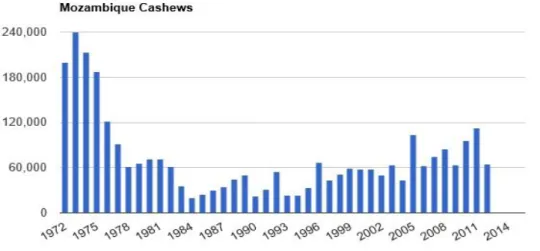
The highest historical production of 213 000 metric tons occurred in 1973, when the country was rated the world’s top cashew producer (INCAJU, 2009). However, in recent years’ production has receded significantly to an average of 81 000 metric tons. Figure 1 illustrates the evolution of cashew production from 1972-2014 (The Global Economy, 2016).
Figure 1. Evolution of Cashew Production in Mozambique
The main reasons for the decline in production can be summarized as the civil war during the 1980s and 1990s, unsuccessful export policy changes, the aging of cashew trees and the growing incidence of pest and diseases (Große-Rüschkamp and Seelige, 2010). All these factors negatively affect the performance of the cashew value chain. According to the INCAJU Master Plan (2011, p.22), the country is the largest African processor and is now positioned as the fourth largest kernel exporter, after India, Vietnam and Brazil. In terms of world production, Mozambique ranks seventh, with 2 percent of market share.
The present paper reviews the current literature and identifies the concerns that are affecting the cashew value chain in Mozambique. The authors combine SWOT perspective analysis and value chain mapping to access the supply and demand side constraints and opportunities. Managing the cashew value chain may assist policy intervention on supporting research programs, improving infrastructure facilities and reallocating financial resources. To reap the rewards of the worldwide increase demand for nuts, the
paper attempts to explore some strategic approaches towards leveraging competitiveness in the cashew industry.
Cashew Industry Global Trends
The cashew tree originated from northern South America and is typically cultivated in tropical climates (ACA, 2014). Across the globe, cashews are mainly concentrated in India, Vietnam, Brazil, West and East Africa regions (ACA, 2015). The global production of cashew in 2014 reached 2.3 million metric tons, an increase of 7 percent from the previous season and 16 percent up, compared with 2004 (INC , 2015). Worldwide trade exceeded 2 billion in 2014 and its demand is expected to rise over time (Markets and Markets, 2015). The major drivers of an increase in nut consumption globally are its health benefits, taste and versatility, and the rising purchasing power of buyers (ABA, 2015).
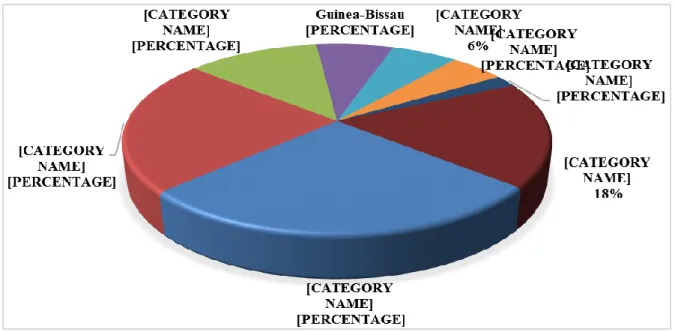
As presented in Figure 2, India is the top world producer with 27 percent, followed by the Ivory Coast with 23 percent. Vietnam claimed 12 percent, Guinea-Bissau accounted for 7 percent, Brazil 6 percent and the remaining production was supplied by other countries, during the period 2013-2014 (Carvalho and Mendes, 2015).
In Africa around 2 million smallholders produced nearly 50 percent of cashew nuts in 2014 and the entire industry contributes to creating employment for more than 10 million people (ACA, 2015). Ivory Coast and Guinea-Bissau are the top producers in the continent.
Source: Carvalho & Mendes (2015, p. 3), adapted from author
Figure 2. World Production Share of Cashew 2013-2014
Although African countries supply one-third of the world’s raw material, processing capacity in these countries continues to be unexploited, considering that 70 percent of value adding is done abroad (ACA, 2014). In order to attain better performance in the value chain and boost rural development, additional processing capacity, including finding new market destinations must be taken into account by policy makers, and small and large scale processors.
With regard to consumption, USA and Europe used to lead the market as importe rs, but considerable changes occurred and since 2012 India assumed the top position as major producer and single biggest consumer (Carvalho and Mendes, 2015). The rapid economic growth, rising middle class income tied with usage of nuts as part of Indian culture are the key factors for this structural revolution in the market (ABA, 2015). It can be noted that the cashew nut is being traded as both raw material and as kernel, like almonds. The bulk of raw material produced in Africa is mainly exported to Ind ia and Vietnam (ACA, 2015).
Annually, value addition is made by key players, especially in almonds, cashews and walnuts. In the marketplace, this product segment is expected to attain $22.642 million by 2019 (Markets and Markets, 2015). These facts represent a huge market opportunity for the Mozambican cashew industry.
Policy Interventions and Main Activities in the Mozambique Cashew Industry
The Government has recognised the importance of the cashew industry for the national economy. In order to revive this sector, in 1997 the National Institute of Cashew (INCAJU, 2009) was established to promote the rejuvenation and expansion of the national orchard and processing industry. INCAJU’s main activities encompass research, the production of cashew seedlings, integrated pest management, marketing output, processing and exporting.
INCAJU research objectives are to identify, select and introduce the best varieties that are tolerant to pest and diseases and enable high quality/quantity. It is also includes the dev elopment of cross-breeding and monitoring of the sanitary and phytosanitary aspects of the cashew plant. T he production of seedlings is deemed as a strategic action for the renewal and growth of the national cashew trees. The annual distribution of grafted plants for the farmers totals some 1.5 million plants. There is an integrated pest management focus on cleaning, pruning, controlling bush fires, as well as spraying to reduce the negative effects of pests and diseases. Pesticides are subsidised because t he majority of the growers do not have the financial resources to purchase them. During the last five years, roughly 4.8 million trees were sprayed, helping 130 000 rural households. In the same period, there was a decrease in output, from 113 000 metric tons to 82 000 metric tons. The decrease in yield is also attributed to changes in weather patterns and plant physiology. The country observed a major expansion in cashew processing, from 3 metric tons in 2002 to 35 000 metric tons in 2014. In total, there are 16 processing plants employing nearly 8 000 people (INCAJU, 2014).
Regarding domestic industry policy protection, an 18 percent tax is imposed on the exportation of the raw material (INCAJU, 2011). Revenues from tax collection are primarily used to fin ance the spraying of cashew trees, production and distribution of seedlings and support domestic processing (INCAJU, 2010).
Geographical Distribution of Cashew in Mozambique
Mozambique is situated in south-eastern Africa. With a total area of 799.380 sq.km, the country lies on the Indian Ocean and is bordered by Tanzania, Malawi, South Africa, Swaziland, Zambia and Zimbabwe (Global Edge, 2016).
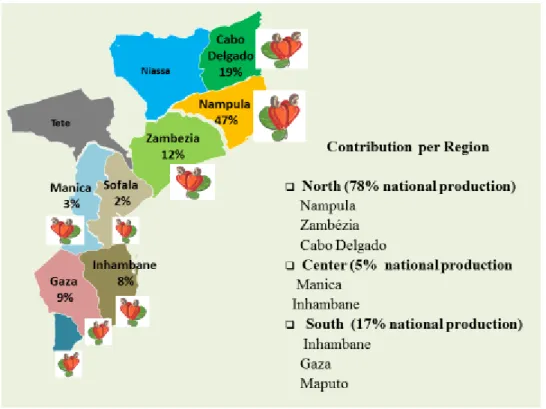
The cashew is distributed along the Mozambican coast line which spans over 2,470 km. There are in total 8 provinces that are major producers (INCAJU, 2015), but it has been estimated that the Nampula province produces nearly 50 percent of the national production. As shown in Figure 3, in terms of contribution by regions, the northern region contributes 78 percent, followed by the southern region with 17 percent and the centre region with 5 percent of the national production (INCAJU, 2015).
Source: INCAJU (2015)
Figure 3. Cashew Nut Geographic Distribution
SWOT Analysis
Improvement in cashew value chain performance requires an assessment of the internal and external factors that affect the industry’s competitiveness. These include an analysis of the strengths, weaknesses, opportunities and threats.
In relation to strengths, it can be said that there is a long tradition of producing cashew nuts and the country offers favorable agro- climatic conditions. The cashew industry is supported by the government, NGO’s and donors. Although the farming systems are predominantly subsistence, nearly 42 percent of farms have cashew trees (INCAJU, 2011, p.42). The weaknesses are associated with inadequate harvesting techniques, inefficient market information, bush fire, and high incidences of pest and diseases which contribute to lower productivity and quality (INCAJU, 2011). Another weakness is the low integration of cashew value chain activities with complementary services (inputs, machinery, and packaging) and deficient rural infrastructure, such as electricity, water and roads. In the same way, there is a lack of extension services, inefficient management of nurseries, and low involvement of the private sector in seedling production and processing (INCAJU, 2011).
Turning to opportunities, there is a worldwide increasing demand for cashews, growth in the tourism sector, an increase in middle class income and the potential to explore niche markets that are willing to pay a premium price (INCAJU, 2011). For instance, demand in North America and Europe accounts for 40 percent. In the same vein, China, Japan, Saudi Arabia, the United Arab Emirates, India, Mexico and Brazil have emerged as a large part of the remaining 60 percent (Larson, 2015). Moreover, roughly 2 million of different nuts are consumed around the globe, and 25 percent is supplied by the cashew kernel (INCAJU, 2011, p. 21). Further, the health benefits of cashew nuts can be used to target the health-conscious consumer. The threats to the cashew industry are mainly related to climate change, natural disasters, macroeconomic policy changes and world price volatility. By addressing these external and internal factors the industry can improve the performance in the entire value chain.
Cashew Value Chain Analysis
A value chain from an agribusiness perspective can be defined as the multiple activities that are essential to bring agricultural product from the farm to the end consumers, where at each stage value is added to the product (Bellú, 2013). This implies identifying the power relationship of the main stakeholders and aspects of organization and coordination. For example, the cashew value chain links growers to brokers, processors and multinational buyers at one end of the chain, and to suppliers of inputs at the other end (Fitzpatrick, 2011). These are also key roles for transportation, utility, and financial service providers, among others.
Agribusiness has experienced a major shift with respect to customer values and needs, food safety and sustainability, so analyzing the value chain may assist policy interventions, support research programs and reallocate resources. In addition, it can help to improve product quality, prioritize investment on technology, and increase profits (Rota and Sperandini, 2010).
Considering that fruits are important components in a healthy human diet, increasing their supply will have a positive impact on consumers, as well as improving the welfare of rural farmers, particularly in countries that offer comparative and competitive advantage (Thowa and Priyadarshib, 2014).
The competitive advantage in cashew production aligned with increasing demand for the cashew in domestic and international market can contribute to alleviating poverty in Mozambique. For instance, having an opportunity to sell cashew nuts at a fair price can bring much needed income for the farmers, which will result in access to education, medical care, and advancement out of poverty.
Mapping the Cashew Value Chain
The cashew market consists of domestic consumption, exportation of the raw cashew and nuts. Based on data provided by INCAJU (2015), from 2010 to 2015, domestic processing accounted for 32 percent, while 16 percent of raw material was shipped, 13 percent were lost due to lack of good storage conditions (see Figure 4). Additionally, 39 percent were kept by farmers for either their own household consumption, to sell to informal sectors or to other different market channels. This higher percentage reveals that there is prominent vehicle of commercialization in which the cashew raw is being sold. Thus, strategies should be taken to organize the informal sector and explore other cashew nut destinations.
Source: INCAJU (2015)
Figure 4. Cashew Nut Market Destinations
As shown in Figure 5, various stakeholders are involved in the cashew value chain. At a national level the structure of the market is characterized by a large number of cashew growers. From the buyer’s side the structure involves numerous retailers, traders, agents and processors. There are low barriers to entry or exit into this market (INCAJU, 2011).
Source: Große-Rüschkamp and Seelige (2010, p.20)
Figure 5. Cashew Value Chain in Mozambique
The initial stage of commercialisation starts when growers sell raw cashew nuts locally to traders, processors, retailers, brokers and the informal sector. The majority of fa rmers are located in remote areas, are not organised in groups and very often do not have access to market prices. Thus, asymmetric information is observed, because buyers are better informed and have more power in terms of negotiation. Another constraint is that there is no price differentiation between the size of the raw nut and quality during the transaction.
The second stage occurs when cashew nuts are collected and transported to be exported or processed by local industry or the informal sector. The processing industry has greatly been supported by government, external donor and NGOs. It is important to note that Mozambique exports mostly partially processed cashew nuts and then exported in bulk through various channels, mainly to the USA, Netherlands , Canada and South Africa, using the official brand named “Zambique” (INCAJU, 2011). It has been pointed out that labour seasonality, lack of capacity building, and business management are the main concerns of the domestic industry (INCAJU Master Plan, 2011). Thus, improvements in local processing may need innovation to improve cutting raw nut efficiently, provide management assistance and additional machinery. In the same way, the location of factories in remote locations, needs to be balanced with good road conditions, water and electricity.
Turning to the informal sector, this is mainly dominated by women, who use traditional methods to process and then sell directly to the markets, bazaars, door-to-door selling, or street vendors. In this case, licensing of these units are required, because processing is currently done without stringent conditions of hygiene and health control. It is also necessary to provide financial support, organize them in groups or associations, and provide training and business skills.
At a global scale, 90 percent of raw cashew nuts is exported to India, while partial processed cashew nuts are shipped mainly to Netherlands, USA, Canada and South Africa, which represent, 27 percent, 18 percent, 14 percent and 14 percent, respectively (Zavale and Monroy, 2014, p. 8). Therefore, it can be observed that 50 percent of additional value is being done in foreign countries, which include roasting, packaging, and labeling (Grobe-Ruschkamp and Seelige, 2010, p. 21). These authors also pointed out that less than 20 percent of the consumer price is generated in Mozambique, while roasters and retailers share 42 percent of the value added. Growers only capture 10 percent of the final product value. Smallholders are presently receiving lower revenues, contradicting the theory, where returns and risks are supposed to be distributed downward on the chain (Rota and Sperandini, 2010).
According to Fitzpatrick (2011), the cashew industry has the ability to maintain market share, offer competitiveness in domestic and international markets and satisfy customers’ needs, in spite of these current constraints.
The roles and responsibilities of the various stakeholders in the Mozambique cashew nut value chain are outlined in Table 1.
Table 1.
Responsibilities of the Main Stakeholders along the Value Chain
Stakeholder Responsibilities
~ 1 million smallholders (growers) Production of raw nuts Private service providers
(most often themselves producers of cashew)
Provision of contracting services (spraying of cashew trees)
Local and regional cashew traders Collection of raw nuts and sale to processors or raw nut brokers/exporters
Domestic processor factories Processing of raw nuts; sale to export brokers; local sales Brokers Brokerage of transactions between local and foreign stakeholders AIA (Association of processors for joint
marketing of processed nuts)
Servicing company focusing on exporting and marketing of processed kernels
Donors and NGOs Promotion of producer’s associations; technical assistance to producers and processors; introducing value-added activities AICAJU (Industry association) Promotion of interests of the industry, consistent policies and
practices among its members
INCAJU (National Cashew Institute) Policy setting, extension services, provision of loan guarantees to processors; export tax collection
ACA (African Cashew Alliance) Marketing support to African cashew producers and processors on the world market
Source: Grobe-Ruschkamp and Seelige (2010, p. 22)
Strategic Fit and the Main Drivers of Profit in the Value Chain
According to Chopra and Meindl (2013, p.21) strategic fit is defined as “consistency between the customer priorities that the competitive strategy hopes to satisfy, and the supply chain capabilities that the supply chain strategy aims to build”. These authors restated that a firm needs to comprehend their own supply chain capacities, and match with customer needs of the target market segment, to attain a strategic fit.
Cashew consumption has increased substantially and this is a part of the general expansion of luxury nuts and adult oriented snacks, used in cuisine, served in social events, restaurants, hotels or as a “ready to eat” food (Larson, 2015). The adoption of new lifestyles by middle and higher income classes increases demand for variety, quality, convenience and nutritious food. Therefore, factors for a successful value chain can be summarised as starting with good quality raw material which is dried properly, a labour force with technical skills and modern equipment. In parallel, attention should be given to infrastructure, food safety standards and access to market information for all stakeholders.
The Performance of the Value Chain
The performance of an industry or sector can be assessed by examining different activities in the production chain and by making comparisons with national and international benchmarks. This means identifying the gaps and probing into core policies, the organization and related inadequate infrastructure. Chopra and Meindl (2013) note that supply chain performance will require an evaluation of logistical and cross-functional factors. The logistical drivers involve facilities, inventory and transportation, while the cross-functional drivers comprise information, sourcing and pricing.
Considering the shelf life and perishability characteristics of cashews, a high degree of coordination is required along the value chain to preserve quality until it reaches the end consumer (Stark et al., 2011). This involves selection of best seed varieties, good agriculture practices, harvesting, adequate storage, grading, packing and transportation. In addition, cold storage should be utilised along the chain to maintain freshness, whether by sea or air shipment (Srivastava et al., 2013).
Like other developing countries, Mozambique is a price taker for cashew nuts. Therefore, pricing of cashew nuts is speculative, depending on price setting by major players and market demand ( Fitzpatrick, 2011). For instance, raw nuts are frequently priced FOB or CIF India in US dollar per tonne, whereas cashew kernels are priced in US dollars per pound. Moreover, prices vary with seasonality. Many buyers consider the availability of raw material, transaction costs and target market that offer a good price for nuts and kernel.
As shown in Table 2, from 2010 to 2015, an average of 81 000 MT of raw cashew nuts were sold into the market by growers, at an average price of 16 MZM/kg, which is equivalent to 0.5 USD. The price reached a peak in 2010, dropped in 2013 and then increased slightly in the 2015 season. Due to a decrease both in yield and price, revenue to the farmers has dropped from 71 million USD to 50 million USD, from 2010 to 2015 (INCAJU, 2015).
Table 2.
Evolution of Marketed Output and Farm Gate Price from 2010-2015
Season Marketed Output(KG)
Farm gate Price MZM/KG
Farm gate Price
USD/KG Revenue USD
2010/2011 112 796 000 19 0,6 71 437 467 2011/2012 65 051 000 14 0,5 29 619 889 2012/2013 83 026 000 12,5 0,4 34 594 167 2013/2014 63 083 000 16,1 0,5 33 854 543 2014/2015 81 240 000 18,5 0,6 50 098 000
Average 81 039 200 16 0,5 43 920 813
Source: INCAJU (2015) Estimate Exchange Rate: USD/30 MZM
With regard to benchmarking prices for raw material and processed nuts (see Figure 6), free on board (FOB) price are being considered. From 2010 to 2015 the FOB price for processed cashew nuts was considerably higher than the raw cashew nut by an average difference of 5000 USD . While for processed nuts the trends showed a substantial increase, ranging from 5838 USD/MT to nearly 7000 USD/MT (INCAJU, 2015).
Source: INCAJU (2015)
Figure 6. Trends of FOB Price Raw Nut and FOB Processed Cashew, USD/Metric Ton
Evolution of Cashew Export Revenue: 2010-2015
The total estimated revenue during the five seasons accounted for 85 million USD for exported raw nuts, whereas for processed nut it was 100 million USD (see Figure 7). This implies that there are more gains by exporting processed cashew nuts. Thus, investing in value adding, adopting international standards and developing market strategy should be emphasised. Based on ITC (2015), the suggested niche markets for Mozambique processed cashew nuts include Canada, Russia, Lebanon, United Arab Emirates, Singapore and Norway.
Source: INCAJU (2015)
Figure 7. Evolution of Cashew Export Revenue: 2010-2015
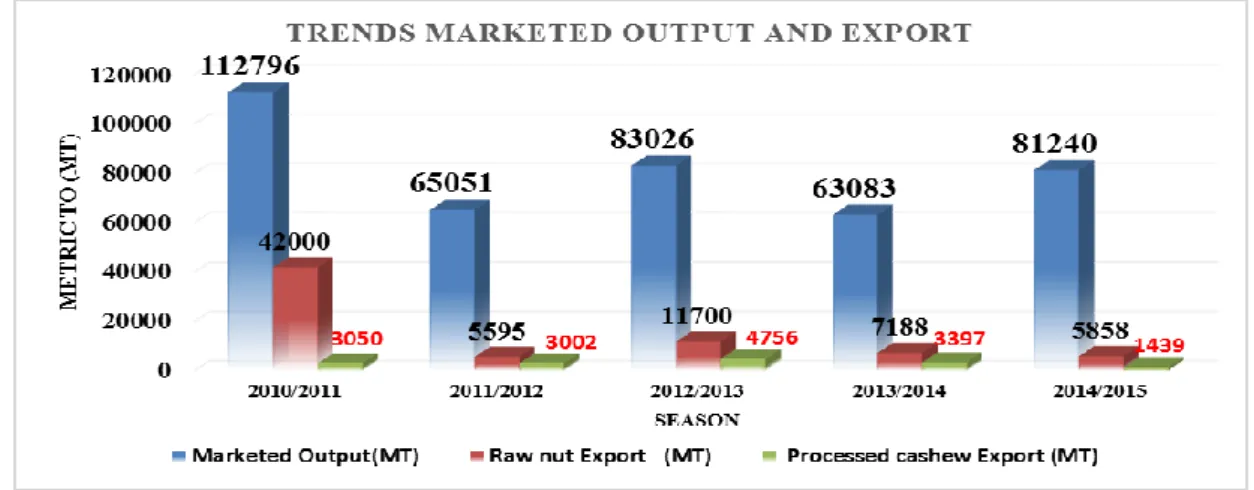
Cashew trees have biennial production, independent of the genotype and the precipitation (EMPBRAPA, 2004). The peak in production is usually followed by a sharp drop in the subsequent year, after that it follows an increase until it reaches a new peak of production and after which the cycle is repeated. The cyclicality is also a natural physiological plant defence mechanism, to recover from nutrients expended. As presented in Figure 8 the highest production and exports of raw nuts was achieved in 2010/2011 reaching 112 000 MT and 42 000 MT, respectively. Then, in subsequent years, production declined 42 percent and 88 percent in 2011/2012, followed by 28 percent and 100 percent growth in 2012/2013.
Another downward trend was observed in 2013/2014, and the upward trend in 2014/2015. During this period, it can be also noted that the quantities of exported raw material outweigh the quantities of exported processed nuts. At the same time, processed nuts have shown a modest upward trend over the 5 seasons. So, this support information may be used to guide all stakeholders to improve planning, fulfil sales agreements, anticipate inventory, which will lead to enhanced efficiencies along the chain.
Source: INCAJU (2015)
Figure 8. Trends on Marketed Output and Export
In general terms, Mozambique can be considered a net exporter of cashew nuts. With an active marketing promotion, there is great potential to expand the sale of the processed cashew nut around the world. Aligned with this, establishing a long-term buyer, seller relationship may contribute to increased profitability in a sustainable manner.
Case Study: Sunshine Nuts
A private food company called Sunshine Nuts, established in Mozambique since 2012, is used as an example of the development of a modern value chain. The company’s main goal is to build value in the cashew chain by processing premium cashew kernels, targeting high end consumers and contributing to alleviate poverty in rural areas (Larson, 2015). Most importantly, the firm is considered a pioneer in the industry sector, doing full processing of nuts for export (INCAJU, 2012). Its proximity to the cashew trees permits it to capture the freshness of the nuts and ensures consistency in supply for the customers. According to Larson (2015), the firm prioritises buying best selected grades (W320 and 450), then roasting with the finest seasoning to produce four unique flavours – spiced, herbed, salted, and plain, that gives them a competitive advantage. In addition, the company has invested in a just-in-time inventory control system and bought space at the technologically advanced ES3 warehouse in York Country, which gives them broad distribution networks at a competitive rate. What is more, investing in a branded line kernel, packaging, labelling and traceability has been prioritized. Larson (2015), stresses that adding a roasted private label brand and bulk, is also part of the company strategy. These additions will contribute to achieving greater economies of scale and efficiency.
With regard to distribution channels, strategically the company builds strong alliances with the finest retailers in South Africa, Europe and North America. This allows them to associate their brand with top food service. For instance, by connecting with Pick n Pay, a well-known retailer in South Africa with almost 900 stores, the firm has been able to target affluent customers, without incurring high costs of transportation. Because, South Africa is near Mozambique, kernels are being delivered using trucks. Pick n Pay’s upper management has been on-board providing the firm with a favourable contract, excellent store placement and links to franchise family stores (Larson, 2015). Further, in North America the main distributor’s channels are Giant, Stop and Shop, C and C, and Whole Foods. These Northeast groceries cover over 800 stores, have an excellent reputation and quality conscious consumers (Larson, 2015). Based on the information above it can be stressed that Sunshine Nut company has the capability to ensure consistency in supply, provide a premium product line, create innovation, respond to sophisticated services requirements and handle supply uncertainty (Chopra and Meindl, 2013). As presented in Figure 9, the optimal mix of channel in the value chain moves from point B to point C, because responsiveness is rewarded by consumers who are willing to pay a higher price for th e product
delivered in the responsive value chain (Mounter et al., 2016). Thus, to maximise chain revenue with high payoff per unit received for the premium product, Sunshine Nut would operate in point C, where there is high level of responsiveness.
Source: Mounter et al. (2016, p.4), adapted by the authors
Figure 9. Strategic Fit and Production Possibilities Curve
This food company focuses on corporate social responsibility to achieve high profits balanced with sustainability and transformational results (Larson, 2015). They also practise discretionary responsibility, taking into account that 30 percent of the profits are reinvested to build orphanages and support vulnerable households. In line with this, it is vertically integrated, which assures a steady flow of fresh raw materials to their roasting operations. Moreover, fair payment, employing the local community and promoting cashew plantation, is also being addressed (Larson, 2015).
Value Chain Sustainability and Policy Interventions
Despite the rapid growth in this industry, it is necessary to harmonise consumer’s choices, sustainable development and resource allocation along the chain (Bonney, 2009). Along the chain, the main actions may include grading, usage of recycle residues of the cashew nut shell to improve soil fertility, expansion of new cashew trees, planting organic cashews and reduction in waste in post harvesting. This means, support extension services, research, farmers training, building modern storage and monitoring production. Additionally, support of an integrated pest management program, investment in certification, standardisation and capacity build, should be considered by policymakers.
Mozambican cashew value chain focuses solely on the cashew nut, excluding other product deriv atives. In comparison, Brazil holds the world's third largest cashew processing capacity and has core competence in the complete processing of the cashew apple and CNSL (INCAJU, 2011, p. 24). According to INCAJU (2011), farmers normally produce home-made juice and alcohol to sell. The health benefits of the cashew apple associated with consumers demanding new products that are tasty and nutritious, can be used as an opportunity to aggregate more value into this chain. As a result, the welfare of rural families will improve and more job opportunities will be generated (Abate and Peterson, 2005). However, market research, specialization, additional processing capacity, pricing mechanism and interchange experience should be taken into account.
Recognising that in most developing countries, governments normally do not have sufficient financial resources to invest in developing programs, it may be crucial to have external support from international agencies (Reardon and Gulati, 2008, p.32). The collaboration may require addressing financial services
and information flow. For instance, involvement in risk sharing, improve insurance through input supply, production, processing, and loan equipment. The alteration in weather patterns and climate change are affecting yield production (INCAJU, 2014). Thus, providing financial support for research to develop tolerant varieties as well as certification are fundamental to mitigating risk in this sector (African Development Bank, 2013). As a result, constraints faced by stakeholders will be reduced and the cashew value chain performance will be improved.
Conclusion
This study sought to explore ways that will contribute to leverage cashew industry competitiveness. It was found that the inefficient cashew value chain is prone to unbalanced trade relations affecting smallholders and lack of logistic facilities. Fragmented smallholders and failure to make use of cashew derivatives also contribute to an inefficient value chain.
To reap the benefits of the worldwide increase in demand for nuts will require investment in market research, reduction in asymmetric information and intensive training programs for growers regarding good agriculture practise, food safety standards and traceability. In the same vein, building laboratory services in strategic areas as well as providing modern and additional machinery should be considered. Additionally, involvement of the private sector and matching chain activities with input services is needed. Aligned with this, there is a need to provide financial support and to organize the informal sector in terms of legalization, capacitation, cashew certification and sanitary measures. In the foreseeable future, the focus should be on value aggregation domestically, and then export of premium products. Balancing customer needs, sustainability, and chain coordination with all stakeholders, can boost the cashew chain performance.
References
ABA (2015). Australian Board of Almonds, Annual Report 2014/15 Retrieved from www.australianalmonds.com.au. [8 May 2016].
Abate, G. and Peterson. H.C. (2005). The Strategic Marketing Institute Rapid Opportunity Assessment: Fruit Sector, Report prepared as part of the work plan for the Great Lakes Agriculture Innovation Program funded by a USDA Rural Development Grant, Michigan State University, Retrieved from http://productcenter.msu.edu/uploads/files/Fruit percent20Sector percent20ROA.pdf [15 November 2015].
ACA (2015). African Cashew Alliance Annual Report 2014, Retrieved from www.africancashewalliance.com[15 November 2015].
African Development Bank Group (2013). Agricultural Value Chain Financing (AVCF) and Development for Enhanced Export Competitiveness, Tunis, I.S.B.N.:978-9938-882-17-9 Retrieved from http://www.afdb.org/en/documents/document/agricultural-value-chain-financing-avcf-and-development-for-enhanced-export-competitiveness-47028.[10 November 2015].
Bellù, G. (2013). A Software for Value Chain Analysis, Manual for FAO VCA Software Tool 3.1. EASYPol series n. 074, Food and Agriculture Organization of the UN, Rome, Italy. Retrieved from www.fao.org/easypol[15 November 2015].
Bonney, B. (2009). Sustainable value chain analysis: an agri-food chain diagnostic, approved for use in National Lamb Chain Project by IDC, http://www.researchgate.net/publication/251236688
Carvalho, B. P. and H. Mendes (2015). Cashew Chain Value in Guiné-Bissau: Challenges and Contributions for Food Security: A Case Study for Guiné Bissau, International Journal Food System Dynamics,Vol.7(1), pp. 1-13, Retrieved from www.foodsystemdynamics.org [7 April 2016].
Chopra, S., Meindl, P. (2013). Supply Chain Management: Strategy, Planning and Operation, 5th Edition, Pearson Publication, Inc, Upper Saddle River, New Jersey.
Embrapa (2004). Boletim de Pesquisa e Desenvolvimento, nº19, Brazil.
FAOSTAT (2014). Statistics on production, yields and area harvested for cashew nuts in Mozambique. Retrieved from www.faostat.org[10 November 2015].
Fitzpatrick. J. (2011). Competitiveness of the African Cashew Sector: African Cashew Initiative. Eschborn, Germany.
Gilleo, J., Kebba Jassey, K., Yeager Sallah, J. (2011). Cashew Business Basics: The Gambia River Basin Cashew Value Chain Enhancement Project (CEP), International Relief and Development(IRD), Retrieved from http://www.africancashewalliance.com/sites/default/files/documents/Cashew_12Oct2011.pdf [8 November 2015].
Global Edge (2016). Retrived from http://globaledge.msu.edu/countries/mozambique/statistics [6 April 2016]. Grobe-Ruschkamp, A., Seelige, K. (2010). Analysis of the cashew value chain in Mozambique. Report prepared
for African Cashew Initiative (ACi). Maputo, Mozambique.
INCAJU, Annual report 2009, 2010, 2011, 2012, 2013, 2014, 2015, Maputo, Mozambique.
INCAJU (2011). Master Plan II: 2011-2020, elaborated by Ernst and Young Private Consultant, March, Maputo. INC (2015). International Nut and Dried Fruit Council Foundation (INC), Global statistical review 2014–2015,
Retrieved from http://www.nutfruit.org/201415-global-statistical-review/ [6 April 2016].
ITC (2015). Trade MapTrade statistics for international business development, Market Analysis and Research, ITC, Geneva, Switzerland. Retrieved from <http://www.tradmap.org>.[8 November 2015].
Larson, D. (2015). Marketing and Distribution of Sunshine Nut Company. Maputo
Lihong, L. (2011). Cashew Cultivation and Processing, Tropical Crops Genetic Resources Institute, CATAS, China. Markets and Markets (2015). Retrieved from
http://www.marketsandmarkets.com/Market-Reports/nut-ingredients-market-200090153.html Publishing Date: April 2015, Report Code: FB 3359.
Mounter, S., Griffith, G., and Fleming, E. (2016). Achieving better strategic fits and higher revenues for Australian beef value chains by recognising and countering chain failure, Animal Production Science. Available at: http://dx.doi.org/10.1071/AN15460.
Reardon, T., Gulati, A. (2008). The Rise of Supermarkets and Their Development Implications: International Experience Relevant for India, International Food Policy Research Institute, Retrieved from <http:// www.ifpri.org/pubs/pubs.htm#dp>[4 February 2015].
Rota, A., Sperandini, S. (2010). Value chains, linking producers to the markets, International Fund for Agricultural Development, IFAD, Rome, Retrieved from <http:// www.ifad.org/lrkm/index.htm>[ 6 November 2015].
Srivastava, S., Mathur, Dr., and Kumar, M. (2013). Competitive advantage and value chain analysis of small scale fruits and vegetable processing industry, International Journal of Logistics & Supply Chain Management Perspectives, Vol. 2:779-790.
Stark, K., Bamber, P., and Gereffi., G. (2011). The Fruit and Vegetables Global Value Chain: Economic Upgrading and Workforce Development, Center on Globalization, Governance and Competitiveness, Duke University. The Global Economy (2016). Mozambique: Cashews production, in tons (1972-2014), retrieved from
http://www.theglobaleconomy.com/Mozambique/[ 4 April 2016].
Thowa, A., Priyadarshib, S. (2013). Aid for Trade: an opportunity to increase fruit and vegetable supply, Bull. World Health Organ., Vol. 91, pp. 57–63 | doi:10.2471/BLT.12.106955.
Zavale, H., Monroy, L. (2014). Analysis of price incentives and disincentives for cashew nuts in the Republic of Mozambique, 2005–2013, FAO, Technical notes series, MAFAP, Rome. Retrieved from < http://www.fao.org/in-action/mafap>[ 6 November 2015].