EVIDENCE-BASED PRACTICE IN NONPROFIT HUMAN SERVICE ORGANIZATIONS
Mathieu R. Despard
A dissertation submitted to the faculty of the University of North Carolina at Chapel Hill in partial fulfillment of the requirements for the degree of Doctor of Philosophy in the School of
Social Work.
Chapel Hill 2015
ABSTRACT
Mathieu R. Despard: Evidence-Based Practice in Nonprofit Human Service Organizations (Under the direction of Gina A. N. Chowa)
Engaging in evidence-based practice (EBP) is one of the key ways nonprofit human service organizations (NPHSOs) can improve programs to better respond to community needs. However, to identify, adapt, implement, and sustain EBPs requires capacity, which many smaller NPHSOs lack in areas like evaluation. Capacity-building may help NPHSOs further engage in EBP, yet more knowledge is needed concerning valid ways to measure NPHSO capacity and the impacts of capacity-building related to EBP.
The aims of this study are to 1) develop a model with testable hypotheses concerning the effect of organizational factors on EBP engagement in NPHSOs; 2) identify a valid way to measure NPHSO capacity; and 3) assess NPHSO capacity-building outcomes related to EBP engagement. In Chapter 1, a brief overview of the key challenges confronting NPHSOs is provided. EBP is reviewed as a promising strategy for confronting these challenges and discussed in relation to NPHSO characteristics.
In Chapter 2, a conceptual model explaining EBP engagement as the use of best available evidence to inform programming decisions in NPHSOs is presented. Research evidence
concerning capacity and readiness factors which promote EBP engagement is reviewed. The perceived advantage of EBP engagement and alignment of evidence with NPHSOs’ mission and capacity are presented as factors mediating the relationship between readiness and EBP
In Chapter 3, confirmatory factor analysis is used to test the fit of three different models for measuring NPHSO capacity. A model with four sub-scales related to resource development, program development, management, and governance capacity fit the data well, while two models with a larger number of items assessing organizational performance did not.
I dedicate this dissertation to my wife of nearly 25 years, Kerri Patrick, my daughters, Benedicte and Rachel, my parents, Ronald and Gretchen Despard, and the staff and volunteers of nonprofit human service organizations in the US who make a positive difference in communities through
ACKNOWLEDGEMENTS
I wish to thank my wife, Kerri, for her tremendous patience, love, and support throughout this journey. Thank you for knowing me well, helping me find my voice, and being my greatest defender. I am also grateful to my daughters, Rachel and Benedicte, for putting up with my wandering and sometimes inattentive mind and hours glued to a laptop. We still found time to have a lot of fun.
I also want to thank my parents, Ron and Gretchen for their continued support throughout my studies. Dad, your advice about and understanding of the dissertation process was invaluable! Mom, you were always there to tell me how much you believed in me.
I would like to thank my Chair, Gina Chowa. You were very understanding and supportive during my process of identifying a topic for which I am passionate. Your critical feedback helped me better organize and express my ideas and improve my writing. Your overall guidance throughout the dissertation process has helped me develop an identity as a scholar.
I would also like to thank my committee members: Matthew Howard, Tom Kelley, Gary Nelson, and Kathleen Rounds. Thank you for your thoughtful feedback and support. You helped me understand how to focus my inquiry and put my work in a larger social and scholarly context.
TABLE OF CONTENTS
LIST OF TABLES ... xi
LIST OF FIGURES ... xii
LIST OF ABBREVIATIONS ... xiii
CHAPTER 1: THE PROMISE OF EVIDENCE-BASED PRACTICE IN STRENGTHENING THE EFFORTS OF NONPROFIT HUMAN SERVICE ORGANIZATIONS ...15
References ...18
CHAPTER 2: ENHANCING EVIDENCE-BASED PRACTICE IN NONPROFIT HUMAN SERVICE ORGANIZATIONS: A CONCEPTUAL MODEL ...20
Background and Significance ...21
What is EBP in Nonprofit Human Service Organizations? ...23
Factors Affecting EBP Engagement in NPHSOs ...30
A Conceptual Model of EBP in NPHSOs...40
Practice Implications ...46
Research Implications ...47
Policy Implications ...49
Limitations of the Model ...50
Conclusion ...51
CHAPTER 3: ASSESSING PSYCHOMETRIC PROPERTIES
OF AN NPHSO CAPACITY AND PERFORMANCE SURVEY ...66
What is Organizational Capacity? ...67
How Organizational Capacity is Measured ...72
Methods...74
Results ...81
Discussion ...85
Conclusion ...90
References ...91
CHAPTER 4: ASSESSING EVIDENCE-BASED PRACTICE-RELATED OUTCOMES OF AN NPHSO CAPACITY-BUILDING INTERVENTION ...101
Capacity-Building Needs of NPHSOs ...103
Capacity-Building Interventions ...105
Study Purpose ...109
Methods...110
Results ...116
Discussion ...124
Conclusion ...130
References ...131
CHAPTER 5: INTEGRATIVE DISCUSSION ...139
Key Findings ...139
Limitations ...140
Practice Implications ...143
Research Implications ...147 References ...150 APPENDIX 2.1:MEASURES RELATED TO THE CONCEPTUAL
MODEL OF EBP IN NPHSOS ...153 APPENDIX 3.1: A MEASUREMENT MODEL OF NPHSO CAPACITY-
BUILDING ...154 APPENDIX 3.2: MODEL 3 COMPASSION CAPITAL FUND LEVEL
OF FOCUS SURVEY ITEMS ...155 APPENDIX 4.1: KEY OUTCOMES FROM THE COMPASSION
LIST OF TABLES
Table 2.1. Social Welfare Systematic Reviews Published from 2009-2014 ...25
Table 3.1. Model Specification ...77
Table 3.2. Study Sample Description ...81
Table 3.3. Initial Model Fit Results ...82
Table 3.4 Re-specified Model Fit Results...82
Table 3.5. Poor Performing Items in Models 1 and 2 ...84
Table 4.1. Study Sample Description ...117
Table 4.2. Unadjusted Pre-Post Differences in Evaluation Capacity Gains ...120
Table 4.3. Logistic Regression Analyses of the Impact of Capacity-Building on Evaluation Capacities of NPHSOs...121
Table 4.4. Summary of Statistical Significance of Model Estimates of Impact of Capacity-Building on Evaluation Capacities of NPHSOs ...122
Table 4.5. Predicted Probabilities of Capacity Gains ...123
Table 4.6. Predicted Probabilities of Capacity Gains: Small and Young vs. Larger and Older NPHSOs. ...124
LIST OF FIGURES
LIST OF ABBREVIATIONS
ACF Administration for Children and Families ACT Assertive Community Treatment
ARC Availability, Responsiveness, and Continuity ATE Average treatment effects
CBO Community-based organization CCAT Core Capacity Assessment Tool CCF Compassion Capital Fund
CCFO Compassion Capital Fund outcome study CEO Chief Executive Officer
CEY Communities Empowering Youth CFA Confirmatory factor analysis CFI Comparative fix index CTI Critical Time Intervention DiD Difference-in-differences EBM Evidence-based management EBP Evidence-based practice
EBPAS Evidence-Based Practice Attitude Scale EFA Exploratory factor analysis
ESI Empirically-supported intervention FBO Faith-based organization
ITT Intent-to-treat LOF Level of focus MAR Missing at random
MCF Marguerite Casey Foundation MST Multi-Systemic Therapy
NPHSO Nonprofit human service organization NPO Nonprofit organization
OAH Office of Adolescent Health PED Paid executive director PFS Pay-For-Success
RMSEA Root-mean square error-of-approximation
SAMHSA Substance Abuse and Mental Health Services Administration SIB Social Impact Bond
STV Subject-to-variable TLI Tucker-Lewis Index
TPP Teen Pregnancy Prevention
CHAPTER 1: NONPROFIT HUMAN SERVICE ORGANIZATIONS AS SETTINGS FOR EVIDENCE-BASED PRACTICE
Most social work practice and social interventions are nested in organizational contexts. Through factors like leadership, climate, and resources, these contexts affect the quality of social work services and interventions. For example, an organization with poor staff morale due to rigid work routines, a lack of supportive supervision, and lack of resources may experience high staff turnover resulting in diminished service quality. Thus, improving social work practice means strengthening the settings in which this practice occurs.
Nonprofit human service organizations (NPHSOs) are a common practice setting for social workers (Gibelman & Furman, 2013; Whitaker, Weismiller, & Clark 2006) and for an array of social interventions. NPHSOs are defined as organizations with 501c3 tax-exempt, public charity status with the Internal Revenue Service that seek to protect, maintain, and enhance the well-being of individuals and families through the provision of direct services (Hasenfeld, 2010).
organizations like the Salvation Army, which has a presence in many communities and a history dating back to the turn of the 20th century. Most are small1, unique to the communities they serve, and governed by a board of directors comprised of local residents.
Given the complexity of staff-client interactions and a focus on changing client behavior and circumstances, providing human services is challenging in its own right (Hasenfeld, 2010), yet other trends have made the work of NPHSOs even more challenging. Privatization has led to increased dependence by government on NPHSOs to deliver human services (Alexander, 2000), creating new managerial demands (Schmid, 2013). NPHSOs are also under increased pressure from both public and private funders to demonstrate improved client outcomes (Campbell, 2002; Ebrahim, 2005; Ebrahim & Rangan, 2014), despite a host of financial challenges (e.g., Besel, Williams, & Klak, 2011; Sontag-Padilla, Staplefoote, & Gonzalez Morganti, 2012).
Evidence-based practice (EBP) has emerged as a paradigm for improving social work practice (e.g., Gambrill, 2006) and for shifting public and private funding toward practices and programs with known effectiveness (Stid, Neuhoff, Burkhauser, & Seeman, 2013). Hence, there is growing interest in how to most effectively disseminate and implement EBP (e.g., Beidas & Kendall, 2014; Palinkas & Soydun, 2012; Thyer, Vaughn, & Howard, 2009).
EBP creates new opportunities for NPHSOs. EBP may help direct NPHSOs toward the most effective approaches for addressing common community problems and improving client outcomes. For example, Assertive Community Treatment (ACT) is a well disseminated evidence-based intervention (Bond, Drake, Mueser, & Latimer, 2001) nonprofit mental health agencies can use to promote psychiatric recovery and reduce risk for re-hospitalization. Interest in and willingness to implement EBPs among NPHSOs may also attract funding and other
resources. For example, ACT is a reimbursable service under most states’ Medicaid programs (Gold et al., 2003). Also, Haskins and Margolis (2014) identify and describe six major initiatives of the Obama Administration to fund the implementation of evidence-based programs. One of these initiatives is the Teen Pregnancy Prevention program out of the Office of Adolescent Health, which funded 75 NPHSOs and public agencies to select and implement an evidence-based program (Stid et al., 2013). Social impact bonds (SIBs) are a novel financing scheme in which private investors fund large-scale implementation of preventive EBPs through NPHSOs and other organizations and receive reimbursement plus a return on investment if the programs achieve target goals (Butler, Bloom, & Rudd, 2013).
Interest in disseminating and implementing EBP also creates a set of new challenges for NPHSOs. Most NPHSOs are small and experience capacity deficits (e.g., TCC Group, 2010; Yung et al., 2008) in areas such as staffing supervision, and funding. These deficits limit the ability of NPHSOs to provide and sustain programs and services, which may make implementing EBP difficult. Furthermore, available research evidence may not be well matched to the mission and programs of some NPHSOs, nor the needs and wishes of clients. In certain fields like behavioral health, there are several identified EBPs, yet there is less research evidence available to inform and improve practice in other fields like domestic violence.
REFERENCES
Alexander, J. (2000). Adaptive strategies of nonprofit human service organizations in an era of devolution and new public management. Nonprofit Management and Leadership, 10, 287-303. doi:10.1002/nml.10305
Beidas, R. S., & Kendall, P. C. (Eds.). (2014). Dissemination and implementation of evidence-based practices in child and adolescent mental health. New York: Oxford University Press.
Besel, K., Williams, C. L., & Klak, J. (2011). Nonprofit sustainability during times of
uncertainty. Nonprofit Management and Leadership, 22, 53-65. doi:10.1002/nml.20040 Bond, G. R., Drake, R. E., Mueser, K. T., & Latimer, E. (2001). Assertive community treatment
for people with severe mental illness. Disease Management and Health Outcomes, 9, 141-159. doi:10.2165/00115677-200109030-00003
Butler, D., Bloom, D., & Rudd, T. (2013). Using social impact bonds to spur innovation, knowledge building, and accountability. Community Development Investment Review, 9(1), 57-62. Retrieved from the Federal Reserve Bank of San Francisco website
http://www.frbsf.org/community-development/files/social-impact-bonds-spur-innovation-knowledge-building-accountability.pdf
Campbell, D. (2002). Outcomes assessment and the paradox of nonprofit accountability. Nonprofit Management and Leadership, 12, 243-259. doi:10.1002/nml.12303
Ebrahim, A. (2005). Accountability myopia: Losing sight of organizational learning. Nonprofit and Voluntary Sector Quarterly, 34, 56-87.doi:10.1177/0899764004269430
Ebrahim, A, & Rangan, V. K. (2014). What impact? A framework for measuring the scale and scope of social performance. California Management Review, 56(3), 118–141. Retrieved from
http://www.hbs.edu/faculty/Publication%20Files/CMR5603_07_Ebrahim_e3316477-8965-4287-be95-04642982b638.pdf
Gambrill, E. (2006). Evidence-based practice and policy: Choices ahead. Research on Social Work Practice, 16, 338-357. doi:10.1177/1049731505284205
Gibelman, M., & Furman, R. (2013). In Navigating human service organizations (3rd ed.) (Chapter 1: Getting to know the human service organization). Chicago, IL: Lyceum Books, Inc.
Hasenfeld, Y. (2010). Human services as complex organizations (2nd ed.). Thousand Oaks, CA: Sage.
Haskins, R., & Margolis, G. (2014). Obama’s promise: Using evidence to fight the nation’s social problems. In Using Research Evidence in Education (pp. 133-160). New York: Springer International Publishing.
McKeever, B., & Pettijohn, S. L. (2014). The nonprofit sector in brief 2014: Public charities, giving, and volunteering. Washington, DC: Urban Institute. Retrieved from
http://www.urban.org/UploadedPDF/413277-Nonprofit-Sector-in-Brief-2014.pdf Palinkas, L. A., & Soydan, H. (2012). Translation and implementation of evidence-based
practice. New York: Oxford University Press.
Schmid, H. (2013). Nonprofit human services: Between identity blurring and adaptation to changing environments. Administration in Social Work, 37, 242-256.
doi:10.1080/03643107.2012.676611
Sontag-Padilla, L. M., Staplefoote, L., & Gonzalez Morganti, K. (2012). Financial sustainability for nonprofit organizations: A review of the literature. (Rand Corporation Research Report sponsored by the YMCA of Greater Pittsburgh). Retrieved from the Rand Corporation website
http://www.rand.org/content/dam/rand/pubs/research_reports/RR100/RR121/RAND_RR 121.pdf
Stid, D., Neuhoff, A., Burkhauser, L., & Seeman, B. (2013). What does it take to implement evidence-based practices? Retrieved from
http://www.bridgespan.org/getmedia/f31d19f3-a782-424a-a04f-8a44edd8fe34/What-Does-It-Take-to-Implement-Evidence-based-Practices.aspx
TCC Group. (2010). Fortifying L.A.’s nonprofit organizations: Capacity-building needs and services in Los Angeles County (A study commissioned by the Weingart Foundation). Retrieved from the Weingart Foundation website
http://www.weingartfnd.org/files/Capacity-Report-Final.pdf
Thyer, B., Vaughn, M. G., & Howard, M. O. (2009). The way forward: Translating research findings into practice settings. In M. G. Vaughn, M. O. Howard, & B. A. Thyer (Eds.), Evidence-based social work practice: Syntheses of the intervention knowledge base (321-328). Thousand Oaks, CA: Sage.
Whitaker, T., Weismiller, T., & Clark, E. (2006). Assuring the sufficiency of a frontline
workforce: A national study of licensed social workers. Executive summary. Washington, DC: National Association of Social Workers. Retrieved from
http://workforce.socialworkers.org/studies/nasw_06_execsummary.pdf
CHAPTER 2: ENHANCING EVIDENCE-BASED PRACTICE IN NONPROFIT HUMAN SERVICE ORGANIZATIONS: A CONCEPTUAL MODEL
Evidence-based practice (EBP) is widely recognized as an important strategy for improving social work practice (e.g., Drisko, 2014; Gambrill, 2006; Howard, McMillen, & Pollio, 2003; Thyer, Vaughn, & Howard, 2009), yet EBP is under-utilized in social work (Aarons et al., 2012; Bellamy et al., 2013; Bond & McGovern, 2013; Fixsen, Blase, Naoom, & Wallace, 2009; Maynard, 2010; Palinkas & Soydan, 2012). Factors such as leadership and organizational climate and culture affect the degree to which EBP is utilized in social work settings (e.g., Aarons, Sommerfield, & Walrath-Greene, 2009; Bond, Drake, McHugo, Rapp, & Whitley, 2009; Kovner, 2014; Plath, 2013). As a result, there is increased focus on
implementation practice and science to help bridge the research-to-practice gap (e.g., Brekke, Ell, & Palinkas, 2007; Fixsen et al., 2009). However, organizational factors affecting EBP are not well studied (e.g., Barwick et al., 2012; Bond & McGovern, 2013; Powell, Proctor, & Glass, 2014; Proctor et al., 2009).
If EBP is under-utilized and affected by the settings in which social workers are nested, it is important to better understand the conditions under which organizations effectively promote EBP. This includes nonprofit human service organizations (NPHSOs), which are a common practice context for social workers (Whitaker, Weismiller, & Clark, 2006).
present a conceptual model that explains the conditions under which EBP may be used by NPHSOs as a strategy to improve client outcomes. I begin by offering a definition of
organization-level EBP that is applicable to and reflective of the heterogeneity and community contexts of NPHSOs. Next, I describe a set of capacity and readiness factors that explain the likelihood of EBP in NPHSOs, as mediated by available evidence and perception of EBP as a strategic lever among NPHSO leaders. Lastly, I present a conceptual model, which explains how these organizational factors are related and affect EBP engagement in NPHSOs. This conceptual model can be used to develop testable hypotheses to better understand EBP in NPHSOs and how it can be enhanced.
Background and Significance
EBP in NPHSOs is important in two key respects. First, in so far as social workers are trained to adopt EBP (Edmond, Megivern, Williams, Rochman, & Howard, 2006; Howard, McMillen, & Pollio, 2003; Manuel, Mullen, Fang, Bellamy, & Bledsoe, 2009), the
organizational settings in which they practice may either hinder or facilitate this goal. Meta-analyses and systematic reviews (Durlak & DuPre, 2008; Fixsen, Naoom, Blase, Friedman, & Wallace, 2005; Gearing et al., 2011; Greenhalgh, Robert, MacFarlane, Bate, & Kyriakidou, 2004; Panzano et al., 2005) across several fields (e.g., education, health promotion, health care, behavioral health care) indicated that implementation of EBP is affected by organizational culture and climate, leadership support, training, supervisory, and financial resources, and collaboration with other organizations.
Sommerfeld, 2009). Authors of National Evidence-Based Practices Project studies found that the fidelity of evidence-based behavioral health interventions like Assertive Community Treatment (ACT) was associated with the receipt of training, consultation, clinical supervision, and leadership support (Bond et al., 2009; McHugo, et al., 2007). The availability, responsiveness, and continuity (ARC) organizational development intervention aims to positively impact organizational social context (culture and climate). ARC has been found by authors of several studies to positively impact staff turnover and organizational culture and climate, and to enhance outcomes associated with EBP implementation (Glisson, Dukes, & Green, 2006; Glisson et al., 2010; Glisson et al., 2012; Glisson, Hemmelgarn, Green, & Williams, 2013).
The second key reason why EBP is important in NPHSOs is that EBP may help NPHSOs better achieve their missions (Kovner, 2014; Stern, 2013) to improve outcomes and quality of life for vulnerable groups served by social workers including survivors of domestic violence, persons living with serious mental illness, and youth transitioning out of foster care. With over $200 billion in annual revenue and $300 billion in assets (Pettijohn, 2013), the 116,643
NPHSOs2 in the U.S. represent a critical part of the social safety net (Garrow, 2011). With such a large financial investment in NPHSOs, donors, policy makers, clients, and other stakeholders have an interest in the promise of EBP to improve outcomes (Stern, 2013).
Interest in NPHSOs using EBP is currently being explored through public and private sector funding innovations. With their origin in health care as a way to provide incentives for improved patient outcomes (Jha, Joynt, Orav, & Epstein, 2012), pay-for-success (PFS) models such as social impact bonds, are seen as a strategy for incentivizing and scaling up the use of EBP in NPHSOs and other organizations (Roman, Walsh, Bieler, & Taxy, 2014). PFS is
2Public Charities under Section 501c3 of the Internal Revenue Code who filed a Form 990 report to the Internal
currently being incorporated into federal grants and contracts in the Departments of Justice and Labor and through the White House Office of Social Innovation and Civic Participation
(Greenblatt & Donovan, 2013). In the private sector, models like the Edna McConnell Clark Foundation’s $120 million aggregated growth capital fund was launched in 2007 to scale up the efforts of three nonprofits (Citizen Schools, Nurse-Family Partnership, and Youth Villages) noted for their evidence of effectiveness and use of EBP (Ryan & Taylor, 2012).
Notwithstanding the ethical considerations of PFS (Halpern & Jutte, 2013), it may be of increasing strategic importance for NPHSOs to embrace EBP as funding priorities shift toward supporting evidence-based programs.
NPHSOs have unique strengths and vulnerabilities that warrant special consideration as an organizational context for EBP. Compared to public agencies, NPHSOs have greater
autonomy and flexibility, which suggests they may provide fertile ground for innovation. Conversely, NPHSOs have key capacity limitations (Abt Associates, 2009; Minzner et al, 2014; TCC Group, 2010) that may make EBP engagement more difficult, such as difficulty in tracking client outcomes, assessing program level outcomes, using data to guide program planning, and engaging in strategic planning.
What is Evidence-based Practice in Nonprofit Human Service Organizations?
In this paper, I propose a conceptual model to explain EBP in NPHSOs, beginning with the following operational definition: the routine and sustained use of best available evidence to guide programming decisions aimed at improving client outcomes. Four key characteristics of
EBP in NPHSOs include: 1) EBP as an organizational-level decision-making process; 2) types of evidence used to guide decisions; 3) how evidence is used; and 4) stakeholder needs and
EBP as a Decision-Making Process in NPHSOs
In the social work literature, EBP is widely regarded as a process of routinely incorporating research evidence into practice decisions as well as clinical expertise and
consideration of client characteristics, circumstances, and preferences (Drisko, 2014; Gambrill, 1999, 2006, 2012; Mullen, Bledsoe, & Bellamy, 2008). According to Gibb’s (2003) EBP decision-making framework, the practitioner poses a specific question related to addressing an identified client need, identifies and critically assesses research evidence that may answer the question, determines whether and how this research evidence can inform an intervention
decision, and evaluates the outcomes of the intervention (Gibbs, 2003; Gibbs & Gambrill, 2002). Gibbs’ framework may not be applicable in contexts where practitioners lack the time, resources, and autonomy to make treatment decisions on a client-by-client basis. In most NPHSOs, decisions concerning interventions are made by managers, supervisors, and direct practitioners based on assumptions about what services and activities will meet the needs of clients (Kettner, Moroney, & Martin, 2013). These decisions are also affected by the
respected by peers as both consumer and producer of data;
dedicated research staff capable of working with complex data and making assessments about relevance and cultural appropriateness of findings for its community or clients;
research regularly scanned for relevant data to support decisions, proposals, and advocacy; and
important organizational questions answered through research; ability to effectively present data using charts, tables, and graphics for a variety of audiences (Marguerite Casey Foundation, 2012).
Types of Evidence Used to Guide Programmatic Decisions in NPHSOs
EBP is conflated with empirically supported interventions (ESIs) (Barth et al., 2012; Drisko, 2014), yet NPHSOs should consider multiple sources of (Gambrill, 2006; Johnson & Austin, 2006) and best available (Austin, 2008; Soydan & Palinkas, 2014) evidence to inform programming decisions. The quality of research evidence concerning interventions NPHSOs might choose to implement varies along a most to least rigorous continuum from meta-analyses and systematic reviews to anecdotal case reports, respectively (Thyer, 2006). However, the availability and quality of evidence aligned with NPHSOs’ missions varies considerably. For example, NPHSOs with behavioral health missions can find several candidate interventions in the Substance Abuse and Mental Health Services Administration (SAMHSA) National Registry of Evidence-based Programs and Practices. Conversely, NPHSOs interested in promoting
Because of the variability in research evidence available to a wide range of NPHSO missions, data and evidence from within the organization should also be used (Carnochan, Samples, Myers, & Austin, 2014). This may include data and evidence concerning 1) the social problem(s) the NPHSO is addressing; 2) client needs and characteristics; and 3) the effectiveness of various programs. For example, an NPHSO that promotes financial security among lower-income families could examine variation in program participation and outcomes based on client intake and assessment data. This NPHSO might discover that clients without checking accounts and who have poor credit histories participate in and benefit from financial counseling more than clients with bank accounts and intact credit.
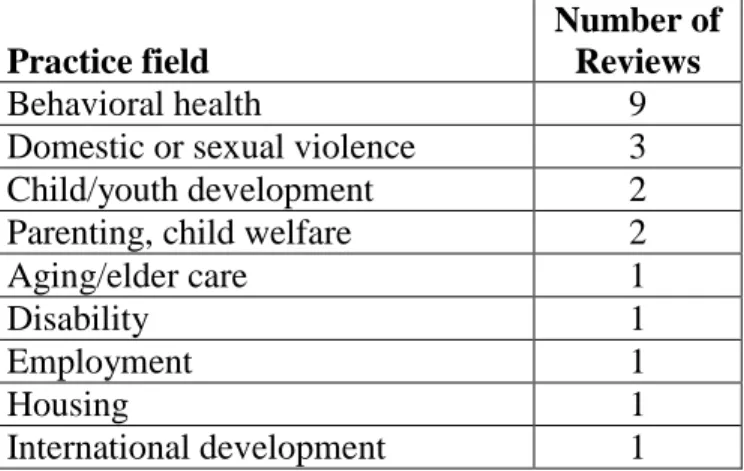
Expanding a definition of EBP to include evidence NPHSOs generate is important for two key reasons. First, the availability of intervention research evidence is unevenly distributed across NPHSO practice fields. For example, a search for systematic reviews in the social welfare category of the Campbell Collaboration library published in the last five years yielded 21 results, categorized as follows:
Table 2.1. Social Welfare Systematic Reviews Published from 2009-2014
Practice field
Number of Reviews
Behavioral health 9
Domestic or sexual violence 3
Child/youth development 2
Parenting, child welfare 2
Aging/elder care 1
Disability 1
Employment 1
Housing 1
International development 1
dynamic programs that have not been rigorously studied but have potential for establishing a practice-to-research pipeline. For example, Macy, Ermentrout, and Rizo (2012) present findings of a feasibility study concerning a novel program developed by a domestic violence NPHSO and a child abuse prevention NPHSO for female victims of intimate partner violence who had been court mandated to services because of defensive violence against their male partners. The authors used evidence-based practice development steps to conduct their study, offering an illustration of how NPHSOs can generate evidence to test and improve programs, not just implement existing evidence-based programs, particularly when little if any intervention research evidence exists.
Best available evidence should also include evidence concerning community problems – not just the efficacy of interventions. NPHSO leaders all have theories about the nature of the problems they are addressing, whether or not assumptions and hypotheses are consciously acknowledged. For example, a program director of a homeless shelter may believe that the primary risk factor of homelessness is substance abuse. Another program director may view the primary risk factor as a lack of affordable housing units in the community. EBP in NPHSOs should include using evidence to test assumptions about community problems to identify intervention leverage points (Fraser, Richman, Galinsky, & Day, 2009; W. K. Kellogg Foundation, 2004).
How Evidence is used to Guide Programmatic Decisions in NPHSOs
publicly available sources like the Campbell Collaboration library of systematic reviews.
NPHSO managers may lack the knowledge and skill to critically discern the quality of evidence. The translation into practice may be inaccurate due to a lack of detailed information about the intervention. The evidence may have limited external validity and be misaligned with the community and populations served by the NPHSO.
An NPHSO may use evidence indirectly by choosing to implement a well disseminated ESI, such as Nurse-Family Partnership or Assertive Community Treatment. NPHSO managers need not directly access, understand, and translate the research evidence into program design; they only need to select the intervention, though the degree to which the intervention is effectively implemented is beset with a host of challenges (Fixsen et al., 2005, 2009).
Yet even the selection of an ESI is not risk-free. For example, Multi-Systemic Therapy (MST) is a widely disseminated ESI aimed at reducing externalizing problem behaviors in adolescents. Authors of the most recent meta-analysis of MST indicated that MST is more effective with younger and non-ethnic minority youth and in well-controlled treatment conditions (van der Stouwe, Asscher, Stams, Deković, & van der Laan, 2014). A NPHSO’s selection of MST thus is not a guarantee – even if implemented with high fidelity – of effectiveness with all at-risk youth, in all community settings.
and practitioners need help in finding and using evidence relevant to the client outcomes they are trying to achieve (Rosen, 2003). NPHSOs’ indirect use of evidence may also be efficiently channeled through funding requirements. For example, a nonprofit mental health organization may elect an ESI such as Assertive Community Treatment (ACT) (Bond, Drake, Mueser, & Latimer, 2001) because the state Medicaid program reimburses for this service.
NPHSOs may use research evidence in direct and indirect ways to improve programs. Direct methods are inherently more risky, yet indirect methods may depend on NPHSOs’ access to and engagement with intermediaries and funders.
Stakeholder Needs and Preferences
NPHSOs, like nonprofit organizations in general, have multiple stakeholders – groups of people and other organizations with an interest in what the NPHSO does to fulfill its charitable mission. Stakeholders of NPHSOs are varied and include persons who receive direct services from the NPHSO, funders, volunteers, staff members, other organizations, local government, and community residents. A key responsibility of the Board of Directors is to act as stewards of the NPHSO as a community asset that fulfills the needs of stakeholders.
illness and/or substance abuse disorders (Collins et al., 2012; Padgett, Stanhope, Henwood, & Stefancic, 2011).
Factors Affecting EBP Engagement in NPHSOs
EBP in NPHSOs represents a significant change in organizational practice (Barwick et al., 2005; Gambrill, 2006; Johnson & Austin, 2006; Maynard, 2010; Risley, 2011). Multiple factors affect EBP engagement in NPHSOs, such as organizational culture and access to knowledge through networks. These factors broadly fit two categories, capacity and readiness. Capacities are the functions of NPHSOs necessary to consistently and reliably offer programs and services to the community. Without them, EBP engagement is a moot issue. Readiness is the set of conditions that support EBP engagement as a strategy to improve programs and services. Each of these categories is described below.
Organizational Capacity
Organizational capacity is comprised of the organizational competencies that enable nonprofit organizations to effectively and efficiently fulfill their charitable missions (Connolly & York, 2003; Eisinger, 2002; Glickman & Servon, 2003; Light, 2004; McKinsey and Company, 2001; Millesen, Carman, & Bies, 2010; United Nations Centre for Human Settlements, 2002). Specific types of capacity – management and technical, evaluation, networking, and resource – are especially important for EBP engagement.
Management and technical capacity. Management and technical capacity is the
equipment and facilities, resource development, and information technology are needed to reliably and consistently offer programs and services (Cassidy, Leviton, & Hunter, 2006; Connolly & York, 2003; Glickman & Servon, 2003; Marguerite Casey Foundation, 2012;
McKinsey & Company, 2001). To effectively implement programs, NPHSO managers also need to recruit well-qualified staff, provide training and coaching, and assess performance using data systems to monitor program fidelity and evaluation data (Fixsen et al., 2009). Facilitative administration in human service organizations “provides leadership and makes use of a range of data inputs to inform decision making, support the overall processes, and keep staff organized and focused on the desired intervention outcomes” (Fixsen et al., 2009, p. 535).
Additional management capacity indicators related to EBP engagement include: having a diverse, experienced, and skilled senior management team and staff
committed to ongoing learning and professional development;
outcome-focused goals and a common set of practices designed to produce impact; detailed operational plans that are regularly updated and refined and linked to
strategic planning activities and a well-developed set of policies and procedures to ensure efficient and effective operations;
well-run meetings and transparent and participatory decision-making processes; integrated communication and coordination of effort across programs and functions; frequently used and well organized knowledge management systems;
Absent these competencies, a NPHSO may lack the programmatic stability through which EBP can be used to improve client outcomes. A lack of these competencies may also harm
implementation of evidence-based programs (Fixsen et al., 2005, 2009).
Evaluation capacity. Evaluation capacity is the NPHSO’s ability to a) define intended client outcomes in clear and observable terms that relate to meaningful quality of life changes for the individuals, families, and communities it serves (Hunter, 2006; W. K. Kellogg, 2004); b) engage in formative, process, and outcome evaluation to assess program effectiveness (Fine, Thayer, & Coghlan, 2000; Hoefer, 2000; Poister, 2010); and c) collect, manage, analyze, and interpret evaluation data (Cousins, Goh, Elliott, & Bourgeois, 2014). If an NPHSO is unable to define the outcomes it hopes to achieve for clients, it will not know what research evidence might be used to improve its programs. Even if research evidence is identified and used to
improve a program, the NPHSO needs to know how to evaluate the program and use and analyze data to determine if the use of evidence improves client outcomes.
Several studies indicate that NPHSOs struggle with evaluation (Carman, 2007; Carman & Frederick, 2008; Hoefer, 2000; Innovation Network, 2012; Leake et al., 2007; Pejsa, 2011; Sobeck, 2008; TCC Group, 2010), hampered by a lack of resources (e.g., time, funding, staff), expertise, and leadership support and implementation challenges (e.g., data management)
Networking capacity. Networking capacity is the ability of nonprofit organizations to create, develop, and sustain relationships with other organizations (Glickman & Servon, 2003). Eisenger (2002) defines having “links to the larger community from which an organization might draw help” (p. 118) as a critical capacity element among NPHSOs. Weber and Khademian (2008) stated that “networks are defined by the enduring exchange relations established between organizations” (p. 334) and are important for organizing collective action to solve challenging, complex, and unstructured community problems and as a platform for sharing knowledge. Similarly, a growing collective impact movement is based on the idea that cross-sector
collaboration is needed to solve community problems that no single organization can solve alone (Austin & Seitanidi, 2012; Kania & Kramer, 2011).
Organizations with low proximity, weak ties to external networks are more likely to learn about innovations that can improve their practices (Rogers, 2003). Thus, the more networked an NPHSO is, the more likely it will be exposed to new ideas for improving outcomes, including the use of EBP. NPHSOs need to have connections to organizations and networks outside of the communities they serve. This may occur when a NPHSO identifies with a field of practice (James Irvine Foundation, 2009) and engages in shared evaluation and learning activities (Kramer, Parkhurst, & Vaidyanathan, 2009) through intermediary organizations such as foundations. NPHSOs need networks to efficiently access, understand, and apply research evidence.
Resource capacity. Resource capacity is the degree to which an NPHSO has the
resources are critical for EBP engagement (Durlak & DuPre, 2008; Fixsen et al., 2005; Franklin & Hopson, 2007; Mullen et al., 2008; Schoenwald & Hoagwood, 2001). Funding, human resources, space, technology, and training are needed to support EBP implementation (Fixsen et al., 2005). Acquisition, training, monitoring, supervision, consultation, and ongoing licensing for proprietary evidence-based programs may be cost prohibitive for many NPHSOs (Franklin & Hopson, 2007). Costs associated with EBP engagement also include the unfunded time of staff to engage in research, planning, and training activities, new facilities, equipment, qualified staff, and information technology (Fixsen et al., 2005; Hayes, 2005; Schoenwald & Hoagwood, 2001).
A lack of resource capacity also exerts an indirect harmful impact on EBP engagement due tothe diversion of time, energy, and resources from implementing effective programs to fundraising.NPHSOs that lurch from one restricted grant to the other may be continuously changing the focus of their programming to meet funder demands, which makes applying EBP untenable.
Financial resources include both contributed and earned revenue sources, including grants, contracts, program fees, individual and corporate donations, special events, investment income, and commercial enterprises. Financial resources may also include loans, lines of credit, program-related investments, tax-exempt bonds, and other financial instruments. Non-financial resources include in-kind donations and services provided at no cost by volunteers and other organizations.
financial health (Besel, Williams, & Klak, 2011; Bowman, 2011; Bowman, Tuckman, & Young, 2012; Calabrese, 2013; Chabotar, 1989; Chang & Tuckman, 1991).
Lack of resource capacity hinders the adoption and implementation of EBP. Funding concerns were a major issue that affected decisions to adopt MST among stakeholder
organizations in 13 systems of care (Carstens, Panzano, Massatti, Roth, & Sweeney, 2009). Organization leaders anticipated costs of adopting and implementing MST would exceed current revenues based on fee-for-service reimbursements. Barwick et al. (2005) found executive
directors of Canadian mental health organizations were motivated to adopt EBP, but lack of sufficient staff, time, and money were a barrier. In a study assessing fidelity outcomes associated with five different evidence-based mental health interventions, Bond et al. (2009) found higher fidelity was observed for interventions with more favorable government reimbursements and more state-level technical resources and guidance. Funding was identified as a key challenge in using EBP by managers of community-based substance abuse treatment programs (Guerrero, 2013). Packard (2010) found adequate funding and effective resource allocation were factors perceived by managers and practitioners to be important in supporting the performance of human service organizations assisting at-risk youth.
2011; Nonprofit Finance Fund, 2013; Nonprofit Operating Reserves Initiative Workgroup, 2008).
Organizational Readiness Conditions
Organizational readiness conditionsare factors identified in the implementation science literature as affecting organizations’ use of EBP (e.g. Bond et al., 2009; Fixsen et al., 2005). These factors include leadership quality, a learning culture, and access to knowledge.
Leadership quality. Leadership quality is the ability of managers, supervisors, and the
board of directors to 1) articulate a vision for and maintain a steady commitment to improving client outcomes; 2) promote a learning culture that predisposes the NPHSO to use evidence to improve programs; and 3) develop resources and accountability to ensure that evidence-based programs are well implemented and sustained. Use of EBP is conceptualized as a multi-stage process, beginning with the decision to adopt new practices (Fixsen et al., 2005). EBP is a practice innovation – a new approach for most NPHSOs in planning, implementing, and
evaluating programs. For innovations to be adopted, the innovation must be recognized as better than current practice, an assessment influenced by the role of champions, change agents, and opinion leaders (Rogers, 2003). In NPHSOs, the chief executive officer, with the support of the Board of Directors, needs to champion the use of EBP as a strategy to better fulfill the NPHSO’s charitable mission (Hayes, 2005). McKay et al. (2004) found that efforts to promote EBP depend on whether organizational leaders recognize the benefits of EBP, think creatively, and are open to new practice ideas.
2001), the process of which requires deft leadership skills such as team building, clear
communication, and conflict management. Several studies have found a relationship between leadership styles and behavior and EBP engagement. Both transformational (i.e., promoting a vision for change) and transactional (i.e., setting goals and expectations, motivating staff with rewards) leadership had statistically significant, positive correlations with EBP attitudes (Aarons, 2006). Transformational leadership was found to be associated with client outcomes in human service organizations (Poertner, 2006) and the adoption of program innovations in NPHSOs (Jaskyte, 2011). Similarly, adoption of Multi-Systemic Treatment (MST), an evidence-based program, was associated with leaders who expressed a greater vision for how MST adoption could promote use of evidence-informed programs and services and build legitimacy and influence in the community (Carstens et al., 2009).
After making a commitment to EBP to improve programs, managers and supervisors play an important role in supporting and sustaining program implementation (Fixsen et al., 2005). Leadership support, including ongoing supervisor communication, was viewed by staff as an important factor in the implementation of SafeCare, an evidence-based home visitation program (Aarons & Palinkas, 2007). Also, leaders play an important role in managing organizational culture to accept change, and in helping staff members cope with the loss they may feel in changing their practices (Austin & Claassen, 2008a).
Learning culture. Learning culture is an organizational culture in which exploring new
strong culture of experimentation supported by leaders, internal and external knowledge transfers, learning from failure, and an emphasis on teamwork and group problem solving. Managers and supervisors can promote a learning culture by facilitating a process in which staff analyze and interpret data to make improvements (Garvin, Edmondson, & Gino, 2008; Johnson & Crean, 2008; Linnell et al., 2002) and feel psychologically safe taking risks (Edmondson, 1999). Feedback loops are also needed to monitor implementation in dynamic organizational settings (Fixsen et al., 2009).
NPHSOs with learning cultures characterized by curiosity, data collection, and intellectual discourse may be more likely to value and adopt EBP. For example, Plath (2012) proposes that EBP be regarded as an ongoing and cyclical process in which research evidence is critically appraised by staff to inform and improve practice. Similarly, Gambrill (2006)
emphasizes the importance of critical thinking among all staff members in organizations to generate ideas for improving services in relation to practice-related evidence. Illustrating what she sees as the connection between EBP and organizational learning, she states “The notion of a learning organization suggests an active pursuit of the flow of knowledge including errors and their causes rather than a passive stance that characterizes many (most?) social service
organizations” (p. 350). An indicator that a NPHSO has a learning culture is that it regularly uses theories of change to identify and examine assumptions about how program services and
activities will result in desired outcomes (Hunter, 2006; W. K. Kellogg Foundation, 2004) Becoming learning organizations can help NPHSOs develop the “critical thinking skills needed to understand and assess research as well as adapt and apply findings to practice
different types of research evidence related to practice, manage and share knowledge, and apply learning to practice (Austin, 2008).
Maynard (2010) also argues that applying the theory and practice of organizational learning can help social service organizations overcome the barriers to EBP engagement. Organizational learning components that promote EBP engagement regard the organization as a complex system influenced by both internal and external factors, personal mastery of staff members, revealing implicit practice assumptions, creating a shared vision for change, and engaging in team learning. By becoming learning organizations, NPHSOs can create the conditions and capabilities conducive for EBP engagement. Similarly, Gitterman and Knight (2013) state “Natural curiosity, a willingness to take a risk and follow hunches, and the ability to learn from mistakes are sine quo non of artistry” (p. 74).
Access to knowledge. Access to knowledge is the extent to which the NPHSO is able to
access research evidence to improve its programs. Access to knowledge capital relates to what Rogers (2003) describes as the agenda setting and matching process, when organizations recognize a performance gap, access information about an innovation that can reduce this gap, and consider the innovation’s fit with the organization.
learning networks supported by foundations (James Irvine Foundation, 2009; Kramer, Parkhurst, & Vaidyanathan, 2009) and through interactions with nonprofit capacity-building intermediaries such as United Way (Brown, 2008; Minzner et al., 2014; Shea, 2010). Larger NPHSOs can cultivate internal communities of practice to help managers identify and know how to use evidence to improve programs (Milway & Saxton, 2011).
A Conceptual Model of EBP in NPHSOs
Based on the organizational capacity and readiness factors described above, the following conceptual model explains how EBP engagement occurs in NPHSOs:
Figure 2.1: A Conceptual Model of EBP in NPHSOs
According to the model, organizational readiness conditions like the quality of leadership will lead to the routine and sustained use of evidence to guide programming decisions, as partially mediated by the degree of fit of evidence and whether EBP as a routine practice is viewed as advantageous by NPHSO managers. However, the readiness conditions that facilitate EBP engagement and EBP engagement itself will be directly influenced by the capacity of the NPHSO to execute its charitable mission. These constructs and relationships are discussed in fuller detail below.
Organizational capacity
Organizational readiness conditions
EBP Engagement Perception of
EBP risk and opportunity Evidence fit with mission and
EBP Engagement
As defined above, EBP in NPHSOs is the routine and sustained use best available evidence in addition to stakeholder needs and preferences to guide programming decisions
aimed at improving client outcomes. Using evidence to guide programming decisions may
include, but is not limited to selecting, implementing, and sustaining a particular empirically supported intervention (ESI). EBP engagement will occur in varying degrees and stages in NPHSOs (Meyer & Goes, 1988) and represents a shift in organizational practice, from not using to using evidence to improve programs and client outcomes. It may begin with simple steps such as an NPHSO that assists the homeless learning more about the housing first model or about how homeless persons living with serious mental illness might benefit from having an ACT team.
In its fullest form, EBP engagement in NPHSOs reflects an ongoing and sustained cycle of applying and adapting evidence to programs, evaluating outcomes, and making further refinements. With respect to ESIs, EBP engagement means implementing the intervention to fidelity, ensuring that ongoing resources are available to sustain fidelity, evaluating the outcomes of the ESI, and adapting the intervention as needed to improve outcomes.
Organizational Capacity
Organizational capacity is a necessary precondition to EBP engagement. NPHSOs with insufficient capacity are unlikely to engage in EBP. Also, ESIs implemented by NPHSOs with insufficient capacity will be poorly implemented. The following hypotheses related to
organizational capacity are identified in the conceptual model:
Leadership Quality
Learning Culture Management and
Technical Capacity
Evaluation Capacity
Resource Capacity
Organizational Capacity
Access to Knowledge Networking Capacity
Organizational Readiness Conditions
H2: NPHSO’s organizational capacity will directly impact the routine and sustained use of evidence to improve programs.
Organizational Readiness
Readiness is the conditions under which EBP engagement is more likely to occur in NPHSOs: leadership quality, a learning culture, and access to knowledge. According to the proposed model:
H3: Organizational readiness conditions – leadership quality, learning culture, and access to knowledge - will make an NPHSO more likely to engage in EBP.
The Relationship between Organizational Capacity and Readiness
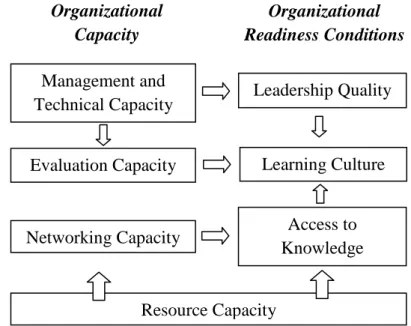
Figure 2.2 below depicts the theory of change concerning how specific types of
organizational capacity affect readiness for EBP engagement as an explication of the left half of the conceptual model in Figure 2.1:
Management and technical capacity is hypothesized to directly impact evaluation capacity because adequate staffing, supervision, management information systems, and information technology are needed before NPHSOs can evaluate their programs. For example, lack of supervision may result in lack of accountability needed to drive evaluation. Inability to collect, manage, and analyze data will thwart most evaluation efforts.
Management and technical capacity is also viewed as a precursor to leadership quality. Whereas the management function of NPHSOs is focused on the efficient and effective use of resources to operate programs, leadership means articulating a vision for change and motivating and supporting staff in pursuing this change. Yet leaders cannot pursue change if the
management function has not established the NPHSO’s programmatic structure.
Evaluation capacity influences a learning culture in three ways. First, a NPHSO needs clear definitions of the client outcomes it is trying to achieve and an understanding of evaluation concepts before it can critically assess evidence to improve programs. Second, in judging
whether and how research evidence might improve programs, an NPHSO needs to understand how effective its programs are. Third, an NPHSO needs to be able to evaluate a research-informed program to determine whether it is effective. Leadership quality also affects learning culture. In general, leadership behaviors have a substantive effect on organizational culture. Specifically, transformational and transactional leadership are positively associated with attitudes among staff concerning EBP (Aarons, 2006).
back to the NPHSO to be discussed and critically assessed for improving programs. Finally, as detailed above, a lack of resources can undermine almost everything an NPHSO does in relation to EBP engagement, e.g., not having computers and internet access to access evidence, constant diversions of time, energy and attention from improving client outcomes to raising money, and being unable to hire competent staff.
Mediator:Evidence Fit with Mission and Capacity
Evidence fit refers to the degree to which evidence to which the NPHSO has access and
may consider for improving programs is aligned with its mission, community, and capacity. According to the proposed model:
H4: The relationship between organizational readiness and EBP engagement is partially mediated by the fit of evidence with the NPHSO’s mission and capacity.
An NPHSO may be ready to engage in EBP as a function of leadership, culture, and access to knowledge, yet whether readiness leads to EBP engagement depends on how well aligned the evidence is. NPHSO leaders need to assess the best available evidence (Austin, 2008) to improve programs, yet leaders need to be able to locate evidence that is both relevant and usable.
Mediator: Perception of EBP Opportunity and Risk.
Perception of EBP opportunity and risk refers to the degree to which leaders feel that
EBP engagement will help the NPHSO fulfill its mission to a greater extent than the NPHSO’s current efforts, while not incurring a risk to the NPHSO’s current and future financial health. According to the proposed model:
H5: The relationship between organizational readiness and EBP engagement is partially mediated by whether EBP is viewed as an opportunity or a risk by
NPHSO leaders.
In addition to the availability of aligned evidence, the relationship between readiness and EBP engagement depends on the perception that engagement EBP is advantageous for the NPHSO. Greenhalgh et al. (2004) found in a large systematic review that the innovation must be perceived as advantageous for it to be considered for adoption. Similarly, Rogers (2003) states that the innovation must be seen as better than current practice. Thus, NPHSO leaders must perceive that by engaging in EBP, programs and client outcomes will be improved, and that organizational survival will not be threatened.
Supported Employment – an evidence-based program (Holladay, 2013). Thus, an NPHSO may be compelled to adopt EBP for no other reason than externally-imposed funding conditions, though as explained by other factors in the model, this reason alone does not ensure the NPHSO will effectively implement and sustain new practices to improve client outcomes.
Practice Implications
The conceptual model presented in this paper can be used by NPHSO leadership teams to understand how to guide their organizations toward greater EBP engagement. This ought to start with an assessment of readiness. NPHSO leaders can assess their capacity using tools like the Marguerite Casey Foundation’s organizational capacity assessment tool3
to determine functions that might be strengthened as a precondition for EBP engagement. Leaders can then assess their readiness for EBP engagement by using tools like the Evidence-Based Practice Attitude Scale (EBPAS)4. The benefits of engaging staff, volunteers, clients, and board members in these assessment activities are to use the process to build a collective vision for engaging in EBP as a strategy for improving client outcomes, and to identify barriers to EBP engagement and the resources the organization needs to overcome these barriers. To help overcome attitudinal barriers, leaders should emphasize how EBP engagement is a strategy – but not the only
conceivable one – that can improve client outcomes. EBP engagement should be tightly linked to the NPHSO’s mission and not be characterized merely as a means of securing additional
funding.
The next major step for NPHSO leaders is to promote a learning culture. This can be done in simple ways, such as devoting time in staff meetings to engage in discussions about why (or why not) programs and services appear to be effective in meeting client needs. Staff may also
3See http://caseygrants.org/resources/org-capacity-assessment/
be encouraged to introduce new ideas about effective programs from conferences or their own learning. Leaders should encourage risk taking and hold individual staff accountable not for client outcomes (which may be affected by multiple factors), but for the development of new knowledge and skills. Accountability for client outcomes should be expressed as a collective responsibility.
To promote learning and encourage active use of evidence, leaders should ensure their organizations are active participants in networks organized by intermediary organizations such as foundations, state associations, and universities. Through these networks, NPHSO leaders and staff can learn about best available evidence and practice guidelines related to their field(s) of practice. Leaders should actively seek help from intermediaries in understanding how to apply evidence to practice.
Lastly, NPHSO leaders should ensure their organizations have the financial stability to engage in EBP. As effective, evidence-based programs are developed, leaders should ensure they can be sustained over time. Financial sustainability is primarily a function of funding policies (see below), though there are many strategies leaders can take irrespective of funding reforms. These strategies are beyond the scope of this paper, though there are several helpful practice-oriented resources (e.g., Bell, Masaoka, & Zimmerman, 2010; Jean Francois, 2015; Peters & Schaffer, 2005)
Research Implications
lists instruments that can be used to measure certain model constructs. Using SEM to analyze the strength of relationships among model constructs can help identify possible leverage points for organizational development and capacity-building interventions to promote greater use of EBP among NPHSOs. For example, leadership development, including individualized coaching, may build NPHSO capacity (Austin, Regan, Samples, Schwartz, & Carnochan, 2011). A sample of NPHSOs interested in capacity-building could be randomly assigned into leadership coaching plus group-based training, group-based training alone, and a control group.
A key idea from the conceptual model is organizational capacity affects conditions under which NPHSOs are more likely to engage in EBP. This links two otherwise disconnected
literatures – nonprofit capacity and effectiveness and implementation science. For researchers interested in nonprofit capacity, this model can help focus capacity-building interventions in areas directly related to strengthening programs to improve client outcomes. For researchers interested in implementation science, this model can help identify specific capacity issues that may explain variation in program fidelity.
Policy Implications
The conceptual model also conveys implications for funding strategies. Funders and other intermediaries engaged in impact-focused funding efforts like social impact bonds and strategic philanthropy can use the model as a guide for assessing the capacity and readiness of NPHSOs to implement and scale up effective programs. It may be tempting to simply compel NPHSOs to engage in EBP by making it a condition of receiving funding, yet funding and policy mandates alone are insufficient for effective implementation (Fixsen et al., 2005).
If funders want to see NPHSOs increase their use of EBP, they should help build NPHSO capacity (Buteau, Brock, & Chaffin, 2013), particularly concerning evaluation (Brock, Buteau, & Herring, 2012). Rogers (2003) cautions that the adoption of innovation among people and
organizations with greater resources and capacity may exacerbate inequality. To mitigate this risk with respect to EBP – particularly given how it is preferred by funders – NPHSO capacity-building warrants attention. Minzner et al. (2014) found that among small NPHSOs, capacity in multiple domains can be positively impacted with training, technical assistance, coaching, and targeted funding.
Another implication of the proposed model is funders should consider an inclusive standard with respect to evidence (Schorr, 2012), which relates to the standard of best available evidence in the definition of EBP engagement in this paper. An inclusive standard means synthesizing evidence from multiple sources along a hierarchy of evidence to “continuously make interventions more effective” (Schorr, 2012, p. 54). Rather than limit funding to
definition of EBP engagement in this paper: routine and sustained use of best available evidence to improve programs.
However, orienting funding strategies toward EBP engagement is insufficient; how funding is allocated is important. NPHSOs struggle with below-cost funding (Nonprofit Finance Fund, 2013; Nonprofit Operating Reserves Initiative Workgroup, 2008), which comprises their ability to implement effective programs. For example, Heckman (2006) notes how the evidence regarding early childhood interventions warrants greater public investment in this area, yet low wages and high turnover plague the early childhood sector and compromise effective
implementation. In addition, NPHSOs need longer-term and unrestricted sources of funding to build EBP-related capacity and sustain effective programs. Put simply, disruptions in funding disrupt effective implementation, which leads to poor outcomes.
Limitations of the Model
The conceptual model presented and discussed in this paper seeks to explain EBP engagement among NPHSOs. A key limitation is the model’s implicit assumption that client outcomes will improve if NPHSOs engage in EBP (as broadly defined in this article), which is an untested proposition. There may be other program design and implementation strategies and tactics NPHSOs can employ with equal if not superior improvements in client outcomes.
Conclusion
REFERENCES
Aarons, G. A. (2006). Transformational and transactional leadership: Association with attitudes toward evidence-based practice. Psychiatric Services, 57, 1162-1169.
doi:10.1176/appi.ps.57.8.1162
Aarons, G. A., Fettes, D. L., Flores Jr., L. E., & Sommerfeld, D. H. (2009). Evidence-based practice implementation and staff emotional exhaustion in children's services. Behaviour Research and Therapy, 47, 954-960. http://dx.doi.org/10.1016/j.brat.2009.07.006
Aarons, G. A., Glisson, C., Green, P. D., Hoagwood, K., Kelleher, K. J., & Landsverk, J. A. (2012). The organizational social context of mental health services and clinician attitudes toward evidence-based practice: A United States national study. Implementation Science, 7, 56. Retrieved from http://www.implementationscience.com/content/7/1/56
Aarons, G., & Palinkas, L. (2007). Implementation of evidence-based practice in child welfare: Service provider perspectives. Administration and Policy in Mental Health and Mental Health Services Research, 34, 411-419. doi:10.1007/s10488-007-0121-3
Aarons, G. A., Sommerfeld, D. H., Hecht, D. B., Silovsky, J. F., & Chaffin, M. J. (2009). The impact of evidence-based practice implementation and fidelity monitoring on staff turnover: Evidence for a protective effect. Journal of Consulting and Clinical Psychology, 77, 270-280. doi:10.1037/a0013223
Aarons, G. A., Sommerfeld, D. H., & Walrath-Greene, C. M. (2009). Evidence-based practice implementation: The impact of public versus private sector organization type on organizational support, provider attitudes, and adoption of evidence-based practice. Implementation Science, 4, 83. doi:10.1186/1748-5908-4-83
Abt Associates. (2009). Assessing changes in nonprofit capacity: Outcome study of the
compassion capital fund demonstration program (Technical Appendix Report prepared for Office of Community Services, Administration for Children and Families, U.S. Department of Health and Human Services). Retrieved from the Administration for Children and Families website
http://www.acf.hhs.gov/sites/default/files/opre/tech_apndx_final.pdf Austin, J. E. (2010). From organization to organization: On creating value. Journal of Business Ethics, 94, 13-15. doi:10.1007/s10551-011-0787-z
Austin, J. E., & Seitanidi, M. M. (2012). Collaborative value creation: A review of partnering between nonprofits and businesses: Part I. Value creation spectrum and collaboration stages. Nonprofit and Voluntary Sector Quarterly, 41, 726-758.
doi:10.1177/0899764012450777
Austin, M. J., & Claassen, J. (2008a). Impact of organizational change on organizational culture: Implications for introducing evidence-based practice. Journal of Evidence-Based Social Work, 5, 321-359. doi:10.1300/J394v05n01_12
Austin, M., & Claassen, J. (2008b). Implementing evidence-based practice in human service organizations: Preliminary lessons from the frontlines. Journal of Evidence-Based Social Work, 5, 271-293. doi:10.1300/J394v05n01_10
Austin, M. J., Regan, K., Samples, M. W., Schwartz, S. L., & Carnochan, S. (2011). Building managerial and organizational capacity in nonprofit human service organizations through a leadership development program. Administration in Social Work, 35, 258-281.
doi:10.1080/03643107.2011.575339
Barney, J. B., & Hesterly, W. S. (2012). Strategic management and competitive advantage (4th ed.). Boston, MA: Pearson.
Barth, R. P., Lee, B. R., Lindsey, M. A., Collins, K. S., Strieder, F., Chorpita, B. F., Becker, K. D., & Sparks, J. A. (2012). Evidence-based practice at a crossroads: The timely
emergence of common elements and common factors. Research on Social Work Practice, 22, 108-119. doi:10.1177/1049731511408440
Barwick, M. A., Blydell, K. M., Stasiulis, E., Ferguson, H. B., Blase, K., & Fixsen, D. (2005). Knowledge transfer and evidence-based practice in children's mental health. Toronto, Ontario: Children's Mental Health Ontario. Retrieved from
http://www.kidsmentalhealth.ca/documents/KT_full_report.pdf
Barwick, M. A., Schachter, H. M., Bennett, L. M., McGowan, J., Ly, M., Wilson, A., Bennett, K., Buchanan, D. H., Fergusson, D., & Manion, I. (2012). Knowledge translation efforts in child and youth mental health: A systematic review. Journal of Evidence-Based Social Work, 9, 369-395. doi:10.1080/15433714.2012.663667
Bell, J., Masaoka, J., & Zimmerman, S. (2010). Nonprofit sustainability: Making strategic decisions for financial viability. San Francisco, CA: Jossey-Bass.
Bellamy, J. L., Mullen, E. J., Satterfield, J. M., Newhouse, R. P., Ferguson, M., Brownson, R. C., & Spring, B. (2013). Implementing evidence-based practice education in social work: A transdisciplinary approach. Research on Social Work Practice, 23, 426-436.
doi:10.1177/1049731513480528
Besel, K., Williams, C. L., & Klak, J. (2011). Nonprofit sustainability during times of
uncertainty. Nonprofit Management and Leadership, 22, 53-65. doi:10.1002/nml.20040 Bishop, S. W. (2007). Linking nonprofit capacity to effectiveness in the new public management