HEART ATTACK AMONG OIL SPILL WORKERS 5 YEARS AFTER DEEPWATER HORIZON
Jean Marie Strelitz
A dissertation submitted to the faculty of the University of North Carolina at Chapel Hill in partial fulfillment of the requirements for the degree of Doctor of Philosophy in the Department
of Epidemiology.
Chapel Hill 2018
Approved by:
Lawrence Engel
Marilie Gammon
Gerardo Heiss
David Richardson
iii
ABSTRACT
Jean Marie Strelitz: Heart attack among oil spill workers 5 years after Deepwater Horizon (Under the direction of Lawrence Engel)
Introduction: The Deepwater Horizon oil spill was the largest marine oil spill in history. Exposures to total hydrocarbons from fresh and burning oil during clean-up of the oil spill, as well as stress due to the oil spill, may have increased risk of coronary heart disease (CHD) among clean-up workers and Gulf Coast communities.
Objective: Assess the associations of duration of clean-up work, residence proximity to the oil spill, and total hydrocarbon (THC) exposure with heart attack over 5 years of follow-up.
Methods: The Gulf Long Term Follow-up (GuLF) STUDY is a cohort study of the human health impact of the Deepwater Horizon oil spill. Among respondents with two GuLF STUDY
interviews (n=21,256), we estimated hazard ratios (HR) and 95% confidence intervals (95%CI) for heart attack (self-reported myocardial infarction, or fatal CHD) associated with duration of clean-up work, residence proximity to the spill, and total hydrocarbon (THC) exposure. We weighted the study population to account for differences between those who did (n=21,256) and did not (n=10,353) complete the second interview.
iv
suggestively associated with heart attack [1.41 (0.89-2.21)]. Associations were robust to censoring.
v
ACKNOWLEDGEMENTS
Data for this dissertation were provided by the GuLF STUDY at the National Institute of Environmental Health Sciences (NIEHS). The GuLF STUDY is supported by the Intramural Research Program of the NIH, NIEHS (NIEHS Z01-ES102945). While working on this research, Jean Strelitz was funded by an NIEHS-funded T32 training grant (ES07018).
Jean would like to thank her academic adviser, Larry Engel, and dissertation committee members Marilie Gammon, Gerardo Heiss, David Richardson, and Richard Kwok for their invaluable contributions to this dissertation project and to Jean’s growth as an epidemiologist. Jean would also like to thank Alex Keil for his contributions to this research, especially in regards to the statistical methods for this project.
vi
TABLE OF CONTENTS
LIST OF TABLES ... x
LIST OF FIGURES ... xii
LIST OF ABBREVIATIONS ... xiii
CHAPTER 1: SPECIFIC AIMS ... 1
CHAPTER 2: BACKGROUND ... 3
The Deepwater Horizon oil spill ... 3
Characterizing public health concerns of the oil spill ... 4
Crude oil and burning oil ... 4
Air pollution due to the spill ... 4
Physical and psychological stress ... 5
Evidence of the health impacts of oil spills... 6
Cardiovascular health risks of oil spills ... 11
Petrochemical exposures among oil industry workers ... 11
Other occupational hydrocarbon exposures ... 12
vii
Particulate matter ... 13
Volatile organic compounds ... 20
Stress and cardiovascular disease ... 23
Physical and psychosocial stress ... 23
Biological mechanisms of the impact of stress on coronary disease ... 24
Conclusions for Chapter 2 ... 24
CHAPTER 3: RESEARCH METHODS ... 26
Study Design and Data ... 26
GuLF STUDY overview ... 26
Source population and cohort enumeration ... 26
Baseline data collection (interview #1) ... 28
Interview #2 ... 28
National Death Index data ... 28
Ascertainment of exposures... 29
Ascertainment of outcomes ... 30
Ascertainment of covariates ... 31
Aim 1 Methods ... 31
Defining exposures and outcomes ... 31
Risk period for heart attack ... 32
viii
Censoring, time at risk, and competing risks ... 35
Aim 2 Methods ... 37
Defining exposures and outcomes ... 37
Censoring and predictors of censoring ... 38
Statistical analyses ... 38
CHAPTER 4: AIM 1 RESULTS ... 41
Introduction ... 41
Methods ... 43
Results ... 49
Discussion ... 54
Tables and figures ... 60
CHAPTER 5: AIM 2 RESULTS ... 76
Introduction ... 76
Methods ... 77
Results ... 83
Discussion ... 85
Figures and tables ... 88
CHAPTER 6: DISCUSSION ... 105
Summary of Objectives and Results ... 105
ix
Strengths ... 110
Future directions ... 111
Conclusions ... 112
x
LIST OF TABLES
Table 2.1. An abbreviated summary of the research on the physical health
conditions associated with oil spills ... 8 Table 2.2 excerpt from Brook et al 2010. Typical 24-hour concentrations of
criteria air pollutants in US (4) ... 14 Table 2.3. Short-term PM exposures and risk of ischemic heart disease(4) ... 16 Table 4.1. Participant demographic characteristics for enrollment cohort
(N=31,609) and follow-up cohort (N=21,256). GuLF STUDY 2010-2016 ... 60 Table 4.2. Participant health and lifestyle characteristics among participants who
completed the first (N=31,609) and second (N=21,256) study interviews. GuLF
STUDY 2010-2016 ... 62 Table 4.3. Participant clean-up work and employment characteristics among
participants who completed the first (N=31,609) and second (N=21,256) study
interviews. GuLF STUDY 2010-2016 ... 64 Table 4.4. The association of work duration and self-reported MI/fatal CHD:
conditional and marginal hazard ratios (HR). GuLF STUDY 2010-2016... 67 Table 4.5. Risk of self-reported MI/fatal CHD by residence proximity to the spill
and work duration. GuLF STUDY, 2010-2016 ... 68 Table 4.S1. Sensitivity analysis: The associations of residential proximity to the
spill, work duration, and self-reported MI/fatal CHD, administratively censored at December 31st 2014: conditional and marginal model results. GuLF STUDY
2010-2016 ... 71 Table 4.S2. Sensitivity analysis: Risk of self-reported MI/fatal CHD by residence
proximity to the spill and work duration, administratively censoring data at
December 31st 2014. GuLF STUDY, 2010-2016 ... 72
Table 4.S3. Sensitivity analysis: The association of home proximity to the spill and self-reported myocardial infarction: conditional and marginal model results.
GuLF STUDY 2010-2016 ... 73 Table 4.S4. Sensitivity analysis: The associations of residential proximity to the
spill, work duration, and heart attack excluding 2,653 Coast Guard employees:
conditional and marginal model results. GuLF STUDY 2010-2016 ... 74 Table 4.S5. Sensitivity analysis: The associations of residential proximity to the
spill, work duration, and self-reported MI/fatal CHD excluding 4,640 federal
xi
Table 5.1. Demographic and Oil Spill Work Characteristics at Enrollment. ... 88 Table 5.2. Demographic and Oil Spill Work Characteristics at Baseline by
Incident Heart Attack. ... 91 Table 5.3. Marginal Hazard Ratios of Maximum Total Hydrocarbon (THC)
Exposure and Self-Reported MI/Fatal CHD. ... 93 Table 5.4. Marginal Hazard Ratios of the Association of Median Total
Hydrocarbon (THC) Exposure and Self-Reported MI/Fatal CHD. ... 94 Table 5.5. Risk of self-reported MI/fatal CHD by maximum THC exposure ... 95 Table 5.6. Risk of Self-Reported MI/fatal CHD by Median THC Exposure ... 96 Table 5.S1. Conditional Hazard Ratios for the Associations of Maximum Total
Hydrocarbon (THC) Exposure and Median THC Exposure with Self-Reported
MI/Fatal CHD. ... 99 Table 5.S2. Marginal hazard Ratios of the Association of Maximum Total
Hydrocarbon (THC) Exposure and Self-Reported MI/Fatal CHD Until December
31 2014... 100 Table 5.S3. Marginal Hazard Ratios of the Association of Maximum Total
Hydrocarbon (THC) Exposure and Nonfatal MI. ... 101 Table 5.S4. Risk of Self-Reported MI/Fatal CHD by Maximum Total
Hydrocarbon (THC) Exposure ... 102 Table 5.S5. Marginal Hazard Ratios Among Non-Federally-Employed Clean-Up
xii
LIST OF FIGURES
Figure 3.1. Timeline of data collection ... 27 Figure 3.2. Truncation, censoring and differential risk periods for fatal and
nonfatal events ... 36 Figure 4.1. Cumulative risk curves for clean-up work duration and self-reported
MI/ fatal CHD with IP exposure and censoring weights to account for gender, age, smoking, education, maximum total hydrocarbon exposure, and residential
proximity to the oil spill ... 69 Figure 4.2. Cumulative risk curves for residence proximity to the oil spill and
self-reported MI/ fatal CHD, with IP exposure and censoring weights to account for gender, age, smoking, education, maximum total hydrocarbon exposure, and
work duration. ... 70 Figure 5.1. Cumulative risk of self-reported myocardial infarction/fatal coronary
heart disease by maximum total hydrocarbon exposure ... 97 Figure 5.2. Cumulative risk of self-reported myocardial infarction/fatal coronary
xiii
LIST OF ABBREVIATIONS
BP British Petroleum CI Confidence interval CHD Coronary heart disease DAG Directed acyclic graph ECG Electrocardiogram
EPA Environmental Protection Agency GuLF Gulf Long-term Follow-up
HR Hazard ratio IP Inverse probability MI Myocardial infarction
NAAQS National Ambient Air Quality Standards NDI National Death Index
NIEHS National Institute of Environmental Health Sciences NOAA National Oceanic and Atmospheric Administration PM Particulate matter
RD Risk difference THC Total hydrocarbon US United States
1
CHAPTER 1: SPECIFIC AIMS
The Deepwater Horizon oil spill was the largest marine oil spill in US history (1). Workers involved in clean-up of the spill faced exposures to a number of chemicals, including volatile organic compounds and particulate air pollution generated by crude oil and burning oil (2). Ambient exposures to total hydrocarbons from particulate matter and volatile chemicals are associated with risk of coronary heart disease (CHD) (3-5). Short-term (24-hour) average elevations in ambient particulate matter increase incidence of myocardial infarction (MI) (3, 6). Exposures to hydrocarbons from working in proximity to crude oil and burning oil during the clean-up response may have impacted the risk of CHD among clean-up workers, but no previous study of oil spills has addressed this question. Apart from chemical exposures related to the spill, Gulf coast communities faced economic burdens and psychosocial stress due to disruption of the local tourism, fishing, and oil industries in the months following the oil spill (7, 8). Psychosocial stress can impact risk of cardiovascular diseases by accelerating progression of atherosclerotic plaques (9). Thus, the physical and emotional stress caused by the oil spill, in addition to exposure to hydrocarbons due to the spill, may impact incidence of CHD among clean-up workers and Gulf Coast residents.
2
occurring two to three years apart. Of the 31,609 English or Spanish-speaking participants who completed the first study interview, 67% completed the second interview. We have assessed the associations of duration of clean-up work, total hydrocarbon exposure, and residence proximity to the oil spill with heart attack in the 5 years following the oil spill, accounting for predictors of non-response to the second study interview.
Aim 1: (1) Determine predictors of non-response to the second study interview, and (2) assess associations between duration of clean-up work with heart attack, and residence
proximity to the oil spill with heart attack up to 5 years after the spill, accounting for
predictors of non-response. Information on the exposures and first nonfatal heart attack were self-reported during the first and second study interviews; fatal coronary heart disease was ascertained from the National Death Index. We assessed factors associated with response to the second interview by determining the crude associations of lifestyle, demographic, and clean-up work characteristics with follow-up status. We estimated conditional and marginal hazards ratios using Cox regression models with inverse probability (IP) of censoring weights, and estimated cumulative incidence of heart attack using Nelson-Aalen survival estimation.
Aim 2: Assess the association between total hydrocarbon exposure during clean-up work and heart attack up to 5 years after the oil spill. Maximum and median total
3
CHAPTER 2: BACKGROUND
The Deepwater Horizon oil spill
The oil spill began April 20th 2010 when an explosion occurred at the Deepwater Horizon oil rig, roughly 50 miles offshore in the Gulf of Mexico. Over 200 million gallons of crude oil were released into the ocean before the oil well was eventually capped in July 2010 (11). A clean-up effort was launched immediately to decrease the volume of oil that had accumulated on the ocean surface and on shores. Oil management techniques such as ‘controlled burns’ of oil deposits and spraying dispersants were used throughout clean-up (1). These practices led to additional widespread chemical exposures among clean-up responders.
Over 100,000 workers and volunteers were involved in the cleanup effort. Workers included local fishermen and other Gulf residents working as contractors or subcontractors for British Petroleum (BP), oil and gas workers that were already employed on oil rigs in the Gulf, the US Coast Guard, and volunteers. Workers came from all over the US, though most were from the Gulf Coast region.
Those who were involved in clean-up or who lived in areas near to the oil spill faced potential exposures to air pollution from crude oil and burning oil, heat stress, chemical
4
communities faced socioeconomic stress in the wake of the oil spill due to job loss and loss of income in the tourism, fishing and oil industries (8). Exposures to chemical pollutants and stress during the oil spill may have caused acute as well as longer-term health effects among workers and community members, however few epidemiologic studies have examined the physical health impacts of oil spills.
Characterizing public health concerns of the oil spill
Crude oil and burning oil
Nearly 5 million barrels of crude oil were released into the Gulf of Mexico following the explosion at the Deepwater Horizon drilling rig. During the clean-up, workers performed a variety of tasks to disperse, burn, or otherwise remove the oil from the ocean and along
shorelines. Workers located on the water generally had the highest exposures to fresh crude oil, and the volatile chemicals present in fresh oil, while workers on shorelines were more likely to be exposed to weathered oil with decreased volatile constituents (2). The majority of fresh oil exposures occurred before the oil well was capped on July 15th 2010. Oil deposits on the ocean surface were burned, resulting in large plumes of smoke containing various hydrocarbon
combustion products. Exposures to oil and combustion products during the clean-up effort varied temporally and spatially (2, 10).
Air pollution due to the spill
5
the spill were often higher than typical ambient levels (2), they were at the low end of
occupational levels for which exposure guidelines are often set. Particulate matter measurements taken by the National Oceanic and Atmospheric Administration (NOAA) recorded
concentrations in the air directly over oil slicks in the Gulf of Mexico that were comparable to ambient-level concentrations in urban U.S. areas, however concentrations increased in areas downwind to the spill, where some workers may have been exposed (28). Short term (24-hour) increases in ambient particulate matter increase risk of hospitalizations due to coronary heart disease (CHD) (3) and acute myocardial infarction (29, 30). Research is needed to assess whether these exposures, at concentrations present during the oil spill, impact CHD as well.
Physical and psychological stress
Many workers involved in the oil spill response and clean-up faced physical stress due to high ambient temperatures and the manual labor that was required for many clean-up tasks, which could contribute to coronary events. Clean-up tasks included carrying or lifting equipment, working outdoors in high heat, and other physical labor (1, 2). Use of personal protective equipment such as Tyvek suits and respirators may have also contributed to heat stress and fatigue.
6
progression of atherosclerotic plaques (9). Acute stress elevates blood pressure and may impact cardiac arrhythmia and myocardial ischemia, which can result in onset of an acute MI (31) or contribute to an increased risk of a future CHD event by driving atherosclerotic progression and worsening cardiovascular disease states.
Evidence of the health impacts of oil spills
Several studies have examined acute health effects of general oil spill-related exposures (Table 1). These studies, which did not measure specific chemical exposures occurring during oil spill clean-up, relied on exposure proxies such as living in a community affected by the oil spill, or fact of participation in clean-up work. Some results from these studies indicate that oil spills may affect the long-term health of clean-up workers.
Four research articles were identified that have addressed longer-term health effects related to oil spills. Studies of fishermen involved in clean-up of the Prestige oil spill showed that respiratory symptoms among clean-up workers were increased at 1, 2 and 5 years after the spill, compared to fishermen who were not involved in cleanup (25, 32, 33). However, this association was not apparent at 6 years of follow-up (34). This study featured substantial attrition among unexposed fishermen who were healthier at baseline, thus the referent group in the study at 6 years of follow-up may have poorer health than the population that gave rise to the cases. In a small study (N=62) of the Tasman Spirit oil spill, Meo et al (2009) assessed pulmonary
function in workers exposed to oil for at least 15 days, matched to unexposed community members. They showed reduced lung function among exposed workers compared to the referent group within 1-5 months of the oil spill (35). These studies provide some evidence to support the hypothesis that oil spill exposures may affect long-term respiratory health, however the
7
8
Table 2.1. An abbreviated summary of the research on the physical health conditions associated with oil spills
Oil Spill
Title Year Journal Authors Methods Results Considerations/Limit
ations Hebei Spirit Respirator y effects of the Hebei Spirit oil spill on children in Taean, Korea.
2013 Allergy Asthma Immun ol Res. Jung SC et al.
Measured FEV1 in children living in areas exposed to the oil spill, compared to children living farther away. FEV1 measurements were taken ~1.5 years after the oil spill.
Increased prevalence of bronchial
hyperresponsiveness among exposed children compared to controls. Decreased lung function among exposed children as well.
Crude exposure estimation (living near the spill vs. away from the spill) does not include measurement of air pollutant concentrations. Hebei Spirit Urinary metabolite s before and after cleanup and subjective symptoms in volunteer participant s in cleanup of the Hebei Spirit oil spill.
2012 Sci Total Environ .
Ha M et al.
Prospective study of short-term clean-up work and acute health effects. Surveyed volunteers involved in oil spill clean-up during the 2nd and 3rd week after the spill began. A
subgroup provided urine at the start and end of a work day at the spill.
Most participants are young (20-30 yrs) and worked for only 1 day. Higher concentrations of metabolites of VOC and PAH in urine after work compared to before work. No associations were observed between urinary metabolites and physical symptoms. Homogenous cohort with respect to demographic
characteristics which may not be
comparable to other worker cohorts. Exposure duration for most participants was very short (1 day); associations may differ for longer work durations. Hebei Spirit Hebei Spirit oil spill exposure
2011 Environ Health Toxicol . Cheong HK et al.
Prospective study of oil spill exposure among residents near the spill who worked on clean-up. Assessed oil spill exposure
No difference in urinary PAH or VOC metabolites between workers and
Only measured acute symptoms, no
9 and subjective symptoms in residents participati ng in clean-up activities.
and acute outcomes among resident workers 2-8 weeks after the start of the oil spill. Assessed exposure by "degree of skin contamination". At 2-8 weeks post spill, also measured urinary metabolites of PAH and VOC.
nonworkers. Duration of clean-up work significantly associated with eye and nose irritation, headache, fatigue.
limited exposure assessment.
Measured biomarkers several weeks after the spill, which would not capture spill-related PAH/VOC exposures. Presti ge Evaluation of the persistenc e of functional and biological respiratory health effects in clean-up workers 6 years after the prestige oil spill.
2014 Environ Int.
Zock JP et al.
Followed a cohort of
fisherman who participated in clean-up of the 2002 Prestige oil spill. Respiratory outcomes were assessed by the study at baseline and via telephone survey follow-ups.
There were no clear differences in respiratory health between exposed and unexposed fishermen.
The unexposed group had worsening health over time compared to the exposed, therefore controls may not represent the source population of the workers. Presti ge Prolonged respiratory symptoms in clean-up workers of the
2007 Am J Respir Crit Care Med.
Zock JP et al.
Used questionnaires to ascertain self-reported respiratory symptoms among fisherman >1 year after they had participated in oil spill clean-up work, and among controls who are fishermen
Prevalence of lower respiratory tract symptoms
significantly increased among clean-up workers compared to nonworkers. No dose-response for work
10
prestige oil spill.
that weren't involved in clean-up.
duration. Associations with nasal and
respiratory symptoms attenuate with longer duration since clean-up and for wearing face mask vs not wearing face mask.
results may not be generalizable to the Deepwater Horizon spill due to
differences in oil exposures (bunker oil vs crude oil).
Presti ge Health changes in fishermen 2 years after clean-up of the Prestige oil spill.
2010 Ann Intern Med. Rodríg uez-Trigo G et al.
Two years after the 2002 prestige oil spill, respiratory outcomes were assessed in a group of fishermen: respiratory symptoms; forced spirometry; markers of oxidative stress, airway inflammation, among others.
Oil-exposed fishermen were at increased risk for lower respiratory tract symptoms (risk difference, 8.0 [95% CI, 1.1-14.8]). Lung function did not significantly differ between the groups.
The Prestige study results may not be generalizable to the Deepwater Horizon spill due to
differences in oil exposures (bunker oil vs crude oil).
Tasm an Spirit Effect of duration of exposure to polluted air environme nt on lung function in subjects exposed to crude oil spill into sea water.
2009 Int J Occup Med Environ Health. Meo SA, et al.
A study of lung function among 31 men who worked on oil spill clean-up and 31 age-, height-, weight- and SES-matched controls living 15-20km from the spill area. Data collected within 1-5 months of the spill.
They detected poorer lung function among workers involved with clean-up compared to unexposed controls.
11
Cardiovascular health risks of oil spills
No studies of oil spill-related exposures have addressed cardiovascular-related outcomes, and few have examined long-term health outcomes (as described in the previous section). Other studies of air pollution have shown associations with acute triggering of heart disease events, but these studies have mainly focused on short-term associations, and no studies have assessed changes in heart disease risk over time, nor the persistent effects of short-term pollution exposures (6, 23, 36).
Studies of stress and cardiovascular disease have shown that long-term psychological stress is associated with development of cardiovascular disease, and acute stressful events may trigger heart attacks (37). It is unclear whether stress related to living in an area impacted by the oil spill would affect risk of CHD acutely or for years following exposure, or how risk may change over time.
Petrochemical exposures among oil industry workers
12
Other occupational hydrocarbon exposures
Occupational studies of cohorts with relatively high PM exposure (compared to ambient levels) have identified associations with heart disease. These associations have emerged despite the fact that workers are usually healthier than the general population and may have lower baseline heart disease risk. In an analysis of occupational fine PM exposures in a Swedish cohort study of manual workers, occupational exposure to fine particles <1µm and >1µm in diameter were determined based on a job exposure matrix, in reference to Swedish occupational exposure limits (42). Workers in the highest exposure category for ever being exposed to fine particles <1µm had increased hazard of hospitalizations for MI [hazard ratio (HR) 1.12 (95% CI 1.09 to 1.15)], as did workers who ever had high exposure to particles >1µm [HR 1.14 (95% CI 1.10 to 1.18)]. These associations were slightly strengthened among workers with exposure duration exceeding 5 years [HR 1.21 (95% CI 1.11 to 1.31)], but with no clear trend for intensity of exposure (42). A limitation of this study is that they did not measure cumulative exposure or intensity of exposure, so it is unclear what exposure thresholds may be responsible for the observed associations, or whether there are changes in risk over time. However, this research does support the hypothesis that particulate exposures may contribute to long-term heart attack risk.
13
operations, asphalt workers, synthetic rubber industry workers, among others. There were no studies included of petrochemical industry workers, who are understudied in regards to the cardiovascular effects of workplace exposures. Of the studies included in the review, most used external population-based control groups in their analyses, which may be problematic since worker cohorts are typically healthier than the general population, leading to underestimation of associations. Another issue is that the majority of the occupational studies did not directly measure exposures; rather, they enumerated a cohort where exposures are known to be elevated, and employment or job type served as a proxy for exposure (43). Even in light of these issues, the occupational literature on PM exposures has consistently shown significant associations with fatal and nonfatal coronary heart diseases in a number of exposure settings.
Environmental hydrocarbon exposures
Findings from the occupational literature have been substantiated in population-based studies of ambient exposure levels. Exposure to ambient levels of air pollution over short time periods as well as long-term have been associated with an increase in MI incidence, CHD-related mortality and all-cause mortality (4, 23, 44-47). Many of the common air pollutants that are thought to play a role in these associations are exposures of concern for oil spill clean-up
workers. Typical ambient-level exposures to PM2.5 and benzene, which were exceeded in various
locations and time periods during the oil spill, have shown associations with increased short-term risks of MI (29, 48).
Particulate matter
Fine particulate matter [PM2.5: encompasses fine particles (diameter <2.5µm) and
14
exposures to ambient PM2.5 have shown associations with increases in cardiovascular morbidity
and mortality (49). Typical concentrations of ambient PM were described in an American Heart Association statement on air pollution published by Brook et al (23). The authors reported average 24-hour concentration ranges of several hydrocarbons, including PM2.5 and benzene, as
well as typical 24-hour peaks in areas that are not concentrated plumes or areas with direct source emission impact. Results are shown in Table 2.2 below. The National Ambient Air Quality Standards (NAAQS), which set standards for permissible exposures to the EPA criteria air pollutants, set the annual mean standard for PM2.5 to be 15 μg/m3, and the daily standard,
which is a 24 hour mean, to be ≤35 μg/m3 (23).
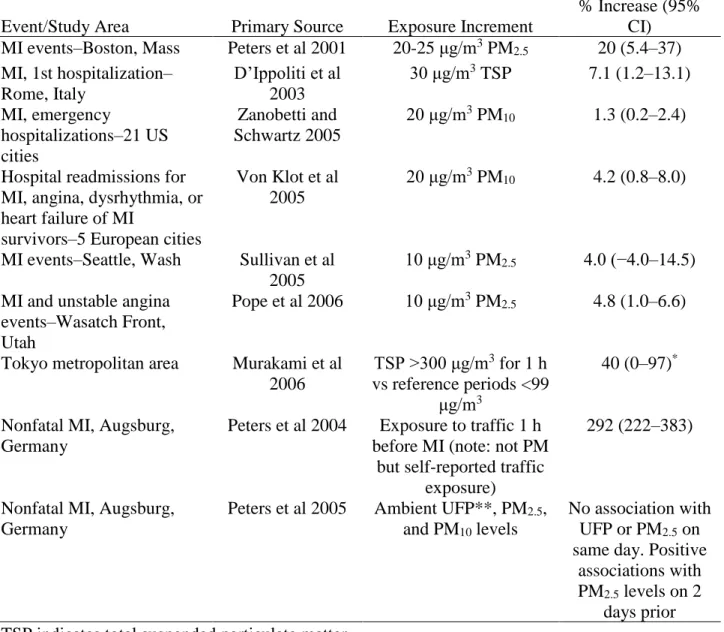
Table 2.2 excerpt from Brook et al 2010. Typical 24-hour concentrations of criteria air pollutants in US (23)
Pollutant
US Average
Range US Typical Peak
Most Recent NAAQS for Criteria Pollutants
PM2.5 5–50 μg/m3
(Mean=13.4±5.6)
100 μg/m3 15 μg/m3 (Annual mean)
35 μg/m3 (24 h)
Benzene 0.5–10 μg/m3 100 μg/m3
A number of studies of ambient-level exposures have identified PM2.5 as a risk factor for
fatal and nonfatal MI and CHD, though there is heterogeneity in the findings of these studies indicating regional and possible temporal differences in associations. A systematic review published by Bhaskaran et al (2009) summarized the literature on air pollution and MI and showed disparate conclusions among studies in different populations and regions.
The authors identified 5 studies of PM2.5 and MI and reported that 3 of the 5 studies
15 risk for an average 10 µg/m3 increase in PM
2.5 0-1 days before the MI [RR 1.07 (1.04 to 1.11)].
Two studies in Boston, MA looked at average 20 µg/m3 increases in PM2.5 2 days before an MI
and found similarly small increased risks: Zanobetti et al (2005) [RR 1.05 (1.01 to 1.09)] and Peters et al (2001) [RR 1.105 (0.987 to 1.226)]. Peters et al (2005), in Germany, and Sullivan et al (2005), in Washington, report similar results, though they were not statistically significant (3, 6, 30, 51, 52). There was just one study of long-term fine PM exposure and MI; this was among postmenopausal women and had null findings (53).
Overall, this review highlights the fact that associations may vary by region and results from one study may not be generalizable to populations external to the study base. These discrepancies in associations emphasize the need for research in understudied populations, including the southern US. There is also a dearth of studies of the longer-term effects of PM exposures on MI, and the lack of an overall consensus on the strength of these associations.
Short-term exposures of fine PM:
There is mixed evidence that short-term environmental PM2.5 exposures are associated
with acute MI. The majority of studies of short-term exposures to PM use a time-series or case-crossover approach to assess associations between short ranges of exposures and acute outcomes. Studies have reported some increased risk of MI within hours to days of increased PM2.5
exposures (29), and also that an average daily increase of 10 µg/m3 is associated with a small yet
16
Table 2.3. Short-term PM exposures and risk of ischemic heart disease(23)
Event/Study Area Primary Source Exposure Increment
% Increase (95% CI) MI events–Boston, Mass Peters et al 2001 20-25 μg/m3 PM2.5 20 (5.4–37)
MI, 1st hospitalization– Rome, Italy
D’Ippoliti et al 2003
30 μg/m3 TSP 7.1 (1.2–13.1)
MI, emergency
hospitalizations–21 US cities
Zanobetti and Schwartz 2005
20 μg/m3 PM
10 1.3 (0.2–2.4)
Hospital readmissions for MI, angina, dysrhythmia, or heart failure of MI
survivors–5 European cities
Von Klot et al 2005
20 μg/m3 PM
10 4.2 (0.8–8.0)
MI events–Seattle, Wash Sullivan et al 2005
10 μg/m3 PM
2.5 4.0 (−4.0–14.5)
MI and unstable angina events–Wasatch Front, Utah
Pope et al 2006 10 μg/m3 PM2.5 4.8 (1.0–6.6)
Tokyo metropolitan area Murakami et al 2006
TSP >300 μg/m3 for 1 h
vs reference periods <99 μg/m3
40 (0–97)* Nonfatal MI, Augsburg,
Germany
Peters et al 2004 Exposure to traffic 1 h before MI (note: not PM
but self-reported traffic exposure)
292 (222–383)
Nonfatal MI, Augsburg, Germany
Peters et al 2005 Ambient UFP**, PM2.5,
and PM10 levels
No association with UFP or PM2.5 on
same day. Positive associations with PM2.5 levels on 2
days prior TSP indicates total suspended particulate matter.
*Adjusted rate ratio for MI deaths. **Ultrafine particles
17
studies may be due to the fact that the Northeast studies both assessed 20µg/m3 increases in fine
PM concentrations, while the study in the Northwest assessed 10µg/m3 increases in fine PM. Additionally, the studies did not measure particulate matter constituents, which are known to vary geographically. A case-crossover study of short-term daily 24-h average PM2.5 exposures
and cardiovascular-related emergency hospitalizations in several states across the US showed significant effects of PM2.5 during the cooler months across most disease categories. This
analysis looked at four different lag periods of exposure to hospitalization and found significant associations for PM2.5 exposures 0-1 days before the hospitalization. However, these associations
were region and climate-dependent: associations were strongest in cooler months for the
Northeast, but no associations of PM2.5 exposure on hospitalization were observed in Washington
or New Mexico, neither for cool nor warm months. Although Florida showed no cooler month effects, significant increases were noted in odds ratios for the warm weather months for acute MI, CHD, circulatory disease in addition to other diagnoses (56). Another US multi-city time-series study identified significant associations between PM2.5 and all-cause mortality and stroke,
and null results for MI and other CVD-related mortality for a 10-μg/m3 increase in 2-day averaged PM2.5 concentration (57). These associations may also vary due to co-exposures, such
as noise or other stressors (58, 59). Little research has been conducted on the PM/CHD association in Southern US populations, so it remains unclear what the environmental PM2.5
exposure risks may be among individuals in the Gulf region, and if the trends for this region are similar to or distinct from results shown in other geographies.
There is additional evidence that PM exposures may affect intermediate conditions that increase risk for CHD. Increases in daily levels of PM2.5 have been shown to be associated with
18
associations, the associations with blood pressure also vary based on location, even within the same metropolitan region (61). A meta-analysis conducted by Liang et al showed that 10 µg/m3 increases in PM2.5 modestly elevate blood pressure, both for long-term and short-term PM
exposures (60). It is plausible that blood pressure may, in part, mediate the relationship between PM exposures and CHD.
Long-term exposure to PM
The effects of long-term occupational and environmental exposures to PM have been studied much less extensively than short-term exposures. Analyses from the Women’s Health Initiative showed significant increases in nonfatal stroke [HR 1.28 (1.02-1.61)], nonfatal CHD [HR 1.21 (1.04-1.42)], and fatal CHD [2.21 (1.17-4.16)] corresponding to an average annual increase in PM2.5 of 10 µg/m3 (53). A study of fatal and nonfatal MI hospitalizations in
Massachusetts showed a 16% (4%-29%) increase in the odds of MI for an area PM2.5 IQR
increase of 0.59 μg/m3 (62). A Japanese cohort study found a small increase in hazard of MI
corresponding to an average annual increase of 10 µg/m3 PM (63). Similarly, a study of long-term PM2.5 exposure among a British cohort found only weak evidence for associations with
myocardial infarction, stroke, or arrhythmia, but did find very small statistically significant associations between pollutant concentrations and incident cases of heart failure. For the British study, annual increases in PM exposures were averaged over a year, and an interquartile range change in PM10 of 3.0 µg/m corresponded to a hazard ratio of 1.06 (95% CI 1.01-1.11) (64).
Biological mechanism
19
processes initiated by inhaled PM (66). Fine and ultra-fine particles that have been inhaled into the lungs permeate the membranes of the alveoli and enter the bloodstream, where reactive intermediates can cause cellular and genetic damage (26, 67-69). Metabolites of these particles can also initiate pulmonary inflammation (70), systemic inflammation, platelet activation, and oxidative stress, thereby increasing risk of cardiovascular disease events (50, 65, 71). This state of oxidative stress can alter the blood vessels, contributing to initiation and progression of atherosclerosis and thrombosis (72).
Exposures to PM during cleanup work may cause short-term increases in inflammation of the vessels, contributing to both acute and delayed manifestations of coronary heart disease (4). Inflammation of the vessels can result in destabilization of an arterial plaque and onset of an acute MI if the artery had already reached an advanced state of atherosclerosis (44). Otherwise, the inflammation and oxidative stress caused by PM exposures (or other inhaled pollutants) may contribute to progression of an existing plaque, furthering the process of atherosclerosis and thereby increasing risk of a future heart attack or another symptomatic manifestation of coronary heart disease (44). Therefore, the length of time between PM exposure and detection of CHD may be very short (within a day) for triggering a heart attack or may be months to years for worsening of underlying conditions leading to an eventual event. For this reason, we hypothesize that oil spill-related air pollutant exposures may cause acute immediate cardiovascular events or may increase risk of events long-term.
20
winter. Blood measurements were taken at the end of each air monitoring period. The results showed that a unit increase in PM2.5 concentrations was associated with an increase in IgG, IgM
and IgE, and decrease of IgA, and CD8 cells. When comparing seasonal biomarker levels, C-reactive protein, IgM and IgG were higher in winter than in summer, while IgA, CD4 and CD8 were lower in winter than in summer. Percent changes in biomarker levels between summer and winter were: CRP [ 1.1% (95% CI 0.6% to 1.5%)], IgM [11.2% (95% CI 10.9% to 11.6%)], IgG [6.7% (95% CI 6.4% to 7.1%)] and IgE [3.3% (95% CI 3.0% to 3.6%)] IgA [-4.7% (95% CI −5.6% to −4.2%)] and CD8 [−0.7% (95% CI −1.1% to −0.3%)] (71). This evidence supports the hypothesis that inflammation and immune system responses may be affected by changes in PM exposures, however it remains unclear how long these cascades of immunologic response last and for how long they are measureable, or if these responses affect cardiovascular outcomes. It is important to note that these processes are poorly understood, and the evidence thus far suggests that no single hypothesis is adequate to explain the effects that particulate matter can have on the cardiovascular system.
Volatile organic compounds
21
lacquers and pesticides (74). Benzene, toluene and xylene are classified by IARC as carcinogens (75) but have shown associations with non-cancerous disease as well, including CVD (27).
Workers on boats, barges, rigs or otherwise in the presence of fresh oil may have experienced high exposures to BTEX and other VOCs. No previous studies have characterized exposures to VOCs during oil spill clean-up work, but the occupational and environmental literature have examined BTEX exposures in other contexts.
Occupational literature on BTEX
There is a limited literature on BTEX and cardiovascular diseases, consisting mostly of occupational cohorts and laboratory-based studies. A study of petrochemical factory workers examined the relationships between exposure to benzene, and joint exposure to benzene and xylene, with changes in electrocardiogram (ECG) and arterial hypertension. Both the benzene only and benzene + xylene groups showed associations with irregular ECG, as well as with hypertension (19). Increases in arterial hypertension have also been reported among workers with exposure to toluene, and this relationship may be modified by noise exposure (76).
Crude exposure assessment in occupational studies has limited the ability to assess dose-response trends or thresholds of exposure to BTEX that may cause CVD. In a case-control study of CHD nested within a cohort of over 6,000 workers at an aluminum smelter, there were 306 cases of heart disease diagnosed from 1975-1983, compared to 575 controls who were workers that did not develop CHD. Exposure to VOCs was not measured but approximated by using a crude categorization of “blue collar” vs “white collar” worker status; among blue collar workers,
further classifications distinguished job type and location within the factory. Results showed that work location within the factory, a proxy for exposure to contaminants, was significantly
22
Environmental exposure to volatile hydrocarbons
A limited number of studies have assessed associations between ambient benzene
exposures and CHD. A case-crossover study of traffic-related air pollution in Strasbourg, France measured hourly benzene, nitrogen dioxide, ozone, carbon monoxide, and PM levels in block groups. This study looked at effects of average benzene concentrations on MI (after lag periods), compared with concentrations on the “control” days of the week during the same month as the event. The exposures were defined as average hourly concentrations on either the same day as the event, the day of the event and the prior day, or just the prior day. The results showed that a 1 µg/m3 increase in benzene corresponds to a 10.4% (3.0-18.2%) increase in risk for same-day MI onset; a 1 µg/m3 increase in benzene within 0-1 days corresponds to an 10.7% (2.7-19.2%) increase in risk for MI onset; a 1 µg/m3 increase in benzene 1 day before the MI corresponds to a 7.2% (0.3-14.5%) increased risk (48). These results support what has been shown about the association of benzene and MI from the occupational literature and demonstrate that short-term exposures may have acute effects.
Results from a cross-sectional study of alkylbenzene exposure and CVD prevalence in the National Health and Nutrition Examination Survey (NHANES) showed higher prevalence of nonfatal CHD or stroke among individuals with higher blood levels of toluene, ethylbenzene, xylene and styrene (22).
Biological mechanism
There is evidence that the hypothesized relationship between exposure to BTEX
23
expression of genes related to oxidative stress mechanisms. The authors identified several genes that had increased expression corresponding with higher exposures. These results indicated that oxidative stress can be induced by xylene and toluene exposure, and were strongest for toluene exposure (78).
Studies have also documented the immunologic effects of benzene exposure, showing increased concentrations of immune cells and decreases in DNA repair factors, suggesting that exposures to benzene may increase an individual’s susceptibility to genetic mutations (79, 80). Other research has suggested that BTEX exposures may have endocrine disrupting properties, even at low exposures(81). It remains unclear how BTEX may biologically affect CHD, as the mechanisms remain poorly understood and unexplained in the literature. The associations that have been found between BTEX and cardiovascular risk do warrant further exploration, especially to address gaps regarding dose-response and exposure thresholds.
Stress and cardiovascular disease
Physical and psychosocial stress
Vigorous physical exertion increases risk of acute myocardial infarction (MI),
particularly among adults who do not habitually participate in physical activity and/or who have atherosclerotic disease (82). Tasks that were common among oil spill clean-up workers, such as carrying or lifting equipment, working outdoors in high heat, and other manual labor, may have created an environment with increased risk of triggering acute cardiovascular events or
exacerbating existing coronary disease conditions among workers. Furthermore, workers and other residents living in areas that were impacted by the oil spill may have faced decreases in income and increases in job loss after the oil spill (7), which may have contributed to
24
associated with incidence of cardiovascular diseases and mortality, and acute increases in stress may trigger coronary events (37, 83, 84).
Biological mechanisms of the impact of stress on coronary disease Stress can impact risk of cardiovascular disease by accelerating formation and progression of atherosclerotic plaques (9, 84). Acute stress elevates blood pressure and may impact cardiac arrhythmia and myocardial ischemia, which can result in onset of an acute MI (31) or contribute to an increased risk of a future CHD event by driving atherosclerotic progression.
The mechanism by which stress acts on heart disease is primarily through contributions to atherosclerosis, though there are distinct mechanisms through which chronic stress versus acute stress impact CHD (37). Broadly, stress results in elevated heart rate and increased vasoconstriction, which can impact CHD by increasing blood pressure, hemostasis, and endothelial dysfunction, and reducing insulin sensitivity (85). Chronic stress contributes to atherosclerotic progression via hypertension, which increases risk of vulnerable plaque
development. Acute physical stress and psychosocial stress elicit similar endogenous responses (86). These forms of stress increase thrombosis and hypertension by triggering the sympathetic nervous system; this can, in turn, trigger an acute MI if vulnerable plaque is ruptured (84).
Conclusions for Chapter 2
25
26
CHAPTER 3: RESEARCH METHODS
Study Design and Data
GuLF STUDY overview
The Gulf Long-term Follow-up (GuLF) STUDY is a prospective cohort study of individuals who were involved in, or had trained to participate in, clean-up of the 2010 Deepwater Horizon oil disaster. The goal of the GuLF STUDY is to investigate the acute and persistent health effects of a variety of exposures associated with the oil spill. Participants in the study include workers involved in a number of jobs at numerous locations during the clean-up response. This includes workers on the rigs who were involved with capping the oil well, collecting spilled oil, flaring oil and gas, and drilling relief wells. The study also includes workers on research vessels, barges, and re-purposed fishing boats who were tasked with collecting and corralling the oil; beach and wildlife cleanup workers; workers decontaminating vessels and equipment; and support workers for all of these activities, who may have not been in contact with any oil.
Source population and cohort enumeration
27
information was used to identify the study base; however, it is likely that some eligible individuals were not identifiable from the available sources.
A total of 152,169 apparently unique names were identified from these lists. After excluding individuals with incomplete or outdated contact information, those known to be deceased or ineligible, and duplicates, there remained 58,925 individuals presumed eligible for the study (≥21 years old at time of enrollment; capable of completing an interview in English, Spanish, or Vietnamese).
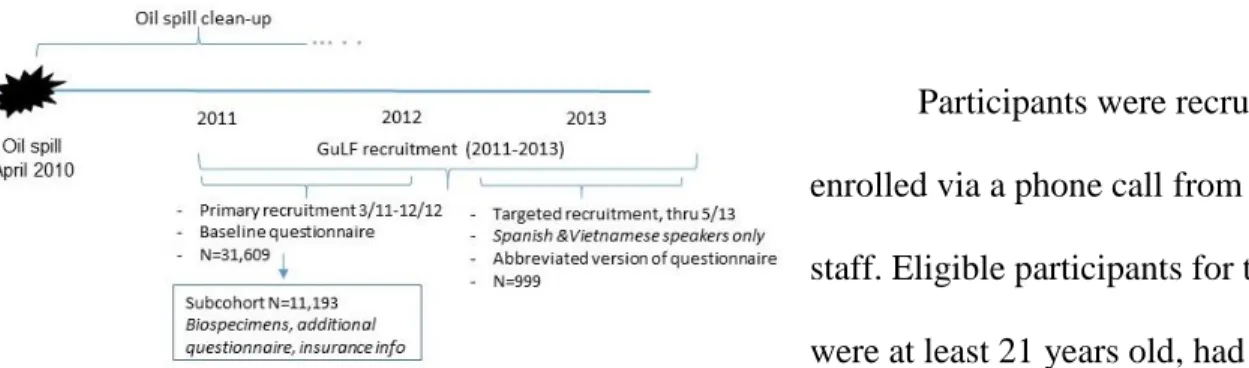
Recruitment for the GuLF STUDY began approximately 11 months after the start of the oil spill, in March 2011. With a contact rate of 62%, a total of 32,608 (55% of potentially eligible participants; 90% of those contacted and confirmed to be eligible) completed the enrollment telephone interview between March 2011 and May 2013. Of these, 999 completed an
abbreviated Vietnamese language interview and were not eligible for the current project because they were not asked about CHD diagnoses.
Full scale GuLF STUDY recruitment activities ended December 31, 2012, but efforts to enroll Spanish and Vietnamese speaking participants continued through May 2013. Figure 3.1 shows the timing of study recruitment in reference to the oil spill and cleanup effort.
Figure 3.1. Timeline of data collection
Participants were recruited and enrolled via a phone call from study staff. Eligible participants for the study were at least 21 years old, had a
28
includes the 31,609 English and Spanish speaking participants who completed the full baseline interview.
Baseline data collection (interview #1)
During the enrollment interview, participants were asked about their demographic characteristics, details on their participation and tasks related to oil spill clean-up, about their personal health history, and about any first myocardial infarction diagnoses (MI) they have received. Information on first MI diagnosis was ascertained during the baseline interview and again at the second telephone interview. The questions used to assess the diagnoses were the same at both interviews: “Has a doctor ever told you that you have had a heart attack or
myocardial infarction (MI)? What month and year were you first told that you had a heart attack or MI?”
Interview #2
Of the 31,609 participants who enrolled in the study, 21,256 (67%) completed a second telephone interview in 2014-2016, 2-3 years after their first interview. This interview confirmed some demographic and lifestyle characteristics that were assessed in the enrollment interview, and asked again about the occurrence and timing of a first diagnosis of nonfatal MI.
National Death Index data
29
for this project. Eligible deaths occurred after enrollment in the GuLF STUDY until December 31st 2014.
Ascertainment of exposures
The main exposures of interest in aims 1 and 2 are duration of clean-up work, home
residence proximity to the oil spill, and total hydrocarbon exposure levels during clean-up work. Duration of clean-up work was defined using self-reported start dates and end dates of clean-up work, ascertained during the first study interview. Residential proximity to the oil spill was defined as “direct or indirect” for participants living in or adjacent to a county that had coastline oiled from the spill; participants living “away from the spill” reported living elsewhere in the Gulf region or in other parts of the US. We grouped coastal and adjacent counties because these areas were likely to have been similarly impacted by loss of income and community stress due to the oil spill.
A job exposure matrix (JEM) was used to derive maximum and median THC exposure levels (2). The JEM was created using data from approximately 28,000 personal exposure monitoring measurements of THC collected during the oil spill response and clean-up, in
addition to detailed self-reported data on clean-up work tasks, locations and dates. Maximum and median exposure scores were assigned for each vessel type (for clean-up work on the water), job type, and time period of clean-up work, as well as for each work activity in each time period throughout the clean-up response.
30
before the oil well was capped on July 15th, 2010 in order to capture workers’ usual exposure
during the period when oil exposures were highest (2). In the event that the participant could not recall the exact dates when they performed certain tasks, other data on the timing of clean-up tasks was used to identify the likely period that the participant worked, based on the job tasks that they reported.
Ascertainment of outcomes
Nonfatal myocardial infarction
Self-reported physician-diagnosed first myocardial infarction was assessed during the first and second study interviews. During these interviews, participants were asked if they had ever received a diagnosis of a heart attack or MI. The validity of self-reported MI has been published in other studies, with sensitivity of self-reported MI between 60%-80% (87-90). The period of recall and definitions of gold standards vary between validation studies. There are limitations to relying on non-validated self-reported outcomes in the GuLF STUDY, however the relatively short time period for recalling an incident diagnosis reduces concerns about recall.
Fatal CHD
Fatal CHD outcomes were ascertained from death certificate cause-of-death data. The majority of studies that examine mortality (all-cause or CHD-specific) rely on death certificate data for indication of an event and the cause. Use of the codes listed as cause-of-death in the death certificate has been validated against hospital records of cause-of-death in other
31
Ascertainment of covariates
Information on participant demographics and lifestyle characteristics were obtained during the baseline telephone interview. Age at baseline, gender, ethnicity, education attainment, 2010 household income, county of residence at enrollment, height/weight for BMI calculation, details regarding tobacco smoking, and health information were ascertained.
Aim 1 Methods
Aim 1:(1) Determine predictors of non-response to the second study interview and (2) assess associations between duration of clean-up work and heart attack, and home proximity to the oil spill and heart attack during the 5 years following the oil spill.
Defining exposures and outcomes
Dates of initiating and ending clean-up work were self-reported by participants, as was their county or parish of residence at the time of enrollment. Work duration was defined
categorically as 1-30 days, 31-90 days, 91-180 days and >180 days. Residential proximity to the oil spill was defined as “direct or indirect” for participants living in or adjacent to a county that had coastline oiled from the spill; participants living “away from the spill” reported living elsewhere in the Gulf region or in other parts of the US. We grouped coastal and adjacent
counties because these areas were most likely to have been similarly impacted by loss of income and community stress due to the oil spill.
32
Deaths due to CHD were ascertained for the entire enrolled cohort from the National Death Index (NDI) through December 31st 2014, the latest date for which complete NDI data were available. International Classification of Diseases, 10th Edition (ICD-10) codes indicating ischemic heart disease as a cause of death in any position were included (codes I20-I25).
Risk period for heart attack
The time at risk for a first heart attack (fatal or nonfatal) was based on calendar time and was determined differently for analyses including all study participants and for analyses among clean-up workers only. For analyses of residential proximity to the spill and heart attack, participants were at risk for a self-reported first MI from the date that the oil spill began (April 20th 2010); for analyses of work duration and heart attack, the risk period began at initiation of oil spill clean-up work, which was between April and July 2010 for most clean-up workers. For all analyses, the risk period for a self-reported MI ended at the first of either the date of diagnosis of a first MI or at the last GuLF STUDY interview that the participant completed. The risk period for a fatal CHD event began at the time of the enrollment interview and continued until December 31st 2014. Only a participant’s first reported MI diagnosis or CHD event was counted in this study.
Statistical analyses Time-to-heart attack analyses
33
probability of survival (determined by Kaplan-Meier estimation) by the log of time at risk (92). We assessed proportional hazards of each covariate statistically by modeling an interaction term between the log of time and each covariate in the model. We fit conditional Cox models with and without IP censoring weights, as well as marginal Cox models with and without IP censoring weights.
We used inverse probability (IP) of censoring weights to weight the population that completed the second interview with respect to predictors of non-response, in order to estimate associations that would be observed in the absence of censoring (93). The probabilities of censoring for the IP weights were determined from models conditional on predictors of non-response to the second study interview. We used a causal diagram (99) to determine the set of predictors to be included in the IP censoring weights model: age, education, residential proximity to the oil spill, duration of clean-up work, cigarette smoking, and maximum total hydrocarbon exposure during clean-up work. The probabilities output from the weights model served as the denominator for the IP censoring weights, and for stabilized weights, the numerator was the probability of being observed at follow-up (93).
34
Cumulative incidence of heart attack
We generated IP exposure- and censoring-weighted cumulative conditional risk plots to illustrate changes in the risk of heart attack over the study period, and examine trends in hazards over time by exposure (94). The time scale for the risk curves was months since initiation of clean-up work for the work duration analyses, and months since April 20th 2010 for the
proximity to the spill analyses. To assess whether associations with heart attack changed across the study period, we estimated risks and risk differences of heart attack at 12 months, 24 months, 36 months and 48 months of follow-up. The risks were defined as the proportion of cumulative cases at the given month, divided by the total number at risk for a heart attack at that time. Risks were determined from proportional hazards regression using Nelson-Aalen estimation of
survival, with IP exposure and censoring weights to account for confounders and predictors of censoring (94).
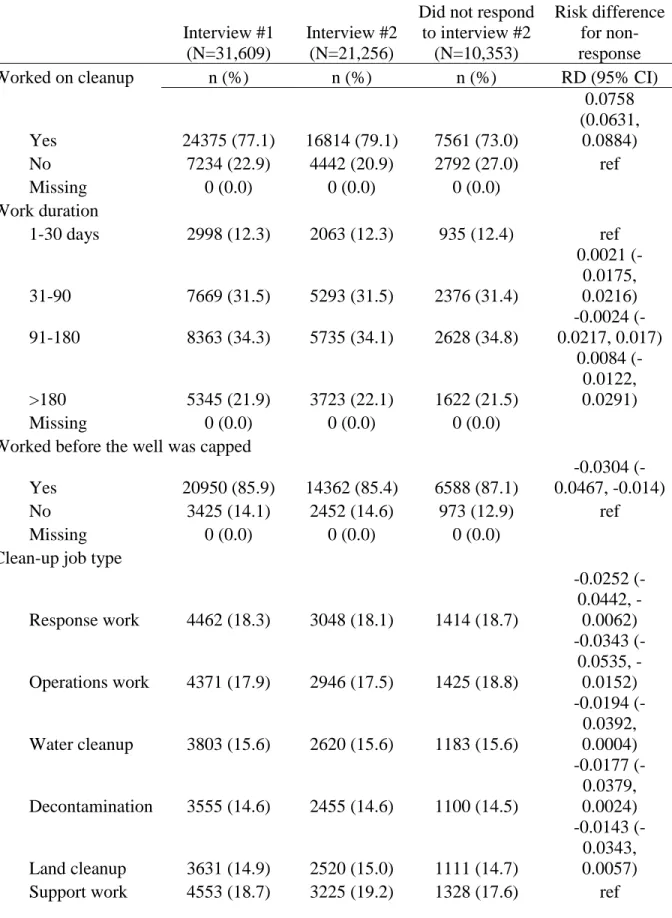
Assessing and accounting for predictors of censoring
Differences among participants who did or did not participate in the second study
interview were assessed by building a predictive model with response to the second interview as the dependent variable. We examined distributions of a broad range of factors, determined by literature review and dependent on availability of data, among those who did and did not
35
exposure to total hydrocarbons; and residential proximity the oil spill.) We compared crude proportions of censoring across levels of each predictor variable.
To describe the major predictors of non-response in our study, we fit a logistic regression model combined with a Least Absolute Shrinkage and Selection Operator (LASSO) approach (95). Briefly, LASSO is a regression penalization method that is often used for variable selection procedures. The level of penalization was selected using Akaike’s Information Criterion (AIC) (96) using the SAS procedure HPGENSELECT (97). We began with a model that included potential predictors of loss to follow-up: gender, age, ethnicity, income, highest education attainment, tobacco smoking, current alcohol intake, heavy tobacco smoking, self-reported diagnosis of hypertension, residence proximity to the oil spill, maximum total hydrocarbon exposure during cleanup work, duration of clean-up work, employment status at the time of the first interview, clean-up of another oil spill, and ever enlisting in the military. We then fit a logistic regression model for non-response, conditional on the LASSO-selected variables, to determine the concordance statistic which indicates the predictive ability of the model (98).
Censoring, time at risk, and competing risks
36
37
Aim 2 Methods
Aim 2: Assess the association between total hydrocarbon exposure during clean-up work and heart attack up to 5 years after the oil spill.
Defining exposures and outcomes
The exposures of interest in aim 2 are maximum and median total hydrocarbon exposure during oil spill clean-up. The outcome of interest is first incident heart attack, defined as a first incident self-reported non-fatal MI occurring after initiation of clean-up work, or fatal CHD ascertained from the National Death Index occurring after enrollment in the study until December 31st 2014.
38
Censoring and predictors of censoring
We compared distributions of a number of factors plausibly related to the outcome and non-response among those who did and did not complete the second interview. The factors that we assessed, determined by literature review and dependent on availability of data, included demographic, lifestyle and socioeconomic covariates, as well as factors related to health at enrollment, and oil spill clean-up work characteristics. We compared crude proportions of non-response across levels of each predictor variable, as was also done in the aim 1 analyses.
Statistical analyses
Time-to-heart attack analyses
We assessed the associations between total hydrocarbon exposure and heart attack in a time-to-event analysis (92). Person-time was accrued from the start of an individual’s oil spill clean-up work until the earlier of their first MI event, they left the study, or were administratively censored.
We used inverse probability (IP) weights to weight the population that completed the second interview with respect to predictors of nonresponse, in order to estimate associations that would be observed in the absence of censoring (93). The IP censoring weights were estimated from models conditional on predictors of censoring. The variables we included in the censoring weights model were determined from a causal diagram (99): age (20-29; 30-39; 40-49; 50-59; 60-65; >65 years), maximum education attainment (less than high school; high school
1.00-39
2.99 ppm, ≥3.00 ppm). Stabilized IP censoring weights were determined by dividing the probability of being observed at the second interview by the probabilities output from the censoring weights model (93).
We controlled for confounders using IP exposure weights (100). The following adjustment set was determined using a directed acyclic graph (DAG) (99): gender (male; female), age (20-29; 30-39; 40-49; 50-59; 60-65; 65+ years), tobacco smoking (current; former; never), maximum education attainment (less than high school; high school diploma/GED; some college/2 year degree; 4+ year college graduate), and residential proximity to the oil spill
(“direct/indirect”: living in or adjacent to a county with coastline oiled during the spill; vs. “away from the spill”). Stabilized IP exposure weights were obtained by fitting a logistic regression model for the exposure with confounders as independent variables; the probability output from the model served as the denominator, and the numerator was the probability of exposure (93).
Cox Proportional Hazards models (92) with a robust variance estimator were fit to estimate hazard ratios (HRs) and 95% confidence intervals (CIs) (101). We assessed whether each covariate met the proportional hazards assumption visually by plotting the log of the negative log of the probability of survival (determined by Kaplan-Meier estimation) by time at risk (92), and statistically by modeling an interaction term between the natural log of time and each covariate.
Cumulative incidence of heart attack
Nelson-40
41
CHAPTER 4: AIM 1 RESULTS
Title: Heart attack among clean-up workers and community members 5 years after the Deepwater Horizon oil spill
Introduction
The 2010 Deepwater Horizon oil disaster was the largest marine oil spill in US history. The spill began April 20th, 2010 when a pipeline burst at the Deepwater Horizon drilling rig. Over 200 million gallons of crude oil spilled into the Gulf of Mexico in the following months. The clean-up response, which involved more than 100,000 workers, began at the start of the oil spill and continued through the end of 2010 (Kwok et al. 2017).
42
Apart from chemical exposures related to the spill, Gulf coast communities faced economic burdens and increases in psychosocial stress in the wake of the oil spill (Gould et al. 2015; Peres et al. 2016). Local industries including fishing and tourism were disrupted for months following the spill (Shultz et al. 2015), and loss of income may have contributed to psychosocial stress in these communities. Psychosocial stress can impact risk of cardiovascular diseases by accelerating progression of atherosclerotic plaques (Rozanski et al. 1999). Thus, the physical and emotional stress caused by the oil spill may have contributed to an increased risk of future CHD.
It is unknown whether exposures to pollutants or physical stressors during the oil spill may affect risk of heart disease over time. Short-term increases in ambient particulate matter concentrations increase risk of cardiovascular events and overall mortality acutely, but the persistence of these associations remains unexplored (Brook and Rajagopalan 2010; Brook et al. 2010). A prior study of the Prestige oil spill found that respiratory symptoms among clean-up workers persisted up to 5 years after the spill (Zock et al. 2012). However, no research has examined cardiovascular diseases or other chronic health outcomes among oil-exposed populations.
43
Methods
2.1 Study population
The GuLF STUDY is a prospective cohort study of individuals who worked on, or had trained to work on, clean-up of the 2010 Deepwater Horizon oil spill disaster (Kwok et al. 2017). Participants in the study include individuals aged ≥21 years who completed mandatory oil spill safety training in order to take part in oil spill response and clean-up as well as government workers and oil professionals who were living in the United States at the time of enrollment.
Study recruitment began approximately 11 months after the start of the oil spill, in March 2011, and continued until May 2013. From a list of 62,803 presumably unique names with sufficient contact information, a total of 32,608 participants were enrolled and completed the first study interview. Of the enrolled participants, we excluded from the present analyses 999 individuals who completed a Vietnamese language abbreviated version of the questionnaire that did not collect complete information on oil spill clean-up jobs, leaving 31,609 participants who completed their interviews in English or Spanish. Of the 31,609 participants who enrolled in the study, 21,256 (67%) completed a second telephone interview in 2014-2016, two to three years after their first interview.
2.2 Exposure and outcome measures
self-44
reported by participants, as was their county or parish of residence at the time of enrollment. Work duration was defined categorically as 1-30 days, 31-90 days, 91-180 days and >180 days. Residential proximity to the oil spill was defined as “direct or indirect” for participants living in or adjacent to a county that had coastline oiled from the spill; participants living “away from the spill” reported living elsewhere in the Gulf region or in other parts of the US. We grouped coastal and adjacent counties because these areas were likely to have been similarly impacted by loss of income and community stress due to the oil spill.
The outcome of interest is the incident first occurrence of a heart attack, defined as a self-reported myocardial infarction (MI), or a fatal CHD event ascertained from death certificates. During the first and second interviews, participants were asked if they had ever received a diagnosis of a heart attack or MI and, if so, the month and year of their first MI diagnosis. Participants who reported an MI occurring before clean-up work (n=610) were not included in this analysis.
Deaths due to CHD were ascertained for the entire enrolled cohort from the National Death Index (NDI) through December 31st 2014, the latest date for which complete NDI data were available. International Classification of Diseases, 10th Edition (ICD-10) codes indicating
ischemic heart disease as a cause of death (I20-I25) were counted as fatal CHD cases.
2.3 Risk period for heart attack