Eugene H. Bang. An Analysis of Upwork Profiles: Visualizing Characteristics of Gig Workers using Digital Platforms. A Master’s Paper for the M.S. in I.S degree. April, 2019. 35 pages. Advisor: Mohammad H. Jarrahi
In the transitional period of manual and algorithmic hiring, there has been an explosion of new employment opportunities. As a result of the ubiquity of mobile communication technologies, a gig economy has emerged which champions digital platforms as a solution to meet the burgeoning demand for on-demand workers, frequently called independent contractors or freelancers, by hiring organizations. Visualizations and linear regression are used to study information-rich Upwork profiles to determine variables that could predict how users maneuver in the gig economy. A typology of existing gig
workers’ motivations is combined with visualizations to better understand the situation of the typical gig economy worker.
Headings:
Digital Platforms
Gig Economy
Gig Work
AN ANALYSIS OF UPWORK PROFILES: VISUALIZING CHARACTERISTICS OF GIG WORKERS USING DIGITAL PLATFORMS
by Eugene H. Bang
A Master's paper submitted to the faculty of the School of Information and Library Science of the University of North Carolina at Chapel Hill
in partial fulfillment of the requirements for the degree of Master of Science in
Information Science.
Chapel Hill, North Carolina
April, 2019
Approved by
_________________________________________
Table of Contents
1 – Introduction ... 2
2 – Literature Review... 5
2.1 – Rise of the Gig Economy ... 5
2.2 – The Evolution of Human Capital in the Workforce ... 9
2.3 – Current State of Labor Protection ... 10
3 – Methods... 14
3.1 – Data Collection ... 14
3.2 – Data Analysis ... 15
Figure 1. Partial Snippet of Scraped Upwork Profile Data ... 16
3.3 – Results ... 18
Figure 2. Sample Passed Tests dataset ... 18
Figure 3. Passed Tests v. Success Variables ... 19
Figure 4. Clustered Total Revenue (y-axis) vs. Total Passed Tests (x-axis) ... 22
Figure 5. Income Per Job and Total Jobs Cluster ... 23
Figure 6. Typology of Gig Workers ... 25
Figure 7. Average Revenue by Jobs and State ... 27
4 – Conclusion ... 30
1 – Introduction
Millennials average the shortest tenures in their job positions, often choosing to
jump from one position to the next. In the age of Information, telecommunication
technologies and digital communities enable workers to build reputability quicker than
ever before from any location and the Internet provides upcomers with the resources
necessary to develop technical skills. While college degrees once determined the viability
of one’s tenure at an organization, it is now becoming less significant. Google recently
dropped the educational requirements for many of their most competitive and technical
positions such as Senior Data Scientist roles and many other managerial positions –
arguably because it is now possible that any user, given time and motivation, can learn
the technical skills required to assume those positions by themselves without any physical
boundaries (such as having to meet in-person). This has given rise a new trend of
employment strategies which has enabled the creation of the “gig economy.” A gig refers
to a short-term employment opportunity by organizations which contract individuals for
tasks based on their expertise in a subject domain. Tasks provided by employers can
range from menial data entry and janitor work to providing regional consulting in finance
to leading the development of advanced neural networks. This dichotomy in technicality
allows gig workers to jump in at any skill level while simultaneously providing a news
possibility that gig workers can convert to full-time employees for organizations that are
particularly thrilled with their work.
Imagine a situation in which you wish to learn a new skill, test your abilities and
build reputability simultaneously. The gig economy allows workers, particularly those in
the process of looking for new jobs or flexibility, to learn while continuing to maintain a
level of agency. Furthermore, gig work can bolster existing revenue streams for families
that require more income by equipping these workers with the ability to discover “side
gigs,” or supplementary jobs. Over time, experienced gig works can control their price
and negotiate their hours/level of responsibility with their clients, thus providing them
with choices,. A big question is how well digital platforms such as Upwork enable these
transitional workers – the lack of transparency in algorithmic selection may serve to deter
this mode of utility. However, this model of the “side gig” may be very valuable as it
allows the next generation to become highly interdisciplinary, provide incentive to
network and earn portioned revenue without the need of expensive interviews and
matches. To reach this point, it is necessary to delve into the algorithmic black box to
determine what types of attributes are favorable for such a model to exist and how both
new and experienced gig workers can leverage their attributes to be selected for a
particular position of their interest.
The data to be analyzed to study digital platforms will be Upwork user profiles.
Upwork profiles contain many valuable pieces of information – hours worked,
self-proclaimed technical skills and industry knowledge, wages earned, portfolio items,
per year across the USA, wages for projects from inexperienced gig workers, and in
particular, the attributes of $0 earned workers. Every gig worker has to start from nothing
– how does one become recognized by algorithmic decision-makers and make a living?
As of now, over 560,000 freelancers fall under this $0 unearned category of 595,000 total
profiles. Digital platforms, and not Upwork in particular, are paving the way to a new
standard of work culture in the future as workers transition from traditional education and
workplace values to precarious, but diverse opportunities and digital learning. Many of
the physical nuances of work is being displaced (ex. having to commute, being at work
in-person, having inflexible hours) and it is important to discuss how digital platforms
can serve as the transitional period model of employment which can greatly propel
productivity and efficiency in connecting prospective workers with employing
organizations. Such platforms provide a minimum safety net that helps offset the
precarity of traditional freelance work, but in turn, have its own demands and constraints
that must be met by gig workers.The research questions of interest are the following:
What quantitative and qualitative variables correlate to success on digital
platforms?
Can we discover additional geographical variables that may be linked to increased
gig work across the USA? For example, high population densities or traffic jams.
What do digital platforms provide workers that helps them overcome precarious
work? For instance, gig workers are not provided the benefit of insurance,
retirement pension plans or a signing bonus. At what point is work precarity
2 – Literature Review
The literature review will cover attributes of the gig economy and gig workers
that have already been established. Among these attributes are work precarity (labor
rights and protection), potential motivations for gig work and new modalities of
communication and contractual labor versus traditional employment. The influx of
demand for tailored and mobile employment parallels the developments in machine
learning and large-scale analytics as information technologies necessitate swifter action
than before the Digital Age. The younger generations in particular have begun
transitioning away from traditional long-term employment for more experimental
modalities of working to fit a mobile lifestyle.
2.1 – Rise of the Gig Economy
A gig refers to a new modality of employment that undermines traditional lifetime
careers by focusing on short-term contractual employment. The gig economy is a
freelancing job market which sacrifices corporate loyalty and long-term incentives for a
precarious networking environment which emphasizes self-paced growth, mobility,
flexibility and uncertainty. According to Stanford (2017), there are five common
1) Employees work on an on-demand schedule where they only perform their
services when organizations require them. Prior engagement does not guarantee
full-time employment and each job may be the last in a while.
2) Employees must prepare their own equipment to perform their services which
include a working environment, appropriate technologies such as a laptop or
mobile phone, and any tools or software not directly supplied by the employer
(ex. a license to proprietary software would likely be supplied to the employee
while a microphone may not).
3) Employees are paid on a piecework basis which means that they will receive
payment for their services once they complete a task or reach a certain milestone
rather than for their time. This means that the quicker an employee can
accomplish a task, the more value they receive. However, the opposite also holds
true in that the longer a task takes, the more value they lose. This can result in
potential exploitation if not carefully navigated.
4) Gig work is expedited by a digital platform which helps supply prospective
employees to an organization at a given time. They can broker work between the
parties and serve as an information bridge to keep them in contact
5) Digital platforms can be used to collect final deliverables and facilitate payments
for the employee via an escrow system which helps guarantee payments for work
that a freelancer
The digitization and subsequent mobilization of information through mobile
capital and for technical labor. Unlike traditional job markets which were bound by
spatial and temporal parameters such as rigid work schedules and proximity to the
workplace, the digital space is unique in that work can plausibly be done remotely or
virtually (De Stefano, 2015). With the massive improvements in recent information
communication technologies such as teleconferencing software like Skype, it is also
possible to engage with peers in proxy face-to-face meetings. Wilson et. al (2006) found
that while computer-mediated teams generally were more vulnerable to inflammatory
verbal attacks, they still fostered a very acceptable level of trust through digital
technologies alone. Computer-mediated communication can help reduce awkward
encounters at work and help untangle personal and professional sentiments so that peers
can have distance to cool off after a heated exchange. It is very possible then, to develop
one’s social capital virtually while transcending time and space. Consequently, demand
for labor has become international – workers in the USA can work for a Chinese firm for
example or connect with Californians while taking a trip in Thailand. This shift in
mentality has given rise to a necessity for job hubs which can enable this new behavior.
Digital platforms formed as a hub solution for emerging on-demand workers.
Digital platforms attempt to bridge the gap between supply and demand for gig workers
by securing contracts for freelancers and allowing them to develop reputability over time
through crowdsourced evaluations such as user reviews and public work evaluations. The
platforms have introduced a new work ecosystem that significantly differentiates new gig
work freelancers from traditional freelancers of the past. Digital freelancers seek flexible
and remote work where they perceive themselves to exert more control over the pacing
workers perform ad hoc piecewise tasks which means that their contractual jobs can
become fragmented and at times, incomplete if the contract is terminated early for any
reason. However, piecewise tasks can be established such that fixed-price projects can be
paid for based on evidence provided by the freelancer that work was done in service for
the organization.
Typically, freelance jobs are more supplementary by nature rather than primary,
meaning that the tasks do not have a large effect on the overall operations of the
organization though this is dependent on the size of the organization. For example,
smaller and more obscure organizations are far more likely to provide a wide range of
tasks at low wage points which make them fitting entry-level gigs to begin developing
reputability, but unsuitable for those who wish to make gig work a full-time commitment
immediately. Furthermore, digital gig work typically pays less on average than traditional
freelance work of the same kind as time is no longer the rarest commodity, though this is
also very dependent on a person’s level of domain expertise. The freelance roles are
generally more relaxed and freelancers take less accountability for the direction in
organizational decision making (Barley et al., 2017), but are also frequently left in the
dark for major managerial throughput. However, if that is not a priority, then gig work
can be the start of a dynamic work schedule. If a gig worker finds a prospective
employer, they can engage in conversation regarding the logistics of the contract and
schedule accordingly. This is the point at which gig workers have the most control over
their work. Their biggest asset to the workplace is their immense knowledge capital
(Gandini, 2016) which allows them produce work that is unmarred by internal
in the organization. However, they are bound to digital platforms which broker the work
between them and an employer which indicates that the digital platforms must enable an
environment that is crucial for this new work ecosystem to succeed (Kalleberg and Dunn
2016). The digital platform imposes unique demands and restrictions on digital
freelancers that influence their approach to managing their work lives. As a general
online technical freelancing hub, Upwork is an interesting case study as the data will be
least likely biased by domain-specific knowledge, allowing findings to be more
applicable to a broader set of principles compared to other domain-specific digital
platforms. It will instead focus more on the features provided by the platform such as its
escrow service, guaranteed labor rights and algorithmic selection of jobs for the gig
worker based on previous history.
2.2 – The Evolution of Human Capital in the Workforce
Erik Brynjolfsson and Andrew McAfee (2012) believe that currently, the world is
in the midst of great technological advancement. Today, the typical consumer computer
machine is incomparably more powerful than any machine of the last century and with
each passing year, companies such as Intel, AMD and Nvidia are researching and
developing stronger processing units that can revolutionize big data analytics and
applications. Brynjolfsson and McAfee believe that technology of today snowballs and
accelerates itself; As technology continues to improve, the rate at which technology
advances will also increase. This has some very important ramifications for the gig
economy. First, the rapid pace of technological advancement also precedes a rapid
obsolescence of older technologies (Brynjolfsson & McAfee, 2014). Older programming
replacements develop over time. Technology is phasing out older skills, forcing older and
younger workers alike to learn dynamically and stay updated on current events so as to
update their skillsets accordingly. The gig economy can thus serve as an indicator for
technological progress and shifting tides in the tech world. Second, communication
technologies are breaking down barriers across many different physical barriers such as
proximity and as such, talent can cooperate with other talent from around the world given
the networking opportunity. Digital platforms in the gig economy greatly expedite this by
providing workers with hubs of authority that can reliably connect employers with
prospective talent. Finally, the most consequential of all is that knowledge capital in the
form of experience is no longer as sacred as it used to be. Seniority and long-term tenures
at an organization are no longer guarantees for promotion (Cappelli, 2001) as data
analytics has created a strong contrasting dynamic to older, experienced decision-making
principles. Work has transitioned from experienced and knowledge-based
decision-making to data-driven decision-decision-making (LaValle et al. 2011) where principles and
dynamic adaptation to technological changes is preferred to concentrated specializations.
In other words, we have reached a point in society where change is normal and those who
grasp the chances to be early adopters will be the most likely to succeed (Jones, 2002; De
Stefano, 2015).
2.3 – Current State of Labor Protection
Upwork (2018) recently released their annual study, “Freelancing in America”
which found that nearly one in seven Americans have freelanced at some point in 2018
Furthermore, the study found that freelancers valued lifestyle over income which seems
to reflect an evolution of typical work-life balance in traditional work environments. If
trends remain predictable, digital platforms will be in high demand for most any
domain-specific task. Imagine gig handymen for home construction, freelance IT workers who
come to your house to fix your computer or maybe even something as intriguing as a gig
chef who cooks for you? The realm of possibilities is endless, but with each domain,
there are also unique domain-specific nuances that have to be covered which is far too
expansive and could each stand alone for comparison endlessly. In that regard, I am not
focusing on these nuances, but rather on the most glaring issue in the gig economy at
present that is shared among all users of digital platforms: laborer’s rights.
Laborer’s rights refer to the protections given to precarious workers for their
employment which is to offset the loss of entitlements and benefits that could be had
through long-term employment (Friedman, 2014; Kalleberg, 2009). Typically, traditional
workplaces offer incentivizing benefits such as a retirement pension and insurance and
larger organizations may offer amenities such as on-site gyms and cafeterias. However,
most gig workers perceive such benefits to be less desirable than having the ability to
travel, not commute for work and negotiate a flexible schedule. As more people adopt
this lifestyle, it is exceedingly important that legalities regarding vague terminology such
as “independent contractors” and their roles in hiring organizations become more lucid.
There is a historical perspective on this matter – precarious on-demand labor is
not entirely new. For example, America’s entry into World War II in 1941 necessitated
such as planes and rations. This sudden influx in demand for goods meant that jobs
suddenly appeared overnight for an on-call workforce who could work in manufacturing
plants to produce those goods. (Quinlan, 2012). However, the American government paid
factory workers piecewise for goods produced and acted in favor of the exploitation of
lower- and middle-class American citizens (Finkin, 2016; Alkhatib, 2017). These new
workers were not full-time employees of these factories and were fully expected to return
to a normal job at the closing of World War II and therefore not provided with basic
protections such as insurance or over-time benefits. As labor rights for contractual
employment was still hardly established in those times, the government exploited many
of those workers by increasing their workload with meager increases in compensation, if
at all. Even in 2019, there are many legal loopholes that have not been addressed which
significantly stunts the positive impacts of the gig economy. Gandini (2018) noted that to
avoid an exploitative capitalist management environment where the corporations exert
significant control over their independent contractors, workers must establish a baseline
negotiable power that gives them leeway when discussing the terms of their contracts
with their employers to offset this issue. However, gig workers may not necessarily have
the tools to do so at this time. Minter (2017) found that some digital platforms are best
described as an escrow service where they primarily serve a middleman role of storing
advanced payments from the employer and then disseminating payments to the freelancer
when the organization approves of their work. However, this situation is still less than
ideal as employers ultimately decide what type of work is satisfactory and can sway the
flow of money in their favor (for example, reducing payments towards the freelancer due
room for the gig worker to retort. Often, the economic burden falls on the gig worker to
produce evidence of the contrary and digital platforms rarely insure that such practices
are prevented. Screenshots of the work, labeled documentation compilations and having
an unbiased third party commenting on the quality of the good or service can all serve as
evidence of providing labor for an organization, but nonetheless, the onus remains on the
producer to prevent such situations from happening rather than on the digital platform.
Digital platforms must rectify this by providing gig workers with some mode of control
3 – Methods
This research analyzes Upwork profiles of gig workers to study how they are using the
available digital platform features to best sell their skills. Qualitative values will be
studied through cluster visualizations in Tableau to identify profile variables that have a
positive correlation with success variables on digital platforms. Success variables are
quantitative profile variables that can indicate whether or not a gig worker is able to make
a sustainable foray into the gig economy. It is important to note that I will not be
criticizing Upwork’s policies nor am I judging their throughput. However, I will attempt
to hypothesize why some workers are successful on the platform while many others
struggle to make breakthroughs.
3.1 – Data Collection
Upwork is the digital platform I chose to analyze because it does not have
domain-specific attributes. Jobs brokered through Upwork range from a variety of
different domains which can range from software engineering, web development, image
editing accounting, creative writing and more. Unlike other digital platforms such as
Uber (rideshare) and Mechanical Turks (human intelligence tasks), Upwork does not
necessarily bias itself to any domain and therefore must provide features that can
drill down to the bare minimum features that are most utilized and determine if there are
any domains in particular that greatly benefit from the usage of digital platforms. Using
Python and the BeautifulSoup library, I scraped 23 pages of 425 profiles per page for a
total of 9,775 Upwork profiles in .csv format.
3.2 – Data Analysis
First, I combined the 23 .csv files together to create an aggregated Upwork profile
dataset. During the process, 78 rows were incorrectly parsed so they were thrown out as
they had no quantitative values attached to important fields such as income per job. As
there were less than 10,000 rows, I opted to use Excel to clean the profile dataset and
renamed several column headers to more descriptive monikers. Due to the massive gap
between the highest and lowest income values, I normalized values by dividing total
revenues by the total number of jobs which was calculated by adding hourly and
fixed-price jobs together. Afterwards, the data was loaded into Tableau to create several
visualizations to explore the correlations between the profile variables. In particular, I
want to focus on variables that have a noticeable dichotomy between $0 income profiles
and the money-makers. I wish to highlight geographical differences using a choropleth to
outline the distribution of gig work across the United States. Two choropleths will be
made with the first using data for income per job while the second will focus primarily on
the total number of jobs taken per state. Next, I will create several scatterplots to
highlight average income per gig worker on Upwork and cluster groups together based on
income and the count of profiles. The next scatterplot will be used for regression analysis
hypothesized that as hiring becomes more algorithmic, workers that have many accolades
or certifications on display on their profile would be considered more favorably than
other profiles without them (Wood et al., 2019). This is important to research as any
statistically significant findings would indicate that algorithmic hiring is skewed towards
these more embellished profiles and would necessitate that competitive gig workers
obtain these accolades for themselves as well.
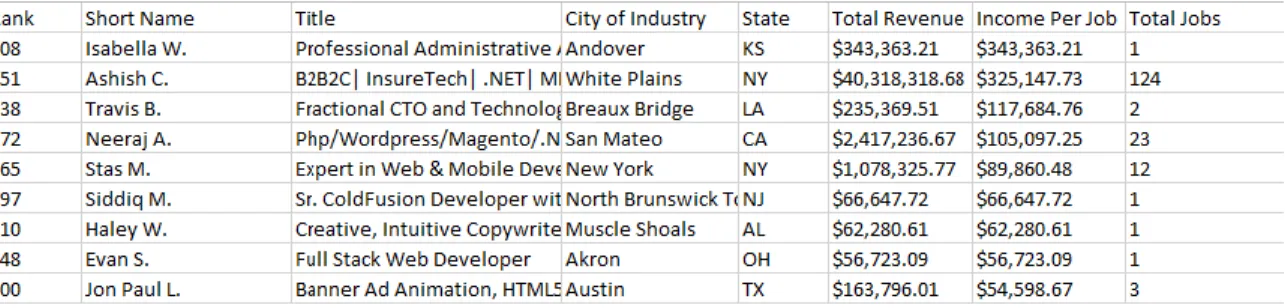
Figure 1. Partial Snippet of Scraped Upwork Profile Data
Rank: the order in which they were found by the scraper. Rank N is the Nth search result.
Title: worker’s current title, frequently used as a field to highlight industry knowledge.
Income Per Job: Total revenues / Total Jobs
Total Jobs: Hourly Jobs + Fixed-Price Jobs. Both types of jobs are important to study
A glaring flaw, but unfortunately unavoidable, is that I cannot obtain temporal
data for these profiles as they are snapshot scrapes of their most current profiles and
Upwork’s site does not provide information about how long a gig worker has been a part
of the site. This means that regardless of any findings, I cannot conclusively state that any
one variable at this time will be statistically significant in driving success. I fully expect
that my correlations and regression analyses for these variables to return incredibly low
because success is highly dependent on time and experience. The highest earners may
only have one job on record, for example, but may have had multiple points of contact
previously with an employer and have had a single contract for multiple piecewise tasks.
As such, they heavily skew data towards low job count, high income. This skew may
affect the perceptibility of low income, high job count workers who may have middling
incomes compared to the highest earners, but have perfectly comfortable wages. Again,
since there is no temporal data, I cannot state that higher income necessarily correlates
with job counts either. For example, a total revenue of $1,000,000 dollars over 10 jobs
turns to an average of $100,000 per job. But the reality is that it was likely more skewed
where the first few jobs were low-wage jobs and over time, workers learned skills that
increased their ability to perform technical tasks. We also do not know if all 10 of those
jobs were taken in one given year. With only a single year’s worth of work, $1,000,000 is
an incredibly successful foray into digital platforms. However, over 10 years, it tells a
slightly different story (though $100,000 a year is still very impressive). Given temporal
data, I would have looked into average increases in revenue per year on Upwork and
Talent” programs which highlight specific Upwork profiles during searches. For now, I
am limited to search rankings, spatial data using the states and total income and jobs data.
3.3 – Results
I began by analyzing my cleaned data and broke down several key statistics of interest.
Tests in this case refer to online tests of any sort such as a Windows Competency Test,
certifications from Cisco or Red Hat, typing tests and literacy tests. These accolades may
also be used as a proxy for experience in a given domain. First, I’ll begin with a sample
of the passed tests dataset.
Figure 2. Sample Passed Tests dataset
This dataset shows important data such as the name of the test, the recency of the
by the numerical scores, but by their percentiles such as “Top 10%.” This negates the
slight advantage that marginally higher scores would have had over others who had taken
the same test. This is the first dataset that was used to create a set of visualizations to
study how it affected associated revenue and number of jobs.
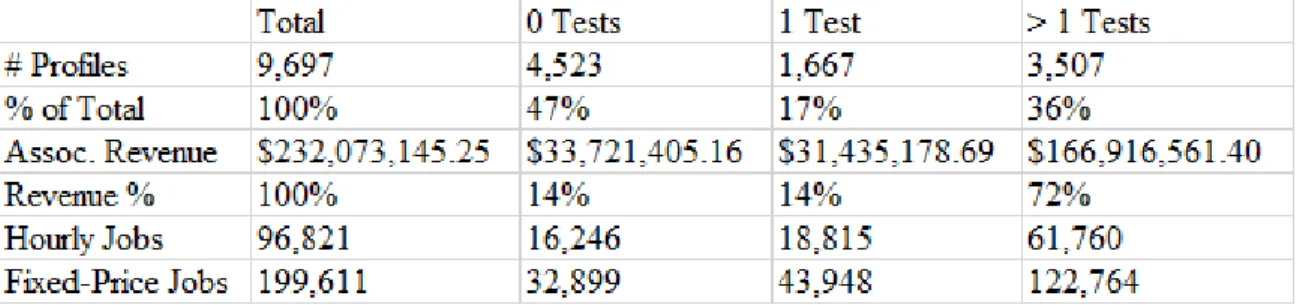
Figure 3. Passed Tests v. Success Variables
The first thing to notice is that nearly half of all of the randomly scraped profiles
have 0 tests passed on their profiles and have an associated revenue flow of $33.7 million
dollars across 4,523 profiles. According to the distribution, 47% of the profiles together
only amount to 14% of the total revenue earned. In contrast, the 1-test passed group
compose a third of the number of profiles, but also earn significantly more revenue per
person. To find just how much more money per capita, I simply divided associated
revenue with the number of profiles and found that 0-tests earn $7,455.54 per person
while 1-tests earn $18,857.34 per person. However, I was wary that one simple test could
increase income per person by more than 150%. What I found was that the 0-test group
had a significant number of outliers which I also found in my Tableau visualizations.
However, this was also the case for subsequent test groups as well. A previous hypothesis
by Wood et al. (2019) was that as hiring transitions from manual sifting by humans to
specific individuals in a sea of applicants stand more conspicuously. In this case, personal
accolades, user reviews and subjective scores as well as digital platform programs (such
as the Rising Talent program:
https://support.upwork.com/hc/en-us/articles/211063228-Become-a-Rising-Talent) could be used to alter algorithmic behavior in determining what
profiles should be highlighted over others. This can have significant bearing over who is
successful and who is not. This highlights a unique power dynamic that digital platforms
demand of its users – that is, users must be knowledgeable about the metrics that the
platforms use to rank them. The metrics themselves are a black box at this point,
however. Despite having more tests passed and more jobs taken, my regression analysis
found that there is nearly no correlation at all between passed tests and revenue. I will
discuss the importance of this data in my visualizations. The data by totals clearly show
that important variables such as hourly and fixed-price jobs provided to 1-test users is
increasing. Is this being accounted for in algorithmic selection? It highlights the need for
transparency – not necessarily for digital platforms to release their algorithms, but for
users to be given a sense of direction. The Rising Talent program, for example, provides
key information about how to apply to it and states that it provides users with a distinct
badge that helps their profiles become more valuable. This is very similar to why
certifications are extremely valued in manual hiring through digital mediums. They often
seek validation and verification of quality through external sources. If you were given
two project managers, one with his PMP certification and another without it, in a black
box situation where no other variables are known, which are we more inclined to choose?
The certifications serve as a proxy for previous evaluations and judgment of character
can afford to do halfheartedly unless they have the skills mastered and it biases our
perception of their abilities. Just the same, the rewards from programs offered by digital
platforms such as the Top-Rated badge proxies as an evaluation of the profile by the
digital platform. This means that employers have to trust the validity of Upwork’s
principles and metrics and once that trust has been established, it changes the dynamics
of how users must interact with the digital platform or they will be left behind. Suddenly,
employees want better certified profiles. They want proof through digital proxies such as
online examinations, certifications from critically-acclaimed institutions and
crowd-sourced reviews. No longer are these badges just slight advantages over other profiles,
they are necessities. And once algorithmic selection becomes the norm, it is very
important that gig workers are made aware that such changes are being made. For
example, Upwork could do this through their annually commissioned study, “Freelancing
in America” and distribute descriptive statistics regarding typical accolades of successful
gig workers or applicant numbers for their programs. Digital platforms, and really any
organization making use of algorithmic selection, should make gig workers aware of the
usability dynamics of digital platforms and how to best manage their profiles to obtain
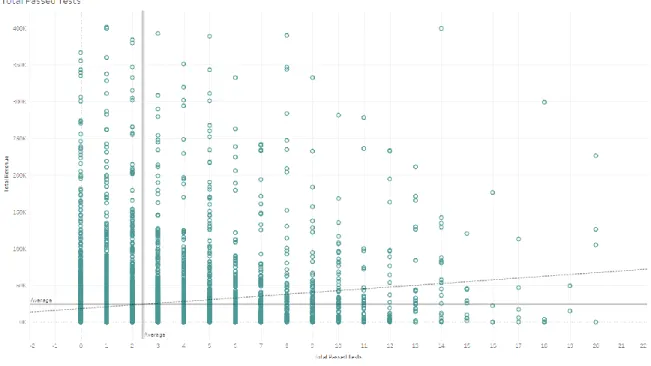
Figure 4. Clustered Total Revenue (y-axis) vs. Total Passed Tests (x-axis)
The visualization shows that of the 9697 profiles, a majority of them had more
than one passed test. The distribution of revenue is, however, quite even. This indicates
that the problem is not that high paying jobs are unavailable for these workers, but rather
that there are significantly more profiles in that cluster to compete with. If we return to
Figure 2, we want to highlight the number of profiles again. As the total revenues are
very close in value, we can see that of the group of gig workers that were selected for
work in the 0-test group, they made as much revenue as the 1-test group. Also, note how
the 0-test group had fewer jobs across the board as well. This therefore implies that being
selected, and not the amount of money earned per job, is more important. Once a gig
worker is selected, we can assume that they will begin to profit, albeit slowly from the
beginning. Again, I cannot confirm this without temporal data to show average increases
The averages with 95% confidence are total revenue = $24,186 at 2.41 tests
passed. The r-squared value is a meager 0.022 and the p-value is < 0.0001. The
significantly small r-squared value indicates that the scatter of data around the regression
line is all over the place with seemingly no correlation. However, the incredibly small
probability value indicates that there is still a real relationship between the predictor
variable (passed tests) and the response variable (revenue). I interpret this as saying that
the variables do have a correlation, but require additional predictor variables to better
explore the patterns.
Following this, I’ve created a visualization comparing income per job and the total
number of jobs per person, colored by total revenue earned.
The visualization was aimed to explore how taking on more jobs over time may or
may not result in additional income over time. There are four colors total: blue, red,
orange and green. Each represent in that order represent a higher magnitude of total
revenues earned by that person.
Blue: $0-$50,000 total revenues; low-barely sustainable revenue, supplementary
income
Red: $50,001-$200,000 total revenues; somewhat sustainable revenue,
consistently obtaining decently paying jobs.
Orange: $200,001-$600,000 total revenues; high total revenues, consistently
obtaining well-paying jobs
Green: $600,001 total revenues; extremely high total revenues, hired at varying
(but still expensive) prices
To interpret this, blue circles at the top-left of the scatterplot represent rising stars
who have already found some modicum of sustainable income. Extremely lopsided skews
(ex. 1 job, $1 million dollars) were removed as they were not representative of the typical
gig worker and more focus was placed into encapsulating the majority of data points.
Note that there is a large concentration of blue at the bottom left even as the number of
jobs increase. This indicates that long-term gig work does not ensure sustainable revenue
over time and most users do not make it out of this cluster. The position of the dots
provides a temporal measurement for income, though I cannot determine how many jobs
are taken per year. The most successful Upwork gig workers are those found as orange or
which is indicative of a sustainable lifestyle. Next, our average value with 95%
confidence can be found at $974 per job at 39.5 jobs taken. Ideally, I would have liked to
scrape additional data such as how long a job took on average based on hourly v.
fixed-price, but for now, this information states that approximately 47% of Upwork workers
have made about $38,473 since they’ve begun using Upwork. Later analyses should use
temporal data to find average annual income based on the clusters as that may tell a
vastly different story. To add onto the interpretation, I chose to look into existing
typologies of gig workers. Dunn (2016) developed a typology of gig workers that I found
extremely useful to grasp the utility of digital platforms and how they can be designed to
help reduce work precarity.
Figure 6. Typology of Gig Workers
This typology denotes motivations. For example, a blue circle found in the
bottom-middle of Figure 5 could denote a short-timer or dabbler. We have a lot of
information to work with. First, blue colors represent low total revenue and as you go
further right, the number of jobs taken increases. If this person was a searcher, he would
is not likely to be a lifer as they are known to adopt strategies to maximize their annual
income and is therefore much more likely to increase their revenues significantly over
time. Finally, they may be a long-ranger, but as with searchers, they are primarily
motivated by economic principles. There are many additional digital platforms available
and for many industries so it is unlikely that these groups would stay complacent with
their situations. That leaves me with a short-timer or a dabbler. Dabblers may seek to
improve their skills in a specific domain and consequently search for jobs on the side to
improve those skills. Short-timers are similar to moonlighters, or people who work a
second job at night, except they are not financially burdened. Like dabblers, they could
be looking to improve their skills in a given area while making some money on the side.
The quantitative values such as total revenues, jobs worked and average income per job
can be used to tell a story of gig workers. They can be manipulated to derive a potential
set of motivations that can be used to attract and design for these types of gig workers. Of
course, one major missing piece is the lack of time. Jobs taken is a proxy for time, but it’s
a very poor substitute for actual temporal values. For the example above, we could more
definitively categorize that worker if we could determine if they had worked for 3 years
or 10 years to complement our existing visualization. However, the greatest takeaway
here is that it doesn’t require much “insider” information to be able to visualize the types
of people flocking to the gig economy and by knowing what motivates them, developers,
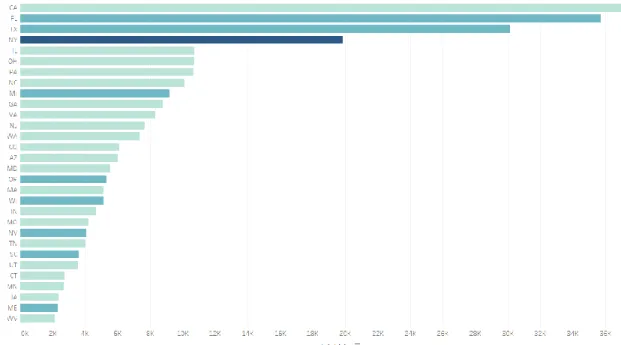
Figure 7. Average Revenue by Jobs and State
The biggest insights come from the top 10 states – they are all the most populous
states in America. In fact, they nearly came out in the same order as well. To explain the
horizontal bar graph, the height of the bars is determined by the total number of jobs and
colored by average total revenue per capita. In Figure 7, that means that while California
provided the highest number of jobs available on digital platforms, the average revenue
was middling and was more comparable to other states such as North Carolina and
Georgia despite its massive population and its industrial anchors such as Silicon Valley
and Hollywood. On the other hand, New York has a bit more than half of California’s
jobs, but has the highest average revenues per capita by far, outstripping even Texas and
Florida in a time when New York’s population is beginning to decline as people migrate
interesting hypotheses as to why this may be. First, it implies that these top states have
unique attributes that differentiate them from other, smaller states. Population has a clear
correlation to the number of jobs available and while not as linear, revenue does increase
accordingly as well as a result of the increasing supply of jobs. This may be a result of
increasing population density. For example, Cervero (1989) noted that commuting
distances and times were already beginning to increase with minor regional mobility.
States are frequently ill-equipped to upscale or downscale their infrastructure and this can
be seen in commuting times in California and New York as well as housing prices
(http://overflow.solutions/demographic-data/national-data/state-level-analysis/what-states-have-the-longest-commute-times/). With an increasing population, it is expected that
commute times will increase year to year and may serve as one of the primary
motivations for gig work in these states. It has been frequently stated in interviews of gig
workers that time and spatial factors contribute the most to their decision to transition
into digital remote work (Kalleberg & Dunn, 2016; De Stefano, 2015). Secondly, the bar
graph results imply that industrial specialties do play a significant role in pay as well.
New York’s Wall Street, California’s Silicon Valley and Hollywood, North Carolina’s
Research Triangle Park and so on are hubs that attract specific types of talent. It is
unsurprising that New York would top this list as the financial hub of the United States
where many of the most profitable and high-stakes disciplines such as portfolio
management and quantitative analysis are grounded. However, it is now possible to work
for organizations in these hubs without the need for close proximity or relocation. This
reduction in financial burden can also enable behaviors that would otherwise be
incredible $3,667 per month in 2018
(https://www.businessinsider.com/manhattan-rent-by-neighborhood-ranked-from-lowest-to-highest-2018-5). This money, hypothetically, could be
used to purchase equipment that enable gig work. This could inject new talent into these
industries, particularly those that could not handle the economic burden of relocation but
have promising talent. Paired with population information, this can be used to
complement current research within the job industry that can denote a transition from
4 – Conclusion
I knew going forward that there were going to be many variables that could be
used to improve the project. Unfortunately, I was unable to scrape information regarding
user reviews and satisfaction ratings, but assumedly, they would have very similar effects
as most other crowd-source-driven review systems. For example, Ye et al. (2009) found
that online user reviews significantly improved or deterred hotel room sales. Consumers
began to judge the business by perceived quality such as having high user ratings and
positive and negative user comments – features that are available on individual user
profiles to view, but are difficult to scrape from their website without time-consuming
manual labor. These are improvements that can easily be made to my visualizations.
More importantly, the visualizations show that it is possible to study qualitative and
quantitative relationships in variables at a holistic level without requiring insider
knowledge about the industry. In fact, I learned along the way that research does not
require immense amounts of specificity and dense collections of data, but rather, the
ability to connect two points together using logic and possibility. Available details on
publicly available profiles are valuable information sources that can be analyzed using a
variety of different information tools and create digital stories that tells the current trends
and livelihoods of gig workers. Throughout the project, I found significant number of
qualitative research studies by acclaimed researchers, but rarely did they invoke
quantitative analysis as more than a means to validate facts. There is an increase in
preferring to rideshare rather than own their own cars, more gig work. However, I found
that using visualizations can help weave stories regarding the lives of these precarious gig
workers. Their experiences are not easily explained through semi-structured interviews
and surveys and such research often cannot explain the systemic bias of digital platforms.
Using quantitative values in visualizations can help ascertain that certain patterns do exist
and due to the ubiquity of information, it is possible to continue to build on top of
existing visualization models and analytical systems which will only improve as time
goes on. My methodology used here is, of course, inherently flawed from the beginning
from the lack of temporal data, but would you argue that there is no possible utility of the
information that we derived from the visualizations? I would argue not; this transitional
period in the gig economy is the ideal time to test any and all of our hypotheses and to
see how the world evolves to these developments. In the end, this was a project of
serendipity. I knew full well that derivations would be fortuitous and not by my own
design, but I believe that the basic quantitative values alone match well with the trends of
Bibliography
Alkhatib, A., Bernstein, M. S., & Levi, M. (2017, May). Examining crowd work and gig work through the historical lens of piecework. In Proceedings of the 2017 CHI
Conference on Human Factors in Computing Systems (pp. 4599-4616). ACM.
Barley, S. R., Bechky, B. A., & Milliken, F. J. (2017). The changing nature of work: Careers, identities, and work lives in the 21st century. Academy of Management Discoveries.
Bozdag, E. (2013). Bias in algorithmic filtering and personalization. Ethics and
information technology, 15(3), 209-227.
Brynjolfsson, E., & McAfee, A. (2012). Race against the machine: How the digital revolution is accelerating innovation, driving productivity, and irreversibly
transforming employment and the economy. Lexington, MA: Digital Frontier
Press.
Brynjolfsson, E., & McAfee, A. (2014). The second machine age: Work, progress, and
prosperity in a time of brilliant technologies. WW Norton & Company.
Cappelli, P. (2001). Assessing the decline of internal labor markets. In Sourcebook of
labor markets (pp. 207-245). Springer, Boston, MA.
Cervero, R. (1989). Jobs-housing balancing and regional mobility. Journal of the
American Planning Association, 55(2), 136-150.
De Stefano, V. (2015). The rise of the just-in-time workforce: On-demand work, crowdwork, and labor protection in the gig-economy. Comp. Lab. L. & Pol'y J., 37, 471.
Finkin M (2016) Beclouded work in historical perspective. Comparative Labor Law &
Policy Journal 37(3): 603–618.
Friedman, G. (2014). Workers without employers: shadow corporations and the rise of the gig economy. Review of Keynesian Economics, 2(2), 171-188.
Gandini, A. (2016). Digital work: Self-branding and social capital in the freelance knowledge economy. Marketing theory, 16(1), 123-141.
Jones, S. (2002). Internet goes to college: How students are living in the future with
today's technology. Diane Publishing.
Kalleberg, A. L. (2009). Precarious work, insecure workers: Employment relations in transition. American sociological review, 74(1), 1-22.
Kalleberg, A. L., & Marsden, P. V. (2015). Transformation of the employment relationship. Emerging trends in the social and behavioral sciences: An
interdisciplinary, searchable, and linkable resource, 1-15.
Kalleberg, Arne L. and Michael Dunn. (2016). “Good Jobs, Bad Jobs in the Gig Economy.” Perspectives on Work 20(2):10–14.
Kuhn, K. M., & Maleki, A. (2017). Micro-entrepreneurs, Dependent Contractors, and Instaserfs: Understanding Online Labor Platform Workforces. Academy of
Management Perspectives, 31(3), 183–200.
LaValle, S., Lesser, E., Shockley, R., Hopkins, M. S., & Kruschwitz, N. (2011). Big data, analytics and the path from insights to value. MIT sloan management review,
52(2), 21.
Minter, K. (2017). Negotiating labour standards in the gig economy: Airtasker and Unions New South Wales. The Economic and Labour Relations Review, 28(3), 438-454.
Quinlan M (2012) The ‘pre-invention’ of precarious employment: the changing world of work in context. The Economic and Labour Relations Review 23(4): 3–24
Stewart, A., & Stanford, J. (2017). Regulating work in the gig economy: What are the options? The Economic and Labour Relations Review, 28(3), 420-437.
Stanford, J. (2017). The resurgence of gig work: Historical and theoretical
perspectives. The Economic and Labour Relations Review, 28(3), 382-401.
Wilson, J. M., Straus, S. G., & McEvily, B. (2006). All in due time: The development of trust in computer-mediated and face-to-face teams. Organizational behavior and
human decision processes, 99(1), 16-33.
Wood, A. J., Graham, M., Lehdonvirta, V., & Hjorth, I. (2019). Good gig, bad gig: autonomy and algorithmic control in the global gig economy. Work, Employment
and Society, 33(1), 56-75.