LIVING UNDOCUMENTED: AN ETHNOGRAPHIC STUDY OF THE MENTAL HEALTH AND WELLBEING OF UNDOCUMENTED MEXICAN MIGRANT MEN
Laura Patricia Villa Torres
A dissertation submitted to the faculty at the University of North Carolina at Chapel Hill in partial fulfillment of the requirements for the degree of Doctor of Philosophy in the Department of Health
Behavior in the Gillings School of Global Public Health.
Chapel Hill 2018
Approved by: Clare Barrington Kate Muessig Geni Eng Jocelyn Chua
© 2018
ABSTRACT
Laura Patricia Villa Torres: Living Undocumented: An Ethnographic Study of the Mental Health and Wellbeing of Undocumented Mexican Migrant Men
(Under the direction of Clare Barrington)
Background: Documentation status is a social determinant of migrants’ health, although existing research is limited. Migrant health research has utilized cultural frameworks, such as acculturation and assimilation, to explain the health effects of restrictive migration policies. This dissertation aimed to explore the lived experiences of migrant Mexican men that lived undocumented in the US and understand how living undocumented affected their mental health and well-being.
Methods: I conducted a transnational ethnographic and phenomenological study including in-depth interviews with Mexican men in North Carolina and Mexican who were living or had lived undocumented, their family members, and service providers. I also analyzed existing oral histories and engaged in participant observation at a workers’ center for day laborers. Analysis entailed writing analytical summaries, coding, memoing, and generating matrices to summarize and interpret data.
TABLE OF CONTENTS
LIST OF TABLES ... ix
LIST OF FIGURES ... x
LIST OF ABBREVIATIONS ... xi
CHAPTER 1. INTRODUCTION AND AIMS ... 1
CHAPTER 2. CONTEXTUAL AND EPIDEMIOLOGICAL BACKGROUND FOR AIMS ... 6
2.1 Globalization and migration... 7
2.1.1 Undocumented migration globally and in the United States ... 11
2.1.2 Immigration policies ... 12
2.2 Mental health among undocumented migrants ... 17
2.2.1 Mental health among undocumented migrants globally ... 20
2.2.2 Mental health among undocumented migrants in the US ... 22
2.2.3 Access to mental health care services and mental health providers perspectives ... 24
2.2.4 Wellbeing among undocumented immigrants ... 27
2.2.5 Stress and allostatic load among undocumented immigrants ... 28
2.3 Current research limitations and research gaps ... 32
CHAPTER 3. THEORETICAL FRAMEWORK ... 37
3.1 Intersectionality ... 37
3.2 Embodiment and social suffering ... 40
3.2.1 Embodiment ... 40
4.1 Research questions and research aims ... 44
4.2 Epistemology and reflexivity ... 44
4.3 Study settings ... 49
4.3.1 North Carolina ... 49
4.3.2 Guanajuato and Hidalgo... 53
4.4 Methodologies ... 55
4.4.1 Ethnography ... 55
4.4.2 Phenomenology ... 57
4.5 Sample and ethnographic fieldwork ... 58
4.6 Data analysis ... 63
CHAPTER 5. LIVING UNDOCUMENTED: A PHENOMENOLOGICAL STUDY OF MEXICAN MEN WHO MIGRATED TO THE UNITED STATES (PAPER 1) ... 66
5.1 Introduction ... 66
5.2 Study design and methodology ... 69
5.2.1 Study settings and participants ... 69
5.2.2 Data analysis ... 72
5.3 Results ... 73
5.3.1 “If you are undocumented, you are nobody” ... 73
5.3.2 Enacting pride and living abused ... 76
5.3.3 Living surveilled and criminalized ... 83
5.3.4 Living socially disabled ... 87
5.4 Discussion... 91
5.4.1 Study limitations ... 97
5.4.2 Future directions and conclusion ... 97
6.1 Introduction ... 99
6.2 Study design and methodology ... 101
6.2.1 Data analysis ... 103
6.3 Results ... 104
6.3.1 Mental health and undocumentedness ... 104
6.3.2 Physical health impacts of living undocumented ... 108
6.3.3 Coping with the health impacts of undocumentedness ... 112
6.4 Discussion... 115
6.4.1 Study limitations ... 120
6.4.2 Future directions and conclusion ... 121
CHAPTER 7. DISCUSSION AND CONCLUSION ... 122
7.1 Summary of findings ... 122
7.2 Study strengths and limitations ... 126
7.3 Implications for future research and interventions ... 127
APPENDIX A: INFORMED CONSENT FORM FOR MEN ... 131
APPENDIX B: INFORMED CONSENT FORM FOR FAMILY MEMBER ... 134
APPENDIX C: INFORMED CONSENT FORM FOR SERVICE PROVIDER ... 137
APPENDIX D: SEMI-STRUCTURED INTERVIEW GUIDE FOR MEN IN THE UNITED STATES ... 140
APPENDIX E: SEMI-STRUCTURED INTERVIEW GUIDE FOR MEN IN MEXICO ... 142
APPENDIX F: SEMI-STRUCTURED INTERVIEW GUIDE FOR FAMILY MEMBERS ... 145
APPENDIX G: SEMI-STRUCTURED INTERVIEW GUIDE FOR SERVICE PROVIDERS ... 147
APPENDIX H: OBSERVATION GUIDE ... 148
APPENDIX J: TABLE 2. OVERVIEW OF SAMPLE AND DATA COLLECTION METHODS ... 156 APPENDIX K: FIGURE 2. THE MENTAL HEALTH AND WELLBEING IMPACTS OF LIVING
LIST OF TABLES
LIST OF FIGURES
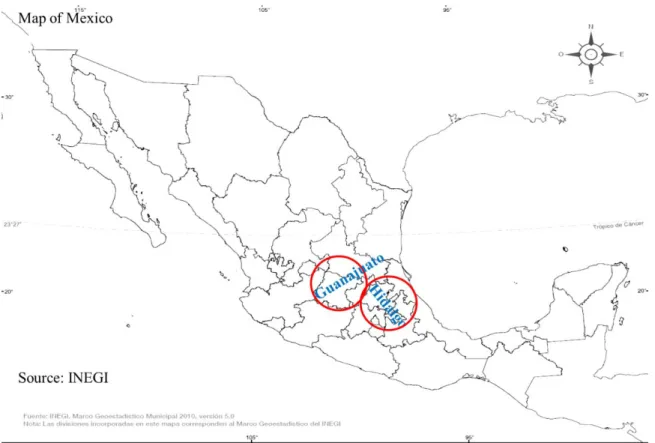
Figure 1. Map of Mexico ... 55 Figure 2. The mental health and wellbeing impacts of living undocumented among
LIST OF ABBREVIATIONS
ACA Affordable Care Act
CONAPO Consejo Nacional de Poblacion (National Population Council of Mexico) DACA Deferred Action for Childhood Arrivals
HRQL Health-related Quality of Life
ICE Immigration and Customs Enforcement
IME Instituto de Mexicanos en el Exterior (Institute for Mexicans Abroad) IMF International Monetary Fund
IRB Institutional Review Board
IRCA Immigration Reform and Control Act NAFTA North American Free Trade Agreement
NC North Carolina
OECD Organization for Economic Cooperation and Development PTSD Post Traumatic Stress Disorder
QLI-SP Quality Life Index
SAP Structural Adjustments Policies
SEDESOL Secretaria de Desarrollo Social (Social Development Ministry) SOL Study of Latinos
SRE Secretaria de Relaciones Exteriores (Foreign Affairs Ministry of Mexico) SSN Social Security Number
UNDP United Nations Development Programme
US United States
CHAPTER 1. INTRODUCTION AND AIMS
Mental health is an integral part of overall health and can be affected by different social determinants. Mental disorders account for 13% of the global burden of disease (World Health
Organization [WHO], 2013), with depression as the largest single cause of disability. Individuals that live in difficult social and economic conditions are at greater risk of experiencing mental illness, such as undocumented immigrants1 (WHO, 2013). There are approximately 232 million migrants worldwide, and
it is estimated that at least 10% of those international migrants are undocumented (International Organization for Migration [IOM], 2010). In the United States (US) alone, the number of undocumented immigrants is estimated to be close to twelve million, 75% of which are from Latin America (Passel, 2005; Passel & Cohn, 2012).
There is a growing body of research on the interplay between undocumentedness and mental health and wellbeing. Researchers in Europe, where documentation status has been collected more systematically than in the US, have found associations between documentation status and mental disorders, such as depression and anxiety, whereby undocumented migrants have higher odds of
suffering from a mental disorder. In a qualitative study in Berlin, health providers reported seeing cases of what they called “illegal syndrome”, a series of psychosomatic symptoms that are related to the condition of living undocumented (Castañeda, 2009).
Several researchers in the United States (US) have explored documentation status and mental health, although documentation status has not been collected systematically (Garcini, Murray, Zhou, Klonoff, Myers, & Elder, 2016). Researchers have found that undocumented Latinos were more likely to report feeling angry than documented Latinos (Cavazos-Rehg, Zayas, & Spitznagel, 2007), have higher prevalence of depressive symptoms (Gzywacz, 2010, Potochnick & Perreira, 2010), and anxiety (Potochnick & Perreira, 2010). Other studies conducted with populations that are believed to be undocumented, such as farmworkers and day laborers, found a higher prevalence of psychological distress, depression, anxiety, post-traumatic stress disorder (PTSD), and substance abuse, compared to the total US population prevalence (Crain et al., 2012; Grzywacz et al., 2006; Hiott, Grzywacz, Davis, Quandt, & Arcury, 2008; Kiang, Grzywacz, Marín, Arcury, & Quandt, 2010; Negi, 2013).
Although the evidence presented points out to an association between undocumentedness and mental health and wellbeing among immigrants, the available research is lacking a more complex exploration of how undocumentedness is actually lived and the relationship between
undocumentedness and mental health and wellbeing from an intersectional point of view. Most of the public health research conducted in the US to understand migrant’s health has been done under cultural frameworks, such as acculturation and assimilation, and has not looked at the effect of migration
impact on their health, including their mental health (Viruell-Fuentes, et al, 2012).
Adopting an intersectional approach to study undocumentedness requires first to recognize that undocumentedness is the byproduct of structural processes, such a globalization and the
implementation of restrictive migration policies (Donato & Massey, 2016), to then move into
understanding how it is experienced by specific groups affected in a specific context, to finally explore how it intersects with other socially constructed categories, e.g., race, ethnicity, and gender (Viruell-Fuentes, et al, 2012, Garcia, 2016). An intersectional approach to understand migrants’ health moves us away from ascribing the responsibility solely to migrants and their cultures for their health outcomes, and allows us to understand better how migration policies that restrict migrants’ lives affect their health.
One of the groups most affected in the US by the restrictive migration policies are Mexican men. Mexican men are detained and deported in greater numbers compared to other nationalities (TRAC, 2014). There is little information on the mental health of undocumented men in new migration gateways. Living undocumented in new Latino migration destinations affects immigrants’ lives negatively given the scarcity of community resources available and the difficulty in blending with the local communities compared to other places where the Latino population is larger (Villa-Torres, Fleming, & Barrington, 2014; Fleming, Villa-Torres, Taboada, Richards, & Barrington, 2017).
There is limited information about the resources, adaptation and coping mechanisms undocumented men deploy in order to keep going despite the challenges they face. There is also no knowledge of the family and community perspectives on the mental health and wellbeing of
importantly, we need to recognize that migration-related policies are public health policies. Migrants that lack a recognized status are left without protection of their rights, including their right to health. Documentation status is one of the byproducts of migration policies, and as such, it is a social category we need to explore deeply.
Given these gaps, I designed the present ethnographic qualitative study to explore the phenomenon of living undocumented among Mexican migrant men living in North Carolina (NC) and men that have lived undocumented in the United States (US) but have returned to Mexico. I also explored the mechanisms through which the phenomenon of living undocumented influences their mental health and wellbeing. I examined this phenomenon from the perspective of the men, their family networks, and social and health care service providers in North Carolina.
The specific aims for this study are:
Aim 1. To describe the lived experiences of Mexican migrant men currently living
undocumented in the US and returned migrant men in Mexico that lived as undocumented in the US at some point in their lives.
Aim 2. To identify the mechanisms through which undocumentedness affects Mexican men’s mental health and wellbeing, and the coping and healing mechanisms men enact.
I used the methodologies of ethnography and phenomenology to address these research aims. Ethnography is a methodology that tries to understand people’s lives in-depth through long-term immersion and iterative interaction of the researcher in a specific context (Prentice, 2010).
Phenomenology is the study of the lived experience, meaning, the everyday experiences that a person goes through in the context of a particular situation, or phenomenon (Vagle, 2014). The phenomenon that I explored in this study is undocumentedness.
allowed me to understand how the experience of living undocumented translates into mental health and wellbeing challenges. Intersectionality allowed me to explored in depth the experience of
undocumentedness as a socially constructed category and how it intersected with other dimensions of men’s lives, such as their gender, class and ethnicity (Choo & Ferree, 2010; Anthias, 2009). The concepts of embodiment (Krieger, 2005) and social suffering (Kleinman, 1997a) provided the space to hear what men have to say about their collective experiences of undocumentedness, how they talked about it and felt about it, and how those experiences, thoughts and feelings got translated into bodily experiences.
The methods for data collection included participant observation at a worker’s center in North Carolina, multiple in-depth interviews with undocumented Mexican immigrants, and analysis of oral histories from the New Roots archive on oral histories of Latin American immigrants in North Carolina. I also conducted in-depth interviews with immediate family members of the men interviewed and health care and other service providers that have provided services to Mexican immigrant men in North Carolina.
This research contributes to the understanding of the social and mental wellbeing of Mexican undocumented migrant men. It adds valuable information to the better measurement of mental health outcomes among undocumented Mexican migrant men. I attempt to provide a more holistic
CHAPTER 2. CONTEXTUAL AND EPIDEMIOLOGICAL BACKGROUND FOR AIMS
In this section, I present the socio-historical background information to contextualize the current trends of global migration. I show how globalization has provoked the migration of millions of people worldwide, and present available data on the number of undocumented immigrants worldwide and in the United States. I describe also how receiving countries have dealt with the influx of these migrants. Lastly, I present the United States’ current approach to immigration, and some examples of state-level and local-level pieces of legislation and ordinances to both integrate and restrict immigration.
I also present in this section the current empirical evidence related to the mental health and wellbeing of undocumented populations and evidence related to access to mental health services for these populations from multiple perspectives. Lastly, I introduce the concept of allostatic load, which is related to both the exposure to chronic psychosocial stressors and the onset of mental illness and other chronic illnesses. It is important to clarify that most of the research done in the areas of
2.1 Globalization and migration
Globalization, simply stated by Kawachi and colleagues, is the “closer integration of societies and economies” (2007, page 5). Globalization has enabled national economies to become more integrated at a global level (Kawachi & Wamala, 2007). This integration allows for the free flow of consumable goods (material goods, services) with the premises of increasing profit for both
transnational companies and developed countries, and, as a secondary effect, contribute to the social development and the strengthening of local economies in developing countries (Bauman, 1998; de Sousa Santos, 2006; Kawachi & Wamala, 2007). The biggest achievements, according to some theorists, have been the decreased cost of distance and the shrinking of time, facilitated by the technological improvements of both transportation and communication means (Bauman, 1998, 2011; de Sousa Santos, 2006; Kawachi & Wamala, 2007).
Globalization, as a political and economic agenda2 is anchored in 4 prescriptive premises: 1) the
understand how the current flows of migrants across nations are influenced by the economic
globalization. It also helps to understand how national states struggle to balance the need to protect their social welfare systems and what they are willing to provide to immigrants that arrive to their territories. Lastly, the primacy of the rule of the law also influences the enactment and implementation of immigration laws and policies, and facilitates the adoption of the idea that when migrants come to countries undocumented, they are breaking the law.
Globalization is composed of different global actors, including the international institutions like the IMF and WB that since the early 80s gained some level of authority over national governments, mainly through management of debt. Other actors of globalization are multinational corporations, and global networks of civil society organizations and social movements, international governance
instruments (such as trade treaties, like the North American Free Trade Agreement (NAFTA) between Mexico, Canada and the US or most recently the Trans-Pacific Partnership (TPP), agreed by 12 nations, including Mexico and the US); and new and ever changing forms of communication (Kawachi & Wamala, 2007).
decades after NAFTA, within country income gap has also grown. Both countries have the highest income inequality among all the Organization for Economic Cooperation and Development (OECD) member States, measured as the ratio between the average income of the top richest and the bottom poorest (25.1 for Mexico and 17.9 for US) (OECD, 2014c). Both countries also have the highest poverty rates (relative to the national median household income), along with Israel, of OECD country members (OECD, 2014b). The pattern of growing income inequality observed in the US and Mexico is an example of the consequences of globalization, observed in other regions of the world.
Bauman’s concept of glocalization (1998) helps us understand the impacts of globalization at the local level. For Bauman, glocalization points at both the processes of integration at the global level and the process of fragmentation at the local level; a redistribution of ‘privileges and deprivations, of wealth and poverty, of resources and impotence, of power and powerless, of freedom and constraint’ (Bauman, 1998, page 43). In this process of glocalization, the wealthy people that have accumulated capital move freely in search of better opportunities to increase their profits, leaving the local people behind with their local economies and lives disabled (Bauman, 1998, 2011; de Sousa Santos, 2006). ‘That ability [to move and enjoy the world], or disability [to stay, chained in a place, and suffer the world], divides the world into the globalized and the localized’ (Bauman, 1998, page 46).
elimination of union protections and workplace standards (extended working hours, benefits, health insurance); an over industrialization and division of labor that, more and more, separates the work from other family and societal activities; and the constant threat of unemployment (Hogstedt et al., 2007). All this generates what Bauman calls the ubiquitous character of uncertainty, which relates to a constant feeling of life instability and incapacity to plan for the future (2010). Moreover, this uncertainty has now become a private affair (Bauman, 2011). States, following the prescribed consensus of the weak State explained above, do not protect their citizens anymore, and “individuals are now expected to seek biographical solutions, to systemic contradictions” (Bauman, 2011, Chapter 4, para. 3).
2.1.1 Undocumented migration globally and in the United States
There are around 232 million international migrants worldwide (UN, 2013). The International Organization of Migration has identified more than 20 migration corridors divided in four migration pathways through which migrants move between countries (IOM, 2013). Roughly speaking, and based on classifications from United Nations Department of Economic and Social Affairs (UNDESA), the World Bank and the United Nations Development Programme (UNDP), IOM has divided countries in “North” and “South”, where “North” are countries with greater economic and human development and countries in the “South” are countries with lesser economic and human development. The four migration pathways identified thus are: North to North, South to North, North to South, and South to South (IOM, 2013). Over half of the migration corridors are classified as South-to-South migration pathway (IOM, 2013). More interesting is the fact that the top migration corridor for the North to South migration pathway is the US to Mexico, alongside with the US to South Africa, which shows how US citizens also migrate to the South, but always in better conditions (to invest, to work in transnational companies or for retirements). The top migration corridor, in terms of absolute numbers of international migrants, for the South to North migration pathway is the Mexico – US corridor (IOM, 2013).
From 10% to up to a third of all international migrants are undocumented (IOM, 2010). In the United States only, in 2012, the undocumented population in the United States was estimated to be around 11 million people, and nearly 9 million from Latin American countries, and more specifically, nearly two-thirds (5.6 million) from Mexico (Passel & Cohn, 2012, 2014; Krogstad, Passel & Cohn, 2017).
undocumented migrants, 52% were adult men, 37.8% adult women, and 10.0% were children (under 18 years old) (PRC, 2010). The Mexican National Population Council (CONAPO for its Spanish initials) reported in 2014 that from the almost twelve million Mexicans living in the United States
(undocumented and documented migrants together and all ages combined), 52.2% were men (CONAPO, 2014). There has been an increase of women migrating in absolute numbers, although the ratio men to women has remained relatively stable for the last decade (CONAPO, 2010a; CONAPO 2014). This is important because although Mexican men and women are migrating at similar rates, Mexican men are deported in greater numbers than Mexican women and men from other nationalities.
The lack of accurate data regarding the number and characteristics of undocumented migrants prevents the documentation of trends, the comparison among countries and regions, and make these migrants invisible, which translates in the lack of regulations and resources to address their needs and facilitates the violations of their human rights (IOM, 2010; UN, 2014).
2.1.2 Immigration policies
With the increase in people moving across borders, national governments where migrants either transit through or arrive to are constantly re-assessing their obligations towards these populations (Allotey & Zwi, 2007). National states move between policies of integration of current immigrants already living in their territories, to policies intended to restrict and reduce the inflow of immigrant to their countries (Hollifield, Martin, & Orrenius, 2014). Again, via the global prescriptive consensus of the primacy of the law and the judicial system, more and more, new ways of restricting, obstructing, defunding, and ultimately, criminalizing and detaining immigrants are put in place. Restrictive laws and criminalization of migration have created profound differences between the ‘deserving’ and
Some of the policies implemented at the national level have been comprehensive and respectful of human rights principles and have been adopted at historical immigration peak moments, such as the one implemented in Spain, where from 2004 to 2011, thousands of undocumented immigrants where regularized (Arango, 2013). This positive approach to migration in Spain changed in 2011, when more conservative political forces -under the context of the European economic crisis- openly expressed their concerns about immigration and its impact in the local economy, population composition and welfare services (Arango, 2013). As result of these concerns, via a Royal law in 2012, undocumented immigrants were excluded from healthcare access, forcing migrants to use emergency services (Roura, Bisoffi, Navaza, & Pool, 2015). Other policies are more restrictive and controlling, mainly in order to protect national welfare systems. For example, Scandinavian countries (Denmark, Sweden and Norway) have struggled to find a balance between restraining immigration and upholding their international commitments to protect human rights (Brochmann, 2014). Denmark, for example, restricted the category of refugee to the one defined in the Geneva Convention on Refugees of 19513, increased
requirements for marrying a foreign person and requested a cash amount as guarantee to cover any social assistance needed for the foreign spouse (Brochman, 2014). At the same time, Sweden has implemented integration policies, requesting that every person under Swedish territory has access to equal rights (Brochman, 2014). Most recently, during 2015, the European Union faced a refugee-seekers massive numbers, what several agencies have qualified as a humanitarian crisis (IOM 2015, UNHCR, 2015). In Syria alone, the war originated over 12 million internally and internationally displaced people in the last 5 years. Over 4 million Syrians have relocated to Turkey, Lebanon, Jordan and Iraq (ECHO,
2015). In 2015 alone, the European Union reported arrivals of over 700,000 Syrians to European countries, mainly Croatia, Greece, Hungary, Italy, Macedonia, Slovenia and Serbia (IOM, 2015). Most refugee-seekers aimed to get to Germany (who has already received close to half million refugees over since the conflict in Syria started), which pushed the German government to restrict its borders and get a plan going among all the European Union to receive and relocate refugee-seekers (Aljazeera News, 2015). The Syrian crisis is still ongoing. Another recent example is the displacement of the Rohingya people, a Muslim minority that fled Myanmar to Bangladesh due to extreme violence. The latest migration began on August 2017 and represents the newest humanitarian challenge, since Bangladesh lacks the infrastructure to appropriately offer shelter to the Rohingya people (UNHCR, 2017).
Another level of analysis are the laws and regulations at the local level (i. e. state, municipalities or counties, and/or towns and community authorities). Some of these policies clearly diverge from the national policies, against or for the integration of immigrants in their communities (Ambrosini, 2013). Xenophobic sentiments are frequently related to structural processes, such as racism and classism, masked by the increasing unsafety-related paranoia and security obsession, which is also used to put immigrants in competition with other local disadvantaged groups (Allotey & Zwi, 2007; Bauman, 2011). An example is Italy, where 50% of citizens consider immigration a threat to security (Ambrosini, 2013). Also in Italy, between 2008 and 2009, 788 by-laws were issued by 445 municipalities, to regulate certain practices and behaviors, -such as public gathering, businesses run and religious rituals-, of immigrants (Ambrosini, 2013).
In the United States, an example of xenophobic sentiments are the political positions of
between Mexico and the US, including the retention of the remittances Mexican immigrants in the US send back to Mexico (Trump, 2015). Since taking office, Trump has targeted migrants, including documented workers, undocumented economic immigrants and asylum seekers, with a series of executive orders. These executive orders include elimination of the H1B (professional work visa) expedite process, banning people of certain majority Muslim countries into the US; increasing the security of the border with Mexico, including the building of a wall; and the ending of the Deferred Action for Childhood Arrivals (DACA) program (White House, 2017). Most recently, President Trump’s administration has terminated the Temporary Protection Status (TPS) designations for Haiti and Nicaragua (USDHS, 2017a, 2017b).
United States in 2012, maintaining the provision of requiring immigration status checks during law enforcement stops (Supreme Court, 2012).
Another example are the collaborations of county governments with the federal program 287 (g), which allows local authorities to enforce federal immigration laws (ICE, 2016). The 287 (g) program grew the last year, from 32 memorandums of understanding signed with local authorities in 16 states, to 60 in 18 states (ICE, 2017). Participating states are Alabama, Arizona, Arkansas, California, Florida, Georgia, Louisiana, Maryland, Massachusetts, Nevada, New Jersey, North Carolina, Ohio, Oklahoma, South Carolina, Tenesse, Texas and Virginia (ICE, 2017). Other strategies are ordinances that target poor neighborhoods where housing and day laborers are regulated (Walker & Leitner, 2011).
2.2 Mental health among undocumented migrants
Mental health, per the World Health Organization (WHO) definition, is an integral part of the overall concept of health, defined as
(...) a state of complete physical, mental and social wellbeing, and not merely the absence of disease or infirmity(WHO, 2013).
Implicit in this definition is the idea that mental health is more than the absence of a mental illness, and that mental health is connected with physical health, behaviors, and the physical and social environment (WHO, 2005). There is not a single definition of mental health though, since its
conceptualization, understanding, experience and maintenance are deep-rooted in the local social, cultural and medical systems (WHO, 2001). Acknowledging the challenge of having a universal definition of mental health, the WHO has also proposed that mental health is:
(...) a state of wellbeing in which the individual realizes his or her own abilities, can cope with the normal stresses of life, can work productively and fruitfully, and is able to make a
contribution to his or her community(WHO, 2014).
Mental health is the foundation for the wellbeing and effective functioning for an individual and for a community, and fundamental to our ability as humans to interact with each other and enjoy life (WHO, 2014). As with other areas of health, social determinants play a key role in shaping people’s mental health.
Mental disorder or illness affects an individual mentally, neurologically, socially and behaviorally (Movement for Global Mental Health [MGMH], 2015). According to the Diagnostic and Statistical
include depression, anxiety, schizophrenia, bipolar and psychosis disorders, epilepsy, dementia, alcohol and drug dependencies, among others (MGMH, 2015).
Globally, mental disorders, including mental, neurological and substance abuse-related ones, account for 13% of the global burden of disease (WHO, 2013). Moreover, people experiencing major depression or schizophrenia have a 40% to 60% greater chance of dying at younger ages than the general population, given the connection between mental health and other chronic health issues (WHO, 2013). Suicide is the second most common cause of death among young people (between 15 to 24 years old) globally (WHO, 2013). Depression alone accounts for 4.3% of the global burden of disease and 11% of disability worldwide (WHO, 2013). At the global level, the provision of care for those people with mental disorders is limited. There is a lack of mental health policies at the national and local levels, insufficient trained mental health providers, shortage of psychiatric medication, absence of community-based interventions, and weak community advocacy for mental health services (WHO, 2013). People suffering from severe mental disorders are also more likely to suffer human rights violations, such as discrimination, violence, isolation, homelessness, and incarceration or involuntary confinement in psychiatric institutions, among others (WHO, 2013).
A group of psychiatrists in Barcelona that work with mobile populations have proposed the “Ulysses Syndrome”, a chronic and multiple stress syndrome specific to the experience of migration (Achotegi, 2009). The symptoms of the Ulysses Syndrome include symptoms associated with depression and anxiety, somatization, and confusion (Achotegi, 2009). The populations most at risk of experiencing the Ulysses Syndrome are undocumented migrants, immigrants with semi-legal status, and authorized immigrants that live in social exclusion conditions (Achotegui, 2009).
Among the depressive symptoms of the Ulysses Syndrome, migrants express feelings of sadness and the physiological act of crying. Among the anxiety symptoms included in the Ulysses Syndrome are recurrent and intrusive worries; tension, nervousness, and irritability (Achotegui, J, 2009). The most important proposition of the Ulysses Syndrome is the absence of some depressive symptoms that are present in the classical definition of depression, such as apathy, death or suicide ideations, guilt, and loss of social or labor-related activity (Achotegui, 2009). Somatic symptoms (a psychological problem that manifests through the body) constitute another dimension of the Ulysses Syndrome and include insomnia, headaches, fatigue, dermatological problems, and hypertension.
The Ulysses Syndrome also talks about migrants displaying confusion symptoms, including disorientation; depersonalization; distancing from and negation of painful memories; increased cortisol levels due to chronic stress that facilitates confusion; and the constant lying or hiding of their everyday problems to their family in the countries of origin, to friends or to themselves. A possible cause of the confusion are the constant efforts to hide in order to avoid apprehension by immigration enforcement officials (for example, constantly changing names).
deportation, mistreatment, sexual abuses and defenselessness. Authors of the Ulysses Syndrome have also pointed out that all these symptoms vary across time and get alleviated temporarily when the sources of stress are solved or when individuals engage in coping mechanisms that reduce their effects (such as forgetting, albeit temporarily, about them), without losing sight of the chronicity of both stressors and symptoms (Achotegui, 2009).
2.2.1 Mental health among undocumented migrants globally
In this section, I present research conducted outside the US, where documentation status has been collected more systematically and directly. Robert and colleagues (2014) found in Spain that 75% of undocumented immigrants in their sample (N=318) reported poorer mental health than documented immigrants and citizens and suggested this was given their precarious life conditions. Sousa and
colleagues (2010), found that undocumented men in Spain had higher odds of reporting poorer mental health than native born with formal job contracts (OR 2.26, CI 1.15 – 4.42). Heeren and colleagues (2014) also reported that residence status was strongly associated to suffering depression and anxiety symptomatology in Switzerland.
Participants in a qualitative study conducted with undocumented immigrants in Spain (N=44, half of them men) constantly referred to physical symptoms related to their documentation status, for example, back problems, stomachaches, constant worries, restlessness and sleeplessness, constant tiredness and emotional suffering (Porthé et al., 2009). This relates back to the “illegal syndrome” reported by Castañeda and colleagues (2009), where providers were not able to identify a biological cause for the bodily symptoms reported by immigrants.
Carta and colleagues (2005) identified in their desk review several factors associated with the mental health of immigrants, such as: labor and economic instability, cultural and social marginalization, family estrangement, pressures to send money to their families, racial discrimination and lack of
statutory documentation. Migrants have also reported having little time to relax and spend with family given the need to work longer hours or double shifts (Crocker, 2015).
The coping and adaptation strategies deployed by immigrants have not been studied
such, community-based integration strategies should be sought after in order to improve the mental health of immigrants (Simich, et al., 2009).
The cross-sectional nature of most research done with immigrant populations has been
recognized as a limitation to be able to observe changes across time (Lindert, Ehrenstein, Priebe, Mielck, & Brähler, 2009), so there is little information available in the literature about the cyclical and chronic character of the stressors and associated mental health symptoms or clinically diagnosed mental illness. 2.2.2 Mental health among undocumented migrants in the US
Mental health has not been studied rigorously among Latino undocumented migrant
populations in the United States though, and rarely among men for a couple of reasons. First, health and mental health among migrants in the US has been mainly studied under frameworks of acculturation and acculturative stress, but these frameworks do not take in consideration how migration status impacts health, including mental health (Viruell-Fuentes, et al, 2012; Garcia, 2016) Second, researchers that have tried to study undocumentedness and mental health have not collected documentation status directly, but rather have used proxies or assumed that the group studied is undocumented, for example, day laborers or farmworkers (Garcini, 2016). Moreover, the available research that has tried to
understand how migration status affects mental health among migrants have concentrated most recently among younger undocumented immigrants that have benefitted from the Deferred Action for Children Arrivals (DACA). Lastly, although undocumented migrants come from every region in the world, the majority are from Latin American countries, and as such, the research has focused primarily on Latino populations. It is within those limitations that I present the available research.
Hiott, and colleagues (2008) showed that among a sample of 125 farmworker men, 41.6% had a score above the threshold for clinical depression. These authors also found that 18.4% of the
higher proportions than women (Magaña & Hovey, 2003). A study by Negi (2013) among a cross-sectional convenience sample of 150 men in three sites for day laborers in New Orleans found that 39% of the men presented high psychological distress. Kiang et al (2010) conducted a study among
immigrants in North Carolina (N=150, 45.3% women), and found that 35.4% of the men had both depression and anxiety. Grzywacz and colleagues (2006) studied a sample of 60 farmworker men in NC and found that 17% met the criteria for impairing anxiety, 40% showed depressive symptomatology, and 40% met the criteria for alcohol dependence. Cavazos-Rehg et al (2007) studied a sample of Latino immigrants (N=143; 56% women), and assessed whether participants were undocumented or not by using the proxy: “I have thought that if I went to a social or government agency I would be deported.” Thirty-nine percent responded “yes” to the item, thus were classified as undocumented. Researchers found that participants concerned with deportation were more likely to report feeling angry than those not concerned with deportation (Cavazos-Rehg et al., 2007).
Other studies have explored how stressors related to being undocumented are embodied or expressed through confusion symptoms, depersonalization, lying, or hiding. For example, Seth Holmes (2007) described how an undocumented indigenous farmworker constantly referred having excruciating headaches after receiving insults from his boss; the pain would only go away by binge drinking.
a “stuck place”, between the home country and the host country, where immigrant men have not made it yet, and probably would never do, but were not willing to recognize it (2005).
As mentioned earlier, federal programs to remove undocumented migrants from the US have targeted Latino men, particularly Mexican, which has resulted in continuous persecution of this population, the increase of immigrant detention centers, deportations, family separation and US born Latino children placement in the US foster care system when parents are deported (Brabeck & Xu, 2010, Golash-Boza & Hondagneu-Sotelo, 2013). Men also experienced continuous blame, stigmatization, guiltiness and shame given their undocumented status; which results in situations of vulnerability and facilitates their exploitability, which could be some of the mechanisms through which the stressors translate into mental health problems and merit further exploration (Sullivan & Rehm et al, 2005; Lopez, et al., 2013; Abrego, 2011; Martinez & Slack, 2013). For example, a qualitative study with unauthorized day laborer men found that when men experienced a work-related injury that incapacitated them to work again, they fell into a series of psychological problems, such as depression, substance abuse and self-mutilation (Walter, Bourgois, & Loinaz, 2004). Napolitano (2005) found that undocumented day laborer men felt that they have “failed” in the migration enterprise, and that occupying a lower position in both the Latino and host community translated into substance abuse problems, and an overall detriment to their health.
2.2.3 Access to mental health care services and mental health providers perspectives
social status is related to the perceived mental health, which determines the use of mental health services. There are also questions regarding gender patterns of health services utilization among immigrants (for example, women more inclined to utilize services than men), as well as learning practices, ways of navigating services and help seeking behaviors (Lindert, Schouler-Ocak, Heinz & Priebe, 2008).
In another review study in Europe, Carta et al. (2005) identified several barriers to access mental health services among immigrants, including language barriers, communication problems, complication in the diagnosis given cultural differences, lack of training of providers to understand the migratory process, lack of interpreters, lack of evaluation systems, and lack of financial resources. Other problems identified by European providers are: difficulty developing trust with the client; discrimination and racism against migrants; and perceiving that clients are at greater risk of being marginalized if they are diagnosed but treatment is not offered or available (Sandhu, et al., 2013). There is also the fear of possibly compromising the permanency in country of a person if diagnosed with a mental illness that requires hospitalization (Strabmayr, et al., 2012) or with a problem of abusing a substance that is illegal (Lindert, Schouler-Ocak, Heinz & Priebe, 2008). Other community experts on mental health across Europe are concerned that the complex needs of undocumented migrants are beyond the capacity of the mental health services, which adds to the stress originated from the everyday ethical dilemmas providers face when deciding to provide or not care outside the local legal framework for
undocumented migrants (Strabmayr, et al., 2012).
Providers have also expressed challenges in diagnosing patients, for example, when trying to identify normal reactions to abnormal situations (such as Post traumatic stress disorder (PTSD) versus psychosis) (Achotegui, 2009; Sandhu, et al., 2013). Some providers have expressed not feeling
to be better prepared to address migrants’ mental health issues (Sandhu, et al, 2013). Lastly, a study conducted in the Netherlands found that general physicians tended to refer undocumented migrants to psychiatrists more than psychotherapists, and it has been speculated that is both because it is easier for psychiatrists to be reimbursed, but also that prescription of psychiatric medication is a preferred treatment for these populations (Teunisse, et al, 2015).
There is no disaggregated data on the use of services among undocumented Latino immigrants in the US. These data are difficult to collect because undocumented immigrants are not entitled to any type of health care service, including mental health that are covered under the Affordable Care Act (ACA), and the only mental health resources available might be those offered through low-cost community clinics and non-profit organizations (Crocker, 2015). Derr & Throop (2016) conducted a systematic review about the mental health service use among immigrants in the US, finding the lack of use of mental health services is more pronounced among men, those uninsured, and the
undocumented. Mexican undocumented men thus are positioned at the intersection of these three characteristics.
In her research in Arizona, Crocker (2015) found that from the providers’ perspective, mental health issues among immigrant communities are a collective experience:
It’s a collective depression, a desperation that is epidemic in the immigrant community. You begin to see all the effects of what could probably be diagnosed as clinical depression. This is very collective; this is not individual [...] (Page 8)
2.2.4 Wellbeing among undocumented immigrants
Wellbeing refers to the “positive evaluations of life, including the presence of positive emotions [...], social ties, and perceptions of life satisfaction [...]” (CDC, 2015). Wellbeing is related to good health, positive social relationships and access to basic resources; and it is an indicator that can provide
information about people’s perceptions of their own lives (CDC, 2015). There are many factors that have been described as correlates of wellbeing in the literature, from genetic and personality traits
(optimism, for example), to wealth, marital status, race, education, employment and age (Helliwell & Putman, 2004). Wellbeing has also been described as a cyclical process, where wellbeing affects physical health, and physical health affects wellbeing, for example (Helliwell & Putman, 2004). Another correlate to wellbeing is an individual’s social capital, meaning, his/her social networks, membership in groups, trust and engagement in community activities (Helliwell & Putman, 2004).
A common measure to assess wellbeing among migrants is the health-related quality of life (HRQOL). This indicator comes from the concept of quality of life, tries to get at the subjective
evaluations of both positive and negative aspects of life (WHO, 1998). HRQOL specifically addresses the aspects of life can directly affect health, both physically and mentally (CDC, 2015). Some of the items collected to assess the HRQOL include self-rated health, mentally and physically unhealthy days, and mean days of activity limitation.
A mixed-methods study conducted with undocumented immigrants in Berlin used a HRQOL measure (SF-12V2) and found that the undocumented population studied (N=90, not sex reported) reported worst quality of life than the comparison population (a USA-based general population sample) (Kuehne, Huschke, & Bullinger, 2015). In the qualitative portion of the study (N=35, mostly women), participants reported that stress and fear were some of the common mental health problems,
the lack of any formal employment contract, health insurance or social benefits, which translated in a constant insecurity feeling (Kuehne et al., 2015). Authors concluded that lack of legal status among immigrants can be deemed as another social determinant of health for migrant populations that has an impact on their overall wellbeing (Kuehne et al., 2015). In another study conducted with Latin American immigrants in Barcelona (N=295, 36.9% men, 60.5% undocumented), Kirchner and colleagues (2010) found that a high spiritual fulfillment and religiosity (a dimension of the Quality Life Index (QLI)) was negatively associated with symptoms of depression among women, but not among men; in both sexes, spiritual fulfillment and religiosity was negatively associated to stress. This study points out at the importance of the spiritual and religious life, as a key component of the quality of life concept, with the mental health of immigrants.
In the US, Salgado and colleagues (2012) found that participants in their study of day laborers in San Diego (N=70, 100% male, documentation status not reported) presented lower scores on the mental and physical dimensions of the SF-12 than the general US population, pointing at a lower HRQOL. In contrast, a recent study conducted in San Diego found that HRQOL among undocumented migrants was comparable to documented migrants (Garcini, 2017). Nonetheless, researchers warned that this could be a measurement issue related to desirability response bias and the lack of an instrument that is sensitive to local context. Among the undocumented population in this study, age, poverty and mental health status were associated with lower HRQOL for undocumented immigrants, but separate analysis by gender was not possible given the small representation of men in the sample (Garcini, 2017). 2.2.5 Stress and allostatic load among undocumented immigrants
(stimulus), intervening explanatory variables, and the stress outcomes (Roxburgh, 2011). A stressor is “a feature of the environment that requires adaptation [...]” (Roxburgh, 2011, Page 5), and this adaptation can happen for a short or long period. Stressors include life events (the death of a family member), chronic strains (poverty), and daily hassles (traffic) (Roxburgh, 2011). The intervening variables include all those resources a person has to deal with the stressor, including, social support or coping strategies (avoidance, for example) (Roxburgh, 2011). The outcomes include not only mental illness (depression or anxiety), but also what is known as allostatic load (McEwen, 2004). Allostatic load refers to the
accumulated “(...) wear and tear of the body and brain resulting from chronic over-activity or inactivity of physiological systems that are normally involved in adaptation to environmental challenge.”
(McEwen, 1998, page 35). This means that the body reacts to stressors physiologically, mainly through a process of inflammation and hormonal release (McEwen, 2004). This process of adaptation intends to achieve homeostasis, which is the “stability of physiological systems to maintain life” (McEwen, 2004, page 2). The problem comes when a person is not able to “turn off” this body reaction, given the continuous exposure to the stressor, making the person stay in a continuous state of allostasis (or adaptation through change). Research shows that a person living under stressful situations is more likely to develop cardiovascular diseases and other chronic conditions, such as Type II diabetes, and it can do so via the mediated pathway of a mental illness (like depression or anxiety) or directly (McEwen, 1998; McEwen, 2004; Steptoe & Kivimaki et al, 2012).
identified in the literature include: pressures for not being able to achieve their economic expectations; traumatic experiences crossing the border; precarious economic conditions; lack of healthcare, and access to information and other social services (Sullivan & Rehm, 2005, Garcini, 2016). Undocumented immigrants in particular also experience restricted mobility including: the inability to travel back to their countries of origin; restrictions on obtaining driver’s licenses in many states; marginalization and
isolation as a product of the discrimination and criminalization of Latinos (Abrego, 2011; Gill, 2010; Lopez, Taylor, Funk, & Gonzalez-Barrera, 2013; Sullivan & Rehm, 2005).
An ancillary study of the Study of Latinos (SOL) cohort (N=5000) measured the association between stress and cardiovascular disease prevalence and risk factors. The sample included mostly Latinos born outside the United States (82.6%, documentation status not reported). Over 80% of
individuals reported at least one chronic and traumatic stressor. The study found that chronic stress was related to a higher prevalence of coronary heart disease (OR 1.22, CI 1.10 – 1.36), and stroke (OR 1.26, CI 1.03 -1.55) (Gallo, et al., 2014). Chronic stress was also found to be associated with diabetes and hypertension. Perceived stress and traumatic stress were also associated with a higher prevalence of smoking (Gallo, et al, 2014). Another study with the same population also found that higher chronic stress was associated with less glucose regulation (McCurley, et al., 2015). These studies provide evidence of the effects of stress on the health of a mostly foreign-born population of Latinos.
immigrants do not experience repeated and chronic stressors, and that those stressors are not compromising their future health and life (Kaestner et al., 2009). Authors also expressed that the allostatic load observed in older adults could be the result of the natural process of aging (Kaestner et al., 2009). Moreover, authors were not able to explore the specific sources of stress of individuals studied (Kaestner et al., 2009).
Another study conducted by Squires et al (2012) with Latino farmworkers in Oregon (N=119; 36% men, documentation status not reported) supports these results, since they found that the longer men have been living in the United States, the higher cortisol levels where found, particularly among men that immigrated at older ages, which was not the case for women. Perreira and colleagues (2015), using data from SOL (N=15,004), found that among foreign-born Latinos (76.77% of the total sample, documented status not reported), those with 21 or more years living in the US reported more
experiences of discrimination and had significantly higher odds of depression (1.11, 95% CI=1.14- 1.57) compared to the US born (Perreira, et al., 2015). This study contributes evidence to the immigrant unhealthy adaptation theory, where the longer an immigrant is exposed to the chronic stressors (such as discrimination), the higher are the probabilities of getting their health affected (Perreira, et al., 2015).
Lastly, Crocker (2015) explored the allostatic process qualitatively through the study of
emotional suffering, in the context of Arizona, among Mexican migrants (N=40, 50% men). She used the structural vulnerability framework (which is operationalized by the analysis of harsh local immigration policies, such as Bill 1070 that required proof of legal residency for all people in the streets) and
2015). Other chronic stressors reported were overworking, not having enough time to spend with family, but also the lack of steady job, which instead of provide some space and time to rest, generates more anxiety (Crocker, 2015).
2.3 Current research limitations and research gaps
Research on the association between mental health and/or wellbeing with documentation status has several limitations. As mentioned, mental health among migrants in the US has been mainly studied under cultural frameworks (Arbona, et al, 2010), and lack an engagement with critical theories, such as intersectionality (Viruell-Fuentes, 2012, Garcia, 2016). The lack of this approach prevents exploring the impact of structural processes, such as migration policies, on the health of migrants. Undocumentedness is a byproduct of these migration policies, and there is limited research of undocumentedness as a lived phenomenon. Moreover, there is a lack of exploration on how
undocumentedness intersects with other categories, such as gender, class and race/ethnicity, to create particular lived experiences that in turn affect health.
documented, residents or even citizens are also afraid of deportation due to the constant racial-based anti-immigrant policies (Arbona et al., 2010). As mentioned above, researchers have also guessed the documentation status of research participants based on the assumption that specific immigrant groups are mostly undocumented, such as day laborers and/or farm workers. Nonetheless, they have ultimately recognized that researchers need to ask explicitly about the documentation status, since it could have specific associations with depression and anxiety, wellbeing and other health-related behaviors (Negi, 2013; Hiott, et al., 2008).
In addition, research is not conclusive about prevalence of mental health outcomes or wellbeing among these populations, which might be pointing out at a measurement issue. Researchers have identified problems with the instruments used to assess wellbeing, depression and anxiety among undocumented migrants (Lindert, Ehrenstein, Priebe, Mielck, & Brähler, 2009, Garcino, 2016, Garcini, 2017), and among men specifically. Some researchers have also questioned the content validity of using standardized measures to assess mental health among Latino populations, since those instruments might not be accurately assessing it or some of the different illness dimensions (Grzywacz, et al., 2010, Garcini, 2017). The latter has lead authors to recommend doing more qualitative work to improve quantitative assessment of the mental health of this population (Grzywacz et al., 2010). This relates to the Ulysses Syndrome, in that the lack of certain symptoms (such as apathy or suicidal ideas) might immediately rule out a person from being offered mental health services, but do not necessarily mean that the person is not experiencing some form of mental illness.
when trying to assess representativeness of the data (Lindert, Ehrenstein, Priebe, Mielck, & Brähler, 2009; Sullivan & Rehm, 2005, Garcini, 2016).
In terms of exploration of gender and mental health among migrants, there are a couple of limitations in the current research. First, some studies include women and men in their samples, but gender specific analysis are not possible given the small numbers for each sex (Lindert, Ehrenstein, Priebe, Mielck, & Brähler, 2009, Garcini, 2017). Second, the samples with only men, particularly in the US, are with either day laborers or farmworkers, which provide us with a partial picture of men’s experiences. Thus, it is important to generate research that provides more information on the issues of mental health and undocumentedness by gender, since we know that women and men’s experiences with mental health are different and closely related to their gender performance (Rosenfield & Mouzon, 2012). Women are more likely to express their feelings, compared to men who tend to embody their emotions and have more somatic manifestations (Alegría & McGuire, 2003; Reyes-Rodríguez, Rivera-Medina, Cámara-Fuentes, Suárez-Torres, & Bernal, 2013; Rivera-Rivera-Medina, Caraballo, Rodríguez-Cordero, Bernal, & Dávila-Marrero, 2010). Additionally, it is important to explore the mental health of
undocumented migrant men that work on jobs other than farm work or that are exclusively day laborers, since most of these men face particular challenges, for example living alone (Furman, Ackerman & Negi, 2012).
Overall, available research points out to the existence of an association of documentation status and mental health and wellbeing, and researchers have identified stressors related to being an
immigrant, and stressors that seemed to be specifically related to be undocumented, such as the
processes by which certain practical life barriers become acute stressors, but also, how undocumented men actually adapt their lives to their undocumented status.
Similarly, we need more qualitative research to understand better what mental health and wellbeing means for migrant men that are living undocumented, and how these two aspects of their lives are manifested. Particularly related to mental health, it is also important to explore if it is
acknowledged as a health-related dimension, and if so, how is mental illness lived and taken care of. We also need to understand better what the mechanisms through which undocumentedness affects both the mental health and the wellbeing of men, beyond just the stressors laid out in the literature. Lastly, we need to understand also the coping mechanisms that undocumented men deployed to keep adapting to those chronic stressors, if any, and the extent to which the stressors were expected and at what point the stressors imposed by the migratory process are unbearable, pushing men to decide to migrate back to their country of origin.
Given all of the above research limitations and identified research opportunities, I conducted a multi-method qualitative study with a purposive sample of Mexican men that were living in North Carolina or had lived undocumented in the US but had returned to Mexico. The question I intended to respond to was: how does living undocumented in the US affect the mental health and wellbeing of Mexican migrant men? This design allowed me to explore in-depth the phenomenon of
undocumentedness in a specific geographical context among a population with a specific country of origin, as well as men’s conceptualizations of mental health and well-being, and how living
undocumented affected their overall wellbeing and mental health. I also explored this from the
CHAPTER 3. THEORETICAL FRAMEWORK
In this section, I will lay out the theoretical basis of my dissertation work. I will start by
introducing intersectionality as a theoretical framework that allows to explore how both structures and identity categories mutually shape the lived experienced of individuals, in this case, migrant men. I will also introduce the concept of embodiment from an epidemiological point of view. Finally, I will
introduce the concept of social suffering, which along with embodiment helped situate persons’ feelings not only as individual manifestations, but also as products of and interrelated to a specific
socio-historical and political context. 3.1 Intersectionality
another one (Schulz, 2006). It also pinpoints the relational nature of the different locations, where, for example, gender is racialized and race is gendered (Schulz, 2006).
The increased flow of Mexican immigrants to the United States, particularly after NAFTA, coincided (maybe as a response to this increased flow) with a progressive process of criminalization of immigration that continues until today (Chavez, 2008; Chomsky, 2014). Alongside the criminalization process, there has been also a process of racialization of immigrants, whereby migrants from different origins have been incorporated into the “ethno-racial hierarchy” in the United States (Viruell-Fuentes, 2007, 2012). Undocumentedness particularly has been ascribed to Latinos, and within Latinos, to Mexicans (Chavez, 2008). The adscription of a person as undocumented has gained negative meanings in the United States, and has created what some authors called the “Latino underclass” (Massey & Pren, 2012), facilitated by the “Latino threat” narrative (Chavez, 2008), where immigrants from Latin American origin are portrayed as threats to the culture, economy and nation. As such, like gender and race, ‘undocumentedness’ is full of social meanings in the US, and has become an identity that intersects with other identities, such as gender, race, ethnicity and class, and puts undocumented individuals in unique vulnerable situations in their daily lives.
Choo & Ferree identified three ways of theorizing intersectionality (2010). The first, inclusion-centered, intends to theorize about the intersecting identities and it prioritizes the voice of a single group deemed marginalized (undocumented migrants, for example). This way of theorizing
world and the forces that enable or constraint the world as it is produced. It takes one primary form of oppression (i. e. xenophobia) and asks how that dimension of inequality is intertwine with other forms of exclusion that are less well articulated (i. e. undocumentedness). Thirdly, systemic intersectionality, intends to do an interpretation of the institutions. It understands the role of institutions as
co-determinants of inequalities. For example, a systemic intersectionality would address how gender and race relations construct an economic system (capitalism), just as fundamentally as class does. Class, race and gender, as dynamic forces of inequality are relational concepts, whose construction involves both representational and social structural processes in which power is a constitutive element.
An inclusion-centered intersectionality helped frame the inquiry of the complex relationship between being undocumented and the mental health of Mexican immigrant men, by requiring the exploration of multiple aspects of a man’s life. This relationship involved a constellation of men’s many personal dimensions, a process-centered intersectionality, -such as their gender, their skin color, their indigeneity, and their class, etc.-. Lastly, the systemic intersectionality invited the inclusion of the structural processes that have forced undocumented Mexican men to live in the situation that they live, - such as global processes of forced migration, irregular border crossings, and criminalization of
migration, racism, classism and xenophobia, among others-.
Anthias broadened intersectionality by introducing the concept of positionality (2009). Positionality is a combination of the outcome of social position (the being) and the process of social positioning that is continually occurring (the becoming) (Anthias, 2009). It allows perceiving the dialectical relationship between agency and structure (Martinez Dy, Martin, & Marlow, 2014). Positionality then is the space at the intersection of the structure (social position, i. e. being
3.2 Embodiment and social suffering
Within the field of anthropology of mental health, there is a big critique of both psychiatry and psychology for decontextualizing the experiences of people dealing with mental illness or emotional distress, labeling their experiences with ad hoc diagnosis, and promoting the use of psychiatric
medications as the only way of intervention (Kleinman, 1997b; Whitley 2014). This is what mental health anthropologists deem as the transition from the “bio-psycho-social” model of mental to the “bio-bio-bio” model (Whitley, 2014). This “bio-bio-“bio-bio-bio” model disregards both the emotional and social aspects of mental health, which can be the cause of mental illness but also a source of resources to deal with the daily stressors. Other critic towards psychology and psychiatry is the misapplication of western-based categories to diverse groups of people, and the questioning of the ‘exportability’ of standardized
western-based diagnostic criteria to other places and people (Whitley, 2014). Researchers and providers are at risk of missing severe states of emotional distress due to the rigidity of those diagnostic criteria (Whitley, 2014). Moreover, as Kleinman adverted, these professional categories are favored over lay categories, yet the experiences are always expressed in lay terms, particularly those experiences dealing with emotions, emotional distress and/or suffering (Kleinman, 1997).
To explore and analyze the mechanisms through which undocumentedness affects mental health, I utilized the concepts of embodiment and social suffering. Embodiment allowed me to explore the effects in the body of the stressors experienced due to undocumentedness. The concept of social suffering helped me explore the collective forms of suffering and individual emotions Mexican immigrant men enacted and the way they cope with those emotions.
3.2.1 Embodiment
Embodiment refers to the process by which bodies absorb both the natural and the social worlds (Krieger, 2005). Nancy Krieger (2005) offered more details on how embodiment can be
in which our bodies incorporate the world we live in, and as a process, embodiment refers to the “temporal [and progressive] transformation of bodily characteristics” because of the interaction with the world (change in weight, increase in levels of cholesterol, for example) (Krieger, 2005). The concrete reality of embodiment is expressed in biological characteristics that can lead to the onset of illness, -physical or mental-, disability or death (Kreiger, 2005). Bodies, as both biological organisms and as social beings, have different functions, from reproducing, growing and existing (biological functions), to social positioning, producing and consuming socially (social functions). Krieger claims that by understanding the body functions we can better assess the different pathways by which the process of embodiment affects health (Kreiger, 2005). Moreover, embodiment, as a multilevel phenomenon that involves the body, the psyche and the society, also urges to acknowledge the interactions among these different levels, much like intersectionality suggests (Kreiger, 2005). Embodiment can also help us understand the individual life histories, either hidden or revealed, because bodies can tell the stories that people do not want or cannot tell. This latter notion of embodiment was particularly useful for my dissertation, since men, generally speaking, have a harder time talking about their emotions. Hence, an avenue to get at immigrant men’s mental health status was by exploring how they regarded their bodies, their bodies’ social functions, other aspects of their physical health and the care men procure to those physical health issues. Embodiment explores how both natural and social worlds affect bodies, and how those worlds are highly contextualized, historically and geographically, again, just as intersectionality proposes (Krieger, 2005).
3.2.2 Social suffering
Social suffering alludes to those “devastating injuries” that can be inflicted by diverse structural, economic, political and social processes to humans, such as the social and individual effects of