AN INSIDE VIEW: USING PHOTOVOICE TO STUDY SMOKING IN RURAL LOW-INCOME WOMEN
Star A. Mitchell
A dissertation submitted to the faculty at the University of North Carolina at Chapel Hill in partial fulfillment of the requirements for the degree of Doctor of Philosophy in the School of
Nursing
Chapel Hill 2016
Approved by: Shawn Kneipp
Linda Beeber Cheryl Giscombe
ii
iii
ABSTRACT
Star A. Mitchell: An Inside View: Using Photovoice to Study Smoking in Rural Low-Income Women
(Under the direction of Shawn M. Kneipp)
Cigarette smoking is the leading cause of preventable disease, disability, and death in the United States. Disadvantaged populations, such as low-income rural women, continue to have higher than average smoking rates and are disproportionately affected by smoking related diseases, death, and an elevated financial burden. The purposes of this dissertation were to explore social and cultural factors that give meanings to being a smoker in rural low-income women and further explore the relationships between social support, social networks, social identity, and the meaning of smoking as they relate to the women's decisions to smoke and attempt smoking cessation.
This dissertation consists of three separate, but related, papers. They are: 1) a
systematic review of the literature which identifies the disconnect between desired forms of social support for smoking cessation and interventions that have been offered; 2) a
methodology paper on the philosophical underpinnings of a relativist approach to photovoice as a method to study smoking in rural low-income women; and 3) findings from a qualitative study using ethnographic methods and photovoice to explore meanings and behaviors related to smoking in this population of women.
iv
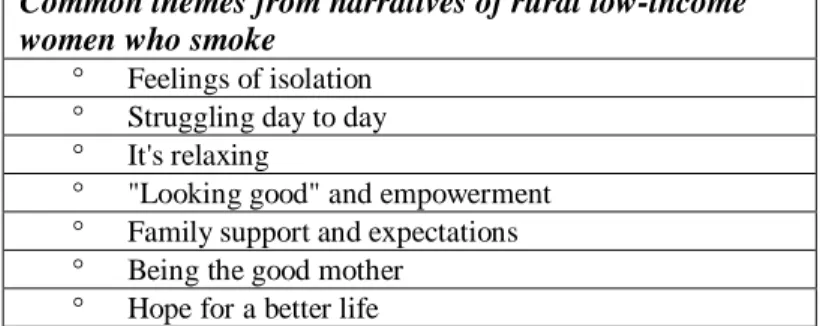
discovered patterns of experiences, which included isolation, struggles associated with living in rural areas, the use of smoking as a means of relaxation and stress management, family support and expectations, the role of being a good mother, and hope for a better life.
Unexpected in the findings is the consistent expression of hope for a better quality of life for themselves and their families before smoking cessation is reasonably attempted.
v
vi
ACKNOWLEDGEMENTS
Countless people have provided support and encouragement through this educational journey. First, I would like to recognize and express my genuine gratitude to the women who were so willing to be a part of this study and generously welcomed me into their homes to openly discuss their lives, world, and experiences. Their voices resonate within the final chapters of this dissertation and will always hold a special place to me as a nurse, educator, researcher, and human being.
My sincere gratitude is owed to my committee. Cheryl, thank you for being with me from the beginning, providing encouragement, keeping my enthusiasm alive, and reinforcing the need to maintain a balanced perspective. Your commitment to continued practice,
vii
direction with the dissemination of my work. I would also like to acknowledge and express my gratitude to Anne Skelly who was my mentor when I started this journey. During my first year at UNC she met with me routinely to provide encouragement, guide my progress, and keep me focused as I moved forward in this "candy store" of opportunity.
I would like to thank Mr. and Mrs. Smith for their generous support of The Jane Winningham Smith Scholarship, which I received twice during my program of study. Their personal interest in students and financial support was greatly appreciated. In addition, thank you to the School of Nursing for providing funds that assisted with travel when sharing results of this work and providing the T32 Predoctoral Fellowship Award for Interventions to Prevent and Manage Chronic Illness. The experiences were exceptional and the funding substantial.
Many friends have provided personal support during this process and will be forever appreciated. Specifically, I want to acknowledge my friend and fellow student Holly Wei for her encouragement over the past several years and her assistance with coding during the analysis of study data. To my friends and peers in the Surgical Intensive Care Unit at UNC, I greatly appreciate your emotional support and the sense of self-pride you encouraged over the past three years.
viii
TABLE OF CONTENTS
LIST OF TABLES ...x
LIST OF PHOTOGRAPHS ... xi
CHAPTER 1: INTRODUCTION ...1
Outline of Dissertation ...1
Introduction ...1
Background and Significance ...3
Statement of the Problem ...9
The Purpose Statement ...9
Manuscripts ... 10
References... 13
CHAPTER 2: SOCIAL FACTORS RELATED TO SMOKING AMONG RURAL, LOW-INCOME WOMEN: FINDINGS FROM A SYSTEMATIC REVIEW ... 18
Background ... 18
Methods ... 21
Results ... 23
Discussion ... 29
References... 37
CHAPTER 3: SMOKING IN RURAL LOW-INCOME WOMEN: THE METHODOLOGY OF PHOTOVOICE FROM A RELATIVIST PERSPECTIVE ... 42
Introduction ... 42
ix
Philosophical Underpinnings of Photovoice ... 47
Use of Photovoice to Empower Overlooked Populations ... 54
Implications for Use of Photovoice in Studies with Rural Low-Income Women Who Smoke ... 57
Conclusion ... 59
References... 62
CHAPTER 4: FINDING HOPE: A PHOTOVOICE STUDY ON SMOKING IN RURAL LOW-INCOME WOMEN ... 70
Introduction ... 70
Methods ... 73
Findings ... 78
Discussion ... 89
Implications ... 94
References... 96
CHAPTER 5: SYNTHESIS OF THE DISSERTATION ... 109
Background ... 109
Summary ... 110
x
LIST OF TABLES
Table 1: Selected Interview Questions ... 102
Table 2: Participant Guidelines for photographs ... 103
Table 3: Demographics of Participants ... 104
xi
LIST OF PHOTOGRAPHS
1
CHAPTER 1: INTRODUCTION
Outline of Dissertation
In addition to this introductory chapter and a summary chapter, this three manuscript dissertation includes: 1) a published systematic review of the literature focused on the limited congruency between factors related to smoking in low-income rural women and the
inadequate utilization of these critical factors in smoking cessation interventions that have been developed and implemented in this population 2) a manuscript on the philosophical underpinnings and methodologies which frame the use of photovoice in health research on overlooked, marginalized populations such as rural low-income women who smoke, and 3) a manuscript with findings from a qualitative study, using ethnographic methods and
photovoice, to understand social meanings associated with smoking in rural low-income women.
Introduction
Cigarette smoking is the leading cause of preventable disease, disability and death in America (Centers for Disease Control and Prevention [CDC], 2014). Research on smoking provides descriptive statistics, theories, and results of numerous tested interventions (CDC, 2014; US Department of Health and Human Services [USDHHS], 2014). Yet, despite the knowledge gains and the financial expenditures related to smoking, disadvantaged
2
higher rates of smoking with little evidence of successful rate reduction (American Lung Association [ALA], 2012; CDC, 2014; Eberhardt, & Pamuk, 2004; Hartley, 2004;
Laaksonen, Rahkonen, Karvonen & Lahelma, 2005; Stevens, Colwell & Hutchison, 2003; Tseng, Yeatts, Millikan & Newman, 2001; United States Department of Agriculture [USDA], 2011).
Although the term rural has different definitions, which are based on either a subjective state of mind, or objective quantitative measures, for the purposes of this
dissertation, rural is defined as an area outside urban areas of 50,000 or more people (United States Department of Agriculture [USDA], 2014; USDHHS, 2015). Smoking rates in women are declining; however, smoking is increasingly concentrated in lower income women with persistently higher rates of smoking in rural women where poverty rates exceed national averages (Amos, Greaves, Nichter & Boch, 2012). Approximately 21% of the nation's
population resides in rural areas (Housing Assistance Council [HAC] b, 2012) with 17.7% of this group living in poverty (as defined by the U.S. Census Bureau [USCB]), which exceeds the national average of 15% (USCB, 2012). Poverty affects more rural women than men, with 18% of rural women living in poverty compared to a poverty rate of 15% in rural men (HACa, 2012). In addition, using data from the Behavioral Risk Factor Surveillance System Survey (BRFSS), Doescher, Jackson, Jerant, and Hart (2006) found smoking rates to be higher in rural residents when compared to their counterparts living in urban and
3
further investigation that may lead to successful targeted interventions for smoking cessation in this population.
In light of the current lack of emphasis and data on smoking in rural populations, additional research is needed that explores the relationships between being a low-income rural woman, sociocultural norms of smoking, concept of self, availability and quality of social networks, and the decision to smoke. This qualitative study will provide insight into the experiences and feelings of being a smoker from the perspective of disadvantaged and marginalized rural women where the social acceptability of smoking is not well understood (Stuber, Galea, & Link, 2008; Thompson, Pearce & Barnett, 2007). Focusing on the unique perspectives, experiences, and feelings of low-income rural women who smoke and how these are situated within the sociocultural context of their lives will provide data to inform the design of future targeted smoking cessation interventions in this population.
Background and Significance
4
Women and smoking
In 2001, the CDC recognized smoking as a women’s issue, identifying that females
are more likely to smoke as a means to control weight and negative moods, and that female smokers are more likely than male smokers to be diagnosed with depression (CDC, 2001). Women are more likely than men to initiate smoking as a sense of rebellion against
conventional values, as a means of establishing independence from authority figures, or as a means of feeling socially accepted within a peer group (American Cancer Society [ACS], 2012; CDC, 2001). From 2005-2010 smoking rates for women declined 60% less than that of men (CDC, 2006; CDC, 2011). Notwithstanding the decline of women smoking rates
between 2010 and 2012, smoking in women with a General Education Development (GED) as their highest level of education remains higher than in their more educated counterparts (CDC, 2014). Studies find that women have greater difficulty with successful smoking cessation, relapse more often, and respond less favorably to nicotine replacement therapy than men (CDC, 2001; Bohadana, Nilsson, Rasmussen & Martinet, 2003). It has also been suggested that physical dependency on nicotine may be less intense in women, pointing to the primacy of psychosocial influences in smoking addiction for this group (Perkins, 1996). Rurality
5
populations create a heavier health burden of smoking-related disease in disadvantaged populations (Amos, et al., 2012).
6
Sociocultural factors
The literature documents that smoking in low-income rural women presents a current and future health problem (ALA, 2012; Hutcheson, et al., 2008). In addition to low
socioeconomic status, less education, and a decreased level of success with smoking cessation; rural populations have less access to primary medical care, emergency services, have a higher incidence of mental health problems, and must travel longer distances to meet the needs of daily life (Gamm, Hutchison, Dabney, & Dorsey, 2002; Jones, Parker, Ahearn, Mishra, & Variyam, 2009; Wewers, 2012). For the poor, rural geographic location increases the cost of transportation, which further challenges their ability to maintain work status, access medical facilities and retail services, and maintain social relationships. These physical limitations influence rural low-income women's access to, shape of, and extent of social networks that provide social support and a means of social connectedness; factors that are linked to health status and health behaviors (Berkman & Glass, 2000; Cassel, 1976; House, Landis, Umberson, 1988; Michael, Colditz, Coakley, & Kawachi, 1999; Uchino, 2006).
Berkman and Glass (2000) conceptualize social networks as structural mechanisms embedded within a larger social and cultural context, which influences the nature of an individual's social interactions within their environment. The structure and function of an individual's social networks and the characteristics of network ties are influenced by upstream factors, such as culture, socioeconomic elements, political elements, and social
change (Berkman & Glass, 2000; Heaney & Israel, 2008; House, 1987; Mitchell & Trickett, 1980; Smith & Christakis, 2008). In turn, the structure and function of the individual's social networks influence social and interpersonal opportunities, or downstream factors.
7
resources and material goods; and provide the individual with opportunities for social connectedness, reinforcement of meaningful social roles, and provide a sense of bonding or attachment to social networks or groups (Berkman & Glass, 2000). How these downstream factors, are received and processed by an individual, whether actual or perceived, influences
their physiologic functioning and reactivity; their psychological pathways such as self-esteem, self-efficacy, effectiveness of coping, and sense of well-being; and their health behaviors such as smoking, diet, exercise, and alcohol intake (Berkman & Glass, 2000; Uchino, Carlisle, Birmingham, & Vaughn, 2011). Understanding the influence this upstream-downstream reciprocal relationship has on smoking behavior in rural low-income women
will improve our ability to design effective interventions that target smoking cessation in this population of disadvantaged women (Schnittker & Mcleod, 2005).
Cultural norms related to smoking can marginalize smokers and create a stigma that negatively labels them as acting in a manner that is outside group norms (Stuber, et al., 2008). Stigmatization leads to social distancing, which diminishes the smoker's social power, or social capital (Link & Phelan, 2001; Stuber, Galea, & Link, 2009). Smokers are
increasingly labeled as different from the social majority and are often stereotyped as inconsiderate, low class, lacking in self-control, and irresponsible (Stuber, et al., 2009; Thompson, et al., 2007). Being a smoker interferes with employment, access to affordable health insurance, interferes with access to beneficial social networks, and potentiates status anxiety (Wilkinson, 2006). In addition, there is evidence that implementation of public policies and laws on public smoking encourage continued smoking in disadvantaged
8
2001). Interestingly, holding of power can be a reciprocal position whereby the more
advantaged group, which initially stigmatizes and labels the disadvantaged group, are in turn labeled and stereotyped, or stigmatized, by the disadvantaged group (Link & Phelan, 2001). Each group becomes resistant to the desired behaviors of the other group. This may explain the unintended consequences of smokers becoming more resistant to quitting when
approached by nonsmokers and further support the need to study the reciprocal relationship between upstream-downstream factors and smoking in marginalized populations.
Consistent with theories of symbolic interaction (Blumer, 1969; Mead, 1934; Stryker, 2008), as the meaning of being a smoker changes within socially structured positions, the smoker assesses and reacts to how society responds to "a smoker." Social identities are constructed from group memberships within an individual’s social structure and provide the basis for group identification and role behavior (Hogg, Terry, & White, 1995). Social identity is that part of an individual's self-concept generated from a cognitive awareness of
9
Statement of the Problem
Research has provided us a clear picture of how many people smoke, who smokes and how much they smoke. That said, questions remain unanswered relative to why certain demographic groups of people continue to smoke and how to effectively reduce cigarette use in populations that embrace smoking. We know the demographic characteristics of low-income smokers, have theories that provide a framework of antecedents to explain the behavior that drives an individual to start and continue smoking, and have developed smoking cessation interventions. Despite these efforts, smoking rates in low-income rural women are stagnant while rates in non-poor and non-rural populations continue to decline, disproportionately increasing the tobacco-related disease and health burden of rural
communities when compared to other sectors of society. High rates of smoking-related chronic disease in low-income rural women and limited access to and use of quality health care creates a challenge to tobacco cessation efforts and suggests that a targeted research approach is needed in this group of women who are not responding to or have no access to current smoking cessation interventions.
The Purpose Statement
This study explored the meaning of smoking from the perspective of rural low-income women and its affect on the relationship to social identity, sociocultural factors, and smoking behavior. Using a qualitative approach, the purposes of the study were to (a) explore cultural and social factors that give meaning to being a smoker in rural low-income women and (b) explore the relationships between social support, social networks, social identity, and the meaning of smoking in rural low-income women's decision to smoke and attempt
10
Manuscripts
Chapter 2. Systematic Review of the Literature
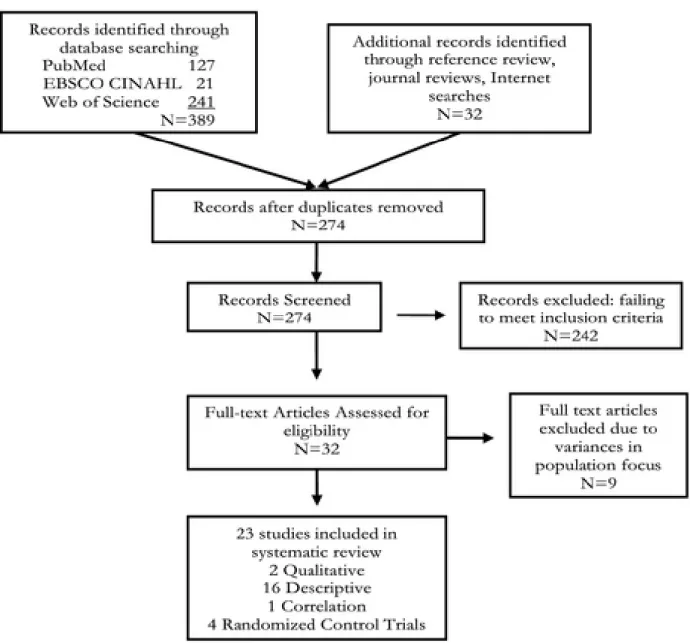
Chapter 2 of this dissertation is a systematic review of the literature limited to studies on rural North American women who were current or former smokers, and who identified as poor, low-income, or living in poverty (Mitchell, Kneipp, & Giscombe, 2015). Given the considerable amount of research on smoking, the study was limited to a 15 year period from 1997to 2012 with each study reviewed for its study design, quality of methods applied, and major findings. The process of review followed the Preferred Reporting Items for Systematic reviews and Meta-Analyses process (PRISMA; Moher, 2009). A literature matrix (Garrard, 2011) organized findings from the review process, which focused on the social endeavor of smoking and identity-driven behaviors unique to rural low-income women. Careful attention was given to the extent to which study findings from descriptive, qualitative, correlational studies, and theoretical frameworks used to inform the interventions tested in randomized controlled studies. Findings from this review strongly suggest a misalignment of what rural low-income women smokers desire from social support that is generated from within their personal social network and that which is available from more distant and peripheral support programs that lack personal connection. Results from this systematic review serve as the foundation for the following chapters in this dissertation. Public Health Nursing accepted this manuscript for publication on August 21, 2015. doi:10.111/phn.12233.
Chapter 3. Manuscript on Philosophical Underpinnings and Methodologies of Photovoice
Chapter 3 is a manuscript that presents constructivists philosophical underpinnings of photovoice as an effective method of inquiry to conduct research on rural low-income
11
Emphasizing the use of photovoice from a relativist perspective, this manuscript provides a methodological foundation for photovoice studies that are less restrictive with researcher established rules for participants, implement individual interviews in lieu of focus groups, and have the intention of understanding meanings and experiences that surround smoking behaviors in overlooked populations. As a form of participatory research, photovoice is an arts-based method, which offers a creative approach to social inquiry as it encourages dialogue with marginalized and underserved research participants (Duffy, 2011; Fleming, Mahoney, Carlson, & Engebretson, 2009; Grosselink & Myllykangas, 2007; Rapport, Wainwright, & Elwyn, 2005; Teti, Pichon, Dabel, Farnan, & Binson, 2013; Valiquetter-Tessier, Vandette, & Gosselin, 2014; Wainwright & Rapport, 2007; Wang, Cash, & Powers, 2000 ). Participant-generated photographs and photo-elicited interviews discover meanings, beliefs, behaviors, and experiences' surrounding the problem of smoking in low-income rural women and provide foundational understanding and awareness this social phenomena has to the health of rural low-income women who smoke (Gaskins & Forte, 1995; Haines-Saah, Oliffe, White, & Bottorff, 2013; Hansen-Ketchum & Myrick, 2008). A relativist approach to photovoice exposes small elements within the social context of this group of women who have historic and cultural roots, filling knowledge gaps unique to this population of smokers that have not attempted to quit smoking or been unsuccessful in their attempts with cessation (Koh, et al., 2010). The Methods section of the third manuscript in this dissertation, Finding Hope: A Photovoice Study on Smoking In Rural Low-Income Women, provides details on the
12
Chapter 4. Manuscript of Study Findings
This manuscript presents the findings of a photovoice study, which explores cultural and social factors that give meaning to being a smoker in rural low-income women who smoke, and how relationships between these meanings, social support, social networks, and social identity affect their decision to smoke or attempt to quit smoking. Observation of local artifacts in combination with photo-elicited semi-structured interviews explores relationships between smoking behavior and the participant's contextual determined experiences
surrounding smoking. Findings in this study suggest that rural low-income women who smoke are aware of the social cost of that being a smoker has within their social context, creating discourse in their social identity and decreasing access to social support systems within their social network, which diminishes their social position and power. Smoking, as previously established, is used as an operational tool, or resource, for coping with daily struggles. Embedded in narratives and photos are themes situated within social identity, social support, and social networks that include hardship, struggles, isolation, family, empowerment, motherhood, and hope. Hope for a better life is a thread that moves
throughout the interviews and is surrounds criteria they described as necessary before being able to realistically pursue smoking cessation. Implications for health care providers
13
REFERENCES
American Lung Association [ALA]. (2012). Cutting Tobacco’s Rural Roots: Tobacco Use in Rural Communities. 2012 Disparities in Lung Health Series. Retrieved from
http://www.lung.org/assets/documents/publications/lung-disease-data/cuttingtobaccos- rural-roots.pdf
Amos, A., Greaves, L., Nichter, M. & Bloch, M. (2012). Women and tobacco: a call for including gender in tobacco control research, policy, and practice. Tobacco Control, 21, 236-243.
Appleton, J., & King, L. (2002). Journey from the philosophical contemplation of
constructivism to the methodological pragmatics of health services research. Journal of Advanced Nursing, 40 (6), 641-648.
Berkman, L. & Glass, T. (2000). Social integration, social networks, social support, and health. In: L.F. Berkman & I Kawachi (Eds.), Social Epidemiology (pp 137-173). New York, NY: Oxford University Press.
Blumer, H. (1969). Symbolic interactionism: Perspective and method. Berkley, CA: University of California Press.
Bohadana, A., Nilsson, F., Rasmussen, T., & Martinet, Y. (2003). Gender differences in quit rates following smoking cessation with combination nicotine therapy: Influence of baseline smoking behavior. Nicotine Tobacco Research, 5, 111–116.
Cassel, J. (1976). The contribution of the social environment of host resistance. American Journal of Epidemiology, 104, 107-123.
Centers for Disease Control and Prevention [CDC]. (2001). Women and smoking: Surgeon general’s report, Executive Summary. Retrieved from
http://www.cdc.gov/tobacco/data_statistics/sgr/2001/executive_summary/index.htm Centers for Disease Control and Prevention [CDC]. (2006). Tobacco use among adults—
United States, 2005. MMWR, 55(42), 1145–1148. Retrieved from http://www.cdc.gov/mmwr/preview/mmwrhtml/mm5542a1.htm
Centers for Disease Control and Prevention [CDC]. (2011). Vital signs: Current cigarette smoking among adults aged ≥18 years: United States, 2005-2010. MMWR, 60(35), 1207–11212. Retrieved from
http://www.cdc.gov/mmwr/preview/mmwrhtml/mm6035a5.htm?s_cid=mm6035a5_w Centers for Disease Control and Prevention [CDC]. (2014). Current cigarette smoking
among adults-United States. MMWR, 63 (02), 29–34. Retrieved from
14
Doescher, M., Jackson, E., Jerant, A., & Hart, G. (2006). Prevalence and trends in smoking: A national rural study. Journal of Rural Health, 22, 112–118.
Duffy, L. (2011). "Step-by-step": Women's empowerment through photovoice. Journal of Community Health Nursing, 28, 105-116.
Dwyer-Lindgren, L., Mokdad, A., Srebotnjak, T., Flaxman, A., Hansen, G. & Murray, C. (2014). Cigarette smoking prevalence in US counties: 1996-2012. Population Health Metrics, 12, 2-12.
Eberhardt, M., & Pamuk, E. (2004). The importance of place of residence: Examining health in rural and nonrural areas. American Journal of Public Health, 94, 1682–1686. Fleming, J., Mahoney, J., Carlson, E., & Engebretson, J. (2009). An ethnographic approach
to interpreting a mental illness photovoice exhibit. Archives of Psychiatric Nursing, 23, 16-24.
Gamm, L., Hutchison, L., Bellamy, G., & Dabney, B. (2002). Rural healthy people 2010: Identifying rural health priorities and models for practice. The Journal of Rural Health, 18, 9-14.
Gaskins, S., & Forte L. (1995). The meaning of hope: implications for nursing practice and research. Journal of Gerontological Nursing, 21, 17–24.
Grosselink, C., & Myllykangas, S. (2007). The leisure experiences of older US women living with HIV/AIDS. Health Care for Women International, 28, 3-20.
Haines-Saah, R., Oliffe, J., White, C., & Bottorff, J. (2013). "It is just not part of the culture here": Young adults' photo-narratives about smoking, quitting, and healthy lifestyles in Vancouver, Canada. Health & Place, 22, 19-28.
Hansen-Ketchum, P., & Myrick, F. (2008). Photo methods for qualitative research in nursing: an ontological and epistemological perspective. Nursing Philosophy, 9, 205-213. DOI: 10.1111/j.1466-769X.2008.00360.x
Hartley, D. (2004). Rural health disparities, population health, and rural culture. American Journal of Public Health, 94, 1675–1677.
Heaney, C. & Israel, B. (2008). Social networks and social support. In K.Glanz, B.K. Rimer, & K. Viswanath (Eds.), Health behavior and health education: Theory, research, and practice (pp189-210). San Francisco, CA: Jossey-Bass.
15
House, J., Landis, K., & Umberson, D. (1988). Social relationships and health. Science, 241, 540–545.
Housing Assistance Council. (2012). Rural Research Note. June 2012, Washington, DC. Housing Assistance Council. (2012). Taking Stock: Rural people, poverty, and housing in the
21st century. Washington, DC.
Hutcheson, T., Greiner, K., Ellerbeck, E., Jeffries, S., Mussulman, L., & Casey, G. (2008). Understanding smoking cessation in rural communities. Journal of Rural Health, 24, 116–124.
Jemal, A., Thun, M., Ries, L., Howe, H., Weit, H., Center, M., et al. (2008). Annual report to the nation on the status of cancer, 1975-2005, Featuring trends in lung cancer,
tobacco use, and tobacco control. Journal of the National Cancer Institute, 100, 1672–1694.
Jones, C., Parker, T., Ahearn, M., Mishra, A., & Variyam, J. (2009). Health status and health care access of farm and rural populations. EIB-57, U.S. Department of Agriculture, Economic Research Services. Retrieved from http://www.er
s.usda.gov/publications/eib-economic-information-bulletin/ eib57.aspx
Koh, H., Oppenheimer, S., Massin-Short, S., Emmons, K., Geller, A., & Viswanath, K. (2010). Translating research evidence into practice to reduce health disparities: A social determinants approach. American Journal of Public Health, 100, S72-S80. Laaksonen, M., Rahkonen, O., Karvonen, S. & Lahelma, E. (2005). Socioeconomic status
and smoking. European Journal of Public Health, 15, 262-269.
Lincoln, Y., Lynham, S., & Guba, E. (2011). Paradigmatic controversies, contradictions, and emerging confluences, revisited. In N. Denzin & Y. Lincoln (Eds.), The SAGE Handbook of Qualitative Research (91-128). Thousand Oaks, CA: SAGE Publications.
Link, B. & Phelan, J. (2001). Conceptualizing stigma. Annual Review of Sociology, 27, 363-385.
Mead, G. (1934). Mind, Self, & Society from the Standpoint of a Social Behaviorist (Vol 1). C.W. Morris (Ed.). Chicago, IL: University of Chicago Press.
Michael, Y., Colditz, G., Coakley, E. & Kawachi, I. (1999). Health behaviors, social networks, and healthy aging: Cross-sectional evidence from the Nurse's Health Study. Quality of Life Research, 8, 711-722.
16
Mitchell, S., Kneipp, S., & Giscombe, C. (2015). Social Factors Related to Smoking among Rural, Low‐Income Women: Findings from a Systematic Review. Public Health Nursing, doi: 10.1111/phn.12233.
Moher.D., Liberati, A., Tetzlaff, J., & Altoman, D. (2009). Preferred reporting items for systematic reviews and meta-analyses: The PRISMA statement. Annuals of Internal Medicine, 151, 264-270.
Perkins, K. (1996). Sex differences in nicotine versus nonnicotine reinforcement as
determinants of tobacco smoking. Experimental and Clinical Psychopharmacology, 4, 166–176.
Rapport, F., Wainwright, P., & Elwyn, G. (2005). "Of the edgelands": broadening the scope of qualitative methodology. Medical Humanities, 31, 37-42.
Schnittker, J. & McLeod, J. (2005). The social psychology of health disparities. Annual Review of Sociology, 31, 75-103.
Smith, K. & Christakis, N. (2008). Social networks and health. Annual Review of Sociology, 34, 405-29.
Stevens, S., Colwell, B., & Hutchison, L. (2003). Tobacco use in rural areas: A literature review. Rural Healthy People 2010: A companion document to Healthy People 2010: Volume 2. The Texas A&M University System Health Science Center, School of Rural Public Health, Southwest Rural Health Research Center. Retrieved from http://sph.-tamhsc.edu/srhrc/rhp2010.html
Stryker, S. (2008). From Mead to a structural symbolic interactionism and beyond. Annual Review of Sociology, 34, 15-31.
Stuber, J., Galea, S. & Link, B. (2008). Smoking and the emergence of a stigmatized social status. Social Science & Medicine, 67, 420-430.
Stuber, J., Galea, S. & Link, B. (2009). Stigma and smoking: The consequences of our good intentions. Social Service Review, 83, 585-609.
Tajfel, H. (1974). Social identity and intergroup behaviour. Social Science Information, 13, 65-93.
Teti, M., Pichon, L., Kabel, A., Farnan, R., & Binson, D. (2013). Taking pictures to take control: Photovoice as a tool to facilitate empowerment among poor and racial/ethnic minority women with HIV. Journal of the Association of Nurses in AIDS Care, 24, 539-553.
17
Uchino, B. (2006). Social support and health: A review of physiological processes
potentially underlying links to disease outcomes. Journal of Behavioral Medicine, 29, 377-387.
Uchino, B., Carlisle, M., Birmingham, W. & Vaughn, A. (2011). Social support and the reactivity hypothesis: Conceptual issues in examining the efficacy of received support during acute psychological stress. Biological Psychology, 86, 137-142. United States Census Bureau [USCB]. (2012). Current Population Reports, P60-245,
Income, Poverty, and Health Insurance Coverage in the United States: 2012, U.S. Government Printing Office: Washington, DC. Retrieved from
http://www.census.gov/prod/2013pubs/p60-245.pdf, Accessed July, 20,2014. United States Department of Agriculture, Economic Research Service [USDA]. (2011).
Rural America at a Glance, 2011 Edition. Economic Information Bulletin, 85,
September 2011. Retrieved from http://www.ers.usda.gov/publications/eib-economic-information-bulletin/eib85.aspx
United States Department of Agriculture, National Agricultural Library [USDA]. (2014). What is rural? Retrieved from https://ric.nal.usda.gov/what-rural
United States Department of Health and Human Services [USDHHS]. (2014). The Health Consequences of Involuntary Exposure to Tobacco Smoke: 50 years of progress. Retrieved from http://www.surgeongeneral.gov/library/reports/50-years-of-progress/ United States Department of Health and Human Services, Health Resources & Services
Administration, Federal Office of Rural Health Policy [USDHHS]. (2015). Defining rural population. Retrieved from
http://www.hrsa.gov/ruralhealth/aboutus/definition.html
Wainwright, P., & Rapport, F. (2007). Conference report: Circles within circles-Qualitative methodology and the arts: The researcher as artist. Forum Qualitative
Sozialforschung/Forum: Qualitative Social Research, 8 (3), Art. 5 Retrieved from http://www.qualitative-research.net/index.php/fqs/article/view/311/682. Accessed December 17, 2015.
Wang, C., Cash, J., & Powers, L. (2000). Who knows the streets as well as the homeless? Promoting personal and community action through photovoice. Health Promotion Practice, 1, 81-89.
Weg, M., Cunningham, C., Howren, M., & Cai, X. (2011). Tobacco use and exposure in rural areas: Findings from the Behavioral Risk Factor Surveillance System. Addictive Behaviors, 36, 231–236.
Wewers, M., Salsberry, P., Ferketich, A., Ahijevych, K., Hood, N. & Paskett, E. (2012). Risk factors for smoking in rural women. Journal of Women's Health, 21, 548-556.
18
CHAPTER 2: SOCIAL FACTORS RELATED TO SMOKING AMONG RURAL, LOW-INCOME WOMEN: FINDINGS FROM A SYSTEMATIC REVIEW1
Background
Smoking research has a long history. We have extensive descriptions of demographic characteristics of low-income smokers, theories that provide a framework of antecedents to explain the behavior that drives an individual to start and continue smoking, and tested cessation interventions that are built on this collective material. Despite this body of
knowledge, smoking rates in low-income rural women are not decreasing as they are in other sectors of society, and tobacco-related diseases are disproportionately affecting the health burden of rural communities. This systematic review focuses on the limited congruency between the behavioral, social, and emotional factors related to smoking in low-income rural women; the predominant theories applied to explain smoking in this population; and the inadequate utilization of these critical factors in smoking cessation interventions that have been developed and implemented in this population. Further assessing the congruency of findings across studies, study designs, and smoking cessation interventions may help to explain lack of progress in this population and provide a framework for continuing research that mitigates smoking in this vulnerable population.
Each year approximately 480,000 deaths occur from smoking, one of the most preventable causes of death and disease in America (Centers for Disease Control and
1
19
Prevention [CDC], 2014). The CDC (2014) estimates that 18.1% (42 million) of the U.S. population smoke cigarettes, impacting quality of life for many while increasing individual financial burden and government expenditures related to health care. Health care costs directly related to smoking are approximately 133 billion dollars annually with an additional 156 billion in lost productivity (United States Department of Health and Human Services [USDHHS], 2014).
National smoking rates in adults have shown little change between 2005 (20.9%) and 2012 (18.1%) (CDC, 2014). In addition, a disproportionate distribution of smoking has created heavier health burdens of smoking-related disease in specific populations. Smoking rates are higher among people with less education (41.9%), those living below federal poverty level (27.9%), and residents of rural areas (27.8%) (American Lung Association [ALA], 2012; CDC, 2014). This information should encourage health care providers to look beyond national smoking rates and focus on subpopulations of smokers such as low-income rural women.
20
smoking, smoking rates in low-income rural women are not declining as they are in suburban and urban populations (CDC, 2011). An analysis of the National Survey of Drug Use and Health data from 2010 showed that 25.1% of rural women smoke compared to 20.8% of urban women and 27.4% of rural women smoke during pregnancy compared to 11.2% in urban pregnant women (ALA, 2012). Although differences in these points of prevalence rates of smoking may appear marginal between rural low-income women and women living in suburban and urban areas, the consequences of smoking are realized with a greater health burden of tobacco-related disease outcomes in rural settings. For example, smoking-related lung cancer deaths are increasing in women living in heavily rural states (Jemal et al., 2008).
In 2001, the CDC recognized smoking as a women’s issue, identifying a number of important factors that impact smoking behavior differences between women and men.
Specifically, women smokers are more likely to be diagnosed with depression and more often smoke to control weight and negative moods (CDC, 2001). Smoking initiation in women is more often associated with a sense of rebellion against conventional values, a means of establishing independence from authority figures, and enhanced feelings of social acceptance within a peer group (American Cancer Society [ACS], 2014; ALA, 2012; CDC, 2001). Although it is not entirely clear what has driven trends in smoking over the past several years, from 2005 to 2010 smoking rates for women declined 60% less than those of men (CDC, 2001, 2006). While women’s rates of smoking have continued to decline between
21
(Bohadana, Nilsson, Rasmussen, & Martinet, 2003; CDC, 2001). Physical dependency on nicotine may also be less intense in women, pointing to the primacy of psychosocial influences in smoking addiction for this group (Perkins, 1996). Further studies with low-income women living in rural areas are needed to provide a more specific picture of
underlying behavioral, social, and emotional reasons for smoking in this population and will be beneficial in developing targeted smoking interventions.
Methods
22
relevant reports of study findings that were not identified in the initial search strategy (CDC, 2007).
Design and Sample
PubMed search criteria were specific to clinical studies on cigarette smoking and smoking cessation in rural low-income women. Studies were selected for inclusion if they were printed in English and conducted in the United States or Canada. Originally, 50% was set as the minimum level of low-income rural women to be included in the sampled
population; however, an exception was made for one intervention study that provided valuable information on this topic and had 49.4% of the sampled women completing the study. Studies including men were included due to the relevant information they provided on this overlooked population of women and the very limited number of smoking studies identifying rural low-income women as a focus of interest. The population of interest was also limited to rural North American women identified as poor, low-income, or living in poverty, and who were identified as current or former smokers at the time the study was conducted. This review did not seek to directly distinguish factors associated with health care access, which may vary according to national, state, or local resources, but focused on the social endeavor of smoking and identity-driven behaviors unique to rural low-income
23
Analytic strategy
Using Microsoft Excel, a detailed literature matrix following Garrard’s (2011) methodology was constructed that identified study author(s), title, data source, sample information, and major findings. Each study was classified as a randomized controlled trial, qualitative, descriptive, correlation, or a study that compared group differences. Patterns examined related to conceptual classification of participant experiences, attitudes, behaviors, emotions, or barriers/facilitators to cessation attempts and/or success, and supporting
theoretical frameworks. The first two authors met bi-monthly to evaluate the search process, review search results, deliberate inclusion or exclusion of studies, discuss appropriate
classification and coding, and confer regarding the synthesis of findings. The few differences during this process were resolved after joint review of inclusion criteria and careful review of the study by the authors.
Results
24
Findings from qualitative studies
Only two qualitative studies reported findings and were based on focus groups
comprised of low-income rural smokers from Kentucky and the Midwest (Butler et al., 2012; Hutcheson et al., 2008). Although these two studies included both men and women, the majority were women. Seventy-nine percent (79%) of the 21 participants in Butler et al. (2012) were females recruited from economically distressed counties in Eastern Kentucky with poverty rates at least 1.5 times the national average; 63% of the 63 participants enrolled in Hutcheson et al. (2008) were female from a sample with 56% unemployment. Focused on smoking and smoking cessation, these studies identified social support and the individual’s social network as significant factors in the decision to stop smoking and individual success with long-term smoking cessation. A finding of both of these studies was that barriers to cessation are strongly associated with a smoker’s social network and the type of support
received from significant group members. Emergent themes related to previous smokers no longer feeling included in their social groups that continued to smoke, leaving the nonsmoker with less access to social support when facing stressors. The support of family, friends, professional, peers, and group support meetings was identified as a key facilitator for those attempting to quit (Butler et al., 2012; Hutcheson et al., 2008).
Findings from descriptive studies
Sixteen of the 23 published studies, or 70%, were descriptive, providing demographic data on age, race, ethnicity, socioeconomic status, educational level, marital status,
25
trends in smoking or used data and literature reviews to support development of conceptual frameworks to understand tobacco-related health disparities (ALA, 2012; Bottorff, Haines-Saah, Oliffe, & Sarbit, 2012; Doescher et al., 2006; Eberhardt & Pamuk, 2004; Jones, Parker, Ahearn, Mishra, & Variyam, 2009; Moolchan et al., 2007; Sorensen, Barbeau, Hunt, & Emmons, 2004; Voigt, 2010; Weg et al., 2011; Westmaas, Bontemps-Jones, & Bauer, 2010). Descriptive data were also presented in randomized controlled trials and qualitative study findings.
Among the descriptive findings, higher smoking rates, higher rates of poverty, and less access to health care were found among women living in rural areas (CDC, 2012). Low-income rural women were also identified as having less health insurance, less access to health care services, and traveling farther to participate in smoking cessation programs (Hutcheson et al., 2008). In addition, this population is less likely to receive smoking
cessation information from health care providers or too frequently, have inadequate financial resources to pay for nicotine replacement therapy (Hendryx, 1993; Hutcheson et al., 2008).
26
as one’s highest level of education is correlated with the highest smoking rate of 45.2% in
2011, with women having only 9–11 years of education comprising the group with the second highest smoking rate at 33.8% (CDC, 2012).
Chronic stressors associated with living in poverty are coupled with high smoking rates. Socioeconomically disadvantaged women experience chronic stress due to limited social support, financial insecurity, heavy child-care responsibilities, high rates of domestic violence, and a state of chronic unemployment (CDC, 2011; Doescher et al., 2006;
Hutcheson et al., 2008; Sorensen et al., 2004). National survey reports and fieldwork studies have clearly documented that women use cigarette smoking to manage stress associated with these factors and to aid with relaxation (CDC, 2001).
Findings from correlational/association studies
Findings from this group of studies suggest that social aspects of smoking may be key to successful cessation efforts, and are consistent with those from descriptive and qualitative studies. For example, Christakis and Fowler (2008) used social network analysis and longitudinal statistical methods to follow the interconnected social networks of 12,000 participants in the Framingham Heart Study from 1971 to 2003. This study found clusters of former smokers quitting in concert according to their social network. If a spouse, friend, or sibling stopped smoking, the chances of a person continuing to smoke decreased from 67% to 25%.
One comparative study focused on differences in smoking cessation practices of rural and urban health care providers (Scott, LaSala, Lyndaker & Neil-Urban, 2003). Health care practitioner assessment of patient smoking patterns and emphasis on prescribing
27
These findings are consistent with those from qualitative studies, suggesting greater information about and access to smoking cessation programs would facilitate smoking
cessation in rural populations. Randomized controlled trial studies implementing professional support programs have not shown success in rural smokers (Bullock et al., 2009; Cupertino et al., 2007; Stoops et al., 2009).
Findings from randomized trials/intervention studies
There have been four randomized controlled trials that have focused on rural women who smoke or had a sample with a significant number of rural women smokers. The earliest study in the time frame of this search tested an 18 month community- designed intervention in rural African-American churches located in Virginia with 45.1% of initial participants and 49.4% of follow-up participants that completed the study being women (Schorling et al., 1997). Recognizing that African-American rural churches have a strong base of social networks, this study tested a community based smoking cessation intervention through health-oriented church coalitions. The intervention consisted of training one or two smoking cessation counselors in the church, who then provided counseling and self-help materials to members who desired to quit. Findings from this study did not demonstrate significant differences in 1-month cessation rates between the intervention and control group
participants. Smoking cessation outcomes were better in church members than in nonchurch attenders, which may suggest that social support delivered through church coalitions
influenced smoking cessation rates. Of significant interest in this study is that despite community smoking rates exceeding national rates, during initial identification of
28
church coalition members became aware that funding was contingent on including smoking cessation.
Three of the four studies provided social support using the telephone or Internet to test cessation interventions, change in readiness to quit, and/or engagement in cessation management. Two studies tested an intervention structured around social support through telephone counseling; one study sampled smokers from rural primary care practices in Kansas, two thirds of whom were female with an annual income less than $40,000, and focused on long-term engagement in cessation counseling and readiness to quit (Cupertino et al., 2007). The other study sampled pregnant and/or postpartum smokers recruited from rural Midwest Women Infant and Children Nutritional Supplement clinics (Bullock et al., 2009). Neither intervention resulted in a significant change in smoking rates, though Cupertino et al. (2007) found that participants with lower income, lower educational attainment, and those lacking insurance were less likely to remain engaged in the 2-year telephone cessation intervention in this study. The third study had a total sample size of 68 which included 51 women (75%) and tested short-term effectiveness of an Internet-based abstinence
29
Discussion
Discrepancies in social support attributes
One might expect that research on smoking cessation had been exhausted. However, this search indicates the sparse amount of information and randomized controlled trials (RCTs) that focus on what might be successful for developing smoking cessation programs specifically for low-income rural women. To date, there has been little exploration of the experiences of rural women who smoke and what they believe might increase their success if they attempt to quit. As a result, of the four RCTs testing interventions, there was little success beyond recognizing the need for additional research that assists future design of targeted interventions with this population.
Qualitative findings have clearly identified that smokers desire support from family, friends, peers, or “buddies” from their support system or social network. The few randomized trials that met the focus of this study used conceptual frameworks of social support;
providing external or peripheral sources of support. Specifically, interventions failed to show significance when testing the use of telephone counselors or study nurses/counselors external to participants’ social networks and primary social support systems. The noted possible
30
Although peripheral support resources provide general social support for smokers, conceptually this specific type of social support does not reflect what rural women have indicated as their desired source of support for cessation in qualitative findings, or in the relevance of social network influences found in correlational studies. Thematic findings from studies reviewed clearly point to the desire for social support from the individual’s friends, family, and peer networks: there is little mention of desire for social support from individuals outside one’s personal social network (Butler et al., 2012; Hutcheson et al., 2008).
Of significance is the finding that within the social network of low-income rural women, attempts to stop smoking can lead to conflict in their social support systems and those social networks that view smoking as a social norm (Christakis & Fowler, 2008). Finding a supportive social group during smoking cessation attempts can be challenging and stressful without the support of family and friends, regardless of whether sources outside this personal network are used as substitutes (Hutcheson et al., 2008). These social factors
31
however, may shed light on how to use a more targeted social support approach to develop successful interventions for smoking cessation with low-income, rural women.
The nuances of “the social”: Networks, meanings, and smoking
Herbert Blumer (1969) proposed that human beings act on the basis of the meanings things have for them and that these meanings arise from the social interactions that occur between people. Meaning, which is formed in the context of social interaction, is subject to modification based on people’s interpretation of surrounding situations at hand and the
direction of action. In low-income rural women, significant social interactions take place in networks of family, friends, and coworkers (Butler et al., 2012; Hutcheson et al., 2008).
Based on this theoretical framework and other findings in the literature related to the lives of low-income rural women, it is plausible that efforts to cope with daily stressors of poverty, unemployment, low education, and family responsibilities, cigarette smoking is assigned social meaning when engaged in through social networks that provide emotional support, information, affirmation of social norms, and a sense of belonging (Hartley, 2004; Westmaas et al., 2010). This socially embedded meaning of smoking, therefore, can have positive and negative effects on low-income women’s self-efficacy, self-image, and strategies used to cope with multiple psychosocial stressors (Sorensen et al., 2004). Unfortunately, positive rewards of belonging to a social network may be outweighing negative effects of smoking on health, thereby rendering interventions based on external sources of support ineffective.
Decisions to start or stop smoking, and chances of staying smoke-free are influenced by the individual’s systems of social support and relationships within their social networks.
32
and the individual’s health has linked the lack or limitation of social support to disease and clearly distinguishes one’s social network from the support that might be received through
various sources (Cohen, 1988; House, 2001; House, Landis, & Umberson, 1988). Specifically, one’s social network is comprised of the density, range, and multiplicity of one’s social groups, while social support references the support one receives, its sources, and
perceived adequacy. The pivotal role of social support and social networks in smoking has been documented in fieldwork studies with smokers (Cohen, 1988; Stewart et al., 2011). Social networks create a strong connection between individuals based on shared social capital, which places the social relationship, or connection, above what the individual
perceives as their own attributes (Christakis & Fowler, 2009). An individual’s social network functions to reinforce, maintain, and give meaning to one’s social behaviors. Christakis and Fowler (2009) have interpreted social networks as encouraging a type of social contagion, where spread of a behavior begins with one person copying another person’s behavior; others follow the behavior until it becomes pandemically accepted with new social meaning and social capital (Edge, 2008).
33
reinforced smoking behavior. Incentives to stop smoking are inhibited by having few social networks available in rural communities to support nonsmoking. Also, inadequate
recreational resources available as substitutes for smoking increases relapse. Lack of social support in poor populations, including rural women has a negative affect (Blaylock & Blisard, 1992; Christakis & Fowler, 2008). Although increased exposure to social support and social networks predict successful smoking cessation in higher socioeconomic
populations, increased exposure to social networks where there is smoking, may encourage smoking in low-income rural women (CDC, 2001; Christakis & Fowler, 2008; Tseng et al., 2001). For example, Hutcheson, et al. (2008) found that communal norms in rural areas included social pressure among peer groups to engage in or continue smoking, and a perceived lack of social resources necessary to encourage quitting. Smoking during leisure activities, at the workplace, with family members, as well as having limited access to
nonsmoking support systems reinforced smoking in their social network (Butler et al., 2012). Low-income rural women also have a greater likelihood of living in a household with other adults who smoke, further reinforcing smoking behavior (Sorensen et al., 2004; Stevens et al., 2010; Tseng et al., 2001; Weg et al., 2011).
34
addition, in response to moral condemnation of smokers that can arise from more affluent or socially elite groups, many smokers have assumed a defensive posture that maintains
smoking as a means of belonging and acceptance in their social groups and social networks. Smokers in disadvantaged and marginalized social groups are becoming resistant to tobacco control and defiantly opposing any pressure to quit (Poland et al., 2006). Taken together, these findings suggest a more nuanced approach to understanding the social meanings embedded in the cultural and social support networks of low-income rural women. These may play a key role in developing successful cessation and prevention interventions. Public health nurses practicing in rural communities are often challenged with assimilating clinical knowledge, understanding unique characteristics of local communities, and the life
experiences of their patients with strategies aimed at improving health care outcomes. Unfortunately, most of the knowledge available on smoking in low-income rural women comes from studies that focus on smoking trends in the general population or smoking among women. The lack of smoking assessment and cessation interventions by rural health care providers (Hendryx, 1993; Hutcheson et al., 2008; Scott, LaSala, Lyndaker, & Neil-Urban, 2003) are two findings from this review that public health nurses can address in their practice; however, the findings also strongly suggest that these interventions must be
developed to address the unique social and cultural needs of rural women.
Results of this review strongly suggest a disconnect between findings that identify one’s personal social network as the desired form of social support and interventions that
have implemented social support provided by distant, alternative, more peripheral, or
35
support and how variations can impact smoking cessation outcomes. Public health nurses must realize the social and cultural meanings associated with smoking in rural low-income women and take into account that social and personal consequences of being a nonsmoker may outweigh the health benefits of quitting. For rural, low-income women a change in smoking status may involve a transformation of social ties and relationships that the public health nurse should anticipate and plan for prior to initiating smoking cessation programs in rural communities. It is important to work with these women to identify other nonsmoking family members, friends, and identify social activities that will support shared social and cultural ties when considering and planning smoking interventions. Considering the importance of these social and cultural factors has potential to reduce tobacco-related diseases that are disproportionately affecting the health burden of rural communities.
36
37
REFERENCES
American Cancer Society [ACS] (2014). Women and Smoking: An epidemic of smoking-related cancer and disease in women. Atlanta, GA: American Cancer Society.
Retrieved from http://www.cancer.org/acs/groups/cid/documents/webcontent/002986-pdf.pdf
American Lung Association [ALA]. (2012). Cutting Tobacco’s Rural Roots: Tobacco Use in Rural Communities. 2012 Disparities in Lung Health Series. Retrieved from
http://www.lung.org/assets/documents/publications/lung-disease-data/cuttingtobaccos- rural-roots.pdf
Blaylock, J., & Blisard, N. (1992). U.S. cigarette consumption: The case of low-income women. American Journal of Agricultural Economics, 74, 698–705.
Blumer, H. (1969). Symbolic interactionism: Perspective and method. Berkley, CA: University of California Press.
Bohadana, A., Nilsson, F., Rasmussen, T., & Martinet, Y. (2003). Gender differences in quit rates following smoking cessation with combination nicotine therapy: Influence of baseline smoking behavior. Nicotine Tobacco Research, 5, 111–116.
Bottorff, J., Haines-Saah, R., Oliffe, J., & Sarbit, G. (2012). Gender influences in tobacco use and cessation interventions. Nursing Clinics of North America, 47, 55–70.
Bullock, L., Everett, K., Mullen, P., Geden, E., Longo, D., & Madsen, R. (2009). Baby BEEP: A randomized controlled trial of nurses’ individualized social support for poor rural pregnant smokers. Maternal Child Health Journal, 13, 395–406.
Butler, K., Hedgecock, S., Record, R., Denifield, S., McGinn, C., Murray, D., et al. (2012). An evidence based cessation strategy using rural smokers’ experiences with tobacco. Nursing Clinics of North America, 47, 31–43.
Centers for Disease Control and Prevention [CDC]. (2001). Women and smoking: Surgeon general’s report, Executive Summary. Retrieved from
http://www.cdc.gov/tobacco/data_statistics/sgr/2001/executive_summary/index.htm Centers for Disease Control and Prevention [CDC]. (2006). Tobacco use among adults—
United States, 2005. MMWR, 55(42), 1145–1148. Retrieved from http://www.cdc.gov/mmwr/preview/mmwrhtml/mm5542a1.htm Centers for Disease Control and Prevention [CDC]. (2007). Best Practices for
Comprehensive Tobacco Control Programs—2007. Atlanta: U.S. Department of Health and Human Services,
38
http://www.cdc.gov/tobacco/stateandcommunity/best_practices/pdfs/2007/BestPractic esComplete.pdf
Centers for Disease Control and Prevention [CDC]. (2010). Vital signs: Current cigarette smoking among adults aged ≥18 years—United States, 2009. MMWR, 59(35), 1135– 1140.Retrieved from
http://www.cdc.gov/mmwr/preview/mmwrhtml/mm5935a3.htm?s_cid=mm5935a3_w Centers for Disease Control and Prevention [CDC]. (2011). Vital signs: Current cigarette
smoking among adults aged ≥18 years: United States, 2005-2010. MMWR, 60(35), 1207–11212. Retrieved from
http://www.cdc.gov/mmwr/preview/mmwrhtml/mm6035a5.htm?s_cid=mm6035a5_w Centers for Disease Control and Prevention [CDC]. (2012). Vital signs: Current cigarette
smoking among adults: United States. MMWR, 61(44), 889–893. Retrieved from http://www.cdc.gov/mmwr/preview/mmwrhtml/mm6144a2.htm?s_cid=mm6144a2_w Centers for Disease Control and Prevention [CDC]. (2014). Current cigarette smoking
among adults-United States. MMWR, 63 (02), 29–34. Retrieved from
http://www.cdc.gov/mmwr/preview/mmwrhtml/mm6302a2.htm?s_cid=mm6302a2_w #tab
Christakis, N., & Fowler, J. (2008). The Collective Dynamics of smoking in a large social network. The New England Journal of Medicine, 358, 2249–2258.
Christakis, N., & Fowler, J. (2009). Connected: The surprising power of our social networks and how they shape our lives. New York, NY: Little, Brown & Company.
Cohen, S. (1988). Psychosocial models of the role of social support in the etiology of physical disease. Health Psychology, 7, 269–297.
Cupertino, A., Mahnken, J., Richter, K., Sanderson, C., Casey, G., Resnicow, K., et al. (2007). Long-term engagement in smoking cessation counseling among rural smokers. Journal of Health Care for the Poor and Underserved, 18, 39–51.
Doescher, M., Jackson, E., Jerant, A., & Hart, G. (2006). Prevalence and trends in smoking: A national rural study. Journal of Rural Health, 22, 112–118.
Eberhardt, M., & Pamuk, E. (2004). The importance of place of residence: Examining health in rural and nonrural areas. American Journal of Public Health, 94, 1682–1686. Edge (2008). The Third Culture. Social Networks are like the eye: A talk with Nicholas A.
Christakis, 2.25.08. Retrieved from
http://www.edge.org/3rd_culture/christakis08/christakis08_index.html Garrard, J. (2011). Health sciences literature review made easy: The matrix method.
39
Hartley, D. (2004). Rural health disparities, population health, and rural culture. American Journal of Public Health, 94, 1675–1677.
Hendryx, M. (1993). Rural hospital health promotion: Programs, methods, resource limitations. Journal of Community Health, 18, 241–250.
House, J. (2001). Understanding social factors and inequalities in health: 20th century progress and 21st century prospects. Journal of Health and Social Behavior, 43, 125– 142.
House, J., Landis, K., & Umberson, D. (1988). Social relationships and health. Science, 241, 540–545.
Hutcheson, T., Greiner, K., Ellerbeck, E., Jeffries, S., Mussulman, L., & Casey, G. (2008). Understanding smoking cessation in rural communities. Journal of Rural Health, 24, 116–124.
Jemal, A., Thun, M., Ries, L., Howe, H., Weit, H., Center, M., et al. (2008). Annual report to the nation on the status of cancer, 1975-2005, Featuring trends in lung cancer,
tobacco use, and tobacco control. Journal of the National Cancer Institute, 100, 1672–1694.
Jones, C., Parker, T., Ahearn, M., Mishra, A., & Variyam, J. (2009). Health status and health care access of farm and rural populations. EIB-57, U.S. Department of Agriculture, Economic Research Services. Retrieved from http://www.er
s.usda.gov/publications/eib-economic-information-bulletin/ eib57.aspx
McLeroy, K., Bibequ, D., Steckler, A., & Glanz, K. (1988). An ecological perspective on health promotion programs. Health Education Quarterly, 15, 351–377.
Moolchan, E., Fagan, P., Fernander, A., Velicer, W., Hayward, M., King, G., et al. (2007). Addressing tobacco-related health disparities. Addiction, 102(Suppl.), 30–42. Perkins, K. (1996). Sex differences in nicotine versus nonnicotine reinforcement as
determinants of tobacco smoking. Experimental and Clinical Psychopharmacology, 4, 166–176.
Pleis, J., Ward, B., & Lucas, J. (2010). Summary health statistics for U.S. adults, 2009: National Health Interview Survey. National Center for Health Statistics, Vital Health Stat 10.Retrieved from http://www.cdc.gov/nchs/data/series/sr_10/sr10_249.pdf Poland, B., Grohlich, K., Haines, R., Mykhalovskiy, E., Rock, M., & Sparks, R. (2006). The
Social context of smoking: The next frontier in tobacco control? Tobacco Control, 15, 59–63.
Schorling, J., Roach, J., Siegel, M., Baturka, N., Hunt, D., Guterbock, T., et al. (1997). A trial of church-based smoking cessation interventions for rural African Americans.
40
Scott, L., LaSala, K., Lyndaker, C., & Neil-Urban, S. (2003). Smoking Cessation Practices of rural and urban health care providers. Online Journal of Rural Nursing and Health Care, 3, 29–43. Retrieved from
http://rnojournal.binghamton.du/index.php/RNO/article/view/253
Sorensen, G., Barbeau, E., Hunt, M. K., & Emmons, K. (2004). Reducing social disparities in tobacco use: A social-contextual model for reducing tobacco use among blue-collar workers. American Journal of Public Health, 94, 230–239.
Stevens, S., Colwell, B., & Hutchison, L. (2003). Tobacco use in rural areas: A literature review. Rural Healthy People 2010: A companion document to Healthy People 2010: Volume 2. The Texas A&M University System Health Science Center, School of Rural Public Health, Southwest Rural Health Research Center. Retrieved from http://sph.-tamhsc.edu/srhrc/rhp2010.html
Stewart, M., Greaves, L., Kushner, K., Letourneau, N., Spitzer, D., & Boscoe, M. (2011). Where there is smoke, there is stress: Low-Income women identify support needs and preferences for smoking reduction. Health Care for Women International, 32, 359– 383.
Stoops, W., Dallery, J., Fields, N., Nuzzo, P., Schoenberg, N., Martin, C., et al. (2009). An internet-based abstinence reinforcement smoking cessation intervention in rural smokers. Drug and Alcohol Dependency, 105, 56–62.
Tseng, M., Yeatts, K., Millikan, R., & Newman, B. (2001). Area-level characteristics and smoking in women. American Journal of Public Health, 91, 1847–1850.
United States Department of Agriculture, Economic Research Service [USDA]. (2011). Rural America at a Glance, 2011 Edition. Economic Information Bulletin, 85,
September 2011. Retrieved from http://www.ers.usda.gov/publications/eib-economic-information-bulletin/eib85.aspx
United States Department of Health and Human Services [USDHHS]. (2011). Healthy People 2020, Tobacco Objectives. Retrieved from
http://www.healthypeople.gov/2020/topics-objectives/topic/tobacco-use/objectives United States Department of Health and Human Services [USDHHS]. (2014). The Health
Consequences of Involuntary Exposure to Tobacco Smoke: 50 years of progress. Retrieved from http://www.surgeongeneral.gov/library/reports/50-years-of-progress/ Voigt, K. (2010). Smoking and social justice. Public Health Ethics, 3, 91–106.
Weg, M., Cunningham, C., Howren, M., & Cai, X. (2011). Tobacco use and exposure in rural areas: Findings from the Behavioral Risk Factor Surveillance System. Addictive Behaviors, 36, 231–236.
41
42
CHAPTER 3: SMOKING IN RURAL LOW-INCOME WOMEN: THE METHODOLOGY OF PHOTOVOICE FROM A RELATIVIST PERSPECTIVE
Introduction
This paper presents philosophical underpinnings that support the use of photovoice as an effective method to conduct health research on smoking in rural women living at or below U.S. federal poverty levels. Photovoice has merits when used in studies that focus on
overlooked, marginalized populations, or those excluded from mainstream cultural, economic, social, or political life within their social or cultural context (Cook, 2008). Marginalized populations often experience disproportionate levels of chronic illness and mortality linked to socioeconomic conditions such as place, socioeconomic status, education, and gender. Photovoice has shown promise in marginalized populations as it emphasizes the representation of participant perspectives (Patton, 2002). This method has been used to increase our understanding of women with HIV (Grosselink & Myllykangas, 2007; Teti, Pichon, Dabel, Farnan, & Binson, 2013), patients with mental illness (Fleming, Mahoney, Carlson, & Engebretson, 2009), disadvantaged single mothers, (Duffy, 2011; Valiquetter-Tessier, Vandette, & Gosselin, 2014) and the homeless (Wang, Cash, & Powers, 2000).