Uncertainties in the Algorithmic Image
Rosemary Lee
REAL group, Center for Computer Games Research, Department of Digital Design,
IT-University of Copenhagen, Copenhagen, DK ---
ABSTRACT
The incorporation of algorithmic procedures into the automation of image production has been gradual, but has reached critical mass over the past century, especially with the advent of photography, the introduction of digital computers and the use of artificial intelligence (AI) and machine learning (ML). Due to the increasingly significant influence algorithmic processes have on visual media, there has been an expansion of the possibilities as to how images may behave, and a consequent struggle to define them. This algorithmic turn highlights inner tensions within existing notions of the image, namely raising questions regarding the autonomy of machines, author- and viewer- ship, and the veracity of representations. In this sense, algorithmic images hover uncertainly between human and machine as producers and interpreters of visual information, between representational and non-representational, and between visible surface and the processes behind it. This paper gives an introduction to fundamental internal discrepancies which arise within algorithmically produced images, examined through a selection of relevant artistic examples. Focusing on the theme of uncertainty, this investigation considers how algorithmic images contain aspects which conflict with the certitude of computation, and how this contributes to a difficulty in defining images.
KEYWORDS
Algorithmic Media; Image; Artificial Intelligence; Machine Learning; Art; Aesthetics
1 | INTRODUCTION
Images are increasingly governed by algorithmic procedures, which disrupts conceptions of the image as the product of human creativity, as a way of evidencing reality and as, above all, visible. By contrast, algorithmic images are derivative of “a set of modular or autonomous instructions – in execution” (Bianco, 2018). An algorithmic image may be transcoded as a text, executed by a computer, and may or may not become visible in a form humans would recognise as an image. It thus becomes difficult to rely on earlier notions concerning what makes an image as they often neglect defining features of visual media, such as digital aspects and the potential of machines to semi-autonomously generate and interpret visual information. The internal
tension between algorithmic images and historical tendencies regarding what an image has been or should be surfaces in conflicts regarding the role played by machines in the processing of visual information, forms of representation, and the importance of process. This paper aims to develop a better understanding of how the algorithmic production of images contributes to the establishment of new tendencies in visual media and ultimately to new formulations of the image. It introduces the central issues regarding the incorporation of algorithmic processes into images and contextualises them in reference to current artistic and technical examples, as well as theories.
2 | ALGORITHMIC IMAGE
The algorithmic aspect of images entails that they are constituted as part of the performance of operations, rather than solely the product of those processes. Harun Farocki’s operational image (2004) has been influential in reframing the image in terms of the execution of formal procedures, especially by machines. This kind of image champions procedure
such as rolling dice, or other techniques of randomisation became popular methods for artistic creation. Employing randomness or other processes beyond the artist’s control enabled artists to work in new ways by bringing in external influences. Instructional and aleatory approaches have been used by numerous artists including Vera Molnár, Brion Gysin, Sol LeWitt, Yoko Ono and John Cage to name a few. In the case of Molnár, the artist took on the conceptual role of a computer, one which, or whom, computes, performing tasks based on a set of predefined rules (Broeckmann, 2016). Her early drawings were performed in such a manner that they may be considered examples of computer art, being the product of computation, regardless of whether they were produced using a computer, as such.
3 | NONHUMAN IMAGE
But the human eye perhaps finds itself in a moment of misapprehension. The machine constructs the image and we construct another image out of what we think we are seeing. (Pohflepp, 2017)
Given the degree to which machines participate in the interpretation and creation of visual information, the intimate interrelation between human and nonhuman vision is embedded into algorithmic images. This can be seen in forms of what has been referred to as
nonhuman photography (Zylinska, 2017), autonomous image production, indifferent to the human gaze. As they are finely attuned to the parameters of human vision, yet function in vastly different ways, algorithmically produced images have a tendency to reveal discrepancies between human vision and the visual processes performed by computers.
Tracing the boundaries between human and computer vision, adversarial examples [1] often rely on the inherent differences between biological and machine vision in order to cause errors in ML systems. A common form of adversarial image is the
fooling image, generated with the intention of causing an image to be misclassified by computers – often while remaining legible to human viewers. Many adversarial approaches aim to trigger an error while being as undetectable as possible to humans, such as in the case of the one-pixel attack (Su et al., 2019), in which it was proven to be possible to trigger the misclassification of an image by modifying only one of its pixels. This kind of strategy implements tasks which are easily performed by humans, but which are challenging for current computers to perform, as epitomised by CAPTCHA, the Completely Automated Public Turing Test for Telling Computers and Humans Apart (von Ahn et al., 2008). Humans can easily read distorted text or identify objects in images. Yet deep neural networks may be easily fooled (Ngyen et al., 2014) into making classification errors while giving their results a high degree of confidence, as they perform image interpretation based on analysis of
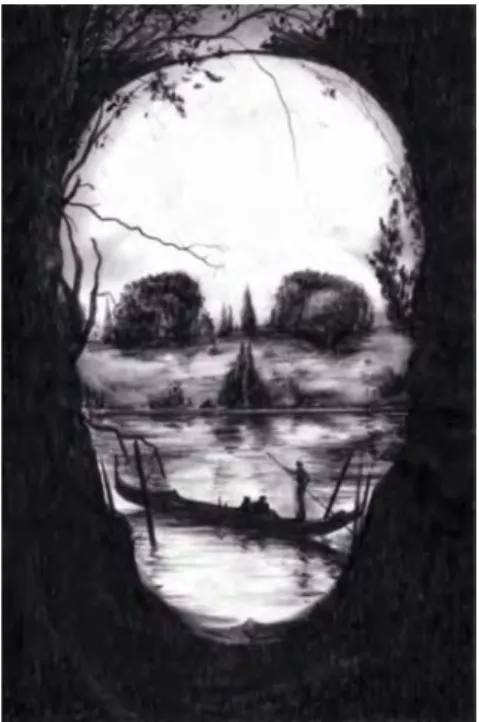
relations between pixel-values in images, not their visual resemblance to objects in the world as we do. If the difference between various categories may be a matter of a single pixel for a computer, it bears consideration whether our own aesthetic frameworks are equally flimsy. In spite of a lack of a consistent metric, human, against which to compare, there is a persistent inclination to consider the human the measure of machines. The tradition of producing fooling images, whether the audience is human or computer, stems from the desire to be ourselves fooled by images. Pre-cinema (Mannoni, 2000) is filled with optical tricks, techniques and devices which aim to deceive at the same time as to delight, and serves as a reminder that ultimately, the power of the image rests in illusion. In similar fashion to optical tricks used to fool the human eye into seeing two images in one depending on how one looks (Figure 1), algorithmically produced images may also function on two levels: meeting our ways of seeing (Berger, 1973) with ways of machine seeing (Cox, 2016), vacillating between conceptual categories – for us and for computers. The chihuahua or muffin meme (Figure 2), for example, points to the fact that certain ML algorithms have misclassified images of muffins and chihuahuas interchangeably. There is thus a tension between images’ human-readability and their legibility to machines. This kind of uncertain image (Ekman et al., 2017) shows how although there is a degree of visual similarity between some blueberry muffins and chihuahua faces, the machinic interpretation of these images has very little to do with what we understand as vision and as representation.
Figure 1 | attributed to Charles Allan Gilbert, n.d.
4 | AUTOMATED IMAGE
mediated by an impartial machine – but this conflicts with several aspects of current image production, particularly that the processes behind algorithmically produced images are neither truly autonomous nor neutral, while also being fairly estranged from the realities they represent. In this regard, artistic authorship and the relation between the image and reality become primary issues.
Figure 2 | chihuahua or muffin meme
The artistic validity of art produced by machines and the notion of autonomy therein has been a contentious issue for several decades and continues to stir heated debate. The myth of the machine as artist, as Broeckmann refers to it (2019), remains a central element in the mythology surrounding art and AI. Recent excitement around AI and art has famously included the sale of collective Obvious’s AI-generated portrait at Christie’s auction house. The algorithm used to create the image was inscribed in the lower right-hand corner, as though it were the algorithm’s signature on its creation, stoking disputes around authorship in addition to the fact that the collective who produced the work were using borrowed code in the first place (Simonite, 2018). Other projects, such as Ian Cheng’s BOB (Bag of Beliefs) (2018-2019), Memo Akten and Jennifer Walshe’s ULTRACHUNK (2018), Holly Herndon’s
PROTO (2019) and Actress’s Young Paint (2019) variously frame artistic authorship with AI in terms of coevolution, giving birth, or collaborative artistic production, often resting heavily on the idea of the AI as a character in a narrative about the work. One of the best-known precedents in this vein is Harold Cohen’s explorations with his program AARON. From the late 1960s until his death in 2016, he sought to create an AI which could in turn produce art. Of relevance here is the anecdote that his relationship to the AI is said to have become strained when Cohen perceived AARON’s creations as having eclipsed his own role as an artist, to which Cohen responded by
colouring on top of AARON’s drawings (Reichardt, 2018).
The truthfulness of algorithmic images also comes into question, when it is possible to generate believable likenesses of reality. Looking closely at thispersondoesnotexist.com (Wang, 2019), for example, we see images which have face-like qualities, but which have more to do with statistics than resemblance. The faces represented in these images, while highly realistic, are not windows into the interior world of the person whose face stares out at us – as traditional portraiture has often aimed toward – they are simulacra (Baudrillard, 2010), computational portraits without sitters. The algorithmically generated face may be thought of as a functional approximation of what a human may take to be the face of another human, rather than a representation of how computers interpret humans to be or to appear. At the same time, an algorithmically generated image bearing a resemblance to a face is no less a depiction of a face than traditional forms of images, such as photography, painting or drawing, which have indirect (Harman, 2017) relationships with the objects they are meant to depict.
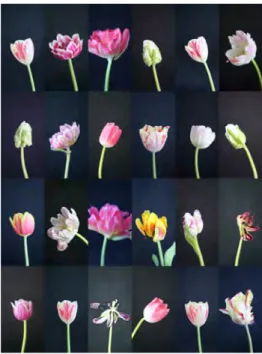
Figure 3 | Mosaic Virus, Anna Ridler, 2019.
With the potentiality to generate innumerable images of things which do not necessarily point to any corresponding objects in the real world, there arises an issue as to what to make of images which are not referential, but which appear to be so. Anna Ridler’s
it echoes 17th century Dutch still life flower paintings which, despite their realism, are “botanical impossibilities” and imagined as all the flowers in them could never bloom at the same time. (Ridler, 2019)
The likenesses of flowers in the work are believable, yet they are not representations of specific flowers. They partially correspond to the real, being amalgamations derived from thousands of images of actual flowers, while actually being simulacra [2] (Baudrillard, 2010).
This sort of bricolage often employed in ML is related to the cut-up method (Burroughs, 2003) of creating new artworks from the recombination of existing material. Hito Steyerl’s This is the Future similarly works with creating composite images of flowers from combining existing ones, within a larger critique of the friction between the predictive intentions of ML and their reliance on past data (Steyerl, 2019). It is significant to consider the fact that although algorithmic approaches are able to produce new visual content, they do so by making conjectures from databases of existing material. This means that while they have a degree of novelty, it is restricted, effectively, to projecting the future from what has occurred in the past. The nature of ML, itself, hovers between the goal of prediction and its basis in previous data, meaning that the images created are in some aspects new, while also being reiterations of existing patterns.
5 | PROCEDURAL IMAGE
In the creation of images using generative adversarial networks (GANs) [3], the process begins with noise. In this case visual noise, or rather, random pixel values, amounts to guessing. Effectively, the closer the generator gets to producing a believable image, the higher the score it will receive from the discriminator. Pierre Huyghe’s UUmwelt (2018) focuses heavily on the image as process-based and transcendent of media-specificity. Conveying a mental image of particular objects to individuals through speech alone, he then asked them to think of their respective object, while using functional magnetic resonance imaging (fMRI) [4] to record their brain activity. Next, the fMRI data was interpreted by a GAN in order to render images from the recorded neural activity. The resulting images are finally animated on video screens, displaying differently based on the presence or absence of viewers in the exhibition space. The transient images in this work take on various forms from mental image, verbal image, coded image, finally taking the form of a digital image displayed on a screen. There are moments of latency, when an image may or may not be visible, but nonetheless maintains its consistency as an image.
The work does not need the public. It’s not made for us. It’s not addressed to us. It doesn’t
need the gaze to exist. It can live its life as a work without that need. (Huyghe, 2018)
This understanding of the image as process-based and not primarily visual is aided by Farocki’s operational image. In his seminal essay Phantom Images (2004) and associated trio of video works Eye / Machine I-II (2001)I, Farocki highlighted the fact that the automation of image processes had already reached a critical mass by the 1990s in the military and governmental use of intelligent machines and surveillance technologies to automate visual processing tasks. This results in the production of
operational images, which, Farocki explains, “are images that do not represent an object, but rather are part of an operation.”This kind of image is connected to the real through the enactment of a procedure instead of representing something other than itself. In an operational image, what is visible (displayed on a screen or otherwise) is merely a by-product of the performance of an operation, not the explicit end of that performance. Farocki's work on operational images has been described as an exploration of how to see like a machine and it offers a useful perspective on the human interpretation of images intended for computers, which he describes as possessing a “sightless vision” reliant on computational processes such as the programmed navigation of robots and drones. The operational image is a central concept to understanding algorithmically produced visual media, because it diverges from previous notions of the image which have tended to prioritise visual attributes of objects over processes.
6 | CONCLUSIONS
area of potential difficulties regarding not only aesthetic and cultural concerns, but also what measure of truth can be expected from images now.
ENDNOTES
[1] Adversarial images are inputs designed to cause errors in ML systems, either with the intention to harm the system or to test and to improve it.
[2] Echoing OOO’s indirect relations. See (Harman, 2017).
[3] GANs are a generative form of ML which involves two distinct parts: a generator and a discriminator, which compete with one another. The images produced by the generator can appear strikingly similar to actual digital photographs.
[4] fMRI is a technique for measuring cognitive activity and blood flow in the brain based on the fact that these two are coupled.
REFERENCES
Actress. (2019). Actress + Young Paint (Live AI/AV)
[Performance].
Akten, M., & Walshe, J. (2018). ULTRACHUNK
[Performance].
von Ahn, L., Maurer, B., McMillen, C., Abraham, D., & Blum, M. (2008). ReCAPTCHA: Human-Based Character Recognition viia Web Security Measures. Sciennce, 321, 1465–1468.
Baudrillard, J. (2010). Simulacra and Simulation. Ann Arbor: University of Michigan.
Berger, J. (1973). Ways of Seeing. London: BBC, Penguin Books.
Bianco, J. “Skye.” (2018). Algorithm. In R. Braidotti & M. Hlavajova (Eds.), Posthuman Glossary (pp. 23– 26). London, New York: Bloomsbury Academic. Broeckmann, A. (2016). Image Machine. In Machine
Art in the Twentieth Century (pp. 123–164). Cambridge: MIT Press.
Broeckmann, A. (2019). The Machine as Artist as
Myth. Arts, 8(1), 25.
https://doi.org/10.3390/arts8010025
Burroughs, W. S. (2003). The Cut-Up Method of Brion Gysin. In N. Wardrip-Fruin & N. Montfort (Eds.),
The New Media Reader. Cambridge, London: MIT Press.
Carvalhais, M. (2016). Procedural Practices. In
Artificial Aesthetics: Creative Practices in Computational Art and Design (pp. 145–178). Porto: U. Porto Edições.
Cheng, I. (2018). BOB (Bag of Beliefs) [Artificial lifeform].
Cox, G. (2016). Ways of Machine Seeing. Unthinking Photography.
https://unthinking.photography/articles/ways-of-machine-seeing
Ekman, U., Agostinho, D., Bonde Thylstrup, N., & Veel, K. (2017). The Uncertainty of the Uncertain Image. Digital Creativity, 28(4), 255–264.
Farocki, H. (2001). Eye / Machine I-III [Video]. Farocki, H. (2004). Phantom Images (B. Poole,
Trans.). PUBLIC, 29, 12–22.
Harman, G. (2017). Aesthetics is the Root of All Philosophy. In Object Oriented Ontology: A New Theory of Everything (pp. 61–102). London: Pelican Books.
Herndon, H. (2019). PROTO [Album].
Hoelzl, I., & Marie, R. (2015). Softimage: Towards a New Theory of the Digital Image. Bristol: Intellect Ltd.
Huyghe, P. (2018). UUmwelt [Exhibition].
Huyghe, P., & Hans Ulrich Obrist. (2018). Pierre Huyghe in conversation with Hans Ulrich Obrist.
https://www.youtube.com/watch?v=emYOOVRz G8E
Mannoni, L. (2000). The Great Art Of Light And Shadow: Archaeology of the Cinema. Exeter, Devon: University of Exeter Press.
Obvious. (2018). Edmond De Belamy [Print]. Pohflepp, S. (2017). Spacewalk [Installation].
https://pohflepp.net/Work/Spacewalk
Ridler, A. (2019). Mosaic Virus [Video-installation].
http://annaridler.com/mosaic-virus
Simonite, T. (2018, November 20). How a Teenager’s Code Spawned a $432,500 Piece of Art.
https://www.wired.com/story/teenagers-code-spawned-dollar-432500-piece-of-art/
Steyerl, H. (2019). This is the Future [Video-installation].
Steyerl, H. (2009). In Defense of the Poor Image. E-Flux Journnal, 10.
Su, J., Vargas, D. V., & Kouichi, S. (2019). One pixel attack for fooling deep neural networks.
ArXiv:1710.08864v5 [Cs.LG].
Wang, P. (2019). This Person Does Not Exist.
https://thispersondoesnotexist.com
Zylinska, J. (2017). Nonhuman Photography. Cambridge, London: MIT Press.
BIOGRAPHICAL INFORMATION