2015 Business e-file Guide
for
Software Developers and Transmitters
FTB Pub. 1346B
State of California
Franchise Tax Board
ftb.ca.gov
Table of Contents
Section 1 Introduction ... 4
1.1 Welcome... 4
1.2 Program Overview ... 4
1.3 Business e-file Calendar for Forms 100, 100S, and 100W – Taxable Year 2015 ... 5
1.4 Business e-file Calendar for Forms 565 and 568 – Taxable Year 2015 ... 6
1.5 Business e-file Calendar for Form 199 – Taxable Year 2015 ... 7
1.6 Where Can I Get More Information? ... 8
1.7 What’s New for Taxable Year 2015? ... 8
1.8 Acceptable Forms and Occurrences for CA Business e-file ... 11
1.9 Acceptable Federal Forms for CA Business e-file ... 13
1.10 Other Eligible Filing Conditions ... 13
1.11 Exclusions to Electronic Filing ... 13
1.12 Reminders ... 14
1.13 Identifying What's Changed - Use of Version Name, Maturity Level, and Differences Documents. ... 18
Section 2 CA Business e-file Program Information ... 19
2.1 General Information ... 19
2.2 Differences Between the IRS and FTB Business e-file Programs ... 20
2.3 Definition of e-file Participants ... 20
2.4 Consent to Disclosure for Business Taxpayers Preparing and Transmitting Returns ... 21
2.5 Memorandum of Agreement (MOA) Program ... 21
2.6 Privacy and Confidentiality ... 21
Section 3 Signing the CA Business e-file Return ... 22
Section 4 XML Overview for CA Business e-file ... 23
4.1 XML Structure ... 23 4.2 Schemas... 23 4.2.1 Tag Names ... 23 4.2.2 Attributes ... 24 4.2.3 Repeating Groups ... 25 4.2.4 Choice Construct ... 25 4.2.5 Union Construct ... 26 4.2.6 e-file Types ... 27
4.2.7 Re-Use of Complex Types ... 27
4.2.8 Identity Constraints ... 27
4.3 Attachments to CA Business e-file Returns ... 27
4.3.1 XML Attachments ... 28
4.3.2 Binary Attachments ... 28
4.4 Namespace ... 29
4.5 Import and Include Statement ... 29
4.6 Return Data Organization ... 29
4.7 Schema Validation ... 30
4.8 Business Rule Validation ... 31
4.9 Derivation by Restriction and Extension ... 31
Section 5 Secure Web Internet File Transfer (SWIFT) ... 32
5.1 Overview... 32
5.2 Planned System Maintenance ... 32
Section 6 Business e-file Transmission and Response Overview ... 33
6.2 Data and File Compression ... 33
6.3 Business e-file Transmission ... 35
6.4 Submission Attachments ... 37
6.5 Receipt Response ... 39
6.6 Acknowledgement Response ... 40
6.7 Validating Tax Returns ... 44
6.7.1 Schema Validation ... 44
6.7.2 Business Rule Validation ... 44
6.8 Entity Entry Instructions ... 45
6.9 Standard Abbreviations ... 47
6.10 Standard State Abbreviations and ZIP Code Ranges ... 48
FTB Pub. 1346B 2015 Business e-file Guide for Software Developers and Transmitters 4
Section 1 Introduction
1.1 Welcome
Thank you for participating in the California Franchise Tax Board’s (FTB) Business e-file Program. If you are new to our program, welcome aboard and thank you for joining our team. This publication is designed to provide Software Developers and Transmitters the technical information needed to participate in our program. It outlines data communication procedures, transmission formats, business rules and validation procedures for e-filing California business tax returns in XML format.
It also defines the format of binary attachments, provides information about receipts and acknowledgements, defines the signature options, and provides examples of manifest, return and attachment sequences. Software Developers and Transmitters must use the guidelines provided in this publication, along with XML Schemas published on our e-file restricted
directory (draft versions), as well as at ftb.ca.gov (production versions), to develop software for
use with the California Business e-file program.
This is one of three publications you will need to be a successful participant in the California Business e-file Program. The other publications you will need are:
2015 Handbook for Authorized e-file Providers (FTB Pub. 1345).
2015 Test Package for e-file of California Business, Fiduciary, and Individual Tax
Returns (FTB Pub. 1436X).
1.2 Program Overview
FTB offers e-filing for Corporations, Partnerships, Limited Liability Companies, and Exempt Organizations filing Forms 100, 100S, 100W, 100X, 565, 568, or 199, plus certain
accompanying forms and schedules
We utilize an electronic filing architecture similar to the Internal Revenue Service (IRS). This allows us to provide a more efficient e-file system with Internet batch transmission capabilities. Following are some of the benefits of the CA Business e-file program:
The use of Extensible Markup Language (XML) to format return data and transmissions. The transmission of tax returns and documents securely via the Internet.
The transmission of binary data (non-XML documents) in PDF format. Business Rules that provide clear explanations of errors.
A standardized acknowledgment file structure, which is built upon our transmission structure.
The ability to use forms 8453-C, 8453-P, 8453-LLC or 8453-EO and allow the tax
preparer to either maintain the signature form or scan the form and attach it to the return as a PDF.
1.3 Business e-file Calendar for Forms 100, 100S, and 100W – Taxable Year
2015
November 12, 2015 FTB begins accepting test transmissions (PATS Testing) January 4, 2016 First day to transmit live FTB 100, 100S, and 100W returns.
Return Due Date The law specifies the annual dates for a business entity to file a return. The dates vary between business entity types.
If the form is And the classification
is Then the due date is
Form 100 Farmers Cooperative
Association Original – 15
th day of the 9th month after
the taxable year end
Extended – 15th day of the 16th month
after the taxable year end Form 100
Form 100S Form 100W
All other classifications Original – 15th day of the 3rd month after
the taxable year end
Extended – 15th day of the 10th month
after the taxable year end
15th day of the 3rd
month after the taxable year end *
Last day to timely file Form 100, 100S, or 100W original returns *When the due date falls on a weekend or holiday, the deadline to file and pay without penalty is extended to the next business day. Due to the Emancipation Day holiday on April 16, 2016, tax returns filed and payments mailed or submitted on April 18, 2016, will be considered timely.
15th day of the 10th
month after the taxable year end
Last day to timely file Form 100, 100S, or 100W returns on extension
15th day of the 9th
month after the taxable year end
Last day to timely file Form 100 Farmers Cooperative Association original returns
15th day of the 16th
month after the taxable year end
Last day to timely file Form 100 Farmers Cooperative Association returns on extension
10 days past all
return due dates Last day to retransmit rejected timely-filed returns Last day to retain
returns is dependent upon law
Last day for EROs and Transmitters to retain acknowledgment file material for returns e-filed in 2016.
Remember: For each return an ERO files, the ERO must retain the return for four years from the due date of the return or for four years from the date the return is filed, whichever is later. The California e-file Return Authorization for Corporations (FTB 8453-C), must be kept with the return for the same period, unless it is scanned and included with the e-file return.
FTB Pub. 1346B 2015 Business e-file Guide for Software Developers and Transmitters 6
1.4 Business e-file Calendar for Forms 565 and 568 – Taxable Year 2015
November 12, 2015 FTB begins accepting test transmissions (PATS Testing) January 4, 2016 First day to transmit live FTB 565 and 568 returns
Return Due Date The law specifies the annual dates for a business entity to file a return. The dates vary between business entity types.
If the form is Then the due date is
Form 565 Original – 15th day of the 4th month after the taxable year end
Extended – 15th day of the 10th month after the taxable year end
Form 568 Original – 15th day of the 4th month after the taxable year end
Extended – 15th day of the 10th month after the taxable year end
15th day of the
4thmonth after the
taxable year end *
Last day to timely file Form 565 or 568 original returns
*When the due date falls on a weekend or holiday, the deadline to file and pay without penalty is extended to the next business day. Due to the Emancipation Day holiday on April 16, 2016, tax returns filed and payments mailed or submitted on April 18, 2016, will be considered timely.
15th day of the 10th
month after the taxable year end
Last day to timely file Form 565 or 568 returns on extension
10 days past all
return due dates Last day to retransmit rejected timely-filed returns Last day to retain
returns is dependent upon law
Last day for EROs and Transmitters to retain acknowledgment file material for returns e-filed in 2016.
Remember: For each return an ERO files, the ERO must retain the return for four years from the due date of the return or for four years from the date the return is filed, whichever is later. The California e-file Return Authorization for Partnerships (FTB 8453-P) or Limited Liability Companies (8453-LLC) must be kept with the return for the same period, unless it is scanned and included with the e-file return. Note: FTB accepts and processes Business e-file returns year round.
1.5 Business e-file Calendar for Form 199 – Taxable Year 2015
November 12, 2015 FTB begins accepting test transmissions (PATS Testing) January 4, 2016 First day to transmit live FTB 199 returns
Return Due Date The law specifies the annual dates for a business entity to file a return. The dates vary between business entity types.
If the form is Then the due date is
Form 199 Original – 15th day of the 5th month after the taxable year end
Extended – 15th day of the 12th month after the taxable year end
15th day of the
5thmonth after the
taxable year end*
Last day to timely file Form 199 original returns
*When the due date falls on a weekend or holiday, the deadline to file and pay without penalty is extended to the next business day. Due to the Emancipation Day holiday on April 16, 2016, tax returns filed and payments mailed or submitted on April 18, 2016, will be considered timely.
15th day of the 12th
month after the taxable year end
Last day to timely file Form 199 returns on extension
10 days past all
return due dates Last day to retransmit rejected timely-filed returns Last day to retain
returns is dependent upon law
Last day for EROs and Transmitters to retain acknowledgment file material for returns e-filed in 2016.
Remember: For each return an ERO files, the ERO must retain the return for four years from the due date of the return or for four years from the date the return is filed, whichever is later. The California e-file Return Authorization for Exempt Organizations (FTB 8453-EO) must be kept with the return for the same period, unless it is scanned and included with the e-file return.
FTB Pub. 1346B 2015 Business e-file Guide for Software Developers and Transmitters 8
1.6 Where Can I Get More Information?
FTB Restricted e-file Directory
FTB’s restricted e-file Directory is an online directory of advanced draft technical e-file schemas and other business e-file informationtargeted towards electronic filing participants who develop software & transmit returns. The e-file Restricted Directory is a secure site located on our website at: http://www.ftb.ca.gov/efileSRD.
Access to this directory requires a password. Contact the business e-file Coordinator (see below) to get more information about access to this site.
For Business e-file assistance and information please visit the Tax Professional’s area of our website or contact e-Programs Customer Service:
Website: ftb.ca.gov
e-Programs Customer Service:
Phone: 916.845.0353
Fax: 916.855-5556
Email: [email protected]
Available Monday through Friday, between 8 a.m. and 5 p.m.
Send comments or suggestions regarding the CA Business e-file Program or this Publication to:
Business e-file Coordinator, MS F-284 Franchise Tax Board
PO Box 1468
Sacramento CA 95812-1468
Email: [email protected]
Assistance for persons with disabilities: We comply with the Americans with Disabilities Act. Persons with hearing or speech impairments please call TTY/TDD 800.822.6268.
1.7 What’s New for Taxable Year 2015?
In conforming to the IRS’s fraud prevention recommendations, we have added additional authorized e-file provider disclosure language in Section 2.3 under Definition of e-file
Participants. Additionally, we have also updated our Consent to Disclosure text in section 2.4. See sections 2.3 and 2.4 for more information.
Form and Schedule Changes for Tax Year 2015
Added new Form FTB 3531 California Competes Tax Credit Added new Form FTB 3592 College Access Tax Credit
Enhanced MyFTB Online Service
Effective, January 4, 2016, the enhanced MyFTB will be available to Individuals, Business
Representatives and Tax Preparers who complete a one-time registration. Since we will deactivate all MyFTB accounts created prior to 2016, everyone must re-register in 2016 to access tax account information online.
The enhanced MyFTB provides secure online access to the following information and online services. Tax preparer’s with a Power of Attorney (POA) have additional access and update capabilities for their client’s information.
MyFTB Functionality Description New Tax
Preparer Client Access POA Tax Preparer Client Access1 Account Information
Overview View alerts, contact information,
current balance, return status and a record of who accessed your
account.
Yes Yes Yes
Account Summary Current balance with access to
details for each tax year. Yes Yes
Tax Year Summary List of transactions for a tax year. Yes Yes
Other
Liabilities/Penalties – Individuals only
Detailed liability and penalty
information. Yes Yes
Estimate Payments
and Credits List of account periods with credit funds available. Yes Yes Payment History Payments applied to an account – all
tax years. Yes Yes Yes
Returns List List of returns received by FTB,
including status. Yes Yes Yes
View Return Link View the tax return image. Yes Yes
California Wage & Withholding - Individuals only
CA wages and withholding by tax
year, as reported by an employer. Yes Yes
FTB-Issued Form 1099
– Individuals only Original FTB-issued 1099-G or INT forms and amounts. Yes Yes Activity List List of activities that occurred on the
account such as, when account accessed and who accessed it.
Yes Yes Yes
Calculators Calculate Future
Balance Calculate a future balance based on information entered. Yes Yes Yes Individual Tax Lookup Look up tax for various tax years. Yes Yes Yes Balance Due/Refund -
Individuals Calculate balance due or refund amounts based on total tax and the planned date to pay or file (includes applicable penalties and interest).
FTB Pub. 1346B 2015 Business e-file Guide for Software Developers and Transmitters 10
Communication Notices and
Correspondence List View notices and correspondence sent and received by FTB. Yes Yes Yes View Notice or
Correspondence Link View the notice or correspondence image. Yes Yes
Chat Initiate an authenticated Live Chat to
ask account-specific questions. Yes Yes Yes
Send Message Send a secure message and
attachments to FTB. Yes Yes Yes
Online Self-Service File Power of Attorney
(POA) File a POA declaration. Yes Yes Yes
File Nonresident Withholding Waiver Request
File a Form 588, Nonresident
Withholding Waiver Request. Yes Yes Yes
Proposed Assessment
List View a list of proposed assessments and protests submitted online. Yes Protest a Proposed
Assessment (PA) Submit a protest. Yes Yes
Web Pay Make an electronic tax payment.
Account Profile Update Contact
Information Update name, address, phone, email or opt-in for email and text notifications.
Yes View Authorized
Representative List View representatives who can view the taxpayer’s tax account information.
Yes
1A tax preparer must have a POA to access certain client account information or online
services.
BE Web Pay
We now offer two ways for Business Entity taxpayers to access Web Pay: Login using only the Entity ID and Entity Number.
Login through MyFTB. For information on how to register, go to ftb.ca.gov and select Register.
Only business entities that login through MyFTB to use Web Pay can save bank account information for future payments and view or cancel pending payments online.
Acceptable Tax Years
We accept the current year and two prior tax years. For example, for the processing year 2016, we will accept Form 100 returns for tax years 2015, 2014, and 2013.
1.8 Acceptable Forms and Occurrences for CA Business e-file
The following chart lists the acceptable forms and schedules that may be e-filed with FTB and the maximum number of each type of form or schedule allowed per return.
Form/Schedule Maximum # of Forms Name
Form 100 1 CA Corporation Franchise or Income Tax Return Form 100S 1 CA S Corporation Franchise or Income Tax Return
Form 100W 1 CA Corporation Franchise or Income Tax Return – Water’s Edge Filers Form 100-WE 1 Water’s Edge Election
Form 100X 1 Amended Corporation Franchise or Income Tax Return Form 199 1 CA Exempt Organization Annual Information Return Form 565 1 Partnership Return of Income
Form 568 1 Limited Liability Company Return of Income
Form 592-B Unbounded Resident and Nonresident Withholding Tax Statement Form 593 Unbounded Real Estate Withholding Tax Statement
Form 2416 1 Schedule of Included Controlled Foreign Corporations (CFC) Form 2424 Unbounded Water’s Edge Foreign Investment Interest Offset
Form 3509 1 Political or Legislative Activities By Section 23701d Organizations Form 3511 1 Environmental Tax Credit
Form 3521 1 Low-Income Housing Credit Form 3523 1 Research Credit
Form 3531 Unbounded California Competes Tax Credit
Form 3540 1 Credit Carryover and Recapture Summary
Form 3541 Unbounded California Motion Picture and Television Production Credit Form 3544 Unbounded Election to Assign Credit Within Combined Reporting Group Form 3544A Unbounded List of Assigned Credit Received and/or Claimed by Assignee Form 3548 Unbounded Disabled Access Credit for Eligible Small Businesses
Form 3554 Unbounded New Employment Credit Form 3592 Unbounded College Access Tax Credit
Form 3725 Unbounded Assets Transferred from Corporation to Insurance Company Form 3726 Unbounded Deferred Intercompany Stock Account (DISA) and Capital Gains Information Form 3801 1 Passive Activity Loss Limitations
Form 3801-CR 1 Passive Activity Credit Limitations
Form 3802 1 Corporate Passive Activity Loss and Credit Limitations Form 3805E Unbounded Installment Sale Income
Form 3805Q 1 Net Operating Loss (NOL) Computation and NOL and Disaster Loss Limitations - Corporations Form 3805Z Unbounded Enterprise Zone Deduction and Credit Summary
Form 3806 Unbounded Los Angeles Revitalization Zone Net Operating Loss (NOL) Carryover Deduction Form 3807 Unbounded Local Agency Military Base Recovery Area Deduction and Credit Summary
FTB Pub. 1346B 2015 Business e-file Guide for Software Developers and Transmitters 12
Form/Schedule Maximum # of Forms Name
Form 3808 Unbounded Manufacturing Enhancement Area Credit Summary
Form 3809 Unbounded Targeted Tax Area Deduction and Credit Summary Form 3811 1 Donated Fresh Fruits or Vegetables Credits
Form 3832 1 Limited Liability Company Nonresident Members’ Consent Form 3834 1 Interest Computation Under the Look-Back Method for Completed Long-Term Contracts Form 3840 Unbounded California Like-Kind Exchanges
Form 3885 Unbounded Corporation Depreciation and Amortization Form 3885F Unbounded Depreciation and Amortization
Form 3885L Unbounded Depreciation and Amortization Form 3885P Unbounded Depreciation and Amortization
Form 5806 1 Underpayment of Estimated Tax by Corporations SCH B (100S) Unbounded S Corporation Depreciation and Amortization SCH C (100S) 1 S Corporation Tax Credits
SCH D (100S) Unbounded S Corporation Capital Gains and Losses and Built-In Gains SCH D (565 & 568) Unbounded Capital Gain or Loss
SCH D-1 1 Sales of Business Property SCH EO (565) 1 Pass-Through Entity Ownership SCH EO (568) 1 Pass-Through Entity Ownership SCH H (100) 1 Dividend Income Deduction SCH H (100S) 1 Dividend Income Deduction
SCH H (100W) 1 Dividend Income Deduction-Water’s Edge Filers
SCH K-1 (100S) Unbounded Shareholder’s Share of Income, Deductions, Credits, etc. SCH K-1 (565) Unbounded Partner’s Share of Income, Deductions, Credits, etc. SCH K-1 (568) Unbounded Member’s Share of Income, Deductions, Credits, etc.
SCH P (100) 1 Alternative Minimum Tax and Credit Limitations - Corporations SCH P (100W) 1 Alternative Minimum Tax and Credit Limitations – Water’s Edge SCH QS 1 Qualified Subchapter S Subsidiary (QSub) Information
SCH R 1 Apportionment and Allocation of Income
1.9 Acceptable Federal Forms for CA Business e-file
California Business e-file accepts most applicable federal forms that are acceptable by the IRS Modernized e-file (MeF) Program.
We do not require the accompanying federal submission to be accepted by the IRS prior to including it with the state submission; however we will validate the federal submission against the current applicable federal schema.
1.10 Other Eligible Filing Conditions
We also allow the following filing conditions:
Fiscal year returns
Returns filed with foreign addresses
Current plus two prior years of Form 100, 100S, 100W, 100X, 565, 568, and 199. 52 – 53 weeks filers
Multiple short period returns within the same tax year The following CA forms in XML or PDF format:
Form Title
3511 Environmental Tax Credit 3521 Low-Income Housing Credit 3531 California Competes Tax Credit
3548 Disabled Access Credit for Eligible Small Businesses 3592 College Access Tax Credit
3725 Assets Transferred from Parent Corporation to Insurance Company Subsidiary 3801CR Passive Activity Credit Limitations
3802 Corporate Passive Activity Loss and Credit Limitations 3811 Donated Fresh Fruit or Vegetable Credit
3834 Interest Computation Under the Look-Back Method for Completed Long-Term Contracts 3885F Depreciation and Amortization
1.11 Exclusions to Electronic Filing
We exclude the following returns from CA Business e-file:
Returns from business taxpayers, preparers, or transmitters who have not been
accepted as participants in the IRS e-file Program
Any condition or requirement, not supported by software that requires the submission of a paper document or form
FTB Pub. 1346B 2015 Business e-file Guide for Software Developers and Transmitters 14
1.12 Reminders
Business Entity e-file Requirement
Effective January 1, 2015, for taxable years beginning on or after January 1, 2014, California law requires business entities that prepare an original or amended return using tax preparation software to electronically file (e-file) their return to us.
Any business entity required to file a tax return electronically under R&TC Section 18621.10 may annually request a waiver from their e-file requirement.
We may grant a waiver if we determine the business entity is unable to comply with the requirements due to, but not limited to, the following reasons:
Technology constraints.
Situations where compliance results in undue financial burden. Circumstances that constitute reasonable cause.
As part of our continuing education and outreach efforts, we will approve waiver requests made during the 2016 calendar year upon submission.
Subsequent year waiver requests may be subject to review prior to approval.
For more information, go to our website at ftb.ca.gov and search for business e-file requirement.
Credit Card Payments Now Accepted for Business Entities
Business entity taxpayers may now use Discover, American Express, MasterCard, or Visa to make tax payments. See page 50 for more information on this service.
Test Returns
When transmitting returns via SWIFT, be sure that your Transmission ID contains a [T] to indicate you are submitting test returns and not a [P], for production, even if you are testing after you have passed PATS.
PATS
FTB does not require you to use a specific set of state return scenarios. Instead you are required to supply your own test returns that reflect the forms, schedules and features your software supports. FTB provides a list of general conditions that must be followed within the returns. All required test returns must be accepted with no rejects before the software will be considered for acceptance. For more details about our PATS process, refer to our Publication 1436X, 2015 Test Package for e-file of California Business, Fiduciary, and Individual Tax Returns.
Schema Validation
One of the most significant benefits of using XML and schemas to e-file tax returns is that the XML instance documents (i.e. returns) can be validated against the schemas that define the structure and data types, prior to submitting the returns for further processing. This provides the advantage of checking errors as early as possible.
We strongly encourage you to validate CA Business e-file tax returns you create against the latest current valid production schemas prior to transmission to the FTB. Schema validation errors are the most common reason we reject Business e-file returns that are submitted in XML in our e-file program.
FTB performs schema validation on attached federal submissions to ensure the submission is well formed according to the latest published IRS schema (FTB does not perform business rule validation on the federal submission).
IRS schema validation is applied according to the return type [FederalSubmissionType] listed in the IRS Submission Manifest. If the IRS Submission Manifest is not present, FTB will validate an attached federal submission against the IRS 1120, 1065 or 990 schema based on the state return type being submitted.
We allow the state return to be transmitted independent of the federal return and we do not require the federal return be accepted prior to the state return being transmitted. If the federal return is rejected and the state return is accepted, DO NOT retransmit the state return to us. Verifying Banking Information
To avoid Direct Deposit of Refund (DDRs) and Electronic Funds Withdrawal (EFWs) being returned to the taxpayer’s bank, we encourage the use of double entry or other techniques that require the taxpayer to double check the entered bank account and routing number
information. This will help ensure the accuracy of the information that is entered or imported from previous requests, return filings, etc.
Estimated Tax, Annual, or Estimated LLC Fee Tax Payments Request with e-file Return Business e-file provides the ability to send a schedule of EFW requests for future estimated or annual tax payments, if applicable, for the return type being filed as part of the e-file return transmission. The entries for the dates and amounts of the estimate or annual tax payments will be contained in the return data payment documents (EstimatePaymentType, CA-EstimatedFeePaymentType, or CA-AnnualTaxPaymentType) and will be provided to the business taxpayer on their form FTB 8453-C or FTB 8453-LLC. For more information regarding payment options and requirements refer to Section 7.
International ACH Transactions (IAT)
To comply with the new NACHA regulations regarding International ACH Transactions (IAT), FTB will not accept requests for direct deposit of refund (DDR) or electronic funds withdrawal (EFW) in association with financial institutions outside of the territorial
jurisdiction of the United States. (The territorial jurisdiction of the United States includes all 50 states, U.S. territories, U.S. military bases and U.S. embassies in foreign
FTB Pub. 1346B 2015 Business e-file Guide for Software Developers and Transmitters 16
If a taxpayer requests a DDR or an EFW (for their balance due or for future estimated tax payments), the applicable following question should be presented to the taxpayer to determine if a financial transaction qualifies as an IAT:
DDR: Will the funds be received by a financial institution outside of the territorial jurisdiction of the U.S.?
EFW: Will the funds originate from a financial institution outside of the territorial jurisdiction of the U.S.?
An answer of yes will indicate an IAT transaction and therefore a DDR or EFW option should not be allowed by the software.
For taxpayers due a refund, the taxpayer will be issued a paper check in lieu of the DDR. For taxpayers who are requesting an EFW, please direct them to one of our other payment options, which are listed in the instructions of our forms FTB C, 8453-LLC, 8453-P or 8453-EO. You can also go to our website at ftb.ca.gov and search for: payment options.
Automatic Extension to File
We grant an automatic, paperless extension to file a California business tax return to business entities that are in good standing on the original due date and meet all other requirements. No filing of an extension form is required. Corporations and Exempt Organizations receive a seven-month extension and Partnerships/LLCs receive a six-month extension from the original due date of the return.
Suspended corporations are not granted an automatic extension of time to file. An extension is for filing of the return only. Payment of Corporation and Partnership tax and LLC fee is due on the original due date.
If an original return is not filed on or before the extended due date, we will deny the extension and will assess penalties, if applicable, from the original due date. In certain circumstances, the federal government may grant extensions for short-period returns. These extensions may be more than seven months. If the federal law granting the extension is applicable to
California, the federal due date will become the due date for the California return. FTB 8453-C – California e-file Return Authorization for Corporations, FTB 8453-P
(Partnerships), FTB 8453-LLC (Limited Liability Companies) and FTB 8453-EO (Exempt Organizations)
The business taxpayer, ERO, and paid preparer must sign form FTB 8453-C, FTB 8453-P, FTB 8453-LLC or FTB 8453-EO prior to the transmission of the e-file return. This form may be retained by the preparer or business taxpayer according to the rules of our program or
Separate e-file Participant Registration not Required
FTB no longer requires e-file providers to submit a separate enrollment application for
authorization to e-file business tax returns. Providers approved in the IRS Electronic Filing (e-file) Program are automatically enrolled in the California e-file Program. In addition, we
automatically receive any updates that you make to your IRS account. For more information, visit our website at ftb.ca.gov and search for e-file enrollment.
Subscription Services
Subscription Services is our free automated service providing you important information by email. You can choose from a variety of topics including:
Tax Professionals o Tax News
o e-Programs News Law and Legislation
Announcements and Press Releases
You can add or discontinue your subscription at anytime. For more information, go to our website at ftb.ca.gov and search for Subscription Services.
Planned System Maintenance Schedule
We are reserving Tuesday mornings from 5:00 a.m. – 7:00 a.m. PST for scheduled system maintenance. We plan to consolidate all non-critical maintenance activity into this window. If you receive a transmission error during this time, please try again after 7:00 a.m., PST. We will notify you via email whenever our system is down, or plans to be down outside the normal maintenance window for longer than one hour
FTB Pub. 1346B 2015 Business e-file Guide for Software Developers and Transmitters 18
1.13 Identifying What's Changed - Use of Version Name, Maturity Level, and
Differences Documents.
We utilize several tools to aid in identifying changes to our Schemas, Business Rules, and related information.
Version Name
Each XML Schema and Business Rule document has a version number.
The version number will change either by a whole number, to indicate a major change (change in tax year, etc.) or by a decimal number (i.e., x.5 to x.6) to indicate a minor or mid-year change.
XML Schemas and the Business Rule documents being used in conjunction with the Schemas in production will have the same version number. This ensures that a set of rules enforce the appropriate Schema version. Therefore, if the Schema version changes, the Business Rule version will also change to correspond to it, even if the Business Rules themselves did not change.
The “returnVersion” attribute of the “CA-Return” element identifies the version of the state Schema being applied for XML validation.
Concurrently, the relative path to the IRS Schema version that is used by us to validate the included IRS return’s Schema is referenced in our Schema as well.
Like the IRS, we will accept a return composed with any published CA Schema version, if it validates against the active validating Schema at the time we process it. Maturity Level
Each Schema release contains a textual description of the maturity level of the
particular Schema, such as: 2015 1st Working Draft, or 2015 Final Draft. Differences (Diffs) Document
Accompanying each Schema package is a Diffs document that highlights changes from
a previous release.
Obtaining Change Information Online
Changes to draft Schemas, Business Rules, and related information are posted to the e-file Restricted Directory at http://www.ftb.ca.gov/efilesrd. The latest revision date will be listed first. Links to current production Schemas, Business Rules, and related information will be available in the e-file area of our public website in the late fall at ftb.ca.gov.
Section 2 CA Business e-file Program Information
2.1 General Information
e-filing ensures more accurate returns because e-file software and FTB’s e-file processes verify certain aspects of the return before we accept it for processing. Because of these checks, e-file returns have the lowest error rate of all returns filed. In addition, business taxpayers and tax practitioners know that we received their return because we provide an acknowledgment for each e-file return we receive.
Business taxpayers and preparers must sign the returns using the California e-file Return
Authorization for Corporations (form FTB 8453-C), California e-file Return Authorization for
Partnerships (form FTB 8453-P), California e-file Return Authorization LLCs (form FTB
8453-LLC) or California e-file Return Authorization for Exempt Organizations (form FTB 8453-EO) before transmitting to FTB. Your software must produce the appropriate forms and or jurats before transmission.
The business taxpayer and/or preparer may retain these forms along with a copy of the return (paper or electronic copy is acceptable) or the form may be scanned and included as a .pdf attachment accompanying the e-file return. See Section 3 for more information about signing the e-file return.
CA Business e-file returns are transmitted via the Internet using our Secure Web Internet File Transfer (SWIFT) system. For more information about transmitting returns using SWIFT, refer to Section 5.
Once we receive a transmission, our e-file program performs validation of the transmission (batch) and submission (return) information for completeness and accuracy through
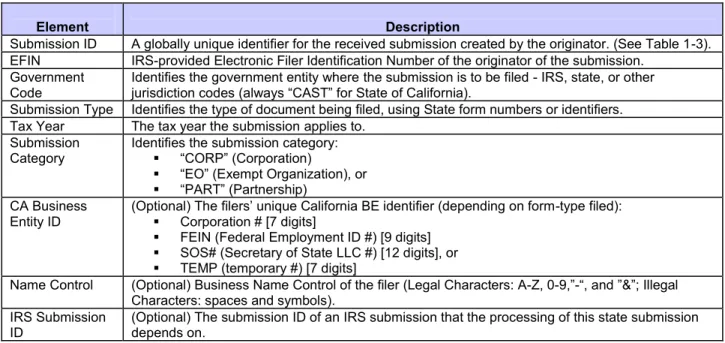
Transmission and Submission Manifest validation, Business Rule validation, and Schema validation. Each submission in a transmission is checked independently for both Schema validation and Business Rule validation.
In addition, we will validate the attached federal XML return submission against the appropriate current valid IRS Schema. We will not perform Business Rule validation on the federal return. If the return passes all the validation steps, we will send you an acknowledgement (ACK) showing we accepted the return.
If the return fails any of the checks, we will send you an ACK showing the reasons (Schema or Business Rule violation) why our e-file program rejected the return. You must correct the errors and retransmit the failed return(s) only. The return isn’t considered filed, until we accept the return.
FTB Pub. 1346B 2015 Business e-file Guide for Software Developers and Transmitters 20
2.2 Differences Between the IRS and FTB Business e-file Programs
We follow the e-file program requirements found in IRS Pubs 1345, 4163, 4164 and IRS Revenue Procedure 2007-40 to the extent that they apply to our Business e-file Program. Some of the major differences between our programs are as follows:
Transmit all state tax returns and attachments directly to FTB in Sacramento, California. Unlike the IRS, we allow ERO’s to use a pen on paper signature method (Form FTB
8453-C, 8453-P, 8453-LLC or 8453-EO.)
Do not send paper documents to FTB.
- EROs must retain form FTB 8453-C, 8453-P, 8453-LLC and 8453-EO or attach a PDF copy to the e-file return (refer to Binary Attachments in Section 4.3.2).
- We do not have an electronic signature option (PIN) for our Business e-file program.
We do not utilize Web services for the transmission of returns. Refer to Section 5 and Section 6 for information about transmitting returns to FTB.
2.3 Definition of e-file Participants
A participant in California's e-file Program is an "Authorized FTB e-file Provider." The Authorized FTB e-file Provider categories are:
Electronic Return Originator (ERO): An ERO originates the electronic submission of a tax return after the taxpayer authorizes the electronic filing of the return. To be an ERO, you must be an accepted participant in the IRS's e-file Program.
Online Filing Provider: An Online Filing Provider allows taxpayers to self-prepare returns by entering return data directly into commercially available software downloaded from an Internet site and prepared off-line, or through an online Internet site, or loaded from physical media onto a desktop computer or mobile device.
Software Developers: An Authorized FTB e-file Provider that develops software for the purpose of (a) formatting the electronic portions of tax returns according to FTB Pub. 1346B, California Businesse-file Guide for Software Developers and Transmitters and/or (b) transmitting the electronic portion of tax returns directly to the FTB.
Transmitters: An Authorized FTB e-file Provider that transmits the electronic portion of a tax return directly to FTB.
An Authorized FTB e-file Provider may serve its customers in more than one of these roles. For example, an ERO can, at the same time, be a Transmitter, or a Software Developer depending on the function(s) performed.
An Authorized FTB e-file Provider may use any tax return information provided by a taxpayer, whether in and for the current year or for prior years, for the purpose of identifying a suspicious or potentially fraudulent return from or related to that taxpayer. For these purposes, tax return information means any and all documents or materials provided by the taxpayer or required by the taxing authority that the Authorized FTB e-file Provider uses in the course of the return preparation and submission.
2.4 Consent to Disclosure for Business Taxpayers Preparing and Transmitting
Returns
Software developers must provide the appropriate disclosure to the business taxpayer or preparer before they sign and transmit the e-file return.
Consent to Disclosure for Corporations preparing and transmitting their own returns: "Before you can transmit your return to the insert name of Software Company here (and then the FTB), you must read and authenticate the Franchise Tax Board
(FTB) "Consent to Disclosure" on the screen. This is a legal statement authorizing
insert name of company here to process your return electronically."
Consent to Disclosure
I consent to allow my ERO, Intermediate Service Provider, and/or my Transmitter to send this business return to the FTB. Additionally, I consent to allow FTB to send my ERO, Intermediate Service Provider, and/or my Transmitter an acknowledgment of receipt of transmission and an indication of whether or not this business return is accepted, and, if rejected the reason(s) for the rejection. If the processing of the return or refund is delayed, I authorize the FTB to disclose to my Intermediate Service Provider and/or Transmitter the reason(s) for the delay, or when the refund was sent.
In addition, by using a computer system and software to prepare and transmit my return electronically, I consent to the disclosure to the FTB all information pertaining to my use of the system and software and to the transmission of my tax return electronically.
2.5 Memorandum of Agreement (MOA) Program
The purpose of the MOA Program is to establish written agreements between the FTB and those commercial e-file providers who request a presence on the FTB website. Based on eligibility and approval, the FTB will provide hyperlinks to the websites of certain
commercial e-file providers from the FTB website. The FTB website will also include commercial e-file provider information as a public service to business taxpayers and tax professionals.
If you are interested in participating in the FTB's MOA Program, please contact our MOA Program Coordinator at 916.845.6923.
2.6 Privacy and Confidentiality
You must abide by the provisions of Sections 17530.5, 22251, and 22253 of the Business and Professions Code, Section 1799a of the Civil Code, and Section 18621.7 of the Revenue and Taxation Code. This requires FTB to approve only those electronic filing tax preparation forms and software that are compliant with the privacy and confidentiality provisions described in these Codes.
FTB Pub. 1346B 2015 Business e-file Guide for Software Developers and Transmitters 22
Section 3 Signing the CA Business e-file Return
General Information
The CA Business e-file Program requires taxpayers and Electronic Return Originators (EROs) to use one of the following signature options for signing electronic returns:
o Sign and retain or sign and scan as a .pdf and attached to the e-file return, one of the following California e-file Return Authorization forms for the statue of limitations period:
Form FTB 8453-C (Corporations) Form FTB 8453-P (Partnerships)
Form FTB 8453-LLC (Limited Liability Companies) Form FTB 8453-EO (Exempt Organizations)
Like the IRS, ERO’s may sign FTB Form 8453 series, Form 8455 series, Form 8879 series or Form 8454 by rubber stamp, mechanical device (such as signature pen) or computer software program as described in IRS Notice 2007-79.
Electronic signatures may be created by many different technologies. Examples of currently acceptable electronic signature methods include:
A handwritten signature input onto an electronic signature pad;
A handwritten signature, mark or command input on a display screen by means of a stylus device;
A digitized image of a handwritten signature that is attached to an electronic record; A typed name (e.g., typed at the end of an electronic record or typed into a signature block on a website form by a signer);
A digital signature
Reminder: The taxpayer must be allowed to review their completed tax return before using any of the signature options. Also, the return must be signed before you transmit it to the FTB Note: FTB does not currently offer e-signature (PIN) options for Business e-file
To obtain copies of the Form 8453-C, 8453-P, 8453-LLC or 8453-EO, go to ftb.ca.gov and enter the form number in the search window.
Section 4 XML Overview for CA Business e-file
FTB uses XML (Extensible Markup Language) Schemas (i.e., “.xsd” files) that specify the overall data structure of all forms, schedules, and other attachments pertaining to CA Business e-file tax return. This section explains pertinent terms and FTB’s use of XML in our Business e-file Program.
4.1 XML Structure
In general, the CA business e-file XML tax return structure is modeled after the IRS MeF 1120/1065/990 XML e-file structures with the use of XML documents based on paper tax forms. A complete XML tax return is defined by a Return schema. The Return schema contains a ReturnHeader and ReturnData. The ReturnHeader contains general and special processing information about the return that is not stored or repeated within each document attached to ReturnData (i.e., software, filer, preparer, direct deposit information, etc.). The ReturnData contains all of the documents (i.e., tax forms, referenced attachments, etc.) within a return. All of the documents in ReturnData are listed in a specific and required sequence (Refer to section 4.6 for how the documents are organized for each return family).
4.2 Schemas
FTB has structured tax return data into a series of schemas. A schema is an XML document that specifies the data element, structure and rules for each form, schedule, document and/or attachment. (Note: There are business rules in addition to the format defined by schema – see Section 6.7.2 for more information about our business rules). Schemas have also been defined for general support of a particular form, line, or regulation when the tax forms, instructions and regulations do not provide guidance via a Binary (PDF) or General Dependency attachment. Within the XML Schema, data elements are the building blocks of an XML document. All elements within the XML schemas have been assigned an element type: complex orsimple.
For more information on data types and our use of IRS as well as our own CA data types, see Section 4.2.6.
In the Schemas, most data elements for each form, schedules, and supporting data are
optional. This optional declaration in the Schemas is consistent with the way paper returns are filed. The taxpayer and return preparer have the responsibility to provide information as
specified by the FTB forms, instructions, and regulations.
4.2.1 Tag Names
Each field on a tax form, document, or attachment is identified by an XML element that contains a beginning and ending tag written in camel case (see example below). XML tag names for business e-file tax returns have been defined using meaningful words and phrases that describe the line, formula, or data being gathered.
FTB Pub. 1346B 2015 Business e-file Guide for Software Developers and Transmitters 24
For example:
On the CA Form 100 tax form, Line 1 is the first line of the State Adjustments portion of page 1 and is described as Net income (loss) before state adjustments.
In an XML return, the tag names and sample data would appear as follows:
<NetIncome>2789354</NetIncome>
In the XML schema the tag names and annotation describing the element appear as follows:
<xsd:element name="NetIncome" type="irs:USAmountType" minOccurs="0"> <xsd:annotation>
<xsd:documentation>
<Description>Net income or loss before state adjustments.</Description> <LineNumber>Line 1</LineNumber>
</xsd:documentation> </xsd:annotation>
</xsd:element>
Note: Usage of the XML annotation construct to document each element’s description and line or part reference appears throughout all CA Business e-file XML Schemas. Please refer to these annotations to insure proper usage of the XML as it relates to the tax return forms.
4.2.2 Attributes
Attributes provide additional information or describe a feature of low-level data elements, groups of elements (i.e., parts and sections within tax forms), and document elements. Attribute names begin in lower case, and are completed in camel case. Every return document, form, schedule, or supporting attachment document, has been defined with the following attributes in its root element.
documentId: A required attribute that uniquely identifies the document within the context of the whole return. Preparer’s tax return software is responsible for generating a unique id of idType defined in the IRS’ efileTypes.xsd file for each of the return documents.
documentName: An optional attribute of string type with a FIXED value. If it is used, it must have a value equal to the name of the form, schedule or a supporting
document it represents as given in the Schema.
softwareId: For California purposes, this is your CTP ID issued by our substitute forms program.
4.2.3 Repeating Groups
A repeating group is a data element or a group of data elements that can repeat the number of times specified in the maxOccurs attribute. Unlike paper tax forms, which are limited by a number of rows defined on the form, repeating groups provide a consistent structure to capture all the required amount of information in one repeating grouping regardless of the limitations of the paper form.
For example, Schedule D, Part 1, Line 1, Short-Term Capital Gains and Losses, allows five entries on the paper form. The corresponding Business e-file Schema example below shows how the same group of elements repeats, to allow more occurrences than what the paper form allows. Please note: the maximum occurrences for repeating groups in some cases is
“Unbounded”.
<xsd:complexType name="CA-RoyaltiesScheduleType"> <xsd:annotation>
<xsd:documentation>Content model for CA Non-Business Royalties Schedule</xsd:documentation>
</xsd:annotation> <xsd:sequence>
<xsd:element name="RoyaltyItem" type="CA-RoyaltiesType" minOccurs="0"
maxOccurs="unbounded"/>
</xsd:sequence> </xsd:complexType>
<xsd:complexType name="CA-RoyaltiesType"> <xsd:sequence>
<xsd:element name="Explanation" type="irs:ShortExplanationType" minOccurs="0"/> <xsd:element name="Amount" type="irs:USAmountType" minOccurs="0"/>
</xsd:sequence> </xsd:complexType>
4.2.4 Choice Construct
The choice construct within an XML Schema batches a data element or group of data elements between choice tags and only allows one of the data elements or groups to be provided in an instance. The following depicts a choice between a USAddress or
ForeignAddress:
<xsd:choice>
<xsd:element name="USAddress" type="irs:USAddressType"/>
<xsd:element name="ForeignAddress" type="irs:ForeignAddressType"/> </xsd:choice>
FTB Pub. 1346B 2015 Business e-file Guide for Software Developers and Transmitters 26
4.2.5 Union Construct
The union construct defines a simple data type as a collection (union) of more than one data type. The following depicts use of the union construct to define the
CA-CorporationPaymentType:
<xsd:simpleType name="CA-CommonPaymentType"> <xsd:annotation>
<xsd:documentation> Defines common CA payment type used for payments with a return, as a union of Return and Estimate Payment Types </xsd:documentation>
</xsd:annotation>
<xsd:union memberTypes="CA-ReturnPaymentType CA-EstimatePaymentType"/> </xsd:simpleType>
Both of the member types above consist of enumerated values describing the allowable payment types. See illustration below:
<xsd:simpleType name="CA-ReturnPaymentType"> <xsd:annotation>
<xsd:documentation>Defines a CA return payment type</xsd:documentation> </xsd:annotation>
<xsd:restriction base="irs:StringType"> <xsd:enumeration value="Return"/> </xsd:restriction>
</xsd:simpleType>
<xsd:simpleType name="CA-EstimatePaymentType"> <xsd:annotation>
<xsd:documentation>Defines CA estimate payment periods or types</xsd:documentation> </xsd:annotation>
<xsd:restriction base="irs:StringType">
<xsd:enumeration value="1stQtrEstimate"/> <xsd:enumeration value="2ndQtrEstimate"/> <xsd:enumeration value="3rdQtrEstimate"/> <xsd:enumeration value="4thQtrEstimate"/> </xsd:restriction>
</xsd:simpleType>
The resulting allowable values for the union of the ReturnPaymentType and CA-EstimatePaymentType into the CA-CommonPaymentType are: Return, 1stQtrEstimate,
4.2.6 e-file Types
e-file types are defined as global or base data types that can be used in more than one place. Base schema files include a wide variety of types, such as:
Short simple types (for example: CA-SOSNType: Type for California Secretary of State number) that define the restrictions (e.g., facets, patterns and enumerations) of acceptable data.
Large complex types composed of many elements with intricate structures. For example:
CA-SchK-1DistributiveItemsFromCAAdjType Content model for Forms 565 and 568 -
Schedule K-1 - Column (c) California Adjustments - Partners or Members - share of income, deductions, credits, etc.
Global or base data type definitions also appear in document or form level schemas. These definitions only apply to elements within the structure of the document defined by that schema. Generally, FTB has made a commitment to utilize the IRS efileTypes whenever possible. However, we have established our own CA Types when no comparable federal element or structure exists, and/or when CA law, forms, instructions, etc., differ from federal requirements.
4.2.7 Re-Use of Complex Types
Throughout the CA Business e-file XML schemas where information requested on various portions of the tax forms are identical, or substantially similar, we often have created only one structure to satisfy multiple requirements. This design avoids duplication and results in less physical schema structure. To accommodate this design where the structure addresses more than one tax form, but where the line number references are different, we have included additional guidance in the annotated descriptions and line number documentation.
4.2.8 Identity Constraints
Like the IRS, CA Business e-file XML schemas employ identity constraints that require a document’s documentId to be unique across a return. The constraint for each return can be found at the highest or outermost element of each return family named CA-Return. The following depicts a sample definition of the CAReturn100’s identity constraint:
<xsd:unique name="documentId">
<xsd:selector xpath="ftb:CA-ReturnData/ftb:*|ftb:CA-ReturnData/irs:*"/> <xsd:field xpath="@documentId"/>
</xsd:unique>
4.3 Attachments to CA Business e-file Returns
Taxpayers are instructed to attach supporting information to the tax return. This includes tax forms, statements, elections, notices, schedules or other types of miscellaneous information that FTB identifies in the form instructions, regulations or publications. These “attachments” may be submitted electronically as XML documents or binary files.
FTB Pub. 1346B 2015 Business e-file Guide for Software Developers and Transmitters 28
4.3.1 XML Attachments
XML attachments may only be attached where specific references are noted within the XML schema. Attachments that are prepared and submitted in this fashion are identified by the referenceDocumentName attribute associated to the element or document they apply to. Each of these names refers to a supporting schema located in the default California or Federal “irs:” namespace. XML documents referenced from within an XML return instance should only be the documents identified within the referenceDocumentName.
For attachments not specifically pre-identified, pointed to, or provided for within the schemas, we have provided the GeneralDependency and BinaryAttachment schemas. The CA-General Dependency schema includes elements that provide the:
FormLineOrInstructionReference – the form and/or line number to which the attachment belongs.
RegulationReference – the regulation and/or publication reference. Description – provide a meaningful title or explanation for the attachment. AttachmentInformation – additional information regarding the attachment.
4.3.2 Binary Attachments
The CA Business e-file tax return may also include non-XML documents, known as binary
attachments, submitted in “.PDF” format. (Note: Currently, FTB only supports PDF format.)
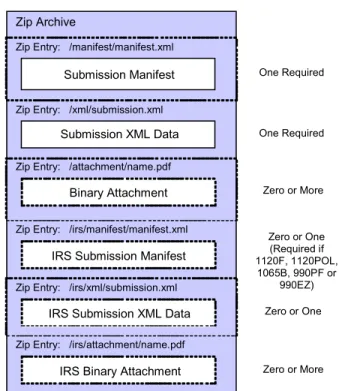
This allows taxpayers to provide information and documentation that is not provided for in a defined XML schema. These attachments are part of the Submission Archive file. This includes information such as the form FTB 8453-C, California e-file Return Authorization for
Corporations, and other miscellaneous schedules, explanations and other information that may
be provided in support of the return.
If a binary attachment is included, then an accompanying CA-BinaryAttachment XML
document should be attached. The CA-Binary Attachment includes elements that provide the following:
FormLineOrInstructionReference – the form and/or line number to which the attachment belongs.
RegulationReference – the regulation and/or publication reference.
Description – provides a meaningful title or explanation for the attachment. AttachmentLocation – Information indicating the file path name of the binary
4.4 Namespace
FTB’s use of namespaces in XML Schemas allow all the vocabulary of type definitions that occur within or under a particular namespace to remain separate and unaffected from definitions in other namespaces. XML vocabularies can co-exist within a schema if they are assigned different monikers or prefixes. We utilize three different Namespaces in CA Business e-file:
The California namespace (http://www.ftb.ca.gov/efile) that does not utilize a moniker or prefix, and is the default namespace for all schemas that are utilized in the California XML return.
The IRS’ namespace (http://www.irs.gov/efile) which has the moniker/prefix “irs:” Note: within the IRS XML return submission, this namespace is the default
namespace and does not have or utilize a moniker or prefix.
The W3C namespace (http://www.w3.org/2001/XMLSchema), which utilizes the moniker/prefix “xsd:” This namespace contains base definitions that govern and define the use and syntax of XML.
4.5 Import and Include Statement
The Import statement allows use of the schemas from a different namespace within the default namespace. The include statement allows use of the schemas from the same namespace within the default namespace. In order to use the federal schemas (e.g., base data types and attachment schemas) in their unaltered state within the California XML return, we use the XML Import statement.
4.6 Return Data Organization
The ReturnData schema files have been organized so that they are easy to locate and appear in the order of their relative importance/significance. First, the documents within ReturnData appear by the general context to which they apply. Within each contextual area, documents are then ordered in alphabetical and numerical sequence.
Required Forms CA Schedules/Forms IRS Forms
CA Referenced Attachments IRS Referenced Attachments
FTB Pub. 1346B 2015 Business e-file Guide for Software Developers and Transmitters 30
4.7 Schema Validation
One of the most significant benefits of using XML and schemas for e-file tax returns is that the XML instance documents (i.e., returns) can be validated against the schemas that define the structure and data types, prior to submitting the return for further processing. This provides the advantage of checking for errors as early as possible. FTB recommends each return (both state and attached federal submissions) be run against a validating parser prior to being submitted to FTB.
Once the transmission file passes initial validation, the e-file system validates the submissions contained in the file. Submission validation consists of two parts: schema validation (state and federal return) and business rule validation (state return only).
Validating Schema Versions
Throughout the year, multiple versions of XML schemas and business rules are posted to ftb.ca.gov. Depending on if the schema change is major or minor; we may not require the schema version found in the return data to match the schema version used by during
validation. In general, there is always one active validating schema version for each return type in a Tax Year.
Minor Schema Changes - When we revise schemas for a return type and change the increment for the minor number, we will continue to accept returns composed using previous schema versions. When the minor number is changed, we allow software developers to decide for themselves, whether they need to use the new version or not based on what is included in their tax preparation software and what changes were made to the schemas. For example:
If the change affects a form or field you do not support, then you may elect not to use the newest version. Returns may be composed using previous published schema versions but we will only validate against the “active validating schema version.” when the return is processed. For example:
If the current schema version is 2015v1.0 and the schema change is minor, we will assign the new number 2015v1.1. The active validating schema version is 2015v1.1. We will continue to accept returns composed using version 2015v1.0. However, all returns (whether composed with version 2015v1.0 or 2015v1.1) will be validated with the new version, 2015v1.1.
Major Schema Change - When we issue revised schemas for a return type and change the increment for the major number, all returns must be composed using the new version number. If returns are composed using previously published schema versions, they will not validate against the active validating schema version when the return is processed.
For example, if the current version is 2015v1.1 and we decide we can no longer accept returns composed using schema version 2015v1.1 (or 2015v1.0), we will assign the new number 2015v2.0. The active validating schema version is 2015v2.0. Returns submitted with 2015v1.1 (or 2015v1.0) will be rejected for using an unsupported schema version.
4.8 Business Rule Validation
Not all requirements for CA Business e-file returns can be satisfied by schema definitions and schema validation. If an XML return passes schema validation, it is then processed against our business rules. Business rules enforce the business requirements as prescribed by our forms, instructions, laws, and regulations. Returns failing business rule validation are rejected and are considered not filed. Please refer to Section 6.7.2 for more information about our business rules and business rule validation.
4.9 Derivation by Restriction and Extension
Derivation by restriction is used to create a derived complex type that is a subset of the base type’s content model. It can also be used to remove an element from the derived type, change an element from required to optional, or to change the occurrence range of an element.
Derivation by extension is used to create a derived complex type that is a superset of its base type’s content model. It can also be used to add extra elements or attributes to the content models of a base type.
FTB Pub. 1346B 2015 Business e-file Guide for Software Developers and Transmitters 32
Section 5 Secure Web Internet File Transfer (SWIFT)
SWIFT is our secure, Internet-based method for the receipt of e-file return transmissions and the return of receipts and acknowledgements. SWIFT is the standard communication method for business e-file. This section provides information about the required data structures for transmitting business e-file returns using the Secure Web Internet Transfer (SWIFT) system. General information about SWIFT is available at our website at:
www.ftb.ca.gov/professionals/taxnews/swift_faq.shtml
5.1 Overview
SWIFT allows batch transfer of returns files quickly and securely via the internet using HTTPS or FTPS. SWIFT utilizes secure mailboxes (“FromFTB” and “ToFTB”) that are accessed by you using your unique SWIFT User ID and Password. With SWIFT the structure and format of the e-file returns and acknowledgements remain the same and conform to the specifications and record layouts contained in this publication.
Use of SWIFT requires you to register for a User ID and password. If you have a SWIFT User ID and password for transmitting individual e-file returns you must obtain a separate user ID and password to transmit business e-file returns.
To obtain a SWIFT User ID and password or to get more information about accessing SWIFT for e-file, contact e-Programs Customer Service at 916.845.0353.
The following are some aspects of the SWIFT system:
Transmitting returns via SWIFT requires use of a unique SWIFT User ID and password. You do not use your ETIN to access SWIFT
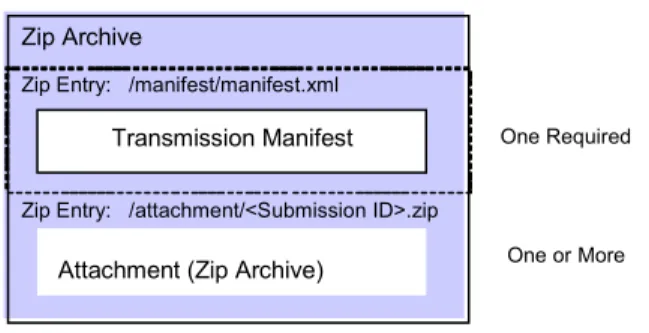
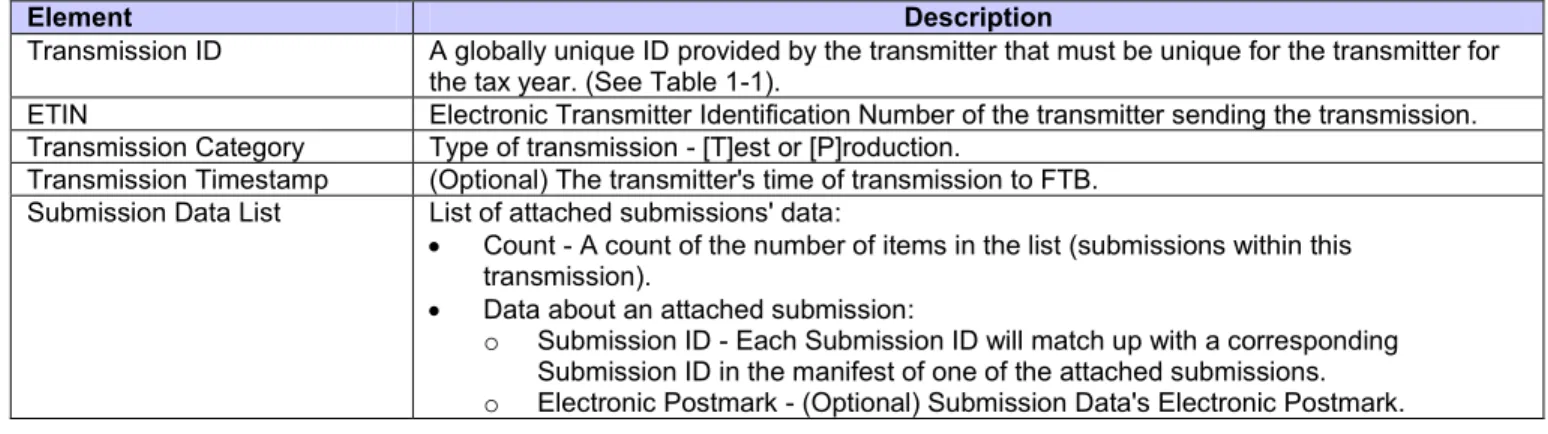
Transmission files sent via SWIFT are compressed (in a ZIP-archive structure) and the ZIP file is uniquely named. Refer to Section 6.2 and Section 6.3 for more information on data compression and file naming conventions.
You must have separate SWIFT mailboxes for Individual e-file and Business e-file. In addition to standard acknowledgements (ACKs), SWIFT also issues receipts to your
“FromFTB” mailbox, verifying our successful receipt of each transmission.
SWIFT does not require you to retrieve your receipts or ACKs prior to transmitting new files; however, we encourage you to regularly download your receipts and
acknowledgements.
5.2 Planned System Maintenance
We are reserving Tuesday mornings from 5:00 a.m. – 7:00 a.m. PST for scheduled system maintenance. We plan to consolidate all non-critical maintenance activity into this window. If you receive a transmission error during this time, please try again after 7:00 a.m., PST. We will notify you via email whenever our system is down, or plans to be down outside the normal maintenance window for longer than one hour.