AN ANALYSIS OF INDIVIDUAL VARIATION IN BEHAVIOR
Emily Schmidt
A dissertation submitted to the faculty at the University of North Carolina at Chapel Hill in partial fulfillment of the requirements for the degree of Doctor of Philosophy in the
Department of Biology in the Graduate School.
Chapel Hill 2015
iii ABSTRACT
Emily Schmidt: An Analysis of Individual Variation in Behavior (Under the direction of Karin Pfennig)
Individual animals within a population often show differences in their behavior. Recently, scientists have begun to study the causes and consequences of individual variation in behavior explicitly rather than attributing differences to observer error or noise. The study of behavioral syndromes, or correlated suites of behaviors, has become especially popular. Here I analyzed the fitness consequences of facultative hybridization - a behavior expressed by some individual female spadefoot toads - and evaluated the stability of a behavioral syndrome across development in the house cricket. First, I examined facultative
hybridization in the spadefoot toad, Spea bombifrons. In Chapter 2, I used a split-clutch design to compare the development, morphology, and fitness of pure S. bombifrons tadpoles and their hybrid half-siblings. I found that hybrid tadpoles developed more quickly than pure
S. bombifrons tadpoles, indicating that female S. bombifrons can benefit from hybridization.
iv
v
vi
ACKNOWLEDGEMENTS
I would like to thank my advisor, Karin Pfennig, for her guidance throughout the course of my PhD. I would also like to thank my committee members – Sabrina Burmeister, Joel Kingsolver, David Pfennig, and Maria Servedio – for all of their feedback and ideas.
Jack Weiss not only figured out the best way to analyze the data presented in Chapter 3, but wrote a detailed document explaining the theory behind his approach and instructions for implementing it in R. He went out of his way to help myself and many others, and he is sorely missed.
I would also like to thank the Pfennig lab members past and present for their feedback on ideas, manuscripts, and presentations; Rob Aldredge and the R group for statistical
advice; and my fellow graduate students for their support.
I thank Catherine Lohmann for allowing me to conduct my research in the Animal Behavior Lab, my fellow TAs for helping me to carry it out, and the many undergrads who participated and collected the data.
I would like to thank all the talented undergraduates I have mentored for helping to collect the data presented in this thesis: Sharon Chen, Kristin King, Emily Smith, Eva Stein, Jennifer Schneider, Matthew Safford, Erica Afanador, Katherine McAllister, Daijha
Copeland, Murad Shah, Kayla Baker, Shannon Johnson, Kristin Collis, Sarah Bradford, Laralee Lynch, Krysta Chirino, Morgan Howell, and Kerry Dillon.
vii
TABLE OF CONTENTS
LIST OF TABLES………..………...x
LIST OF FIGURES………..………...….xi
CHAPTER 1: INTRODUCTION………..………1
CHAPTER 2: DEVELOPMENTAL AND MORPHOLOGICAL DIFFERENCES BETWEEN SPEA BOMBIFRONS AND HYBRID TADPOLES………..….5
Introduction………..………..………5
Methods………..…7
Generation of Tadpoles for Experiment………7
Morphological Measurements………...9
Statistical Analysis……….9
Results………..………10
Overall Results……….10
Morphology………..11
Omnivores Only………...11
Discussion………..………..12
CHAPTER 3: HYBRID MATE CHOICE AS A SPECIES ISOLATING MECHANISM: ENVIRONMENT MATTERS………..………19
viii
Methods………..………..21
Study System………...21
Phonotaxis Tests………..22
Statistical Analysis………...23
Results………..………24
Discussion………..………..25
CHAPTER 4: A BEHAVIORAL SYNDROME VARIES ACROSS ONTOGENY IN THE HOUSE CRICKET, ACHETA DOMESTICUS………..……35
Introduction………..………35
Methods………..………..39
Statistical Analysis………...40
Undergraduate Lab Experiment………...41
Results………..………42
Personality Traits……….42
Behavioral Syndromes……….43
Undergraduate Lab Experiment………...44
Discussion………..………..45
Developmental Experiment……….45
Undergraduate Lab Experiment………...47
ix
APPENDIX A: PERSONALITY IN CRICKETS: AN UNDERGRADUATE
ANIMAL BEHAVIOR LAB EXERCISE………..……….60 APPENDIX B: DO CRICKETS HAVE PERSONALITY? EXPLORING
INDIVIDUAL VARIATION IN CRICKET BEHAVIOR: A LESSON
x
LIST OF TABLES
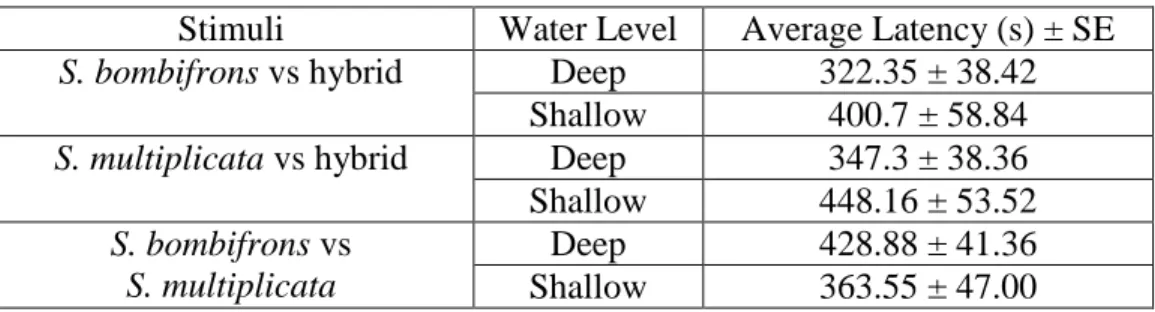
Table 3.1. Latency for hybrid females to choose a stimulus in each trial………...28
Table 3.2. Mean hybrid female preferences for alternative call stimuli in either deep (D) or shallow (S) water………..29
Table 3.3. Probabilities that female hybrid spadefoot toads chose hybrid, S. bombifrons or S. multiplicata calls in deep versus shallow water………...30
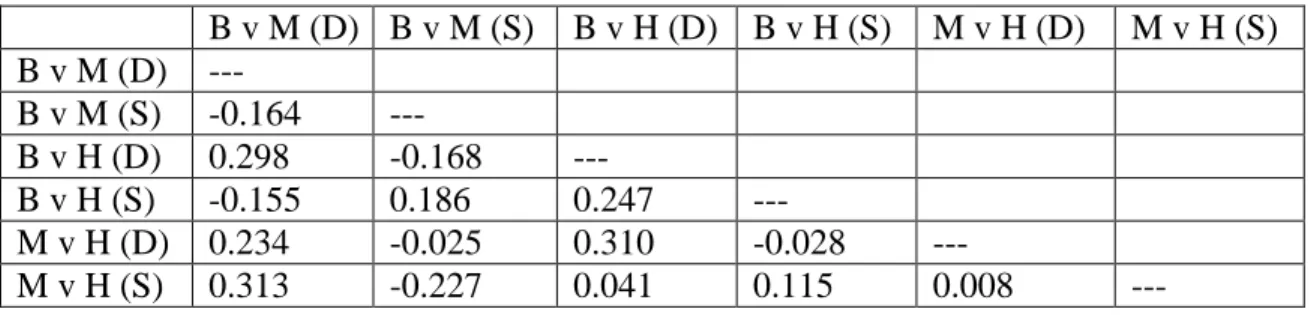
Table 3.4. Spearman correlations (ρ) of preferences across different stimuli pairings……….…31
Table 4.1. Cricket mass by age group………..………49
Table 4.2. Behavioral traits by age group………..………..50
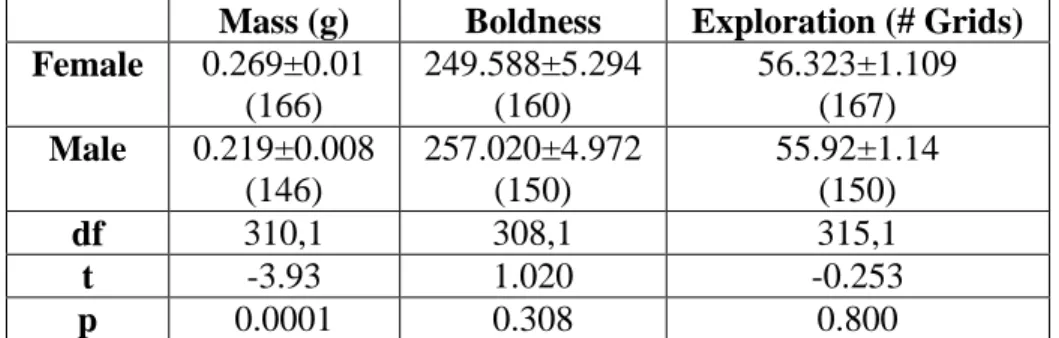
Table 4.3. Sex differences in mass and personality traits………..………..51
xi
LIST OF FIGURES
Figure 2.1. Relationship between maternal mass and tadpole SVL for hybrid
and pure S. bombifrons tadpoles………..……16
Figure 2.2. Tadpole morphology was affected by an interaction between tadpole type and paternal mass………..…………...17
Figure 2.3. Effect of tadpole type and maternal mass on tadpole developmental stage………..………...18
Figure 3.1. Variation in hybrid female preferences………...32
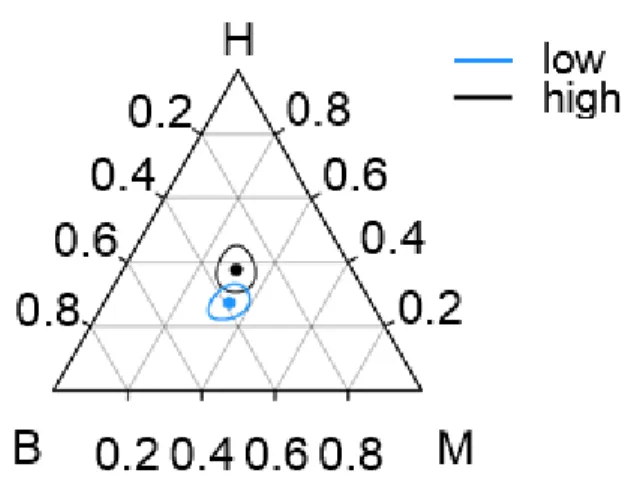
Figure 3.2. Ternary diagram showing combined probabilities (with 95% simultaneous joint confidence regions) of hybrid females choosing hybrid, S. bombifrons or S. multiplicata calls in deep versus shallow water………...34
Figure 4.1. Arena used to measure boldness and exploration………..…………53
Figure 4.2. Individual consistency in boldness (A) and exploration (B) in subadult house crickets measured twice, two days apart………...54
Figure 4.3. Linear discriminant analysis grouping the relationship between boldness and exploration by age………....55
Figure A.1. Female versus male cricket anatomy………..……..62
Figure A.2. Experimental arena for measuring boldness and exploration………..…….64
1
CHAPTER 1: INTRODUCTION
Studies of animal behavior have often documented differences in behaviors between populations, and between individuals within populations. For a long time, individual
differences in behaviors were thought to be the result of error or noise around an adaptive mean level of behavior (Slater 1981; Carere and Maestripieri 2013b). However, recently researchers have begun to focus more explicitly on the causes and consequences of stable individual differences in behaviors. Such differences are important because they suggest that behavioral plasticity in animals is not unlimited (Sih et al. 2004a; Sih et al. 2004b). Instead, evolution may select for and maintain different behaviors, or even particular combinations of correlated behaviors (Wolf et al. 2007).
Research on individual differences in behavior has taken different forms. For example, many studies have focused on why individual females express different mate preferences, or even change their mate preferences over the course of a lifetime (Jennions and Petrie 1997; Cotton et al. 2006). In some cases, certain mate preferences may be adaptive in some environments but not others, such as those with different predation regimes (Russell and Magurran 2006). Such context-dependent mate choice can lead to different mate
preferences in different populations, and could also result in individual females choosing different mates in different environments. In addition, females may vary their mate
2
preferences. In some cases, individual females may even differ in how likely they are to hybridize (Rosenthal 2013).
However, individual differences are not restricted to behaviors involved in sexual selection. In fact, over the last decade the study of behavioral syndromes – also referred to as animal personality – has become one of the fastest-growing fields of research in animal behavior (Sih et al. 2004b; Carere and Maestripieri 2013b). Briefly, behavioral syndromes are correlated suites of behaviors that may have the same underlying proximate mechanisms and/or be favored by natural (Sih et al. 2004b) or sexual selection (Schuett et al. 2010). Individuals reared in different environments may develop different behavioral syndromes, or an individual may express different combinations of behaviors over the course of ontogeny (Stamps and Groothuis 2010a; Stamps and Groothuis 2010b).
In this dissertation, I evaluated individual variation in behavior from different levels of analysis in two different systems. In Chapter 2, I examined the fitness consequences of an intriguing example of variation in female mate preferences: facultative hybridization in the spadefoot toad Spea bombifrons. Where S. bombifrons co-occurs with S. multiplicata in the deserts of the southwestern United States, hybridization between the two species is relatively common. In addition, hybridization tends to be between female S. bombifrons and male S.
multiplicata and is more common in shallow ponds (Pfennig and Simovich 2002). Previous
3
(Pfennig 2007). Pfennig hypothesized that it is adaptive for female S. bombifrons in poor condition to hybridize in shallow ponds because hybrid offspring tadpoles develop more quickly than pure S. bombifrons, and therefore are more likely to metamorphose and escape the pond before it dries (2007). However, the available data supporting this hypothesis were collected from separate hybrid and pure species families. In Chapter 2, I directly evaluated the fitness consequences of hybridization using a split clutch design in which I bred female S.
bombifrons to both S. bombifrons and S. multiplicata males. I then compared the
development, morphology, and fitness of pure S. bombifrons and hybrid tadpoles generated from the same mother. This allowed me to directly test the fitness consequences of
facultative hybridization in S. bombifrons females, a behavior that is both context- and condition-dependent.
In order to fully understand the consequences of facultative hybridization in spadefoot toads, it is also necessary to evaluate the mate preferences of the female hybrid offspring themselves. Hybrid females may prefer other hybrids, prefer one of the parental species, or show no preference at all (Rosenthal 2013). In Chapter 3, I tested the preferences of hybrid Spea females for the calls of S. bombifrons, S. multiplicata, and hybrid males in pairwise tests in both deep and shallow water. This allowed me to test whether female hybrid spadefoot toads display mate preferences, and if those preferences are context-dependent as shown in S. bombifrons. Combined, Chapters 2 and 3 provide crucial insights into the fitness consequences of the facultative hybridization behavior expressed by some S. bombifrons females.
4
syndromes. However, rather than continue my research in the spadefoot toad system, I decided to study behavioral syndromes in the European house cricket, Acheta domesticus. Invertebrates are excellent organisms for the study of behavioral syndromes and have many advantages over vertebrates. In particular, invertebrates are relatively easy to maintain in the lab, reproduce quickly and have relatively short lifespans, allowing researchers to test the large sample sizes required to accurately measure behavioral correlations. Further, it is often easier to manipulate environmental conditions and examine multiple generations in
invertebrates than it is in vertebrates, allowing for detailed developmental studies of behavior (Mather and Logue 2013; Kralj-Fiser and Schuett 2014). Crickets have all of these
advantages and are becoming a popular group in which to study behavioral syndromes (Wilson et al. 2009; Hedrick and Kortet 2012; Niemela et al. 2012a; Niemela et al. 2012b; Niemela et al. 2012c; Sweeney et al. 2013; Dochtermann and Nelson 2014), allowing me to compare my results to those of other studies. In Chapter 4, I measured boldness and
5
CHAPTER 2: DEVELOPMENTAL AND MORPHOLOGICAL DIFFERENCES BETWEEN SPEA BOMBIFRONS AND HYBRID TADPOLES
Introduction
Hybridization between closely related species occurs frequently in nature, yet such matings are often attributed to mistakes in mate choice or reduced choosiness by the female (Veen et al. 2001). In addition, sexual selection theory has generally considered female mating preferences to be static and stable (Andersson 1994). Recent work, however, has revealed that individual females may facultatively alter their mating preferences based on their own condition and/or their external environment (Jennions and Petrie 1997; Widemo and Saether 1999; Hunt et al. 2005; Cotton et al. 2006; Chaine and Lyon 2008; Milner et al. 2010). In some systems, individual females actually prefer to mate with heterospecifics in situations in which hybridizing provides some potential fitness benefit (Lesna and Sabelis 1999; Veen et al. 2001; Pfennig 2007). However, little work has focused on quantifying the fitness benefits of condition-dependent mate choice and facultative hybridization.
6
pure S. bombifrons tadpoles; therefore, hybrid tadpoles are more likely to escape quick-drying ponds than are pure S. bombifrons tadpoles (Pfennig and Simovich 2002; Pfennig 2007). Additionally, although females of both species strongly prefer conspecific males when tested in conditions mimicking deep, slow-drying ponds (Pfennig 2000), some individual female S. bombifrons actually switched their preference and preferred heterospecific males in conditions mimicking shallow, quick-drying ponds (Pfennig 2007). Furthermore, female S.
bombifrons were more likely to switch their preference in shallow water if they were in
relatively poor condition (Pfennig 2007).
Hybrid spadefoot tadpoles are relatively frequent in natural ponds. Although the frequency of hybridization has declined recently, the frequency of hybridization can be as high as 40% in some ponds (Pfennig and Simovich 2002). Despite the apparent benefits of hybridization in terms of the development time of offspring (Pfennig 2007), there are also costs to this behavior. As adults, female hybrid spadefoot toads are less fecund than pure species females (Simovich et al. 1991), and hybrid males are sterile (Wünsch and Pfennig 2013). However, there seem to be few fitness costs for hybrid tadpoles in competition with pure species spadefoot toad tadpoles. In an experimental study, hybrid tadpoles reared with pure species competitors performed as well or better than the pure S. bombifrons and S.
multiplicata tadpoles (Pfennig et al. 2007).
7
distinction from previous work, which compared separate families rather than half-sibships. I predicted that hybrids would develop more quickly than pure S. bombifrons tadpoles,
particularly for females in poor condition. In addition, I also compared size and morphology between the two tadpole types and determined whether parental characteristics such the condition or size of the mother and father affected these metrics.
Methods
Generation of Tadpoles for Experiment
I collected male and female Spea bombifrons and male S. multiplicata from natural breeding aggregations near Rodeo, New Mexico in July 2011. I collected five toads of each type (female S. bombifrons, male S. bombifrons, and male S. multiplicata) from one
population and four of each type from a second population. The breeding at the second population occurred two days after the first, but I used the same methods for both
populations. I measured the mass and snout-vent length (SVL) of all toads at the collection site.
8
eggs with the first male, I removed her and rinsed her off to remove any residual sperm. I then paired her with her assigned male from the other species and removed all individuals after the breeding.
Approximately two days later, when the tadpoles were free-swimming, I randomly selected tadpoles for the experiment. Because the original breeding aggregations were two days apart, I housed the tadpoles from the two different populations in two different rooms at the research station. (Therefore, I included population as a random effect in all analyses – see below.) All other methods were the same. I placed four full-sibling tadpoles into a small box filled approximately halfway with dechlorinated water. I paired each of these boxes with a box containing four half-sibling tadpoles (either S. bombifrons or hybrids) and placed them on racks. I alternated boxes for each individual female and randomized the placement of the
S. bombifrons and hybrid boxes. At the start of the experiment, I set up 410 boxes containing
9 Morphological Measurements
Prior to conducting measurements, I briefly blotted each tadpole to remove residual ethanol. I measured the mass of each tadpole using an electronic scale and the SVL using digital calipers. I then determined the Gosner stage of both the left and right limb bud using standard methods (Gosner 1960) and averaged both for analysis. I also recorded the
mouthparts score of each tadpole from 1-5 as a proxy for trophic morphology such that higher scores indicated a more carnivorous tadpole (Martin and Pfennig 2011). All
measurements were conducted by observers blind to the type of tadpole (hybrid or pure S.
bombifrons) and the identity of the mother.
Statistical Analysis
10
as a random effect. I determined the best model for each of these analyses using AIC. I performed these analyses in R v. 3.0.3 (R Core Team 2014).
Results
Overall Results
When all tadpoles were included in the analysis, there was no effect of tadpole type – aka, whether the tadpole was a S. bombifrons or a hybrid – on tadpole mass (df = 8, t = -0.876, p = 0.41), condition (df = 8, t = 1.324, p = 0.222), or survival (df = 8, t = 0.246, p = 0.811). Tadpole SVL was best explained by an additive model combining tadpole type (coeff: -0.26, df = 8, t = -2.151, p = 0.064) and maternal mass (coeff: 0.108, df = 6, t = 2.345, p = 0.057), although these effects were marginally non-significant (Fig. 2.1).
Maternal condition did not affect tadpole development as measured by Gosner stage (df = 6, t = 0.53, p = 0.615). Instead, after accounting for a marginal additive effect of tadpole type (coef: 0.29, t = 1.93, df = 6, p = 0.101), tadpole developmental stage was affected by a significant interaction between maternal mass and paternal mass (coef: -0.04, t = -2.85, df = 6, p = 0.029).
There was a significant interaction effect between tadpole type and paternal mass on tadpole morphology (coef: -0.193, df = 6, t = -4.1, p = 0.006; Fig. 2.2). However, similar to other studies (Pfennig and Pfennig 2005), in my sample S. bombifrons males were
significantly heavier than the S. multiplicata males used to generate the hybrids (S.
11
0.009), so I cannot tease apart the effects of paternal mass and species on tadpole morphology with these data.
Morphology
I was interested in examining how tadpole morphology, as measured by mouthparts score, affected tadpole development and fitness measures. However, hybrid and S.
bombifrons tadpoles produced significantly different numbers of each morph (X-sq = 72.15,
df = 2, p < 0.0001). I classified tadpoles with a mouthparts score of 1-2 as omnivores, 2.5-3.5 as intermediates, and 4-5 as carnivores. S. bombifrons tadpoles had 516 omnivores, 135 intermediates, and 35 carnivores. Hybrid tadpoles had 616 omnivores, 68 intermediates, and 1 carnivore. Further, the majority of the carnivores – 30 S. bombifrons and the single hybrid – were all produced by the same female. Because morphology can affect tadpole size and development, I repeated my analyses including only those tadpoles classified as omnivores (MP = 1-2). I did not include intermediates in these analyses because at this early stage (10 days old) intermediates were likely developing into carnivores.
Omnivores Only
There were no significant differences in the mouthparts scores of hybrid and S.
bombifrons omnivores (df = 8, t = 0.693, p = 0.508). When I restricted my analyses to
12
produced more developed offspring, and overall hybrids were more developed than S.
bombifrons tadpoles (Fig. 2.3), but the interaction between maternal mass and tadpole type
was not significant (df = 7, t = 0.618, p = 0.556). There was no interaction between maternal condition and tadpole type on tadpole developmental stage (df = 7, t = 0.735, p = 0.486). There were no significant differences between S. bombifrons and hybrid tadpoles in SVL (df = 8, t = -1.245, p = 0.248), mass (df = 8, t = -0.879, p = 0.405), or condition (df = 8, t = -0.2, p = 0.847).
Discussion
Overall, my analysis of the full dataset comparing hybrid tadpoles to their S.
bombifrons half-siblings suggested that while there were no differences in tadpole mass,
survival, or condition, my measures of tadpole development (Gosner stage), size (SVL) and morphology (mouthparts score) were affected by tadpole type (S. bombifrons or hybrid) and parental mass in complicated ways. Tadpole development was affected by an interaction between maternal and paternal mass and a non-significant additive effect of tadpole type. S.
bombifrons were larger than hybrid tadpoles and SVL increased with maternal mass, but
these additive effects were marginally non-significant. Finally, tadpole morphology was not affected by type, but heavier fathers produced more carnivorous offspring. However, these effects are difficult to interpret given the limitations of my design. My tadpoles were
13
intermediates. Therefore, I repeated my analyses focusing only on omnivores and focusing on tadpole type and maternal measurements rather than paternal measurements.
I found that omnivorous hybrid and S. bombifrons tadpoles did not differ in survival, mass, SVL, condition, or mouthparts score. Only developmental stage was affected by
tadpole type, such that hybrids were more developed at the end of the 10 day experiment than pure S. bombifrons. Further, there was also an additive effect of maternal mass, such that heavier females produced more developed tadpoles. However, there was no significant interaction between tadpole type and maternal condition, indicating that females in poorer condition did not gain more of a benefit from hybridizing in terms of development time than females in better condition. This is contrary to the predictions I made due to the fact that adult female S. bombifrons in poor condition are most likely to switch from preferring conspecifics in deep water to preferring S. multiplicata – aka, are more likely to hybridize – in shallow water (Pfennig 2007). However, in this experiment I was only able to compare hybrid and pure species offspring from nine S. bombifrons females. A larger sample size is needed to determine if the magnitude of the benefit female S. bombifrons receive from hybridizing is related to their condition.
14
competitors (Pfennig et al. 2007) suggest that hybrid spadefoot toads do not suffer fitness costs at the tadpole stage. In fact, in the only metric for which I found significant differences between hybrid and S. bombifrons tadpoles – developmental stage – hybrids actually had an advantage over pure species tadpoles. This result confirms previous measurements of hybrid
and S. bombifrons tadpoles produced by separate females which found that hybrids
developed more quickly (Pfennig 2007). Further, although I did not find a significant role of maternal condition on tadpole development, I did find an effect of mass such that heavier females produced tadpoles that were more developed. Although the interaction between maternal mass and tadpole type was not significant, this does suggest that maternal fitness can play a role in how quickly hybrid tadpoles develop.
My results and those of other studies (Pfennig et al. 2007) show that hybrid tadpoles are not at a competitive disadvantage relative to S. bombifrons tadpoles, and in fact have an advantage in that hybrids can develop and escape shallow ponds more quickly than pure S.
bombifrons. The importance of rapid development time in this system is believed to have led
15
rapidly drying ponds – and for at least some adult female hybrids to successfully reproduce with pure species males – has contributed to recent range expansion in S. bombifrons (Chunco et al. 2012). That is, hybridization with S. mulitplicata may be allowing S.
bombifrons to expand into drier habitats in which they would not usually be able to survive
16
17
18
Figure 2.3. Effect of tadpole type and maternal mass (g) on tadpole developmental stage. Hybrids were more developed than S. bombifrons tadpoles. Within both hybrids and S.
19
CHAPTER 3: HYBRID MATE CHOICE AS A SPECIES ISOLATING MECHANISM: ENVIRONMENT MATTERS
Introduction
A central goal of biology is to understand how new species arise and remain distinct (Coyne and Orr 2004; Grant & Grant 2008; Price 2008; Pfennig & Pfennig 2012). Under the biological species concept, species are defined as evolutionarily distinct groups that do not exchange genes because they have evolved traits––‘isolating mechanisms’––that prevent gene flow between them (Mayr 1963; Coyne and Orr 2004). A major class of these isolating mechanisms consists of maladaptive traits in hybrids that prevent them from backcrossing to either parent population (Barton and Hewitt 1985; Coyne and Orr 2004). Hybrid
maladaptation therefore plays a key role in speciation. Consequently, identifying the causes of such maladaptation is crucial to understanding the origins and maintenance of biodiversity (Coyne and Orr 2004; Abbott et al. 2013).
20
2006; Svedin et al. 2008; Clark et al. 2010; Lemmon and Lemmon 2010; Rosenthal 2013). Alternatively, hybrids might express mate preferences that reduce their likelihood of mating with fitness-enhancing mates; for example, hybrids might possess intermediate preferences for hybrid males (Hoy et al. 1997, Doherty & Gerhardt 1983, Ritchie 2000, Selz et al. 2014) that are sterile or otherwise poor quality mates. In extreme cases, such dysfunctional
reproductive behavior could render viable, fertile hybrids ‘behaviorally sterile’, thereby acting as a key isolating mechanism between species (Noor 1997, Russell and Magurran 2006).
In systems where hybrids reproduce with parental species, mate preferences that influence to which parental species they mate will determine patterns of gene flow between species, including whether such gene flow is directional (Christophe and Baudoin 1998; den Hartog et al. 2010; Charpentier et al. 2012; Veen et al. 2012; Rosenthal 2013; Culumber et al. 2014; Latour et al. 2014; Paczolt et al. 2015). Moreover, because female mate choice can depend on the environment or female condition (Cotton et al. 2006), the impact of hybrid mate choice on the extent and pattern of introgression between species could vary in space or time. Thus, evaluating hybrid mate choice and whether it varies across different contexts is critical for explaining reproductive isolation and patterns of gene exchange, if any, between species (Svedin et al. 2008; Rosenthal 2013).
21 Methods
Study System
I studied first-generation (F1) hybrid females of two spadefoot toads: Spea
bombifrons and S. multiplicata. These species hybridize in the southwestern United States
and northern Mexico (Pfennig et al. 2012). Hybrids are viable; however, F1 hybrid females produce half as many eggs as pure-species females whereas F1 hybrid males are sterile (Simovich et al. 1991; Wünsch and Pfennig 2013). Hybrid males attempt to attract mates, but their calls are intermediate between those of pure-species males (Pfennig 2000). If hybrid females possess intermediate preferences for sterile males, this could lead to selection disfavoring hybrid females.
Because of the costs of hybridization in Spea, female S. multiplicata avoid hybridizing where the two species co-occur (Pfennig 2000; Pfennig and Rice 2014). Likewise, S. bombifrons females also avoid hybridization (Pfennig 2007). However, in certain environments – specifically shallow, rapidly drying ponds – S. bombifrons females benefit by hybridizing (Pfennig 2007). Hybrid tadpoles develop faster than pure S.
bombifrons tadpoles, so hybrids are more likely to reach metamorphosis and therefore
survive in shallow, highly ephemeral pools (Pfennig and Simovich 2002; Pfennig 2007). By contrast, in deep, long-lasting ponds, S. bombifrons females receive no such benefit because
S. bombifrons tadpoles can escape the ponds (Pfennig and Simovich 2002; Pfennig 2007).
context-22
dependent preferences could be inherited by hybrid females and impact their mate choice decisions.
Phonotaxis Tests
I tested the mate preferences of 20 gravid, lab-bred F1 hybrid females. The females were derived from 12 families (i.e., some females were siblings). For 10 females S.
bombifrons was maternal, and for 10 females S. multiplicata was maternal.
Each female was presented with the following pair-wise choices of male call stimuli: F1 hybrid calls versus S. multiplicata calls; F1 hybrid calls versus S. bombifrons calls; and S.
bombifrons calls versus S. multiplicata calls. For each pairwise combination, each female
was tested four times in deep water and four times in shallow water. The order in which females were presented the call pairings and water level was random. The call stimuli were synthesized and consisted of average parameters for each call type (Pfennig 2000, 2007).
23
four trials per water level. If a female did not touch a speaker within 30 minutes, she was considered non-responsive in that test.
Statistical Analysis
I determined whether females differed in their responsiveness to male call pairings or to the different water levels by contrasting latency time to choose for these variables using Wilcoxon tests. I also contrasted the overall average time hybrid females took to choose a stimulus with the mean time measured previously for pure species females. To do so, I used a Wilcoxon test to determine if the overall mean for hybrids differed from the hypothesized mean of 439 seconds, which is a previously measured combined mean to choose between conspecific and heterospecific calls across different water levels for S. multiplicata and S.
bombifrons females (Pfennig 2007).
To contrast female preferences for the three types of males across the different water levels, I used a Cox proportional hazards regression analysis and clustered the data by
individual (J. Weiss, unpublished MS). This analysis allowed me to combine the information from multiple testing of each female for multiple call stimuli. I could thereby contrast the overall probabilities of a female choosing the hybrid, S. multiplicata, or S. bombifrons calls in deep versus shallow water across all tests to determine whether water level had a
24
Finally, to visualize variation in female mate choice behavior I calculated the
percentage of four trials within a test that each female chose a hybrid call, or the percentage of trials she chose the S. bombifrons call for the S. bombifrons vs S. multiplicata trials. I also tested to see whether these preferences were correlated with one another by performing Spearman correlations in JMP v 9.0.
Results
I found that hybrid females did not differ in the time taken to choose a stimulus depending on either the call-pair stimuli (Χ2 = 1.22, df = 2, p = 0.545) or on water level (Χ 2 = 0.21, df = 1, p = 0.646; Table 3.1). However, hybrid females overall responded more quickly to the stimuli (mean time to choose (+/- SD) = 385.2 (98.33) sec) than did pure-species females from a previous study that had been presented conspecific versus
heterospecific calls across the two water levels (Wilcoxon signed rank = -57; df = 19, p = 0.033).
25
I found a significant interaction between water level and the probability of choosing
S. multiplicata calls: in shallow water the probability that a female would choose S.
multiplicata over hybrid calls increased relative to deep water (Z = 2.122, p = 0.034). By
contrast, I found no interaction between depth and the probability of choosing S. bombifrons calls versus hybrid calls (Z = 0.475, p = 0.635). Thus, water level affected the probability that a female chose hybrid calls over S. multiplicata calls, but not the probability that a female chose hybrid calls over S. bombifrons calls. Finally, I found that females became more likely to choose S. multiplicata over S. bombifrons in shallow water relative to deep water (Z = 2.087, p = 0.037). Female preferences were not correlated across tests or environments (Table 3.4).
Discussion
I used pair-wise choice tests in deep and shallow water to evaluate the preferences of hybrid females for the calls of pure-species males and sterile hybrid males. Hybrid females did not express a significant preference for any particular male type except in deep water. In the deep-water environment, spadefoot toad hybrid females preferred the calls of sterile hybrid males versus those of S. multiplicata, indicating that hybrid female mate preferences could be maladaptive in at least some circumstances. Spadefoot females breed no more than once per year, so choosing a sterile mate carries severe lifetime fitness costs. Critically, such behavior would lower the incidence of backcrossing to either parent species, and therefore reduce gene flow between the two species.
26
ecological performance (Rosenthal 2013). Nevertheless, my results comport with an
emerging body of evidence (Noor 1997, Russel & Magurran 2006, Svedin et al. 2008, Clark et al. 2010, Lemmon & Lemmon 2010, Latour et al. 2014), which reveals that maladaptive hybrid mating behaviors could contribute to reproductive isolation between species.
Despite finding that hybrid mate preferences can potentially serve as an isolating barrier in at least some conditions, my results also reveal that hybrid mate choice depends on a female’s environment. Female mate choice is often context- or condition-dependent
(Cotton et al. 2006). In the case of spadefoots, hybrid females did not switch their mate preferences from one male type to another (as occurs in pure-species S. bombifrons females). Instead, hybrid females as a group appear to become less choosy depending on habitat type or males that are encountered.
Generally, the possibility that female hybrids might vary their mate choice behavior in this way has two key implications. First, whether hybrid mate choice is an effective
isolating mechanism will depend on the environment. Second, patterns of hybrid mate choice (and how they vary with the environment) can impact the directionality, if any, of
introgression between species (Christophe & Baudoin 1998, den Hartog et al. 2010,
27
Moreover, if hybrid females mate randomly, then the relative frequencies of male types in a population can also contribute to mating patterns (Malmos et al. 2001, Culumber et al. 2014). Thus, the extent to which relative male abundance dictates patterns of introgression will likely depend on the strength of female preferences. When hybrid mate preferences are weakly expressed (e.g., as in the spadefoots in shallow water habitats; Table 3.2), the relative frequencies of different male types might be more important to reproductive isolation – or lack thereof – than when mate preferences are stronger (e.g., as in the spadefoots in deep water habitats; Table 3.2), especially if females reject non-preferred males.
28
Table 3.1. Latency for hybrid females to choose a stimulus in each trial. There were no significant differences in latency across the different trials.
Stimuli Water Level Average Latency (s) ± SE
S. bombifrons vs hybrid Deep 322.35 ± 38.42
Shallow 400.7 ± 58.84
S. multiplicata vs hybrid Deep 347.3 ± 38.36
Shallow 448.16 ± 53.52
S. bombifrons vs
S. multiplicata
29
Table 3.2. Mean hybrid female preferences for alternative call stimuli in either deep (D) or shallow (S) water. Females were presented pairwise call stimuli of S. bombifrons (B), S.
multiplicata (M) or F1 hybrid (H) males. Preferences are presented as percent S. bombifrons
(in B v M trials) or percent hybrids (in B v H and M v H) chosen across repeated presentation of a given stimulus set. Random mating is 50%.
Call Stimuli Mean preference (SD), % B v M (D) 57.1 (23.49)
30
Table 3.3. Probabilities that female hybrid spadefoot toads chose hybrid, S. bombifrons or S.
multiplicata calls in deep versus shallow water. Different letters signify differences within
environment; bold face indicates significant difference between environments.
Call Type Deep Water Shallow Water
Hybrid 0.388 a 0.318a
S. bombifrons 0.339 a,b 0.306 a
31
Table 3.4. Spearman correlations (ρ) of preferences across different stimuli pairings. All are p > 0.15. B = S. bombifrons; M = S. multiplicata; H = F1 hybrids; D = deep water
environment; S = shallow water environment. N = 20 for all.
B v M (D) B v M (S) B v H (D) B v H (S) M v H (D) M v H (S) B v M (D) ---
B v M (S) -0.164 ---
B v H (D) 0.298 -0.168 ---
B v H (S) -0.155 0.186 0.247 ---
M v H (D) 0.234 -0.025 0.310 -0.028 ---
32 A.
33
Figure 3.1. Variation in hybrid female preferences. The boxplots show average preferences of 20 hybrid Spea females for the hybrid or S. bombifrons stimulus across all four trials by water level, with 50% indicating preference is not different from random. A. S. multiplicata vs hybrid. Females preferred hybrid calls in deep water, but showed no preference in shallow water. B. S. bombifrons vs hybrid. Females showed no preference for either call in deep or shallow water. C. S. bombifrons vs S. multiplicata. Females showed no preference for either call in deep or shallow water.
34
Figure 3.2. Ternary diagram showing combined probabilities (with 95% simultaneous joint confidence regions) of hybrid females choosing hybrid (H), S. bombifrons (B) or S.
35
CHAPTER 4: A BEHAVIORAL SYNDROME VARIES ACROSS ONTOGENY IN THE HOUSE CRICKET, ACHETA DOMESTICUS
Introduction
Over the past decade, there has been a surge of interest in the relatively new field of animal personality. While various researchers have identified this field by different names (e.g. animal personality (Dall et al. 2004; Gosling 2008; Carere and Maestripieri 2013a); coping style (Koolhaas et al. 1999); temperament (Reale et al. 2007); behavioral syndromes (Sih et al. 2004a; Sih et al. 2004b)), they all describe the same idea: individual behaviors do not vary independently from one another, but instead are often correlated across time and/or contexts. Here I will use the term behavioral syndromes and identify the individual behaviors involved in these syndromes as personality traits. Reale et al.(2007) identified five major personality traits: (1) boldness, or behavior under risky situations; (2) exploration, defined as activity in a novel environment; (3) general activity level in a familiar environment; (4) aggression toward conspecifics; and (5) sociability, or the tendency to associate with conspecifics. Correlations between any or all of these traits may comprise a behavioral syndrome in a particular species or population.
36
such as under the threat of predation, but the rank-order differences between individuals will be maintained (Sih et al. 2004b). Although some studies focus only on variation in individual personality traits (Smith and Blumstein 2008), it is the study of the correlations between these traits that represents a relatively new way of thinking in behavioral ecology (Bell 2007).
The existence of behavioral syndromes suggests that the behaviors involved do not evolve independently, and that organisms do not show unlimited behavioral plasticity (Sih et al. 2004b). One potential explanation for the existence of behavioral syndromes is that correlations between behaviors due to similar proximate mechanisms prevent individuals from reaching independent evolutionary optima for each behavior (Sih et al. 2004b). This may explain the persistence of suboptimal behaviors, as selection for one behavior may promote or restrict the expression of another (Sih et al. 2004a; Sih et al. 2004b; Reale et al. 2007; Sih et al. 2012). Evidence for this hypothesis has been found in a species of
Amazonian social spider (Pruitt et al. 2010), in which the same behavioral syndrome is found in geographically distant populations that vary in their ecological conditions and selective environments.
However, another major explanation for the existence of behavioral syndromes suggests that particular behavioral correlations can be favored by natural selection
37
this claim (Bell and Stamps 2004; Dingemanse et al. 2004; Bell 2005; Bell and Sih 2007; Dingemanse et al. 2007; Herczeg et al. 2009).
Despite the wealth of recent studies focusing on behavioral syndromes and their implications for evolution, the stability of behavioral syndromes across development has been characterized for relatively few species (Stamps and Groothuis 2010a; Stamps and Groothuis 2010b). Developmental studies of behavioral syndromes are critical for understanding the proximate mechanisms that dictate correlations between behaviors (Stamps and Groothuis 2010a). Behavioral syndromes may remain stable throughout
38
In this study, I sought to determine whether behavioral syndromes are stable across development in the house cricket, Acheta domesticus. Crickets are an attractive system for studying behavioral syndromes due to their wide array of well-characterized behaviors and the relative ease with which they can be reared in the lab. Although a number of studies have looked at field crickets in the genus Gryllus (Niemela et al. 2012a; Niemela et al. 2012b; Niemela et al. 2012c), to date there has been only one study on behavioral syndromes in the European house cricket Acheta domesticus (Wilson et al. 2009). They found that exploratory males and females were also bolder following a simulated predation event, but their study did not incorporate a developmental component. Another study showed that exploratory behavior is repeatable in the house cricket (Dochtermann and Nelson 2014), but the authors did not examine any other personality traits. A developmental study found that in the cricket G.
integer, juveniles were bolder than adults (Niemela et al. 2012b), but that study did not
measure other behavioral traits and therefore did not examine the development of a behavioral syndrome.
39
using the same methods and compared the results to those found in the developmental experiment.
Methods
I obtained fresh supplies of ¼”, ½”, and adult house crickets from a commercial vendor at the start of each week. I designated ¼” crickets as juveniles and ½” crickets as subadults. Upon arrival, I transferred crickets into ten-gallon aquaria and provided them with egg carton shelters and plenty of food and water to reduce competition. Each week, the order in which crickets were tested was randomized with respect to age and sex. The experiment lasted a total of three weeks and I tested a total of 480 crickets.
I measured boldness and exploration in the same arena (Fig. 4.1). I placed the cricket into a small covered plastic refuge and allowed it to habituate for 2 minutes. After the habituation period, I lifted the cover so that the exit was available. I recorded the latency for each cricket’s entire body to emerge from the refuge. This time served as a measure of boldness. If the cricket did not emerge after 5 min, I recorded its latency as 300 seconds and gently coaxed the cricket out of the refuge. After each cricket left the refuge, I replaced the plastic cover so that the cricket could not return to the refuge.
40
After each cricket was tested, I placed it into a small glass vial and then placed it into the freezer for several hours before immersing the cricket in ethanol. Later, I measured the wet mass of each cricket and used electronic calipers to measure its head width.
Measurements were taken under a microscope, and if a juvenile had a small ovipositor its sex was recorded as female. All other juvenile crickets were designated as unknown sex. Four trained undergraduate research assistants assisted with all the behavioral and morphological measurements for this experiment.
In a separate experiment, I tested the behavior of twenty subadult crickets two days apart to see if individuals were consistent in their behavior. These crickets also served as the control animals for an undergraduate’s experiment, and were placed in a freezer for
approximately five minutes after the first behavioral tests. All crickets resumed normal behavior after freezing.
Statistical Analyses
The boldness score for each individual was 300 s (the maximum time in the refuge) minus the time it took the cricket’s full body to emerge from the refuge. All measures of exploration were significantly correlated with one another, so I used the number of grids a cricket entered across the 5 min exploration trial as my measure of exploration when testing for correlations. I chose to use this measure as opposed to performing a principal components analysis in order to compare my results to other studies using the same methods. Similarly, head width and mass were highly correlated (p<0.0001) so I focused on mass in my analyses. When testing whether sexes differed in personality traits or behavioral syndromes, I
41
juveniles. I used t-tests and ANOVAs with post-hoc Tukey’s HSD tests to test whether age groups and/or sexes differed in mass or behavioral traits. I used Spearman’s correlations to determine whether boldness and exploration were correlated in the same individuals two days apart. I also performed Spearman’s correlations to determine whether there were significant correlations between mass, boldness and exploration both across individuals and within sexes or age groups. Finally, I used a MANOVA to determine whether the relationship between boldness and exploration differed across age groups or sexes and linear discriminant analysis to group this relationship by age group. All analyses were performed in JMP v. 9.0 (SAS Institute 2010) except the MANOVA and linear discriminant analysis, which were performed in R v. 3.0.3 (R Core Team 2014). All measurements are reported as means ± standard errors.
Undergraduate Lab Experiment
In the fall semester of 2014, I performed a cricket personality lab in the Animal Behavior Lab course at UNC-Chapel Hill (see Appendix A). The lab had 8 sections taught by four different Teaching Assistants, including the author, who trained the other TAs in the methodology for the experiment. Students carried out the experiment in groups of 3-5 and were responsible for testing 5 crickets each. Using the same methods as above, they measured boldness and exploration for 148 A. domesticus crickets over the course of one week and I tested to see whether these behaviors were significantly correlated with one another. Each table had testing arenas that were the same except for the novel objects used and their locations on the grid. I obtained these crickets from the Pfennig lab’s supply of A.
42
shown that it was difficult for students to reliably measure crickets so I did not measure mass or length in this experiment.
In the spring semester of 2015, I performed this lab again. This time, I ordered the crickets from a different company and received adult tropical house crickets, Gryllodes
sigillatus. All other methods were the same, and over the course of one week the students
tested 135 crickets. I tested to see if boldness and exploration were correlated with one another in this species. For the lab experiments, ~200 crickets were housed together in an aquarium and provided with plenty of shelters and ad libitum food and water. Therefore, densities throughout the week varied similarly to the main experiment described above. Each cricket was tested once and returned to a separate aquarium.
Results
Personality Traits
The three different age groups showed significant differences in mass (df = 467,2, F = 416.124, p < 0.0001), with Tukey’s HSD post-hoc tests revealing all three groups to be significantly different from one another (p < 0.0001; Table 4.1). Boldness did not vary by age group (df = 468,2, F = 0.548, p = 0.578), but there were significant differences across age groups in all measures of exploration (Table 4.2). All measures of exploration were
43
The subadult crickets that I tested twice, two days apart, showed consistent boldness and exploration behaviors (Fig. 4.2). The average boldness score was 231.55 for the first test and 217.30 for the second test, and these scores were significantly correlated with one another (ρ = 0.622, p = 0.003). The average exploration score was 58.00 for the first test and 59.20 for the second test, and these scores were also significantly correlated (ρ = 0.791, p < 0.0001).
Behavioral Syndromes
When all individuals were included in the analysis, I found that exploration (as measured by the number of grids entered during the 5 min exploration trial) was significantly positively correlated with boldness (ρ = 0.14, p = 0.002). Further, exploration was also significantly positively correlated with mass (ρ = 0.214, p < 0.0001). There was no correlation between mass and boldness (ρ = -0.052, p = 0.262).
44
explained 94.1% of the variation in the data (eigenvalue = 2.282, boldness coefficient = -0.008, exploration coefficient = 0.07; Fig. 4.3).
Based on the results of the MANOVA, I looked at the correlations between boldness, exploration, and mass for juveniles, subadults, and adults separately. I found that while boldness and exploration were significantly correlated in adults and subadults, these behaviors were not correlated in juveniles. Further, juveniles showed a significant positive correlation between mass and exploration (Table 4.4).
Undergraduate Lab Experiment
In the fall 2014 experiment, 54 crickets were identified as females and 94 were designated of unknown sex. Females were significantly bolder (262.111 ± 9.741) than crickets of unknown sex (226.766 ± 11.005, df = 0146, t = -2.168, p = 0.032), but unknown crickets could be males or immature females. Females and unknown crickets showed no significant difference in exploration as measured by the number of grids they entered (Females 44.907 ± 1.988, Unknown 44.394 ± 1.720, df = 146, t = -0.189, p = 0.851). There was not a significant correlation between boldness and exploration in the A. domesticus crickets, but the correlation did trend toward significance (ρ = 0.1364, p = 0.0982).
In the spring 2015 experiment, the students tested 73 female and 62 male G.
sigillatus. Females and males did not show significant differences in boldness (Females
45
sigillatus crickets showed a highly significant positive correlation between boldness and
exploration (ρ = 0.4271, p < 0.0001).
Discussion
Developmental Experiment
I found that juvenile, subadult and adult European house crickets did not show differences in boldness, unlike in the cricket G. integer, where juveniles were bolder than adults (Niemela et al. 2012b). However, crickets of different age groups did show differences in exploratory behavior: specifically, juveniles were less exploratory than adults. I also did not find any differences in the behavior of male and female crickets when juveniles were excluded from the analysis. Further, individual subadult crickets showed consistent behavior when measured twice, two days apart, which suggests that boldness and exploration are personality traits in this species.
46
syndrome linking boldness and exploration emerges later in development in A. domesticus, and this may be due to an increase in exploratory behavior in older, larger crickets.
Other studies have found that behavioral syndromes can emerge later in development, and have generally linked this emergence to selection by predation events occurring at the juvenile stage (Bell and Sih 2007; Adriaenssens and Johnsson 2013). However, it is unlikely that such an event occurred in the facility in which my crickets were raised. Another study on firebugs found that while correlations between behaviors remained stable across
development, adults became less bold and exploratory than juveniles after their final ecdysis (Gyuris et al. 2012). Therefore, it is possible that physiological changes leading up to the crickets’ final molt are correlated with the developmental changes in behavior found in this study.
Unfortunately, due to experimental constraints I was not able to measure the behavior of individual crickets at multiple points across development. Further, because I ordered my crickets from a commercial supplier, I cannot tell whether my results are due to changes within the organisms or responses to changes in diet, density, or other environmental factors that may have been altered before I received the crickets. Longitudinal studies of individual crickets reared in different environments will be needed to distinguish between these
47
that follow individual crickets over ontogeny will allow me to determine what factors dictate the emergence of a behavioral syndrome in A. domesticus.
Undergraduate Lab Experiment
In two different semesters of Animal Behavior Lab at UNC-Chapel Hill, I examined behavioral syndromes in two different species: the European house cricket A. domesticus and the tropical house cricket G. sigillatus. The undergraduate students did not find a significant correlation between boldness and exploration in the 148 A. domesticus they tested in Fall 2014, although the p-value was less than 0.1. In that particular semester, I did not have access to adult A. domesticus and the students tested both juvenile and subadult crickets. As a result, I also could not reliably distinguish between males and females. As my results above show, juvenile house crickets do not appear to have a behavioral syndrome linking boldness and exploration. Therefore, it is likely that the correlation in this experiment was not significant because the students tested a mix of age groups but did not distinguish between them on their data sheets. In addition, in my developmental study the significant correlation between boldness and exploration was still relatively weak, with a Spearman’s correlation of 0.14. Therefore, it is also possible that having many different students test a comparatively low number of crickets in the chaotic undergraduate lab environment made the behavioral syndrome more difficult to detect.
48
commercial supplies of A. domesticus in the United States and elsewhere (Szelei et al. 2011), the tropical house cricket has emerged as one of several alternative species in the market. The fact that I found such a strong correlation between boldness and exploration in G. sigillatus tested in a chaotic lab environment suggests that this species could be an excellent system for further studies of behavioral syndromes. Controlled studies conducted by a small number of observers will be needed to confirm my results from the undergraduate lab experiment, but it is promising that such a strong relationship emerged even in a relatively uncontrolled
49
Table 4.1. Cricket mass by age group. All age groups had significantly different masses (Tukey’s HSD, p < 0.0001).
50
Table 4.2. Behavioral traits by age group. Sample sizes are given in parentheses for each measurement. Crickets of different ages did not differ in boldness, but showed significant differences for all measurements of exploration. Tukey’s HSD post-hoc tests revealed that: adults entered more grids than juveniles (p = 0.007); adults took less time to touch an object than both subadults (p = 0.0003) and juveniles (p < 0.0001); all three groups differed in the number of objects touched (p < 0.05); and juveniles crossed the center lines fewer times than both adults (p < 0.0001) and subadults (p = 0.028).
Boldness # Grids Entered Time to Touch First Object (s) # Objects Touched # Times Crossed Center Lines Adults 255.197±5.182
(157) 56.932±1.088 (161) 42.307±3.841 (150) 2.255±0.071 (161) 32.398±1.383 (161) Subadults 252.761±4.943
(159) 55.241±1.122 (162) 73.278±6.266 (144) 1.975±0.082 (162) 28.525±1.363 (162) Juveniles 259.800±4.277
(155) 52.000±1.206 (156) 80.703±7.13 (118) 1.577±0.091 (156) 23.814±1.098 (156)
df 468, 2 476,2 409,2 476,2 476,2
F 0.548 4.797 12.882 17.247 10.973
51
Table 4.3. Sex differences in mass and personality traits. Only adults and subadults were included in these analyses, as we could not distinguish the sexes in juveniles. Sample sizes are given in parentheses for each measurement. Females were larger than males, but there were no sex differences in boldness or exploration as measured by the number of grids entered.
Mass (g) Boldness Exploration (# Grids) Female 0.269±0.01
(166)
249.588±5.294 (160)
56.323±1.109 (167) Male 0.219±0.008
(146)
257.020±4.972 (150)
55.92±1.14 (150)
df 310,1 308,1 315,1
t -3.93 1.020 -0.253
52
Table 4.4. Correlations between boldness, exploration, and mass by age group. Exploration-Boldness Exploration-Mass
Spearman’s ρ p Spearman’s ρ p
Adults 0.1575 0.0496* 0.045 0.569
Subadults 0.2366 0.0027* 0.1425 0.0751
53
54
55
56
CHAPTER 5: CONCLUSIONS
In my dissertation research, I evaluated the causes and consequences of individual differences in behavior in spadefoot toads and European house crickets. First, I measured the fitness consequences of hybridization in the spadefoot toad S. bombifrons. Previous studies have shown that individual female S. bombifrons hybridize with male S. multiplicata in certain environments. Specifically, hybridization occurs most often in shallow ponds that are likely to dry out quickly (Pfennig and Simovich 2002), and females in poor condition are most likely to hybridize (Pfennig 2007). In Chapter 2, I evaluated the fitness consequences of hybridization by performing a split-clutch experiment in which I bred female S. bombifrons with both S. bombifrons and S. multiplicata males, creating half-sibships of pure species and hybrid tadpoles that shared the same mother. After ten days, I preserved the tadpoles and later measured their development (as measured by Gosner stage), morphology (as measured by mouthparts score), and other measures of fitness (snout-vent-length, mass, condition, and survival). I found no differences between hybrid and S. bombifrons tadpoles for most of my measurements. However, in accordance with previous studies (Pfennig 2007), I found that hybrid tadpoles were more developed than S. bombifrons tadpoles. Although the benefit of hybridization did not depend on maternal condition as originally predicted, increased maternal mass was associated with more developed tadpoles of both types. Overall, my results in Chapter 2 confirm that when the identity of the mother is controlled for
57
suggests that although hybridization is still costly at the adult stage (Simovich et al. 1991; Wünsch and Pfennig 2013), hybridizing S. bombifrons females do not suffer immediate consequences in terms of the fitness of their offspring at the tadpole stage, and in fact can benefit from the increased ability of their offspring to develop quickly and escape rapidly drying ponds.
I next looked at the behavior of the hybrid offspring themselves. In Chapter 3, I measured the mate preferences of female hybrid Spea for three different pairs of male call stimuli – S. bombifrons vs hybrid, S. multiplicata vs hybrid, and S. bombifrons vs S.
multiplicata – in conditions mimicking both deep and shallow ponds. Although there was
variation in the preferences of individual females, in most cases hybrid females did not show significant preferences for any stimuli. However, in deep water, females significantly
58
Finally, I decided to examine behavioral variation in individuals in more detail and conducted a study of animal personality, or behavioral syndromes, in the European house cricket, Acheta domesticus. In Chapter 4, I tested if house crickets display a behavioral syndrome linking boldness and exploration, and if that behavioral syndrome varies across developmental stages. By measuring the behaviors of three different groups of crickets – juveniles, subadults, and adults – I found that overall, boldness and exploration were significantly positively correlated and therefore comprise a behavioral syndrome in this species. However, when I looked at the different age groups I found that there was no correlation between boldness and exploration in juvenile crickets. Instead, the behavioral syndrome linking these behaviors emerged later in development and was found only in subadults and adults. Developmental studies of personality, particularly in invertebrates, are rare (Stamps and Groothuis 2010a; Stamps and Groothuis 2010b; Mather and Logue 2013; Kralj-Fiser and Schuett 2014), and these results lay the groundwork for additional studies of the proximate mechanisms leading to the emergence of a behavioral syndrome in house crickets.
In addition, in Chapter 4 I present evidence that crickets are a tractable system for undergraduate laboratory exercises examining individual variation in behavior. Data collected by approximately 100 animal behavior students produced results that were comparable to my own study. Further, a second group of students found evidence that boldness and exploration are also significantly correlated in the tropical house cricket,
Gryllodes sigillatus. I hope that these results will convince other educators to include studies
59
for undergraduate (Appendix A) and high school level (Appendix B) lab exercises focusing on cricket personality.
In conclusion, in this dissertation I have evaluated individual variation in behavior from different perspectives in two different species. In my studies of spadefoot toads, I showed that a particularly interesting behavior expressed by some individual female S.
bombifrons in certain environments – facultative hybridization – does not lead to reduced
fitness in terms of their larval offspring, and in fact can provide a fitness benefit in that hybrid offspring develop more quickly that pure S. bombifrons tadpoles. I then looked at the behavior of hybrids themselves, and showed that female hybrid Spea prefer the calls of hybrid males only in certain contexts. This result demonstrates that it is important to examine the behavior of hybrids themselves when conducting studies of hybridization and how it varies across environments. Finally, I examined a behavioral syndrome in different developmental stages of the house cricket. I found that a behavioral syndrome linking boldness and exploration is not present in juvenile crickets, but emerges later in
60
APPENDIX A: PERSONALITY IN CRICKETS: AN UNDERGRADUATE ANIMAL BEHAVIOR LAB EXERCISE
I. Intro: Animal Personality
Anyone who has owned a dog or a cat will attest to the fact that animals, like people, have different personalities. Some dogs are more active and social than others, just as some people are more outgoing than others. However, it is only recently that researchers in animal behavior have begun to seriously study the topic of animal personality.
“Personalities” in animals are referred to by many different terms, but the most commonly used is behavioral syndromes. Basically, the idea is that individual behaviors do not vary independently from one another, but instead may be correlated with one another. Many behaviors may be part of a behavioral syndrome, and each individual behavior can be called a personality trait. Researchers have focused on five major personality traits in
animals: (1) boldness, or behavior under risky situations; (2) exploration, activity in a novel environment; (3) activity in a familiar environment; (4) aggression toward conspecifics; and (5) sociability, or the tendency to associate with conspecifics (Reale et al. 2007). Any or all of these personality traits may be part of a behavioral syndrome in a particular species or population.
61
So why are behavioral syndromes important? Scientists who study animal behavior are interested in this idea because correlated traits, including personality traits, can’t easily evolve independently from one another. This means that organisms may not be able to express the optimal behavior in every situation. Therefore, the question is why behavioral syndromes evolved at all. There are two major hypotheses:
The constraint hypothesis suggests that behaviors are correlated because the different behaviors have the same underlying proximate mechanisms. For example, aggression is commonly associated with testosterone levels. If boldness is also affected by testosterone, increases in testosterone will affect both aggression and boldness. Similarly, behaviors may be controlled by the same genes.
The adaptive hypothesis suggests that natural selection may actually favor behavioral syndromes such that certain combinations of behaviors are more favorable in certain environments.
Although these hypotheses are not mutually exclusive, they do lead to different predictions. For example, let’s say you are studying behavioral syndromes involving boldness and
aggression in a species of fish. You have individuals from two different populations: one that has heavy predation and one that has no predators at all. If you are interested in comparing behavioral syndromes in these two populations, what types of predictions might you make for the two different hypotheses described above?
62
II. Study System: The House Cricket, Gryllodes sigillatus
In this lab, we will determine whether the tropical house cricket, Gryllodes sigillatus, displays behavioral syndromes. Specifically, we will measure three different behaviors – boldness, exploration, and sociability – and determine whether or not they are correlated in our population in the lab.
A. Identifying your crickets
Males and females may show different behaviors. Therefore, it is important to be able to determine the sex of your crickets. Adult male and female crickets can be easily identified by sight. Females have a long ovipositor – this is not a stinger, but rather a structure the female uses to deposit her eggs. Males do not have an ovipositor (Figure A.1).
Figure A.1. Female versus male cricket anatomy. Females can be identified by the presence of an ovipositor.