THE SIGNIFICANCE OF ATYPICAL HIGH-SILICA IGNEOUS ROCKS
Ryan Edward Frazer
A dissertation submitted to the faculty of the University of North Carolina at Chapel Hill in
partial fulfillment of the requirements for the degree of Doctor of Philosophy in the Department of Geological Sciences.
Chapel Hill 2017
Approved by:
Drew S. Coleman
Allen F. Glazner
Ryan D. Mills
John M. Bartley
©2017 Ryan Edward Frazer
ABSTRACT
RYAN E. FRAZER: The significance of atypical high-silica igneous rocks (Under the direction of Drew S. Coleman)
The origins of high-silica igneous rocks are debated, as they may be products of high-de
-gree fractional crystallization or low-de-gree partial melting. They may play a role in the gener
-ation of intermediate igneous rocks and are responsible for large, ash-rich volcanic eruptions.
High-silica granites and rhyolites in the Sierra Nevada, California, and the Colorado Mineral Belt
(CMB) are investigated using isotope geochemistry to better understand how they bear on these
issues.
Zircon U-Pb geochronology identifies two intrusive suites comprising large volumes of
high-silica granites emplaced in the mid-Cretaceous Sierra Nevada batholith: the 106-98 Ma
Shaver Intrusive Suite (SIS) in the central part of the batholith, and the 103-100 Ma Kearsarge
intrusive suite (KIS) on the Sierra Crest and Owens Valley. High-silica granites in both suites
have relatively high concentrations of middle rare earth and high field strength elements. Data
for these and other discrete high-silica plutons in the batholith suggest they were derived from
titanite-free sources in the deep crust, unlike similarly felsic parts of zoned intrusive suites. De
-spite similar trace element signatures, SIS and KIS high-silica granites have divergent isotopic
compositions. High-silica granites of the SIS have supracrustal O in zircon, crustal Sr and Nd
whole rock isotopic compositions, and negative Ce anomalies suggesting the SIS granites may
isotopic compositions. The location and geochemistry of the KIS suggests it may have resulted
from backarc magmatism in the mid-Cretaceous Sierra.
Volcanic and plutonic rocks in the central CMB were emplaced during the Laramide
orogeny and subsequent Oligocene-Eocene volcanic flare-up. Strontium and Nd data suggest
the 63-39 Ma Twin Lakes pluton and igneous rocks as young as 24 Ma were derived from a
persistent mafic lower crust or enriched lithospheric mantle source. In contrast, the ~35 Ma
Grizzly Peak Tuff and resurgent plutons are isotopically dissimilar from each other and the CMB
as a whole, suggesting derivation by partial melting of ancient felsic lower crust. This distinct
source could account for the lack Mo mineralization in the Grizzly Peak caldera relative to other
To Sarah,
ACKNOWLEDGMENTS
I am forever thankful to have had Drew Coleman as my advisor for seven years and two
degrees. His knowledge and humor helped me through thick and thin, making me a better scien
-tist, teacher, and person. I thank him and Ryan Mills, who mentored me as an officemate, com
-mittee member, and friend, for introducing me to coffee. I am indebted to Allen Glazner for re
-cruiting me to Carolina and making me a more thoughtful geologist. Committee members Kevin
Stewart and John Bartley provided valuable insights that improved this work considerably. I owe
a debt of gratitude to Jade Star Lackey for introducing me to Sierra Nevada geology, and for sup
-port and patience as I continually expanded and reworked chapter 1 of this dissertation. Jennifer
Wenner and Matt Zimmerer kindly provided samples that were essential to this work. My disser
-tation benefitted from conversations and help from numerous graduate students over the years, in
particular Courtney Beck, Tom Chapman, Adam Curry, Maggie Ellis, Connor Lawrence, Roger
Putnam, and Josh Rosera. I especially thank Sean Gaynor for his assistance with fieldwork in the
Alabama Hills and Grizzly Peak, his lab and science expertise, and his sunny disposition.
This work was generously funded by the Geological Society of America, the National
Science Foundation, Sigma Xi, the UNC Department of Geological Sciences Martin Fund, and a
UNC Graduate School Dissertation Completion Fellowship.
Finally, I would like to thank my family. My parents, Brett and Tricia, who unwaveringly
encouraged me and always seemed to know how to help. And my wife, Sarah, who supported me
TABLE OF CONTENTS
LIST OF TABLES ...xii
LIST OF FIGURES ...xiii
CHAPTER 1: INTRODUCTION ...1
CHAPTER 2: AGES AND SOURCES OF THE SHAVER INTRUSIVE SUITE: SNAPSHOTS OF CRUSTAL RECYCLING IN THE CENTRAL SIERRA NEVADA BATHOLITH, USA ...5
Introduction ...5
Geologic Background ...6
Wallrocks ...8
Shaver Intrusive Suite plutons ...8
Shaver Intrusive Suite petrology and geochemistry ...10
Sub-arc xenolith suites ...10
Methods...12
Sample collection and preparation ...12
U-Pb geochronology ...12
LA-MC-ICP-MS ...12
ID-TIMS ...14
Whole rock elemental geochemistry ...15
Strontium and neodymium isotopic analyses ...16
Results ...18
Cathodoluminescence ...18
U-Pb analyses ...19
LA-MC-ICP-MS ...19
ID-TIMS ...20
Bulk geochemistry ...22
Oxygen isotope ratios in zircon ...25
Radiogenic Isotopes ...26
Dicussion...27
Geochronology in the Shaver Intrusive Suite ...27
Cerium anomalies and the source of the Shaver granites ...30
Origins of diorites and the Dinkey Creek Granodiorite ...34
The Shaver Intrusive Suite and transitions in the Sierra Nevada batholith ...35
Conclusions ... ...39
CHAPTER 3: THE ALABAMA HILLS GRANITE AND IMPLICATIONS FOR DEXTRAL OFFSETS IN OWENS VALLEY, MID-CRETACEOUS SIERRAN MAGMATISM, AND THE GENESIS OF GRANODIORITES ...46
Introduction ...46
Methods...50
Whole rock elemental and isotopic geochemistry ...50
Geochronology ...52
Results ...52
Whole rock chemical analyses ...53
Radiogenic isotopic analyses ...53
Zircon geochronology ...53
Discussion ...57
Interpretation of new geochronology ...57
Relationship of the Alabama Hills Granite to the Sierra Nevada batholith ...59
Whitney Intrusive Suite ...59
Mid-Cretaceous plutons near the Sierra crest: the Kearsarge intrusive suite ...60
Tectonic origins of the Alabama Hills block ...62
The Enigmatic mid-Cretaceous central Sierra Nevada ...64
Controls on the location of the Kearsarge intrusive suite ...64
Are mid-Cretaceous plutonic rocks different from the rest of the batholith? ...67
There are leucogranites, and there are leucogranites ...71
High-silica granites and the genesis of granodiorites ...75
High-silica granites and volcano-pluton connections ...77
CHAPTER 4: TRACKING THE CENTRAL COLORADO MINERAL BELT THROUGH TIME: NEW ISOTOPIC DATA FOR THE GRIZZLY PEAK CALDERA AND TWIN LAKES PLUTON WITH IMPLICATIONS FOR
PLUTON-VOLCANO CONNECTIONS AND MAGMA SOURCES ...85
Introduction ...85
Geological background ...88
Proterozoic wallrocks ...88
Twin Lakes Granodiorite ...88
Grizzly Peak caldera ...89
Colorado Mineral Belt ...91
Methods...92
Results ...95
Grizzly Peak Tuff and resurgent plutons ...95
Twin Lakes Granodiorite ...102
Other Cenozoic rocks ...105
Proterozoic rocks ...106
Discussion ...107
Interpretation of new geochronology ...107
Rocks in Grizzly Peak caldera ...107
Outflow tuff in Arkansas River Valley ...109
Significance of chemical and isotopic data for Proterozoic basement rocks ...109
Sources and magmatic processes in the Twin Lakes pluton ...111
Magma sources ...111
Emplacement level processes ...112
Source and history of the Grizzly Peak magmatic system ...113
Relationships to the Colorado Mineral Belt ...116
Why is there not a large Mo deposit at Grizzly Peak? ...119
Conclusions ...122
APPENDIX 1: LA-ICP-MS ZIRCON U-PB DATA FOR THE SHAVER INTRUSIVE SUITE ...131
APPENDIX 2: ID-TIMS ZIRCON U-PB DATA FOR THE SHAVER INTRUSIVE SUITE ....140
LIST OF TABLES
Chapter 2
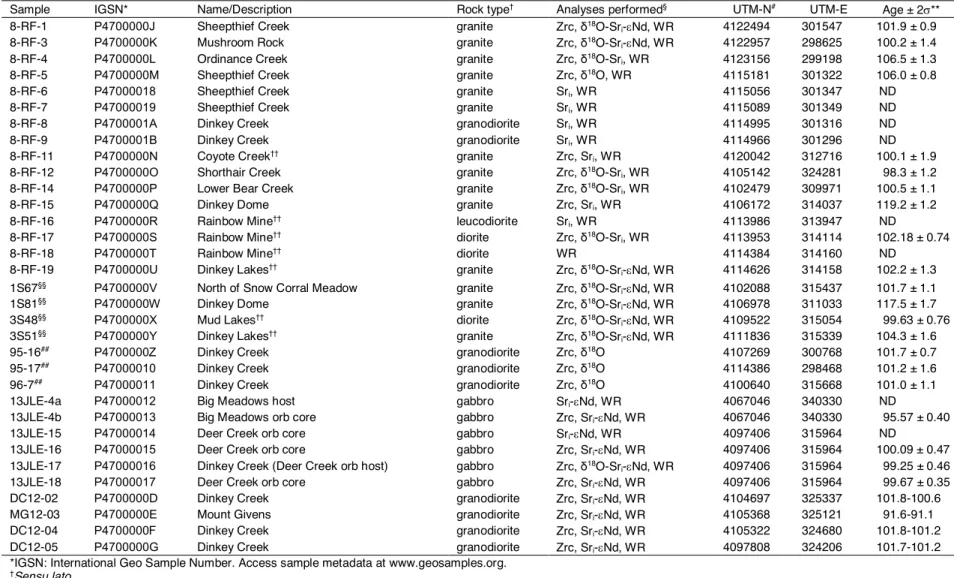
Table 1. Sample summary for the Shaver Intrusive Suite ...40
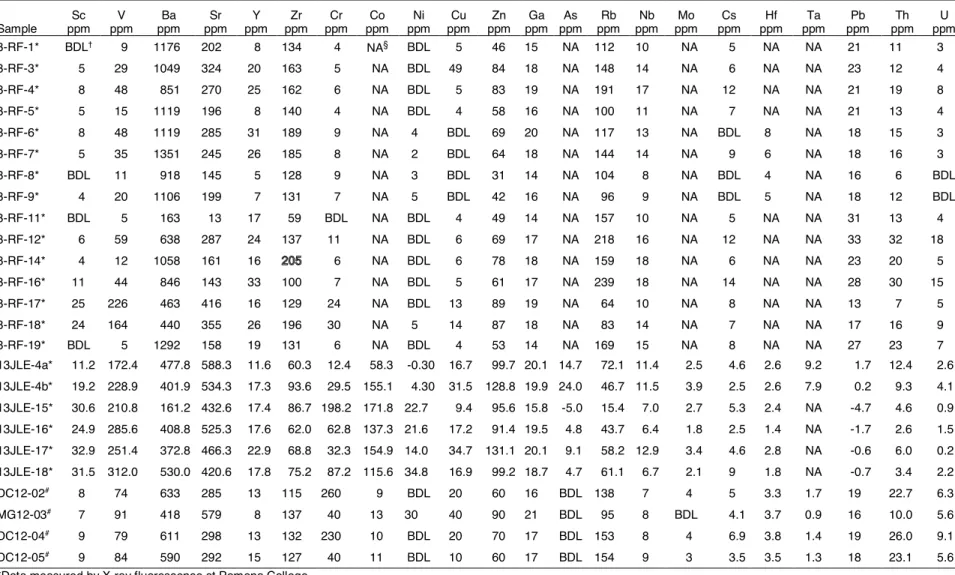
Table 2. Major element data ...41
Table 3. Trace element data ...42
Table 4. Rare earth element data ...43
Table 5. Oxygen isotope values for zircon ...44
Table 6. Sr and Nd isotopic data ...45
Chapter 3 Table 1. Sample summary for the Alabama Hills ...81
Table 2. Major and trace element data ...82
Table 3. Sr and Nd isotopic data ...83
Table 4. U-Pb zircon isotopic data for a mafic Independence dike and the Alabama Hills Granite ...84
Chapter 4 Table 1. Sample summary from the central Colorado Mineral Belt ...124
Table 2. Major and trace element data ...125
Table 3. Sr and Nd isotopic data ...128
Table 4. Pb isotopic data ...129
LIST OF FIGURES
Chapter 2
Figure 1. Generalized bedrock geologic map of the Shaver Intrusive Suite ...7
Figure 2. Field relations in the Shaver Intrusive Suite ...11
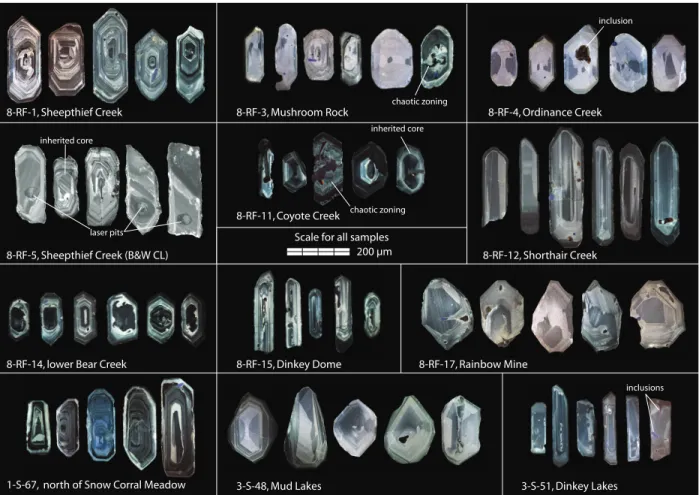
Figure 3. Cathodoluminescence images of representative zircons ...19
Figure 4. Results of laser ablation geochronology for the Shaver Intrusive Suite ...21
Figure 5. Results of ID-TIMS geochronology for the Shaver Intrusive Suite ...22
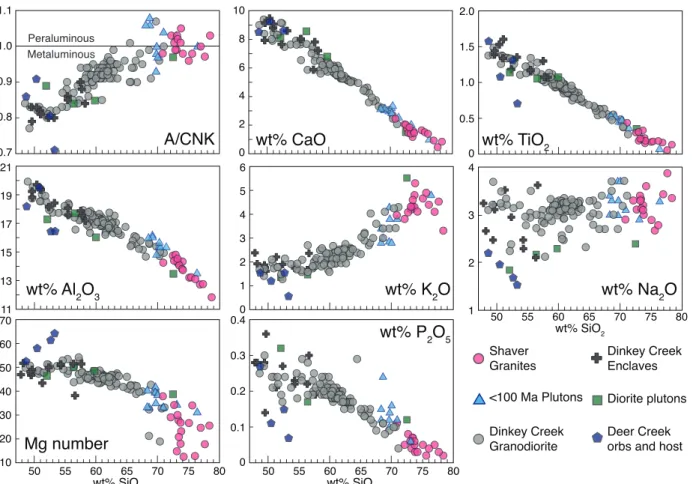
Figure 6. Major element Harker diagrams for the Shaver Intrusive Suite ...23
Figure 7. Minor element Harker diagrams for the Shaver Intrusive Suite ...24
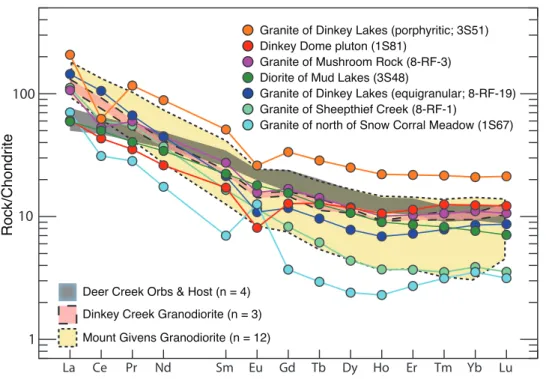
Figure 8. Rare earth element patterns ...25
Figure 9. Results of Sr, Nd, and δ18O(Zrc) isotopic analyses for the Shaver Intrusive Suite ...26
Figure 10. Shaver Intrusive Suite Sr and Nd data compared to the Sierra Nevada batholith ...27
Figure 11. Compilation of zircon U-Pb geochronology in the Shaver Intrusive Suite ...28
Figure 12. Geochronology for the Courtright shear zone ...31
Figure 13. Cerium anomalies relative to compositional and isotopic parameters ...32
Figure 14. Strontium and oxygen isotope sources for the Shaver Intrusive Suite ...36
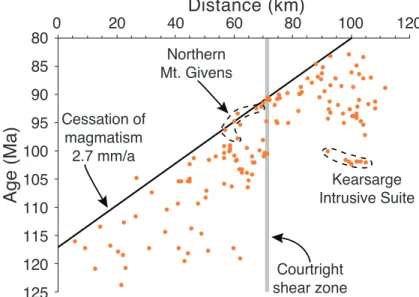
Figure 15. Data compilation of zircon U-Pb ages from the Cretaceous central Sierra Nevada batholith ...38
Chapter 3 Figure 1. Generalized geologic map of the Alabama Hills ...48
Figure 3. Major element data for the Alabama Hills Granite and other plutonic rocks
of the eastern Sierra Nevada batholith ...54 Figure 4. Trace element data for the Alabama Hills Granite and other plutonic rocks
in the eastern Sierra Nevada batholith ...55 Figure 5. Rare earth element for the Alabama Hills Granite and other plutonic rocks
in the eastern Sierra Nevada batholith ...56 Figure 6. Strontium and Nd isotopic data for the Alabama Hills Granite and other
plutonic rocks of the eastern Sierra Nevada batholith ...57
Figure 7. New ID-TIMS age-sorted data for a mafic dike and the Alabama Hills Granite ...58
Figure 8. Areal analyses of Cretaceous intrusive rocks of the Sierra Nevada
batholith by age grouping ...69
Figure 9. Plot of Gd concentration against silica concentration for Cretaceous
plutonic rocks in the central Sierra Nevada ...75
Figure 10. Plots of P2O5 and Zr against SiO2 for Sierra Crest suites, aplites, and
individual granite plutons ...76
Figure 11. Compilation of calculated zircon saturation temperatures for high-silica
rocks from the Sierra Nevada batholith ...79
Chapter 4
Figure 1. Generalized geologic map of central Colorado and northern New Mexico ...86
Figure 2. Generalized bedrock geologic map of the Grizzly Peak caldera and Twin
Lakes pluton ...87
Figure 3. Major element Harker diagrams for samples analyzed in this study and
other Cenozoic igneous rocks in Colorado ...97
Figure 4. Trace element variation diagrams for samples from this study and other
Cenozoic igneous rocks in Colorado ...98
Figure 5. Trace element and REE ratios versus silica concentrations for samples
Figure 6. Rare earth element plots for samples from this study ...100
Figure 7. Strontium and Nd isotope data for samples from this study and other
Cenozoic igneous rocks in Colorado ...101
Figure 8. Lead isotope data for samples from this study and other Cenozoic igneous
rocks from Colorado ...103
Figure 9. Zircon U-Pb concordia diagram of selected samples dated by CA-ID-TIMS ...104
Figure 10. Plot of Zr-TiO2 data for samples from this study and Cenozoic igneous
rocks of Colorado ...115
Figure 11. Diagrams showing Sr, Nd, and Pb isotopic variations through time in
CHAPTER 1: INTRODUCTION
The relationships between intrusive and extrusive igneous rocks have been discussed and
disputed for centuries (e.g., Lyell, 1838; Daly, 1933). However, methodological improvements of
the past two decades have breathed new life into the debate. For example, advances in ultraclean
lab procedures and pre-treatment of zircons (e.g., Parrish, 1987; Mattinson, 2005) now permit
accurate and precise dating of individual zircon grains and fragments to 0.1% (e.g., Samperton
et al., 2015). These enhancements have led to the application of high-precision geochronology to
multiple samples from single plutons, and dozens of samples dated from entire intrusive suites.
Coleman et al. (2004) were among the first to date an intrusive suite at high sample density by
U-Pb in zircon, finding that emplacement of the Tuolumne Intrusive Suite in the Sierra Nevada
batholith spanned a ~10 Ma period, and a single pluton was intruded over at least 4 Ma. That
study raised questions regarding the links between plutonic and volcanic rocks because it implied
that large magma chambers may be ephemeral. Glazner et al. (2004) extended this line of think
-ing, suggesting that intrusion rates may govern the fate of magmas in the upper crust.
Numerous studies in the past decade have used Coleman et al. (2004) and Glazner et
al. (2004) as touchstones for investigations of plutonic-volcanic connections. A review of those
works is beyond the scope of this introduction. However, much of the work since 2004 has
focused on intermediate-composition rocks (e.g., Bachmann et al., 2007; Lipman, 2007; Wot
-zlaw et al., 2013; Mills and Coleman, 2013; Lee and Bachmann, 2014). This is logical because
dacites comprise the spectacular crystal-rich ash-flow tuffs known as monotonous intermediates
(Hildreth, 1981). I contributed to this body of work with my Masters (Frazer et al., 2014), in
which I investigated the postulated links between the 4500 km3 Mount Givens Granodiorite and
compositionally and volumetrically similar monotonous intermediates, such as the 5000 km3 Fish
Canyon Tuff. I concluded that zircon in both plutonic and volcanic intermediate rocks faithfully
reflects their respective accumulation histories and therefore, despite their superficial similarities,
the exposed Mount Givens Granodiorite accumulated too slowly to have supported a Fish Can
-yon-like super-eruption.
High-silica igneous rocks (i.e., greater than 70 wt% SiO2; granites and rhyolites sensu
lato) have not been overlooked in the volcano-pluton debate (e.g., Glazner et al., 2008; Bach
-mann and Bergantz, 2008; Coleman et al., 2012; Lundstrom and Glazner, 2016). High-silica
igneous rocks are important because they may represent either very high-degree fractional crys
-tallization (e.g., Tuttle and Bowen, 1958; Lee and Morton, 2015) or low-degree partial melting
(e.g., Sisson et al., 2005; Stevens et al., 2007) of more mafic progenitors, and because they also
bear on the elemental and isotopic compositions of intermediate-composition rocks that may
result from magma mixing (Eichelberger, 1975; Wenner and Coleman, 2004; Gray et al., 2008).
Debate continues as to whether chemical signatures in high-silica igneous rocks reflect fraction
-al cryst-allization (Keller et -al., 2015; Lee and Morton, 2015) or parti-al melting (Glazner et -al.,
2015; Clemens and Stevens, 2016). Another question in this debate is whether high-silica intru
-sive rocks represent new additions to the crust, or are the products of recycling pre-existing crust.
Some models call for high-silica magmas to be the extensively recycled (Bindeman and Simakin,
2014), or to be the results of fractional crystallization after homogenization of primitive mantle
suggest that high silica magmas may be generated through partial melting of juvenile mafic ma
-terials that were themselves recently derived from the mantle (Coleman et al., 1992; Wenner and
Coleman, 2004), thus representing new crustal growth.
This dissertation investigates the occurrence and significance of high-silica granites and
rhyolites from mid-Cretaceous parts of the Sierra Nevada batholith, California, and the Cenozo
-ic central Colorado Mineral Belt using compositional and isotop-ic analyses of whole rocks and
the mineral zircon. The first two chapters concern the mid-Cretaceous Sierra Nevada. Chapter
one examines the compositionally diverse Shaver Intrusive Suite; whereas its largest pluton is
granodiorite, like the Tuolumne and other Late Cretaceous Sierra suites, the suite also comprises
nearly a dozen discrete high-silica granite plutons. Many of those plutons preserve chemical and
isotopic evidence suggesting they represent significant crustal recycling. Chapter two investi
-gates the origins of the Alabama Hills block east of the Sierra Nevada, which includes a high-sil
-ica granite that is now known to be ~102 Ma and therefore is similar in age to high sil-ica granites
on the Sierra crest. New age and isotopic data suggest those granites (part of the informal Ke
-arsarge intrusive suite) may be mantle-derived and represent new crustal additions, in contrast to
the Shaver granites. The Shaver and Kearsarge suites are part of a ~105-100 Ma magmatic event
that appears to have favored granitic magma production relative to earlier and later magmatism
in the batholith. High-silica granites such as these also appear to be compositionally appropriate
end members for mixing with mafic magma to generate the voluminous granodioritic suites of
the Sierra Crest magmatic event. Chapter three extends the analysis to extrusive rocks. The Griz
-zly Peak Tuff, an Eocene rhyolitic caldera-forming system in the central Colorado Mineral Belt,
has a more enriched isotopic signature than older and younger igneous rocks adjacent to the cal
the mineral belt. The tuff’s isotopic composition suggests it was derived in from felsic Protero
-zoic lower crust, and thus represents a large degree of crustal recycling. In contrast, the relatively
constant isotopic compositions of igneous rocks preceding and following eruption of the tuff
imply a long-lived, voluminous source inferred to be either enriched lithospheric mantle or lower
crust, or a combination of the two. With these studies, my dissertation seeks to demonstrate the
utility high-silica rocks have for understanding deep magma sources and processes, including
CHAPTER 2: AGES AND SOURCES OF THE SHAVER INTRUSIVE SUITE: SNAPSHOTS OF CRUSTAL RECYCLING IN THE CENTRAL SIERRA NEVADA
BATHOLITH, USA
INTRODUCTION
Resolving the hierarchy of magmatic processes leading to the assembly of plutons, intru
-sive suites, and batholiths is critical to deciphering the geodynamics of magmatic arcs. Studying
these systems and subsystems in detail provides greater insight into the overarching tectonic
controls of arc magmatism, the tempo and mode of magma transport, and the thermal and mass
balance of arcs, which are loci of crustal growth and recycling. The Cordilleran batholiths of
western North America record a protracted period of Mesozoic magmatism. Despite decades of
study, the controls on magma production and emplacement, including the importance of tectonic
controls (e.g. Glazner, 1991; Tikoff and Teyssier, 1992; Tobisch et al., 1995), particularly in the
Cretaceous Sierra Nevada batholith of California (Bateman, 1992), remain poorly understood.
Recent studies have centered on the emplacement and hybridization of middle and upper
crustal plutons. In particular, high-precision U-Pb zircon dating of intrusive suites belonging
to the 98-86 Ma Sierra Crest magmatic event (Coleman and Glazner, 1997) has fueled debate
about how mapped plutons may be built incrementally over ~10 Ma timescales, far longer than
the thermal lifetime of magma bodies in the upper crust (Glazner et al., 2004; Annen, 2009). The
Late Cretaceous suites comprise older mafic units, intermediate- to late-stage megacrystic gran
(Gray et al., 2008) or simply an enriched mantle source (Coleman et al., 1992). In contrast, Early
Cretaceous magmatism in the western parts of the batholith resulted in chemical and temporal
variations that are not as well organized, with isotopic data suggesting an increase in crustal
inputs over time (Lackey et al., 2012; Holland et al., 2013).
The centrally-located Shaver Intrusive Suite (SIS; Fig. 1) presents an opportunity to
assess the transition between contrasting older and younger magmatic styles in the batholith
because it superficially shares qualities of both Early and Late Cretaceous magmatism in the
Sierra. The SIS is similar to the older suites in that it is not concentrically zoned, yet it is gen
-erally more felsic than the western suites (Bateman, 1992). Like many of the younger intrusive
suites of the batholith, the SIS is predominantly composed of granodiorite. However, it contrasts
with many of the Late Cretaceous suites because the granitic and dioritic plutons of the SIS are
discrete intrusions lacking gradational contacts (Bateman and Wones, 1972a). It is also an in
-triguing location to study changing magmatic styles and sources because the SIS is at the nexus
of several proposed geochemical provinces and boundaries, including the 87Sr/86Sr
i = 0.706 line,
the Panthalassan/North American lithospheric break, and the strongly contaminated and reduced
zone (Kistler and Peterman, 1973; Ague and Brimhall, 1987, 1988; Kistler, 1990). Thus, it may
represent a critical transition in the Cretaceous Sierran arc.
GEOLOGIC BACKGROUND
The SIS (Fig. 1) is located in the central Sierra Nevada batholith of California, flanked on
the west by the 124–105 Ma Fine Gold Intrusive Suite (Lackey et al., 2012) and on the east by
Figure 1. Generalized bedrock geologic map of the Shaver Intrusive Suite. Informal names of individual plutons are given in the legend and Table 1. Inset gives location of Shaver Intrusive Suite relative to other Cretaceous intrusive suites of the central Sierra Nevada as well as approximate locations of the 87Sr/86Sr
i = 0.706 line, intrabatholithic break 2, and the PA-NA (Panthalassan-North American) boundary after Kistler and Peterman (1973), Kistler (1990, 1993), Saleeby and Busby (1993) and Lackey et al. (2008, 2012). Green symbols: samples analyzed in this study; green stars: samples dated by ID-TIMS; black circles: locations of Cenozoic volcanic pipes (BC – Big Creek; CP – Chinese Peak). Maps after Bateman (1965), Bateman et al. (1971), Bateman and Wones (1972a), Lockwood and Bateman (1976), Bateman (1992) and Lackey et al. (2008).
Kmr
Kor
Huntingt on Lake
Shaver Kml Cour tright W ishon Res. 37°00' 119°15' 8-RF-11 3S51 3S48 1S67 8-RF-14 8-RF-3 8-RF-4 8-RF-1 8-RF-5 to 8-RF-9 1S81 8-RF-15 Res . Lake 95-17 95-16 96-7 JLE15-18 CP BC Dinkey Creek roof pendant Kcc Kdl Kdd Kbr Ksm Ksh Ksc Ksc DCG DCG DCG MGG MGG MGG BLT BLT 8-RF-16 8-RF-17 8-RF-18 8-RF-19 km 1 0 Krm DCG Kdl
Kmr - Granite of Mushroom Rock
Kor - Granite of Ordinance Creek Ksc - Granite of Sheepthief Creek Kcc - Granite of
Coyote Creek
Kdl - Granite of Dinkey Lakes
Krm - Diorite of Rainbow Mine
Kdd - Granite of Dinkey Dome Ksm - Granite of north
of Snow Corral Meadow
Ksh - Granite of Short Hair Creek
Kbl - Granite of lower Bear Creek Big Creek, Eagle Peak
and Red Lake plutons
Kml - Diorite of Mud Lakes
DCG - Dinkey Creek Granodiorite Other plutons of
SIS (undivided) Leucogranite of Bald Mountain Wallrocks (undivided) km 0 5 N
MGG - Mount Givens Granodiorite
BLT - Bass Lake Tonalite CA Inset >0.706 <0.706 >0.706<0.706 ? PA NA IB B-2 Bishop Main Fig.
Shaver Intrusive Suite Fine Gold Intrusive Suite John Muir Intrusive Suite Tuolumne Intrusive Suite
Wallrocks (undivided)
0 40
km 10 20 30
37°00’ 38°00’
119°45’ 37°30’
Mt. Givens Granodiorite
119°00’ DC12-05 Cour tright Reser voir 8-RF-12 Ksh MGG DC12-04 MG12-03 DC12-02 Courtright Res
.
km 1 0
Wallrocks
Metamorphic wallrocks in and around the SIS are dominated by quartzite, with subor
-dinate pelitic hornfels, schist, calc-silicate hornfels, and marble (Huber, 1968; Bateman et al.,
1971; Bateman and Wones, 1972a; Lockwood and Bateman, 1976). The Dinkey Creek roof
pendant is the most prominent wallrock mass exposed in the SIS, and it has been proposed to
belong to terranes of various ages from the late Proterozoic to early Cambrian Snow Lake block
(Lahren and Schweickert, 1989), to the Triassic-Jurassic Kings sequence (Kistler, 1993; Saleeby
and Busby, 1993).
Shaver Intrusive Suite plutons
The SIS comprises numerous intermediate and felsic plutons plus scattered diorite
bod-ies (Bateman, 1992). It is dominated by the Dinkey Creek Granodiorite (DCG), which ranges
in composition from tonalite to granite, but is typically granodiorite in both equigranular and
megacrystic facies (Bateman, 1992). The DCG contains abundant mafic enclaves that are hy
-pothesized to result from magma mingling and stirring of a stratified magma chamber (Barbarin
et al., 1989; Dorais et al., 1990; Cruden et al., 1999). Mafic orbs and comb layering are present
near Deer Creek in a tonalitic portion of the DCG (Moore and Lockwood, 1973; Dodge and Kis
-tler, 1990). Two shear zones are preserved at the DCG’s margins, including the Kaiser shear zone
in the north and the Courtright shear zone in the southeast (Tobisch et al., 1995). The Courtright
shear zone is particularly well studied and records a two-stage strain history of weak extension
followed by contraction, around 90 Ma (Tobisch et al., 1993; Renne et al., 1993). The DCG has
previously been dated by isotope dilution thermal ionization mass spectrometry (ID-TIMS) at
(Fig. 1; Tobisch et al., 1993). Beck (2013) reported chemically abraded (CA) ID-TIMS data for
single-zircon fractions in two samples from the DCG ranging from 101.4–100.6 Ma. Using laser
ablation multi collector inductively coupled plasma mass spectrometry (LA-MC-ICP-MS), Lack
-ey et al. (2012) dated a mafic enclave and its granodiorite host from the southern portion of the
DCG, yielding indistinguishable ages of 99.4 ± 1.3 Ma and 101.5 ± 1.2 Ma, respectively.
This study focuses only on plutons within and adjacent to the DCG; additional large
plutons of the SIS of Bateman (1992), including the granodiorites of McKinley Grove, Whis
-key Ridge, Stevenson Creek, and the granite of Shuteye Peak, extend to the north and south of
the DCG and are not considered here in part because of their uncertain ages. For example, the
granite of Shuteye Peak west of Shaver Lake was dated by Stern et al. (1981) at 102 Ma, whereas
Lackey et al. (2012) dated a different exposure of the same pluton at ~114 Ma.
Previous field studies proposed that the DCG is intruded by the all of the areally subor
-dinate plutons in the SIS, including the granites of Dinkey Dome, Short Hair Creek, Sheepthief
Creek, lower Bear Creek, Mushroom Rock, north of Snow Corral Meadow, and Ordinance Creek
(Hamilton, 1956; Bateman et al., 1971; Bateman and Wones, 1972a; Lockwood and Bateman,
1976; Guy, 1980; Bateman, 1992; Cruden et al., 1999). This group of high-silica plutons will
hereafter be informally referred to as the Shaver granites. Bateman (1992) interpreted the DCG
foliations that parallel the Shaver granites to suggest that the smaller felsic plutons postdate the
DCG, deforming the DCG as they were emplaced. However, beyond field relationships, little
work has been done on the Shaver granites.
The Shaver granites are discontinuous and feature at least six plutons as defined by
Bateman and Wones (1972a; 1972b) using texture and mineralogy (Fig. 1). Several plutons have
a landmark within it or nearby. Some of the Shaver granites are associated with small bodies of
diorite, of unknown age (Bateman, 1992). Two of the Shaver granites are nested: the Mushroom
Rock pluton is mantled by the slightly more mafic Ordinance Creek pluton, and the granite north
of Snow Corral Meadow is surrounded by the granodiorite of McKinley Grove.
Shaver Intrusive Suite petrology and geochemistry
Past geochemical analyses of the Shaver granites show they are more siliceous (73–78
wt% SiO2) than the DCG (48–71 wt% SiO2; average is 65 wt% SiO2). Moreover, some of the
granites have magmatic garnet and muscovite (Fig. 2), and more unusual accessory mineral as
-semblages locally that include andalusite, sillimanite, molybdenite, and/or urananite (Hamilton,
1956; Bateman and Wones 1972b; Guy, 1980; Ague and Brimhall, 1988; Hinke, 2002, Lackey
et al. 2006). Cordierite, a key indicator of S-type granites, is not recognized in the SIS (Ague
and Brimhall, 1987). Ague and Brimhall (1988) assigned the SIS to a belt of “strongly contam
-inated and reduced” plutons on the basis of mineralogy and mineral compositions, particularly
the greater amounts of ilmenite over magnetite, the relative lack of titanite, and the presence of
Fe-rich biotite.
Isotopically, the DCG has relatively high initial 87Sr/86Sr (87Sr/86Sr
i) values compared to
nearby suites (Dodge et al., 1986; Kistler, 1990). The SIS is east of the 87Sr/86Sr
i = 0.706 line,
inferred to be an expression of the premagmatic boundary between Proterozoic North American
continental lithosphere to the east and accreted arc terranes to the west (Fig. 1; Kistler and Peter
-man, 1973). There are no published isotopic data for the Shaver granites.
Sub-arc xenolith suites
host nearly all known xenoliths of lower crustal and upper mantle origin from the Sierran arc
(Fig. 1; Dodge et al. 1986, 1988), including Cretaceous-aged samples (Ducea and Saleeby,
1998). These xenolith suites provide understanding of the dynamics of magma formation and
extraction in the Sierran arc (Mukapadahay and Manton, 1994, Ducea, 2001; 2002; Chin et al.,
2014). Thus, the SIS is one of the few locations in the Cordillera where the connectivity of the
petrogenetic record between coeval granitoids and xenoliths from the base of the arc can be eval
-uated.
D
C
A
Plag
E
Kdle
Krm 102.2 ± 0.8 Ma
102.2 ± 1.3 Ma
F
Kdle
Kdlp
Kdlp 104.3 ± 1.6 Ma
102.2 ± 1.3 Ma
B
10 cmMETHODS
Sample collection and preparation
Samples from the SIS were collected for zircon separation and whole rock chemical
analyses. In addition, samples of the Mount Givens Granodiorite corresponding to those dated by
Frazer et al. (2014) were analyzed for their whole rock isotopic compositions.
Geochronology aliquots were crushed using standard techniques and zircon was isolated
by gravimetric (water table and methylene iodide) and magnetic concentration methods. Ana
-lyzed zircons were hand-picked under a binocular microscope from the non-magnetic split on a
Frantz magnetic separator. Grains were selected to be clean, inclusion-free, unbroken and typical
of the population. Whole rock geochemical aliquots were pulverized to powder using standard
crushing techniques outlined below.
U-Pb geochronology
LA-MC-ICP-MS
Most of the geochronologic data were collected at the University of Arizona LaserChron
Center by LA-MC-ICP-MS. Zircon grains were mounted along with chips of Sri Lankan zircon
standard SL-2 (Gehrels et al., 2008) in 1” epoxy rounds. Most mounts were initially character
-ized by scanned color cathodoluminescence (CL) at California State University, Bakersfield on a
Hitachi S-3400N SEM at 10.0 kV.
Laser ablation analyses of all samples except those from the DCG and the Courtright
shear zone were performed with a New Wave/Lambda Physik DUV193 Excimer laser operating
at a wavelength of 193 nm using a spot diameter of 25-35 microns. The ablated material was car
with a flight tube of sufficient width that U, Th, and Pb isotopes were measured simultaneous
-ly. All measurements were made in static mode, using Faraday detectors for 238U and 232Th, an
ion-counting channel for 204Pb, and either faraday collectors or ion counting channels for 208 Pb-206Pb. Ion yields were ~1 mv per ppm. Each analysis consisted of one 20-second integration on
peaks with the laser off (for backgrounds), 20 one-second integrations with the laser firing, and a
30 second delay to purge the previous sample and prepare for the next analysis. The ablation pit
was ~15 microns in depth.
Zircon U-Pb isotopic data from samples 95-16, 95-17 and 96-7 from the DCG were
collected using a New Wave 193 nm ArF laser ablation system coupled to a Nu Plasma HR
inductively-coupled plasma mass spectrometer (ICP-MS) at the University of Arizona following
the methods of Gehrels et al. (2008) and Lackey et al. (2012). See
http://sites.google.com/a/laser-chron.org/laserchron/ for additional information.
For all laser ablation samples, inter-element fractionation of Pb/U is generally ~20%,
whereas fractionation of Pb isotopes is generally less than 2%. In-run analysis every fifth mea
-surement of fragments of SL-2, a Sri Lankan zircon crystal with known age of 564 ± 4 Ma (2σ
error), is used to correct for this fractionation (Gehrels et al., 2008). The uncertainty resulting
from the calibration correction is generally ~1% (2σ) for both 206Pb/207Pb and 206Pb/238U ages.
The analytical data are reported in Appendix 1. Uncertainties shown in these tables are at the 2σ
level, and include only measurement errors. The systematic error, which includes contributions
from the standard calibration, age of the calibration standard, composition of common Pb, and
U decay constants, is generally 1–2% (2σ). Common Pb correction was accomplished using the
measured 204Pb and assuming an initial Pb composition using the model of Stacey and Kramers
ID-TIMS
Four samples (DC12-02, MG12-03, DC12-04, and DC12-05) were analyzed by
CA-ID-TIMS on a VG Sector 54 in the Department of Geological Sciences at the University of North
Carolina at Chapel Hill following the sample preparation and analytical methods of Frazer et al.
(2014). Data processing and age calculations were completed in the applications Tripoli and ET_
Redux (Bowring et al., 2011; McLean et al., 2011). Corrections for initial Th/U disequilibrium
(Mattinson, 1973; Schmitz and Bowring, 2001) were made in ET_Redux assuming the measured
whole rock Th/U value (Table 3) for each sample approximates the magmatic value; this adjust
-ment increased the ages of individual analyses by up to 100 ka.
δ18O analysis
Bulk aliquots of zircon (4–5 mg) were picked and cleaned with HNO3, HCl, and HF acid,
with the latter removing radiation-damaged material from the zircon grains, which can alter δ18O
(Valley, 2003). Zircon crystals were powdered with a tungsten carbide mortar and pestle to facili
-tate fluorination (Lackey et al., 2008). Oxygen isotopes were analyzed by laser fluorination at the
Stable Isotope Lab at the University of Oregon using a 35W New Wave CO2 IR laser in a reagent
atmosphere of bromine pentafluoride to liberate O2 with the F- anion. Liberated O
2 was passed through a hot Hg pump to remove excess F, then converted to CO2 by reaction with a hot graph
-ite rod. CO2 gas was analyzed for d18O with a Finnigan MAT 253 mass spectrometer. Values are
reported as d18O in ‰ relation to Vienna Standard Mean Ocean Water (VSMOW). Unknowns
were corrected to Gore Mountain garnet (accepted value = 5.80‰; Valley et al., 1995) analyzed
Whole rock elemental geochemistry
Whole rock powders of all samples except 02, MG12-03, 04, and
DC12-05 were prepared in a Rocklabs® tungsten carbide head and mill. Powdered sample and flux
were mixed at a 2:1 ratio, typically 3.5 g powder to 7.0 g dilithium tetraborate. The vortex
-er-blended mixture was fused to a glass bead in a graphite crucible at 1000°C for 10 minutes,
reground, fused a second time, polished on diamond laps, and analyzed. Major oxides and 17
trace elements (Ba, Ce, Cr, Cu, Ga, Nb, Ni, Pb, Rb, Sc, Sr, Th, U, V, Y, Zn, Zr) are analyzed on
the same fused bead using a 3.0 kW Panalytical Axios WD-XRF at Pomona College equipped
with PE, LiF 200, LiF 220, GE, and PX1 crystals. Concentrations were determined using ref
-erence calibration curves defined by fifty-five certified ref-erence materials that span a range of
natural igneous, metamorphic, and sedimentary rock compositions. Oxides (in wt%) are totaled
pre-normalization based on iterating analysis after determination of initial loss on ignition in the
first analysis. Total Fe is reported as Fe2O3. Typical analytical uncertainties for major elements
in absolute wt%, determined by fusion of duplicate powders, are ± 0.15% (SiO2); 0.06–0.07%
(Fe2O3, Al2O3); 0.02–0.05% (Na2O, K2O, MgO, CaO); <0.004% (TiO2, MnO, P2O5). Trace ele
-ment uncertainties at ±2σ vary, with most trace ele-ments reproducible at better than 2 ppm: (Cu,
Ga, Nb, Pb, Rb, Th, U, Y, Zr). Others are reproducible at 3 ppm (Cr, Sc, Sr, V), and a handful
have higher uncertainties, in parentheses in ppm: Zn (6); Ni (7); Ba (40). Rare earth elements for
samples 8-RF-1, 8-RF-3, 8-RF-19, 1S67, 1S81, 3S48, and 3S51 were measured by ICP-MS at
Vrije University using the methods of Klaver et al. (2015).
Whole rock aliquots of samples DC12-02, MG12-03, DC12-04, and DC12-05, plus the
samples of Frazer et al. (2014), were crushed to powder in a SPEX Shatterbox® alumina swing
metaborate/tetraborate mixture. Major elements and Ba, Sr, Y, Zr, Sc, Be and V were analyzed
by inductively coupled plasma-optical emission spectroscopy (ICP-OES), with remaining trace
elements and REE analyzed by ICP-MS. Relative uncertainties (±2σ) for major elements were
less than 2% for all oxides except MgO (3%), MnO (5%), and P2O5 (16%). Trace elements ana
-lyzed at Actlabs that are reproducible (±2σ) at better than 2 ppm include Ag, Be, Cs, Ge, Hf, Sb,
Sn, Ta, Th, Tl, U, and W. Other elements are reproducible within 3 ppm (Co, Mo, Nb, Sc), 4 ppm
(Ga, Y) and others have higher uncertainties, in parentheses in ppm: Pb (9); Cu (14); Rb and Zr
(15); V (19); Ni (23); Sr (25); Ba (31); Zn (42); Cr (49). Rare earth elements reproducible (±2σ)
at 0.2 ppm or better are Eu, Ho, Lu, Tb, and Tm; REE reproducible at 0.2–0.5 ppm or better are
Dy, Er, Gd, Pr, Sm, and Yb; others are reproducible at higher uncertainties, in ppm: Nd (1.2); La
(1.5); Ce (2.1).
Strontium and neodymium isotopic analyses
Whole rock powders of samples 8-RF-1, 8-RF-3, 8-RF-19, 1S67, 1S81, 3S48, and 3S51
were dissolved in Teflon® bombs and separated using column chromatography following stan
-dard procedures outlined in Heumann and Davies (2002). Both Sr and Nd isotope ratios were
measured in static mode on a ThermoElectron Triton Plus TIMS at Vrije University. The Sr
fractions were loaded onto Re filaments using a TaF5 activator to enhance ionization. Strontium isotope ratios were measured using a static multi-collection routine. An analysis consisted of 20
blocks of 10 cycles with an integration time of 8 s per cycle. Ratios of 87Sr/86Sr and 84Sr/86Sr were
corrected for mass fractionation using an exponential law and 86Sr/88Sr ratio of 0.1194. Replicate
isotopes were measured on double Re filaments and were corrected for mass fractionation using
an exponential law and 146Nd/144Nd ratio of 0.7219. Analyses of the standard BHVO-2 (n = 9) yielded 143Nd/144Nd = 0.512982 ± 0.000005 (2s) and 145Nd/144Nd = 0.348405 ± 0.000003 (2s);
analyses of the standard BCR-2 (n = 4) yielded 143Nd/144Nd = 0.512636 ± 0.000004 (2s) and 145Nd/144Nd = 0.348406 ± 0.000004 (2s).
Whole rock powders of samples 4, 6 through -9, 11, 12,
8-RF-14, 8-RF-16, 8-RF-17, 8-RF-19, DC12-02, MG12-03, DC12-04, and DC12-05, and those of
Frazer et al. (2014) were dissolved in HF and HNO3 in Teflon® (Parr) bombs at 180°C for 48
hours. Following dissolution, samples were dried down to release Si, then immediately fluxed in
concentrated HCl for 4-8 hours. Samples were subsequently aliquoted for Sr and Nd chemistry.
Strontium was purified using Sr-spec cation exchange resin after the methods of Lundblad (1994)
and loaded on single Re filaments with TaF5. Neodymium was purified using a three-stage col
-umn chemistry procedure after Harvey and Baxter (2009) and loaded on single Re filaments in
a Ta2O5-H3PO4 slurry. Strontium isotopic analyses were accomplished on a VG Sector 54 TIMS and Nd isotopes were analyzed on an Isotopx Phoenix TIMS, both housed at the University of
North Carolina at Chapel Hill. Strontium was analyzed as a metal in dynamic multicollector
mode with 88Sr = 3V. Neodymium was analyzed as an oxide in dynamic multicollector mode with 142Nd16O = 1V. Isotope ratios for both elements were corrected for mass fractionation using
an exponential law. Strontium isotopic ratios were normalized to 86Sr/88Sr = 0.1194; Nd isotopic ratios were normalized to 146Nd/144Nd = 0.7219. Replicate analyses of the NBS 987 Sr standard yielded 87Sr/86Sr = 0.710265 ± 0.000015 (2s; n = 26). Replicate analyses of the Nd standard JNdi yielded 143Nd/144Nd = 0.512098 ± 0.000012 (2s; n = 18).
data presented in this study. Strontium data from the two labs are related by correcting pres -ent-day 87Sr/86Sr ratios of unknowns measured in each lab by the deviation of each lab’s NBS 987 measurement from 87Sr/86Sr = 0.710250, then corrected for decay to initial values. Neodymium
data for the two labs are related to the La Jolla Nd standard, then corrected for decay to initial
values. UNC Nd unknowns are corrected using a value of 0.999967, based on the difference be
-tween JNdi measurements in this study and La Jolla-normalized measurements of JNdi by
Tana-ka et al. (2000). Vrije University Nd unknowns are corrected using a value of 0.999997, based
on the average difference between BCR-2 and BHVO-2 measurements in this study and the La
Jolla-normalized measurements of the same standards by Weis et al. (2006). For age corrections
of samples dated by LA-ICP-MS, the weighted mean age is used; for samples dated by ID-TIMS,
the midpoint of the stated age range is used.
RESULTS
Cathodoluminescence
Cathodoluminescence reveals that most zircons have typical magmatic zonation, varying
in style from sample to sample (Fig. 3; cf. Corfu et al., 2003). Many samples have oscillatory
zonation, typified by the Sheepthief Creek and north of Snow Corral Meadow plutons. Sector zo
-nation is present in more mafic samples, such as the two diorite plutons. Because no systematic
pattern of U-Pb age is discernible with CL, images are shown without age spot locations. Laser
ablation spots were typically placed midway through grains in order to cover the most represen
U-Pb analyses
LA-MC-ICP-MS
Laser ablation data are reported as weighted mean ages with uncertainty given at the 95%
confidence level after Ludwig (2003). Analyses were excluded from age interpretations in cas
-es where grains were evidently inherited or antecrystic (Miller et al., 2007), or showed signs of
obvious Pb-loss. Age interpretations are conservative and omit few analyses so as to not discount
geologic complexities in the data. For samples 8-RF-4 and 8-RF-12, two age interpretations are
provided because several high-precision analyses have significant weight on calculated weighted 8-RF-1, Sheepthief Creek
8-RF-12, Shorthair Creek
8-RF-14, lower Bear Creek
8-RF-4, Ordinance Creek inclusion
8-RF-3, Mushroom Rock chaotic zoning
8-RF-11, Coyote Creek
inherited core
chaotic zoning
8-RF-15, Dinkey Dome 8-RF-17, Rainbow Mine
1-S-67, north of Snow Corral Meadow 3-S-48, Mud Lakes 3-S-51, Dinkey Lakes
inclusions 8-RF-5, Sheepthief Creek (B&W CL)
laser pits inherited core
Scale for all samples 200 µm
mean ages. However, the preferred ages are those that include more analyses, yielding higher
mean squares of weighted deviates (MSWD), thus reflecting potential zircon spectra complexity.
Zircon U-Pb data from most LA-MC-ICP-MS samples are concordant. Two age groups
are evident: the Dinkey Dome pluton at 119-117.5 Ma, and the bulk of the SIS from ca. 106.5–98
Ma (Fig. 4; Table 1; Appendix 1). Three SIS samples (8-RF-4, 8-RF-5, and 3-S-51) are older
than the DCG outside of uncertainty; one sample (8-RF-12) was younger than the DCG. Sample
1S81 of the Dinkey Dome pluton yielded the largest spectrum of ages. Three xenocrystic anal
-yses include an analysis with a 207Pb/206Pb age of 2784 ± 63 Ma, a normally discordant analysis with a 207Pb/206Pb age of 979 ± 88 Ma, and a concordant analysis with a 206Pb/238U age of 140 ±
4 Ma. Several other fractions are subtly normally discordant near 120 Ma and have Proterozoic
207Pb/206Pb ages (Appendix 1). In addition, four analyses are 66–60 Ma, and likely reflect Pb-loss.
Sample 8-RF-5 of the Sheepthief Creek pluton yielded an inherited zircon with a 207Pb/206Pb age
of 1427 ± 62 Ma.
The Dinkey Lakes and Coyote Creek plutons, originally mapped as parts of the gran
-ite of Dinkey Dome (Bateman and Wones, 1972a), are instead coeval with the rest of the SIS.
Two samples of the Dinkey Lakes pluton yield ages of 104.3 ± 1.6 and 102.2 ± 1.3 Ma, with the
younger age overlapping the DCG. The 206Pb/238U weighed mean age of 100.1 ± 1.9 Ma for the
Coyote Creek pluton (8-RF-11) also overlaps the DCG; however, most individual analyses were
slightly normally discordant so it is not considered as robust as the other U-Pb data.
ID-TIMS
Three samples from the DCG and one sample of the adjacent Mount Givens Granodiorite
(Appendix 2). Preferred ages for ID-TIMS data are given as ranges due to the increasing diffi
-culty of interpreting high-precision zircon data without corroborating compositional information
(Samperton et al., 2015). Subsequent interpretations do not depend on precise crystallization
ages. Note the age ranges provided here may not capture the full crystallization history of the
samples (Glazner and Sadler, 2016), assuming all analyses are free from inheritance and Pb-loss.
For several samples, weighed mean ages and 2s analytical uncertainties are provided for
com-parison.
Sample DC12-02, collected in the DCG in the most mylonitized portion of the Courtright
shear zone ~45 meters from the contact with the Mount Givens Granodiorite, yields 6 zircons
13JLE-4b 95.46 ± 0.43 MSWD = 2.0 n = 21 of 24
88 90 92 94 96 98 100
102 Big Meadows orb
13JLE-16 100.09 ± 0.47 MSWD = 1.98 n = 22 of 24
13JLE-17 99.25 ± 0.46 MSWD = 1.68 n = 24 of 24 13JLE-18
99.67 ± 0.35 MSWD = 1.56 n = 20 of 23
94 96 98 100 102 104 106 108 110
112 Deer Creek orb Deer Creek orb Deer Creek host
8-RF-3 100.2 ± 1.4 MSWD = 3.7 n = 30 of 30
80 90 100 110 120 130 140 8-RF-4 preferred: 106.5 ± 1.3 MSWD = 4.3 n = 27 of 30
alternate (dashed): 104.8 ± 1.0 MSWD = 1.7 n = 25 of 30
Ordinance Creek Mushroom Rock
8-RF-12 preferred: 98.3 ± 1.2 MSWD = 4.3 n = 28 of 29
80 85 90 95 100 105 110 115 alternate (dashed): 97.4 ± 0.9 MSWD = 2.3 n = 26 of 29
Shorthair Creek 80 85 90 95 100 105 110 115 120 125 8-RF-14 100.5 ± 1.1 MSWD = 4.6 n = 25 of 25 lower Bear Creek
85 95 105 115 125 135 145 8-RF-15 119.2 ± 1.2 MSWD = 1.9 n = 23 of 25
1S81 117.5 ± 1.7 MSWD = 7.4 n = 41 of 49
Dinkey Dome Dinkey Dome
95-16 101.7 ± 0.7 MSWD = 1.1 n = 24 of 25
95-17 101.2 ± 1.6 MSWD = 5.7 n = 24 of 24
80 85 90 95 100 105 110 115 120 96-7 101.0 ± 1.1 MSWD = 4.2 n = 24 of 24
Dinkey Creek Dinkey Creek Dinkey Creek
90 95 100 105 110 115 120 Sheepthief Creek 8-RF-5 106.0 ± 0.8 MSWD = 2.4 n = 22 of 25
8-RF-1 101.9 ± 0.9 MSWD = 1.4 n = 24 of 25 Sheepthief Creek 80 85 90 95 100 105 110 115 120 3S51 104.3 ± 1.6 MSWD = 6.9 n = 25 of 25
8-RF-19 102.2 ± 1.3 MSWD = 4.8 n = 29 of 30
Dinkey Lakes Dinkey Lakes
85 90 95 100 105 110 115 120 8-RF-17 102.18 ± 0.74 MSWD = 1.0 n = 29 of 30
Rainbow Mine 85 90 95 100 105 110 115 120 125 130 8-RF-11 100.1 ± 1.9 MSWD = 5.0 n = 17 of 19 Coyote Creek 85 90 95 100 105 110 115 120 1S67 101.7 ± 1.1 MSWD = 0.6 n = 15 of 17
north of Snow Corral Meadow 80 85 90 95 100 105 110 115 3S48 99.65 ± 0.78 MSWD = 1.0 n = 30 of 30
Mud Lakes 206 Pb/ 238 U Age (Ma) 206 Pb/ 238 U Age (Ma) 206 Pb/ 238 U Age (Ma)
spread along concordia from 101.8–100.6 Ma (Fig. 5). Sample DC12-04 was collected in the fur
-ther from the contact with the Mount Givens pluton and was less deformed. Four of five zircons
yield an age range of 101.8-101.2 Ma, with a weighted mean age of 101.45 ± 0.07 Ma (MSWD
= 4.9). One younger zircon is likely affected by Pb-loss. Sample DC12-05, collected several km
west of the mapped shear zone, did not appear deformed in hand sample. Five zircons range from
101.7–101.2 Ma and yield a weighted mean age of 101.39 ± 0.05 Ma (MSWD = 3.5). A sample
of the Mount Givens Granodiorite collected 20 m east of the shear zone and the DCG yields four
zircons from 91.6-91.1 Ma and a weighted mean age of 91.34 ± 0.06 Ma (MSWD = 1.8). This
is slightly older than other samples of the pluton from the northern end of Courtright Reservoir
(Frazer et al., 2014). Samples DC12-02 and DC12-04 are within uncertainty of the 102 ± 1 Ma
age of Tobisch et al. (1993).
Bulk geochemistry
Most samples from the SIS follow linear trends on Harker diagrams (Fig. 6; Table 2),
except for the Deer Creek orbs and host, which appear to be relatively depleted in oxides such
as TiO2 and Al2O3 (Eisenberg, 2014). The Shaver granites follow the similar trends on Hark
-100.4 100.6 100.8 101.0 101.2 101.4 101.6 101.8
102.0 Dinkey Creek
DC12-02 DC12-04 DC12-05
206
Pb/
238
U
Age
(Ma)
90.8 91.0 91.2 91.4 91.6 91.8 92.0
MG12-03 Mount Givens
er diagrams, and most have greater than 70 wt% SiO2. The A/CNK index (molar ratio Al2O3/ [CaO+Na2O+K2O]), indicates the SIS is mostly metaluminous (A/CNK < 1), with some samples, including some of the Shaver granites, reaching mildly peraluminous values (A/CNK = 1.0 –
1.1). Magnesium number (MgO/[MgO+FeO(tot)]100) decreases linearly with increasing SiO2 in
the SIS, except in the Shaver granites, which are depleted in MgO relative to FeO(tot). Magnesium number in the Deer Creek locality follows a positive trend with SiO2, counter to the rest of the
SIS (Eisenberg, 2014).
Trace element data generally follow linear trends relative to SiO2 with some scatter
(Tables 3, 4; Fig. 7). Elements including Sr, Sc, V, and the middle REEs decrease with increas
-Shaver Granites
Dinkey Creek Granodiorite
<100 Ma Plutons Diorite plutons Dinkey Creek Enclaves 0.7 0.8 0.9 1.0 1.1 Peraluminous Metaluminous
A/CNK wt% TiO2
0 1.0 2.0 1.5 0.5 0 2 4 6 8 10 wt% CaO Mg number 70
50 55 60 65 70 75
wt% SiO2 80
60 50 40 30 20 10 11 13 17 19 21
wt% Al2O3
15
Deer Creek orbs and host
wt% K2O
6 5 4 3 2 1 0
wt% Na2O
2 4
3
1 50 55 60 65 70 75
wt% SiO2 80
50 55 60 65 70 75
wt% SiO2 80
wt% P2O5
0 0.2 0.4
0.3
0.1
ing SiO2, whereas Ba, Rb, and Pb generally increase with increasing SiO2. Niobium and Cs also
appear to increase with increasing SiO2, but with more scatter. Zirconium, Th, and U increase
until approximately 65–70 wt% SiO2, then decrease. The light and heavy REEs and Y show no
apparent pattern with SiO2. The SIS exhibits a wide range of REE concentrations, with the Shav
-er granites being most variable (Fig. 8). Limited data for the DCG suggest it has similar REE
characteristics to the adjacent Mount Givens Granodiorite (Fig. 8). Europium anomalies (Eu/Eu*
= EuN/(SmN⋅GdN)1/2 , where subscript “N” indicates the element normalized to chondrite values of
McDonough and Sun, 1995), mostly fall in the range 1.4–0.6 and become more negative as SiO2
content increases. The granite north of Snow Corral Meadow is an exception, with positive Eu/
Eu* of 2.5 and 75.6 wt% SiO2.Negative Ce anomalies as low as Ce/Ce* = 0.4, where Ce/Ce* =
CeN/(LaN⋅PrN)1/2, are present in several of the Shaver granites. Cerium anomalies in the Shaver
granites do not correlate with SiO2, but do correlate with 87Sr/86Sr
i , eNdi, and δ18O(Zrc) (Fig. 14).
Shaver Granites
Dinkey Creek Granodiorite <100 Ma Plutons and Stocks Mafic Stocks Dinkey Creek Enclaves 0 100 200 300 ppm Rb 0 10 20 30 40 50 60 Sr/Y
50 55 60 65 70 75
wt% SiO2
80
Deer Creek orbs and host 0 500 1000 2000 ppm Ba 1500 0 100 150 200 250 300 350 ppm Zr 50
50 55 60 65 70 75
wt% SiO2 80
0 200 300 400 500 600 700 ppm Sr 100
50 55 60 65 70 75
wt% SiO2
80
Oxygen isotope ratios in zircon
Values of δ18O(Zrc) vary by 1.40‰ (Table 5), with the lowest δ18O(Zrc) (6.60‰) in a
sample from the Dinkey Lakes pluton (8-RF-19) and the highest (8.00‰) from the Mushroom
Rock pluton (8-RF-3). All of the δ18O(Zrc) values are above those for mantle-derived zircon (5.3
± 0.3‰; Valley et al., 1998). Additional δ18O(Zrc) data from the SIS are reported by Lackey et
al. (2006, 2008) and Eisenberg (2014). Including those data show the Dinkey Lakes pluton has
the greatest δ18O(Zrc) range in the suite. Its two samples, collected 3 km apart, yield δ18O(Zrc) =
6.60‰ and 8.03‰. In contrast to the Dinkey Lakes pluton, many of the Shaver granites that are
spatially associated have similar δ18O(Zrc) values, such as the nested Mushroom Rock (8.00‰)
and Ordinance Creek (7.91‰) plutons, and two samples from the Sheepthief Creek pluton
(7.15–7.18‰). In addition, diorite δ18O(Zrc) values are similar to the peraluminous plutons and
the DCG (Fig. 9; Lackey et al., 2008).
Rock/Chondrite
Dinkey Creek Granodiorite (n = 3) Deer Creek Orbs & Host (n = 4)
Mount Givens Granodiorite (n = 12)
Dinkey Dome pluton (1S81)
Granite of Dinkey Lakes (porphyritic; 3S51)
Granite of Mushroom Rock (8-RF-3)
Granite of Sheepthief Creek (8-RF-1)
Granite of north of Snow Corral Meadow (1S67) Diorite of Mud Lakes (3S48)
Granite of Dinkey Lakes (equigranular; 8-RF-19)
1 10 100
La Ce Pr Nd
Sm Eu Gd Tb Dy Ho Er Tm Yb Lu
50 55 60 65 70 75
wt% SiO2 80
0.711 0.709 0.707 0.706 0.705 0.708 0.710 87Sr/ 86Sr i Nd (ppm)
0 10 20 30 40 50
ε Nd -4 -5 -6 -7 -8 -9 0 200 300 400 500 600
Sr (ppm) 700 100 87Sr/ 86Sr i 0.711 0.709 0.707 0.706 0.705 0.708 0.710
50 55 60 65 70 75
wt% SiO2 80
-4 -5 -6 -7 -8 -9 ε Nd 6 7 8 9
50 55 60 65 70 75
wt% SiO2 80
Dinkey Creek δ18O(Zrc) 7.46 ± 0.2‰ (n = 8)
δ
18O(Zrc) (‰)
-4 -5 -6 -7 -8 -9 ε Nd
87Sr/86Sr i
0.708
0.707 0.709
0.705 0.706
Figure 9. Results of isotopic analyses of the Shaver Intrusive Suite. Symbols as in Figures 6 and 7. Note the general scatter of the Shaver granites in all isotope systems relative to other SIS rocks. Radiogenic isotopic data are initial values corrected for decay using the corresponding age of the sample. Plot of δ18O(Zrc) also includes results from Lackey et al. (2006, 2008). Samples of Dinkey Creek Granodiorite analyzed for δ18O(Zrc) (Lackey et al., 2008) do not have corresponding SiO2 data and thus the field for that pluton is shown as gradational in wt% SiO2.
Radiogenic Isotopes
Most SIS samples have 87Sr/86Sr
i above 0.707; these are the highest 87Sr/86Sri values recognized in this part of the Sierra Nevada batholith (Figs. 9, 10; Table 6). The highest 87Sr/86Sr
i (0.7106) is from a leucocratic portion of the diorite of Rainbow Mine. The lowest value (0.6878)
from the Coyote Creek pluton is reported for completeness, but will not be considered further
because it is below that of basaltic achondrites (Papanastassiou and Wasserburg, 1968). Sample
8-RF-19 of the Dinkey Lakes pluton has the lowest likely robust 87Sr/86Sr
i (0.7054). In con -trast, the other Dinkey Lakes pluton sample yields 87Sr/86Sr
i = 0.7087. There is no clear trend in
87Sr/86Sr
i with SiO2. The Sr isotopic data broadly agree with those of Dodge and Kistler (1990). Neodymium isotopic data negatively correlate with 87Sr/86Sr
i . Whereas the Sr isotopic
data are the most radiogenic in the central part of the batholith, the Nd isotopic data are approx
87Sr/86Sr
i , the Dinkey Lakes pluton has very heterogeneous Nd isotopic composition (eNdi =–4.03 to –8.12). There is no correlation between eNdi and SiO2 (Fig. 9).
DICUSSION
Geochronology in the Shaver Intrusive Suite
Geochronologic data document emplacement of the SIS over ~8 Ma, from 106.5 to 98.3
Ma, although taking uncertainty into account permits emplacement duration from 7–11 Ma (Fig.
-10 -8 -6 -4 -2
0.705 0.706 0.707 0.708 0.709
Northern Sierra Yosemite Sequoia Region W hitne
y Suite
3S51 8-RF-1 1S81 8-RF-19
3S48 1S678-RF-3 T uo lum ne S u ite Sierra Eastern Nd i Nd i
87Sr/86Sr i
A
B
-25 -15 -5 50.70 0.71 0.72 0.73 0.74 0.75 0.76 0.77 0.78
87Sr/86Sr i
Nd
(t)
Dinkey Creek Grd Deer Creek orbs Mt. Givens pluton
Shaver granites Eagle Peak pluton -13 -11 -9 -7 -5 -3 -1 1 3 5 7 9
0.702 0.706 0.710 0.714 0.718 0.722
Area of B
Area of A
Peridotite “Eclogite” Granulites Xenoliths Granitoids Western Foothills Fine Gold Suite Other Sierra
Shaver Suite Kings seq. (undiv.) Wallrocks
Triassic pelites May Lake (undiv.) Quartzite
11). With an exposed area of ~670 km2 and relief of ~2.2 km, the SIS has an approximate vol -ume of 1500 km3. Therefore, the average magma flux over the lifespan of the suite ranges from
0.0001–0.0002 km3/a. This magma flux is similar to those calculated for other plutons and intru
-sive suites in the Sierra Nevada and elsewhere (Mills and Coleman, 2013; Frazer et al., 2014).
Although there is debate about how plutonic volumes are calculated, particularly in regards to
their apparent thicknesses (e.g., Lipman and Bachmann, 2015), field evidence suggests the SIS is
tabular (Cruden et al., 1999).
The new geochronology indicates the Shaver granites were emplaced throughout the his
-tory of the SIS (Fig. 11). These data preclude past field interpretations that called for the Shaver
granites to be significantly younger than the DCG (Bateman, 1992). However, the uncertainties
in the LA-ICP-MS data permit all but two of the Shaver granites to be contemporaneous with
95 100 105 110 115 120
90
Dinkey Dome
Ordinance Creek
Mount Givens Big Meadows
orb Deer Creek orb host Sheepthief CreekDinkey Lakes
Rainbow Minenorth of Snow Corral Meadow
Sheepthief Creek
Dinkey Creek lower Bear Creek
Mushroom Rock Coyote Creek
Deer Creek orbsMud Lakes
Shorthair Creek
206
Pb/
238
U
Age
(Ma)
DCG enclave
or slightly younger than the DCG (Fig. 11). Samples 8-RF-4 from the Ordinance Creek plu
-ton (106.5 ± 1.3 Ma) and 8-RF-5 from the Sheepthief Creek plu-ton (106.4 ± 1.2 Ma) are older,
including uncertainty, than any dated sample of the DCG. The DCG adjacent to the Ordinance
Creek pluton is undated, whereas the Sheepthief Creek sample is at minimum 2.5 Ma older than
sample 95-17 of the DCG (101.2 ± 1.6 Ma), 2 km away (Fig. 1). Data for these two samples sug
-gest, but do not require, that field relationships indicating the DCG has been cut by those plutons
are inconclusive or incorrect.
The Dinkey Dome pluton (Kdd, Fig. 1) is a clear case where geochronologic data are at
odds with previous field mapping, as it is some 15 Ma older than the DCG. The pluton’s intimate
association with the Dinkey Creek roof pendant is notable because the pendant is a part of the
hypothesized Snow Lake block, which some have suggested was dextrally transported 400 km
north in the Early Cretaceous (Lahren and Schweickert, 1989; Grasse et al., 2001). Recent
LA-ICP-MS detrital zircon analyses of the Snow Lake pendant and others near the Tuolumne Intru
-sive Suite have cast doubt on the need for 400 km of displacement (Memeti et al., 2010b), but
up to 200 km is still possible (Kistler, 1993; Saleeby and Busby, 1993; Lewis and Girty, 2001;
Chapman et al., 2015). Memeti et al. (2010b) suggested movement on the hypothesized Mo
-jave-Snow Lake fault must have occurred between 145 Ma and 102 Ma. Because of the chemical
and isotopic similarities between the Dinkey Dome pluton and the 106-98 Ma Shaver granites,
movement of the block may have been complete by the time of the pluton’s emplacement ca. 119
Ma.
New CA-ID-TIMS U-Pb zircon data document emplacement of the DCG in the area of
the Courtright shear zone ca. 102-101 Ma, with the Shorthair Creek pluton emplaced ca. 98 Ma.
it is in contact with the Mount Givens Granodiorite, which was emplaced ca. 91.3 Ma and does
not appear deformed. Recalculated 40Ar/39Ar data from Tobisch et al. (1993) show that horn -blende 40Ar/39Ar ages in and adjacent to Mount Givens Granodiorite overlap within uncertainty
of its new zircon U-Pb age (Fig. 12). Biotite 40Ar/39Ar ages for all samples are synchronous and
within ~2 Ma of the 91.3 Ma zircon U-Pb age of the Mount Givens Granodiorite. Renne et al.
(1993) argued that the 160ºC/Ma cooling rate indicated by the data may have been the result of
rapid uplift and/or exhumation ca. 90 Ma, when the Mount Givens pluton was emplaced and
the shear zone was inferred to be active. However, the data permit an alternative interpretation.
Cooling rates in non-deformed plutonic rocks are now routinely calculated to be >100ºC/Ma
(Davis et al., 2012; Barboni et al., 2014; Samperton et al., 2015). Therefore, the 40Ar/39Ar data
within and immediately adjacent to the Mount Givens Granodiorite may simply record the ther
-mal effects of incremental emplacement and concomitant rapid cooling of s-mall magma batches.
This hypothesis raises the possibility that strain in the Courtright shear zone mostly accumulated
prior to emplacement of the Mount Givens Granodiorite ca. 91.3 Ma.
Cerium anomalies and the source of the Shaver granites
Cerium anomalies occur when Ce3+ is oxidized to Ce4+, thus decoupling the behavior
of Ce relative to the trivalent REEs. Negative cerium anomalies are common in supracrustal
rocks that have interacted with seawater, which has a large negative Ce anomaly (Elderfield and
Greaves, 1982; Murray et al., 1990). Negative Ce anomalies as low as 0.85 are commonly mea
-sured in basalts erupted from arcs where the subducting sediment column also has a negative Ce
anomaly (e.g., Hole et al., 1984; Plank and Langmuir, 1998). Such anomalies are rarely reported
to surficial weathering processes in part because they do not correlate with other geochemical or
isotopic signatures (Sawka et al., 1986; Rooney et al., 2010; Lee et al., 2013). However, the cor
-respondence of the most negative Ce anomalies with the highest δ18O(Zrc) values in the Shaver
granites suggests a supracrustal source (Fig. 13). Furthermore, the high 87Sr/86Sr
i and low eNdi values suggest the supracrustal source was likely not altered oceanic crust, as has been proposed
for the Fine Gold Intrusive Suite (Lackey et al., 2012). Thus, a sedimentary source is plausible.
Metasedimentary wallrocks are common in the central Sierra Nevada, and could possi
-bly have served as magma sources if similar rocks were present deep in the crust, where partial
melting is more efficient (Annen and Sparks, 2002). For example, leucosomes and pelitic host
rocks in a migmatite complex of the Kings sequence in the southern Sierra Nevada have Ce/Ce*
Courtright Reservoir
Ksh Kep
DCG
DCG
H: 95.6 ± 0.7 B: 90.0 ± 0.9
H: 93.0 ± 0.7 B: 88.9 ± 1.2
Z: 102 ± 1
H: 92.0 ± 0.7 B: 90.2 ± 0.7
H: 91.7 ± 0.7 B: 90.1 ± 1.0
H: 91.5 ± 0.8 B: 89.1 ± 0.7 H: 90.6 ± 0.9 B: 89.1 ± 0.7
Jms
8-RF-12 Z: 98.3 ± 1.2
Klp MG12-03 Z: 91.6-91.1 DC12-02 Z: 101.8-100.6 DC12-04 Z: 101.8-101.2 X ’
Ksh Granite of Shorthair Creek
DCG Dinkey Creek Granodiorite Klp Granite of Lost Peak MGG Mount Givens Granodiorite
Kep Granite of Eagle Peak
Jms Jurassic(?) metasediments
Ar/Ar (squares) and U-Pb (circle) (Tobisch et al., 1993)
CA-ID-TIMS U-Pb zircon sample (this study) LA-MC-ICP-MS U-Pb zircon sample (this study)
1 km
MGG
0 200 400 600 800 1000 1200 1400 1600
88 90 92 94 96 98 100 102
Distance from X (m)
Age (Ma)
U-Pb zircon Ar/Ar hornblende Ar/Ar biotite Shorthair Creek Dinkey Creek/Courtright SZ Mount Givens
A
B
of ~0.7 (Zeng et al., 2005). However, wallrocks in the SIS are dominated by quartzite, with little
pelite (Bateman, 1992). There is also disagreement over the affinity of SIS wallrocks (e.g., Kis
-tler and Bateman, 1966; Lahren and Schweickert, 1989; Kis-tler, 1993; Saleeby and Busby, 1993)
making a genetic link between the Kings sequence and the Shaver granites tenuous.
The presence of Cenozoic volcanic pipes that have erupted through and near the SIS
(Fig. 1) permits evaluation of connections to the deep crust. Common garnet pyroxenite xeno
-liths in the basalts may be residues complementary to the voluminous Cretaceous batholith, and
have Ce/Ce* as low as 0.84 (Ducea, 2002). Rare metaquartzite xenoliths, which are interpreted
as residues after melting of impure quartzite, have Ce/Ce* as low as 0.64 (Chin et al., 2013).
0.705 0.706 0.707 0.708 0.709
87Sr/86Sr
i Ce/Ce* log scale 0.3 0.8 1.0 0.6 0.4 0.5 0.7 0.9
-9 -8 -7 -6 -5 -4
Ndi -3
0.3 0.8 1.0 0.6 0.4 0.5 0.7 0.9
50 55 60 65 70 75
wt% SiO2 80
Ce/Ce* log scale 0.3 0.8 1.0 0.6 0.4 0.5 0.7 0.9
6.0 6.5 7.0 7.5 8.0 8.5
δ18O(Zrc) (‰)
0.3 0.8 1.0 0.6 0.4 0.5 0.7 0.9