Santa Clara University
Scholar Commons
Engineering Ph.D. Theses Student Scholarship
8-24-2015
Scalable Speech Coding for IP Networks
Koji Seto
Santa Clara University
Follow this and additional works at:http://scholarcommons.scu.edu/eng_phd_theses
Part of theElectrical and Computer Engineering Commons
This Dissertation is brought to you for free and open access by the Student Scholarship at Scholar Commons. It has been accepted for inclusion in Engineering Ph.D. Theses by an authorized administrator of Scholar Commons. For more information, please [email protected].
Recommended Citation
Scalable Speech Coding for IP Networks
by Koji Seto
DISSERTATION
Submitted in partial fulfillment of the requirements for the degree of Doctor of Philosophy
in Electrical Engineering in the School of Engineering
at Santa Clara University
Santa Clara, California
SANTA CLARA UNIVERSITY
Department of Electrical EngineeringDate: _______________
I HEREBY RECOMMEND THAT THE THESIS PREPARED UNDER MY SUPERVISION BY
Koji Seto
ENTITLED
Scalable Speech Coding for IP Networks
BE ACCEPTED IN PARTIAL FULFILLMENT OF THE REQUIREMENTS FOR THE DEGREE OF
DOCTOR OF PHILOSOPHY IN ELECTRICAL ENGINEERING
_____________________________________________ Professor Tokunbo Ogunfunmi, Committee Chair _____________________________________________ Professor Samiha Mourad
_____________________________________________ Professor Nam Ling
_____________________________________________ Professor Shoba Krishnan
_____________________________________________ Professor Sim Narasimha
Scalable Speech Coding for IP Networks Copyright © 2015
by Koji Seto
Acknowledgement
I would like to express my deepest gratitude to my advisor, Professor Tokunbo Ogunfunmi, for his support, valuable guidance, and patience throughout the course of my research. He also provided the excellent research environment which helped me to concentrate on my research. I would also like to thank the members of my doctoral committee, Professors Samiha Mourad, Nam Ling, Shoba Krishnan, and Madihally (Sim) Narasimha, for their valuable comments and suggestions. The discussions we had during the oral examination led to one of the ideas used in this work.
I am also thankful to my fellow students at Santa Clara University, especially to my lab colleagues for their help and insightful discussions. I greatly appreciate all participants in the subjective speech quality tests that I administered to obtain some of the results presented in this work.
Finally, I would like to express my appreciation to my family for their continuous support and encouragement. Especially, I would like to thank my wife, Kathy Peng. I could not have come this far without her understanding and support.
ii
Abstract
Scalable Speech Coding for IP Networks by
Koji Seto
Doctor of Philosophy in Electrical Engineering Santa Clara University, Santa Clara
The emergence of Voice over Internet Protocol (VoIP) has posed new challenges to the development of speech codecs. The key issue of transporting real-time voice packet over IP networks is the lack of guarantee for reasonable speech quality due to packet delay or loss.
Most of the widely used narrowband codecs depend on the Code Excited Linear Prediction (CELP) coding technique. The CELP technique utilizes the long-term prediction across the frame boundaries and therefore causes error propagation in the case of packet loss and need to transmit redundant information in order to mitigate the problem. The internet Low Bit-rate Codec (iLBC) employs the frame-independent coding and therefore inherently possesses high robustness to packet loss. However, the original iLBC lacks in some of the key features of speech codecs for IP networks: Rate flexibility, Scalability, and Wideband support.
This dissertation presents novel scalable narrowband and wideband speech codecs for IP networks using the frame independent coding scheme based on the iLBC. The rate flexibility is added to the iLBC by employing the discrete cosine transform (DCT) and
iii
the scalable algebraic vector quantization (AVQ) and by allocating different number of bits to the AVQ. The bit-rate scalability is obtained by adding the enhancement layer to the core layer of the multi-rate iLBC. The enhancement layer encodes the weighted iLBC coding error in the modified DCT (MDCT) domain. The proposed wideband codec employs the bandwidth extension technique to extend the capabilities of existing narrowband codecs to provide wideband coding functionality. The wavelet transform is also used to further enhance the performance of the proposed codec.
The performance evaluation results show that the proposed codec provides high robustness to packet loss and achieves equivalent or higher speech quality than state-of-the-art codecs under the clean channel condition.
iv
Contents
Abstract ... ii
List of Tables ... vi
List of Figures ... vii
1 Introduction ... 1
1.1 Motivation ... 2
1.2 Related Work ... 4
1.3 Contributions of Our Work ... 5
1.4 Organization of the Dissertation ... 6
2 Background ... 8
2.1 Overview of Speech Coding ... 8
2.1.1 Speech Coding Methods ... 9
2.1.1.1 Analysis-by-Synthesis Coding ... 10
2.1.1.2 Subband/Transform Coding ... 12
2.1.2 Key Technologies for VoIP Codecs ... 13
2.1.2.1 Multi-Rate Coding ... 13
2.1.2.2 Scalable Coding ... 15
2.2 Internet Low Bitrate Codec ... 16
2.2.1 Codec Structure ... 17
2.2.2 Codec Performance ... 18
2.3 Wavelet Transform ... 19
2.4 Performance Evaluation Methods ... 24
2.4.1 Speech Quality Assessment ... 24
2.4.2 Channel Model Used for the Evaluation of Packet Loss Robustness ... 25
3 Scalable Narrowband Speech Codec Based on iLBC ... 27
3.1 Multi-Rate iLBC ... 27
3.1.1 Start State Coding using the DCT ... 27
3.1.2 Performance Enhancement Schemes ... 29
3.1.3 Computational Complexity ... 30
3.1.4 Packet Loss Concealment (PLC) Algorithm ... 31
3.1.5 Objective Performance Evaluation ... 31
3.2 Scalable Multi-Rate Codec Using the MDCT ... 34
3.2.1 Codec Structure ... 34
3.2.2 Performance Evaluation ... 36
3.3 Scalable Multi-Rate Codec Using the DWT ... 42
3.3.1 Codec Structure ... 43
v
3.3.3 Performance Evaluation ... 47
4 Scalable Wideband Speech Codec Based on iLBC ... 50
4.1 Bandwidth Scalable Codec Based on iLBC ... 50
4.1.1 Codec Structure ... 51
4.1.2 Performance Evaluation ... 54
4.2 Performance-Enhanced Wideband Codec Using the MDCT ... 58
4.2.1 Codec Structure ... 58
4.2.2 Performance Evaluation ... 61
4.3 Performance-Enhanced Wideband Codec Using the WPT ... 64
4.3.1 Codec Structure ... 65
4.3.2 Wavelet Packet Transform ... 67
4.3.3 Performance Evaluation ... 76
4.3.3.1 Objective Evaluation ... 77
4.3.3.2 Subjective Evaluation ... 80
5 Conclusions and Future Work ... 85
5.1 Conclusions ... 85
5.2 Future Work ... 86
List of Publications Related to Thesis ... 87
vi
List of Tables
Table 3.1: Bit Allocation for the proposed codec N2 with core layer only when
operating at 11.95 kbps using 20 ms mode ... 39 Table 3.2: Bit Allocation for the proposed codec N2 with core layer plus
enhancement layer when operating at 14.7 kbps using 20 ms mode ... 40 Table 3.3: Algorithmic delay of various codecs in Figure 3.16 ... 49 Table 4.1: Layer Structure of the proposed codec W1 bitstream ... 53 Table 4.2: Algorithmic delay of the proposed codec W1 compared with G.729.1 and
G.718 for wideband input and wideband output ... 54 Table 4.3: Summary of configurations used for evaluation of the proposed codec W1 ... 55 Table 4.4: Bit allocation of experimental modes for the proposed codec W2 ... 62 Table 4.5: Bit allocation of experimental modes for the proposed codec W3 ... 77
vii
List of Figures
Figure 2.1: Block diagram of a CELP encoder ... 11
Figure 2.2: Block diagram of a CELP decoder ... 11
Figure 2.3: Block diagram of the iLBC encoder... 18
Figure 2.4: Performance comparisons of iLBC, G.729A and G.723.1 under lossy channel conditions [46] ... 19
Figure 2.5: The logarithmic tree of the discrete wavelet transform ... 23
Figure 2.6: Tree structures for time-frequency decomposition ... 24
Figure 3.1: Block diagram of DCT-based start state encoder ... 29
Figure 3.2: Effect of coding only low-frequency DCT coefficients and using the different number of adaptive codebook refinement stages. ... 32
Figure 3.3: Effect of using the different frame length ... 33
Figure 3.4: Block diagram of the proposed N2 encoder ... 35
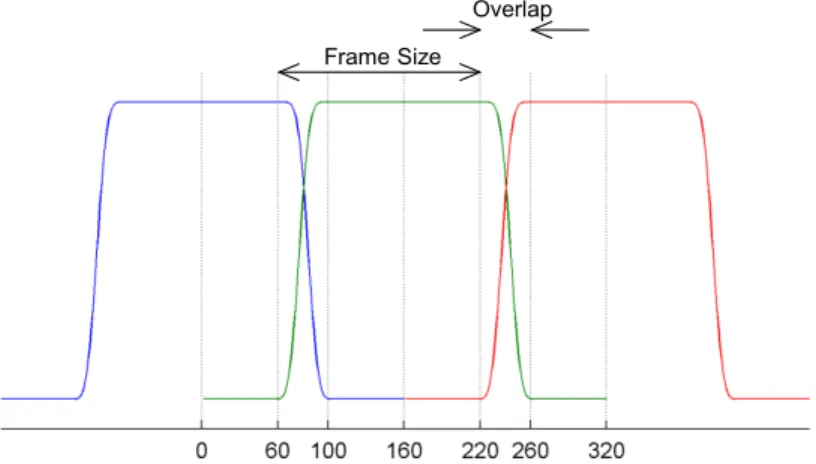
Figure 3.5: Window function with reduced overlap for 20 ms frame mode. KBD window is used for overlap region. ... 35
Figure 3.6: Block diagram of the proposed N2 decoder ... 36
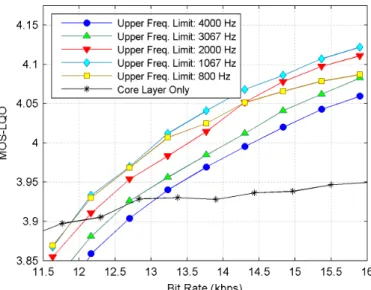
Figure 3.7: Effect of using the enhancement layer and coding only low-frequency MDCT coefficients in enhancement layer ... 38
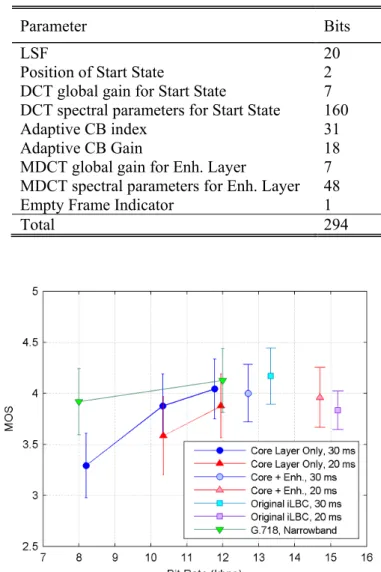
Figure 3.8: Performance comparison of the proposed codec N2 with the original iLBC and G.718 ... 40
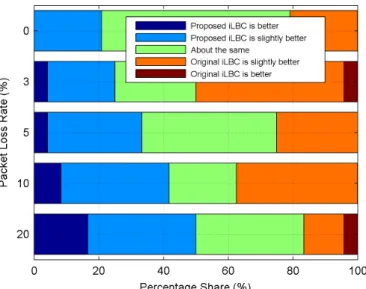
Figure 3.9: A-B comparison test results for the proposed codec N2 using 20 ms frame at 11.95 kbps vs G.718 at 12 kbps ... 41
Figure 3.10: A-B comparison test results for the proposed codec N2 using 20 ms frame at 11.95 kbps vs the original iLBC at 15.2 kbps ... 42
Figure 3.11: Block diagram of the proposed N3 encoder ... 44
Figure 3.12: Block diagram of the proposed N3 decoder ... 45
Figure 3.13: DWT using the Daubechies wavelet with order 4. (a) Tree structure. (b) Magnitude frequency response. ... 46
Figure 3.14: Scaling function, wavelet function and filter coefficients for Daubechies wavelet with order 4 ... 46
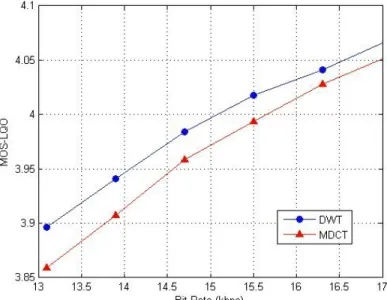
Figure 3.15: Performance comparison between the DWT and the MDCT under clean channel condition. ... 48
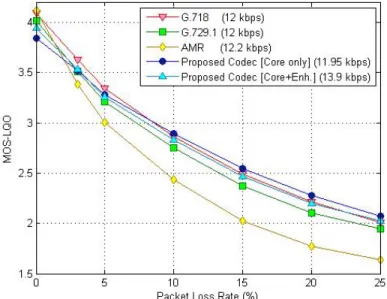
Figure 3.16: Performance comparison of the proposed codec N3 with G.718, G.729.1, and AMR under lossy channel conditions. ... 49
Figure 4.1: Block diagram of the proposed W1 encoder. ... 52
Figure 4.2: Block diagram of the proposed W1 decoder. ... 53
Figure 4.3: Performance comparison of 5 different configurations of the proposed codec W1 with G.729.1 under clean channel condition. ... 55
Figure 4.4: Performance comparison of the case 1 configuration of the proposed codec W1 with G.729.1 at around 32 kbps under lossy channel condition. .... 57
viii
Figure 4.5: Performance comparison of the case 4 configuration of the proposed codec W1 with G.729.1 at around 24 kbps under lossy channel condition. The performance curve of case 1 configuration at 22.2 kbps is also
included for comparison. ... 57 Figure 4.6: Block diagram of the proposed W2 encoder ... 59 Figure 4.7: Block diagram of the proposed W2 decoder ... 60 Figure 4.8: Performance comparisons of the proposed codec W2, G.729.1, and Case
1 and 2 (results in Figure 4.3) of the previously presented codec (the
proposed codec W1) in Section 4.1 under clean channel condition. ... 62 Figure 4.9: Performance comparison of the proposed codec W2 using Mode 1 at
31.35 kbps and G.729.1 at 32 kbps under lossy channel conditions. ... 63 Figure 4.10: Performance comparison of the proposed codec W2 using Mode 4 at
13.85 kbps and G.729.1 at 14 kbps under lossy channel conditions. ... 64 Figure 4.11: Block diagram of the proposed W3 encoder ... 66 Figure 4.12: Block diagram of the proposed W3 decoder ... 67 Figure 4.13: Scaling function, wavelet function and filter coefficients for the reverse
biorthogonal spline wavelet with order 6 and 8 for decomposition and
reconstruction, respectively. ... 69 Figure 4.14: Tree structure for the WPT ... 69 Figure 4.15: Tree structures for the WPT of the lower-band signal that are used for
performance comparisons ... 72 Figure 4.16: Effect of using different tree structures in Figure 4.15 with Daubechies
wavelet with order 4. ... 73 Figure 4.17: Effect of using the Daubechies wavelet with different orders when the
tree structure (d) is employed. ... 74 Figure 4.18: Performance comparison of the proposed codec W3 using various
wavelets with order and the tree structure selected to achieve the highest performance for the lower-band signal. ... 74 Figure 4.19: Performance comparison of the proposed codec W3 using various
wavelets with different order and different number of decomposition
levels for the higher-band signal. ... 76 Figure 4.20: Performance comparisons of the proposed codecs W3 and W2 using the
WPT and the MDCT respectively with G.729.1 under clean channel
condition ... 78 Figure 4.21: Performance comparison of the proposed codec W3 using Mode 2 at
31.7 kbps and G.729.1 at 32 kbps under lossy channel conditions ... 79 Figure 4.22: Performance comparison of the proposed codec W3 using Mode 2 at
14.65 kbps and G.729.1 at 16 kbps under lossy channel conditions. ... 80 Figure 4.23: Subjective test results for the proposed codecs W3 and W2 using the
WPT and the MDCT respectively, and G.729.1 ... 81 Figure 4.24: A-B comparison test results for the proposed codec W3 using the WPT
vs. the proposed codec W2 using the MDCT ... 82 Figure 4.25: A-B comparison test results for the proposed codec W3 vs. G.729.1 ... 83 Figure 4.26: A-B comparison test results for the proposed codec W3 at 31.7 kbps vs.
ix
Figure 4.27: A-B comparison test results for the proposed codec W3 at 14.65 kbps
1
Chapter 1
Introduction
Advances and wide acceptance of voice over Internet protocol (VoIP) [1] have been driving the evolution of telephony technologies in recent years. The transition from the legacy public switched telephone network (PSTN) to IP-based communications is already under way. Voice communication over IP networks has gained popularity and may become the dominant service for overall telephony including the wireless telephony in the near future [1]–[3]. According to [3], the Technological Advisory Council (TAC) for the Federal Communications Commission (FCC) recommended a target date of 2018 as the end of the PSTN. The Technology Transitions Policy Task Force was established on December 10, 2012 to provide recommendations to modernize the Commission's policies in response to evolving communications networks, often called the “IP transition”. AT&T filed the petition to launch a proceeding concerning the time-division multiplexing (TDM)-to-IP transition with the FCC [4] in 2012. In a recent filing with the FCC [5], AT&T proposed two trials involving the transition of two wire centers to all IP services and hopes to continue this transition in all wire centers in order to meet their goal of completing the IP transition by the end of 2020.
On the other hand, the emergence of VoIP has posed new challenges to development of speech codec. The key issue of transporting real-time voice packet over IP networks is the lack of guarantee for reasonable speech quality due to packet delay or loss. The characteristics of IP network channel is constantly changing. Especially, packet traffic on public Internet can be unpredictable and its channel is expected to produce much higher packet delay or loss rate than managed networks. Therefore, voice communication over public Internet is less reliable. Reliability of VoIP can be increased by controlling IP networks. The IP multimedia subsystem (IMS) is a network functional architecture for
2
multimedia service delivery and suited for controlling the multimedia traffic by utilizing quality of service (QoS). It uses a VoIP implementation based on session initiation protocol (SIP), and runs over the standard IP. By relying on managed networks using IMS, packet loss rate is reduced and bursty loss pattern of IP networks becomes less severe although the packet loss is still the main cause of performance degradation and a codec that is robust to packet loss is required.
One way to reduce packet loss is to make use of bit-rate adaptation. If the codec has the capability of multi-rate operation, the packet loss rate can be reduced by lowering the bit rate. Thus, the functionality of speech codec that allows its bit rate to adapt to the current available channel capacity is of significant importance because the efficient channel usage is maintained by adjusting the congestion of packet traffic. When the encoder adjusts the bit rate, it requires information about the current channel condition, which means that feedback is required. The RTP control protocol (RTCP) is used along with the real-time transport protocol (RTP) to provide feedback on the quality of speech transmission for VoIP applications. However, RTCP is not always enabled and feedback is slow. Therefore, the instantaneous adaptation to the current channel condition without the need of feedback is the attractive feature of VoIP application due to the requirement of short time delay for real-time communication. Bit-stream scalability is a promising technique that makes it possible to adjust the bit rate to the desired value by truncating the bit stream at any point of a communication system. Low packet delay or loss rate can be maintained by adjusting the bit rate of voice traffic instantaneously. Note that the benefits of scalability are most enjoyed by the codec used for public Internet. The jitter buffer management (JBM) can also be used to mitigate the effect of delay jitter and is achieved by buffering incoming packets at the receiver and delaying their playout so that most of the packets are received before their scheduled playout times.
1.1
Motivation
Most of the widely used narrowband codecs such as adaptive multi-rate (AMR) [6] or G.729 [7] depend on the code excited linear prediction (CELP) [8] coding technique. The
3
CELP technique utilizes the long-term prediction (LTP) across the frame boundaries and therefore causes error propagation in the case of packet loss and need to transmit redundant information in order to mitigate the problem. Some of the simple solutions were proposed in [9], which requires significant increase in bit rate and delay. Recent approach was introduced in [10] to reduce the error propagation after lost frames by replacing the long-term prediction with a glottal-shape codebook in the subframe containing the first glottal impulse in a given frame, and utilized in G.718 [11]. Another approach which depends on low bit-rate redundancy frames and an LTP scaling parameter can be found in the recent codec called Opus [12].
The internet low bit-rate codec (iLBC) [13], [14] employs the frame-independent coding and therefore inherently possesses high robustness to packet loss. This frame independence is achieved by applying the adaptive codebook (CB) both forward and backward in time, starting from the start state which is a short segment of samples with the highest energy within the linear prediction (LP) residual signal. The start state captures pitch information in voiced speech and accurate noise-like information in unvoiced speech, and enables the operation of the adaptive CB without depending on the history of the LP residual signal. Therefore, when packets are lost, the effect of speech quality degradation is limited without depending on transmission of redundant information. Due to its inherent robustness to packet loss, iLBC quickly became a popular choice of speech codecs for VoIP applications and was adopted by Skype and Google Talk. However, the original iLBC is a narrowband codec and operates at fixed bit rates of 13.33 kbps for the frame size of 30 ms or 15.2 kbps for the frame size of 20 ms, and therefore lacks in some of the key features of speech codecs for IP networks: Rate flexibility, Scalability, and Wideband support [15]. In addition, the benefit of high robustness to packet loss comes at the expense of a high bit rate.
Multi-rate operation is used in most of the recent speech codecs because it enables the speech codec to adapt its bit rate in order to achieve the best possible speech quality under the current channel condition.
Scalable speech coding techniques [16] have been the subject of intense research, and the need for scalable speech coding has been clearly recognized by the industry, resulting
4
in new standardization activities [15]. Indeed, bit-stream scalability facilitates the deployment of new codecs that are built as embedded extensions of widely deployed codecs. In addition, scalability gives more flexibility for VoIP applications. It allows the bit stream to be truncated at the decoder or at any point of the communication system to adapt the bit rate in response to the time-varying channel characteristics without the need of feedback. Note, however, that the bit rate scalable structure may cause the performance degradation as is the case for MPEG-4 scalable speech coding [17].
In recent years, a clear trend toward high quality voice communication has been recognized. Increasing network bandwidth and processing power have already allowed wideband speech coding to be used for IP phone and softphone over IP networks. Recent smartphones also started to adopt wideband speech codecs. Most of the recent wideband speech codecs such as ITU-T G.729.1 [18] and G.718 utilize scalable structure to encode wideband signals, which leads to higher speech quality while providing the flexibility of the bit-rate adaptation. However, they still depend on the CELP coding technique for the core layer and low bit rate operations, and therefore need to utilize the redundant information in order to limit the error propagation in the case of packet loss.
In this work, we add three functionalities to the iLBC: Rate flexibility, Scalability, and Wideband support to develop novel scalable narrowband and wideband speech codecs for IP networks using the frame-independent coding scheme based on the iLBC.
1.2
Related Work
The rate-flexible solution for iLBC was first introduced in [19] by employing the multi-pulse approach to encode the start state. The method used in the encoding procedure was based on an analysis-by-synthesis approach to search and quantize the Multi-Pulse (MP)-based start state. The effect of the adaptive CB in forward and backward directions is first captured in a non-square synthesis matrix to enable the analysis-by-synthesis approach. A variable bit rate is achieved by varying the number of pulses used to approximate the start state. The performance improved results was reported in [20]. The improvements were achieved by reallocating bits from the adaptive
5
CB refinement procedure, reducing the length of the start state vector, utilizing an adaptive pulse gain quantization scheme, and extending the use of entropy coding. Whereas the performance was close to AMR, the codec relied on the analysis-by-synthesis technique for start state encoding, which requires the intensive computational power. The codec does not employ scalability and supports only narrowband speech.
1.3
Contributions of Our Work
First, the rate flexibility was successfully added to the iLBC in [21]. The proposed multi-rate iLBC uses the discrete cosine transform (DCT) and entropy coding to encode the start state. Therefore, our codec has the advantage of lower computational complexity and achieved similar speech quality at most of the bit rates compared to the multi-rate iLBC previously presented by Garrido, et al. [19], [20]. Various approaches to improve performance of the multi-rate iLBC were presented in [22]. The simulation results showed that when all the improvement schemes were combined, the performance was improved at all the bit rates compared to the previous results despite the fact that the Huffman table structure was significantly simplified.
Second, the bit-rate scalable multi-rate iLBC was proposed in [23]. Its scalable structure was constructed by the addition of enhancement layer to the core layer of multi-rate iLBC in LP residual domain. The enhancement layer encodes the iLBC coding error in LP residual domain. The experimental simulation results showed that the proposed framework improved speech quality at high bit rates compared to the non-scalable version. The performance enhanced scalable narrowband multi-rate iLBC was introduced in [24], and the proposed codec was re-designed based on the subjective listening quality instead of the objective quality. In particular, perceptual weighting and the modified DCT (MDCT) with short overlap in weighted signal domain were employed along with the improved packet loss concealment (PLC) algorithm. The subjective evaluation results showed that the speech quality of the proposed codec was equivalent to that of state-of-the-art codec, G.718, under both a clean channel condition and lossy channel conditions. This result is significant considering that development of the proposed codec was still in
6
early stage. In order to further improve the performance, we proposed a new scalable speech codec using the discrete wavelet transform (DWT) in [25]. The DWT was employed instead of the MDCT to encode the core-layer coding error in the enhancement layer. The experimental simulation results showed that the DWT was a promising technique to use for encoding highly non-stationary signals such as the coding error.
Third, the scalable wideband speech codec based on the multi-rate iLBC was introduced in [26]. The coder adopted a split-band structure, where the input signal sampled at 16 kHz was split into two sub-bands. Both the lower- and higher-band signals were encoded by the scalable multi-rate iLBC. Based on the objective evaluation, the proposed codec provided high robustness to packet loss and achieved slightly higher voice quality than G.729.1 at the bit rate higher than about 24 kbps under clean channel condition. We proposed the performance enhanced version of the scalable wideband codec in [27]. The proposed codec utilized the time domain bandwidth extension (TDBWE) for higher-band coding to improve the low bit-rate performance and the efficient coding structure was also employed in enhancement layers. The objective test results showed that significant improvement was achieved at low bit rates and the proposed codec outperformed G.729.1 at most bit rates. In order to provide further improvements in performance, the wavelet packet transform (WPT) was employed instead of the MDCT in the enhancement layers in [28]. The proposed codec was designed based on both the objective and subjective quality measure, and the clear improvement was achieved according to the performance evaluation. The subjective test results also showed that the proposed codec outperformed G.729.1 at high bit rates under clean channel condition and had higher robustness to packet loss than G.729.1.
1.4
Organization of the Dissertation
The dissertation is organized as follows. Chapter 2 presents the background materials which are used in the development of the proposed codecs. First, the overview of speech coding is provided. Then the iLBC and the wavelet transform are introduced. The chapter
7
concludes with the descriptions of performance evaluation methods for speech quality assessment and packet loss robustness assessment.
In Chapter 3, we describe the details of the scalable narrowband speech codec based on the iLBC. The introduction of the multi-rate iLBC is followed by the descriptions of two types of scalable multi-rate codecs based on the iLBC: the first codec using the MDCT and the second codec using the DWT. The performance evaluation is also provided for each codec.
Chapter 4 provides the details of the scalable wideband speech codec based on the iLBC. Three types of bandwidth scalable wideband codecs are presented in the order of performance from lowest to highest. All three codecs adopt split-band structure where the input signal is decomposed into two frequency bands and the lower-band signal is encoded by the scalable narrowband coding scheme based on the iLBC. For the higher-band signal encoding, the first codec uses the scalable narrowhigher-band coding scheme based on the iLBC whereas the second and third codecs employ the time-domain bandwidth extension (TDBWE). The difference between the last two codecs is that the second codec uses the MDCT while the third codec uses the WPT in the enhancement layer coding. The performance evaluation is also included for each codec.
8
Chapter 2
Background
2.1
Overview of Speech Coding
The objective of speech coding is to represent a speech signal in digital form with as few bits as possible while maintaining a certain level of speech quality required for the particular application. The performance of speech codecs can be measured by a set of properties. The fundamental codec properties are bit rate, speech quality, robustness to channel errors and packet loss, delay, and computational complexity. Whereas desired properties of a speech codec are low bit rate, high speech quality, high robustness to channel errors and packet loss, low delay, and low computational complexity, there are trade-offs among these properties. Good performance for one of the properties generally leads to lower performance for the others. For example, the iLBC has an advantage over other codecs in terms of robustness to packet loss. This advantage comes at the expense of higher bit rates. When a codec is designed, the desired values for its properties are determined depending on application needs and constraints. A common approach to develop a speech codec is to constrain all properties but one quantitatively. The design objective is then to optimize the remaining property (usually quality or rate) subject to these constraints.
Traditionally, speech codecs have been designed for narrowband speech in which the audio bandwidth is limited to about 300–3400 Hz with a sampling rate of 8 kHz. The increasing deployment of the higher-capacity end-to-end digital networks for both fixed and mobile communications has been allowed the use of wider speech bandwidth, from 50 Hz to 7 kHz, which is called “wideband”. Wideband speech provides substantial improvement in voice quality, especially in naturalness and intelligibility, compared to
9
narrowband speech. In order to take advantage of the clear benefits from wider speech bandwidth such as the increase in speech quality and the capability to represent speech with arbitrary background sounds including music, recent speech codecs [29], [30] have been developed for so-called super-wideband (50–14000 Hz) and fullband (20–20000 Hz) audio. This section provides the basic speech coding methods with a focus on analysis-by-synthesis coding and subband/transform coding. Subsequently, some of the key technologies to be used for VoIP codecs, especially multi-rate coding and scalable coding, are described.
2.1.1
Speech Coding Methods
Traditionally, speech coding methods have been categorized into three classes: waveform coding, parametric coding, and hybrid coding although the class distinction is not clear. The waveform codec attempts to preserve the original shape of the signal waveform. The waveform coding can be further subdivided into time-domain waveform coding and frequency-domain waveform coding. The well-known time-domain waveform coding techniques are logarithmic pulse code modulation (log PCM) and adaptive differential pulse code modulation (ADPCM) whereas the familiar representatives of the frequency-domain waveform coding methods are subband coding and transform coding. In parametric coding, the speech signal is assumed to be generated from a model and characterized in terms of a set of model parameters. The parametric codec makes no attempt to preserve the original shape of the waveform, and hence SNR is a useless quality measure. The hybrid coding combines the strength of waveform coding with that of parametric coding, and its term is usually reserved for analysis-by-synthesis coding. The analysis-by-analysis-by-synthesis coding technique usually utilizes the LP model and a perceptual distortion measure to reproduce perceptually important characteristics of the input speech. The coding approaches of the recent speech codecs are dominated by analysis-by-synthesis coding and subband/transform coding, which are described in detail next.
10
2.1.1.1
Analysis-by-Synthesis Coding
Since the early 1980s, advances in speech coding technologies have enabled speech codecs to achieve bit-rate reductions of a factor of 4 to 8 while maintaining roughly the same high speech quality. One of the most important driving forces behind this advancement is the so-called analysis-by-synthesis paradigm [31] for coding the excitation signal of predictive speech codecs. In a speech codec, the speech signal is represented by a combination of parameters. In an open-loop system, the parameters are extracted from the input signal, which are quantized and later used for synthesis. A more effective method is to use the parameters to synthesize the signal during encoding and fine-tune them so as to generate the most accurate reconstruction. Conceptually, this is a closed-loop optimization procedure, where the goal is to choose the best parameters so as to match as much as possible the synthesized speech with the original speech. Since the signal is synthesized during encoding for analysis purposes, the principle is known as analysis-by-synthesis.
The dominant and most successful analysis-by-synthesis technique is code-excited linear prediction (CELP). Figure 2.1 shows a simplified block diagram of the CELP encoder. The excitation signal is generated from a codebook with the corresponding gain and applied to the synthesis filter. The error signal is calculated by subtracting the synthesized signal from the original speech signal and passed through a perceptual weighting filter. The process is repeated for all excitation codevectors stored in a codebook. The excitation codevector and gain which produce the minimum perceptually weighted coding error are selected, and their indexes are transmitted to the decoder. A simplified block diagram of the CELP decoder is illustrated in Figure 2.2. The excitation codevector is retrieved from a codebook identical to that in the encoder and multiplied by the gain to provide the excitation signal. After the synthesized signal is generated, it is processed by the postfilter to enhance the quality of the decoded signal.
The perceptual weighting is a key to improving the subjective quality in CELP. It is used to shape the coding error spectrum so that it follows the spectrum of the input signal to some extent. Due to the noise masking effect of the human auditory system, such spectrally shaped coding error is less audible to human ears.
11
Figure 2.1: Block diagram of a CELP encoder
Figure 2.2: Block diagram of a CELP decoder
The CELP codec relies on the long-term and short-term linear prediction models. In the original CELP codec, the long-term synthesis filter was cascaded with the short-term synthesis filter. The long-term synthesis filter, often called the pitch synthesis filter, creates periodicity in the signal associated with the fundamental pitch frequency. The concept of the adaptive codebook was developed to replace the long-term LP analysis in order to improve performance and has become common to many CELP-based standard codecs. Excitation Codebook Gain Error Minimizati Synthesis Filter LP Analysis Perceptual Weighting Input Speech – Excitation
Codebook Synthesis Filter Gain
Postfilter Output Speech
12
2.1.1.2
Subband/Transform Coding
Whereas subband and transform coding methods have been playing a critical role in high quality audio coding since the early nineties, more recently their use for speech coding, especially for coding of wideband, superwideband, and fullband signal, has gained increasing importance. Although subband coding and the transform coding grew out of different areas using different building blocks, it became clear that they are just different views of the same underlying methodology [32]. In both coding methods, the input signal is split into frequency bands. In one point of view, the term, “subband coding”, is usually used if the number of frequency bands is small; otherwise the technique is called “transform coding”.
In subband coding, an analysis filter bank is used in the encoder to decompose the input signal into subbands, and each band is encoded separately. In order to preserve the data rate after filtering, each filter output is critically down-sampled. This down-sampling process may introduce aliasing distortion due to the overlapping nature of the subbands. Thus, the success of this technique depends on the design of appropriate analysis and synthesis filter banks. Quadrature mirror filter (QMF) banks allow the aliasing that occurs during filtering and down-sampling at the encoder to be cancelled at the decoder in the absence of quantization errors. The codecs used in each band can be PCM, ADPCM, or even an analysis-by-synthesis method. The advantage of subband coding is that each band can be coded to a different accuracy and that the coding error in each band can be controlled in relation to human perceptual characteristics.
In transform coding, a block of input samples is linearly transformed by a discrete transform into a set of transform coefficients. These coefficients are then quantized and transmitted to the decoder. An inverse transform yields exact reconstruction in the absence of quantization errors. Recent speech codecs employ a modified discrete cosine transform (MDCT) to encode the coding error from the core codec. The MDCT is a lapped transform, where subsequent blocks of samples are overlapped. This overlapping helps to avoid artifacts stemming from the block boundaries. The main attraction of transform coding is that it allows more bits to be allocated to the perceptually important coefficients.
13
2.1.2
Key Technologies for VoIP Codecs
The emergence of VoIP incurs numerous impairments including delay, jitter, packet loss and decoder clock offset, which degrade the quality of the speech. Advanced signal processing algorithms and coding technologies can combat these impairments and improve the perceived quality of a VoIP conversation.
For example, packet delay or loss can be a major source of impairments in long distance packet switched networks. A jitter buffer is an essential tool to smooth-out the inevitable delay variations caused by the network routers. It is also essential to use packet loss concealment (PLC) algorithms to alleviate the speech quality degradation.
Another approach to improve speech quality in the case of packet loss is to reduce packet loss rate. One way to reduce packet loss rate is to make use of bit-rate adaptation. If the codec has the capability of multi-rate operation, the packet loss rate can be reduced by lowering the bit rate. Thus, the functionality of speech codec that allows its bit rate to adapt to the current available channel capacity is of significant importance. When the encoder adjusts the bit rate, it requires information about the current channel condition, which means that feedback is required.
The instantaneous adaptation to the current channel condition without the need of feedback is the attractive feature of VoIP application due to the requirement of short time delay for real-time communication. Bit-stream scalability is a promising technique that makes it possible to adjust the bit rate to the desired value by truncating the bit stream at any point of a communication system. The packet delay or loss rate can be reduced by lowering the bit rate of voice traffic instantaneously without re-encoding.
2.1.2.1
Multi-Rate Coding
The term, multi-rate coding, here is also called network-controlled multimode coding, where multiple modes of speech coding are defined with each mode having a different fixed bit rate. The multi-rate codec responds to an external control signal to switch the
14
data rate to one of a predetermined set of possible rates. The control signal is typically generated by the network operating system in response to network conditions and the desired quality of service. For example, the network operating system can switch to using lower bit rates during network congestion to improve capacity and reduce packet delay/loss or to trade off speech bit rate for channel coding to increase channel protection. A special case of multi-rate coding called scalable coding is of particular interest and is explained in detail in the next sub-section.
The typical example of the multi-rate narrowband codecs is the adaptive multi-rate (AMR) speech codec [6] standardized by European Telecommunication Standards Institute (ETSI) in 1999 [33]. The Third Generation Partnership Project (3GPP) adopted the AMR codec as the mandatory speech codec for the third generation WCDMA system [34]. The wideband version of the AMR codec, referred to as AMR Wideband (AMR-WB) [35], was standardized in 2001 [36]. The AMR must be supported in all universal mobile telecommunications system (UMTS) and long term evolution (LTE) terminals, and the AMR-WB is also supported in all wideband-voice (HD voice) capable terminals across UMTS and LTE [37]. A new codec for enhanced voice services (EVS) [38], the successor of the AMR and AMR-WB codecs, was standardized in September 2014 [39], [40]. The EVS codec has been primarily designed for Voice over LTE (VoLTE) and provides not only enhanced voice quality and coding efficiency, but also high robustness to packet loss and delay jitter while maintaining backward compatibility to the AMR-WB codec.
In contrast to network-controlled multimode coding, source-controlled variable bit rate (SC-VBR) coding is used to achieve higher coding efficiency. The SC-VBR codecs select the encoding rate based on the characteristics of each speech frame (e.g., voiced, unvoiced, transient, background noise). The average bit rate is typically less than the bit rate of the fixed rate codec to achieve a given level of speech quality. Note that the SC-VBR coding scheme is usually combined with the network-controlled multimode coding scheme, where the average bit rate is controlled by the network. The SC-VBR codecs have been becoming increasingly common [15]. The EVS codec also provides a SC-VBR mode.
15
2.1.2.2
Scalable Coding
Scalable speech coding is a special case of multi-rate coding with a bitstream structured into layers which consists of a core bitstream and enhancement bitstreams. When a scalable speech codec is used, the encoder can operate at the highest bit rate, but some enhancement layers could be discarded at any point of communication systems by simply truncating the bitstream to reduce the bit rate. In contrast to a multi-rate codec, a feedback of channel conditions and re-encoding are not required for a scalable codec to reduce the bit rate. Therefore, a layered bitstream offers higher flexibility and easier adaptation to sudden change of network conditions, which can be exploited to reduce packet loss rates. In fact, enhancement layers can be used to add various types of functionality to a core layer, such as speech quality improvement (also called signal-to-noise ratio (SNR) scalability), bandwidth extension or mono to stereo extension (number of channels extension) [41]. Note, however, that a scalable speech codec generally has lower performance than a multi-rate codec with each bit-rate mode independently optimized for the highest speech quality.
There are two other advantages for employing scalable speech codecs [16]. First, scalable coding is a possible solution to cope with the heterogeneity and variability in communication systems. In fact, the telephone industry has been experiencing a transition from the PSTN to an all IP network. Currently, links having different capacities and terminals with various capabilities may coexist. A transmission path may include both wireless links and fixed links with different capacities. Using a scalable coding approach, users can receive different quality versions of the same speech according to their individually available resources and supported capabilities by simple bitstream truncation.
Secondly, the coexistence of the PSTN and IP networks with a mixture of wireless and fixed links means that transcoding at gateways is inevitable. In this situation, the bitstream scalability can be employed to ensure interoperability with different network infrastructures without requiring too much transcoding overhead. More specifically, a
16
scalable extension of a widely used core codec is a very attractive solution to deploy a new enhanced codec while minimizing the required transcoding overhead and maintaining interoperability and backwards compatibility with existing infrastructure and terminals.
The recent scalable wideband codec examples are ITU-T G.729.1, G.718, and G.711.1 [42]. G.729.1 and G.711.1 are scalable extensions of widely used narrowband codecs, G.729 and G.711, respectively. G.718 provides the interoperability mode with G.722.2/AMR-WB.
2.2
Internet Low Bitrate Codec
The iLBC is a speech codec developed for robust voice communication over IP networks. It is designed for narrowband speech signals sampled at 8 kHz. The codec uses a frame-independent coding algorithm and operates at fixed bit-rates of 13.33 kbps for the frame size of 30 ms and 15.2 kbps for the frame size of 20 ms.
The iLBC algorithm inherently possesses high robustness to packet loss and enables a controlled response to packet losses similar to what is known from pulse code modulation (PCM) with packet loss concealment (PLC), i.e., the ITU-T G.711 which operates at a fixed bit rate of 64 kbps. The codec overcomes the error propagation problem caused by frame dependencies of the CELP-based codecs (e.g. G.729, G.723.1, GSM-EFR and 3GPP-AMR) in the case of packet loss. Therefore, the iLBC codec is especially suitable for VoIP applications such as Skype, Yahoo Messenger, and Google Hangouts among others. Cable Television Laboratories (CableLabs) has adopted the iLBC as a mandatory PacketCable audio codec standard for VoIP over Cable applications.
The iLBC was developed by a company called Global IP Solutions (GIPS) formerly Global IP Sound (acquired by Google Inc. in 2011), and the experimental protocol is defined in request for comments (RFC): 3951 [43] published by the Internet engineering task force (IETF) in December 2004. The RTP payload format for iLBC speech is defined in RFC 3952 [44]. The iLBC was selected by Cable Television Laboratories, Inc. (CableLabs) as a codec standard suitable for packet-based communication networks, and
17
is supported in PacketCable as one of the recommended codecs [45]. The iLBC is available under a free software/open source license as a part of the open source WebRTC project [46].
The computational complexity of the iLBC is in the same range as the reduced complexity version of the ITU-T G.729 speech codec, i.e., G.729 Annex A. It provides not only significantly higher robustness to packet loss than G.729A, but also equivalent speech quality in a clean channel condition.
2.2.1
Codec Structure
The basic framework of iLBC is based on the linear prediction (LP) model and block-based coding of the LP residual signal using an adaptive CB as is the case with CELP-based codecs. The main difference from CELP-CELP-based codecs is that the long-term predictive coding is exploited without introducing inter-frame dependencies. Thus, the propagation of errors across frames is avoided when packets are lost, which makes the iLBC robust to packet loss. This frame independence is achieved by applying the adaptive CB both forward and backward in time, starting from the start state. The start state captures pitch information in voiced speech and accurate noise-like information in unvoiced speech, and enables the operation of the adaptive CB without depending on the history of the LP residual signal.
The benefit of using the start state comes at the expense of a large number of bits required to represent it accurately for each frame. The start state occupies 43.5 % and 56.25 % of encoded bits for 30 ms frame mode and 20 ms frame mode, respectively.
Figure 2.3 shows the block diagram of the iLBC speech encoder. The encoder operates on 20/30 ms input frames, each of which is divided into 5 ms sub-frames. The narrowband input signal is sampled at 8 kHz and pre-processed by a high-pass filter with 90 Hz cut-off frequency. For each frame, the LP analysis is performed and the LP residual signal is calculated. The two consecutive sub-frames of the LP residual signal having the highest weighted energy are identified. Within these two sub-frames, the start state is selected as either the first 57/58 samples or the last 57/58 samples of the two
18
consecutive sub-frames, depending on which segment has a higher energy. The start state is encoded with scalar quantization. An adaptive CB search procedure is used to first encode the 23/22 remaining samples in the two sub-frames containing the start state. Secondly, the remaining sub-frames after the start state are encoded forward in time, and lastly, the remaining sub-frames before the start state are encoded backward in time. Each adaptive CB search is repeated three times for refinement. The encoded bits are packetized into the payload to be transmitted.
Figure 2.3: Block diagram of the iLBC encoder
The decoder is basically the inverse function of the encoder except for two added functions: enhancement of the LP residual signal and packet loss concealment (PLC). In particular, an enhancement algorithm is applied to the reconstructed LP residual signal. This enhancement augments the periodicity of voiced speech regions. The PLC operation is embedded in the decoder. The PLC operation is based on repeating LP filters and obtaining the LP residual signal by using a long-term prediction estimate from previous residual frames.
2.2.2
Codec Performance
Figure 2.4 shows the formal subjective test results performed by the Dynastat Inc., where the performance of the iLBC was compared with those of the existing coding standards G.729A and G.723.1 under lossy channel conditions. The speech quality scores
Pre-Process LP Analysis CalculationResidual
Start State Identification Scalar Quantization of Start State Adaptive CB Search Packetization
19
(MOS, which is explained in Section 2.4) are plotted as a function of packet loss rates. The results clearly show the iLBC's superiority when used in a real life environment, where its intrinsic packet-loss robust property results in a high quality even under adverse network conditions. We can also see that the iLBC not only performs significantly better than G.729A and G.723.1 under lossy channel conditions but also provides equivalent or higher speech quality in a clean channel condition.
Figure 2.4: Performance comparisons of iLBC, G.729A and G.723.1 under lossy channel conditions [46]
2.3
Wavelet Transform
The Fourier-based transforms such as the Discrete Fourier Transform (DFT), DCT, and MDCT have a problem encoding highly non-stationary signals because the transform of a non-stationary signal spreads over the whole spectrum, which makes compression in the transform domain a more difficult task. In contrast to the Fourier-based transform, which uses a single analysis window, the wavelet transform [47]–[50] uses short windows at high frequencies and long windows at low frequencies. In other words, it provides good frequency selectivity for low frequencies at the cost of the temporal
20
resolution, and good time localization for high frequencies at the cost of the frequency resolution. Therefore, the wavelet transform can be used to better capture non-stationarities and localized waveforms in the time domain than the Fourier-based transforms.
Wavelets are localized waves. Instead of oscillating forever, they drop to zero. Wavelets are basis functions wjk(t) in continuous time. A basis is a set of linearly
independent functions that can be used to produce all admissible functions f(t):
∑
= k j jk jk t w b t f , ( ) ) ( . (2.1)The special feature of the wavelet basis is that all functions wjk(t) are constructed
from a single mother wavelet w(t). This wavelet is a small wave (a pulse). Normally it starts at time t = 0 and ends at time t = N. A typical wavelet wjk(t) is compressed j times
and shifted k times. Its formula is
(
t k)
wt
w j
jk( )= 2 − . (2.2)
The remarkable property that is achieved by many wavelets is orthogonality. The wavelets are orthogonal when their inner products are zero:
0 ) ( ) ( =
∫
−∞∞wjk t wJK t dt . (2.3)In this case the wavelets form an orthogonal basis for the space of admissible functions. A perfect basis is not only orthogonal but orthonormal, which means that the functions have length 1. The rescaled wavelet that forms an orthonormal basis is
(
t k)
wt
w j j
jk( )=2 2 2 − . (2.4)
Corresponding to the low-pass filter with coefficients h0(k), there is a
continuous-time scaling function ϕ(t). Corresponding to the high-pass filter with coefficients h1(k),
there is a wavelet w(t). The dilation equation that produces the scaling function ϕ(t) is
∑
= − = N k k t k h t 0 0 ) 2 ( ) ( 2 ) ( φ φ . (2.5)21
∑
= − = N k h k t k t w 0 1 ) 2 ( ) ( 2 ) ( φ . (2.6)The wavelet transform operates in continuous time on functions and in discrete time on vectors. The input is a function f(t) or a vector x(n). The output is the set of coefficients bjk, which expresses the input in the wavelet basis. For functions and infinite
signals, this basis is necessarily infinite. For finite length vectors with L components, there will be L basis vectors and L coefficients. The discrete wavelet transform, from L components of the signal to L wavelet coefficients, is expressed by an L by L matrix.
In order to calculate the coefficients bjk, integrals of f(t) times wjk(t) are used in
continuous time. In discrete time we are solving a linear system. The inverse transform involves the inverse matrix.
For an orthonormal basis, the synthesis and analysis of a function f(t) are Synthesis in continuous time: =
∑
k j jk jk t w b t f , ) ( ) ( (2.7)
Analysis in continuous time: bjk =
∫
−∞∞ f(t)wjk(t)dt. (2.8)In the matrix case, the wavelets are ordinary vectors. They go into the columns of the wavelet matrix S. Each wavelet vector corresponding to the coefficient bjk has a position
in time given by k and a position in frequency (scale) given by j. The columns of the L by L matrix S are the discrete wavelets:
Synthesis in discrete time: x=Sb. (2.9) The rows of the L by L matrix A contain the analyzing wavelets:
Analysis in discrete time: b=Ax. (2.10) For all orthonormal wavelets, the columns of S are the same as the rows of A. Analysis and synthesis are related by A = ST. In general they are related by A = S-1.
Without orthogonality, the rows of A = S-1 are biorthogonal to the columns of S:
22
Each row of S-1 is orthogonal to L – 1 columns of S. This is biorthogonality. The columns
of S are the synthesis basis, and the rows of A = S-1 are the analysis basis.
By using the word “basis”, we ensured that all these matrices are square. In the rectangular case, S would not have an inverse. There are too many columns to be independent; instead of a basis we have a frame. In this case, the pseudo-inverse S+
would be used instead of S-1.
The wavelet basis has special properties beyond orthogonality. The scales j and j – 1 are closely related. By taking advantage of this relation, the multiplications by A and S can be reorganized and the fast transforms are derived, which is described next.
The recursive nature of wavelets can be seen when we construct a tree of filter banks as shown in Figure 2.5. Wavelets come from the iteration of filters (with rescaling). The link between discrete-time filters and continuous-time wavelets is in the limit of a logarithmic filter tree. The coefficients bjk are obtained by processing the input signal by
the high-pass filter H1 and down-sampling by a factor of 2. These coefficients are at the
end of the branch in this logarithmic tree and at the finest level. The coefficients ajk are
obtained by processing the input signal by the low-pass filter H0 and down-sampling by a
factor of 2. These coefficients are filtered again by H1 and H0. Whereas the
low-frequency coefficients ajk give the approximations of the signal, the high-frequency
coefficients bjk provide the details of the signal. This signal decomposition is called the
discrete wavelet transform (DWT) and the DWT coefficients are formed by the high-frequency coefficients of each level together with the low-high-frequency coefficients of the last level. Because of the decimation by 2 at each level, the DWT of an L dimensional signal will produce L transform coefficients.
23
Figure 2.5: The logarithmic tree of the discrete wavelet transform
The tree of filters leads to the fast wavelet transform. The analysis matrix A can be expressed as a product of very sparse matrices which correspond to the filter bank at each level of the logarithmic tree. Since at each level, only the low-pass signal from the previous level is further decomposed, the computational complexity is significantly reduced. In fact, the complexity is linear in the number of input samples, L, independent of the depth of the tree. Therefore, the DWT is asymptotically faster than the fast Fourier transform (FFT), requiring only O(L) steps instead of O(L ∙ logL).
In continuous time, the input f(t) is a function instead of a vector. The output is the set of coefficients bjk that multiply the wavelet basis functions wjk(t). These coefficients
are inner products of f(t) with wjk(t). Here we can see the beautiful connection between
wavelets and filter banks. The coefficients at level j – 1 come directly from the coefficients at level j as in discrete time by filtering and down-sampling. This is because the functions at level j – 1 come from the functions at level j. Furthermore, a function at fine resolution j is equal to a combination of “approximation plus detail” at coarse resolution j – 1:
∑
∑
∑
= − − + − − k j k j k k j k j k k jk jk t w b t a t a φ ( ) 1, φ 1, ( ) 1, 1, ( ). (2.12) In the DWT, only the low-pass filter is iterated. It is assumed that lower frequencies contain more important information than higher frequencies. For many signals this is necessarily not true. A wavelet packet [48]–[52] basis allows any dyadic tree structure asH
0↓2
b
jk InputH
1↓2
H
0↓
2b
j-1,kH
1↓2
a
jka
j-1,k24
shown in Figure 2.6. At each point in the tree we have the option to send the signal through the lowpass-highpass filter bank, or not.
Figure 2.6: Tree structures for time-frequency decomposition
One possibility is the logarithmic tree for the DWT, with low-pass iteration only. Another possibility is the complete tree for the Walsh-Hadamard transform, which is analogous to the short time Fourier transform (STFT). Wavelet packets make up the entire family of bases. The decision to split or to merge should be aimed at achieving minimum distortion subject to constraints on the bit rate and the delay.
2.4
Performance Evaluation Methods
2.4.1
Speech Quality Assessment
Evaluation methods generally fall into two types: subjective tests and objective tests. Subjective tests involve human listeners and are difficult to organize and perform. Thus, objective evaluation methods were developed to model subjective tests for automated assessment of the speech quality.
Absolute category rating (ACR) tests are the most common type of subjective tests of speech quality. In this test, listeners rate for each speech utterance according to the scales, such as, Excellent (5), Good (4), Fair (3), Poor (2), and Bad (1). The mean opinion score (MOS) [14], [53] is the arithmetic mean of all the individual scores. Comparison category
25
rating (CCR) method, also known as A-B comparison tests, is also commonly used. In this test, listeners are presented with a pair of speech samples on each trial, and use the following scale to judge the quality of the second sample relative to that of the first: Much better (3), Better (2), Slightly Better (1), About the Same (0), and Slightly Worse (-1), Worse (-2), Much Worse (-3).
The perceptual evaluation of speech quality (PESQ) [14], [54] algorithm was developed to provide an objective assessment of speech quality in conversational voice communications. The PESQ is used to predict the subjective quality of speech and generate the objective score, MOS-LQO, which can be used for a linear comparison with MOS scores for both narrowband and wideband speech. Note that whereas a MOS score ranges from 1 to 5, the range of a MOS-LQO is from 1.02 to 4.55 for narrowband speech and from 1.04 to 4.64 for wideband speech. While there is no substitute for actual listening tests, the PESQ are widely used for initial codec evaluations and are highly useful. The objective tests based on perceptual objective listening quality assessment (POLQA) [55] algorithm, which is a successor to the PESQ, may present better correlation with the subjective tests; however, it is important to note that an objective test will never be a replacement for a subjective listening test.
The speech samples utilized for performance evaluation are from database in Annex B of ITU-T P.501 [56] pre-published in January 2012. The source speech was down-sampled to 8 kHz or 16 kHz depending on the bandwidth of speech signals that a codec supports and its speech level was equalized to -26 dBov using the ITU-T Software Tool Library [57]. The modified-IRS filter and any mask were not used because the target VoIP applications includes soft phones.
2.4.2
Channel Model Used for the Evaluation of Packet Loss
Robustness
The Gilbert Elliot channel model [58] was employed using the ITU-T Software Tool Library [57] to simulate the bursty packet loss such as the behavior of IP networks. This channel model has two states: Good (G) and Bad or Burst (B). The probabilities
26
associated with the channel states are P and Q, P being the probability of transition from state G to B, and Q the probability of transition from B to G. Thus, the probability of remaining in the same state is (1 – P) and (1 – Q) for state G and B, respectively. When the packet error probability is PG and PB for state G and B, respectively, the average
packet error probability, PER, generated by this channel model is given by
G B Q P P P PER γ γ + − − = 1 1 (2.13) where
(
P+Q)
− =1 γ (2.14)is a measure for the correlation of the packet errors, and consequently an indication of the burst or random characteristic of the channel. In this case, γ ≈ 0 implies a nearly random error channel, while γ ≈ 1 implies a totally bursty channel. From (2.13) and (2.14) we get
(
)
− − − ⋅ − = G B B P P PER P P 1 γ 1 (2.15)(
)
G B B P P PER P Q − − ⋅ − = 1 γ (2.16)In this work, PG = 0, PB = 0.5 and γ = 0.2 were used. For the packet loss simulation,
four different patterns of packet error sequences were generated for each PER and each speech sample, and the mean value was calculated to evaluate the speech quality for the performance comparison.
27
Chapter 3
Scalable Narrowband Speech Codec
Based on iLBC
The scalable narrowband speech codec based on the iLBC coding scheme is developed in two steps: the addition of rate flexibility to the iLBC and the addition of scalability to the multi-rate codec based on the iLBC. The first step results in the development of the multi-rate iLBC, which is used as the core layer codec of the scalable codec developed in the second step. In this chapter, the multi-rate iLBC is introduced first. Two types of scalable multi-rate codecs based on the iLBC are subsequently described: the first codec using the MDCT and the second codec using the DWT in the enhancement layer. The performance evaluation is also provided for each codec.
3.1
Multi-Rate iLBC
The multi-rate operation of the iLBC is enabled by transforming the start state into the DCT domain and allocating different number of bits to the DCT coefficients. We refer to this narrowband multi-rate iLBC as the proposed codec N1 in this dissertation. The details of the multi-rate iLBC coding scheme are described in this section.
3.1.1
Start State Coding using the DCT
Since the start state contains the important information as explained in Section 162.2.1, the encoding process should maintain its waveform as accurately as possible. The original iLBC uses 3-bit scalar quantizer. However, a time domain waveform coding
28
is not flexible in terms of the bit rate reduction. A frequency domain coding technique has potential for reducing the bit rate because of the nature of the start state. The DCT is used since it has a strong energy compaction property, a fast transform algorithm is available and the start state is completely independent for each frame.
Figure 3.1 shows the block diagram of the start state encoder using the DCT, which replaces the block for scalar quantization of the start state in Figure 2.3. The N samples of the start state x0, …, xk are processed by perceptual weighting filter
= s z A z W γ ˆ 1 ) ( (3.1)
where Â(z) is a LP analysis filter and the filter W(z) models the short-term frequency masking curve. The parameter γs is used to adjust the degree in which the perceptual
weighting is applied. Note that the start state is in the residual domain and weighting the start state with W(z) is equivalent to employing a perceptual weighting filter Â(z)/Â(z/γs)
in speech signal domain as used in CELP technique. The filter W(z) is initialized to zero in each frame. Note also that N for the original iLBC is 57 and 58 for the 20 ms and 30 ms frame, respectively, whereas the proposed codec N1 uses the longer start state length of N = 80. The reason of its choice is explained in Section 3.1.2. The weighted start state samples are transformed into the DCT coefficients X0, …, Xk by one-dimensional DCT
according to 1 ,..., 0 2 1 cos 1 0 − = + =
∑
− = N k k n N x w X N n n k k π (3.2) where − ≤ ≤ = = 1 1 2 0 1 N k N k N wk (3.3)29 DCT AVQ Perceptual Weighting DCT AVQ Perceptual Weighting
Figure 3.1: Block diagram of DCT-based start state encoder
The DCT coefficients are quantized by the scalable AVQ which is specified in G.718 [11], [59] and implemented by forming 8-dimensional vectors and using multi-rate lattice vector quantizer [60]. Codebooks of different bit rates are formed by selecting subsets of appropriate size from the RE8 lattice [61] points. Any point in a given lattice can be generated from appropriate permutation of the components of a few basic vectors called leaders. Thus, significant savings of memory requirements can be achieved. To remain within the total bit budget, DCT coefficients are divided by a global gain prior to quantization.
The multi-rate functionality is obtained by allocating different number of bits to the AVQ. Thus, when a small number of bits are available to use for the AVQ, those bits are allocated to only a limited number of sub-bands.
3.1.2
Performance Enhancement Schemes
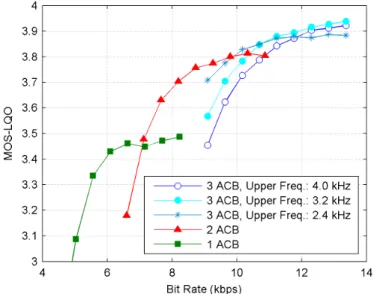
The low bit rate operation is achieved by decreasing the number of available bits for the AVQ, which leads to rapid degradation of speech quality. Some of the schemes were already introduced in [20] to improve performance at low bit rates. One of the schemes is used in the proposed codec N1, which is to reduce the number of adaptive CB stages and reallocate bits from one or two of the adaptive CB refinement stages to start state encoding. This scheme sacrifices speech quality at high bit rates in order to achieve good speech quality at low bit rates.
Longer start state samples can capture more information and provide better frequency resolutions. Thus, high speech quality can be achieved at high bit rates. Interestingly, good speech quality can also be maintained at low bit rates by reducing the number of the adaptive CB stages and reallocating a part of bits to encode the longer start state.
![Figure 2.4: Performance comparisons of iLBC, G.729A and G.723.1 under lossy channel conditions [46]](https://thumb-us.123doks.com/thumbv2/123dok_us/10059659.2905651/32.918.267.711.325.644/figure-performance-comparisons-ilbc-g-lossy-channel-conditions.webp)