Aarhus School of Business, Aarhus University
Business and Social SciencesDepartment of Business Administration
Master thesis
Master of Science in Marketing
Patterns in Lead User Innovation: the Case of Winter
Windsurfing
By Elina Cate
Advisor: Helle Alsted Søndergaard
Abstract
Lead user innovation paradigm is replacing traditional innovation approaches. It has turned out to be superior by time and cost saving, which is essential in today’s ever changing and complex consumer product markets. Companies and other organizations are learning to exploit the value of this approach, however, the paradigm is still new and it has to be improved, therefore, more understanding and research is needed.
This thesis explores the patterns of consumer product innovation in winter windsurfing equipment market. The research has two sub-topics – patterns in sources of innovation and patterns in benefits that drive innovations. A combination of several research methods is used – secondary research in patent databases, expert interviews and online questionnaire. All sources agree that the sources of innovation in this market are users themselves, which means that it is dominated by lead user innovation. Moreover, the innovation activity is very high and the sample of the online questionnaire was saturated with users that possess lead user characteristics. It was also found that these lead user characteristics (being ahead of the trend and having high expected benefits) have not only positive relationship with actual innovation, but are also causal. This means that having lead user characteristics increases actual innovation, which confirms the relevance of the lead user paradigm. Further, it was found that users innovate driven by benefits like reputation, fulfillment of needs, and for fun, leaving financial motivators behind.
The results of the thesis confirm the importance of lead user paradigm. It provides reasons on why it is important to use lead users in new product development and gives suggestions on how to identify such users and raise innovation activity. Moreover, it contributed to the understanding of the paradigm as we as serves as an example of identifying and approaching lead users in the market.
Table of Contents
1. Introduction ...0
2. Literature Review...4
2.1. Traditional Innovation Paradigm ... 4
2.2. Lead User Innovation Paradigm ... 5
2.3. Empirical Evidence of Lead User Paradigm ... 8
2.4. Measuring lead userness...12
2.5. User-Innovator Benefits ...13
3. Research Context and Methodology... 16
3.1. Research Context ...16
3.2. Sample ...19
3.3. Methodology...20
3.3.1. Literature Analysis ... 21
3.3.2. Expert Interviews ... 21
3.3.3. Secondary research in various sources... 22
3.3.4. Online Questionnaire ... 22
4. Results... 34
4.1. Patterns in sources of innovation ...34
4.1.1. Expert opinion... 34
4.1.2. Secondary research... 34
4.1.3. Questionnaire respondent opinion ... 36
4.2. Patterns in benefits that drive innovation...46
4.2.2. Expert opinion... 46
4.2.3. Questionnaire respondent opinion ... 47
5. Discussion ... 49
5.1. Patterns in sources of innovation ...49
5.2. Patterns in benefits that drive innovation...52
6. Conclusions... 55
7. Further research... 58
References... 59
Appendix 1: Expert Interview Guide ... 63
List of Tables
Table 1: Past studies on innovation frequency... 9
Table 2: Lead Userness Construct Measurement...26
Table 3: Items describing the construct of actual innovativeness...27
Table 4: Measurement of Lead Userness construct...29
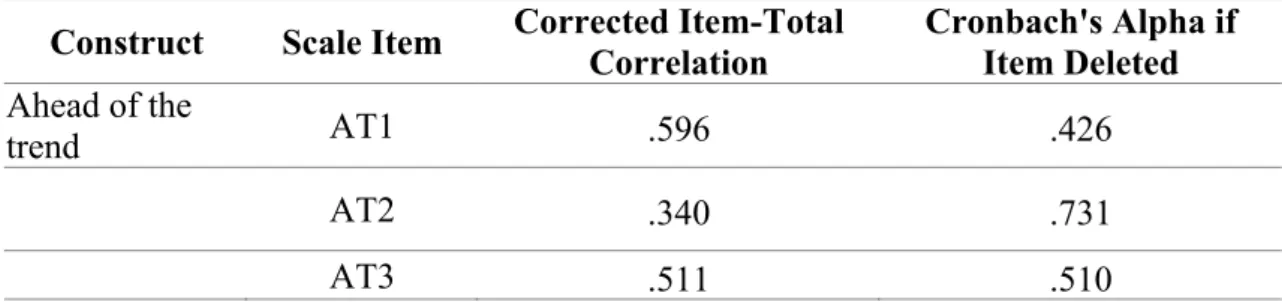
Table 5: Measurement of Ahead of the trend construct...31
Table 6: Measurement of High expected benefits construct...31
Table 7: Patents found in databases...35
Table 8: Percentage of respondents divided by their country of origin...36
Table 9: Correlations...40
Table 10: Regression output for AI1...41
Table 11: Regression output for AI2...44
Table 12: Summary of expected benefits...47
List of Figures
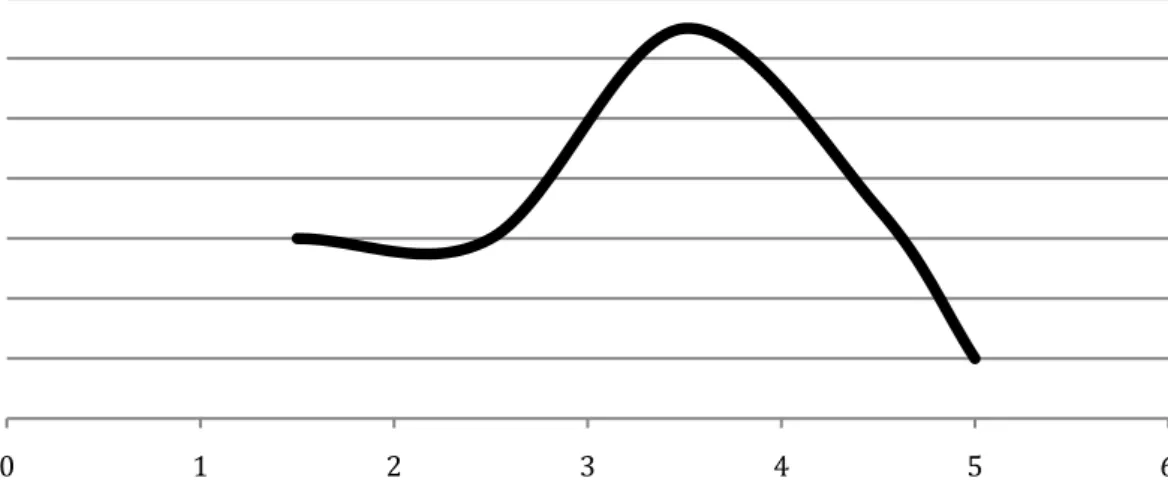
Figure 1: Visualization of Lead User position... 7Figure 2: The distribution of Lead Userness scores...38
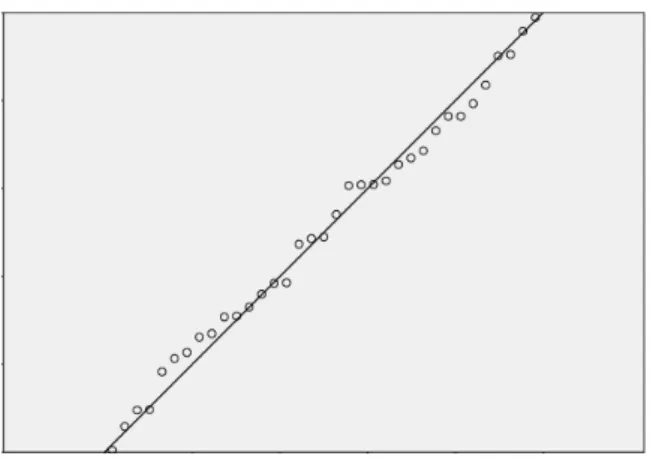
Figure 3: Normal probability plot (AI1)...42
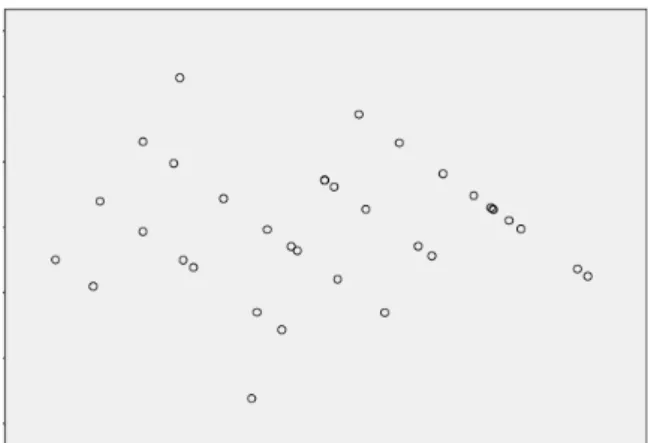
Figure 4: Scatter plot (AI1)...42
Figure 5: Scatter plot matrix (AI1)...43
Figure 6: Normal probability plot (AI2)...44
Figure 7: Scatter plot (AI2)...45
Figure 8: Scatter plot matrix (AI2)...45
1. Introduction
Markets and the business environment have never been so dynamic, saturated and ever changing as today. New products enter the market every day and old ones
1
leave as they become outdated. Consumers are getting more and more demanding and knowledgeable; therefore, their needs are evolving and changing rapidly. This means that in order to stay competitive, producers need to develop new products and search for ideas continuously making innovation crucial.
Traditionally companies developed new products following the manufacturer centred innovation paradigm, according to which a company identifies user needs, develops products at a private expense, and profits by protecting and selling what it has developed. Manufacturers seek needs - not solutions - from users in the centre of a target market rather than from users at the leading edge. However, research has shown that many successful products have first been prototyped by users themselves. Moreover, it has been found that such innovations are usually concentrated among lead users. (Franke & Von Hippel 2003)
According to Hippel (1986) lead users are those whose present strong needs will become general in a marketplace in the future. They are ahead of the marketplace and are familiar with conditions that for most others lie in the future; therefore, they can serve as a need-forecasting laboratory for marketing research. Moreover, these are users that expect high benefits from the investment in the innovating activity, therefore, they have incentives to develop these new products.
Past evidence supports the functionality of the lead user paradigm. Lead user innovation has lead to successful commercial products both in industrial innovations as well as consumer product development. However, research on consumer product development has been poorer.
In this research, lead user innovation will be looked at in context of consumer products - winter windsurfing equipment, more specifically, sleds. Winter windsurfing is an upcoming extreme sport where windsurfing is adapted to winter conditions. The sport is still in a developing stage; therefore, the process of product innovation and development is continuously happening at this particular moment, which makes it interesting to look at.
The aim of this thesis is to examine the patterns of innovation in the particular sports industry, therefore, the author proposes the following research question:
2
By patterns it is meant the composite or the design of traits and features characteristic to this market, here, particularly the traits of innovation. This further includes exploring two more specific patterns – sources of innovation and benefits. Therefore, two sub-questions are proposed:
(1) What are the patterns in sources of innovations?
(2) What are the patterns in benefits that drive innovation?
First, the source of innovation will be explored by looking at who are the innovators in the field – users or manufacturers. Moreover, the lead userness of the sportsmen will be assessed. This will allow describing the users and how much potential for prospective innovation they have. In order to claim that such users are potential innovators, the relationship between lead userness and actual innovation will also be researched to confirm that there is a causal link. Second, it expected that users are the ones innovating in this field, due to evidence from previous studies in similar extreme sports fields (Shah 2000, Franke & Shah 2003, Luthje, Herstatt & von Hippel 2002). Based on this assumption and expectation, benefits that drive these users to innovate will be researched – financial, reputational or other benefits.
In order to answer the overall research question as well as the sub-questions, firstly, research information on different theories and ideas proposed by other authors will be gathered. This will be done to obtain theoretical background for the topic, choose appropriate research direction and methodology. Primary research will consist of expert interviews and online questionnaires. People involved in the field will be contacted. Snowballing and pyramiding techniques will be used to acquire wide scope of people contacts – users, actual lead innovators, manufacturers, competition organizers, sport enthusiasts from different countries. This will not only give an expert opinion on the questions needed to be answered in the research, but also provide referral to additional sources for deeper background research as well as give actual user contacts that will further be approached and asked to fill an online questionnaire.
The results of the thesis will provide better understanding of innovation patterns in consumer products. It is expected that the source of innovation in the winter
3
windsurfing equipment will be found to be users, thus, lead user innovation. The results will, therefore, not only help to understand innovation patterns in general, but also raise the importance of lead user approach. Users typically selected by manufacturers to provide input data to consumer and industrial market analyses in a typical market research process are constrained by their own experience with the product. This makes them fixed to the usual and familiar usage of the product and makes them unlikely to develop innovative concepts that are in conflict with the familiar. However, nowadays customer needs are so complex and fast changing that even users themselves do not always fully understand what is it exactly that they actually need. Even if they do know it is very hard to transfer this information to the manufacturers in a way that they too would fully understand. Thus, acquiring user information through typical market research activities, such as surveys, statistics and segmentation, can be very costly, time consuming and frustrating for the manufacturing company. By showing the high level of lead user innovation in the field, the importance of the implication of lead user approach will be shown, that can serve as a good alternative to the traditional approach and has even been shown to be more rewarding in past research.
Additionally this research will provide an example of identifying lead users that might serve as a case and lesson to other researches. Furthermore, exploring the benefits that drive users to innovate will allow to understand the nature of why some users innovate and some don’t that can further help in identifying these users as well as raising the innovation activity in the community.
The rest of the paper continues as follows, first, related literature and empirical evidence from the lead user theory is reviewed and summarized (section 2). Next, research context of the sport of winter windsurfing, research sample and methodology employed in the research are described (section 3). Findings and results are presented in section 4, followed by discussion in section 5. The article ends with conclusions with the answers to the research questions in section 6 and further research suggestions in section 7.
4
2. Literature Review
2.1. Traditional Innovation Paradigm
According to Schumpete (1934) innovation is the commercial or industrial application of something new; it can be a new product, process, or method/technology of production. It can also be a new market or source of supply as well as a new form of organization of the business. In this thesis, product innovation is of interest, which can include both an introduction of a new good - one, which consumers are not yet familiar with - or an improvement of an existing product. Zaltman, Duncan and Holbek (1973) recognize that in defining innovation perspective of the user is important, therefore, they define innovation as an idea, practice, or material artifact perceived to be new by the relevant unit of adoption. According to Dewar and Dutton (1986) innovations vary in their degree of newness to the user adopting it. This can be described by weather the innovation is radical or incremental. Radical innovations are those that embody fundamental changes in the product that can be considered revolutionary. Such innovations represent clear differences from existing practice (Duchesneau, Cohn & Dutton 1979). On the contrary, incremental innovations are small improvements or simple adjustments in the existing technology (Munson & Pelz 1979). The distinction of the two types of innovations can be difficult, however, this thesis looks at both of them and interprets them both as simply innovation.
Manufacturer-centred innovation is the traditional approach of developing new products. This means that products and services are developed by manufacturers in a closed way - company identifies user needs, develops products at a private expense, and profits by protecting and selling what it has developed. Manufacturers use patents, copyrights, and other protections to prevent imitators from free riding on their innovation investments. In this case the user’s only role is to have needs, which manufacturers try to identify. Therefore, it can be said that manufacturers seek needs not solutions. Moreover, in order to identify the needs, companies look at users in the centre of the market, not users at the leading edge. (Von Hippel 2009)
5
2.2. Lead User Innovation Paradigm
Research has shown that on the contrary to the traditional manufacturer centred innovation paradigm many successful products have been first prototyped by users themselves. Moreover, it has been found that such innovations are usually concentrated among lead users. This evidence suggests that lead user approach might be feasible and profitable in developing new products and services. Additionally, systematic search for user-developed innovations might result in more commercially attractive concepts than those developed by traditional innovation paradigm.
According to Hippel (1986) lead users are those whose present strong needs are nor relevant for the whole community and will become general in a marketplace only in the future. They are ahead of the marketplace and are familiar with conditions that lie in the future for most others; this makes such users useful as they can serve as a need-forecasting laboratory for marketing research. Users that are typically selected to provide input data to consumer and industrial market analyses by big research companies in a usual market research process have an important limitation. Their insights into new product needs and potential solutions are constrained by their own real-world experience. These users are fixed to the present time and are unlikely to develop innovative concepts that are in conflict with the familiar. This is called functional fixedness. Users often are able to only speculate about their needs or ask for very general improvements in existing products and services, for example, lower price and higher quality, that are already obvious to the users and manufacturers. Customer needs are usually very complex and fast changing. Moreover, often users themselves do not fully understand their own needs and even if they do it is extremely hard to transfer this information to the manufacturers in a way that they too would fully understand. Thus, acquiring user information through typical market research activities, such as surveys, statistics and segmentation, can be very costly, time consuming and frustrating for the manufacturing company. Therefore, users that are not typical, lead users, should be involved as they have the potential to see pass the familiar use of the product, service or process.
Von Hippel (1986, p. 796) also defined lead users as those users that display the following two characteristics: ‘(1) Lead users face needs that will be general in a marketplace - but face them months or years before the bulk of that marketplace
6
encounters them, and (2) Lead users are positioned to benefit significantly by obtaining a solution to those needs’.
The first or the "ahead of trend" component means that market needs tend to evolve along the lines of certain underlying trends. Users that are at the leading edge of these market trends will, therefore, experience certain needs well before those will become relevant for the majority of the market participants.
Users of new products and processes have been shown to differ on the level of benefit they can obtain from these. The greater the benefit a given user can obtain from a needed novel product or process, the greater his effort to obtain a solution will be. This is the second component that describes lead users. According to Schreierand Prügl (2008) the "high expected benefit" component comes from literature in the economics of innovation, saying that a unit’s investment in an activity is highly dependant on the potential benefit that is expected from this activity. Here the activity is innovation and, therefore, the likelihood that a user will innovate should depend on the expected benefit dimension. The expected benefits differ depending on who is the innovator – manufacturers usually benefit indirectly from innovation by selling the new innovative products, whereas the users can benefit not only financially but also in a more direct nature, for example, the possibility to fulfil their needs. The benefit for an innovating race car driver, for example, would be to solve problems he is experiencing with his car and improve his performance in competitions, therefore, he would innovate and improve his equipment (car) to fulfil his direct needs. However, the expected benefits will be looked at in more detail later.
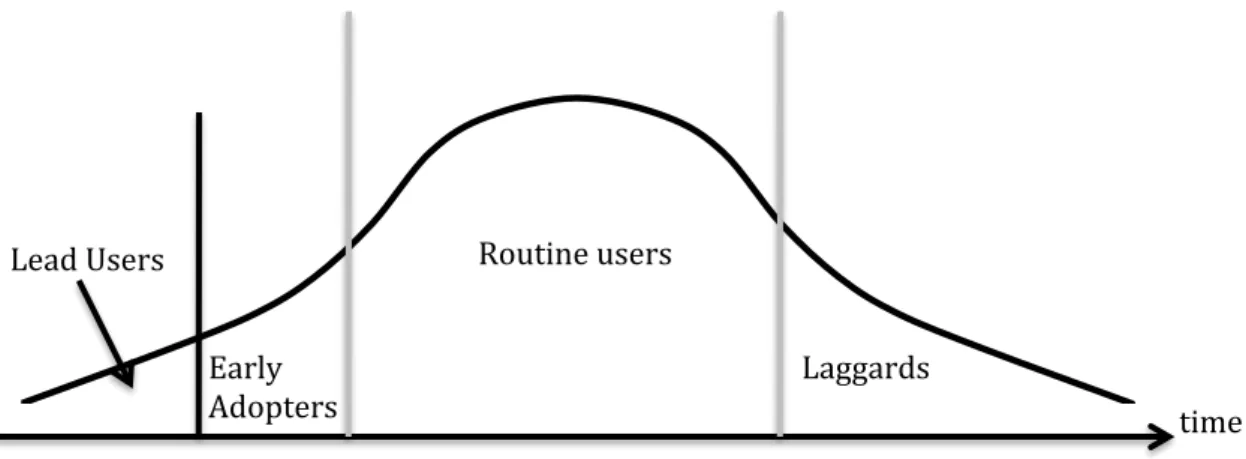
Hippel also visualized lead users using the Figure 1 on the next page where lead user position is showed relative to other user categories that are typically used in diffusion studies. Users whose present needs foreshadow general demand are ahead of the overall trends in the market place, because important new technologies, products, tastes, and other factors related to new product opportunities typically diffuse through a society, often over many years. It is important not to confuse lead users with early adopters - users who are among the first people to obtain an existing product or service. Lead users are in a way living in future and facing needs for products that don’t yet exist on the market. While traditional approaches target routine users at the centre of the market (in the middle of the graph), lead user paradigm suggests focusing on the users
7
at the left side of the graph – users, whose needs cannot be solved by the commercially available products, therefore, they have to come up with the solutions themselves. This way users can develop exactly what they want, rather than relying on manufacturers to deliver solutions to their needs.
Figure 1: Visualization of Lead User position
Lead users have product or service needs that are ahead of all the other user groups (early adopters, routine users and laggards) in a given market, therefore, represented at the beginning of the time line. The vertical line separating lead users and early adopters represents a point in time when product is brought in to the market.
Schreier and Prügl (2008) also looked at what are the antecedents of lead userness. They found that lead users tend to possess more consumer knowledge about the product and the underlying field, have more experience in the field, possess high internal locus of control, and can be described by having innovative personalities. These variables might help to identify lead users by narrowing down the search field significantly when one needs to screen user markets with large consumer populations. This would then be done, for example, by approaching users that are considered knowledgeable in the field and focusing on certain communities of highly experienced users. If pyramiding instead of screening is employed in the search process, the variables might also help in this case.Pyramiding technique is a search process where it is assumed that people having a strong interest in a certain attribute or quality, for example people having a particular type of expertise, will tend to know of people who are have even more expertise in the particular field (von Hippel, Thomke & Sonnak 1999). Few people are approached at the beginning; these people refer to other people
Routine users Early Adopters Laggards Lead Users time
8
with expertise, which again refer to others and so on until actual lead users are identified.
It is also worth mentioning that such independent user inventors are often stereotyped as lone 'garage' inventors (Fleming 2007). However, recently, a substantial body of research has indicated that lead users are embedded in social networks of individuals who share an interest in a specific topic or field, which can be crucial for companies when identifying lead users (Baldwin et al. 2006, Franke & Shah 2003, Lettl et al. 2006, Luthje et al. 2005). Moreover, they are active and often serve as opinion leaders (Kratzer & Lettl 2009).
Furthermore, lead users do not only refer to the direct users of the manufacturer’s product. There are three different categories of lead users that can provide important information to lead user project teams. This encourages seeking out lead users both inside and outside the industry. The three types of lead users are: (1) lead users in the target application and market; (2) lead users of similar applications in advanced “analogue” markets; (3) lead users with respect to important attributes of problems faced by users in the target market. (Churchill, von Hippel & Sonnack 2009)
2.3. Empirical Evidence of Lead User Paradigm
The relevance of lead user paradigm is supported by empirical evidence. Product modification and innovation by users is common in many fields – from 10% to nearly 40% of users report modifying or developing new products to fulfil their needs. Authors that have researched this include Urban and von Hippel (1988), Herstatt and von Hippel (1992), Morrison, Roberts and von Hippel (2000), Lüthje (2003), Franke and von Hippel (2003), Lüthje (2004), Franke and Shah (2003), Lüthje, Herstatt and von Hippel (2002). A list of studies supporting this can be found in Table 1 on the next page.
9 Table 1: Past studies on innovation frequency
Past studies identifying user innovation frequency, including the author as well as the products whose users are studied and the % of users of that product that are modifying and developing products themselves.
Author Product % of users modifying and developing products themselves Urban and Von Hippel
(1988) Printed Circuit CAD 24.3%
Herstatt and von Hippel
(1992) Pipe hanger hardware 36%
Morrison, Roberts & von
Hippel (2000) Library information system 26%
Lüthje, Herstatt & von
Hippel (2002) Mountain biking equipment 19.2%
Lüthje (2003) Medical surgery equipment 22%
Franke and von Hippel (2003)
Apache OS server software
security features 19.1%
Franke and Shah (2003) Extreme sporting equipment 37.8%
Lüthje (2004) Outdoor consumer products 9.8%
Moreover, most of this innovation takes place among lead users. There is a high correlation between the aforementioned two characteristics of lead users and innovative activity. For example, Urban and von Hippel (1988) found that 82% of the lead user cluster in their sample had developed their own version of or had modified the specific type of industrial product they studied, while only 1% of the non-lead users had done this.
Further evidence that supports the functionality of the lead user paradigm is that empirical studies have found that a lot of the innovations developed by users are commercially attractive. Urban and von Hippel (1988) found that an industrial software product concept developed by lead users had greater marketplace appeal than did concepts developed by conventional marketing research methods. Lüthje (2003) found that 48% of surgical innovations developed by surgeons in university clinics in Germany had been or would be produced as commercial products sold in the marketplace. Another study showed that manufacturers of IT systems for libraries thought that many of the software innovations developed by the libraries themselves had potential value as commercial products (Morrison et al, 2000). Lead user innovation
10
has lead to successful commercial products both in industrial innovations as well as consumer product development. Moreover, Herstatt and von Hippel (1992) found that using lead user approach in new product development proved to be advantageous over conventional product development processes – lead user approached used far less time and had lower costs. This is very important in today’s economy as there is growing popularity to speed up operations due to the belief that being a fast innovator can give the firm either first-mover or second-mover strategies, depending on which is favoured by industry conditions (Lieberman & Montgomery 1988).
If we look closer at innovations in consumer product innovation, particularly sporting equipment, then few researches have been made. Shah (2000) was the first author to touch upon lead user paradigm in the sporting equipment field. He investigated the innovation histories of 57 skateboarding, snowboarding, and windsurfing equipment innovations and found that users were the ones developing innovations not existing sports equipment manufacturing companies. Lead users in this research developed equipment not only for themselves and their friends, but also often built small businesses that focused on producing that equipment in this way hoping to reap benefit from their innovations and also establishing a lifestyle around the sport. Shah furthermore argued that there are two reasons why such innovation patterns were observed in these fields – “sticky” information was allocated in favour of lead users rather than manufacturers, and the relative expectations of benefits from the innovation held by users and manufacturers. Luthje, Herstatt and von Hippel (2002) examined the specificity with which innovations developed by lead users address their in-house needs in the extreme sports field of mountain biking. They found that user-innovators usually develop innovations to mainly satisfy their own needs not sell to the largest possible market as generally assumed. Furthermore, they found that users tend to concentrate on addressing their own specific needs using only information already in their possession (“local” information) meaning that users that are well equipped from an information point of view to develop a given innovation will tend to be the ones developing it. An innovation will be of economical use only when there will be a wide dispersion of heterogeneous need and solution information. Another study by Luthje (2004) looks at innovation activities and characteristics of 153 users of outdoor sport-related consumer products. The author finds high level of user innovation and the fact that these
11
innovators can be distinguished from non-innovating users by high expected benefit from using their innovations and the level of expertise they have in the use of the products.
Taken together, these findings suggest that innovation by users can be an important source of new product ideas for consumer goods companies. Moreover, Franke, von Hippel, and Schreier (2006), for example, surveyed European kite surfers and found that lead-users not only innovate more, but also that the two characteristics of lead users (“high expected benefits” dimension and “ahead of the trend” dimension) predict the commercial attractiveness of user innovations. The latest research in the field of sports equipment by Schreier, Oberhauser & Prügl (2007) aimed to shed some initial light on the link between consumers’ leading-edge status and the adoption and diffusion of new products. They found that lead users tend to perceive new products as “less complex” than ordinary users, therefore, adopt them more easily. Moreover, they found that the lead user construct might also be relevant to the diffusion of new products - the higher a consumer’s leading-edge status, the higher his opinion leadership or lower his opinion seeking. In a later study by Schreierand Prügl(2008) this was furthermore confirmed. These findings suggest that lead users might not be only valuable for product development, but also for more general product development and marketing issues. The authors suggest that these users can be integrated into new product concept testing methods, even more, "lead userness" of the consumer might serve as an additional positioning variable for the marketing of new products – consumers having this characteristic can be a separate target group. This further indicates the positive characteristics that lead users bring to the market.
The positive evidence from different industries has attracted interest of many scholars – it has been researched in the field of economics, corporate strategy and marketing. The forthcoming shortcomings of the traditional product development process have lead to increased interest in new idea generation approaches by both researchers and company managers. The question is raised of how lead users can be systematically identified, and how their perceptions and preferences can be incorporated into industrial and consumer marketing research analyses of emerging needs for new products, processes and services (Franke & von Hippel 2003).
12
2.4. Measuring lead userness
As just mentioned, many authors have recognized the positive attributes of lead users as well as usefulness of lead user method. “Lead userness” has been mentioned a characteristic of the consumer that might serve as an additional positioning variable, therefore, the need to measure it has been raised.
Morrison, Roberts and Midgly (2004) introduced a construct called Leading Edge Status (LES) consisting of three components - being ahead of the overall market trends, having high levels of needs or high expected benefits, and actual development of innovations. Thus, lead users here were defined as to have two distinguishing features as mentioned by already by von Hippel (1986) and they are hypothesized to possess a third – the fact that they actually innovate which was also already mentioned by von Hippel (1986, p. 798). Before that there had been no empirical study made to test the validity of this construct. The authors tried to find whether these elements move together and form the same construct. This was done by confirmatory factor analysis (CFA), which tests if hypothesized variables all load on the same factor, meaning that the construct is internally consistent. It turned out to form the same construct and LES turned out to be distributed in a continuous, unimodal manner.
Franke, von Hippel & Schreier (2006) analyzed relationship between commercial attractiveness of an innovation and the level of lead user characteristics the developers of these innovations display. To describe lead userness of a user, the authors develop a construct that includes the two Hippel’s components describing lead users (the “high expected benefits” dimension and the “ahead of the trend” dimension). They also found that these two component variables are independent dimensions and, therefore, cannot be dropped without loss of information, which is an important finding for lead user theory and its measurement. Another finding was that that adding measures of users’ local resources (technical expertise and community-based resources) can further improve the construct if used for identifying commercially attractive innovations.
Ideas from the two studies mentioned above were somewhat combined by Kratzer & Lettl (2009), where a measure of lead userness was created from six indicators derived from the scales of the lead user construct proposed in these studies (Franke et al. 2006, Morrison, Roberts & Midgley 2004). The indicators are measured
13
by five point Likert scale. The indicators include the traditional two characteristics of lead users, and actual innovation activity.
2.5. User-Innovator Benefits
The studies mentioned before have a strong support for the lead user theory and show that lead users do come up with commercially attractive innovations and even propose measures and indicators on how to spot lead users. Now, the aspect of why do these users innovate will be looked at. As already mentioned before, lead users have two characteristics: they are at the leading edge of the market and are expected to benefit from the innovation. This means that user-innovation is expected to happen only if there is a benefit expected. Several authors have touched upon this topic and have tried to identify what are the benefits that drive user-innovation and do they expect a benefit at all.
Past studies have shown that innovators freely reveal details of their innovations to other users and manufacturers, indicating that they do not expect financial benefit (Allen 1983, Morrison et al. 2000, Lakhani & von Hippel 2000, Lilien et al. 2002, Lüthje 2000, Ogawa 1998, Urban & von Hippel 1988). According to Harhoff, Joachim & von Hippel (2009) user innovators mostly benefit from their own in-house use of the innovation. This is because in order to profit from diffusion of the innovation in the marketplace, the innovation must have some form of an intellectual property protection followed by licensing which is costly and uncertain. Luthje, Herstatt and von Hippel (2002) stated that the protection obtained from different forms of intellectual property protection (patent, license, copyright, trade secret) usually is not sufficient to gain financial benefits. In the sports equipment case, copyright does not apply, as sports innovations are not “writings”. Patents and licensing are the most appropriate protection for sports equipment, however, there are major flaws associated with this form of intellectual property protection. It can be “invented around” by changing just minor details in most fields, and even furthermore, the cots of obtaining and maintaining it makes it economically unjustifiable for “minor” innovations. The last type of protection – trade secret – is not applicable either, because sports equipment innovations are impossible to be kept as trade secrets as the equipment is used in the open both in competitions as well as while practicing the sport. Shah (2000) researched the user
14
innovator patenting frequency and effectiveness when developing new and modified products in skateboarding, windsurfing and snowboarding. She finds only few attempts to patent, and among those few that did patent their innovations, there was almost no success in licensing and obtaining royalties.
Another way how to gain financial profits for user innovators is to produce the innovative equipment for sale to other users by forming small firms and obtaining innovation-related rents while they still have an advantage over the about to be imitators. Shah (2002) found that most (71%) of the expert practitioners who innovated in the extreme sports equipment field he researched sought to profit from their innovations by forming small, lifestyle firms that would produce their innovations for sale to others. In their sample this was the most popular way to obtain financial benefit from innovating. Lettl and Gemunden (2005) explored this entrepreneurial role of innovative users. They found that many innovators start entrepreneurial activities and become manufacturers themselves rather than selling the idea to a wealthy manufacturer. Users that were the original inventors of radical innovations created innovation networks needed to bring the idea to the market. They identified the relevant partners, experts with the appropriate knowledge base to supplement theirs, and organized the network themselves. These networks allowed transforming the ideas into first physical prototypes of the product. Moreover, they found that there are certain antecedents that turn innovative users in entrepreneurial ones. If the user has a high problem pressure, if the user has an active role in the idea generation phase, if the prospective future product has a high degree of innovativeness, and if the user has both, missing resources and missing competencies, then the users are more likely to turn into entrepreneurial ones. The last two antecedents were also sometimes the ones that actually hindered users to become actual manufacturers. Also high investments into their user career made it unattractive to become a full time entrepreneur and quit the profession. Due to these reasons, established industry manufacturers in these cases took over the users’ ideas and brought the prototypes and the radical innovations to the market.
Because of all the aforementioned reasons, innovators usually design innovations for themselves. Luthje, Herstatt and von Hippel (2002) also note that they appear to be succeeding at this task as the respondents in their research report gaining a high level of
15
personal benefit from personal use of their innovation. Past studies identify benefits obtained by the user innovator as fulfilment of needs. In fact, it has been proven that seeking for users with new and unfulfilled needs is a good way of finding lead users (Herstatt & von Hippel 1992, Urban & von Hippel 1988). If these users have needs that are not meet by the products available in the market, they are dissatisfied with the existing product due to the mismatch between actual needs and products available. Therefore, according to Luthje (2004) the level of satisfaction/dissatisfaction might be and has already been used as measure of expected benefit from the innovation.
Another, but less direct benefit for the innovator may be the increase in reputation and recognition associated with having developed a new product or modification of the product, and possibly related success when the innovation is found to be a factor in winning contests, prizes, entering exhibitions etc. The enhancement of reputation is also often the factor why user innovators reveal the innovation freely to the world – the reputation is raised by positive network effects due to increased diffusion of their innovation and first mover advantage (Von Hippel 2009).
Moreover, innovation benefit is not only related with the outcome of user inventions. They could also benefit from the process itself – users could have fun in solving problems during the development process. By a motivational psychology approach, it can be stated that they have the chance to exploit their abilities and know-how in order to gain satisfaction. (Bolman & Deal 1984)
Hippel and Krogh (2003) researched how open source software innovation process works and found that individuals innovating and contributing to this open source innovation gain private benefit in the form of enhanced social relations, enhanced reputation, privileged access to social relations, and similar. Moreover, for some of the personal benefits revealing the innovation maybe the only way to get the benefit. Also the participation in the community of contributors to such open source software projects can bring benefits not available for those that don’t contribute.
16
3. Research Context and Methodology
In this part of the thesis, the background of winter windsurfing, including the history and the current state of the sport is described. Further, the sample of the research is explained and presented, followed by methods used to collect data and obtain the results needed to answer the research goals.
3.1. Research Context
Before moving on to the methods used to collect data, the research context of the field in which the research is set is identified in this part. A brief history and current state of the sport of winter windsurfing and equipment used by the sportsmen is described below to provide a background knowledge and understanding of the field.
According to Ricards Liepins winter windsurfing originated from windsurfing. This water sport also called boardsailing is a surface water sport that combines elements of two sports - surfing and sailing (R Liepins 2011, pers. comm., 3 May). It consists of a board, which usually is 2-4 m long and a sail. The board is powered by wind acting on the single sail, which is connected to the board via a flexible joint. The sport of windsurfing on water started with the invention of the windsurfing board by Hoyle Swchweitzer and James Drake in 1970 (Schweitzer & Drake 1970). The sport is relatively new and has experienced ups and downs in the popularity in the past due to patent disputes, however, recently it has gained popularity all over the world as more and more affordable and user-friendly equipment is available.
To windsurf, the weather conditions have to be appropriate, however, only southern countries have the right weather conditions to practice the sport all year long. In the northern countries, windsurfers started to built all kinds of equipments to windsurf on snow covered fields and on frozen lakes using windsurfing sail as a mean of propulsion to pursue their passion also during the winter season. Moreover, while winter windsurfing originated from windsurfing and due to inappropriate weather conditions in the northern countries, different types of sailing on ice and snow has a long history even before windsurfing as such. It has its roots in the 18th century, when ice sailing or ice yachting started. Ice sailing has been practiced for more than two
17
centuries and is still very popular and widely developed in the entire northern hemisphere.
First attempt to move windsurfing on ice started as soon as windsurfing appeared and ever since windsurfing reached the ice (which started in early 70's) a new era began. Many enthusiasts started to build sledges to be able to surf on ice and snow by adopting skateboards and skis to be used in combination with a sail. This was not only as an alternative to windsurfing for winter, but also a natural progress for ice sailing as the size of the equipment decreased from much larger iceboats to smaller vehicles like boards and skis. (Butylkin n.d.)
There are a wide variety of winter windsurfing equipments. Many of them are called according to their commercial name, however there is still confusion. Usually the sled uses either a ski/skis or a board. Many of the windsurfing sleds use one or more alpine skis, which are sometimes equipped with sharp steel blades or a steering mechanism to change direction and manoeuvre. Another type of sleds is a rigid board either with a gliding surface or with attached sharp ice blades or external skegs that make the sliding possible. Some sleds are designed specific for riding on ice, others for snow only. (Bradette n.d.)
WISSA (World Ice and Snow Sailing Association), which organizes the world championship of this sport, has defined these equipments to sail on ice and snow as the “windsurfing sled” (World Ice and Snow Sailing Association 2011).This sled includes both, constructions for surfing of snow (skis) and constructions for ice (ice boards). In this research the focus will be more on constructions for ice – ice boards.
Ice boards have a history in the 60s when first enthusiasts started to adapt skateboards for use on ice, by attaching small skis and blades to the boards. The first evidence of such construction dates back to 1966, when United States Patent 3329439 was published and this was essentially the 60′s era skateboard technology for ice. The inventor was inventor was Willard Gebien from Illinois, USA (Gebien 1966). After that quite a few patents have been obtained, however, most of them according to Ricards Liepins have been only concepts and have never been constructed and used in real life due to impracticality and complexity.
There is evidence about attempts to commercially manufacture ice boards. In 90s there was a company called Zeema Industries International that had come up with
18
an ice board design that was even featured in Thrasher Magazine, which is a monthly skateboarding magazine. According to Zeema Industries International website they were looking for investors to bring the product to the market, however, it seems that they didn’t succeed as no further evidence is available about this company. (Zema Industries International n.d.)
Another attempt was more successful – also in the 90s a company called Fiberspar, which was mainly known for first carbon masts, booms, and extensions for windsurfing equipment. According to Ricards Liepins, in the 90s the company also produced ice boards that are known as the Freeskates. However, the production didn’t last long as the company sold their concept to a major sports equipment producer. There hasn’t been any evidence that the company continued producing Freeskates.
Currently, according to Ricards Liepins a company called Hiberna is the only one that is commercially manufacturing ice boards for winter windsurfing of this particular type. They offer technologically advanced equipment that offers far more advances than self made equipment and has no close competitors. The boards produced in Latvia and are called Hiboards.
The closest commercially produced competitor equipment for winter windsurfing is the Snowfer - a patented sled for use on snow and ice, accompanied by a conventional windsurfing rig. The difference between Hiberna boards and the Snowfer is that the Snowfer has no blades or skis attached to it, it is more similar to a snowboard rather the origin of Freeskates and Hiboards – skateboards with blades or skis attached. The Snowfer was invented by Charles Chepregi. The research and development of the board started in 1985. All applications of the patents in Canada, USA and Europe were approved by 1994. The boards are built in Ontario, Canada. (Snowfer n.d.)
Overall, the sport is practiced in many places in the northern hemisphere – each year WISSA organizes world championship for ice and snow sailing that has 3 classes of participants: open class (all ice and snow sailing sleds powered by windsurfing rigs), hand held class (all sails held by hand) and kite class (all sails tethered by lines and flying overhead). For example, in the open class the sailor stands on any type of sled or board to control a conventional windsurfing sail or a sailboard rig attached only with a universal joint. The sled may have blades, skis and/or runners. (World Ice and Snow Sailing Association 2011)
19
According to Laura Komisare, a more specified competition only for winter windsurfing (not kites) is Winter Windsurfing European Cup. The equipment that can be used in the competition is classified in 2 parts: sled (any winter windsurfing device provided with serial windsurfing rig attached to the sled only with a serial windsurfing mast base. Windsurfing sled may be based on blades and/or skis or other sliding surfaces. Sleds can be custom or serial made); hiboard (is sled which is steered by tilting a deck, capable to support downwind jibe on ice within 20 m wide area, maximum length 220 cm and maximum width 90 cm). (L Komisare 2011, pers. comm., 11 May)
3.2. Sample
The sample of the research consists of experts in the field of winter windsurfing and actual users. The population from which the sample is the winter windsurfing community that includes both the sportsmen (users) as well as related people, such as manufacturers of the equipment, competition organizers, sports journalists that follow the sport and other people that might be considered as highly involved and knowledgeable within the field.
The sport is new and gaining its popularity only recently, therefore, contacting and acquiring respondents for the research is a challenging task. As the most appropriate technique to get in contact with the respondents is chosen a mixture of snowballing and pyramiding.
According to Kalton and Anderson (1986) snowballing is an approach when few members of the population are identified, approached and asked to identify other members’ contacts and so on. When a complete frame of the population is reached, then a probability sample can be drawn. However, in this thesis a more common and simple approach of snowballing is used as this is a rare population and achieving a complete frame of the population might be too difficult and is out of scope of this study. In this research, snowballing is simply continued until a sufficient number of members of the population is reached. Interviews and questionnaires are carried out when the members are identified and then moving on to the next members as new contacts are acquired. This approach does not provide a probability sample as there are biases expected, for example, popular members with many contacts are more likely to be included in the
20
sample. Due to the likelihood of these biases, the results need to be addresses with caution – the technique is more suited for exploratory and qualitative studies. However, this satisfies the needs of the present study as it is considered a case study. The sample reached by this technique can be called a convenience sample, which is a type of a non-probability sample. This kind of a sample is being drawn from that part of the population, which is easily accessible and close to hand - readily available and convenient.
Pyramiding is a form of snowball sampling, which means that the researcher asks individuals who have some specific skills, to identify others who also have the same skills, and in that way it is possible to find more people with the specific skills (Goodman 1961).
The difference from pyramiding and snowballing is however, that when pyramiding the researcher asks experts to identify people who know more about the topic than themselves. In that way you will end up in the top of the pyramid with the foremost expert in the subject you are working on. Therefore pyramiding is very useful when a researcher wants to efficiently identify the person with high levels of a given attribute in the population (Von Hippel, Franke & Prügl 2009). The same authors have identified that pyramiding is especially good when one want to identify lead users within a population. This is because lead users are relatively rare in a population, and according to Von Hippels theory (1986, p. 796) are defined as having two characteristics in higher levels that the average population. Also other authors conducting lead user studies are increasingly choosing pyramiding method for lead user identification (Von Hippel et al. 1999, Lilien et al. 2002).
Initial research provided responses only from Northern Europe. To cover wider area, more innovative ways to find winter windsurfers had to be used. In order to use the same snowballing/pyramiding technique, the initial person had to be found differently. In order to cover Northern America, initial contact persons were found through winter windsurfing videos posted in the internet.
3.3. Methodology
The aim of the research is to research the patterns of winter windsurfing equipment innovations. In order to reach the goal of the paper and answer the research
21
questions proposed, qualitative research methods were used, which were organized in 4 steps:
1. Literature analysis, 2. Expert interviews,
3. Secondary research in various sources, and 4. Online questionnaire.
Qualitative research was chosen to achieve an in-depth understanding of the patterns of innovation as well as due to the fact that the sport of winter windsurfing is new and it is hard to access a wide community of actual users.
3.3.1. Literature Analysis
At the very beginning of the research in this thesis information on different theories and ideas proposed by other authors was gathered. This was done to obtain theoretical background for the topic, choose appropriate research direction and methodology.
3.3.2. Expert Interviews
After, the initial step of literature review, expert interviews were carried out. An expert in this research is understood as a professional sportsman of winter windsurfing, competition organizer, sports journalist, equipment producer or any other person that is competent in the field and directly and heavily involved in the particular sport. The goal of these interviews was first, to receive background information or information sources of the sport and innovations as the field is young and there is not much literature on it. Also questions about how innovation process is taking place in the field were asked. Furthermore, the interviews were a starting point to receive contact information on other experts as well as users, user communities and locations where users can be approached. The interviews were semi-structured in order to gain deep understanding of the innovation patterns and allow the interview to explore issues that might be curtail besides those of direct interest. According to Pawson (1996) this type of interview recognizes that by offering respondents a chance to elaborate on their answers meaningful data can emerge. In this case structured interviews would have excluded an
22
opportunity to learn and discover new issues, whereas, unstructured interviews would have provided information that is not comparable and might not answer all the questions. As a result, two experts were interviewed: Richards Liepins (organizer of WWEC events in Latvia and an entrepreneur at ice board production company Hiberna, which constructs, produces and sells ice boards), Laura Komisare (project manager position in Winterwindsurf.com and coordinator of Winter Windsurfing Club activities in season 2010 and organizer of “WWEC 2010 Mezezers”). An interview guide for the expert interviews can be found in Appendix 1.
3.3.3. Secondary research in various sources
In order to gain background information and understanding of the patterns of innovation, secondary research in media, interest websites and similar platforms was made.
The author also accessed patent databases and looked for actual patents obtained for winter windsurfing equipment. The following organizations’ online patent databases were accessed: The United States Patent and Trademark Office (USPTO), European Patent Office, Canadian Intellectual Property Office, the World Intellectual Property Organization (WIPO), Japan Patent Office and others. Then, using the following keywords, patents were searched for: ice board, iceboard, ice skateboard, windsurfing sled, iceboarding sled, sledboard and others. This provided a pool of actual patents and information on who was the inventor, therefore, allowing to see how many patents have been obtained by users themselves and how many by manufacturers suggesting a trend in the sources of innovation.
3.3.4. Online Questionnaire
Initial expert interviews and secondary research provided first contacts of users and directions where to find actual users/sport enthusiasts. They were contacted and asked to fill in an online questionnaire. The different ways of approaching respondents were actual email addresses, contacting sportsmen through social networks as well as posting a request to fill in the survey on community websites and forums.
23
There are several types of questionnaires that can be used, which mainly can be divided in interviewer-administered and self-administered questionnaires. Online questionnaire which is a self-administered was found the most appropriate to collect the needed data in this case. As expert interviews were done beforehand, there was a clear understanding on what questions need to be asked and what are the answer possibilities, making the questionnaire rather short and concise. This made it favourable to use online questionnaire, as respondents were able to go through the questionnaire quickly and have no misunderstanding as no complicated issues are being inquired about. This type of questionnaire turned out to be more applicable also because it would save both time and financial resources for both the respondent and researcher. (Saunders, Lewis & Thornhill 2009)
Interviewer-administered questionnaires are thought to have higher response rate than self-administered ones, however, each respondent for this questionnaire was approached with a personal email and often by a reference by other people involved in the sport, which is though to raise the response rate. Moreover, users of the sport are very involved and exited about it, therefore, were expected to be interested to help with a research aimed to explore it.
Overall the questionnaire was distributed to 112 winter windsurfers, 35 filled in and all of the completed questionnaires were valid. This makes a response rate of 31%, which is considered to be an acceptable level of response for online questionnaires. This was achieved because part of the winter windsurfers was approached with a personal email or a reference from other sportsmen. The response rate was expected to be even higher, however, it did not reach the expected level and this can be explained by the fact that the survey was also distributed through interest groups associated with ice sailing in general, not only winter windsurfing, therefore, the overall count of the sample might have included sportsmen that are not winter windsurfers, who didn’t complete the survey. Moreover, the season for the sport is winter, however, the questionnaire was distributed in May and June. This might have lowered the response rate in cases when it was distributed through interest groups and platforms as sportsmen are not that active during the off season time of the year.
Moreover, according to several studies made in the past surveys with high response rates don’t usually yield more accurate results and measurements than the ones
24
with lower response rates. For example, in 1996 a study by Visser, Krosnick, Marquette and Curtin was made which found that surveys with lower response rates (around 20%) gave even more accurate measurements than those with high response rates (around 60-70%). In another study by Keeter et al. (2006) results from two different surveys – one with a rather low 25% response rate and another, more rigorous one with a higher response rate of 50% - were compared. In nearly all comparisons (77 out of 84), the two surveys showed results that were statistically indistinguishable. This and findings of other recent studies indicate that low response rate does not necessarily mean that the survey accuracy will be low, however, it has to be mentioned that there is a risk of lower accuracy. Lower response rate might cause a bias as those who have answered the questionnaire might be very active parts of the community therefore not representative of the whole sample.
Lastly, questionnaire’s validity should be discussed. Validity refers to how well founded is the concept or measurement and does it corresponds accurately to the actual real world. In relation to this study, external validity, which according to Blumberg, Cooper & Schindler (2005) refers to data's ability to be generalized between persons, settings and time, might be violated due to the small sample size. However, the goal of the study is not generalization, the nature of the study is explorative. Internal validity, according to the same authors is defined as ‘the ability of a research instrument to measure what it is purported to measure’. Basing the study on a questionnaire is a trade-off between scope and depth, but given the previously researched constructs used here as well as their proved success, it is believed that the measures are good. Moreover, the questionnaire is not the soul resource of results; it is complemented by expert interviews and patent research.
Another factor that might potentially harm the validity in this study is the usage of scales (Likert scale). It can be very tough for respondents to quantify the effectiveness of information sources.
3.3.4.1. Design
The questionnaire consisted of 4 parts: • Demographics and background,
25 • Benefits expected, and
• Information about other innovations in the field. The complete questionnaire can be found in Appendix 2.
In order to have descriptive information on the sample, demographics’ questions were asked at the start of the questionnaire (age, gender, country of residence). This was done to provide the research with data that is not only pure descriptive information, but also allows exploring some trends and differences of lead userness among different age groups, genders, and geographic regions. Moreover, the respondents were asked to state how many years have they been involved with the sport. This variable is later referred to as experience. As years of experience do not always show the dedication and involvement with the sport, the respondents were also asked to answer how dedicated they were to the sport. Four answer choices were given to this question: have tried; surf regularly, but rarely; surf whenever have free time; put surfing in first place before other activities. This variable is later referred to as commitment. This would allow seeing how experience and commitment correlated to lead userness.
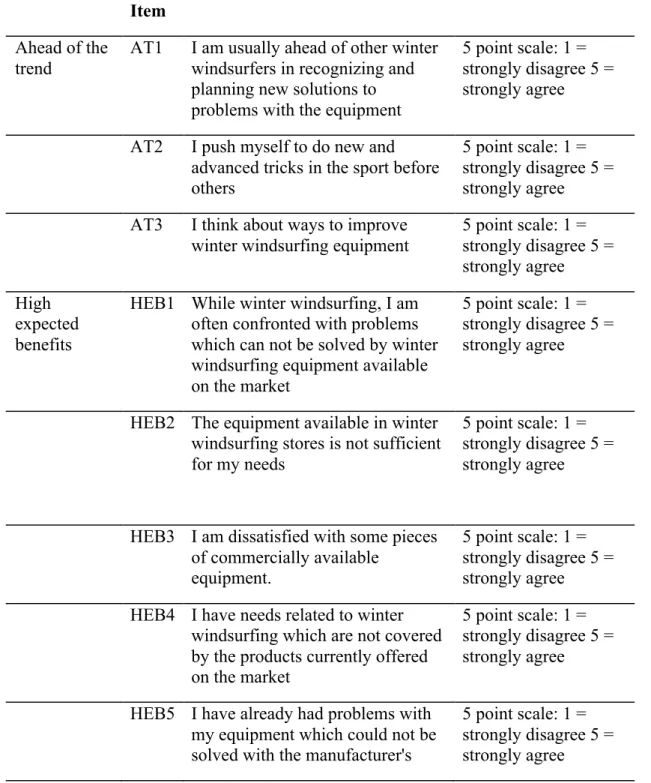
According to the founder of lead user theory Hippel, lead userness can be described by two characteristics – being ahead of the marketplace and expecting high benefits from the innovation. This means that when measuring the lead userness of winter windsurfers, both of these aspects need to be taken into account. Several authors have tried to do this before, for example, Morrison, Roberts & Midgley (2004), Franke, Hippel & Schreier (2006), and Kratzer & Lettl (2009). In order to explore lead userness of winter windsurfers, ideas from these three studies are reviewed and combined to come up with a comprehensive measure of lead userness. In order to measure the two characteristics (ahead of the trend and high expected benefits) the following measures in Table 2 on the next page are used. The measures of these two characteristics are based on measures used in the research by Franke, Hippel & Schreier (2006). The constructs used in this research have proven to be valid in the previous researches as already described previously in the literature review. For all the constructs, the respondents are asked to read a statement and to specify their level of agreement or disagreement with the statement on a five point Likert scale – a symmetric agree-disagree scale. The five points on the scale are read as follows: 1 = strongly disagree; 2 = disagree; 3 = neither agree nor disagree; 4 = agree; 5 = strongly agree. This allows respondents expression of
26
intensity of feeling. According to Churchill & Iacobucci (2010) an advantage of Likert scale is that generally people find it easy to use. The sum or the mean of all the separate sentence item scores generates the respondent’s total score.
Table 2: Lead Userness Construct Measurement
Constructs describing lead userness, including the name of the construct, scale item, item wording in the online questionnaire and the scale of measurement.
Construct Scale
Item Item Wording Scale Ahead of the
trend
AT1 I am usually ahead of other winter windsurfers in recognizing and planning new solutions to problems with the equipment
5 point scale: 1 = strongly disagree 5 = strongly agree AT2 I push myself to do new and
advanced tricks in the sport before others
5 point scale: 1 = strongly disagree 5 = strongly agree AT3 I think about ways to improve
winter windsurfing equipment
5 point scale: 1 = strongly disagree 5 = strongly agree High expected benefits
HEB1 While winter windsurfing, I am often confronted with problems which can not be solved by winter windsurfing equipment available on the market
5 point scale: 1 = strongly disagree 5 = strongly agree
HEB2 The equipment available in winter windsurfing stores is not sufficient for my needs
5 point scale: 1 = strongly disagree 5 = strongly agree
HEB3 I am dissatisfied with some pieces of commercially available
equipment.
5 point scale: 1 = strongly disagree 5 = strongly agree HEB4 I have needs related to winter
windsurfing which are not covered by the products currently offered on the market
5 point scale: 1 = strongly disagree 5 = strongly agree HEB5 I have already had problems with
my equipment which could not be solved with the manufacturer's
5 point scale: 1 = strongly disagree 5 = strongly agree
27 conventional offerings
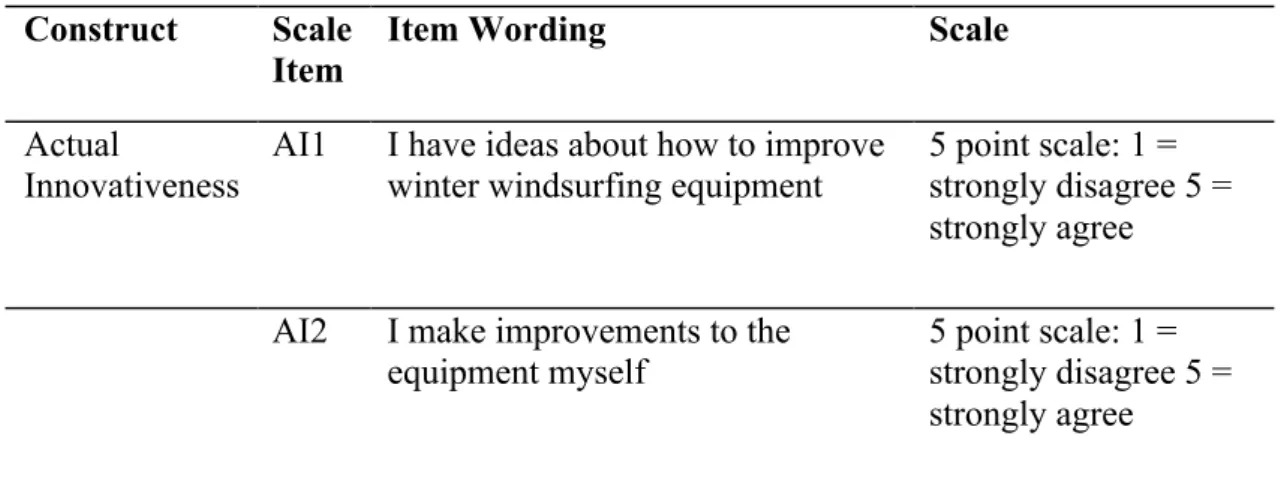
Moreover, these two constructs mentioned above – AT and HEB - are combined with actual innovativeness of the sportsmen to see the connection with the two characteristics and actual innovation by users. The idea of the inclusion of the third dimension – actual innovativeness/level of innovation – in the construct was mentioned by Morrison, Roberts & Midgley (2004). It is recognized that lead userness can also be described by actual innovativeness activities, because according to previous evidence AT an HEB implies innovation. In this study, however, this dimension is looked at separately as the relationship between lead userness and actual innovation is to be explored. The measurement of the construct of actual innovativeness can be seen in Table 3 below.
Table 3: Items describing the construct of actual innovativeness
This includes the name of the construct, scale item, item wording in the online questionnaire and the scale of measurement.
Construct Scale
Item Item Wording Scale Actual
Innovativeness AI1 I have ideas about how to improve winter windsurfing equipment 5 point scale: 1 = strongly disagree 5 = strongly agree AI2 I make improvements to the
equipment myself 5 point scale: 1 = strongly disagree 5 = strongly agree
The respondents were also asked to state what boards do they use – serial, custom or self-made. If the later one is chosen, it would straight away indicate innovative activity among those users.
Next step after evaluating the lead userness and innovation activity of the winter windsurfers was to ask questions of why did they innovate – what were the benefits they expected. The respondents were asked if they innovated and if they had ideas for innovations. If they innovated, they had a chance to name the specific innovations/improvement made. Those respondents that innovated/made improvements