sustainaBLe
DeVeLopMent report
for the year ended 31 March 2013
SCOPE AND BOUNDARY OF REPORT 1
REPORTING PRINCIPLES 2
ORGANISATIONAL STRUCTURE 2
EXTERNAL RECOGNITION AND
ACHIEVEMENTS 4
KEY PRIORITIES: PERFORMANCE
AGAINST OBJECTIVES 5
ASSURANCE 9
MANAGEMENT APPROACH 10
ETHICS AND COMPLIANCE 10
ENGAGEMENT WITH OUR
STAKEHOLDERS 12
Patients 13
Employees and trade unions 15
Doctors 16
Suppliers 17
Healthcare funders 19
Government and authorities 21
Industry associations 23
Investors 25
Community 25
Media 25
QUALITY OF CARE AND FACILITIES 26
Clinical quality 26
Quality of facilities and equipment 26
Patient satisfaction 29
BROAD-BASED BLACK ECONOMIC
EMPOWERMENT 30
ECONOMIC IMPACTS 33
Access to and affordability of healthcare 33 Efficiency and cost-effectiveness 34
Healthcare reform 35
Public private initiatives 36
contents
More inForMation
This Sustainable Development Report is published as part of a set of reports in respect of the financial year ended 31 March 2013, all of which are available on the Company's website at www.mediclinic.com.
OUR PEOPLE 38
Employee composition and turnover rate 38 Labour relations and working conditions 40
Performance management 40
Employee recruitment, retention and
remuneration 41
Diversity and equal opportunities 44 Health and safety at work 45 TRAINING AND SKILLS DEVELOPMENT 48
Employee training 48
Continuous professional development
of doctors 52
Supporting academic institutions 52 INVESTING IN THE COMMUNITY 54 ENVIRONMENTAL PERFORMANCE 58
Environmental policy 58
Environmental management and risk
assessment 58
Emissions 60
Waste management and recycling 63 Water consumption and recycling 64
Energy conservation 65
Material use 66
Biodiversity 66
Compliance 66
FEEDBACK 66
GRI G3.1 DISCLOSURE INDEX 67
expertise You can trust.
notice oF annuaL GeneraL MeetinG 2013
anD proxY ForM THIS DOCUMENT IS IMPORTANT AND REQUIRES YOUR IMMEDIATE ATTENTION.
expertise You can trust.
application of King iii principles 2013
PDF PDF
Application of King III Principles 2013 expertise You can trust.
annual financial
statements
for the year ended 31 March 2013
Annual Financial Statements 2013
PDF PDF
Notice of Annual General Meeting 2013 expertise You can trust.
integrated
annual report
for the year ended 31 March 2013
Integrated Annual Report 2013
As a Group, Mediclinic is firmly committed to managing our business in a sustainable way and upholding the highest standards of ethics and corporate governance practices. The benefits of delivering on these commitments are many – through our sustainability efforts we maintain our business integrity, we maintain and improve the confidence, trust and respect of our stakeholders, we offer improved access to capital by providing a responsible investment proposition, and we increase our ability to attract and retain staff. Mediclinic’s track record on delivering growth and creating long-term value in all its business operations in Southern Africa, Switzerland and the UAE is testament to our strategy of being a long-term player and delivering a sustainable business. While growth, profitability and creating shareholder value are certainly major strategic drivers, with a compounded annual growth rate for the past seven years of 28.9% in Group revenue and 29.3% in normalised EBITDA, this cannot be achieved unless we have the best possible clinical quality standards for our patients; value our employees by following fair labour practices and offering competitive remuneration, training and development opportunities; respect the communities within which we operate and contribute to the well-being of society; and carefully manage our impacts on the environment by focusing on our carbon footprint, use of energy, and water resource and waste management.
It is evident from the Group’s risk profile that regulatory reforms are changing healthcare, where private healthcare providers are often the key focus group. We manage these risks effectively,
as reported in our risk Management report and the operational reviews included in the integrated annual report. Despite the many challenges facing private healthcare today, we are confident that Mediclinic is a growing and sustainable business delivering value to all our stakeholders in the short, medium and long term.
scope anD BounDarY oF report
This report is Mediclinic’s 11th SustainableDevelopment Report in respect of the financial year ended 31 March 2013. An abridged version of this report is included in our integrated annual report in respect of the financial year ended 31 March 2013. With this report, we aim to provide our stakeholders with information on the non-financial aspects of the corporate practice of the Group and all its business divisions in Southern Africa, Switzerland and the United Arab Emirates (“UAE”) that, in turn, create economic, social and environmental value. The scope of this report includes the Group’s operations in Southern Africa, Switzerland and the UAE, but as a JSE-listed company with the majority of our operations based in South Africa and with largely South African investors, particular emphasis is placed on our Southern African operating platform. Although we are a private hospital group with materially the same principles applying in each of our operating platforms, each of our operating platforms is managed separately and they have some cultural and economic differences – we therefore provide information about each platform under separate headings to give our stakeholders a better understanding of the variances within each of our three operating platforms.
Please refer to the glossary of terms included in the integrated annual report of Mediclinic for the financial year ended 31 March 2013 published at www.mediclinic.com. References to other reports (such as the Operational Reviews, Risk Management Report and Clinical Services Report) also refer to the reports included in the integrated annual report.
reportinG principLes
The principles and recommendations on integrated sustainability reporting contained in the King Report on Governance for South Africa 2009 (“King III”) as well as the G3.1 Sustainability Reporting Guidelines developed by the Global Reporting Initiative (“GRI G3.1”) form the basis of this report. The report was prepared in accordance with application level C of the GRI G3.1. The Gri G3.1 disclosure index, which identifies the location of the standard disclosures required by the Global Reporting Initiative’s sustainability reporting guidelines, is included as an annexure to this report. As referred to in the integrated annual report, we have also noted and applied several of the recommendations contained in the local and international discussion papers and consultation drafts on integrated reporting issued by the Integrated Reporting Committee of South Africa and the International Integrated Reporting Committee. As a constituent of all the JSE SRI (socially responsible investment) indexes conducted to date, which index showcases those listed companies meeting a set of criteria that measure economic, social and environmental commitment and performance, due regard is also given to the JSE SRI index criteria.
orGanisationaL structure
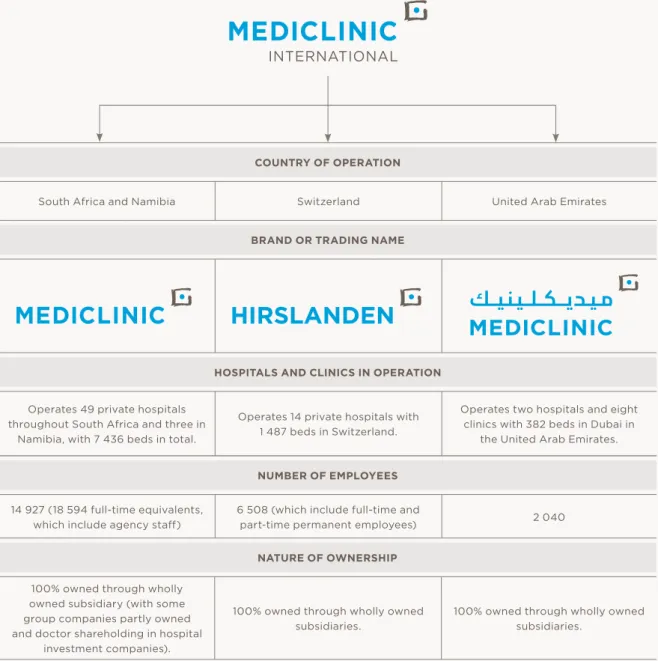
Mediclinic is an international private hospital group with three operating platforms in Southern Africa (South Africa and Namibia), Switzerland and the UAE, with its Head Office situated in Stellenbosch, South Africa. The Group’s management and operational structure is also divided into three operating platforms, as illustrated in Figure 1. The three operating platforms operate separately from one another, each with its own management team. Mediclinic International, as the holding company of the Mediclinic Group, sets the strategic objectives and governance framework for the Group. The management teams of the operating platforms report to the Executive Committee of Mediclinic on a regular basis. Because of the Group’s structure, reporting on each element included in this report is done per platform, unless Group standards apply.
The Group concluded a formal process to strategically re-align the international Group’s organisational structures to be more nimble and efficient. In the process we addressed the structures at operating platform and the international level after an in-depth analysis performed by international advisors. The changes included the streamlining of board and sub-committee structures at platform level, the appointment of discipline-specific cross-platform synergy teams with defined governance structures, the streamlining of regional management structures in Mediclinic Southern Africa and the gradual standardisation and centralisation of support services at Hirslanden. The required organisational re-alignment of the Southern African platform will be planned in more detail and implemented during the next financial year.
One of Mediclinic’s strategic objectives is to position itself as a leading international private hospital group and in this regard we recognise the importance of our brand. The Mediclinic brand identity with its new logo and slogan “Expertise you can Trust.” was launched in 2011 in respect of the Company and its Southern African operations and now well entrenched. During the year, the brand was selected by Superbrands, an independent arbiter of branding, as one of the leading brands in South Africa. The Group’s operations in Dubai were rebranded to Mediclinic during the year in line with the Group’s brand. The Group’s operations in Switzerland continue to operate under the highly respected Hirslanden brand, but minor changes were also made during the year to the logo and other communication material to align it with the Mediclinic brand.
as a Group, MeDicLinic is FirMLY
coMMitteD to ManaGinG our
Business in a sustainaBLe waY anD
uphoLDinG the hiGhest stanDarDs oF
ethics anD corporate GoVernance
FiGure 1:ORGANISATIONAL STRUCTURE
100% owned through wholly owned subsidiaries.
100% owned through wholly owned subsidiary (with some group companies partly owned and doctor shareholding in hospital
investment companies).
100% owned through wholly owned subsidiaries.
nature oF ownership
6 508 (which include full-time and part-time permanent employees) Operates 14 private hospitals with
1 487 beds in Switzerland.
countrY oF operation
Operates 49 private hospitals throughout South Africa and three in
Namibia, with 7 436 beds in total.
hospitaLs anD cLinics in operation
Operates two hospitals and eight clinics with 382 beds in Dubai in
the United Arab Emirates.
14 927 (18 594 full-time equivalents,
which include agency staff) 2 040
nuMBer oF eMpLoYees BranD or traDinG naMe
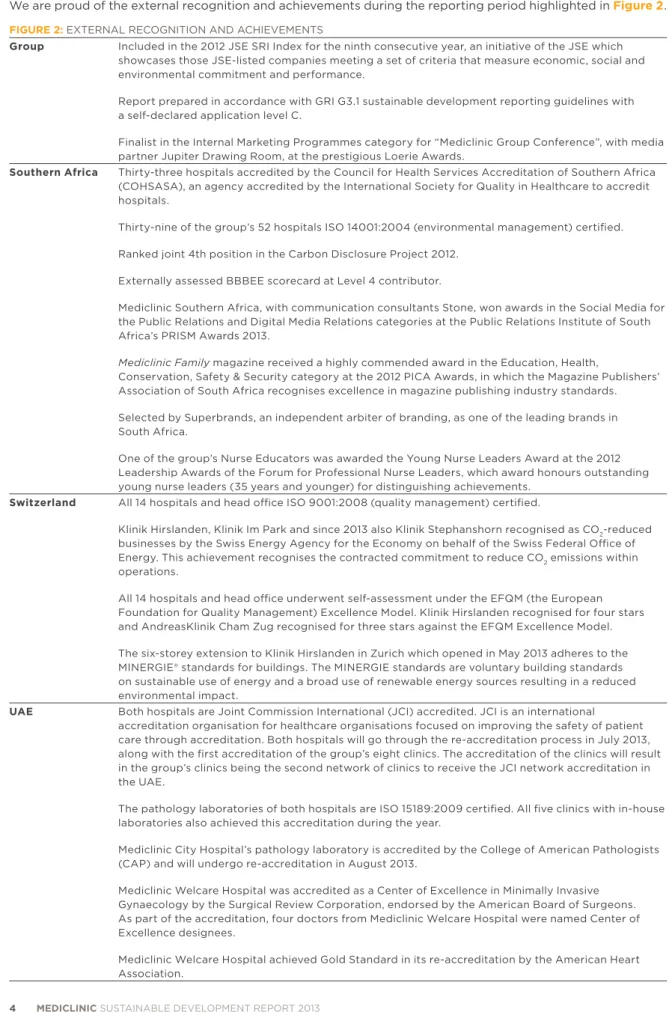
FiGure 2:ExTERNAL RECOGNITION AND ACHIEVEMENTS
Group Included in the 2012 JSE SRI Index for the ninth consecutive year, an initiative of the JSE which
showcases those JSE-listed companies meeting a set of criteria that measure economic, social and environmental commitment and performance.
Report prepared in accordance with GRI G3.1 sustainable development reporting guidelines with a self-declared application level C.
Finalist in the Internal Marketing Programmes category for “Mediclinic Group Conference”, with media partner Jupiter Drawing Room, at the prestigious Loerie Awards.
southern africa Thirty-three hospitals accredited by the Council for Health Services Accreditation of Southern Africa
(COHSASA), an agency accredited by the International Society for Quality in Healthcare to accredit hospitals.
Thirty-nine of the group’s 52 hospitals ISO 14001:2004 (environmental management) certified. Ranked joint 4th position in the Carbon Disclosure Project 2012.
Externally assessed BBBEE scorecard at Level 4 contributor.
Mediclinic Southern Africa, with communication consultants Stone, won awards in the Social Media for the Public Relations and Digital Media Relations categories at the Public Relations Institute of South Africa’s PRISM Awards 2013.
Mediclinic Family magazine received a highly commended award in the Education, Health,
Conservation, Safety & Security category at the 2012 PICA Awards, in which the Magazine Publishers’ Association of South Africa recognises excellence in magazine publishing industry standards. Selected by Superbrands, an independent arbiter of branding, as one of the leading brands in South Africa.
One of the group’s Nurse Educators was awarded the Young Nurse Leaders Award at the 2012 Leadership Awards of the Forum for Professional Nurse Leaders, which award honours outstanding young nurse leaders (35 years and younger) for distinguishing achievements.
switzerland All 14 hospitals and head office ISO 9001:2008 (quality management) certified.
Klinik Hirslanden, Klinik Im Park and since 2013 also Klinik Stephanshorn recognised as CO2-reduced businesses by the Swiss Energy Agency for the Economy on behalf of the Swiss Federal Office of Energy. This achievement recognises the contracted commitment to reduce CO2 emissions within operations.
All 14 hospitals and head office underwent self-assessment under the EFQM (the European Foundation for Quality Management) Excellence Model. Klinik Hirslanden recognised for four stars and AndreasKlinik Cham Zug recognised for three stars against the EFQM Excellence Model. The six-storey extension to Klinik Hirslanden in Zurich which opened in May 2013 adheres to the MINERGIE® standards for buildings. The MINERGIE standards are voluntary building standards on sustainable use of energy and a broad use of renewable energy sources resulting in a reduced environmental impact.
uae Both hospitals are Joint Commission International (JCI) accredited. JCI is an international accreditation organisation for healthcare organisations focused on improving the safety of patient care through accreditation. Both hospitals will go through the re-accreditation process in July 2013, along with the first accreditation of the group’s eight clinics. The accreditation of the clinics will result in the group’s clinics being the second network of clinics to receive the JCI network accreditation in the UAE.
The pathology laboratories of both hospitals are ISO 15189:2009 certified. All five clinics with in-house laboratories also achieved this accreditation during the year.
Mediclinic City Hospital’s pathology laboratory is accredited by the College of American Pathologists (CAP) and will undergo re-accreditation in August 2013.
Mediclinic Welcare Hospital was accredited as a Center of Excellence in Minimally Invasive Gynaecology by the Surgical Review Corporation, endorsed by the American Board of Surgeons.
externaL recoGnition anD achieVeMents
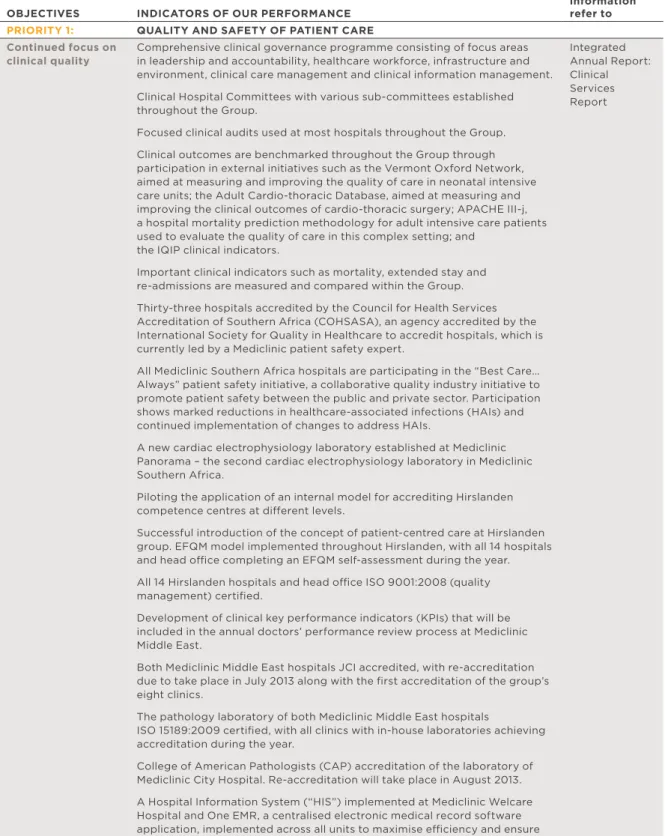
FiGure 3:PERFORMANCE AGAINST OBJECTIVES
(refer also toFigure 2:External recognition and achievements)
oBJectiVes inDicators oF our perForMance
For more information refer to
prioritY 1: QuaLitY anD saFetY oF patient care
continued focus on clinical quality
Comprehensive clinical governance programme consisting of focus areas in leadership and accountability, healthcare workforce, infrastructure and environment, clinical care management and clinical information management. Clinical Hospital Committees with various sub-committees established throughout the Group.
Focused clinical audits used at most hospitals throughout the Group. Clinical outcomes are benchmarked throughout the Group through participation in external initiatives such as the Vermont Oxford Network, aimed at measuring and improving the quality of care in neonatal intensive care units; the Adult Cardio-thoracic Database, aimed at measuring and improving the clinical outcomes of cardio-thoracic surgery; APACHE III-j, a hospital mortality prediction methodology for adult intensive care patients used to evaluate the quality of care in this complex setting; and
the IQIP clinical indicators.
Important clinical indicators such as mortality, extended stay and re-admissions are measured and compared within the Group. Thirty-three hospitals accredited by the Council for Health Services Accreditation of Southern Africa (COHSASA), an agency accredited by the International Society for Quality in Healthcare to accredit hospitals, which is currently led by a Mediclinic patient safety expert.
All Mediclinic Southern Africa hospitals are participating in the “Best Care… Always” patient safety initiative, a collaborative quality industry initiative to promote patient safety between the public and private sector. Participation shows marked reductions in healthcare-associated infections (HAIs) and continued implementation of changes to address HAIs.
A new cardiac electrophysiology laboratory established at Mediclinic Panorama – the second cardiac electrophysiology laboratory in Mediclinic Southern Africa.
Piloting the application of an internal model for accrediting Hirslanden competence centres at different levels.
Successful introduction of the concept of patient-centred care at Hirslanden group. EFQM model implemented throughout Hirslanden, with all 14 hospitals and head office completing an EFQM self-assessment during the year. All 14 Hirslanden hospitals and head office ISO 9001:2008 (quality management) certified.
Development of clinical key performance indicators (KPIs) that will be included in the annual doctors’ performance review process at Mediclinic Middle East.
Both Mediclinic Middle East hospitals JCI accredited, with re-accreditation due to take place in July 2013 along with the first accreditation of the group’s eight clinics.
The pathology laboratory of both Mediclinic Middle East hospitals
ISO 15189:2009 certified, with all clinics with in-house laboratories achieving accreditation during the year.
College of American Pathologists (CAP) accreditation of the laboratory of Mediclinic City Hospital. Re-accreditation will take place in August 2013. A Hospital Information System (“HIS”) implemented at Mediclinic Welcare
Integrated Annual Report: Clinical Services Report
KeY priorities: perForMance
aGainst oBJectiVes
A few highlights of the Group’s performance against its key sustainability priorities for the period under review are summarised in Figure 3.
All of these focus areas are dealt with in greater detail throughout this report or the integrated annual report in respect of the financial year ended 31 March 2013, also published on the Company’s website at www.mediclinic.com.
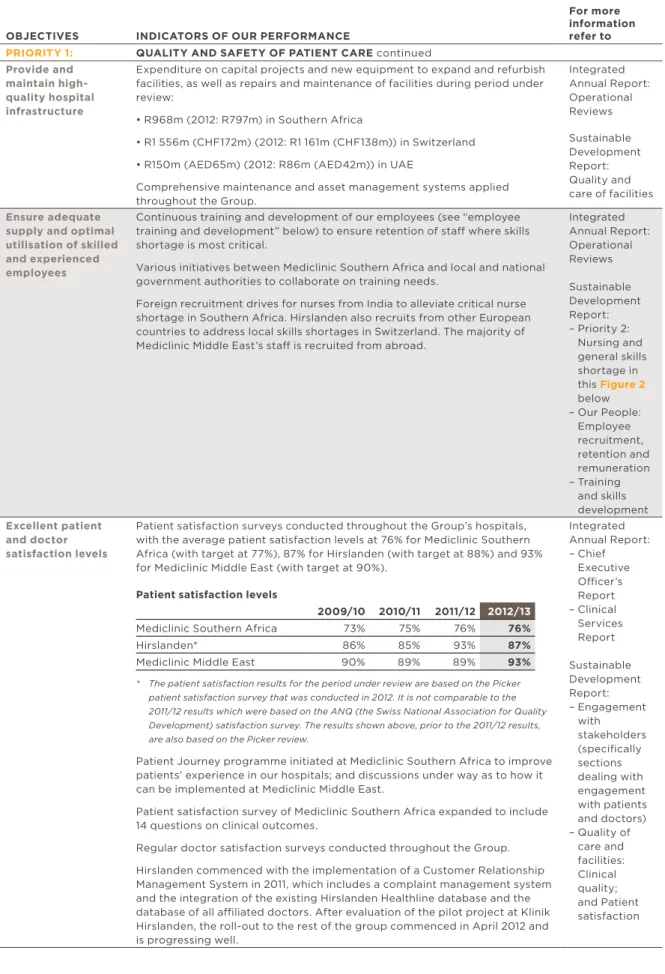
FiGure 3:PERFORMANCE AGAINST OBJECTIVES (CONTINUED)
(refer also toFigure 2:External recognition and achievements)
oBJectiVes inDicators oF our perForMance
For more information refer to
prioritY 1: QuaLitY anD saFetY oF patient care continued provide and
maintain high-quality hospital infrastructure
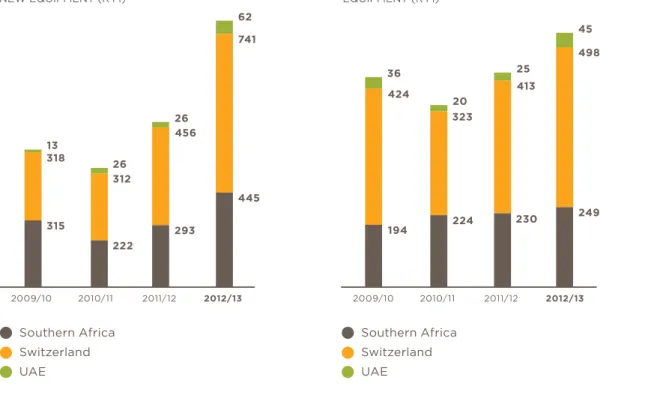
Expenditure on capital projects and new equipment to expand and refurbish facilities, as well as repairs and maintenance of facilities during period under review:
• R968m (2012: R797m) in Southern Africa
• R1 556m (CHF172m) (2012: R1 161m (CHF138m)) in Switzerland • R150m (AED65m) (2012: R86m (AED42m)) in UAE
Comprehensive maintenance and asset management systems applied throughout the Group.
Integrated Annual Report: Operational Reviews Sustainable Development Report: Quality and care of facilities ensure adequate
supply and optimal utilisation of skilled and experienced employees
Continuous training and development of our employees (see “employee training and development” below) to ensure retention of staff where skills shortage is most critical.
Various initiatives between Mediclinic Southern Africa and local and national government authorities to collaborate on training needs.
Foreign recruitment drives for nurses from India to alleviate critical nurse shortage in Southern Africa. Hirslanden also recruits from other European countries to address local skills shortages in Switzerland. The majority of Mediclinic Middle East’s staff is recruited from abroad.
Integrated Annual Report: Operational Reviews Sustainable Development Report: – Priority 2: Nursing and general skills shortage in this Figure 2 below – Our People: Employee recruitment, retention and remuneration – Training and skills development excellent patient and doctor satisfaction levels
Patient satisfaction surveys conducted throughout the Group’s hospitals, with the average patient satisfaction levels at 76% for Mediclinic Southern Africa (with target at 77%), 87% for Hirslanden (with target at 88%) and 93% for Mediclinic Middle East (with target at 90%).
patient satisfaction levels
2009/10 2010/11 2011/12 2012/13
Mediclinic Southern Africa 73% 75% 76% 76%
Hirslanden* 86% 85% 93% 87%
Mediclinic Middle East 90% 89% 89% 93%
* The patient satisfaction results for the period under review are based on the Picker patient satisfaction survey that was conducted in 2012. It is not comparable to the 2011/12 results which were based on the ANQ (the Swiss National Association for Quality Development) satisfaction survey. The results shown above, prior to the 2011/12 results, are also based on the Picker review.
Patient Journey programme initiated at Mediclinic Southern Africa to improve patients’ experience in our hospitals; and discussions under way as to how it can be implemented at Mediclinic Middle East.
Patient satisfaction survey of Mediclinic Southern Africa expanded to include 14 questions on clinical outcomes.
Regular doctor satisfaction surveys conducted throughout the Group. Hirslanden commenced with the implementation of a Customer Relationship Management System in 2011, which includes a complaint management system and the integration of the existing Hirslanden Healthline database and the database of all affiliated doctors. After evaluation of the pilot project at Klinik
Integrated Annual Report: – Chief Executive Officer’s Report – Clinical Services Report Sustainable Development Report: – Engagement with stakeholders (specifically sections dealing with engagement with patients and doctors) – Quality of care and facilities: Clinical quality; and Patient
FiGure 3:PERFORMANCE AGAINST OBJECTIVES (CONTINUED)
(refer also toFigure 2:External recognition and achievements)
oBJectiVes inDicators oF our perForMance
For more information refer to
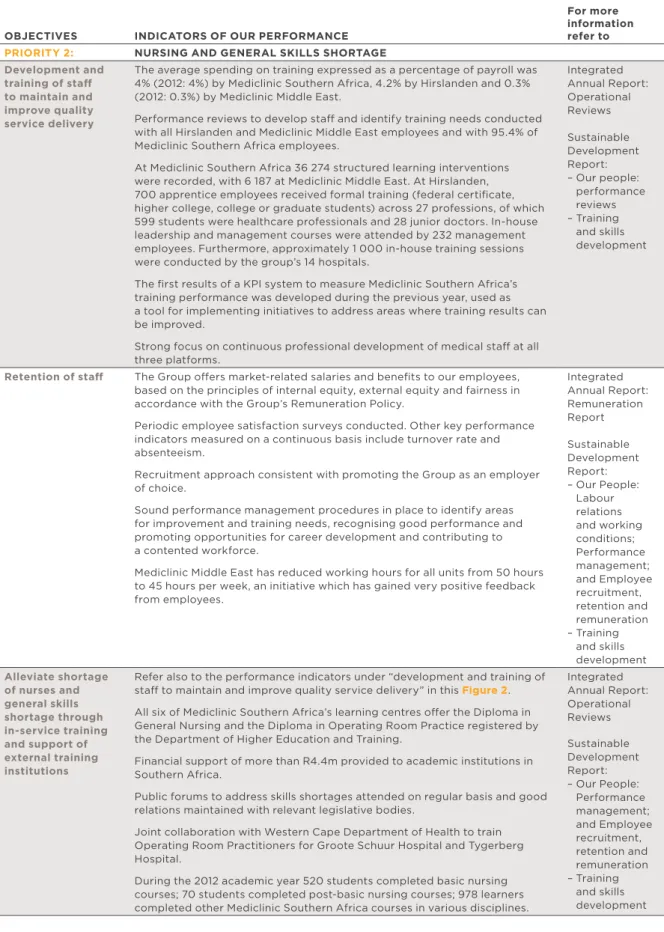
prioritY 2: nursinG anD GeneraL sKiLLs shortaGe
Development and training of staff to maintain and improve quality service delivery
The average spending on training expressed as a percentage of payroll was 4% (2012: 4%) by Mediclinic Southern Africa, 4.2% by Hirslanden and 0.3% (2012: 0.3%) by Mediclinic Middle East.
Performance reviews to develop staff and identify training needs conducted with all Hirslanden and Mediclinic Middle East employees and with 95.4% of Mediclinic Southern Africa employees.
At Mediclinic Southern Africa 36 274 structured learning interventions were recorded, with 6 187 at Mediclinic Middle East. At Hirslanden, 700 apprentice employees received formal training (federal certificate, higher college, college or graduate students) across 27 professions, of which 599 students were healthcare professionals and 28 junior doctors. In-house leadership and management courses were attended by 232 management employees. Furthermore, approximately 1 000 in-house training sessions were conducted by the group’s 14 hospitals.
The first results of a KPI system to measure Mediclinic Southern Africa’s training performance was developed during the previous year, used as a tool for implementing initiatives to address areas where training results can be improved.
Strong focus on continuous professional development of medical staff at all three platforms. Integrated Annual Report: Operational Reviews Sustainable Development Report: – Our people: performance reviews – Training and skills development
retention of staff The Group offers market-related salaries and benefits to our employees, based on the principles of internal equity, external equity and fairness in accordance with the Group’s Remuneration Policy.
Periodic employee satisfaction surveys conducted. Other key performance indicators measured on a continuous basis include turnover rate and absenteeism.
Recruitment approach consistent with promoting the Group as an employer of choice.
Sound performance management procedures in place to identify areas for improvement and training needs, recognising good performance and promoting opportunities for career development and contributing to a contented workforce.
Mediclinic Middle East has reduced working hours for all units from 50 hours to 45 hours per week, an initiative which has gained very positive feedback from employees. Integrated Annual Report: Remuneration Report Sustainable Development Report: – Our People: Labour relations and working conditions; Performance management; and Employee recruitment, retention and remuneration – Training and skills development alleviate shortage of nurses and general skills shortage through in-service training and support of external training institutions
Refer also to the performance indicators under “development and training of staff to maintain and improve quality service delivery” in this Figure 2. All six of Mediclinic Southern Africa’s learning centres offer the Diploma in General Nursing and the Diploma in Operating Room Practice registered by the Department of Higher Education and Training.
Financial support of more than R4.4m provided to academic institutions in Southern Africa.
Public forums to address skills shortages attended on regular basis and good relations maintained with relevant legislative bodies.
Joint collaboration with Western Cape Department of Health to train Operating Room Practitioners for Groote Schuur Hospital and Tygerberg Hospital.
During the 2012 academic year 520 students completed basic nursing courses; 70 students completed post-basic nursing courses; 978 learners completed other Mediclinic Southern Africa courses in various disciplines.
Integrated Annual Report: Operational Reviews Sustainable Development Report: – Our People: Performance management; and Employee recruitment, retention and remuneration – Training and skills development
FiGure 3:PERFORMANCE AGAINST OBJECTIVES (CONTINUED)
(refer also toFigure 2:External recognition and achievements)
oBJectiVes inDicators oF our perForMance
For more information refer to
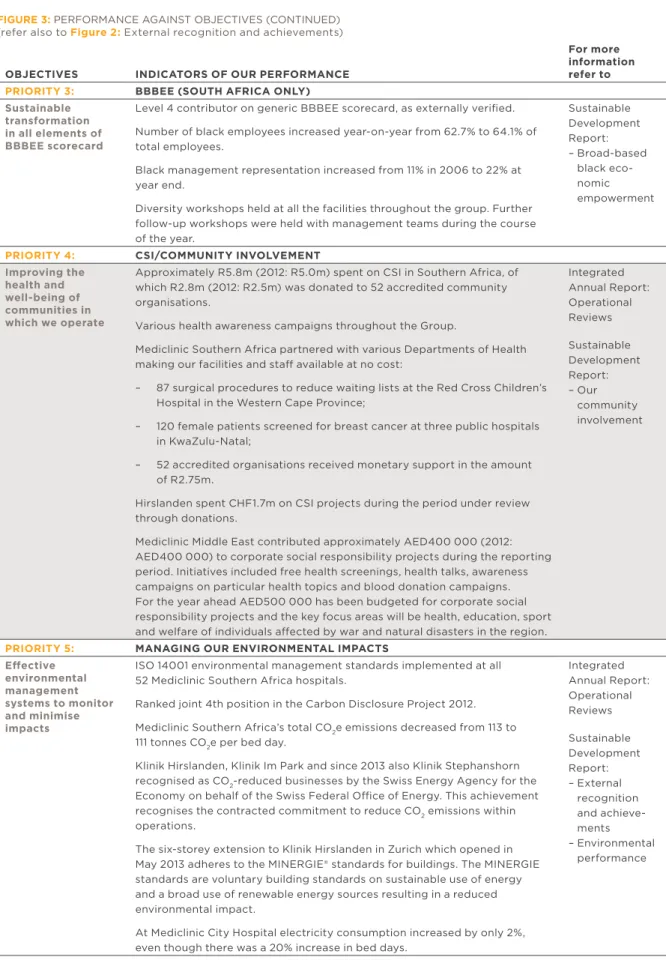
prioritY 3: BBBee (south aFrica onLY)
sustainable transformation in all elements of BBBee scorecard
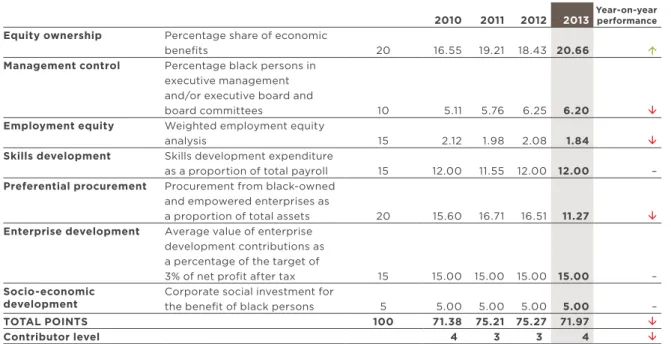
Level 4 contributor on generic BBBEE scorecard, as externally verified. Number of black employees increased year-on-year from 62.7% to 64.1% of total employees.
Black management representation increased from 11% in 2006 to 22% at year end.
Diversity workshops held at all the facilities throughout the group. Further follow-up workshops were held with management teams during the course of the year. Sustainable Development Report: – Broad-based black eco- nomic empowerment
prioritY 4: csi/coMMunitY inVoLVeMent
improving the health and well-being of communities in which we operate
Approximately R5.8m (2012: R5.0m) spent on CSI in Southern Africa, of which R2.8m (2012: R2.5m) was donated to 52 accredited community organisations.
Various health awareness campaigns throughout the Group.
Mediclinic Southern Africa partnered with various Departments of Health making our facilities and staff available at no cost:
– 87 surgical procedures to reduce waiting lists at the Red Cross Children’s Hospital in the Western Cape Province;
– 120 female patients screened for breast cancer at three public hospitals in KwaZulu-Natal;
– 52 accredited organisations received monetary support in the amount of R2.75m.
Hirslanden spent CHF1.7m on CSI projects during the period under review through donations.
Mediclinic Middle East contributed approximately AED400 000 (2012: AED400 000) to corporate social responsibility projects during the reporting period. Initiatives included free health screenings, health talks, awareness campaigns on particular health topics and blood donation campaigns. For the year ahead AED500 000 has been budgeted for corporate social responsibility projects and the key focus areas will be health, education, sport and welfare of individuals affected by war and natural disasters in the region.
Integrated Annual Report: Operational Reviews Sustainable Development Report: – Our community involvement
prioritY 5: ManaGinG our enVironMentaL iMpacts
effective environmental management systems to monitor and minimise impacts
ISO 14001 environmental management standards implemented at all 52 Mediclinic Southern Africa hospitals.
Ranked joint 4th position in the Carbon Disclosure Project 2012. Mediclinic Southern Africa’s total CO2e emissions decreased from 113 to 111 tonnes CO2e per bed day.
Klinik Hirslanden, Klinik Im Park and since 2013 also Klinik Stephanshorn recognised as CO2-reduced businesses by the Swiss Energy Agency for the Economy on behalf of the Swiss Federal Office of Energy. This achievement recognises the contracted commitment to reduce CO2 emissions within operations.
The six-storey extension to Klinik Hirslanden in Zurich which opened in May 2013 adheres to the MINERGIE® standards for buildings. The MINERGIE standards are voluntary building standards on sustainable use of energy and a broad use of renewable energy sources resulting in a reduced environmental impact.
At Mediclinic City Hospital electricity consumption increased by only 2%, even though there was a 20% increase in bed days.
Integrated Annual Report: Operational Reviews Sustainable Development Report: – External recognition and achieve-ments – Environmental performance
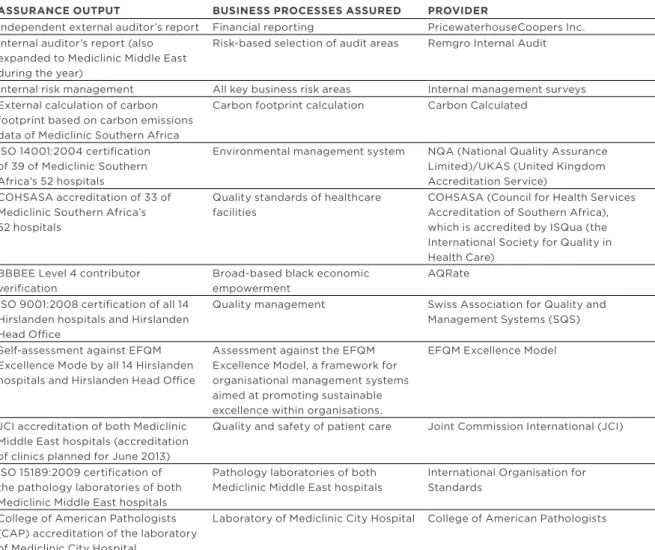
FiGure 4:COMBINED ASSURANCE
assurance output Business processes assureD proViDer
Independent external auditor’s report Financial reporting PricewaterhouseCoopers Inc. Internal auditor’s report (also
expanded to Mediclinic Middle East during the year)
Risk-based selection of audit areas Remgro Internal Audit
Internal risk management All key business risk areas Internal management surveys External calculation of carbon
footprint based on carbon emissions data of Mediclinic Southern Africa
Carbon footprint calculation Carbon Calculated
ISO 14001:2004 certification of 39 of Mediclinic Southern Africa’s 52 hospitals
Environmental management system NQA (National Quality Assurance Limited)/UKAS (United Kingdom Accreditation Service)
COHSASA accreditation of 33 of Mediclinic Southern Africa’s 52 hospitals
Quality standards of healthcare facilities
COHSASA (Council for Health Services Accreditation of Southern Africa), which is accredited by ISQua (the International Society for Quality in Health Care)
BBBEE Level 4 contributor verification
Broad-based black economic empowerment
AQRate ISO 9001:2008 certification of all 14
Hirslanden hospitals and Hirslanden Head Office
Quality management Swiss Association for Quality and Management Systems (SQS) Self-assessment against EFQM
Excellence Mode by all 14 Hirslanden hospitals and Hirslanden Head Office
Assessment against the EFQM Excellence Model, a framework for organisational management systems aimed at promoting sustainable excellence within organisations.
EFQM Excellence Model
JCI accreditation of both Mediclinic Middle East hospitals (accreditation of clinics planned for June 2013)
Quality and safety of patient care Joint Commission International (JCI)
ISO 15189:2009 certification of the pathology laboratories of both Mediclinic Middle East hospitals
Pathology laboratories of both Mediclinic Middle East hospitals
International Organisation for Standards
College of American Pathologists (CAP) accreditation of the laboratory of Mediclinic City Hospital
Laboratory of Mediclinic City Hospital College of American Pathologists
assurance
The independent assurance of sustainability reporting and disclosure is recommended in King III, the integrated reporting guidelines and GRI G3.1. There is an increasing trend in South Africa to have limited external assurance on selected non-financial information. We accept our accountability to our stakeholders to present information that is relevant, accurate and reliable. We follow a combined assurance model, with
assurance between management, internal audit and external assurance, as illustrated in Figure 4. We believe that these assurance methods provide the necessary independent assurance over the quality and reliability of those processes and the information presented. The different options and levels of external assurance available are continuously being considered to determine the way forward on external assurance.
ManaGeMent approach
The Group Sustainable Development Policy, Group Environmental Policy, Group Social Affairs Policy and Code of Business Conduct and Ethics codify our long-standing commitment to conducting business responsibly. The policies are reviewed annually by management, with recommendations to the Board as part of the annual policy review. A review was performed in 2013 with no material amendments approved.
The most senior executive manager responsible for coordinating sustainable development throughout the Group is the Company Secretary and Executive: Group Services, Mr Gert Hattingh.
The management approach to the sustainability indicators reported on is dealt with in this report in the relevant sections pertaining to them.
ethics anD coMpLiance
CODE OF BUSINESS CONDUCT
AND ETHICS
Please visit the governance section on our website at www.mediclinic.com for a copy of our Code of Business Conduct and Ethics and the contact details of the relevant Ethics Contact Persons within the Group.
Conducting business in an honest, fair and legal manner is a fundamental guiding principle in the Mediclinic Group, which is actively endorsed by the Board and management. Ethical behaviour has always been a fundamental guiding principle and management continually focuses on establishing a culture of responsibility, fairness, honesty, accountability and transparency in the Group. This commitment is firmly entrenched in the Group and supports its vision to be regarded as the most respected and trusted provider of hospital services by our patients, doctors and funders of healthcare. The Group’s commitment to ethical standards is set out in the Group’s values, and is supported by the Group Code of Business Conduct and Ethics (“the Code”). The Code provides a framework for employees of the standards of business conduct and ethics that are required of all business divisions, directors and employees within the Group in order
to promote and enforce ethical business practices and standards throughout the Group. The code is available to all staff and also communicated to all new employees as part of the on-boarding process.
ETHICS LINES
Any employee or external stakeholder throughout the Group is able to report any wrongdoing on a confidential and anonymous basis to the Ethics Lines of Mediclinic, Mediclinic Southern Africa, Hirslanden and Mediclinic Middle East.
The number of calls received through the ethics lines during the year is indicated in Figure 5. Over the years, the majority of the calls were of a grievance nature. Only in exceptional cases have information been received that has led to the discovery of unethical, corrupt or fraudulent behaviour – a clear indication of an overall commitment to ethical behaviour throughout all levels of the Group.
Mediclinic Southern Africa’s Ethics Line is managed by an independent service provider, which ensures that each call will be treated with the utmost confidentiality; the service is available on a 24-hour basis to all staff and outside stakeholders. All complaints are investigated in accordance with the Code.
FRAUD AND CORRUPTION
The Group adopts a no-tolerance policy with regard to unethical business conduct, in particular also fraud and corruption, which is addressed in the Code. Strict policies relating to any invitations, gifts or donations received from suppliers or any other party, in terms of which personnel are compelled to declare these to management for approval, apply throughout the Group. Staff members involved in the purchasing of equipment or consumables are also bound to strict ethical principles, ensuring that an impeccable standard of integrity is maintained in the Group’s business relationships.
The Code further prohibits the making of donations to political parties, unless this has been pre-approved by the board or Executive Committee of the relevant operating platform and reported to the Executive Committee of Mediclinic.
FiGure 5:SUMMARY OF REPORTS TO ETHICS LINES
nature oF report internationaLMeDicLinic
MeDicLinic southern
aFrica hirsLanDen MiDDLe east totaLMeDicLinic
Alleged fraud/corruption – 1 – – 1
Alleged theft – – – – –
Grievance/complaint 2 60 9 – 71
Other – – – – –
No donations to political parties were made by Mediclinic Southern Africa or Mediclinic Middle East during the period under review. In Switzerland the financing of political campaigns through third-party contributions is an official and standard practice. During the period under review, CHF42 560 was sponsored by Hirslanden to several political parties, institutions and associations.
The Audit and Risk Committee assesses incidents of attempted fraud or corruption throughout the Group at each committee meeting. The material incidents of fraud or corruption during the reporting period were an incident of fraud to the value of approximately CHF160 000 at Hirslanden, and two incidents of fraud to the value of approximately R660 000 at Mediclinic Southern Africa. The employees are no longer in the employ of the Group and the necessary corrective action has been taken.
COMPETITION
The Group supports and adheres to the relevant competition and anti-trust laws applicable in the various countries in which the Group operates. These laws are complex and the Group has therefore issued guidelines to its employees on competition law compliance within their relevant jurisdiction, which are reviewed and updated at least annually.
During the course of the year the South African Competition Commission approved Mediclinic Southern Africa’s involvement in the company which will own the new Centurion hospital, but imposed a condition that certain provisions contained in the shareholders’ agreement pertaining to Mpilo Investment Holdings 2 (RF) (Pty) Ltd between Mediclinic and Phodiso (which is the investment vehicle of a Pretoria-based doctors’ grouping) in relation to the black economic empowerment transaction concluded with Phodiso during 2005, in terms whereof Phodiso, inter alia, provided certain exclusivity undertakings to Mediclinic, had to be removed. Although Mediclinic did not agree with the Competition Commission’s reasoning in this regard it nevertheless agreed to accept the condition and arranged for the agreement to be amended as required, as it did not regard the relevant provisions to be material or to have any significant commercial value.
The shareholders’ agreement pertaining to Mpilo Investment Holdings 1 (RF) (Pty) Ltd between Mediclinic and MP1 Investment Holdings (Pty) Ltd (previously known as Circle Capital Ventures (Pty) Ltd) (“Circle Capital”), in terms whereof Circle Capital (which is an investment entity controlled by the Phosa and Biko families) entered into in relation to the black economic empowerment transaction concluded with Circle Capital in 2005, contained similar exclusivity provisions. Even though this was not a requirement of the Competition Commission, Mediclinic, in order to be prudent and because it also considered the relevant provisions in this agreement to be immaterial, similarly arranged for this agreement to be amended so as to remove the relevant provisions.
The relevant changes to the shareholders’
agreements were effected after the JSE confirmed that Mediclinic did not require shareholder approval for this purpose.
The South African Competition Commission intends to conduct a market inquiry into the private healthcare sector in South Africa within the year ahead. Mediclinic is engaging with the Commission’s representatives on the envisaged process and the draft Terms of Reference, which were released in May 2013. The Commission stated that it wishes to finalise the inquiry by December 2014.
No legal action for anti-competitive, anti-trust or similar conduct was instituted against the Group during the year.
CUSTOMER PRIVACY
Information security policies are in place throughout the Group regulating, inter alia, the processing and protection of own and third-party information. Apart from the one incident mentioned below, there were no substantiated complaints regarding a breach of customer privacy or loss of customer data against the Group during the year. There was, however, one unfortunate event during 2013 where archived patient files of one of Mediclinic Southern Africa’s hospitals were dumped in an open field while in possession of the hospital’s service provider contracted to destroy the files. Fortunately the files were discovered shortly thereafter and returned to the relevant hospital.
Mediclinic views this incident in a very serious light and the necessary action to prevent any similar incident in the future has been taken.
COMPLIANCE
During the year, there were no incidents of material non-compliance with any laws, regulations,
accepted standards or codes applicable to the Group, with no significant fines being imposed, including concerning specifically:
• health and safety impacts of the Group’s services;
• marketing communications, including advertising, promotion and sponsorships; • the provision or use of the Group’s services; and • the environment.
enGaGeMent with our
staKehoLDers
Our commitment to our stakeholders to conduct our business in a responsible and sustainable way, and to respond to their needs, is entrenched in our values and supported by the Group Code of Business Conduct and Ethics. The nature of our business implies close engagement with our stakeholders, as indicated in the stakeholder map (Figure 6). Effective communication with our stakeholders is fundamental in maintaining our corporate reputation as a trusted and respected
through our brand philosophy “Science of Care”. A wide variety of communication vehicles are used to engage with stakeholders, which serves as an impact assessment to assess stakeholders’ needs and to effectively respond thereto. Stakeholders’ legitimate expectations have been taken into account in setting our key sustainability priorities (see Figure 3), as reported on throughout this report.
The Company and the three operating platforms regularly publish information relevant to their stakeholders on their respective websites: www.mediclinic.com for Mediclinic International; www.mediclinic.co.za for the Southern African operations; www.hirslanden.com for the Swiss operations; and www.mediclinic.ae for the UAE operations and also makes use of various social media communication methods. During the year, Mediclinic Middle East’s website was completely redesigned in line with the Mediclinic brand. There have been no incidents of material non-compliance with any applicable regulations or legislation concerning marketing communications. In South Africa, information is provided in respect of all legitimate requests for information received in terms of the South African Promotion of Access to Information Act. In Switzerland, access to information is governed by the Federal Constitution
FiGure 6:MEDICLINIC’S STAKEHOLDER MAP
Patients
Employees and trade unions
Doctors and clinical services Suppliers Healthcare funders Government and authorities Industry associations Investors Community Media MeDicLinic
information. No requests for information were received on this basis. No similar legislation applies in the UAE.
PATIENTS
The well-being of our patients forms the cornerstone of the Group’s business; hence its core purpose is to enhance the quality of life of patients by providing comprehensive high-quality hospital services in such a way that the Group will be regarded as the most respected and trusted provider of hospital services by, among others, our patients. The Group is committed to delivering excellent healthcare focusing on the needs and satisfaction levels of its patients and to communicating with its patients through various media. The Group therefore continuously measures patient satisfaction (see latest results in Figure 3) through ongoing satisfaction surveys to identify potential focus areas for improvement in order to ensure the continuous delivery of a quality service at the Group’s hospitals. Mediclinic Southern Africa expanded its patient satisfaction survey by including 14 questions on clinical outcomes. The implementation of standardised satisfaction surveys across the Group is planned for the year ahead, which will enable comparative measurement of patient satisfaction between the Group’s
operating platforms and benchmarking against international norms. Some examples of the patient engagement methods specific to each operating platform are outlined below.
SOUTHERN AFRICA
The focus on patient-centric care as an integral part of the company’s brand philosophy has led to the development of the Patient Journey strategy, which is defined as ‘every interaction a patient, family member or visitor has with the Mediclinic community’. After an extensive period of research, which included international best practices, more than 300 touch points during a patient’s interaction with a Mediclinic hospital were identified. These were further investigated to determine how they could be improved to enhance the patients’ experience of our hospitals. A Patient Journey Manager has been appointed and a multi-disciplinary Patient Journey team has been formed to steer the programme.
The Mediclinic Family magazine, aimed at our patients and their families as well as the general public, presents healthy lifestyle and general health-related information. It was awarded a highly recommended certificate in the Education, Health, Conservation, Safety & Security category at the Magazine Publishers’ Association of South Africa’s PICA Awards for 2012, which recognise excellence in magazine publishing.
As a progression of its new brand positioning, Mediclinic Southern Africa launched a comprehensive integrated social media
engagement strategy to build brand reputation, harness brand value, engage key stakeholders and inform public opinion. Using its comprehensive network of established media relationships to leverage the digital platforms, all messages communicated through traditional mediums (publications, media releases, media roundtables and press conferences) were cross-pollinated with messages on social media platforms. The first phase was launched in August 2012 with the roll-out of a Facebook page, Twitter account and LinkedIn, as well as two blog sites – Mediclinic Info Hub and The Future of Healthcare. The former is aimed at answering questions related to medical and lifestyle conditions by drawing on the expertise of our associated doctors, while the latter provides informed, well-researched opinions about the multifaceted healthcare landscape in South Africa. For the next financial year, focus is on quality content, which when published and shared more effectively creates opportunity to engage with communities, including healthcare professionals. One of the two awards Mediclinic Southern Africa, with communications consultants Stone, received at the Public Relations Institute of South Africa’s PRISM Awards 2013 was in the Social Media for the Public Relations category for the strategy and research behind the launch of Mediclinic’s social media platforms.
The group’s two client alliance programmes, Mediclinic Baby and Mediclinic Senior, are aimed at increasing the value-added offering to patients and thereby enhancing their experience both inside and outside our hospitals. Mediclinic Baby
is exclusively designed for new parents of babies born at Mediclinic hospitals and is intended to assist them through every stage of their pregnancy, birth and baby care journey. Benefits include antenatal classes, baby clinics and birth registration, as well as UIF services to special offers and gifts such as the Pregnancy Journal and Baby Bag. In addition, the Baby Wellness DVD and a dedicated pregnancy and baby website (www.mediclinicbaby.co.za) have been introduced as part of the service.
Mediclinic Senior is a free loyalty programme for the over 50s created to optimise health and well-being through education, health awareness and regular medical screening. This involves information sessions, health-screening clinics and quarterly packs. A new product initiative was the introduction of the Mediclinic Senior Retreats, which incorporate a speaker programme by medical professionals covering a wide range of health-related topics and health screening sessions. Retirees are a critical extension of Mediclinic’s brand and culture and as such a retirees’ engagement strategy was implemented following the Mediclinic Southern Africa rebranding in 2011. Retirees are included in the Mediclinic Senior programme as a result. There is also a 24-hour helpline to support these programmes, which answers medical and hospital facility enquiries, as well as client alliance programme questions. Our objective is to build long-term relationships as a trusted healthcare service provider through these programmes. In addition, Mediclinic supported a number of National Department of Health initiatives during the year, including the heart and stroke and diabetes campaigns. About 10 000 people underwent blood glucose, cholesterol and blood pressure levels screening at the hospitals during each event. An extensive pregnancy awareness project was held in February 2013.
SWITZERLAND
Health-related information is provided to current and former patients through local hospital magazines, the group’s website and a call centre offering information on the group’s doctors
and hospitals, as well as advice on medical and healthcare matters. The website is recognised as a strong interaction platform, offering relevant healthcare information to patients. In addition to the website, the group hosts specific sites dedicated to medical centres of expertise such as to oncology, heart diseases, radiotherapy and urology.
UAE
Mediclinic Middle East engages with its patients and prospective patients on multiple levels. All activity is designed to educate, inform and make the patients’ interaction with the group’s facilities as easy and seamless as possible. The company produces a variety of patient education literature, which is available in public areas at all hospitals and clinics; it offers a variety of patient education seminars and group meetings (both free and for a fee), e.g. mothers’ support groups and diabetes education groups; it sends updates on special offers and new doctors to registered patients by email and SMS, and gives patients the option of requesting their appointments online. With the rebranding to Mediclinic taking place during the reporting period, as well as the closure of the Emirates Diagnostic Clinic and the opening of Mediclinic Beach Road, regular patient engagement to communicate the changes was especially important. Patients received regular updates, all patient literature was rebranded, all social media sites were renamed but retained all existing followers, the website was redesigned and an extensive media advertising and PR campaign was conducted. This included various editorial articles and interviews, magazine and newspaper advertisements, radio advertising, digital advertising and advertising on billboards throughout Dubai.
As reported last year, social media was adopted as a key communication platform for patients and prospective patients. During the year, the Mediclinic Middle East Facebook pages have seen significant growth in followers. To coincide with the brand relaunch in December 2012, a Mediclinic Middle East (@MediclinicME) Twitter feed was launched which is also seeing an encouraging upward trend in followers.
During the year, Mediclinic Middle East also launched its first mobile application. The application gives users the opportunity to find information about our facilities, locate their nearest hospital or clinic, search for a doctor and request an appointment, view virtual tours and see our latest news and special offers. During the year ahead, Mediclinic Middle East plans to integrate its IT systems to enable patients to, among other things, access test results and medical records electronically. The mobile application will become a vital tool in achieving this goal.
EMPLOYEES AND TRADE UNIONS
The Group’s employees are an asset highly valued. The employees’ trust and respect are vital to Mediclinic’s success. Listening to and responding to the Group’s employees’ needs through effective communication and sound labour relations are important components in being regarded as an employer of choice among existing and prospective employees and vital to maintain a contented, loyal workforce. Mediclinic’s staff members are treated fairly, remunerated competitively and are involved in the day-to-day running of the organisation, contributing to the success of the Group. Throughout the Group communication with employees is conducted through a variety of media, including magazines providing Group news, newsletters updating staff on human resources-related information, e-mail updates, video conferences and satisfaction surveys. Leadership video conferences are conducted through a satellite communication channel between top management and senior employees across the Group. The inter-platform electronic newsletter, Medi-a, shares news and information between the management staff of the Group’s three operating platforms. Please review the our people section of this report for further information relating to our labour relations. Some further examples of engagement methods specific to each operating platform are outlined below.
SOUTHERN AFRICA
Staff engagement takes place using various media such as Milieu, a quarterly staff magazine available in print and digitally; Nursing Magazine, an annual magazine published to coincide with International
Nurses Day; People’s Interest, a newsletter containing human resources information; and Medibytes, short e-mail news messages. A quarterly electronic newsletter, IPC Acumen, was successfully launched during the year as an educational tool for nurses on infection control.
During the year, the Patient Journey strategy was communicated to staff in a practical and deliberate manner, and was officially launched internally during the annual leadership roadshow. A change management strategy has been put in place to embed the principles and methodologies of the Patient Journey within the culture of the company across all levels. This process includes an intranet-based portal housing stories of exceptional patient experiences, a discussion platform and progress reports on current projects and initiatives. Patient Journey hospital committees will be established during the year ahead.
Company loyalty is recognised with annual long-service awards at hospital as well as at head and regional office level.
Currently 12.4% (2012: 14.1%) of Mediclinic Southern Africa’s staff are covered by collective bargaining agreements with trade unions. The human resources department continuously engages with union representatives in order to promote constructive union relationships. Sufficiently representative unions at locality level form part of hospital committees to encourage dialogue between stakeholders. The company has recognition agreements in place with all unions that have sufficient representation at locality level. Where unions enjoy collective bargaining rights at a locality, salary negotiations are initiated annually in May.
SWITZERLAND
Apropos is a staff magazine providing content on business strategy and new developments; local hospital magazines are intended primarily for patients, but also distributed to staff with local information.
There is no trade union membership among Hirslanden employees.
eFFectiVe coMMunication with
our staKehoLDers is FunDaMentaL
in MaintaininG our reputation
as a trusteD anD respecteD
UAE
The morale of the group’s employees is seen as critical to the ongoing success of the company. Mediclinic Middle East endeavours to keep its staff fully abreast of company news, successes, events and procedures through the intranet site, which is updated daily. Our employees are actively encouraged to participate on the group’s Facebook and Twitter pages.
During the year, Mediclinic Middle East also established a corporate LinkedIn page as part of its social media strategy with the purpose of improving the recruitment process and widening our audience of potential joiners. Since the launch of the official LinkedIn page in July 2012, followers of the company on LinkedIn have grown significantly. Mediclinic Middle East aims to recognise and reward the contribution of all staff by running a series of staff functions which during the period under review included a staff loyalty/long-service awards event recognising 130 employees for their long service ranging from five to 15 years.
Mediclinic Middle East also organised CME (continuous medical education) events for both internal and external nursing staff and a nursing awards event where nurses who had completed postgraduate educational programmes were honoured. The company also celebrated International Nurses’ Day with a media campaign and gifts for its own nurses.
Trade unions are not permitted in the UAE by law and there is therefore no trade union membership among Mediclinic Middle East employees.
DOCTORS
Supporting doctors are significant stakeholders in the Group and play a vital role in Mediclinic’s commitment to quality care, while their freedom of association and clinical independence are simultaneously acknowledged. The ongoing relationship with existing supporting or employed doctors and the recruitment of new doctors remain
critical focus areas. Due to the different clinical models in the operating platforms (as detailed in the organisational overview included in the integrated annual report), our engagement with doctors differs in each operating platform. Any initiative to improve the quality of clinical care needs the support and engagement of the treating doctors. For this reason our Group is actively involved with various programmes to engage with our supporting doctors. Some examples of engagement methods specific to each operating platform are outlined below.
SOUTHERN AFRICA
A referral development model is in place where representatives of the group meet regularly with doctors and their staff to obtain an understanding of their needs and build relationships between the hospital and supporting specialists, as well as between the supporting specialist and the referring general practitioner.
An ad hoc newsletter, MediDr, is distributed to our supporting doctors to keep them informed about company activities. Mediclinic will be launching a unique concept in doctor communication in the year ahead. A Doctor Portal will be hosted on the company’s website, which will give our associated doctors access to peer discussions, an events calendar, a news feed, practice and locum opportunities on a totally secure internet-based platform. The development of the portal is planned to allow doctors to have remote access to their electronic patient files. The Doctor Portal is the first step in the development of a Doctor Journey which, similar to the Patient Journey, will be designed to enhance our supporting doctors at various touch points at the group’s hospitals.
In Southern Africa the structure of the clinical committees at each hospital was revisited and improved. Representatives of the hospital clinical committees now also meet annually to discuss more strategic clinical issues on a national basis.
SWITZERLAND
Doctor satisfaction surveys are conducted every three years with the next survey to be conducted during the last quarter of 2013.
Hirslanden’s network marketing function coordinates the communication and interaction between Hirslanden and the doctor community, and between general practitioners and specialists. A network marketing programme, similar to what applies in Mediclinic Southern Africa, was launched in two test regions in 2012 and in an additional region in 2013. The aim is to extend the programme to further regions during 2013. The feedback from the doctor community is overwhelmingly positive. Our dedicated internet platform for affiliated doctors (www.hirslandenprofessional.ch) provides our doctors with relevant information about the medical facilities and technology in the Hirslanden group as well as upcoming events and professional education programmes conducted throughout the group. This online initiative is reinforced by our continuous professional education offering to doctors conducted throughout the group with a new brand, the “Hirslanden Academy”.
There are a number of medical networks in place where affiliated physicians of one specialisation get together – anaesthesiology, radiology and general medicine in particular are very active in defining group-wide standards for procedures and materials. These networks are very helpful in learning about the requirements of the participants in their relation to the hospitals. Doctors are involved in different projects of the group, such as the recently launched Lighthouse Project. This project deals mainly with the introduction of electronic patient records in one of the hospitals.
The Hirslanden annual report is distributed to affiliated doctors.
UAE
Approximately 59% of the doctors working within Mediclinic Middle East are directly employed by the group, with the remaining 41% community-based specialists (“CBS”) who either have
admission rights at the group’s hospitals or who have outpatient clinics in the facilities. For doctors employed by the group we run monthly meetings to address current issues and concerns. The Chief Clinical Officer also chairs a monthly Clinical Forum meeting, which is attended by the group’s hospital directors, medical directors and nursing directors, group clinic manager and business support service manager to discuss all clinically related issues in the group.
Mediclinic Middle East is the only hospital group in the UAE that has a Network Marketing office, which is responsible for establishing and building relationships with the CBS doctors. The network marketing department oversees orientation programmes for the CBS doctors and assists them with the licensing process, medical malpractice insurance if required, facilitates insurance approvals for their patients and also collects fees if necessary. It also acts as the link between a CBS doctor and the facility when an outside referral is made. This ensures that an appointment can be made smoothly and swiftly. Some marketing activities and hospital information training are also provided to CBS doctors with clinics at the group’s facilities. In addition to the seminars for Continuous Medical Education (“CME”) set up by individual hospitals and clinics, Mediclinic Middle East also organised several CME seminars at a company level during the reporting period, which were open not only to Mediclinic Middle East doctors but also to community-based doctors. These CME sessions offer doctors the chance to earn educational and licence accreditation points which are required for licensing purposes.
SUPPLIERS
In order to deliver our services we are dependent on a large and diverse range of suppliers, who form an integral part of our ability to provide quality hospital care; we believe in building long-term relationships with suitable suppliers, establishing a relationship of mutual trust and respect. Regular meetings are held with suppliers to ensure continuity of service. We rely on our suppliers to deliver products and services of the highest quality in line with our own standards. Various other
criteria play an important role in selecting suppliers, such as: compliance with applicable international and local quality standards, price, compliance with appropriate specifications suited for our markets, stability of the organisation and the relevant equipment brand, good-quality and cost-effective solutions, support network, technical advice and training philosophy. In Southern Africa the BBBEE status of a supplier is also a factor in the selection process.
The availability of products and services is imperative in enabling us to deliver quality care to our patients and therefore an important criterion in our supplier selection process. Although not always the case, this often leads to local suppliers being preferred, which also adds to better and faster service delivery and knowledge of local laws and regulations, particularly with regard to pharmaceutical products. In Southern Africa all procurement is done with local suppliers or the local agents of international suppliers. Similarly, in Switzerland approximately 90% of the procurement is from local suppliers or agents of international suppliers. In Dubai all international suppliers and manufacturers are required by law to operate through local agents. As such Mediclinic Middle East is legally required to procure from local suppliers or agents, except in cases where a product is not available in the UAE, where permission to import from foreign vendors is granted. Mediclinic Middle East procures approximately 97% of its supplies from local agents. Because of the geographic spread of the Group’s operations, the potential of possible cost savings, less administration and improved efficiency, Mediclinic has initiated international procurement initiatives with the aim of unlocking synergies and possibly implementing standardisation for the greater benefit of the Group. This initiative was strengthened by the recent appointment of an International Procurement Manager to focus on the development of an international procurement strategy aimed at lowering costs of pharmaceutical and medical procurement for the Group. It is envisaged that this dedicated resource will align international procurement activities and
optimise current and future saving initiatives. This position will establish an effective communication framework for engagement of stakeholders across the Group’s platforms.
International consolidated data comparisons remain a key driver of international procurement. Mediclinic initiated a project to develop a master data management (“MDM”) strategy that will support the key strategic objective of international procurement. The Group is faced with numerous regulations worldwide, which hinder certain procurement strategies as would be the case with non-regulated consumables. A growth incentive system has been established with the top suppliers of capital medical devices to all platforms.
Procurement expenditure volumes during the period under review exceeding agreed baselines due to standardisation and growth have resulted in tangible benefits to the Group.
Any form of perverse incentives is prohibited and the Group’s Ethics Lines are available to all suppliers. Staff members involved in the purchasing of equipment or consumables are also bound to strict ethical principles ensuring that an impeccable standard of integrity is maintained in the Group’s supplier relationships.
Annual Supplier of the Year award ceremonies are established in Southern Africa and the UAE, recognising the important role of our suppliers in our business and honouring their service excellence.
SOUTHERN AFRICA
Formal and uniform procurement processes apply with regard to tenders, contracting and preferred supplier agreements to promote a transparent procurement process and the application of sound supplier selection criteria. Mediclinic Southern Africa has introduced an electronic tender system that focuses on pharmaceutical products (excluding medicine). This system will allow for more accurate tender scoring and promotes transparency in the procurement process.