Le Kernec, J., Gray, D., and Romain, O. (2014) Empirical Analysis of Chirp and
Multitones Performances with a UWB Software Defined Radar: Range, Distance
and Doppler. In: 3rd Asia-Pacific Conference on Antennas and Propagation
(APCAP), Harbin, China, 26-29 Jul 2014, pp. 1061-1064. ISBN 9781479943548.
There may be differences between this version and the published version. You are
advised to consult the publisher’s version if you wish to cite from it.
http://eprints.gla.ac.uk/114705/
Deposited on: 13 July 2016
Enlighten – Research publications by members of the University of Glasgow
http://eprints.gla.ac.uk
Empirical Analysis of Chirp and Multitones
Performances with a UWB Software Defined Radar:
Range, Distance and Doppler
Julien Le Kernec
University of Nottingham 199 Taikang East Road, Ningbo,
Zhejiang, P. R. China, 315100 [email protected]
Derek Gray
Xi’an Jiaotong Liverpool University 111 Ren’ai Road, Suzhou, Jiangsu, P. R. China, 215123
Olivier Romain
Laboratoire ETIS
6 rue Ponceau, 95014, Cergy cedex, France
Abstract— In this study, a protocol for an unbiased analysis of
radar signals’ performance. Using a novel UWB software-defined radar, range profile, Doppler profile and detection range are evaluated for both Linear Frequency Modulated pulse and Multitones. The radar was prototyped and is comparable in overall performance to software defined radar test-beds found in the literature. The measured performance was in agreement with the simulations.
Keywords— Radar, Multitones, OFDM, UWB, Software Radio
I. INTRODUCTION
Recently, UAVs – such as used for urban reconnaissance missions – must simultaneously perform radar sensing and transmit the acquired data to the base/control station. This is not possible with Chirp waveform of reference in radar [1]. Consequently, a lot of research work aims at integrating telecommunication waveforms such as Multitones in radar applications.
Advances in digital circuits and systems now allow the processing of UWB and purely digital waveforms. UWB radar yields finer spatial resolution and enables agility in waveform/frequency. Those advances are the basis of software defined radar which can be dynamically reconfigured, is multifunction and switched from one operational mode to another (surveillance, tracking, imaging, as well as telecommunications).
Multitones – widely adopted in telecommunications – will be adopted in radar applications only if those meet the requirements of specific tasks. This condition is essential to ensure the successful integration and widespread use in radar. This signal can be a composite of independent bands in the case of multi-mode radar [2]. Even with selective fading in frequency, Multitones still ensures target detection [3]. The waveform/frequency agility is essential of stealthy operation to avoid detection and jamming, and reuse of spectrum in the case of radar networks [4]. For all these reasons, Multitones are considered a viable option for the next generation of radars. Thus, our research question is how do Multitones’ performance compare with those of Chirp in multifunction radar applications?
Recent work studied Multitones’ telecommunication capabilities in the context of SAR [c.f. 5]. Furthermore, the relative performances of Multitones in a radar context were investigated in [6 - 8]. The results in [6] show an improved accuracy was obtained when using Multitones compared to polyphase coding on a single carrier.
The use of pulse train with amplitude/phase code diversity [1, 7, 8] yields almost ideal ambiguity functions. As opposed to Chirp, the ambiguity function did not display range-Doppler coupling [1], on the other hand the pedestal is higher. Furthermore new advances in radar using the Multitones’ intrinsic digital structure are emerging such as the target speed extraction while using frequency agility [7] and velocity ambiguity resolution [8].
It is of notable that most results in this field are simulated. To the best of the authors’ knowledge, the basic radar performances of Multitones are not adequately quantified and the comparison of Multitones to a viable radar waveform would complement the existing literature. Chirp is a reference in radar [1] and will be used to evaluate the performances of Multitones.
References [5, 9, 10, 11] present reconfigurable radar prototypes using Multitones; design rules (details in [12]) have been extracted and used during the design of the prototype. The development of software radar technology is still in its infancy. Its reconfiguration is limited in terms of degrees of freedom. An increased flexibility is often synonymous with higher hardware complexity and/or stronger interference at the receiver level.
Section II describes the prototype implementation. Finally, section III presents the performance analysis of the tested waveforms with a direct comparison between simulated and experimental results.
II. SOFTWARE DEFINED RADAR CONCEPT
In order to compare different waveforms fairly, it is essential to choose waveform independent criteria. Furthermore, the simulation models and the prototype must be identical to allow a direct comparison. Distance/Doppler profiles and also range have been selected as a basis for this analysis.
A. Prototype Design
According to [12], the prototype must have an instantaneous bandwidth greater than 500MHz to obtain a finer resolution for imaging. The architecture must support any waveforms without modifying the frontend. The fair comparison of waveforms on the same software defined radar platform would then be possible. Note that part of the emitted signal is digitized as reference to dynamically update the match filter and thus improve pulse compression by partially compensating for the radar transfer function, specifically when using a power amplifier (e.g. TWTA, CFA). This functionality is not available on operational radars.
The experiments were undertaken in a 12m-long anechoic. A bistatic configuration was required as well as continuous wave operation to obtain a compression gain greater than 20dB. The radar characteristics are in Table I and were described in detail in [12]. The only difference is the ADC Tektronix DSA71254 [13].
The signal processing algorithm supports any waveforms for a fair analysis. Radar systems commonly use matched filtering for target detection because it offers the best signal to noise ratio, assuming white noise. The only parameter that varies is the digitized vector’s size to match the tested waveforms. The proposed algorithm for distance is presented in [12] and for Doppler in [14].
Based on Tektronix DSA71254 ADC characteristics [13], the required processing power to from a distance-Doppler image has been estimated [14]. It is between 3.5 and 10TeraMACS (real multiply/accumulate operations per seconds); this is close to the announced capabilities of new FPGAs (Figure 1) [14]. However the implementation on FPGA has yet to be developed for various vector sizes. This estimation shows that real-time processing is feasible for the proposed configuration. Improvements in terms of processing power of course are warranted such as pulsed emission, decimation, polyphase filters for coherent integration...
Fig. 1. Required processing poweer for the proposed algorithm in TeraMACS for various inout vector sizes – sampling frequency 6.25GS/s, Doppler resolution δυ = Δυ/N (N = 1000) and 8bit-words.
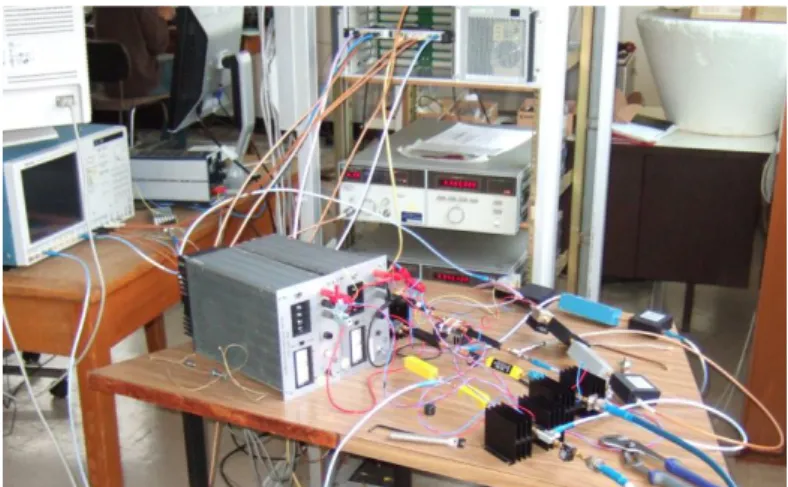
Fig. 2. Software defined radar benchtop prototype.
TABLE I. SOFTWARE DEFINED RADAR PROTOTYPE CHARACTERISTICS
IF/RF 1.1-1.9 GHz / 10-11.6 GHz
Instantaneous bandwidth/agility 800MHz Max. / 1.6 GHz Max. Direct synthesis sampling frequency 10GS/s /1st Nyquist Band/ 10bits
Direct sampling frequency 6.25GS/s /1st Nyquist band/ 8bits Mode / Antennas / Gain / Polarisation bistatic / horns / 20dB / VV
Doppler sampling configurable
PRF/waveform configurable / configurable
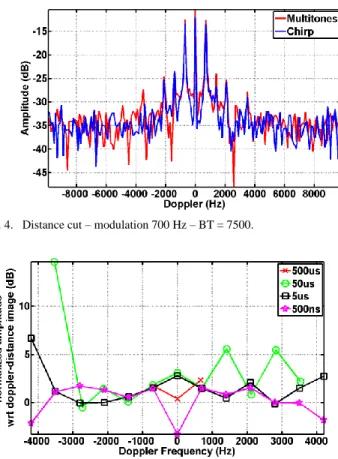
Fig. 4. Distance cut – modulation 700 Hz – BT = 7500.
Fig. 5. Doppler peak amplitude difference (Multitonse - Chirp) for waveforms with 150MHz bandwidth
B. Software Defined Radar Implementation and Trials
The software defined radar (SDR) prototype radar (Figure 2) is described in detail in [14, 17]. Its performances (Table I) are comparable to other platforms found in the literature [12]. This SDR prototype can digitally configure agility in waveform/frequency without modifying the front end.
The active transponder [14] emulated the Doppler effect by modulating the received waveform with a square signal. This target produced two fixed echoes and a Doppler echo (Figure 3). This experience is repeatable because the fixed echoes and the modulation do not vary. The data was recorded on a computer and processed offline using MATLAB. The frontend must be carefully designed to allow repeatable experiments; this constitutes the basis of a fair comparison of waveform performance.
III. SIMULATED VS MEASURED RESULTS: COMPARISON OF WAVEFORM PERFORMANCES
The SDR operated in continuous wave and the waveform characteristics included bandwidth (B) of 1 to 800MHz and signal periods (T) of 500ns to 1ms. All tested configurations had a BT product greater than 75. The tested waveforms were the Chirp (3) (reference waveform) and P3 phase-coded Multitones [1] (4).
( ) ( ( ( ) ))
( ) (∑ ( ( ( ) ))
)
( ) is the P3 phase code, [ [, T is
the signal period, was the signal bandwidth, N was an integer and the number of frequencies in the Multitone signal,
was the frequency step for Multitones and
was the waveforms lower frequency.
Better results in terms of compression were obtained for Multitones if the orthogonality was maintained [14]. Also note that a better linearity was achieved with Chirp than with Multitones with fewer constraints.
For distance profiles, work conducted in [12] established that the results match simulations with less than 3.1% error for spatial resolution and sidelobe distances and differences in sidelobes < 0.3dB (large differences were observed for wide band at 800MHz due to sample speckle and the presence of reflections in the radar circuit). The performance in distance were equivalent for Chirp and Multitones.
For Doppler profiles, the active transponder modulated the waveform with a 700Hz square signal. This modulation implies a narrowband approximation for Doppler processing and introduces an integration error [17]. Considering that an error of 5% or less was acceptable, this algorithm was thus valid for waveforms with BT lower than 100k. Figure 4 shows the distance cut where the Doppler modulation peaks were.
The results in [14] (Figure 5) show that Multitones had better detection performance on modulation peaks by 0.5 to 3dB on average. This differs from simulations which show identical performance. It is hypothesised that Multitones had better performance to detect scintillating targets. In [10], Multitones were used to measure radar cross section to improve imaging in presence of micro-Doppler. Further studies are required to refine simulation models and new experimentation will be necessary to confirm those results on Doppler.
In [12], it was demonstrated that Chirp maximum range is at most 15% greater than P3 coded Multitones.
IV. CONCLUSION
In this paper, a fair waveform comparison protocol was used for a radar application. The SDR prototype allows a direct comparison between MATLAB simulations and experimental results. The prototype performance was equivalent to a platform found in the literature and the data processing was performed in MATLAB.
The results show that Chirp and P3 phase coded Multitones have the same performances in distance. However preliminary results lean in favour of Multitones in the case of scintillating target imaging. Further research is required to confirm these results for Doppler.
Multitones have an added-value for radar applications with telecommunication capabilities. The implementation of Multitones in radar implies a 15% drop in range (for coding schemes with similar peak-to-average power ratio – PAPR – reduction as P3 codes). Other waveforms surpass Multitones
when looking at criteria individually (PAPR, ambiguity function, …) but not in a multifunction scenario. Furthermore the emergence of new processing capabilities [7, 8] with Multitones (which cannot be achieved with Chirp) compensate for any disadvantages in using Multitones. Chirp will most likely remain the predominant waveform in long range applications such as over the horizon radar. Multitones have great potential to become the predominant waveform for short/mid-range applications – and it is likely that these will replace Chirp in the future.
This study showed that the required processing power is greater than what is currently achievable with the latest FPGAs with state-of-the-art ADCs, which have higher bandwidth and sampling rates. With the proposed prototype, the real-time signal processing is feasible with the announced performances of the latest Virtex 7 family [16]. The algorithm still needs to be implemented on FPGA and real-time signal processing will most likely require several chips, pipelining, pre-processing and decimation to achieve that goal. UWB SDR will probably need to operate in pulsed-mode and record the data rather than emitting continuously to then process the data offline for the time being.
For this study, the proposed algorithm is a narrowband approximation for Doppler processing. However the Doppler spread will affect Multitones’ orthogonality and results may vary for different phase codes. A trade-off needs to be determined between telecommunication and radar functions based on phase code. SDR use agility in waveform/frequency and notched/uneven power spectrum, further research will be required to assess the impact of those factors on radar/telecommunication functions.
ACKNOWLEDGMENT
JLK thanks the UPMC/LIP6 for the use of their servers to process the monstrous amount of data and CNAM/EASY for their patronage during the latter stages of this work.
REFERENCES
[1] N. Levanon and E. Mozeson, Eds., Radar signals, John Wiley & Sons, 2004.
[2] D.S. Garmatyuk, “Simulated Imaging Performance of UWB SAR Based on OFDM,” The 2006 IEEE Int. Conf. on Ultra-Wideband, Waltham, MA., 2006, pp. 237-242.
[3] H. Nikookar & R. Prasad, “Waveshaping of multicarrier signal for data transmission over wireless channels,” IEEE 6th Int. Conf. on Universal Personal Communications, San Diego, CA., 1997, pp. 173-177. [4] N. Levanon, “Train of diverse multifrequency radar pulses,” Proc. of
the 2001 IEEE Radar Conf., Atlanta, GA., 2001, pp. 93-98.
[5] D. Garmatyuk and K. Kauffman, “Radar and data communication fusion with UWB-OFDM software-defined system,” IEEE Int. Conf. on Ultra-Wideband, Vancouver, BC., 2009, pp. 454-458.
[6] N.N.S.S.R.K. Prasad, V. Shameem, U.B. Desai and S.N. Merchant, “Improvement in target detection performance of pulse coded Doppler radar based on multicarrier modulation with fast Fourier transform (FFT),” IEE Proc. - Radar, Sonar and Navigation, vol. 151, pp. 11-17, Feb. 2004.
[7] G. Lellouch, P. Tran, R. Pribic and P. van Genderen, “OFDM waveforms for frequency agility and opportunities for Doppler processing in radar,” IEEE Radar Conf., Rome, 2008, pp. 1-6. [8] R.F. Tigrek, W.J.A. de Heij and P. van Genderen, “Solving Doppler
ambiguity by Doppler sensitive pulse compression using multi-carrier waveform,” European Radar Conf., Amsterdam, 2008, pp. 72-75. [9] M. Jankiraman, B.J. Wessels and P. Van Genderen, “Pandora
multifrequency FMCW/SFCW radar,” The Rec. of the IEEE 2000 Int. Radar Conf., Alexandria, VA., 2000, pp. 750-757.
[10] Y. Paichard, “Microwave camera for multi-dimensional analysis of the RCS of time-varying targets,” Ph.D. dissertation, Univ. of Paris, 2007. [11] Open Air Interface - IDROMel. at www.openairinterface.org.
[12] J. Le Kernec, O. Romain, P. Garda and J. Denoulet, “Empirical comparison of chirp and multitones on experimental UWB software defined radar prototype,” Conf. on Design and Architectures for Signal and Image Process., Karlsuhe, 2012, pp. 1-8.
[13] Tektronix at www.tektronix.com.
[14] J. Le Kernec and O. Romain, “Empirical performance analysis of linear frequecy modulated pulse and multitones on UWB software defined radar prototype,” IET Int. Radar Conf. 2013, Xi’an, 2013, pp. 1-6. [15] Stratix V at www.altera.com.
[16] Virtex 7 at www.xilinx.com.
[17] J. Le Kernec, P. Dreuillet, G. Bobillot, J.C. Castelli, P. Garda, O. Romain and J. Denoulet, “Case study analysis of linear chirp and multi-tones (OFDM) radar signals through simulations and measurement with HYCAM-research test bench,” Int. Radar Conf. - Surveillance for a Safer World, Bordeaux, 2009, pp 1-6.
[18] M. Ruggiano and P. van Genderen, “Wideband ambiguity function and optimized coded radar signals,” European Radar Conf., Munich, 2007, pp. 142-145.