Treatment: behavior
modification techniques
INTRODUCTION
In the next five chapters we will discuss techni-ques for treating behavior problems including behavior counseling (client advice on behavior and environmental management) in this chapter, drug therapy in Chapter 6, complementary and alternative therapy in Chapter 7, diet-related behavior problems and their management in Chapter 8, and pain assessment and treatment including the use of adjunctive drugs for beha-vior therapy in Chapter 9.
EDUCATION OF THE FAMILY
The ultimate success of treating the problem is directly related to the degree of owner compre-hension and compliance. Since family members themselves will carry out the behavioral modifi-cation in most cases, they must understand their roles and the techniques they will be required to perform.
The family must understand normal needs and behavior for cats and dogs. Providing pets with appropriate outlets for play, exercise, elim-ination, chewing, and digging may be all that is required to solve some problems. It is often necessary to provide some explanation of how animals communicate and learn. The principals behind the use of some behavior modification tools will also likely need to be discussed.
5
CHAPTER CONTENTSIntroduction 91
Education of the family 91 Modification of the environment 92 Modification of the pet’s behavior 92
Change the behavior or the response with surgery 92
Modify the pet with behavioral modification techniques 92
The use of behavior products to modify behavior 93
Modify the pet’s behavior with psychoactive drugs, pheromones, and alternative remedies 93 Remove the pet from the household 96 Behavioral modification techniques and terms 96
Aversion therapy 96 Avoidance and escape 96 Classical conditioning 97 Conditioned punisher 97
Conditioned reinforcer (bridging stimulus) 98 Controlled exposure 98
Counterconditioning 98 Countercommanding 99 Differential reinforcement 99
Discriminative stimulus (command cue) 100 Disruption and diversion 100
Drug desensitization 100 External inhibition 100 Extinction 101 Extinction burst 101
Flooding (response prevention) 101 Habituation 101
Latent learning 101 Learning 102 Motivation 102
Observational learning 102 One-event (trial) learning 103 Operant conditioning (instrumental
conditioning) 103 Overlearning 103
Prevention – setting the pet up to succeed 103 Punishment 104
Shock and discomfort 109 Reinforcement 109
Shaping (successive approximation) 111 Systematic desensitization 112
Taste aversion 112
Application of behavioral modification techniques 112
When clients are educated, they realize more clearly which problems are most likely to be completely eliminated, which are likely to only be decreased, and which are unlikely to be chan-ged. Once the family is well informed about the situation and treatment options, the decision may be made to live with the problem rather than institute the necessary steps for corrections, while others may decide that rehoming or eutha-nasia are safer, more appropriate choices for their circumstances (Fig. 5.1).
MODIFICATION OF THE
ENVIRONMENT
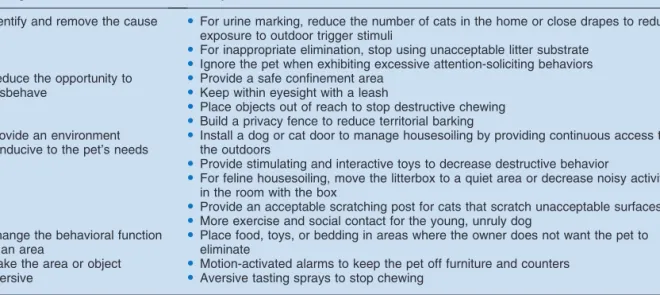
Environmental modification involves manipu-lating various aspects of the pet’s environment in order to diminish the performance or inten-sity of the behavior. A number of variables can be controlled, including confinement areas, exposure to eliciting stimuli, access to people, access to other animals, access to targets of the behavior, and modification of targets (Fig. 5.2).
MODIFICATION OF THE PET’S
BEHAVIOR
Change the behavior or the response
with surgery
Castration of male dogs and cats not only helps stem the pet population but also has valuable behavioral and medical benefits. Castration can
decrease unacceptable sexual behavior, aggres-siveness, urine marking, and prevent breeding. With respect to behavior, it should be clearly understood that the only behaviors affected by castration would be those that are influenced by male hormones. Thus, castration affects sexually dimorphic behaviors, those seen predominantly in males (Fig. 5.3). There are medical benefits of castration as well. Since castration can help cur-tail roaming, castrated dogs and cats are less likely to be endangered by viral, bacterial, para-sitic, or environmental dangers. In dogs, castra-tion is useful in the prevencastra-tion or treatment of prostatic disease, testicular cancer, and in the reduction of perianal tumors.
Other surgical procedures that have been used for certain behavior problems include olfactory tractotomy for refractory spraying cases, dental disarming, declawing, and devocalization. Many of these procedures are only considered as a last-resort alternative to euthanasia, and in some countries may be unacceptable or illegal. Surgery or medical therapy might also be neces-sary when an underlying medical condition (e.g., hyperthyroidism, anal sacculitis, chronic otitis) is causing or contributing to the beha-vioral signs.
Modify the pet with behavioral
modification techniques
Behavioral modification is the principle means of correcting or controlling undesirable
beha-Problem Owner education required
Dominance aggression * Pack structure, social communication, dominant and subordinate signaling, the dog in the family pack
Canine housesoiling * How dogs learn, crate training, relationship between eating and eliminating, supervision and confinement
Feline housesoiling * Normal elimination behavior, substrate preferences, odor elimination
Feline spraying * The role of neutering, social behavior and communication of cats, influence of cat density, pheromones
Unruly dog * Normal greeting behavior, obedience training, halter devices, principles of conditioning Canine destructive behavior * Importance of play and exercise, pros and cons of adding a playmate, discussion of
appropriate chew toys, the concept of guilt, principals of applying an appropriate correction, the role of anxiety
Feline play aggression * Normal feline play behavior, feline predatory behavior, feline social behavior, how to properly play with a cat, adding a second cat
vior. Therefore it is critical for the consultants to understand the basic principles of learning and motivation if they intend to perform behavioral counseling in practice. It is also recommended that books on training and behavior be con-sulted for more basic instruction on these tech-niques. Learning and behavior modification techniques are discussed later in this chapter.
The use of behavior products to
modify behavior
There are a wide variety of products that can be useful in the prevention and management
of undesirable behavior in pets. These are described throughout the text and a list of some of the product manufacturers can be found in Appendix B. For a client handout (also printable from the CD) reviewing the use of these products see Figure 5.4.
Modify the pet’s behavior with
psychoactive drugs, pheromones,
and alternative remedies
Although medication is being used more and more frequently to treat companion animal behavior problems, there are very few drugs
Change Example
Identify and remove the cause * For urine marking, reduce the number of cats in the home or close drapes to reduce exposure to outdoor trigger stimuli
* For inappropriate elimination, stop using unacceptable litter substrate * Ignore the pet when exhibiting excessive attention-soliciting behaviors Reduce the opportunity to
misbehave
* Provide a safe confinement area * Keep within eyesight with a leash
* Place objects out of reach to stop destructive chewing * Build a privacy fence to reduce territorial barking Provide an environment
conducive to the pet’s needs
* Install a dog or cat door to manage housesoiling by providing continuous access to the outdoors
* Provide stimulating and interactive toys to decrease destructive behavior
* For feline housesoiling, move the litterbox to a quiet area or decrease noisy activity in the room with the box
* Provide an acceptable scratching post for cats that scratch unacceptable surfaces * More exercise and social contact for the young, unruly dog
Change the behavioral function of an area
* Place food, toys, or bedding in areas where the owner does not want the pet to eliminate
Make the area or object aversive
* Motion-activated alarms to keep the pet off furniture and counters * Aversive tasting sprays to stop chewing
Figure 5.2 Ways to manipulate the environment.
Behavior Effects of castration
Undesirable sexual behavior * Can reduce attraction to females, roaming, mounting, and masturbation
* Roaming in cats can be reduced in over 90% of cases and 70–80% of dogs have a reduction in roaming but only about 40% are completely resolved
* Mounting in dogs is reduced in 70–80% of cases but resolved in only 25% Marking * Marking with urine is a common territorial behavior in dogs and cats
* Castration reduces marking in about 70–80% of dogs but only about 40% are completely resolved. Marking by spraying urine is reduced in 90% of cats Aggression * Intermale aggression can be reduced in about 60% of dogs and 90% of cats
* Aggression toward family dogs and family members may be reduced in about 30% of dogs
PRODUCTS FOR MANAGING AND CORRECTING UNDESIRABLE BEHAVIOR
Note that products are mentioned by name because of author familiarity, and not because they are necessarily superior to other products.
There are a wide variety of products that can be useful in correcting or managing undesirable behavior in pets. Devices that are activated by the owner can be used to disrupt a behavior so that the desirable response can be achieved or may serve to punish the undesirable behavior so that the pet is less likely to repeat the act in the future. However, devices that are activated by the owner may only allow the owner to manage the problem behavior when the owner is present, since the pet will learn that there are no unpleasant consequences for the behavior when the owner is absent. In fact, if the behavior is enjoyable (e.g., garbage raiding, sleeping on a couch) or provides relief from discomfort (e.g., housesoiling, chewing) then the pet will be highly likely to repeat the behavior in the owner’s absence. Therefore remote forms of punishment or environmental punishment (‘booby traps’) may be more effective.
DISRUPTIVE STIMULI (EXTERNAL INHIBITION)
The goal of the disruptive stimulus is to inhibit the undesirable response and achieve a desirable response, which can then be reinforced (negatively and/or positively). If the disruption is preceded by a command, and then the desirable response is achieved, these devices can be a useful training aid. If the device, on the other hand, causes fear, anxiety, or discomfort, it might meet the definition of a punisher since it should decrease the likelihood that the pet will repeat the behavior (at least when the owner is present).
Remote punishment
Remote punishment can be used to deter undesirable behavior without causing fear of, or association with, the owner. Punishment can be administered remotely with any of the direct intervention devices or with any device activated by a remote switch. Garbage raiding and jumping onto counters are problems that might be corrected with a properly and consistently applied remote device. As soon as the inappropriate action begins it can be stopped, disrupted, or deterred with one of these products. Using negative reinforcement principles, the owners should also be taught to withdraw the punishment/discomfort as soon as the undesirable action ceases. Desirable responses can then be rewarded.
Environmental punishment and avoidance
Environmental punishment or booby traps can be used to deter undesirable behavior or entry into restricted areas even in the owner’s absence. The effect is for the pet to learn that the area or the behavior itself is associated with unpleasant consequences. This type of punishment resembles the learning that occurs when pets are exposed to unpleasant or fearful aspects of their environment such as cars, predators, porcupines, toxic plants, barbed wire, sprinklers, etc.
Shock and discomfort
Most pets quickly learn to avoid situations or locations that lead to fear or discomfort. Similarly, some training devices use varying levels of discomfort or shock, such as electronic avoidance devices (e.g., Invisible Fencing1
, Scat Mat1
), and bark-activated shock collars. These devices are considered inhumane and are therefore illegal in certain countries, but are still widely available in North America. In principle, pet owners should be able to find successful alternative training methods and products to correct or manage most behavior problems. However, when all other practical solutions have been exhausted, these products offer another alternative that may quickly and effectively resolve the problem, but could also be unsuccessful or lead to excessive fear and discomfort. Therefore when the problem is sufficiently severe (i.e., euthanasia or rehoming may otherwise be considered), the pet’s safety is at risk, and there is a product that will successfully resolve the problem with a minimum of discomfort, the potential benefits will need to be weighed against the risks and potential harm to the pet.
Disruption and punishment devices
Owner-activated devices
a) Direct devices include commercial devices such as audible trainers (Barker BreakerTM, Sonic Pet TrainerTM), ultrasonic trainers (Pet-AgreeTM, Easy TrainerTM, Ultrasonic Pet TrainerTM), or a citronella spray (Direct StopTM). Other devices that might be homemade or modified from other applications include a can full of pennies (shake can), pocket rape alarms, air horns, a water rifle, or a can of compressed air.
b) Remote devices: commercially available products include remote-controlled citronella (Master PlusTM, Spray CommanderTM) and shock collars and a remote-control vibrating collar (PetPagerTM, for training deaf dogs). Homemade products include long-range water rifles and remote-controlled switches that can be used to activate an alarm, hair dryer, water sprayer, or tape recording. By placing these devices in the area where the pet might misbehave (e.g., plant, garbage) and activating them with a remote switch, the pet should quickly learn to avoid the area.
Pet-activated devices
1. Outdoor devices. Electronic containment systems can be used to keep dogs within selected boundaries, or away from selected areas. A transmitter wire is buried along the boundary, and a radio transmitter sends a signal that is received by the collar. As the pet approaches, there is first a warning tone, and then activation of the collar (e.g., citronella spray or shock) if the pet does not retreat out of range. Motion-activated alarms (Critter GitterTM), ultrasonic deterrents (The ScareCrowTM– a motion detector sprinkler), and pet repellents might also help to keep the owner’s pet out of selected areas on the property (e.g., gardens) or stray animals off the property.
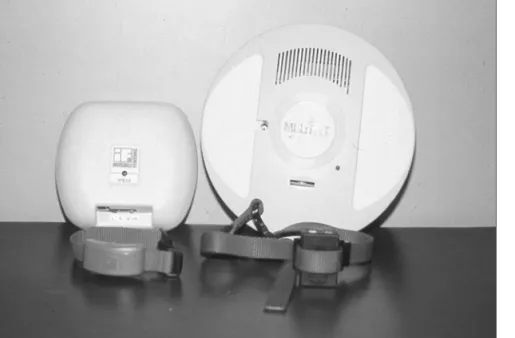
2. Indoor devices. Commercial devices designed to keep pets away from areas (or confined to specific areas) include indoor electronic containment systems that use citronella (Spray BarrierTM) or shock collars that are activated by a transmission dish. The ScraminalTMis a motion detector alarm, and there are mats that set off an alarm (SofaSaverTM, Scratcher BlasterTM) or give mild static-type shocks (e.g., Scat MatTM, Pet MatTM) that can deter entry into areas or onto furniture and windowsills. The Snappy TrainerTMhas a plastic flap that fits over the end of a mousetrap, which serves as a safer approach to using mousetraps as booby traps. A spray device that is activated by the approach of a pet (SsscatTM) is a useful product for keeping dogs and cats away from selected areas (e.g., garbage, counters). Commercial chew deterrents (e.g., RopelTM) and pet repellents are also available. Motion detectors designed for home security use may also be effective. Homemade or modified deterrents might include less appealing substrates (e.g., aluminum foil, plastic, or rubber mats), uncomfortable substrates (e.g., upside down vinyl carpet runners, double-sided tape), or bitter or ‘hot’ tasting sprays (menthol, oil of eucalyptus, cayenne pepper mixed with water). With a little innovation and forethought owners can set up a stack of empty cans, a bucket of water perched to fall when disturbed, or balloons set to pop on contact when the pet enters the area.
3. A number of dog and cat doors have been designed to be activated only by the pet wearing the activation collar or ‘key’. These products allow only one selected pet to access areas that require entry through the pet door.
4. Bark deterrents: for a bark-activated device to be effective, it must immediately interrupt the barking, must be sensitive enough to detect each undesirable vocalization (whine, bark), and specific enough that it is not activated by extraneous stimuli. The Super Barker BreakerTMand K-9 Bark StopperTMare audible bark-activated alarms that are designed to be placed on a counter or table in an area where a dog might bark (front hall, cage, etc.). Bark-activated collars emit an audible or ultrasonic noise or a spray of citronella with each bark. The audible and ultrasonic devices are seldom sensitive, specific, or noxious enough to be effective. The most effective antibark collars have proven to be the Gentle SprayTMor AboistopTMcollar, which emits a spray of citronella with each bark. A bark-activated scentless spray is also now available, which may be equally effective for some, but not all dogs.
labeled for this application (see Ch. 6 for details). Synthetic pheromones have been developed for the treatment of urine spraying in cats, marking, scratching, reducing feline aggression, as well as reducing anxiety in dogs and cats (see Ch. 7 for details).
Remove the pet from the household
Removing the pet from the home may be an unfortunate but important option, especially if there is significant danger posed to family mem-bers or if the owners are completely resistant to appropriate behavioral modification techniques. Although removal of the pet may seem like a failure, it is desirable if it prevents the animal from hurting members of the household or being inhumanely treated by the owners with inappropriate correction strategies. New owners must, however, be aware of the situation and be in a position to manage the pet.
BEHAVIORAL MODIFICATION
TECHNIQUES AND TERMS
Although environmental modification, drugs, pheromones, alternative therapy, dietary man-agement, behavior modification products, and surgery may all be useful in the treatment of a behavior problem, the pet’s behavior generally needs to be modified through proper application of learning principles and training techniques. The behavior modification techniques discussed below are utilized throughout the text in various treatments of individual behavior problems.
Aversion therapy
Aversion therapy is a procedure for eliminating undesirable behavior by pairing the unwanted behavior with a sufficiently unpleasant lus. For example, by pairing an aversive stimu-lus such as bitter taste, a foul odor, or irritating noise with the behavior (e.g., rock eating, destructive chewing, compulsive licking), the behavior may be eliminated. In humans, asso-ciating shock or a nauseant such as apomor-phine with smoking, or a bitter compound
with nail biting, may successfully stop the un-desirable habit. To be successful, the degree of noxiousness or discomfort must outweigh the motivation to perform the behavior. Taste aver-sion (see below) is a specific form of averaver-sion therapy.
Avoidance and escape
In avoidance conditioning the animal learns to avoid the aversive stimulus, while in escape con-ditioning the correct response terminates an aversive stimulus. To be effective, the stimulus must be of sufficient intensity to produce the desired response. Timing is the critical element. If the aversive stimulus is applied as soon as the behavior begins, the pet can learn that escape terminates the stimulus. On the other hand, if the aversive stimulus is immediately preceded by a brief neutral stimulus (e.g., a buzzer), the animal may learn to avoid the neutral stimulus. When a warning stimulus is followed by the aversive event (e.g., shock) and the shock is not presented if the pet withdraws, this is known as signaled avoidance. Avoidance learn-ing depends on both classical conditionlearn-ing of fear (warning stimulus plus aversive stimulus) and negative reinforcement (since the stimulus is terminated by the avoidance response).
Motion detector alarms and noxious tastes and odors can be used to teach animals to avoid particular objects or areas. A dog that jumps off a couch to avoid a shock mat is escap-ing from the aversive stimulus itself. However, if an unpleasant event (noxious taste, shock, alarm) is paired with a warning stimulus (tag odor, visual cue, audible cue), the pet can learn to avoid objects that are paired with the warning stimulus without having to experience the unpleasant event. For example, by pairing a neu-tral tone with the shock of electronic fencing or by placing a white pillowcase in any area where a shock mat or motion detector is employed, the pet can learn to avoid an area by just responding to the warning stimulus. Similarly, by applying a tag odor such as vinegar to a more aversive event (cap device that pops, stack of cans that tumbles down, water trap, upside down mouse
trap), the pet can quickly be taught to avoid the tag odor itself. It is interesting to note that although early in avoidance training the warn-ing sound or odor may indeed provoke fear, fear diminishes as the avoidance response is learned. Ultimately, the pet learns to avoid the stimulus without fear, and the avoidance behavior is maintained in the absence of the unpleasant stimulus.
Avoidance conditioning is most likely to be successful when the desired response to the fear-evoking stimulus is compatible with the animal’s expected defensive or survival reaction (fight, flight, or freeze). The response of a dog or cat is likely to differ from the reaction of a pigeon or a hedgehog. These instinctive responses, which are often referred to as spe-cies-specific defensive reactions (SSDRs), are related to the species, the stimulus, and the environment. Behaviors that are compatible with the animal’s innate defensive reactions are learned most quickly. In practice, most of our applications for avoidance involve training the pet to avoid or retreat from an object (couch, garbage can) or an area of the home (windowsill, dining room). However, in some situations, freezing or attacking the fear-eliciting stimulus may be a more likely response for some pets.
Classical conditioning
This type of learning begins with an uncondi-tioned stimulus (US) that elicits a reflex behavior called an unconditioned response (UR). A neu-tral stimulus (NS) that has no influence on the reflex is repeatedly paired (just prior to the US) until it becomes a conditioned stimulus (CS) that is able to elicit the response by itself. The response to a CS is referred to as a conditioned response (CR).
This type of conditioning is also known as Pavlovian conditioning, after the scientist who conditioned dogs to salivate when they heard a bell. Salivation is a reflex response (UR) to the stimulus of food (US). The researcher condi-tioned the dogs by repeatedly ringing the bell (NS) as the dogs were about to be fed. In time, they began to salivate whenever they heard the
bell even when no food was present. At that point, the sound of the bell became a condi-tioned stimulus (CS) which triggered salivation (CR). The experiment is duplicated daily in many households, whenever a pet hears the sound of a can opener or the food cupboard being opened. Similarly, the dog may become excited or anxious each time the doorbell rings (depending on what association has been made) or may become anxious when taken in the car, or on arriving in the parking lot of a veterinary clinic (if there have been previous unpleasant experiences). Dogs with separation anxiety will soon identify cues that are predictive of being separated from the owner (e.g., getting car keys, picking up a purse or laptop), and these become conditioned stimuli for anxiety. An inhi-bitory conditioned stimulus is a stimulus that is predictive of the absence of the unconditioned stimulus. Using a clinical example, if a neutral stimulus such as a music CD, tag odor, or piece of owner clothing is associated with reward training and relaxation exercises, then this formerly neutral stimulus becomes both plea-sant and predictive of the owner being at home (an absence of owner departures). Therefore, counterconditioning anxiety-evoking stimuli as well as developing a set of inhibitory stimuli can both be valuable retraining tools in separa-tion anxiety.
An example of the use of classical condition-ing is the technique of clicker traincondition-ing. By repeatedly giving food to a dog immediately fol-lowing a specific cue such as a clicker or tone, the cue will eventually become a conditioned stimulus. Similarly by pairing an aversive stimu-lus with a neutral cue, the cue will become a CS for fear and anxiety. This can be of practical and humane importance, since the use of more nox-ious stimuli such as shock can be greatly reduced by pairing an audible or visual cue with the shock so that the pet soon learns to avoid the cue (signaled avoidance).
Conditioned punisher
By pairing a neutral stimulus (such as a ‘no’ command, tone) with an unpleasant or aversive
stimulus then the neutral stimulus becomes a conditioned stimulus that can be used for pun-ishment. Similarly if a neutral stimulus (‘no,’ tone) immediately and consistently precedes punishment then it becomes predictive of the punishment (conditioned punisher) and can be used as a bridging stimulus for punishment. For example, just prior to activating the spray on the remote citronella collar, the owner can command no or stop in a harsh voice. If the command consistently precedes the spray the command itself takes on the deterrent effect of the spray. In fact, the pet may learn that by stopping the behavior on command it can avoid being sprayed (escape).
A novel odor or taste can also be used as a conditioned punisher, by pairing it with an aver-sive event such as spraying the odor across the dog’s nose or squirting some into the dog’s mouth, as long as the product is safe and not too aversive. Alternatively the odor or taste might be paired with something more aversive (a spray from a can of citronella, an air spray, an audible alarm, or a booby trap of cans set to topple). Once the more neutral stimulus has been paired on multiple occasions (or even a single occasion in the case of one-event learning discussed below), the taste or odor alone should be sufficient to lead to avoidance.
Conditioned reinforcer (bridging
stimulus)
By repeatedly pairing a neutral cue such as a clicker or whistle prior to the presentation of a favored food treat, the neutral stimulus becomes a conditioned stimulus which leads to the same reflexive response as the uncondi-tioned stimulus. This condiuncondi-tioned stimulus can then be used to immediately reinforce a desir-able behavior, as long as it continues to be paired with the unconditioned stimulus. Similarly, if a neutral stimulus (duck call, the phrase ‘good dog,’ whistle) immediately precedes a primary reinforcer, it becomes pre-dictive of the treat (conditioned reinforcer) and can be used as a substitute for the primary rein-forcer. At this point the phrase, clicker (or tone,
duck call, etc.) can be used to immediately reinforce (or mark) the desirable response until the primary reinforcer can be given. Since the conditioned reinforcer bridges the time and serves to reinforce the response until the pri-mary reinforcement can be given, it can be referred to as a bridging stimulus.
Controlled exposure
When flooding (see below) is utilized in beha-vioral therapy, exposure to the full stimulus may be so traumatic to the pet that effective control may be impractical and habituation therefore does not occur. A more practical technique is to reduce the stimulus so that fear is minimized to a point where the pet can be controlled safely and effectively. Once habituation to the stimulus occurs, the pet can then be exposed to progres-sively more intense stimuli at subsequent train-ing sessions. Controlled exposure techniques differ from systematic desensitization in that the pet is exposed to low or controlled levels of the fear-evoking stimuli rather than levels of sti-muli that approach but are below the threshold that would evoke fear (see systematic desensiti-zation below). Inhibitors such as distraction devices (shake can, ultrasonic alarm), control devices (such as head halters or cages), and counterconditioning techniques may all be use-ful in combination with exposure techniques to ensure that the pet habituates to the stimulus before it is withdrawn or increased.
Counterconditioning
This technique involves conditioning an ani-mal to alter its emotional response to a stimu-lus (i.e., a response that is independent of voluntary control). When a behavior problem is associated with an aversive or negative emotional component, the goal is to pair the stimulus or event with a strong opposite emotional response (i.e., highly positive). Counterconditioning is often used to modify the behavior of fearful pets. The goal is to take the conditioned stimulus that incites the
response and pair it with an unconditioned stimulus that evokes the desirable and oppo-site (positive) response.
Similarly, aversive counterconditioning can be used when the pet is attracted to an item or location that is potentially dangerous or con-sidered ‘out of bounds.’ In this form of counter-conditioning, a noxious (aversive) stimulus is paired with the response, whether learned, con-ditioned, or unconditioned (mounting, mark-ing, sleeping on couch, chewing on shoes), to bring about avoidance. However, when the stimulus is food, it is unlikely that repeated pairing of any aversive stimulus other than a nauseant (see taste aversion below) can deter the behavior.
Countercommanding
This term might be used to describe the situation where a pet is taught to respond to a particular command that is incompatible with the undesir-able behavior. For example, sitting for a food reward is a behavior that would be incompatible with jumping up at the door. Since the use of commands is not a necessary prerequisite of changing the undesirable response to one that is acceptable or desirable, we will utilize the terms ‘response substitution’ and ‘differential reinforcement’ to describe this retraining tech-nique.
Differential reinforcement
Differential reinforcement is one of the most practical means of reducing and eliminating undesirable behavior. The goal is to reinforce a competing alternative behavior (differential reinforcement of an alternative behavior) while ignoring (not reinforcing) the undesirable beha-vior. In practice the dog or cat would be rewarded for exhibiting any behavior other than the undesirable behavior. For example, the cat that is aggressive during petting would be reinforced after a predetermined period of time for any behavior other than biting. The owners must first determine the length of time that the cat will tolerate petting before it might
bite so that the reinforcement can be adminis-tered successfully. Over time the length of pet-ting should be gradually increased, while reinforcing the cat for any behavior other than biting.
One of the most practical techniques for cor-recting, altering, or eliminating undesirable behavior is to train the pet to exhibit a response that is acceptable, and both motiva-tionally and physically incompatible with the unwanted behavior. This technique, which is also known as response substitution (training the pet to display an acceptable response instead of the undesirable response), is accom-plished through differential reinforcement of an incompatible (DRI) response. If a dog or cat has been trained to immediately respond to a few simple commands, it might then be possible to train a dog to sit, settle, dance, or even fetch during greeting rather than jump
up (countercommanding). The desirable
(incompatible) response is then reinforced with the most potent form of reinforcement available, which in the case of greeting might be affection. Equally important is that the undesirable response is no longer reinforced (contingency management). Using favored rewards and training sessions that are designed to ensure success (planned greetings) can more quickly help the pet to learn the desirable response. In addition, physical con-trol devices such as a leash and head halter, or disruption devices such as a citronella spray collar, can help ensure that the desirable beha-vior is exhibited, before any reinforcement is given.
Although extrinsic rewards such as food or a favored toy might be withheld until the desired response is exhibited, intrinsic rewards such as social interactions and play might be more diffi-cult to control so that the most practical strategy would be to redirect the behavior to a more desirable target. For example, a puppy might be given a favored toy to carry and chew, rather than nipping on the owner’s hands, or a cat might be encouraged to chase and pounce on a favored chase toy rather than the owner’s feet or hands.
Discriminative stimulus (command
cue)
Generally, pets are trained to respond appropri-ately to a specific stimulus through the use of reinforcement. When the dog responds to a spe-cific command or cue with a consistent and pre-dictable response, the cue or command is a discriminative stimulus. When owners respond predictably and consistently and the outcome is desirable for the dog (e.g., when the leash is picked up, a walk is coming), the dog may learn that the leash is a discriminative stimulus for going for a walk. Yet, when commands are used for training, the owner may be inconsistent in providing rewards or in the use of these com-mands, so that they do not become clear discri-minative stimuli (commands). For example, the owner that calls the dog to come to administer a punishment will have difficulty in achieving a positive outcome and response to the come com-mand. Yet most pets will quickly learn and retain commands associated with tricks (e.g., play dead, roll over) because these commands are always used in the same positive context, and associated with rewards until they are con-sistently displayed.
Disruption and diversion
A device that is sufficiently startling or novel to interrupt either a conditioned or a learned response might be considered a disruptive device (also see external inhibition below). Dog whistles, noise devices, ultrasonic trainers, a shake can, compressed air, and citronella spray products might be effective for disrupting the undesirable response so that the appropriate response can be trained. However, if the device is sufficiently aversive to reduce the probability that the behavior will be repeated, then it is actu-ally serving as a punishment device. Similarly, a favored squeaky toy might be used to divert or distract the dog so that the appropriate response can be achieved.
Drug desensitization
When the stimulus cannot be effectively con-trolled or muted, drugs may be effective for reducing the pet’s anxiety, fear, or aggressive-ness, so that a desensitization program can be implemented (see Ch. 6 for details). As the desired response and emotional state is achieved, the drug is gradually reduced at sub-sequent training sessions. In effect the stimulus intensity is reduced by the effect of the drugs and the intensity is gradually increased as the drug dosage is reduced.
External inhibition
This occurs when a novel stimulus is presented immediately following the conditioned stimulus so that it subdues the conditioned response. For example, if the goal is to change the anxiety-evoking response of a doorbell to one that is calm or positive, a high-pitched whistle or shake can may be sounded as soon as the bell rings, but before the barking begins. The barking response will be inhibited as the pet orients to the noise.
Similarly, external inhibition or a disruptive stimulus can be used to interrupt a response to a stimulus so that an acceptable response can be achieved and reinforced. For example, a disrup-tive device such as a bark-activated citronella spray collar might immediately disrupt the bark-ing that might occur as a stranger arrives on the property. If the dog is then taught to come to a family member and play ball or have its tummy rubbed, this new response, along with a positive association with visitors, might be achieved. Similarly, a dog that exhibits coprophagia imme-diately following each bowel movement might be immediately disrupted with a noise device or citronella spray, which would provide a win-dow of opportunity in which the dog could be taught an alternative acceptable response such as coming to the owner’s side and sitting for a food reward (i.e., DRI, response substitution).
Extinction
The withholding of reinforcers leads to the elim-ination of a behavior. For example, an owner may inadvertently reward a nuisance behavior (e.g., whining or begging at the table) by giving the pet a piece of food. If the reward for the soliciting behavior is taken away (food is no longer given), the behavior will cease. The use of extinction may not be sufficient on its own to correct many behavior problems, but it is an important part of the approach. Behaviors that have been rewarded intermittently are much more resistant to extinction. Once extinct, it takes very little encouragement for the behavior to resurface. In some cases, spontaneous recov-ery can occur after a rest period between extinc-tion trials. Therefore for more permanent resolution, differential reinforcement should be used to replace the response being extinguished with an incompatible response.
Extinction burst
When reinforcement is first removed, the ani-mal’s behavior may initially intensify as the pet tries even harder to achieve the reward. Owners must be aware that this increase in behavior, known as an extinction burst, must also be ignored, or the new and more intense behavior will be reinforced.
Flooding (response prevention)
Flooding involves the continuous exposure of the subject to a stimulus at a level that evokes a response, until the response to the stimulus ceases. Pets that have learned an avoidance response to a fear-evoking stimulus can be retrained to overcome conditioned fears by exposing them to the stimulus so that they can-not escape. To be effective, the animal must be continuously exposed to the stimulus until the fear subsides and the stimulus itself must no longer be associated with fear. If the pet is unable to perform the avoidance response, and the previously fear-eliciting stimulus is no longer threatening, the fear response will
undergo extinction. If the stimulus is removed before signs of fear abate or if the owner pro-vides patting or attention (in the belief that it might help calm the pet), fearful behavior may be reinforced rather than diminished. Similarly, if the pet retreats before the fear abates, the threat will have been removed by the escape behavior (negative reinforcement). Flooding can potentiate problems if used improperly and is most practical for the treatment of mild fears, since full exposure of a pet to a very strong fear-eliciting stimulus may severely traumatize it. Controlled flooding (controlled exposure) techniques, where the pet is exposed to mild, and then to progressively more intense stimuli, may be more useful for overcoming intense fears.
Habituation
Habituation is the process by which animals learn to adapt to novel sounds and experiences, provided they suffer no consequences from such exposure. During habituation, the subject is repeatedly exposed to the stimulus without the presence of negative or positive reinforcers until the response ceases. The animal that is initially anxious during car rides usually settles down after it takes several car rides and realizes noth-ing aversive is gonoth-ing to happen. Durnoth-ing the pri-mary socialization process, it is important to expose young dogs and cats to as many different environments and experiences as possible (e.g., cars, veterinary clinics, stairs), so that they do not become fearful of these situations. When using disruptive and punishment devices, they must be sufficiently startling or aversive, as well as contiguous with and contingent on the beha-vior. Improper or excessive use may lead to habituation of the punishment or disruptive device.
Latent learning
This type of learning occurs without the pre-sence of purposeful reinforcement and is usually not readily obvious. Latent learning will facili-tate the relatively rapid acquirement of accurate
performance of a behavior at a later time when reinforcement is introduced. Rats that are allowed to investigate a maze, but receive no reinforcement, are quicker to learn to run the maze for a food reward than are rats that have had no previous experience with the maze. A dog that is being taught to find an object on command will learn more quickly in an environ-ment that it has previously had the opportunity to explore than in an unfamiliar environment.
Learning
Dogs learn through the consequences of their acts. They are motivated to repeat and increase those behaviors that have positive outcomes and minimize or avoid those behaviors that have aversive or unpleasant outcomes.
Motivation
Motivation is an animal’s drive or desire to per-form a behavior. The pet’s level of motivation is a key consideration in training and in trying to reduce behaviors through behavioral modifica-tion. Motivation is dependent on the degree of deprivation, as well as the attractiveness of the reward. Deprivation of food, for example, leads to the increased drive to attain food. One might even say that deprivation of a needed resource leads to arousal, and that the pet is then moti-vated to perform behaviors to achieve de-arou-sal or homeostasis.
When selecting rewards for training (and counterconditioning), the strongest possible motivator (see reinforcer assessment) should be used to overcome the pet’s desire to perform an alternative behavior, and to ensure that the pet performs the desired behavior.
Another practical aspect of behavioral therapy is that the pet’s motivation to perform an unde-sirable behavior can be reduced to a level where the pet is less likely to perform the undesirable response. Desensitization and controlled expo-sure techniques involve the manipulation of sti-muli so that the pet’s motivation to perform the undesirable behavior (barking, aggression) or response (fear) is reduced. Then, through the
use of differential reinforcement, the pet can be motivated to perform an alternative competing behavior or through counterconditioning can develop an alternative acceptable emotional state.
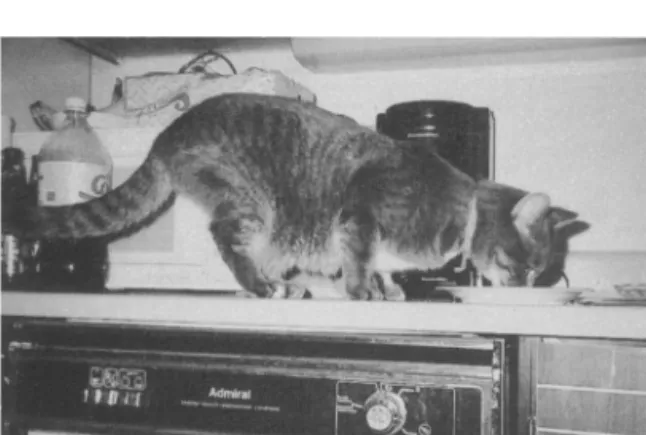
When the pet is highly motivated to perform an undesirable behavior (Fig. 5.5), stringent con-trol mechanisms and a deterrent of high inten-sity will likely be required. However, for behaviors that have low levels of motivation (or when the motivation can be reduced by mod-ifying the stimulus or reducing the pet’s desire for the stimulus), less intense deterrents and a lower level of control might suffice.
Observational learning
Observational learning refers to learning that occurs passively by watching others. Studies have been carried out in many species, including great apes, dolphins, rodents, birds, and pup-pies. However, there is some question as to whether dogs can learn by observation, although there are aspects of social facilitation or group-facilitated behavior that might occur with eating, hunting, chasing, greeting, or barking. In addi-tion, dogs and cats are likely to respond to the same cues as other pets in the household (e.g., jumping into a car, escaping from a confinement area). Allelomimetic behavior, especially in the young dog, may also be confused with
observa-Figure 5.5 Food left on worktops is a powerful motivator for cats to climb onto those surfaces.
tional learning. In allelomimetic behavior, how-ever, the animal learns because of its social incli-nation to follow the lead or join in the activities of its conspecifics and other members of the social group (hence the importance of early socialization to humans).
One-event (trial) learning
If a situation is particularly startling or noxious the pet may learn with a single association to become fearful of the stimulus in the future. This is only likely to occur on initial exposure to the stimulus, since any previous experience with the stimulus, which might have been neu-tral or positive, will have already molded the pet’s response. One-event learning can be an effective way to teach the pet to avoid particu-larly dangerous or undesirable activities from the outset by pairing a neutral stimulus with a strongly aversive stimulus. For example, the use of a highly noxious taste may deter chewing of electrical cords, while a spray of citronella when the pet sits on a couch may teach the pet to permanently avoid the couch.
Operant conditioning (instrumental
conditioning)
This is the type of learning that occurs when the results of a behavior influence the probability of that behavior recurring. Giving praise or food for the desired response to an obedience com-mand is a common use of operant conditioning. Although training programs are designed to provide the pet with reinforcers for appropriate behavior (and punishment for inappropriate behavior), a great deal of operant learning occurs independent of owner interactions. Pets that knock over a bin/trash barrel and obtain food or even relieve themselves in an inap-propriate location in the owner’s absence will increase the likelihood of these behaviors recur-ring, since they are rewarding to the pet at the time. However, when eliminating on the carpet or raiding the rubbish can result in an immedi-ate severe scolding, the probability of the pet
eliminating in front of the owner in the future diminishes.
Overlearning
This involves the continued reinforcement of a behavior that has already been learned. The con-sequence of overlearning is an increased resis-tance to extinction and longer retention of learning once all reinforcement stops. Also, responses are more dependable and consistent in the presence of stressful or distracting stimuli.
Prevention – setting the pet up to
succeed
Preventive techniques are some of the most valuable tools in behavior therapy for pets with behavior problems. By preventing access to problem areas or targets for misbehavior, the desirable effects of these acts (whether intrin-sic or extrinintrin-sic) can be avoided so that the pro-blem is not further reinforced. For example, once the pet eliminates in an inappropriate area, or begins to chew on the owner’s possessions, the problem is much more likely to reoccur. Preventive techniques can also help to direct pets to utilize appropriate and desirable outlets for their acts. Prevention may also be the most practical way to prevent injury and avoid damage to the owner’s possessions.
Problems might be prevented in a number of ways. By keeping the pet occupied with appro-priate and acceptable activities (chew toys, play toys), inappropriate forms of chewing and play can be prevented. Confinement to a safe area such as a crate or pen can also be effective, if appropriate confinement training methods are utilized (see Ch. 3 and handout #5 on the CD for details). For some pets it may be more prac-tical to deny access to problem areas rather than to use overly restrictive confinement techniques. While closing a few doors or placing a few child gates might be effective, electronic avoidance devices can be used to keep pets away from potentially problematic areas (see environmental punishment techniques below). A number of dog and cat doors have been designed to be
activated only by the pet wearing the activation collar.
Punishment
Punishment involves the application of an aver-sive stimulus during or immediately (within one to three seconds) following a behavior to decrease the likelihood that the behavior will be repeated. To be effective and at the same time humane, the stimulus must be intense enough to reduce the pet’s desire to repeat the behavior, without causing physical harm or undue discomfort. Timing and consistency are critical (Fig. 5.6). If punishment is not immedi-ately successful at stopping the behavior, it should not be used at all. Application of a sti-mulus that decreases the chance of the behavior being repeated is actually referred to as positive punishment. Removal of a stimulus or event that is positive can also be used to lower the prob-ability that a behavior will be repeated, and this is known as negative punishment. For example, if a dog expects a piece of food for an action and
that food is withheld because the dog’s behavior is inappropriate or not sufficiently accurate, the behavior will be less likely to be repeated.
Punishment can be a useful tool in behavioral modification but its inappropriate use can exacerbate the situation and cause other beha-vior problems. It is important that the form of punishment be tailored to each pet. If the pun-ishment is too weak, it can lead to habituation as well as not remedying the problem. In fact, it may even serve to reinforce the problem by providing a form of attention. If it is too harsh, punishment can cause additional behavioral problems. Physical punishment should always be avoided since it can lead to fear of the owner, handshyness, and fear biting, and could be potentially harmful to the pet.
By initially pairing a minimal aversive stimu-lus (e.g., a harsh ‘no’) with a more aversive sti-mulus (e.g., shake can or air horn), it may be possible to use the command alone for future punishment (conditioned punisher). Commonly used forms of punishment include direct owner-initiated techniques (e.g., noise, verbal), remote
Type of failure Reason for failure
The pet does not associate the punishment with the act * Punishment is applied too late or inconsistently The pet learns to avoid an area instead of learning to
avoid the performance of a behavior
* The pet is punished in some locations where undesirable behavior occurs but not in others
The behavior problem continues but targets may change, e.g., chews different items, raids other garbage cans
* When the pet is highly motivated to perform a behavior or the outcome of the behavior is desirable (extrinsic or intrinsically reinforced), the pet will continue to perform the behavior or similar ones until it is taught an acceptable substitute behavior
Punishment reduces a desirable response * The pet that is punished by the owner as it eliminates indoors becomes fearful of eliminating in front of the owner in any location (including outdoors)
Punishment is unable to overcome fear or excessive submission
* Punishment leads to an increase in submissive behavior * Punishment may cause fear and avoidance of the owner
or defensive aggression toward the owner
* Punishment may worsen the fear response to a fear-eliciting stimulus
The behavior continues in the owner’s absence * The owner punishes an action when supervising but the behavior continues without consequence in the owner’s absence
Punishment leads to an increase in behavior * Punishment that does not immediately stop or suppress the behavior may be insufficiently aversive and may even serve to reinforce the response
owner-initiated techniques (e.g., sprays of water), and environmental techniques (leading to avoidance and escape) such as bitter tastes or smells or motion-activated deterrents.
Punisher assessment
Punisher assessment involves predicting which form of punishment will be most practical, appropriate, and successful for an individual pet. The ultimate success or failure of punish-ment techniques depends on the individual pet’s sensitivity to the punishment, the motiva-tion to perform the particular behavior, as well as the behavior for which it is being punished. One might anticipate that the more aversive the stimulus the more effective the punishment, but this is not necessarily true. For example, many dogs continue to hunt porcupines and skunks even after they have experienced the ill effects of such a meeting.
Punishment techniques
(i) Direct interactive punishment. Direct inter-active punishment should only be considered when the pet performs an undesirable act in the presence of the owner. An immediate, star-tling reprimand or loud noise is often effective and all that is necessary for young or sensitive pets. On the other hand, if punishment causes excessive fear, submission, or any threats or aggression it should be discontinued immedi-ately. A quicker and more effective control can often be achieved by leaving a long leash attached to the pet for applying a gentle correc-tion. This not only allows the owner to interrupt or deter the undesirable behavior, but also to direct the pet into a more acceptable behavior. There is no indication for the use of physical techniques (especially hitting) for punishment. This can lead to handshyness, fear of the owner, and defensive aggression. In addition, the pet may not be able to associate the punish-ment with the act, except in those cases where the behavior is directed toward the owner, such as jumping up, mounting, or play biting, and the owner responds during the act. When the owner
is not present to supervise, problematic beha-viors must be prevented by controlling the pet’s environment or by using alternative forms of punishment (e.g., booby traps).
The use of a deterrent device rather than the human voice may be a more practical and effec-tive means of punishment, since it may be more aversive or startling than verbal reprimands, is less likely to lead to habituation, and is less likely to cause fear of the owner. Most devices emit noises that the pet finds unsettling. Some are audible to people, but many of the new pro-ducts are in the audible range of pets alone. An aversive device is most practical when it is used during the undesirable behavior, and is with-drawn as soon as the problem behavior ceases. Using a verbal command (such as ‘no!’ or ‘quit!’) at the same time as the primary punishment often results in the command alone being suffi-cient punishment in the future (conditioned punishment).
Examples of direct punishment devices include commercial devices such as audible trai-ners (Barker BreakerTM, Sonic Pet TrainerTM), ultrasonic trainers (Pet-AgreeTM, Easy TrainerTM, Ultrasonic Pet TrainerTM), and citro-nella sprays (Direct StopTM). Other devices that might be homemade or modified from other applications include a can containing pennies (shake can), pocket rape alarms, air horns, a water rifle, or a can of compressed air.
(ii) Remote interactive punishment. Remote interactive punishment involves the application of an aversive stimulus to the pet by a person the pet cannot see. Peeking around corners, using mirrors, video cameras, or following the situa-tion with an intercom, child monitor, or pet monitor (an electronic device that emits a signal when disturbed) will be necessary to ensure that the pet is immediately caught as the inappropri-ate behavior begins. If punishment can then be meted out while the owner remains out of sight, the pet should associate the punishment with its behavior rather than with the owner (Fig. 5.7).
Owners can rig up noisemakers, buckets of water, hoses, and sprinklers that they can con-trol and activate from out of sight as the unde-sirable behavior begins. There are also a number
of gadgets that can be activated by remote con-trol to provide aversive stimuli. For example, remote-control switches can be plugged into an electrical outlet and connected to a variety of devices including vacuum cleaners, water piks (spray small quantities of water), strobe lights, sirens, alarm clocks, and hair dryers. As soon as the behavior stops, so should the punishment. Remote-control shock and citronella spray col-lars work on the same principle. The remote citronella collar has two levels of spray, as well as a neutral tone (that can be paired with a
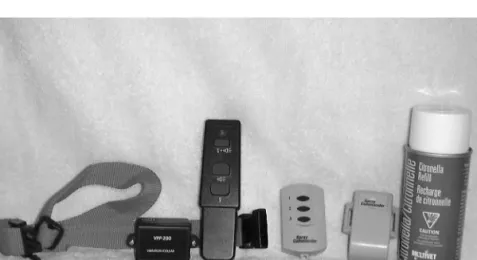
favored reward so that it can be used as a con-ditioned reinforcer or bridging stimulus. If a command such as ‘stop’ precedes each spray, it may soon become a quicker and more effective way of stopping undesirable behavior (condi-tioned punishment). However, when the longer, more intense spray is used to interrupt undesir-able behavior (without a warning command), it may be an effective form of remote punishment for some behavior problems (e.g., garbage raid-ing, climbing onto furniture, etc.) (Fig. 5.8). Using a long lead attached to a halter device is another effective way to interrupt or punish undesirable behavior ‘remotely.’
The primary advantage of remote punishment is that the person is not directly associated with the act of punishment. This means that the pet may learn to cease the behavior, even when the owner is not present. In addition, the risk of the pet becoming fearful of that person is elimi-nated. This is especially important with cats. Cats are much less likely to tolerate interactive punishment, such as a stern scolding, than are dogs. A cat that is directly punished repeatedly by the owner may quickly learn to avoid the person providing the punishment and the rela-tionship deteriorates.
(iii)Time out. The goal of time out is for the pet to learn that misbehavior leads to temporary
Figure 5.7 Remote punishment is where the owner is not associated with the punishing behavior (e.g., use of a water rifle). It is important that the person administering the punishment remains out of sight.
Figure 5.8 Remote trainers: PetPagerTMremote-activated vibration collar (left) and Spray CommanderTMremote citronella spray collar (right).
isolation and removal of rewards. When the pet first starts to misbehave (e.g., barking), it is given a command (e.g., quiet) and given the opportunity to respond appropriately. If it does, it should be rewarded and praised imme-diately. If unsuccessful (e.g., the barking con-tinues), the pet is relocated to a confinement area for a period of about three minutes. It is only released when it is quiet. To be effective, the isolation room should not be the feeding, sleeping, or play area of the pet. A laundry room, basement, or bathroom is a good choice. Since the pet may not make the association that the confinement is a consequence for the beha-vior, time out may merely serve to separate the pet away from the site and stimuli for the pro-blem until it settles down.
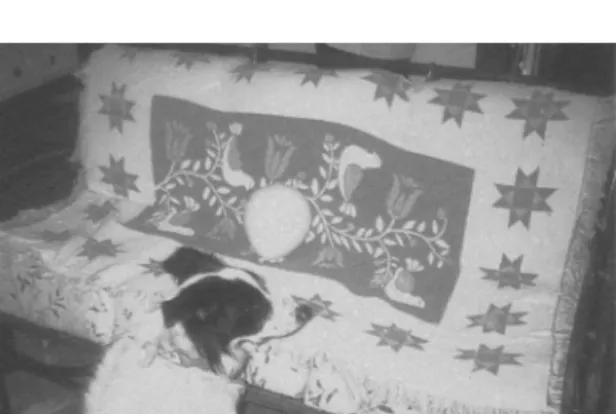
(iv) Environmental punishment. Environ-mental punishment does not rely on the owner monitoring the situation. The environment is rigged so that an unpleasant consequence occurs when the pet misbehaves. Booby traps, or home security and child safety alarms can be set to go off when they are triggered by the pet. This can be as simple as taping balloons to a couch (Fig. 5.9), setting a mousetrap upside down in a plant, or stacking a set of empty tin cans or cups where a cat might scratch. New technology has pro-vided us with other intriguing devices that are triggered when the pet misbehaves or enters an area where the misbehavior occurs.
Commercial devices designed to keep pets away from areas in the home (or confined to spe-cific areas) include indoor electronic containment systems (citronella or shock) which use transmit-ter dishes to activate the collar (or the home can be wired as with the outdoor confinement systems) (see Fig. 5.9). Motion or touch-activated devices include free-standing motion-activated alarms (ScraminalTM), mats that set off an alarm (SofaSaverTMand Scratcher BlasterTM), and mats that give a mild ‘static’ type shock when touched (Scat MatTM and Pet MatTM). Motion detectors designed for home security use may also be effective. The Snappy TrainerTM has a plastic flap (resembling a flyswatter) that fits over the end of a mousetrap which serves as a safer approach to using mousetraps as booby traps (Figs 5.10, 5.11). A spray device (SsscatTM) activated by the approach of a pet has just recently been introduced which can keep cats and occasionally dogs from selected areas. Commercial chew deterrents (e.g., RopelTM, ChewGuardTM) and pet repellents are also avail-able. Also see Figure 5.4 on behavior products (client handout #21, printable from the CD) and the list of behavior product manufacturers in Appendix B (and on the CD) for further details.
Homemade or modified deterrents might include less appealing substrates (e.g., alumi-num foil, plastic, or rubber mats), uncomfortable substrates (e.g., upside down vinyl carpet run-ners, double-sided tape), or bitter or ‘hot’ tasting sprays (menthol, oil of eucalyptus, underarm deodorant, cayenne pepper mixed with water). With a little innovation and forethought owners can set up a stack of empty cans, a bucket of water perched to fall when disturbed, or bal-loons set to pop on contact when the pet enters the area.
For outdoor use, electronic containment sys-tems can be used to keep dogs within selected boundaries, or away from selected areas. A transmitter wire is buried along the boundary, and a radio transmitter sends a signal that is received by the collar. As the pet approaches, there is first a warning tone, and then activation of the collar (e.g., citronella spray or shock) if the pet does not retreat out of range.
Motion-Figure 5.9 A balloon can be rigged to pop when the dog attempts to get on to the couch. Photo courtesy of Dennis Bastian.
Figure 5.10 Environmental punishment: indoor avoidance units – transmitter dish and shock collar (left); Spray BarrierTMtransmitter dish and citronella spray collar (right).
Figure 5.11 Environmental punishment: a variety of commercial devices have been developed to keep pets away from selected area. Front – Scratcher BlasterTMmat produces an audible alarm when contact is made. Rear (from left to right) – 1. Alarm unit that attaches to Scratcher BlasterTM. 2. Scat MatTMproduces a mild electronic shock when contact is made. This is the semicircle shape for placing around plants or trees. 3. Snappy TrainerTMis a mousetrap with plastic covering to protect against injury. 4. Scat MatTMalso comes in windowsill and sofa sizes. 5. ScraminalTM(motion detector alarm).
activated alarms (Critter GitterTM), The ScareCrowTM (a motion-activated water sprink-ler), and pet repellents might also help to keep the owner’s pet out of selected areas on the property or stray animals off the property.
There are several different bark-activated devices that are designed to control and inhibit barking. For any bark-activated device to be effec-tive, it must be sensitive enough to detect each undesirable vocalization, specific enough that it is not activated by extraneous stimuli, and must immediately interrupt the barking. The Super Barker BreakerTM and K-9 Bark StopperTM are audible bark-activated alarms that are designed to be placed on a windowsill or table in an area where a dog might bark (front hall, doorway, cage, etc.). Bark-activated collars emit an audible sound, an ultrasonic sound, a spray of citronella, or deliver a shock with each bark. The audible and ultrasonic devices are seldom sensitive, spe-cific, or noxious enough to be effective. The most effective and humane antibark collars have pro-ven to be the Gentle SprayTM(formerly ABSTM) or AboistopTMcollars, which emit a spray of citro-nella with each bark. A bark-activated scentless spray is also now available which may be equally effective for some, but not all, dogs.
Shock and discomfort
Most pets quickly learn to avoid naturally occur-ring situations or stimuli that cause fear or discomfort. Similarly, some training devices use varying levels of discomfort or shock for condi-tioning, such as bark-activated shock collars and remote-activated shock collars. To be an effective punishment, a device must be noxious enough to immediately deter the behavior and reduce the chance of it being repeated. Devices that inflict pain or shock are considered inhumane and are therefore illegal in certain countries, but are still widely available in North America. In practice, most problems can be effectively prevented or corrected without the need for shock. However, when all other practical solutions have been exhausted, when the pet’s safety is at risk, or when the problem is sufficiently severe that the pet may have to be removed from the home,
these products provide another option that might be effective. Ideally, products that have a warning signal might be preferred since they can lead to signaled avoidance where the pet avoids the signal without the need for further shock. Although shock devices might be a quick and effective deterrent, they can cause excessive fear and anxiety, and for some pets and some problems (especially those that are highly moti-vated) shock may not even be effective.
Reinforcement
Positive reinforcement
Positive reinforcement involves the application of a stimulus immediately following a response that increases the likelihood of the response being repeated. Anything that the dog or cat finds desir-able can be a primary reinforcer. Whether a par-ticular reinforcer will be effective depends on the history of previous reinforcement, as well as the motivational state of the dog in relation to the reward. While food is a primary reinforcer for most pets, its efficacy will vary with the pet’s interest in the food. The motivational value of any reward is likely to be increased by depriva-tion (e.g., using food as a reward when a meal is due) and by use of special treats or toys for which the pet has shown a strong desire (reinforcer assessment). Petting and attention, playing with family members or other pets, a favored toy, going for a walk, a car ride, or a chew toy can all be used for reinforcement but will have vary-ing appeal dependvary-ing on the pet’s temperament and personality, previous experience, and degree of deprivation. For example, the pet’s sociability, fearfulness, familiarity, and attachment to a per-son will determine whether affection and atten-tion from that person will be reinforcing.
An event or stimulus that is not initially a primary reinforcer can become a reinforcer if it is paired with other events or stimuli that are already reinforcing. For example, praise (’good dog’), or events (going for a walk) can become conditioned reinforcers if they are paired with primary reinforcers such as a favored food treat or social play.
For rewards to be effective they must be con-tingent on the behavior (given only when the desired response is performed). If the reinforce-ment is also provided non-contingently, the behavior will be unlikely (or much slower) to change. For example, if a dog or cat gets affec-tion or treats with no regard for the behavior that they follow, they may lose their effective-ness or ability to act as reinforcers. In order to use these desirable resources and activities as reinforcers they must be saved and timed prop-erly for effective learning and training.
Of even greater concern is that these reinfor-cers may follow undesirable behavior such as jumping up, barking, whining, begging, play biting, or care soliciting. Since these acts have a desirable outcome (attention, affection, treats, play), they are inadvertently being reinforced. Owners who then try to discourage these actions by ignoring the acts most (but not all) of the time provide a variable and intermittent reinforcement schedule, making the undesir-able behavior far more resistant to extinction (see reinforcement schedule below). Similarly, the owner who tries to comfort the fearful or aggressive pet by patting, saying ’calm down,’ or having a heart-to-heart talk with the pet may actually be rewarding the fearful or aggressive response. Owners must also be cautioned that mild punishment (stop, get down, light hitting) is unlikely to dissuade the pet, and may inad-vertently be rewarding the problem with atten-tion. For example, the owner who attempts to dissuade play biting or scratching with a light swat will usually be unsuccessful and the inter-active contact may actually encourage further play. If the physical reprimand is then increased in intensity, the pet could either learn to enjoy rougher and rougher handling, or may desist but become fearful and handshy of the owners.
Rather than use punishment techniques to decrease the performance of those behaviors that the owner considers undesirable, it is much more practical and humane to closely supervise the pet and provide it with desirable outlets for chewing, play, feeding, elimination, etc., and reward the desired response. In this
way, little if any punishment or discipline should ever be required.
Since the pet’s actions are successful at achiev-ing their goal, they are constantly beachiev-ing rein-forced. For more information, refer to Figure 3.26 (printable handout #22 on the CD).
Negative reinforcement
Negative reinforcement is a form of reinforce-ment that increases the probability of a beha-vior being repeated by escaping from an aversive stimulus. In practical terms, the pet learns to cease a behavior or avoid a situation that it finds unpleasant. For example, when a dog has had its tail pulled by young children, it might learn to retreat to its crate for a rest. When outside during a storm, a dog will learn that by seeking shelter under the porch the unpleasant stimulus will be removed (escape behavior). When the aversive stimulus has been associated with specific cues, the pet may learn an avoidance response so that in time the cues themselves may initiate the avoidance response (avoidance conditioning).
Although not recommended, squeezing a
dog’s or cat’s lips until the mouth opens or using a remote-controlled shock collar and ter-minating the shock at the instant the dog dis-plays the appropriate behavior are examples of negative reinforcement that have been used in training applications.
Because punishment and negative reinforce-ment involve aversive stimuli, they are often confused. With punishment, the application of the stimulus during or immediately following the behavior leads to a decreased likelihood that the pet will repeat a behavior. In negative reinforcement the withdrawal of the stimulus increases the chance of a behavior recurring. Thus, punishment involves the aversive stimu-lus being applied during or immediately follow-ing the behavior, while negative reinforcement consists of the aversive stimulus preceding the behavior and being withdrawn when the beha-vior occurs.