ISSN: 2089-9823 DOI: 10.11591/edulearn.v12i4.8398 644
Students’ Access to and Perception of Using Mobile
Technologies in the Classroom: the Potential and Challenges of
Implementing Mobile Learning
Muhammad Hanif, Asrowi, Sunardi
Department of Educational Technology, Universitas Sebelas Maret Surakarta, Indonesia
Article Info ABSTRACT
Article history: Received Dec 20, 2017 Revised Jan 25, 2018 Accepted Mei 20, 2018
In implementing mobile learning system, students’ needs and perceptions should be focused upon along with curriculum standards. Particularly in the context of higher education institutions in Indonesia, some schools authorities have refused to implement m-learning. Although m-learning is widely used in some schools and considered an effective educational tool, it is not yet fully utilised in most Indonesian schools. Therefore, the aim of this study is to investigate students’ access to and perception of the use of mobile devices in learning, and to understand the potential for its implementation. This study is the result of a survey conducted on 61 students in a school which banned the use of mobile technology. It seeks to understand their potential accessibility by means of ownership, interaction time and the types of mobile application used and to find their perceptions through agreement and the reasons for adopting mobile learning in the classroom. The findings indicate that students are very familiar with mobile devices and their applications. The results also reveal that students have positive perceptions toward m-learning, and indicate that mobile technologies are widely used among them. This report can be taken as the basis for applying a mobile learning system in the classroom.
Keywords: Accessibility M-learning Mobile technology Perception Potential
Copyright © 2018 Institute of Advanced Engineering and Science. All rights reserved. Corresponding Author:
Muhammad Hanif,
Department of Educational Technology, Universitas Sebelas Maret,
Jl. Ir. Sutami 36A, Kentingan, Surakarta 57126, Indonesia Email: [email protected]
1. INTRODUCTION
All aspects of life have been touched by the use of mobile technology. Mobile technologies have brought about social changes in many fields of human life [1]. In the educational context, these rapid developments have also promoted the use of mobile technology in teaching and the learning environment. This implementation is called mobile learning and is considered to be the newest trend in learning [2]. Many researchers and educators are currently exploring the potential for mobile technology to support the learning process in many subjects since m-learning provides an opportunity to change the existing classical learning strategies and offer students much more flexible ways of managing their learning experience. But along with opportunities, technologies have also presented us with a challenge. The complexity of mobile technology in facilitating many aspects of daily life will disturb a focused line of learning. This assumption presents us with the challenge of finding out how to construct environments that can support different learning settings and activities.
Many learning methods have adopted the use of the technology of computers and the internet in the form of e-learning, online learning and mobile learning. M-learning is defined as a new learning method assisted by using mobile devices [3]. M-learning is an elaboration of e-learning and online learning
specifically through the use of mobile devices. Learning by mobile will give learners much more flexibility since it allows learners to obtain learning materials at any time anywhere, using mobile devices [4].
Based on data from the International Data Corporation, the mobile market in Indonesia showed a massive growth to over 3.4 percent sales in 2017. Furthermore, based on IDC Quarterly Mobile Phone Tracker, the data of smartphone sales by international mobile vendors in the first quarter of 2017 grew from 332.6 million to 344.3 million units. This data represents an opportunity as well as a challenge in many aspects of social life, such as education. There is a widespread movement to adopt mobile devices among Indonesian students. The high availability of mobile phones among students in Indonesia is actually a big incentive for shifting to a mobile learning environment. However, many schools in Indonesia have resisted using mobile learning for various reasons. Therefore, many studies are needed to meet the potential and challenge of finding an appropriate way to implement mobile technology in the classroom. School authorities have mostly argued that mobile devices can only disturb the learning focus of students while ignoring their positive side. One potential factor which this paper reveals is students’ agreement with m-learning.
The characteristics of mobile learning have had a significant impact on teaching and the learning environment [5]. Some of the characteristics of mobile learning are its spontaneity, informality, and the fact it is personalised and ubiquitous, the latter meaning it exists everywhere at the same time [6]. There are two other major characteristics of mobile learning: portability and connectivity [7]. Portability enables learners to move their mobile devices and bring the learning materials. In relation to connectivity, a developing mobile system must have the capability of being connected and communicated with learning websites using the wireless network of the devices to access materials ubiquitously. Furthermore, mobile technology platforms will allow learners to collaborate with their classmates, search for information and share their learning experiences [8]. Within the educational environment, to design a complex environment that merges management, pedagogy, technological elements, social and cultural issues is a big challenge when it comes to implementing efficient m-learning projects. The adoption of mobile learning in classrooms has proved useful in helping learners to share knowledge and to create social interaction among classroom members [9].
The accessibility of mobile devices is a big challenge. Mobile learning will only be successfully implemented when users have open access to mobile devices. The accessibility issues related to the implementation of learning include technology ownership and the digital divide [10]. Adopting an m-learning strategy requires a change management technique to support moving towards the new strategy confidently because it is a major change and, naturally, people will resist it. Teachers and other teaching designers should consider both the technical features and design principles when combining educational materials and mobile devices. Therefore, understanding the capabilities of mobile devices will help teachers to explore the potential of mobile learning. In addition, by understanding mobile features and capabilities they will focus on adopting feasible pedagogical approaches using new technologies [11]. A suitable design is necessary since the lack of effective design for m-learning will limit its widespread adoption [12].
Teachers have somehow perceived that learning with technology is private. Mobile learning is assumed to involve personal use of a device with less control over the students, which makes learning activities tend to frequently disturbed. On the other hand, mobile learning has built students’ self-regulated learning and motivation [13]. Many issues need to be investigated when initiating new people into m-learning. Perceptions of technology are the main factors for the acceptance of this type of m-learning. Understanding the nature of the target user’s use of their mobile device is very important. The data gathered can form the basis for m-learning project implementation [14].
Despite the increase in mobile usage, especially among students, some educators resist the idea of implementing technology in their practice because of the constraints it presents to them. It is believed that mobile technology will increase the work of the instructors because it adds additional arrangements. The teacher’s resistance to technology plays an essential role in accepting technology in education and influences the adoption of m-learning [15].
Teachers' and learners' perceptions of mobile technology have been identified as critical to the success of mobile learning [16]. The learners' perception of the adoption of new media can be clearly observed in a classroom setting [17]. Perception of ease of use of mobile learning systems can positively predict the perception of usefulness among learners, and perceived usefulness is the key factor in learners' willingness to be guided through a system's learning process. Along with the students’ perceptions, those of teachers and other school authorities will also greatly influence the adoption [18]. Subash & Bapurao [19] reported that the main uses for smartphones among students were communication, learning and entertainment. In resisting the use of mobile devices in the classroom, teachers and school authorities may argue that students will only be interested in entertainment.
The resistance of teachers to integrating technology into the classroom is influenced by internal factors. Two factors in particular have been found to impact teachers' adoption of technology. The first established factor which plays a major role in the adoption of technology is the perception that it requires
more effort to learn how to use new technology [20]. The second influential factor is digital literacy. This refers to the skills of teachers in using digital technology and integrating it into the learning environment [21]. Although teachers’ perceptions play a major role, students’ access and their perceptions as the target users are still the main focus [22].
2. RESEARCH METHOD
The aim of this study is to investigate students’ access and their perceptions of adopting m-learning in the classroom. This study focuses on students’ perceptions in the form of agreement and reasons to adopt m-learning, and is supported by investigating the potential of the mobile technology used, such as the ownership, time of interaction and types of application used before applying m-learning in the classroom. The study tries to highlight the use of mobile devices, the time of interaction and the mobile applications used by students to investigate the social and cultural issues that might affect the acceptance of and resistance to m-learning.
The participants in this study were 61 students consisting of 18 male and 43 female students from the first, second and third grades of a language class in a national senior high school in Jepara, Central Java Province. The study used a quantitative method in which a survey was conducted. The online questionnaires were randomly distributed electronically to 61 senior high school students during the first academic year (2017/2018). Data were quantitatively analysed using percentages and means for the sake of the analysis.
A questionnaire was designed with questions relating to the use of mobile devices and the perceptions of mobile learning. The questionnaires consisted of two parts. The first part collected information about ownership, interaction time and the types of mobile applications used. The second part of the questionnaire measured students’ perceptions of the adoption of mobile learning in the classroom. Part Two consisted of two questions related to their position to use mobile devices in the classroom which followed by open questions about the reasons for choosing the statement.
3. RESULTS AND ANALYSIS
The following sections present the results of the study, including the students’ ownership of mobile devices, their time interaction with, their mobile application use and their perceptions of m-learning.
3.1. Ownership
This section gives an illustration of students’ ownership of mobile devices.
Figure 1. Percentage of Mobile Device Ownership
The figure.1 shows that 94% of the 61 students have their own mobile device or have access to a mobile device. Access to a mobile device refers to those students who have no mobile device of their own, but can use their parents’ device at home. It represented that students would be able to get in touch when their teacher applied an m-learning system in the classroom. Furthermore, of the students who have mobile devices, all of them use Android as their operational system. This showed that android should be considered as an optional operational system in designing m-learning owing to its availability.
3.2. Discussion
This part illustrates the average time spent by students using their mobile devices per day. The answer to this part is divided into three levels: more than 5 hours per day for high interaction, around 2 to 5 hours for medium interaction, and less than 2 hours per day for low interaction. Average Time Interaction with Mobile Device shown in Figure 2.
Figure 2. Average Time Interaction with Mobile Device
The time spent by students varies. 41% of the total students use their mobile devices for more than 5 hours in a day, while 29% of students spent around 2 to 5 hours interacting with their mobile devices. The rest of the students only spent less than 2 hours per day interacting with their mobile devices, some 30% of the total students. The data shows that students actively interact with mobile devices every day. It is a big potential fndings that teachers should consider about. Teachers should be more encouraged to apply m-learning model in their classroom.
The time slot for using mobile devices has great potential. It offers a big opportunity for utilising independent learning. A well-designed programme of m-learning could help make this spare time useful. 3.3. Types of Mobile Application Use
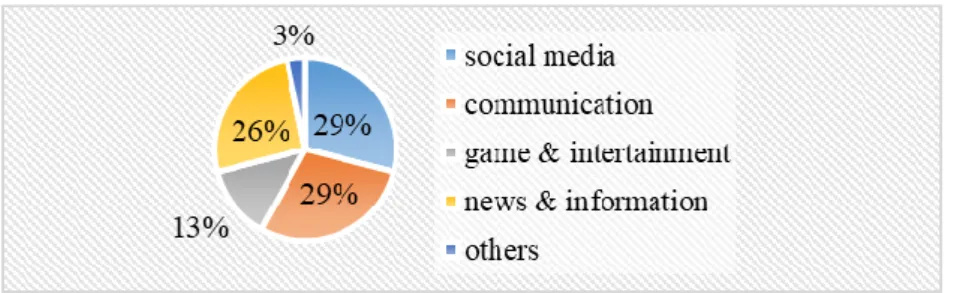
Figure 3 illustrates the types of mobile application frequently used by students.
Figure 3. Percentage of Types of Mobile Application Used
In this chart, there are generally five types of mobile application used by students. News and information applications belong to some mobile applications stored for searching and gaining information (Google search, Wikipedia, etc.). 26 % of the students are actively using this type of mobile application. The second type is communication. This refers to some mobile applications used for communicating with others, such as WhatsApp, Telegram, BlackBerry Messenger and others. This type is the biggest percentage with 29% of the total students. The social media type refers to some applications used for social relationships and media publications, such as Facebook, Twitter, Instagram, etc. This type was also represented by 29% of the total students. Game and Entertainment refers to some application use for gaming and entertaining the user, such as YouTube, Smule CoC, AoV and other games.
These findings highlight the flexibility in the types of mobile application used by students. Teachers or other designers have an ease to chooce many types of media in integrating m-learning in this class. A new design of m-learning system should cover these potential so that students can achieve their maximum learning standard in a new system.
3.4. Students’ Perceptions of M-learning
The second part of the questionnaire was used to gather data about students’ perceptions of m-learning. The Figure below shows that all of the students are willing to adopt a mobile technology in the classroom. 16% of the students agreed and a further 84% strongly agreed. Therefore, from now on the analysis will focus on this agreement since no students were neutral or disagreed with implementing mobile technology in their classes. Percentages of Students in Agreement shown in Figure 4.
Figure 4. Percentages of Students in Agreement
The term agreement represents “Strongly agree” and “Agree”, while disagreement represents “Strongly disagree” and “Disagree”. For this section, all of the participants choose their position whether to agree or disagree and followed this by giving their reasons. The result showed that all the students agreed to the use of mobile technology in the classroom. The reasons stated can be divided into several groups as follows:
a. Learning through mobile technology will help students to learn.
Mobile learning will help students to learn in a new way and give easy access to learning everywhere and at all times. They believe that mobile learning will help them to study effectively at their own pace. These reasons are stated by around 11% of respondents.
b. Learning through mobile technology is good for gaining information and materials.
Mobile technology will effectively help students to explore more information related to their lesson. Students believe that by using mobile technology additional materials which are not contained in a module or book given by teachers can be accessed. We found that the percentage giving this reason was 66% of the total respondents.
c. Learning through mobile technology is a good tool as a new teaching medium.
Mobile technology will be a new medium used by teachers in the class and is expected to increase their students’ attention and motivation to learn. Students feel motivated and interested in applying mobile technology in their classes. We found that 11% of students stated that the new medium of the mobile is needed in the learning environment.
d.
Students would just like to learn with mobile technology.Information about mobile technology in learning may be a new thing for students. They have no idea how mobile technology might be combined with teaching activities, but would just enjoy the situation of mobile learning. We found that 11% of respondents stated that it is interesting and that the learning situation would be enjoyable.
Figure 5. Percentage of Students’ Reasons for Adopting M-learning
4. CONCLUSION
Mobile learning is a suitable and effective choice in Indonesia due to the widespread use of mobile devices among Indonesian students. The mobile technology market in Indonesia has experienced rapid and strong growth in mobile device sales. The high level of mobile phone accessibility among senior high school students in Indonesia plays an important role that could maximise the chances of shifting to mobile learning [10]. It is interesting to find that 96% of the students owned mobile devices. This helps to highlight the
relationship between mobile ownership and the platform needed for distribution to learners as part of the m-learning national implementation strategy in Indonesia. The results presented show that students have positive opinions regarding m-learning. Their agreement to adopt mobile technology strongly suggests that most of the students perceive mobile learning as an attractive learning strategy because it allows the freedom to learn at their own pace [18]. The value of mobility and privacy in mobile learning is appreciated by students. They believe in its potential to provide various means of learning and support to gain additional information that teachers or other educational designers can adopt.
ACKNOWLEDGEMENTS
This research was fully supported by the Indonesian Endowment Fund (LPDP) from Indonesia’s Ministry of Finance. We thank our colleagues from the Department of Educational Technology who provided insight and expertise that greatly assisted the research, although they may not agree with all of the interpretations or conclusions of this paper.
REFERENCES
[1] N. Cavus, "Investigating Mobile Devices and LMS Integration in Higher Education: Student Perspectives," Procedia Computer Science, vol. 3, pp. 1469-1474, 2011.
[2] K. Segaran, A. Z. M. Ali and T. W. Hoe, "Usability and User Satisfaction of 3D Talking-head Mobile Assisted Language Learning (MALL) App for Non-Native Speakers," Procedia - Social and Behavioral Sciences, vol. 131, pp. 4-10, 2014. Daryanto, “Media Pembelajaran: Peranannya Sangat Penting dalam Mencapai Tujuan Pembelajaran”, Yogyakarta: Gava Media, 2013, pp. 51.
[3] K. Chachil, A. Engkamat, A. Sarkawi and A. R. A. Shuib, "Interactive multimedia-based mobile application for learning Iban language (I-MMAPS for learning Iban language)," Procedia - Social and Behavioral Sciences, vol. 167, pp. 267-273, 2015.
[4] F. Ozdamli and N. Cavus, "Basic elements and characteristics of mobile learning," Procedia - Social Behavioral Sciences, vol. 28, p. 937–942., 2011.
[5] A. Klassen, M. Eibrink-Lunzenauer and T. Gloggler, "Requirements for mobile learning applications in higher education," in 2013 IEEE International Symposium on Multimedia, Anaheim, CA, USA, 2013.
[6] J. N. Calimag, P. A. Miguel and R. S. Conde, "Ubiquitous lerning environment using android mobile application," International Journal of Research in Engineering ang Technology, vol. 2, no. 2, pp. 119-128, 2014.
[7] T. M. Miangah and A. Nezarat, "Mobile-assisted language learning," International Journal of Distributed and Paralel System, vol. 3, no. 1, pp. 309-319, 2012.
[8] B. Chen, S. Sivo, S. Ryan, S. Amy and J. Mao, "User acceptance of mobile technology: A campus-wide implementation of Blackboard's Mobile™ learn application," Journal of Educational Computing Research, vol. 49, no. 3, pp. 327-343, 2013.
[9] P. Suanpang, "The integration of m-learning and social nework for suporting knowledge sharing," Creative Education, vol. 3, pp. 39-43, 2012..
[10]L. Naismith, P. Lonsdale, G. Vavoula and M. Sharples, Literature in mobile technologies and learning, Birmingham: University of Birmingham, 2004.
[11]G. Hwang and H. Chang, "A formative assessment-based mobile learning approach to improving the learning attitudes and achievements of students," Computer & Education, vol. 56, no. 4, p. 1023–1031, 2011.
[12]G. Stockwell and P. Hubbard, Some emerging principles for mobile-assited language learning, Monterey, CA: The International Research Foundation for English Education, 2013.
[13]I. Ahmad & A. Jaafar, “Computer games: implementation into teaching and learning,” Journal Social and Behavioral Sciences, vol. 59, pp. 515 – 519, 2012.
[14]A. Spiegel and G. Rodríguez, "Students at university have mobile technologies. Do they do m-learning?," Procedia-Social and Behavioral Sciences, vol. 217, p. 846 – 850, 2016.
[15]O. Nov and C. Ye, "Users’ personality and perceived ease of use of digital libraries: The case for resistance to change," Journal of American Society for Information Science and Technology, vol. 59, no. 5, p. 845–851, 2008. [16]W. Bhuasiri, O. Xaymoungkhoun, H. Zo, J. J. Rho and A. P. Ciganek, "Critical success factors for e-learning in
developing countries: A comparative analysis between ICT experts and faculty," Computer & Education, vol. 58, no. 2, pp. 843-855, 2012.
[17]L. Briz-Ponce, A. Pereira, L. Carvalho, J. A. Juanes-Mendez and F. J. García-Penalvo, "Learning with mobile technologies: Students’ behavior," Computers in Human Behavior, vol. 72, pp. 612-620, 2017.
[18]M. G. Domingo and A. B. Gargante, "Exploring the use of educational technology in primary education: Teachers' perception of mobile technology learning impacts and applications' use in the classroom," Computers in Human Behavior, vol. 56, pp. 21-28, 2016.
[19]T. S. Subhash and T. S. Bapurao, "Perception of medical students for utility of mobile technology use in medical education," International Journal of Medicine and Public Health, vol. 5, no. 4, pp. 305-311, 2015.
[20]M. Kebritchi, "Factors affecting teachers' adoption of educational computer games: A case study," British Journal of Educational Technology, vol. 41, no. 2, pp. 256-270, 2010.
[21]J. Osakwe, N. Dlodlo and N. Jere, "Where learners' and teachers' perceptions on mobile learning meet: A case of Namibian secondary schools in the Khomas region," Technology in Society, vol. 49, pp. 16-30, 2017.
[22]I. K. Yusri, R. Goodwin and C. Mooney, "Teachers and mobile learning perception: Towards a conceptual model of mobile learning for training," Procedia-Social and Behavioral Sciences, vol. 176, p. 425–430, 2015.
BIOGRAPHIES OF AUTHORS
Muhammad Hanif. A student of the Magister Programme on Educational Technology in Universitas Sebelas Maret. He gained a bachelor degree in English Education from Universitas Muria Kudus. He has an interest in English acquisition among young learners and mobile assisted language learning. He is currently continuing his studies through the Indonesia Endowment Fund (LPDP) Scholarship. Corresponding
email: [email protected]
Asrowi. A lecturer in the Magister Programme on Educational Technology in Universitas Sebelas Maret. He gained a doctoral degree in Guidance and Counselling from Universitas Pendidikan Indonesia. He has an interest in educational philosophy, especially in communicative counselling to improve teaching. Now he is chief of the Magister Programme on Educational Technology in Universitas Sebelas Maret.
Corresponding email: [email protected]
Sunardi. A lecturer in the Magister Programme on Educational Technology in Universitas Sebelas Maret. He gained a doctoral degree in Curriculum and Instruction from The State University of New York at Albany, USA. He has an interest in inclusive education and curriculum development. Now he is also a lecturer in the special education programme at Universitas Sebelas Maret.