2017 2nd International Conference on Computer Engineering, Information Science and Internet Technology (CII 2017) ISBN: 978-1-60595-504-9
Research on the Development of Intelligent
Management System for Urban Underground
Corridor Based on Cloud Computing
JIAN YANG
ABSTRACT
At present, there are many problems such as low reliability and poor interaction in the city comprehensive corridor monitoring system. In order to solve these problems, an integrated corridor management system based on cloud computing technology is put forward. The system hardware architecture is based on the Internet of Things technology, which consists of three layers: field equipment layer, network layer and monitoring center. The software architecture is divided into corridor integrated monitoring system, corridor pipeline management system, operation and maintenance management system and emergency management system, and each subsystem is integrated with service-oriented programming. In addition, the system establishes a unified access portal. Through the desktop computers and intelligent terminals, users can achieve the monitoring of the operation of the integrated corridor.
KEYWORDS
Urban integrated corridor, cloud computing, GIS, BIM, operation and management.
INTRODUCTION
The operation management of integrated pipe corridor is a systematic and complex project. On the one hand, the integrated corridor is built underground, with only a small number of feeding ports, personnel entrances and exits [1]. In the actual operation process, it may cause a blind spot, or even form a blind zone, becoming an accident-prone zone. On the other hand, the integrated corridor space is relatively sealed. In the absence of timely and effective notification of the case, the evacuation time will become very limited. The above reasons will not only damage the facilities and equipment in the integrated corridor, but also cause disastrous consequences such as casualties. To solve this problem, it is necessary to make full use of modern advanced technology to establish a comprehensive management system for integrated corridor safety management system, to achieve comprehensive management of the integrated corridor [2].
Cloud technology is a computing model that utilizes the Internet to access the shared resource pool at any time, on demand, and easily. Cloud computing solves the data center management, large-scale data processing, application deployment and _________________________________________
other issues for the user [3]. The core idea of the construction of urban underground integrated corridor operation management system based on cloud computing is as follows. Based on the Internet of Things technology, the corridor integrated monitoring system is ported to the cloud platform, and the integrated corridor and ancillary facilities are digitally stored on the cloud platform. GIS technology and BIM technology are used to realize the integration of the above data. The unified integrated corridor operation management cloud platform portal was established. Users can use the desktop computer, smart phones or tablet PCs and other mobile devices to achieve integrated management of the corridor process monitoring.
ANALYSIS OF SYSTEM REQUIREMENTS
Target of system construction
The integrated corridor operation management system based on cloud computing aims at the comprehensive management of corridor [4]. Scientific and rational operation management system of comprehensive pipe corridor was established. The intelligent operation and management platform of integrated pipe corridor, which integrates the functions of comprehensive corridor monitoring, early warning, decision support, emergency management, energy saving and consumption reduction, is formed. Seamless integration of information sharing, operation and maintenance management of the comprehensive corridor in the whole area has been realized, and the sustainable development of the safe operation of the comprehensive corridor has been promoted. The goal of system construction is as follows:
(1) The safe operation of the integrated corridor is the core. Through the Internet of Things, BIM, GIS, cloud computing and other technologies, the integrated corridor environment are combined with the equipment monitoring system, security system, communication system, early warning and alarm system and integrated corridor property management system. The intelligent operation management system of the unified integrated corridor is constructed.
(2) With the support of GIS and BIM technology, the relevant positioning technologies to meet the requirements of the daily maintenance of the integrated corridor, internal navigation, route planning and emergency management have been constructed. The precise positioning of the pipeline, ancillary facilities and personnel in the integrated corridor is achieved, and the three-dimensional visualization operation and maintenance management is realized.
(3) Guided by the demand of operation, maintenance and management of integrated corridor, and based on BIM technology, the administrative system was established, which can manage the pipe corridor construction and maintenance archives, the corridor information, the operation and maintenance personnel files, the operation and maintenance vehicles and so on. Inquiry, statistics and analysis services are provided. It improves the efficiency of the operating unit and management level.
perception, storage, analysis and judgment during the operation and management of the integrated pipe corridor, and achieves intelligent operation and management.
The composition of the system
The system is divided into six application modules: pipe corridor integrated monitoring subsystem, corridor management subsystem, operation and maintenance management subsystem, emergency management subsystem, administrative office management subsystem and backstage management subsystem.
The comprehensive monitoring subsystem of pipe corridor: The corridor integrated monitoring subsystem includes environment and equipment monitoring system, security system, communication system, early warning and alarm system and other modules. This realizes the monitoring of the temperature, humidity, air quality, sump level and other environmental parameters in the integrated corridor, and controls the related equipment such as drainage pump, exhaust air exhaust valve and power, lighting and other related equipment. The system displays the data in the process of the operation of the pipe corridor in a variety of ways, such as process flow chart, equipment status chart, statistical analysis report form and so on.
[image:3.612.187.423.438.645.2]The management subsystem of entry corridor pipeline: The pipeline management subsystem of entry corridor includes water supply pipeline management, power cable management, communication cable management, heat pipe management, gas pipeline management module. Each module displays the operation status of the corridor pipeline in a graphical way, and provides the function of report analysis, which is convenient for the operation unit to master the operation of the entrance corridor pipeline [5]. The corridor pipeline management subsystem obtains the data provided by the professional monitoring system of the access corridor in the form of data interface.
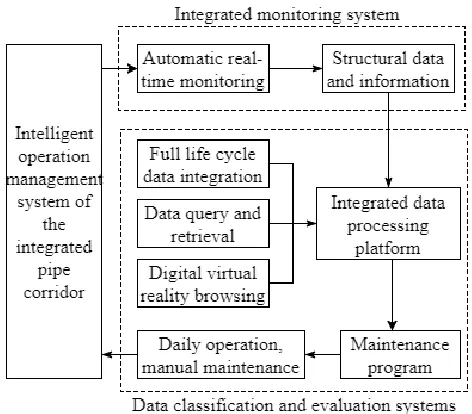
Figure 1. The architecture of the intelligent operation management system of the integrated pipe corridor.
facilities and equipment management, corridor application and personnel access registration module. This has achieved the daily inspection and management of the corridor operation, the maintenance and management of the ancillary facilities and equipment, the application of the pipeline unit corridor and the management of the staff access control. The system records the internal inspection of the integrated corridor in the form of a report. The subsidiary equipment is established, which provides ancillary facilities and equipment inspection operations reports, maintenance operations reports and operating procedures approval form [6]. The management reports of the round shift report, personnel registration form, flow chart of entry and exit, comprehensive corridor and other management reports are established in the comprehensive corridor.
The subsystem of emergency management: The emergency management subsystem, including emergency linkage, emergency decision support, emergency drills, safety knowledge training and other modules. This has achieved the closed-loop control of the safety hazard investigation and emergency treatment in the course of the corridor operation. The emergency management subsystem has set up an emergency linkage mechanism with the public security, fire, electricity, telecommunications, heat, water supply and other related units. The security inspection, hidden trouble investigation and other accounts, as well as safety service training knowledge base, emergency handling summary database was established.
Administrative office subsystem: The administrative office subsystem includes personnel management, document processing, personal office, administrative affairs management and other modules. This can achieve the process-oriented, standardization and paperless of the administrative office [8]. It can improve the efficiency and level of the administrative unit of the operating unit, and effectively reduce the mistakes in the administrative work.
Background management subsystem: The backstage management subsystem includes user management, authority management, data backup, system login and log management module. It implements the addition, modification and deletion of the system users and the installation management of the corresponding user. Through the backstage management subsystem, the system data backup strategy can also be set up, and the backup of the data can be finished. Super user administrator privileges can also be achieved on the system landing personnel and landing time of view, to facilitate the analysis of abnormal events [7]. The architecture of the intelligent operation management system of the integrated pipe corridor is shown in Figure 1.
THE IMPLEMENTATION OF THE SYSTEM
Hardware architecture
reliability, and low-cost data storage services for integrated corridor monitoring systems [9].
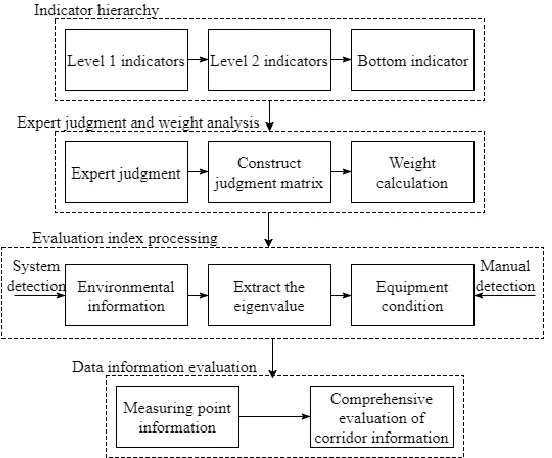
[image:5.612.173.449.359.588.2]The whole system hardware uses a three-tier architecture, which is divided into field area controller layer, network layer and monitoring center layer. The field control layer consists of field devices such as oxygen concentration, temperature and humidity toxic gases installed in the corridor, intrusion detectors, remote IO modules, integrated relay, power monitor and controller PLC in each area. The network layer is a double-link star multi-ring network architecture, which is divided into access layer and core layer [10]. According to the direction and characteristics of each section of the integrated corridor, the access layer switch is divided into several subnets according to the road section, forming a gigabit optical fiber ring network. The monitoring center is equipped with two core layer switches, one of which is standby, and the core ring network is composed of optical fiber interconnection. An optical fiber ring network is connected to the core ring network through double links, and a safe, fast and reliable data communication channel is set up for the whole project. The monitoring center layer is divided into different monitoring centers and general monitoring centers. Among them, the sub monitoring center is equipped with SCADA system server, which is used for collecting the data of the integrated corridor and pushing data to the cloud. The general monitoring center is built on the cloud platform to realize centralized processing and application services of the integrated corridor data in different regions. The data classification and evaluation system is shown in Figure 2.
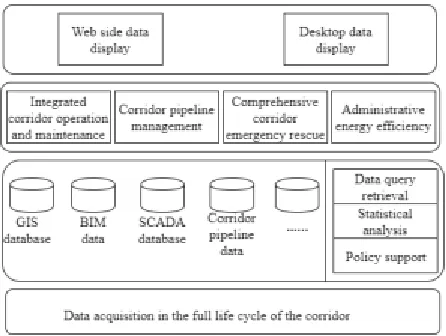
Figure 3. The software architecture of the system.
Software architecture
The system software architecture is shown in Figure 3, which is divided into support layer, data layer, application layer and system display layer. The support layer, on the one hand, obtains the real-time data of the integrated corridor monitoring and monitoring through the communication protocol. It is written into the monitoring and monitoring real-time database and the historical database after processing. On the other hand, through the data interface, it gets GIS, BIM and other software to provide the integrated pipe gallery basic data. Through the message queue, it pushes information to the upper level application. The data layer includes BIM database, GIS database, SCADA database system and into the corridor pipeline database, realize the comprehensive pipe gallery running the unified storage, data lifecycle analysis, judgment, and provide decision support to the application layer. The application layer includes integrated corridor operation and management system, corridor pipeline management system, integrated corridor emergency rescue system and administrative energy efficiency system, which provides integrated monitoring and early warning, linkage control, operation and maintenance, emergency management rescue and administration of the full range of application functions. The system presentation layer includes both the WEB application and the desktop application, providing users with an intuitive and easy-to-use interface, and simplifying the use of the user and saving time. The software architecture of the system is shown in Figure 3.
The establishment of cloud platform
The cloud computing platform is a unified platform for data storage, analysis and application services for integrated corridors. It is divided into data storage center and application service center. The data storage center integrates the data of the monitoring lifecycle, including monitoring data, GIS data, BIM data and business process data, and builds the data resource pool to realize the data storage, analysis and sharing. The application service center is the realization of the function of each sub-system of the integrated corridor and provides the service application based on the desktop system and the intelligent mobile terminal.
able to effectively support the cloud infrastructure by virtue of its modular design and cooling system [11]. The data storage uses high-performance cluster storage devices and is connected to each compute node through the FC protocol, so that the stored data stream does not occupy the service network bandwidth to meet the storage and access requirements for large amounts of data during the operation of the corridor. Graphics processing uses NVIDIA GRID technology to achieve hardware acceleration, and meets the requirements of graphics processing hardware in GIS and BIM models during the operation of pipe corridor. The software chooses the mature virtualized platform to integrate the above-mentioned hardware, realize the centralized management of the data, and the computing resources and the graphic resources needed by the end user are provided by the cloud server completely.
Application service center: Application service center is an integrated management platform for pipe corridor operation, including data monitoring, operation and maintenance management, corridor pipeline management, emergency management, administrative energy efficiency management, background management and other application service modules. The application service center is designed using Service-Oriented Architecture (SOA). The application service modules are integrated and managed through a third-party ESB bus. Through third-party ESB, message routing and protocol conversion between application service modules are implemented to securely and reliably interact with events from different application services. The application service module is further subdivided into several sub-modules, such as the operation and maintenance management application service module including the daily inspection of the corridor, facilities and facilities management, corridor application, personnel access registration and other sub-modules. Each module is encapsulated by object oriented technology, and database access technology is used to query and modify the database table.
Data processing technology
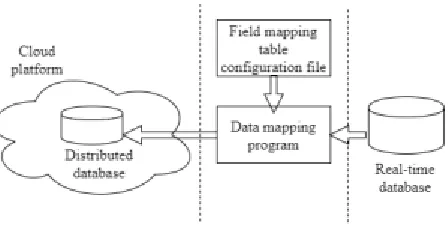
Figure 4. The specific data mapping process.
The specific data mapping process can be divided into three steps: First, the data in the real-time database is removed. Second, according to the corresponding relationship in the field mapping table, the extracted real-time data is converted into the corresponding data in the distributed database, the corresponding field, and the corresponding data type. Third, the converted data is inserted into the fields of the corresponding table in the distributed database.
CONCLUSION
Based on cloud computing, the urban underground integrated corridor operation management system includes rich data, comprehensive object, intelligent database and digital database with intelligent and parameterized characteristics. Through the platform visualization of user interaction interface, it greatly improved the comprehensive management of the daily management, emergency management and operational quality of service assessment efficiency. The management platform will be applied to the city comprehensive pipe corridor project, and further expand the scope of application on this basis. It is expected to realize the intelligent operation management of the comprehensive corridor within the wider scope of the country.
REFERENCES
1. Gao, Y., Liu, S., Atia, M. M., & Noureldin, A. (2015). INS/GPS/LiDAR integrated navigation system for urban and indoor environments using hybrid scan matching algorithm. Sensors, 15(9), 23286-23302.
2. Hashemi, H., & Abdelghany, K. F. (2016). Real-time traffic network state estimation and prediction with decision support capabilities: Application to integrated corridor management. Transportation Research Part C: Emerging Technologies, 73, 128-146.
3. Ji, X., & Shao, L. (2017). The Application of Landscape Infrastructure Approaches in the Planning of Heritage Corridor Supporting System. Procedia Engineering, 198, 1123-1127.
4. Liu, Y., Li, P., Wehner, K., & Yu, J. (2013). A generalized integrated corridor diversion control model for freeway incident management. Computer‐Aided Civil and Infrastructure Engineering, 28(8), 604-620.
5. Liu, Z., Wimberly, M. C., Lamsal, A., Sohl, T. L., & Hawbaker, T. J. (2015). Climate change and wildfire risk in an expanding wildland-urban interface: a case study from the Colorado Front Range Corridor. Landscape ecology, 30(10), 1943-1957.
6. Liu, X., Zhang, G., Kwan, C., Wang, Y., & Kemper, B. (2013). Simulation-Based, Scenario-Driven Integrated Corridor Management Strategy Analysis. Transportation Research Record: Journal of the Transportation Research Board, (2396), 38-44.
8. McIntosh, J., Trubka, R., & Newman, P. (2015). Tax Increment Financing framework for integrated transit and urban renewal projects in car-dependent cities. Urban Policy and Research, 33(1), 37-60. 9. Petrella, M., Minnice, P., & Lappin, J. (2014). Traveler Use of and Response to Real-Time Traffic and Traveler Information: Evidence from Integrated Corridor Management Traveler Surveys in Dallas, Texas, and San Diego, California. Transportation Research Record: Journal of the Transportation Research Board, (2423), 44-51.
10. Xu, J., Wang, A., & Hatzopoulou, M. (2016). Investigating near-road particle number concentrations along a busy urban corridor with varying built environment characteristics. Atmospheric Environment, 142, 171-180.