REACHING FOR A SHARED UNDERSTANDING:
EXPLORING THE VIEWS OF EDUCATIONAL PSYCHOLOGISTS AND
SPECIAL EDUCATIONAL NEEDS COORDINATORS ABOUT THE
ROLE OF THE EDUCATIONAL PSYCHOLOGIST IN SUPPORTING
MENTAL HEALTH AND PSYCHOLOGICAL WELLBEING IN
SCHOOLS
RACHAEL ANDREWS
A research study submitted in partial fulfilment of the requirements of the University of East London for the Professional Doctorate in Educational and Child Psychology
i ABSTRACT
ii
STUDENT DECLARATION
I declare that while registered as a research degree student at UEL, I have not been a registered or enrolled student for another award of this university or of any other academic or professional institution.
I declare that no material contained in this thesis has been used in any other submission for an academic award. This thesis is the result of my own work and investigation, except where otherwise stated. Other sources are acknowledged by explicit references in the text and a full reference list is appended.
I declare that my research required ethical approval from the University Research Ethics Committee (UREC) and confirmation of approval is embedded within the thesis.
Rachael Andrews
iii
ACKNOWLEDGEMENTS
First and foremost I would like to thank all of the EPs and SENCOs who contributed to this research and without whom it would not have been possible. I very much enjoyed working with them all. I am grateful to all my colleagues in the local authority where this research was conducted for their interest and support, particularly my wonderfully calm and positive placement supervisor.
Thanks to Dr Tina Rae for nurturing my passion for mental health and wellbeing and for supporting me at the start of this journey. Special thanks to my Director of Studies, Dr Helena Bunn, for her incredible attention to detail, encouragement and faith in me.
My sincerest gratitude goes to all my family for their love and encouragement, particularly my husband Dave for embracing extra responsibilities and keeping family life fun for our children. I would like to give a special mention to my mum, Helen Terry, for instilling in me a passion for learning and ambition to achieve what might at first seem impossible. Thanks also to my mum for reading my entire thesis!
iv
Table of Contents
Chapter One: Introduction ... 1
1.1 Chapter overview ... 1
1.2 Constructs of MH and psychological wellbeing ... 1
1.2.1 Definitions for the purpose of this research ... 2
1.3 Role of the EP; past, present and future ... 2
1.4 Position of the researcher ... 4
1.5 National Context ... 4
1.6 Local Context ... 6
1.7 Rationale and aim of the research ... 7
1.7 Chapter summary... 8
Chapter Two: Literature Review ... 9
2.1 Chapter Overview ... 9
2.2 Scope of the Literature Review ... 9
2.3 Systematic literature search ... 9
2.3.1 Inclusion Criteria ... 10
2.3.2 Exclusion Criteria ... 11
2.4 Critiquing the relevant literature ... 11
2.4.1 EPs’ use of therapeutic interventions ... 12
2.4.2 EPs’ involvement in whole school approaches to wellbeing ... 20
2.4.3 EPs’ role in supporting MH and wellbeing ... 22
2.5 Summary of the literature review and rationale for the research questions ... 25
2.6 The Research Questions ... 25
2.7 Chapter summary... 26
Chapter Three: Methodology ... 27
3.1 Chapter overview ... 27
3.2 Purpose of Research ... 27
3.3 Ontology ... 28
3.3.1 Positivism ... 28
3.3.2 Post positivism and critical realism ... 29
3.3.3 Relativism ... 29
3.3.4 The World as Construction ... 30
3.3.5 Social constructionism ... 30
v
3.4 Epistemology ... 32
3.4.1 Cooperative inquiry ... 32
3.4.1 Summary of ontological and epistemological position of this research. ... 34
3.5 Research Design ... 34
3.6 Research Technique ... 37
3.6.1 Semi-structured interviews ... 37
3.6.2 Pilot interview ... 38
3.6.3 Working party ... 38
3.7 Data Collection ... 39
3.8 Participants and co-researchers ... 39
3.8.1 Inclusion criteria ... 41
3.9 Role of the researcher... 41
3.10 Data Analysis ... 41
3.10.1 Thematic Analysis ... 42
3.11 Trustworthiness and Credibility ... 45
3.12 Ethical Considerations ... 47
3.12.1 Confidentiality and anonymity ... 48
3.12.2 Sharing of the data ... 49
3.12.3 Power relationships ... 49
3.13 Chapter summary... 50
Chapter Four: Findings ... 51
4.1 Overview of chapter... 51
4.2 EPs’ views of their role in supporting MH and wellbeing in schools ... 51
4.2.1 Overarching Theme 1: Important contextual factors relevant to the EP role ... 54
4.2.1.1 Theme 1: Understanding of MH and psychological wellbeing ... 54
4.2.1.2 Theme 2: School values and ethos... 57
4.2.1.3 Theme 3: Challenges to EPs working in the field of MH and psychological wellbeing ... 60
4.2.2 Overarching theme 2: EP role in supporting MH and wellbeing in schools... 64
4.2.2.1 Theme 4: Differing perceptions of the EP role ... 64
4.2.2.2 Theme 5: General aspects of the EP role in relation to MH and psychological wellbeing 66 4.2.2.3 Theme 6: Examples of EPs supporting MH and psychological wellbeing in schools ... 69
4.2.2.4 Theme 7: Vision for EPs supporting MH and wellbeing in schools ... 72
4.3 SENCOs views of the EP role in supporting MH and psychological wellbeing in schools ... 75
4.3.1 Overarching theme 1: Important contextual factors relevant to MH and psychological wellbeing in schools. ... 77
vi
4.3.1.2 Theme 9: Scope of the SENCO/INCO role ... 81
4.3.1.3 Theme 10: Other professionals supporting MH and psychological wellbeing ... 83
4.3.2 Overarching theme 2: SENCO views of the EP role in supporting MH and psychological wellbeing in schools ... 85
4.3.2.1 Theme 11: SENCOs’ understanding of the EP role... 85
4.3.2.2 Theme 12: Challenges to EPs working in the field of MH and wellbeing in schools ... 89
4.4 Working Party ... 93
4.4.1 Agreed actions and next steps ... 95
4.5 Chapter Summary ... 96
Chapter Five: Discussion ... 97
5.1 Overview of Chapter ... 97
5.2 Analysis of findings in light of research questions ... 97
5.2.1 RQ1. Do EPs and SENCOs believe MH and psychological wellbeing in schools is part of the EP role? ... 97
5.2.2 RQ2. What value do EPs place on MH and psychological wellbeing work in schools?... 98
5.2.3 RQ3. Do SENCOs value MH and psychological wellbeing work from EPs in schools? ... 98
5.2.4 RQ4. What are the examples of MH and psychological wellbeing support in schools from EPs at an individual, group and systems level? ... 98
5.2.5 RQ5. How can EPs support the MH and psychological wellbeing of staff in schools? ... 99
5.2.6 RQ6.Are there any barriers to EPs offering this type of work? ... 100
5.2.7 RQ7. How do EPs and SENCOs think the role of the EP could develop further to include MH and psychological wellbeing? ... 102
5.2.8 RQ8. What training, skills and resources do EPs need in order to deliver this wellbeing agenda? ... 103
5.3 Review of the rationale and aims of the research ... 105
5.4 Implications for EP practice ... 107
5.4.1 Need for clear communication of the EP role and what activities can be offered to services users and other professionals. ... 107
5.4.2 Need for promotion of the EP professions’ skills, training and position in supporting MH and wellbeing in schools. ... 107
5.4.3 EPs are well placed to facilitate or set up supervision opportunities for school staff. ... 108
5.4.4 Importance of EPs having opportunities to facilitate or deliver therapeutic interventions. ... 108
5.4.5 Importance of the EP service being able to offer school staff training and supporting a whole school approach to positive MH and wellbeing. ... 109
5.4.6 Importance of working collaboratively with other professionals who support the MH and wellbeing of CYP and developing an understanding of how services differ. ... 109
vii
5.6 Limitations of this research and implications for future research ... 110
5.7 Reflexivity ... 112
5.7.1 Starting the research journey ... 112
5.7.2 Acknowledging my own beliefs through the research process ... 112
5.7.3 Impact of the research on the EP I want to be ... 113
5.8 Conclusion ... 113
6. References ... 116
7. Appendices ... 124
Appendix A: Trail of the Systematic Literature Search ... 125
Appendix B: Literature Review Articles ... 127
Appendix C: Ontological paradigms and associated epistemological positions ... 137
Appendix D: Pre-interview activity ... 138
Appendix E: Semi-structured interview schedule ... 139
Appendix F: Letter to participants ... 141
Appendix G: Consent form ... 143
Appendix H: Transcriber instructions ... 144
Appendix I: Sample of TA table ... 146
Appendix J: Photographic evidence of stage 3 of TA ... 166
Appendix K: Refining of provisional thematic map ... 168
viii
List of tables and figures
Tables
Table 1 Literature search terms Page 11
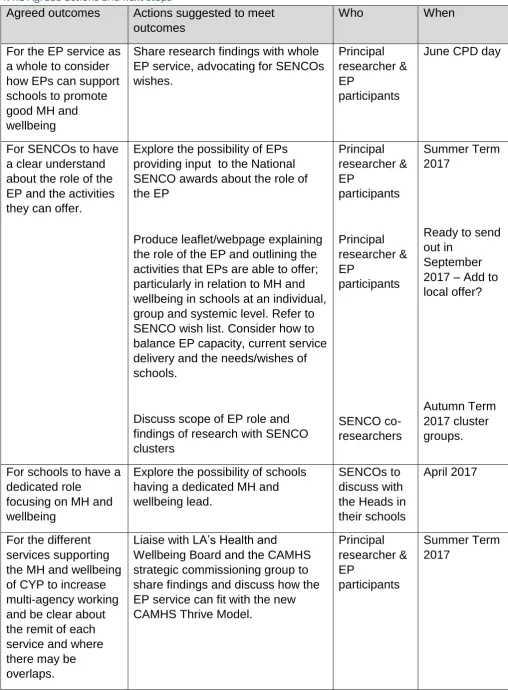
Table 2 Themes and subthemes of systematic literature search Page 12 Table 3 Working party agreed actions and next steps Page 95
Figures
Figure 1 Research design Page 36
Figure 2 Thematic map depicting EPs’ views of their role in
supporting MH and psychological wellbeing in schools
Page 53
Figure 3 Thematic map depicting SENCOs’ views of the EP role in
supporting MH and psychological wellbeing in schools
Page 76
Figure 4 A model for EPs to Engage in Mental Health and
Psychological Wellbeing Work with Children and young people (Fee, 2011 p. 141)
ix
Abbreviations
ASD Autism spectrum disorder
CAMH Child and adolescent mental health
CAMHS Child and adolescent mental health services CBII Child Behaviour Intervention Initiative
CBT Cognitive Behaviour Therapy
CP Clinical Psychologist
CPD Continued professional development
CT Cognitive Therapy
CYP Children and young people
EHCP Education Health Care Plan
ELSA Emotional Literacy Support Assistant
EP Educational Psychologist
ETHoS E-thesis online service
HCPC Health Care and Professions Council INCO Inclusion Co-ordinator
LA Local Authority
MH Mental Health
OCD Obsessive compulsive disorder PCP Personal Construct Psychology PTSD Post-traumatic stress disorder
x
SWOT Strengths, weakness, opportunities and threats
TA Thematic analysis
1
Chapter One: Introduction
1.1 Chapter overview
This introduction starts with a consideration of the different constructs of mental health (MH) and psychological wellbeing and explores the different terminology and associated meanings. Next is a discussion around the historical context in which the educational psychology profession sits and how the role of the educational psychologist (EP) is central to this research. An exploration of both the national and local agendas surrounding MH and psychological wellbeing in schools, relevant legislation, and guidance is considered. Finally, the researcher demonstrates the rationale for the research and reflects on their position within it.
1.2 Constructs of MH and psychological wellbeing
2
with both MH and wellbeing. Durbin (2010) found that EPs tended to adopt a psychosocial view of MH and psychological wellbeing; they “were reticent in engaging unconditionally with work that emphasised the medical-diagnostic approach” (p.293). Roffey (2015) suggested that definitions of wellbeing are evolving to include issues of equality and community.
1.2.1 Definitions for the purpose of this research
The researcher has chosen to use the terms ‘mental health’ and ‘psychological wellbeing’ and these will be used throughout the thesis. It is recognised that there may be negative connotations linked to the term ‘mental health’ which in medical documentation is usually referred to as MH difficulties or disorders. For the purpose of this research, however, the description of MH proposed by Keyes (2002) is fitting; MH is a continuum with good MH at one end and mental illness at the other. MH is also the most frequently used term in current legislation and research; the SEND Code of Practice (2014) guides EP practice to consider and report on CYP’s emotional, social and MH development. The term wellbeing has been chosen, for the purpose of this research, to acknowledge the importance of the wellbeing of groups and communities as well as individuals. “Wellbeing is defined as a positive and sustainable condition that allows individuals, groups, organisations and nations to thrive and flourish” (Roffey, Nobel & Springer 2008 p.4).The specific term ‘psychological wellbeing’ was chosen as an attempt to hold firm to the application of psychology which is at the core of the researcher’s professional training.
1.3 Role of the EP; past, present and future
3
Roffey argued that the traditional role of the EP in the field of CYP with special educational needs, and a role which encompasses a wellbeing agenda, do not necessarily have to be distinct or in conflict. A wellbeing focus “can be threaded through consultations, conversations and offers….sowing seeds where possible” (2015 p. 25).
There are many different stakeholders who have an interest in the role of the EP; CYPs, parents, teachers, SENCOs, head teachers, local authority SEN officers, child and educational psychology training providers, government policy makers, professional bodies and EPs themselves. Farrell, Woods, Lewis, Rooney, Squires and O’Connor (2006) carried out a review of the EP functions and contributions involving a variety of stakeholders. They recommended that EPs should continue to be involved in statutory assessment, however;
they should take advantage of the trend in the reduction of statutory work to expand and develop their activities in different areas where their skills and knowledge can be used to greater effect, e.g. in group and individual therapy, staff training and in systems work.
(Farrell et al 2006 p.11)
4
1.4 Position of the researcher
Transparency regarding the views and position of the principal researcher is important, particularly given the relativist ontology of the study and the transactional epistemology adopted which acknowledges that the researcher cannot be separated from that which is being researched. The researcher has a particular interest in MH and psychological wellbeing. Given the doctorial training with focus on therapeutic interventions, solution focused consultation and eco-systemic practice, the principal researcher believes that EPs are well placed to support MH and welling in school at a universal, group and individual level. The principal researcher has four years teaching experience in addition to ten years experience of working in education in other roles. Through these experiences, the need for schools to make the MH and wellbeing of their pupils and staff as important as academic outcomes has become apparent to the researcher. In order for schools to provide CYP with essential life skills, psychological wellbeing must be monitored and nurtured. It is the researcher’s belief that the EP role can support schools to address MH without stigma and make it everyone’s business.
1.5 National Context
In January 2017 the Prime Minister outlined the Government’s vision for a civil society. The proposal included a consideration of the MH of CYP:
What I am announcing are the first steps in our plan to transform the way we deal with mental health problems at every stage of a person’s life: not in our hospitals, but in our classrooms, at work and in our communities.
This starts with ensuring that children and teenagers get the help and support they need and deserve, because we know that mental illness too often starts in childhood and that when left untreated, it can blight lives, and become entrenched.
But treatment is only part of the answer. We must look at what more can be done to prevent mental health problems, and work with you to capitalise on the crucial role civil society has to play in helping young people.
5
Whilst these proposals were welcomed by bodies representing the EP profession, there was sense of disappointment that EPs were not mentioned during this speech. The President of the BPS gave the following response:
Educational psychologists are best placed to assist the government in delivering its aspirations in this regard. But over recent years, many educational psychology services have been significantly eroded to the
detriment of effective support for children and young people, their parents and families and others responsible for their wellbeing.
(British Psychological Society, 2017)
The SEND Code of Practice (2014) refers to the broad areas of need, including social, emotional and MH difficulties. This is a change from the previous Code of Practice (2001) which refers to behaviour, social and emotional development. This change recognises that challenging, disruptive or disturbing behaviour “may reflect underlying mental health difficulties such as anxiety or depression, self-harming, substance misuse, eating disorders or physical symptoms that are medically unexplained” (p.98).
6
easier for CYP and carers to access help and support when needed. The report includes proposals highly relevant to EPs: improving public understanding of MH and tackling stigma and discrimination; ensuring timely access to MH support is available; joining up services locally through commissioning; increased use of evidence-based interventions; improving access for parents to evidence-based programmes of intervention and support to strengthen attachment between parent and children. One of the aspirations outlined in the report was that “professionals who work with children and young people should be trained in child development and mental health, and understand what can be done to provide help and support for those who need it” (p.18). It could be argued the EPs fit this description as the three year doctoral training includes all these elements. However, educational psychology was only mentioned once in this lengthy report. The juxtaposition of EPs’ search for a distinctive contribution (Farrell el al, 2006) and a recognised shortfall in MH support for CYP contributes to the rationale for this research. Future in Mind (2015) also suggested that the current tiered model of child and adolescent MH support was no longer fit for purpose, and called for this to be replaced by the Thrive Model. This recommendation has influenced the proposed transformation of local service as described below.
1.6 Local Context
7
2015 was the Year of MH, launched by the LA’s Health and Wellbeing Board to encourage people to think about the importance of this issue and how to tackle MH stigma on a daily basis both at work and at home. According to the local Strategy for Health Young Minds (2014) the EP service currently sits within tier 2, primary CAMHS, which is concerned with “short term psychological or counselling interventions delivered by a trained mental health professional for children and young people presenting with mild emotional or mental health issues” (p.5). However, following recommendations from the Future in Mind report (2015), the local CAMH services are currently undergoing transformation. In the LA where this research took place, a document summarising the next steps in the CAMHS review includes a recommendation from the CAMHS commissioners to adopt a new approach with a bigger focus on prevention and early intervention, and the use of a six-level Thrive model. The CAMHS commissioners also plan to establish a CAMHS Transformation Board which will consult with stakeholders as widely as possible about issues, priorities and needs. The researcher plans to share the proposed research study with the CAMHS commissioners to bring the role of the EP to their attention and open lines of communication for multi-agency working.
1.7 Rationale and aim of the research
The overarching aim of the research was to help bring MH and psychological wellbeing to the forefront of EP practice in the LA where the research took place and inform areas for consideration in the training and continued professional development of EPs. The purpose of this research was twofold. Firstly, the research aimed to explore the views of EPs and SENCOs in order to develop a better understanding of the EP role in supporting MH and wellbeing in schools. Secondly, as the SENCO participants become co-researchers, the research aimed to empower them to apply this greater shared understanding to produce practical outcomes for future EP practice.
8
1.7 Chapter summary
9
Chapter Two: Literature Review
2.1 Chapter Overview
With chapter one introducing the national and local contexts for the research and outlining the rationale and aims, chapter two gives a detailed account and analysis of the relevant research and literature that explores the role of the EP in supporting MH and wellbeing in schools. This lays the foundations for the research methodology outlined in chapter three.
2.2 Scope of the Literature Review
In April 2015, a literature review of how EPs use CBT to improve wellbeing in schools was carried out for an assignment in partial fulfilment of the doctoral training. This provided a base of relevant literature from which to start this research. A further review of the literature around MH and wellbeing in schools, with particular regard to the role of EPs, was carried out between October 2015, when the proposal for this research was written, and October 2016. Relevant university seminars and CPD sessions on placement supported the gathering of books, journal articles and legislation and guidance documents. ‘Snowballing’ of their reference lists was used to identify further relevant studies. The e-theses online service (EThoS) was searched in October 2015 and two relevant theses were found, Fee (2011) and Durbin (2010). Previous TEPs at UEL were asked, following presentations in July 2016, for their theses before they became available on EThoS; Miller (2016) and Wood (2016). Once preliminary reading of the area had been undertaken, a systematic literature search was carried out.
2.3 Systematic literature search
10
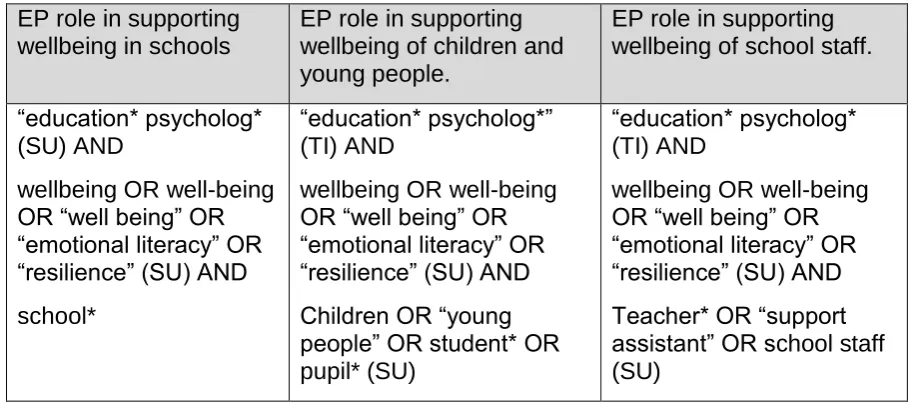
promotion in schools generally, the researcher wanted to limit the literature search to studies or discussion papers with particular relevance to the role of the EP in supporting this agenda. A trail of the systematic literature search can be found in appendix A. EBSCO was used to search the following databases:
British Education Index
Child Development and Adolescent Studies CINAHL Plus
Educational Research Complete ERIC
Psych INFO
Teacher Reference Centre
2.3.1 Inclusion Criteria
11 EP role in supporting
wellbeing in schools
EP role in supporting wellbeing of children and young people.
EP role in supporting wellbeing of school staff.
“education* psycholog* (SU) AND
wellbeing OR well-being OR “well being” OR “emotional literacy” OR “resilience” (SU) AND school*
“education* psycholog*” (TI) AND
wellbeing OR well-being OR “well being” OR “emotional literacy” OR “resilience” (SU) AND Children OR “young people” OR student* OR pupil* (SU)
“education* psycholog* (TI) AND
[image:22.595.69.529.99.302.2]wellbeing OR well-being OR “well being” OR “emotional literacy” OR “resilience” (SU) AND Teacher* OR “support assistant” OR school staff (SU)
Table 1: Literature search terms
2.3.2 Exclusion Criteria
By skimming the articles and reading the abstracts it could be seen that many of the articles reported research conducted outside the UK. As this research is concerned with the delivery of EP services and wellbeing in schools in the UK, studies conducted outside the UK were excluded. The initial searches also yielded some articles from as far back as 1963, although not many. The search dates were adjusted to exclude articles published before 2006 this being the year of the Farrell report which reviewed the functions of EPs and recommended a widening of the activates carried out by EPs. Also excluded from the literature search were reviews and articles which were not published in peer review journals. Due to the ontological position within which this research sits, articles which proposed frameworks or discussed relevant and up-to-date implications for educational psychology practice were included in addition to research studies.
2.4 Critiquing the relevant literature
12
summarising the most relevant articles, their theoretical orientations, an outline of each study/discussion, a summary of the findings and a consideration of strengths and limitations can be found in appendix B. The articles were sorted into themes for ease of reference and discussion. It should be noted that these themes were chosen by the principal researcher and some of the articles could fit into more than one of the themes.
Themes and subthemes of systematic literature search No. of articles EPs’ use of wellbeing or
therapeutic interventions
In general 5
With children and young people 3
With school staff 3
With parents 1
EPs’ involvement in whole school
approaches to wellbeing
Carrying out training/building capacity 1 Contributing to whole school approach 4 EPs’ role in MH and
wellbeing
Perceptions of… 3
Working in multi-agency groups 2 Total 23 Table 2: Themes and subthemes of systematic literature search
2.4.1 EPs’ use of therapeutic interventions
13
that EPs have a key opportunity to make a significant contribution to the area of MH and should include therapy in the range of services they routinely offer.
Atkinson, Squires, Bragg, Muscutt and Wasilewski (2014) examined the evolving role of the EP in providing therapeutic support through the use of a UK wide survey which could be completed either online or paper copies which were sent to all educational psychology services. Atkinson et al (2014) found that 92% of the 455 EPs surveyed used therapeutic interventions as part of their practice. Solution Focused Brief Therapy (SFBT; De Shazer et al, 2007), Cognitive Behavioural Therapy (CBT; Beck, 1967 and Ellis, 1957) and Personal Construct Psychology (PCP; Kelly, 1955) were the most reportedly used therapeutic interventions. This survey raises the question of what constitutes therapy or therapeutic interventions. 68.7% of respondents reported using therapeutic interventions as part of the assessment process, 66% of respondents said that they used therapeutic interventions as part of consultation and 54.5% said that they used therapeutic interventions as part of systemic work such as training. Whilst it can be argued that approaches such as solution oriented conversations, consultation, PCP, motivational interviewing and elements of CBT are interweaved through all EP practice, does the profession need to distinguish between the use of therapeutic approaches and delivery of therapy per se? It can be argued that this question runs parallel to the attempted shift of educational psychology practice away from measuring and treating deficits towards working with systems. This tension was mentioned in several of the studies and articles below.
2.4.1.1 EPs’ use of therapeutic interventions to support the wellbeing of CYP
14
part in the one-hour focus group. It could be argued that it would have been difficult for all participants to have been able to express their views. There would also have been several possible power imbalances in the focus group. The researcher was a TEP and arguably less experienced than the majority of participants. Experienced EPs would have been more likely to express their views and opinions than assistant EPs. Another power imbalance could have arisen as a consequence of the higher number of EPs than CPs in the focus group. The focus groups and interviews were transcribed and the data organised into themes. The second study used a questionnaire prompting qualitative responses through open-ended questions, followed by semi-structured interviews with EPs only. Thematic analysis (Braun & Clarke 2006) was used with transcribed data taken from digital audios of the interviews and written responses from the questionnaires. Themes in relation to the research questions were drawn together into superordinate themes encompassing the findings of both studies.
Atkinson et al (2011) used a SWOT analysis to explore the themes and superordinate themes from both studies. Strengths identified were: EPs use a wide range of therapeutic interventions in a flexible way and at different levels; they have access to CPD and supervision; wide definition of ‘therapeutic intervention’ in EP practice. The themes and subordinate themes identified as weaknesses were: lack of therapeutic interventions with young children; schools not always aware that EPs offer therapeutic interventions; limited opportunities to use. A possible great future significance of therapeutic work, a new directions for EPs and multi-agency working were all identified as opportunities. Threats proposed were anxiety over role definitions, work related to SEN procedures taking precedence and time limitations.
15
a framework for EPs to deliver CBT to CYP in school, based around ongoing parallel assessment, intervention and evaluation. Greig (2007) concluded that EPs “and their services need to audit their current ethos on the provision of an effective psychotherapeutic service and to determine current levels and types of demands for such a service” (p.31).
Rait, Monsen and Squires (2010) carried out a review of CBT approaches used by EPs with CYP. Two different types of CBT interventions were reviewed, Ellis’s Rational-Emotive Behaviour Therapy (REBT), and Beck’s Cognitive Therapy (CT). Meta-analysis of both REBT and CT indicated good effect sizes for all age groups 5-18. Interestingly, the biggest effect was size seen in the youngest age range. This study also discussed barriers to EPs delivering CBT, other professionals able to deliver more cost effective therapy and EPs having time constraints and limited resources. Rait et al (2010) suggested that EPs are well placed to support school staff in delivering CBT and influencing whole-school approaches such as SEAL.
16
2.4.1.2 EPs’ use of interventions to support the wellbeing of school staff
Teacher wellbeing is critical to both student wellbeing and learning outcomes (Lovewell, 2012). NASUWT (2010) carried out a study exploring the experiences of teaching with work-related stress and MH problems which found that the majority of respondents stated that they have not achieved a reasonable work/life balance. They suggested that “truly ‘whole-school’ approaches to well-being in schools must include a consideration of teachers’ health and psychological needs” (p43). The study also found that teachers valued having access to someone prepared to listen to their concerns and offer guidance that is specific to them (NASUWT 2010, p.31). With this in mind, EPs can provide a valuable service to school staff through consultation and supervision. The following three studies outline examples of EPs providing supervision to school staff.
Sharrocks (2014) explored school staff perceptions of wellbeing and their experiences of taking part in a wellbeing group intervention. The research took a systemic and organisational approach, considering the importance of school ethos to promote wellbeing and reduce stigma around talking about MH. The wellbeing intervention Chill and Chat, facilitated by an EP, was attended by between twelve and sixteen school staff members in one primary school. Focus groups and questionnaires were used to gather qualitative data. While Sharrocks (2014) found that staff who had attended the wellbeing intervention felt they were better able to deal with incidents related to children’s emotions in the classroom, she also reported a great deal of discussion about the lack of acceptance of talking about wellbeing at school. A very valid and interesting discussion point was raised in this study; the importance of not letting ‘good MH’ become another standard for teachers to meet.
17
However, the greater weight was given by the researcher to the quantitative data collated from verbal feedback gathered in circle five in each school, as well as semi-structured interviews with thirteen staff volunteer facilitators. Wood (2016) found no statistical difference between the pre and post self-efficacy, resilience and anxiety measures, which was likely due to the small sample size; although thirty-one teachers took part the sample was reduced to sixteen due to attrition. There was a small effect size for self-efficacy indicating an improvement for the majority of participants after the Solution Circles. Themes emerging from the thematic analysis of verbal feedback at the fifth circle and the semi-structured interviews were as follows: the importance of structure; a need to talk; feeling like a team; “what are you lot doing down there?” indicating somewhat negatives views of other staff; the importance of individual characteristics; the function of support; dealing with what’s in the field or the school context. Wood (2016) used these themes to discuss the mechanisms of Solution Circles and their value according to three areas; support, people and school context. A small pilot study, as described by Burton (2008) prompted the introduction of a new role in many schools; Emotional Literacy Support Assistants (ELSA). The ELSAs role is to support CYP to develop their understanding of emotions and recognise and respect the feelings of others. ELSAs receive training from EPs in order to run programmes in schools to help pupils learn new coping skills to improve their wellbeing. Osborne and Burton (2014) evaluated group supervision sessions provided for ELSAs by EPs. Questionnaires were completed by 270 ELSAs to gain their views and both quantitative and qualitative data were collated. The study yielded a 43% response rate which, although considered high for a study of this type, is still less than half of the ELSAs who received supervision. It could be argued that the ELSAs who completed the questionnaire may have done so because they felt that the supervision either fully met their needs or did not, rather than ELSAs whose opinions were more mixed or less certain, thus skewing the results.
18
By carrying out a thematic analysis of the qualitative data gathered, Osborne & Burton (2014) identified a theme around the support function supervision provided for the group; reducing feelings of isolation, creating a sense of unity and providing a chance to offload. It could be argued that this supervision enhanced the wellbeing of the ELSAs. Whilst this study provided valuable feedback about group supervision and an evaluation of EP impact, it can be criticised for not being explicit in the article about the ontological position of the researchers. Although it can be assumed that social learning theory may have influenced the introduction of group supervision for ELSAs, the theoretical underpinning was not discussed either.
2.4.1.3 EPs’ use of therapeutic interventions with parents
19
case study of one couple. However, it provided a powerful, personal and positive narrative about a couples’ perceptions of parenthood. It also provided an example of how EPs may be able to achieve genuine partnerships with parents through the use of therapeutic tools.
Usefulness of evidence-base of therapeutic interventions
With this research being influenced by social constructionism, it is appropriate to be critical of the evidence-base of interventions to inform practice for several reasons. First, research to determine whether an intervention is effective is underpinned by the scientific premise that variables can be manipulated or kept static in order to test whether one effects another. In the real world of complex human behaviour, it is not possible to control for all the variables in this way.
The gold standard of efficacy research has long been considered to be randomised control trials (RCT) whereby participants are randomly assigned to the treatment condition/s and a control condition. This type of research often assumes only a quantitative methodology to measure the effectiveness of an intervention and does not give a rich picture of the changes that have occurred and why. Pugh (2010) concurs with this second criticism of efficacy research; sometimes the simple question of whether or not an intervention works can mask other important questions like how or why positive change has occurred, or not. The American Psychological Association (APA, 2017) now recognises the importance of supplementing quantitative data with qualitative methodologies such as case-studies, epidemiological studies and interviews, particularly for cross cultural research. These methodologies help to answer the why and how questions.
20
Finally it is important to consider the concept of intervention fidelity; the requirement for the administrator to adhere to the protocols of the intervention as intended. Efficacy research often relies on standardisation of intervention implementation in order for improvements to be attributed to the intervention and can be replicated. This undervalues the principal of tailoring interventions to the needs of the individual. Wampold (2001) suggests that there exists insufficient evidence that successful interventions are dependent upon standard and replicable delivery. Perepletchikova, Treat and Kazdin (2007) found that low integrity intervention could be very effective. There are also issues around copyrighting manualised programmes where professional practice and business merge. When recommending approaches or interventions EPs and TEPs should consider the ethical issues of these programmes in relation to the publishers and authors vested financial interests. Pugh (2010) called for better quality assurance to support a fuller understanding of ways in which standard manual interventions might be moderated by local factors, such as ethnicity or culture, and mediated by core process variables such as therapeutic relationship and client motivation.
2.4.2 EPs’ involvement in whole school approaches to wellbeing
2.4.2.1 Training and capacity building by EPs
21
research highlighted the importance of a whole-school ethos and how EPs can have an impact at this level. Limitations of the study were that some delegates received one day training while others received two days, and rating scales used to measure effectiveness and impact were subjective and open to interpretation. Although some qualitative feedback was reported in the paper, the answers to open-ended questions on the questionnaire were not thematically analysed.
2.4.2.2 EPs contributing to a whole-school approach to wellbeing
The Future in Mind report (2015) stated that “universal services support children and young people’s wellbeing through delivering mental health promotion and prevention activities, which work best when they operate on a whole system basis” (p.35). Promoting social and emotional learning in schools was important to the EPs involved in developing the SEAL materials (Department for Education, 2005). Roffey (2015) suggested that EPs may already have been having a positive impact on systemic change without conscious recognition. “This is not only about what they do, but how they do it. Even with limited resources, especially time, it is possible to enhance universal well-being” (Roffey, 2015 p.26).
22 2.4.3 EPs’ role in supporting MH and wellbeing
2.4.3.1 Perception of EPs’ role in supporting MH and wellbeing
Fee (2011) explored EPs views of their role in working with child and adolescent MH and psychological wellbeing. Fee (2011) adopted a critical realist paradigm, using both quantitative and qualitative methods to explore the views of EPs. Questionnaires were sent to EPs in three different LAs and then six in-depth interviews were conducted. Of the 72 EPs who completed the questionnaire, 83% felt they engaged in MH interventions and 58% reported that MH work was conducted with other professionals. For the qualitative stage of the research, Fee (2011) employed Grounded Theory when carrying out the interviews. Core concepts that emerged in relation to EPs thoughts about their involvement in MH and wellbeing work were; the links between MH and learning, service boundaries, EP practice, needs and expectations of the customer and continuum of practice. Core concepts that emerged in relation to issues preventing EPs carrying out MH work were reflective of the barriers identified by Atkinson et al (2011), mentioned above. Fee (2011) also identified that political, organisational and service factors can prevent EPs from engaging in MH and wellbeing work. The research suggested a need for a shared vision of the EP role in relation to MH and wellbeing.
23
acknowledged as an important area to build upon. Miller’s research was specifically around the MH and wellbeing of secondary aged CYP and did not address MH and wellbeing in schools more generally. Miller (2016) suggested that “future research could include a participant group of school staff, exploring their needs and expectations in working with practitioner psychologists, and understanding MH” (p.121).
Rothìa, Leavey and Best (2008) examined teachers’ views about the involvement of EPs with pupils with possible MH difficulties. They carried out interviews with 30 teachers with a range of experiences. Rothìa et al (2008) used IPA to identify four themes related to the teachers’ views: EP service-related issues; relationships with EPs; issues related to the impact on pupils of the involvement of EPs; the role and function of EPs as perceived by teacher. EPs were perceived by teachers to be an essential part of the support system for pupils with MH needs. “EP’s skills were particularly valued in facilitating disclosure from the children, as well as for their role in encouraging parental participation” (p.134). There were frustrations, however, around EP shortages and lack of time allocated to each school; interviewees indicated that observation and assessment took up most of their allocated EP time. The study also revealed that some teachers felt overburdened by the responsibility of implementing the EPs’ recommendations.
24
2.4.3.2. EPs’ role in multi-agency working to support MH and wellbeing
The HCPC requires psychologists “to contribute effectively to work undertaken as part of a multi-disciplinary team” (2015, p. 9). The SEND Code of Practice (2014) explains how establishing effective partnerships across education health and care will lead to improved outcomes for 0-25 year olds with SEN or disabilities.
Durbin (2010) used activity theory to examine a multidisciplinary child behaviour team of EPs, family support workers and primary MH workers working within a culturally diverse urban community. Durbin (2010) found that EP work in the multi-disciplinary child behaviour team was constrained by different understandings and expectations of the EP role. Another tension recognised by Durbin (2010) in multidisciplinary teams was the issues about different professionals’ beliefs about working directly with CYP or working primarily in a consultation capacity. Strengths identified by Durbin of the EPs within the multidisciplinary team were their knowledge and skills around group working and application of theoretical knowledge. The Future in Mind report (2015) proposed that systems should be built around the needs of CYP and their families rather than a system organised around services that the different organisations provide. It was recommended that this transformation should be delivered through the joining up of services locally through collaborative commissioning approaches. “There is much diverse expertise in the system, but with vision, consultation and integrated discussion the sum can be so much more” (Rothìa, et al, 2008 p.140).
25
2.5 Summary of the literature review and rationale for the research questions
Whilst there is a growing evidence base about the prevalence of MH difficulties in schools and the efficacy of specific wellbeing interventions, there is limited research around the role of EPs in supporting MH and wellbeing in schools. Only twelve articles focusing on EPs’ use of wellbeing interventions were identified and five articles explored EPs’ involvement in whole school approaches to wellbeing. Only five research studies which examined the role of the EP in supporting MH and wellbeing were found; three of which were unpublished doctoral theses (Fee, 2011; Miller, 2016; and Durbin, 2010). The literature review identified a paucity of published research linking the role of the EP and MH and wellbeing in schools. Although Ashton and Roberts (2006) had asked SENCOs, “what is valuable and unique about the Educational Psychologist?” (p. 111) none of the studies identified in the systematic literature review had sought the views of SENCOs in regard to the EP role in supporting MH and wellbeing. Another gap in the research was found; most of the studies focused on how EPs support the MH and wellbeing of CYP and very few considered how EPs support the MH and wellbeing of school staff. The difference between the volume of literature available about MH and wellbeing in schools compared to the literature available about how EPs support MH and wellbeing in schools, highlights not only a gap in the research but an opportunity for the EP profession to fulfil a perceived need. The gaps in the research along with the rationale described on page seven guided the formation of research questions.
2.6 The Research Questions
The central question of this research was:
26
The research was also guided by these subsidiary questions:
1. Do EPs and SENCOs believe addressing MH and psychological wellbeing in schools is part of the EP role?
2. What value do EPs place on MH and psychological wellbeing work in schools? 3. Do SENCOs value the MH and psychological wellbeing work delivered by EPs
in schools?
4. What examples are there of MH and psychological wellbeing support in schools from EPs at an individual, group and whole school level?
5. How can EPs support the MH and psychological wellbeing of staff in schools? 6. Are there any barriers to EPs offering this type of work?
7. How do EPs and SENCOs think the role of the EP could develop further to include MH and psychological wellbeing?
8. What training, skills and resources do EPs need in order to deliver this wellbeing agenda?
2.7 Chapter summary
27
Chapter Three: Methodology
3.1 Chapter overview
This chapter provides a clear purpose and rationale for this research, followed by an outline of the ontological position adopted in the context of differing world views. Given the social constructionist position of the research, a critical evaluation of language around MH is discussed to further the understanding of the terminology used throughout the research. The nature of knowledge and how people find out about the world is addressed and the epistemological paradigm assumed provides a foundation for the choice of research design.
3.2 Purpose of Research
28
3.3 Ontology
Ontology is a view on the nature of reality (Hudson & Ozanne, 1988) and is associated with the history of philosophy. The way researchers view the world, and their perceptions about how knowledge is sought and developed, impacts on every aspect of their research; from the questions posed and data gathered to the methods employed and type of analysis used. Ontology provides a conceptual foundation for research and a worldview; are there objective and scientific truths to be discovered or are there different interpretations of reality influenced by language, culture and history? In simple terms there are two main ontological paradigms for research in psychology; positivism which postulates that laws and truths can be discovered through the manipulation and measuring of variables and relativism which assumes that there are no universal truths but rather socially constructed meanings which change over time. Between these two poles of the ontological spectrum are other paradigms which attempt to find a balance between positivism and relativism. Critical realism postulates that primary qualities are measurable aspects of physical reality and secondary qualities are subjective.
3.3.1 Positivism
29
being part of a natural system of causes and effects” (p. 4). The central premise of positivism is that there is a unitary real world where only processes, events and characteristics which can be tested have a claim to truth. Positivist researchers view and describe the world in terms of measurable variables and how they interact with each other. They seek to discover scientific laws which can be generalised, applied to future research and, as such, form a knowledge-base. The positivist paradigm influenced the movement away from psychology being the science of consciousness towards behaviourism (Watson 1878-1958), the scientific study of behaviour whereby so-called objective observations were carried out by someone other than the person undergoing the experience. Ashworth (2008) argued that this shift toward a focus on measurable responses had an unfortunate impact on the development of qualitative psychology because it directed the attention away from personal perspectives and meanings, the idiographic uniqueness of people and social relatedness.
3.3.2 Post positivism and critical realism
Post positivism takes the position that there are truths about the world and existence but humans will never be able to fully understand them. Critical realism is linked to post positivism; critical realists recognise that human ability to observe and measure phenomenon objectively is fallible. Whilst they believe that there is a reality, this cannot be fully known or understood with certainty. Critical realist researchers study people and their lived experiences by using as many and varied means as possible, therefore they utilise and see value in both quantitative and qualitative research methods.
3.3.3 Relativism
30
Gilmore, Perry & Gronhaug 2001, p.5). Psychological approaches such as phenomenology, existentialism, hermeneutics and social constructionism can, although not exclusively, fall under the umbrella of relativist ontology.
3.3.4 The World as Construction
Kelly (1955) proposed that people’s actions are influenced by their constructs of the world rather than the way the world actually is. His theory of personal constructs postulates that people view the world according to their own categories of interpretation, which adapt according to their own unique experiences. Around the same time that Kelly was theorising about personal constructs, Mead’s (1863-1931) earlier work on symbolic interactionism was influencing social research and laying the foundations for the social constructionist orientation. Mead (1934) proposed that social processes come before the individualisation of thought as reflected in the relationship of communication between infant and parent.
3.3.5 Social constructionism
31 3.3.5.1 Social constructs of MH
As mentioned previously, MH is viewed in this research as a fluid construct which shifts and changes over time and across cultures. Walker (2006) argued that the medical and traditional psychological vocabularies around mental ill health, assessment, diagnosis and treatment do not represent reality but rather have created it. Conrad and Barker (2010) examined research around the social construction of illness in the field of medical sociology. They highlighted the importance of cultural meaning for certain illness, such as MH conditions, which are stigmatised. Conrad (1987) argued, from a constructionist viewpoint, that there is nothing intrinsically stigmatising about a condition; instead it is the social response to that condition that creates stigma. Rather than dismiss mental ill health as not real, Conrad and Barker (2010) argued that a “constructionist approach takes the subjective experience of illness seriously, examining the personal and social meanings of illness, and exploring how illness is managed in the social contexts that sufferers inhabit” (p. s72). This research takes the position that EPs and SENCOs are well placed to have a positive impact on the changing construct that is MH, as they may be naturally adopting a biopsychosocial model which includes multiple influences on a spectrum of good to poor MH to reduce stigma, and to emphasise the importance of focusing on wellbeing in schools to ensure good MH for all.
3.3.6 Participative Worldview
32
3.4 Epistemology
Willig (2008) stated that “epistemology is a branch of philosophy concerned with the theory of knowledge” (p.4). A researcher’s view of the world guides the epistemological position they adopt when finding out about a particular area of interest. Appendix C provides a map of the different ontological paradigms, their associated epistemological positions and how they influence research methodology. For research which adopts a positivist ontology the epistemology is techno-rational and deductive, suiting a quantitative methodology. This type of research aims to produce objective knowledge and assumes that the researcher is detached from that which is being understood. On the other hand, relativist research is concerned with subjective meanings and interpretations of human behaviour, and assumes a transactional epistemology whereby the researcher cannot be separated from what is being explored. Research such as this, which adopts a transactional and social constructivist epistemology, typically uses qualitative methods.
3.4.1 Cooperative inquiry
Reason and Riley (2008) described cooperative inquiry as “part of the wider rich and diverse family of action research approaches” (p.207). In action research the distinction between researcher and participant fades, all those involved become co-researchers contributing to all phases of the research. An important element of this research was the cooperative relationship between all the co-researchers with less of a focus on the definition of roles e.g. principal researcher and participants.
33
(2001) argued that unlike traditional academic research, cooperative inquiry allows issues of common interest to be addressed and transformed. The rationale behind this research is value-led and aims to address a perceived need; for EPs and SENCOs to create a shared understanding about the importance of schools focusing on MH and wellbeing, and how EPs can support this.
With pure cooperative inquiry (as described by Heron and Reason 2001), everyone involved takes an active role in all phases and decision of the research. This is where this research cannot claim to be pure in the cooperative inquiry methodology, but rather use elements of it. With the principal researcher carrying out the research as part of the doctoral training, the early stages of decision making and postulating of questions was not done collaboratively. However, the latter stages of the research are more collaborative in nature and it is hoped that the research will continue after what is described in this thesis. Therefore, this research aimed to lay the foundations for an ongoing cooperative inquiry group to allow the cycles to move several times between reflection and action.
34
for their next cycle of action. The research then continues through several cycles of the four phrases.
3.4.1 Summary of ontological and epistemological position of this research.
This research adopted a relativist ontology; in particular a pairing of social constructionism and participatory paradigms. A transactional epistemological position was taken, whereby the researcher was not separated from what was being researched and elements of cooperative inquiry were used. This research explored the individual experiences and opinions of EPs and SENCOs with regards to EP role in promoting MH and psychological wellbeing in schools in order for the SENCOs to further their understanding of the EP role and consider how EP practice can be improved. The research was therefore best suited to a qualitative methodology.
3.5 Research Design
This research design was entirely qualitative. Due to the cooperative inquiry influence there were several stages to the research, as represented in Figure 1. At stage one the researcher actively explored the services available to schools, CYP and their families in relation to MH and psychological wellbeing in the local authority where the research took place. The researcher expressed an interest in the area of MH and psychological wellbeing to the EP team during a team meeting and to other members of the wider service when opportunities arose. This led to the principal researcher joining a learning set made up of other EPs, trainee EPs and assistant EPs, which aimed to carry out reading and research in the area of MH and emotional wellbeing during allotted CPD sessions. The researcher attended a joint meeting with CAMHS colleagues to discuss the use of a consultation model of service delivery. During stage one the researcher also carried out a pilot interview with a SENCO. The first stage naturally led to stage two; recruitment of four EP participants.
35
36 Figure 1: Research design
Stage 1
Principal researcher gains deeper understanding of MH and wellbeing services for CYP in LA. Expression of interest & invitation to colleagues. Pilot
interview
Propositional knowing
Stage 2
Recruitment of EP participants
Action
Stage 3/5
Pre-interview activity & interviews
Reflection
Stage 6
6-step TA, creation of 2 thematic maps & member
checks
Experiential knowing Presentational Knowing
Stage 7
Working party with principal researcher and 3 SENCO co-researchers
Experiential knowing
Stage 8
Implement agreed actions and disseminate research
Practical knowing
Stage 4
EP participants recruit SENCO co-researchers
Action
Key:
37
3.6 Research Technique
This research used two main techniques; semi-structured interviews and the development of a working party.
3.6.1 Semi-structured interviews
semi-38
structured interview schedule was prepared by the interviewer according to the central research question and was altered slightly following a pilot interview.
3.6.2 Pilot interview
The pilot interview with the principal researcher and a SENCO took place in October 2016. The interview was audio recorded and transcribed but not thematically analysed. It was apparent that the SENCO had not considered MH to be part of the EP role; however, this was found to be due to their initial perception of what MH is, namely a medicalised construct of MH difficulties. As the interview progressed the SENCO’s perception of what MH and wellbeing in schools means began to widen. Through discussion with the SENCO after the interview, two changes to the semi-structured interview process were made:
1. A pre-interview activity was designed to promote thinking around what MH and psychological wellbeing in schools means to each participant and co-researcher at least three working days prior to the interview. This also gave the participants and co-researchers an opportunity to think about MH and wellbeing in schools in relation to their own practice. The pre-interview activity can be found in appendix D.
2. Two questions were added to the end of the schedule about what each participant/co-researcher would like to see happen as a result of this research, and who the findings should be shared with. The final semi-structured interview schedule can be found in appendix E.
3.6.3 Working party
39
in supporting MH and wellbeing in schools and consider how EP practice could be developed in this regard. The aims of the working party were to review the thematic maps for both the EP participants and the SENCO co-researchers, carry out member checks for the thematic analysis of the SENCO interviews, consider the implications for both EP and SENCOs and agree next steps including dissemination. By doing so, the research aimed to empower the SENCOs to shape the future of the services being offered to them. It should be noted that the next steps agreed during the working party will lead to further cycles of action and reflection which will continue outside the scope of this thesis.
3.7 Data Collection
The semi-structured interviews were audio recorded. The recordings were securely stored on an encrypted laptop and only shared with a professional transcriber. The transcriptions did not include any names to safeguard the anonymity of the co-researchers. Once the transcriptions had been completed the audio recordings were permanently deleted. To protect the anonymity of the EP participants and SENCO co-researchers, no names have been used in the results chapter. The researcher hopes to publish the research towards the end of 2017 and the anonymised transcripts are being kept on an encrypted laptop for further analysis or future reference.
3.8 Participants and co-researchers
40
participants and co-researchers were; “the quality of data, the scope of the study, the nature of the topic, the amount of useful information obtained from each participant” (Morse, 2000). The principal researcher, having worked closely with EPs and SENCOs for a number of years, was confident that the data gathered from both groups would be rich, reflective, useful and extensive. The study was entirely focused on the LA in which the research took place and therefore it was not intended to produce results that could be generalised to a wider population. Hence, the scope of the study fitted a smaller number of participants and co-researchers. Although it was planned that six EPs and six SENCOs would be recruited, due to the nature of real world research and the context of the service in which it took place, only four EPs and three SENCOs were recruited. This is further discussed in the limitations (Chapter 5).
The research took place in an EP service in a large county in the south-east of the UK. The recruitment process started in May 2016, by sending an introductory email with a letter outlining the research (appendix F) attached to all EPs in the service. The researcher also attended two team meetings to discuss the research questions and ask for volunteer co-researchers. EPs who expressed an interest were sent more detailed information via email and given opportunities to answer questions before committing. They were then sent consent forms by email which outlined their right to withdraw at any stage (appendix G). The consent forms were also taken to each interview and signed by both interviewer and interviewee. The researcher recruited four EPs from the service. The EPs’ roles varied; one was a Team manager, one was a senior EP and two were main grade EPs. Two of the EPs went through the doctoral training route while the other two were teachers before completed a masters in Educational Psychology. The number of years practicing as an EP varied from 13 years to first qualified year.
41
It is acknowledged that as the participants and co-researchers had volunteered to engage with the research they may have had a pre-existing interest in MH and wellbeing in schools. For the EPs in particular, it could be hypothesised that they may be more likely to see the role of the EP to include a MH and wellbeing focus than other EPs in the service. Therefore, the research does not claim to present views that are representative of all the EPs in the local authority in which it took place.
3.8.1 Inclusion criteria
The inclusion criteria for participants and co-researchers were;
• Employed by the Local Authority either as an Educational Psychologist or SENCO/INCO.
• Willing and able to commit to all the stages of the research.
3.9 Role of the researcher
Finlay (2002) suggested reflexivity as the defining feature of qualitative research. The researcher’s views, assumptions and beliefs were made explicit throughout this research. Reflexivity was regularly discussed and recorded throughout the research process. Three different mediums for reflection and reflexion were utilised; university tutorials with the Director of Studies (recorded on the university research database), placement supervision sessions (research was a standing item), and a research diary.
3.10 Data Analysis
42
(see appendix H for instructions given to transcriber). Once each interview was transcribed the researcher checked them twice while listening to the audio recordings. This allowed the researcher to become immersed in the data. Once all of the interviews were transcribed by the professional transcriber and checked by the researcher, the audio recordings were deleted. The researcher used a six-phase thematic analysis (Braune & Clarke, 2006) to analyse data items and data sets. For the purpose of this research a data item represents each interview and a data set is all the interviews for each group; EP participants and SENCO co-researchers. The data corpus is the entire data collected for this research and was the focus of the working party phase when two thematic maps were brought together to inform the next steps. A description of the structure of the thematic analysis process is presented in the sections below.
3.10.1 Thematic Analysis
Braun and Clarke (2006) suggested that researchers should be explicit about a number of choices they make prior to starting the thematic analysis. Those choices will be made explicit here for the sake of transparency and trustworthiness.
3.10.1.1 Rationale for choosing thematic analysis
43
was more appropriate as this research intended to identify commonalities and themes by taking the language used in the interviews at face value.
3.10.1.2 What counts as a theme?
Due to the small number of participants and co-researchers, it was important to consider the prevalence of groups of codes that were to be counted as themes. The principal researcher decided that in order for something to be counted as a theme, codes related to the theme should be found in all data items for each of the two groups; EPs and SENCOs. The principal researcher also decided to provide a rich description of the entire data set rather than focus on just one aspect of it because, whilst the interviews were only semi-structured in nature, they were guided by the research questions which were focused on the role of the EP in supporting MH and wellbeing in schools.
3.10.1.3 Latent and semantic themes