iii
EFFECT ANALYSIS OF RELIABILITY, AVAILABILITY, MAINTAINABILITY AND SAFETY (RAMS) OF TRAIN OPERATION
NOR ISHA BIN NORDIN
A project report submitted in fulfillment of the requirement for the award of the Degree of Master of Mechanical Engineering
Faculty of Mechanical and Manufacturing Engineering Universiti Tun Hussein Onn Malaysia
ABSTRACT
viii
ABSTRAK
TABLE OF CONTENTS TITLE DECLARATION DEDICATION ACKNOWLEDGEMENT ABSTRACT CONTENTS i ii v vi vii ix LIST OF FIGURES
LIST OF TABLES
LIST OF SYMBOLS AND ABBREVIATIONS LIST OF APPENDICES
xii xiii xv xvii CHAPTER 1 INTRODUCTION
1.1 Project background 1.2 Problem statement 1.3 Objective
1.4 Scope of study 1.5 Significant of study
1 1 2 3 3 4 CHAPTER 2 LITERATURE REVIEW
2.1 Introduction 2.2 Rams Parameters
2.2.1 Reliability Parameters 2.2.2 Availability Parameters 2.2.3 Maintainability Parameters 2.2.4 Safety Parameters
2.2.5 Summaries of term RAMS Values for System Operational States
2.3 Methods and Tools for RAMS Analysis
x
2.3.1 FMEA 2.3.2 FMECA 2.3.3 FTA 2.3.4 CCA
2.3.5 Failure Block Diagram Analysis 2.3.6 HAZOP
2.4 Reliability Centre Maintenance 2.5 RAMS in Operation and Maintenance 2.6 Literature review about Reliability and
Maintainability of railway track.
2.7 Literature review about railway signaling system
2.8 Summary
15 15 15 15 16 17 18 19 20 21 23 CHAPTER 3 METHODOLOGY
3.1 Project Planning 3.2 Project Design 3.3 Data collection
3.3.1 Interview Survey 3.3.2 Case Study
3.3.3 Data Collection based on Locomotive operation
3.3.3.1 Type of Locomotive. 3.3.3.2 Locomotive Failure 3.3.3.3 Locomotive Performance 3.3.3.4 Locomotive Reliability 3.4 Assumption
3.5 Limitation of Project
3.6 Development of FMEA-FTA based railway rams risk assessment technique.
3.6.1 FMEA and FTA Based Risk Assessment Methods
3.6.2 Data Collection and Analysis
3.6.2.1 Failure Severity Parameters
3.6.2.2 Failure Frequency Parameters 3.6.2.3 Risk Level
3.6.2.4 Establishment of Risk Evaluation Matrix
3.6.3 Qualitative Analysis of Failure Cause 3.7 Summary
41 42
43 43 47 CHAPTER 4 RESULT AND DISCUSSION
4.1 Diesel locomotive description 4.2 Diesel Locomotive Structure
4.3 Risk assessment of Diesel Locomotive system 4.3.1 Data collection and data analysis 4.3.2 Definition of Risk Assessment
Parameter and Evaluation Matrix 4.3.3 Failure Mode Effect and Analysis
(FMEA)
4.3.4 Failure Frequency Analysis 4.3.4.1 Fault Tree Construction 4.3.4.2 Qualitative Fault Tree
Analysis
4.3.4.3 Quantitative Fault Tree Analysis.
4.3.5 Risk Evaluation 4.4 Analysis and Result
4.4.1 Risk Assessment
4.4.2 Reliability Performance Assessment 4.4.3 Failure Analysis
4.5 RAM Performance analysis
48 48 49 54 54 56 58 61 61 68 70 74 76 76 78 79 80 CHAPTER 5 CONCLUTION AND RECOMMENDATION
5.1 Conclusions
5.2 Recommendations for further work
83 83 84
REFERENCE 86
xii
LIST OF FIGURES
2.1 2.2 2.3 2.4 2.5 2.6 2.7
Reliability and failure rate forecasting procedures System Operational States
Reliability Block Diagram Models RCM Model
RAMS process in the operation and maintenance phase
Basic evaluation procedure Outline of estimating the loss
9 10 16 18 19 22 22 3.1 3.2 3.3 3.4 3.5 3.6 3.7 3.8
Gantt chart master project Flow chart of the project KTMB Network
KTM Intercity Train Schedule (North & South Line)
Concept of Railway Risk Assessment
Concept of FMEA-FTA based Railway Risk Assessment
FMEA-FTA Risk Assessment Model
An Example of a Fault Tree for the equivalent Boolean algebra 25 26 35 36 38 39 40 46 4.1 4.2 4.3 4.4 4.5 4.6
General component of Diesel Locomotive Diesel locomotive structure
Block diagram for system for diesel locomotive system
Fault Tree Analysis of Diesel Locomotive system Fault Tree Analysis of Diesel Locomotive system Fault Tree Analysis of Diesel Locomotive system
LIST OF TABLES
2.1 2.2
2.3 2.4
RAM failure categories
Typical reliability parameters that have been used for track
The key values for system operational state An example of the application of HAZOP
8 8 13 17 3.1 3.2 3.3 3.4 3.5 3.6 3.7 3.8 3.9 3.10 3.11 3.12 3.13 3.14 3.15
Type of Locomotive
Diesel Locomotive Detained Cause Locomotive Failure in Service
Locomotive Stopped For Maintenance Days Diesel Locomotive System Failure
Yearly Locomotive System failure Locomotive Availability
Locomotive Running Kilometers Locomotive Failure per Kilometers Average Speed Trains in Malaysia Failure Severity Parameters Failure Frequency Parameters Risk Level Parameters
Risk Evaluation Matrix Boolean algebra Rules
29 30 30 30 31 31 32 33 33 34 41 42 42 43 44 4.1 4.2 4.3 4.4 4.5
System functional description of Diesel Locomotive
Collected Data of Locomotive Diesel Engine failure/operation data
Failure severity parameters Failure frequency parameters Risk level parameter
51
xiv
4.6 4.7
4.8
4.9
4.10 4.11 4.12
4.13 4.14 4.15 4.16 4.17 4.18
Risk evaluation matrix
Failure Mode Effect and Analysis of Diesel Locomotive system
Basic Event Definition for Diesel Locomotive system Failure Mode
The Minimal Cut Sets of Diesel Locomotive System
Failure Rate of Diesel Locomotive System Failure Rate of Diesel Locomotive System Risk Level of Diesel Locomotive System component
Risk Level of Diesel Locomotive System Risk Level of Diesel Locomotive
Reliability Performance of diesel Locomotive Single Point Failures of Diesel Locomotive Reliability Calculation Table
Final Calculated Result
58
59
61
70 70 74
LIST OF SYMBOLS AND ABBREVIATIONS A AC Aux CCA DC DMU DP Down EMU FMEA FMECA FTA H HAZOP KL Km Kph KTM KTMB Ms MAMT MCSs MDBF MDBM MDT MDTF - - - - - - - - - - - - - - - - - - - - - - - - - - Intermediate event Alternate current Auxiliary
Cause - Consequence Analysis Direct Current
Diesel Multiple Unit Dynamic Positioning Down time
Electrical Multiple Unit
Failure Mode and Effects Analysis
Failure Mode, Effects and Criticality Analysis Fault Tree Analysis
Hour
Hazardous Operability Analysis Kuala Lumpur
Kilometer
Kilometer per hour Keretapi Tanah Melayu
Keretapi Tanah Melayu Berhad Maintainability of System Mean Active Maintenance Time Minimal Cut Set
Mean Distance Between Failure Mean Distance Between Maintenance Mean Down Time
xvi
MKBF Mm MMH MTBF MTBM MTTF MTTR MYRA R RAM RAMS RCM T t Up X λ μ
- - - - -
Mean Kilometer Between Failure millimeter
Mean Maintenance Hour Mean Time Between Failure Mean Time Between Maintenance Mean Time To Failure
Mean Time To Repair Malaysian Railway Institute Reliability
Reliability, Availability, Maintainability
Reliability, Availability, Maintainability and Safety Reliability Centered Maintenance
LIST OF APPENDICES
A B C D E
Overhaul & Revival Programmed Progress Periodical Examination
Unscheduled Repair Train Failure
Locomotive failed in service and stop for repair
CHAPTER 1
INTRODUCTION
1.1 Project Background
Keretapi Tanah Melayu Berhad (KTMB) is a private limited company, incorporated and domiciled in Malaysia. The company is wholly owned by the Minister of Finance Incorporated, a corporate body established in Malaysia. The principle activities of KTMB are to operate the railway transportation and the provision of related railway services in Peninsular Malaysia and Singapore. The company operates these activities pursuant to a license issued by the Minister of Transport.
KTMB has always been the nation’s established player in the logistic industry, moving passengers, goods and services throughout the railway network in Peninsular Malaysia and Singapore. Its rail network strategically links and helps to develop the industrial growth centres in the inland to the seaports such as Penang Port, Port Klang, Port of Tanjung Pelepas and Tanjung Pagar. It also connects cross border movements of freight between Singapore, Malaysia and Thailand (Angelalia Roza 2013).
be assessed beforehand. When the current level of performance is identified, it is easier to chart the development of the railway system in the country.
In the latest Malaysia Plan, the Government has indicated its intention to develop rail transport to play a larger role in both inter-city and urban transport. The main intercity rail line of KTMB, from Johor Bahru in the south to Padang Besar on the Thai border in the north, is now being double-tracked and electrified. Double track system is built to increase the capacity of train by added the new commuters train technology trends set which is Electrical Multiple Unit (EMU) to replace the trend Diesel Multiple Unit (DMU) as a main passenger transport while the DMU used to transport goods including cargo, cement, sugar and other. Dual Track system is built on the original route by adding another track to the existing track. Double-track railway between Ipoh and Klang Valley is designed to allow trains to passes through at speeds of up to 160 km / h and this will introduce a rapid train service with 16 trips per day or until a maximum of 32 trips per day. In addition, it can reduce travel time and increase the frequency of trains schedule between towns and cities. With this can help countries improve rail infrastructure in line with the government's objective to achieve a vision towards 2020 (Sarah et al. 2012).
Malaysian railways are facing a challenge to improve their reliability and speed in order to offer competitive services to the public and enhance their importance as a road alternative. Considering these situations, it is required to establish an evaluation method which applicable in designing railways system that has an excellent RAMS performance. RAMS is an acronym for the four assessment indicators which are reliability, availability, maintainability and safety. This RAMS was the required for train operation in order to maintain the good balance by considering those indicators and system efficiency. It also increases the service performance when it applied in train operation.
1.2 Problem Statement
3
Reliability and safety of railway operating system are among the crucial aspects in any organization since they have direct implication on the performance and productivity of an organization.
In this project, we consider the problem arises in the train operation system that will disturb the train operation. For KTMB that runs multiple train units in rail network, predicting and keeping a required level of train operation availability is a challenging task. The stochastic nature of train breakdowns and the corrective maintenance to fix them are problems to keep track of availability of the train operation. If more trains are withdrawn from an operation due to failure, the train operator cannot provide the required transportation capacity to cover the scheduled services. To enhance the availability of the operation, the management needs to keep reliability of trains.
Each day KTMB keeps 16 trains operation between Ipoh to KL central for demand the customer satisfaction. Standby trains are spare trains available in case of one of the operational trains fail. However keeping a high number of spare trains is very costly and it is not economical. The challenge of this situation is how the RAMS to be analysis for the long run train availability in order to keep the serviceability to the passenger satisfy (Sarah et al. 2012).
1.3 Objective
The objectives of this project are:
i. To evaluate the reliability of locomotive system reliability performance. ii. To determine the effect of availability and maintainability of train operation
using RAMS analysis.
1.4 Scope of Study
The scopes of this project are:
ii. Only Diesel Locomotive System to be study based on the failure of the system.
1.5 Significant Of Study
The purpose of this research is to analysis the existing of train operation by included RAMS into available railway systems to achieve the succeed performance, such as reliability, availability and maintainability. The methodology and the model that has been developed will determine the RAMS performance which helping the railway system to establish their functions and activities.
The significant of this study is to evaluate the reliability of critical system that forms part of the Diesel Locomotive within Malaysia Railways industry. Other than that, it is to identify and analyse the potential cause of the failures. Therefore, the project should be able to evaluate the reliability performance of the critical system of the diesel locomotive at KTMB and to determine the highest failure rate that contributes to loss of operation and the reliability performance targets.
CHAPTER 2
LITERATURE REVIEW
2.1 Introduction
The Malaysian railways are indeed a dynamic, diverse corporatized entity that has the potential to play an important role in the development of a sustainable transportation system in the country. In year 2020 the rail transport systems must be developed to keep up with demand and the rapid development. Malaysian railways are facing the challenge to improve their reliability and speed in order to offer competitive services and enhance their importance as a road alternative (Donavan 2004).
KTMB operates a mixed network of railway system that is used for tranport both passengers and goods. Due to the ubiquity of single line tracks throughout the network, there is some competition between freight and passenger rail for line time. The shortage of resources for locomotives and crews, the low average train speeds (60 kph), narrow 1 meter track gauge and old rolling stock have become the constraints in rail transport (Abdul et al., 2008). These constraints have resulted in longer travel times on certain routes. However, the railway sector is striving to increase its capacity to meet the growing demand for the transport of goods and passengers with a high level of punctuality in its services. Now, the railway Efforts to make a double track network are underway (in 2003) in the hopes of alleviating some of these problems.
mm gauge railway network, 1655 km in Peninsular Malaysia (Mahadzir, 2007). It consists of two main lines which are West coast line and East coast line and several branch lines. Now, KTM offers four types of services include KTM Intercity, KTM Cargo, KTM Commuter and KTM Distribution.
In this project are generally to study the KTM Intercity and good, therefore to some extent on matters concerning the KTM Intercity and good will be described. Intercity train service is a service that was introduced by KTM since more than a decade ago. As introduce additional services to the people by giving them choice in terms of diversity coach and travel destinations includes Peninsular Malaysia. Change for change has been implemented to provide services in a comfortable and safe journey to your destination of choice in the shortest time possible. Most of these services operate from Station Kuala Lumpur Sentral. However, there is a train service runs along the East Coast route and Gemas and next heading to Singapore. There is a cross-border rail services operating between Butterworth and Bangkok, Thailand.
2.2 RAMS Parameters
7
According to Ali Ebrahimi in the previous research was implement the reliability analysis based on qualitative and quantitative methods. Their used of RAMS in analysis of analysis of Reliability, Availability, Maintainability and Safety (RAMS ) Parameters in design and operation of Dynamic Positioning (DP) systems in floating offshore structures. In qualitative method to find the effective parameters on the reliability of the DP system, Reliability Centered Maintenance (RCM) and its application as a main tool have been used. In the part of quantitative method has been used to measure the amounts of Reliability, Availability and Maintainability of the system, based on MTBF and MTTR of different components of the system (Ali Ebrahimi 2010). The description and definition is according to Melkamu Teshome as following.
Reliability is defined as probability that an item can perform a required function under given conditions for a given time interval.
Availability is defined as ability of a product to be in a state to perform a required function under given conditions at a given instant of time or over a given time interval assuming that the required external recourses are provided
Maintainability is defined as probability that a given active maintenance action, for an item under given conditions of use can be carried out within a stated time interval when the maintenance is performed under stated conditions and using stated procedures and resource.
Safety is defined as the state of technical system freedom from unacceptable risk of harm.
2.2.1 Reliability Parameters
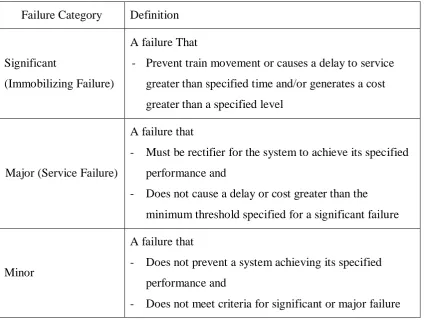
Table 2.1: RAM failure categories (EN 50126, 1999)
Failure Category Definition
Significant
(Immobilizing Failure)
A failure That
- Prevent train movement or causes a delay to service greater than specified time and/or generates a cost greater than a specified level
Major (Service Failure)
A failure that
- Must be rectifier for the system to achieve its specified performance and
- Does not cause a delay or cost greater than the minimum threshold specified for a significant failure
Minor
A failure that
- Does not prevent a system achieving its specified performance and
- Does not meet criteria for significant or major failure
Higher reliability targets placed on a significant failure while the small failures target is place in the small failures category. Therefore, the infrastructure manager must know which failure mode of the train needs to be given more attention in order to achieve the reliability of both systems and incur less cost because of failure. Among the factors which have an important influence on the equipment reliability are period of use and environment of use. The Typical reliability parameters that have been used for track show in table 2.2.
Table 2.2: Typical reliability parameters that have been used for track (Tzanakakis, 2013).
No. Reliability Parameter Description
[image:20.595.124.516.647.767.2]9
The rate of failure is often described as the Mean Time Between Failure (MTBF) which determines the time for the average period between failure. For part of non-repaired with constant failure rate, reliability is given by:
time operating Total
failure of
Number
R (2.1)
If failures occur randomly then they can be described by an exponential distribution
MTBFt λt e
e t R
(2.2)
Where; λ = Failure rate (
M TBF 1
λ )
Probability of Failure; The general expression for probability of failure F(t) is given by
t 1-R
tF (2.3)
[image:21.595.131.511.578.645.2]Reliability is obtained from failure rate, as described above. Failure rate is the time rate of change of the probability of failure. Failure rate is a function of time and often obtain some indication as to which of the influencing factors is controlling and at what time it is controlling. For this to happen, failures must be recorded. In most databases today, failure data sets are scarce or they have a short background. The whole process is illustrated in Figure 2.1.
2.2.2 Availability Parameters
Reliability and maintenance to strongly related to the availability of systems and equipment. Reliable system requires less maintenance and good maintainability in shorten repair time. A system has different operational phases: The description and definition is according to Tzanakakis.
Uptime (Up) : the time that a system works
Downtime (Down) : the system does not work
Availability is a function of uptime and downtime as shown the following Figure 2.2 and equation (2.4)
Downtime Uptime
Uptime time
Total Uptime ty
Availabili
[image:22.595.157.492.320.513.2] (2.4)
Fig. 2.2: System Operational States (Tzanakakis, 2013).
System availability can be determined in three ways such as:
i. Inherent availability ii. Achieved availability iii. Operational availability
11
which assumes that tools, spare parts and personnel are readily available. Inherent availability for example only takes corrective maintenance into account:
MTTR MTBF
MTBF ty
availabili Inherent
(2.5)
Where; MTBF - Mean Time Between failure MTTR - Mean Time To Repair
Achieved availability is based on the fact that the system that requires maintenance and consider preventive and corrective Maintenance. Achieved availability is also based on an ideal support environment but with consideration of preventive maintenance or schedule (Tzanakakis, 2013).
MDT MTBM
MTBM ty
availabili Achieved
(2.6)
Where; MTBM - Mean Time Between Maintenance MAMT - Mean Active Maintenance Time
Operations availability is the probability of system or equipment including preventive and corrective maintenance, logistics delay time and delay time of administration. It shows the availability of the actual operating environment (Tzanakakis, 2013).
MDT MTBM
MTBM ty
availabili l
Operationa
(2.7)
Where; MTBM - Mean Time Between Maintenance MDT - Mean Down Time
Mean Down Time (MDT) comprises of Mean Detection Time (troubleshooting time), Mean Decision time (time to take decision in case of a failure), MTTR, Mean Functional Test time (testing for startup time) and Mean Logistic Time. The availability of a track is for example 98,5%. This means that the track should be operational 360 days of 365 days per year (=365 X 98,5%).
2.2.3 Maintainability Parameters
Maintainability design is related to the function and must be current Engineering design phase, definition, and the early development of life cycle. Maintainability Engineering done for the following reasons:
i. To achieve ease of maintenance through design, reducing maintenance time and cost
ii. To estimate maintenance and system downtime
iii. To estimate labour, hours, time, and other resources for proper maintenance
Maintainability is usually measured by mean time to repair (MTTR). The elements contained in the MTTR given by the time access and repair/replacement time. Maintainability is also represented by the mean time between maintenance (MTBM) or mean distance between maintenance (MDBM). Maintainability is calculated with the mean time to repair (MTTR), which represents the downtime because of maintenance done (Tzanakakis, 2013).
MTTR t
t e
e
1 1
Ms (2.8)
Where; μ is repair (restoration) rate (μ = 1 / MTTR)
2.2.4 Safety Parameters
13
the safety analysis. The hazardous events should be categorized as frequent, probable, occasional, remote, improbable and incredible. Likewise severity level can be divided into four categories namely catastrophic, critical, marginal and insignificant.
Safety can be defined as a subset of reliability with consideration of the severity of the failure mode. Typical safety parameters that have been used to track or train scenario as the following:
i. Mean Time Between Hazardous Failure (MTBHF) ii. Mean Time Between Safety System Failure (MTBSF) iii. Hazard rate H(t)
Time units in the above cases are considered in Million Gross Tonnes (MGT).
[image:25.595.106.529.400.689.2]2.2.5 Summaries of term RAMS Values for System Operational States
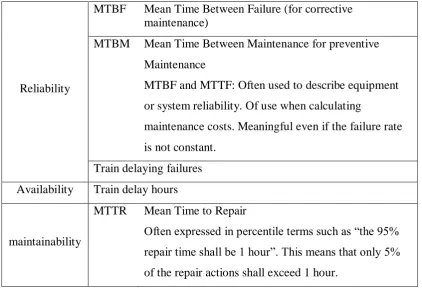
Table 2.3: The key values for system operational state (Tzanakakis, 2013).
Reliability
MTBF Mean Time Between Failure (for corrective maintenance)
MTBM Mean Time Between Maintenance for preventive Maintenance
MTBF and MTTF: Often used to describe equipment or system reliability. Of use when calculating
maintenance costs. Meaningful even if the failure rate is not constant.
Train delaying failures Availability Train delay hours
maintainability
MTTR Mean Time to Repair
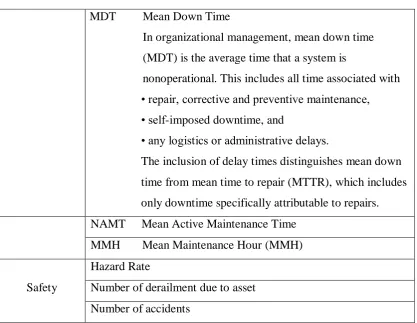
Table 2.3: (continued) MDT Mean Down Time
In organizational management, mean down time (MDT) is the average time that a system is
nonoperational. This includes all time associated with • repair, corrective and preventive maintenance, • self-imposed downtime, and
• any logistics or administrative delays.
The inclusion of delay times distinguishes mean down time from mean time to repair (MTTR), which includes only downtime specifically attributable to repairs. NAMT Mean Active Maintenance Time
MMH Mean Maintenance Hour (MMH)
Safety
Hazard Rate
Number of derailment due to asset Number of accidents
2.3 Methods and Tools for RAMS Analysis
Various tools and methods are used for RAMS analysis. Some of these tools and methods are here presented, for example (Tzanakakis, 2013),
i. FMEA (Failure Mode and Effects Analysis),
ii. FMECA (Failure Mode, Effects and Criticality Analysis), iii. FTA (Fault Tree Analysis),
[image:26.595.109.527.90.413.2]15
2.3.1 FMEA
Failure Mode and Effects Analysis (FMEA) is a systematic tool for identifying: i. Effects or consequences of a potential product or process failure. ii. Methods to eliminate or reduce the chance of a failure occurring.
A successful FMEA activity helps a team to identify potential failure modes based on past experience with similar products or processes, enabling the team to design those failures out of the system with the minimum of effort and resource expenditure, thereby reducing development time and costs.
2.3.2 FMECA
Failure Mode, Effects and Criticality Analysis (FMECA) is an extension of FMEA by including a criticality analysis, which is used to chart the probability of failure modes against the severity of their consequences. The result highlights failure modes with relatively high probability and severity of consequences, allowing remedial effort to be directed where it will produce the greatest value.
2.3.3 FTA
Fault Tree Analysis (FTA) is a diagnostic tool used to predict the most likely failure in a system breakdown. This analysis method is mainly used in the field of safety engineering and reliability engineering to determine the probability of a safety accident or a particular system level (functional) failure.
2.3.4 CCA
CCA diagram, the probabilities of the various consequences can be calculated, thus establishing the risk level of the system.
2.3.5 Failure Block Diagram Analysis
[image:28.595.178.468.314.711.2]Failure Block Diagram Analysis is the analysis of a system based on the component reliabilities. It is a method of modeling how components and sub-system failures combine to cause system failure. Reliability block diagrams may be analysed to predict the availability of a system and determined the critical components from a reliability viewpoint. Figure 2.3 shows examples of reliability block diagrams models for reliability design and assessment.
17
2.3.6 HAZOP
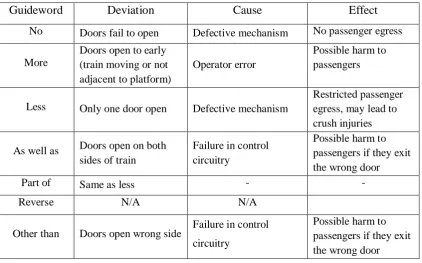
A Hazard and Operability study (HAZOP) is a structured and systematic examination of a planned or existing process or operation in order to identify and evaluate problems that may represent risks to personnel or equipment, or prevent efficient operation. A HAZOP is a qualitative technique based on guidewords and is carried out by a multi-disciplinary team (HAZOP team) during a set of meetings, to assess the hazard potential that arise from deviation in design specifications and the consequential effects on the facilities as a whole. This technique is usually performed using a set of guidewords: NO / NOT, MORE / LESS OF, AS WELL AS, PART OF REVERSE, AND OTHER THAN.
[image:29.595.110.533.510.773.2]From these guidewords, scenarios that may result in a hazard or an operational problem are identified. Consider the possible flow problems in a process line, the guide word MORE OF will correspond to high flow rate, while that for LESS THAN, low flow rate. The consequences of the hazard and measures to reduce the frequency with which the hazard will occur are then discussed. This technique had gained wide acceptance in process industries as an effective tool for plant safety and operability improvements. Table 2.4 shows an example of the application of HAZOP for analysing the operational problems of train doors at platforms
Table 2.4: An example of the application of HAZOP (From Mun 2013)
Guideword Deviation Cause Effect
No Doors fail to open Defective mechanism No passenger egress
More
Doors open to early (train moving or not adjacent to platform)
Operator error
Possible harm to passengers
Less Only one door open Defective mechanism
Restricted passenger egress, may lead to crush injuries
As well as Doors open on both sides of train
Failure in control circuitry
Possible harm to passengers if they exit the wrong door
Part of Same as less - -
Reverse N/A N/A
Other than Doors open wrong side Failure in control circuitry
2.4 Reliability Centre Maintenance
Reliability-based maintenance (RCM) is analytical technique maintenance to identify and determine the failure management policies for the achievement of operational objectives such as safety, availability and cost. Failure management policies generally include maintenance strategy, operational changes, modification of design or other to control due to the mode of failure. RCM implementation steps are detailed along with the tools and techniques needed or improvements made to the effectiveness of the system (Melissa et al. 2014).
[image:30.595.121.518.468.691.2]RCM provides a structured logical decision process to determine the appropriate basic preventive maintenance, design improvements, or a suitable alternative for security, operational impact, and potential degradation mechanisms malfunction, the analysis is supported by FMECA, FTA and other. The application of RCM at the operation and maintenance stages can be applied for the improvement of the existing maintenance policy. Figure 2.4 shows a procedure that can be done with RCM FMECA in the design process systems engineering. RCM is usually implemented to monitor the results of the risk assessment with preventive maintenance strategies (Mun 2013).
19
2.5 RAMS in Operation and Maintenance
The objective of this phase is to operate, maintain and support the combination of components and subsystems such that compliance with the requirements RAMS system is maintained.
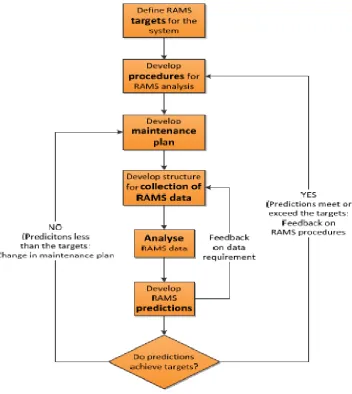
[image:31.595.142.495.266.661.2]Figure 2.5 shows the process for RAMS track system in operation and maintenance phase in the life cycle of the system. It is a process of continuous improvement in all phases of operation and maintenance.
Fig. 2.5: RAMS process in the operation and maintenance phase (Tzanakakis 2013)
existing subsystem and not only for one subsystem that can be affected by other subsystems.
2.6 Literature review about Reliability and Maintainability of railway track.
Train need maintenance to performed to keep the train operating (preventive maintenance), and they are repaired when they fail (corrective maintenance). The ease with which maintenance work (including repair) can be carried out determines train maintainability. Maintenance work can be divided in two categories, preventive and corrective (Klaus et al.1993).
Preventive maintenance seeks to retain the system in an operational or available state by preventing failures from occurring. This can be by servicing, such as cleaning and lubrication or by inspection to find and verify incipient failures. Preventive maintenance affects reliability directly. It should be performed in a planned manner. Preventive maintenance can be measured by the time taken to perform the specified maintenance tasks and their specified frequency.
Corrective maintenance includes all actions to return a system from a failed to an operating or available state. The amount of corrective action is, therefore, determined by reliability. Although a plan for corrective maintenance can be established, the timing and complete details of corrective maintenance action cannot be planned; it happens unexpectedly and should be avoided by design.
System maintenance related to the actual maintenance work to develop maintenance procedures. Based on the failure modes, various tools and methods are used to calculate reliability and maintainability of the system are used FMEA (Failure Mode and Effects Analysis), FMECA (Failure Mode, Effects and Criticality Analysis), FTA (Fault Tree Analysis), Failure Block Diagram Analysis, CCA (Cause Consequence Analysis) and etc. (Kumar et al. 2001). Failure modes directly affect reliability based on probability of occurrence of failure modes, maintainability is related the number of failures occurring in a period of time of the system.
21
defines the long unit provided track when a train passes over it. To achieve the demand availability of the track section following measures must be considered;
i. Reduce the corrective maintenance on the track.
ii. All the preventive maintenance on the track must be carried out in the train free periods.
Maintenance plans on the track need to utilise when the train not operation in order to maximum maintenance actions. In order to calculate the availability of a track section within period the reliability and maintainability of the track along time instead of train time table need to be considered.
2.7 Literature review about railway signaling system
The purpose of the signaling system is to ensure that trains keep a safe distance between each other. Based on previous research, the railway signaling system has a method to control the train operation to ensure safety of railway Transport. This signal system it depends on train authorities and it must be appropriate to the tracks used, train density and train schedule. Based on that for careful signaling system design must be concerned to ensure the availability and safety of train operations. In addition, to manage the rail it should take into account several factors, namely the amount of transportation and the layout of the track at the station (Shigeto et al. 2008)
Signaling systems based on information technology will be introduced more active in the future. Therefore, a systematic method for evaluating the signal system will become more important in the development phase. For safety, various technologies have been developed and used, and signaling systems have an excellent safety record. They are also responsible for assigning and provide use of the track, control the direction of the train, all the traffic order within the limits of infrastructure and establish timetables and regulations to ensure that the train is operating safely and efficiently.
method to evaluate system availability based on the following concepts of estimating the impact on train operation caused by an equipment failure (a component of signaling system) (Shigeto et al. 2008).
[image:34.595.162.474.247.387.2]The basic procedure is illustrated in Fig.2.6. Take into account the signaling system at a single station. When the equipment (eg, signals, track circuits, machines and interlocking devices) fail, there are various types of impacts. In some cases, the train cannot operate, while in other cases the train can run through the station via an alternative route.
Fig. 2.6: basic evaluation procedure (Shigeto et al. 2008).
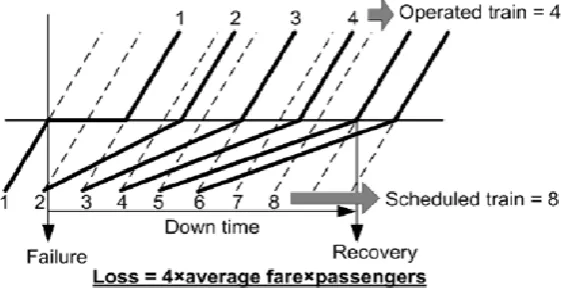
The number of the train does not operate during failure and each equipment failure estimated based on the conditions specified. The failure is one of the conditions, and corresponds to the indication of maintainability. The loss of fare revenue caused by failure is estimated from the difference between the total actual planned and operated railway. The outline must be estimating loss each case shown in Fig. 2.7.
[image:34.595.182.463.566.711.2]23
2.8 Summary
CHAPTER 3
METHODOLOGY
3.1 Project Planning
This chapter outlines the methodology designed to perform the project effectively and efficiently. This project established a strong foundation through investigation, comprehension and analysis of various literatures. The literature review should be implemented throughout the whole project to obtain the source of knowledge of the research topic and to continuously improved and updated to help the researcher to obtain the quality of the results.
This chapter also explains the processes employed specifically to guide the research work from beginning till end. The justification of every stage on how this research was conducted will also be included here. Interview surveys and case study were the methods conducted to get more information about railway operations between Ipoh and KL Central. MYRA, KTM Depot, Ipoh Station and the headquarters were among the places that were contacted.
REFERENCES
Abdul Rahman, H. (2012). KTMB ’ s Annual Report 2012.
Ali EBrahimi (2010), Effect analysis of Reliability, Availability, Maintainability and Safety (RAMS) Parameters in design and operation of Dynamic Positioning (DP) Systems in floating offshore structures, Royal Institute of Technology. Ambika Prasad Patra (2007), RAMS and LCC in Rail Track Maintenance, Luleå
University of Technology.
Angelalia ROZA (2013), Intercity Land Public Transport Challenges in Developing Country: A Case Study in Peninsular Malaysia.Center for Transportation Research, Faculty of Engineering, University of Malaya
Bryman, A. & Bell, E. (2007), Business research methods, Oxford University Press, USA.
BS EN – 50126-1 (1999)– The specification and demonstration of reliability,
availability, maintainability and safety (RAMS). European Standard, Railway application
Carina Girvan and Timothy Savage (2013), Guidelines for Conducting Text Based Interviews in Virtual Worlds, Trinity College Dublin, Ireland.
Donavan M. Lowtan (2004), Final report of Rail System in Malaysia, Massachusetts Institute of Technology.
Emmanuel Matsika (2012), Rail vehicles, environment, safety and security, NewRail, Newcastle University, UK.
Goncalo Medeiros Pais Simoes (2008), RAMS analysis of railway track
infrastructure. Engineering, Architecture, Science and Technology, University of Lisbon
J. H. Kim (2009), Development Of The Fmeca Process And Analysis methodology For Railroad Systems, International Journal of Automotive Technology, Vol. 10, No. 6, pp. 753−759
Konstantinos Tzanakakis (2013), The Railway Track and Its Long Term Behaviour, Page 260-277 Polytechnic Institute of New York University
Laszlo Sikos, Jirˇi Klemeš (2010), Reliability, availability and maintenance optimisation of heat exchanger networks, Research Institute of Chemical and Process Engineering, Faculty of Information Technology, University of Pannonia
Melissa Rivera Rivera (2014), Achieving Maintenance Operations Excellence through the RCM Program, MSEE, ABM Industries Incorporated.
Melkamu Teshome (2012), Modelling and Analysis of Reliability and Long Run Availability of a Fleet of Rolling Stock, University of twenty
Mohani Abdul, Yaakob Ibrahim and Goh Ming Hun (2008), Keretapi Tanah Melayu Bhd. Asian Journal of Case Research, 1(2):163-182.
Mun Gyu Park (2013), RAMS Management of Railway Systems. Integration Of Rams Management Into Railway Systems Engineering, University of Birmingham Per Runeson & Martin Höst (2009), Guidelines for conducting and reporting case
study research in software engineering, Empir Software Eng 14:131–164.
Sarah S. Soh, Nor. H. M. Radzi, Habibollah Haron (2012), Review on Scheduling Techniques of Preventive Maintenance Activities of Railway.2012 Fourth International Conference on Computational Intelligence, Modelling and Simulation, University Technology Malaysia
Shigeto Hiraguri, Koji Iwata, and Ikuo Watanabe (2008), A Method of Evaluating Railway Signaling System Based on RAMS Concept, Railway Technical Research Institute, Tokyo, Japan
Stamatelatos, M. & Caraballo, J. (2002), Fault tree handbook with aerospace applications, NASA headquarters.
Tomo, Z. (2010), Improving the reliability of chemical process plant