611
AJCS 5(5):611-619 (2011) ISSN:1835-2707
Effect of elemental sulfur application on ammonia volatilization from surface applied urea
fertilizer to calcareous sandy soils
Abdou A. Soaud
1, Maher E. Saleh
2, Khaled A. El-Tarabily
3, M. Sofian-Azirun
4and M. Motior
Rahman*
41
Department of Soil Science, Faculty of Agriculture, Cairo University, Egypt
2
Department of Microbiology, Faculty of Science, University of Ain Shams, Cairo, Egypt
3
Department of Biology, Faculty of Science, United Arab Emirates University, UAE
4
Institute of Biological Sciences, Faculty of Science, University of Malaya, 50603, Kuala Lumpur, Malaysia
*
Corresponding author: [email protected]; [email protected]
Abstract
Widespread acceptance of urea was delayed in part due to its greater potential for nitrogen (N) loss via ammonia volatilization. Elemental sulfur (S0) at rates of 0, 1, 5 and 10 t ha-1 combined with or without urea and inoculation of Paracoccus versutus (Pv) were tested to determine NH3-N volatilization from urea in sandy calcareous soils of Masafi-1 and Masafi-2. Daily NH3-N loss was
measured up to 29 days after surface urea application in both soils using the closed dynamic airflow system. Total NH3-N
volatilizations from urea-treated soils were 22.15 to 29.74 % of applied N in Masafi -1 and Masafi -2 soils, respectively. Application of S0 had a positive influence on reducing NH3-N volatilization from surface applied urea. In both soils significant reductions in
NH3-N volatilization were observed in amended soil by S0. The result reveals that S0 at rates of 1or 5 t ha-1 and 5 or 10 t ha-1 is
required to minimize volatile loss of NH3-N from surface applied urea in Masafi-1 and Masafi-2 soils, respectively. Application of
Pv with or without S0 and urea had no positive influence on reduction of NH3-N volatilization.
Keywords: Ammonia volatilization, elemental sulfur, sandy calcareous soils, urea
Abbreviations: DAI-days after incubation, N-nitrogen, Pv- Paracoccus versutus, S-sulfur, S0-elemental sulfur, U-urea, UAE-United
Arab Emirates
Introduction
Urea is the cheapest form of granular nitrogen, widely used for crop plants (Dong et al., 2009) and accounts for more than 50% of the world’s nitrogenous fertilizers (Schwab and Murdock, 2005). However, one of the great disadvantages of urea among nitrogenous fertilizers is its volatile property which causes large losses of urea to the environment. The loss of urea is highly dependent on the rate of hydrolysis which in turn is influenced by soil temperature, soil moisture, relative humidity, wind speed, rainfall pattern, cation
exchange capacity, H+ ion buffering capacity, CaCO3
content, organic matter content and N source (Jones et al., 2007) and urease activity as well (Watson et al., 2008). Ammonia volatilization is directly related to soil pH near the fertilizer droplet or granule, which largely determines the ratio of NH3 to NH4+ in the soil solution (Jones et al., 2007).
Alkaline soils (pH~8.2 or higher) have proven to increase urea hydrolysis (Christopher et al., 2010) and this condition occurs in calcareous soils, or where the breakdown of the N fertilizer produces alkaline conditions. In addition, the formation of the hydroxide ions can cause soils around the applied urea particle to have a pH around 9.0 which increases ammonia volatilization (Mclnnes et al., 1986). When surface soil pH value is greater than 7.0, volatilization of NH3-N
fertilizer is significantly increased. The urease-mediated reaction of soil-applied urea with H2O results in rapid
conversion to NH4 +
. In this reaction, H+ ions are consumed
and NH4 +
and HCO-3 are produced, causing the soil pH, at the
reaction site to increase. Soil pH change depends on initial pH, net inputs of acid or alkali, and the soil's pH buffeting capacity (Bloom, 2000) and soils with a larger H+ ion buffering capacity have been shown to also retain more NH3
(Izaurralde et al., 1987). The NH3 losses due to urea
hydrolysis may reach as much as 80% of the total N applied under field conditions (Gould et al., 1986). Ammonia volatilization is the loss of N to the atmosphere through conversion of the ammonium ion to ammonia gas (NH3).
Ammonium is an available source of N for plant while ammonia is not (Bardy and Weil, 2002). Ammonia loss from unamended urea varies with soil type and temperature, ranging from 8.2 to 31.9% of the applied N (Watson et al., 2008). Nitrogen loss through ammonia volatilization on calcareous soils is a common concern when NH3-N is applied
to the soil surface and remains there without incorporation into the soil. Therefore, in an application of dry fertilizer containing NH3-N, the fertilizer should be moved into the
612
Table 1. Physicochemical properties of Masafi-1 and Masafi-2 soils Soil properties Masafi soils-1 Masafi soils-2 Texture
Sand ( %) 87.50 87.50
Silt ( %) 5.00 5.00
Clay (%) 7.50 7.50
Total carbonate (%) 24.53 26.07
EC (dSm-1) 9.49 12.68
pH 7.58 7.70
Cations (mq L-1)
Ca 25.00 38.20
Mg 34.20 39.20
Na 53.80 56.20
K 7.520 11.94
Anions (mq L-1)
Cl 46.80 52.00
HCO3 20.40 8.40
SO4 0.64 6.20
Mg:Ca Ratio 1.37 1.03
the prediction of actual N volatilization losses under a given set of soil and environmental factors can seldom be achieved, due to the complex interactions (Ping et al., 2000). Fertilizer is often applied when field conditions are not optimal, particularly in large scale operations. Thus, crop yield is reduced and extra costs are incurred from additional N fertilizer due to rapid volatile loss of ammonia. Therefore, economic efficiency of cropping systems is reduced due to volatile loss of ammonia. The use of inhibitors can decrease the localized zones of high pH common with untreated urea
(Schwab and Murdock, 2005; McCarty et al., 1989), for example N losses can be reduced by the use of a urease inhibitor added to the fertilizer. The use of NPBT allows urea to be used more efficiently and the cost effective delivery vehicle for nitrogen soil amendment, per unit of nitrogen, occurs at a lower cost (Watson et al., 2008). Approaches have been taken to decrease the NH3 loss by using S0 that retard
613
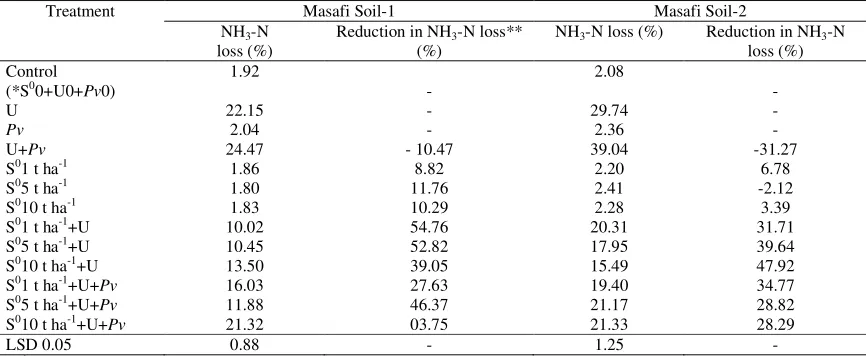
Table 2. Total ammonia volatilization and reduction of ammonia volatilization from surface applied urea as affected by elemental sulfur and Paracoccus versutus
Masafi Soil-1 Masafi Soil-2
Treatment
NH3-N
loss (%)
Reduction in NH3-N loss**
(%)
NH3-N loss (%) Reduction in NH3-N
loss (%) Control
(*S00+U0+Pv0)
1.92
-
2.08
-
U 22.15 - 29.74 -
Pv 2.04 - 2.36 -
U+Pv 24.47 - 10.47 39.04 -31.27
S01 t ha-1 1.86 8.82 2.20 6.78
S05 t ha-1 1.80 11.76 2.41 -2.12
S010 t ha-1 1.83 10.29 2.28 3.39
S01 t ha-1+U 10.02 54.76 20.31 31.71
S05 t ha-1+U 10.45 52.82 17.95 39.64
S010 t ha-1+U 13.50 39.05 15.49 47.92
S01 t ha-1+U+Pv 16.03 27.63 19.40 34.77
S05 t ha-1+U+Pv 11.88 46.37 21.17 28.82
S010 t ha-1+U+Pv 21.32 03.75 21.33 28.29
LSD 0.05 0.88 - 1.25 -
*S0= elemental sulfur, U-urea, Pv-Paracoccus versutus, ** % Reduction in NH
3-N loss = (A-B/A) x100, where A = % NH3-N
614
years in the reclamation and improvement of sodic and calcareous soils (Abdel Fattah et al., 1990; Wassif et al., 1993). Recently, more attention has been given to S application to soils due to its favorable effects in promoting nutrient availability in soils (Saleh, 2001; El-Fakharani, 1995). Application of S0 for the amendment of alkaline and/or calcareous soils has received little attention, as an inhibitor for ammonia volatilization. Therefore, this study was undertaken to determine the rate of NH3-N volatilization
from surface applied area as affected by varying rates of S0 application combined with or without urea and Pv inoculation in sandy calcareous soils in United Arab Emirates (UAE).
Materials and methods
Experimental design
The study was carried out at laboratory of Aridland Agriculture, College of Food Systems, UAE University. Sandy calcareous soil was collected from two locations of Masafi region, Al Fujairah, UAE (25°18′48″N 56°9′46″E) which was designated by Masafi-1 and Masafi-2. Elemental S at rates of 0, 1, 5 and 10 t ha-1 was tested combined with or without urea and Paracoccus versutus. Urea was used at rates
of 0 and 200 kg ha-1. The treatment arrangements are as follows: Control (S00+U0+Pv0), urea (U), Paracoccus versutus (Pv), U+Pv, S0 1 t ha-1, S0 5 t ha-1, S0 10 t ha-1, S0 1 t ha-1+U, S0 5 t ha-1+U, S0 10 t ha-1+U, S0 1 t ha-1+U+Pv, S0 5 t
ha-1+U+Pv and S0 10 t ha-1+U+Pv. The experiment was conducted under completely randomized design with three replications.
Management practices
A proportion of soil was separated and sieved through 1-mm stainless steel sieve and stored in plastic bags for physicochemical analysis. Soil pH was determined from the prepared soil suspension (1:2.5 soil water ratios) by using combined pH meter model 900A (Thermo Orion, Ontario, Canada) (Thomas, 1996). Electrical conductivity (EC) was measured by the saturation extracts of soil samples using Orion model 120 microprocessor conductivity meters (Thermo Scientific, USA). Water soluble cations (Ca, Mg, Na, and K) and anions (Cl, HCO3, CO3 and SO4) were
615
UAE and added as per treatment schedule. Commercial grade of granular urea fertilizer was used as a source of N. Local sulfur-oxidizing bacteria Paracoccus versutus (CBS 114155) was used which was previously isolated from the western regions of the UAE (El-Tarabily et al., 2006). Soils were air-dried before being used in the experimental glass bottles. Under ambient laboratory conditions (23-250C), a triplicate of 150 g soil were mixed thoroughly with 0.0, 0.502, 2.510 and 5.020 g of S0 powder corresponding to 0, 1, 5 and 10 t ha
-1 and the mixtures were transferred into 1000-mL glass
bottles (surface area 50.26 m2) then urea fertilizer (0.258 g) was added on the soil surface at the rate of 200 kg ha-1. After addition of urea fertilizer and Pv, the soil samples were wetted with distilled water using automatic burette and maintained to field capacity (12.0%).
Measurement of volatilization
A closed dynamic airflow system (Purakayastha and Katyal, 1998) was used to measure the NH3-N volatilization. All
bottles were connected to the air flow system immediately after soil wetting and the outlets from each bottle was immersed in a boric acid (2%) mixed indicator solution to capture the NH3-N volatilized from soil surfaces (Al-Kanani
et al., 1994). The inlet compressed air flow was first passed to bubble through distilled water to produce humidified air, which then passed to the bottles with fixed rate. Boric acid-mixed indicator traps were replaced every 24 hrs for a period of 29 days after incubation (DAI) for both soils and the ammonia was determined by titrating with 0.01M H2SO4
solution (Bundy and Meisnger, 1994). The amounts of volatilized NH3-N were calculated as percent of the applied
urea-N.
Statistical analysis
616
means was determined using the least significant differences (LSD) comparison method.
Results and discussion
Soil properties had significant influence on NH3-N volatilization. Masafi-1 soils have higher concentration of Ca/Mg ratio and HCO3 and lower concentration of EC, SO4,
Ca and Mg. On the contrary Masafi-2 soils have lower concentration of Ca/Mg ratio and HCO3 and higher
concentration EC, SO4, Ca and Mg that enhanced the rate of
NH3-N volatilization (Table 1). The NH3-N volatilization was
reduced from surface applied urea by amendment of S0 in both soils. The results clearly indicates that the rate of NH3-N
volatilization is directly associated with physiochemical properties of soil such as Ca/Mg ratio, EC, HCO3, SO4, Ca
and Mg concentration in soil (Table 1). The pattern of NH3-N
volatilization differed among the treatment variables. The daily highest rate of NH3-N volatilization (5.29%) was
observed in urea treated soil followed by urea with Pv
(4.50%) and S0 at the rate of 1 t ha-1 with urea and Pv. The
peak NH3-N% volatilization was observed at 2 DAI and
thereafter reduced slowly in most of the treatments in Masafi-1 soils (Fig. Masafi-1). The NH3-N volatilization significantly
reduced by addition of S0 at rates of 1, 5 and 10 t ha-1 followed by control treatment and slowly declined up to 19 DAI and thereafter rose slightly but significantly lower than other treatments in Masafi-1 soils (Fig. 1). Minimum NH3-N
volatilization was observed in S0 amended soil regardless of levels of S0 and control treatment. In Masafi-1 soils, NH3-N
617
of incubation and then gradually reduced up to 19 days and again slightly rose while in Masafi-2 soils NH3-N slightly
rose up to 3 DAI and thereafter slowly declined up to end of the incubation period. The present findings are in agreement with Dong et al., (2009). They reported that NH3 losses
peaked on day 3 after urea application while soil amended with wheat and corn straw plus urea shifted the peak of NH3 losses 1 day ahead. In Masafi-2 soils, the highest rate of NH3-N (5.45%) volatilization was observed at 4 DAI in
U+Pv inoculated soil followed by urea treated soil (3.12%). The NH3-N volatilization rate was significantly reduced by
addition of S0 regardless of levels with urea and Pv
inoculated soil. Ammonia-N loss reached peak at 3 to 4 DAI in most of the treatments and thereafter declined gradually up to end of the incubation period (Fig. 2). In Masafi-2 soils, the declining rate of NH3-N volatilization was a bit different
from Masafi-1 soils. The NH3-N volatilization reached peak at 4 DAI in Pv inoculated soil regardless of S0 levels and S0 at the rate of 1 t ha-1+U while all other treatments except
control treatment reached peak at 5 DAI and thereafter declined gradually except few variations in some treatments in Masafi-2 soils. Regardless of treatment, NH3-N
volatilization was lower in Masafi-2 than Masafi-1 soils. In urea treated soil, decreasing trend of NH3-N volatilization
was observed up to end of the experiment except few variations was observed at 12, 14 and 19 to 23 DAI for both soils. In Masafi-1 soils, concentrations of volatilized NH3-N
reduced in urea-treated samples at 3 DAI but increased in
Masafi-2 soils until 4 to 5 DAI and thereafter declined. In urea-treated soils, the daily amounts of N losses were higher in Masafi -1 than in Masafi -2 soils during whole incubation period (Figs. 1 and 2). The volatile losses of NH3-N were
22.15 and 29.74 % of applied N from urea treated soils throughout the incubation period in Masafi-1 and Masafi-2 soils, respectively (Table 2). Application of S0 significantly
reduced NH3-N volatilization in both soils. The reductions of
NH3-N volatilization loss were 54.76%, 52.82% and 39.05%
in Masafi-1 and 31.71%, 39.64% and 47.92% in Masafi-2 soils by combined application of S0 at rates of 1, 5 and 10 t ha-1 with urea, respectively (Table 2). In urea-treated soils,
inoculation of Pv significantly increased the daily losses of NH3-N comparing with the non-inoculated samples during
incubation period while inoculation of Pv with S0 also reduced the ammonia volatilization from urea applied to tested soils, but the rate of reduction was less compared to soils treated with S0 only (Table 2). By application of S0 inoculated with Pv, the reduction in NH3-N losses were
27.63%, 46.37% and 3.75% in Masafi-1 and 34.77%, 28.82% and 28.29% in Masafi-2 soils from S0 1 t ha-1+U+Pv, S0 5 t ha-1+U+Pv and S0 10 t ha-1+U+Pv, respectively (Table 2).
The results showed that combined application of S0 and Pv
618
significantly reduced maximum NH3 emissions to about 23 to
58% of those from urea only. At the end of soil incubation, SO4 concentration and EC were determined from saturated
soil extracts. Sulfate concentration was significantly varied by the treatment variables. Regardless of treatments, SO4
concentration was significantly higher in Masafi-2 than Masafi-1 soils (Figs. 3 and 4). The lowest concentration of SO4 was obtained from urea treated treatment in both soils
which had positive influence on NH3-N volatilization. The
results of SO4 concentration indicated that SO4 in saturation
extracts increased as the increased rate of S0 application resulted reduced ammonia volatilization. Application of S0
had also effect on soil EC and slight differences were observed with increasing S0 level in both soils. But S0 with
Pv resulted increased EC in both soils (Figs. 5 and 6). The results of ammonia volatilization obtained from the incubated soils revealed that application of S0 played a significant role
in reducing the amounts of N losses from soil surfaces. The average NH3-N volatilization loss was 1.83% to 2.30% by the application of S0 while in urea treated soil and loss of NH3-N
volatilization was much higher in both soils. When urea treated soil amended by S0, the rate of NH
3-N volatilization
reduced about 8.65% to 14.25%. In Masafi soil-1, reduction rate of NH3-N volatilization was more (13.88 to 14.84%)
when soil was amended by S0 at rates of 1 and 5 t ha-1. While in Masafi soil-2, reduction rate of NH3-N volatilization was
more (11.79% to 14.25%) when soil was amended by S0 at rates of 5 and 10 t ha-1. The lower NH3-N loss with urea
combined with S0 might be due to neutralization of the
alkaline urea microsites by the H2SO4 generated by S0 upon
oxidation (Christianson et al., 1993; Blaise and Prasad, 1995) and an acidic environment in the soil (low pH) favors the conversion of NH3 to NH4 and thus suppresses NH3
volatilization (Fenn and Hossner, 1985). The results of ammonia volatilization from urea-treated soils with Pv
inoculation showed that the rate of NH3-N emission from soil surfaces increased in both soils. It is assumed that inoculation of urea-amended soils with non-urease releasing Pv increased the NH3-N emission comparing with the non-inoculated
urea-amended soils. This might be explained by synergistic effect of applied native bacteria in the tested soils resulted in increase the activity of urease producer bacteria (El-Tarabily et al., 2006).
Conclusion
In both soils significant reductions in NH3-N volatilization
were observed and urea treated soil amended by S0 had
significant influence on reducing NH3-N volatilization. In
Masafi soil-1, S0 at rates of 1 or 5 t ha-1 and in Masafi soil-2, S0 at rates of 5 or 10 t ha-1 are to be applied to minimize NH
3
-N loss from surface applied urea. Application of Paracoccus versutus with or without S0 and urea had no positive
influence on reduction of NH3-N volatilization. The results
suggested that the rate of volatilization was higher in Masafi-2 than Masafi-1 soils.
Acknowledgments
This study was supported by a grant from the Sulfur Project funded by the Japan Cooperation Center, Petroleum (JCCP). Our sincere appreciation to Dr. Maytha AlShamsi, Prof. Gharib Sayed Ali and Prof. Abdel Alim Metwally United Arab Emirates University and Mr. Masato Tanaka, General Manager, Nippon oil Technologies Company, Japan and Prof. Satoshi Matsumoto, Faculty of Bioresources Science, Akita Prefectural University, Japan for their technical
support, encouragement and offered the opportunity to work this project. We sincerely thank the active participation of M. Abdel Wahab for sample preparations. Thanks also due to the staff of CLU, UAEU for sample analysis.
References
Abdel-Fattah A, Hilal MH, El-Habbasha KM, Bakry MD (1990) Amendment of alkaline clay soil by elemental sulphur and its effect on the response of garlic to phosphorus and nitrogen. Middle East Sulphur Symposium, Cairo, 12th Feb, 1990, pp. 295-313
Abdou AS (2001) Ammonia volatilization as affected by sulfur-coated urea, urease inhibitor and soil salinity. International Symposium on Elemental Sulfur for Agronomic Application and Desert Greening. United Arab Emirates University, Abu Dhabi, 24-25 February, 2001
Al-Kanani T, Mackenzie AF, Fyles JW, Ghazala, O’Halloran IP (1994) Ammonia volatilization from urea amended with lignosulfonate and phosphoroamide. Soil Sci. Soc. Am. J. 58:244-248
Blaise D, Prasad R (1995) Effect of blending urea with pyrite and coating urea with polymer on ammonia volatilization loss from surface applied urea. Biol. Fert. Soils 20:83-85 Bloom PR (2000) Soil pH and pH buffering. In: Hand book
of Soil Science. Sumner ME (ed.) CRC press. USA pp. 333-352
Brady NC, Weil RR (2002) The Nature and Properties of Soils. 14th edn. Prentice Hall, Upper Saddle River, New Jersey
Broadbent FE, Nakashima T, Chang GY (1985) Performance of some urease inhibitors in field trials with corn. Soil Sci. Soc. Am. J. 49:348-351
Bundy LG, Meisinger JJ (1994) Nitrogen availability indices. In: Methods of Soil Analysis, Part 2- Microbiological and Biochemical Properties. Weaver RW, Angle JS, Bottomley PS (eds.) SSSA Inc. Publisher Madison, WI. pp 951-984
Christopher P, Richard K, William J (2010) Potential for ammonia volatilization from urea in dryland kentucky bluegrass seed production systems. Comm. Soil Sci. Plant Anal. 41(3):320-331
Christianson CB, Baethgen WE, Carmon G, Howard RG (1993) Microsite Reactions of Urea-nBTPT Fertilizer on the Soil Surface. Soil Biol. Biochem. 25(8):1107-1117 Dong W, Hu C, Zhang Y, Junfang C (2009) Ammonia
volatilization from urea incorporation with wheat and maize straw on a loamy soil in China. In: Proceedings of the International Plant Nutrition Colloquium XVI, August 26-30, 2009, University of California, Davis, USA
El-Fakharani YM (1995) Effect of added sulfur and organic manure on barley grown on a virgin saline sandy soil. Egypt. J. Appl. Sci. 10:543-560
El-Tarabily KA, Abdou AS, Maher ES, Satoshi M (2006) Isolation and characterization of sulfur-oxidizing bacteria, including strains of Rhizobium, from calcareous sandy soils and their effects on nutrient uptake and growth of maize (Zea mays L.). Aus. J. Agril. Res. 57(1):101-111
Fenn LB, Hossner LR (1985) Ammonia volatilization from ammonium and ammonium-forming nitrogen fertilizers. Adv. Soil. Sci. 1:123-169
619
Izaurralde RC, Kissel DE, Cabrera ML (1987) Titratable acidity to estimate ammonia retention. Soil Sci. Soc. Am. J. 51:1050-1054
Jones CA, Richard TK, Ellsworth JW, Brown BD, Jackson GD (2007) Management of Urea fertilizer to minimize volatilization. Extension Bulletin, The USDA, Montana State University and the Montana State University Extension Service University and Washington State University
McCarty GW, Bremner JM, Chai HS (1989) Effect of N-(n-butyl) thiophosphoric triamide on hydrolysis of urea by plant, microbial and soil urease. Biol. Fert. Soils 8:123-127
McInnes KJ, Ferguson RB, Kissel DE, Kanemasu ET (1986) Field measurements of ammonia loss from surface applications of urea solution to bare soil. Agon. J. 78:192-196
Page AL (1982) Methods of Soil Analysis (Part 2): Chemical and Microbiological Properties. Page AL (ed.) Agronomy Series no. 9, 2nd edn. Am. Soc. Agron. Madison, WI, USA
Purakayastha TJ, Katyal JC (1998) Evaluation of compacted urea fertilizers prepared with acid and non-acid producing chemical additives in three soils varying in pH and cation exchange capacity: I. NH3 volatilization. Nutr. Cycl.
Agroecosyst. 51:107-115
Ping J, Bremer E, Janzen HH (2000) Foliar uptake of volatilized ammonia from surface-applied urea by spring wheat. Com. Soil Sci. Plant Anal. 31:165-172
Saleh ME (2001) Some agricultural applications for biologically-produced sulfur recovered from sour gases. I. Effect on soil nutrients availability in highly calcareous soils. In: International Symposium on Elemental Sulfur for Agronomic Application and Desert Greening. United Arab Emirates University, Abu Dhabi, UAE, Feb. 24-25, 2001
SAS (2003) SAS Institute, SAS Version 9.1.2(c) 2002-2003. SAS Institute, Inc., Cary, NC pp. 449-453
Schwab GJ, Murdock LW (2005) Nitrogen transformation inhibitors and controlled release urea. Exten. Report. Lexington, KY: College of Agriculture. Univ. Kentucky Thomas GW (1996) Soil pH and soil acidity. (ed. Sparks DL)
In: Methods of soil analysis, Part 3- Chemical methods, SSSA, Book Series # 5. Madison, WI, USA. pp: 475-490 Watson CJ, Akhonzada NA, Hamilton JTG, Matthews DI
(2008) Rate and mode of application of the urease inhibitor N-(n-butyl) thiophosphoric triamide on ammonia volatilization from surface-applied urea. Soil Use Managt. 24(3):246-253