Determinants of Implementation of Electronic
Procurement in Procuring Entities at the County Level in
Kenya.
(Case Study of Lamu County Service Delivery
Coordinating Unit)
Beatrice Kananu Kahiu
*
Jomo Kenyatta University of Agriculture and Technology, Mombasa campus, P.O. Box 81310-80100
Abstract-Despite the government initiative for procuring entities to implement e-procurement, the process has been slowly implemented. E-procurement is a practice if implemented might lead to efficiency, transparency and reduced cost. However, it’s slowed implementation raises concern as to determinants of implementation of e procurement. Consequently the purpose of the study was to assess the determinants of e-procurement implementation in procuring entities, with specific reference to Lamu county service delivery coordinating unit. Specifically the study sought to determine the role of ICT infrastructure, level of employee competence in Information Technology, public procurement regulation and management commitment on implementation of e-procurement in procuring entities. Employees in the Lamu commissioner’s office, treasury and prequalified contractors were the target population of the study. A purposive sample was selected based on the knowledge of the population and the purpose of the study. A sample size of thirty (33) individuals was drawn from the population and a questionnaire was used as data collection instrument. Descriptive statistics and inferential statistics were used to meet the objectives of the study. The study found dependent variables on implementation of e-procurement positively and significantly correlated with effective and efficient implementation of e-procurement. Regression analysis further revealed that ICT infrastructure, level of employee competence in Information Technology, and management commitment on implementation of e-procurement were significant determinants of successful implementation of e-procurement. The study therefore recommended that procuring entities need to create e-procurement platforms by investing in ICT infrastructure both in hardware and software linking all procurement stakeholders. Also the employees have to be motivated to learn, and train in e-procurement regulations and ICT skills for successful implementation of e-procurement. Therefore bodies like PPOA which is mandated with the responsibility of ensuring that procurement procedures established under the Act are complied with, need to, provide advice and assistance to procuring entities and employee. Finally managers should be able to adopt change management strategies towards making the transformation process from manual to e-procurement a success. On the basis of
study limitations, the study recommended further research to be undertaken using larger sample size and also consider other factors like leadership style in both government and non-governmental organizations.
Index Terms- electronic procurement, E-Government, IT Infrastructure, Procuring entities, Procurement regulation, Employee level of ICT competence , implementation of electronic procurement
I. INTRODUCTION
-procurement in the public sector is emerging internationally; hence, initiatives have been implemented in Singapore, United Kingdom, United States of America, Malaysia, Australia and European Union. E-procurement projects are often part of a country’s larger e-government efforts to better serve its citizen and businesses in the digital economy. For instance, Singapore’s GeBIZ was implemented as one of the programmes under its e-Government master plan. This field is populated by two types of vendors: big enterprise resource planning (ERP) provides which offer e-procurement as one of their services, and the more affordable services focused specifically of procurement according to Aberdeen 2001, an e-procurement system manages tenders through a web site. This can be accessed anywhere globally and has greatly improved the accessibility of tenders.
Wu, (2007) & Turban et al, (2006) contends that e-procurement application focus on creating efficiencies; their goal is to make the traditional purchasing procedures more effective as Larsen et al (2008) noted the development and implementation of electronic commerce business models such as a procurement portal in organizations is a challenge that goods beyond mere technological functionality.
In ICT development Kenya has not been left behind because several changes have taken place in Kenya concerning ICT though not properly through a legal framework over the first 10 years of inception. Notable changes have been formation of the Multi- Stakeholder Kenya ICT Action Network. Through the network, a policy process deemed to be inclusive has been
catalyzed, resulting in the country’s first draft ICT policy document which was approved by Cabinet in February, 2006, (Republic on Kenya, 2006).
Though electronic commerce is viewed as involving many ministries, Communication Commission of Kenya (CCK) is responsible for revitalizing and transforming the economy into modern market oriented through e-commerce (Republic of Kenya, 2006). Many firms in Kenya and world over have registered dismal performance in terms of business growth and profit making because of insufficient and unsustainable procurement procedures.
Employees have been fired because of low performance rate persistent lateness and wrong attitude towards work (Johnson, 2008). Studies in ICT adoption frequently highlight in house technical capabilities and experience with ICT, as key contributory factors (Chapman et al, 2000). Price Waterhouse coopers (2002) defend this view by stating “we don’t have enough internet human resources, and cannot hire people”. Implementing a new technology needs skill and knowledge to operate in the organizations and most organizations do not implement because organizations’ employees are not familiar with new technology. Empirical evidence identifies that organization whose employees have the necessary skills and technical knowledge are more likely to implement e-Government applications (Lin and Lee, 2005).
In Kenyan market, research conducted by Humphrey, et al. (2003) revealed that conducting e-commerce is mostly meant for provisions that enable the firms identify trading partners that they could contact off-line with a view to doing business. The follow-up to an initial contact generally is to taking place through other channels such as e-mail, hyperlink, the telephone, fax or the post. Despite the benefits of e-procurement as recognized by managers such as better coordination with suppliers, quicker transaction times, higher flexibility, better supplier integration, and lower costs (Kheng & Hawamdeh, 2002), it is clear that adaption of e-procurement is still very low (Gunasekaran & Ngai, 2008). According to Mitraet al. (2000), the most common forms of e-commerce in Kenya market are e-procurement, e-banking and of late embanking. Of the three, e-procurement which is user friendly; internet based purchasing system (Nikolaos, Poulo, & Bokos, 2006) has generated a lot of interest due to its ability in improving efficiency and transparency, thereby reducing the cost of operation within and between business parties (De Boer, et al., 2002).
E-Procurement refers to the use of Internet-based (integrated) information and communication technologies (ICTs) to carry out individual or all stages of the procurement process including search, sourcing, negotiation, ordering, receipt, and post-purchase review (Croom & Brandon-Jones, 2004). While there are various forms of e-Procurement that concentrate on one or many stages of the procurement process such as e-Tendering, Marketplace, Auction/Reverse Auction, and e-Catalogue/Purchasing, e-Procurement can be viewed more broadly as an end-to-end solution that integrates and streamlines many procurement processes throughout the organization. Although the term “end-to-end e-Procurement” is popular, industry and academic analysts indicate that this ideal model is rarely achieved (DOIR, 2001) and e-Procurement
implementations generally involve a mixture of different models (S&A, 2003).
Explaining the nature of e procurement (Ashis & Amit, 2007) contends that e-procurement Web sites allow qualified and registered users to look for buyers or sellers of goods and services. Depending on the approach, buyers or sellers may specify costs or invite bids. Transactions can be initiated and completed.
Ongoing purchases may qualify customers for volume discounts or special offers. E-procurement software may make it possible to automate some buying and selling (Davey,2007). Companies participating expect to be able to control parts inventories more effectively, reduce purchasing agent overhead, and improve manufacturing cycles. E-procurement is expected to be integrated into the wider Purchase-to-pay (P2P) value chain with the trend toward computerized supply chain management Andrew, Berger, John & Gatomana (2001).
E-procurement can provide real-time business intelligence to the vendor as to the status of a customer's needs. For example, a vendor may have an agreement with a customer to automatically ship materials when the customer's stock level reaches a low point, thus by passing the need for the customer to ask for it (Coulthard & Castleman, 2001). Studies by Ashis & Amit (2007) show that companies can track purchases being made in all department and ensure compliance to standards with use of e procurement. For example, a marketing agent might want to purchase a new laptop for his business trip. In a manual setup, the agent might be instructed to go to a local supply chain store, purchase the laptop and submit the receipt back to the company for reimbursement. Such purchases are difficult to track. With an electronic procurement system in place, the entire purchase runs through approval work flows and the person who approves of such requests ensures the laptop is bought only for the configuration needed in a business use (Gebauer, Beam, & Sage1998).
The turnaround time in making phone calls to suppliers, placing orders and delivery is reduced as buyers can place the order instantly. This ensures purchases, especially the critical ones are made on time, thus contributing to the overall process efficiency within an organization (Adelman, 2000). Despite the obvious advantages associated with e procurement, the value of the processes has yet to be integrated among many procuring entities. Studies by (David, George, Barbara, Isabel & Rewald 2008) show that many public procuring entities are yet to implement e Procurement in their organizations. The benefit of e procurement has on many occasions remained in paper and its real value in procuring entities has never been established (David et al, 2008).
Statement of the Problem
not embraced the culture of e procurement. The reason for low rate of implementation may probably lie in the perception that technology is always associated with change and therefore organizations might be slow in implementing changes that may occur as a result of new technology. Another study by (Kangogo & Gakure, 2013) contends that factors affecting eProcurement implementation in the automobile industry are organizational which mainly have to do with user involvement and customer interaction. (Robert, 2010) points out four conditions of successful implementation in his paper on eprocurement to the World Bank as Strong government leadership (e.g. Korea, Mexico at Presidential level), appropriate implementation framework (e.g. procurement policy, legislation, capacity building, standards), Infrastructure development (connectivity), Complaints mechanism & resolution, Oversight over collusion, bid rigging and managing political economy of reform. Few studies have been carried out on determinants of effective implementation of e procurement in procuring entities. The effect of information communication technology (ICT) infrastructure, employee competence, procurement regulations and management commitment on implementation of e procurement have not yet been established. This study intends to fill in this gap by establishing determinants of implementation of e procurement in procuring entities
Specific Objectives of the study
(i) To establish the effect of Information Communication Technology infrastructure on implementation of electronic procurement in procuring entities.
(ii) To establish the effect of the employees’ level of information technology competence on implementation of electronic procurement.
(iii) To find out the effect of public procurement regulations on effective implementation of electronic procurement in procuring entities.
(iv) To establish the role of managerial commitment in effective implementation of electronic procurement in procuring entities.
(iv) What is the effect of managerial commitment in implementation of electronic procurement in procuring entities?
II. RELATEDLITERATURE
Theoretical Review
1. Institution Theory
The history of institutional theory can be traced back to its early development in economics, political science, and sociology (Scott, 2008). This theory sees institutions as multifaceted, durable social structures made up of symbolic elements, social activities, and material resources. Institutions, however, are not just constraint structures but also simultaneously empower and control (Jepperson, 1991). According to Wijen & Ansari (2007), there are three ‘schools’ within institutional theory: ‘old institutionalism’ that focuses on issues of agency, vested interest, power, and informal structure; ‘new institutionalism’ that stresses structural constraints, embeddedness, and isomorphism; and ‘institutional economics’ that emphasizes human agency in constructing institutions that structure political, economic, and social interaction. These rich concepts provide useful insights
into not only the persistence and the homogeneity of institutions but also institutional change and transformation (Dacin et al., 2002). Institutional theory has been used as a lens in different areas of information systems research. Most of the researchers using this theory believe that information technology (IT) it is an insufficient predictor of IT impact on organization performance improvement (Avgerou, 2000; Orlikowski & Barley, 2001). Avgerou (2000, p. 234) suggest that, ‘IT innovation itself is a process of combining technical -rational and social forces, neither driving, nor subsumed in the forces of organizational change, but interacting with them’. IS scholars should take into account the institutional context where IS is developed and implemented (Orlikowski & Barley, 2001). In addition, institutional theory is also used to portray the relationship between actors and to explain isomorphic mechanisms between the actors which emerge during the IT implementation (Gil-Garcia & Martinez-Moyano, 2007; Kim et al., 2009). In the literature, there are various different mechanisms of institutional change. These included structural overlap and event sequencing (Thornton & Ocasio, 2008). Both structural overlap and event sequencing were not prevalent in this case of eProcurement implementation. Mergers and acquisition are examples of structural overlap (Dorado, 2005); and these were not the case in this study. Therefore, this study will focus only on three of the mechanisms, i.e., institutional isomorphism (DiMaggio & Powell, 1983; Frumkin &Galaskiewicz, 2004), competing institutional logics, and institutional entrepreneurs (Thornton et al., 2005; Thornton & Ocasio, 1999). Institutional isomorphism occurs when an institution has to respond to various external pressures (DiMaggio &Powell, 1983). Institutional entrepreneurs are actors who are taking advantage of the position to mobilize support and resources to create and empower institutions (DiMaggio, 1988). Competing institutional logics can both hinder and trigger institutional change (Nielsen & Jensen, 2011; Sahay etal, 2010; Thornton et al., 2005).
2. Technology Diffusion Theory
TDT is the common lens through which theorists study the adoption and development of new ideas. Diffusion is defined basically as the process by which an innovation is adopted and gains acceptance by individuals or members of a community. The diffusion theory represents a complex number of sub-theories that collectively study the processes of adoption. The most famous account of diffusion research by Roger (1995) where the definition of diffusion of four elements which are defined as:
be difficult or easy to understand and use. Trialibility: the degree in which an innovation may be experienced on a limited basis and observability as the degree to which the results of innovation are visible to others. The earlier it is for individuals to see results of an innovation, the more likely they are to adopt it argues Roger (1995). Although the process is not limited to these perceived attributes, the elements are helpful in formulating questions for potential adopters in better understanding what factors make adoption possible or desirable.
Endogenous growth theory however indicates that the rate of technological progress, and hence the long-run rate of economic growth, can be influenced by economic factors which will curtail technology adoption in procurement as technology is seen as being costly.
It starts from the observation that technology progress takes place through innovations, in the form of new products, processes and markets, many of which are the results of economic activities contends Lieberth (2007). Technological revolution has impacted on purchasing; the drivers for change in
purchasing function must include the objectives of eradicating paper transactions to a secure system that facilitates procure to pay as an objective of a world class procurement which is seen to enhance the performance of the procurement function (Lysons & Farrington, 2012). The technology diffusion theory is important in guiding the firm to initiate change and adopt technologies in procurement in the shift toward world class procurement.
Conceptual Framework
Chandran (2004) defines a conceptual framework as a logically developed, described and elaborated network of interrelationships among variables deemed to be integral part of the dynamics of the situation being investigated. Adrian, (2002) further adds that the major function of a conceptual framework is to position the researcher in relationship to the research. It states the researcher’s ideological position from his or her agreement or disagreement with the current discussion and issues.
III. CONCEPTUALFRAMEWORK
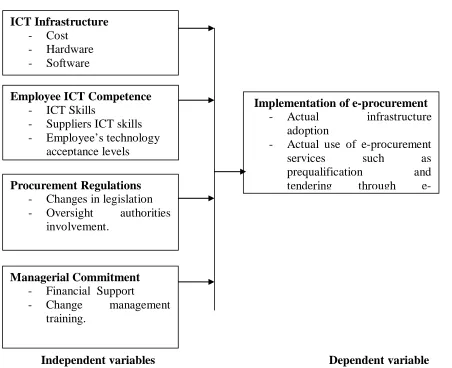
[image:4.612.67.519.321.689.2]Independent variables
Dependent variable
Fig. 2.1 Conceptual framework source author (2015).
Implementation of e-procurement
-
Actual infrastructure
adoption
-
Actual use of e-procurement
services such as
prequalification and
tendering through
ICT Infrastructure
-
Cost
-
Hardware
-
Software
Employee ICT Competence
-
ICT Skills
-
Suppliers ICT skills
-
Employee’s technology
acceptance levels
Procurement Regulations
-
Changes in legislation
-
Oversight authorities
involvement.
Managerial Commitment
-
Financial Support
-
Change management
REVIEW OF VARIABLES ICT infrastructure
Implementation of e procurement usually involves using advanced communication technologies such as email and the Internet. Having an online presence creates important new methods of procurement for public procuring entities. Procuring entities have the role to create e procurement platforms in which stakeholder in the procurement department can sign in (Henriksen & Mahnke, 2005). Information Communication Technologies consists of a combination of hardware and software technologies. Hardware components are important for knowledge management system because they have the role of platform for the software and transfer of knowledge. Some of the hardware requirements include personal computers or workstations to facilitate the access to knowledge, servers for high traffic for the organization to be in network, open architecture for interoperability in distributed media, mass media rich in application that need integrated digital network of services and high speed optic fibre to offer access to public network email letter to the address provided at the site” and “the use of technology to enhance the access to and delivery of government services to benefit citizens, business partners and employees. Davis, (1989) developed technology acceptance model (TAM) based on the previous works by on Fishbein and Ajzens theory on reasons of actions (1975) to explain the intentions of use of IT and in organizations in the TAM model, ease of use and usefulness are two independent variables explaining attitude, behavioral intentions and actual use Taylor and Todd later showed that the TAM model is well suited to predict variation in adoption and use of IT in organizations. Usefulness and ease of use are important factors in the use of information system.
There are relatively few detailed empirical studies of eprorecurement implementation. Mcrat Manus (2000) examined the rate of implementation in US the sector, remarking that motivation for implementation was based on expectations of lower purchase prices, reduced transaction and process costs, and increased transaction speed. She also noted that the implementation of e-procurement had led to increased debate about some of the fundamental principles behind public sector procurement, including ‘lower bid wins’. A case examples of Taiwanese military procurement by Liao et al (2003) documented the challenges for e-procurement implementation in terms of changing established procurement processes and practices, and particularly highlighted the significance of ‘human deficiencies and faults (i.e, corruption and inefficiency) in the implementation process.
Two recent commercial reports have addressed the issue of successful e-procurement implementation: the IDC report (2003) highlighted the slow uptake of eprocurement systems, emphasized some of the information systems related issues that were inhibiting implementation such as software integration (including discussion of XML related opportunities). Research by the Aberdeen Group (2001) cited user adoption as an essential factor in successful eprocurement deployment. Lin & Hsieh (2000) used a single case study to highlight the importance of both web content management and content rationalization as significant issues for e-procurement operation. They noted that constantly changing prices, specifications and account details
across the (on-line) supply base caused major problems in the maintenance of supplier catalogues. In addition, the way an item is described (item coding) has been found to be significant data management issue for eprocurement, and Lin & Hsieh also claim that material code proliferation within ERP systems has posed similar challenges for the management of IS infrastructure.
The extent to which the eprocurement system is able to integrate effectively with other IS, particularly production planning & control and finance systems, is posited by Subramanian& Shaw (2000) to be a major casual determinant of the efficiency and effectiveness of an eprocurement implementation, both with the customer’s information infrastructure and in its links with suppliers.
Employee Competence
According to (Adelman, 2000) Information Technology (IT) is the acquisition, processing, storage, and dissemination of vocal, pictorial, textual, and numerical information by micro electronic based combination of computing and telecommunication. The human capacity in using Information Technology (IT) may play a vital role in implementation of eprocurement in public procuring entities. Employees must understand how to use ICT and how it will change the way they do business. This obstacle is more prominent for advanced ICT such as e-commerce, procure-to-pay IFMIS and ERP software than for basic ICT such as phone lines and fax. A response from one of the managers in a study carried out by Macmanus, (2002) indicated that, Lack of competences, need of training and absence of motivation in many public procurement officers, are some of the main reasons for which any new projects, new tools like e-Procurement, IFMIS or any change are hardly implemented and hence the need to improve the already existing bureaucratic standards in public institutions.
a tough rivalry that pushes businesses to be innovative. Competition lead to environmental uncertainty and increases both the need and rate of implementation, However (Taylor & Todd, 1995) observes, the reluctant nature of procuring entities may lead to employees reluctance in learning and using new technologies associated with e procurement.
Public procurement regulations
At the international level public procurement rules depend on the country’s legal setting and on purchase players (Government, public agency among others). International agreements on public tendering and procurement aim to regulate goods, services and trade opportunities between public procurement and private organizations across different countries. For example public procurement processes promoted by the World Trade Organization (WTO) and by the Organization for Economic Cooperation and Development (OECD) or financed by international agencies such as the World Bank or the European Bank for Reconstruction and Development must guarantee a public-private approach that avoids unnecessary trade restrictions, uses internationally harmonized measures, recognizes the equivalence of the other country’s regulatory standards and applies principles of transparency and competitiveness. (West, 1999).
In Kenya, the processes of procurement are controlled by Public Procurement Oversight Authority (PPOA). The PPOA is mandated with the responsibility of Ensuring that procurement procedures established under the Act are complied with, Monitoring the procurement system and reporting on its overall functioning, Initiating public procurement policy, Assisting in the implementation and operation of the public procurement system by:- preparing and distributing manuals and standard tender documents, providing advice and assistance to procuring entities and develop, promote and support training and professional development of staff involved in procurement contends (Andersen, K. V., 2004).
The regulations for public procurement are contained in the Public Procurement and Disposal Act 2005, the Act ensures that public organization maximize economy and efficiency, promote competition and ensure that competitors are treated fairly, promote the integrity and fairness of those procedures, increase transparency and accountability in those procedures, increase public confidence in those procedures and facilitate promotion of local industry and economic development An Assessment of public procurement in Kenya by PPOA (2007) showed that there was low stakeholder awareness of web-based procurement in-formation system. Although the PPOA is well aware of the benefits of digitalization of the procurement system, the implementation level of e procurement in public procuring entities is still low.
The public procurement and disposal Act (2005) has indicated guidelines under which public procuring entities should undertake their tendering process, undertake disposal of public property and the whole procurement process. According to Williams (2003) the current legal framework in public procurement provides for a fully decentralized procurement process, leaving the full responsibility of undertaking procurements to the tender committee and procurement unit at the level of the individual entity. This decentralization of
decision making authority represents a milestone in implementation of e procurement.
Managerial commitment towards implementation of e procurement.
Like any other technological change, e procurement brings change in an organization that requires organizational managers to adopt change management strategies towards making the transformation process success procurement Action Plan, (2005). One way in which managers in organizations can reveal commitment to change is to have change management team structures that identifies who was doing the change management work (Yildirim, Soner., 2000).
According to Andersen, K. V., (2004) change management structures outline the relationship between the project team and the change management team. Dean further adds that the most frequent team structures include: - change management being a responsibility assigned to one of the project team members or an external change management team supporting a project team. The key in developing the strategy is to be specific and make an informed decision when assigning the change management responsibility and resources Organization for Economic Co -operation and Development, (2009).
Most major e procurement initiatives are driven by top management. It's not unusual for a Chief Executive Officers (CEO) to be directly involved in the early stages of the process. One often unexpected demand of implementing an e procurement strategy is the requirement for new management techniques and specialized skills among the organization’s management team as (Thomas et al 2008) argues.
Managerial commitment towards e procurement implementation has also been discussed by scholars concerning the style of leadership adopted by many managers. According to Kippis (2007) almost all managers of African organizations, perhaps because of societal norms and expectations emphasize bureaucratic practices with total reliance on rules and regulations that workers obey without questioning or offering constructive criticism (Alpar P. and Olbrich S, 2005).
Bureaucratic practices usually create a very cold and impersonal organizational climate. Most of them are unconducive to attainment of organizational goals Workers in such organizations behave like robots. The impersonal and legalistic environment according to kippis (2007) alienates workers from both their job and organization. Managers patronizing attitude towards employees may hinder from being innovative or adoptive to a change idea such as shifting from manual procurement to eprocurement that could be of benefit to the organizations.
A study by Ndongko (2005) on Cameroon public service institutions revealed that despite the culture which emphasizes on rigid hierarchical relationships, managers who were seen by workers to be democratic in their techniques of management and such exerted low control over them elicited higher levels of adopting new changes within the organization compared to authoritarian ones.
similarity exist in the work goals of employees around the world and that national differences regarding job related objectives were not as great as people thought. The findings of these studies indicate that human needs are universal, for workers to be motivated in adopting new ideas in an organization, it is important that organizational managers show commitment to motivate the work force and improve quality of work life. This will ease implementation of new technologies such as e procurement within the working fraternity.
Implementation of e-procurement
According to World bank (2003), e-procurement is “electronic government procurement (e-GP) is the use of information and communication technology (especially internet) by governments in conducting their procurement relationship with suppliers for the acquisition of gods, works and consultancy services required by the public sector”. The public sector organizations use e-procurement for contracts to achieve benefits for example increased efficiency and cost savings, faster and cheaper in government procurement (Acher2005) and improved transparency, to reduce corruption, in procurement services. Procurement in the public sector has been rapid growth in recent years. In view of the above this paper seeks to establish implementation of e-procurement in procuring entities.
EMPIRICAL REVIEW
Empirical review entails findings by other scholars on use of e- Procurement in the government. Bottom line of the study is to enrich the already existing work on e- Procurement attainable through critical consideration of other scholars’ work. The researcher will attempt to critic the findings and establish knowledge gap with a view to enhancing the factors affecting use of e- Procurement in firms. In a study carried out by (Kinuthia, W.M., (2014) she argues that procurement regulations and processes should be modernized. Established procedures and procurement regulations must recognize information and technology techniques if system developers are not to be constrained when re-engineering work processes. Further in her findings she contends that majority of the respondents acknowledged that ICT application like e-procurement, EDI, email were in use in the organization and had influenced the procurement process. According to (Croom 2000, De Boer et al 2002) impact of ICT adaptation on procurement processes mainly refers to time reductions and quality improvements, rather than cost reductions as reported by many authors. As e-procurement includes new technologies and changes in traditional procurement approaches, training of staff in procurement practices and the use of e-procurement tools are critical to the success of an e-procurement initiative (WB, 2003). The World Bank (2003) suggests that developing an e-procurement system in open environment allows it to link to other system for interoperability and simplifies upgrading the system. Supplier compatibility is important for e-procurement implementation to be successful. It is important to demonstrate the proposed solution to the suppliers and discuss any necessary changes, issues and concerns such as various options in developing and maintaining supplier catalogues (Birks et al., 2008). Systems specifications appear to be a critical issue in the uptake of e-procurement. The IDC report (2003) highlights the
slow uptake of e-procurement systems, emphasizing some of the IS-related issues that inhibit implementation, including software integration. The extent to which an e-procurement system is able to integrate effectively with other information systems, particularly production planning & control and finance systems, is posited by Subramaniam & Shaw (2002) to be major causal determinant of the efficiency and effectiveness of an e-procurement system. Rajkumar (2001) also identifies system integration as critical success factor for e-procurement implementation, both with customer information infrastructure and its links to suppliers. Lin & Hsieh (2000) use a single case study to highlight the importance of both web content management and content rationalization as significant issues for e-procurement operations.
METHODOLOGY Research Design
The study used descriptive design to obtain information from the selected respondents on the current status of the phenomena under investigation. A descriptive approach describes data and characteristics about the population or phenomena being studied. According to Mugenda & Mugenda (2012) the purpose of descriptive research was to determine and report the way things are and it helped in establishing the current status of the population under study. Borg & Gall (1996) noted that descriptive design was intended to produce statistical information about aspects of a study that interest policy makers.
Target Population
A population is an entire group of individuals, events or objects having common characteristics that conform to a given specification (Mugenda & Mugenda, 2012). According to Sunders, (2003), the population is the full set of cases from which a sample was taken. The target population for the study was employees working in the County Commissioner’s office and prequalified contractors totaling to 117 employees and contractors.
Sampling and sampling technique
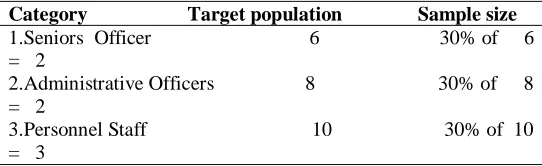
[image:7.612.309.580.655.738.2]The study used purpose and stratified sampling to select the respondents to participate in the study. In purposive sampling the researcher chose the sample based on who they think would be appropriate for the study (Chandran, 2004). This is used primarily when there is a limited number of people that have expertise in the area being researched. The employees in procurement department were purposively selected to participate in the study. This was because they are the main implementors of e-procurement and also the resident contractors and suppliers. The total number of employees in the county commissioner’s office was 52 and 65 contractors making a total of 117. The sample size was 33 which was representative.
Table 3.1: Showing sampling frame and sample size
Category Target population Sample size
1.Seniors Officer 6 30% of 6 = 2
2.Administrative Officers 8 30% of 8 = 2
4. Accounts Staff 10 30% of 10 = 3
5. Procurement Staff 18 30% of 18 = 5
6. Prequalified Contractors 65 30% of 65 = 18
TOTAL 117 33
Data collection techniques and instruments.
A questionnaire was used as an instrument of data collection in the study. According to Chandran (2003), Questionnaires provide a high degree of data standardization and adoption of generalized information amongst any population. The questionnaire was open ended questions as well as structured questions based on the likert scale. All the questions were aimed at establishing the effect of ICT infrastructure, level of employee competence in information technology, public procurement regulations and management commitment on implementation of e procurement in public procuring entity.
Data Collection Procedure
These entailed both primary data and secondary data. Primary data was collected from the target population. Questionnaires were administered to the interviewees in the study. The questionnaires containing both closed and open-ended questions at five level likert scale were used to elicit information from the respondents. Secondary data collection was employed in the first phase of the study which included the development of background information, problem statement and literature review. The data helped in identifying the gaps in knowledge related to determinants of implementation of eprocurement. In addition, it was used in discussing and explaining data after analysis. The data collected was analyzed quantitatively. Quantitative analysis involved deriving statistical description and interpretation of data by use of descriptive statistics. This was done by the help of the Statistical Package for Social Sciences (SPSS) version 20. Therefore, the estimated regression model for
this study involving the four independent variables and one dependent variable was therefore:
Y = β0+ β1X1 + β2X2 + β3X3 + β4X4 + ε
Where;
β0 = Regression constant
β1, β2, , β3, β4- are regression coefficients of the four independent
variables; ICT infrastructure (X1), procurement regulations (X2),
managerial commitment (X3) and employee competence (X4)
respectively
Y= performance (e-procurement) ε = error term
IV. ANALYSISANDINTERPRETATION
Profile of Respondents
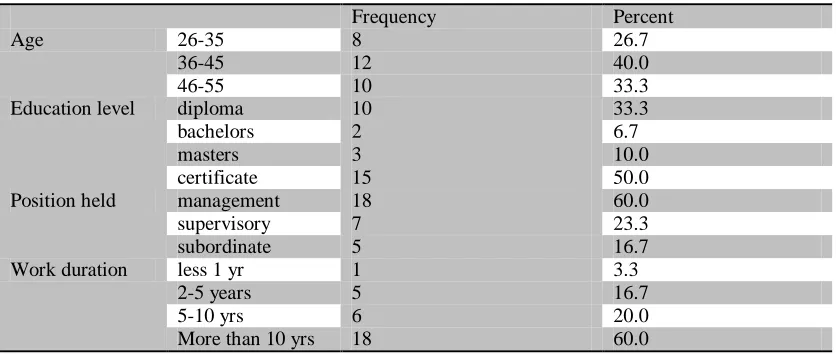
[image:8.612.98.516.529.706.2]Age, gender, highest education level, position held by respondent and duration worked were the demographic characteristics the study examined. These characteristics will give the general view of the respondents in relation to the main research objective. The result presented in table1 shows the frequency distribution under each demographic variable. A majority of respondents, that is 40%(12) were in 36-45 years age bracket, and least was in the age bracket 26-35 years of age, 26.7%(8). Certificate holders comprised a majority ( 50% n=15) of the respondents followed by diploma(33.3%, n=10),then masters (10.0%, n=3) and least was bachelors degree (6.7%, n=2). Concerning on the job position held by the respondent, management and supervisors’ positions were over 83% and the rest were subordinate staff. Over 60% of these employees had worked for over 10 years in the county offices. And 20% had worked for 5 to 10 years and another 20% had worked for 5 years and less.
Table 4.1: Demographics
Frequency Percent
Age 26-35 8 26.7
36-45 12 40.0
46-55 10 33.3
Education level diploma 10 33.3
bachelors 2 6.7
masters 3 10.0
certificate 15 50.0
Position held management 18 60.0
supervisory 7 23.3
subordinate 5 16.7
Work duration less 1 yr 1 3.3
2-5 years 5 16.7
5-10 yrs 6 20.0
More than 10 yrs 18 60.0
Reliability and Validity Reliability is the extent to which a measuring procedure
Reliability of the instrument is significant so as to determine how the items used was consistent, the questionnaire in this case, produce the same measures if repeated. To achieve this objective, Cronbach’s Alpha measure of reliability was used. A Cronbach’s alpha of more than 0.6 indicates a satisfactory internal consistency level of reliability (Malhotra & Birks, 2007). Table 4.2 result indicated that the Cronbach’s alpha were between .675
[image:9.612.28.583.170.300.2]and .921 hence all the variable items were acceptable as reliable. Managerial commitment (alpha=.811*) had initially seven questions, one statement (‘the attitude of organizational managers towards e-procurement is positive’) was dropped from further analysis since it poorly correlated with others.
Table 4.2: Reliability statistics using the Cronbach’s alpha
Variable Cronbach's Alpha Number of Items
ICT Infrastructure .921 5
Procurement Regulation .700 7
Managerial commitment .811* 6
Employee Competence .675 6
E-procurement .781 4
On the other hand validity is the degree a measuring procedure accurately reflects or assesses or captures the specific concept that the research is attempting to measure. Content validity is a non-statistical type of validity that involves “the systematic examination of the test content to determine whether it covers a representative sample of the behaviour domain to be measured” (Anatasi & Urbina, 2007). A test has content validity built into it by careful selection of which items to include. Items are chosen so that they comply with the test specification which is drawn up through a thorough examination of the subject domain. Foxcraft (2004), note that by using a panel of experts to review the test specifications and the selection of items the content validity of a test can be improved. In this study, the research supervisors and other university lecturers were consulted to review the items the research proposed to use and they noted that the items indeed covered a representative sample of the behavior domain.
To this end therefore all the items retained from reliability test were subjected to further analysis so as to achieve the objectives set out in this study. Descriptive and inferential statistics of each variable is therefore presented in the subsequent sections to achieve specific objectives in this study.
ICT infrastructure in Lamu County Offices
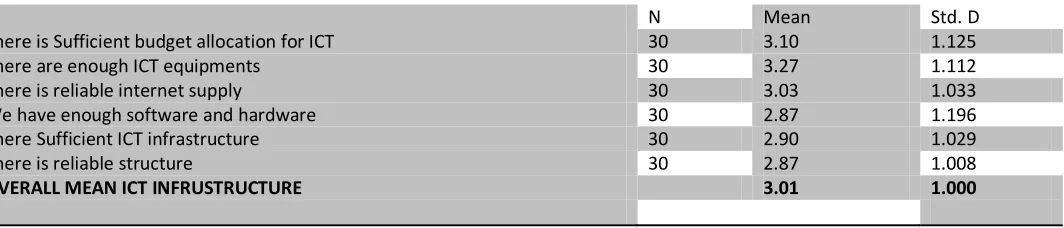
It was earlier noted that IT Infrastructure is the hardware, software, and the entire related network which enables both forward and backward linkages of the information system. The first objective therefore sought to determine the role of IT infrastructure on e-procurement in County offices in Lamu County. Using five items which were found to be reliable, Reponses were captured to gauge the level of ICT infrastructure in Lamu County offices using a 5-point Likert scale. The Likert scale used for all the independent variables ranged from 1= Strongly Disagree to 5= Strongly Agree. Table3 shows the mean of the responses on level of IT infrastructure in Lamu county offices. The mean ranged from 2.87 (there is reliable infrastructure) to 3.10 (there is sufficient budget allocation to ICT) with an overall mean = 3.01, SD= 1.002 this meant that the respondents were not sure (not in support) of the infrastructure statements posed in the questionnaire. Therefore the ICT infrastructure in place in Lamu county offices was not adequate to support e-procurement. For example, there are enough ICT equipments (mean=3.27, sd=1.112), allocated budget was not sufficient (mean=3.10, SD=1.125) and no enough software (mean=2.87, sd=1.196). Therefore there is lack of ICT infrastructure to support implementation of e-procurement.
Table 4.3: Descriptive Statistics on ICT infrastructure in Lamu County offices
N Mean Std. D
There is Sufficient budget allocation for ICT 30 3.10 1.125
There are enough ICT equipments 30 3.27 1.112
There is reliable internet supply 30 3.03 1.033
We have enough software and hardware 30 2.87 1.196
There Sufficient ICT infrastructure 30 2.90 1.029
There is reliable structure 30 2.87 1.008
[image:9.612.47.579.610.724.2]4.1
Public Procurement Regulations in Lamu County officesFrom the literature review, Public procurement regulation refers to the public procurement and disposal act of 2005. Therefore the second object sought to determine the role of public procurement regulations on e-procurement in Lamu county offices. The mean and standard deviations of the responses to the statements concerning public procurement in Lamu county offices are presented in table5. The mean ranged
[image:10.612.104.510.197.349.2]between 2.90 (not sure) to 3.83 (agree) that public procurement procedures were in place in their respective places of work. Specifically it wasn’t clear that tendering process affects e- procurement positively (mean=2.90, SD=1.125). But there are adequate regulations in place (mean=3.83, SD=.950) and well laid down policies on procurement (mean=3.80, SD=.805). Overall there are weak public procurement regulations in place at Lamu county offices (mean=3.49, SD=.968). The next section deals with the managerial commitment in Lamu county offices.
Table 4.4: Descriptive Statistics on public procurement in Lamu County offices
N Mean Std. D
Tendering process affects e-procurement positively 30 2.90 1.125
procurement as adequate regulations 30 3.83 .950
ICIT technology depend on set regulations 30 3.23 .971
budget allocation determine technology 30 3.30 .877
Well laid down policies 30 3.80 .805
Gvt promotes implementation of e- procurement 30 3.60 .855
LTD implementation of procurement 30 3.80 .761
Public procurement regulations 3.49 .968
Managerial commitment in Lamu County Offices.
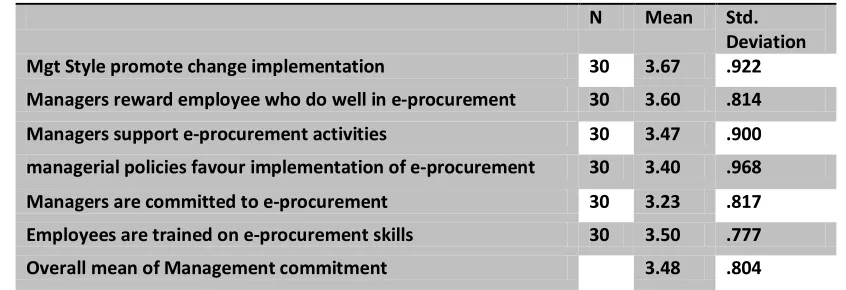
Managerial commitment towards e-procurement in Lamu County was assessed in a view to determine its relation with e-procurement. The findings presented in table6 revealed that there was some level of managerial commitment towards e-procurement in Lamu County office (overall mean=3.48, SD=.804). That is to say, in Lamu county offices, management
style promote change implementation (mean=3.67, SD=.922), it also rewards employees who do well in e-procurement (mean=3.60, SD=.514) and managerial policies somehow favour implementation of e-procurement but not to a large extent (mean=3.40, SD==.968). In section Employees’ level of competence on e-procurement is assessed.
Table 4.5: management Commitment to e-procurement
N Mean Std.
Deviation
Mgt Style promote change implementation 30 3.67 .922
Managers reward employee who do well in e-procurement 30 3.60 .814
Managers support e-procurement activities 30 3.47 .900
managerial policies favour implementation of e-procurement 30 3.40 .968
Managers are committed to e-procurement 30 3.23 .817
Employees are trained on e-procurement skills 30 3.50 .777
Overall mean of Management commitment 3.48 .804
Employees’ level of competence on e-procurement
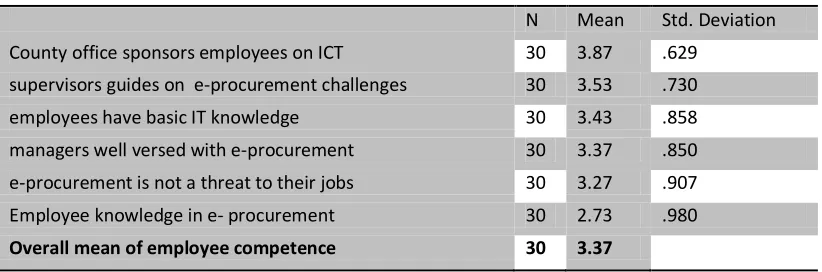
The employees’ level of commitment on e-procurement in Lamu county offices were assessed using six items. The findings presented in table7 indicated that the Lamu county office sponsors employees on ICT (mean=3.87, SD=.629), employees are guided on e-procurement and its challenges (mean=3.53, SD=.730). Also the findings further reveal that knowledge on
[image:10.612.93.516.474.619.2]Table 4.6: Employee Competence to e-procurement
N Mean Std. Deviation
County office sponsors employees on ICT 30 3.87 .629
supervisors guides on e-procurement challenges 30 3.53 .730
employees have basic IT knowledge 30 3.43 .858
managers well versed with e-procurement 30 3.37 .850
e-procurement is not a threat to their jobs 30 3.27 .907
Employee knowledge in e- procurement 30 2.73 .980
Overall mean of employee competence 30 3.37
Implementation of E-Procurement
Implementation of e-procurement was the dependent variable assessed by four items with a reliability coefficient alpha of .781. The mean and standard deviation of the responses on the four items are presented in table8. The result indicate that the mean was between 3.10 to 3.43 (‘Not Sure’) indicating that it was not clear to the employees that implementation of
e-procurement had been achieved(mean=3.43, SD=1.165). That is to say that in the county offices, it is not case that the e-procurement has been received positively (mean=3.10, SD=.885), nor reduced cost (mean=3.33, SD=.994) or reduced lead time significantly (mean=3.17 SD=.986).
Table4.7: implementation of e-procurement
N Mean Std. Deviation
E-procurement is being adopted here 30 3.43 1.165
E-procurement has led to reduced procurement cost 30 3.33 .994
E-procurement has reduced time to procure 30 3.17 .986
e-procurement is embraced positively here 30 3.10 .885
Overall mean of e-implementation 3.26
Correlation analysis presented in the next section seeks to determine the nature and strength of relationship between the independent variables (infrastructure, employee competent, management commitment and procurement regulations) and implementation of e-procurement.
Correlational Analysis between independent Variables and dependent Variable
The bivariate correlational analysis between each independent variable and the dependent variable (DV) obtained in table 4.8. The predictor variables (infrastructure, employee competent, and management commitment and procurement
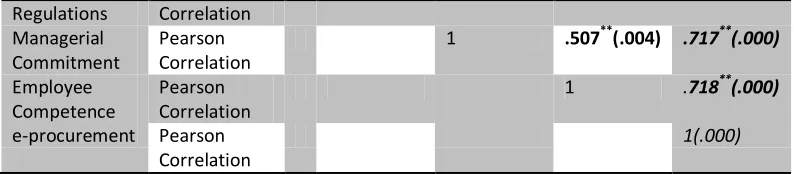
[image:11.612.113.503.682.733.2]regulations) all had positive significant relationships with the dependent variable (DV) at 95% confidence interval. The result further reveal that ICT infrastructure had the strongest significant correlation with e-procurement (r=.735, p=.004) followed by procurement regulations (r=.730, p=.000), employee competence (r=.718, p=.000) and managerial commitment (r=.717, p=.000). The regression analysis in the next section was significant so as to determine the contribution of each of the four variables in predicting the implementation of e-procurement in Lamu county offices.
Table 4.8: Correlation coefficients
1 2 3 4 D .Variable.
ICT
Infrastructure Pearson Correlation 1 .515
**(.004) .306(.100) .503**(.005) .735**(.000)
Regulations Correlation Managerial
Commitment Pearson Correlation 1 .507
**(.004) .717**(.000)
Employee
Competence Pearson Correlation 1 .718
**(.000)
e-procurement Pearson
Correlation 1(.000)
Note: p values are in parentheses
Regression Analysis
Regression analysis highlights how independent variables (or variable in case of simple regression) relate to the dependent variable for the purpose of prediction. Therefore regression technique seeks to model the relationship between the dependent
[image:12.612.108.505.58.145.2]variable with the independent variables. Multiple linear regression involves a regression of one dependent variable with many independent variables where the relationship between the variables is linear in nature.
Table 4.9: Model summary
Model R R Square Adjusted R Square Std. Error of the Estimate
1 .932a .869 .849 .167
From the regression model summary, table 4.9 the predictor variables collectively account for about 85% (R square=.849) of the variations in observed in e-procurement implementation. The ANOVA table 4.10 suggest that the regression model is significant (F4, 25= 41.626, p=.000) in predicting the level of e-procurement implementation from given levels of each predictor variables. Therefore
[image:12.612.99.511.260.322.2]the dependent variables significantly determine the success of e-procurement implementation in Lamu county offices. Table 4.10
ANOVA
Model Sum of Squares df Mean Square F Sig.
1 Regression 4.668 4 1.167 41.626 .000b
Residual .701 25 .028
Total 5.369 29
Dependent Variable: e-procurement implementation
From the operational framework proposed in this study in chapter 2, with one dependent variable and four predictor variables, consequently this study proposed the following estimated regression model;
Where; is the regression constant; the level of e-implementation when all predictors variables are zero , , are the regression coefficients of the four predictor variables. The exact values are obtained in the regression coefficient table 4.11. ICT_i=
ICT infrastructure, PPR=public procurement Regulations, MC=management commitment, EC=Employee Commitment and = the error term. The nearer the error term is close to zero the better the estimated regression model. Therefore the fitted regression model using the coefficients table 4.11 is:
Table 4.11 Coefficients
Model Unstandardized
Coefficients Standardized Coefficients t Sig.
[image:12.612.101.510.405.486.2]1 (Constant) .628 .250 2.511 .019
ICT Infrastructure .183 .044 .386 4.122 .000
Procurement
Regulations .171 .084 .216 2.022 .054
Managerial
Commitment .217 .073 .315 2.997 .006
Employee Competence .235 .078 .281 3.015 .006
a. Dependent Variable: e-procurement implementation
ICT infrastructure (β=.183, p=.000), managerial commitment (β=.217, p=.006) and employee commitment (β=.235, p=.006) are significant determinants of implementation of e-procurement in Lamu county office at .05 level of significance. Procurement regulations (β=.171, p=.054) was not a significant determinant only at .05 level of significance. The next section presents the summary of findings.
V. SUMMARY,CONCLUSIONS,AND RECOMMENDATIONS
Summary of Findings
In the foregoing sections, the mean and standard deviation of responses of each independent variable revealed that in Lamu county office; the ICT infrastructure was not adequate to support e-procurement (mean=3.01), Public procurement regulations laid out are weak (mean=3.49), there is some level of management commitment to e-procurement (mean=3.48) and employees are not adequately competent on e-procurement procedures and policies (mean=3.37). And finally implementation of e-procurement had not been adequately adopted in the County offices (mean=3.26). Correlation analysis revealed that ICT infrastructure was positively and significantly correlated with implementation of e-procurement. Regression analysis found that ICT infrastructure was a significant determinant of effective and efficient in e-procurement implementation. Therefore good links in customer information infrastructure with suppliers and stakeholders leads to effective implementation of e-procurement. Procurement regulations were positively and significantly correlated with effective and efficient implementation of e-procurement. The study found that procurement regulations were not significant determinant in implementation of e-procurement. This lack of significant contribution of procurement regulations could be due to low stakeholder awareness of web-based procurement in information system as stated in public procurement in Kenya by PPOA (2007) report.
Managerial commitment to e-procurement was found to significantly correlate with successful implementation of e-procurement. The commitment was found to be a significant determinant of successful implementation of e-procurement. Therefore it is important that organizational managers show commitment to motivate the work force and improve quality of work life. This will ease implementation of new technologies such as e-procurement within the working fraternity.
Employee competence positively correlated with successful implementation of e-procurement and competence level was found to be a significant determinant of successful implementation of e-procurement. Employees must understand how to use ICT and how it will change the way they do business. Lack of competences and need of training in many public procurement officers, are some of the main reasons new tools like e-Procurement or any change are hardly implemented as noted in studies by MacManus, (2002). So summary ICT infrastructure, management commitment and employee competence were found to be significant determinants of implementation of e-procurement. Therefore they had positive and significant effect on implementation of e-procurement in county offices. Chapter five presents the research summary, conclusions and recommendations based on these findings.
Conclusions
The study concludes that ICT infrastructure, managerial commitment to e-procurement, public procurement regulations and employee competence had a significant positive relationship with successful implementation of e-procurement in county offices. Good ICT links between the potential suppliers and the county offices will therefore increase the chances of successful implementation of e-procurement. Therefore county offices having good links and ICT resources, other factors held constant are likely to easily implement e-procurement and consequently benefit in terms of reduced costs and increased efficiency associated with e-procurement.
Managerial commitment to the well-being of an organization, specifically to e-procurement, is accompanied by an increased ease of implementation of the e-procurement procedure in an organization. Therefore companies which train and motivate employee by addressing their needs, will have committed workforce and therefore have ease of implementation of the e-procurement.
Based on the findings, this study concludes that, improving employee skills, through training in ICT and e-procurement regulations and procedures results in increased employee competence and consequently resulting to ease of implementation of e-procurement.
To this end therefore, recommendations are presented in the next section.
Recommendations
Based on the above findings, study objectives, significance and limitations of this study, the following are the key recommendations:
To get the benefits associated with successful implementation of e-procurement, the procuring entities need to invest in ICT infrastructure both in hardware and software. Therefore the Procuring entities have the role to create e-procurement platforms in which stakeholder in the e-procurement department can sign in.
Secondly, Organizational managers should be able to adopt change management strategies towards making the transformation process a success. This is so because e-procurement brings change in an organization that requires managerial and employee commitment. Therefore managers should show accommodating and positive attitude towards employees to enhance innovative or adoptive to change like shifting from manual procurement to e-procurement that could be of benefit to the organizations.
Third, the employee especially the procurement officers, need to be trained and on all procurement procedures and functioning. Therefore bodies like PPOA which is mandated with the responsibility of ensuring that procurement procedures established under the Act are complied with, need to prepare and distributing manuals and standard tender documents, provide advice and assistance to procuring entities and employee.
The study was limited to county offices and never considered other variables; therefore the study recommends that related study be undertaken particularly to investigate the intervening effect of variables like leadership style and competence of county bosses on e-procurement in the county offices and also in government and non-government offices. Such studies should involve larger samples sizes than 30 which this study used to increase result reliability for further generalization.
REFERENCES
[1] Aberdeen Group. 2001. “Best Practices in e-procurement”.
[2] Adelman, C. (2000). A Parallel Post-secondary Universe: The Certification System in Information Technology. Washington, D.C.: Department of Education.
[3] Alter, S. (2006).The Work System Method: Connecting People, Processes, and IT for Business Results, Larkspur, CA: Work System Press. Retrieved April, 17, 2015 –http://www.is.theorizeit.org/wiki/work_system_theory [4] Alpar, P., & Olbrich, S. (2005). Legal Requirements and Modeling of
Processes in e- Government. The Electronic Journal of e-Government Volume 3 Issue 3, 107-116.
[5] Andersen, K. V. (2004). E-government and Public Sector Process Rebuilding (PPR): Dilettantes, Wheelbarrows, and Diamonds. Boston: Kluwer Academic Publishers.
[6] Ashis, K. P.,& Amit, A.(2007). e-procurement in emerging Economies. United States of America: Ideal group publishing.
[7] Attaran, M. (2001). The coming age of online procurement, Industrial Management and Data Systems, 101/4, 177-80Bharadwaj.
[8] Chandran, C. (2004). Research Methods with Illustrations from Christian Ministries. Nairobi: Daystar University.
[9] Cooper, R.,& Schindler, P.(2003). Business research methods.Tata McGraw Hill.
[10] Coulthard, D., & Castleman, T. (2001). Electronic Procurement in Government: More Complicated than Just Good Business. Proceedings of the 9th European Conference on Information Systems (ECIS 2001) AIS, (pp. 999-1009).
[11] IDC.2003, Easing into the Tub: Results of the 2002 procurement Manager Survey”
[12] David, A., George, M.,Barbara. P., Isabel, R., & Rewald, R. (2008).Advances in information Systems Research and Practice. Milano Italy.
[13] Davis, F.D.,Bagozzi,R. P & Warshaw,P.R. (1989). User acceptance of computer technology, A comparison of two theoretical Model. Management Science, Vol 35 No. 8.
[14] Gachoya, D. (2005). Factors Affecting the Successful Implementation of ICT Projects in Government. The Electronic Journal of e-Government, 3 (4), 175-184.
[15] Gebauer, J., Beam, C., & Sage, S. (1998). Impact of the Internet on Procurement. Acquisition Review Quarterly, 5 (2), 167-184.
[16] Heijboer,G.(2003). Quantitative Analysis of Strategic and Tactical Purchasing Decisions: “Electronic purchasing. Deyermining the optimal rolloutstrategy”Chapter 8 (pp 162-198) in twenty University Press.
[17] Henriksen, H.Z., et al. (2005). Public procurement In Denmark: Measurements of Suppliers’ Maturity, Blede Commerce Conference e-Global Bled, 17.
[18] Henriksen,H.Z.,&Mahnke,V.(2005). E-Procurement Adoption in the Danish Public Sector.Scandinavian Journal of Information Systems, 17 (2), 85-106. [19] Heywood, J.B., Barton, M. & Heywood, C. (2001).A Guide to Successful
E-Procurement Implementation.E-Procurement.
[20] Howell, P. et al. (2005). Research note, Cultural and situational determinants of jobsatisfaction among, Management in Liberia. Journal of Management studies, 12.Information and Communication for Development. (2009). Development data Group.
[21] Kalakota, R. & Robinson, M. (2001).Problematisation and Obfuscation in E-Government.In P.W. BostonAddison-Wesley Kawalek (Ed.), Second International e-Government.
[22] Kangongo J. &Gakure, R. (2013). Factors affecting electroni procurement implementation in automobile industry of Kenya.
[23] Kanungo, R.N. (2005). Work alienation in developing countries Western Models and Eastern Realities. New Deldhi: Thousand Oaks Sage.
[24] Liao, S-H; Cheng, C-H; Liao, W-B; &Chen, I-L. (2003), “ A Web-based architecture for implementing electronic procurement in military organization” Technovation, Vol 23(6), pp 521-532
[25] Laurel, J., & Maniatopoulos, G. (2005).A Comparative Analysis of Product Classification in Public vs. Private e-Procurement. The Electronic Journal of e-Government, 34, 201-212. 62
[26] Lin,B.,& Hsieh, C-t. (2000). “Online procurement: implementation and managerial implications”Human systems management. Vol 19,pp 105-110. [27] Mugenda, M.O.,&Mugenda, G. A. (2003).Research Methods Quantitative
and Qualitative Approaches. Nairobi: ACTS Press.
[28] Ndongko, T. M. (2005). Human Resource Management in Cameroon: A critical Review Cahiers Africa Administration. Morroco.
[29] Organization for Economic Co operation and Development. (2009). Information Technology
[30] Orodho, J. A. (2003). Elements for Education and Social Science. Maseno kenya: Kanezja.
[31] PPOA.(2009). Ministry of Education procurement. Review Report Publications.
[32] Procurement Action Plan.( 2005). Retrieved March 2007, from European Union: http://europa.eu.int/idabc/en/document/3821/254
[33] Priest, L. (2000).The Story of one Learner: a Student’s Perspective on Online Teaching. In K.W. White and B.H. Weight, The Online Teaching Guide.
[35] Riffee, W.H.Putting a Faculty Face on Distance Education Programs. Syllabus: Technology for Online Journal of Distance Learning Administration, 5 (4).Higher Education.
[36] Roberson, T. J. & J. Klotz. (2002). How can Instructors and Administrators Fill the Missing Link in Online Instruction?
[37] Macmanus. (2002). Understanding The Incremental Nature of e procurement implementation at the state and local levels. Public procurement Vol.2, 5-58.
[38] Rajkumar, T.M. (2001). “E-procurement: Business and technical issues”. Information Systems Management, Fall, Vol.18 (4),pp 52-60
[39] Sivin-Kachala,J. (1998). Report on the Effectiveness of Technology in Schools. Washington D.C.: Software Publisher’s Association.
[40] Sommer, B. &Sommer, R. (2007).A practical guide to behavioral research. Mairill Publishing Company.
[41] Sommer, B. S. (2007).A Practical Guide to Behaviural Research . USA: Mairill Publishing company. 63
[42] Subramaniam, C.& Shaw, M.J. (2002).“Astudy of the value and impact of B2B E-Commerce: the case of web-based procurement”. International Journal of Electronic Commerce. Vol. 6 (4) pp 19-40
[43] Taylor,& Todd.(1995). Understanding information Technology Usage. A test of competing Model Information Systems Research, Vol 6 No 2. [44] West, G.B. (1999). Teaching and Technology in Higher Education:
Changes and Challenges. Adult Learning, 16-18.
[45] Williams, P.E. (2003). Roles and Competencies for Distance Education Programs in Higher Education Institutions. The American Journal of Distance Education, 17 (1), 45—57.
[46] Yildirim, Soner. (2000). Effects of an Educational Computing Course on Pre-service and In- service Teachers: A Discussion and Analysis of Attitudes and Use. JRCE, 32 (4).
[47] Young, J. R. (2002). ‘Hybrid’ Teaching Seeks to End the Divide between Traditional and Online Instruction.Chronicle of Higher Education. 64
AUTHORS
First Author – BEATRICE KANANU KAHIU, Jomo Kenyatta