2018 International Conference on Computer, Communications and Mechatronics Engineering (CCME 2018) ISBN: 978-1-60595-611-4
Application and Research of Intelligent Warehousing Based on IoT
Xue-zi YANG, Zheng ZHANG
*and Fu-quan ZHANG
Centre of Information Technology, CGN Power Co., Ltd., Shenzhen City, China
*Corresponding author
Keywords: IoT, Warehouse, System.
Abstract. The Internet of things (IoT) technology has been applied in many industries because of the basic features of total perception, reliable transmission and intelligent processing.At the same time, it also drives the innovation of the whole logistics industry, and its application field is expanding. At present, most of the domestic warehouse management systems still stay in the human information input, computer storage semi-automation level. There are many shortcomings such as low efficiency of management, large cost of manpower, slow information processing, low accuracy and so on.With the development of embedded equipment and wireless communication technology, the two dimensional code technology, intelligent computing technology, radio frequency technology and wireless sensing technology are applied to warehouse management. The realization of object and object perception, identifiable, networked intelligent management system has become an inevitable trend of development. In this paper, a model of intelligent storage system based on Internet of things is discussed in detail, and it is applied and verified in practical production and work.
Introduction
Research Status
Warehousing has always played an important role in large-scale manufacturing industry. With the rapid development of modern manufacturing industry and the urgent need for information, higher requirements have been put forward for the exiting, entering, and internal management of warehouse operations. In order to get accurate goods data and supply chain information at all stages of logistics, the modern storage reserve is not only the simple batch processing of the goods entering and leaving, but also the clear database record of the type, quantity, production attribute, container and so on of the goods in the warehouse.
There are many problems in the traditional warehousing business, Such as: in and out of the warehouse personnel operation confusion, inventory reports are not timely, warehouse goods attributes are not clear, stacking confusion, inventory inaccurate, etc These problems need to be solved by the optimization and upgrading of warehouse management based on information management technology.
IOT Technology
combined with the existing Internet of things. We can realize the integration of human society and physical system. This dynamic management mode makes production and life more convenient and fast.
The Internet of things (IoT) is based on a specific terminal, which is connected by wired or wireless means to meet the information requirements of production process monitoring, scheduling and command, remote data acquisition and measurement, remote diagnosis and so on. It has three important characteristics:
1) Total perception: Using sensors to get information about objects at anytime and anywhere 2) Reliable transmission: Through the integration of various physical networks and the Internet,
the information obtained can be transmitted in real time and accurately.
3) Intelligent processing: By using cloud computing, fuzzy recognition and other intelligent computing technologies, the massive data and information are analyzed and processed, and the objects are controlled intelligently.
Design and Modeling of Intelligent Warehousing System
Intelligent warehousing system is the information means used by warehouse management department to make the best use of storage resources and to provide quick and effective storage service in the process of organizing and working. It mainly includes inventory, management, scheduling and other aspects of the work which have many conditions. It's very hard to do all these work by hand. Therefore, a warehouse management system based on IoT technology and system is designed to reduce the workload and error rate of manual inventory and manual inventory.
The Core Functions of System
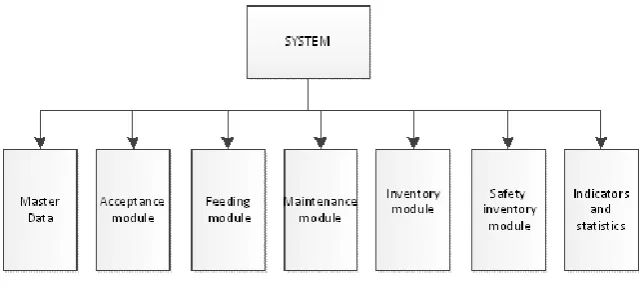
[image:2.595.143.465.439.583.2]We can divide the core functions of an intelligent warehousing system as shown in the following figure 1:
Figure 1. The core functions of an intelligent warehousing system.
1) Master Data: Master data is the basic data of the whole system, including cargo, people, goods, suppliers, etc.
2) Acceptance Module: Mainly including arrival tracking, arrival registration, acceptance operation, return operation, packaging shelf, temporary storage management and differential treatment, which should consider multi-sector joint acceptance and the progressive relationship between multiple work.
3) Feeding Module: Mainly includes reserve approval, warehouse materials, outgoing and self-access goods. The container can be automatically accessed to solve the problem of many people waiting in line.
4) Maintenance module: Mainly includes the cargo transfer, inventory status adjustment, regular maintenance, scrap treatment, abnormal feedback and other functions.
6) Safety Inventory module: It is based on the safety inventory should automatically remind replenishment to initiate the procurement process.
7) Indications and statistics: Its main function is the process data statistics and display, based on the data indicators to seek a greater space for optimization.
The Five Levels of System
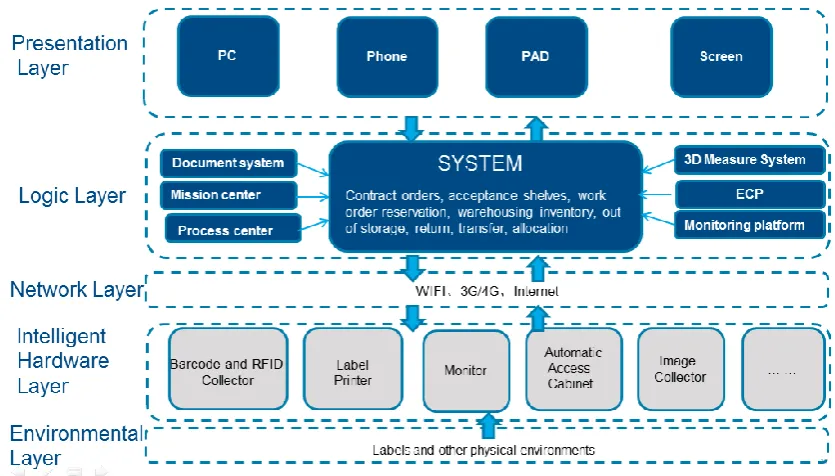
[image:3.595.86.504.194.432.2]We can build the system model according to the above system function, mainly divided into five basic layers, can be shown below (See figure 2):
Figure 2. Five levels of an intelligent warehousing system.
1) Environmental Layer: It is mainly material labels and physical environment, such as containers, bar code tags and RFID tags to provide physical support for the model.
2) Intelligent Hardware Layer: It mainly includes bar code collector, label printer, monitoring equipment, picture collector and automatic access cabinet. Its main function is to convert physical signals or symbols into logical and digital signals and tags. Provides instant data for upper level logic. This model focuses on the use of hardware devices, so do not focus on the introduction.
3) Network Layer: It can transfer data transparently between two end systems, including addressing and routing, connection establishment, maintenance and termination, etc. The network involved in this paper is 4G network and Internet, to transmit data and item status.
4) Logic Layer: It realizes the main function of warehouse management and correctly handles business logic. It is not limited to one or two systems, but a collection of systems involved in warehousing operations, In addition to the core warehousing business mentioned above, it can include task center, process center, document system, and so on.
5) Presentation Layer: It refers to the correct display of the results of business logic processing, which should include other display tools such as mobile terminals, PC terminals, large screen terminals, and so on.
Implementation of Intelligent Warehousing System
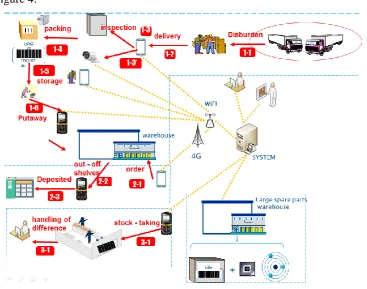
system and mail reminder are used as auxiliary systems. Finally, the closed loop storage business management is realized. Specific system planning diagrams can be shown as follows (See figure 3):
Figure 3. Implementation of Intelligent warehousing system.
The flow of operations that can be instantiated according to the model can be represented by the following figure 4:
Figure 4. Workflow based on Intelligent warehousing system.
Summary
[image:4.595.110.478.380.669.2]technology in warehousing management has become an inevitable trend and deserves to be studied. Of course, the rapid development of technology will also bring certain risks, the close connection with the Internet will lead to a variety of attacks from the network, the security of Internet of things technology can also be taken as a direction of follow-up research.
References
[1] Zhiliang Wang, An introduction to Internet of things Engineering [M], China Machine Press. 2011.
[2] Xiaozhao Wu, Application Analysis and Prospect of Internet of things Technology in Storage Logistics [J], CBAM, 2011.
[3] Ting Liu, Huayun Yang, Architecture Design of warehousing Management and Control Integration based on Internet of things [J], China trade, 2013.