VERIFICATION OF PROJECT
I / We· hereby declare that the Report / Thesis has been read and I / We have opinion that the project paper is appropriate in terms of scope coverage and quality for
awarding a Bachelor in Production Technology.
Signature
Name of Supervisor Date
Signature
Name of Supervisor II Date
/ - ; '
'YbJtr'
: ... / .. . J:?:: ...
~
... .
: ...,~'
.. ).lJ.I~.'?y'
... .: ... 2.
r/yC.3 ... .
) t .~) II ' . ' t) ~i
')-It ... rlrll..., JI.,I'\ (~ ~'P(h(-HlJIdl
Prl)JL')lor, 1 (", fdll)!U:J',
'1-' • ~ t: ' j I
A STUDY OF A PROBLEfv1ATIC INJECTION PRODUCT, LEADING TO THE
RE- DESIGN AND IMPROVEMENT OF THE PRODUCT:
STUDY ON RELA T10IIJSHIP MATERIALS, LOCATING
GATES AND
TYPES OF MOULD BY MOLDFLO\N ANALYSIS
T.JUL.006
flliOHD FAIRUZ BIN ALIAS
PROJECT SUPERVISOR
!ViR. SCOTT KIRBY
GERMAN MALAYSIAN INSTITUTE
PRODUCTION
TECHr~OLOGY DEPARn~ENTOATH
I hereby declare that this project paper is originated from my own idea.
Signature
Name of Student
I.e
NumberDate
"~V " 'I ',I'
'i,d,{
( }
\
; II·
L: ... . . ",
....
~ ... . 10,0'\10 ~f'.'\2.-v:
1h1\'V /l.,'v\f\~...
\
' ,,~v r~
1~ {lU,l'\ ~ v -
71
r'l : ... 1 .. .' .... 1 ...•...: .. , ... , ... q.!.j.
.~.~,.J..~~?
... .
DEDICATlor~
I vJOuld like to dedicate thiS report to my beloved family and pare'lt~ 1'.':1:) :VWE: t:l(:
1\'
ACKhlOWLEDG
EME!~TI wish to express my sincere appreciation to Mr. Scott Kirby the supervisor for this project for the many hours spent discussing, troubleshooting the problem arise and checking the draft of the thesis paper. Your assistance was of prime importance in making the thesis paper complete.
I also greatly appreciate the assistance from a/l the other during the implementation of this project.
v
ABSTRACT
This thesis paper present about proposed simulation of flaw analysis (Moldflow)
of plastic part that has produce by injection moulding method. The part, Cable tie
selected from we idea to study of relationship material, locating gate and type of mould
can be used in this project.
This project intends to review the major problems encountered on the existing
product and propose possible solution to make the product more viable and
competitive. The investigation scope will also include material selection, as it has been
identified as one of major problems uncounted on the existing product. Beside that, in
this study a simulation of flow analysis (Moldflow) has been utilised to investigate filling
image, temperature reaction, weld lines and air trap phenomena in cooperating the
new mould design.
In simulation of flow analysis (Moldflow) we also study on best selected locating
gate. From the result we can do analysis and compared with the other results use
TABLE OF COf.JTENT
CHAPTER TITLE
Title of the project
Oath
Dedication
Acknowledgement
Abstract
List of content
List of table
List of symbols and abbreviation
List of appendix
List of figure
Chapter 1 1.0 Introduction
1.1 The Flow Pattern Method Pointed the Way Forward
Chapter 2 2.0 Literature Review
2.1 Cable Ties History
2.2 The First Cable Tie
2.3 Modem Cable Tie
2.4 Cable Tie Characteristics
2.5 Three Types Of Nylon For Specific Applications
2.6 The Need For Plastic Flow Analysis
2.7 Advantages
Of
Flow Analysis2.8 Injection Moulding Machine
2.9 The Injection Moulding Process
2.10 Melt Flow Analysis Theory
2.11 The Moldflow Software
Chapter 3 3.0 fVlethodoiogy
3.1 The Model
3.2 Part Geometry
3.2.1 What the Mesh?
3.3 The Analysis
3.3.1 Analysis Divide For The 3 Stage
3.3.2 Step Of Analysis
3.3.3 Material Used
3.3.4 Best Gate Locating
3.3.5 Type Of Mould
3.4 Machine Specification
3.4.1 Processing Parameter
Chapter 4 4.0 Results and Analysis
4.1 Explanation On Software Results Display
4.1 .1 Fill TIme Result 4.1.2 Temperature Result
4.1.3 Pressure Result
4.1.4 Air Trap Result
4.1.5 Weld Line Result
4.1.6 Clamp Force Result
4.1.7 Pressure At Injection Location Result
4.1.8 Shear Stress Result
4.1.9 Freeze Time Result
4.2 Best Material Selection
4.2.1 Injection Result
4.2.2 Comparison Material Result With One
Injection And Two Injections At The Part
4.2.3 Picture Result With One Injection
4.3 Best Locating Gate Analysis
4.3.1 Comparison Locating Gate Result With
Different Material
4.3.2 Comment And Results
4.4 Type
Of
Mould4.4.1 Three Plale Moulds
4.4.1.1 Ejector Movement By Stripper Bolt
VII 27 27 30 30
32
32
35 40 41 44 44 45 45 45 46 46 46 46 47 47 47 48 4950
54 - 55
56 - 58
57
58
58
58
viii
Chapter 5 5.0 Discussion
5.1 Fill Time Result 60
5.2 Temperature Result 61
5.3 Instant Temperature Result 61
5.4 Pressure Result 62
5.5 Air Traps Result 62
5.6 Weld Line Result 63
5.7 Clam Tonnage 64
5.8 Sink Mark 64
5.9 Flashing 64
5.10 Part Weight 65
Chapter 6 6.0 Conclusion and Recommendation
6.1 Conclusion 66
6.2 Recommendation 67
7 References 68
IX
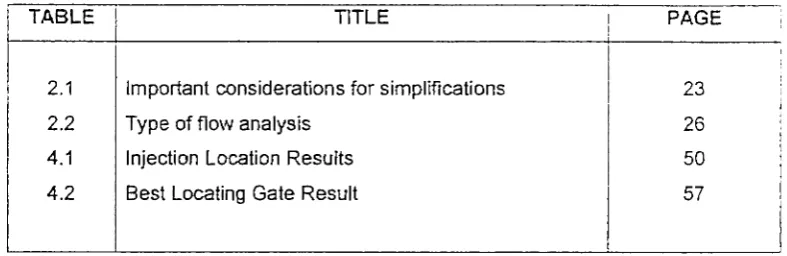
List of Tables
TABLE TITLE I PAGE
!
2.1
I Important considerations for simplifications 23
2.2 Type of flow analysis 26
4.1 Injection Location Results 50
[image:12.595.92.486.212.340.2]CAE CAD CAM STL IGES MPI Deg C Mm Mpa Cucm
G
MinJ
Kg Sec SList
ofSymbols and Abbreviations
Computer Aided Engineering Computer Aided Design Computer Aided Manufacturing Stereo lithography
Intemational geometric exchange standard Moldflow Plastic Insight
APPENDIX
2 3 4
5 6
List of Appendix
i
nTLEI
I
i
lOne injection analysis output Two injection analysis output Pin point gate analysis output Edge gate (side) analysis output Edge gate (front) analysis output
Picture Results For Different Material And Gate Locating
PAGE
69
75
80
87
93
99
xii
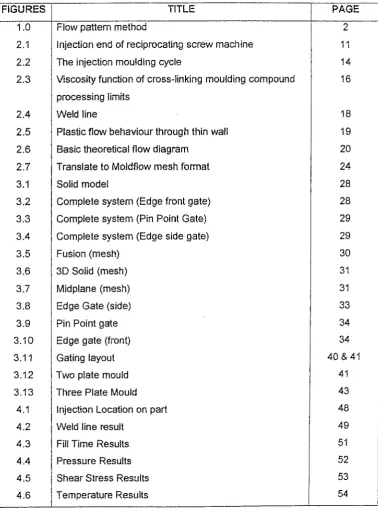
[image:15.595.100.479.205.720.2]List of Figure
FIGURES TITLE PAGE
1.0 Flow pattern method
I
2
2.1 Injection end of reciprocating screw machine 11
2.2 The injection moulding cycle 14
2.3 Viscosity function of cross-linking moulding compound 16
processing limits
2.4 Weld line 18
2.5 Plastic flow behaviour through thin wall 19
2.6 Basic theoretical flow diagram 20
2.7 Translate to Moldflow mesh format 24
3.1 Solid model 28
3.2 Complete system (Edge front gate) 28
3.3 Complete system (Pin Point Gate) 29
3.4 Complete system (Edge side gate) 29
3.5 Fusion (mesh) 30
3.6 3D Solid (mesh) 31
3.7 Midplane (mesh) 31
3.8 Edge Gate (side) 33
3.9 Pin Point gate 34
3.10 Edge gate (front) 34
3.11 Gating layout 40 & 41
3.12 Two plate mould 41
3.13 Three Plate Mould 43
4.1 Injection Location on part 48
4.2 Weld line result 49
4.3 Fill Time Results 51
4.4 Pressure Results 52
4.5 Shear Stress Results 53
CHAPTER!
1.0 INTRODUCTION
Development work on the simulation of the injection moulding process started in the mid-1970s when the first simple programs for programmable pocket calculators became available for calculating the pressure loss in specified flow channels. The geometry options then available were cylinders for the gate system and plates and circular segments for the moulded part, depending on whether the melt flowed through a constant or a divergent channel.
1.1 THE FLOW PATTERN METHOD POINTED THE WAY FORWARD
Even 20 years ago, injection moulders and mould builders were already confronted with the same problems as today, namely: where should the gates be located, how many gates should there be, and where can weld lines or even entrapped air occur. At that time, the so-called flow pattern method had been developed by the IKV Plastics Processing Institute of the Technical University of Aachen, which made it possible to simulate cavity filling with a compass and pencil on the basis of a developed view of the moulded part. Once the flow pattern had been compiled, the developed view was cut out and glued to give the 3D moulded part. A new flow pattern had to be
compiled for each new gate position and this was naturally very time consuming.
also developed a system for theological simulation. These inltial programs simply produced tables showing the prevailing pressure losses, viscosITies, shear rates and temperatures, by way of a result. This nonetheless marked the start of computer-aided simulation for injection mOUlding. [9]
Figures 1.0 : Flow pattern
methodSimulation of mould filling through a developed view of the moulded part, diagram
of wheel lining
Midway through the 1980s, computers were able to calculate flow pattems. Following this, the pace of development of simulation programs increased, and it was soon possible to calculate not only the filling phase, but also the holding pressure phase, as well as the fibber orientation, shrinkage, and warpage.
The product design study shall be strongly focused on the viabilrty, competitiveness and marketability of the product itself. Unlike any other investigations that are involved in survey analysis, this study suggests innovative products that are based mainly on function, features and material to be used.
geometry and the moulding process. It is also difficult for experienced designers to work with new plastic material grades that require many processes and perform in a different manner than those materials previously used.
Injection moulding is the most important plastics processing process for engineering & precision parts. The process are considered as a complex process as it involved a lot of variables such as polymer material, complexities of part design, type oi the moulds and processing condition set on the machine. Time for tool development and
manufacturing are extremely important in this industry. [10]
The development of the tool and the product has to be fast without neglecting their quality. Quality, consistency of the process and cost of the part playa major role in this industry.
By
adapting what is known as concurrent engineering such as incorporating Plastics CAE / Simulation from the early conceptual design stage it can optimise the result. Computer aided engineering (CAE) is the process of using a computer and appropriate software to assist in the design and engineering of components.The benefrts of using CAE software to design and engineer components include: improved and consistent component quality. Lower costs associated with the need for less prototyping, rework and lower product development cycle time. Improved produC1 design before the commencement of manufacturing lower manufacturing cycle times.
[12]
4
CHAPTER II
2.0 LITERATURE REVIEW
We have agreed to dIvide the tasks according to our discussion.
My
tasks focusmore on Moldftow analysis. The idea is to design and development new product so that the detail design can be thoroughly tested before we prepare to manufacturing. A idea
new product calls for a feasibility study, not only about whether or not it is possible to
realize a product, but also to identify structural and material problems, liability and safety issues well ahead of time so that all surprises are eliminated. Rather, the identification of problems becomes a part of the product planning.
2.1 CABLE TIES HISTORY
The need to collect, contain and control multiple wires into tightly organized
bundles appeared with the invention of the first products that contained electrical wiring
5
2.2 THE FIRST CABLE TIE
The first device that was used to bundle and route wires effectively were similar in appearance and function to today's standard cable tie. It had a steel pawl or barb inserted at an angle inside its head. Although this design provided fine adjustment and selflocking it required two separate, time consuming manufacturing operations -moulding the tie and insertion of the steel pawl. In addition, there was the possibility
that the steel pawl could work loose or break off, with potentially disastrous resutts if it
fell into printed circuits or closely spaced relay contacts. [1]
The next major development was a two-component, self-locking cable tie completely produced from nylon material. Atthough it was finely adjustable, it still maintained the time-consuming, two-step manufacturing process. Because of its design, this improved cable tie provided better hand-eye coordination and reduced installation time. Over time cable tie design improved steadily and eventually led to the development of a one-piece moulded self-locking nylon cable tie. [1]
2.3 MODERN CABLE TIE
6
2.4 CABLE TIE CHARACTERISTICS
A cable tie is a band or length of strap manufactured from a class of polymeric materials known as polyamides (Nylon 6/6). The width, length and head area employ ratcheting mechanisms to bundle and then lock items together. Commercially introduced in 1938, nylon was the first synthetic semi-crystalline polymer whose physical properties compared favourably to some metals. Nylon possesses an
outstanding balance of properties, combining strength, moderate stiffness. high service
temperature and a high level of toughness. Particularly resistant to repeated impact. nylon has a low coefficient of friction and excellent abrasion resistance. It is resistant to fuels, lubricants, and most chemicals, but is attacked by phenols, strong acids and oxidizing agents. Nylon is inherently susceptible to environmental conditions. However. many cable ties are moisturized to attain optimum performance levels. Nylon products should be stored in a cool, dry area, out of direct sunlight, and sealed in the original packaging material to extend performance levels indefinitely.
2.5 THREE TYPES OF NYLON FOR SPECIFiC APPLICATIONS
2.5.1 General-purpose nylon is suitable for most applications at a continuous
temperature up to 1500 F. Nylon 6/6, the grade most often used for cable ties. meets
UL 94V-2 flammability ratings. Its working temperature range is 400 F. to 1850 F.
2.5.2 Heat Stabilized Nylon 6/6 is used for applications with continuous or extended
exposure to high temperatures, up to 2500 F., and thereby meeting UL standards for
electrical applications. HST cable ties contain specially-formulated heat stabilizers to provide additional thermal endurance.
2.5.6 UV Stabilized Nylon 6/6 is used in applications of continuous or extended
7
ultraviolet (UV) light, is produced by incorporating stabilizers in the nylon resin. HST's UV Stabilized Nylon cable ties are available only in black. [6]
2.6 THE NEED FOR PLASTIC·FLOW ANALYSIS
The field of flow analysis has gained increasing importance in injection moulding. Flow analysis has provided rational solution to many of the hard-to understand effect that cause problem in the moulding process. These effects have included warping, moulded-in stress, excessive fill pressure, part flashing and other. The interrelationship between part design and moulding process parameters that cause problems of this nature were not well understood in the industry.
Practical experience often was insufficient to identify potential problem and too kneed to have encountered the full range of moulding problem that can be address by techniques such as flow analysis. Hence, much prototyping and mould fine-tuning were necessary before successful moulded product could be achieved.
Computerized flow analysis has emerged as a powerful tool to aid in the implementation of applying injection moulding as the production process of choice to widening spectrum of products. The ability of modem digital computer to perform complex calculation in short periods of time has been the breakthrough that makes flow analysis a tool applicable to increasing number of new parts.
Computer simulation of the injection moulding process is not new. In fact, virtually since the introduction of the computer attempts have been made to develop simulations. However, according to basic flow laws, the flow rate into each section or element must equal the flow rate out each section. This gives a boundary condition Mat allows the flow pattem to be calculated. The divided flow method has proved very successful in practice, enabling a wide range of complex parts to be analysed. The
mould is first divided into number of flow paths, then each flO\N path broken into
8
2.7 ADVANTAGES OF FLOW ANALYSIS
There are multitudes of factor that must be considered when creating a plastics part or mould design. Key influence such as component geometry, wall thickness, the number and position of the gates, material choice, shrinkage allowances and mould design are all interrelated. Part and mould design cannot be based purely on form and function but must also consider the effect of manufacturing. [2]
The CAE simulation provides engineers, designers, moulders with a visual and numerical feedback about what actually happens inside the mould cavity during the injection moulding process.
2.7.1 ADVANTAGES TO PRODUCT DESIGNER
Product designer will always be concerned if the part that he produced can be
injected or will the part fin at all especially with the larger injection moulded component.
The relationships among material structural properties, cosmetic properties and processing properties are generally hazy in the designer mind, and flow analySis provides a way to evaluate different materials in the design stage and the processing related characteristic in a scientific manner.
What will be the part wall thickness was another primary consideration for the cost of the moulded product. The ability to thin wall on the product result in obvious saving in material (comprises 40% of finish product cost). By assigning thin wall
thickness indirectly it will reduce the cycle time of the moulded part. This will increase
productivity of the moulded plant and it will reflect the cost of the product. [3]
The ability of plastic materials to be form into attractive styled has long been
9
2.7.2
ADVANTAGES TO MOULD DESIGf\lERlMOULDMAKERSGood fill pattern is very important in any injection moulded component. A good fill pattern for a moulding is one that is unidirectional and consistent molecular orientation in the moulded product. Flow analysis helps to avoid warpage problem caused by differential orientation, an effect that is the best demonstrated by warpage that occurs in thin centre gated disks. [3]
In order to achieve a controlled fill pattem, the mould designer must select the number and location of gates that will result in the desire pattem. Flow analysis can help by allowing the designer to try multiple of gate location and evaluate the impact on the moulding process.
Normally the balance runner systems are certainly desirable but it may lead to problem in mould cooling or increase the cost due to excessive runner-tOopart weight.
By
using flow analysis it allow the best designs of runner to balance for pressure,temperature, or combination of both. They also allow an evaluation of the shear rate
and degree of frictional heating that will be produced in the runner system, which can avoid the problem of material degradation or excessive mett temperature variation delivered to the mould cavity. [3J
One of the major benefits of the flow analysis is the increased probability that the mould run successfully the first time in the trial. This will save lot of time and money.
2.7.3
ADVANTAGES TO INJECTION MOULDERFlow analysis can provided an objective view of the impact of changes of primary injection moulding process parameter such as melt temperature, mould temperature, injection speed and injection pressure.