EXPLORING TEACHERS’ CONSTRUCTS OF
MENTAL HEALTH AND THEIR REPORTED
RESPONSES TO YOUNG PEOPLE
EXPERIENCING MENTAL HEALTH
PROBLEMS: A GROUNDED THEORY
APPROACH
HANNAH MARY GREEN
A thesis submitted in partial fulfilment of the requirements of the School of Psychology, University of East London for the Professional Doctorate
in Educational and Child Psychology
Abstract
The current research used a grounded theory approach (Charmaz, 2006) to explore the ways in which a small group of teachers working in mainstream schools constructed the term ‘mental health’ and how they responded to young people who may be experiencing ‘mental health’ problems. The findings indicated that four conceptual categories emerged from the data. One of the conceptual categories indicated that the teachers had two constructs of mental health, with one construct suggesting teachers felt mental health language was limiting for young people. Conversely, it was also found that mental health language could have a motivating effect on the teachers in being able to know how to respond to young people with mental health problems. In addition, it was found that the teachers lacked confidence in sharing ownership of the term ‘mental health’.
STUDENTDECLARATION
University of East London
School of Psychology
Doctorate in Educational and Child Psychology
Declaration
This work has not previously been accepted for any degree and it is not being
concurrently submitted for any degree.
This research is being submitted in partial fulfilment of the requirements of the
Doctorate in Educational and Child Psychology.
This thesis is the result of my own work and investigation, except where otherwise
stated. Other sources are acknowledged by explicit references in the text. A full
reference list is appended.
I hereby give my permission for my thesis, if accepted, to be available for photocopying
and for inter-library loans, and for the title and summary to be made available to outside
organisations.
Name: MISS HANNAH MARY GREEN
Table of Contents
Chapter 1:
Introduction... 1
1.1. Forward ...1
1.2. Introduction to the term ‘Mental Health’...1
1.3. Overview of the Chapters ...2
1.4. Introduction to the Current Chapter ...3
1.5. Origins and Rationale for the Current Study ...6
1.6. Definitions and Understanding ‘Mental Health’ in Young People ..11
1.7. Prevalence of ‘Mental Health’ in Children and Young People ...13
1.8. Governmental Guidance in the UK Relating to the Mental Health of Children and Young People ...16
1.9. Expectations Placed on Professionals Working with Children and Young People ...19
1.10. Role of EPs within Schools and with Children and Young People 22 1.11. Why Use the Term ‘Mental Health’?...25
1.12. Mental Health and Educators ...28
Chapter 2:
Literature Review... 32
2.1. Overview ...32
2.2. Eliciting the Experiences of Teachers...33
2.3. Research Aims and Questions ...34
2.5. Overview of Literature Review ...35
2.6. Systematic Literature Search...37
2.6.1. Identification of Papers ...37
2.6.2. Further Criteria for Identification of Papers ...39
2.6.3. Selection Criteria...39
2.7. Qualitative Research into Teachers’ Views on and Responses to Social, Emotional and Behavioural Needs of Children and Young people ...40
2.8. Quantitative Research into Teachers’ Views on and Responses to Social, Emotional and Behavioural Needs of Children and Young People ...46
2.9. Qualitative Research into Teachers’ Understanding of Mental Health Problems in Children and Young People ...55
2.10. Research Exploring how Teachers Seek to Manage and Support Children and Young People with Mental Health Difficulties...62
2.11. Common Themes Emerging from the Literature Review...63
2.11.1.Language Barriers to Eliciting Teachers’ Views and Responses to Mental Health...63
2.11.2.Methodological Issues in Accessing Teachers’ Views on Mental Health ...65
2.13. Theoretical Frameworks ...67
2.14. Position of the Researcher...71
2.15. Re-visiting Research Questions ...72
Chapter 3:
Methodology ... 74
3.1. Overview of Methodology Chapter ...74
3.2. Purpose of Research ...74
3.3. Research Questions...74
3.4. Epistemological Framework...76
3.5. Methodological Framework...81
3.6. The choice of Grounded Theory: an Epistemological Position ...83
3.7. Participants...87
3.8. Pilot Study ...89
3.9. Research Procedures ...93
3.10. Methods ...96
3.10.1.Developing the Use of Vignettes...96
3.10.2.Developing the Semi-structured Interviews...102
3.11. Ethical Issues ...105
3.12. Reliability and Validity ...108
3.13. Process of Data Analysis and Treatment...111
Chapter 4:
Findings ... 118
4.1.1. Overview ...118
4.1.2. The Coding Process ...118
4.2. Overview of Data Analysis ...148
4.3. Conceptual Category One ...150
4.3.1. Summary ...159
4.4. Conceptual Category Two:...160
4.4.1. Summary ...172
4.5. Conceptual Category Three ...173
4.5.1. Summary ...177
4.6. Conceptual Category Four ...180
4.6.1. Summary ...189
4.7. New Data ...190
Chapter 5:
Discussion ... 193
5.1. Overview ...193
5.2. Research Question One...193
5.3. Research Question Two ...200
5.4. Revisiting the Literature ...206
5.4.1. Selection Criteria of Papers ...207
5.5. Limitations of the Research ...217
5.7. Implications for Further Research ...222
5.8. Implications for Teachers and Schools...224
5.9. Implications for Educational Psychology Practice ...226
5.10. Conclusions...230
References 235
List of Tables
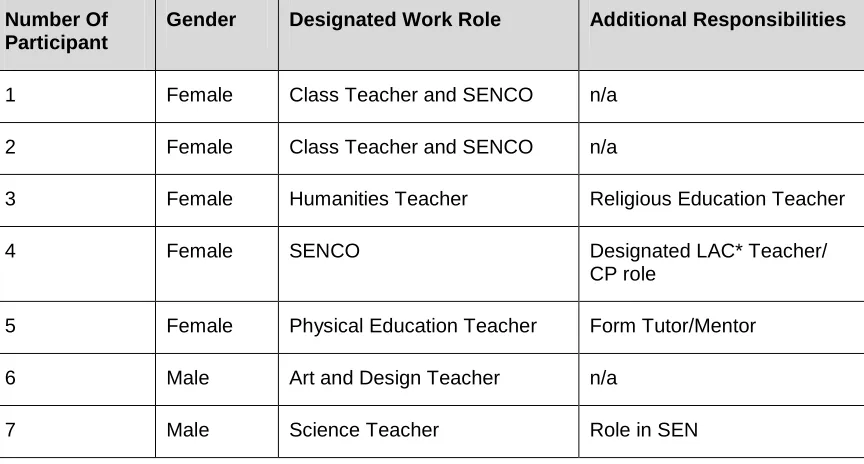
Table 3.1: Participants’ Gender and Self-defined Work Roles ...89Table 4.1: Codes and Categories from Interview One...120
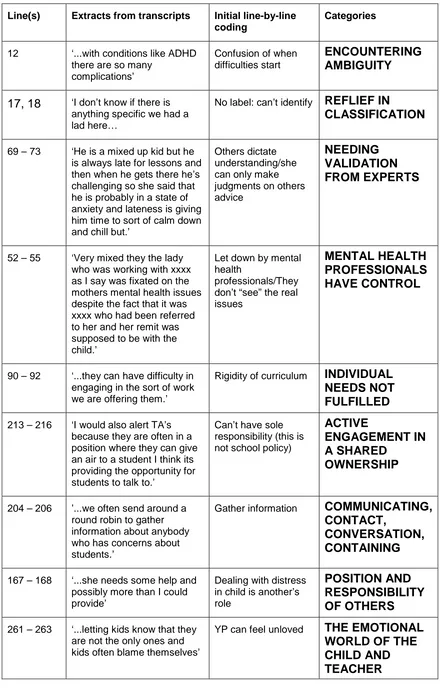
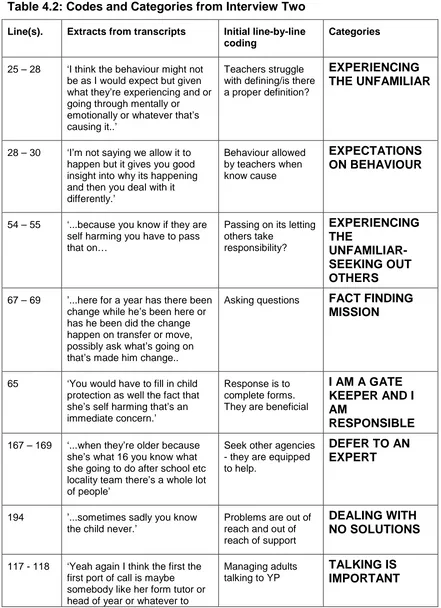
Table 4.2: Codes and Categories from Interview Two...123
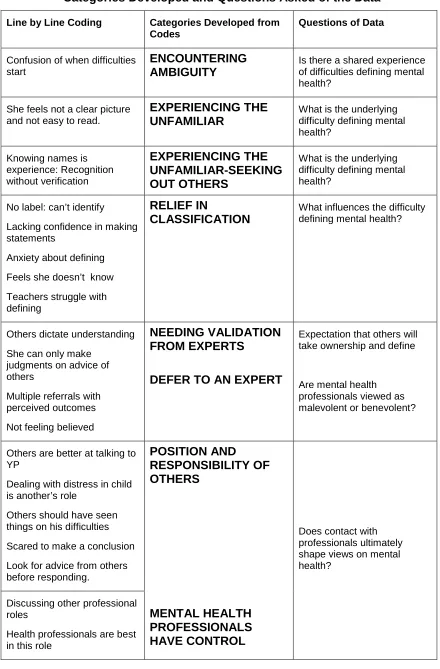
Table 4.3: Summary of Initial Codes from Interviews One and Two, Categories Developed and Questions Asked of the Data...125
Table 4.4: Category Strength Development ...146
List of Figures
Figure 3.1: Vignette – Sarah ...100Figure 3.2: Vignette - David ...100
Figure 3.3: Vignette - Alison ...100
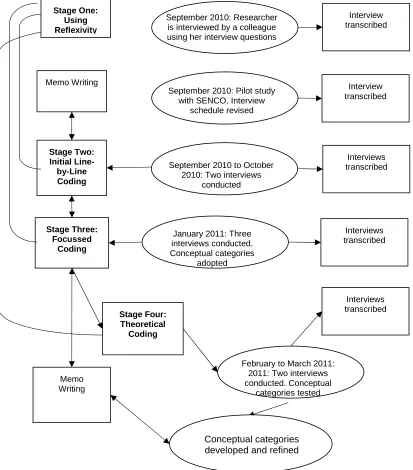
Figure 3.4: Stages of Grounded Theory Data Collection ...112
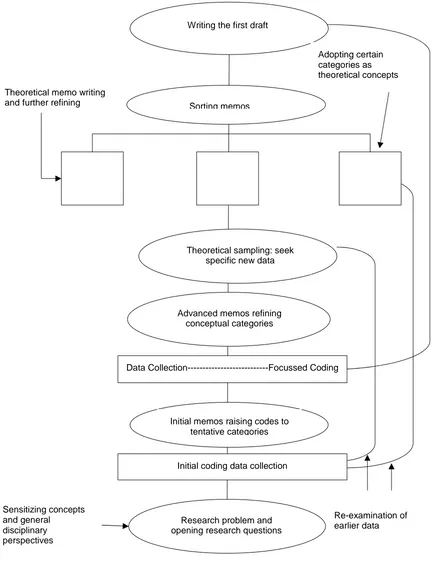
Figure 3.6: Grounded Theory Approach Adapted from Charmaz (2006)
...114
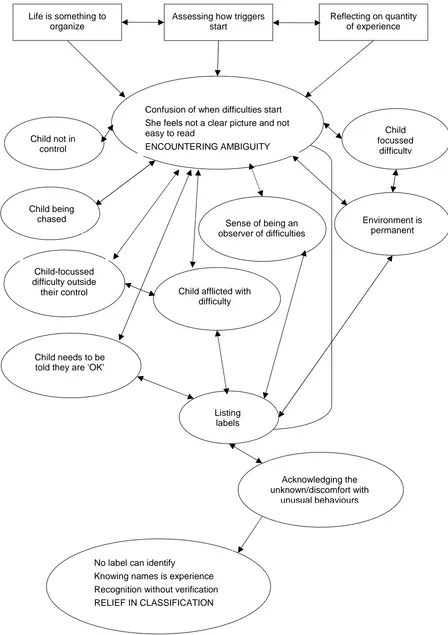
Figure 4.1: Clustering for Interview One on the Categories ENCOUNTERING AMBIGUITY and RELIEF IN CLASSIFICATION ...122
Figure 4.2: Clustering from Interview Three on the Category THE RISKS OF DEFINING THE AMBIGUITY OF MENTAL HEALTH ...129
Figure 4.3: Conceptual Category Exploring How Teachers Construct Mental Health...135
Figure 4.4: Conceptual Category Exploring How Teachers Construct Mental Health...136
Figure 4.5: Conceptual Category Exploring Teachers’ Response to Mental Health Problems in Young People - One ...138
Figure 4.6: Conceptual Category Exploring Teachers’ Response to Mental Health Problems in Young People...141
Figure 4.7: Refining and Establishing Conceptual Categories ...148
Figure 9.1: Interview One: Constructs of Mental Health ...263
Figure 10.1: Interview One: Constructs of Mental Health ...264
Figure 11.1: Interview One: Constructs of Mental Health ...265
Figure 12.1: Interview One: Responses to Mental Health ...266
Figure 13.1: Interview One Responses to Mental Health ...267
Figure 15.1: One Example from Interview Two Constructs of Mental Health ...269
Figure 16.1: One Example from Interview Two Responses to Mental Health ...270
Figure 17.1: One Example from Interview Three Responses to Mental Health ...271
Figure 18.1: One Example from Interview Four Responses to Mental Health ...272
Figure 19.1: One Example from Interview Four Constructs of Mental Health ...273
List of Appendices
Appendix 1:
Example of Email Correspondence to Prospective
Participants 244
Appendix 2:
Example of Letter to Participants Explaining
Nature of Interviews ... 245
Appendix 3:
Example Consent Form ... 247
Appendix 4:
Example Debrief Letter ... 248
Appendix 5:
Ethical Application to University of East London
249
Appendix 6:
Ethical Approval Letter from University of East
London 256
Appendix 7:
Researcher Interview ... 258
Appendix 8:
Photographs That Accompanied Vignettes Used
in Research Interviews... 262
Appendix 9:
Clustering Diagram (Initial Stages of Data
Appendix 10:
Clustering Diagram (Initial Stages of Data
Analysis 264
Appendix 11:
Clustering Diagram (Initial Stages of Data
Analysis) 265
Appendix 12:
Clustering Diagram (Initial Stages of Data
Analysis) 266
Appendix 13:
Clustering Diagram (Initial Stages of Data
Analysis) 267
Appendix 14:
Clustering Diagram (Initial Stages of Data
Analysis) 268
Appendix 15:
Clustering Diagram (Initial Stages of Data
Analysis) 269
Appendix 16:
Clustering Diagram (Initial Stages of Data
Analysis) 270
Appendix 17:
Clustering Diagram (Stage Two of Data Analysis)
271
Appendix 18:
Clustering Diagram (Stage Two of Data Analysis)
272
Appendix 19:
Clustering Diagram (Stage Two of Data Analysis)
273
Appendix 20:
Example of Line by Line Coding in Interview Two
274
Appendix 21:
Example of Focused Coding - Interview Four 287
Appendix 22:
Example of Developing Conceptual Categories
through Theoretical Sampling in Interview Six ... 308
Appendix 23:
Pilot Study Interview ... 330
Appendix 24:
Follow-up Email to Participants ... 340
Appendix 25:
List of Prompts Used in the Interview Schedule
343
Appendix 26:
Extracts from Diary Kept During the Research
Process 345
Glossary of Terminology
This thesis makes use of a number of terms and concepts. Many terms and concepts used in this thesis are those which the medical profession use. The researcher felt it was important for the reader to be provided with explanations for each term and concept and when possible the researcher provided the reader with a range of definitions which reflected the use of terms by both the educational and medical professionals.
Term Definition
DEPRESSION The following definition is from a text book aimed at psychology, medical, nursing and social care professionals.
“The term Depression is used in everyday language to describe a range of experiences from slightly noticeable and temporary mood decrease to a profoundly impaired and even-life threatening disorder.” (Hammen, 1997 p.3)
EMOTIONAL (AND SOCIAL) WELLBEING
This is a term being increasingly used in education and with health professionals.
The National Clinical Institute for Excellence (NICE, 2009) describes social and emotional wellbeing as encompassing:
1. happiness, confidence and not feeling depressed (emotional wellbeing)
2. a feeling of autonomy and control over one’s life, problem-solving skills, resilience, attentiveness and a sense of involvement with others (psychological wellbeing)
EVERY CHILD MATTERS (ECM)
The Every Child Matters (ECM) initiative was a document published and implemented by the Labour Government. It resulted in the Children’s Act 2004.
The ECM initiative published in 2004. It covers children and young adults up to the age of 19, or 24 for those with disabilities. The aim of the initiative was for every child, whatever their background or circumstances, to have the support they need to:
• Be healthy
• Stay safe
• Enjoy and achieve]
• Make a positive contribution
• Achieve economic well-being
The change of Government in May 2010 to a Conservative and Liberal Democrat coalition resulted in a change of policy for education.
EXPRESSED EMOTION
Expressed Emotion (EE) was a concept pioneered by Brown, Carstairs and Topping (1958, as cited in Daley, et al., 2005). They theorised that EE is a qualitative measure of the amount of emotion displayed, typically in the family setting, usually by a family or care takers.
This measure was developed to describe the emotional atmosphere present in the relationship between an individual, usually a patient or client, and a close family member (Daley, Renyard & Sonuga-Burke, 2005).
MENTAL HEALTH The World Health Organisation (WHO, 2004) define mental health as a state of wellbeing in which the individual realises his or her own abilities, can cope with the normal stresses of life, can work productive and fruitfully and is able to make a contribution to his or her community.
Frederickson, Dunsmuir and Baxter (2009) state that mental health problems are evident when individuals are not able to cope emotionally with the experiences they have or when their reactions to their experiences themselves become a problem. This may include withdrawn behaviour as well as behaviour which is challenging.
MENTAL ILLNESS The World Health Organisation’s (WHO, 2004) view of psychological wellbeing asserts that mental health and mental illness are discrete categories which can overlap and simultaneously occur.
Mental Health is a state of wellbeing which is positive and fulfilling; individuals realise their own abilities and can cope with the normal stresses of life. At the other end of a mental health continuum is Mental Illness, where individuals are not fulfilled, experience thoughts, feelings and behaviours which significantly impact on their ability to cope with every day life (WHO, 2004).
SIGNIFICANT (ALSO KNOWN AS
PSYCHOLOGICAL) DISTRESS
The term significant distress refers to the individual experiencing an episode of significant stress in their lives:
“This stress will be a reaction to disturbing events in the environment. A stress reaction can either be a short-term emotional reaction by specific situation or it can be a long –term pattern of such emotional reactions”. (Rosenhan & Seligman, 1995 p.316-317)
SOCIAL, EMOTIONAL AND BEHAVIOURAL DIFFICULTIES
PSYCHOLOGICAL WELLBEING
“A range of terminology is used to talk to about mental health……Some prefer to use terms such as psychological wellbeing to describe this aspect of human experience”. (Frederickson, Dunsmuir & Baxter, 2009 p.1)
OBSESSIVE COMPULSIVE DISORDER (OCD)
OCD is one of the anxiety disorder diagnosed by the DSM-IV.
Acknowledgements
I could not have completed this research without the constant support and love of my grandfather, whose un-conditional love has allowed me to be the person I am today.
I would like to thank him for his generosity, kindness and his very bad sense of humour.
Chapter 1:
Introduction
1.1. Forward
The current research study was developed to explore the ways in which teachers working in mainstream schools, in a rural county in England, constructed the term ‘mental health’ and how they responded to young people who may be experiencing ‘mental health’ problems. Kelly (1955) devised the term ‘constructs’ to define how an individual derives meaning from their social interactions and experiences. As such ‘constructs’ are an individual’s own personal view of the world. Therefore, by seeking to elicit this personal view of ‘mental health’ and teachers responses to managing ‘mental health’ in young people, the research aimed to develop a better understanding of teachers social worlds. In achieving this greater understanding, it was hoped that this piece of research would help to inform how teachers can be supported more effectively in the daily work they do, particularly with those young people who are more vulnerable.
In addition, this thesis will draw on a range of terminology and concepts that are from many different fields of research, for example, educational, psychological and medical. A Glossary of Key Terminology has been provided to assist in clarifying these terms.
1.2. Introduction to the term ‘Mental Health’
p.414). Therefore, when the term ‘mental health’ is used in this thesis, the researcher is focusing on constructs and responses to this human state of mind.
However, as can be seen in the Glossary of Key Terminology, there is a range of terminology associated with ‘mental health’. Furthermore, the language used to describe ‘mental health’ can be different across professional disciplines. Research pertaining to the term ‘mental health’ also reflects the range of language used to describe ‘mental health’ by different professions. A significant focus of this current research is how the differing terminology used in different disciplines has had a considerable effect on perceptions and views on ‘mental health’. As a result, a further discussion on the definitions and terminology associated with ‘mental health’ will be presented later in chapter one. An overview of the content and structure of this thesis will now be presented.
1.3. Overview of the Chapters
Chapter one provides an outline of the context and rationale of the current research, including the political, social and psychological context and the researcher’s own personal interest in the research. Chapter one also contains a discussion of how the current research can contribute to the professional practice of Educational Psychologists (EPs).
Chapter three contains an account of the research methodology, including epistemological considerations, reflexivity of the researcher and an overview of the process of data analysis.
Chapter four provides evidence of how the data was treated and analysed using a grounded theory approach (Charmaz, 2006). There is an account of the findings generated by the research, including how tentative theories were developed from the data.
Chapter five contains a critical discussion of the findings and implications for further research and Educational Psychology practice.
This current study’s focus is on ‘mental health’ and the role of teachers. In the next section, a brief overview of why the topic of ‘mental health’ is an important area to research will be presented.
1.4. Introduction to the Current Chapter
people who had not experienced mental health problems could learn ‘first hand’ what it could be like to experience mental health difficulties.
This focus on people sharing their experiences, views and perceptions with each other highlights the distinct role language and social interaction can have in shaping and reconstructing individuals’ existing beliefs and views. Furthermore, one of the many other national and local projects of Time To Change is the development of the Education Not Discrimination project ( http://www.time-to-change.org.uk/about-us/how-people-with-lived-experience-are-involved) This project involves gaining the views of medical students, trainee teachers and trainee head teachers about their experiences of managing mental health in the children and young people they work with.
These projects highlight that mental health is an important social issue in England. The Education Not Discrimination project further highlights the important role that educational professionals can have in addressing discriminatory views towards mental health.
In addition, in 2008, the Government launched Targeted Mental Health in Schools project (TaMHS, DCSF 2010) with the aim that 25 Local Authorities in England would establish better links between primary care trusts and their local schools. The TaMHS programme was designed to support the development of innovative models of therapeutic and holistic mental health support in schools for children and young people aged five to 13 at risk of, and/or experiencing, mental health problems and their families (DCSF, 2010).
It appears that these initiatives have developed a more open national dialogue on mental health and its effects. Furthermore, the call for more targeted support for people suffering from mental health difficulties suggests that the subject of mental health has been brought considerably into the national consciousness. This proposes that a range of professionals, both in education and health, may need to think more about how they identify, manage and treat mental health difficulties.
These national initiatives suggest that not only do medical and educational professionals need to think more about how to manage and treat mental health problems but that there is an emphasis on the general public becoming more aware of mental health problems. In addition, there is the suggestion that this awareness needs to be developed in young people. Lord Layard’s (2006) advice that more support for children and young people should be channelled through in-school systems suggests a greater emphasis on the role of education being the primary source of support for children and young people experiencing mental health problems.
Therefore, it is proposed that it is timely and relevant that psychological research and practice should contribute to the area of mental health identification, management and treatment. As EPs predominantly work in schools, with educational personnel and with medical and health professionals (Frederickson, Miller & Cline (2008) their contribution to not only the research literature but to psychological practice is pertinent. However, before a useful contribution can be made to the above area, a review of the current understanding of ‘mental health’, an in-depth look at the current legislative context, the role of educators and the terminology used within ‘mental health’ will help inform the current research. It will also help inform the reader as to how this current study can make a unique contribution to the current psychological literature. In the next section the origins and rationale for the proposed research will be presented.
1.5. Origins and Rationale for the Current Study
life (Seligman & Csikszentmihalyi, 2000). Howard Gardner proposed the existence of a comprehensive number of human intelligences (Gardner & Hatch, 1989). Gardner’s Theory of Multiple Intelligences described human beings as capable of seven relatively independent forms of information processing: logical-mathematical; linguistic; musical; spatial; bodily-kinaesthetic; interpersonal; and intrapersonal (Gardner, 1983). Gardner’s concept of interpersonal and intrapersonal intelligence illustrates the significant role humans have in managing their own emotions and responding to the emotions of others.
Salovey and Mayer (1990) proposed a model of human intelligence focusing on the importance of personal characteristics. They recommended a model of Emotional Intelligence comprising of five areas of ability such as: ‘knowing one’s emotions’, ‘managing emotions’, ‘motivating oneself’ and ‘recognising emotions in others’ and ‘handling relationships’. Salovey and Mayer (1990) suggested that it was these emotional competencies which helped an individual cope with life stresses, regulate their emotions successfully and achieve in life. Salovey and Mayer (1990) further discussed that maladaptive qualities in an individual can lead to unsuccessful outcomes in life and argue the importance of shaping emotional intelligence as a protecting factor against difficulties with ‘mental health’.
health’ problems, it is evident when individuals are not able to cope emotionally with their life experiences or when their reactions to their experiences themselves become a problem.
Consequently, it is proposed that the emotional characteristics of individuals which can shape their ability to manage significant life events which may cause them a degree of stress. As previously cited, Salovey and Mayer, (1990) conceptualised emotional intelligence as the link between emotions and positive life outcomes, such as healthy relationships and effective social skills. Goleman (1995) suggests it is important for adults to understand the power of their emotional skills and abilities. Goleman (1995) acknowledged the theories of intelligence proposed by Gardner (1983) and Salovey and Mayer (1990) and adapted the existing model of emotional intelligence to include five basic emotional and social competencies: self-awareness; self-regulation; motivation; empathy; and social skills.
In 1995 Goleman made what appears to be a simple claim:
“the crucial emotional competencies can indeed be learned and improved upon by children if we bother to teach them”. (p.34)
adults can play in developing a child’s emotional competencies. Goleman (1995) further focuses his theory on the development of emotional competences and places an emphasis on the learning environment in schools.
Thus, the simple act of ‘teaching’ children how to be aware of their emotional abilities and how to change these could be viewed as an important function for all adults. This suggests that as well as parents, adults who have a significant amount of contact with children, for example, teachers can share a responsibility for teaching emotional competencies. Therefore, it can be proposed that teachers are an important group of adults whose daily work influences the development of children and young people. It can be suggested that in addition to their important role in educating and developing learning capacity, they help shape the social and emotional competencies of children and young people. They are the significant adults who interact with children and young people as they ‘grow up’. They can shape the developing mind by developing their thoughts and ideas.
This psychological interest into what influences a healthy mind and the significant role adults can have in developing children and young peoples’ healthy minds has been an area of interest for the researcher before her training as an Educational Psychologist (EP). The researcher’s interest in the field of mental health came from previous work experience in a CAMHS Tier Four1 secure unit for young people with acute mental health problems. The
1
work the researcher undertook in this unit highlighted the difficult process involved in reintegrating young people into mainstream society through education. The attitudes and beliefs surrounding mental heath from teachers in the mainstream could be seen to be a barrier in understanding how to support these young people.
The researcher’s initial training in Educational Psychology came at a time when there was a growing national emphasis on expanding the support of children and young people with mental health difficulties (Targeted Mental Health in Schools project, DSCF, 2010). The role of the EP in this area was also under discussion with the subsequent change from a one year Masters training to a three year Doctoral programme which hoped to expand the skills sets of EPs (Farrell, Gersch & Morris, 1998). It was this context that prompted the researcher to investigate how ‘mental health’ was conceptualised in both the health and education world and to investigate what the current beliefs and views towards ‘mental health’ currently were.
1.6. Definitions and Understanding ‘Mental Health’ in Young
People
There are a number of different definitions of the term ‘mental health’. The World Health Organisation’s (WHO) (2004) view of mental health and mental illness asserts that they are discrete categories which can overlap and simultaneously occur. They are part of a continuum of mental health well-being. The WHO states that Mental Health is a state of wellbeing which is positive and fulfilling; individuals realise their own abilities and can cope with the normal stresses of life. At the other end of a mental health continuum is Mental Illness, where individuals are not fulfilled, experience thoughts, feelings and behaviours which significantly impact on their ability to cope with everyday life (WHO, 2004). The Mental Health Foundation (1999) defines mentally healthy children and young people as having the ability to develop psychologically, emotionally, creatively, intellectually and spiritually in a positive and fulfilling manner. Children and young people should also enjoy mutually satisfying personal relationships, have empathy, use and enjoy solitude, play and learn, develop a sense of right and wrong and have the ability to resolve problem and setbacks in their lives (Mental Health Foundation, 1999).
people. Weare and Gray (2003) reviewed how children’s emotional and social well being are developed and found that terms used to describe ‘mental health’ and ‘mental illness’ varied between different children services.
Frederickson, Dunsmuir and Baxter (2009) state that a range of terminology is used to talk about the term ‘mental health’ and that the term ‘mental health’ is sometimes avoided because of its association with stigmatising ideas about mental illness. Professionals working in health, such as Clinical Psychologists, use terms such as ‘mental health’ in reference to the work they do with children and young people (e.g. Scholl, Korkie & Harper, 2010). Educationalists, including EPs may refer to the identification of social, emotional and behavioural difficulties and discuss ‘psychological wellbeing’ (e.g. Rait et al., 2010 & Wigelsworth, Humphrey, Kalambouka & Lendrum, 2010).
The different definitions and uses of the term ‘mental health’ within different professions and contexts have been presented. However, when looking at the prevalence rates of difficulties in children and young people the identification of these difficulties is shaped by the use of the term ‘mental health’. As the next section will indicate, there appears to be evidence of a growing increase in the number of children and young people suffering from difficulties with their mental health.
1.7. Prevalence of ‘Mental Health’ in Children and Young People
There is a growing body of evidence highlighting that mental health problems appear to be increasing in children and young people in the U.K. In 2004 the Department of Health (DoH) and the Department Children Schools and Families (DCSF, 2008) reviewed the support provided for by Child and Adolescent Mental Health Services (CAMHS) to children and young people. The survey found evidence to indicate that at least 10% of children and young people aged five to sixteen years have a mental disorder which disrupts family and social relationships, the capacity to cope with day to day stresses, life challenges and their learning (DoH, 2004c). ‘Mental disorder’ is a medical term clinically conceptualised by the Diagnostic Statistical Manual Four2 (DSM-IV; American Psychiatric Association, 1994). This describes a mental disorder as a behavioural or psychological pattern that either has caused the individual distress or disabled the individual in one or more significant areas of functioning2
(Rosenhan & Seligman, 1995). The DoH (2004c) also found that a similar percentage of children and young people have less serious mental health problems that would benefit from some structured intervention. Furthermore, the survey estimated that around two million children needed intervention to improve their emotional wellbeing, mental health and resilience (DoH, 2004c).
Rait et al. (2010) have suggested that the DoH (2004c) survey indicates that around 40% of children with psychological difficulties are not currently receiving any form of specialist input. Furthermore, as cited by Wilson (2004) a Young Minds survey in 2002 indicated that in a school of 1000 pupils there are likely to be: 50 pupils who are seriously depressed, 100 who are suffering from significant distress, 10-20 pupils with Obsessive Compulsive Disorder (OCD) and 5-10 girls with an eating disorder (Wilson, 2004) (see Glossary of Key Terminology for definitions of these terms).
suggested that they are a key agency in witnessing and alerting other agencies to these difficulties.
The statistics noted above indicate that the prevalence rates of mental health difficulties in children and young people appear to be increasing in the U.K. This may be an effect of changes to the definitions used to describe mental health problems which may have lead to a broader criterion of symptoms and /or behaviours which constitute mental health difficulties. This may have affected the reported responses by the sample surveyed in identifying mental health difficulties in children and young people. As stated previously, this reported increase may also be a product of professionals’ greater use of the word ‘mental health’ and terminology associated with mental health.
Although, there should be caution when interpreting the statistics from the DoH (2004c) it should be noted that earlier identification of such difficulties may ameliorate this apparent increasing trend. Rait et al. (2010) suggest that a high proportion of children and young people are not being identified and provided with specialist support to help them manage their ‘psychological difficulty’ (p.106). It could be proposed that one factor influencing the problems faced by school and other agencies in identifying mental health difficulties in children and young people may lie in the terminology used. It could be considered that the differing conceptualisations professionals have regarding mental health may influence how they each identify difficulties in children and young people.
professionals involved in identifying mental health difficulties may want to use the same criteria and terminology when describing ‘mental health’ difficulties.
In the next section this latter argument will be expanded upon and an account of the current national legislation and how this has shifted the work of educators and health professionals will be provided.
1.8. Governmental Guidance in the UK Relating to the Mental
Health of Children and Young People
The current legislative context in the UK has highlighted a shift in expectations on services and professionals supporting the mental health of children and young people. Every Child Matters (ECM) (2003) promoted the healthy development of children and young people, highlighting that all children deserved to be provided with services which not only focused on their academic learning but also identified that their development as individuals and as part of society was important. The ECM identified that children and young people should have the right to: Be Healthy, Stay Safe, Enjoy and Achieve, Make a Positive Contribution and Achieve Economic Wellbeing.
a key role in helping to achieve the ECM (2003) outcomes. The promotion of Children’s Centres, to coordinate the delivery of social health, social care and education services, was outlined as one mechanism in which to support improvements in the five ECM outcomes and to facilitate multidisciplinary working between health and education. The Children’s National Standards Framework further suggested that sustained improvements in the mental health of all children and young people would be a core aim of all professionals who work with children and young people.
A review of previous government guidance has helped to suggest the importance of this area has developed over time. The document “Promoting Children’s Mental Health within Early Years and School Settings” (DfES, 2001) emphasised the identification and management of mental health in children and young people on all professionals and not purely those professionals who work within the Health Services (DfES, 2001; Health Advisory Service, 1995). An independent review of the Primary National Curriculum and its implementation by teachers in England by Jim Rose (2009) located the importance of children’s social and emotional skills in their psychological development and its effect on their learning.
their social, emotional and behavioural skills. These curriculum-based interventions, together with the Personal Social Health Education (PSHE, Qualifications and Curriculum Authority (QCA), 2000) curriculum identify the importance of children having good self esteem and self confidence to aid their learning. This indicates the perspective that children’s mental health has an effect on other areas of children’s lives. This further espoused government initiatives that could be seen to focus on developing/improving the healthy psychological development in children and young people, particularly in the learning environment of schools.
These recent initiatives being developed in schools highlight the changing role of educators in tackling and understanding the importance of mental health in children and young people. The growing body of initiatives (e.g. ECM, 2003; PSHE, QCA, 2000 & SEAL, DfES, 2007), places an emphasis on schools to recognise and identify potential psychological difficulties and to intervene earlier. Furthermore, it was suggested that schools can play a role in providing a “therapeutic environment” where staff can closely monitor, adapt and track specific programmes (Rait et al., 2010).
1.9. Expectations Placed on Professionals Working with
Children and Young People
Zins, Travis and Freppon (1997) noted that educators face a variety of complex challenges every day, many of which are related to students’ social and emotional needs. Teachers are increasingly being asked to work at a Tier One Child Adolescent Mental Health Services3 (CAMHS) intervention to help young people with emotional and mental health problems (Cowie, Boardman, Barsnley & Jennifer, 2004). The Tier One Child and Adolescent Mental Health service provides support for children and young people at an early stage of any problem, for example, help and support from a General Practitioner and/or a short therapeutic intervention such as access to some support from a counsellor. Therefore, proposing that teachers work at this level in mental health services stresses the importance of teachers being aware of the triggers and causes of mental health problems.
Fonagy et al. (2005) have suggested that there needs to be increased resources put into understanding which interventions are effective and using these interventions earlier with children and young people who present with psychological difficulties. As such, Rait et al. (2010) suggest that all adults working with children and young people need to ensure that targeted psychological support is in place for these children and young people. Therefore, it can be hypothesised that important changes in the mental health
3
functioning of children and young people may require earlier identification by these adults before these difficulties become severe and chronic.
Weare and Gray (2003) have noted that the term ‘mental health’ is not widely used in education and the use of terminology differs across professional disciplines. As such, if teachers are to identify ‘mental health’ problems and understand their causes then a good working knowledge of what mental health is and how it manifests itself in children and young people would be expected. However, as noted previously a range of language is used in the educational context when describing a child or young person experiencing mental health difficulties, for example, psychological wellbeing, behavioural problems, emotional problems and social problems. These latter terms are commonly grouped together in education as social, emotional and behavioural difficulties (SEBD) which are described by Cooper and Tiknaz (2007) as an umbrella term incorporating a diverse range of behaviours ranging from ‘acting out behaviours’, such as non-compliant behaviour and aggression to social withdrawal, anxiety and depression. The Special Educational Needs Code of Practice (DfES, 2001) describes behavioural, emotional and social difficulty as a learning difficulty where children reveal characteristics such as: being withdrawn or isolated, being disruptive and disturbing, being hyperactive and lacking concentration, having immature social skills and presenting challenging behaviours arising from other complex special needs.
lead to confusion and uncertainty as to what constitutes ‘mental health’ and what constitutes difficulties with psychological wellbeing and/or SEBD. In a review of research and government initiatives, use of the term ‘mental health’ was more commonly used to identify the psychological distress which can constitute more significant and persistent difficulties for children and young people. The use of terms such as social and emotional wellbeing appeared to signify those characteristics which help develop healthy psychological functioning. For example, the NICE guidelines on ‘Promoting social and emotional wellbeing in secondary education’ (2009) note that promoting positive and good social, emotional and psychological health can help protect against a numbers of factors such as emotional and behavioural problems and can help children and young people to learn and achieve academically.
In summary, the current government guidance would appear to demonstrate that all professionals who work with children and young people have a responsibility to make a contribution to: helping children and young people become aware of ways in which to foster good ‘mental health’; to provide appropriate advice and interventions; to work together to share expertise; and to work with children and young people to identify at an earlier stage possible ‘mental health’ problems. This is in the hope of preventing significant and persistent difficulties in children and young people.
emotional, social and physical wellbeing and development (Baxter & Frederickson, 2005). Therefore, it is proposed that EPs could have a central role in supporting the mental health of children and young people. They may also have a role which provides support and advice for teachers working with vulnerable children and young people.
In the following section, a more detailed discussion on the role of the EP and their work with schools, children and young people will be discussed. It will be highlighted of the current research study how it is relevant to the role EPs play in supporting the mental health of children and young people. The author will also suggest how carrying out research is important to the evolution and development of educational psychology practice.
1.10. Role of EPs within Schools and with Children and Young
People
the influential adults in a child’s life (Beaver, 2005). Therefore, EPs perform a crucial function in understanding the psychological development of children through the examination of the role of familial, social, economic factors.
Frederickson et al. (2009) contend that historically EPs have been involved in the identification of mental health difficulties due to their knowledge of the complex social, emotional, behavioural and biological factors that influence developmental outcomes in children and learning outcomes in schools. The DCSF (2008) and National Institute for Clinical Excellence (NICE, 2008) have highlighted that the application of psychology with its empirical approach to inquiry, has contributed significantly to the evidence base of what works and what does not work in the promotion of mental health (Frederickson et al., 2009). Frederickson et al. (2009) highlight that the change in legalisation promotes the key role EPs have in contributing to scientific inquiry and evidence based practice.
In addition, it can be suggested that teachers are being increasingly asked to work as Tier One mental health workers. EPs can be viewed as Tier Two professionals in the Child and Adolescent Mental Health Services4 (Health Advisory Service, 1995). The work of EPs at a Tier Two level indicates that they will help describe and identify mental health problems in children and young people and be working on either an individual or systemic basis to help in
4
the treatment of these issues. It can also be reasoned that in the developing role of the EP, their work may involve the shared responsibility of training Tier One professionals. Therefore, this further places emphasis on EPs to work with teachers in understanding and helping them identify any difficulties faced by children and young people. Furthermore, a report commissioned by the Mental Health Foundation suggests that EPs together with CAMHS professionals can be called upon to contribute to teacher training in mental health related issues (Cole, Sellman, Daniels, & Visser, 2002).
The British Psychological Society (2002) proposes that the primary focus of EPs is “on the well-being and needs of young people” in that they “support and promote the proper development of young people” (p.4). Rothi, Leavey and Best (2008) suggest that given EPs represent one of the few professions working at the interface between education and health, school staff may draw upon them to assist with seeking help for those children with possible mental health problems. Therefore, it can be proposed that it may be helpful for EPs
and teachers to have a shared understanding of mental health difficulties, in order for EPs to effectively support and train them in their role.
that there is a place for evidence based practice and that EPs should use research to inform their work. Therefore, it is proposed that EPs can play an important role in researching how children and young people can be best supported with their mental health needs in schools. It is postulated that it is teachers who take a leading role in not only helping to identity mental health difficulties but will also take a role in supporting children and young people through them. As such, exploring teachers’ views and perceptions on ‘mental health’ maybe one way of understanding how they identify and manage ‘mental health’ difficulties. In turn, eliciting teachers’ views on ‘mental health’ and then how they respond to ‘mental health’ difficulties may aid a further understanding.
Therefore, it is important to consider the way in which the term ‘mental health’ is viewed and constructed by teachers who work with children and young people. It can be suggested that a definition may be essential in helping teachers’ conceptualise ‘mental health’. This is because if the difficulties children and young people experience are described using different terms by teachers, then it is possible that there could be some confusion with regards to how to explain and make sense of the difficulties experienced by a young person. In addition, a lack of common understanding of such terms may also prevent the targeting of effective interventions. It will therefore be proposed that professionals using a shared definition of ‘mental health’ may be one of the first steps in working more effectively with children and young people to ameliorate any mental health difficulties. The next section will go on to discuss this further.
1.11. Why Use the Term ‘Mental Health’?
are likely to stigmatise the individual and suggest that the problem is entirely located within the individual rather than looking more systemically at issues such as poverty, employment and access to services. However, the language used by health professionals can be seen to also consider the child as a product of his/her environment. The National Institute of Health and Clinical Excellence (NICE, 2005) guidelines for the diagnosis of depression in children advises the evaluation of recent and past psychosocial risk factors, such as age, gender, family discord, bullying, physical, sexual or emotional abuse. It also advises the evaluation of a history of parental depression and other health problems, such as homelessness, refugee status and living in institutional settings. Health professionals such as Weare and Gray (2003) argue that there should be a shared definition of ‘mental health’ problems between services when working with children and young people. The WHO (2004) definition of mental health conceptualises it as a continuum of emotions, behaviours and thoughts with degrees of severity indicating when an individual has positive mental health and when they have negative mental health.
It may be beneficial for teachers to be aware of the way in which health professionals conceptualise ‘mental health’. It may be helpful for teachers to experience constructing and further understanding the term ‘mental health’ and becoming more familiar with what could be the benefits of a shared understanding of mental health. Thus, by exploring teachers own constructs of the term ‘mental health’ a greater understanding may be gained into whether a shared definition of ‘mental health’ is something helpful for them.
experiences of working within health and education contexts she observed that the use of language could be very different across both contexts, even when health and education were situated together. Most interesting was the observation made by the researcher of the difficulties faced by the young people when they attempted to reintegrate back into society. The researcher’s work provided her with anecdotal evidence about of the lack of understanding about mental health and how to support children and young people from teaching staff in mainstream settings.
As such, the impetus to conceptualise ‘mental health problems’ as part of a continuum of difficulties may help teachers to understand that a diagnosis is not a concrete and definitive category but is changeable and individual to the child. The NHS Health Advisory Service (1995) indicates that a clear definition of psychological difficulties may help in guiding suitable interventions and resources for individuals with mental health problems. The NICE guidelines (2005) also stipulates that CAMHS professionals should work with other health and social care professionals in primary care and in schools to support the child. This places a role on health professionals and educators to work together in the targeted intervention of children with mental health problems.
However, it will be important to explore how teachers conceptualise mental health, as it will be their perceptions of the term which may highlight whether using a shared definition is helpful or beneficial.
The use of the term mental health was used in this research in an attempt to explore how teachers identify and manage the significant and persistent psychological difficulties effecting children and young people. It was also used to discover how teachers conceptualise mental health. Furthermore, in trying to understand the role of teachers in supporting children and young people with mental health difficulties it is important to note why they are an important group to support in their work with children and young people.
In the next section, further evidence will be presented on the expectations now placed on teachers to identify and manage children and young people with mental health difficulties.
1.12. Mental Health and Educators
However, these statistics could indicate that children and young people may not only be more vulnerable to mental health problems but they may also hold the strongest discriminatory views towards people experiencing them. It can be postulated that this may lead to further difficulties for teachers working with children and young people. Children and young people may feel less able to share their difficulties with teachers due to their pre-conceived beliefs about mental health. Furthermore, they may not want to seek support and help from teachers as they may feel they will be stigmatised by their peers.
As noted, teachers have been encouraged to use resources such as the SEAL curriculum (DfES, 2008), the PSHE curriculum (QCA, 2000) Healthy Schools initiative (ECM, 2001) to promote early intervention and support children and young people’s emotional wellbeing. The emphasis on using these resources to promote early intervention is to foster and develop those characteristics which can lead to improved mental health in children and young people.
Overall, it can be proposed that teachers play two critical roles in the promotion of mental health awareness and the identification of mental health issues. Firstly, they can be one of the primary educators in mental health awareness. Some evidence highlights that school based interventions are useful and valid in addressing discriminatory views to mental illness (Pinfold, 2003). Secondly, teachers can be the key adult to whom a child or young person turns to in a time of crisis. For example, a Young Minds survey (2002) found that children and young people were more likely to talk to a teacher than a GP about any emotional distress they were experiencing (Wilson, 2004). This emphasises that there could be an increased pressure and responsibilities on teachers to not only identify and seek help for pupils with mental health problems but to educate and support pupils in mental health issues.
Chapter 2:
Literature Review
2.1. Overview
This study was developed to explore teachers’ constructs towards mental health and their responses to it. This chapter will provide an overview of how the researcher proposed to develop the current study. The researcher’s epistemological and view of the world will be briefly outlined and there will be a discussion on how language can be used to construct meaning and understanding in the social world. This chapter will aim to describe how the researcher’s epistemology and view of the world could help to capture the experiences of the targeted group.
In addition, this chapter will also contain an account of the literature reviewed. This area will provide further insight into the complexities of the language and terminology used in ‘mental health’ and how terminology is used across different disciplines, particularly that of health and education. It will also provide evidence of how this current research can contribute to the existing evidence base in this area.
2.2. Eliciting the Experiences of Teachers
Beaver (2006) noted that verbal communication, even if all individuals are to use the same words, conveys the structure and content of each individual’s own model of the world. Personal construct psychology (PCP) (Kelly, 1955) purports that people are their own agents in exploring the world and deriving meanings from this exploration. Constructs are based upon meaning taken from their social interactions and experiences and allow an individual to have their own personal view of the world. It is this personal view of the world (that is, the world which encapsulates children, young people, education, learning, behaviour and social interactions) which the researcher aims to access in teachers.
By accessing teachers’ constructs of mental health insight will be gained into their views and theories on mental health and how these fit with education and health terminology. Furthermore, these constructs will highlight how teachers make judgements on children and young people with mental health difficulties. This approach compliments the researcher’s aim to explore language and social meaning in the social context. This approach will analyse the teachers’ reactions to mental health issues in young people. This is because the researcher is attempting to not only analyse the meaning in the language used, but to reveal how this language is used to create social constructions and how this is brought into being (Willig 2008).
and conceptual systems. Willig (2008) noted that how meaning in social experiences is negotiated, is through the tools of language in every day interaction.
In the following section how the research aims and questions were developed from the topic area will be discussed.
2.3. Research Aims and Questions
In adopting a social constructionist view of the world the researcher views social interactions as ‘social phenomena’ which can be measured using different methods (Robson, 2002). Robson (2002) stated that social structures can be an enduring product but also the medium of motivated human action. Robson (2010) further noted that social structures such as language are both:
“Reproduced and transformed by action, but they also pre exist for individuals”. (p.5)
Furthermore, the social constructionist position attempts to learn how participants are part of the world they describe and how they create meaning from their world (Silverman, 2010). Therefore, the current research study was developed to gain a further understanding about the responses of teachers to the term mental health. The following research questions aimed to be addressed were:
1) How do teachers’ construct mental health in their interactions with
children and young people?
2) What do teachers’ say in response to vignettes describing children and
2.4. Rationale of Research Project
The area of mental health has been shown to be an area of current national interest, both politically and socially. The use of the term ‘mental health’ can be contentious, with some professionals feeling that it leads to the stigmatisation of individuals who are identified as having mental health problems. Other professionals acknowledge the term ‘mental health’ but prefer to use other terms to describe a similar state of mind. It is proposed that teachers are increasingly being asked to identify and manage mental health difficulties in children and young people on a more regular basis. It can also be suggested that teachers have been highlighted as having a pivotal role in addressing negative attitudes towards mental health. Professionals who work with teachers, such as EPs, have been seen to be playing a significant role in supporting teachers to achieve better outcomes for children and young people with mental health problems. There is some evidence that the current use of different terminology may lead to confusion in the identification of mental health difficulties. The differing terminology may have also created a barrier between professionals in health who use the tern ‘mental health’ and professionals in education who prefer to use other terms when describing difficulties in children and young people.
In the next section a review of the current literature will be managed and how this has been used to shape the development of this research study.
2.5. Overview of Literature Review
function in arguing the rationale for decisions made by the researcher. Charmaz (2006) states:
“The literature review can serve as an opportunity to set the stage for what you do in subsequent sections of chapters.” (p.166)
A literature review is an integral part of the research process. Hart (1998) defines a literature review as:
“The selection of available documents (both published and unpublished) on the topic which contains information, ideas, data and evidence written from a particular standpoint to fulfil certain aims or express certain views on the nature of the topic and how it is to be investigated, and the effective evaluation of these documents in relation to the research being proposed”. (p.13)
Furthermore, Petticrew and Roberts (2006) suggest the importance of a systematic literature review in the social sciences:
“Systematic literature reviews are a method of making sense of large bodies of information, and a means of contributing to the answers to questions about what works and what does not.” (p.2)
Therefore, in the following section, a systematic literature review will provide a framework from which the reader can understand the significance and importance of the area chosen to be investigated. The systematic literature review will also help to illustrate a gap in the current research base and how this current study can provide a unique contribution to the field of research.
Each section of this current chapter will present a stage in the literature review. Firstly, a systematic literature review was conducted and section 2.2 contains a detailed account of this review and the procedures undertaken. The following sections (2.3 and 2.4) review and critique the relevant research. The final section of this chapter will summarise the research findings within a theoretical framework, including a re-visiting of the research questions.
2.6. Systematic Literature Search
2.6.1. Identification of PapersThe literature review involved a systematic examination of selected databases based on English-medium international published literature. The literature review was conducted between July 2010 and August 2010 and revisited in April 2011. Published literature was searched using the following four electronic databases:
2) Education Research Complete.
3) PsycINFO.
The strategies used to search the literature involved key words and subject headings. The terms used to search for extracting abstracts included: ‘teachers and mental health and mental illness’ together with ‘teachers and emotional wellbeing’. Initial input of the above terms engineered a list of several thousand potentially relevant journals and articles. Therefore, the identification of relevant papers was then developed.
Two separate searches were conducted using the above key terms. The first search included the terms ‘teachers and ‘mental health’ in the title of all papers and the term ‘mental illness’ in the text of the articles. The second search included the terms ‘teachers and emotional wellbeing’ in the titles of the papers and searched for the term ‘mental health’ within the text of the articles. Both these searches using the above terms searched for papers which included all study types (both quantitative and qualitative), only peer-reviewed scholarly articles and only studies written in English.
databases using the terms: ‘teachers and mental health and mental illness’ yielded 104 papers. The second search used the terms: ‘teachers and emotional wellbeing and mental health’ and this search yielded 90 papers.
2.6.2. Further Criteria for Identification of Papers
Secondary references were chosen from some of the primary paper references and one published paper was accessed by making contact with the researcher in the field and obtaining the journal article. Papers that could not be obtained through the first search of the electronic bases were searched for using the internet. Searches were carried out using general search engines, for example Google, as well as more scholarly web searches (i.e. Google Scholar).
The internet search engines (Google and Google Scholar) were also searched using the same key words used to search the four electronic databases. Papers generated through this search were included in the literature review by their relevance to the current study. Papers selected used the same method as searching the electronic databases by reviewing inclusion of key terms in the title and abstract.
2.6.3. Selection Criteria
The next section will firstly contain a critique of the research into teachers’ perceptions and responses to the emotional and social needs of children and young people, discussing separately the quantitative and qualitative studies. An overall review of teachers’ responses to emotional and behavioural difficulties in children and young people will also be discussed. Thirdly, a discussion of the research pertaining to teachers’ views and responses to mental health will be presented. Finally, a summary of the research findings will be presented and critiqued within a theoretical framework.
2.7. Qualitative Research into Teachers’ Views on and
Responses to Social, Emotional and Behavioural Needs of
Children and Young people
children and young people could initially help an exploration into how teachers’ conceptualise and respond to mental health in children and young people.
Perry, Lennie and Humphrey (2008) conducted a small scale case study in a primary school in the north west of England on teachers and pupils. They interviewed and gave questionnaires to teachers, conducted observations and held focus groups with pupils. Perry et al. (2008) had five research questions regarding ‘emotional literacy’ (Salovey & Mayer, 1990). The research questions can be grouped into two categories. Their first three questions concerned questions about what is emotional literacy and how teachers articulate this concept. The last two questions mainly related to the concept of emotional literacy at a systemic level; requiring teachers to respond to how their school fosters emotional literacy.
Perry et al. (2008) utilised qualitative methodology in the form of content analysis to analyse the data. Overall, the participant level was good