from the perspective of permanently
excluded children and young people:
An exploratory study.
Matthew V. S. Wilson
March 2014
A programme of independent study resulting in the production of a thesis to partially fulfil the requirements of the University of East London for the degree of Doctor of Educational and Child Psychology.
School of Psychology
University of East London
This thesis explores the experiences of permanently excluded children and young people (CYP) from the perspective of Self-Determination Theory (SDT) and the concept of the Basic Psychological Needs (BPNs). CYP who had experienced permanent exclusion from school were interviewed in order to explore how their BPN for Autonomy, Competence and Relatedness were perceived to have been satisfied or limited across three contexts: previous mainstream provision, current provision and outside of school. A thematic analysis of transcribed interview data was conducted and the role of BPN satisfaction in relation to the experience of permanent exclusion was explored.
The experiences and perspectives expressed by participants suggested a range of social-contextual supports and limitations for BPNs across contexts. In line with existing SDT-based research, the findings suggest that participants’ experiences of reduced engagement, motivation, performance and well-being were associated with situations, events and relationships which were perceived to be limiting to BPNs. Where BPNs were perceived to have been supported, participants’ responses indicated increased engagement, autonomous motivation, performance and well-being.
PROFESSIONAL DOCTORATE IN EDUCATIONAL AND CHILD PSYCHOLOGY
DECLARATION
This work has not previously been accepted for any degree and is not being concurrently submitted for any degree.
It is being submitted in partial fulfilment of the requirements of the Professional Doctorate in Educational and Child Psychology.
This thesis is the result of my own work and investigation, except where otherwise stated. Other sources are acknowledged by explicit references within the text and a full reference list is included.
I hereby give my permission for my thesis, if accepted, to be available for reading and for inter library loans, and for the title and abstract to be made available to outside organisations.
I would like to acknowledge the support of all those who directly or indirectly contributed to the completion of this study; particular thanks go to:
The children and young people who came forward and participated with gusto; may your voices travel beyond the pages of this thesis.
Dr. Tina Rae for her guidance, insight and enthusiasm; for opting to stay inside reading my draft chapters instead of sitting out in the sun; and for all her autonomy-competence-and-relatedness-supporting supervision sessions. My fantastically supportive and fun cohort of fellow trainees (including those lost to the year below) for their humour, advice, resource sharing and continuous open lines of communication via phone, text, email and social networking.
The UEL tutor team for their unwavering steadfastness and positivity.
Dr. Tim Hopthrow and Dr. Georgina Randsley de Moura for their love, support and for making me believe I could do this. Not forgetting little Grace too. Dr. Anna Tickle for her support and guidance with my initial course application.
My friends and family for accommodating this academic adventure, despite seeing very little of me over the past three years - you know who you are. My parents Sally and Steve for their lifelong unconditional love, encouragement and dependability, and for the enriching childhood experiences that ultimately led me down this path.
Abstract i
Declaration ii
Acknowledgements iii
Dedication iv
List of appendices ix
List of tables and figures x
Glossary of terms, abbreviations and acronyms xi
CHAPTER PAGE
1. INTRODUCTION 1
1.1. Overview of chapter 2
1.2. Background to the research 2
1.2.1. The theoretical underpinnings of the research 3
1.3. Professional and political context 5
1.4. Understanding exclusion 8
1.5. The research process 9
1.6. A unique and distinctive contribution 10
1.7. Chapter summary 11
2. LITERATURE REVIEW 12
2.1. Overview of chapter 13
2.2. Scope of the literature review 13
2.2.1. Search strategies 15
2.2.2. Inter-rater reliability checks 16
2.3. Strand 1.a. Self-Determination Theory 16
2.3.1. Basic Psychological Needs Theory 17
2.3.2. Autonomy, Competence and Relatedness 18 2.3.3. Basic psychological need satisfaction 21
2.4. Strand 1.b. Self-Determination Theory and education 24 2.4.1. Search terms and inclusion/exclusion criteria 25 2.4.2. BPN satisfaction and engagement, motivation and well-being in
school 25
2.4.2.1. Engagement and motivation 26
2.6. Strand 2.a: understanding school exclusion 31
2.6.1. Defining school exclusion 31
2.6.2. Concerns about school exclusion 32
2.6.3. Reasons for school exclusion 34
2.6.3.1. From reasons to interactive factors 35 2.6.4. Individual and social-contextual factors 36
2.6.4.1. Individual factors 36
2.6.4.2. Family, living circumstances and socio-economic factors 38 2.6.4.3. School and educational factors 41
2.7. Strand 2.b. Experiencing permanent exclusion 43 2.7.1. Search terms and inclusion/exclusion criteria 44 2.7.2. The experiences and perspectives of permanently excluded CYP 45
2.8. Strand 2 summary and conclusions 49
2.9. Chapter summary - SDT and school exclusion 49
2.9.1. SDT and school exclusion 50
3. RESEARCH DESIGN AND METHODOLOGY 52
3.1. Overview of chapter 53
3.2. Research rationale 53
3.2.1. Research aims 54
3.2.2. Research questions 55
3.3. Design considerations 55
3.3.1. Ontology and epistemology 55
3.3.1.1.The ontological and epistemological position of SDT 56 3.3.2. The critical realist research paradigm 57 3.3.3. Adopting a qualitative methodology 58 3.3.3.1. The role of the researcher 60
3.4. Methodology 61
3.4.1. Research context, population and sample 62
3.4.1.1. Encouraging participation 63
3.4.2. Ethical issues 65
3.4.2.1. Informed consent 65
3.4.2.2. Working with vulnerable children and young people 66 3.4.2.3. Confidentiality, anonymity, withdrawal and data 67 management
3.4.2.4. Assessment and management of risk 68
3.4.3. Data collection 69
3.4.3.1. Interviews 70
3.4.3.2. Semi-Structured Interviews 72
3.4.3.3. SSI schedule development 73
3.4.3.4. Recording and memoing 76
3.4.4. Data analysis 76
3.4.4.1. Thematic Analysis 77
3.5. Chapter summary 84
4. FINDINGS 85
4.1. Overview of chapter 86
4.2. Findings related to Sub-question 1 86
4.2.1. Supports and limitations for autonomy in mainstream 86 4.2.2. Supports and limitations for competence in mainstream 90 4.2.3. Supports and limitations for relatedness in mainstream 96 4.2.4. Summary of findings related to Sub-question 1 100
4.3. Findings related to Sub-question 2 103
4.3.1. Supports and limitations for autonomy in PRU 103 4.3.2. Supports and limitations for competence in PRU 106 4.3.3. Supports and limitations for relatedness in PRU 109 4.3.4. Summary of findings related to Sub-question 2 114
4.4. Findings related to Sub-question 3 116
4.4.1. Supports and limitations for autonomy OoS 116 4.4.2. Supports and limitations for competence OoS 120 4.4.3. Supports and limitations for relatedness OoS 124 4.4.4. Summary of findings related to Sub-question 3 128
4.5. Findings related to Main Research Question 131 4.5.1. Consideration of BPN satisfaction in Mainstream vs. PRU 131 4.5.2. Consideration of BPN satisfaction OoS vs. within schoolcontexts 132 4.5.3. Summary of findings related to the Main Research Question 132
4.6. Chapter summary 133
5. DISCUSSION 134
5.1. Overview of chapter 135
5.2. Reiteration of aims 135
5.3. Discursive comment on findings 136
5.3.1. The role of Autonomy 136
5.3.2. The role of Competence 138
5.3.3. The role of Relatedness 140
5.3.4. Concluding comments on findings 142
5.4. Limitations 146
5.4.1. Researcher limitations 146
5.4.2. Ethical limitations 148
5.4.3. Limitations to data collection 150
5.5.2.1. Implications for school-based practice 156 5.5.2.2. Implications for EP practice 158
5.6. Reflections on a split role 159
5.7. Chapter summary 160
5.7.1. Concluding remarks 160
REFERENCES 162
APPENDIX 1: No appendices ---
APPENDIX 2: Systematic literature review materials 177
2.i. Detailed record of Strand 1.a systematic search 177 2.ii. Detailed record of Strand 1.b systematic search 182 2.iii. List of articles and book sections included in Strand 1.b. 183 2.v. Detailed record of Strand 2.a systematic search 185 2.vii. Detailed record of Strand 2.b systematic search 186 2.vi. List of articles and book sections selected for Strand 2.b. 188
APPENDIX 3: Research design and methodology materials 189
3.i. Participant Information Sheet and Consent Form 189 3.ii. Research Information Guide for Staff 192 3.iii. Parent/carer Information Sheet and Consent Form 195 3.iv. Copy of signed consent from PRU Principal 198
3.v. UEL ethical approval documents 199
3.vi. SSI introduction and debriefing statements 202
3.vii. SSI Schedule 203
3.viii. Interview Session Summary Sheet 205
3.ix. Example interview transcript 206
3.x. Example section of Initial Code Table 235
3.xi. Photo evidence of theme boards 236
CD 3.xii. Interview transcript – F1 (PDF) ---
CD 3.xiii. Interview transcript – F3 (PDF) ---
CD 3.xiv. Interview transcript – F5 (PDF) ---
CD 3.xv. Interview transcript – F6 (PDF) ---
CD 3.xvi. Interview transcript – M1 (PDF) ---
CD 3.xvii. Interview transcript – M2 (PDF) ---
CD 3.xviii Interview transcript – M3 (PDF) ---
APPENDIX 4: Findings materials 237
4.i. Thematic-evidence map – Mainstream/Autonomy 237 4.ii. Thematic-evidence map – Mainstream/Competence 237 4.iii. Thematic-evidence map – Mainstream/Relatedness 238 4.iv. Thematic-evidence map – PRU/Autonomy 238 4.v. Thematic-evidence map – PRU/Competence 239 4.vi. Thematic-evidence map – PRU/Relatedness 239 4.vii. Thematic-evidence map – OoS/Autonomy 240 4.viii. Thematic-evidence map – OoS/Competence 240 4.ix. Thematic-evidence map – OoS/Relatedness 241 CD 4.x. Detailed thematic map – Mainstream (PDF) --- CD 4.xi. Detailed thematic map – PRU (PDF) --- CD 4.xii. Detailed thematic map – OoS (PDF) ---
APPENDIX 5: Discussion materials 242
TABLE PAGE
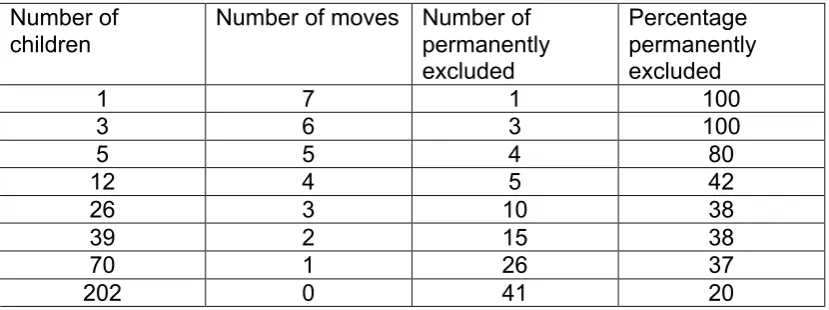
2.1. Care placement change and permanent exclusion 26
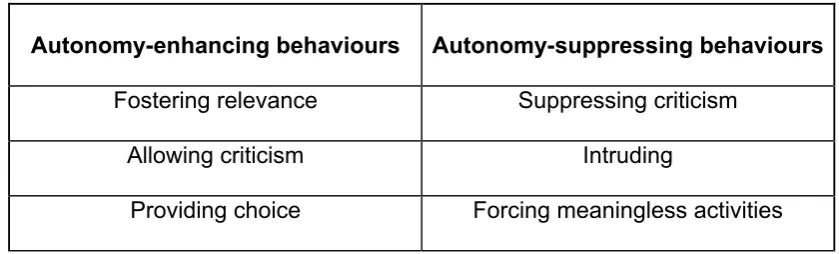
2.2. Autonomy-enhancing versus -suppressing teacher behaviours 27
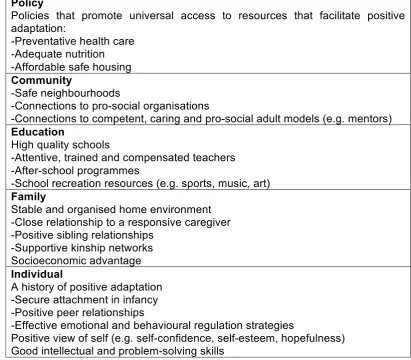
2.3. Examples of protective factors that promote positive development 37
2.4. Care placement change and permanent exclusion 40
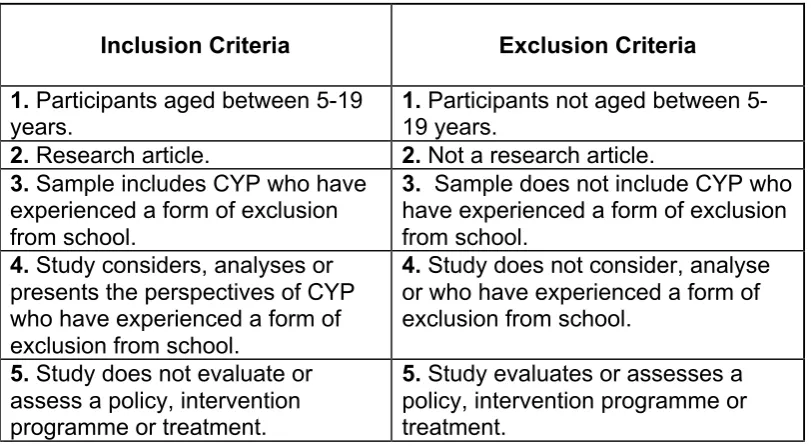
2.5. Strand 2b inclusion and exclusion criteria 45
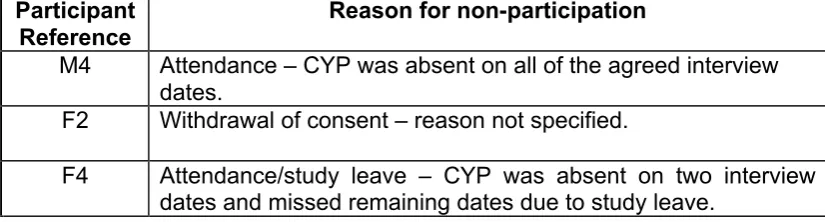
3.1. Reasons for non-participation of initially consenting CYP 64
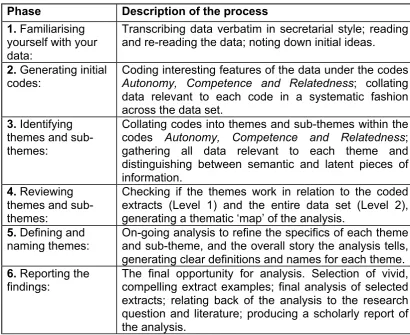
3.2. Phases of Thematic Analysis 78
3.3. Number of data extracts per code 81
3.4. Comparison of number of initial and final themes 82
3.5. Results of inter-rater analysis review 83
5.1. ‘What works’ table of suggested BPN supporting strategies 145
FIGURE PAGE
1.1. Number of permanent exclusions from all schools 1999-2010 7
2.1. Map of key strands identified for review 14
2.2. The self-determination continuum 20
4.1. Thematic map of Mainstream context 102
4.2. Thematic map of PRU context 115
4.3. Thematic map of OoS context 130
AP(s) Alternative Provision(s) BPN(s) Basic Psychological Need(s) BPS British Psychological Society
CYP Child/ren and/or Young Person/People
CP Current Provision
DCTBs Directly Controlling Teacher Behaviours
DfE Department for Education
DfES Department for Education and Skills
DCSF Department for Children, Schools and Families
EP Educational Psychologist
EPS Educational Psychology Service
HPC Health Professions Council
LA Local Authority
LEA Local Education Authority
OFSTED Office for Standards in Education
OoS Outside of School
PEP Principal Educational Psychologist
PP Previous Provision
PRU Pupil Referral Unit
QoL Quality of Life
SDT Self-Determination Theory
SEN(s) Special Educational Need(s)
SSI Semi-Structured Interview
TA Thematic Analysis
TEP Trainee Educational Psychologist The author/researcher Matthew V. S. Wilson
CHAPTER ONE
1.1. Overview of chapter
This chapter introduces the research study contained in this thesis. It begins by outlining the background to the research (1.2), including its theoretical underpinnings (1.2.1), and the local and political context (1.3). It then positions the study in relation to the existing school exclusion literature (1.4), before briefly outlining the researcher’s motivation to employ their chosen methodological approach (1.5). Finally, the contribution of the current study is considered in light of its theoretical underpinnings and chosen methodology, and the potential implications of its findings (1.6).
1.2. Background to the research
This research study aimed to explore the experiences of a small group of permanently excluded children and young people (CYP) across three contexts:
1. Previous mainstream provision
2. Current provision (Pupil Referral Unit; PRU) 3. Outside of School (OoS)
It sought to construct an understanding of their experiences from the perspective of Self-Determination Theory (SDT) and the concept of Basic Psychological Needs (BPNs) (Deci & Ryan, 1985; 2000).
regularly revealed a myriad of differing and conflicting perspectives on school exclusion, suggesting it was both an emotive and pertinent issue for those involved.
For a long time, the voices of professionals and academics have dominated the research and discourse surrounding school exclusion (Gersch & Nolan, 1994). Whilst researchers have increasingly begun to consider the ‘voice of the child’ (Upton & Varma, 1996) in respect of this issue (De Pear, 1997; Gersch & Nolan, 1994; Pomeroy, 1999), the experiences, views and perspectives of CYP rarely inform the debate with regard to policy and practice (Munn & Lloyd, 2005; The OCC, 2012). In recognition of this, the study also aimed to listen to and promote the ‘voice of the child’ in line with the principles of the United Nations Convention on the Rights of the Child (UNCRC; UNICEF, 2012), in particular articles 12 (Respect for the views of the child) and 13 (Freedom of expression).
Through presenting an evidenced-based understanding of the minority-held experiences of this group, the study also aimed to positively impact on stakeholders (participants, parents/carers and school staff) through practice-based implications stemming from the findings. This is practice-based on the idea of conducting research with and for, rather than on, participants; the principles of fairness, equality and social justice; and a conviction in the capacity for TEPs and Educational Psychologists (EPs) to affect positive change in the lives of those they work with.
1.2.1. The theoretical underpinnings of the research
BPNs Theory is one of five micro-theories that make up SDT. The concept of BPNs refers to innate psychological requirements that are universal, i.e. evident across all cultures and developmental periods (Ryan & Deci, 2002). They are: Autonomy, Competence and Relatedness. Each are defined and explicated further in section 2.3.1. Social-contextual factors that support or allow BPN satisfaction have been repeatedly shown to yield engagement, mastery and synthesis; whereas factors that thwart or limit BPN satisfaction diminish motivation, growth, integrity and well-being (Ryan & Deci, 2002).
As stated above, the current study sought to understand the experiences of a small group of permanently excluded CYP from the perspective of SDT and the concept of BPNs; a theoretical understanding of SDT and BPN was applied to the analysis and interpretation of the research data. However, the theoretical tenets of SDT also permeated other aspects of the research methodology; for example, the recruitment process and data collection (see 3.4).
of SDT support this. Further discussion of SDT and its contribution to the current study is provided in Chapter Two.
1.3. Professional and political context
This thesis was written within a changing context for professionals and practitioners working with CYP within education, health and social care; both the SEN Green Paper Support and aspiration (DfE, 2011c) and the Children and Families Bill (DfE, 2013) were published during the period of its completion. However, within the LEA in which the research was carried out, the Children Act (The Children Act, 2004) and the aims of the Every Child Matters (ECM) agenda (DfES, 2004) continued to provide the legal and professional framework within which services for CYP were delivered.
The ECM agenda (DfES, 2004) specified five outcomes considered most important for CYP within the United Kingdom (UK):
• Be healthy • Stay safe
• Enjoy and achieve
• Make a positive contribution • Achieve economic well being
Considered universal goals for all CYP regardless of their circumstance or background, the ECM agenda clearly suggests that every child matters. Still, there are specific groups of CYP that are more likely to experience negative future outcomes, for example teenage parents (Swann, Bowe, McCormick, & Kosmin, 2003), Looked After Children (LAC) (DCSF, 2008b) and CYP who have been permanently excluded from school (Munn & Lloyd, 2005; Vulliamy & Webb, 2000). Furthermore, negative outcomes for CYP are more likely in areas experiencing deprivation across multiple measures (Lloyd, 2006).
stated above, the LEA accounted for a high proportion of the total permanent exclusions in London in the year 2009/10 (DfE, 2011a). It was therefore an LEA and EPS priority to reduce this figure.
Over recent years, as the agenda for inclusive education has been increasingly adopted across LEAs, there has been an increased expectation that mainstream schools will actively seek to address the difficulties experienced by CYP before using the sanction of permanent exclusion. At the same time, there has been a continued focus on attainment through the publishing of school league tables. Munn and Lloyd (2005) suggest that:
‘…exclusion figures should, therefore, be seen in the context both of developments designed to heighten awareness of the importance of sustaining pupils in mainstream schools and of the continuing political concern with improving standards of attainment.’
(p. 210)
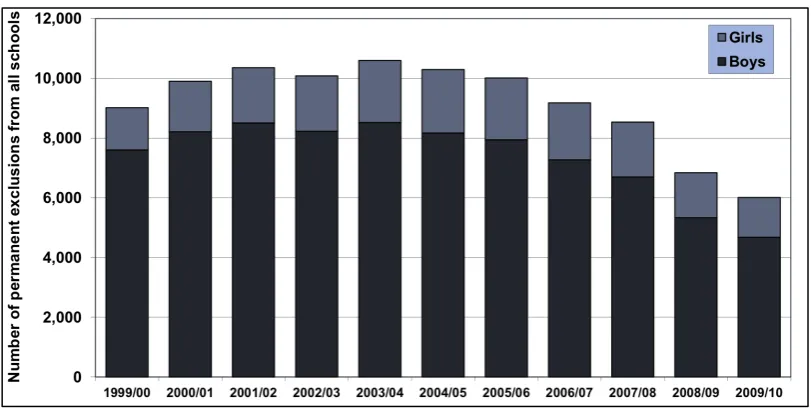
Within this context, official rates of permanent exclusion have consistently fallen in recent years (Figure 1.1), whilst other forms and varieties of exclusion continue to be widely used (OCC, 2013a) (see 2.6.2). Furthermore, the author suggests there has been a recent ideological shift away from inclusion at a governmental level, with policy makers stating that they will ‘remove the bias towards inclusion’ (HM Government, 2010, as cited in Booth, Bush, & Scott, 2011, p. 23). In respect of the use of school exclusion by mainstream schools, the Schools Minister Nick Gibb states the following on the DfE website:
Figure 1.1. Number of permanent exclusions from all schools 1999-2010 (Adapted from Palmer, 2011)
The UK government recently conducted a review entitled Improving Alternative Provision (Taylor, 2012). In line with the school exclusion literature, the resulting report acknowledges that ‘many children who are referred to PRUs and APs come from the most deprived backgrounds’ (Taylor, 2012, p.4), and that ‘the academic outcomes for pupils who go into APs and PRUs are poor’ (p. 5). However, the review did not consult or present the views of CYP currently attending these provisions. The methodological and moral arguments for involving CYP in research that directly or indirectly affects them feature throughout Chapter Two.
1.4. Understanding exclusion
Exclusion is a disciplinary measure that a head teacher can use to respond to challenging or inappropriate behaviour. A CYP can legally be excluded for a limited period of time (‘fixed-term’) or permanently, with the latter requiring the school’s governing body to review the head teacher’s decision and consider the views of the parents before a final decision is made. Whilst the number of permanent exclusions has fallen in recent years, the Office of the Children’s Commissioner (OCC) recently revealed evidence of illegality in some schools, with exclusions increasingly unrecorded in the form of ‘informal’ or ‘unofficial’ exclusions (OCC, 2012).
In recent years, the OCC and the United Nations (UN) have raised concerns about systemic inequalities in school exclusions (OCC, 2013b; UN, 2008). Government guidance on school exclusion states that the decision to exclude:
‘…must be lawful, reasonable and fair. Schools have a statutory duty not to discriminate against pupils on the basis of protected characteristics, such as disability or race. Schools should give particular consideration to the fair treatment of pupils from groups who are vulnerable to exclusion.’
(DfE, 2012a)
However, recent government school exclusion statistics reveal that particular groups of CYP are more likely to be excluded from school than others (OCC, 2013b). This is discussed further in 2.6.2.
Cole, 2010; Daniels, Cole, Sellman, Sutton, Visser, & Bedward, 2003; Kinder, Wilkin, & Wakefield, 1997; MacCrae, Maguire, & Milbourne, 2003; Osler, Watling, Busher, Cole, & White, 2001; Social Exclusion Unit, 1998). A smaller number of research papers focus on exploring the views and perspectives of permanently excluded CYP (Daniels, 2011; Gersch & Nolan, 1994; Gross & McChrystal, 2001; Munn & Lloyd, 2005, Pomeroy, 1999; Solomon & Rogers, 2001).
Much of this research has been conducted from a sociological or educational research perspective, with few providing psychological insight into the difficulties experienced by this group. At the time of conducting the review, the researcher was unable to identify any SDT-based research studies conducted with permanently excluded CYP. The current study aimed to fill this gap in the literature and explore and understand the experiences of permanently excluded CYP with specific reference to SDT, and in particular the concept of BPN.
1.5. The research process
views, beliefs and expectations could influence their interpretation of the participants’ accounts. Steps taken to mitigate against this are considered throughout Chapter Three.
Accessing the perspectives of permanently excluded CYP can be understood as a challenging concept and they are often labelled as a ‘hard to reach’ group or ‘hard to find’ (Macnab, Visser, & Daniels, 2007). This is due to their excluded nature and the educational difficulties they often face (MacCrae, Maguire, & Milbourne, 2003). Furthermore, others have noted the challenges of gatekeepers (school principals) or parents/carers refusing access to participants (Robson, 2011). The researcher’s experience of conducting this research contrasted with these concerns; school staff and participants were both willing and able to cooperate and participate.
Seven individual SSIs were conducted with CYP attending a PRU in South London. The interview questions were designed to sensitively explore the CYP’s experiences across three contexts: Previous mainstream provision, Current provision (PRU) and Outside of School (OoS), with a view to answering the following research questions:
Main Research Question
‘What role does Basic Psychological Need satisfaction play in the experience of permanent exclusion from school?'
Sub-questions
1) 'How did the children and young people’s experience of mainstream school support or thwart their need for Autonomy, Competence and Relatedness?' 2) 'How does the children and young people’s experience of their current provision support or thwart their need for Autonomy, Competence and Relatedness?'
3) 'How do the children and young people’s experiences outside of the school setting support or thwart their need for Autonomy, Competence and Relatedness?'
1.6. A unique and distinctive contribution
qualitative exploration and interpretation of the experiences of permanently excluded CYP from the perspective of SDT, it allowed the voices of the participants to be listened to, recognised and presented as a unified, coherent and evidence-based message.
The findings of the current study are presented in Chapter Four; further discussion is provided in Chapter 5. The author maintains the findings are relevant to the LEA in which the research was carried out, and also the wider UK education system, including mainstream schools, special schools, APs and PRUs; implications for both teaching practice and school management are discussed (5.5.2.1). The universal and humanistic nature of BPNs Theory may support schools in addressing systemic inequalities in school exclusions related to ability, ethnicity, gender and/or socio-economic background (OCC, 2013b) and further resist the use of deficit theories that focus on the pathology of the individual to understand pupil behaviour. Furthermore, the study raises implications for further research into the BPNs of CYP (5.5.1), and the wider delivery of psychological services as EPSs increasingly look to develop innovative and evidence-based practices in evolving professional circumstances (Frederickson, 2002) (5.5.2.2).
1.7. Chapter summary
CHAPTER TWO
2.1. Overview of chapter
This chapter evidences a review of existing research and non-research literature related to the current study. The chapter begins by outlining the scope of the literature review (2.2), including a description of the search strategies (2.2.1) and inter-rater reliability checks used (2.2.2). The review is divided into two strands. Strand 1 introduces Self-Determination Theory (SDT; Ryan & Deci, 2000) (2.3) and the concept of Basic Psychological Needs (BPNs) (2.3.1). The three individual BPNs are defined and explained (2.3.2), before a consideration of research into BPN satisfaction is given (2.3.3). Relevant SDT-based research in educational settings in then reviewed (2.4), before Strand 1 is summarised (2.5). Strand 2 examines the relevant literature relating to school exclusion (2.6). It begins by defining school exclusion (2.6.1) and considering some of the concerns about its use (2.6.2). Specific attention is then given to the reasons for school exclusion (2.6.3), and the individual and social-contextual factors that may increase the risk of exclusion for a CYP (2.6.4). Consideration is then given to the experience of permanent exclusion and research studies exploring the experiences and perspectives of permanently excluded children and young people (CYP) (2.7), before Strand 2 is summarised (2.8). Chapter Two is then summarised (2.9), before key findings of the literature review are synthesised with a view to framing the aims and rationale of the study presented in Chapter Three (2.9.1).
2.2. Scope of the literature review
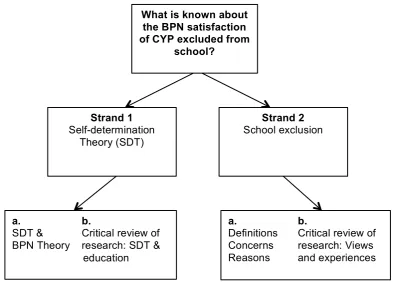
In line with the broad research issue for the study, the Basic Psychological Needs (BPNs) of excluded CYP, the literature review explores the relevant literature relating to BPN Theory and SDT-based research in the field of education, and the research and non-research literature relating to school exclusion. The focus of the review is guided by the following review question:
‘What is known about the BPN satisfaction of CYP excluded from school?’
Strand 1.a presents an overview of SDT, BPN Theory and research into BPN satisfaction and Strand 1.b. critically reviews relevant SDT-based research in the field of education. Strand 2.a synthesises a broad selection of the research and non-research literature on school exclusion and Strand 2.b critically reviews research exploring the views and experiences of excluded CYP.
The review presented below was carried out following an initial literature review completed at an earlier stage in the research process. The previous review focused on school engagement, disaffection and Basic Psychological Need (BPN) satisfaction, with a view to exploring and understanding the factors that lead to disengagement, disaffection, challenging behaviour and permanent exclusion. A highly systematic approach was applied to both the searching and reviewing of the literature, which, whilst fulfilling its aims of being an accountable, replicable and updateable piece of work (EPPI Centre, 2012; Petticrew & Roberts, 2006), was arguably overly reductionist and led to
What is known about the BPN satisfaction of CYP excluded from
school?
Strand 1
Self-determination Theory (SDT)
Strand 2
School exclusion
a. b.
SDT & Critical review of BPN Theory research: SDT & education
a. b.
Definitions Critical review of Concerns research: Views Reasons and experiences
[image:26.595.116.511.78.360.2]limited selection of research papers. It therefore did not provide the necessary depth and breadth of the available research and non-research literature needed to sufficiently inform and locate the current study. Furthermore, an implicit causal hypothesis began to emerge: that BPN satisfaction led to engagement and BPN limitation led to disengagement and disaffection. This did not fit with the exploratory nature of the study. The study’s original title, ‘Supported or thwarted: Basic psychological need satisfaction from the perspective of permanently excluded young people’ was also changed to reflect this.
The review presented below was therefore carried out with a revised focus and alternate search strategy (see 2.2.1). This enabled the inclusion of a broader and more relevant volume of literature in relation to school exclusion, and additional SDT-based research papers, which in turn supported the design of the study, including the research questions posed.
2.2.1. Search strategies
The initial review employed the use of a systematic search strategy with searches and reviews carried out during the month of August 2012. The EBSCO HOST online search engine was used to initiate searches within various electronic databases: PsychINFO, PsychArticles, Teacher Research Center, Educational Research Complete and Academic Search Complete. Boolean search logic was employed, using various search terms, descriptors and key words. These searches were supplemented with further manual electronic searches of Google, Google Scholar, eBooks, eJournals and hand searches through recent volumes of Educational Psychology in Practice and Educational and Child Psychology journals.
and exclusion criteria were applied to the research papers reviewed for Strand 1.b and 2.b, to ensure their quality, appropriateness and relevance to the current study (Table 2.1 and 2.5). Inter-rated reliability checks were also used to ensure a reliable selection procedure was used for the critically reviewed studies (Strand 1.b and 2.b) (2.2.2). These checks were not applied to the documents identified for Strand 1.a and Strand 2.a. The purpose of these strands was to provide a wide sweep of the broad, relevant literature in each area, and not to provide a critical and replicable review.
2.2.2. Inter-rater reliability checks for Strand 1.b and 2.b article selection
In order to ensure that the critically reviewed research articles (Strand 1.b and 2.b) had been reliably selected against the inclusion and exclusion criteria for each strand, inter-rater reliability checks were carried out between the researcher and a third party based on percentage agreement. The third-party researcher was a senior lecturer, experienced in conducting psychological research to doctoral level and a member of the British Psychological Society (BPS). The process involved both parties reading and assessing each article against the inclusion and exclusion criteria for each strand (Table 2.1 and 2.5). 100% agreement was reached following a short discussion, leading to 6 research articles being reviewed for Strand 1.b and 6 articles being reviewed for Strand 2.b.
2.3. Strand 1.a. Self-Determination Theory
sciences in the domain of education’ (Ryan & Niemiec, 2009, p. 264). Unlike many empirical or ‘positivist’ theories, SDT acknowledges the unique meanings of individuals, and represents a resistance to hegemony and reductionism in line with many schools of educational thought (Ryan & Niemiec, 2009).
Central to SDT is the ontological belief that:
‘…all individuals have natural, innate and constructive tendencies to develop an ever more elaborate and unified sense of self.’
(Ryan & Deci, 2002, p. 5)
SDT suggests this occurs through a process involving autonomy, whereby people are driven to integrate their own thoughts, feelings and desires within their own psyches, and homonomy, the tending toward integration with individuals and groups in their social world (Ryan & Deci, 2002).
The idea that humans dynamically integrate their experiences into their sense of self is in keeping with humanistic theories of personality (Maslow, 1954) and cognitive theories of development (Piaget, 1971). However, in line with behavioural, cognitive and post-modern theories, SDT also acknowledges evidence of self-fragmentation and of conditioned responses to the social world (Ryan & Deci, 2002). SDT therefore provides a theoretical framework that allows for the integration of these discrepant viewpoints, suggesting that factors outside of the individual can influence our integrative tendencies in positive and negative ways. Central to SDT’s explanation for how and why this occurs is the concept of Basic Psychological Needs (BPNs) (Deci & Ryan, 2000).
2.3.1. Basic Psychological Needs Theory
with human physiological needs necessary for physical development and functioning, defining them as:
‘…innate psychological nutriments that are essential for ongoing psychological growth, integrity, and well-being.’
(p. 229)
Hence, SDT maintains that BPNs represent universal requirements that are evident in all cultures and across all developmental periods regardless of gender, age, ethnicity, sexuality and culture (Deci & Ryan, 2000). Although they may vary in their expression and be satisfied in a variety of ways, their core character is thought to be unchanging across humanity (Deci, Vallerand, Pelletier, & Ryan, 1991).
SDT claims that all human beings possess the basic psychological need for: Autonomy, Competence and Relatedness; we strive for these nutriments and, when possible, gravitate towards situations that provide them (Ryan & Deci, 2002). As such, SDT applies the concept of BPNs to describe characteristics of the environment that are ‘supportive versus antagonistic to vital human functioning’ (Ryan & Deci, 2002, p. 6). Research has shown that personality growth, development and motivation are supported when these needs are satisfied, and thwarted when they are not (Deci & Ryan, 2000).
2.3.2. Autonomy, Competence and Relatedness
Autonomy
short, the dimension of independence versus dependence is viewed by SDT as being orthogonal to the issue of Autonomy versus heteronomy. Where adolescents are often perceived as ‘wanting independence’, SDT would argue that they instead need supports for Autonomy to enable them to integrate the ideas, desires, traditions and values of the adult culture (Ryan & Deci, 2002). The degree to which an individual is able to integrate and internalise these extrinsically motivated behaviours is in turn correlated with how self-determined (or autonomous) they feel when carrying out the behaviour itself. For example, a CYP who resents having to complete homework assignments but understands and appreciates the long-term value of them is likely to feel more self-determined in his or her completion of homework than a CYP who completes their homework for fear of reprisals.
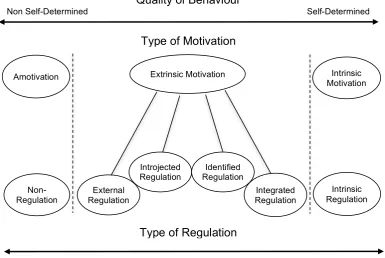
Self-Determination Theory proposes a taxonomy of types of regulation for extrinsic motivation arranged along a continuum (Figure 2.2). The first CYP in the example above would sit at the Identified Regulation point on the continuum, the second CYP at the Introjected Regulation point. Either side of these, Integrated Regulation provides the basis for the most autonomous form of extrinsically motivated behaviour and External Regulation the least (Deci & Ryan, 2002). Social and environmental factors such as threats, surveillance, evaluation (e.g. ‘high stakes testing’) and deadlines (e.g. ‘homework’) have all been shown to thwart the individual’s experience of Autonomy, suggesting a shift towards a more ‘external perceived locus of causality’ (Deci & Ryan, 2000). SDT maintains that the most controlling contexts hinder learning and development, reduce well-being and negatively affect performance (Ryan & Deci, 2009).
Competence
perceived sense of personal confidence and efficacy. As with the need for Autonomy, it is suggested that supports for this need will also aid the internalisation and integration of extrinsically motivated activities and behaviours (Deci & Ryan, 2002) and lead to higher levels of intrinsic motivation (Vallerand & Reid, 1984; 1988, as cited in Deci, Vallerand, Pelletier, & Ryan, 1991, p.334). Ryan and Deci (2002) state the following:
‘If people do not feel competent to perform a target behaviour, they are unlikely to internalize regulation of the behaviour; in fact, they will likely find an excuse not to do the behaviour at all, even in the presence of the significant other’.
(p. 19)
Negative feedback received from another, from failing a task/activity, or from the self through self-critical thought processes has generally been found to decrease intrinsic motivation and engagement (Deci, Vallerand, Pelletier, & Ryan, 1991).
Amotivation
Non-Regulation
Extrinsic Motivation
External Regulation
Introjected Regulation
Identified Regulation
Integrated Regulation
Intrinsic Motivation
Intrinsic Regulation
Quality of Behaviour
Non Self-Determined Self-Determined
Type of Regulation Type of Motivation
[image:32.595.121.507.93.351.2]Relatedness
The concept of Relatedness refers to:
• Feeling connected to others;
• Caring for and being cared for by those others;
• Having a sense of belonging, both with other individuals and with one’s
community
(Ryan & Deci, 2002, p.7)
Relatedness therefore concerns the need to feel oneself as being in relation to others in a psychological, rather than physical or sexual, sense. SDT proposes that individuals naturally internalise the values and regulations of their social groups, and that this is facilitated by both perceived Relatedness to socialising others and by a perceived ability (Competence) to understand the rationale behind and enact a specific behaviour (Deci & Ryan, 2000). Therefore, in order for CYP to value, integrate and endorse the ethos, rules and policy of the school, they need to feel both related and competent. This is likely to lead to Introjected or Identified Regulation of their behaviour within the school context, the most autonomous forms of extrinsically motivated behaviour (see Figure 2.2).
2.3.3. Basic Psychological Need satisfaction
(2.4) (Ryan & Deci, 2002). This has led to a comprehensive understanding of the role of BPN satisfaction across contexts.
However, Ryan and Deci (2002) maintain that all contexts have the capacity to support or hinder people’s development and integrative tendencies:
‘Social environments can…either facilitate and enable the growth and integration propensities with which the human psyche is endowed, or they can disrupt, forestall, and fragment these processes resulting in behaviours and inner experiences that represent the darker side of humanity.’
(p. 6)
Cognitive Evaluations Theory (CET) is a branch of SDT that focuses on examining the conditions under which environments are facilitative or disruptive to motivation. It considers how social-contextual features such as feedback and rewards impact on the BPNs for Competence and Autonomy and in turn intrinsic motivation. Threats of punishment, evaluation, surveillance and imposed goals have been shown to reduce intrinsic motivation (Ryan & Deci, 2000), whereas the provision of choice, opportunities for self-direction and the acknowledgement of feelings can enhance intrinsic motivation to the degree that they facilitate Autonomy and support Competence (Deci & Ryan, 2008).
SDT and parents
pressurising the child to think, feel or behave in a particular way using various techniques (Joussemet et al., 2008). These include guilt induction, love withdrawal, and invalidation of feelings (Assor, Roth, & Deci, 2004; Barber, Stolz, & Olsen, 2005). Joussemet et al. (2008) state the following:
‘It is not merely that children can develop well without external pressure and control: external pressure that goes against children’s developmental tendencies can actually have a negative effect on their development.’
(p. 194)
In contrast, behavioural control, which refers to parents communicating clear expectations and monitoring children’s behaviour related to those expectations, has been shown to support Competence and foster healthy development (Joussemet et al., 2008). Parent interview studies have demonstrated that parental Autonomy support is associated with academic achievement, teacher-rated academic adjustment and less ‘acting out’ in the school context (Grolnick & Ryan, 1989; Joussemet et al., 2008).
SDT and psychopathology
Also relevant to the broad research focus of the current study is the SDT-based research on childhood psychological health, well-being and psychopathology (Ryan, Deci, Grolnick, & La Guardia, 2006). Ryan and Connell (1989) found that higher levels of autonomous motivation in children was associated with greater empathy, more mature moral reasoning and more positive relatedness to others. Additionally, a number of studies with clinical samples have demonstrated how various forms of childhood and adolescent psychopathology are associated with lower levels of Autonomy support (Tuber, 1992). Furthermore, Ryan et al. (2006) suggest that childhood Conduct Disorder is a psychopathology of failed internalization. That is, due to deficits during their early development, the child has failed to internalise societal norms and moral principles at either an introjected or integrated level (see Self-Determination Continuum, Figure 2.2). Whilst acknowledging that biological factors may also contribute to the difficulties experienced, the authors suggest that the stated early developmental deficits can be robustly linked to the absence of social-contextual factors (as described by BPNs) that are essential for internalisation to occur (Ryan et al. 2006).
SDT research findings in relation to BPN satisfaction, and particularly in respect of Autonomy support, raise a number of implications for professionals and practitioners with regard to supporting motivation, development and psychological health. Furthermore, SDT offers very specific ideas concerning optimal parenting and teaching (Ryan et al., 2006), as well as insights into child psychopathology, which could arguably be of utility for those working with disaffected, disengaged or excluded CYP. Most importantly for the current study, SDT provides a framework through which one can understand how experience and perceptions can influence behaviour through the medium of BPN. This will be discussed further following a critical review of relevant SDT-based studies carried out in the domain of education.
2.4. Strand 1.b. Self-Determination Theory and education
2002). Whilst no SDT-based research has been carried out with permanently excluded CYP, this strand identifies and reviews relevant SDT-based research with school-aged populations in educational settings in order to further understand the implications of SDT for CYP functioning in the school context. The following section contains the inclusion and exclusion criteria applied to the articles identified through the systematic search and a critical review of the selected papers.
2.4.1. Inclusion/exclusion criteria
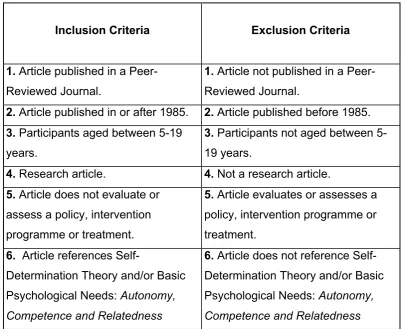
Inclusion and exclusion criteria were applied at various stages of the process to narrow the search and ensure the relevance and appropriateness of the research papers identified (see Table 2.1). To ensure a generic level of quality assurance, it was important that the papers were research articles published in peer-reviewed journals. To ensure that the search covered the breadth of SDT research, the date range included papers published from 1985 onwards, the date of SDT’s seminal text (Deci & Ryan, 1985). Research had to be conducted in educational settings and participants had to be CYP of school age. Papers that were evaluating or assessing government policy, intervention programmes or treatments were excluded. Criteria 1-3 were applied during the electronic search process and criteria 4-6 at the abstract review stage. Following this stage, there was an accumulative total of 6 articles before inter-rater reliability checks. A detailed record of the Strand 1.b searches is included in Appendix 2.ii and full list of papers reviewed for this section is provided in Appendix 2.iii.
2.4.2. BPN satisfaction and engagement, motivation and well-being in school
Inclusion Criteria Exclusion Criteria
1. Article published in a Peer-Reviewed Journal.
1. Article not published in a Peer-Reviewed Journal.
2. Article published in or after 1985. 2. Article published before 1985.
3. Participants aged between 5-19 years.
3. Participants not aged between 5-19 years.
4. Research article. 4. Not a research article.
5. Article does not evaluate or assess a policy, intervention programme or treatment.
5. Article evaluates or assesses a policy, intervention programme or treatment.
6. Article references
Self-Determination Theory and/or Basic Psychological Needs: Autonomy, Competence and Relatedness
[image:38.595.109.513.80.409.2]6. Article does not reference Self-Determination Theory and/or Basic Psychological Needs: Autonomy, Competence and Relatedness
Table 2.1. Strand 1b inclusion and exclusion criteria
based research carried out in educational setting applying qualitative research methods.
2.4.2.1. Engagement and motivation
Autonomy-enhancing behaviours Autonomy-suppressing behaviours
Fostering relevance Suppressing criticism
Allowing criticism Intruding
[image:39.595.100.520.81.208.2]Providing choice Forcing meaningless activities
Table 2.2. Autonomy-enhancing versus -suppressing teacher behaviours (Assor, Kaplan, & Roth, 2002)
opinions. Participants completed questionnaires assessing their perceptions of their teacher’s DCTB, their own anxiety and anger, amotivation, and restricted and intensive engagement while studying in their teacher’s class. Findings suggest that the children’s perceptions of teachers as directly controlling aroused anger and anxiety, which enhanced amotivation and extrinsic motivation. This, in turn, led to undermined academic interest and restricted engagement (Assor et al., 2005).
Limitations to this study include the possibility that DCTBs may arouse other negative emotions in addition to those measured (anxiety and anger), and the reliance on student reports alone in assessing teacher behaviours. In addition, the relative cultural differences between Israel and the UK mean there is also a limit to which the findings can be generalised to the population identified for the current study. Furthermore, despite the findings of the second study matching their causal predictions, the correlational nature of the data means that a causal link cannot be made.
Teacher-student interpersonal relationships emerged as significant predictors of autonomous motivation (Opdenakker et al., 2012), i.e. the better the perceived teacher-student relationship, the more self-motivated the students perceived themselves to be.
As with the research above, this study also has limitations in terms of cultural differences and correlational data. As such, the findings should be generalised and interpreted with caution. Moreover, when split into individual classes, the sample size presented is relatively small and there are potential regression towards the mean effects.
Tsai et al. (2008) find further supporting evidence for Autonomy-supportive teaching in their investigation into subject interest based on perceived Autonomy. Looking at both individual (personal interests) and situational (nature of the learning environment) characteristics, they found that they could predict which lessons individual students found interesting based on the level of Autonomy they perceived themselves to have in the lesson. It is important to note that the level of Autonomy a CYP experiences is affected by situational factors. For example, if teachers pay greater attention to CYP who show more interest during the lesson and give them more feedback, these CYP are more likely to experience them as Autonomy-supportive. Other external factors like exam pressure may also affect this measure by priming a negative mood in both teachers and students (Tsai et al., 2008).
2.4.2.2. Well-being
levels of engagement in learning ‘contribute to increases in perceptions of academic autonomy and teacher-related support over time, which can create a positive feedback loop’ (Van Ryzin, Gravely, & Roseth, 2009, p. 10). The homogeneous socioeconomic nature of the sample (White middle-class secondary students) affects the external validity of this study. Self-report questionnaires were used, meaning that a portion of the relationship between the variables could have been due to shared-method variance.
Ryan and Grolnick (1986) examined the importance of children’s perceptions of their classroom environment for self-related constructs. The more autonomy supporting the children perceived the class to be, the greater the child’s self-esteem, perceived cognitive competence and mastery motivation. Furthermore, results suggested higher levels of aggressiveness when the child was less autonomously motivated or the teacher was perceived to be less Autonomy-supportive, indicating a link between aggression and perceptions of being externally controlled (Ryan and Grolnick, 1986).
In addition to the six studies considered above, there is a wealth of SDT-based research in educational settings demonstrating the benefits of autonomous motivation and Autonomy-supportive teaching across additional outcome measures, including academic achievement, creativity and positive emotionality (Reeve, 2002). Whilst it is possible to critique the correlational design and generalisability of the findings, SDT research in educational settings strongly suggests that autonomously (less extrinsically) motivated CYP thrive in educational settings, both developmentally and academically, and all students thrive when teachers support their Autonomy (Reeve, 2002). Furthermore, it emphasises the importance of teacher- and peer-relatedness for engagement and well-being (Van Ryzin et al., 2009). The implications for the current research are considered below (2.5).
2.5. Strand 1 summary and conclusions
locate SDT-based studies employing qualitative research methods in educational settings. Nevertheless, it is apparent that SDT, BPN Theory and existing SDT-based research carried out in educational settings can inform the current study in a number of ways.
Firstly, as a theory of personality, development and motivation, SDT can inform the way in which the experiences and reported behaviour of permanently excluded CYP are interpreted and understood. Specifically, the concept of BPN provides a way in which social-contextual factors can be viewed as supportive or limiting to the individual (Ryan & Deci, 2000). SDT research into parenting and psychopathology contributes to the researcher’s understanding of the experiences of this group in terms of their lives outside of school and possible within-child factors respectively. This is discussed further below in relation to the school exclusion literature (2.9).
Secondly, SDT-based research in educational settings has evidenced and highlighted the importance of autonomous motivation for academic and developmental success in school (Reeve, 2002). Most relevant to the focus of the current study is the suggestion that CYP, regardless of circumstance, can benefit significantly from Autonomy-supportive teaching in terms of their engagement, motivation and well-being (Assor et al., 2002; Assor et al., 2005; Opdenakker et al., 2012; Ryan & Grolnick, 1986; Tsai et al., 2008; Van Ryzin et al., 2009). This is discussed further below in terms of how these aspects of school experience are related to school exclusion (2.9).
Thirdly, SDT recognises that contexts vary in their functional significance, depending the individual’s unique perceptions. Therefore, despite being a formal theory that predominantly uses quantitative researcher methods and correlational research designs (Vallerand, Pelletier, & Koestner, 2008), its theoretical tenets can arguably be integrated with qualitative research methods. This is also discussed further in 2.9 and 3.3.3.
(discussed further in 3.3.1) and can inform interpersonal processes within the research process, e.g. encouraging and supporting participation (see 3.4.4.1).
2.6. Strand 2.a: understanding school exclusion
This strand examines and describes the relevant literature, legislation and research relating to school exclusion. In order to include a wide enough sweep of the relevant literature, a broad inclusion and exclusion criteria was applied to this strand (Appendix 2.iv). The list of papers contained in this strand includes 96 texts and as such is not included in the appendices. All cited texts are included in the references section. Subsections 2.6.1 – 2.6.4 provide a broad overview of the relevant literature under the themes: definitions, concerns, reasons and factors.
2.6.1. Defining school exclusion
The definitions of the word ‘exclude’ served as a starting point for the author’s understanding of school exclusion:
Exclude (verb) - deny (a living thing) access to a place, group, or privilege. -remove from consideration, notice or use.
(Oxford English Dictionary, 2012)
The words ‘deny’ and ‘remove’ arguably house negative connotations and can be associated with notions of unfairness and punishment respectively. Indeed it has been suggested that to remove a CYP from mainstream education is to deny them of both educational and social learning opportunities (Blyth & Milner, 1993; Parsons, 1999).
thesis, the concept of school exclusion was understood to mean, as it is throughout the relevant literature, a disciplinary measure that prevents a CYP from attending a particular school.
The 1993 Education Act (HMSO, 1993) defined two types of exclusion: ‘fixed term’ and ‘permanent’ exclusion, discarding a third category of ‘indefinite’ exclusion introduced in the 1986 Education Act (HMSO, 1986). Fixed term exclusions can remove a pupil from the school premises for up to 45 days in one academic year (15 days per term), but allow the CYP to remain on the school roll (DfES, 2001). The process of permanent exclusion categorically removes the pupil from the school and the school roll forever, with the local education authority (LEA) responsible for finding the CYP an alternative school place elsewhere.
There are also widely used forms of unofficial school exclusion. Firstly, ‘managed moves’ allow a collaborating school ‘to accept a pupil at risk of exclusion from another collaborating school with the aim of providing a ‘fresh start’ for the child’ (Vincent, Harris, Thomson, & Toalster, 2007, p. 284). Whilst this may avoid the stigma attached to permanent exclusion (Vincent et.al, 2007), some have raised concern over the lack of government guidance available for schools on developing effective protocols for managed moves (Inaura, 2007). Secondly, ‘informal exclusions’, i.e. sending a child home from school without official record, are known to be used by schools despite their illegality (OCC, 2013a). The Office of the Children’s Commissioner (OCC) recently claimed approximately 1600 schools in England have ‘sent children home for disciplinary reasons without recording it as an exclusion’ (OCC, 2013a, p. 7). Finally, many schools operate an ‘internal exclusion’ policy, whereby CYP are put into ‘isolation’ for a fixed period of time, removed from certain lessons, or are sent home for the remainder of the day following an incident (Kyriacou, 2003).
2.6.2. Concerns about school exclusion
negative outcomes associated with school exclusion, and specific concerns about the impact of permanent exclusion (MacCrae, Maguire, & Milbourne, 2003). Short-term effects strongly associated with permanent exclusion from school include feelings of rejection and stigmatisation and low educational attainment (De Pear & Garner, 1996; Kinder, Wilkin, & Wakefield, 1997; Pomeroy, 2000). Long-term outcomes include wider forms of social exclusion (Osler et al., 2001; Social Exclusion Unit, 1998), including criminal behaviour (Berridge et al., 2001), an increased likelihood of becoming a teenage parent, and being unemployed and/or homeless later in life (MacCrae, Maguire, & Milbourne, 2003). Berridge et al. (2001) found that:
'Permanent exclusion tended to trigger a complex chain of events which served to loosen the young person's affiliation and commitment to a conventional chain of life. This important transition was characterised by: the loss of time structures; a re-casting of identity; a changed relationship with parents and siblings; the erosion of contact with pro-social peers and adults; closer association with similarly situated young people and heightened vulnerability to police surveillance'
(p. vi)
permanently excluded from school than a White girl with no SEN from an affluent family (OCC, 2013b).
2.6.3. Reasons for school exclusion
The most commonly reported reason for CYP being excluded from school in England is consistently reported to be ‘persistent disruptive behaviour’. This is described as ‘challenging behaviour, disobedience, persistent violation of school rules’, and in 2010/11 accounted for 24.8% of fixed and 33.7% of permanent exclusions (DfE, 2012b). Other officially recorded reasons for school exclusion include the following:
• Physical assault against a pupil • Physical assault against an adult
• Verbal abuse/ threatening behaviour against a pupil • Verbal abuse/ threatening behaviour against an adult • Bullying
• Racist abuse • Sexual misconduct • Drug and alcohol related • Damage
• Theft
• Other
(DfE, 2012b, p. 19)
accumulatively challenge the rules and safety of individuals inside and/or outside of the learning environment. Such behaviour has been regular focus in the literature surrounding school exclusion for a significant period of time (Blyth & Milner, 1996), leading some to suggest that ‘whatever it is that drives permanent exclusion is a fairly durable feature of English schooling’ (Daniels and Cole, 2010, p. 116).
2.6.3.1. From reasons to interactive factors
‘Persistent disruptive behaviour’ and other school-based definitions for trigger incidents provide a way of documenting the type and severity of behaviours that lead to a CYP being excluded from school. However, many within the literature argue that in order to fully understand school exclusion, researchers and educational professionals need to move beyond descriptive, school-based definitions and examine the underlying precipitating factors that lead to its occurrence (Carlile, 2013; Gross & McChrystal, 2001; Macrae, Maguire, & Milbourne, 2003).
The introduction of the 2001 SEN Code of Practice (DfES, 2001) extended the concept of SEN to CYP experiencing ‘Behavioural, Social and Emotional difficulties’ (BESD), stressing that some CYP face barriers that lead them to experience greater difficulty with learning than most of their peers (DfES, 2001). Moreover, this document includes a recognition that these difficulties, and their resulting behaviours, are linked to a range of interactive factors both inside and outside of the individual; this perspective has been acknowledged in subsequent guidance on school exclusion (DCSF, 2008a).
2.6.4. Individual and social-contextual factors
The vulnerability of CYP to unfavourable socio-economic conditions is well known (Lloyd, 2006; Yates & Masten, 2004). However, it has been suggested that how a child responds to risk is a function of a number of possible protective factors (Garmezy, 1985; Rutter, 1979). This is linked to the psychological construct of ‘resilience’, and research has identified various protective factors that promote positive development and resilience against adversity (Yates & Masten, 2004) (see Table 2.3).
However, Bynner (2001) suggests that although an understanding of protective factors can inform the specific nature of the intervention, an understanding of the risk factors affecting particular CYP is needed to inform practitioners as to the necessary area of intervention. Risk factors associated with school exclusion are considered below under the headings: individual; family, living circumstances and socio-economic factors; school and educational factors. Rutter (1990) argues that these factors should be viewed as processes or mechanisms, which act at various stages and within varying contexts to determine the direction a CYP’s development will take.
2.6.4.1. Individual factors
Policy
Policies that promote universal access to resources that facilitate positive adaptation:
-Preventative health care -Adequate nutrition -Affordable safe housing
Community
-Safe neighbourhoods
-Connections to pro-social organisations
-Connections to competent, caring and pro-social adult models (e.g. mentors)
Education
High quality schools
-Attentive, trained and compensated teachers -After-school programmes
-School recreation resources (e.g. sports, music, art)
Family
Stable and organised home environment -Close relationship to a responsive caregiver -Positive sibling relationships
-Supportive kinship networks Socioeconomic advantage
Individual
A history of positive adaptation -Secure attachment in infancy -Positive peer relationships
-Effective emotional and behavioural regulation strategies
[image:49.595.104.516.87.447.2]Positive view of self (e.g. self-confidence, self-esteem, hopefulness) Good intellectual and problem-solving skills
Table 2.3. Examples of protective factors that promote positive development (Adapted from Yates and Masten, 2004, p. 525)
Lindsay, Dockrell, & Strand, 2007), literacy difficulties (Miles & Stipek, 2006; OFSTED, 2006) and cognitive impairment (Fisher & Blair, 1998). Hamill and Boyd (2002) claim that CYP considered to have behavioural difficulties are also more likely to experience low self-esteem, poor concentration, low motivation and poor interpersonal skills. Recent official exclusion statistics show a strong relationship between SEN and exclusion from school (see 2.6.2).
boring, irrelevant, stressful or difficult (O’Keefe, 1994; Ryan & Deci, 2009; Solomon & Rogers, 2001) and motivation can therefore be seen to play a role with relation to engagement and success in learning (Reeve, 2002). Whilst the language surrounding exclusion can imply that such difficulties are located within the child, research increasingly points to the importance of social-contextual factors outside of the individual (Pajares, 2002; Reeve, 2002). It is therefore helpful to view the CYP and the difficulties they experience in relation to the social-context. These are considered under the headings:
• Family, living circumstances and socio-economic factors • School and educational factors
2.6.4.2. Family, living circumstances and socio-economic factors
The importance of family, living circumstances and socio-economic factors is well documented in the research literature around school exclusion (Gross & McChrystal, 2001; MacCrae, Maguire, & Milbourne, 2003; Thomson, 2002). Upon reviewing the literature in this area, MacCrae et al. (2003) state that:
‘…research findings clearly demonstrate correlations between aspects of disadvantage, emotional and social disruptions and high levels of family stress with higher levels of exclusions from school‟.
(p. 93)