ORIGINAL RESEARCH ARTICLE
PROFILE OF ELDERLY PEOPLE CAREGIVERS AND ANALYSIS
OF THE DOMAINS OF A WORKLOAD EVALUATION SCALE
1Gardênia Conceição Santos de Souza,
2Eliana Lessa Cordeiro,
3, *Liniker Scolfild Rodrigues da
Silva,
4Diana Marques Cunha,
4Carlos Henrique da Silva Ferreira,
4Fernanda Santos Cavalcanti,
4
Izis Santana da Silva,
4Karla Roberta Leite de Lima,
4Dayse Andrielle Viana da Silva,
4Maria
Jocélia Silva de Souza and
4Luana Carla de Andrade Palha
1Nurse, Mastership in Gerontology from the Federal University of Pernambuco (UFPE), Recife (PE), Brazil 2Nurse, Mastership in Neuropsychiatry and Behavioral Sciences from the
Federal University of Pernambuco (UFPE), Recife (PE), Brazil
3Nurse, Specialist in Obstetrics and Gynecology in the Residency Modality from the University of Pernambuco (UPE),
Recife, Pernambuco (PE), Brazil
4Nurses (egress), University Salgado of Oliveira (UNIVERSO), Recife, Pernambuco (PE), Brazil
ARTICLE INFO ABSTRACT
Objective: To identify the sociodemographic profile of the elderly caregivers and to evaluate their responses to the domains of a workload scale.
Methodology: This is a cross-sectional descriptive study of a quantitative approach, where it was used to analyze the domains and their items on the scale of ZARIT BURDEN, the sample was 228 forms, applied to caregivers of the elderly enrolled in the Family Health Program Sanitary District IV, having as inclusion criteria age equal or superior to 28 years old with at least 10 years living together with the elderly.
Results: The study showed that the profile of caregivers of the elderly has a prevalence of female, age between 50 and 60 years old, with elementary education, married civil status or stable union with social class D-E. As to the analysis of the domains of the scale, it was seen that there was a prevalence of the response never in the impact domain in the given care, as far as the domain interpersonal relationship was concerned, there was a predominance of the answer never, except for the penultimate item that always had as answer, of the domain expectations with the care, the answer that prevailed was never with the exception of the last two items that had the answer always. The variation of the responses validated all items as protectors of the caregiver's workload.
Conclusion: This study showed the importance of the use of scales and the analysis of the domains and their isolated items to reflect each factor and its impact on the caregiver’s workload and together with the knowledge of the profile of the caregivers of the elderly gave rise to discussions about this theme
*Corresponding author
Copyright © 2017,Gardênia Conceição Santos de Souza et al. This is an open access article distributed under the Creative Commons Attribution License, which permits unrestricted use, distribution, and reproduction in any medium, provided the original work is properly cited.
INTRODUCTION
Defined as caregiver, who is responsible for taking care of sick elderly person or dependent, facilitating their daily activities, such as food, personal hygiene, in addition to applying the routine medication and accompany him along to health services, or other activities that are in the daily life of the elderly, excluding, and technical functions that are suite of
professional nurses and doctors (Nardi et al., 2011).
There is no difference between the caregivers, who assume so two denominations, formal or informal caregiver. The first is characterized by the provision of professional services; the seconds may be relatives, friends, neighbors or others, who take care of the elderly in a family atmosphere (Ferreira, 2012). The caregiver needs, in addition to the physical exertion, be aware of some procedures that require concentration of what will be done, as the administration of medicines, in order to obtain satisfactory results in the care and
ISSN: 2230-9926
International Journal of Development ResearchVol. 07, Issue, 11, pp.16593-16597, November,2017
Article History:
Received 08th August 2017
Received in revised form 19th September, 2017
Accepted 26th October, 2017
Published online 12th November, 2017
Key Words:
Workload, Caregivers, Elderly.
Citation: Gardênia Conceição Santos de Souza, Eliana Lessa Cordeiro, Liniker Scolfild Rodrigues da Silva et al. 2017. “Profile of elderly people
caregivers and analysis of the domains of a workload evaluation scale”, International Journal of Development Research, 7, (11), 16593-16597.
positive return (Sequeira, 2010). The act of caring should be total donation without expecting something in return, such as recognition and affection of the elderly to the caregiver. The handle can generate feelings of love, gratitude and affection as a form of recognition on the part of the elderly by care and attention received, making elderly and caregiver closer in this new relationship, but it can also generate conflicting feelings on the part of the caregiver in relation to elderly, as guilt, anger, fear and anguish, generating a situation of caregiver
workload (Vitaliano et al., 2012). The term overload is used in
literature to speak about the negativity of the task of caring for the caregiver. It is the physical and mental health of caregivers
due to exposure to stress factors. (Sequeira et al., 2010).
The workload can be seen in two ways: the objective and the subjective objective concerns the requirement of care vis-à-vis the gravity the dependency and behavior of the elderly and the consequences directly reflect on the life of the caregiver in various areas (familial, social, economic, professional); already the subjective is linked to emotional caregiver to take care of the elderly, that is, is how this emotional state affects
the care and the relationship between them (Gratao et al.,
2012). As the caregiver realizes that their family relationships are suffering direct impact of this overload the first signs and symptoms begin to develop, such as: fatigue, use of additional medications, caregiver stress with other family members and friends as well as your health impaired and may impact your care with the elderly; also affecting the social and economic areas to undertake all aspects of life of the caregiver (Oliveira
et al., 2015).
Oliveira & D'elboux reviewed 76 Brazilian jobs and also identified high levels of workload of caregivers, with greater burden for those who found themselves in unfavorable
socio-demographic conditions (Lino et al., 2016). The problems that
affect the life and health of the caregiver must be sorted to provide prevention and education for these caregivers can create ways to reconcile all activities imposed on them, improving your quality of life, reducing an impact on your health and providing better assistance to the elderly (Stackfleth
et al., 2012). Given this, this article had as general objective: identify the demographic profile of caregivers of the elderly with regard to age, gender, education, marital status and social class, and analyze their responses on the scale of Zarit caregiver Burden overload and an analysis of all domains and items that compose it. For that if needed, the classification of the sample listing of items from the fields of Zarit Burden scale and split into separate tables and graphic containing the domains and their respective items.
METHODS
It is a transversal descriptive study with quantitative approach that aimed to identify the demographic profile of caregivers of the elderly and analyze the responses of these, to the areas of the Zarit Burden and overhead that allowed obtaining, Organization, data analysis and response to the collection instrument. The target population was composed by caregivers of seniors enrolled in the Family Health Program (PSF) of the District of the city of Recife/PE and inclusion criteria meet the elderly there are at least 10 years, and have age 28 or more years old. Considering the high number of older people and their carers; in this district it was criterion of choice of such population.
The sample was calculated from the number of seniors enrolled in the family health program (PSF) using the STATCALC Program, with the following parameters: population of 32,960 elderly Health District IV of 95% confidence interval. The number of caregivers is the number of the elderly, resulting in a total of 244 after losses inherent limitations resulted in 228-gathering respondents. The data collection instrument used in the research was the Zarit Burden instrument validated for Brazil by Carlos Alberto da Cruz Sequeira on 25 January 2010. This scale, in the original version, was made up of 29 questions, where included aspects related to physical and psychological health, economic resources, work, social relationships and the relationship with the "receiver of care". Later, this instrument was revised and reduced the number of issues for 22 items. Each item is scored quantitatively as follows: never = (0); rarely = (1); sometimes = (2); almost always = (3) and (4) = always. The quantitative score varies in each item between 0 and 4 points, being the point of cut 20 points. The Zarit caregiver overload (ESCZ) has three fields: impact of care, interpersonal relationship and expectations with the handle; each one with their respective items.
The data were collected through interview and face to face, using the demographic questionnaire created from the criteria of the Brazilian Association of Research companies (ABEP) and the Zarit Burden scale validated for Brazil and with collection from September to April 2016. The data used were ceded by the researcher and Professor Gardenia Conception Salvi as part of his dissertation, entitled: COGNITIVE DECLINE IN THE ELDERLY-SCREENING FROM THE ELDERLY AND HIS INFORMANT. His co-authors participants were part of the PIC (scientific initiation Project) of the University Salgado de Oliveira (UNIVERSE), Recife, where the said teacher's guidance. The search began only after approval of the project by the ethics and Research Committee (CEP) at the Federal University of Pernambuco (UFPE), under the opinion of CAEE: 48403115.8.0000.5208 respecting the principles of privacy, reliability and fairness. During the search were respected all the provisions of resolution Nº 466/12 of the National Health Council (CNS) regarding ethical aspects involving human beings, the signature of the term of free and informed consent (TFCC), the risks and benefits and responsibilities of researcher. The forms were applied individually and after obtaining the data, these were compiled manually with your numbered items to generate domain tables according to the classification given by the author, which gave rise to tables and a chart created in Excel (program 2010) with the values calculated in absolute and relative frequency and analyzed in the light of the Brazilian and international scientific literature.
RESULTS AND DISCUSSION
Table 1. -Demographic characterization of caregivers of Elderly District IV. Recife/PE - Brazil, September to April 2016.
Variables n = %
Gender
Female 186 81,58
Male 42 18,42
Age (years)
28 --| 38 49 21,5
39 --| 49 47 20,61
50 --| 60 59 25,88
61 --| 71 53 23,24
> 72. 20 8,77
Education
Illiterate 25 11,0
Elementary 98 43,0
Secondary 81 35,5
Higher education 24 10,5 Marital status
Single 95 41,67
Married or Stable Union 96 42,10
Widow 19 8,33
Other 18 7,90
The study of Stackfleth et al., (2012), showed the
predominance of women caregivers, married, and those, generally, are daughters or wives of senior citizens and cited that this characteristic is common in several studies in both national and international scope. Such findings have reinforced the social role of women, historically determined with the function of care provider. Complementing the study of Pereira
et al., (2013), says that the fact of carers being married can be positive or negative, as caregivers with this status can have the support of the partner in care with the elderly, but in contrast, accumulate functions due to assignments husband or wife, father or mother. In relation to the average age of caregivers have prevailed between ages 50 and 60 years 59 (25.88%), followed by 61 to 71 years (23.24%) with a small difference between these variables. Found this corroborates with the
Hedler et al. study, (2016), who observed the existence of
elderly and middle-aged people taking care of elderly people. In this perspective the family caregivers’ elderly are more subject to the negative impacts of the care, since they generally have the same living conditions of the elderly care, experiencing aging itself changes too. Take care of an elderly dependent may result in caregivers concern with a possible proximity of dependency or your own finitude.
Lima and Junior (2015), said that older caregivers are more susceptible to overload, however, young people may suffer more isolation and greater social constraints, proportionate to the greatest possibilities for social and recreational activities on the age group. As regards schooling there was predominance of elementary school 98 (42.98%), followed by the high school, with smaller index, 81 (35.52%). The studies show that caregivers of seniors has a low level of income due to low education and show the association between fragile financial conditions and low schooling as strong predictors of
stress in this population (Coelho et al., 2013).
Table 2. Social class in Brazil (ABEP, 2015) of the caregivers of the elderly in the District IV. Recife/PE - Brazil, October to April
2016
Variables Scores N = %
A 45-100 04 02
B1 38-44 10 4,3
B2 29-37 34 15
C1 23-28 53 23,2
C2 17-22 55 24
D-E 0-16 72 31.5
The table 2 shows the characterization of social class in Brazil (ABEP, 2015) of the caregivers of the elderly in the district IV in Recife in the period from September to April 2016, note that most caregivers are part of social class D-72 (31%). In relation to the social class of the caregivers, 31.5% are in classes D-E. Such a problem reflected in Brazil since the '90, with the creation of the Real plan. Although it is a widespread phenomenon, as other authors point out, the rise of classes D and involves workers and other employees who were more impacted, as well as the low average salaried class (Jannuzzi,
2013). What is confirmed in the study of Rondini et al.,
(2011), where they say in relation to social class involved, 28.5% belong to class A (population in good living conditions), 19.4%, class B (population in good living conditions, but with some deficits), 18.8% are of class C (population with living conditions classified as regular) and the remaining 33.3%, D-class, classified as in bad living condition.
In table 3 analysis of the field of impact scale care showed that all items were given higher percentage for the answer NEVER. Caregivers say never feel that the elderly ask for more help than need 94 (41.22%), never to miss time 129 (56.57%), never feel stressed 151 (66.22%), never feel tense 184 (80.70%), never feel that your affected 190 health care (83.33%), say never feel lack of privacy 165 (72.36%) and never felt he lost control of your life 179 (78.50%). Therefore, in respect of such a domain, in the absence of impacts related to direct care, such as the elderly do not ask for more help, the caregiver not to miss time for you, I don't feel stressed, not feel tense, not feel that care affects your health, not feel lack of privacy and not feel like you lost control of your life, these items alone are transformed into protective factors, and thus the caretaker offer a better and more effective care that elderly.
According to the study of Lino et al., (2016), the task of
nursing entails, often, depression and decreased quality of life and that the main source of overload is the degree of dependence of the individual who receives care. Rocha (2013) states that from the perspective of a caregiver or family member the situation to take care of an elderly, whether dependent or not, constitutes a crisis situation, since there is a significant change in the course of your life. In this way, the formal or informal care emerges as a strong agent stressor, which disturbs or threatens the usual activity of the caregiver. On the other hand the study showed that for the sample studied these factors do not interfere in the quality of life of caregivers causing the appearance of signs of overload, because they are not present in your everyday life becoming so protective overload factors.
[image:3.595.74.250.734.805.2]The who notes that, with regard to interpersonal relationships, when the caregiver does not feel embarrassed or angry, you don't feel that care negatively affects your relationships, not feel that care harms your social life, never feel comfortable in receiving visits, and never feel in doubt about what to do for the elderly, caregivers do not have negative signs on interpersonal relationship with the dependent therefore showing signs of overload. Ferreira (2012) says it's about the family or, in particular, the carers placed more responsibility in crisis situation and snapping, tension, awkwardness, fatigue, stress, frustration, depression, and reduction change of self-esteem.
In table 05 exposes domain analysis of the scale as the expectations with the handle, it has been seen that most respondents, although never a relevant quantity has always responded. Had an answer never 07 items prevalent-Never feel fear for the future of the elderly 95 (41.66%), 08-Never feel the elderly dependence 73 (32.01%), whereas too high level of caregivers who have said always feel this dependence 61 (26.75%), 14-Never feel like you were the only person who can handle him 104 (45.61%), 15-Never feel not having enough money 93 (40.78%), 18-never feel like someone else to take care of the elderly (165 72.36%). Already 20 items-feel you could do more for the elderly 99 (43.42%) and 21-feels he could take better care of him 90 (39.47%) were prevalent response ever. Soon, with regard to expectations with the handle, it was noted that the answers from this domain point out that to sample the answer never for the first items (7, 8, 14, 15, and 18) and always answer to the last two (20, 21). The answers never and always even with different directions, when assigned to the item in isolation, work as factors for reducing the appearance of caregiver overload.
Mouth Almeida et al., (2016), in your study, caregivers '
perceptions about how they feel playing the role of care demonstrated that despite the careful interfere with the physical and emotional health, most feel good to be able to take care of the family. Many have reported a feeling of gratification, pride and accomplishment to have the possibility
of providing aid to someone important in their lives. Barros et
al., (2011), say there may be ambiguity when it comes to their
expectations with the care of the elderly. In this case the satisfaction is observed when caregivers are structured emotionally and economically, when these resources are insufficient may cause tension in the handle and may lead, in the latter case, the abuse in the elderly.
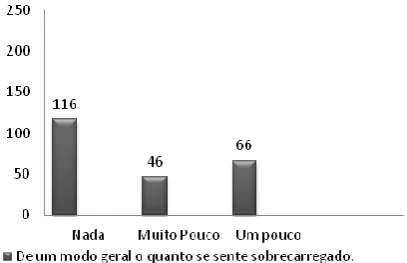
Graph 1. Symptoms of workload related to impact care of district IV informants. -ZARIT BURDEN-Sangha. Recife/PE - Brazil,
Oct/2015-Apr/2016
The Chart 1 exposes the answers to item if the caregiver feels stressed by the care, prevalent response: 116 said nothing (50.87%). It doesn't feel workloaded functions as protection factor for the appearance of caregiver workload.
Table 3. Impact domain in ZARIT BURDEN scale care presented by caregivers of the elderly in the District IV. Recife/PE - Brazil, October to April 2016
Variables Never Rarely Sometimes Almost always Always
1. Feels asking for more help 94 39 40 25 34
2. Miss the job 129 41 36 12 15
3. Feels stressed 151 20 43 07 10
9. Tension 184 12 21 09 04
10. Feels that it affects his health 190 17 15 04 06
11. Feels lack of privacy 165 15 26 05 18
[image:4.595.109.512.336.413.2]17. You feel you lost control of your life 179 09 25 03 13
Table 04. Domain: Interpersonal Relationship of the ZARIT BURDEN scale presented by the caregivers of the elderly in the District IV. Recife/PE - Brazil, Oct/2015 to Apr/2016
Variables Never Rarely Sometimes Almost always Always
4. Do you feel ashamed 196 14 13 04 01
5. Feel angry 181 20 19 06 02
6. Feel that affects your relationships 176 26 20 05 03
12. Feel hurting your social life 185 15 16 07 05
13. You don't feel free to visitors 179 11 14 10 14
16. Feel able to handle longer 27 11 22 35 133
19. Feel in doubt about what to do 154 14 30 10 20
Table 5. Domain: Expectations with the ZARIT BURDEN scale care provided by caregivers of the elderly in the District IV. Recife/PE - Brazil, Oct /2015 to Apr/2016
Variables Never Rarely Sometimes Almost always Always
07. Feel fear for the future 95 26 52 17 38
08. Feel you dependency 73 28 46 20 61
14. Feels that only you can take care of him 104 18 31 18 57
15. Feel no money 93 18 37 26 54
18. Feel like another look after 165 19 19 13 12
20. Do you feel you could do more 47 11 35 35 99
[image:4.595.333.537.578.709.2]Corroborating with the study of Rondini et al., (2011) to say in his study that when the caretakers were surveyed about a possible workload for taking care of the elderly, 60 (36.6%) said that one bit.
Conclusion
The study showed that the demographic data of caregivers of the elderly of this population, the prevalence is women with elementary school, married or with stable, age between 50 and 60anos and social class D-E. Being the ID of the profile of those caregivers of extreme relevance for the knowledge of the demographics characteristics that when correlated with the responses to signs of overload, generate reflection on a larger and different ball can be matured and addressed in further studies.
As for the analysis of domains and items workload range of caregivers of elderly of Zarit Burden scale, most answers points the non-existence of the items proposed in the areas addressed, causing them to be protective factors in the development of signs of workload. What shows that are differentially to analyze such a scale, making a sub-analyses of the domains and the items that compose it, brings a greater perspective for viewing the issues related to the symptoms; in this way, being able to contribute to the reflection of the domains and items, in order to get a deeper understanding of this topic. We hope the information and knowledge from this analysis will contribute to improving the quality of life of these caregivers and is a useful instrument for nurses who are health educators. That can be used in the basic attention to the prevention of the development of this state of exhaustion that can lead the caregiver the physical and mental disorders, reducing your quality of life and hindering or even preventing assistance to the elderly. The result will motivate new reflections on the importance of attention to caregivers of the elderly and the creation of new studies on this subject, generating contribution to science, for nursing and for that group.
REFERENCES
Almeida RR, Borges CD, Shuhama R. 2016. O processo de cuidar de idosos restritos ao domicílio: percepções de cuidadores familiares. Revista Sau. &transf. Soc. 7(2):93-105.
Andrade, I 2014. O cuidador informal a pessoa idosa dependente em contexto domiciliario: necessidades educativas do cuidador principal. Braga: Universidade do Minho, Instituto de Educação e Psicologia.
Araújo JS, et al. 2013. Perfil dos cuidadores e as dificuldades
enfrentadas no cuidado ao idoso, em Ananindeua, PA. Revista Ver. Bras. Geriatr. Gerontol. 1(16):149-158.
Barros JDS. et al. 2011. Percepção e Expectativas de
Cuidadores no Processo Saúde/Doença na Pessoa Idosa. Revista Saúde. 2(4):29-30.
Chaimowicz FA. 2012. Saúde dos idosos brasileiros as vésperas do século XXI. Revista Saúde Pública. 31(2):184-200.
Coelho ER. et al. 2013. Perfil sociodemográfico e
necessidades de educação em saúde entre cuidadores de idosos em uma unidade de saúde da família em Ilhéus, Bahia, Brasil. Revista Bras.Med.Fam Comunidade. 8(28):172-9.
Ferreira F. et al. 2010. Validação da escala de zarit: sobrecarga
do cuidador em cuidados paliativos domiciliários, para população portuguesa. Cadernos de saúde. 3(2):13-19. Gaioli CCLO, et al. 2012. Perfil de cuidadores de idosos com
doença de Alzheimer associado a resiliência. Texto Contexto Enferm. 1(21):150-7.
Gratao ACM, et al. 2012. Sobrecarga e desconforto emocional
em cuidadores de idosos. Texto Contexto Enferm. 2(21):304-12.
Jannuzzi PM. 2013. Mobilidade social no contexto de adversidades crescentes do mercado de trabalho brasileiro dos anos de 1990 aos dias. Revista Economia e Sociedade. 11(2)19.
Limai RRC, Junior II SVSV. 2015. Anais CIEH.2(1).
Lino VTS, et al. 2016. Prevalência de sobrecarga e respectivos
fatores associados em cuidadores de idosos dependentes, em uma região pobre do Rio de Janeiro, Brasil. Caderno Saúde Pública. 6(32).
Manoel MF, et al. 2013. As relações familiares e o nível de
sobrecarga do cuidador familiar. Esc. Anna Nery. 2(17):346-353.
Nardi T, et al. 2011. Sobrecarga e percepção de qualidade de cida em cuidadores de idosos do núcleo de atendimento à terceira idade do exército (natiex). Revista. Bras. Geriatr. Gerontol. 3(14):511-519.
Oliveira ARS, et al. 2012. Escalas para avaliação de
sobrecarga de cuidadores de pacientes com acidente vascular encefálico. Revista Bras. Enferm. 65(5):839-843.
Oliveira DC, et al.2011. Qualidade de vida e sobrecarga de
trabalho em cuidadores de idosos em seguimento ambulatorial. Texto contexto enferm. 2(20):234-240. Pacheco JL, Silva MJP. 2013. Comunicação tem remédio: A
comunicação nas relações interpessoais em saúde. Editora Interciência, 2ª Ed, Unidade VII. Pp 349-357.
Pereira RA. et al. 2005. Sobrecarga dos cuidadores de idosos
com acidente vascular cerebral. Revista Esc. Enferm. USP. 1(47)185-92.
Rocha B. 2009. Stress e coping do cuidador informal do idoso em situação de dependência. Faro: Universidade do Algarve, Faculdade de Ciências Humanas e Sociais. Rondini CA. et al 2011. Análise das relações entre qualidade
de vida e sobrecarga de cuidadoras de idosos de Assis, SP. Estud. pesqui. Psicol. 11(3):796-820.
Santos DIFA. 2014. As vivencias do cuidador informal na prestação de cuidados ao idoso dependente - Um Estudo no Conselho da Lourinhã. Mestrado, Universidade Aberta. Sequeira CAC. 2010. Adaptação e validação da escala de sobrecarga do cuidador de zarit. Revista Enferm. 2(12E.)9\Fica Me Enviando Normalmnte -16.
Stackfleth R, et al. 2012. P. sobrecarga de trabalho em
cuidadores de idosos fragilizados que vivem no domicílio. Acta paulenferm.5(25):768-74.
Uesugui HM, et al., (2011). Perfil e grau de dependência de
idosos e sobrecarga de seus cuidadores. Acta Paul Enferm. 5(4):689-94.