Georgia State University
ScholarWorks @ Georgia State University
Business Administration Dissertations Programs in Business Administration
Spring 5-3-2015
Dynamic and Improvisational Capabilities in Small
Defense Contractor Firms: An Investigation into
the Role of IT Enabled Business Processes
Gabriel Beltran
Follow this and additional works at:https://scholarworks.gsu.edu/bus_admin_diss
This Dissertation is brought to you for free and open access by the Programs in Business Administration at ScholarWorks @ Georgia State University. It has been accepted for inclusion in Business Administration Dissertations by an authorized administrator of ScholarWorks @ Georgia State University. For more information, please [email protected].
Recommended Citation
Beltran, Gabriel, "Dynamic and Improvisational Capabilities in Small Defense Contractor Firms: An Investigation into the Role of IT Enabled Business Processes." Dissertation, Georgia State University, 2015.
PERMISSION TO BORROW
In presenting this dissertation as a partial fulfillment of the requirements for an advanced degree from Georgia State University, I agree that the Library of the University shall make it available for inspection and circulation in accordance with its regulations governing materials of this type. I agree that permission to quote from; to copy from, or publish this dissertation may be granted by the author or, in his/her absence, the professor under whose direction it was written or, in his absence, by the Dean of the Robinson College of Business. Such quoting, copying, or publishing must be solely for the scholarly purposes and does not involve potential financial gain. It is understood that any copying from or publication of this dissertation which involves potential gain will not be allowed without written permission of the author.
ii
NOTICE TO BORROWERS
All dissertations deposited in the Georgia State University Library must be used only in
accordance with the stipulations prescribed by the author in the preceding statement.
The author of this dissertation is:
Gabriel Beltran
J. Mack Robinson College of Business Georgia State University
Atlanta, Georgia 30303
The director of this dissertation is:
Balasubramaniam Ramesh Ph.D.
Board of Advisors Professor of Computer Information Systems Chairman, Department of Computer Information Systems J. Mack Robinson College of Business
iii
Dynamic and Improvisational Capabilities in Small Defense Contractor Firms: An Investigation
into the Role of IT-Enabled Business Processes
BY
Gabriel Beltran
A Dissertation Submitted in Partial Fulfillment of the Requirements for the Degree
of
Doctorate of Philosophy
In the Robinson College of Business
Of
Georgia State University
GEORGIA STATE UNIVERSITY
ROBINSON COLLEGE OF BUSINESS
iv
Copyright by Gabriel Beltran
v
ACCEPTANCE
This dissertation was prepared under the direction of the GABRIEL BELTRAN’S
Dissertation Committee. It has been approved and accepted by all members of that committee,
and it has been accepted in partial fulfillment of the requirements for the degree of Doctoral of
Philosophy in Business Administration in the J. Mack Robinson College of Business of Georgia
State University.
Richard D. Phillips, Dean
DISSERTATION COMMITTEE
Balasubramaniam Ramesh Lars Mathiassen
vi
TABLE OF CONTENTS
LIST OF TABLES ... IX
LIST OF FIGURES ... X
LIST OF ABBREVIATIONS ... XI
I INTRODUCTION ... 1
II THE DEFENSE INDUSTRY ... 4
II.1 The Federal Acquisition Process ... 4
II.2 Actors in the Acquisition Process ... 6
II.3 Small Defense Contractor Firms ... 7
III LITERATURE REVIEW ... 10
III.1 Dynamic Capabilities ... 10
III.2 Improvisational Capabilities ... 21
III.3 Dynamic Capabilities vs. Improvisational Capabilities ... 26
III.4 Information Technology as an Enabler ... 30
III.5 Competitive Advantage ... 33
IV RESEARCH METHOD AND CASE STUDY DESIGN ... 40
IV.1 Research Method and Design ... 40
IV.2 Site Selection ... 43
V DATA COLLECTION ... 44
VI DATA CODING AND ANALYSIS ... 46
VII FINDINGS ... 50
VII.1 Industry Turbulence... 50
VII.2 Demonstrating Dynamic and Improvisational Capability... 54
vii
VII.2.2 Improvisational capability. ... 56
VII.3 Analyzing Dynamic and Improvisational Capabilities ... 58
VII.3.1 Sensing as a dynamic capability. ... 58
VII.3.2 Sensing as an improvisational capability ... 59
VII.3.3 Learning as a dynamic capability. ... 60
VII.3.4 Learning as an improvisational Capability. ... 60
VII.3.5 Integrating as a dynamic capability. ... 61
VII.3.6 Integrating as an improvisational capability. ... 62
VII.3.7 Coordinating as a dynamic capability. ... 63
VII.3.8 Coordinating as an improvisational capability. ... 64
VII.4 The Role of Information Technology. ... 65
VII.4.1 IT infrastructure and capability. ... 65
VII.4.2 IT enablement of dynamic and improvisational capabilities. ... 67
VII.4.2.1 Sensing. ... 67
VII.4.2.2 Learning. ... 68
VII.4.2.3 Integrating. ... 69
VII.4.2.4 Coordinating. ... 69
VII.5 Competitive Advantage ... 70
VIII DISCUSSION ... 73
VIII.1 The Defragmentation of Dynamic and Improvisational Capabilities... 73
VIII.2 Executing Dynamic and Improvisational Capabilities in Varying Degrees of Turbulence ... 74
VIII.3 Examining the Sub-Routines of Dynamic Capabilities and Improvisational Capabilities ... 76
viii
VIII.3.2 Learning capability... 77
VIII.3.3 Integrating capability. ... 78
VIII.3.4 Coordinating capability. ... 79
VIII.4 IT Enablement of the sub-routines. ... 81
VIII.5 Other Factors Enabling the Execution of Dynamic and Improvisational Capabilities. ... 83
IX CONTRIBUTIONS... 85
IX.1 Contributions to theory ... 85
IX.2 Recommendations for practice ... 87
X LIMITATIONS AND FUTURE RESEARCH ... 91
X.1 Limitations ... 91
X.2 Future Research ... 91
REFERENCES ... 93
ix
LIST OF TABLES
Table 1 Dynamic Capabilities Definitions ... 18
Table 2 Differences Between Improvisational and Dynamic Capabilities ... 28
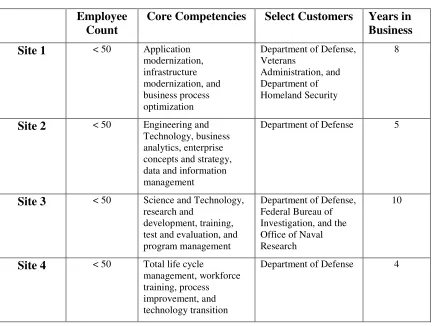
Table 3 Selected Organizations... 44
x
LIST OF FIGURES
Figure 1 Framework ... 17
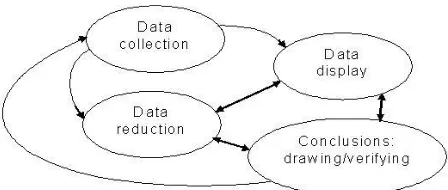
Figure 2 Components of Data Analysis: Interactive Model ... 48
xi
LIST OF ABBREVIATIONS
(In Alphabetical Order)
AMC - Awareness-Motivation-Capability
CCR - Central Contractors Registry
CRM – Customer Relations Management
CWS - Cooperative Work Systems
DAS - Defense Acquisition System
DoD – Department of Defense
FAR – Federal Acquisition Regulation
FASA - Federal Acquisition Streamlining Act
IED - Improvised Explosive Devises
IT - Information Technology
MCSC – Marine Corps Systems Command
NPD – New Product Development
OMS - Organizational Memory Systems
PRMS - Project and Resource Management Systems
RBV – Resource-Based View
RFP – Request For Proposal
SAM - System for Award Management
TINA - Truth in Negotiations Act
xii ABSTRACT
Dynamic and Improvisational Capabilities in Small Defense Contractor Firms: An Investigation
into the Role of IT Enabled Business Processes
BY
Gabriel Beltran
May 2015
Committee Chair: Balasubraman Ramesh, Ph.D.
Major Academic Unit: Computer Information Systems
In turbulent environments where the competitive landscape is shifting and uncertain, the
dynamic capabilities by which firm manager’s, integrate, build, and reconfigure internal and
external competences becomes the source of sustained competitive advantage. As they attempt to
reconfigure their organizational competencies, firms are turning to Information Technology (IT)
resources as an enabling resource. While the importance of dynamic capabilities has been widely
recognized, in today’s fast paced and ever changing business landscape, the need for
improvisational capabilities has also been underscored. Whereas dynamic capabilities refer to the
ability to respond to change through “planned” reconfiguration in moderately turbulent times,
improvisational capabilities refer to the ability to respond to change through “spontaneous”
reconfiguration in highly turbulent times. This study begins to defragment dynamic and
improvisational capability literature and demonstrate the need for these two complementary
xiii
complementary capabilities. This study highlights the significant differences in the execution of
dynamic and improvisational capabilities at the sub-routine level. Lastly, this study offers
1
I INTRODUCTION
Today’s defense industry is as competitive, complex, and unpredictable as it has ever
been. Unpredictable competitive actions of defense contractors, the complexity of emerging
technologies and customer requirements, and the unpredictability associated with foreign wars
and defense budgets, has created an environment of rapid changes and uncertain future for small
defense contractors. These organizations are rethinking strategies, rebuilding organizational
structures, and passionately competing for the waning defense dollars. The resulting industry has
emerged as one characterized by constant and unrelenting turbulence.
Turbulence can present itself as moderate when small predictable changes occur or as
high velocity when large unexpected changes occur. Eisenhardt and Martin (2000) state that
moderately dynamic markets are ones in which change occurs frequently, but along roughly
predictable linear paths. In contrast, when markets are very dynamic or what is termed “high
velocity,” change becomes nonlinear or less predictable. Recent research suggests that industry
turbulence can occur as “waves,” that are roughly predictable, and as “storms,” which are strong
and occur unexpectedly (Pavlou & El Sawy, 2010).
In the face of unrelenting and constant turbulence, defense industry executives and
managers are striving to stay ahead of competitors and satisfy increasingly demanding
customers. In order to be successful they must monitor the changing environment and quickly
respond to changes by reconfiguring existing resources to create efficient and effective processes
and relevant competencies. In turbulent environments where the competitive landscape is
shifting, Teece et al. (1997) submit that firm-specific capabilities or the dynamic capabilities by
which firm managers, integrate, build, and reconfigure internal and external competences to
2
While the dynamic capabilities literature is vast, it is also varied. Dynamic capabilities
literature has been fragmented and sometimes vague. Pavlou and El Sawy (2011) note that
different labels have been used in the literature to refer to similar capabilities, or similar labels
have been used to refer to different capabilities. They have attempted to reconcile the various
labels and meanings from the literature, and group them under the following parsimonious set of
dynamic capabilities for reconfiguring existing operational capabilities. They are: (i) sensing; (ii)
learning, (iii) integrating, and (iv) coordinating capabilities.
Firms are increasingly turning to their Information Technology (IT) resources to facilitate
dynamic capabilities with the hopes of staying competitive in their industry. Teece and Pisano
(1994) state that since most of the valuable assets inside any firm are knowledge related, the
coordination and integration of such assets create value that cannot be easily replicated in a
market. In today’s business environment, practitioners and scholars agree that IT-enabled
business processes can be a major driver of competitive advantage (Chi, Holsapple, &
Srinivasan, 2008; El Sawy & Pavlou, 2008). The linkage between IT enablement and
competitive advantage becomes even more critical as firms struggle to keep pace in turbulent
environments. Through IT enablement, they are attempting to reconfigure existing operational
capabilities better and faster than their industry competitors.
While the literature has emphasized the importance of organizational dynamic
capabilities for some time, researchers have begun to realize and emphasize the need for
organizational improvisational capabilities (Eisenhardt & Martin, 2000; El Sawy & Pavlou,
2008). Whereas dynamic capabilities refer to the ability to respond to change through “planned”
3
ability to respond to change through “spontaneous” reconfiguration in highly turbulent
environments (El Sawy & Pavlou, 2008).
Although extensive literature exists on the concepts of dynamic capabilities and IT
enablement, there are few studies that address the concept of improvisational capabilities.
Accordingly, this study examines small defense contractor firms’ ability to be dynamic and
improvisational in the reconfiguration of their business processes through IT enablement. The
research question guiding the study is: How are small defense contracting firms achieving
dynamic and improvisational capabilities through IT enablement? To pursue the answer to this
question, I begin by determining if the proper industry context is present, that is does the defense
industry experience both moderate velocity turbulence and high velocity turbulence? Next, I
determine if the proper firm context is present, that is are the firms demonstrating both dynamic
and improvisational capabilities? I then examine how IT is facilitating or enabling dynamic and
improvisational capabilities using the proposed set of dynamic capabilities - sensing, learning,
integrating, and coordinating capabilities (Pavlou and El Sawy 2011).
The remainder of this thesis begins with an overview of the defense contracting industry.
This is followed by a literature review of dynamic capabilities and improvisational capabilities,
IT as an enabler of dynamic and improvisational capabilities, and competitive advantage. Next, I
describe the research methodology used in the study. I follow with the research findings, and
then a discussion of the findings. Finally, I present contributions to theory, recommendations for
4
II THE DEFENSE INDUSTRY
II.1 The Federal Acquisition Process
The method by which the federal government obtains both supplies and services is
commonly referred to as the Federal Acquisition Process. The government uses this process to
enter into contracts with private industry for the procurement of goods and services. The
objective of the process is not only to obtain goods and services, but also to ensure the
government gets what it needs on time and at a fair and reasonable price. The government enters
into contracts under the authority of the constitution’s preamble, which states the Federal
Government shall, “…provide for the common defense, promote the general Welfare, and secure
the Blessings of Liberty….”. Funding in support of government contracting comes by way of
congressional appropriations. In this research I discuss defense appropriations as related to the
procurement of goods and services.
The Federal Acquisition Regulation (FAR) is a set of rules in the Federal Acquisition
Regulation System, which guides the Federal Government in their procurement of goods and
services. The Statement of Guiding Principles for the Federal Acquisition System contained in
the FAR offers a concise statement intended to be user friendly for all participants in the process.
FAR subpart 1.102 states:
“(a) The vision for the Federal Acquisition System is to deliver on a timely basis the best
value product or service to the customer, while maintaining the public’s trust and fulfilling
public policy objectives. Participants in the acquisition process should work together as a team
and should be empowered to make decisions within their area of responsibility.
5
(1) Satisfy the customer in terms of cost, quality, and timeliness of the delivered product
or service by, for example—(i) Maximizing the use of commercial products and services; (ii)
Using contractors who have a track record of successful past performance or who demonstrate a
current superior ability to perform; and (iii) Promoting competition;
(2) Minimize administrative operating costs;
(3) Conduct business with integrity, fairness, and openness; and
(4) Fulfill public policy objectives.
(c) The Acquisition Team consists of all participants in Government acquisition
including, not only representatives of the technical, supply, and procurement communities, but
also the customers they serve, and the contractors who provide the products and services.
(d) The role of each member of the Acquisition Team is to exercise personal initiative
and sound business judgment in providing the best value product or service to meet the
customer’s needs. In exercising initiative, Government members of the Acquisition Team may
assume if a specific strategy, practice, policy or procedure is in the best interests of the
Government and is not addressed in the FAR, nor prohibited by law (statute or case law),
Executive order or other regulation, that the strategy, practice, policy or procedure is a
permissible exercise of authority.”
The Statement of Guiding Principles for the Federal Acquisition System offers a brief
summary of exactly how the acquisition process is carried out. The statement guides the
Government Contracting Officers, who have authority to legally bind the government as well as
the defense contractors providing services or supplies to the government. Four federal
procurement laws have a significant effect on federal procurements. These statutes and their
6
1. The Competition in Contracting Act of 1984 (CICA) Pub.L. 98-369 (Title VII),
which shifted the focus from the method of procurement to the use of sources of procurement.
This statute governs “whom” you procure from, as opposed to “how” you procure. The previous
law emphasized formal advertising over negotiated procurements; CICA emphasizes the use of
competitive procurements.
2. The Small Business and Federal Procurement Competition Enhancement Act of
1984, Pub.L. 98-57. This act was intended to eliminate unfair procurement procedures that
inhibited free and open competition. It also was intended to create opportunities for small
businesses in competitive procurements.
3. The Defense Procurement Reform Act of 1984, Pub.L. 98-525. This act was a
collection of congressional initiatives designed to improve the effectiveness of the Department of
Defense acquisition process.
4. Federal Acquisition Streamlining Act (FASA) of 1994 Pub.L. 103-355. This act
repealed or modified over 225 other provisions of law that affected the acquisition process. Some
of the areas affected were; a simplified acquisition threshold, electronic commerce, Truth in
Negotiations Act (TINA), contract formations, bid protests, and contract administration.
II.2 Actors in the Acquisition Process
Guided by Acquisition Law and the Federal Acquisition Regulation, government-
contracting officers enter into contracts with government contractors for the procurement of
goods and services. It is the government contracting officer and the government defense
contractor that are two actors of interest in this research.
Contracting officers are appointed in writing and awarded a Certificate of Appointment
7
their overall authority and those limitations are annotated on the Certificate of Appointment.
Contracting officers have authority to enter into, administer, and terminate contracts. They are
responsible for ensuring the performance of all necessary actions for effective contracting,
ensuring compliance with the terms of each contract, and safeguarding the interests of their
Agency or the United States in its contractual relationships (Hearn, 1999).
No government contract can be entered into unless the contracting officer ensures that all
requirements of all contracting and acquisition laws are met. The government contractor, or
defense contractor, as they will be referred to in the remainder of this study, are employees of a
private corporations, or other business formations, who engage in the practice of selling services
or goods to the department of defense. Just as the federal government has contracting officers,
the defense industry employs contracting managers, administrators and specialists. The private
entity contracting team interfaces with the government contracting officer in the execution of
their contracting duties.
II.3 Small Defense Contractor Firms
Small defense contractor firms are project based service providers and as such they are
constantly responding to Requests for Proposal (RFP) to the federal government. Contractor
responses, or proposal, are tailored to address the specific requirements of each RFP, and the
Statement of Work (SOW) contained within each RFP. Each proposal submitted allows these
firms the opportunity to be competitively awarded a contract for services, which usually range in
duration from 3 to 5 years. Project based service contracts have a lifecycle, or a firm beginning
and end date. Contracts awarded are usually structured with a base year, with additional option
re-8
compete the work and not exercise an option year. Reasons not to exercise an option year could
be poor performance on the contractor’s part or a change to the project requirements.
In order to write and submit a proposal, small businesses form capture teams with an
appointed capture manager who typically reports to a division manager and is responsible for
overseeing the formation of the proposal and the submittal. It is important to mention that small
businesses do not make an offer or bid for every opportunity. Firms go through an extensive
opportunity identification and evaluation decision process as they elect to bid or not bid for an
opportunity. If they elect to bid, they determine their best estimate of, or probability of winning
(p-win), and the monetary value of the opportunity to determine how much of a firm’s resources
are dedicated to the proposal effort.
While small defense contractors are competing within their industry to gain opportunities,
they must all be concerned with sustainment of current, or previously captured work. They do
this by attempting to provide highly qualified personnel in the industry. There is constant battle
between competitors to attract, recruit, and retain talent in the industry. Small contractors are
forced to compete for talent not only amongst themselves, but with large defense contractors as
well. The hope is that highly qualified personnel will provide efficient and effective service to
the customer thereby keeping the small defense contractor in favor with the government
customer.
There is also a link between sustaining existing work and obtaining new work. Since
small defense contractors perform services for the Federal Government, they are subject to
statutory and regulatory compliance standards. Within these standards is the standard of
“responsibility.” An offerer must be deemed a “responsible offerer.” A responsible offerer must
9
must demonstrate that they will complete the contract in a satisfactory and timely manner.
Second, the contractor must meet collateral statutory and regulatory qualifications criteria, such
as socio-economic goals. The first criterion is typically demonstrated through successful
10
III LITERATURE REVIEW
III.1 Dynamic Capabilities
The resource-based view of a firm (RBV) is well-established theoretical framework for
understanding how firms achieve competitive advantage and how they sustain that advantage
(Barney, 1991; Eisenhardt & Martin, 2000; Nelson, 1991; Penrose, 1959; Peteraf, 1993; Prahalad
& Hamel, 1990; Schumpeter, 1934; Teece, Pisano, & Shuen, 1997; Wernerfelt, 1984). RBV
asserts that firms can be thought of as bundles of resources and that the resources are
heterogeneously distributed across firms. RBV also assumes that resource differences persist
over time (Amit & Schoemaker, 1993; Eisenhardt & Martin, 2000; Mahoney & Pandian, 1992;
Penrose, 1959; Wernerfelt, 1984). Based on these assumptions, researchers have theorized that
when firms have resources that are valuable, rare, inimitable, and non-substitutable they can
achieve sustainable competitive advantage by implementing fresh value-creating strategies that
cannot be easily duplicated by competing firms (Barney, 1991; Conner & Prahalad, 1996;
Eisenhardt & Martin, 2000; Nelson, 1991; Peteraf, 1993; Wernerfelt, 1984). Looking beyond
RBV, firms in today’s rapidly changing markets must demonstrate responsiveness coupled with
innovation. Firms must also have the leadership and management necessary to innovate and
redeploy not just internal, but external competencies as well. This approach to competitive
advantage, the dynamic capability approach, has two key emphases. First, it refers to the shifting
character of the environment; second, it refers to the key role of management in appropriately
adapting, integrating, and re-configuring internal and external organizational skills, resources,
and functional competences toward a changing environment (Teece et al., 1997). Teece and
11
rooted in high performance routines operating inside the firm, embedded in the firm's processes,
and conditioned by its history.
Teece and Pisano (1994) propose three organizational and managerial processes, 1)
coordination/integrating, 2) learning, and 3) reconfiguring — as core elements of dynamic
capabilities. Coordination and integration refer to a manager’s ability to coordinate and integrate
both internally and externally. Learning is the process by which repetition and experimentation
allow for tasks to be completed more effectively and more efficiently. Learning includes both
organizational and individual learning. Reconfiguration is the ability to sense the environment
and determine when asset structures need to be transformed both internally and externally. Teece
and Pisano (1994) point out that these processes are a subset of the processes that support
sensing, seizing, and managing threats and further suggest that together they might be thought of
as asset ‘orchestration’ processes.
Teece et al. (1997) define dynamic capabilities as the firm’s ability to integrate, build,
and reconfigure internal and external competences to address rapidly changing environments.
Teece and colleagues state that the term 'dynamic' refers to the capacity to renew competences so
as to achieve congruence with the changing business environment; certain innovative responses
are required when time-to-market and timing are critical, the rate of technological change is
rapid, and the nature of future competition and markets difficult to determine. Further they state
the term 'capabilities' emphasizes the key role of strategic management in appropriately adapting,
integrating, and reconfiguring internal and external organizational skills, resources, and
functional competences to match the requirements of a changing environment. They also state
12
are impacted by the organizational processes, systems, and structures that the enterprise has
created to manage its business.
Dynamic capabilities are not tautological, vague, and endlessly recursive (Teece et al.,
1997). Dynamic capabilities actually consist of many well-known processes, “such as alliancing,
product development, and strategic decision making that have been studied extensively in their
own right, apart from RBV” (Eisenhardt & Martin, 2000). They also state that the value for
competitive advantage lies in their ability to alter the resource base by creating, integrating,
recombining, and releasing resources.
The effectiveness of dynamic capabilities is dependent on market dynamism (Eisenhardt
& Martin, 2000). Dynamic capabilities rely on factors such as existing knowledge. Moderately
dynamic markets are those with frequent change, but they change along predictable linear
pathways. Moderately dynamic markets are relatively stable in their industry structures with
clear boundaries and players (e.g., competitors, customers, complementers). In moderately
dynamic markets, effective dynamic capabilities rely on existing knowledge. Managers analyze
situations in the context of their existing tacit knowledge and rules of thumb, and then plan and
organize their activities in a relatively orderly fashion (Burns & Stalker, 1961). Managers
develop efficient processes that are predictable and relatively stable with linear steps, beginning
with analysis and ending with implementation (Helfat, 1997).
In contrast, when markets are very dynamic or what is termed ‘high velocity’ (e.g.,
Eisenhardt, 1989), change becomes nonlinear and less predictable (Eisenhardt & Martin, 2000).
High-velocity markets are ones in which market boundaries are blurred, successful business
models are unclear, and market players (i.e., buyers, suppliers, competitors, complementers) are
13
uncertainty does not follow a predictable pattern; therefore modeling cannot be of much help. In
high velocity markets dynamic capabilities rely more on emerging situation dependent new
knowledge unlike moderate markets that depend on existing knowledge. Existing knowledge can
actually be a disadvantage if managers overgeneralize from past situations (Argote, 1999).
Effective dynamic capabilities in high velocity markets are simple, not complicated as
they are in moderately dynamic markets (Eisenhardt & Martin, 2000). The simple routines keep
managers focused on the situation at hand while allowing them to develop new knowledge as
opposed to using old existing knowledge that may or may not apply. Eisenhardt and Martin
(2000) state that simple routines consist of a few rules that specify boundary conditions on the
actions of managers or indicate priorities, and are more appropriate in fast-moving markets
where attention is in short supply.
While dynamic capabilities are simple in high velocity markets, they are not without
structure (Burns & Stalker, 1961; Lawrence & Lorsch, 1967). Simple routines provide enough
structure (i.e., semi-structure) so that people can focus their attention amid the noise of
considerable information and possibilities, help provide sensemaking about the situation, and
help people act with confidence in these highly uncertain situations where it is easy to become
paralyzed by anxiety (Eisenhardt & Martin, 2000).
In high-velocity markets dynamic capabilities involve the creation of new,
situation-specific knowledge and not involve the extensive use of tacit knowledge or complex social
routines that cannot be codified even if they may be present. Engaging in experiential actions to
learn quickly and compensate for limited, relevant existing knowledge creates situation specific
knowledge (Eisenhardt and Martin, 2000). Dynamic capabilities often use prototyping and early
14
and immediate feedback (Argote, 1999; Sitkin, 1992). Dynamic capabilities in high velocity
markets proceed in an iterative fashion. Managers adjust to new information and changing
conditions, they engage in more recycling through steps such as developing alternatives and
implementation that would be linear in moderately dynamic markets (Eisenhardt & Martin,
2000). Dynamic capabilities in high velocity markets rely on real-time information, cross
functional team relationships, and constant communication amongst those involved in the
process and with those external to the organization but still involved with the process. Real time
information helps people adjust their plans since problems and opportunities are spotted more
quickly than when individuals are more distant from information. Real-time information also
builds intuition about the marketplace such that managers can more quickly understand the
changing situation and adapt to it (Eisenhardt, 1989). Dynamic capabilities in these markets are
characterized by multiple courses of action and implementation of multiple options. Beginning
with multiple courses of action provides alternative action choices to facilitate change as
situations change (Eisenhardt, 1989). Eisenhardt and Martin (2000) point out that multiple
courses of action also give managers the confidence to act more quickly since they have basis for
comparison. The emotional inability to cope with uncertainty is a major factor that slows down
managers in high-velocity markets (Eisenhardt, 1989).
The effects of market dynamism on dynamic capabilities have several implications
(Eisenhardt & Martin, 2000). One is that sustainability of the capabilities themselves varies with
the dynamism of the market. In moderately dynamic markets, dynamic capabilities resemble the
traditional conception of routines (Cyert & March, 1963; Nelson & Winter, 1982; Zollo &
Winter, 1999). Capabilities are complicated, predictable, analytic processes that rely extensively
15
2000). They point out that as managers gain experience exercising these capabilities and as
codification takes place, they become engrained in the organization, which makes them
sustainable and even inertial. Codification of the routines through the technology or formal
procedures enhances that sustainability (Argote, 1999).
Dynamic capabilities can be disaggregated into the capacity (1) to sense and shape
opportunities and threats, (2) to seize opportunities, and (3) to maintain competitiveness through
enhancing, combining, protecting, and, when necessary, reconfiguring the business enterprise’s
intangible and tangible assets (Teece, 2007). Dynamic capabilities include difficult to duplicate
enterprise level capabilities required to adapt to changing customer and technological
opportunities. They also embrace the enterprise’s capacity to shape the ecosystem it occupies,
develop new products and processes, and design and implement viable business models (Teece,
2007).
With regard to sensing and shaping opportunities and threats, Teece (2007) asserts that in
fast-paced, globally competitive environments, consumer needs, technological opportunities, and
competitor activity are constantly in a state of flux. He further submits that opportunities open up
for both newcomers and incumbents, putting the profit streams of incumbent enterprises at risk.
Teece et al. (1997) states that while some emerging marketplace trajectories are easily
recognized, most emerging trajectories are hard to discern. Sensing (and shaping) new
opportunities are very much a scanning, creation, learning, and interpretive activity (Teece,
2007).
Top management leadership skills are required to sustain dynamic capabilities (Teece,
2007). Amongst these skills is the ability to continuously orchestrate assets and corporate
16
superior profitability requires semi-continuous and/or continuous efforts to build, maintain, and
adjust the complementarity of product offerings, systems, routines, and structures (Teece, 2007).
While these changes in routines are occurring the new routines must complement the old routines
left in place, they must be appropriately integrated. Otherwise, work will not proceed efficiently,
and conflicts of one kind or another will arise. Teece (2007) states that periodic if not continuous
asset orchestration, involving achieving asset alignment, co-alignment, realignment, and
redeployment is necessary, to minimize internal conflict and to maximize complementarities and
productive exchange inside the enterprise.
It is important to distinguish and understand dynamic capabilities as they relate to
operational capabilities. Winter (2003) states that capabilities are collections of routines and
capabilities describe how effectively routines are executed relative to the competition (Nelson &
and Winter, 1982). According to Winter (2003) while both operational and dynamic capabilities
are collections of routines, dynamic capabilities describe the ability to reconfigure and change,
whereas operational capabilities denote the ability to “make a daily living.” Dynamic capabilities
govern the change of operational capabilities by reconfiguring them to keep them relevant to the
changing environment (Collis, 1994).
Pavlou and El Sawy (2011) offer a proposed set of dynamic capabilities by relying on the
work of Eisenhardt and Martin (2000) who note: “dynamic capabilities actually consist of
identifiable and specific routines that often have been the subject of extensive empirical research
in their own right.” Pavlou and El Sawy (2011) suggest that dynamic capabilities are tools for
reconfiguring existing operational capabilities and involve (i) sensing; (ii) learning, (iii)
nor sufficient for reconfiguration
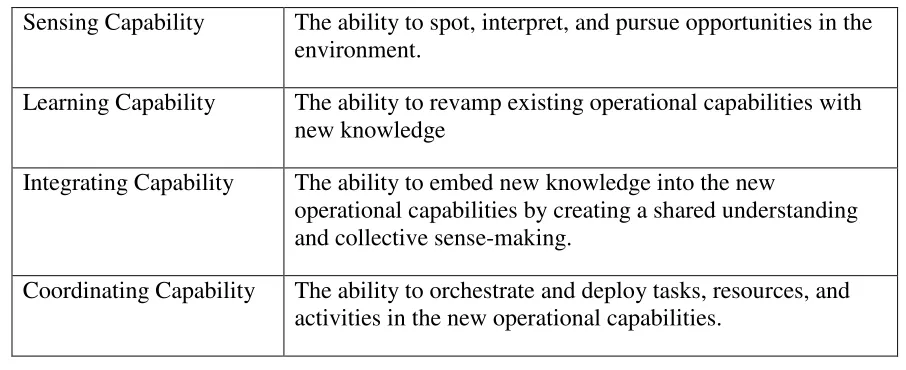
ability to reconfigure operational capabilities. Their view is summarized in Figure 1:
Figure 1 Framework
Reproduced from Pavlou and El Sawy (2011)
Pavlou and El Sawy view dynamic capabilities as distinct capabilities with subroutines.
This is consistent with other literature (Brown & Eisenhardt, 1997) which also views dynamic
capabilities as complex combinations of simpler routines. Pavlou and El Sawy (2011) offer the
following definitions of sensing, learning, integrating, and coordinating capabilities.
17
nor sufficient for reconfiguration to occur, but they are posited as important enablers of the
ability to reconfigure operational capabilities. Their view is summarized in Figure 1:
Reproduced from Pavlou and El Sawy (2011)
view dynamic capabilities as distinct capabilities with subroutines.
This is consistent with other literature (Brown & Eisenhardt, 1997) which also views dynamic
capabilities as complex combinations of simpler routines. Pavlou and El Sawy (2011) offer the
following definitions of sensing, learning, integrating, and coordinating capabilities.
to occur, but they are posited as important enablers of the
ability to reconfigure operational capabilities. Their view is summarized in Figure 1:
view dynamic capabilities as distinct capabilities with subroutines.
This is consistent with other literature (Brown & Eisenhardt, 1997) which also views dynamic
capabilities as complex combinations of simpler routines. Pavlou and El Sawy (2011) offer the
18 Table 1 Dynamic Capabilities Definitions
Pavlou and El Sawy (2011) define sensing capability as the ability to spot, interpret, and
pursue opportunities in the environment. To accomplish reconfiguration of operational
capabilities firms must continuously survey market trends and new technologies to sense and
capitalize on new opportunities. Teece et al. (1997) note, “The ability to calibrate the
requirements for change and to effectuate the necessary adjustments would appear to depend on
the ability to scan the environment, to evaluate markets and competitors, and to quickly
accomplish reconfiguration ahead of competition.”
Pavlou and El Sawy (2011) identify the three basic routines of the sensing capability as:
(i) generating market intelligence (Galunic & Rodan, 1998), (ii) disseminating market
intelligence (Kogut & Zander, 1996), and (iii) responding to market intelligence (Teece, 2007).
These routines are related to kindred routines in the dynamic capabilities literature. Generating
market intelligence relates to identifying customer needs (Teece, 2007), being responsive to
market trends (Amit & Schoemaker, 1993), identifying market opportunities (Day, 1994),
recognizing rigidities (Sinkula, 1994), and detecting resource combinations (Galunic & Rodan,
1998). Pavlou and El Sawy (2011) state that disseminating market intelligence relates to Sensing Capability The ability to spot, interpret, and pursue opportunities in the
environment.
Learning Capability The ability to revamp existing operational capabilities with new knowledge
Integrating Capability The ability to embed new knowledge into the new
operational capabilities by creating a shared understanding and collective sense-making.
19
interpreting market intelligence (Kogut & Zander, 1996), making sense of events and
developments, and exploring new opportunities (Teece, 2007). Responding to market
intelligence also relates to initiating plans to capitalize on market intelligence (D'Aveni, 1994),
and pursuing specific market segments with plans to seize the new market opportunities (Teece,
2007).
Pavlou and El Sawy (2011) define a learning capability as the ability to revamp existing
operational capabilities with new knowledge. According to Zahra and George (2002) who
propose that absorptive capacity (learning) is a dynamic capability, the four underlying routines
of the learning capability are acquiring, assimilating, transforming, and exploiting knowledge.
Pavlou and El Sawy (2011) note that routines relate to kindred terms in the dynamic capabilities
literature. They state that first, acquiring knowledge relates to obtaining new knowledge (Cohen
& Levinthal, 1990). Second, assimilating knowledge relates to knowledge articulation (Zander &
Kogut, 1995) and knowledge brokering (Eisenhardt & Martin, 2000). Third, transforming
knowledge relates to innovative problem solving (Iansiti & Clark, 1994), brainstorming (Pisano,
1994), and creative new thinking (Henderson & Cockburn, 1994). Finally, exploiting knowledge
relates to pursuing new initiatives (Van Den Bosch, Volberda, & De Boer, 1999), seizing
opportunities with learning (Teece, 2007), and revamping operational capabilities (Grant, 1996).
Pavlou and El Sawy (2011) define integrating capability as the ability to combine
individual knowledge into the unit’s new operational capabilities. The note that integrating
routines: contribution, representation, and interrelation of individual input to the collective
business unit, are closely related to dynamic capabilities. Specifically, contribution relates to
disseminating individual input within the business unit (Okhuysen & Eisenhardt, 2002).
20
activities fit together (Crowston & Kammerer, 1998). Interrelation relates to integrating
individual inputs within a unit to hone the reconfigured operational capabilities by executing a
collective activity (Helfat & Peteraf, 2003).
Integrating capability facilitates reconfiguration through its three basic routines (Pavlou
and El Sawy, 2011). They state that first, contribution to the unit helps collect and combine
individual inputs. Second, representation builds a shared understanding, creates a common
ground, and develops new perceptual schema (Weick & Roberts, 1993). Third, because
reconfiguration requires a new logic of collective interaction, interrelation helps the routinization
of the reconfigured operational capabilities (Okhuysen & Eisenhardt, 2002). Weick and Roberts
(1993) argue that groups with more integrated capabilities can better react in novel situations,
whereas Zollo and Winter (2002) view dynamic capability as a collective activity by arguing that
reconfiguring in a disjointed way does not even exercise a dynamic capability. Finally, Teece
(2007) views the integration of knowledge as a foundation of dynamic capabilities.
Coordinating capability enables reconfiguration by administering tasks, activities, and
resources to deploy the reconfigured operational capabilities since the new configurations of
operational capabilities require effective coordination of tasks and resources and synchronization
of activities (Iansiti & Clark, 1994; Helfat & Peteraf, 2003). Pavlou and El Sawy (2011) define
coordinating capability as the ability to orchestrate and deploy tasks, resources, and activities in
the new operational capabilities. The basic routines of coordinating capability also draw upon the
dynamic capabilities literature, namely assigning resources to tasks (Helfat & Peteraf, 2003),
appointing the right person to the right task (Eisenhardt & Brown, 1999), identifying
complementarities and synergies among tasks and resources (Eisenhardt & Galunic, 2000), and
21
While the benefit of dynamic capabilities has been widely discussed in existing literature,
scholars have begun to explore the need for additional capabilities. These additional capabilities
are termed, “improvisational capabilities.” Improvisational capabilities, as discussed in recent
literature streams, occur when organizations do not have adequate time to plan or their existing
formal plans do not adequately apply.
III.2 Improvisational Capabilities
Improvisation takes place when there is not enough time for formal planning, when
existing plans do not apply because of novel conditions (Crossan, 1998), and when the time gap
between planning and execution is cut short or actually converges (Moorman & Miner, 1998b).
Improvisation occurs for various reasons such as, when novel events cannot be addressed with
existing operational capabilities, when there is not enough time or it is too costly to engage in
formal planning, when there is a need to act outside formal plans to cope with novel situations
(Pina e Cunha, Vieira da Cunha, & Kamoche, 1999), and also when there is a “time pressure to
solve problems and address opportunities quickly” (Miner, Bassof, & Moorman, 2001).
Improvisation also occurs when organizations must react urgently to novel events and
environmental surprises, and when intentional decisions are made to forego formal planning
(Mendonça, 2007).
While improvisation can be viewed as a failure of formal planning (Moorman and Miner,
1998), the positive role of improvisation has also been recognized (Hatch, 1998; Hutchins, 1991;
Lewin, 1998; Majchrzak, Logan, McCurdy, & Kirchmer, 2006; Weick, 1995, 1998).
Improvisation is not inherently good or bad because the lack of planning does not necessarily
imply inferior results (Vera & Crossan, 2005). Pavlou and El Sawy (2010) point out that
22
costly planning process, particularly when the new conditions are expected to be novel and
unique. As Winter (2003) explains, improvisation often occurs strategically as an autonomous
decision to take advantage of spontaneity. Improvisation may also be deliberately employed
because the anticipated outcome of spontaneous actions is expected to be superior (Pavlou & El
Sawy, 2010).
Existing literature has mostly used jazz or theater as a metaphor for improvisation (e.g.,
Hatch, 1998; Weick, 1998). While the goal of musicians is to intentionally come up with new
music, organizations need to cautiously change to match new environments while maintaining
their stability and structure (Zack, 2000). Pavlou and El Sawy (2010) state improvisation is not
universally valuable for all organizations, and it should be used judiciously under specific
conditions. Following the “science of competitiveness” (Chi, Hartono, Holsapple, & Li, 2008),
Pavlou and El Sawy (2010) state that they “presume improvisation to occur and have positive
effects in highly turbulent environments with urgent, unanticipated, and impactful storms caused
by unpredictable actions of aggressive competitors, unanticipated changes in customer needs,
and disruptive technologies that make it impossible to reconfigure through formal planning.”
In order for actions to qualify as a capability, the set of actions must be collective,
repeatable or patterned, and purposeful; they cannot be individual, ad hoc, or random (Winter,
2003). Even though improvisation has its origins in individuals, it also extends to groups, units,
and organizations (Eisenhardt & Tabrizi, 1995; Hutchins, 1991; Kamoche & Cunha, 2003;
Weick, 1993). Miner et al. (2001) describes improvisation as a collective activity and Crossan
(1998) describes improvisation as a means for collective action. Moorman and Miner (1998)
23
engage in improvisation. Thus, improvisation is viewed as a collective capability (Pavlou & El
Sawy, 2010).
Improvisation is a repetitive, patterned, and deliberate activity that can be enhanced with
repetition and practice (Moorman & Miner, 1998). Pavlou and El Sawy’s (2010) view of
improvisation as innovation is consistent with the view that innovation is not a random process,
but a patterned one, even if it seems chaotic at first (Cheng & Van de Ven, 1996). “Improvisation
is a disciplined craft. Its skills can be learned through continual practice and study” (Crossan,
Lane, White, & Klus, 1996). Pavlou and El Sawy suggest that organizations often repeat and
even institutionalize their improvisational activities, learn by observing their best practices and
outcomes (Vera and Crossan, 2005), and prepare to rely on them when the opportunity for
improvisation arises (Weick, 1979).
Brown and Eisenhardt (1997) view improvisation as a capability for frequent and
endemic change. Improvisation is also viewed as a capability to strategically change daily
operations to address new environmental situations (Galbraith, 1990). Improvisation is also
viewed as the ability to generate new combinations of resources to address turbulent
environments (Ciborra, 1996). And Miner et al. (2001) describe improvisation as a set of
micro-patterns that are spontaneously recombined in creative ways.
Literature views improvisation as a major means for accomplishing reconfiguration and
change, and the goal of improvisational capabilities is to develop new operational capabilities
that better respond to novel conditions (Pavlou and El Sawy, 2010). Improvisational capability is
thus a purposeful capability that aims to reconfigure existing operational capabilities by acting
24
Sawy (2010) also assert that improvisation is purposefully utilized to result in new innovations;
or, it is spontaneously used as a means to address novel situations.
Pavlou and El Sawy (2010) find that improvisational capabilities are consistent in spirit
with the competitive dynamics (Smith, Ferrier, & Ndofor, 2001) and hyper-competition (e.g.,
D’Aveni 1994). These two literature streams theorize and demonstrate that organizations can
achieve higher performance by being capable of implementing competitive actions (Grimm &
Smith, 1997). Competitive actions are viewed as newly developed and externally directed
market-based moves that seek to enhance competitiveness by challenging the market status quo
through innovations in products and services (Ferrier, Smith, & Grimm, 1999). Notably, firms
that possess a more complex base of capabilities are in a better position to launch competitive
actions, also showing that organizations that act more frequently, faster, and with more
complexity have a higher performance (Ferrier et al. 1999).
In NPD those firms who have improvisational capabilities can engage in competitive
actions by building new and improved products that can keep them ahead of competitors (Pavlou
and El Sawy, 2010). They offer this as being consistent with Schumpeter (1934), who views
competitive actions as the novel combinations of existing resources that arise from the
(improvisational) capability to effectively engage in competitive actions.
The awareness-motivation-capability (AMC) framework (Chen, 1996) in the competitive
dynamics literature explains how firms engage in competitive actions and inter-firm rivalry. The
AMC framework lists three pillars for undertaking competitive actions: awareness to proactively
seek opportunities in the environment, motivation to undertake competitive actions, and the
capability to challenge the competitors’ actions. These three pillars were shown to raise
25
multinational organizations (Yu & Cannella, 2007). Pavlou and El Sawy (2010) state that
improvisational capabilities are consistent with the AMC framework in the sense that they reflect
the awareness of unpredictable events in the environment and the motivation and ability to
respond to them with spontaneous competitive actions. In “storms” where improvisational
capabilities are likely to emerge, there is less emphasis on awareness and motivation and more
emphasis on the ability to respond effectively (Pavlou & El Sawy, 2010). Thus, improvisational
capabilities reflect a specific capability to be aware of, motivated by, and capable of engaging in
effective improvisational actions.
Environmental turbulence creates unexpected conditions that call for novel solutions
(Vera and Crossan, 2005). Pavlou and El Sawy (2010) offer the example of the iPhone as an
unexpected product that was injected into the environment, which served to make plans for new
products under development less relevant or even irrelevant. They state that when competitive
actions such as these transpire, the need for improvisation becomes more prevalent.
Environmental turbulence makes it likely that existing operational capabilities no longer meet
customer needs, forcing NPD work units to exercise their improvisation capabilities to adapt to
novel events with new products (Moorman & Miner, 1998a).
As the successful execution of a capability depends on its frequent practice (Winter
2003), turbulent environments favor improvisational capabilities. Pavlou and El Sawy (2010)
state that the spontaneous nature of improvisation is ideally suited for highly turbulent
environments. Improvisation may even be the only feasible choice in turbulent environments
because planning may not be appropriate or even feasible (Crossan, Cunha, Vera, & Cunha,
26
performance is equivocal, with improvisation being more valuable under unpredictable
conditions and time pressure.
El Sawy and Pavlou (2008) point out however, that improvisation is not ad-hoc problem
solving. “Improvisation is basically characterized by timely convergence of planning and action
and that improvisation is deliberate” (Tjørnehøj & Mathiassen, 2010). Enterprises realize that
they often need to improvise in new contexts, and they learn how to improvise and become adept
at improvising in novel situations. Since enterprises face many novel situations in turbulent
environments, improvisation is likely to be a repeated activity that is enhanced with practice (El
Sawy & Pavlou, 2008).
III.3 Dynamic Capabilities vs. Improvisational Capabilities
El Sawy and Pavlou (2008), make a clear the distinction between dynamic and
improvisational capabilities even though they are both means for facilitating reconfiguration and
change. Dynamic capabilities emphasize planned and well-timed reconfiguration of operational
capabilities; improvisational capabilities emphasize the spontaneous and intuitive recombination
of resources in real time to build new operational capabilities in response to a novel situation.
Dynamic capabilities stress disciplined flexibility, while improvisational capabilities require
creativity and intuition (El Sawy & Pavlou, 2008). While both dynamic and improvisational
capabilities involve planning, dynamic capabilities focuses on how to best respond to an
anticipated situation, whereas improvisational capabilities require the enterprise to learn how to
be prepared to respond to any novel situation.
Literature has shown that both improvisational and dynamic capabilities are valuable in
turbulent environments. Pavlou and El Sawy (2010) make the case for the importance of both
27
prepared to change.” They site Weick (1998) who offers that the field of strategic management
generally favors judicious strategic planning. They say that it is possible to anticipate predictable
patterns of change (waves) in moderately turbulent environments; therefore, dynamic capabilities
may be the optimum option by drawing on past experience to plan reconfiguration.
They also point out however, that organizations may not always have the luxury of
planning, and improvisational capabilities may be the only viable means for change in
unexpected storms, where action must be taken urgently without prior planning. Improvisational
capabilities are likely to be effective when the environment is so turbulent with frequent storms
that sense-making collapses (Weick 1993) and past experience offers little help. Improvisational
capabilities also help speed action by avoiding the lengthy reconfiguration process often required
by dynamic capabilities (Eisenhardt & Tabrizi, 1995). Also, organizations that rely on
improvisational capabilities may reconfigure faster and more cheaply than dynamic capabilities
that require costly formal planning (Winter 2003). Pavlou and El Sawy (2010) hence state that
although dynamic capabilities are expected to be more effective in moderately turbulent
environments, improvisational capabilities may trump dynamic capabilities in highly turbulent
environments.
Since we view both improvisational and dynamic capabilities as new capabilities, both of
which replace old operational capabilities, we turn to Pavlou and El Sawy (2010) to understand
the differences between the two. Pavlou and El Sawy (2010) state that since both improvisational
and dynamic capabilities reconfigure existing operational capabilities, it is necessary to outline
28
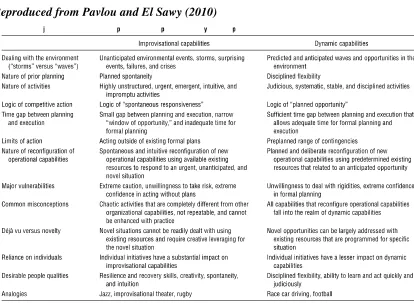
Table 2 Differences Between Improvisational and Dynamic Capabilities
Reproduced from Pavlou and El Sawy (2010)
Pavlou and El Sawy (2010) make four assertions distinguishing between dynamic and
improvisational capabilities. They state that first, they are different in how they deal with
environmental changes, dynamic capabilities aim to predict, sense, and “ride” quasi-predictable
patterns (waves) in the environment; improvisational capabilities aim to spontaneously respond
to unanticipated and unpredictable events (storms). They use this statement as evidence that
different types of environmental turbulence create a need for both improvisational and/or
dynamic capabilities. Second, they are different in terms of prior planning. Whereas dynamic
capabilities rely on formal planning for a given situation, planning for improvisational
capabilities is not situation specific, but it is “planned spontaneity” by learning how to respond to
29
an unstructured, emergent, and urgent nature that act in a narrow “window of opportunity”;
dynamic capabilities have a structured, stable, and disciplined nature that act in a larger window
between planning and execution. And lastly, or fourth, dynamic capabilities are based on a logic
of “planned opportunity” by stressing disciplined flexibility (Eisenhardt & Martin, 2000); in
contrast, improvisational capabilities are founded on a “logic of spontaneous responsiveness” by
reacting to novel situations with spontaneity and intuition (Pavlou & El Sawy, 2010).
Pavlou and El Sawy (2010) proposed distinction between improvisational capabilities and
dynamic capabilities is consistent with the work of Eisenhardt and Martin (2000), who also
distinguish between two types of capabilities based on the environment in which they operate. In
moderately turbulent environments, dynamic capabilities are similar to traditional routines,
which are analytic and stable, with predictable outcomes. In contrast, improvisational capabilities
in high-velocity markets are viewed as iterative, highly experiential, and contingent processes
with unpredictable outcomes. While Eisenhardt and Martin (2000) view both processes under the
umbrella of dynamic capabilities, Pavlou and El Sawy (2010) refer to the former as dynamic
capabilities and the latter as improvisational capabilities. Eisenhardt and Martin (2000)
acknowledge that dynamic capabilities are difficult to sustain in high-velocity markets, labeling
them instead as “improvisational processes.”
Pavlou and El Sawy (2010) distinction between improvisational and dynamic capabilities
is also consistent with (Collis, 1994) who proposed three categories of capabilities: the first type
relates to operational capabilities, “those that reflect an ability to perform the basic operational
activities of the firm.” The second category relates to dynamic capabilities, “the ability to learn,
adapt, change, and renew over time.” The third category relates to improvisational capabilities,
30
strategies before competitors.” Pavlou and El Sawy (2010) submit that even though
improvisational and dynamic capabilities are different, both capabilities emerge from
innovation-based competition, in which competitive advantage is innovation-based on the creative destruction of
existing operational capabilities and their reconfiguration into superior new operational
capabilities (Schumpeter 1934). This is also consistent with Collis (1994) who argues that both
improvisational capabilities and dynamic capabilities replace older operational capabilities.
III.4 Information Technology as an Enabler
Existing IT capability literature has been mainly rooted in the resource-based view of
capabilities (Pavlou and El Sawy, 2006). The various IT-related resources combine to form an IT
capability that is valuable, rare, non-imitable, and non-substitutable (Mata, Fuerst, & Barney,
1995). Taking this perspective, IT capability can be defined as “the ability to mobilize and
deploy IT-based resources in combination with other resources and capabilities” (Bharadwaj,
2000). Pavlou and El Sawy (2006) point out that IT capability has been viewed as a complex,
multi-dimensional construct, and the literature has proposed several specific IT-related resources
that combine to form an IT capability. The three related IT dimensions are: (a) the acquisition of
IT resources, such as technology assets (Ross, Beath, & Goodhue, 1996), IT objects (Tippins &
Sohi, 2003), and the overall IT infrastructure (Bharadwaj, 2000); (b) deployment of IT resources
through tight IT-business relationships, such as IT-business partnering (Ross et al., 1996), IT
partnerships (Bharadwaj, Sambamurthy, & Zmud, 1999), and business IT vision (Feeny &
Willcocks, 1998); and (c) leveraging of IT resources, such as technical IT skills (Mata et al.,
1995, Tippins & Sohi 2003, Ray et al., 2005) and human IT resources (Bharadwaj, 2000; Powell
& Dent-Micallef, 1997; Ross et al., 1996). Based on these three dimensions, IT capability can be
31
support its business strategies and value chain activities” (Bharadwaj, Sambamurthy, & Zmud,
2002).
This three-dimensional representation of IT capability views the construct at the firm
level of analysis, and views the IT capability construct to be predominantly drawn from within
the IT unit (Pavlou & El Sawy, 2006). Pavlou and El Sawy (2006) extend this IT capability
construct to NPD business users by arguing that because the acquisition and deployment
dimensions of IT capability are largely based on the IT investment decisions of IT executives
and are primarily implemented by IT staff within the IT unit, the acquisition and deployment
dimensions of IT capability are unlikely to differ.
El Sawy and Pavlou (2008), propose that IT infrastructure capabilities can enable the
business capabilities “trifecta,” which in turn influence a business’s strategic advantage when
environmental turbulence is high. El Sawy and Pavlou (2008) use the term, “business capabilities
trifecta” to capture operational, dynamic, and improvisational capabilities. They define IT
Infrastructure and IT infrastructure capabilities as described below:
• IT Infrastructure is the IT hardware, software, and networks, including applications
software and database management software that are available to the enterprise.
• IT infrastructure capabilities are the enterprise’s ability to be aware of what
functionalities the IT infrastructure has to offer, to understand when and how to use them, and,
when using them, to take advantage of specific IT functionalities and their combinations.
Organizations are increasingly engaging in competitive dynamics that are enabled or
induced by information technology (IT) (Pavlou and El Sawy, 2010). Chi et al. (2008b) assert
that empirical studies have shown that competitive advantage may be achieved with the effective
32
undertaking reconfiguration better, faster, and more efficiently than the competition, IT
researchers have devoted much attention to studying how IT can facilitate reconfiguration by
enhancing agility and dynamic capabilities (Houghton et al. 2004, Pavlou and El Sawy 2006,
Pavlou and El Sawy 2010).
Pavlou and El Sawy (2010) build on emerging literature to identify specific capabilities
that organizations could develop and exercise with the aid of IT to address diverse types of
turbulent environments. They state that the term turbulence describes the conditions of
unpredictability in the environment because of rapid changes in customer needs, emerging
technologies, and competitive actions. Where environmental turbulence may be manifested as
either “waves,” which are roughly predictable in their pattern, or “storms,” which are rapid, have
a strong impact, and occur unexpectedly. In their work they identify, theorize, operationalize,
and empirically test specific capabilities that could be most suitable for “waves” and “storms.”
IT-leveraging capability has a direct positive effect on dynamic capabilities because these
three types of IT systems enhance the ability of NPD work units to sense the environment,
enhance learning, integrate resources, and coordinate activities (Pavlou & El Sawy, 2006).
Ferrier et al. (2007) views competitive actions and organizational capabilities as being
inseparable from IT. Chi et al. (2008b) states the effective use of IT systems is proposed to
enhance the ability to undertake competitive actions by enhancing the awareness, motivation,
and capability to execute competitive (improvisational) actions.
Pavlou and El Sawy (2006) examine the aggregate role of IT-leveraging capability in
NPD, but in order to examine the role of individual IT systems on improvisational capabilities,