ScholarWorks @ Georgia State University
Educational Policy Studies Dissertations Department of Educational Policy Studies
Spring 5-9-2015
Arts and Academics: How teachers perceive school
climate relating to subject area (homerooom or
special area) in an elementary school.
Tracie Welborn Brack Ed.D.
Follow this and additional works at:https://scholarworks.gsu.edu/eps_diss
This Dissertation is brought to you for free and open access by the Department of Educational Policy Studies at ScholarWorks @ Georgia State University. It has been accepted for inclusion in Educational Policy Studies Dissertations by an authorized administrator of ScholarWorks @ Georgia State University. For more information, please [email protected].
Recommended Citation
Brack, Tracie Welborn Ed.D., "Arts and Academics: How teachers perceive school climate relating to subject area (homerooom or special area) in an elementary school.." Dissertation, Georgia State University, 2015.
ACCEPTANCE
This dissertation, ARTS AND ACADEMICS: HOW TEACHERS PERCEIVE SCHOOL
CLI-MATE RELATING TO SUBJECT AREA (HOMEROOM OR SPECIAL AREA) IN AN
ELE-MENTARY SETTING, by TRACIE WELBORN BRACK, was prepared under the direction of
the candidate’s Dissertation Advisory Committee. It is accepted by the committee members in
partial fulfillment of the requirements for the degree, Doctor of Education, in the College of
Ed-ucation, Georgia State University.
The Dissertation Advisory Committee and the student’s Department Chairperson, as
representa-tives of the faculty, certify that this dissertation has met all standards of excellence and
scholar-ship as determined by the faculty.
_________________________________ Dr. Jami Royal Berry, Ph.D.
Committee Chair
______________________________ ________________________________ Dr. Yinying Wang Ed.D. Dr. Terry Sapp, Ph.D.
Committee Member Committee Member
______________________________ Date
______________________________ William Curlette, Ph.D.
Chairperson, Department of Educational Policy Studies
AUTHOR’S STATEMENT
By presenting this dissertation as a partial fulfillment of the requirements for the advanced degree
from Georgia State University, I agree that the library of Georgia State University shall make it
available for inspection and circulation in accordance with its regulations governing materials of
this type. I agree that permission to quote, to copy from, or to publish this dissertation may be
granted by the professor under whose direction it was written, by the College of Education’s
Di-rector of Graduate Studies, or by me. Such quoting, copying, or publishing must be solely for
scholarly purposes and will not involve potential financial gain. It is understood that any copying
from or publication of this dissertation which involves potential financial gain will not be allowed
without my written permission.
NOTICE TO BORROWERS
All dissertations deposited in the Georgia State University library must be used in accordance
with the stipulations prescribed by the author in the preceding statement. The author of this
dis-sertation is:
Tracie Welborn Brack 30 Pryor St NW Atlanta, GA 30303
The director of this dissertation is:
Dr. Jami Royal Berry
Department of Educational Policy Studies College of Education
CURRICULUM VITAE
Tracie Welborn Brack
ADDRESS: 30 Pryor St. NW Atlanta, GA 30303
EDUCATION:
PROFESSIONAL EXPERIENCE:
2010-Present Assistant Principal
Sugar Hill Elementary Hall County, Georgia
2008-2010 Second grade teacher
World Language Academy Hall County, Georgia
2007- 2008 ESOL teacher
Lyman Hall Elementary Hall County, Georgia
PROFESSIONAL SOCIETIES AND ORGANIZATIONS
2014 Professional Association of Georgia Educators
Ed.D 2015 Georgia State University
Department of Educational Policy Studies
M.Ed. 2005 Georgia State University
Educational Leadership
B.S. 1998 University of Georgia
ARTS AND ACADEMICS: HOW TEACHERS PERCEIVE SCHOOL CLIMATE RELATING TO SUBJECT AREA (HOMEROOM OR SPECIAL AREA)
IN AN ELEMENTARY SETTING
by
TRACIE WELBORN BRACK
Under the Direction of Dr. Jami Royal Berry
ABSTRACT
This study examined teachers’ perceptions of school climate as it relates to subject area in
an elementary school setting. For the purpose of this dissertation it is important to distinguish
between two different groups: Homeroom Teachers refers to teachers in core subject areas
tradi-tionally evaluated through standardized tests, and Special Area Teachers refers to teachers in
ar-eas that are not tested with standardized tests such as art, music, and physical education. The
in-quiry included four teachers from one elementary school whose student population closely
mir-rored the demographics of the school district as a whole. The qualitative and quantitative data
included school climate data and teacher perception data. The school climate data was collected
from the Georgia School Personnel Survey administered as part of the College and Career
Read-iness Performance Index (CCRPI) included in Race to the Top. The teacher perception data was
accumulated through semi-structured interviewing. The survey results revealed special area
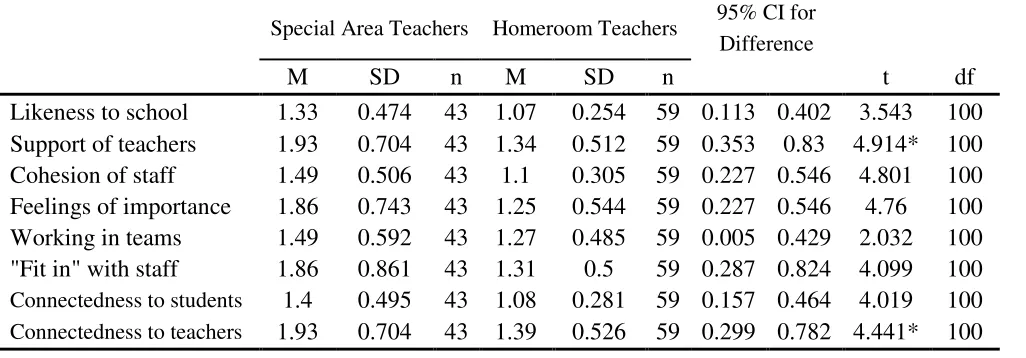
teachers feel less connected to and less supported by other teachers. Several responses within the
semi-structured interviews suggested that although the results of the School Personnel Survey for
the selected elementary school were very favorable and suggested a very positive school climate,
The results of the research constructed a microcosm description of how perceptions of
home-room teachers and special area teachers differed on the subject of school climate.
INDEX WORDS: Arts, Accountability, Teacher Perception, School Climate, Homeroom
ARTS AND ACADEMICS: HOW TEACHERS PERCEIVE SCHOOL CLIMATE RELATING TO SUBJECT AREA (HOMEROOM OR SPECIAL AREA)
IN THE ELEMENTARY SETTING
by
TRACIE WELBORN BRACK
A Dissertation
Presented in Partial Fulfillment of Requirements for the
Degree of
Doctor of Education
in
Educational Leadership
in
Department of Educational Policy Studies
in
the College of Education
Georgia State University
Copyright by Tracie W. Brack
DEDICATION
At this moment, I feel I could write a dissertation simply thanking those who have
be-lieved in me throughout this process. My friends and colleagues have been my constant
cheer-leaders. Words cannot express how grateful I am for them. My family has been my pillar of
strength. The vision of my grandfather, W.E. Woodson, Jr., working on his advanced degree and
the thought of how pleased and proud of me he would be, has been a compelling force. My
grandmother, Julia Jean Woodson, has been a place of refuge when I needed to slow down,
refo-cus, and find balance. My parents, Michael J. and Nancy Welborn, have encouraged me, kept my
children, edited countless papers, and loved me unconditionally despite times of impatience and
exhaustion. My brother, Todd and sister-in-law, Laurie Welborn who knew I was crazy before I
started this craziness. I am thankful for my other parents, Charles and Jeannie Brack, who have
occupied my children and husband for many a weekend throughout the past few years and
wait-ed patiently for me to finish.
My children, Julie, Will, and Katie have sacrificed time with me as I have completed the
endless assignments, research, and writing. You all have continued to grow into amazing young
people over the past few years. It is my hope that I have still been a good mother to all three of
you during this journey. I also hope that you have seen an example of perseverance through
dif-ficulties, endurance through exhaustion, and a passion for squeezing every ounce of joy there is
out of life in each moment. My Jeffrey, my husband, my rock, my encourager, my best friend,
you have loved me and supported me through this whole adventure. You have washed countless
dishes, folded endless loads of laundry, cooked innumerable meals, acted as both mom and dad
so many times, and still shielded me from anyone or anything that threatened to stand between
me and the goal. Pursuing this degree has always been my dream. However, you know I think
lyrically, so in the words of Michael Buble, “This was not your dream, but you always believed
in me.” (Buble, 2005). Thank you for your unconditional love and for never allowing me to give
up throughout this whole process.
Above all, I am thankful to a gracious, merciful, and loving God who has blessed me
ACKNOWLEDGMENTS
Dr. Jami Berry deserves special recognition for the realization of this program and her
position as the rock, “The Sauce,” and the foundation of Cohort One. I am especially grateful to
her for serving as the chair of my committee. She always knew just when to tell me to breathe,
encouraged me to continue when I wanted to quit, and recognized exactly when the cohort
need-ed her words of encouragement. I am also extremely appreciative to Dr. Terry Sapp who was
willing to serve on my committee. She is calm, graceful, intelligent, and just a tad intimidating.
The fact that she was willing to serve on my committee stirs feelings of both humility and pride.
Dr. Yinying Wang was willing to take on the added responsibility of serving on my committee
towards the end of my journey, when I found myself without a third committee member. I am
thankful for her flexibility and attention to detail.
I am indebted to the professors throughout the program who pushed me, encouraged me,
and helped mold Cohort One into the crazy, supportive, diverse, loving family that we became. I
would like to thank the following: Dr. Randy Dobbs, Dr. Kevin Fortner, Dr. Hayward
Richard-son, Dr. Alice Nanda, Dr. Nick Sauers, Dr. Janice Fournillier, Dr. Nancy Strawbridge, Dr. Jim
Kahrs, Dr. Werner Rogers, Dr. Yinying Wang, Dr. JoAnn Brown, Dr. Sheila Kahrs. I am also
appreciative to Jeff Stockwell, Aishah Cowan, Harley Granville, and Robert Hendrick who
kind-ly assisted with the sticker parts of the program such as registration, formatting, methodology,
and IRB.
I am thankful to Jeff Hodges with the Georgia Department of Education for his assistance
with data for my research. I am also indebted to Matt Cable for his help with statistics software. I
am grateful for the support of personnel at the district level, especially from Dr. Eloise Barron
and Dr. Sally Krisel. I am thankful to the administrators and teachers at the school that
partici-pated in my study. Thank you for sharing with me and thank you for making me feel welcome.
Thank you for providing insights that will hopefully help me become a better leader for teachers
of all subject areas and grades. I am indebted to the faculty and staff at Sugar Hill Elementary.
They were my constant supporters and encouragers. Finally, I am thankful for the family that
grew from Cohort One. I am forever grateful for your support and friendship.
TABLE OF CONTENTS
LIST OF TABLES ... iv
LIST OF FIGURES ...v
1 A REVIEW OF ARTS, ACCOUNTABILITY, AND SCHOOL CLIMATE ...1
Guiding Questions ...2
Review ...3
References ...38
2 TEACHER PERCEPTIONS OF SCHOOL CLIMATE BASED ON SUBJECT AREA (HOMEROOM OR SPECIAL AREA)...53
Methodology ...57
Results ...66
Conclusions ...79
References ...82
APPENDICES ...89
LIST OF TABLES
Table 1. Demograpics of the School District Compared to the Selected School ...60
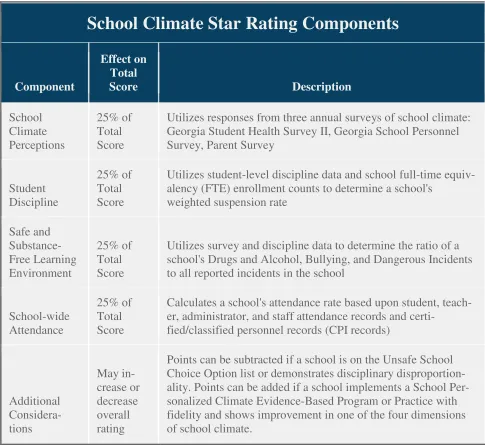
Table 2. School Climate Star Rating Components ...61
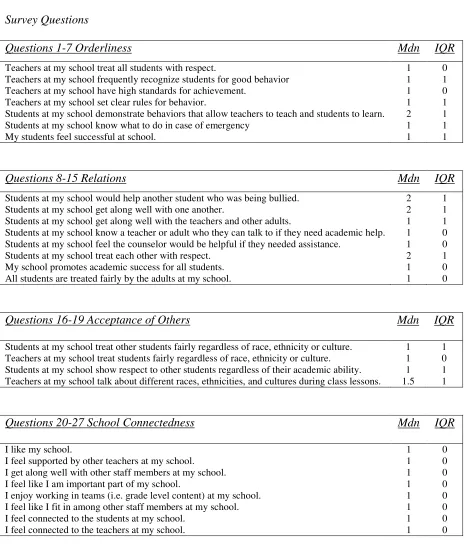
Table 3. Survey Questions ... 68 & 69
LIST OF FIGURES
Figure 1. Examples of Comments from Special Area Teachers ... 7
Figure 2. Examples of Comments from Homeroom Teachers ... 8
1 A REVIEW OF ARTS, ACCOUNTABILITY, AND SCHOOL CLIMATE
As No Child Left Behind (No Child Left Behind [NCLB], 2003) slowly rode off into the
proverbial sunset, the dawn of Race to the Top (RT3) shed new light on hope for accountability
in arts education thus possibly escorting art education out of the margins and into the mainstream
(Waldorf Education, 2000; CEP 2010; Kearns, 2011). The U.S. Department of Education (DoE),
the National Council on School Climate (NCSC) and the Character Education Partnership (CEP,
2010) suggested as a nation the United States was standing on the precipice of a defining
mo-ment in public education with the launch of accountability indicators in Race to the Top (RT3)
that measure school climate (CEP, 2010). As part of Race to the Top (RT3) in the College and
Career Readiness Performance Index (CCRPI), teachers in traditionally non-tested areas, such as
music, world language courses, Science Technology Engineering and Math (STEM) courses, and
physical education Fitnessgrams (GaDoE, 2013), could influence the Challenge areas and Star
ratings which could sway schools’ overall ranking.
The castigatory nature of standardized testing and the sanctions under No Child Left
Be-hind (No Child Left BeBe-hind [NCLB], 2003) had the capacity to damage the relationships
be-tween students and teachers, teachers and teachers, as well as teachers and administrators.
Gib-son (2001) exclaimed “Standardized tests, all of them, help shatter the vital relationship of
edu-cators, students and their community” (p.6). Not only do the high stakes tests have the potential
to impair relationships within the schools, but they do not tell the whole story about whether a
school is improving overall or simply improving in the area of testing. The focused
accountabil-ity measures under No Child Left Behind (No Child Left Behind [NCLB], 2003) evaluated the
items in schools that are easy to measure quantitatively, but fail to tell the whole story.
nar-rowly focused” (Cohen, Pickeral, & McCloskey, 2009, p.45). Test scores and attendance rates
paint only half of the picture.
Guiding Questions
The questions that guided the research were:
1. Do the perceptions of homeroom teachers and special area teachers regarding
school climate differ?
2. How do administrators influence the working relationships between homeroom
teachers and special area teachers?
Purpose of the study.
The purpose of this study was to examine teachers’ perceptions of school climate as it
re-lates to the subject area. In order to glean a more comprehensive understanding of school
suc-cess, many schools have started using school climate data as an additional statistical source when
considering the health and improvement needs of a school (Cohen et al., 2009). The data
collect-ed regarding school climate can facilitate powerful conversations between students, teachers, and
the community. Stipek (2006) warns that in an era of such high stakes accountability, educators
need to remain mindful of the relationships that affect student performance and not allow
ac-countability measures and high stakes testing to overshadow the meaningful interactions in
schools. Gersick, Bartunek, Dutton (2000) declare our relationships with individuals and groups
establish the environment in which we live our professional lives. Such environments can be
“nurturing sources of learning, inspiration, and enjoyment, or they can be destructive sources of
frustration and injury. They send us powerful messages about who we are and how we are
val-ued” (p.1026). The relationships within a school make a difference (Wahlstrom & Louis, 2008;
within the Schoolhouse,” Barth (2006) echoes the sentiments of Gersick, Bartunek, and Dutton
(2000) stating “the relationships among educators in a school define all relationships within that
school's culture. Teachers and administrators demonstrate all too well a capacity to either enrich
or diminish one another's lives and thereby enrich or diminish their schools (p. 8).
Review
Measuring what matters in schools.
The purpose of this literature review is to provide a framework for the study of teachers’
perceptions of school climate as it relates to subject area. Peer-reviewed empirical research
pro-vides the basis for the literature review. However, references to several books were included
be-cause of the significance added to the context of the review. This literature review begins with an
overview of the complexity of the relationships among arts, school climate, and accountability.
Next, the review provides and explanation of the various methods of art instruction and the
bene-fits of arts education. Following the discussion of the arts, there is an examination of
accounta-bility and its effects in schools. The review concludes with a discussion of school climate and
how accountability and relationships within schools can influence school climate.
Relationships in schools matter (Stipek, 2006). Arts Education in schools matters (Seif,
2013). Standardized tests matter (Grant, 2000). School Climate matters (Shah, 2013). How do
educators decipher which one matters most? According to The Character Education Partnership
(CEP, 2010) “What gets measured, matters” (p.7). If schools only measure the significant
jects, then it is reasonable to conclude that in many public schools, in America, only tested
sub-jects “matter” (CEP, 2010, p.7). Therefore, those non-tested subsub-jects, or special areas, such as
art, music, physical education, and other indeterminate areas that often influence school climate,
subjects are superfluous has the potential to create feelings of resentment from both camps.
Homeroom teachers often perceive that special area teachers have less accountability through
standardized testing and less curricular responsibility. Special area teachers maintain that, while
the arts and other non-tested areas may not be as valuable in the world of academia, they are
highly valued in the world in which we live (Baker, Barton, Darling-Hammond, Haertel, Ladd,
Linn, Ravitch, Rothstein, Shavelson, Shepard, 2010).
Referring to the value of the arts, Elliot Eisner (1995) probed, “Given the fact that we
build palaces to house them, erect concert halls to hear them, construct theaters to see them, pay
performers of the arts fortunes to provide them, why the discrepancy between our out-of-school
behavior and our in-school priorities?” (para.1). Consider the average salary of a teacher in the
United States in 2012-2013 which was about $56,383 (U.S. Department of Education, 2013).
Compare the teacher salary with the average salary of a National Football League (NFL) player
at $1.9 million per year with the highest salary topping $22 million (NFL, 2014). Weigh that
$1.9 million against the $125 million singer and songwriter Madonna grossed in 2013 (Forbes,
2013). There is quite a discrepancy between the salary of a teacher, a tailback, and a top 40 artist.
However, in schools the focus is rarely on physical education or music performance. Educators
are not particularly concerned with Madonna’s income or Aaron Roger’s multimillion dollar
paycheck. Consequently, why is this commentary on in-school and out-of-school values
note-worthy? Consider the response from children when asked about their professional aspirations. A
2009 study in the United Kingdom indicated that many children dream of catching the winning
Super Bowl touchdown, singing at the Grammies, or receiving the coveted Oscar (Telegraph,
2009). In a 2014 careers survey, children chose their top four choices as astronaut, musician,
entertainers, however, the athletes and entertainers engage learners. Students are drawn to the
activities that engage body and mind as in subjects such as art, music, and physical education.
According to an International Survey of six cities conducted by Benesse® Educational Research
and Development Center (2007) children all around the world overwhelmingly rate a special area
subject at the top of the list when asked to rank school subjects from most to least liked.
Sup-porters of art education, who understand that the arts engage student learning, have looked to
re-search to reveal the value of teaching the arts in schools.
Advocates for more aesthetic instruction conducted research associating increased
suc-cess in traditional academic learning with the concept of skills transfer through arts education
(Deasy, 2002) in order to bolster their claims regarding the importance of arts education. The
research from schools at all levels around the globe supports value for students in creative arts
learning. Skills developed through learning the creative arts influenced students at school and
aided in their career path (Bamford, 2006; Catterall, Chapleau & Iwanaga, 1999). Teachers
found it easier to facilitate students’ development of fine motor skills, social skills, student
con-fidence and cross curricular learning through creative arts instruction (Alter, Hays, O'Hara 2009).
In a literature review from Scotland addressing the social and economic impact of the arts, Ruiz
(2004) suggested that there are multiple positive outcomes from arts education including social
cohesion, health and well-being, community image and regeneration all of which can transfer to
the workplace.
These connections sound encouraging; yet the disconnect lies herein: arts conjure words
such as creativity, imagination, self- expression, and tolerance, which are difficult to quantify
with a grading rubric (Jansen, 2001). How does one evaluate creativity, enumerate imagination,
educa-tion systems sprouted from the economic model of industrialism (Amadio, Truong, Tschurenev,
2006). Under this model, the schools focus on mathematics, reading, and science, not creativity,
imagination, and self-expression. Public schools in America arose following the Civil War, as a
response to increased immigration, in order to institute social order, maintain strict discipline,
and assimilate immigrants into a common culture (Coulson, 1999). Previously, in the United
States, education was for children whose parents could afford private, tuition based schools or
children who benefited from charity schooling (Coulson, 1999). Words and phrases such as
insti-tute social order, strict discipline, and assimilation conflict with words in the vein of creativity,
imagination and self-expression. Although public schools in America were built on the
founda-tion of assimilafounda-tion, as time passed, the nafounda-tion changed yet, so much about public educafounda-tion
re-mains the same (Wren, 1999). Many districts find that traditional education systems fail to
pre-pare children for the changing landscape of the current economic climate and must change in
or-der to meet evolving needs of current and future economic workforces (Peterson, 2009).
Within the current workforces in schools, research indicates that staff relationships and
interpersonal interactions influence teacher attitudes that in turn define the climate of a school
(Price, 2012; Haertel & Wang, 1994; Hoy & Henderson, 1983; Leithwood & Jantzi, 1990;
Moolenaar, Daly, & Sleegers, 2010; Ogawa & Bossert, 1995; Rosenholtz, 1985; Wahlstrom &
Louis, 2008). The phrase school climate is often used interchangeably with the phrase school
culture. While there are literally hundreds of articles on the topic of school climate, there is no
common definition of the elements of school climate or what defines a positive school climate
(Shah,
1) “They (homeroom teachers) drop the kids off early and come back to get
them late.”
Figure 1: Examples of Comments from Special Area Teachers
2013; Johnson & Stevens, 2006). Although an exact definition has not been determined,
“Virtu-ally all researchers and the National School Climate Council agree that four major factors shape
school climate: safety, relationships, teaching and learning, and the institutional environment”
(Cohen et al., 2006, p.46). School climate positively affects the learning environment in many
ways.
A positive school climate enhances academic achievement, teacher retention, and student
success (Mitchell, M., Bradshaw, C., & Leaf, P., 2010; Cohen et al., 2009), increases student
learning opportunities (Bryk & Schneider, 2003), and influences school effectiveness (Price,
2012; Goddard, LoGerfo, & Hoy, 2004). National School Climate Center and Fordham
Universi-ty perused more than 200 literature reviews about school climate and concluded that “sustained
positive school climate is associated with positive child and youth development, effective
risk-prevention and health-promotion efforts, student learning and academic achievement, increased
1) “They (special area teachers) are only teaching specials. Why do they get so
upset about our classes being a couple of minutes early or late?”
Figure 2: Examples of Comments from Homeroom Teachers
student graduation rates, and teacher retention” (Shah, 2013, p.1; National School Climate
Cen-ter, 2014). With so many positive correlations, these studies support the move toward the
inclu-sion of school climate in the overall evaluation of a school’s improvement.
As evaluation instruments and what is measured continues to change and evolve in
edu-cation, school leaders still engage in playing the game of high stakes testing (Figlio & Getzler,
2006). One way administrators navigate the process of high stakes testing, is how they determine
teacher assignments within the school. Chingos and West (2009) suggest that “In this
environ-ment [high stakes testing accountability] administrators have clear incentives to keep their most
effective teachers in tested grades and subjects while reassigning their less effective teachers to
positions in which they will less directly (or less immediately) influence a school’s performance
rating.” A 2013 study, conducted by Grissom, Kalogrides, and Loeb, found that teachers whose
students perform poorly on standardized tests are more likely to be moved to a non-tested subject
area or grade. The study also concluded that administrators are more involved in student and
teacher placement in tested grades in order to improve test scores as much as possible (Grissom,
use personnel placements to improve test scores. She has coined the phrase “staffing to the test”
to describe the technique of strategically moving personnel to increase student achievement on
standardized tests (Cohen-Vogel, 2011). With this information in mind, administrators can speak
volumes to their staff members without saying a word simply by moving a teacher to a different
grade level or subject area.
The relationship between school climate and student achievement has been a topic of
conversation in education circles for decades. Educators started the discussion on school climate
as far back as 1908 (Perry, 1908) and the conversation has continued and evolved since. A 1977
study found that a positive or negative school climate served as a more accurate predictor of
stu-dent achievement than did socioeconomic status or ethnicity (Brookover, Beady, Flood,
Schweitzer & Wisenbaker, 1977). More recently, Johnson and Stevens (2006) discovered a
posi-tive and statistically significant relationship between teachers’ perceptions of school climate and
student achievement. However, the standardized tests used as the measuring stick of student
achievement and to define successful schools under No Child Left Behind (No Child Left Behind
[NCLB], 2003) do not measure school climate nor emphasize the importance of the intangibles
that create school climate. The Character Education Partnership (2010) as well as others (Karp,
Spring 2003; Marshak, November 2003; Mathis, 2006; McKenzie, November, 2006) suggested
that in the effort to prepare students for high stakes standardized tests, schools and teachers have
neglected other pertinent subjects such as science, social studies, the fine arts, and physical
edu-cation. While neglecting these subjects, not only can students suffer academically, but research
suggests that schools could also create deficits in skills that often ensure success in future careers
(Ruppert, 2010). In 2008, The New Commission, a group of governors, business leaders, school
em-ployment data from the United States Department of Labor (Ruppert, 2010). The New
Commis-sion’s major finding was that, all else being equal, the skills needed to set employees apart in a
global economy, are creativity and innovation (Ruppert, 2010). A 2013 Forbes article listed the
top 10 skills employers are expecting in new employees. The top 3 included abilities such as
team work, decision making, problem solving, planning, organization, prioritizing (Forbes,
2013). These abilities are often enhanced through the study of the arts (Sousa, 2006; Ruppert,
2010).
Arts: Various models in schools.
Around the world, countries address the call for change in education through exposure to
the arts with various responses. Many Asian countries chose an approach called Art-in-Education
(AiE) which utilizes the arts as educational tools for other subject areas, acknowledges multiple
intelligences, and employs creative and investigative thinking across fields (United Nations
Edu-cational, Scientific, and Cultural Organization [UNESCO], 2005). In North America and Europe,
the two most popular approaches are Education in Art (UNESCO, 2006) through which students
foster culture knowledge and investigate cultural identity; and Education through Art,
(UNESCO, 2003) which uses art as a medium for general education results and aptitudes.
Three themes emerged throughout the literature discussing how arts education influences
learning. First, claims exist that arts education develops skills that increase aptitude across all
subject areas including arts as well as academics (UNESCO 2005; Sousa, 2006; Oak, 2012).
Second, arts education cultivates skills that are beneficial and unique specifically to art education
(UNESCO, 2006; Eisner, 1998; Davis, 2007). Finally, arts education fosters skills that transfer
2002; Spelke, 2000). This literature review will focus on these three themes in an effort to
high-light the many positive influences arts education has across subject areas.
Music affects the brain.
In order to make sense of the three themes of how arts education influences achievement,
it is first important to narrow the focus substantially. The phrase, the arts, encompasses so many
subject areas, including but not limited to, dance, drama, visual arts, physical education, social
studies, and foreign language (Alter, Hays, O’Hara, 2009). For the purpose of this literature
re-view, music will be the exact art, in order to achieve a more specific focus. The interest in the
neurology of music was spurred by the 1977 book by Critchley and Hensen, Music and the
Brain: Studies in the Neurology of Music. This book spurred further research on how music
af-fects the brain and eventually led to work on Music Therapy (Luttman, 2009). Music specifically
affects brain function in many ways. In the Hodges’ (2000) article, Implications of Music and
Brain Research there are several premises about music and the brain:
1. The human brain has the ability to respond to and participate in music.
2. The musical brain operates at birth and persists throughout life.
3. The musical brain is highly resilient
4. Early and ongoing musical training affects the organization of the musical brain.
5. The musical brain consists of extensive neural systems involving widely distributed, but
locally specialized regions of the brain: Cognitive components, affective components,
and motor components (Hodges, 2000).
These findings seem intuitive, however, upon closer investigation, these common sense findings
have a deeper message. Primarily, all children can learn music and music education should not
mu-sic education (Hodges, 2000). Often, people categorize those who excel at mumu-sic as “talented” as
if one is born with musical ability or born without it. However, research illustrates that all
stu-dents are musical and able to learn music, even those with compromised intellect (Weinberger,
1995; Hodges, 2000; Sousa, 2006).
Next, music learning is not a right brain or left brain issue. Studies illustrate that musical
development occurs throughout the brain “front/back, top/bottom, left/right” (Hodges, 2000,
p.20). Not only does musical development occur throughout the brain, but “music can actually
prime the brain’s neural pathways” (Jensen, 2000, p. 246). Finally, there is the notion that “music
is dissociated with linguistic or other types of cognitive processes” (Hodges, 2000, p.21). In
oth-er words, the procedures used while learning music are specific to the practice of learning music.
Therefore, neuroscientists are able to learn about the brain in a very specific manner by studying
the effects of learning music (Bennet & Bennet, 2009). Schlaug, Norton, Overy, and Winner
(2005) conducted similar research on “Effects of Music Training on the Child’s Brain and
Cog-nitive Development” and concluded music training in children resulted in “long-term
enhance-ment of visual–spatial, verbal, and mathematical performance” (Schlaug et al., 2005, p. 219).
The study explained that the results indicating transfer were often between related areas. For
in-stance, music notation is spatial, so it makes sense for it to affect spatial reasoning. The notation
of rhythm in music requires comprehension of fractions, division, proportions and ratios, so it is
expected that musical education improves mathematical understanding (Schlaug et al., 2005).
The educational realm does not hold a corner on the market of research involving music
and how it affects the brain. Even the mainstream media is interested in the effects of music on
the brain. In her 2013 CNN article, “This is your brain on Music” Elizabeth Landau cited the
McGill University in Montreal, whose studies revealed several positive effects of music and the
brain in the realm of medicine (Landau, 2013). For example, music received credit for decreased
stress levels during medical tests, increased levels of immunity antibodies, and enlarged counts
of germ fighting bacteria (Landau, 2013). Levitin also noted that music has a connecting quality.
He uses a concert as an example saying that it is not a natural inclination to willingly join a mass
of 20,000 people; however, for the concert of a favorite musician people are willing to step
out-side of what is innately comfortable (Levitin & Tirovolas, 2009; Landau, 2013). She also cited
the research of Daniel Abrams, head author and postdoctoral researcher at Stanford University
School of Medicine, whose research indicates that several common areas of the brain are
en-gaged when subjects listen to music.
The regions controlling movement, attention, planning, and memory were triggered in all
subjects while listening to music (Landau, 2013). In the 2013 article, “Inter-subject
synchroniza-tion of brain responses during natural music listening,” Abrams discussed the research of Daniel
Levitin as well. The research involved subjects who listened to a common musical piece, an
atonal piece, and a piece that had been changed from its original arrangement. The brain activity
of the subjects who listened to the common musical piece all matched. “We found that music
synchronizes brain responses across listeners in bilateral auditory midbrain and thalamus,
prima-ry auditoprima-ry and auditoprima-ry association cortex, right-lateralized structures in frontal and parietal
cor-tex, and motor planning regions of the brain” (Levitin & Tirovolas, 2009, Abrams, 2013).
The brain activity of the participants was not synchronized when they listened to the
atonal piece or the changed piece. This discovery indicates that apart from how people feel about
music, the brain reacts to the hearing of the music the same way in all subjects (Abrams, 2013).
the query for study music. The following is just one example of the results obtained: Study
Mu-sic - Help with Exams, Increase Brain Focus to Help with Learning and Concentration (iTunes,
2014).
Music supporters often mention “The Mozart Effect” (Rauscher, Shaw, & Ky,1993) to
support their claims that music increases intelligence (Telesco, 2010). However, the broad claim
of “increasing intelligence” is not supported in the original study that specifically researched
college students’ ability to execute “spatial-temporal tasks as evidenced by IQ scores after
pas-sively listening to 10 minutes of Mozart’s sonata K. 448” (Rauscher et al, 1993). Concluding that
college students who listen to a specific Mozart’s Sonata for a precise amount of time and
com-plete particular spatial temporal tasks specifically is quite different from saying that if you listen
to classical music while you study, you will be more intelligent, which is how some music
enthu-siasts have watered down the Mozart Effect. In their article, “Does music make you smarter?”
Steven Demorest and Steven Morrison attempt to answer this question. The overwhelming
an-swer is “yes.” However, the only solid conclusion they express is that music education increases
student intelligence in music (Demorest & Morrison, 2000).
What many proponents of music education infer with the statement “Music makes you
smarter” is that it makes students smarter at something other than music (Demorest & Morrison,
2000). This conclusion is so widely hyped, it has even influenced politics. Consider Georgia’s
Governor, Zell Miller, who requested over $105,000 from the state legislature, for classical
mu-sic for Georgia’s newborns (Kirchner, 1998). According to a January 14, 1998 Associated Press
article, “Gov. Zell Miller, an avid country music buff, wants all Georgia newborns to have the
chance to listen to soothing classical music. His hope is to boost baby brain power” (Kirchner,
on early childhood education touting the benefits of music in making babies smarter” (Kirchner,
1998, para. 6).
Considering the neurological research suggesting the positive effects of music on brain
development (Weinberger, 1995; Kirchner, 1998; Demorest & Morrison, 2000; Jensen, 2000;
Schlaug et.al, 2005; Bennet & Bennet, 2009; Levitin & Tirovolas, 2009; Hodges, 2000; Landau,
2013; Abrams, 2013), it seems that schools would investigate ways to incorporate more and
more music into schools. However, as resources in schools become scarce, the arts are often the
first area shaved off the budget. Therefore, it is not enough to simply explain that music is
bene-ficial to brain development, but it is also imperative to prove a connection specifically between
music and academic achievement.
Arts education and the transfer of knowledge.
The concept that arts education leads to increased understanding in the traditional
aca-demic subjects is referred to as transfer (Hetland & Winner, 2004). Deasy (2002) suggested that
students exposed to arts education transfer aesthetic knowledge to other academic realms.
Spe-cifically to music instruction and/ or performance, in only a handful of studies, the concept of
transfer was evident between music and the following areas: Cognitive Development, Spatial
reasoning, Spatial temporal reasoning, Quality of writing, Prolixity of writing, Mathematics
pro-ficiency, Spatial reasoning, Long-term spatial temporal reasoning, Self-efficacy, Self-concept,
SAT verbal scores (Deasy, 2002). There is considerable literature (UNESCO, 2003; Hetland &
Winner, 2004; Deasy, 2002; Spelke, 2000, Bennet & Bennet, 2009) discussing spatial reasoning
that substantiates that mathematical skills and language realize a direct benefit from spatial
rea-soning skills. In mathematics, for example, proportions and fractions possess innately spatial
however “what we write, what we read, and what we hear involve words that are used and
un-derstood in specific contexts” (Deasy, 2002, p.168). Spelke (2000) echoes the theory of transfer
between music instruction and spatial ability (p. 35) citing a moderately musically trained
popu-lation of students. Teitelbaum and Fuerstner Gillis (2004) maintained that arts education
trans-ferred to increased academic achievement. Instruction in the arts such as music, visual arts, and
drama was associated with increased test scores in objectively assessable subjects such as
read-ing, vocabulary, comprehension, mathematics, and spatial reasoning in addition to boosting more
intangible attributes including student motivation, tolerance, self-concept, and overall behavior
(Amadio, Truong, Tschurenev, 2006).
Art for the sake of art.
Not all commentary on the topic of arts and academics strictly adheres to the mantra of
transfer. Elliot Eisner, who authored several publications discussing art education, inquired
“Have they ever thought about asking how reading and math courses contribute to higher
per-formance in the arts?” (Eisner, 1998, p.32). The connection he makes is that if advocates for art
education build their case on the foundation of the contribution of the arts on academic subjects,
then when a different lure enters the arena, such as the internet or mobile devices, the supposed
value of the arts will disintegrate. (Eisner, 1998). He contends that the value of arts education
must stand on its own merit or else risk the threat of extinction with the appearance of the next
course or device touting the effects of “transfer” between itself and academic achievement
(Eis-ner, 1998). In her 2007 book, Why our Schools need the Arts, Jessica Davis reiterates Eisner’s
claims that art is valuable for its unique contributions and that it creates outcomes exclusive to
only art education. Davis’ book touts art for the sake of art and demonstrates that the attained
bal-anced” (Davis, 2007, p.51). She goes on to illustrate the valuable creations and talents realized
through art education that are not easily measured through traditional educational assessments
(Davis, 2007). Davis (2007) and Eisner (1998) assert that art education must be measured by
art’s own merit and contributions rather than how art education can increase gains in other
sub-ject areas.
Arts education increases student achievement in a multitude of areas.
The Arts Education Partnership (AEP) subscribes to the notion that arts education
pro-motes skills that not only transfer from artistic to academic, but permeate across all subject areas
in school and carry over into work and life (2013). The AEP (2013) claims that arts instruction
and arts integrated instruction facilitate many skills that pervade other areas beyond school. In
schools, art educationincreasesboth verbal and mathematics test scores, literacy engages the
dif-ficult to reach students and helps them connect in school, motivates students to learn, develops
critical thinking, and improves school climate (Sousa, 2006). In the business sector, art education
“Equips students to be creative, strengthens problem solving ability, builds collaboration and
communication skills and increases capacity for leadership (AEP, 2013, p.4). In life, art
educa-tion “teaches children to make good judgments about qualitative relaeduca-tionships, celebrates
multi-ple perspectives, and fosters teamwork and problem solving” (Sousa, 2006). In the article,
“Ef-fects of music on the mind,” Oak (2012) reiterates some of the same benefits between music and
the brain referred to by Sousa as well as the AEP. He maintains that:
Music fights depression by increasing the serotonin levels of the brain, relieves
anxiety by calming the nerves and inducing sleep, improves learning abilities by
promoting motivation and positive emotions, boosts confidence by increasing
creativity and problem-solving skills, makes learning easier by combining music
with another task such as learning multiplication tables and speeds healing by
se-creting endorphins that help in speeding the process of healing. (Oak, 2007, p.16)
While some of these benefits are academic, there is a balance of aesthetic outcomes as
well. The approach of the Arts Education Partnership (AEP, 2013) can appeal to those who
sub-scribe to the notion that the skills learned through art education transfer to other disciplines and
affect student achievement as well as those who remain in the camp which supports art for its
own sake and the benefits that art education offers students.
The relationship between arts and accountability.
It is evident there are several opinions and multiple visions for how the arts fit into the
larger image of the place called school (Eisner 2002; Abril & Gault, 2006; Sousa, 2006; Davis
2007). Why so much research, time, and effort spent on the question of the value of art education
in schools? Some would say, for art educators, it is self-preservation (Sousa, 2006). To quote
Rodney Dangerfield’s adage, it would indeed seem that the arts “get no respect” in the
educa-tional arena. In the 2004 article, “No subject left behind” the Arts Education Partnership (AEP,
2004) highlights the section of the NCLB law which defines the “core” subject areas and
indi-cates that the core subject areas will receive funding under the law located in “Title IX, Part A,
Section 9101 (1)(D)(11), Definitions: (11) The term `core academic subjects' means English,
reading or language arts, mathematics, science, foreign languages, civics and government,
eco-nomics, arts, history, and geography” (NCLB, 2003).
Whether those who make educational decisions failed to read the definition of ‘Core
Ac-ademic Subjects’ in its entirety, or simply ran out of money following the implementation of
abun-dantly clear is that No Child Left Behind (NCLB) became law in 2003 and a decade later, art
ed-ucation is still deeply entrenched in the outskirts of the eded-ucational landscape. Although the
words of Eisner (1995) were written close to 20 years ago, it seems they continue to resound in
truthfulness regarding the marginalization of the arts:
For both Plato and Descartes it was mathematics that was closest to God; to really
know, one had to free one's self from the senses and, instead, address what is
ab-stract, general, and timeless. The arts by contrast, are concrete, particular, and
timely. And to make matters worse, they are emotional! Genuine understanding
depends upon detached objectivity and it is such understanding for which the
schools are responsible. In short, their contribution to enlightenment is marginal
at best (Eisner, 1995, para.5).
Race to the Top accountability measures for the arts as well as traditionally tested
sub-jects and grades sow new seeds of hope for the arts to move from marginal to mainstream (CEP
2010, Kearns, 2011). In order to better understand the hope arts advocates carry for arts
educa-tion under RT3, it is necessary to look back at a brief history of how schools changed and what
eventually lead to the accountability movement as well as the impact the accountability
move-ment has had on the condition of schools.
Education and accountability in the United States.
Accountability is a term that previously applied more to students than teachers and
schools. Nineteenth- century schools used tests to determine if students had mastered the
infor-mation taught (Ravitch, 2002). If the student failed the test, or multiple tests throughout the year,
the student failed or was retained. The student was responsible for passing the test. From the
Harold Rugg, shifted the focus to educating social beings (Wren, 1999). Social promotion
be-came acceptable and the responsibility for passing a test was shifted off of the student (Ravitch,
2002). The concept of students as social beings was forced to the background as the age of the
Cold War raged. In 1957, the Russians launched Sputnik, which simultaneously launched a
pub-lic and political onslaught against the American education system blaming pubpub-lic schools for the
fact that the United States was not first in space (Amrein & Berliner, 2002). In 1965, the Federal
government first enacted The Elementary and Secondary Education Act (ESEA). The ESEA
in-cluded Title I provisions which traditionally assist low income, disadvantaged students
(Standerfer, 2006). Before ESEA the federal government had respected states’ rights to make
decisions regarding curriculum and the daily processes of schools (Standerfer, 2006).
Approxi-mately two decades later, in 1983, the National Commission on Education released A Nation at
Risk which maligned public schools in America, indicating that American students were falling
behind their counterparts in other countries and that educationally the nation was spiraling
downward (Amrein & Berliner, 2002). Although, A Nation at Risk was highly controversial, it
began circulating madly and soon became the guidebook for Educational Reform (Vinovskis,
1999). In 1989 the nation’s governors met to create education goals for the country. Of those
goals, six applied to public schools:
Creating a more highly professional teaching force; (b) strengthening school
lead-ership and management; (c) promoting greater parent involvement and choice in
their youngsters’ education; (d) helping at-risk children and youth meet higher
education standards; (e) making better and more effective use of new technologies
in education; and (f) making better use of the resources invested in school
The ESEA was reauthorized in 1994 which ushered in high-stakes, standardized testing followed
closely by high-stakes accountability. No Child Left Behind was actually a third reauthorization
of ESEA (Manna, 2010). In 1998, President Bill Clinton commented on public education,
That is why I have fought for excellence, competition, and accountability in our
nation’s public schools, with more parental involvement, greater choice, better
teaching, and an end to social promotion. We cannot afford to let our children
down when they need us the most. (President Bill Clinton, 1998).
The NCLB regarding reading education for students in America echoed his sentiments:
Because President and Mrs. Bush know that reading is the foundation for all other
learning, the administration has set the goal of making sure every child knows
how to read at grade level by the third grade. Reading opens doors to children
who otherwise would struggle through school, lacking the skills to succeed and
grow. Literacy is a vital skill for a successful student. Children who learn to read
well early in life are more likely to be engaged in school and experience academic
success. A deficiency in reading skills impacts achievement in all other areas of
education (DoE, 2004).
Regardless of political affiliation, it is difficult to find fault with the laudable goal of
Presidents Clinton and Bush regarding the significance of reading and excellence in the nation’s
schools. The NCLB act of 2001, which became law in 2003, contains several elements such as;
annual testing, academic progress for all, report cards for schools and districts, increased teacher
qualifications, and funding to ensure implementation. However, the annual testing resulted in a
“narrowing of the curriculum” in many schools (Bush, 2013; Golan, 1991, Kohn, 2001;
of many stakeholders including teachers, parents, administrators, and students (Daly, 2009;
Kearns, 2011). All the funding that was promised never came to fruition leading to increased
frustration from the mandates of testing without the monetary support from the federal
govern-ment in many states across the nation (Bracey, 2005).
Rationale and goals for No Child Left Behind.
The insistence on all students having access to high quality education is the core of No
Child Left Behind (Daly, 2009; Borowski & Sneed, 2006; Haycock, 2006; USDOE, 2002,
Sec-tion 101; Bracey, 2001). However, the theory of the award and punishment structures which
re-ward high performing schools and supposedly motivate low performing schools are grounded in
business theory rather than pedagogical theory (Gelberg, 2007; Manna, 2006). Research actually
suggests that this type of threatening and sanction driven environment results in many damaging
effects such as decreased job satisfaction, increased intra- and interpersonal conflict, inability to
inventively problem-solve, and physical manifestations (Hansen & Sullivan, 2003; Hutchinson,
1998; Kyriacou, 2001; Wiley, 2000). Pre-NCLB, schools operated in a low stakes arena,
mean-ing that the students took tests and the belief was that teachers, administrators, and policy makers
would use the data derived from tests to adjust teaching practices and curriculum accordingly
(Heubert & Hauser, 1999). Conversely, high stakes testing operates under the concept that the
information gleaned from the tests is not enough to prompt educators to teach and students to
reach their academic potential. The suggestion is that teachers and students require the assurance
of incentives and penalties to guarantee change (Mintrop & Trujilo, 2005; Heubert & Hauser,
1999). This theory of school reform includes several surprising elements and results that are
The intention of No Child Left Behind was to use accountability in order to improve
schools for all students while addressing inequities and social injustices in education (Daly,
2009; Borowski & Sneed, 2006; Haycock, 2006; USDOE, 2002, Section 101; Bracey, 2001).
Advocates of No Child Left Behind and high-stakes testing operate within the philosophy that
schools and teachers need high-stakes testing for several reasons. The tests guide teachers to
know what is important to teach. Testing provides meaningful standards and scores for teachers,
administrators, and schools to aspire to reach. High-stakes accountability motivates teachers,
es-pecially lazy teachers, to work harder (Amrein & Berliner, 2002; Golan, 1991; Mintrop &
Trujil-lo, 2005). Policymakers assume positive educational change results from high-stakes testing and
increased accountability (Heubert & Hauser, 1999; Pedulla, 2003). Lawmakers who support
test-ing believe “testtest-ing drives much of what teachers do and so curricular and instructional change
will occur if and when tests change” (Grant, 2000, p.2).
Supporters of high stakes testing claim that high-stakes accountability will inspire
dents to work harder and learn more (Blazer, 2011; Pedulla, 2003). Testing will encourage
stu-dents to perform at their highest potential and score well on the tests. Testing advocates believe
that when students score well on the test, they will feel successful and when students fail the tests
they will be inspired to increase their effort to learn and succeed (Blazer, 2011; Amrein &
Ber-liner, 2002). Supporters of high-stakes testing also presume that tests are good measures of
school curriculum and instruction, provide an equitable arena for all students to exhibit their
aca-demic expertise, and supply an adequate gauge of student performance (Amrein & Berliner,
2002). The data gained from test results can then guide instruction. The tests measure student
achievement that in turn, illustrates school effectiveness, which in turn highlights which schools
High-stakes testing advocates believe all stakeholders, teachers, administrators, and
par-ents, will understand and use test results in a meaningful, productive manner (Amrein &
Berlin-er, 2002). The assumption that led to the accountability measures in NCLB is that teachers and
administrators use the test results as a guide for improving instruction, school improvement, and
professional learning ultimately resulting in school reform nationwide (Golan, 1991). Promoters
of high-stakes testing also subscribe to the thought that parents are able to look at their child’s
test scores objectively and with a critical eye (Golan, 1991). Testing supporters trust that tests are
capable of all of these feats while being unaffected by disparity in students’ motivation, social
status, native language, and individuality (Amrein & Berliner, 2002).
Results and responses to No Child Left Behind.
While the ideals and goals for NCLB sound reasonable in theory, the reality in schools
across the nation often reveals a drastically different depiction (Kohn, 2001; Kearns, 2011; Bush,
2013). The very inequities the law intended to fight, have grown in many schools. Kohn (2001)
and Kearns (2011) both argue that high-stakes tests are extremely accurate predictors of
socioec-onomic status (SES) of the families that feed into a school;
The truth of the matter is they [standardized tests] offer a remarkably precise
method for gauging the size of the houses near the school where the test was
ad-ministered. Every empirical investigation of this question has found that
socioec-onomic status (SES) in all its particulars accounts for an overwhelming proportion
of the variance in test scores when different schools, towns, or states are
com-pared (Kohn, 2001, p. 349).
Although there are schools that have improved under the sway of NCLB, those schools
af-fect instruction by decreasing collaboration and professional interaction” (Daly, 2009, p.172.)
Many underachieving schools consist of populations composed of high percentages of students
in a low socioeconomic bracket or a high percentage of minority students (Daly, 2009). As
NCLB became law, these low performing schools were labeled as Program Improvement (PI) or
Needs Improvement (NI) schools. Program Improvement (PI) schools failed to meet annual
year-ly progress (AYP) thus were labeled and faced the threat of sanctions. Under NCLB, sanctions
ranged from accreditation losses, funding losses, personnel shifts, and state take-overs (Quality
Counts, 2002). High stakes accountability and testing inherently include an emphasis on data that
can be measured quantitatively (Crotty, 1998).
On the other hand, encouraging pedagogical strategies proven to increase student
en-gagement, student learning, and authentic collaboration yield more qualitative results which are
difficult to measure on a multiple choice test or rank on a school report card. Often within the NI
schools the prescription of choice was one of “Teaching to the Test” resulting in “narrowing the
curriculum” (Bush, 2013; Golan, 1991, Kohn, 2001; Guzenhausen, 2003; Amrein, 2002).
Nar-rowing of the curriculum refers to using the majority of instructional time teaching the subjects
that will be tested. For example, some schools focus on instruction in reading, mathematics, and
writing leaving other subjects such as science, social studies, physical education, and the arts
fighting for the remaining time in the school day (Sousa, 2006; Gunzenhausen, 2003). Therefore,
large portions of the curriculum are often ignored. It may seem contradictory, but test scores in
these schools often increased as the depth and breadth of instruction decreased (Blazer, 2011;
Gunzenhausen, 2003). Therefore, the question begs: has the achievement gap in these schools
edu-cational equality then reducing the curriculum to reading and math for those who are in failing
schools falls short of the goal.
Teaching for understanding and teaching to a test are two very different goals. Teaching
for understanding encourages students to engage in the learning process by enhancing problem
solving skills, higher order thinking strategies and critical analysis of subject matter (Buese,
2002). Many argue that if teachers “just teach well” then “the tests will take care of themselves”
(Kohn, 2001, p.351) however, Kohn counters that this argument is a “convenient delusion”
(p.351) and that to teach in a way that promotes student understanding and critical thinking may
indeed decrease test results. Linda McNeil (2000) articulates that the decision between teaching
to the test and teaching for understanding is a difficult choice and that effective teaching does not
inevitably lead to solid test results:
In fact, the transformation of the curriculum into received knowledge, to be
as-sessed by students' selection of one answer among four provided on a
computer-scored test, undermined both the quality and quantity that "good teachers" could
present to their students. . . . [Thus,] teachers faced serious ethical dilemmas.
They could teach to the proficiencies and assure high test scores for their students.
Or they could teach the curricula they had been developing (and wanted to
con-tinue to develop) and teach not only a richer subject matter but also one that was
aimed at students' understanding and their long-term learning, not the short-term
goals inherent in the district testing of memorized fragments (McNeil, p.?).
Not only does high-stakes testing reshape the way students are instructed, some argue it
also transforms the philosophy of education and creates a Default Philosophy of Education
from a lack of reflective, engaged dialogue among educators and school communities about their
goals and practices” (Gunzenhauser, 2003, p.51). In the current high stakes context, created by
policymakers and politicians rather than educators, the default philosophy places tremendous
significance on the test results rather on the accomplishment the results indicate (Gunzenhauser,
2003). Gunzenhauser (2003) and Eisner (2000) worry that high stakes accountability and testing
which result in this default philosophy are leading further and further from the desired
educa-tional reform. In order to reach real school reform there are crucial questions that must be
an-swered.
We are not clear about what we are after. Aside from literacy and numeracy, what
do we want to achieve? What are our aims? What is important? What kind of
ed-ucational culture do we want our children to experience? In short, what kind of
schools do we need? (Eisner, 2000, p. 577).
Not only is it essential to question the types of schools needed for positive educational
reform, it is also necessary to question the types of adults created as a result of the current
cli-mate of high-stakes accountability.
The questions are, “What kind of public does it [public schooling] create? A
con-glomerate of self-indulgent consumers? Angry, soulless, directionless masses?
In-different, confused citizens? Or a public imbued with confidence, a sense of
pur-pose, a respect for learning, and tolerance? (Postman, 1996, p. 18).
Another teacher queried, “What kind of learners is this [standardized testing] going to shape?
Are we producing a nation of test-takers, and if so, are those test-taking techniques or skills what
Are schools creating adults who can think creatively, problem solve, analyze data, and
intelligently discuss controversial topics? Or have the multiple choice tests, national report cards,
and lists of rankings by schools, districts, and states reduced the output of schools to adults who
are able to choose the best of fours possible responses and completely fill in their answer bubble?
It seems contradictory that the same parents with the “everybody gets a trophy” mentality
(Sigman, 2012), those who are so concerned about falsely bolstering the esteem and
self-concept of their children, are simultaneously allowing their children to be ranked and labeled as
passing or failing in school based on annual testing. (Sigman, 2012).
A 2004 RAND report, The 21st Century at Work: Forces Shaping the FutureWorkforce
and Workplace in the United States answers this question with a resounding “no” indicating that
the future workforce will “require high-level cognitive skills for managing, interpreting,
validat-ing, transformvalidat-ing, communicatvalidat-ing, and acting on information. Valued skills include such
non-routine analytic skills as abstract reasoning, problem solving, communication, and collaboration”
(Karoly & Panis, 2004). Whether or not the tests prepare students for the workforce is doubtful,
however what is certain is the research revealing what high-stakes testing does to the students
who are involved.
Following standardized testing, many students are often surprised to find that they failed
the test. Following the shock of failure, they report feeling “degraded, humiliated, stressed, and
shamed by the test results” (Kearns, 2011, p.118). They further stated that they felt a “lack of
care and concern for their well-being and that of their peers” (Kearns, 2011, p.118). Despite the
reports that teachers do not care, many teachers share that they are concerned about a range of
emotions in their students before tests which range from anxiety, panic, irritability, frustration,
2003). The students are not the only ones suffering from emotional effects of testing. Teachers
also report increased stress and decreased morale in light of testing (Pedulla et.al, 2003). The
very exams intended to motivate teachers and students indeed have the opposite effect (Pedulla
et.al, 2003). Many teachers described decreased job satisfaction, increased intra- and
interper-sonal professional conflict, inability to creatively problem solve, loss in productivity, and
isola-tion as some of the results of high-stakes accountability and testing on their work environment
(Daly, 2009; Hansen & Sullivan, 2003).
The manner in which the scores are used to judge student achievement, teacher
perfor-mance, and school ranking has set students and teachers in a state of conflict (Grant, 2000). One
study on tests and teacher perspective quoted several questions from teachers regarding the
ra-tionale of the tests such as, “Who is it assessing? Is it really assessing the students? Or is it
as-sessing the teachers?" Another elementary teacher echoed this point: "What is the purpose of the
state exams? Is it actually to assess the students or to push the teachers in a direction?" “Whose
life is most affected by the tests?” (Grant, 2000, p.13). In the Unites States, the stakes of the tests
are higher for the teachers than for the students (Wiliam, 2010). “Ironically, these effects of
NCLB get in the way of achieving the very goals the law aims to promote” (Stipek, 2006).
Con-sider this quote from Bobbit in 1913, “And finally, principals and other administrators should use
tests to determine ‘weak’ and ‘strong’ teachers as well as rates of teacher pay or access to other
privileges” (Bobbit, 1913, p. 52).
If the tests are really designed to assess student knowledge and learning, then it would
make sense for students to receive feedback on the exams. The students spend so much time
pre-paring for the tests and practicing the format of the test. The entire school schedule is altered to