Physics and Astronomy Dissertations Department of Physics and Astronomy
12-17-2015
Oscillatory Network Dynamics in Perceptual
Decision-Making
Ganesh Chand
Follow this and additional works at:https://scholarworks.gsu.edu/phy_astr_diss
This Dissertation is brought to you for free and open access by the Department of Physics and Astronomy at ScholarWorks @ Georgia State University. It has been accepted for inclusion in Physics and Astronomy Dissertations by an authorized administrator of ScholarWorks @ Georgia State University. For more information, please [email protected].
Recommended Citation
By
GANESH CHAND
Under the Direction of Mukesh Dhamala, PhD
ABSTRACT
Synchronized oscillations of ensembles of neurons in the brain underlie human cognition
and behaviors. Neuronal network oscillations can be described by the physics of coupled
dynamical systems. This dissertation examines the dynamic network activities in two distinct
neurocognitive networks, the salience network (SN) and the ventral temporal cortex-dorsolateral
prefrontal cortex (VTC-DLPFC) network, during perceptual decision-making (PDM).
The key nodes of the SN include the right anterior insula (rAI), left anterior insula (lAI),
and dorsal anterior cingulate cortex (dACC) in the brain. When and how a sensory signal enters
and organizes within the SN before reaching the central executive network including the
prefrontal cortex has been a mystery. Second, prior studies also report that perception of visual
objects (face and house) involves a network of the VTC—the fusiform face area (FFA) and
perception and decision-making. We used clear and noisy face/house image categorization tasks
and scalp electroencephalography (EEG) recordings to study the dynamics of these networks.
We demonstrated that beta (13–30 Hz) oscillation bound the SN, became most active around 100
ms after the stimulus onset, the rAI acted as a main outflow hub within the SN, and the SN
activities were negatively correlated with the difficult tasks. We also uncovered that the
VTC-DLPFC network activities were mediated by beta (13-30 Hz) and gamma (30-100 Hz)
oscillations. Beta activities were enhanced in the time frame 125-250 ms after stimulus onset, the
VTC acted as main outflow hub, and network activities were negatively correlated with the
difficult tasks. In contrast, gamma activities were elevated in the time frame 0-125 ms, the
DLPFC acted as a main outflow hub, and network activities—specifically the FFA-PPA pair—
were positively correlated with the difficult tasks. These findings significantly enhance our
understanding of how sensory information enters and organizes within the SN and the
VTC-DLPFC network, respectively in PDM.
INDEX WORDS: Electroencephalography (EEG), Neuronal oscillations, Perceptual
decision-making, Salience network (SN), Fusiform face area (FFA), Parahippocampal place area
OSCILLATORY NETWORK DYNAMICS IN PERCEPTUAL DECISION-MAKING
by
GANESH CHAND
A Dissertation Submitted in Partial Fulfillment of the Requirements for the Degree of
Doctor of Philosophy
in the College of Arts and Sciences
Georgia State University
Copyright by Ganesh Chand
by
GANESH CHAND
Committee Chair: Mukesh Dhamala
Committee: Vadym Apalkov
Brian Thoms
Unil Perera
Yohannes Abate
Misty Bentz
Electronic Version Approved:
Office of Graduate Studies
College of Arts and Sciences
Georgia State University
DEDICATION
I would like to dedicate this dissertation to my parents, wife, daughter, and sister for their
ACKNOWLEDGEMENTS
I am deeply indebted to many wonderful people who have supported me to come up with
this dissertation. My foremost sincere thanks go to my PhD supervisor Dr. Mukesh Dhamala,
who provided me enormous opportunities in the research field of my interest. He motivated me
and put in a lot of effort and his invaluable expertise being available for extensive discussions.
He guided, encouraged, and inspired to aim high in my goals throughout my PhD.
I am thankful to all wonderful colleagues of Dr. Dhamala’s Neurophysics laboratory,
with whom I spent great time, had fun, and extensively discussed research problems during my
PhD period. My special thanks go to the members of my dissertation committee. I am thankful to
previous chair Dr. H. Richard Miller and present chair Dr. D. Michael Crenshaw, Department of
Physics and Astronomy, for providing me their valuable time and supports when I needed. I
would also like to extend my thanks to previous graduate program director Dr. A. G. Unil Perera
and present graduate program director Dr. Xiaochun He for providing me their supports and
guidance to complete courses.
I would especially like to thank all participants who took part in my studies. Finally, I
TABLE OF CONTENTS
ACKNOWLEDGEMENTS ... v
LIST OF TABLES ... viii
LIST OF FIGURES ... ix
LIST OF ACRONYMS ... xi
1 INTRODUCTION ... 1
1.1 Overview ... 1
1.2 Neuronal oscillations and synchrony... 3
1.3 Network activity: directed connectivity measure... 4
2 PERCEPTUAL DECISION-MAKING ... 7
2.1 Salience network... 7
2.2 VTC-DLPFC network ... 9
3 OSCILLATORY DYNAMICS OF THE: 1) SALIENCE NETWORK, AND 2) VTC-DLPFC NETWORK IN PERCEPTUAL DECISION-MAKING ... 10
3.1 Introduction ... 10
3.1.1 Salience network dynamics ... 10
3.1.2 VTC-DLPFC network dynamics ... 12
3.2 Materials and Methods ... 13
3.2.1 Participants ... 13
3.2.3 Experimental design ... 14
3.2.4 Data acquisition and preprocessing... 15
3.2.5 Data Analysis ... 16
3.2.6 Brain-behavioral correlation. ... 18
3.3 Results ... 19
3.3.1 Behavioral results ... 19
3.3.2 Brain results... 20
3.4 Discussion... 47
3.4.1 Salience network dynamics ... 47
3.4.2 VTC-DLPFC network dynamics ... 51
4 SUMMARY AND FUTURE STUDIES... 54
REFERENCES... 57
LIST OF TABLES
Table 1 Anatomical location, dipole orientation, and dominant activation timeframe of the
SN nodes.... 22
Table 2 Anatomical location, dipole orientation, and dominant activation timeframe of the
LIST OF FIGURES
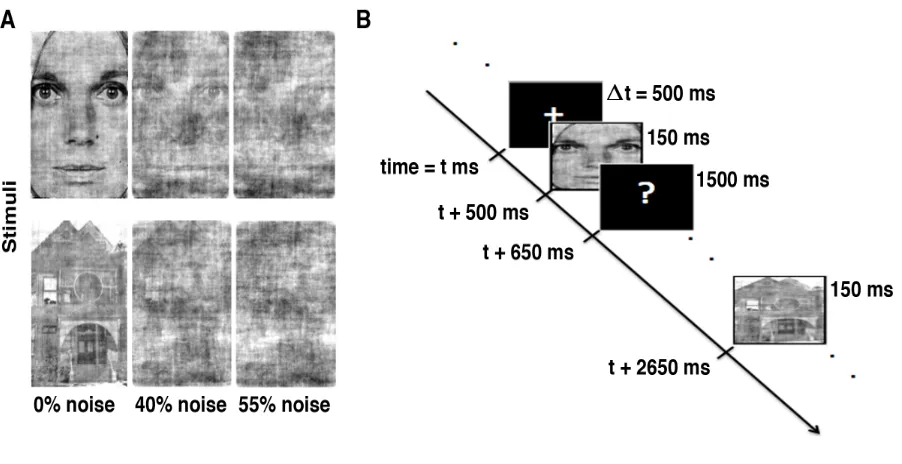
Figure 3.1 Experimental design.... 15
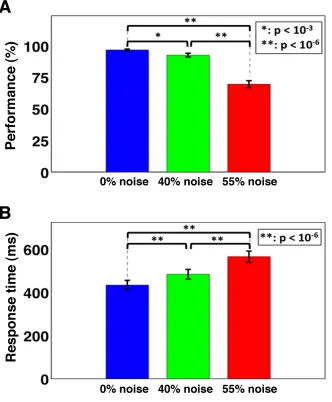
Figure 3.2 Behavioral responses for all three noise-levels.... 20
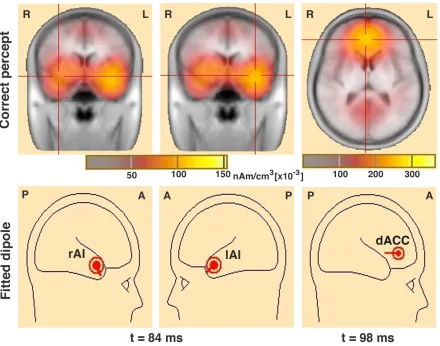
Figure 3.3 Spatiotemporal profiles of peak source-level brain activity over the SN nodes. 21 Figure 3.4 Power spectra of the SN nodes as a function of time and frequency for stimuli with 0% noise.... 23
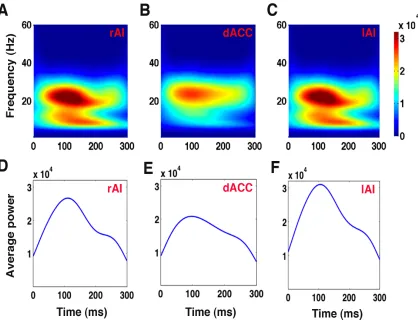
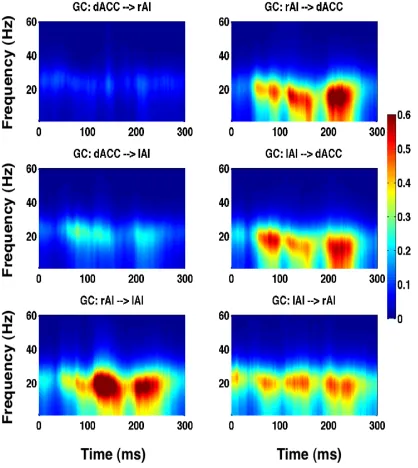
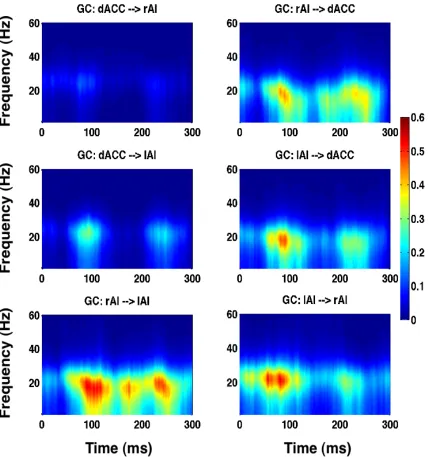
Figure 3.5 Granger causality spectra among the SN nodes as a function of time and frequency for stimuli with 0% noise.... 24
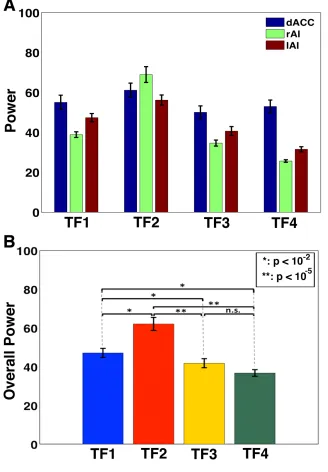
Figure 3.6 Power comparison of the SN nodes among four consecutive time frames for stimuli with 0% noise.... 25
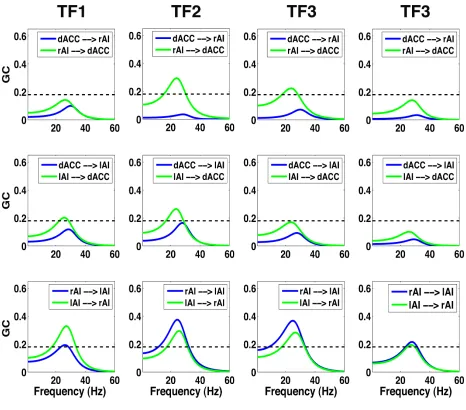
Figure 3.7 Granger causality spectra between all possible pairs of the SN nodes at four consecutive time frames for stimuli with 0% noise.... 26
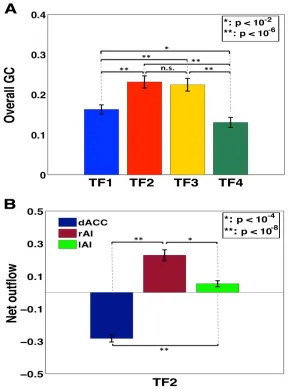
Figure 3.8 Comparison of overall Granger causality and calculation of net outflow for stimuli with 0% noise.... 27
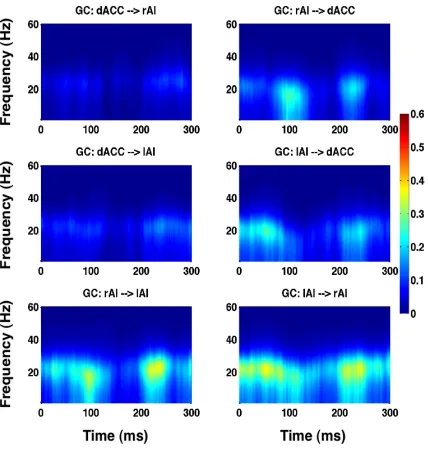
Figure 3.9 Granger causality spectra among the SN nodes as a function of time and frequency for stimuli with 40% noise.... 29
Figure 3.10 Granger causality spectra among the SN nodes as a function of time and frequency for stimuli with 55% noise.... 30
Figure 3.11 Comparison of Granger causality strengths among noise levels.... 31
Figure 3.12 Relation between Granger causality and response time.... 32
Figure 3.13 Event related potentials over the occipital-temporal channels.... 33
Figure 3.15 Granger causality spectra among the VTC-DLPFC nodes as a function of time
and frequency for stimuli with 0% noise.... 36
Figure 3.16 Power comparison at the VTC-DLPFC nodes among three consecutive time
frames for stimuli with 0% noise.... 37
Figure 3.17 Granger causality spectra among the VTC-DLPFC nodes in three consecutive
time frames for stimuli with 0% noise.... 38
Figure 3.18 Comparison of overall Granger causality among three consecutive time frames
and calculation of net outflow for stimuli with 0% noise.... 39
Figure 3.19 Power comparison at the VTC-DLPFC nodes among all three-noise levels..... 41
Figure 3.20 Granger causality spectra among the VTC-DLPFC nodes as a function of time
and frequency for stimuli with 40% noise.... 42
Figure 3.21 Granger causality spectra among the VTC-DLPFC nodes as a function of time
and frequency for stimuli with 55% noise.... 43
Figure 3.22 Comparison of Granger causality strengths among the VTC-DLPFC nodes
among all three-noise levels.... 44
Figure 3.23 Relation between Granger causality and response time in beta band.... 46
LIST OF ACRONYMS
ANOVA Analysis of variance
BA Brodmann area
BESA Brain electrical source analysis
BOLD Blood oxygen level dependent
CEN Central executive network
dACC Dorsal anterior cingulate cortex
DLPFC Dorsolateral prefrontal cortex
DMN Default mode network
DTI Diffusion tensor imaging
EEG Electroencephalography
ERPs Event related potentials
FDR False discovery rate
FFA Fusiform face area
FFT Fast Fourier transforms
fMRI Functional magnetic resonance imaging
GC Granger causality
Hz Hertz
iFFT Inverse fast Fourier transforms
ICA Independent component analysis
lAI Left anterior insula
MEG Magnetoencephalography
MNI Montreal neurological institute
ms Milliseconds
PDM Perceptual decision-making
PPA Para-hippocampal place area
rAI Right anterior insula
RT Response time
SN Salience network
TF Time frame
VTC Ventral temporal cortex
0% (noise) Stimuli with 0% noise added
40% (noise) Stimuli with 40% noise added
1 INTRODUCTION
1.1 Overview
Our everyday lives involve making decisions. Whenever there are two or more
alternatives, one can decide between them. This seems very simple, but as a neurophysicist, an
obvious wonderment is how the brain carries out this decision. What brain areas are involved?
How do they coordinate to arrive at a perceptual decision? These are some of the questions,
answers of which can take us closer to solving mysteries of brain decision-making functions.
The human brain is a highly complex system consisting of a large number of
interconnected nerve cells (neurons) carrying out perception, cognition and action. Those
neuronal connections enable various brain structures to exchange information with each other
during a perceptual or cognitive task. How neuronal systems interact in cognitive tasks including
decision-making is not completely uncovered. Perceptual decision-making (PDM) is a process of
decision-making based on available sensory information and evidence. Prior investigation
proposes the PDM as an encoding of sensory evidence, planning of actions, and mapping of
sensory information into action plans (1). Such a sensory information-guided, goal-directed
behavior is thought to entail the flexible interactions among task-relevant, but widely distributed
brain areas (2, 3). However, ‘where in the brain’, ‘when in the brain’ and ‘how in the brain’
questions are not well answered. In other words, how sensory signal enters and organizes within
those brain areas before motor-execution are largely unknown. Such understanding is crucial not
only for basic research questions but also for creating a pipeline to treat the patients who have
human brain during PDM processes. The findings of my PhD work have been reported in the
following first author peer-reviewed journal papers.
1. Chand GB and Dhamala M. The salience network dynamics in perceptual
decision-making. NeuroImage (Under Revision).
2. Chand GB, Lamichhane B and Dhamala M. Face or house image perception: beta and
gamma bands of oscillations in brain networks carry out the decision. Brain Connectivity (Under
Revision).
3. Chand GB and Dhamala M. Interactions among the default-mode, salience and
central-executive networks during perceptual decision-making of moving dots. Brain Connectivity
(Under Revision).
4. Chand GB and Dhamala M. Oscillatory causal interactions between the salience and
central-executive networks during perceptual decision-making. NeuroImage (Under Revision).
5. Chand GB and Dhamala M. Spectral factorization-based current source density analysis
of ongoing neural oscillations. Journal of Neuroscience Methods 224, 58-65 (2014).
In the first paper, I investigate the salience network dynamics for the first time in finer
time-scale (milliseconds). In the second paper, I demonstrate for the first time that the
band-specific oscillatory networks features and their temporal dynamics in visual perception. In the
third paper, I apply a unified network approach to examine the interactions among the
default-mode, salience and central-executive networks during easier versus harder PDM tasks. The
fourth paper demonstrates band-specific temporal features between the salience network and
central-executive network in PDM. The fifth paper (4) is about the technique, where I propose
an algorithm that localize neuronal oscillations, especially ongoing/spontaneous oscillations.
involved in PDM. Here, I include only the first two peer-reviewed journal papers in this
dissertation.
1.2 Neuronal oscillations and synchrony
The human brain consists of billions of neurons—the cells that transmit information
inside the brain—and each of which have more than 103 synaptic connections which enable
neuronal assembles to oscillate and synchronize transiently or connect functionally (5). Neuronal
oscillations can be captured at various measurement scales: at a single neuron level, at local field
potentials level, and at large-scales level (5, 6). Scalp electroencephalography (EEG) is a
noninvasive electrophysiological recording technique that measures synchronized activity of
ensembles of neurons (7). Hans Berger was the first one to record a version of EEG from the
human in 1924 (8). Since then EEG has become a valuable tool for the study of brain functions
and dysfunctions (7, 9, 10).
EEG is relatively convenient to demonstrate the physiological manifestations of
synchronized activity in a time-scale (i.e., milliseconds) of the human sensory perception and
decision-making. EEG signals captured from the brain comprise a broad range of synchronized
oscillatory activities, which are tentatively categorized into several bands: delta (1-4 Hz), theta
(4-8 Hz), alpha (8-13 Hz), beta (13-30 Hz), and gamma (30–100 Hz) (11). These oscillatory
contents subserve important functions in the brain (12-14). However, an important but unsolved
question is whether these bands exhibit distinct physiological roles and whether specific
sensorimotor, perceptual or cognitive operations are tied to them (11, 14). Some of these
oscillations are illustrated to be a physiological signature of different cognitive states (15, 16)
with or without tasks. For example, delta oscillation is associated with the deepest stages of
motivation, and rewards in the brain (12). The role of theta oscillations is demonstrated in
working memory processing, emotional arousal and fear conditioning (11, 17, 18). Alpha
oscillations are involved in alertness, attention, working memory and short-term memory
retention (19). Studies have linked beta oscillations with motor functions (20-24). More recently,
beta oscillations are shown in maintaining accuracy of the task such as during decision-making
(25, 26). Gamma oscillations have been demonstrated in a wide range of brain processes,
including focused arousal, multisensory and sensorimotor integration, attention, memory
formation, and conscious awareness (13, 27-29). The study of neuronal oscillations in the brain
is important for understanding of not only healthy brain functions, but also brain dysfunctions
epilepsy, schizophrenia, autism spectrum disorder, dementia, Alzheimer’s disease and many
more.
The conventional approach of analyzing scalp EEG data is to study event related
potentials (ERPs) patterns over time. However, volume conductions and muscle artifacts that can
mimic neural synchrony contaminate the ERPs. To resolve these, a recent shift in analysis is the
transformation of EEG data into source space. Such source space not only provides better
estimation of synchronized oscillatory activity but also substantially improves the spatial
resolution of E/MEG measurements (15, 30). Several techniques have been proposed to achieve
this goal. One of them is the low-resolution electromagnetic tomography (LORETA), which we
will discuss with some details in the materials and methods section of chapter 3.
1.3 Network activity: directed connectivity measure
Over the past few years, multivariate neuronal recordings have become commonplace to
investigate how different brain areas work together to achieve thoughts and behavior under
Symmetric measure—mainly cross correlation, ordinary coherence spectra, and phase
synchronization index—have been applied to evaluate how the different parts of the brain are
functionally connected. These directionally symmetric measures are also often termed
“functional connectivity measures”, which are limited to evaluating functional interdependence
of one neural system over another or vice versa (31). In recent years, asymmetric measures that
deal with the information flow between the brain areas have been actively applied to functional
neuroimaging data. These are often referred to “ effective connectivity measures”. One popular
method is Granger causality, which is based on the theory of linear prediction. In 1956, Wiener
(32) introduced an idea that if a time series is helpful in predicting another time series, the first
time series is causal to the second. It was Clive Granger who implemented this idea using
autoregressive models, and then applied this mathematical framework to investigate causal
relations in econometric time series (33). The technique is henceforth termed as Granger
causality (GC). Time domain GC (33, 34) was further generalized in frequency domain by
Geweke (35, 36). Recent investigations have successfully applied the GC to infer the directed
connectivity among the brain areas (37-39).
GC—a data-driven technique—can be mathematically expressed by considering
simultaneously measured time series. Suppose we have two simultaneously recorded time series
represented as, 1: X1(1), X1(2), ..., X1(t), ... and 2: X2(1), X2(2), ..., X2(t). GC spectral analyses
can be used to examine thestrengths, directions, and frequencies of interactions between such
dynamic processes 1 and 2. The GC spectral method is a part of spectral interdependency
methods. The measures of spectral interdependency are derived from the time series recordings
of dynamic systems either by using autoregressive modeling (parametric method), or by using
stationary processes (i. e., 1 and 2), there are three measures that characterize the spectral
interdependency between these processes: total interdependence (M1,2), GC (one-way effect or
directional influence from the first process to the second process, M1→2, or from the second to the
first, M2→1) and instantaneous causality (measure of reciprocity, M1.2). In general, the total
interdependence is the sum of directional influences and instantaneous causality frequency by
frequency (M1,2 = M1→2 + M2→1 + M1.2). The spectral interdependency measures are derived from
the spectral matrix (S), and/or from the transfer function (H) and noise covariance matrix ( ),
which can be estimated by the parametric (prediction model building) (42) or nonparametric
(model-free) approaches applied to these time series (40, 41). is computed from the residual
errors of the prediction models and the transfer function matrix H is constructed from the matrix
inverse of the Fourier transforms of the coefficients in the prediction models. S, H and can
also be estimated by using the nonparametric spectral methods (40, 41) without explicitly fitting
the time series X1(t) and X2(t) in autoregressive models. The GC spectrum from the second time
series X2 to the first time series X1 (i.e., 2 to 1) at a frequency (f) is defined as
(1.1)
In N EEG-source waveforms, the frequency-specific causal outflow (F) at a node i can be
defined as,
(1.2)
Because of the unknown theoretical distributions of spectral GC, establishing statistical
significance in these measures from experimental time series requires data resampling
(surrogate) methods such as random permutation.
!
!
!
M
2!1(
f
)
=
"
ln(1
"
(
#
22" #
12 2/
#
11) |
H
12(
f
) |
2S
11(
f
)
)
Fi= 1
N!1
(M
i"j jN
2 PERCEPTUAL DECISION-MAKING
Perceptual decision-making (PDM) deals with decision based on available sensory
evidence. Even a very simple everyday decision—such as stopping a car at a red light or driving
it at a green light—is believed to follow a systematic scheme that includes an encoding of
sensory evidence, planning of actions, and mapping of sensory information into action plans.
PDM has been extensively investigated using primate electrophysiological recordings (43-46),
human neuroimaging (3, 47-51), and modeling experiments (52-56). In laboratory settings, the
study of PDM has been mostly performed in both animals and humans using a stimulus
categorization task with two or more forced-choice alternatives (1, 45). Those prior studies
suggest that a distributed network of brain areas carry out PDM (57, 58). However, how a
sensory signal enters and organizes within those brain areas before reaching the motor area for
motor execution are still not well understood. The study of PDM is not only interesting in terms
of choosing appropriate action from several alternatives but also possibly serving as a simple role
model for more complex decisions in the long run. The present dissertation will focus on the
following investigations as an attempt to understand PDM processes. More specifically, we will
discuss oscillatory network dynamics of two distinct neurocognitive networks in PDM: the
salience network and ventral temporal cortex-dorsolateral prefrontal cortex (VTC-DLPFC)
network.
2.1 Salience network
The human brain makes sense of multiple internal and external inputs that compete for
attention by determining which ones are salient (59, 60). The term salient here is understood in
terms of a stimulus or an aspect of stimulus that is distinct from others (61-63). The brain
incoming sensory inputs. Such saliency detection mechanisms in the brain are conceptualized in
two ways. The first mechanism is a primitive, automatic, and bottom-up process that filters and
amplifies the stimulus at multiple levels (64, 65). The second mechanism is a higher-order
cognitive process that recruits content-specific information, stimulus selection and focusing, and
enhances access to resources entailed for stimulus-driven goal-directed behaviors including
making decisions (66-69). The salient mechanism that we discuss in this dissertation is the
second mechanism of higher-order cognitive processes. Prior studies suggest that the salient
features of the stimulus are primarily anchored in the right anterior insula (rAI), left anterior
insula (lAI) and dorsal anterior cingulate cortex (dACC) (67, 69) in the brain, and a network of
these brain areas is often referred as the salience network (SN). The SN contributes to a wide
range of complex brain functions, including communication, social behavior, and sensory
stimulus-guided goal-directed behaviors (61, 66, 70-72). Investigation of the SN has rapidly
increased in last few years because emerging evidence shows that atypical engagement of the SN
is a feature of several neuropsychiatric disorders, such as in autism spectrum disorder (73-77),
schizophrenia (78-83), and frontotemporal dementia (84-87). Despite extensive study of the SN
in both health and disease mentioned above, when and how a sensory signal enters and organizes
within the SN before reaching the central executive network, including the prefrontal cortices, is
still a mystery. Previous electrophysiological studies focused on individual nodes of SN, either
on dACC or rAI, have reported of conflicting findings of the earliest cortical activity within the
network. One group of studies argues that the dACC responds first to the salient event, and its
interaction with the lateral prefrontal structures implement subsequent behavioral changes (88,
89). In contrast, the other literatures report that the rAI activates first to the salient event and then
details of the salience network dynamics in a perceptual decision-making task will be presented
in chapter 3.
2.2 VTC-DLPFC network
Humans and nonhuman primates depend on their vision to detect, recognize, and classify
the information present in their surroundings. This process includes a key mechanism in the
brain called sensory processing. Prior studies suggest that sensory processing begins with the
integration of available sensory evidence by lower order sensory areas in the brain (91-94). To
better understand PDM mechanisms in visual processing, several studies have used direction of
motion discrimination tasks (45, 91, 95) and others have used image categorization tasks (47,
96-98). One of them is categorizing the images of face and house. A face is a biologically distinct
stimulus and its perception (and recognition) is considered a highly developed skill in cognitive
development of humans, such as for acquiring the skills needed for social interaction and
language (58, 99, 100). A house is also a stimulus category that has a direct connection with
humans’ life. Neuroimaging studies in humans suggest that a specific brain area within the
ventral temporal cortex (VTC) responds more to faces than other visual objects (stimuli) and this
brain area in the right hemisphere is often referred to as the fusiform face area (FFA) (47, 101,
102). In a similar vein, another brain area within the VTC activates more to houses than other
visual stimuli, and this brain area in the left hemisphere is often called the parahippocampal
place area (PPA) (98, 103-105). Studies mostly performed using fMRI (in seconds) reported that
a higher order cortical area in the brain, named the dorsolateral prefrontal cortex (DLPFC),
computes higher-level cognitive functions (106-108), including decision-making (1, 109). The
DLPFC is proposed to compute a decision by comparing the relevant sensory evidence in the
organizes within this network has remained a mystery, specifically in the time-scales of human
sensory perception and cognition. We discuss the detail of the VTC-DLPFC network dynamics
during perceptual decision-making in chapter 3.
3 OSCILLATORY DYNAMICS OF THE: 1) SALIENCE NETWORK, AND 2)
VTC-DLPFC NETWORK IN PERCEPTUAL DECISION-MAKING
3.1 Introduction
3.1.1 Salience network dynamics
Prior studies suggest that the salience network (SN)—the rAI, lAI and dACC in the brain
(67, 69)—plays a crucial role in integrating sensory stimuli to initiate cognitive control (68), to
implement and maintain task sets (110), and to coordinate behavioral responses (111). When
and how a sensory signal enters and organizes within SN in a sensory-driven, goal-directed task
is not understood. Such understanding can help predict impending perceptual decisions and task
executions that involve the prefrontal cortex.
There are two main competing theories that explain the possible ‘driving hub’ of the SN.
First theory proposes that the dACC monitors performance and signals the need for behavioral
adaptation (88). Activity in the dACC signals the need for enhanced cognitive control, and
interaction between the dACC and the lateral prefrontal structures implement subsequent
behavioral changes (88, 89). In contrast, the second theory suggests that the rAI is a ‘cortical
outflow hub’ of the SN and it coordinates a change in activity across multiple neurocognitive
networks, such as the default mode network (DMN) and central executive network (CEN) (68,
90, 112). Diffusion tensor imaging (DTI) has demonstrated that the structural integrity of the
abnormalities after traumatic brain injury (112). Previous investigations using blood oxygenation
level-dependent (BOLD) changes in fMRI showed that the rAI, not the dACC, drives the SN (69,
90) and further suggested that a change in the effective connectivity of the dACC was associated
with behavioral adaptation (69). As BOLD hemodynamic responses are sluggish, it might in fact
include processes that happen on longer time-scales (seconds) and, if so, the ‘driving hub’ of the
SN might even change in millisecond time-scales of neuronal activities. The studies mentioned
above (69, 89, 90, 113) reported conflicting findings of the earliest cortical activity—whether the
dACC or the rAI drives the SN. Therefore, how a sensory signal enters SN and organizes within
before reaching the prefrontal cortex for central executive processing remains a mystery,
specifically in the time-scales of human sensory perceptions and cognitions. We seek to resolve
these conflicting reports considering both anterior insulae and dACC in milliseconds time-scale.
In particular, how the cortical areas of the SN interact, what the temporal flow of underlying
overall activity in these cortical areas is, and what frequency band(s) of information flow binds
the SN are largely unknown.
As the dACC, rAI and lAI are often co-activated, it has been hard to disentangle their
causal features (69), specifically on longer time-scales such as from fMRI measures. In this
study, we recorded human scalp electroencephalography (EEG), reconstructed source
waveforms and investigated the causal relationships between the areas of the SN using spectral
Granger causality (GC). In this EEG experiment, we used the standard face/house image
categorization tasks and studied the temporal evolution of activity in the salience nodes and the
patterns of oscillatory network activity flow binding SN nodes in a network. Adding noise to
clear images, three noise levels of stimuli were created to examine whether a difficult task (or
3.1.2 VTC-DLPFC network dynamics
The human brain is organized in a large number of functionally specialized but widely
disseminated cortical and sub-cortical areas. Sensory guided, goal-directed behaviors such as
PDM—the process that includes encoding of sensory evidence, planning of actions and mapping
of sensory information into action plans (1)—entails the flexible interactions between
task-relevant areas, but the underlying neural mechanisms regulating such interactions are poorly
understood. Here we seek to investigate the large-scale neural oscillatory networks involved in
visual perceptual decisions.
Sensory processing, including visual processing, comprises encoding of sensory evidence
by lower order sensory areas (91-94). Neuroimaging studies in the human have repeatedly
demonstrated that the areas of ventral temporal cortex (VTC) are involved for encoding and
processing visual information, specifically the right fusiform face area (FFA) and the left
para-hippocampal place area (PPA) for faces and houses, respectively (47, 105). The FFA and PPA
also process other forms of visual objects, such as birds, fish and insects (98, 114, 115)
emphasizing the role of bilateral interaction in visual processing (116, 117). In PDM literature,
the dorsolateral prefrontal cortex (DLPFC) has been proposed to read available sensory evidence
from the lower order sensory areas (1, 47, 95, 118-121), although the underlying neural
mechanisms related to such interactions are not well understood. Previous neuroimaging studies
have mostly focused on sluggish BOLD-fMRI (1, 47, 119) to investigate the network features
between the FFA, PPA and DLPFC. Therefore, how these brain areas interact in a millisecond
time-scale, what the temporal flow of underlying overall activity in these brain areas is, and what
Electrophysiological studies followed by source localization have reported that the FFA
responds to a face at ~150-180 ms after stimulus onset (122, 123). These studies provide some
clue about the temporal activation pattern in the VTC—the FFA and the PPA. A recent EEG
investigation (120) provided a clue that the DLPFC activated at ~170-210 ms after stimulus
onset, although it was in the somatosensory domain. A systematic source-level activation pattern
of temporal evolution in the FFA, PPA and DLPFC for visual stimuli, especially face/house
stimuli, still needs to be resolved. Based on the available literature discussed above, we
hypothesized that visual processing of the face/house stimuli involves a network that links the
lower order sensory areas (the FFA and the PPA) and the higher order brain area in the
prefrontal cortex, the DLPFC. We designed an EEG experiment by using the standard
face/house discrimination task to test this hypothesis. Furthermore, we added noise on these
stimuli to test whether a difficult task (difficult decision) is associated with additional network
activity among the FFA, PPA and DLPFC.
3.2 Materials and Methods
3.2.1 Participants
Twenty-six neurologically healthy human volunteers (21 males, 5 females) of age ranged
from twenty-two to thirty-eight years (mean: 26.3 years, standard deviation: 4.7 years)
participated in this study. A written informed consent was collected from the participants prior to
data collection. The Institutional Review Board of Georgia State University approved the
experimental protocol. Three participants were excluded from the final analyses because of
3.2.2 Stimuli
We used a total of twenty-eight images of faces and houses (14 images of each category).
Face images were from the Ekman series (124). Fast Fourier transforms (FFT) of these images
were computed, providing twenty-eight magnitude and twenty-eight phase matrices. The average
magnitude matrix of this set was stored. Stimulus-images were produced from the inverse FFT
(IFFT) of average magnitude matrix and individual phase matrices. The phase matrix used for
the IFFT was a linear combination of the original phase matrix computed during the forward
Fourier transforms and a random Gaussian noise matrix. The resulting images all had an
identical frequency power spectrum (corresponding to the average magnitude matrix) with
graded amounts of noise as done in previous studies (1, 47, 125). Finally, the stimuli consisted of
three different noise-levels: 0%, 40% and 55% (i.e., clear stimuli, 40% noisy stimuli, and 55%
noisy stimuli). The E-Prime 2.0 software was used to display the stimuli and control the task
sequences.
3.2.3 Experimental design
Prior to the experimental task, the participants were briefly explained about the task
paradigm. Participant sat in a dark room (the only source of light was from the experimenter’s
computer screen) and viewing distance was ~60 cm (chin rest). Figure 3.1 shows a schematic of
experimental paradigm used. The experiment consisted of 4 blocks of 168 trials (672 trials in
total with 224 trials for each noise level). On each trial, a small fixation cross (‘+’ in the middle
of the screen) was presented for 500 ms. Then a stimulus was presented for 150 ms, followed by
a black screen with a question mark (‘?’) for 1500 ms, during which time participants were
allowed to indicate their decision (either face or house) by a keyboard button press. Responses
Figure 3.1 Experimental design.
A) Stimuli with three noise-levels, B) task paradigm: stimuli were presented for 150 ms, followed by black screen with question mark (‘?’) for 1500 ms during which time participants responded with a keyboard button press.
3.2.4 Data acquisition and preprocessing
EEG data were acquired with a 64-channel EEG system from Brain Vision LLC
(http://www.brainvision.com). The analog signal was digitized at 500 Hz. The impedances of
each electrode were kept below 10 kΩ, and the participants were asked to minimize blinking,
head movements, and swallowing. EEG data were band-pass filtered between 1 and 100 Hz, and
notch filtered to remove 60 Hz AC-line noises. The eyes blinking were removed using
independent component analysis (ICA)-based ocular correction. Data from bad electrodes were
discarded and replaced, when appropriate, by spatial interpolation from the neighboring working
electrodes. These preprocessing steps were done using Brain Vision Analyzer 2.0
3.2.5 Data Analysis
The preprocessed EEG data were analyzed in the following main steps:
3.2.5.1 Computation of ERPs
Continuous EEG data were segmented into trials of 400 ms duration (post-stimulus: 0 to
400 ms) based on the stimulus onset times as a reference. The trials that had three standard
deviations below or above the global mean across time in each subject were considered as
outliers (126) and they were discarded from the subsequent analysis.
3.2.5.2 EEG-source and single-trials source waveforms reconstruction
All correct trials (ERPs of correct percept) from all three noise conditions were grand
averaged and imported to BESA software version 5.3.7 (www.besa.de) to reconstruct EEG
sources. We used the low resolution electromagnetic tomography (LORETA) (127), which is
also referred as Laplacian weighted minimum norm, to reconstruct the EEG sources. LORETA is
an extensively used source localization technique in EEG studies for both cortical and deep brain
structures (10, 122, 128-130), including insula and hippocampus (10, 129, 130). Depth weighting
strategy implemented in LORETA overcomes the problem of surface-restricted localization
methods, such as minimum norm estimates (MNE) (131-133). LORETA uses the Talairach
atlas coordinates of Montreal Neurological Institute (MNI) MRI average of 305 brains
and computes the inverse solution at 2394 voxels with spatial resolutions of 7 mm
(131, 134). It is based on the assumption that the smoothest of all possible neural activity
distributions is the most plausible one. This assumption is also supported by electrophysiology,
where neighboring neuronal populations show highly correlated activity while EEG-LORETA
results are the activity rendered by neighboring voxels with maximally similar activity (122, 132,
perpendicular to the local cortical surface based on neurophysiological information that the
sources of EEG are postsynaptic currents in cortical pyramidal cell, and that the direction of
these currents is perpendicular to the cortical surface (136, 137). Peak activities of these sources
were marked as the network nodes for connectivity analyses. Using single-trials EEG data, we
fitted dipoles at the locations of peak activation of localized sources of SN—the rAI, lAI, and
dACC based on our hypothesis—with dipole orientation presented in Table 1. Similarly, we
also fitted dipoles at the location of peak activation of localized sources of VTC-DLPFC
network: that is, at the FFA, PPA, and DLPFC (Table 2). The single-trials source signals were
then extracted using a four-shell spherical head model and a regularization constant of 1% for the
inverse operator. These source signals were used for the connectivity analyses.
3.2.5.3 Power and Granger causality spectral analyses
The power spectra can be computed using parametric and nonparametric approaches (4,
40, 41). To find the proper model order (which was four), we compared the spectral power from
both parametric and nonparametric approaches at different model orders and picked the model
order that rendered the lowest power difference between two approaches.
As the SN nodes showed a dominant activation at ~75-140 ms (as shown in Table 1), we
tried to cover dominant activation time frame in a single time frame while computing the power
and GC spectra at different time windows. We calculated the power and GC spectra from source
waveforms of SN nodes in four consecutive time frames: 0-75 ms, 75-150 ms, 150-225 ms, and
225-300 ms to uncover how the nodes and network activity changes with time. Besides time
frame wise GC calculations, we also computed GC spectra using a sliding window technique
(138, 139) by selecting a window size of 50 ms and sliding it every 2 ms to further observe how
computed from surrogate data (that is, from SN nodes) by using permutation tests and a
gamma-function fit (120, 140) under a null hypothesis of no interdependence at the significance level p <
10-4. The causal outflow at a node (See Eq. 1.2) is computed as the total GC flowing out from a
node minus total GC flowing in to that node in beta band (13-30 Hz).
For VTC-DLPFC network, as the FFA, PPA, and DLPFC showed dominant activation at
~130-240 ms (as shown in Table 2), we tried to cover dominant activation time frame of those
nodes in a single time frame while computing the power and GC spectra at different time
windows. We calculated the power and GC spectra from source waveforms of FFA, PPA, and
DLPFC in three consecutive time frames: 0-125 ms, 125-250 ms, and 250-375 ms to uncover
how the nodes and network activity changes with time. Besides time frame wise GC calculations,
we also computed GC spectra using a sliding window (138, 139) to further examine how GC
patterns change over time. The threshold value of GC, for statistical significance, was computed
from surrogate data (that is, from FFA, PPA, and DLPFC) by using permutation tests and a
gamma-function fit (120, 140) under a null hypothesis of no interdependence at the significance
level p < 10-3. The causal outflow at a node (See Eq. 1.2) is computed as the total GC flowing
out from a node minus total GC flowing in to that node in beta band (13-30 Hz) and gamma
(30-100 Hz), respectively.
3.2.6 Brain-behavioral correlation.
The response time (RT) of each participant for each stimulus was recorded. To see the
brain-behavioral correlation with the increase in noise level in stimuli, RTs were converted into
z-scores and plotted with GC. The relationship between GC and RT was tested using both
Spearman’s rank correlation and Pearson’s correlation. If p < 0.05 for both, the correlation was
3.3 Results
3.3.1 Behavioral results
The mean performance percent—a ratio of the number of correct responses to the total
number of responses multiplied by 100 and averaged over all participants—was highest for
stimuli with 0% noise level (mean: 96.80%, standard deviation: 0.71%) compared to the stimuli
with 40% noise level (mean: 92.68%, standard deviation: 1.54%) and 55% noise level (mean:
69.67%, standard deviation: 2.74%). Repeated measures analysis of variance (RMANOVA)
(141) showed the significant effect of noise levels (task difficulty) on the performance (F(2,44) =
150.43, p = 0.000003) and the response time (RT) (F(2,44) = 132.74, p = 0.000000). Pair t-test
post hoc analyses followed by false discovery rate (FDR) multiple comparisons (142) further
revealed that performance significantly decreased with the increase in noise level (p < 10-3;
FDR-corrected). The mean RT—the time taken to indicate the decision by pressing a keyboard button
press and averaged over all participants—was shorter for stimuli with 0% noise level (mean:
434.02 ms, standard deviation: 22.09 ms) compared to the stimuli with 40% noise level (mean:
484.28 ms, standard deviation: 22.66 ms) and 55% noise level (mean: 565.70 ms, standard
deviation: 25.73 ms). Pair t-test post hoc analyses followed by FDR multiple comparisons further
illustrated that the RT significantly increased with the increase in noise level (p < 10-6;
Figure 3.2 Behavioral responses for all three noise-levels.
A) Behavioral accuracy (performance %) significantly decreased, but B) the response
time significantly increased with an elevated noise in the stimuli.
3.3.2 Brain results
3.3.2.1 Salience network dynamics
The average ERPs for correct decisions were used to compute localized sources
(inverse solutions) in LORETA (127). Figure 3.3 shows the locations of the peak source
fitted dipoles in the SN nodes (second row) to obtain the single-trials source
waveforms.
Figure 3.3 Spatiotemporal profiles of peak source-level brain activity over the SN nodes.
The first row shows peak source-level brain activity over the rAI and the lAI at 84 ms, and the dACC at 98 ms, and the second row shows the fitted dipoles on those nodes.
The earliest peak activation occurred in the visual area (BA17/18: V1/V2) at ~60
ms. The activation in the SN nodes started at ~76 ms after the stimulus onset.
Maximum peak activations occurred at ~84 ms in the rAI and lAI (BA47/13),
[image:36.612.85.525.157.503.2]locations, dipole orientations of SN nodes in the source model, and dominant
activation time frames of cortical sources. The dipoles fitted at the locations and
orientations shown explained approximately 80% of the variance in the EEG signal for
trials with correct responses.
We computed power spectra using the wavelet technique (Figure 3.4) and GC
spectra using a sliding window (Figure 3.5) to see the activity over the entire time. To
further access how power and GC spectra change over time, we then performed
calculations at four time frames. Power spectra computed in four consecutive time
frames—TF1: 0 ms to 75 ms, TF2: 75 ms to 150 ms, TF3: 150 ms to 225 ms, and TF4: 225 ms
to 300 ms—at the rAI, lAI, and dACC showed peak activity in beta band when the
participants viewed clear stimuli (see Figure A.1).
Table 1 Anatomical location, dipole orientation, and dominant activation timeframe of the SN nodes.
Brain areas Talairach coordinates
x, y, z (mm) orientations Dipole
x, y, z
Dominant activation period
(ms)
Right anterior insula (rAI)
35.0, 9.0, -7.0 0.9, 0.3, -0.4 78 – 142
Left anterior
insula (lAI) -33.0, 11.0, -8.0 -0.9, 0.4, -0.3 76 – 144
Dorsal anterior cingulate cortex
(DACC)
Figure 3.4 Power spectra of the SN nodes as a function of time and frequency for stimuli with 0% noise.
The first row (panels A, B, C) shows wavelet power at the rAI, dACC, and lAI for clear stimuli (0% noise) with peak beta activity in around 75 ms to 150 ms compared to other time frames, and the second row (panels D, E, F) represents the average power (averaged over beta band) showing peak activity at ~100 ms in the rAI, dACC, and lAI.
Figure 3.6 shows power comparison of nodes of the SN among TF1, TF2, TF3 and
TF4. Overall power over the SN nodes in TF2 is significantly higher compared to other
TFs. GC spectra were computed to assess the oscillatory network interactions among
Figure 3.5 Granger causality spectra among the SN nodes as a function of time and frequency for stimuli with 0% noise.
Granger causality (GC) spectra as a function of entire time window (sliding time in milliseconds) and frequency for stimuli with 0% noise-level illustrating beta band activity. The first row shows GC between dACC-rAI pair, second row shows GC between dACC-lAI pair, and third row displays GC between rAI-lAI pair.
Figure 3.6 Power comparison of the SN nodes among four consecutive time frames for stimuli with 0% noise.
Figure 3.7 presents GC spectra as a function of frequency, where horizontal lines
represent statistically significant threshold value. Beta band network interactions
between the SN nodes are enhanced in the TF2 (second column) compared to the rest
[image:41.612.75.541.182.592.2]of the TFs (other columns).
Figure 3.7 Granger causality spectra between all possible pairs of the SN nodes at four consecutive time frames for stimuli with 0% noise.
The overall connectivity strength of TF2 and TF3 were significantly higher than
those of others, with the biggest strength in TF2 (Figure 3.8A). Causal outflow
calculations in TF2 (the time frame of biggest overall connectivity strength) further
showed the rAI as a main ‘cortical outflow hub’ and the dACC as a main ‘cortical
inflow hub’ within the SN (Figure 3.8B).
[image:42.612.161.450.237.626.2]
Figure 3.8 Comparison of overall Granger causality and calculation of net outflow for stimuli with 0% noise.
time frame of highest connectivity strength (TF2) showed the rAI as a main outflow hub (p indicates statistically significant difference).
Power spectra were also computed for TF1, TF2, TF3, and TF4 at the rAI, lAI,
and dACC when participants viewed the stimuli with 40% and 55% noise-levels (see
Figures A.2, A.4). Power spectra calculations also showed peak activity in the beta
band. GC spectra were calculated to see the oscillatory network interactions among the
SN nodes in the entire time window (Figure 3.9 and Figure 3.10). GC spectra were
computed at four time frames to better assess the time dependence of the oscillatory
network interactions among the SN nodes.
Beta band network interactions among the SN nodes were suppressed for noisy
stimuli compared to clear stimuli in the TF2 (see second columns of Figures 3.7, A.3,
A.5). Overall causal interactions among the SN nodes were further compared between
noise-levels by paired t-tests to assess the significant effect of task difficulty. We found that the overall
information flow was significantly suppressed when the noise-level was elevated from 0% to
40%. Overall causal interactions were further significantly suppressed in the SN when the
Figure 3.9 Granger causality spectra among the SN nodes as a function of time and frequency for stimuli with 40% noise.
Figure 3.10 Granger causality spectra among the SN nodes as a function of time and frequency for stimuli with 55% noise.
Figure 3.11 Comparison of Granger causality strengths among noise levels.
Granger causality (GC) connectivity strengths among SN nodes among all three noise-levels in the TF2: 75-150 ms. Overall connectivity strength is significantly suppressed with an elevated noise in the stimuli (p indicates statistically significant difference).
The difficulty levels—expressed in terms of behavior response times—were found to be
significant and negatively correlated with the measures of network activity for all possible
connections between cortical areas of the SN, except for the dACC to lAI flow, in the TF2
(75-150 ms). The correlation coefficient (r) and the corresponding p-value of all possible connections
Figure 3.12 Relation between Granger causality and response time.
Granger causality (GC) decreased with difficulty level of tasks, expressed in terms of response time of all three noise-levels, in TF2: 75-150 ms (r represents correlation coefficient and p < 0.05 represents statistically significant correlation).
3.3.2.2 VTC-DLPFC network dynamics
The average ERPs for correct responses were computed for clear stimuli (faces and
houses, separately) to examine the related ERP features over occipital-temporal channels. Figure
3.13A is Brain Products 10-20 EEG system showing standard channel information. We found
first negative peak at ~170 ms so called N170-component. The N170-component of ERPs over
and PO7) showed relatively right and left lateralized activity for clear faces and clear houses,
respectively. Moreover, ERPs for clear faces are relatively higher than that of houses.
[image:48.612.105.530.127.638.2]
Figure 3.13 Event related potentials over the occipital-temporal channels.
The average ERPs for correct responses were used for the inverse technique,
LORETA (127), to find the cortically localized sources. Figure 3.14 shows the location
of peak source activity (shown by crossing of lines) as it traversed the cortical surface
(first row), and the locations and orientations of fitted dipoles used to obtain the
single-trials source waveforms (second row). The earliest peak of cortical activity occurred in
the visual area (BA17/18) at ~60 ms after stimulus onset. We observed activation in
the areas of ventral temporal cortex (BA37: the right FFA and the left PPA) at ~160 ms, and
finally in the left DLPFC (BA9) at ~224 ms. Table 2 lists the ERP source locations, dipole
orientations of the source model, and dominant activation time frame of cortical sources.
The dipoles fitted at the locations and orientations shown explained approximately
80% of the variance in the EEG signal for trials with correct responses.
Figure 3.14 Spatiotemporal profiles of activity over the VTC-DLPFC nodes.
We computed GC spectra using a sliding window (Figure 3.15) to see the
activity over the entire time. To further access how power and GC spectra changes over
time, we then performed calculations at three timeframes.Power spectra computed in
the three consecutive time frames—TF1 (0-125 ms), TF2 (125-250 ms), and TF3
(250-375 ms)—at the DLPFC, FFA and PPA showed peak activity in the beta band and
gamma band when the participants perceived clear stimuli (0% noisy stimuli). Figure
3.16 shows the power computed at these nodes in the TF1, TF2 and TF3. Overall power over
these nodes was compared among these TFs using paired t-test. We found that beta
power was significantly higher in TF2 compared to other TFs, however gamma power
was significantly higher in TF1. GC spectra were calculated to assess the oscillatory
neural network interactions among these nodes.
Table 2 Anatomical location, dipole orientation, and dominant activation timeframe of the VTC-DLPFC nodes.
Brain areas Talairach coordinates
x, y, z (mm) orientations Dipole x, y, z
Dominant activation
period (ms)
Right fusiform face area (R FFA)
36.0, -47.0, -16.0 0.6, -0.7, -0.4 140 – 190
Left parahippocampal place area ( L PPA)
-30.0, -45.0, -10.0 -0.5, -0.8, -0.3 145 – 200
Left dorsolateral prefrontal cortex
(DLPFC)
Figure 3.15 Granger causality spectra among the VTC-DLPFC nodes as a function of time and frequency for stimuli with 0% noise.
Figure 3.16 Power comparison at the VTC-DLPFC nodes among three consecutive time frames for stimuli with 0% noise.
Figure 3.17 Granger causality spectra among the VTC-DLPFC nodes in three consecutive time frames for stimuli with 0% noise.
[image:53.612.75.528.76.546.2]
Figure 3.18 Comparison of overall Granger causality among three consecutive time frames and calculation of net outflow for stimuli with 0% noise.
Figure 3.17 shows GC spectra as a function of frequency, where horizontal lines
represent statistically significant threshold value. Beta band network interactions
among these nodes are enhanced in TF2 relative to the other TFs (other columns). The
overall connectivity strength between these nodes was significantly higher in TF2
compared to other TFs (Figure 3.18A). Net outflow calculations at each node in TF2
(time frame of highest activity in terms of power and connectivity) showed that the
FFA and PPA as the main outflow hubs and the DLPFC as a main inflow hub in the
network (Figure 3.18B). In the gamma band, network interactions were enhanced in
TF1 over the other TFs (other columns). The overall connectivity strength among these
nodes was significantly higher in TF1 compared to other TFs (Figure 3.18C). Net
outflow calculations at each node in TF1 (time frame of highest activity in terms of
power and connectivity) showed the DLPFC as a main outflow hub in the network
(Figure 3.18D).
Power spectra were also computed in TF1, TF2 and TF3 at the DLPFC, FFA
and PPA when participants perceived the stimuli with 40% and 55% noise-levels.
Power spectra calculations also showed peak activity in beta band and gamma band.
Both beta and gamma overall powers were significantly enhanced with task-difficulty
in their respective highest activity timeframe (Figure 3.19). GC spectra were computed
Figure 3.19 Power comparison at the VTC-DLPFC nodes among all three-noise levels.
Figure 3.20 Granger causality spectra among the VTC-DLPFC nodes as a function of time and frequency for stimuli with 40% noise.
Figure 3.21 Granger causality spectra among the VTC-DLPFC nodes as a function of time and frequency for stimuli with 55% noise.
Figure 3.22 Comparison of Granger causality strengths among the VTC-DLPFC nodes among all three-noise levels.
Comparison of Granger causality (GC) connectivity strengths among the FFA, PPA, and DLPFC among all three noise levels: in the TF2 (125-250 ms) for beta band (A, B), and in the TF1 (0-125ms) for gamma band (C, D).
We computed GC spectra using a sliding window (Figure 3.20 and Figure 3.21)
GC spectra change over time, we then performed calculations at three time frames. Beta
overall network interactions among these nodes were compared between the three noise-levels in
TF2 by paired t-test to assess the significant effect of task difficulty. We found that beta overall
information flow was significantly suppressed when the noise-level was elevated from 0% to
40%. Overall causal interactions among these nodes were further showed decreasing patterns
when the noise-level was elevated from 40% to 55% (Figure 3.22). One the other hand, gamma
overall information flow showed increasing patterns, specifically a more enhanced feature
between the FFA and the PPA (Figure 3.22 C), with the increase in noise level of the stimuli in
TF1.
In beta band, we uncovered that the response time (or the difficulty level) was negatively
correlated with the measures of network activity for all possible connections between the
DLPFC, FFA and PPA in TF2. In gamma band, the response time (or the difficulty level) was
positively correlated with the measures of network activity, especially in the FFA-PPA pair, in
TF1. The correlation coefficient (r) and the corresponding p-value of all possible connections
Figure 3.23 Relation between Granger causality and response time in beta band.
Figure 3.24 Relation between Granger causality and response time in gamma band.
Granger causality (GC) increased with difficulty level of tasks (expressed in terms of response time for all three noise-levels), especially in FFA-PPA pair (E, F), in TF1: 0-125 ms in gamma band (r represents correlation coefficient and p < 0.05 represents statistically significant correlation).
3.4 Discussion
3.4.1 Salience network dynamics
Behaviorally important events are responsible to activate the SN (67, 68). The AI and
dACC are among the most frequently activated brain areas in a wide range of functional
(66, 144, 147-149). As the SN nodes—the rAI, lAI and dACC—are often co-activated in fMRI
BOLD responses (69, 150) it is therefore difficult to clearly identify their distinct functional roles
within a network. In this study, using EEG recordings and perceptual decision-related
reconstructed EEG sources, we looked at the temporal changes of network activity flow within
SN. Using spectral GC analyses, we found that beta oscillation bound these nodes in the SN. The
beta power and beta causal interactions were significantly higher at the nodes and network in the
time frame 75-150 ms compared to other time frames. The analysis of the net beta causal outflow
(out – in causality) patterns showed that the rAI acted as a main cortical outflow hub of the SN
consistent with previous fMRI studies of the SN (69, 90). We also found that the beta causal
interactions within the SN were significantly suppressed with the task difficulty (noise level).
The causal outflow was negatively correlated with the response time.
We found that the key nodes of SN—the rAI, lAI and dACC—activated at around 100
ms after stimulus onset. These brain regions have been demonstrated as also being activated for a
variety of tasks in previous fMRI investigations (67-69). Electrophysiological recordings
combined with source localization techniques (113, 151) reported that the dACC responds to
salient events, such as error detection, in the time frame of 80-110 ms. The timing of dominant
activation of the dACC in our study was consistent with those studies. Similarly, the AI was
reported as being activated at ~60 ms after stimulus onset, however it was in a thermo-sensory
domain (152). Previous study on monkeys had found that the AI activated at ~65 ms after
stimulus onset, however it was in an auditory domain (153). Timings of activations demonstrated
in our study were not only close in line with previous studies that considered either AI or dACC,
but also resolved the overall time frame of activations that appeared in rAI, lAI and dACC.