Georgia State University Georgia State University
ScholarWorks @ Georgia State University
ScholarWorks @ Georgia State University
Economics Dissertations
8-12-2014
Institutional Development and Monetary Policy Transmission
Institutional Development and Monetary Policy Transmission
Luciana Teagno Lopes
Follow this and additional works at: https://scholarworks.gsu.edu/econ_diss
Recommended Citation Recommended Citation
Lopes, Luciana Teagno, "Institutional Development and Monetary Policy Transmission." Dissertation, Georgia State University, 2014.
https://scholarworks.gsu.edu/econ_diss/104
ABSTRACT
INSTITUTIONAL DEVELOPMENT AND MONETARY POLICY
TRANSMISSION
By
LUCIANA TEAGNO LOPES
AUGUST, 2014
Committee Chair: Dr. Andrew Feltenstein
Major Department: Economics
This dissertation states that the behavior of banks and investors varies
according to the rules of the game and demonstrates that the level of
institutional development may have an important role on the effectiveness of
monetary policies. The level of institutional development is measured by the
quality of contract enforcement, the level of corruption, the extent of political
stability, the level of government’s transparency and accountability and the
quality of the implemented policies and regulations. This research presents a
framework to explain how the traditional channels of monetary policy
transmission are altered by the level of institutional development, allowing the
construction of three hypotheses. The first hypothesis is that institutional
development matters for the effects of monetary policies on output. The
second hypothesis is that contractionary policies have more adverse effects on
output in countries with low institutional development than in countries with
policies are more effective in terms of output promotion in countries with
high institutional development than in countries with low institutional
development. To the best of our knowledge, this is the first time that research
has established a relationship between the level of institutional development
and the asymmetric effects of monetary policies on output. Two country
examples are presented: the case of Nigeria illustrates the third hypothesis
and the case of Brazil illustrates the second hypothesis. Several econometric
models and six institutional development indicators are used to evaluate the
three hypotheses. This dissertation provides strong empirical support for the
hypotheses 1 and 2, sustaining the argument that the asymmetric effects of
monetary policies on output may have deep institutional causes. Rule of law
and government effectiveness are the indicators that matter most for the
effectiveness of monetary policies. Particular consideration should be given to
the rule of law indicator because of its clear connection with the theoretical
arguments and country examples, suggesting that fundamental institutional
improvements should be focused on the efficiency of the judiciary system and
INSTITUTIONAL DEVELOPMENT AND MONETARY POLICY TRANSMISSION
BY
LUCIANA TEAGNO LOPES
A Dissertation Submitted in Partial Fulfillment of the Requirements for the Degree
of
Doctor of Philosophy in the
Andrew Young School of Policy Studies of
Georgia State University
Copyright by Luciana Teagno Lopes
ACCEPTANCE
This dissertation was prepared under the direction of the candidate’s Dissertation Committee. It has been approved and accepted by all members of that committee, and it has been accepted in partial fulfillment of the requirements for the degree of Doctor of Philosophy in Economics in the Andrew Young School of Policy Studies of Georgia State University.
Dissertation Chair: Dr. Andrew Feltenstein
Committee: Dr. Charles Hankla Dr. Felix Rioja Dr. Pedro de Araujo Dr. Shiferaw Gurmu
Electronic Version Approved:
Mary Beth Walker, Dean
Andrew Young School of Policy Studies Georgia State University
Table of Contents
List of Tables vi
List of Figures viii
1 Introduction 1
2 Objectives 3
3 Importance of this Study and Policy Implications 6
4 Literature Review and Contributions 10
4.1 Institutional Development and Economic Performance . . . 10
4.2 Institutions as the Cause of Policies . . . 11
4.3 Institutions as a Factor that Changes the Effectiveness of Policies . . . 12
4.4 Institutional Development and Monetary Policy . . . 13
4.5 Contributions of this Study . . . 21
5 Theoretical Framework 26 5.1 Some Definitions . . . 26
5.2 Institutional Development and the Channels of Monetary Policy Transmission 28 5.3 Which Aspects of the Institutional Development Matter for the Transmis-sion of Monetary Policies? . . . 33
5.4 Developing Hypotheses 1, 2 and 3 . . . 35
6.2 The Case of Brazil: Balance Sheet Channel and Institutional Development . 47
7 Data 51
8 Evaluation of Hypothesis 1 54
8.1 Discussion of the Empirical Results . . . 70
9 Evaluation of Hypotheses 2 and 3 - I 71 9.1 Fixed-effects Regression . . . 73
9.2 Prais-Winsten Regression . . . 88
9.3 Alternative Number of Lags . . . 91
9.4 Institutional Quality or Financial Development? . . . 93
9.5 Discussion of the Empirical Results . . . 96
10 Evaluation of Hypotheses 2 and 3 - II 104 10.1 A Second Alternative Specification . . . 124
10.2 Discussion of the Empirical Results . . . 131
11 Conclusions 135
Appendix A - Tables 138
Appendix B - Figures 210
References 211
List of Tables
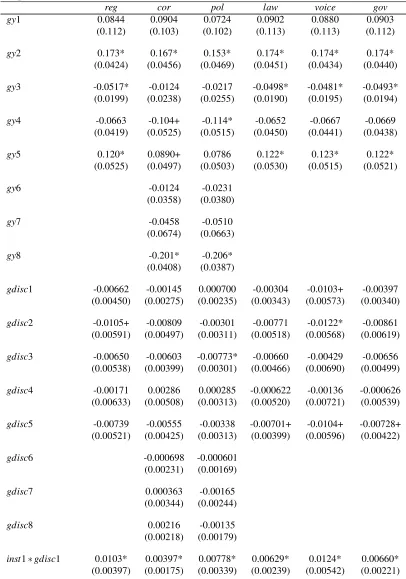
Table 1 FixedEffects Regressions with Driscoll and Kraay Standard Errors
-Evaluating Hypothesis 1 . . . 57
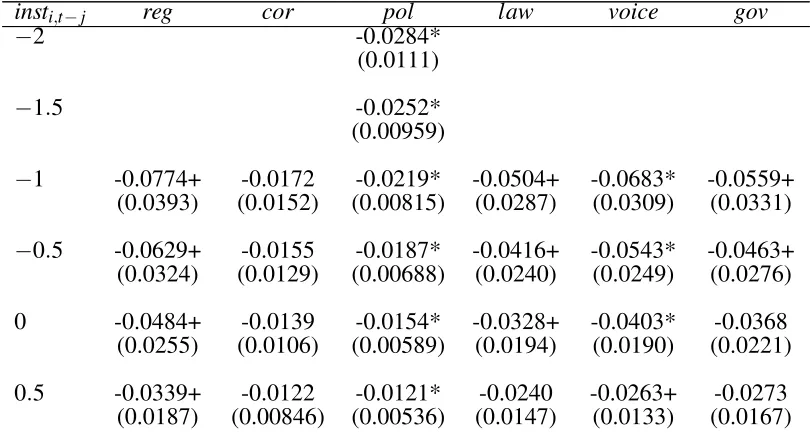
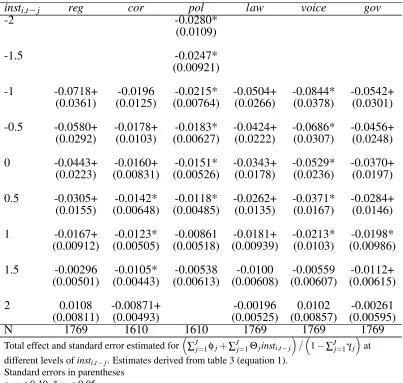
Table 2 Estimated Total Effect for Specific Values of Institutional Development
- Fixed-Effects Regressions - Evaluating Hypothesis 1 . . . 61
Table 3 FixedEffects Regressions with Driscoll and Kraay Standard Errors
-with Openness - Evaluating Hypothesis 1 . . . 64
Table 4 Estimated Total Effect for Specific Values of Institutional Development
- Fixed-Effects Regressions with Openness - Evaluating Hypothesis 1 . 69
Table 5 Fixed-Effects Regressions with Driscoll and Kraay Standard Errors - 5
Lags - Evaluating Hypotheses 2 and 3 - I . . . 74
Table 6 Estimated Total Effect for Specific Values of Institutional Development
- Fixed-Effects Regressions with 5 Lags - Evaluating Hypotheses 2 and
3 - I . . . 78
Table 7 Fixed-Effects Regressions with Driscoll and Kraay Standard Errors - 5
Lags with Openness - Evaluating Hypotheses 2 and 3 - I . . . 81
Table 8 Estimated Total Effect for Specific Values of Institutional Development
- Fixed-Effects Regressions with 5 Lags and Openness - Evaluating
Hypotheses 2 and 3 - I . . . 85
Table 9 FixedEffects Regressions with Driscoll and Kraay Standard Errors
-Evaluating Hypotheses 2 and 3 - II . . . 108
Table 11 FixedEffects Regressions with Driscoll and Kraay Standard Errors
-with Openness - Evaluating Hypotheses 2 and 3 - II . . . 115
Table 12 Estimated Total Effect at Specific Values of Institutional Development
- Fixed-Effects Regressions with Openness - Evaluating Hypotheses 2
List of Figures
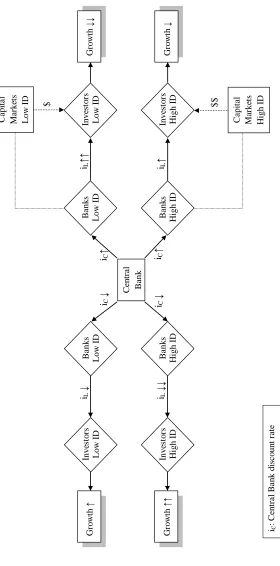
Figure 1 Monetary Policy Transmission and Institutional Development . . . 38
Figure 2 Evolution of Nigerian Lending and Discount Rates (percent per annum) 44
Figure 3 Empirical Evidence on the Hypothesis 2 - Regulatory Quality . . . 98
Figure 4 Empirical Evidence on the Hypothesis 2 - Rule of Law . . . 99
Figure 5 Empirical Evidence on the Hypothesis 2 - Government Effectiveness . . 100
1
Introduction
This research evaluates whether the effects of monetary policies on real output are
dependent upon institutional development. The level of institutional development in a
country depends on the quality of contract enforcement, the protection of property rights,
the protection against the use of public power for private gains, the government’s
capability to implement sound policies and regulations, the citizens’ participation in
selecting the government, the government’s transparency and accountability, and political
stability.
The agents involved in the transmission of monetary policies to real output will
respond to changes in central bank interest rates in different ways, depending on the
incentives and constraints imposed by the set of institutions. Banks and investors, the
main agents participating in the transmission of monetary policies, will make choices to
maximize profits and these choices will be shaped by the opportunities offered by the
institutional environment. As a result, institutions may affect economic performance
through their impact on the effectiveness of monetary policies.
Section 2 describes the objectives of this dissertation. Section 3 highlights the
importance of this study and its main policy implications. Section 4 reviews the associated
literature and identifies the contributions of this research. Section 5 presents a theoretical
framework that allows the development of three hypotheses. The first hypothesis is that
the effect of changes in central bank discount rates on real output is altered by the
institutional quality. The second hypothesis is that positive changes in interest rates have a
greater negative impact on output in low institutional development countries than in high
interest rates are more effective in terms of output promotion in countries with high
institutional development than in countries with low institutional development. Section 6
presents two case studies that illustrate institutional quality as a factor that changes the
behavior of the agents and the effectiveness of monetary policies. Section 7 describes the
data that will be used in the empirical part of this research. We use quarterly real GDP
growth rates and central bank discount rates from the International Financial Statistics
(IFS) of the International Monetary Fund for the years 2002 to 2011. The Worldwide
Governance Indicators from The World Bank are used as measures of institutional
development. Our sample is composed of 52 countries and comprises a wide variety of
institutional development levels. Section 8 focuses on the empirical evaluation of
hypothesis 1. Section 9 empirically evaluates the three hypotheses developed in this
dissertation through a series of panel linear models using fixed-effects and Prais-Winsten
assumptions. Section 10 presents an alternative methodology to deal with the endogeneity
2
Objectives
First, this research aims to understand how the traditional monetary policy transmission
channels are altered by the level of institutional development found in each country. This
understanding will provide the rationale for the development of the hypotheses that will be
tested in this study. The first hypothesis is that the effect of changes in central bank
discount rates on real output is altered by a country’s institutional quality. In addition, we
treat expansionary and contractionary monetary policies as two different phenomena. This
is due to the fact that some monetary policy transmission channels work only for positive
changes in interest rates or for negative changes in interest rates. Or, some channels work
for both cases but have qualitatively different effects for negative changes in interest rates
and for positive changes in interest rates. The second hypothesis is that positive changes
in interest rates have a greater negative impact on output in low institutional development
countries than in high institutional development countries. The reason is that banks
constrain the supply of loans and increase interest rates with more intensity and investors
are more bank-dependent in low institutional development countries compared to high
institutional development countries. We present institutional development as the deepest
explanation for the development of capital markets. The third hypothesis is that negative
changes in interest rates are more effective in terms of output promotion in countries with
high institutional development than in countries with low institutional development. The
reason is that banks transmit less of the reduction in central bank discount rates to the
public and investors have a less willingness to invest in low institutional development
countries compared to high institutional development countries.
objective is the presentation of examples that demonstrate that institutional quality can
work as a factor that changes the behavior of the agents and the effectiveness of monetary
policies.
Third, this research aims to empirically test whether institutional development
matters for the transmission of monetary policies from central bank discount rates to real
output. More specifically, the third objective of this study is to empirically evaluate the
first hypothesis developed in the subsection 5.4 of this research. The arguments presented
in subsection 5.2 indicate that the transmission does seem to be dependent on the
institutional development. However, this dependence may be important or unimportant.
Therefore, this becomes an empirical question to be answered by this dissertation.
Fourth, this research aims to empirically test whether institutional development
matters for the transmission of monetary policies when positive and negative changes in
central bank discount rates are treated as two different phenomena that interact in different
ways with the institutional environment. More specifically, this research aims to
empirically evaluate the second and third hypotheses developed in the subsection 5.4 of
this research.
Finally, this research aims to empirically determine which aspects of institutional
development are more relevant for the effectiveness of monetary policies. A set of features
determines the quality of the incentives and constraints in a country: the political stability,
the government’s accountability and transparency, the level of corruption, the protection
of property rights, among others. The empirical tests will shed some light on the
importance of each one of these characteristics for the outcome of monetary policies,
addition, the use of a variety of indicators may also be a way of feeding a nascent theory
3
Importance of this Study and Policy Implications
Empirical and theoretical works have demonstrated that institutions matter for economic
performance. This research tests one of the channels through which institutions may affect
economic performance: changing the effectiveness of monetary policies. Also, the
theoretical arguments and the case studies shed some light on how institutions may affect
the results of monetary policies on output. This study investigates the interactions between
institutions and an economic variable; therefore, this study offers a contribution to the
institutional economics literature. In the next section, we will detail our contributions and
show how this research will extend the existing literature.
This study also offers a contribution to the literature on monetary policy
transmission. The fact that institutions may matter for the results of monetary policies on
output has important implications, especially for developing countries. This means that
the goals of monetary policy in these countries should include increasing the quality of
regulations, improving contract enforcement, among other institutional improvements.
Alternatively, this means that making monetary policy in these countries means accepting
the weakness of the institutional environment as a given and incorporating its effects. All
this means that the economic science of monetary policy transmission is not easily
imported from developed to developing countries.
This study has policy implications. First, the empirical results will show whether
central bankers should care about their institutional environment while determining policy
rates. As a first example, suppose that the research provides empirical evidence that an
This result can be interpreted as evidence that the effectiveness of expansionary monetary
policies will be partially reduced by a poor institutional environment. Consequently,
central bankers will have to decrease interest rates even more to compensate the negative
effects that come from the institutional environment; otherwise, they will not achieve the
desired output level. We should mention, however, that this solution is limited due to the
central banks’ price-stabilization objective.
It is important to emphasize the relevance of this first policy implication because it
means that institutions may be the key to understanding some monetary policy failures.
Rodrik and Subramanian (2009) argues that financial globalization did not promote
growth in many developing countries because these economies are investment-constrained
due to the poor institutional environment. Thus, an expansionary monetary policy in these
economies has a potential to be a failure in terms of output promotion due to the same
reasons mentioned by Rodrik. Also, a decrease in central bank discount rates may be a
failure in terms of output promotion simply because banks are allowed to operate in
non-competitive ways and will not necessarily transmit the interest rate reduction to the
public.
Suppose now, as a second example, that the research provides empirical evidence
that a contractionary monetary policy has more negative effects on output in countries with
low institutional development than in countries with high institutional development. This
result can be interpreted as evidence that the adverse effects of contractionary policies are
exacerbated by a poor institutional environment. Consequently, central bankers in
countries with low institutional development should avoid excessively tight policies due to
however, may not be in accordance with the central banks’ price-stabilization objective.
In fact, if there is empirical support for our hypotheses, the main policy implication
for central bankers is the necessity of understanding the distortions caused by the specific
set of incentives and constraints that is present in each country. Central bankers should
understand the impact that these distortions have on the outcome of monetary policies,
accepting and incorporating them in policy decisions and actions. It seems that there is not
a macroeconomic response, in terms of changes in interest rates, for an institutional
development issue. Apparently, institutional weaknesses can only be addressed by
improvements in the set of incentives and constraints that shapes the behavior of the
economic agents and characterizes the country’s institutional environment.
Second, the research has broad policy implications, which are not limited to central
banks’ actions. If the results indicate that institutional development does not matter for
monetary policy transmission, monetary policymakers should not care about banking
competition, quality of law enforcement and other institutional questions, even though
they may be important for other reasons. On the other hand, if the results indicate that
institutional development matters for monetary policy transmission, policymakers should
care about those institutional questions. Therefore, policymakers should work to stimulate
competition in the banking sector, increase the willingness of agents to invest after a
decrease in interest rates, stimulate the development of capital markets and mitigate moral
hazard problems in lending activities. The terminology used in Acemoglu, Johnson,
Robinson, and Thaicharoen (2003) seems to apply to this research as well because we can
realize that all the mentioned things that the government should care about are actually
4
Literature Review and Contributions
The purpose of this section is to review the literature associated with the objectives of this
research and identify the main contributions of this dissertation.
4.1
Institutional Development and Economic Performance
The argument that economic performance depends on institutional development has been
presented in several studies. Acemoglu, Johnson, and Robinson (2005) presents a theory
of institutions and economic growth. A series of historical examples illustrates the
proposed theoretical framework. North (1990) states that institutions, as constraints that
shape human interactions and determine the set of incentives in a society, change the costs
of transformation and exchange and, as a result, change the economic performance.
There is also a literature providing empirical evidence on the subject. Acemoglu,
Johnson, and Robinson (2001) uses settler’s mortality rates in European colonies as an
instrument for current institutions and estimates significant effects of institutions on
income per capita. The idea is that colonizers were more likely to set up extractive
institutions in places where they could not stay due to the high mortality rates. Thus, there
is a negative relationship between settler’s mortality rates and the quality of current
institutions. As settler’s mortality rates do not lead to changes in current income per
capita, except indirectly via current institutions, the variable solves the endogeneity of
institutions with respect to the income per capita. Keefer and Knack (1997) provides
empirical evidence that poor countries do not catch up to richer countries as expected by
other institutional factors, have an important role on economic growth for a set of 24
transition economies. Kagundu and Martinez-Vazquez (2011) uses a broader sample of 89
countries and also provides evidence that institutional quality matters for GDP per capita
growth.
4.2
Institutions as the Cause of Policies
Macroeconomic policies and institutional economics are put together in Acemoglu et al.
(2003). The paper presents the idea that macroeconomic variables are symptoms instead
of causes of poor economic performance. Slow growth in countries with high inflation,
large budget deficits and misaligned exchange rates is not caused by these macroeconomic
issues. Actually, these macroeconomic issues are produced by the poor institutional
environment found in these countries. As a result, what ultimately causes the reduced
growth is the poor institutional development and not the mentioned macroeconomic
variables. In a panel of countries with growth rate of GDP per capita as the dependent
variable, the variables representing macroeconomic policies (government consumption,
average inflation rates and real exchange rate overvaluation) lose their significance once a
measure of institutional quality is included in the models. The authors reinforce the notion
that the empirical findings do not imply that macroeconomic policies are unimportant.
Macroeconomic policies matter for economic performance; however, they have deep
institutional causes.
Persson and Tabellini (2005) and Bernhard and Leblang (2002) also associate
institutions with macroeconomics. Persson and Tabellini (2005) study the effects of
many other interesting empirical results, they found that presidential systems are
associated with smaller government spending as a fraction of GDP and smaller budget
deficits than parliamentary systems. Presidential regimes have a stronger separation of
powers between the executive and the legislative branches than parliamentary regimes. It
seems that this separation of powers intensifies the checks and balances between the two
branches, increasing accountability, constraining politicians from abusing their powers
and justifying the estimated results. Finally, Bernhard and Leblang (2002) provides
empirical evidence that fixed exchange rates and central bank independence are caused by
the level of economic openness, but also by the configuration of domestic political
institutions. While, in general, single-party majority governments do not benefit from the
choice of these policies, coalition governments, on the other hand, can benefit from it1.
Thus, fixed exchange rates and central bank independence will emerge as the choices that
maximize cabinet durability under specific institutional configurations.
4.3
Institutions as a Factor that Changes the Effectiveness of Policies
As in this research, in Acemoglu, Johnson, Querubin, and Robinson (2008) and
Gollwitzer and Quintyn (2010) institutions appear as a factor that can change the
effectiveness of other variables. Acemoglu et al. (2008) presents evidence that the
effectiveness of central bank independence reforms is related to the overall institutional
development of a country. More specifically, central bank independence reforms are
ineffective in countries with weak and strong constraints on the executive, which is the
1The idea is that fixed exchange rates and central bank independence, as monetary commitments, remove a
main measure of institutional quality used in the research. Reforms work better in
countries with medium constraints on the executive, that is, medium institutional quality
levels2. The effectiveness of the reforms is measured in terms of the reduction in inflation
rates. Inflation rates are regressed on lagged inflation and multiplicative terms composed
by the interaction between the central bank independence measure and dummies for weak,
medium and strong constraints on the executive. Gollwitzer and Quintyn (2010) also tests
whether the effect of central bank independence on inflation rates is differential by
institutions. The paper provides evidence that central bank independence reduces inflation
irrespective of the overall institutional environment. None of the interaction terms
between institutional quality and central bank independence are significant. The analyses
included a sample of low and middle income countries.
4.4
Institutional Development and Monetary Policy
There is relatively little work relating monetary policy to institutional development. Mihal
(2009) presents a theoretical model that includes the fiscal authority setting tax levels,
government spending and debt levels, the monetary authority setting the actual level of
inflation and the private sector setting the expected inflation. The government uses taxes,
seigniorage and newly issued debt to finance itself. A parameter for the degree of tax
leakage due to corruption is included in the model as the measure of institutional quality.
The model predicts that an increase in corruption leads to higher inflation rates, meaning
that the revenue that comes from seigniorage depends on the institutional quality. Another
result is that, for countries with low institutional quality, a decrease in corruption leads to
2The authors explain that the result that central bank independence reforms are ineffective in countries with
an increase in taxes, because now taxes are collected more efficiently, and a decrease in
output3. And finally, for countries with moderate to high institutional quality, a decrease in
corruption leads to a decrease in taxes and an increase in output4. The paper also presents
a VAR analysis for Chile, Colombia, Indonesia and Philippines including industrial
production, inflation, exchange rates, interest rates and a measure of institutional quality.
The author concludes that a monetary policy shock has only a significant impact on output
for countries with low institutional quality. Also, a positive institutional quality shock5
stimulates more the output in countries with low institutional quality than in countries
with high institutional quality6. The idea presented in the paper is that institutions affect
output through its effect on seigniorage and taxes, that is, institutions may affect monetary
policies through seigniorage. This research focuses on the relationship between monetary
policies and institutions in a different way because here the objective is to test whether the
effectiveness of monetary policies is differential by the level of institutions. Another
difference is that this research aims to explain the interactions between monetary policies
and institutions through multiple channels and multiple institutional variables rather than
focusing on corruption and its effect on seigniorage.
Another research linking institutions and monetary policy is presented in Duncan
(2011). The paper argues that the positive correlations between output and interest rates
found in developed countries and the negative correlations between output and interest
rates found in developing countries are explained by institutional quality differences
3The author explains that central banks are not truly independent in countries with low institutional
development. Thus, when there is an increase in corruption in these countries, the government will shift the burden to the monetary authority, increasing seignorage and decreasing taxes. Alternatively, when there is a decrease in corruption, the government will increase tax collection due to smaller tax leakages.
4The author explains that a larger percent of the tax revenues will be transmitted to the government because
between developed and developing countries. Empirical evidence on these associations is
provided by regressions including interest rates as the dependent variable and output as
the independent variable that interacts with institutional quality. The explanation for the
mentioned correlations is that positive external demand shocks of home goods increase
the output and are inflationary in countries with high institutional quality and increase the
output and are deflationary in countries with low institutional quality. Also, central banks
increase interest rates when inflation goes up and decrease interest rates when inflation
goes down.7. These explanations were predicted by a DSGE model calibrated for
Indonesia and Switzerland. The paper is about how institutions affect the response of
monetary policies. Again, this dissertation has a different objective. The goal of this
research is to study how and whether institutions affect the effectiveness or the
transmission of monetary policies, instead of how institutions cause the monetary policies.
Despite not being papers about monetary policy transmission, Rodrik and
Subramanian (2009) and Burnside and Dollar (2000) present a rationale that is closely
associated with the ideas presented in this dissertation. Rodrik and Subramanian (2009)
examines the effects of financial globalization on output growth and Burnside and Dollar
(2000) evaluates the effects of foreign aid on output growth. The institutional
development of the country plays a central role in both papers, explaining the final impact
of the mentioned policies on economic performance. The liberalization of capital accounts
7The author explains that the positive external demand shock causes a real appreciation. The real
and the receipt of foreign aid, like an expansionary monetary policy, inject money into the
system. Thus, the two mentioned works and this research are closely associated because
all of them analyze the effects of money injections on output under different levels of
institutional development. Rodrik and Subramanian (2009) argues that the liberalization
of capital accounts and the consequent reduction in domestic interest rates have not been
contributing to output growth because many countries do not have an adequate demand for
investments. These economies are investment-constrained mainly because of poor
property-rights, weak contract enforcement, and fear of expropriation. Burnside and
Dollar (2000) presents evidence that foreign aid has a positive impact on output growth
under good fiscal, monetary and trade policies. Aid has little effect under poor policies.
However, Easterly, Levine, and Roodman (2004) update Burnside and Dollar’s dataset and
claim that their results are not robust to the use of an extended period of time.
Also, this research has a strong relationship with the ideas presented in Mishra,
Montiel, and Spilimbergo (2010). The paper studies the monetary policy transmission in
low income countries and provides empirical evidence that central bank discount rates are
less transmitted to bank lending rates in countries with a more concentrated banking
sector and smaller scores in a transparency index. According to the authors, the traditional
channels of monetary policy transmission are impaired in these countries mainly due to
the weak institutional frameworks and the imperfect competition in the banking sector. An
important consideration is that Mishra et al. (2010) does not investigate whether the
effectiveness of monetary policies on real output is dependent upon institutions. This
research will answer this question because we focus on the effects of monetary policies on
arguments used in Mishra et al. (2010) because we claim that institutions are also
important for the transmission of monetary policies from bank lending rates to the real
output. We add to the arguments found in Mishra et al. (2010) the idea that investors have
a smaller willingness to invest in countries with low institutional development, as
presented in Rodrik and Subramanian (2009). This is important because we highlight that
not only the financial sector’s agents, but also the investors, behave in different ways
depending on the constraints and incentives imposed by the institutional environment. It is
also relevant to mention that Mishra et al. (2010) is essentially a monetary policy research,
without a clear association with the institutional economics literature and its main authors
(North, Acemoglu, Rodrik, among others). This research, on the contrary, brings together
the two strains of the literature, institutional economics and monetary policy, making a
contribution to both of them. Finally, this research will treat positive and negative changes
in interest rates as two different phenomena. Such treatment is important since
expansionary and contractionary policies produce different behavioral changes, and
consequently, asymmetrical effects on output (Cover (1992) and Garibaldi (1997)). This
important differentiation is not presented in Mishra et al. (2010).
Hardt (2011) is another paper that studies how institutions affect the transmission
or the effectiveness of monetary policies. The author argues that the most significant way
institutions impact the transmission of monetary policies is through their effect on the
elasticity of investment demand to changes in interest rates. Economies with low
institutional quality tend to be more investment constrained than economies with high
institutional quality. As a consequence, the elasticity of the investment demand with
countries with low institutional quality. The paper provides some examples on how an
institutional change can affect the transmission of monetary policies to output, however,
the paper does not provide any empirical evaluation and also does not mention the other
channels presented in this paper through which institutions may affect monetary policies’
outcomes.
Aysun, Brady, and Honig (2013) describe themselves as the first attempt at
examining the relationship between financial frictions and the strength of monetary policy
across a broad group of countries. Financial frictions are measured by bankruptcy
recovery rates, the proportion of a firm’s value creditors can recover from a defaulting
firm. The sample used in the study is composed of 56 developed and developing countries.
First, SVAR models are used to estimate the output response to monetary policies for each
country. Second, the absolute value of the measure of monetary policy impact8generated
in the first step is regressed on the measure of financial frictions, the bankruptcy recovery
rates. There is one observation per country and the model is estimated using OLS with
robust standard errors. The results indicate that recovery rates have a negative and
statistically significant effect on the impact of monetary policies, that is monetary policies
are less effective under higher recovery rates. As control variables, dummies for the
countries’ legal origin (German, English, Scandinavian and Socialist) are included in the
regression. The results indicate that the legal origin can impact the effectiveness of
monetary policies. Countries with German legal origin, which has stronger creditor rights,
have significantly weaker monetary policy transmission than countries with French legal
The institutional quality variable was built as an average of law and order, corruption and
bureaucratic quality. The regression of monetary policy impact on institutional quality
provided evidence that institutional quality has a negative and statistically significant
effect on the strength of monetary policies, meaning that the effectiveness of monetary
policies diminishes with increases in institutional quality. However, institutional quality
becomes insignificant after the inclusion of recovery rates, meaning that institutional
quality does not have an independent impact on the effectiveness of monetary policies.
According to the authors, this can be interpreted as evidence that an improvement in
institutional quality may reduce the effectiveness of monetary policies only if this
improvement centers on increasing recovery rates. Despite including institutional quality
in the empirical tests, the study is based on a theoretical framework that describes the
effects of monetary policies on real variables in the presence of financial frictions.
Financial frictions, such as the cost of monitoring borrowers, affect the premium for
external funds and may have an impact on the effects of monetary policies. In this
research, institutional quality, and not financial frictions, is the ultimate explanation for
different degrees of monetary policy effectiveness. Another important difference is that
Aysun et al. (2013) does not differentiate between money expansions and money
contractions, as proposed by this dissertation.
Finally, Cecchetti (1999) provides empirical evidence that the transmission to
output of a positive interest rate shock is stronger in countries with less developed
financial structures than in countries with more developed financial structures, using the
quality of the legal system as an instrument for the financial structure variable. The author
investors’ protection and, consequently, the development of the financial system. Weaker
legal rules produce smaller capital markets and reduce the financial structure quality
(measured by the concentration and health of national banking systems). As a result, a
positive shock in interest rates will have a more negative effect on output in countries with
weaker legal systems because investors are more limited in terms of findings alternative
sources for funding investments and because the financial structure has less quality in
these countries than in countries with stronger legal systems. Using a sample of eleven
developed countries, the author estimates SVAR models including output, inflation,
interest rates and exchange rates. Impulse response functions are estimated to extract the
impact of a positive shock in interest rates on output. Finally, these impact measures are
regressed on a measure of financial structure quality, using three measures of legal quality
(shareholder rights, creditor rights and law enforcement) as instruments for financial
structure quality. One difference between Cecchetti (1999) and this research is that the
sample used in the first includes only developed countries and this research aims to use a
broader sample, including developing countries. The use of a broad sample is essential
because this study seems to be especially important for developing countries. Another
difference is that in this research the focus is on institutional quality, which includes also
the quality of the legal system but is not limited to it. Also, in this research poor
institutions may affect the effectiveness of monetary policies through more channels than
the ones mentioned in Cecchetti (1999), including the demand for investment, which will
reflect a reduced willingness to invest. Finally, in this research we make the fundamental
differentiation between money expansions and money contractions, a separation that does
4.5
Contributions of this Study
The previous subsection demonstrated that there is a theoretical and empirical literature
providing evidence that institutional development has a positive impact on economic
performance. In addition, there is a literature showing that institutions determine
macroeconomic variables as government spending, inflation and exchange rates. In Mihal
(2009) and Duncan (2011) institutions determine monetary policies. In the first,
corruption determines seigniorage and taxes. In the second paper, output movements
interact with institutional quality determining central bank discount rates.
This research has a strong association with the literature that poses institutional
development as a factor that changes the effectiveness of monetary policies. This is the
case of Hardt (2011), who claims that economies with low institutional development tend
to be investment constrained, a characteristic that alters the effectiveness of monetary
policies. However, the paper does not present any empirical evaluation. Mishra et al.
(2010) is another paper included in that literature. However, they investigate only whether
the transmission from central bank discount rates to bank lending rates is dependent upon
institutions. They do not investigate the effects on output and they do not study positive
and negative changes in interest rates separately.
Cecchetti (1999) and Aysun et al. (2013) are the only papers that somehow test
whether the effectiveness of monetary policies on output is dependent upon a measure of
institutional development. However, there are many reasons to believe that this research
will certainly move our understanding of the role played by institutional development in
the transmission of monetary policies forward.
monetary policies on output is dependent upon institutional development, considering
positive and negative changes in interest rates as two different phenomena. This
discrimination was never used in the literature on monetary policy and institutions and can
enhance the quality of our empirical results, given the evidence that monetary policies
have asymmetrical effects on output (Cover (1992), Rhee and Rich (1995), Garibaldi
(1997), Karras and Stokes (1999), among others), meaning that expansionary policies
have smaller and less statistically significant effects on output than contractionary
policies. This fundamental differentiation also appears in the motivational theory
presented in this research, which provides a unique perception of the role played by
institutional development in the transmission of expansionary and contractionary policies.
Hypothesis 2 of this dissertation states that monetary contractions have more
adverse effects on output in countries with low institutional development than in countries
with high institutional development. Hypothesis 3 of this dissertation states that monetary
expansions are more effective in terms of output promotion in countries with high
institutional development than in countries with low institutional development. These
hypotheses imply that the degree of asymmetry of monetary policies on output increases
with the worsening of the institutional development. Thus, as a very relevant contribution,
this dissertation provides a potential explanation for the asymmetric effects of monetary
policies on output: the degree of institutional development.
Second, we propose a panel methodology, which is appropriate for comparative
analysis across countries and for understanding the effects of common monetary policies,
as opposed to monetary shocks. In Cecchetti (1999) and Aysun et al. (2013) the empirical
monetary policy shocks rather than the impact of common monetary policies. In addition,
the time series methodology used in these two papers is also not very suitable for
comparative analysis across countries.
Third, we will test whether the effectiveness of monetary policies on output is
dependent upon institutional development using a larger sample of countries than the one
presented in Cecchetti (1999). Cecchetti’s paper studies only developed countries
(Belgium, France, Germany, Ireland, Italy, Portugal, Spain, Denmark, Sweden, United
Kingdom and United States). This contribution is valuable because the question proposed
in this research is especially important for developing countries, where the lack of
institutional development may explain some monetary policy failures, for example. Thus,
the presence of emerging and developing economies in our sample is an important feature
of this research.
Fourth, a larger set of institutional development indicators is used in our empirical
analysis than in Aysun et al. (2013) and Cecchetti (1999). Aysun et al. (2013) uses in the
empirical analysis the countries’ legal origin and a measure of institutional quality built as
an average of law and order, corruption and bureaucratic quality and Cecchetti (1999)
focuses on the quality of the legal system. In this research, we will investigate separately
the effect on the strength of monetary policies of six aspects that characterize institutional
development: quality of the legal system, level of corruption, political stability,
government’s accountability and transparency, regulatory quality and government
effectiveness. This is an important contribution because it will indicate the specific
features of the institutional development that matter most for the effectiveness of
Fifth, we propose the development of a comprehensive theoretical framework. The
literature review showed that the theoretical framework presented in Cecchetti (1999) to
support his empirical evaluation is based on the idea that institutions determine the
financial structure quality, thus determining the effectiveness of monetary policies. His
theoretical framework is limited to explain how institutions affect the supply of financial
resources, not including the fact that low institutional development countries may be
investment constrained, as proposed by Rodrik and Subramanian (2009). On the contrary,
the theoretical framework presented in Hardt (2011) is limited to explain how institutions
affect the demand for financial resources. Finally, the theoretical framework presented in
Mishra et al. (2010) is the only one also expressed in terms of mathematical equations
with banks maximizing a profit function. The model shows that the optimal response in
bank lending rates after a change in central bank discount rates is a function of
institutional quality. However, the theoretical framework presented in Mishra et al. (2010)
is limited to explain how institutions affect the supply of financial resources. The
theoretical framework presented in Aysun et al. (2013) is focused on the role of financial
frictions rather than on the role of institutional development. We can realize that the
papers about monetary policy transmission and institutional development focus only on
the supply of financial resources or on the demand for financial resources, that is, they
focus on the financial constraints (Cecchetti (1999) and Mishra et al. (2010)) or on the
demand for investments (Hardt (2011)). These non-competing explanations will be put
together for the first time in a more complete theoretical framework proposed by this
research, that is, in this research we consider that institutions affect the supply and the
And finally, it is also relevant to mention that Cecchetti (1999) and Aysun et al.
(2013) are essentially monetary policy papers, without a clear association with the
institutional economics literature and its main authors (North, Acemoglu, Rodrik, among
others). This research, on the contrary, brings together the two strains of the literature,
institutional economics and monetary policy, making a contribution to both of them. In
Cecchetti (1999), a measure of monetary policy impact is regressed on a measure of
financial structure quality, using three measures of legal quality (shareholder rights,
creditor rights and law enforcement) as instruments for financial structure quality.
According to Rodrik (2004), a good econometric instrument does not provide a good
explanation, meaning that it is not appropriate to build a theory stating that the differences
in the dependent variable are explained by the differences in the instrumental variable.
This means the empirical analysis in Cecchetti (1999) does not evaluate the relationship
between institutions and monetary policies, being limited to evaluate the relationship
between the exogenous component of the financial structure and monetary policies. And
in Aysun et al. (2013), the theoretical focus is on the financial frictions (the cost of
monitoring borrowers or the bankruptcy recovery rate - the percentage of the value of a
5
Theoretical Framework
In this section we explain how some of the traditional channels of monetary policy
transmission can be altered by the level of institutional development. We present some
important definitions and detail which aspects of the institutional development matter for
monetary policy diffusion. Finally, we develop the three hypotheses that will be tested in
the following sections.
5.1
Some Definitions
First, we will follow North (1990) and define institutions as the formal and informal rules
that determine the incentives and constraints in a society, shaping human economic
behavior.
Second, institutional development is a measure that evaluates the quality of the
rules or the quality of incentives and constraints in a society. We will follow Kaufmann,
Kraay, and Mastruzzi (2010) and argue that the quality of the institutions in a society
depends on the following characteristics: the respect of citizens and the state for the
institutions that govern economic and social interactions, the capacity of government to
effectively formulate and implement sound policies, and how governments are selected,
monitored and replaced.
Thus, the level of institutional development increases with: the quality of contract
enforcement, the protection of property rights, the level of protection against the use of
public power for private gains, the government’s capability to implement sound policies
government’s stability.
Finally, in this study monetary policies will be represented by central bank
discount rates and, as a consequence, monetary policy transmission refers to the process
through which changes in central bank discount rates influence the real output.
The choice of an interest rate over some monetary aggregate as the instrument of
monetary policy finds support in the literature on monetary economics. According to
Friedman and Kuttner (2011), the idea that central banks make monetary policy through
the set of some interest rate is clear enough and broadly accepted. First, most central banks
abandoned the money growth targets, which were used mostly during the 1980s. Second,
differently from what is presented in conventional economics textbooks, Friedman and
Kuttner (2011) demonstrates that, currently, the practical set of short-term interest rates by
central banks involves little or no variation in the supply of reserves. This means that it is
the announcement effect and not the liquidity effect that matters most for the set of central
bank interest rates. In addition, Bernanke and Blinder (1992) concludes that the federal
funds rate is a better indicator of monetary policy and a better forecaster of real variables
than money growth rates for the United States. Finally, Ball (2011) states that most central
banks in emerging and advanced economies pay little attention to monetary aggregates.
The central bank discount rate is the rate at which the central banks lend or
discount eligible paper for deposit money banks. We select the central bank discount rate
as the relevant monetary policy instrument because, in general, the monetary authority has
direct control over this rate. The selection of the central bank discount rate as the
appropriate instrument of monetary policy applies both to the theoretical motivation in
5.2
Institutional Development and the Channels of Monetary Policy
Transmission
The institutional development of a country may change the effectiveness of monetary
policies due to its effect on the behavior of the agents involved in the macro economy.
These agents are mainly banks and investors and they respond in different ways to the
same policy, depending on the constraints imposed by the institutional environment. The
traditional channels of monetary transmission are described in Boivin, Kiley, and Mishkin
(2010). In this subsection, we identify which channels have a potential to be altered by the
institutional environment.
Theinterest-rate channelis the main channel of monetary policy transmission.
Interest rates affect the cost of capital and, as a consequence, investment spending. The
institutional environment may affect this channel because the investors’ responses to
changes in interest rates depend on the constraints imposed by the institutional
environment. Rodrik and Subramanian (2009) argues that the liberalization of capital
accounts and the consequent reduction in domestic interest rates have not been
contributing to output growth because many economies do not have an adequate demand
for investments. The authors claim that the low investment demand found in many
countries is the result of low private appropriability or low social returns. Poor
property-rights, weak contract enforcement, and fear of expropriation are among the
causes of low perceived returns of private investments by investors. As a consequence, the
expansion of financial resources does not promote an increase in investments and
received from abroad increased by 4 percent of GDP from 1994 to 2004. However,
investment declined 16 percent over the same period. The explanation proposed by the
authors is that El Salvador clearly was not a saving-constrained economy. On the contrary,
banks had to expand internationally in order to find clients to lend the excess of liquidity.
The country was an investment-constrained economy because the capital flows and the
decrease in interest rates did not stimulate the investment demand. Defining poor
institutions as rules whose outcomes are mainly weak contract enforcement and protection
of property rights, corruption, policies and regulations that do not promote private sector
development and government instability, thus, we can say that the low investment demand
in El Salvador was caused by the poor institutions found in this country.
An expansionary monetary policy, like an increase in the flow of capital that comes
from abroad, also raises the quantity of financial resources available in the economy. In
this research, we use Rodrik’s argument and claim that an expansionary monetary policy
will be less effective in terms of output promotion in countries with poor institutions than
in countries with better institutions. Nations with low institutional development, like El
Salvador, tend to be investment-constrained due to the low perceived returns of private
investments, thus an expansionary monetary policy will not necessarily increase the
demand for investments and the output.
Thebank lending channelis also subject to institutional development interference.
According to this mechanism, an expansionary monetary policy increases the supply of
bank loans, increasing investment spending and output. A potential impact of the
institutional environment on this channel can be found in Mishra et al. (2010). The
effectiveness of this channel. The poor institutional development of a country may be
associated with poor regulatory quality, which can result in poor protection of markets’
competition. As a result, the market power of banks tends to be stimulated by weak
institutional environments, producing constraints in the supply of loans and higher interest
rates. The transmission of monetary policies through the bank lending channel will
depend on the institutional environment. A reduction in central bank discount rates may
be not effective in terms of growth promotion because this stimulus can be converted to
greater interest margins for the banking sector instead of being transmitted to the public.
The case of Guyana illustrates the potential role played by institutions in the bank
lending channel. Khemraj (2008) argues that the financial liberalization that started in
Guyana in 1989 did not produce growth because the banking sector operates in a
non-competitive way in that country, constraining investments. Guyana’s regulatory
quality indicator for the year 1996, the first year for which Kaufmann et al. (2010)
released The Worldwide Governance Indicators, is -0.19, in a scale that goes from -2.5 for
the weakest regulatory quality to 2.5 for the strongest regulatory quality. Thus, we claim
that there may exist a relationship between the relatively weak regulatory quality in
Guyana and the banking sector non-competitive behavior found in the country. As a
consequence, an expansionary monetary policy, as the financial liberalization that took
place in Guyana, may also not have the expected effects on growth due to the poor
institutions and the non-competitive banking sector behavior.
Thebalance sheet channelcomes from the presence of asymmetric information in
credit markets. A contractionary monetary policy reduces the agents’ net worth,
policy rates will be transmitted to the real economy through this channel because lenders
will be more reluctant to supply funds, increasing interest rates or reducing the supply of
loans. Mishra et al. (2010) explain that banks can constrain the supply of loans or set
higher lending interest rates due to the poor contract enforcement found in some
countries. As a result, we can say that the balance sheet channel may have different
intensities depending on the institutional environment.
Finally, La Porta, Silanes, Shleifer, and Vishny (1997) provides evidence that
countries with poorer investor protection, due to the character of legal rules and the quality
of contract enforcement, have smallercapital markets(equity and debt markets) than
countries with stronger investor protection. According to the authors, French civil law
countries (Argentina, Brazil, Egypt, France, Greece, Italy, and Turkey, for example) have
the weakest investor protection and the least developed capital markets. English common
law countries (Australia, Canada, US, UK, South Africa, Singapore, and Malaysia, for
example) have the strongest investor protection and the most developed capital markets.
In addition, Cecchetti (1999) shows that an increase in interest rates has the smallest
impact on output in English common law countries and the biggest impact on output in
French and German civil law countries, establishing a relationship between the quality of
legal rules, the development of capital markets and the effectiveness of monetary policies.
As a result, we can say that an increase in central bank discount rates tends to have more
negative effects on output in countries with weaker institutional development because
firms are more bank-dependent in these countries, that is, they are more limited in terms of
finding alternative ways for capturing funds. Low institutional development seems to be
There is empirical support for the argument that, in general, countries with more
institutional development tend to rely relatively less on bank loans. Demirgüç-Kunt,
Feyen, and Levine (2011) suggests the financial structure ratio as the appropriate measure
to assess the relative importance of banks and securities markets in a country. The
financial structure ratio equals the private credit by deposit money banks divided by the
stock value traded9. We calculate the financial structure ratio proposed by Demirgüç-Kunt
et al. (2011) using the Financial Development and Structure Dataset from the World Bank
(Beck, Demirgüç-Kunt, and Levine (2000)). The variables private credit by deposit money
banks divided by GDP and stock market total value traded divided by GDP were used for
the year 2006. Data availability allows the calculation of the financial structure ratio for
105 countries. Finally, we calculate the correlation between the financial structure ratio
and the rule of law indicator (see table A.1 for a detailed description of this indicator)
provided by the Worldwide Governance Indicators from the World Bank for the year
2006. We find a correlation of -0.125410between the two indicators, meaning that, in
general, the relative importance of banks with respect to securities decreases as the quality
of the legal framework increases11.
In addition, Roxburgh, Lund, and Piotrowski (2011) highlights that the absence of
private bond markets in developing countries is one of the reasons for the lower financial
9According to Demirgüç-Kunt et al. (2011), their empirical results suggest that the demand for the services
provided by securities markets increases relative to the demand for those provided by banks as economies develop (economic development is measured by the real GDP per capita).
10This correlation was also calculated for the years 2007, 2008, 2009 and 2010: -0.0496 (year 2007, sample
of 95 countries), -0.0730 (year 2008, sample of 94 countries), -0.1074 (year 2009, sample of 90 countries) and -0.1704 (year 2010, sample of 86 countries).
11The correlation between rule of law and private credit by deposit money banks divided by GDP is 0.7659
depth found in these countries compared to developed countries. We use the Financial
Development and Structure Dataset from the World Bank (Beck et al. (2000)) to calculate
the ratio of private credit by deposit money banks to private bond market capitalization for
the year 2006, using the data available for 45 countries. Then, we calculate that the
correlation between this ratio and the rule of law indicator is -0.417112, meaning that, in
general, the relative importance of private bonds compared to bank loans increases with
institutional development13.
5.3
Which Aspects of the Institutional Development Matter for the
Transmission of Monetary Policies?
In the previous subsection we presented the channels of monetary policy transmission that
may be altered by the level of institutional development. After presenting a precise
definition of institutional development in the subsection 5.1, we are now able to specify
which institutions or which aspects of the institutional development affect monetary
policy diffusion.
First, the interest-rate channel is potentially altered by all aspects of the
institutional development. Weak contract enforcement and protection of property rights,
high levels of corruption, low government’s capability to implement sound policies,
reduced government’s transparency and accountability, and lack of political stability are
institutional characteristics that have a potential to reduce the willingness to invest,
12This correlation was also calculated for the years 2007, 2008, 2009 and 2010: -0.1809 (year 2007, sample
of 44 countries), -0.1926 (year 2008, sample of 43 countries), -0.1588 (year 2009, sample of 38 countries) and -0.1516 (year 2010, sample of 39 countries).
13The correlation between private bond market capitalization divided by GDP and rule of law for a sample
producing a more constrained demand for investments in countries with low institutional
development than in countries with high institutional development, as stated by Rodrik
and Subramanian (2009).
Second, the bank lending channel has a potential to be altered by the presence of
imperfect competition in the banking sector, which may be associated with poor
regulations, corruption and lack of government’s accountability and transparency. A weak
regulatory quality does not restrict the non-competitive behavior in the banking sector,
thus a decrease in central bank discount rates may not be transmitted to the lending rates.
If the weak regulatory quality is not a technical or administrative problem, then,
corruption can explain the poor regulatory quality and the prevalence of non-competitive
behavior. In this case, if the use of public power for private gains is favored by the lack of
government’s accountability and transparency, thus, these institutional features will also
play a role in the effectiveness of the bank lending channel.
Third, the intensity of the balance sheet channel depends on the respect of citizens
and the state for the rules that govern economic interactions. Low quality of contract
enforcement and weak protection of property rights will exacerbate adverse selection and
moral hazard problems in credit markets, pressuring bank lending rates up or constraining
the supply of loans after a contractionary monetary policy more than what would be
expected under a higher quality contract enforcement.
Finally, the development of capital markets will also depend on the respect of
citizens and the state for the rules that govern economic interactions. Weak property rights
or weak contract enforcement will shrink the development of these markets, reducing the
produced by an increase in interest rates.
In sum, all aspects of the institutional development may matter for the transmission
of monetary policies to real output.
5.4
Developing Hypotheses 1, 2 and 3
In this subsection we develop the three hypotheses that will be tested in the following
sections.
First, suppose there is an increase in central bank discount rates, which will be
transmitted to bank lending rates and then to the real output. Banks and investors are
involved in this process and will behave according to the constraints and incentives
imposed by institutions. In a first step, the increase in interest rates will increase adverse
selection and moral hazard problems in credit markets in low institutional development
countries and in high institutional development countries; however, these problems will be
exacerbated in low institutional development countries due to the weak contract
enforcement. As a consequence, banks will restrict the supply of credit or increase interest
rates more in these countries than would be expected under a stronger contract
enforcement14. The second step in the analysis of the transmission of contractionary
policies will incorporate the behavior of borrowers or investors. The lending rate set by
banks will now be transmitted to the public. Investors in countries with low institutional
development will have fewer substitutes for the banking loans due to the reduced
development of capital markets caused by weaknesses in the legal framework (La Porta et
14In addition, as explained in subsection 5.2, banks tend to have a non-competitive behavior in countries