Georgia State University Georgia State University
ScholarWorks @ Georgia State University
ScholarWorks @ Georgia State University
Public Health Theses School of Public Health
Summer 8-2-2010
An Exploratory Examination of Afghan Women Socio Economic
An Exploratory Examination of Afghan Women Socio Economic
Status (SES) and Child Health Indicator
Status (SES) and Child Health Indicator
Zakia Maroof
Georgia State University
Follow this and additional works at: https://scholarworks.gsu.edu/iph_theses Part of the Public Health Commons
Recommended Citation Recommended Citation
Maroof, Zakia, "An Exploratory Examination of Afghan Women Socio Economic Status (SES) and Child Health Indicator." Thesis, Georgia State University, 2010.
https://scholarworks.gsu.edu/iph_theses/134
An exploratory examination of Afghan women Socio Economic Status (SES) and child health indicator
By
Zakia Maroof
A Thesis submitted to the Graduate Faculty of Georgia State University in Partial Fulfillment of the Requirements for the Degree
MASTER OF PUBLIC HEALTH
Approval Page
An exploratory examination of Afghan women Socio Economic Status (SES) and child health indicator
By Zakia Maroof
Approved:
Michael Eriksen Sc.D.
_________________________________________ Committee Chair
Francess McCarty, Ph.D.
_________________________________________ Committee Member
Philippe
_________________________________________ Committee Member
May 5, 2010
In presenting this thesis as a partial fulfillment of the requirements for an advanced
degree from Georgia State University, I agree that the Library of the University shall
make it available for inspection and circulation in accordance with its regulations
governing materials of this type. I agree that permission to quote from, to copy from, or
to publish this thesis may be granted by the author or, in his/her absence, by the professor under
whose direction it was written, or in his/her absence, by the Associate Dean, College of Health
and Human Sciences. Such quoting, copying, or publishing must be solely for scholarly purposes
and will not involve potential financial gain. It is understood that any copying from or
publication of this dissertation which involves potential financial gain will not be allowed
without written permission of the author.
Zakia Maroof
Notice to Borrowers Page
All theses deposited in the Georgia State University Library must be used in accordance with the stipulations prescribed by the author in the preceding statement.
The author of this thesis is: Zakia Maroof
House 553, Street 3, Golyee masjed, Khairkhana II, Kabul, Afghanistan
The Chair of the committee for this thesis is: Michael Eriksen, Sc.D.
Department of Health and Human Sciences Georgia State University
P.O. Box 4018
Atlanta, GA30302-4018
Users of this thesis who not regularly enrolled as students at Georgia State University are required to attest acceptance of the preceding stipulation by signing below. Libraries
borrowing this thesis for the use of their patrons are required to see that each user records here the information requested.
CURRICULUM VITAE
Zakia Maroof
House 553, Street 3, Golyee masjed, Khairkhana II, Kabul, Afghanistan
[email protected] 0093-799-842-289
Education
Executive Master of Business Administration,
Preston University, Islamabad, Pakistan 2005-2006
Medical Doctor,
Balkh University Faculty of Medicine, Balkh, Afghanistan 1989-1997
Work Experience:
National Nutrition Officer Unicef-Afghanistan Apr 2002 - Current
Master Trainer International Medical Corpse
(IMC)
Jan 2002 – Mar 2002
MCH Supervisor Action Contre la Faim (ACF) Jan 2000 – Jan 2002
Awards
6 TABLE OF CONTENTS
CHAPTER I... 8
INTRODUCTION... 8
Background... 8
Purpose of the study... 9
Research questions... 10
CHAPTER II... 11
REVIEW OF THE LITERATURE... 11
CHAPTER III... 19
METHODS AND PROCEDURES... 19
Source of data:... 19
Sampling Frame:... 19
Independent Variables:... 20
Dependent Variables:... 24
Statistical analysis:... 27
CHAPTER IV... 30
RESULTS... 30
1. Literacy among women:... 30
2. Listening to Radio:... 34
3. Watching TV:... 37
4. Age of women at marriage:... 41
5. Number of Children:... 46
Summary of findings... 49
CHAPTER V... 51
7 Tables:
Table 1, Descriptive statistics of independent Variables of the study...23
Table 2, Descriptive statistics of dependent variables of the study...26
Table 3, Descriptive statistics of confounding factors of the study sample...29
Table 4, Descriptive statistics of Women Literacy and dependent variables...31
Table 5, Descriptive statistics of women with or without literacy and use of bed net...31
Table 6, Statistical test for association of Women Literacy and dependent variables...33
Table 7, Statistical test for association of literacy among women and use of bed net...34
Table 8, Descriptive statistics of Women listening to Radio and dependent variables...35
Table 9, Statistical test for association of Listening to Radio at least once a week and dependent variables ...37
Table 10, Descriptive Statistics of Women watching TV and dependent variables...38
Table 11, Statistical test for association of watching TV and dependent variables...41
Table 12, Descriptive statistics of Age of mother at Marriage and dependent variables...42
Table 13, Statistical test for association of age of mother (18 or lower) at marriage and dependent variables...44
Table 14, Statistical test for association of age of mother (16 and lower) at marriage and dependent variables...45
Table 15, Descriptive statistics of number of children mothers have and dependent variables...46
8 CHAPTER I
INTRODUCTION
Background
The world faces a global challenge due to the obvious and large inequalities in health within
and between countries.1 The root of much of these inequalities can be attributed to social factors.
There is evidence that the social determinants of health, such as the living circumstances,
income, education, access to health care, employment rank and working conditions shape people
health status.2 Reports attribute that the causes of poor health and inequalities between and
within countries to these factors. 3 Among them, income and education are defined as the most
influential and powerful determinants of health.
The importance of addressing social determinants of health is recognized and reflected in the
focus of public health of developed countries. Likewise, the relationship between socioeconomic
status (SES) of people and their health outcome has been examined extensively.4 Studies
confirm that a vast number of adverse health outcomes such as -- mortality, self rated health,
chronic conditions, disability and so on are attributable to socioeconomic status, usually
measured in terms of education and income.5
Social determinants of health are relevant to men and women alike, and as mentioned earlier
known to have health effects. However, burgeoning differences are recorded in developing
countries. For example in Afghanistan men and women literacy ratio, to take one measure, is 0.5,
with only 18 percent of females and 36 percent of males able to read6. Another particularly
telling example of inequalities between men and women in Afghanistan is the
employment-to-population ratio that shows a large gender difference: 80 percent of Males and 43 percent of
9 Afghanistan is the second poorest country in the world with severely damaged political, social
and economical structures8. In addition to all these problems, education was disrupted, and in
many cases it was ended for girls and women during civil war before 20019.
Relatively few studies in developing countries have explored the exclusive relationship between
socioeconomic status of women and health outcome of their children, the outcome most sensitive
to the effects of absolute material deprivation. However, existing studies show that
socioeconomic status of the general population is related to health outcome.
In Afghanistan particularly, very few studies have been conducted to review and underline the
relationship between women’s socio economic status and their children health outcome. Relevant
studies in other developing countries provide the impetus for studying the impact of women’s
socio economic status on child health indicators in the Afghanistan context. Low rates of literacy
and employment among women in Afghanistan is a critical indicator of the situation that could
significantly contribute to increasing maternal and child mortality rates in country.
The rationale for this study is driven by the alarmingly high rate of maternal and child mortality
in Afghanistan, ranked as having the third highest under-five mortality rate in the world ,
following Sierra Leone and Angola10. The poor health of Afghan people is the combined result
of a high rate of child and maternal deaths. Infant mortality rate is129 per 1000 live births, child
mortality rate is 191 per 1000 live births, and maternal mortality ratio is1600 per 100,000 live
births.11 Afghan women, the main care takers of their children, are a socially excluded minority
within the country. This marginalization may substantially affect the health outcome of their
children.
Purpose of the study
10 socioeconomic status (SES) and health outcome, in particular child health indicators based on an
analysis of data from the Afghan Health Survey (AHS). An understanding of this association
provides insight into the health outcome of the society as a whole. Four among socio economic
status factors of women have been identified and related information was obtained from the
study to analyze their association with the child health and nutrition indicators. This study is
approved by the Georgia State University Institutional Review Board.
Research questions
This study is built upon the following questions:
- Is there an association between literacy of mothers, their exposure to media, age at
marriage and number of children they give birth and child health indicators?
- If there is an association, which variable (Number of children, age of mother during
11 CHAPTER II
REVIEW OF THE LITERATURE
The link between health and socioeconomic status is demonstrated through a large volume of
studies. Socioeconomic status of mothers and caretakers is shown to be a strong predictor of
health outcome in children. Every year more than 10 million children under the age of five die
globally12. More than two-fifths of all deaths among children under the age of five are
attributable to diarrhea and respiratory infection, aggravated by under-nutrition13. Poor children
in low- and middle-income countries with socioeconomic inequalities suffer disproportionately
from these diseases. Parental socioeconomic status such as education and economic status are
known to be predictors of the risk of illness and death in children 14.
It is known that overall wealth of a nation is a key indicator of population health, and within a
nation the socioeconomic position determine the health status of advantage or disadvantage
groups or individuals15.
Income- based inequality, unequal distribution of wealth, political power; cultural assets, social
assets, human capital, and education are the key factors which affect the health status of the
society. This inequality is important when it is measured among individuals as well as among
regions and parts of a country 16.
There are other evidences that in high income countries such as the United States and in those
countries where children have access to universal health insurance there is strong association
between the socioeconomic status of parents and the health of children. The studies reveal that
children born to parents from low socioeconomic status have worse health at birth. This gap will
12 A study in Greece found that socioeconomic status of parents is the important factor in
immunization of children, rather than parental beliefs and attitudes toward immunization.
Belonging to a minority group, having other siblings, distance from immunization centers and
parental education were the important factors that explained the reasons for unimmunized
children18.
In Afghanistan, it is well known that households with higher wealth status compared to the
poorest households; households with members who have some education compared to those
without any education; and households living near to the health facilities compared to those
living far from health facilities are seeking care more frequently and in a timely manner. The
poor household, those less educated and those farther from facilities delay care seeking resulting
in serious cases and relatively worse health outcomes19.
Education of parents is another important factor in determining the health outcome of children.
A study conducted in China, discovered the fact that education level of women who adopted
children had a significant positive effect on the health outcomes of the adoptees. In this study the
level of income, number of siblings, environmental health and other socioeconomic factors were
controlled and it was found that still the level of education of mothers had a nurturing effect20.
Socioeconomic status is a strong predictor of outcomes in child nutrition. In addition, family
income affects overall financial resources which can affect the ability to access care and
medications. One study revealed that mothers’ education affects positively access to health
facilities in the community. This study concluded that mothers with higher education or mothers
with lower education in communities with a high level of education have more access to health
13 mothers with higher education reduced mortality due to communicable diseases such as measles.
The study controlled for other socioeconomic factors, such as economic level of households21.
A study in Bolivia revealed that in an environment with sufficient resources and maternal
education has positive effects a child’s nutritional status through promoting health care
utilization from modern health care centers and reproductive health behaviors22.
The Afghanistan Health Survey 2006, studied the association of several child health indicators
with the mothers socioeconomic status. For example, it was revealed that immunization among
children of mothers who have some education is higher comparing to mothers with no education.
Mothers who are living 2-3 hours far from health facilities have more children immunized
comparing to those living 3-4 or more than 4 hours far from health facilities23.
Beside other risks, children from lower socioeconomic status parents suffer from exposure to
environmental hazards. Exposure to hazardous environment will affect seriously the health of
children and cause chronic conditions among them. One of the results of this poor health
outcome is lower income when the children grow, and this will cause that there are many more
parents with lower income and the cycle will repeat again and again24.
Another study in Turkey conducted to see the risk factors for diarrhea among infants. 204 infants
were followed for one year by home visiting teams to follow any episode of diarrhea,
anthropometric measurement and morbidity surveillance. The result shows that there are
significant association between episodes of diarrhea and persistent diarrhea among infants and
several socioeconomic factors of their parents. Infants of uneducated mothers had more episodes
of diarrhea and persistent diarrhea. The study shows also that living in a slum, self employed
14 and low birth weight all were factors that had significant association with the number of episodes
of diarrhea and persistent diarrhea. The study used logistic regression to control the factors and
found that each factor has its effect independent of the other factors25.
In Afghanistan it is known that households living in remote areas far from health facilities and
poor settings seek less care than their counterparts living near to health facilities or with higher
income. 26 Most mothers reported the cost of transportation and cost of treatment as the reason
for not seeking modern health care.
A study in Nigeria looked for the implication of women’s work on the nutrition status of their
children (wasting and stunting). The study includes 5,331 children aged 0-59 months using data
from the 1990 Nigerian Demographic and Health Survey. The findings of the study say that there
are significant association between the nutrition status of children and socioeconomic factors of
the household, including mothers work. There were less stunting children among those mothers
who were working out of their houses. Also the result revealed that having recent diarrhea
episodes, shorter breastfeeding period, being higher parity, mothers’ education, being in house
with pit toilet increased stunting. Children born in wealthy households are less likely to become
stunted than children born in poor households27.
It is known by many studies that the maternal age has association with the health outcome of
children, but this association is mainly affected by the environmental factors such as
neighborhood influences. A study in Chicago, USA reviewed 229,613 births of mothers aged
20-45 and found out that the age of mothers has significant association with the birth weight. This
15 with lower age have more children with low birth weight compare to the mothers living in the
better off neighborhoods28.
A cross-sectional analysis of 19,302 births to 13,396 mothers was conducted in India to study
association between child marriage (marriage before age 18) and morbidity and mortality of
infants and children less than 5 years old. The study found that there were association between
child marriage and diarrhea, malnutrition (stunted, and wasted), low birth weight and mortality
among children. Further analysis and adjustment showed that the association between child
marriage and malnutrition (stunted and underweight) among their children were significant29.
It is known that early initiation of breastfeeding can save lives of infants.
To explore the association of neonatal deaths with initiation of breastfeeding, a study was
conducted in Nepal. 22,838 breast-fed newborns surviving to 48 hours were included in the
study. Home visits were conducted during the first 28 days of life of all those newborns. A
multivariable regression model was used to analyze the association. The result indicated that
partially breastfed newborns were at higher risk of death than exclusively breastfeed newborns.
The risk of death was increasing if delay in initiation of breastfeeding increased. Mortality was
higher among those started breastfeeding after 24 hours of life, comparing to those started within
24 hours. The study concluded that if initiation of breastfeeding within first hour of life become
universal in the area, mortality rate will decrease 19.1% from the current rate 30.
A study in California, USA measured the effects of socioeconomic factors on breastfeeding. The
16 the initiation of breastfeeding as well as breastfeeding during postpartum period. A random
sample of 10,519 women was selected for the study. The results indicates that women with
higher household income, women with higher education level or their husband had higher
education, , and women who had or whose partners had professional or executive occupations
were more likely than their counterparts to breastfeed. After controlling for many potential
confounders, maternal and paternal education remained positively associated with breastfeeding,
while association of income and occupation were no longer significant. The study concluded that
specific health education or higher level of general education has a positive effect on
breastfeeding during postpartum period31.
Another well known cause of mortality and morbidity among children in developing countries is
malaria. In Afghanistan, the disease is endemic in the East, North-East, North and South regions
of the country.
A study was carried out between October 2001 and September 2003 in 25 villages in Kilombero
Valley, southern Tanzania. The study used Bayesian geostatistical models to assess the effect of
different bed net density measures on child mortality adjusting for possible confounders. In the
multivariate model addressing potential confounding, the only measure significantly associated
with child mortality was the bed net density at household level. The study concluded that for
reducing malaria transmission for both users and non-users of bed net, it is important to increase
the number and use of long-lasting nets among households in the area32.
Further studies found that ownership and use of bed net among women is associated with their
socioeconomic factors. A study in Kinshasa, Democratic Republic of Congo has been conducted
17 having a bed net and 86 (25%) reported that slept under the bed net last night. 48% of those who
did not have bed net reported cost as the reason for not having a bed net. Among those used bed
net, those women with secondary school or higher education had used bed net 3.4 times more
comparing to those without secondary or higher education33.
Likewise, a cross-sectional study conducted in Gabon to find the association of socioeconomic
status with use of insecticide-treated bed nets (ITNs) in 2007. The study included 397 mothers or
guardians of young children. The respondents were classified according to their socioeconomic
status and the condition of bed net use was evaluated through home visiting. The study found
that socioeconomic condition were negatively associated with use of bed net, Living in a stone
house (OR 0.26, 95% CI 0.14–0.48), running water in the house (OR 0.44, 95% CI 0.21–0.92),
shower/flush toilet in the house (OR 0.39/0.34, 95% CI 0.21–0.75/0.16–0.73), ownership of a
freezer (OR 0.50, 95% CI 0.26–0.96) and belonging to the highest group in the economic score
(OR 0.32, 95% CI 0.15–0.67). In contrast, similar factors were positively associated with a good
maintenance condition of the bed nets: higher monthly income (OR 5.64, 95% CI 2.41–13.19)
and belonging to the highest group in the economic score (OR 2.55, 95% CI 1.19 – 5.45). The
study concluded that coverage of untreated bed nets were high among poor families and the
condition of those bed nets were worse. This study recommended urgent attention for
educational programs as well as need-tailored marketing strategies for ITNs34.
In Afghanistan, insecticide treated bed nets (ITNs) are distributed free of charge to pregnant
women living in endemic areas of the country during the antenatal visits and immunization
18 However, studies in other countries have confirmed the positive impacts. To find out the effect
of free-distribution of long lasting insecticide treated bed nets during antenatal visits a study is
conducted in Kinshasa, Democratic Republic of Congo. The study followed a cohort of pregnant
women, who received bed nets during the first antenatal visit free of charge. 328 women were
selected randomly and interview was conducted during delivery and 100 women were
interviewed six months after delivery. The study found that 79% of women reported having slept
under a bed net with their less than 5 years old child during the time of delivery. Six months after
delivery 80% of women reported slept under bed net. This was compared with a baseline study
that found only 25% of women used bed net. The study concluded that free distribution of LLINs
during the antenatal period increases use of bed net among pregnant women and their newborn
babies35.
In Afghanistan Health Survey 2006 several socioeconomic variables such as number of children
a woman has given birth to, ability of women to read, exposure to media (listening to radio and
watching TV), and age of mothers at marriage have been studied; however, association between
these variables and child health indicators have not been analyzed. There are anecdotal
information that these factors are strong predictors of children health and nutrition outcomes;
therefore, in this study the association between each of these variables with the key child health
19 CHAPTER III
METHODS AND PROCEDURES
In this section we will explain the source of data, sampling frame, independent variables,
dependent variables, confounding factors and the statistical analysis used.
Source of data:
In this study we used the data from the Afghanistan Health Survey 2006. This survey was
conducted by the Ministry of Public Health of Afghanistan with technical support from
Bloomberg School of Public Health, Johns Hopkins University, and Indian Institute of Health
Management Research. The 2006 Afghanistan Health Survey (AHS) is a population based
survey designed to provide information on maternal and child health, child survival, family
planning, health care utilization, and related expenditures in rural Afghanistan. The survey was
conducted using structured questionnaires through interviewing the households. The
questionnaire had 836 questions about the households comprised of structure of the family,
socio-economic factors, health utilization, and health outcomes. With the help of experts from
Johns Hopkins University in Afghanistan, we selected the questions which were relevant to our
study.
Sampling Frame:
The AHS is a multistage cluster survey that covers most rural parts of Afghanistan. Six major
cities and provinces and districts that could not be covered due to insecurity were excluded from
the survey prior to the selection of sample villages.
Afghanistan is comprised of 34 administrative units (provinces). Each of these provinces is
sub-20 villages in rural areas and urban blocks in urban areas. The sampling was done for the village
level, using Central Statistic Office (CSO) data.
For this study, 8278 households were randomly selected in which 8281 women aged 10-49 years
were interviewed by survey teams using a structured questionnaire. The information was also
collected for all children aged 5 years or less from all these households. The sample includes
7843 (13.8%) children under the age of 5 years old.
Independent Variables:
The independent variables are a set of socioeconomic status variables about women 10-49 years
old who have either children aged 0-59 months, or are the caretakers for these children. The
variables are divided into the following categories:
1. Literacy: Although women’s education deteriorated considerably during the Taliban
regime, because girls were prohibited from going to school, there were still women and girls
with basic literacy. We calculated the literacy rate among the women using the following
variables:
Ability to read: All eligible women were asked if they could read a text in the local language.
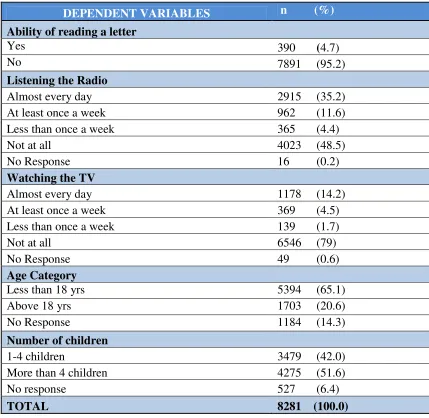
The survey found out that 390 (4.7%) women answered yes.
To verify the ability to read, a card with a sentence was shown to the women who said “yes can
read” and they were asked to read it loudly. The result showed that a significant number of
women who said “yes” to the previous question, had the ability to read the whole or parts of
the sentence.
2. Exposure to mass media: As the mass media is a source of information, especially about
21 socioeconomic status. In this study the women were asked if they watch TV or listen to
Radio.
However, to use this information for our analysis, we recoded this variable in the dataset and
divided into only two categories: 1) Exposure to media at least once a week including those
exposed everyday; 2) Exposure to media less than once a week including those exposed not at
all,. The other response options were treated as missing data.
.
3. Age of women at Marriage: Anecdotal information explain that in Afghanistan the age at
marriage is very low in women and this may have a negative impact on the health outcomes
of their children. To study the association between the age of mothers at marriage and the
health of their children, we selected this variable as independent variable. The mothers were
asked what was their age at marriage. For our study purpose we recoded the variable and
divided the women into two categories of married at 18 years or less and above 18 years.
1. Number of children: It is believed that as the the number of children a woman gives
birth to increases, the woman cannot take care of them and especially the youngest
children will suffer from lack of proper attention. To examine association between
number of children and their health outcomes in a family, we studied association of this
variable after categorizing into two categories, having 4 or fewer children and more than
4 children.
23 Table 1, Descriptive statistics of independent Variables of the study
DEPENDENT VARIABLES n (%)
Ability of reading a letter
Yes 390 (4.7)
No 7891 (95.2)
Listening the Radio
Almost every day 2915 (35.2)
At least once a week 962 (11.6)
Less than once a week 365 (4.4)
Not at all 4023 (48.5)
No Response 16 (0.2)
Watching the TV
Almost every day 1178 (14.2)
At least once a week 369 (4.5)
Less than once a week 139 (1.7)
Not at all 6546 (79)
No Response 49 (0.6)
Age Category
Less than 18 yrs 5394 (65.1)
Above 18 yrs 1703 (20.6)
No Response 1184 (14.3)
Number of children
1-4 children 3479 (42.0)
More than 4 children 4275 (51.6)
No response 527 (6.4)
24
Dependent Variables:
The dependent variables are key health indicators for children 0-59 months old. The dependent
variables are as follow:
1. Immunization: The immunization program in Afghanistan consists of routine
immunization and supplementary immunization programs (national and sub-national
immunization campaigns). The routine immunization program consists of vaccination for
BCG (immediately after birth), three doses of DPT and OPV vaccines from fourth week
after birth in six weeks intervals, and measles vaccine at the age of nine month. In this
study we only examined the BCG vaccine.
BCG immunization: BCG is administered for children at birth to immunize them against
Tuberculosis. To find the coverage of this vaccine, the mothers were asked about the
status of BCG vaccination of their 0-59 months children and this was verified by seeing
the BCG vaccine scar on the left shoulder of the child. We used this indicator to avoid
recall bias, the coverage of other vaccines were calculated based on mothers’ recall as
well as verification of immunization card, which was lost in most of the cases. Also
BCG vaccine shows exposure of mothers and children to the health system soon after
birth, which is critical time in the childhood period.
2. Breastfeeding: This variable is measured for children less than 2 years old. According to
UNICEF and WHO strategy36, optimal feeding of infants and young children focus on
four issues: a) initiation of breastfeeding within one hour after birth, b) exclusive
breastfeeding for six months, c) introduction of complementary feeding at the age of six
25 collected in the AHS we were able to calculate only the first indicator (initiation of
breastfeeding within first hour of life) precisely. As there was no appropriate data to
calculate the other indicators, in this study we used a variable that indicated whether
breastfeeding of a newborn started within the first hour after birth or later.
3. Use of bed net: Malaria is one of the main causes of morbidity among children in
Afghanistan. It is well known that sleeping under an insecticide treated bed net will
prevent children from having malaria in endemic areas. The bed nets are distributed by
the Ministry of Public Health and other channels such as WHO to the people. Also, there
are anecdotes that most families do not use the bed nets, even if they are available. Here
we wanted to see if a child had slept the last night under a bed net or not.
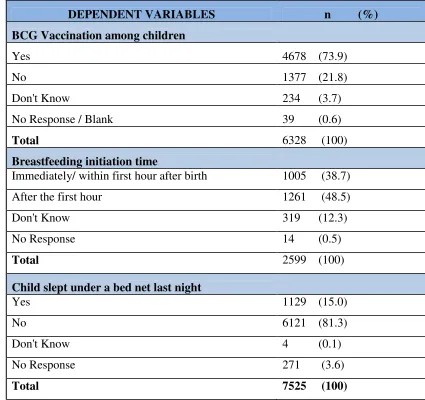
26 Table 2, Descriptive statistics of dependent variables of the study
DEPENDENT VARIABLES n (%)
BCG Vaccination among children
Yes 4678 (73.9)
No 1377 (21.8)
Don't Know 234 (3.7)
No Response / Blank 39 (0.6)
Total 6328 (100)
Breastfeeding initiation time
Immediately/ within first hour after birth 1005 (38.7)
After the first hour 1261 (48.5)
Don't Know 319 (12.3)
No Response 14 (0.5)
Total 2599 (100)
Child slept under a bed net last night
Yes 1129 (15.0)
No 6121 (81.3)
Don't Know 4 (0.1)
No Response 271 (3.6)
27
Statistical analysis:
The original raw data from Afghanistan Health Survey has been saved in STATA version 9.0
software. However; for this analysis we transferred the data into SPSS.16.0 software and used
SPSS for our statistical analysis. The original data was stored in different files for women,
immunization, household data and household listing. For our analysis we merged the data from
the relevant data files into one dataset in SPSS.16.0. To verify that no errors occurred during the
data transfer and merging exercise, we cross checked the variables of interest with the original
data in the Johns Hopkins University office with the experts and found that the data was the
same and accurate.
After recoding the variables we used Chi square tests and Odds ratio analyses to find the
association between independent and dependent variables.
Confounding Variables: The Afghanistan Health Survey indicated that two major factors had a
significant association with all health indicators, the economic level of households and distance
from the nearest health facility. Therefore, we controlled for these variables to see if the
association was due to the independent variables of interest or due to these confounding factors.
Logistic Regression was used to control for the confounders.
Economic situation of households: For measuring the economic status of household we used
the asset-based measure of wealth, as it was used by JHU during previous analyses. Thirteen
assets were included in the survey and each household was asked if they owned any of them.
One of the assets (kerosene lamp) was owned by almost all households, so it was removed from
the list during analysis and we did so as well. The total score for the rest of the assets was
28 categories, poor and non-poor. The Afghanistan Health Survey had divided the households into
five quintiles, in which the bottom fifth quintile was the poorest category of the households.
However, in our analysis we categorized the households into two categories of poor and
non-poor, in which the poor households are those lying in the bottom fifth quintile according to the
JHU analysis. This variable was controlled in the study to exclude the role of economic status of
households from the independent variables of interest in this study. The following table shows
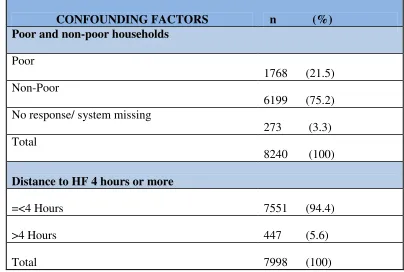
the number and percentage of poor and non-poor categories of household in this population.
Distance from HF: Another factor which was found in the Afghanistan Health Survey (AHS) as
a major influential factor in health indicators was the distance that a household had from the
nearest health facility without considering the transportation means used. In the AHS this
variable was categorized into six categories: < 1 hour, 1-2 hours, 2-3 hours, 3-4 hours, 4-6 hours
and > 6 hours. However, for our analysis, we recoded the variable and divided them into two
categories of <= 4 hours and > 4 hours. According to Afghanistan condition a distance of 4 hour
from the health facilities has been considered accessible to the households and beyond this
distance can be “hard to access”. We controlled for this variable in our analysis to find if the
association between the independent and dependent variables we are interested is not due to
distance from health facilities.
29 Table 3, Descriptive statistics of confounding factors of the study sample
CONFOUNDING FACTORS n (%) Poor and non-poor households
Poor
1768 (21.5) Non-Poor
6199 (75.2) No response/ system missing
273 (3.3) Total
8240 (100)
Distance to HF 4 hours or more
=<4 Hours 7551 (94.4)
>4 Hours 447 (5.6)
30 CHAPTER IV
RESULTS
This chapter explains the results obtained from the tests of association between the above
mentioned independent variables (socio-economic status of women) and dependent variables
(health indicators of their children). First, we examined the association between each
independent variable with the all dependent variables and then controlled for the main
confounding factors, if the association was significant. The results are presented in the tables
and graphs below.
1. Literacy among women:
Among the sample we found 301(5.1%) of women said “yes” to the question if they could read
or not, while 7606 (94.9%) responded “no”. Then the vaccination status of their children was
checked – evidenced by BCG scar – and it was found that 4546 (77.0%) of children had been
vaccinated for BCH, while 1361 (23.0%) were not vaccinated.
To find out the initiation of breastfeeding within first hour after birth or after one hour of birth,
the women were questioned about their starting time of breastfeeding for their youngest child.
976 (44.2%) of women responded they started breastfeeding during one hour after birth, while
1230 (55.8%) of them responded that they started breastfeeding after the first hour.
In response to the question of their children (less than five years old) slept under a bed net last
night, 1099 (15.6%) women responded “yes”, while 5961 (84.4%) responded “no”. Descriptive
31
Table 4, Descriptive statistics of Women Literacy and dependent variables
Women Literacy (Can read or not)
Yes n (%) No n (%) Total n (%) Yes
232 (3.9) 4314 (73.0) 4546 (77.0)
BCG vaccine
No
69 (1.2) 1292 (21.9) 1361 (23.0)
Within first hour
52 (2.4) 924 (41.9) 976 (44.2)
Breastfeeding Initiation
After first hour 56 (2.5) 1174 (53.2) 1230 (55.8)
Yes 52 (0.7) 1047 (14.8) 1099 (15. 6)
Bed net use
No 299 (4.2) 5662 (80.2) 5961 (84.4)
As Malaria is not endemic in all over Afghanistan and there are some known provinces as
endemic areas for Malaria, so we analyzed the data separately in the endemic and non-endemic
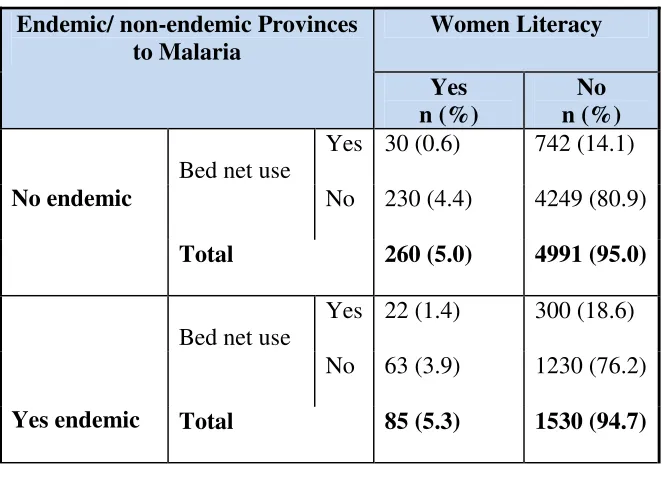
[image:32.612.71.402.459.702.2]areas. Descriptive statistics of this analysis is shown bellow in Table 11.
Table 5, Descriptive statistics of women with or without literacy and use of bed net
Women Literacy Endemic/ non-endemic Provinces
to Malaria
Yes n (%)
No n (%)
Yes 30 (0.6) 742 (14.1) Bed net use
No 230 (4.4) 4249 (80.9)
No endemic
Total 260 (5.0) 4991 (95.0)
Yes 22 (1.4) 300 (18.6) Bed net use
No 63 (3.9) 1230 (76.2)
32
Association between women literacy and dependent variables: To find out if there is
significant association between literacy of women in the sample with the dependent variables the
independent variable was analyzed with each of the dependent variable separately in 2 x 2 tables
using Chi-Square test and risk analysis (Odd ratio) tests, using SPSS.16 for this application. The
result of these statistical tests has been shown in table 12, bellow.
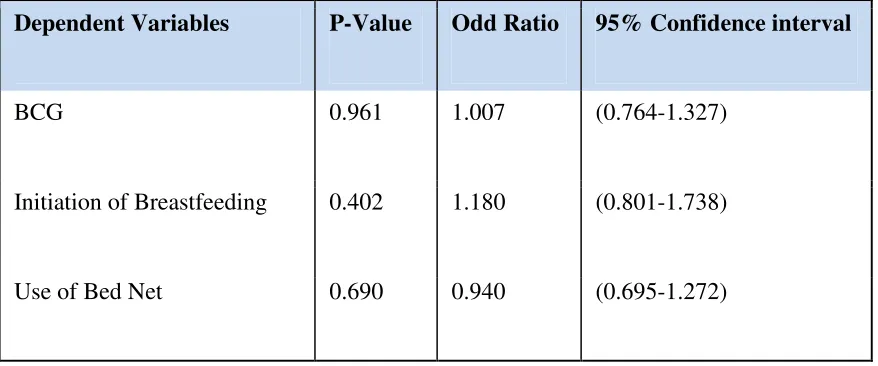
• Women literacy and BCG vaccination: Chi-Square test shows that the two variables did
not have significant association with each other (P-value 0.961 > 0.05). Risk analysis test
indicates that Odds of BCG vaccine among children is 1.007 with 95% confidence
interval (0.764-1.327) if their mothers can read. We can conclude that in this sample
literacy (ability to read) of mothers / caretakers does not have significant association with
the level of BCG vaccination of their children.
• Women literacy and initiation of breastfeeding: Chi-Square test shows that the two
variables did not have significant association with each other (P-value 0.402 > 0.05). Risk
analysis test indicates that Odds of initiation of breastfeeding within first hour after birth
among mothers who can read is 1.180 with 95% confidence interval (0.801-1.738).
Therefore, from this statistical analysis we can conclude that in this sample literacy
(ability to read) of mothers / caretakers does not have significant association with the
time of initiation of breastfeeding.
• Women literacy and use of bed net for protecting children from Malaria: Chi-Square test
shows that the two variables did not have significant association with each other (P-value
0.690 > 0.05). Risk analysis test indicates that Odds of use of bed net among children is
33
from this statistical analysis we can conclude that in this sample literacy (ability to read)
of mothers / caretakers does not have significant association with the level of use of bed
[image:34.612.65.504.189.372.2]net to protect their children from Malaria.
Table 6, Statistical test for association of Women Literacy and dependent variables
Dependent Variables P-Value Odd Ratio 95% Confidence interval
BCG 0.961 1.007 (0.764-1.327)
Initiation of Breastfeeding 0.402 1.180 (0.801-1.738)
Use of Bed Net 0.690 0.940 (0.695-1.272)
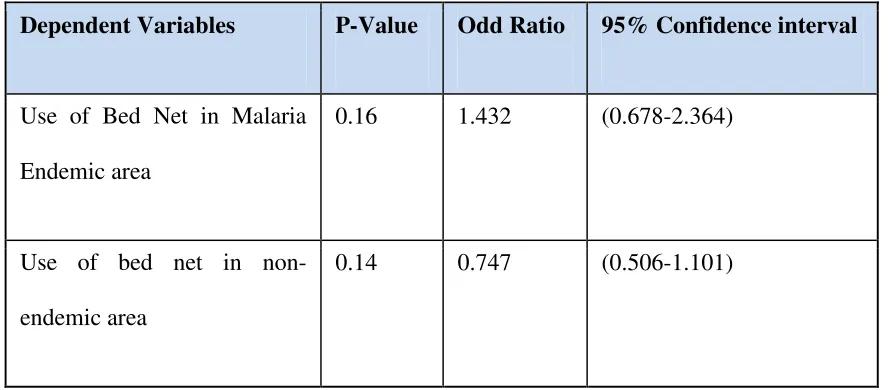
• Association between women literacy and use of bed net in endemic and non-endemic
areas: Association between the two variables were tested separately in Malaria-endemic
and non-endemic areas of the country. Here we found that Chi-Square test indicates no
association between the two variables neither in endemic area, nor in non-endemic area
(P-Value > 0.05). Risk analysis indicates that the odds of use of bed net among mothers
who can read is 1.432 (0.867-2.364) in endemic area and is 0.747 (0.506-1.101) in
non-endemic area. As a result, we can conclude that in this sample literacy (ability to read) of
mothers/ care takers does not have significant association with use of bed net for
protecting children from malaria neither in endemic nor in non-endemic areas. Table 7,
34
Table 7, Statistical test for association of literacy among women and use of bed net
Dependent Variables P-Value Odd Ratio 95% Confidence interval
Use of Bed Net in Malaria
Endemic area
0.16 1.432 (0.678-2.364)
Use of bed net in
non-endemic area
0.14 0.747 (0.506-1.101)
2. Listening to Radio:
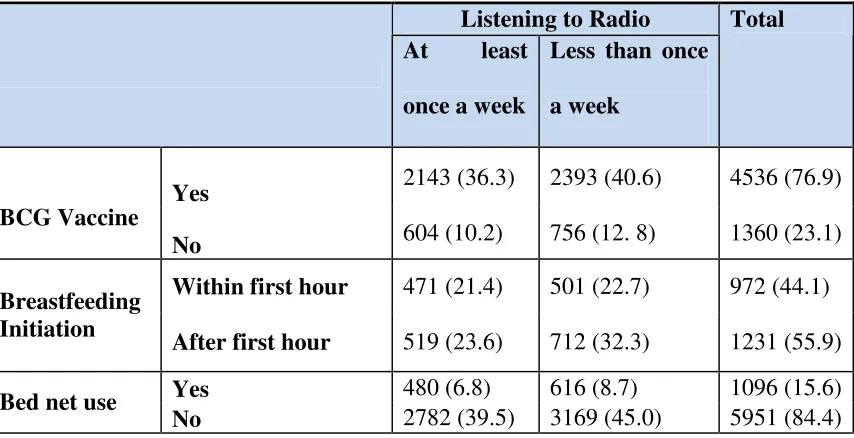
In the sample we found 2747(46.6%) women reported that they were listening to radio at least
once in a week, while 3149 (53.4%) responded they were listening to radio less than once in a
week or not at all. In the sample 4536 (76.9%) children of these women had been vaccinated for
BCH, while 1360 (23.1%) had not been vaccinated.
972 (44.1%) of women responded they started breastfeeding during one hour after birth, while
1231 (55.9%) of them responded they started breastfeeding after the first hour.
In response to the question if their children (less than five years old) slept under a bed net last
night, 1096 (15.6%) women responded “yes”, while 5951 (84.4%) responded “no”. Descriptive
35
Table 8, Descriptive statistics of Women listening to Radio and dependent variables
Listening to Radio At least
once a week
Less than once
a week
Total
Yes 2143 (36.3) 2393 (40.6) 4536 (76.9)
BCG Vaccine
No 604 (10.2) 756 (12. 8) 1360 (23.1)
Within first hour 471 (21.4) 501 (22.7) 972 (44.1)
Breastfeeding Initiation
After first hour 519 (23.6) 712 (32.3) 1231 (55.9)
Yes 480 (6.8) 616 (8.7) 1096 (15.6)
Bed net use
No 2782 (39.5) 3169 (45.0) 5951 (84.4)
Association between listening to radio and dependent variables: To find out if there is
significant association between exposure of women to radio with the dependent variables in the
sample, the independent variable was analyzed with each of the dependent variable separately in
2 x 2 tables using Chi-Square test and risk analysis (Odd ratio) tests, using SPSS.16. The result
of these statistical tests has been shown in table 9, bellow.
• Listening to radio and BCG vaccination: Chi-Square test shows that the two variables did
not have significant association with each other (P-value 0.066 > 0.05). Risk analysis test
indicates that Odds of BCG vaccine among children is 1.121 with 95% confidence
interval (0.992-1.266) if their mothers listen to radio at least once a week. So, we can
conclude that in this sample exposure to radio (listening to radio at least once per week)
of mothers / caretakers does not have significant association with the level of BCG
36
• Listening to radio and initiation of breastfeeding: Chi-Square test shows that the two
variables have significant association with each other (P-value 0.003 < 0.05). Risk
analysis test indicates that Odds of initiation of breastfeeding within first hour after birth
among mothers who listen to radio at least once in a week is 1.180 with 95% confidence
interval (0.801-1.738) comparing to those not listening to radio or listening less than once
in a week. Therefore, from this statistical analysis we can conclude that in this sample,
exposure of mothers/ care takers to radio has significant association with the initiation
time of breastfeeding.
• Controlling for the confounders: To test if the above-mentioned association is due to
exposure to radio or it is due to the fact that those mothers who listen more to radio could
be from wealthier households or who live near to the health facilities, we test the
association using logistic regression test. The result indicates that although economy of
households (being poor or not poor) and distance to the health facility (more than 4 hours
or less than 4 hours) have significant association with the time of initiation of
breastfeeding, listening to radio independently has significant association with the
dependent variable too (P-value 0.016 < 0.05 and Odd Ratio 1.250 (1.043-1.499).
• Listening to radio and use of bed net for protecting children from Malaria: Chi-Square
test shows that the two variables did not have significant association with each other
(P-value 0.072 > 0.05). Risk analysis test indicates that Odds of use of bed net for children is
0.888 with 95% confidence interval (0.780-1.011) if their mothers listen to radio at least
once in a week. Therefore, from this statistical analysis we can conclude that in this
37
not have significant association with the level of use of bed net to protect their children
[image:38.612.65.519.161.601.2]from Malaria.
Table 9, Statistical test for association of Listening to Radio at least once a week and dependent variables
Dependent Variables
P-Value
Odd Ratio 95% Confidence interval
BCG vaccination 0.066 1.121 (0.992-1.266)
Initiation of Breastfeeding
within first hour
0.003 1.290 (1.089-1.527)
Use of Bed Net 0.072 0.888 (0.780-1.011)
Logistic Regression Test (Initiation of breastfeeding within first hour and listening to
radio at least once a week)
Distance to HF(more than 4
hours/4hrs or less)
0.276 0.820 (0.574-1.172)
HH economy (Poor/Non-poor) 0.955 0.994 (0.801-1.233)
Listening to radio (at least once
a week/ less than once a week)
0.016 1.250 (1.043-1.499)
3. Watching TV:
Among 1215(20.7%) women who reported that they were watching TV at least once in a week,
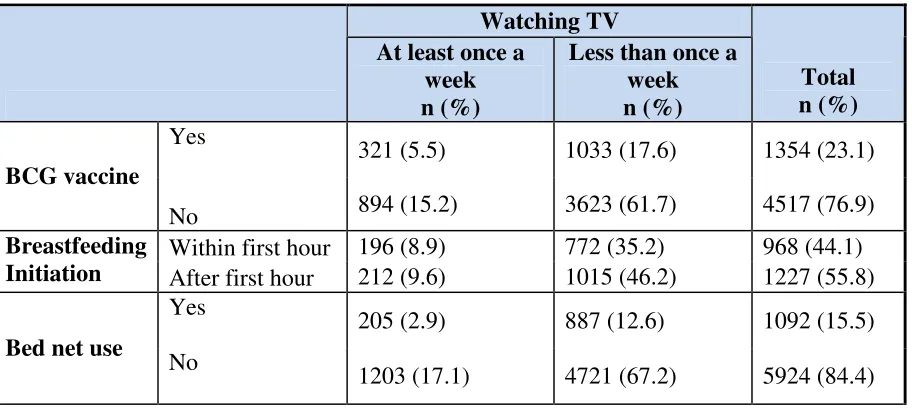
38
who responded that they watch TV less than once in a week or they do not watch at all, 1033
(17.6%) of their children were vaccinated. 894 (15.2%) of children of mothers who were
exposed to TV and 3623 (61.7%) of those were not exposed to TV were not vaccinated for
BCG.
968 (44.1%) women responded they started breastfeeding during one hour after birth, while 1227
(55.8%) of them responded that they started breastfeeding after the first hour.
In response to the question of their children (less than five years old) slept under a bed net last
night, 1092 (15.5%) women responded “yes”, while 5924 (84.5%) responded “no”. Descriptive
[image:39.612.74.530.390.595.2]statistics of this analysis is shown in Table 10.
Table 10, Descriptive Statistics of Women watching TV and dependent variables
Watching TV
At least once a week n (%)
Less than once a week
n (%)
Total n (%)
Yes
321 (5.5) 1033 (17.6) 1354 (23.1)
BCG vaccine
No 894 (15.2) 3623 (61.7) 4517 (76.9)
Within first hour 196 (8.9) 772 (35.2) 968 (44.1)
Breastfeeding
Initiation After first hour 212 (9.6) 1015 (46.2) 1227 (55.8)
Yes
205 (2.9) 887 (12.6) 1092 (15.5)
Bed net use
No
1203 (17.1) 4721 (67.2) 5924 (84.4)
Association between watching TV and dependent variables: To find out if there is significant
association between exposure of women to TV with the dependent variables in the sample, the
39
using Chi-Square test and risk analysis (Odd ratio) tests. The result of these statistical tests has
been shown in table 11, bellow.
• Watching TV and BCG vaccination: Chi-Square test shows that the two variables have
significant association with each other (P-value 0.002 < 0.05). Risk analysis test indicates
that Odds of BCG vaccine among children is 1.259 with 95% confidence interval
(1.089-1.456) times higher if their mothers watch TV at least once a week. So, we can conclude
that in this sample exposure to TV (watching TV at least once per week) of mothers /
caretakers have significant association with the level of BCG vaccination of their
children.
• Controlling for the confounders: To test if the above-mentioned association is due to
exposure to TV or it is due to the fact that those mothers who watch TV frequently could
be from wealthier households or live near to the health facilities, we test the association
using logistic regression test. The result indicates that although economy of households
(being poor or not poor) and distance to the health facility (more than 4 hours or less than
4 hours) have significant association with the time of initiation of breastfeeding, watching
TV independently has significant association with the dependent variable (P-value 0.016
< 0.05 and Odd Ratio 1.250 (1.043-1.499).
• Watching TV and initiation of breastfeeding: Chi-Square test shows that the two
variables have significant association with each other (P-value 0.076 > 0.05). Risk
analysis test indicates that Odds of initiation of breastfeeding within first hour after birth
among mothers who watch TV at least once in a week is 1.216 with 95% confidence
40
a week. Therefore, from this statistical analysis we can conclude that in this sample,
exposure of mothers/ care takers to TV does not have significant association with the
initiation time of breastfeeding.
• Watching TV and use of bed net for protecting children from Malaria: Chi-Square test
shows that the two variables did not have significant association with each other (P-value
0.245 > 0.05). Risk analysis test indicates that Odds of use of bed net among children is
1.216 with 95% confidence interval (0.769-1.069) if their mothers watch TV at least once
in a week. Therefore, from this statistical analysis we can conclude that in this sample
exposure to TV (watching at least once per week) of mothers / caretakers does not have
significant association with the level of use of bed net to protect their children from
41
Table 11, Statistical test for association of watching TV and dependent variables
Variables P-Value Odd Ratio 95% Confidence interval
BCG 0.002 1.259 (1.089-1.456)
Initiation of Breastfeeding 0.076 1.216 (0.980-1.508)
Use of Bed Net 0.245 0.907 (0.769-1.069)
Logistic Regression Test (BCG vaccine)
Distance to HF(4hrs/more) 0.008 1.522 (1.114-2.078)
HH economy
(Poor/Non-poor)
0.002 0.777 (0.662-0.914)
Watching TV 0.009 1.229 (1.054-1.434)
4. Age of women at marriage:
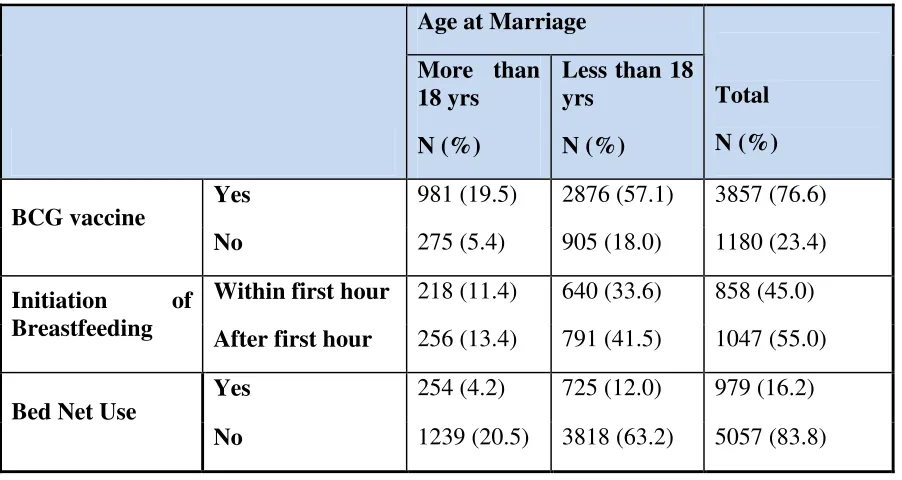
Among 1256 (24.9%) women who reported that they got married when they were 18 years old or
older, 981 (19.5%) of their children had been vaccinated for BCG. Among 3781 (75.1%) of
mothers who responded that they got married when they were less than 18 years old, 2876
(57.1%) of their children were vaccinated and 905 (18.0%) of their children did not received
42
858 (45.0%) women responded they started breastfeeding during one hour after birth, while 1047
(55.0%) of them responded that they started breastfeeding after the first hour.
In response to the question of their children (less than five years old) slept under a bed net last
night, 979 (16.2%) women responded “yes”, while 5057 (83.8%) responded “no”. Descriptive
[image:43.612.71.522.242.482.2]statistics of this analysis is shown in Table 12.
Table 12, Descriptive statistics of Age of mother at Marriage and dependent variables
Age at Marriage
More than 18 yrs
N (%)
Less than 18 yrs
N (%)
Total
N (%)
Yes 981 (19.5) 2876 (57.1) 3857 (76.6)
BCG vaccine
No 275 (5.4) 905 (18.0) 1180 (23.4)
Within first hour 218 (11.4) 640 (33.6) 858 (45.0)
Initiation of
Breastfeeding After first hour 256 (13.4) 791 (41.5) 1047 (55.0)
Yes 254 (4.2) 725 (12.0) 979 (16.2)
Bed Net Use
No 1239 (20.5) 3818 (63.2) 5057 (83.8)
Association between age of mothers at marriage and dependent variables: To find out if
there is significant association between age of mothers at marriage with the dependent variables
in the sample, the independent variable was analyzed with each of the dependent variable
separately in 2 x 2 tables using Chi-Square test and risk analysis (Odd ratio) tests. The result of
these statistical tests has been shown in table 13, bellow.
• Age at marriage and BCG vaccination: Chi-Square test shows that the two variables do
43
indicates that Odds of BCG vaccine among children is 1.123 with 95% confidence
interval (0.963-1.308) times if their mothers married at age 18 or above. So, we can
conclude that in this sample age of mothers at marriage (married at 18 or older ages) of
mothers / caretakers did not have significant association with the level of BCG
vaccination of their children.
• Age at marriage and initiation of breastfeeding: Chi-Square test shows that the two
variables do not have significant association with each other (P-value 0.631 > 0.05). Risk
analysis test indicates that Odds of initiation of breastfeeding within first hour after birth
among mothers who married at age 18 or above is 1.052 with 95% confidence interval
(0.854-1.297) comparing to those married at age of less than 18 years. Therefore, from
this statistical analysis we can conclude that in this sample, age of mothers/ care takers at
marriage does not have significant association with the initiation time of breastfeeding.
• Age at marriage and use of bed net for protecting children from Malaria: Chi-Square test
shows that the two variables did not have significant association with each other (P-value
0.338 > 0.05). Risk analysis test indicates that Odds of use of bed net among children is
1.080 with 95% confidence interval (0.923-1.263) times if their mothers married at age
18 or above. Therefore, from this statistical analysis we can conclude that in this sample
age of mothers / caretakers at marriage does not have significant association with the
44
Table 13, Statistical test for association of age of mother (18 or lower) at marriage and dependent variables
Dependent Variables P-Value Odd Ratio Confidence interval
BCG 0.139 1.123 (0.963-1.308)
Initiation of Breastfeeding 0.631 1.052 (0.854-1.297)
Use of Bed Net 0.338 1.080 (0.923-1.263)
As the legal age for marriage for girls is 16 years according to Afghanistan civil law37, if we use
16 years as the cutoff point and see the association the result would be different. Here, we can
see that BCG vaccination has significant association with the age of mothers at marriage
(P-Value 0.001<0.05) and the risk analysis shows that odds of BCG vaccine among children is
1.261 (1.104-1.440) times higher if mothers got married above 16 years. After controlling for the
confounders through logistic regression test, we can see that each of the variables (household
economy, distance to health facility and age of mothers at marriage) has significant association
with BCG vaccination of children independent from each other. Table 14, show the statistical
45
Table 14, Statistical test for association of age of mother (16 and lower) at marriage and dependent variables
Dependent Variables P-Value Odd Ratio Confidence interval
BCG 0.001 1.261 (1.104-1.440)
Initiation of Breastfeeding 0.566 1.06 (0.87-1.28)
Use of Bed Net 0.283 0.925 (0.802-1.067)
Logistic Regression Test (BCG vaccine)
Distance to HF(more than 4
hours /4hrs or less)
0.012 0.634 (0.444-0.904)
HH economy (Non-poor/
Poor)
0.001 1.341 (1.123-1.601)
Age at marriage (16 or above
and less than 16 yrs)
46
5. Number of Children:
Among 2477 (44.5%) women who reported having 1-4 children, 1874 (33.7%) of their children
had been vaccinated for BCG. Among 3081 (55.4%) of mothers who responded that they got
more than 4 children, 2401 (43.2%) of their children were vaccinated and 680 (12.2%) of their
children did not received BCG vaccine.
914 (43.7%) women responded they started breastfeeding during one hour after birth, while 1177
(56.3%) of them responded that they started breastfeeding after the first hour.
In response to the question of their children (less than five years old) slept under a bed net last
night, 1045 (15.7%) women responded “yes”, while 5598 (84.3%) responded “no”. Descriptive
[image:47.612.73.499.411.639.2]statistics of this analysis is shown in Table 15.
Table 15, Descriptive statistics of number of children mothers have and dependent variables
Number of Children
1-4 n (%)
More than 4 n (%)
Total n (%)
Yes 1874 (33.7) 2401 (43.2) 4275 (76.9)
BCG vaccine
No 603 (10.8) 680 (12.2) 1283 (23.1)
Within first
hour 416 (19.9) 498 (23.8) 914 (43.7) Breastfeeding
Initiation
After first hour 527 (25.2) 650 (31.1) 1177 (56.3)
Yes 450 (6.8) 595 (8.9) 1045 (15.7)
Bed net use
47
Association between number of children and dependent variables: To find out if there is
significant association between number of children mothers had with the dependent variables in
the sample, the independent variable was analyzed with each of the dependent variable
separately in 2 x 2 tables using Chi-Square test and risk analysis (Odd ratio) tests. The result of
these statistical tests has been shown in table 16, bellow.
• Number of Children and BCG vaccination: Chi-Square test shows that the two variables
have significant association with each other (P-value 0.046 < 0.05). Risk analysis test
indicates that Odds of BCG vaccine among children is 0.88 with 95% confidence interval
(0.78-0.99) times lower if their mothers 1-4 children. So, we can conclude that in this
sample number of children (1-4 children) of mothers / caretakers have significant
association with the level of BCG vaccination of their children.
• Controlling for the confounders: To test if the above-mentioned association is due to
number of children or it is due to the fact that those mothers who have more than 4
children could be from wealthier households or live near to the health facilities, we test
the association using logistic regression test. The result indicates that the association was
due to economy of households (being poor or not poor) and distance to the health facility
(more than 4 hours or less than 4 hours) and number of children independently does not
have significant association with the dependent variable (P-value 0.055 > 0.05 and Odd
Ratio 1.138 (0.997-1.299).
• Number of children and initiation of breastfeeding: Chi-Square test shows that the two
variables do not have significant association with each other (P-value 0.736 > 0.05). Risk
48
confidence interval (0.816-1.155) times among mothers with 1-4 children. Therefore,
from this statistical analysis we can conclude that in this sample, number of children
mothers/ care takers have does not have significant association with the initiation time of
breastfeeding.
• Number of children and use of bed net for protecting children from Malaria: Chi-Square
test shows that the two variables did not have significant association with each other
(P-value 0.239 > 0.05). Risk analysis test indicates that Odds of use of bed net among
children is 1.083 with 95% confidence interval (0.948-1.238) times if their mothers have
1-4 children. Therefore, from this statistical analysis we can conclude that in this sample
number of children mothers / caretakers had does not have significant association with