ScholarWorks @ Georgia State University
ScholarWorks @ Georgia State University
Counseling and Psychological Services
Dissertations Department of Counseling and Psychological Services
Spring 5-11-2012
Kindergarten Teachers’ Knowledge and Perceptions of Early
Kindergarten Teachers’ Knowledge and Perceptions of Early
Learning-Related Skills and Their Relationship to Academic
Learning-Related Skills and Their Relationship to Academic
Achievement
Achievement
Kathryn M. Powell
Georgia State University
Follow this and additional works at: https://scholarworks.gsu.edu/cps_diss
Recommended Citation Recommended Citation
Powell, Kathryn M., "Kindergarten Teachers’ Knowledge and Perceptions of Early Learning-Related Skills and Their Relationship to Academic Achievement." Dissertation, Georgia State University, 2012.
https://scholarworks.gsu.edu/cps_diss/82
ACCEPTANCE
This dissertation, KINDERGARTEN TEACHERS’ KNOWLEDGE AND PERCEPTIONS OF EARLY LEARNING-RELATED SKILLS AND THEIR RELATIONSHIP TO ACADEMIC ACHIEVEMENT, by KATHRYN MARIE POWELL, was prepared under the direction of the candidate’s Dissertation Advisory Committee. It is accepted by the committee members in partial fulfillment of the requirements for the degree Doctor of Philosophy in the College of Education, Georgia State University.
The Dissertation Advisory Committee and the student’s Department Chair, as representatives of the faculty, certify that this dissertation has met all standards of excellence and scholarship as determined by the faculty. The Dean of the College of Education concurs.
Kristen Varjas, Psy.D. Catherine P. Cadenhead, Ph.D.
Committee Chair Committee Member
Andrew T. Roach, Ph.D. Gary E. Bingham, Ph.D.
Committee Member Committee Member
Date
Brian J. Dew, Ph.D.
Chair, Department of Counseling and Psychological Services
R. W. Kamphaus, Ph.D.
AUTHOR’S STATEMENT
By presenting this dissertation as a partial fulfillment of the requirements for the
advanced degree from Georgia State University, I agree that the library of Georgia State University shall make it available for inspection and circulation in accordance with its regulations governing materials of this type. I agree that permission to quote, to copy direction it was written, by the College of Education’s director of graduate studies and research, or by me. Such quoting, copying, or publishing must be solely for scholarly purposes and will not involve potential financial gain. It is understood that any copying from or publication of this dissertation which involves potential financial gain will not be allowed without my written permission.
NOTICE TO BORROWERS
All dissertations deposited in the Georgia State University library must be used in
accordance with the stipulations prescribed by the author in the preceding statement. The author of this dissertation is:
Kathryn Marie Powell 1874 Demilio Drive Lithonia, GA 30058
The director of this dissertation is:
Dr. KristenVarjas
Department of Counseling and Psychological Services College of Education
CURRICULUM VITAE Kathryn Marie Powell
ADDRESS: 1874 Demilio Drive Lithonia, Georgia 30058
EDUCATION:
Ph.D. 2012 Georgia State University School Psychology Ed.S. 1998 University of Delaware
School Psychology M.A. 1996 University of Delaware
School Psychology B.A. 1993 University of Delaware
Math Education
PROFESSIONAL EXPERIENCE:
2008- Present School Psychologist
Rockdale County School District, Conyers, GA 2000- 2007 School Psychologist
DeKalb County School District, Decatur, GA 1999- 2000 School Psychologist
Capital School District, Dover, DE
PROFESSIONAL SOCIETIES AND ORGANIZATIONS
1996- Present National Association of School Psychologists
PRESENTATIONS AND PUBLICATIONS
Truscott, S. D., Proctor, S. L., Harper, E. A., Collins, A. S., Powell, K. M., &
Huddleston, L. (August, 2009). Comprehensive Model for Recruitment of African Americans in School Psychology. A poster presented at the annual meeting of the American Psychological Association, Vancouver, Canada.
Proctor, S. L., Harper, E. A., Powell, K., Collins, A. S., Huddleston, L., & Truscott, S. D. (August, 2008). African American School Psychologists’ Perceptions of Minority
Recruitment and Retention in School Psychology Training. Poster presented at the annual meeting of the American Psychological Association, Boston, MA.
Harper, E. A., Proctor, S. L., Collins, A. S., & Powell, K. M. (February, 2008).
Proctor, S. L., Harper, E. A., Collins, A. S., Powell, K. M., Huddleston, L., & Truscott, S. (August, 2007). Emic Perspectives: A Study of African American School
Psychologists’ Professional Experiences. Poster presentation at the annual meeting of the American Psychological Association, San Francisco, CA.
Proctor, S. L., Harper, E. A., Collins, A. S., Powell, K. M., Huddleston, L., & Truscott, S. (March, 2007). African American School Psychologists’ Training and
ABSTRACT
KINDERGARTEN TEACHERS’ KNOWLEDGE AND PERCEPTIONS OF EARLY LEARNING-RELATED SKILLS AND THEIR RELATIONSHIP
TO ACADEMIC ACHIEVEMENT by
Kathryn M. Powell
Historically, the kindergarten curriculum emphasized social-emotional development including interpersonal and learning-related (L-R) skills (Logue, 2007). Since the implementation of NCLB (2002), the kindergarten curriculum has incorporated more academic standards and goals (Fantuzzo et al., 2007) thereby decreasing time to address L-R skills. A triangulation mixed methods design (Creswell & Plano Clark, 2007) was utilized to investigate pre-NCLB to post-NCLB kindergarten teachers’ perceptions of the effect of L-R skills on academic achievement. A sample (N = 97) of certified kindergarten teachers with one or more years of kindergarten experience was administered surveys. Concurrently, 30 participants from the larger sample participated in the qualitative (individual interviews) phase of the study. It was hypothesized that all teachers would rate L-R skills as precursors to academic achievement; however, pre-NCLB teachers would rate L-R skills as more important than their peers. The quantitative results suggested that there were no difference in kindergarten teachers’ perceptions of the importance of L-R skills. There also wereno significant differences in how
pre-NCLB teachers. No significant differences were found between the groups in regards to teachers’ beliefs about achievement or teacher efficacy. Qualitative data revealed level 2
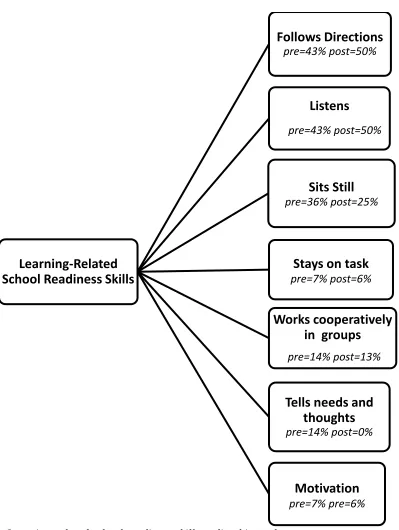
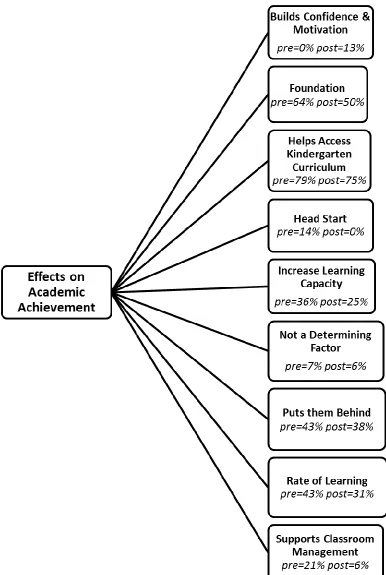
codes (follows directions, listens, sits still, stays on task, works cooperatively in groups, tells needs and thoughts, motivation) describing the L-R skills that teachers identified as important for school readiness. Nine level 2 codes (builds confidence and motivation, foundation, helps access kindergarten curriculum, head start, increase learning capacity, not a determining factor, puts them behind, rate of learning, supports classroom
management) emerged to describe teachers’ perceptions of L-R skills effects on academic
KINDERGARTEN TEACHERS’ KNOWLEDGE AND PERCEPTIONS OF EARLY LEARNING-RELATED SKILLS AND THEIR RELATIONSHIP
TO ACADEMIC ACHIEVEMENT by
Kathryn M. Powell
A Dissertation
Presented in Partial Fulfillment of Requirements for the Degree of
Doctor of Philosophy in
School Psychology in
the Department of Counseling and Psychological Services in
the College of Education Georgia State University
Copyright by Kathryn M. Powell
ii
ACKNOWLEDGMENTS
iii
TABLE OF CONTENTS
Page
List of Tables ...v
List of Figures ... vi
Abbreviations ... vii
Chapter 1 HIGH-STAKES TESTING: THE IMPACT ON SOCIAL-EMOTIONAL INSTRUCTION IN EARLY EDUCATION ...1
Introduction ...1
Overview of High-Stakes Testing in Public Education ...2
High-Stakes Testing: Impact on Early Education ...3
Emphasis on Academics and Decreased Focus on Social Emotional Development ...4
Impact of High-Stakes Accountability on School Readiness and Early Education ...7
Concerns Regarding High-Stakes Testing and Its Impact on Young Children...13
Social-Emotional Development and Implications for Academic Achievement ...18
Future Directions ...25
Conclusion ...32
References ...34
2 KINDERGARTEN TEACHERS’ KNOWLEDGE AND PERCEPTIONS OF EARLY LEARNING-RELATED SKILLS AND THEIR RELATIONSHIP TO ACADEMIC ACHIEVEMENT ...49
Introduction ...49
The Relationship of Learning Related Skills to Academic Achievement ...51
Perceptions of Kindergarten Teachers about the Importance of Learning Related Skills ...56
Teachers’ Perceptions of Efficacy in Learning Related Skills Instruction ...58
Purpose of the Study ...60
Method ...61
iv
Procedures ...62
Measures ...64
Qualitative Data Analysis ...66
Results ...69
Discussion ...88
Limitations and Future Directions ...96
References ...99
v
LIST OF TABLES
Table Page
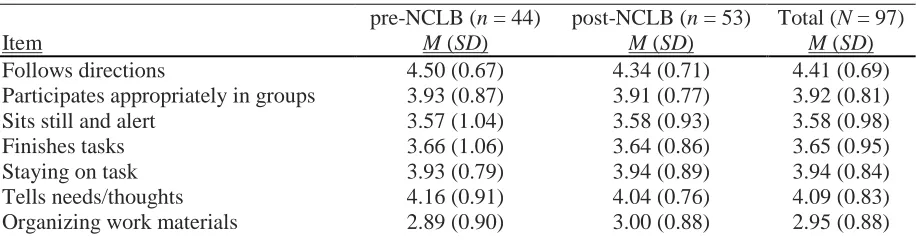
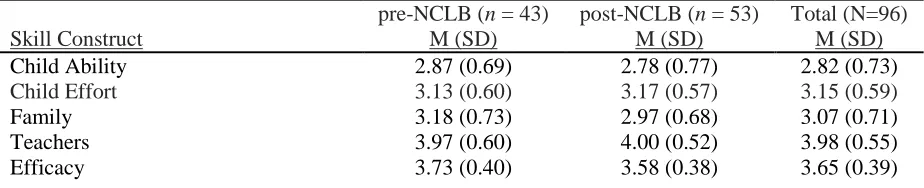
1 Means and standard deviations of pre- and post-NCLB kindergarten teachers’ perceptions of the importance of learning-related skills to school readiness ...71 2 Means and standard deviations of pre- and post-NCLB kindergarten
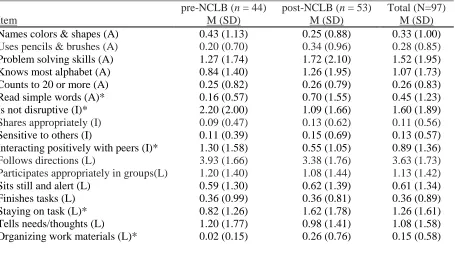
teachers’ perceptions of the importance of certain skill constructs (i.e., learning related, academic, or interpersonal). ...82 3 Means and standard deviations of pre- and post-NCLB kindergarten
teachers’ rankings of school readiness skills. ...82 4 Means and standard deviations of pre- and post-NCLB kindergarten
teachers’ rankings of certain skill constructs (i.e., learning related,
vi
LIST OF FIGURES
Figures Page
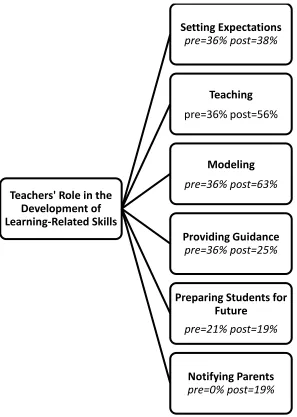
1 Learning Related school readiness skills coding hierarchy ...74 2 Effects on academic achievement coding hierarchy ...77 3 Teachers’ role in the development of learning related skills coding
vii
ABBREVIATIONS ANOVA Analysis of Variance
ASPI Adjustment Scales for Preschool Intervention A-R Attention Span-Restlessness
ASCD Association for Supervision and Curriculum Development AYP Adequate Yearly Progress
BASA Beliefs About School Achievement
CASEL Collaborative for Academic, Social, and Emotional Learning CAT California Achievement Test
C-C Cooperation-Compliance
CFBRS Cooper-Farran Behavioral Rating Scales ESEA Elementary and Secondary Education Act
GKIDS Georgia Kindergarten Inventory of Developing Skills I-P Interest-Participation
KTSSR Kindergarten Teacher Survey on School Readiness LRSSES Learning-Related Skills Self-Efficacy Scale
MANOVA Multiple Analysis of Variance
MH Mental Health
NAECS National Association of Early Childhood Specialists in State Departments of Education
NAEP National Assessment of Educational Progress
NAEYC National Association for the Education of Young Children NCES National Center for Education Statistics
viii NRS National Reporting System
PATHS Promoting Alternative Thinking Strategies PIAT-R Peabody Individual Achievement Test-Revised PLBS Preschool Learning Behavior Scale
PPVT-R Peabody Picture Vocabulary Test-Revised SAT Stanford Achievement Test
SBMH School-Based Mental Health SD Standard Deviation
SEL Social Emotional Learning SES Socioeconomic Status SSRS Social Skills Rating System
TRSSA Teacher Rating Scale of School Adjustment TWG Technical Work Group
CHAPTER 1
HIGH-STAKES TESTING: THE IMPACT ON SOCIAL-EMOTIONAL INSTRUCTION IN EARLY EDUCATION
High-stakes testing is a growing phenomenon in today’s public education system. Education policies (e.g., No Child Left Behind Act [NCLB], 2002) and programs (e.g., Head Start, Georgia Student Assessment Program) have emphasized the importance of standardized assessments and the consequences for all stakeholders (e.g., schools,
administrators, teachers, students) based on student performance (Urrieta, 2004). This use of high-stakes testing has now been extended to the earlier grades. As a result, early childhood educators may feel pressure to focus more time and effort on academic instruction, leaving less time for other developmentally important areas such as social-emotional development (Fantuzzo et al., 2007; Logue, 2007; Meisels, 2007). There is a wealth of literature indicating the importance of social-emotional development to early school adjustment and long-term success of young children (Griffin, 1997; McClelland et al., 2000; Payton et al., 2008); therefore, it is imperative that early childhood educators continue to enhance the growth of social-emotional as well as academic skills for children in their classrooms.
testing with young children are presented. Next, the relationship of social-emotional development and academic achievement is highlighted. Finally, future directions and recommendations are presented on how early childhood educators can continue to address social-emotional instruction in the face of the high-stakes testing environment with support from mental health professionals (i.e., school psychologists, counselors, and social workers), administrators, and colleagues.
Overview of High-Stakes Testing in Public Education
High-stakes testing in public education dates back more than a century and emphasis on this phenomenon in schools today continues to expand. From the tracking programs of the early 1900’s that utilized intelligence tests to identify students to receive
either academic or vocational programming (Sacks, 2000)to the Head Start program evaluations of the 1960s (Vinovskis, 1999) and the reauthorization of the Elementary and Secondary Act (ESEA, 1965) resulting in NCLB (2001), policymakers have used high-stakes testing as an accountability tool to impact teaching and learning in our schools (Madaus & Russell, 2010; Wiliam, 2010). Proponents of high-stakes testing have indicated that its purpose is twofold, to improve instruction (Gay, 2007; Logue, 2007; Madaus & Russell, 2010) and to increase student achievement (Amrein-Beardsley, 2009; Smith, 2005). Current educational policies such as NCLB (2001) require school districts receiving federal aid to adopt curricular standards that will guide academic content (Logue, 2007; Mathis, 2006) and align with the state’s annual high-stakes assessments
instruction to prepare students for the impending test to avoid a range of consequences for poor student performance on these high-stake measures (Madaus & Russell, 2010; Urrieta, 2004).
Policymakers also utilize these assessments as accountability tools to determine which schools are making adequate yearly progress (AYP; NCLB, 2001) in educating students and raising student academic performance (Haertel & Herman, 2005). These accountability practices have become increasingly intense, with the promise of more stringent student consequences for low student performance (Schmidt, 2008) including student placement in a lower track, course failure, and/or grade retention (Amrein-Beardsley, 2009). Teachers may also fear being placed on a professional development plan or losing their jobs as a result of low student test scores (Smith, 2005). Finally, schools and school districts may receive sanctions, such as being required to dismiss staff, implement a new curricular program (Le Floch et al, 2006), loss of funding, take-over by the state, or conversion into a charter school (Shepard, 1990; Smith, 2005).
High-Stakes Testing: Impact on Early Education
High-stakes testing practices in U.S. schools have impacted the approach to education in early education settings (i.e., childcare, preschool and elementary) with intentional and unintentional effects on instruction and educational practices (Amrein-Beardsley, 2009). High-stakes testing implementation has resulted in several intentional educational practices. One such intentional practice is an increased number of
instructional practices (Collins, 2005; Roach & Frank, 2007). In addition, the implementation of the highly-qualified teacher initiative (Boe, Shin, & Cook, 2007; NCLB, 2001; Packer, 2007), which is a provision put in place by NCLB to strengthen teachers’ preparation, both in content and effective teaching practices (Smith, 2005) resulted
from high-stakes testing implementation. While the implementation of high-stakes testing has brought about several influential intentional outcomes, there also have been
unintentional impacts. Unintentional impacts have included an overemphasis on
academic achievement (Fantuzzo et al., 2007), a decreased focus on other developmental areas (e.g., social-emotional development) (Logue, 2007), the use of skills perspective in school readiness preparation (Gormley et al., 2005), and the narrowing of the early childhood curriculum (National Association for the Education of Young Children [NAEYC], 2009a). This section will address the unintentional impacts of high stakes testing in early education as it relates to social-emotional instruction, school readiness, teaching to the test, and the subsequent narrowing of the curriculum.
Emphasis on Academics and Decreased Focus on Social-Emotional Development
Historically, the focus of pre-school and/or early education programs (i.e., childcare, preschool, and kindergarten) was on social-emotional development (Fantuzzo et al., 2007; Logue, 2007). The pre-school and kindergarten classroom environments were places where children would be taught social and interpersonal skills which are prerequisites for students to fully and successfully participate in group and instructional settings (Logue, 2007). The social-emotional skills taught prepared students for
activities, and adjust to different routines and a new set of rules (Logue, 2007). However, as a result of high-stakes testing practices migrating down to the preschool and
elementary years (e.g., Head Start Reporting System, Georgia Kindergarten Inventory of Developing Skills [GKIDS]) a focus on the development of students’ pre-academic,
academic, and cognitive skills (Fantuzzo et al., 2007; Goldstein, 2008) has occurred thereby decreasing the amount of time focused on social-emotional instruction (Logue, 2007).
One example of high-stakes testing occurring in the preschool setting is the utilization of the National Reporting System (NRS) of the Head Start program to assess the development of all enrolled children during the year before students entered
kindergarten (Paulsell et al., 2006; Tarullo et al., 2008). The NRS was developed and initiated in response to President Bush’s Good Start, Grow Smart initiative that
challenged Head Start to improve their operational effectiveness by developing a systematic, nationwide approach to assessing every child‘s school readiness. The Bush Administration’s directive was to develop a strategy to ensure that every Head Start
assistance (Paulsell et al., 2006). In the 2006-2007 program year, teacher assessments of children’s social-emotional development were added into the assessment at the
recommendation of program staff and a Technical Work Group (TWG) of 16 experts in child development, child assessment, measurement, and program evaluation that assisted in the initial development of the NRS assessment (Tarullo et al., 2008). The addition of social-emotional skills into this assessment process reflects the observed need by the Head Start program staff and the TWG that although pre-academics skills are an
important focus for students, those skills are not the only abilities that need to be taught and measured to ensure future academic achievement and school success (Tarullo et al., 2008).
Many states have developed guidelines for instruction in the preschool setting (Scott-Little, Kagan, & Frelow, 2006) that include academic standards for the teaching and learning of literacy, math, science, and social studies (Logue, 2007) to prepare children for the more academic-focused elementary setting. Academic expectations once reserved for older children now have been placed on earlier grades and the focus of kindergarten has become more academic than ever before (Goldstein, 2008; Kim et al., 2005; Meisels, 2007). As a result, students are expected to enter kindergarten with pre-literacy and pre-math skills and the social maturity to comply with school routines (Logue, 2007) and are being exposed to what previously constituted the first grade curriculum (Marxen, Ofstedal, & Danbom, 2008; NAEYC, 1995, 2009a).
developing skills in English Language Arts, Math, Science, and Social Studies. The GKIDS inventory includes domains addressing Personal/Social Development and Approaches to Learning. However, there are no stakes associated with these domains as are with the English Language Arts and Math domains. For this reason, these areas may receive less instructional attention. The academic domains included in this measure are aligned to the Georgia Performance Standards (GPS, 2008) developed by the Georgia Department of Education for kindergarten students. GKIDS data from the areas of English Language Arts and Mathematics are used as one indicator of first grade
readiness. Because curriculum standards and assessments demonstrate a greater emphasis on academic development, instructional practices have followed suit.
NCLB (2001) requires all public schools receiving federal funds to administer standardized tests annually in grades three through eight and once in high school between grades 10 and 12 (Mathis, 2006, 2009; Smith, 2005; U.S. Department of Education [U.S. DOE], 2008). However, some states have chosen to administer standardized assessments to students as early as first grade. This allows schools to keep close track of student progress through standardized assessment on curriculum leading up to the required assessment occurring in third grade. These testing practices are evident of the pressure being placed on K-2 teachers, who in turn are looking to preschool teachers to help prepare students to demonstrate the required proficiencies that will be later evaluated (NAEYC, 2009a).
Impact of High-Stakes Accountability on School Readiness and Early Education
instruction, narrowing of the curriculum) on childcare and preschool instruction as it relates to school readiness (Lamy, Barnett, & Jung, 2005; Logue, 2007; NAEYC, 2009b). A significant intentional change in early education instruction has been the focus on cognitive skills (Scott-Little et al., 2006); however, there may have been unintentional impacts on school readiness and early education as a result of this shift. Operationally, school readiness is defined as a quality that renders the child able to participate
successfully in the public school general curriculum (May et al., 1994). Various theoretical perspectives have been espoused amongst experts about the best way to prepare children for school (Gormley et al., 2005; McBryde et al., 2004; Panter & Bracken, 2000; Wilson, 2004). Two such perspectives are the skill development
(Gormley et al., 2005; Panter & Bracken, 2000; Wilson, 2004) and the multidimensional perspectives (McBryde et al., 2004; Panter & Bracken, 2000). The skill development perspective indicates that school readiness is based on the demonstration of specific learned skills or acquired knowledge (Gormley et al., 2005; Panter & Bracken, 2000; Wilson, 2004). Proponents of this view believe that the best way to foster school
readiness is through direct teaching of specific skills. However, in reviewing the research that addresses the effectiveness of various approaches to school readiness a clear
endorsement for the multidimensional approach emerges (Pianta & La Paro, 2003;
McBryde et al., 2004; NAEYC, 1995, 2009b; Panter & Bracken, 2000; Wright, Diener, & Kay, 2000).
The multidimensional perspective takes into account the wide range of factors that affect children’s success in school. Consistent with the multidimensional perspective,
identified five dimensions that were essential components of readiness and academic success: physical well-being and motor development; language development; cognition and general knowledge; social and emotional development; and approaches to learning (Panter & Bracken, 2000). The multidimensional approach attempts to address all aspects of school readiness by preparing children to face the many different expectations of the classroom context (Panter & Bracken, 2000). However, in recent years, with the
insurgence of educational policies such as NCLB that stress academic accountability, many schools have shifted their focus and efforts to the direct teaching of specific skills. Given that the curriculum in many traditional kindergarten classes focuses on
pre-academic (e.g., readiness to learn to read, write and count) and pre-academic (e.g., knowledge of letters, numbers) skills (Fantuzzo et al., 2007; Logue, 2007) many educators may feel that children who know their alphabet, can count to 20, and use scissors may have an advantage over those who do not (Gormley et al., 2005). However, this trend of narrowly focusing on pre-academic and academic skills is concerning to early childhood experts (NAEYC, 2009a, 2009b), who view an appropriate curriculum as being inclusive of all the developmental areas including social-emotional skills (NAEYC, 1996; 2009b).
Narrowing of the Curriculum. As a result of high-stakes testing and the
increased academic expectations placed on young children, a growing null curriculum has been created (Kaniuka, 2009; Packer, 2007). The null curriculum is defined as the
curriculum that has been eliminated or reduced due to the pressures placed on schools by high-stakes testing policies requiring all students to perform well on standardized
skill testing requirement of high-stakes accountability legislation, are reducing and/or eliminating instruction of subjects not assessed in order to spend more time preparing students for the test (Cawelti, 2007). Early childhood experts (NAEYC, 2009a, 2009b) indicate developmentally appropriate practice as multidimensional in nature and providing for children’s physical, emotional, social, linguistic, aesthetic, and cognitive
growth (NAEYC, 1996, 2009b). In addition, the NAEYC (1995, 2009a, 2009b) reported that children’s social skills, physical development, intellectual abilities, and emotional
adjustment are equally important areas of development and each contributes to a child’s adaptation to school life (Association for Supervision and Curriculum Development [ASCD], 2006). They explained that when readiness expectations are based on a narrow range of skills and competencies and focus on only a few dimensions of development the true complexity of growth is overlooked (NAEYC, 1995; 2009b).
The significant narrowing of the curriculum limits instruction time in non-tested areas such as the arts, social studies, and the sciences (McGuire, 2007). These subjects are among the first choices to be eliminated or reduced so that increases in the
instructional time allotted for reading and mathematics can occur (Kaniuka, 2009). As result of the pressure to increase instruction in tested areas, teachers may have less
opportunity to directly address social-emotional skills (Logue, 2007). Instead the majority of their efforts may be placed on the teaching of discrete academic skills (Fantuzzo et al., 2007; Logue, 2007).Unfortunately, the null curriculum that has resulted with the
implementation of high-stakes testing exacerbates the loss of instruction in
all areas that provide opportunities for students to practice and develop social skills. Therefore, not only are teachers unable to spend time directly teaching social skills, but subjects that easily lend themselves to social skill development and practice through indirect instruction are being eliminated as well.
Teaching to the Test. “Teaching to the test,” may be another unintentional
phenomenon that has been associated with the implementation of high-stakes testing. Many educators faced with the pressures of preparing students for high-stakes
assessments have resorted to designing their lessons and instruction to mirror what is expected on the assessments (Cawelti, 2007). Particularly those teachers who worked in schools with high a population of at-risk students felt the need to focus more of their instructional time on test preparation, including practicing similar items and presentations (Cawelti, 2007; Kaniuka, 2009; Moon, Callahan, & Tomlinson, 2003). Moon, Callahan, and Tomlinson (2003) surveyed a nationally stratified random sample of public school teachers and found that high stakes testing programs affected classroom practices to a greater extent for teachers in impoverished schools. Their findings suggested that
teachers in these settings felt more pressure to focus on subjects that were to be tested and spent a considerable amount of time on test preparation. For this reason many children, particularly low achieving students who disproportionately hold high poverty and minority status, (Kaniuka, 2009) are spending most or all of their day receiving instruction in reading and math (subject areas assessed) as well as receiving more assessments (Cawelti, 2007).
programs. The findings indicated that high-stakes testing led many teachers to adopt instructional practices that were not aligned with their beliefs about best teaching practices (Abrams, Pedulla, & Madaus, 2003). In this study, states were classified as high-stakes states (i.e., refers to states that delivered state-regulated or legislated
sanctions of significant consequences for districts, schools, teachers, and/or students) or low-stakes states (i.e., refers to states that did not have any known consequences attached to test scores). The findings revealed that 76% of teachers working in high stakes states and 63% of teachers working in low-stakes states agreed with the statement that “. . . state testing programs has led teachers to teach in ways that contradict notions of good educational practice” (Abrams et al., 2003, p.24) In particular, teachers reported that the
pressure resulting from high-stakes testing encouraged them to employ instructional and assessment strategies that mirror the state mandated test and to spend large amounts of time in test preparation activities. While dividing the states in this way may now constitute a false dichotomy, because all states have since attached high stakes to their tests, it does provide a historical context in which to view the impact of high-stakes assessment on teaching practices.
indicated that 51 % of the teachers in high-stakes states reported their classroom tests are in the same format as the state test (i.e., multiple-choice) as compared to 29% of teachers in the low-stakes states. In addition, teachers in high stakes states were almost twice as likely (31% vs. 17%) as teachers in low-stakes states to use multiple-choice format classroom tests on a weekly basis.
Further evidence that teaching to the test is occurring is provided by analysis of the impact of high-stakes programs in 18 states conducted by Amrein and Berliner (2002), who concluded that students performed better on assessments that were used in their school systems, but did not necessarily show improvement on related tests that assessed the same subject. However, an analysis of state achievement growth as measured by the National Assessment of Educational Progress (NAEP) revealed that accountability systems had a positive impact on student achievement (Hanushek & Raymond, 2005). More specifically, the examination of the impact of high-stakes programs to student achievement found that schools that used clearer and stronger accountability tactics, such as attaching consequences to performance (i.e., takeover threats, monetary rewards), resulted in higher achievement scores on the NAEP than those who used weaker tactics, such as reporting results, without attaching consequences to performance (Hanushek & Raymond, 2005).
Concerns Regarding High-Stakes Testing and Its Impact on Young Children
& Cox, 2000). Teachers feared that this broader focus on academic development may result in the de-emphasis of social-emotional competencies putting students at risk for poor school adjustment and poor school performance (Fantuzzo et al., 2007). The possibility that the increased academic expectations will diminish time directly spent teaching social skills and organizing physical and social environments conducive to social learning is a major concern (Logue, 2007).
Another concern posited by early childhood educators about the use of high-stakes testing with young children (NAEYC, 2009a) is the impact that it may have on student motivation. High-stakes testing makes the assumption that attaching rewards and sanctions to standardized test performance will motivate students towards learning (Amrein & Berliner, 2003). However, this assumption may be false and some research indicates that high-stakes testing has the opposite effect on student motivation (Amrein & Berliner, 2003; Hoffman, Assaf & Paris, 2001; Wheelock, Bebell, & Haney, 2000) and lowers students’ intrinsic motivation to challenge themselves and learn and students
become less likely to engage in critical thinking (Amrein & Berliner, 2003; Pittman, Emery, & Boggiano, 1982; Sheldon & Biddle, 1998). For example, Pittman, Emery, and Boggiano (1982) conducted a study of second graders playing a shape-matching game. Children in the first group were asked if they wanted to play a game, while children in the second group were told they would get a “surprise” if they persisted and solved game
their time playing with the simplest version and the least amount of time with the most complex version, becoming overly concerned about their performance at the expense of seeking challenge.
In addition, when high-stakes are linked with students’ test performance, teachers tend to direct student learning rather than encourage exploration, lessening the likelihood that students become self-directed learners (Deci, Spiegel, Ryan, Koestner, & Kauffman, 1982; Sheldon & Biddle, 1998). A study conducted by Deci et al. (1982) examined the effects of two types of instructional sets on teacher performance. One group of teachers was told that their role was to facilitate the students’ learning how to work with spatial
relations puzzles. Further, that there were no performance requirements and that their job was to simply help students learn to solve the puzzles. The second group of teachers was told that their role was to ensure that the students learn to solve the puzzles. In addition, that it is a teacher’s responsibility to make sure that student’s perform up to standards. Results revealed that teachers in the “performance standards” condition talked more and
used more controlling strategies, such as providing more criticisms and using more “should” statements in their presentation. Furthermore, they let the students solve far fewer puzzles on their own than teachers in the “learning only” group.
The use of high-stakes testing practices has resulted in increased academic
1995; 2009b). This trend of presenting curriculum expectations once reserved for older children to younger students is as a result of the push to improve student performance on standardized tests (Goldstein, 2008; Kim et al., 2005). The introduction of
developmentally inappropriate expectations has resulted in children with average ability struggling and failing in school (NAEYC, 2009a). Even those children who have received every advantage prior to school entry are finding the inappropriate demands difficult to meet and are often experiencing great stress as well as having their confidence in their own capacities as learners undermined (NAEYC, 1995; 2009b).
NAEYC further believes that the expectations of the skills and abilities that young children bring to school must be based on knowledge of child development and how children learn (NAEYC, 2009a; NAEYC & National Association of Early Childhood Specialists in State Departments of Education [NAECS/SDE], 2002). It is important that educators and policy makers refrain from taking more complex concepts meant for older students and “watering them down” for presentation to younger students. If the tasks are
not developmentally appropriate there is a risk that students will only superficially learn material that they cannot really grasp until they are much older (Neuman, Roskos, Vukelich, & Clements, 2003).
The structure and psychometric properties of high-stakes tests administered to young children are not always developmentally appropriate. First, psychometric properties such as the standardization sample, reliability, and predictive validity of the measure need to be considered (Bordignon & Lam, 2004). It is important that high-stake measures used to assess young students’ academic achievement have a norming sample
developmental limitations associated with testing young children (Bordignon & Lam, 2004). Therefore the structure and design of the assessment must be developmentally appropriate, in terms of the length of the test matching up with the young child’s attention
span, as well as the questions, task design and the required response style matching this age group’s developmental capabilities (Bracken, 1987). Even with these test structure
issues addressed, inappropriate responses from young children may not be the result of a skill deficiency, but may be attributed to their short attention span, impulsivity, or immaturity (Bordignon & Lam, 2004). Therefore dependence on one assessment for making important decisions about young children’s education or teachers’ performance
may be risky and unreliable. The American Educational Research Association (AERA) Position Statement on High-Stakes Testing in Pre-K-12 Education (2000) stresses this point, indicating that other relevant information besides test scores should be taken into account to enhance the validity of decisions that affect student’s educational
opportunities.
Another concern early childhood educators may have about the use of high-stakes testing with young children is that it requires all students to reach developmental
milestones at a prescribed time. A basic principle of child development is that normal variability includes a wide range of competence within an age group and therefore schools should be prepared to receive children functioning on different developmental levels (NAEYC, 2009a, 2009b). Therefore one must consider the diversity and inequity in children’s early experiences and the broad variation in their learning and
appropriate course of action to take to assist a student in academic and developmental growth.
Lastly, high-stakes testing falls short in providing assessment in all areas that are important for young children’s development. NAEYC (1995; 2009a, 2009b) reported that children’s social skills, physical development, intellectual abilities, and emotional
adjustment are equally important areas of development and each contributes to a child’s
adaptation to school life (Association for Supervision and Curriculum Development [ASCD], 2006). They explain that when readiness expectations are based on a narrow range of skills and competencies and focus on only a few dimensions of development the true complexity of growth is overlooked and children whose development is well within the normal range may be mistakenly characterized as inadequate (NAEYC, 1995; 2009b).
Social-Emotional Development and Implications for Academic Achievement
The increased academic expectation of early education students that has occurred as a result of high-stakes testing has simultaneously caused a de-emphasis in social-emotional learning. Now at school entry, children are expected to regulate their behavior, interact appropriately with teachers and peers, and exhibit sustained attention to tasks in order to learn an increased amount of academic material (Bierman et al., 2008; Logue, 2007). This trend is concerning to many educators because of the importance of social-emotional development to students’ success in school (Zins, Bloodworth, Weissberg, &
Walberg, 2007).Social-emotional competence is defined as the ability and the disposition to use and integrate social-emotional knowledge, regulatory abilities, empathy,
self-regulation, self-concept, self-efficacy, and prosocial behaviors with teachers and peers (Fantuzzo et al., 2007). Social competencies linked to school success include both interpersonal skills (e.g., helping, sharing, cooperating) and work-related skills (e.g., following directions, attention, organization). Researchers have reported that social-emotional skills (Agostin & Bain, 1997; McClelland et al., 2000), and dimensions of the construct related to school readiness (Fantuzzo et al., 2007; Griffin, 1997; Welsh, Parke, Widaman, & O’Neil, 2001) and early school adjustment (Fantuzzo et al., 2007; Ladd,
Birch, & Buhs, 1999) are positively correlated to early and future academic achievement and therefore attention to social-emotional development and its growth in the school setting is important. This section will examine these dimensions of social-emotional development and their relationship with school achievement.
Social-emotional skills are an important part of school readiness. Many studies have found that educators reported that healthy social-emotional development is a critical aspect of school readiness (Dockett & Perry, 2002; Heaviside & Farris, 1993; Webster-Stratton, Reid, & Stoolmiller, 2008). According to studies conducted across the country with kindergarten teachers, children need to be able to follow directions, not be
disruptive, express their needs and ideas (Lewit & Baker, 1995; Lin, Lawrence, & Gorrell, 2003), and take turns and share (Lin, Lawrence & Gorrell, 2003) in order to successfully navigate the kindergarten routine. Griffin (1997) examined the relationship between 267 kindergarten children’s (46% girls; 62% White and 38% African American)
Students were administered a battery of achievement tests at the beginning of
kindergarten, consisting of the Peabody Picture Vocabulary Test-Revised (PPVT-R) and the Peabody Individual Achievement Test-Revised (PIAT-R), as well as the Stanford-Binet Intelligence Scale. The results revealed that work-related skills positively related to school readiness and students’ ability to succeed in early academic subjects, when other demographics, such as cognitive ability and mother’s education were controlled.
There is a wealth of research that points to the positive relationship of social-emotional skills to future school success (i.e., academic achievement) (Fantuzzo et al., 2007; Griffin, 1997; McClelland et al., 2000; Welsh, Parke, Widaman, & O’Neil, 2001).
(CFBRS; Cooper & Farran, 1991), had a positive unique effect on children’s reading and
math scores between kindergarten and sixth grade and further predicted positive growth in reading and math between kindergarten and second grade. The study also found that students with poor learning-related skills performed lower than their higher-rated peers on reading and mathematics measures between kindergarten and sixth grade.
variance to the prediction of early mathematic ability and general classroom
competencies before kindergarten entry, controlling for demographics of the child. In addition, the findings indicated that each dimension contributed independently to the prediction of academic risk, controlling for child demographics.
Similarly, Ladd, Birch, and Buhs (1999) conducted a study with 200 kindergarten students examining the relationship of social skills to early school adjustment.
Researchers used a sociometric rating procedure to determine students’ level of peer
acceptance and number of mutual friendships. In addition, the researchers observed student social skills, including both prosocial and antisocial behaviors, during free-play. Six specific social skills were tracked, three prosocial behaviors (social conversation, cooperative play, and friendly touch) and three antisocial behaviors (aggression, object possessiveness, and arguing). Teachers were asked to complete the Teacher Rating Scale of School Adjustment (TRSSA; Ladd, Kochenderfer, & Coleman, 1996) approximately three to four months into the kindergarten school year. The study found that children who exhibited more prosocial behavior showed a more positive adjustment to school as
measured by their number of mutual friendships, level of peer acceptance, and class participation. Students who displayed more antisocial behavior manifested lower levels of school adjustment as indicated by higher levels of peer rejection, conflictual teacher-child relationships, and low levels of class participation.
intervention with children who are exhibiting significant social-emotional difficulties (McIntyre, Eckert, Fiese, DiGennaro & Wildenger, 2007; Tewhey, 2006). According to a survey conducted by the National Center for Early Development and Learning with kindergarten teachers, 46% of the teachers surveyed reported that more than half of their students enter school lacking self-regulatory skills and emotional and social competence to function successfully and learn in kindergarten (West, Denton, & Reaney, 2001). With the change in focus seen in many early childhood education programs, the concern is that the structure of these settings may not provide a sufficient foundation for young
children’s future academic growth (Fantuzzo et al., 2007; Logue, 2007; Rimm-Kaufman
et al., 2000). Further many research studies conducted over the last two decades indicated that the key attributes of social-emotional behavior in the classroom are malleable and easily influenced by intervention programs (Durlak & Weissberg, 2011; Kagan, Moore, & Bredekamp, 1995). These studies have found that social-emotional competencies such as prosocial behaviors, aggression control, emotional understanding, social-problem solving skills, and learning engagement can be developed through systematic instructional approaches in the classroom (Collaborative for Academic, Social, and Emotional Learning [CASEL], 2005; Elias et al., 1997) as is seen in many social and emotional learning (SEL) programs. For example, a study conducted with 67
kindergarten students examined the effects of the “Strong Start” curriculum on social and
between them. The curriculum was made up of ten lessons covering topics such as recognizing one’s own and others’ feelings, handling anger and anxiety, being a friend,
and solving problems. Topics were taught through direct instruction, example scenarios, and role-play activities. A stuffed animal was used as a mascot to enhance scenarios and role play. The program used popular children’s literature to explore the topics and guide discussions. The findings revealed gains in students’ prosocial behaviors and decreases in
internalizing behaviors as rated by both teachers and parents (Kramer et al., 2010). Similarly, a study examining the effects of the “I Can Problem Solve” program,
which is designed to develop a set of interpersonal cognitive problem solving skills in preschool aged children, indicated gains in children’s social problem-solving abilities and improvements in teachers’ ratings of students’ frustration tolerance, impulsivity, and task
engagement (Shure & Spivak, 1982). In addition, the Incredible Years Social and
Emotional Curriculum (“Dinosaur School”) that targets children with behavior problems
and teaches them prosocial skills, emotional understanding, self-regulation, and social problem solving skills revealed behavioral improvements at home and school and were maintained at follow-up, one year after the end of the program (Webster-Stratton et al., 2004). Given the confirmed positive relationship between social-emotional development and school readiness, early school adjustment, and academic achievement (Fantuzzo et al., 2007; Welsh et al., 2001) and the knowledge that early intervention programs and instruction have a positive influence on the development of prosocial behaviors (Kagan et al., 1995; Raver, 2002) it is important that time to focus on the development of these skills remains in the curriculum (NAEYC, 2009a; Ştefan, Balaj, Porumb, Albu, &
Academic competence and social-emotional competence are not mutually
exclusive, but are developmentally linked and reciprocal in nature (Fantuzzo et al., 2007; Griffin, 1997; McClelland, Morrison, & Holmes, 2000; Welsh, Parke, Widaman, & O’Neil, 2001; Wentzel, 1991). Research has indicated that kindergarten students who
enter school with limited social-emotional skills are at greater risk for low academic achievement (Cooper & Farran, 1988; McClelland et al., 2006; Raver, 2002; Wentzel, 1991) while children with lower academic competence often have social-emotional difficulties (Raver & Knitzer, 2002). Given the nature of the relationship of these constructs, it is critical that an integrative, comprehensive approach to teaching that addresses both academic and social-emotional development simultaneously be taken when educating young children (Dodge, 1995; Nadeem, Maslak, Chacko, & Hoagwood, 2010). For this integrative, comprehensive approach to occur, teachers need to be
supported in delivering this kind of instruction through education and professional development.
Future Directions
The impact of high-stakes testing has increasingly shifted early education
will also present ways that mental health professionals (i.e., school psychologists, counselors, and social workers), administrators, and colleagues can support teachers in the endeavor to provide social-emotional learning in today’s schools. Please see Appendix A for practical suggestions describing how various stakeholders (i.e.,
administrators, school-based mental health professionals, and teachers) can assist early childhood educators in successfully integrating SEL into the classroom and the
curriculum.
Curriculum supports. To ensure the appropriate implementation and integration of social-emotional learning into the curriculum, curriculum supports need to be provided for teachers.Curriculum supports, in this article, are defined by any implementation support (e.g., coaching, training) provided to teachers from school personnel (i.e., administrators, school-based mental health professionals, teachers) to aid in the appropriate implementation and integration of social-emotional learning into the
curriculum.There is growing evidence that preventive interventions in social-emotional development delivered by school personnel are effective in improving students’ growth
Another reason curriculum supports may be warranted in this high-stakes testing era is the impact that test-focused accountability has had on how teachers are trained (Marxen, Ofstedal, & Danbom, 2008). Some early education programs have made adjustments to their curriculum to prepare teachers for the increased academic expectations that exists because of the high-stakes phenomenon (Brown, 2009). The emphasis of kindergarten teachers’ training once was child development. However, the
NCLB requirement of highly qualified teachers shifted state licensing requirements to majoring in subject areas. This requirement change, prompted many teacher education programs to move the preparation of kindergarten teachers out of early childhood teacher education programs to the elementary/middle school programs (Marxen et al., 2008). Consequently, new teachers may not have received the child development training once received by early education teachers and some elementary education pre-service teachers (Brown, 2009; Marxen et al., 2008).Therefore, reasons such as lack of training for new teachers and lack of practice for older teachers in delivering social-emotional instruction may have resulted in a decline in teacher efficacy in the area of social-emotional
social workers, and school psychologists) and teachers (Brown, 2009; Ransford et al., 2009).
School administrators. School administrators play an important role in the implementation of SEL curriculums in early education settings (Durlak & Weissberg, 2011; Ransford et al., 2009; Rohrbach et al., 1993). Support from school administrators can take many forms, but usually includes verbal commitment, monitoring,
accountability, and dedication of resources (Ransford et al., 2009). Principals that provide their teachers with the appropriate resources and allow teachers the flexibility to make decisions regarding classroom practices set the stage for teachers’ efficacy to grow (Lee
et al., 1991).Studies have indicated that teachers’ perceptions of support from
administrators have a positive effect on teacher efficacy (Tschannen-Moran, Woolfolk Hoy, & Hoy, 1998; Lee et al., 1991) as well as a positive effect (e.g., willingness to try new approaches, implement progressive and innovative methods, persist longer) on teacher implementation delivery (Allinder, 1994; Ransford et al., 2009: Rohrbach et al., 1993).
Researchers have indicated that if teachers perceive strong support from building administrators, implementation of a new program or curriculum is more likely to be successful (Ransford et al., 2009). The Ransford et al. (2009) study examined how kindergarten through fifth grade urban teachers’ perception (N = 156) of administrative
support were associated with their self-reported implementation dosage and quality of the Promoting Alternative Thinking Strategies (PATHS; Greenberg & Kusche, 1994)
academics. Quality referred to how well the teacher felt they implemented the lessons and how well they felt they were able to generalize the concepts throughout the day. The teachers were asked to indicate the degree of support they received from their
administration for the implementation of PATHS, as well as rate their implementation dosage and quality using a Likert scale. Results indicated that teachers’ perceptions of
administrative support were not significantly related to their reports of lesson or supplemental activity dosage, but were positively related to reports of higher levels of implementation quality. See Appendix A for practical suggestions for how administrators can assist early childhood educators in successfully integrating SEL into the curriculum.
School-based mental health professionals. School-based mental health (SBMH) professionals are important school personnel that are perfectly positioned to provide training and support for early childhood educators in the area of social-emotional learning, given their specialized training and expertise in this area. Curriculum supports that have proven to have positive effects on the implementation of preventive
interventions are training, coaching (Ransford et al., 2009) and consultation (Heller et al., 2011). Studies have shown that teachers, who received in-service training or professional development prior to putting into practice a new preventive intervention program,
implemented the programs more effectively than those who did not (Durlak &
Weissberg, 2011; Ransford et al., 2009). In addition, SBMH consultation is associated with an increase in teacher efficacy (Heller et al., 2011). SBMH professionals are trained to deliver this type of support and to develop these types of trainings. SBMH also can provide feedback to teachers throughout the implementation process.
and unpublished SEL studies involving over 270, 000 students revealed that professional development is an important component to effective SEL programming implementation. According to the Ransford et al. (2009) study, teachers’ perceptions of the quality of
curriculum training (i.e. professional development) significantly predicted how many lessons they delivered, meaning that if teachers felt better prepared they completed more lessons. Similarly, teachers’ perceived quality of curriculum training was positively
related to how well teachers felt they were implementing the curriculum.
In addition, SBMH professionals can offer support to teachers in the delivery of SEL curriculum by providing coaching as a supplement to the professional development training. This strategy has been found to improve the quality of the curriculum
implementation (Joyce & Showers, 2002). Coaching includes such strategies as
demonstrations, consultation, practice, and feedback (Ransford et al., 2009). Ransford et al. (2009) reported a positive relationship between teachers’ perceived quality of ongoing coaching and implementation dosage of lessons and supplemental activities as well as a positive relationship with the quality of lesson implementation and generalization of concepts.
Logue (2007) outlines ways that school social workers, using a process proposed by Tourse and colleagues (2005), can collaborate with teachers to promote
children’s mastery of social skills (Logue 2007).
Heller et al. (2011) conducted a study on the impact of Mental Health (MH) consultation on childcare teachers’ efficacy and competence in the area of
social-emotional development of children. The components of the model included classroom observations, in-class modeling, individual meetings with teachers, didactic group meetings, meetings with families, designing specific interventions for challenging behaviors, parent education, and referrals to outside agencies. The findings revealed that MH consultation is associated with an increase in teacher efficacy and teachers’ report
that MH consultation increased their competence in specific areas related to children’s social-emotional development. See Appendix A for practical suggestions for how SBMH professionals can assist early childhood educators in successfully integrating SEL into the curriculum.
Teachers. In the face of high-stakes testing, teachers are looking to each other for support. Some teachers are using a community of practice to address the issues resulting in education from the implementation of high-stakes testing. A community of practice is a group of teachers that come together regularly to discuss their work (Reich & Bally, 2010). In these meetings teachers are looking for methods to take back their autonomy and ways that they can support their students’ academic growth.
teachers: teachers who continued to use the established curriculum (N = 5), teachers who implemented the reform curriculum without participating in the professional development sessions (N = 5), and teachers who implemented the reform curriculum while
participating in the professional development sessions (N = 13). The findings revealed that teachers who participated in the professional development had approximately a one standard deviation advantage in their students’ achievement over the teachers who did
not. The study also revealed that the individual features of the professional development were also important. Finding that creating a community of teacher professionals who meet and share student materials and classroom practice during the implementation of a reform curriculum impacts both teacher practice and student learning. See Appendix A for practical suggestions on how colleagues can support each other in the delivery of social emotional curriculum.
Conclusion
This paper discussed the impact of high-stakes testing on early education curriculum and instructional practice. The use of high-stakes testing has resulted in the increased focus on academics (Meisels, 2007) and a de-emphasis on other important developmental areas such as social-emotional development (Fantuzzo et al., 2007; Logue, 2007) despite the compelling evidence regarding the impact social-emotional
development has on students’ adjustment and academic performance in school (Fantuzzo et al., 2007; Griffin, 1997; McClelland, Morrison, & Holmes, 2000; Welsh, Parke, Widaman, & O’Neil, 2001). Given this, the change in curriculum brought on by NCLB
References
Abrams, L. M., Pedulla, J. J., & Madaus, G. F. (2003). Views from the classroom: Teachers’ opinions of statewide testing programs. Theory into Practice, 42(1),
18-29.
Agostin, T. M., & Bain, S. K. (1997). Predicting early school success with developmental and social skill screeners. Psychology in the Schools, 34, 219-228.
American Educational Research Association (2000). AERA Position Statement on High-
Stakes Testing in Pre-K – 12 Education. Washington, D. C.; Author.
Amrein, A.L., & Berliner, D.C. (2002). The impact of high-stakes tests on student
academic performance: An analysis of NAEP results in states with high-stakes
tests and ACT, SAT, and AP test results in states with high school graduation
exams. Tempe, Arizona: Educational Policy Research Unit, College of Education,
Arizona State University (December).
Amrein, A. T., & Berliner, D. C. (2003). The effects of high-stakes testing on student
motivation and learning. Educational Leadership, 60(5), 32.
Amrein-Beardsley, A. (2009). The unintended, pernicious consequences of “Staying the Course” on the United States’ No Child Left Behind policy. International Journal
of Education Policy & Leadership, 4(6), 1-13.
Association for Supervision and Curriculum Development (2006). The whole child in a fractured world. Prepared by H. Hodgkinson. Alexandria, VA: Author. Online: www.ascd.org/ascd/pdf/fracturedworld.pdf.
social-emotional school readiness: The head start REDI program. Child Development, 79(6), 1802-1817.
Boe, E. E., Sujie, S., & Cook, L. H. (2007). Does teacher preparation matter for beginning teachers in either special or general education? Journal of Special Education, 41(3), 158-170.
Bordignon, C. M., & Lam, T. C. M. (2004). The early assessment conundrum: Lessons from the past, implications for the future. Psychology in the Schools, 41(7), 737-749.
Bracken, B. A. (1987). Limitations of preschool instruments and standards for minimal levels of technical adequacy. Journal of Psychoeducational Assessment, 5(4), 313-326. doi:10.1177/073428298700500402
Brown, C. P. (2009). Helping preservice teachers learn to teach for understanding in this era of high-stakes early education reform. Early Childhood Education Journal, 36(5), 423–430. doi: 10.1007/s10643-009-0303-6
Cawelti, G. (2007). One consequence of NCLB: An unbalanced curriculum--And what you can do about it. Presentation at the ASCD annual conference. Collaborative for Academic, Social, and Emotional Learning. (2005). Safe and sound: An educational leader’s guide to evidence-based social and emotional learning
programs— Illinois edition. Chicago: Author.
Collins, S. (2005). Scientifically based research and students with severe disabilities: Where do educators find evidence-based practices? Rural Special Education Quarterly, 24(1), 60-63.
Childhood Research Quarterly, 3, 1-19.
Cooper, D. H., & Farran, D. C. (1991). The Cooper-Farran behavioral rating scales. Brandon, VT: Clinical Psychology Publishing Co., Inc.
Denham, S. A., Blair, K. A., DeMulder, E., Levitas, J., Sawyer, K., Auerbach-Major, S., & Queenan, P. (2003). Preschool emotional competence: Pathway to social competence. Child Development, 74, 238-256.
Dever, M. T., & Carlston, G. (2009). No Child Left Behind: Giving voice to teachers of young children. Journal of Educational Research & Policy Studies, 9(1), 61-79. Dockett, S., & Perry, B. (2002). Beliefs and expectations of parents, prior-to-school
educators and school teachers as children start school: An Australian perspective.
Paper presented at the American Educational Research Association Annual Meeting, 2-14.
Dodge, D. (1995). The Importance of curriculum in achieving quality child daycare programs. Child Welfare, 74(6), 1171-1188.
Durlak, J. A., & Dupre, E. P. (2008). Implementation matters: A review of research on the influence of implementation on program outcomes and the factors affecting implementation. American Journal of Community Psychology, 41, 327–350. Durlak, J. A., & Weissberg, R. P. (2011). Promoting social and emotional development is
an essential part of students’ education. Human Development, 54, 1-3. doi:
10.1159/000324337
meta-analysis of school-based universal interventions. Child Development, 82(1), 405-432. doi: 10.1111/j.1467-8624.2010.01564.x
Elias, M. J., Zins, J. E., Weissberg, R. P., Frey, K. S., Greenberg, M. T., Haynes, N. M., Shriver, T. P. (1997). Promoting social and emotional learning: Guidelines for educators. Alexandria, VA: Association for Supervision and Curriculum Development.
Fantuzzo, J., Bulotsky-Shearer, R., McDermott, P. A., McWayne, C., Frye, D., & Perlman, S. (2007). Investigation of dimensions of social-emotional classroom behavior and school readiness for low-income urban preschool children. School Psychology Review, 36(1), 44-62.
Gay, G. (2007). The rhetoric and reality of NCLB. Race Ethnicity and Education, 10(3),
279-293.
Goldstein, L. S. (2008). Kindergarten teachers making “street-level” education policy in
the wake of No Child Left Behind. Early Education & Development, 19(3), 448-478.
Gormley, Jr., W. T., Gayer, T., Phillips, D., & Dawson, B. (2005). The effects of universal pre-k on cognitive development. Developmental Psychology, 41(6),
872-884.
Gresham, E. M., & Elliott, S. N. (1990). Social skills rating system (SSRS). Circle Pines, MN: American Guidance Service.
Haertel, E. H., & Herman, J. L. (2005). A historical perspective on validity arguments for accountability testing. In J. L. Herman & E. H. Haertel (Eds.), Uses and misuses of data for educational accountability andimprovement: 104th Yearbook of the National Society for the Study ofEducation (Part 2, pp. 1–34). Malden, MA: Blackwell.
Hanushek, E. A., & Raymond, M. E. (2005). Does school accountability lead to
improved student performance? Journal of Policy Analysis andManagement, 24,
297–327.
Heaviside, S., & Farris, E. (1993). Public school kindergarten teachers views on children’s readiness for school. Contractor report. Statistical Analysis Report.
Fast Response Survey System (NCES-93-410). Washington, DC: U. S. Government Printing Office.
Hoffman, J., Assaf, L.C., & Paris, S. (2001). High stakes testing in reading: Today in Texas, tomorrow? The Reading Teacher, 54, 482–499.
Kagan, S. L., Moore, E., & Bredekamp, S. (1995). Reconsidering children’s early development and learning: Toward common views and vocabulary. Washington, DC: National Education Goals Panel.
Kaniuka, T. S. (Sep2009). NCLB, school-based instructional policy and decision-making: a proposed research agenda. College Student Journal, 43(3).
Kim, J., Murdock, T., & Choi, D. (2005). Investigation of parents' beliefs about readiness for kindergarten: An examination of National Household. Education Survey.
Educational Research Quarterly, 29(2), 3-17.
learning in the kindergarten classroom: Evaluation of the Strong Start Curriculum.
Early Childhood Education Journal, 37(4), 303-309. doi:10.1007/s10643-009-0354-8
Ladd, G. W., Birch, S. H., & Buhs, E. S. (1999). Children's social and scholastic lives in kindergarten: Related spheres of influence? Child Development, 70(6), 1373-1400.
Ladd, G. W., Kochenderfer, B. J., & Coleman, C. C. (1996). Friendship quality as a
predictor of young children’s early school adjustment. Child Development.
67, 1103–1118.
Lamy, C., Barnett, W. S., & Jung, K. (2005). The effects of Oklahoma’s early childhood four-year-old program on young children’s school readiness. New Brunswick; Rutgers, The State University of New Jersey, National Institute for Early Education Research.
Lee, V., Dedrick, R., & Smith, J. (1991). The effect of the social organization of schools on teachers’ efficacy and satisfaction. Sociology of Education, 64, 190-208.
Le Floch, K. C., Taylor, J. E., & Thomsen, K. (2006). Implications of NCLB accountability for comprehensive school reform. Journal of Education for Students Placed At-Risk, 11(3&4), 353-366.
Lewit E. M., & Baker, L. S. (1995). School readiness. The Future of Children, 5, 128-139.
Logue, M. E. (2007). Early childhood learning standards: Tools for promoting social and academic success in kindergarten. Children & Schools, 29(1), 35-43.
Lutz, M. N., Fantuzzo, J., & McDermott, P. (2002). Multidimensional assessment of emotional and behavioral adjustment problems of low-income preschool children: Development and initial validation. Early Childhood Research Quarterly, 17,
338-355.
Madaus, G., & Russell, M. (2010). Paradoxes of high-stakes testing. Journal of Education, 190(1&2), 21-30.
Marxen, C. E., Ofstedal, K., & Danbom, K. (2008). Highly qualified kindergarten teachers: Have they been left behind? Journal of Early Childhood Teacher Education, 29, 81-88.
Mathis, W. J. (2006). The Accuraccy and Effectiveness of Adequate Yearly Progress, NCLB’s School Evaluation System. Tempe: Education Policy Research Unit.
Retrieved 6/15/11 from http://epsl.asu.edu/epru/documents/EPSL-0609-212-EPRU.pdf
Mathis, W. J. (2009). NCLB’s Ultimate Restructuring Alternatives: Do They Improve the
Quality of Education? Boulder and Tempe: Education and the Public Interest Center & Education Policy Research Unit. Retrieved 6/15/11 from
http://epicpolicy.org/publication/nclb-ultimate-restructuring.
May, D. C., Kundert, D. K., Nikoloff, O., Welch, E., Garrett, M., & Brent, D. (1994). School readiness: An obstacle to intervention and inclusion. Journal of Early Intervention, 18, 290-301.