Original Article
Percutaneous coronary intervention versus coronary
artery bypass grafting for unprotected left
main true bifurcation lesions
Fudong Hu
1,2, Sheng Tu
1, Wei Cai
1, Hong Zheng
1, Liyan Xiao
1, Hua Chen
1, Chunyan Qiu
1, Chang Xiong
1, Yaner
Yao
1, Qiong Jiang
1, Lianglong Chen
11Department of Cardiology, Union Hospital, Fujian Medical University, Fuzhou, China; Fujian Institute of Coronary Heart Disease, Fuzhou, China; 2Department of Cardiology, The First Affiliated Hospital of Zhengzhou University,
Zhengzhou, China
Received December 1, 2016; Accepted December 30, 2016; Epub March 15, 2017; Published March 30, 2017
Abstract: Background: There are few studies comparing percutaneous coronary intervention (PCI) and coronary artery bypass grafting (CABG) for the treatment of bifurcation lesions of unprotected left main coronary artery (ULMCA). In the present study, we compared 1-year clinical outcomes of PCI with drug-eluting stent (DES) versus CABG in patients with ULMCA true bifurcation lesions. Methods: We evaluated a total of 276 consecutive patients with ULMCA true bifurcation lesions who underwent PCI with DES (n = 208) or CABG (n = 68). Propensity score (PS) adjustment and matching were applied to balance the baseline differences between groups. The primary endpoint was major adverse cardiac and cerebrovascular events (MACCE). Results: At 1 year, the incidence rate of MACCE
was no significant difference between the PCI and CABG groups (12.5% vs. 19.1%, P= 0.163; PS-adjusted hazard
ratio [HR]: 0.77, 95% confidence interval [CI]: 0.37-1.63; P = 0.498); the rates of death (2.4% vs. 8.8%, P = 0.018) and the composite of death, myocardial infarction or stroke (7.7% vs. 17.6%, P = 0.019) were observed less fre
-quently in the PCI group, which were no longer significantly different after PS adjustment (for death, PS-adjusted HR: 0.41, 95% CI: 0.11-1.61, P = 0.203; for the composite of death, myocardial infarction or stroke, PS-adjusted HR: 0.59, 95% CI: 0.25-1.37, P = 0.219). Conclusions: For the treatment of ULMCA true bifurcation lesions, PCI with DES
was associated with similar 1-year clinical outcomes when compared with CABG.
Keywords: Percutaneous coronary intervention, coronary artery bypass grafting, unprotected left main, bifurcation lesions
Introduction
Significant unprotected left main coronary
artery (ULMCA) disease, estimating of 5% pati-
ents undergoing coronary angiography [1], is
associated with poor clinical outcomes and
the optimal treatment of such patients remains
uncertain [1, 2].
Coronary artery bypass grafting (CABG) has
been considered the default approach for pati-
ents with ULMCA disease [3, 4]. However, with
the accumulation of experience and
improve-ments of technology and pharmacology, per-
cutaneous coronary intervention (PCI), as an
alternative to CABG, has been developed
rap-idly and broadly adopted for the treatment of
ULMCA stenosis [1, 5]. Recently, several
stud-ies demonstrated that PCI and CABG were
comparable in terms of the long-term incidence
rates of death, myocardial infarction (MI), or
stroke in selected situations [6-9]. Accordingly,
current practice guidelines recommended PCI
of ULMCA as Class IIa indication for the
non-distal bifurcation lesions and as Class IIb
indi-cation for the distal bifurindi-cation lesions [2, 3],
indicating that the feasibility of PCI for complex
ULMCA disease is still controversial.
with favorable clinical outcomes for treatment
of true bifurcation lesions of ULMCA [10-12],
there is no previous study to compare PCI (with
DES) versus CABG in such disease subsets.
Therefore, we conducted an observational co-
hort study to evaluate the clinical outcomes of
PCI versus CABG in patients with ULMCA true
bifurcation lesions.
Methods
Study population
This observational cohort study included 276
consecutive “all comers” patients with ULMCA
true bifurcation lesions (≥50% diameter
steno-sis) diagnosed by angiography, and they were
treated with either PCI with drug-eluting stents
(DES) or CABG between November 2010 and
January 2015. Declaration of Helsinki and ap-
proval of the protocol was obtained from the
Medical Ethics Committee of Union Hospital,
Fujian Medical University.
The revascularization strategy (PCI or CABG)
was determined by an experienced heart team
(interventional cardiologists and cardiac
sur-geons) based on clinical risk, angiographic
characteristics and patient preference. All pati-
ents signed written informed consent.
Cardiac operative risk scores including Euro-
pean System for Cardiac Operative Risk Ev-
aluation (EuroSCORE II), Society of Thoracic
Surgeons (STS) score, and Synergy between
PCI with Taxus and Cardiac Surgery (SYNTAX)
score were calculated for every patient.
Procedures
All interventional procedures were performed
according to current practice guidelines. The
stents were selected mainly from Resolute
(Medtronic Cardiovascular, Santa Rosa, Cali-
fornia), Xience V (Abbott Vascular, Santa Clara,
California), Firebird-2 (Microport Co., Shanghai,
China) and Excel (JW Medical System, Weihai,
China). Bifurcation lesions were treated using
one-stent technique or two-stent strategies
such as T-stenting, mini-culotte, double kissing
culotte (DK culotte), and double kissing crush
(DK crush) [11-14]. The stenting strategy was
at the discretion of operators according to the
lesions characteristic and their experiences.
Final kissing balloon dilation was performed in
most cases and was mandatory in two-stent
procedure. If necessary, additional stenting of
other vessel lesions was performed to achieve
complete revascularization. IABP was used in
high-risk patients with severe heart failure.
The use of IVUS and the choice of particular
DES were at the discretion of the operators.
All patients undergoing PCI were administered
with a loading dose of aspirin (300 mg) plus
clopidogrel (300 or 600 mg) or ticagrelor (180
mg) before or during intervention procedures.
Periprocedural anticoagulation followed the
standard treatment. During the procedure,
patients received unfractionated heparin 100
IU/kg intravenously, which was corrected to
maintain an activated clotting time > 300
seconds. Whether to use glycoprotein IIb/IIIa
receptor inhibitor was left to the discretion
of the operators. After discharge, all patients
treated with PCI were prescribed a standard
dual antiplatelet therapy regimen (aspirin 100
mg daily, and clopidogrel 75 mg daily or
ticagre-lor 90 mg twice daily) for at least 12 months
and continuing aspirin indefinitely.
CABG was performed using standard bypass
techniques either on-pump or off-pump under
general anesthesia. Arterial conduits and sa-
phenous vein grafts were used in most cases
to gain complete revascularization. When
pos-sible, left internal mammary artery (LIMA) was
harvested for the left anterior descending
coro-nary artery revascularization. If patients had
been taking aspirin and clopidogrel, CABG
would be delayed for 5 days after the cessation
of clopidogrel. After CABG, aspirin 100 mg per
day was continued indefinitely.
Other postprocedure medication treatments
such as statins, angiotensin-converting enzyme
inhibitors (ACEI) or angiotensin receptor
block-ers (ARB), and beta blockblock-ers were prescribed to
patients undergoing PCI or CABG according to
current clinical practice.
Follow-up
only for ischemic clinical presentation during
follow-up. Subjects who had not adhered to the
recommended follow-up processes were
inter-viewed by telephone.
Study endpoints and definitions
The primary endpoint of this study was a
patient-oriented composite of major adverse
cardiac and cerebrovascular event (MACCE)
at 1-year follow-up, which included all-cause
death, myocardial infarction (MI), stroke or
tar-get vessel revascularization (TVR). In the
analy-sis of cumulative endpoints, events were
count-ed only once, whichever occurrcount-ed first.
The secondary endpoints were a composite
safety endpoint of all-cause death/MI/stroke,
individual components of MACCE, and stent
thrombosis (ST) or graft occlusion (GO).
[image:3.612.94.524.86.468.2]Death was defined as postprocedure death
from any cause and classified as from either
cardiac or noncardiac causes, according to the
Academic Research Consortium (ARC)
defini-tion [15]. Death was considered as cardiac
ori-gin unless a noncardiac oriori-gin had definitely
been proved. Cardiac death was defined as any
death due to a cardiac cause (e.g., MI,
low-out-put heart failure, fatal arrhythmias),
procedure-related death, or death of unknown cause.
MI was defined according to the third universal
definition of myocardial infarction [16]. Evide-
nces for MI mainly included elevated cardiac
troponin (cTn) with at least one value above
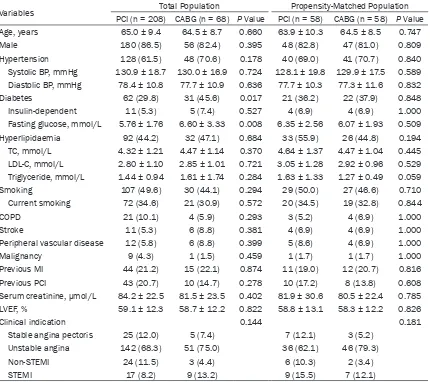
Table 1. Baseline clinical characteristics
Variables Total Population Propensity-Matched Population
PCI (n = 208) CABG (n = 68) P Value PCI (n = 58) CABG (n = 58) P Value Age, years 65.0 ± 9.4 64.5 ± 8.7 0.660 63.9 ± 10.3 64.5 ± 8.5 0.747
Male 180 (86.5) 56 (82.4) 0.395 48 (82.8) 47 (81.0) 0.809
Hypertension 128 (61.5) 48 (70.6) 0.178 40 (69.0) 41 (70.7) 0.840 Systolic BP, mmHg 130.9 ± 18.7 130.0 ± 16.9 0.724 128.1 ± 19.8 129.9 ± 17.5 0.589 Diastolic BP, mmHg 78.4 ± 10.8 77.7 ± 10.9 0.636 77.7 ± 10.3 77.3 ± 11.6 0.832
Diabetes 62 (29.8) 31 (45.6) 0.017 21 (36.2) 22 (37.9) 0.848
Insulin-dependent 11 (5.3) 5 (7.4) 0.527 4 (6.9) 4 (6.9) 1.000 Fasting glucose, mmol/L 5.76 ± 1.76 6.60 ± 3.33 0.008 6.35 ± 2.56 6.07 ± 1.93 0.509 Hyperlipidaemia 92 (44.2) 32 (47.1) 0.684 33 (55.9) 26 (44.8) 0.194 TC, mmol/L 4.32 ± 1.21 4.47 ± 1.14 0.370 4.64 ± 1.37 4.47 ± 1.04 0.445 LDL-C, mmol/L 2.80 ± 1.10 2.85 ± 1.01 0.721 3.05 ± 1.28 2.92 ± 0.96 0.529 Triglyceride, mmol/L 1.44 ± 0.94 1.61 ± 1.74 0.284 1.63 ± 1.33 1.27 ± 0.49 0.059
Smoking 107 (49.6) 30 (44.1) 0.294 29 (50.0) 27 (46.6) 0.710
Current smoking 72 (34.6) 21 (30.9) 0.572 20 (34.5) 19 (32.8) 0.844
COPD 21 (10.1) 4 (5.9) 0.293 3 (5.2) 4 (6.9) 1.000
Stroke 11 (5.3) 6 (8.8) 0.381 4 (6.9) 4 (6.9) 1.000
Peripheral vascular disease 12 (5.8) 6 (8.8) 0.399 5 (8.6) 4 (6.9) 1.000
Malignancy 9 (4.3) 1 (1.5) 0.459 1 (1.7) 1 (1.7) 1.000
Previous MI 44 (21.2) 15 (22.1) 0.874 11 (19.0) 12 (20.7) 0.816 Previous PCI 43 (20.7) 10 (14.7) 0.278 10 (17.2) 8 (13.8) 0.608
Serum creatinine, μmol/L 84.2 ± 22.5 81.5 ± 23.5 0.402 81.9 ± 30.6 80.5 ± 22.4 0.785
LVEF, % 59.1 ± 12.3 58.7 ± 12.2 0.822 58.8 ± 13.1 58.3 ± 12.2 0.826
Clinical indication 0.144 0.181
Stable angina pectoris 25 (12.0) 5 (7.4) 7 (12.1) 3 (5.2) Unstable angina 142 (68.3) 51 (75.0) 36 (62.1) 46 (79.3)
Non-STEMI 24 (11.5) 3 (4.4) 6 (10.3) 2 (3.4)
STEMI 17 (8.2) 9 (13.2) 9 (15.5) 7 (12.1)
Values are mean ± SD or n (%). PCI = percutaneous coronary intervention; CABG = coronary artery bypass grafting; BP = blood
the 99
thpercentile upper reference limit (URL),
symptoms of myocardial ischemia,
electrocar-diographic changes and angiographic
charac-teristics. Within 48 h following the procedure,
cTn values above 5 times the 99
thpercentile
URL after PCI or 10 times after CABG were used
to define periprocedural PCI or CABG related MI
in patients with normal baseline cTn levels
(≤99
thpercentile URL). If the baseline values
were elevated and were stable or falling, a rise
of cTn values > 20% was also considered
evi-dence of periprocedural PCI related MI. Q-wave
MI was defined as MI together with a new
pathologic Q-wave in no less than 2 contiguous
leads after index treatment.
Cerebrovascular events included both ischemic
and hemorrhagic stroke confirmed by
neurolo-gists on the basis of clinical symptoms such as
neurological deficits and the imaging study
findings.
TVR was defined as any surgical or
percutane-ous repeat revascularization of any segment of
the stented vessel (target lesion, upstream or
downstream branches) within 1-year, including
the left main, left anterior descending and left
circumflex coronary arteries. A planned staged
PCI was not considered as a TVR.
The occurrence of definite, probable or
possi-ble stent thrombosis (ST) was defined
accord-ing to the ARC definition (for PCI), and graft
occlusion was defined according to ARC-like
definition (for CABG) [17].
Statistical methods
[image:4.612.91.522.85.308.2]Continuous variables were presented as mean
± SD, and categorical variables were presented
as number (%). Comparisons between the PCI
and CABG groups in baseline characteristics
were performed by t-test or Wilcoxon rank-sum
test for continuous data, and chi-square test
or Fisher’s exact test for categorical data, as
appropriate. Cumulative event curves of the
PCI and CABG groups were constructed by
Kaplan-Meier method and were compared us-
ing log-rank test. Hazard ratios (HR) together
with 95% confidence intervals (CI) were
calcu-lated using Cox proportional hazard models.
Propensity score (PS) adjustment and match-
ing were applied to compensate the treat-
ment selection bias between the PCI and CABG
groups in this observational study. We used a
multivariate logistic regression model to
calcu-late the PS of every patient. A full
nonparsimo-nious model was developed. The covariates
were the baseline characteristics in Tables 1
and 2. The discrimination of the PS model was
accessed with c-statistic, and its calibration
was assessed with Hosmer-Lemeshow
statis-tic. We used Cox proportional hazard models,
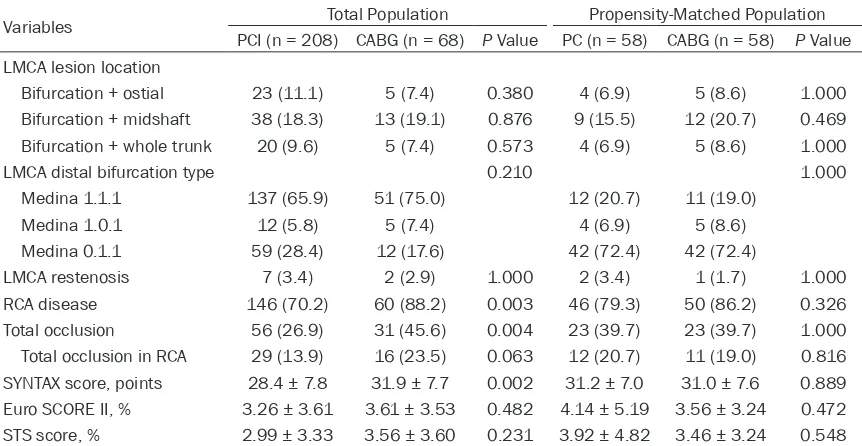
Table 2. Lesion characteristics and procedural risk scores
Variables Total Population Propensity-Matched Population
PCI (n = 208) CABG (n = 68) P Value PC (n = 58) CABG (n = 58) P Value LMCA lesion location
Bifurcation + ostial 23 (11.1) 5 (7.4) 0.380 4 (6.9) 5 (8.6) 1.000 Bifurcation + midshaft 38 (18.3) 13 (19.1) 0.876 9 (15.5) 12 (20.7) 0.469 Bifurcation + whole trunk 20 (9.6) 5 (7.4) 0.573 4 (6.9) 5 (8.6) 1.000
LMCA distal bifurcation type 0.210 1.000
Medina 1.1.1 137 (65.9) 51 (75.0) 12 (20.7) 11 (19.0)
Medina 1.0.1 12 (5.8) 5 (7.4) 4 (6.9) 5 (8.6)
Medina 0.1.1 59 (28.4) 12 (17.6) 42 (72.4) 42 (72.4)
LMCA restenosis 7 (3.4) 2 (2.9) 1.000 2 (3.4) 1 (1.7) 1.000
RCA disease 146 (70.2) 60 (88.2) 0.003 46 (79.3) 50 (86.2) 0.326 Total occlusion 56 (26.9) 31 (45.6) 0.004 23 (39.7) 23 (39.7) 1.000 Total occlusion in RCA 29 (13.9) 16 (23.5) 0.063 12 (20.7) 11 (19.0) 0.816 SYNTAX score, points 28.4 ± 7.8 31.9 ± 7.7 0.002 31.2 ± 7.0 31.0 ± 7.6 0.889
Euro SCORE II, % 3.26 ± 3.61 3.61 ± 3.53 0.482 4.14 ± 5.19 3.56 ± 3.24 0.472
STS score, % 2.99 ± 3.33 3.56 ± 3.60 0.231 3.92 ± 4.82 3.46 ± 3.24 0.548 Values are n (%) or mean ± SD. PCI = percutaneous coronary intervention; CABG = coronary artery bypass grafting; LMCA = left
with PS as a covariate, to estimate the PS-
adjusted HR and 95% CI. Furthermore, we
per-formed a 1:1 PS matching with the nearest
neighbor method within a caliper width equal
to 0.2 times the standard deviation of the logit
of the PS [18].
In the pre-specified subgroups, the
interac-tions were calculated using Cox regression
models to evaluate the heterogeneity of
ment effect among subgroups, and the
treat-ment outcomes with respect to MACCE
between the PCI and CABG groups were
com-pared using Cox regression models with PS
adjustment.
A
P
value < 0.05 was considered significant,
and all tests were two-tailed. All the statistical
analysis were performed with SPSS software
(version 22.0, SPSS, IBM Corporation, Armonk,
New York).
Results
Baseline characteristics
Overall population:
Between November 2010
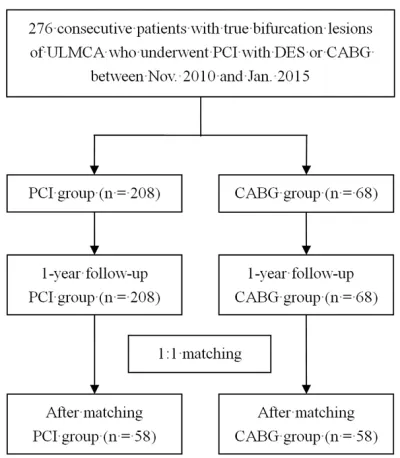
and January 2015, a total of 276 consecutive
patients with ULMCA true bifurcation lesions
received PCI with DES (n = 208) or CABG (n =
68), all these patients were completely
fol-lowed up for at least 1 year (Figure 1). Baseline
clinical characteristics, angiographic
character-istics and cardiac operative risk scores are
shown in Tables 1 and 2. Patients in the PCI
group had a mean age of 65.0 ± 9.4 years with
180 (86.5%) men, and patients in the CABG
group had a mean age of 64.5 ± 8.7 years with
56 (82.4%) men. Compared with patients in the
CABG group, patients treated with PCI less
fre-quently suffered diabetes mellitus (29.8% vs.
45.6%, P = 0.017), total occlusion (26.9% vs.
45.6%, P = 0.004) and RCA disease (70.2% vs.
88.2%, P = 0.003), and they had lower fasting
blood glucose (FBG) levels (5.76 ± 1.76 mmol/L
vs. 6.60 ± 3.33 mmol/L, P = 0.008), as well as
SYNTAX scores (28.4 ± 7.8 vs. 31.9 ± 7.7, P =
0.002). There were no significant differences
between two groups in other clinical
character-istics, angiographic characteristics and cardiac
operative risk scores.
Propensity-matched population
The c-statistic of this propensity score model
was 0.770, and Hosmer-Lemeshow goodness
of fit test
P
value was 0.924, which shows that
this propensity score model has good
discrimi-nation and calibration. After PS matching, 58
patients treated with PCI were matched with 58
patients treated with CABG (Tables 1 and 2).
Baseline characteristics between the PCI and
CABG groups were all similar in the
propensity-matched population.
Procedural characteristics
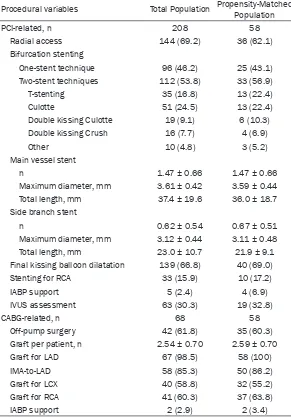
In the PCI group, 96 (46.2%) patients received
one-stent technique, and 112 (53.8%) patients
received two-stent techniques (mainly
includ-ing T, mini-culotte, DK culotte and DK crush
stenting); IVUS was used in 63 (30.3%) patients,
and IABP was used in 5 (2.4%) patients with
severe heart failure; the mean numbers of
implanted stents in main vessels and side
branch vessels of LMCA were 1.47 ± 0.66 and
0.62 ± 0.54, respectively.
[image:5.612.89.289.69.298.2]Among CABG patients, 42 (61.8%) patients
underwent off-pump surgery; 67 (98.5%)
patients received a graft to the LAD with 58
(85.3%) cases of LIMA-to-LAD grafting, and 40
(58.8%) patients received a graft to the LCX;
IABP was used in 2 (2.4%) patients who
suf-fered severe heart failure.
Detailed procedural characteristics for overall
population together with propensity-matched
population are summarized in Table 3.
Clinical outcomes
Overall population:
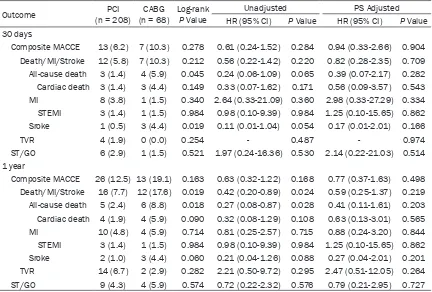
During 1-year follow-up, 14
(5.1%) patients suffered MI, 5 (1.8%) patients
suffered stroke, 16 (5.8%) patients received
TVR, 11 (4.0%) patients died, and cumulative
MACCE occurred in a total of 39 (14.1%) pati-
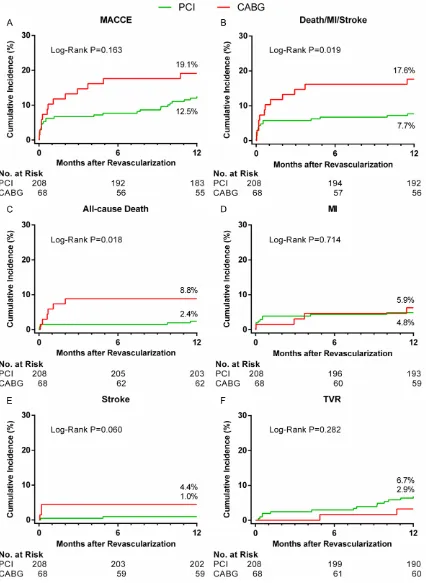
ents. The cumulative clinical outcomes of the
PCI and CABG groups are shown in Table 4 and
Figure 2.
[image:6.612.92.383.88.507.2]CABG group (7.7% vs. 17.6%, P = 0.019), there
was no significant difference in the PS-adjusted
risk of death/MI/stroke between the PCI and
CABG groups (PS-adjusted HR: 0.59, 95% CI:
0.25-1.37; P = 0.219). The rates of MI (4.8% vs.
5.9%, P = 0.714), stroke (1.0% vs. 4.4%, P =
0.060), TVR (6.7% vs. 2.9%, P = 0.282) and ST/
GO (4.3% vs. 5.9%, P = 0.574) were all
compa-rable between the PCI and CABG groups.
Though death occurred less frequently in the
PCI group than in the CABG group (2.4% vs.
8.8%, P = 0.018), the PS-adjusted risk of death
also had no statistically significant difference
Table 3. Procedural characteristics
Procedural variables Total Population Propensity-Matched Population
PCI-related, n 208 58
Radial access 144 (69.2) 36 (62.1)
Bifurcation stenting
One-stent technique 96 (46.2) 25 (43.1) Two-stent techniques 112 (53.8) 33 (56.9) T-stenting 35 (16.8) 13 (22.4)
Culotte 51 (24.5) 13 (22.4)
Double kissing Culotte 19 (9.1) 6 (10.3) Double kissing Crush 16 (7.7) 4 (6.9)
Other 10 (4.8) 3 (5.2)
Main vessel stent
n 1.47 ± 0.66 1.47 ± 0.66
Maximum diameter, mm 3.61 ± 0.42 3.59 ± 0.44 Total length, mm 37.4 ± 19.6 36.0 ± 18.7 Side branch stent
n 0.62 ± 0.54 0.67 ± 0.51
Maximum diameter, mm 3.12 ± 0.44 3.11 ± 0.48 Total length, mm 23.0 ± 10.7 21.9 ± 9.1 Final kissing balloon dilatation 139 (66.8) 40 (69.0) Stenting for RCA 33 (15.9) 10 (17.2)
IABP support 5 (2.4) 4 (6.9)
IVUS assessment 63 (30.3) 19 (32.8)
CABG-related, n 68 58
Off-pump surgery 42 (61.8) 35 (60.3) Graft per patient, n 2.54 ± 0.70 2.59 ± 0.70
Graft for LAD 67 (98.5) 58 (100)
IMA-to-LAD 58 (85.3) 50 (86.2)
Graft for LCX 40 (58.8) 32 (55.2)
Graft for RCA 41 (60.3) 37 (63.8)
IABP support 2 (2.9) 2 (3.4)
Values are n (%) or mean ± SD. PCI = percutaneous coronary intervention; CABG =
coronary artery bypass grafting; RCA = right coronary artery; IABP = intra-aortic ballon pump; IVUS = intravascular ultrasound; LAD = left anterior descending; IMA = internal
mammary artery; LCX = left circumflex.
between the two groups (PS-adjusted HR: 0.41,
95% CI: 0.11-1.61; P = 0.203).
Propensity-matched population
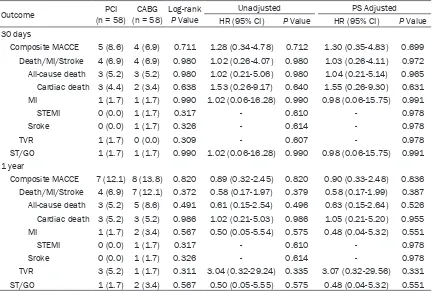
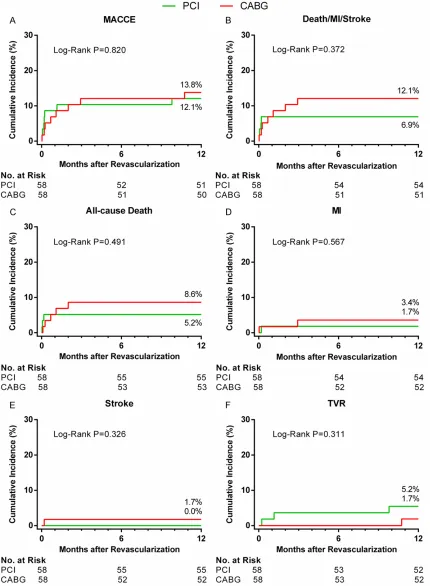
After PS matching, the incidence of MACCE
was similar between the PCI and CABG groups
at 30 days (8.6% vs. 6.9%, P = 0.711) or at 1
year (12.1% vs. 13.8%, P = 0.820). PS-adjusted
HR at 1 year was 0.90 (95% CI: 0.33-2.48;
P = 0.498). All endpoints were all comparable
both at 30 days and at 1 year between the two
groups (Table 5 and Figure 3).
Subgroup analysis
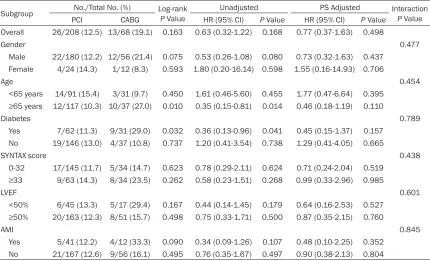
The results of subgroup analysis are presented
in
Table 6. There were no significant
interac-tions between the revascularization strategy
(PCI and CABG) and MACCE among all the
sub-groups. Compared with the CABG group, the
cumulative event rate of MACCE was
signifi-cantly lower in the PCI group in the subgroup of
aged patients (10.3% vs. 27.0%, P = 0.010),
and a similar result was found in the subgroup
of patients with diabetes mellitus (11.3% vs.
29.0%, P = 0.032). However, PS-adjusted risks
of MACCE were both no statistically significant
differences between the PCI and CABG groups
in the above two subgroups (PS-adjusted HR:
0.46, 95% CI: 0.18-1.19; P = 0.110; PS-adjusted
HR: 0.45, 95% CI: 0.15-1.37; P = 0.157,
respec-tively). Additionally, in either unadjusted or PS-
adjusted analysis, the rates of MACCE were all
comparable between the PCI and CABG groups
in other subgroups.
Discussion
[image:7.612.91.523.84.376.2]In the present observational cohort study, we
firstly compared the 1-year clinical outcomes
after PCI with DES or CABG in patients with
ULMCA true bifurcation lesions. The main
find-ing of this study is that PCI (with DES) was
associated with a similar incidence of MAC-
CE when compared with CABG. In addition, we
Table 4. Clinical outcomes at follow-up (total population)
Outcome (n = 208)PCI (n = 68)CABG Log-rank P Value Unadjusted PS Adjusted
HR (95% CI) P Value HR (95% CI) P Value 30 days
Composite MACCE 13 (6.2) 7 (10.3) 0.278 0.61 (0.24-1.52) 0.284 0.94 (0.33-2.66) 0.904 Death/MI/Stroke 12 (5.8) 7 (10.3) 0.212 0.56 (0.22-1.42) 0.220 0.82 (0.28-2.35) 0.709 All-cause death 3 (1.4) 4 (5.9) 0.045 0.24 (0.06-1.09) 0.065 0.39 (0.07-2.17) 0.282 Cardiac death 3 (1.4) 3 (4.4) 0.149 0.33 (0.07-1.62) 0.171 0.56 (0.09-3.57) 0.543 MI 8 (3.8) 1 (1.5) 0.340 2.64 (0.33-21.09) 0.360 2.98 (0.33-27.29) 0.334 STEMI 3 (1.4) 1 (1.5) 0.984 0.98 (0.10-9.39) 0.984 1.25 (0.10-15.65) 0.862 Sroke 1 (0.5) 3 (4.4) 0.019 0.11 (0.01-1.04) 0.054 0.17 (0.01-2.01) 0.166
TVR 4 (1.9) 0 (0.0) 0.254 - 0.487 - 0.974
ST/GO 6 (2.9) 1 (1.5) 0.521 1.97 (0.24-16.36) 0.530 2.14 (0.22-21.03) 0.514 1 year
found that the rates of a composite safety
end-point of all-cause death/MI/stroke, individual
components of MACCE, and ST/GO were all
comparable between the PCI and CABG groups.
Therefore, PCI appears to be a feasible
alterna-tive to CABG for the treatment of ULMCA true
bifurcation lesions.
Many observational studies demonstrated that
PCI was not inferior to CABG for the treat-
ment of left main disease [19-22]. The 1-year
to 5-year substudy for left main in the
random-ized SYNTAX trial also showed similar outcomes
with respect to MACCE as well as the com-
posite safety endpoint of all-cause death/MI/
stroke between the PCI and CABG groups [6,
7], and these results above were further
sup-ported by the 1-year to 5-year outcomes of the
Premier of Randomized Comparison of Bypass
Surgery versus Angioplasty Using
Sirolimus-Eluting Stent in Patients with Left Main Co-
ronary Artery Disease (PRECOMBAT) trial [8, 9].
Though left main bifurcation lesions, especially
[image:9.612.91.523.84.375.2]true bifurcation lesions, were complex and
associated with worse clinical outcomes
com-pared with ostial/mid-shaft lesions [23-27],
an observational study indicated that PCI us-
ing DES provided similar long-term clinical
out-comes (composite of death, Q-wave myocardial
infarction, or stroke) except for TVR compared
with CABG in patients with left main bifurcation
lesions (Medina 1.1.1, 1.1.0 and 1.0.1) [28]. In
our study, we found that PCI with DES was
associated with similar rates of 1-year MAC-
CE and the composite of all-cause death/MI/
stroke compared with CABG for the treatment
of ULMCA true bifurcation lesions, which were
consistent with the results of the above
stud-ies. Interestingly, the composite of death/MI/
stroke was observed significantly less
frequent-ly after PCI than after CABG in this study, which
was consistent with a recent observational
study regarding ULMCA disease from China
[29], but not consistent with the usual result.
We speculated that this finding might be mainly
attributed to the high SYNTAX scores in patients
Table 5. Clinical outcomes at follow-up (propensity-matched population)
Outcome (n = 58)PCI (n = 58)CABG Log-rank P Value Unadjusted PS Adjusted
HR (95% CI) P Value HR (95% CI) P Value 30 days
Composite MACCE 5 (8.6) 4 (6.9) 0.711 1.28 (0.34-4.78) 0.712 1.30 (0.35-4.83) 0.699 Death/MI/Stroke 4 (6.9) 4 (6.9) 0.980 1.02 (0.26-4.07) 0.980 1.03 (0.26-4.11) 0.972 All-cause death 3 (5.2) 3 (5.2) 0.980 1.02 (0.21-5.06) 0.980 1.04 (0.21-5.14) 0.965 Cardiac death 3 (4.4) 2 (3.4) 0.638 1.53 (0.26-9.17) 0.640 1.55 (0.26-9.30) 0.631 MI 1 (1.7) 1 (1.7) 0.990 1.02 (0.06-16.28) 0.990 0.98 (0.06-15.75) 0.991
STEMI 0 (0.0) 1 (1.7) 0.317 - 0.610 - 0.978
Sroke 0 (0.0) 1 (1.7) 0.326 - 0.614 - 0.978
TVR 1 (1.7) 0 (0.0) 0.309 - 0.607 - 0.978
ST/GO 1 (1.7) 1 (1.7) 0.990 1.02 (0.06-16.28) 0.990 0.98 (0.06-15.75) 0.991 1 year
Composite MACCE 7 (12.1) 8 (13.8) 0.820 0.89 (0.32-2.45) 0.820 0.90 (0.33-2.48) 0.836 Death/MI/Stroke 4 (6.9) 7 (12.1) 0.372 0.58 (0.17-1.97) 0.379 0.58 (0.17-1.99) 0.387 All-cause death 3 (5.2) 5 (8.6) 0.491 0.61 (0.15-2.54) 0.496 0.63 (0.15-2.64) 0.526 Cardiac death 3 (5.2) 3 (5.2) 0.986 1.02 (0.21-5.03) 0.986 1.05 (0.21-5.20) 0.955 MI 1 (1.7) 2 (3.4) 0.567 0.50 (0.05-5.54) 0.575 0.48 (0.04-5.32) 0.551
STEMI 0 (0.0) 1 (1.7) 0.317 - 0.610 - 0.978
Sroke 0 (0.0) 1 (1.7) 0.326 - 0.614 - 0.978
received CABG, the difference among
ethnici-ties, and the different experiences of
cardiolo-gists among countries and regions.
PCI is almost always associated with an in-
creased incidence of TVR compared with CABG
in patients with left main or left main
bifurca-tion lesions, and TVR is usually the main cause
of MACCE after PCI [5-9]. In the current study,
cumulative incidence of TVR at 1 year was
numerically higher in the PCI group when
com-pared to CABG group, but this difference did
not reach a statistical significance. This finding
was in agreement with the result of 1-year TVR
in the PRECOMBAT study. Limited sample size
should be an important reason for this result,
but the low incidence of TVR may be the main
cause. The 1-year rate of TVR after PCI in our
study (6.7%) was similar to that in the PRE-
COMBAT study (6.1%), but was obviously lower
than that in the SYNTAX substudy (12.0%).
Notably, our study was specifically aimed at
true bifurcation lesions of ULMCA, which were
more complex and usually associated with
worse outcomes including an increased rate of
TVR. However, the incidence of TVR after PCI in
[image:11.612.92.522.84.345.2]our study was relatively lower. It may be at-
tributed to the following reasons. Firstly,
stent-ing strategies and techniques for ULMCA
dis-ease have been well recognized and improved.
Recent studies have demonstrated that
con-ventional crush stenting was associated with
worse outcomes compared with culotte
stent-ing for the treatment of left main bifurcation
lesions [30], and DK crush stenting was
supe-rior to conventional crush, culotte and
provi-sional stenting for the treatment of true bifur-
cation lesions of ULMCA [11, 12, 31-33]. In
addition, we have found that modified
mini-culotte or DK mini-culotte stenting might result in
beneficial clinical outcomes in patients with
coronary bifurcation lesions [13, 14]. Therefore,
inappropriate stenting techniques such as
con-ventional crush stenting were avoided as far
as possible and improved stenting techniques
such as modified mini-culotte, DK culotte and
DK crush stenting were applied in the present
study. Secondly, new zotarolimus-eluting, eve-
rolimus-eluting and sirolimus-eluting stents
used in our study may be superior to
paclitaxel-eluting stents used in the SYNTAX substudy
[34-42]. In addition, IVUS guided-PCI may be
Table 6. Hazard ratio for 1-year MACCE in pre-specified subgroups in total population
Subgroup No./Total No. (%) Log-rank P Value Unadjusted PS Adjusted Interaction P Value PCI CABG HR (95% CI) P Value HR (95% CI) P Value
Overall 26/208 (12.5) 13/68 (19.1) 0.163 0.63 (0.32-1.22) 0.168 0.77 (0.37-1.63) 0.498
Gender 0.477
Male 22/180 (12.2) 12/56 (21.4) 0.075 0.53 (0.26-1.08) 0.080 0.73 (0.32-1.63) 0.437 Female 4/24 (14.3) 1/12 (8.3) 0.593 1.80 (0.20-16.14) 0.598 1.55 (0.16-14.93) 0.706
Age 0.454
<65 years 14/91 (15.4) 3/31 (9.7) 0.450 1.61 (0.46-5.60) 0.455 1.77 (0.47-6.64) 0.395
≥65 years 12/117 (10.3) 10/37 (27.0) 0.010 0.35 (0.15-0.81) 0.014 0.46 (0.18-1.19) 0.110
Diabetes 0.789
Yes 7/62 (11.3) 9/31 (29.0) 0.032 0.36 (0.13-0.96) 0.041 0.45 (0.15-1.37) 0.157 No 19/146 (13.0) 4/37 (10.8) 0.737 1.20 (0.41-3.54) 0.738 1.29 (0.41-4.05) 0.665
SYNTAX score 0.438
0-32 17/145 (11.7) 5/34 (14.7) 0.623 0.78 (0.29-2.11) 0.624 0.71 (0.24-2.04) 0.519
≥33 9/63 (14.3) 8/34 (23.5) 0.262 0.58 (0.23-1.51) 0.268 0.99 (0.33-2.96) 0.985
LVEF 0.601
<50% 6/45 (13.3) 5/17 (29.4) 0.167 0.44 (0.14-1.45) 0.179 0.64 (0.16-2.53) 0.527
≥50% 20/163 (12.3) 8/51 (15.7) 0.498 0.75 (0.33-1.71) 0.500 0.87 (0.35-2.15) 0.760
AMI 0.845
associated with a decreased rate of TVR [32,
43-45], and we had performed IVUS guided-PCI
in some patients with high-risk lesions in this
study.
Stroke is a well-known and serious
complica-tion in patients with CABG surgery, and it is
usu-ally procedure-related [7, 46]. A lot of studies
such as the SYNTAX substudy and a
meta-anal-ysis of 24 studies showed that PCI with DES
was associated with a lower incidence of stroke
as compared with CABG in patients with ULMCA
disease [20]. In spite of the incidence of stroke
in our study trended to be lower in the PCI group
as compared with that in the CABG group, this
difference between the two groups was not
sta-tistically significant in the adjusted analysis. A
similar result was obtained in the PRECOMBAT
study. The reasons for this result may be due to
low incidence of stroke, limited sample size and
different ethnicities [9].
With regard to the incidence of death, a few
observational studies indicated that PCI with
DES was associated with significantly lower or
a trend toward lower risk of death in patients
with ULMCA disease [29, 47-49]. Similarly, in
our study, death also occurred less frequently
after PCI with DES than after CABG in the
unad-justed analysis. However, most studies showed
a similar incidence of death between the PCI
and CABG groups [2, 7, 20], and the incidence
of death in this study also had no significant
difference between the two groups in our PS
adjusted or matched analysis. A meta-analysis
of 3 randomized trials and 9 observational
studies has indicated that the average relative
risk of death for PCI with DES versus CABG was
lower in nonrandomized studies than in
ran-domized trials [19], which suggest that
selec-tive bias may be the main reason for the lower
risk of death in the PCI group in the
observa-tional studies.
SYNTAX score is very important for the
evalua-tion of the severity of coronary lesions and the
procedural risk. In the SYNTAX substudy, PCI
patients with higher baseline SYNTAX scores
(≥33) were associated with significantly worse
outcomes, but baseline SYNTAX scores had no
significant correlations with the outcomes of
patients treated with CABG. The above finding
has been supported by some other studies,
and calculation of SYNTAX score has been
rec-ommended by current guidelines to guide the
selection of treatment strategy for ULMCA
dis-ease [3, 4, 50]. However, our study indicated
that the incidence of MACCE was no significant
difference between the PCI and CABG groups in
patients with high baseline SYNTAX scores
(≥33). A result consistent with our above finding
was reported in the PRECOMBAT study. The
reasons for the above inconsistent results are
unclear, but may be multifactorial. To begin
with, the SYNTAX score only focuses on
ana-tomical characteristic, and clinical factors are
neglected. Recent studies have shown that
combining anatomical and clinical factors were
more appropriate to evaluate the procedural
risk of patients [51-53]. Furthermore, improved
DES quality and stenting techniques, and
advanced devices such as IVUS and IABP were
used in the PCI group in our study, so the trend
in favor of CABG was weakened. Last but not
least, the severity of ULMCA true bifurcation
lesions may be overestimated by the
calcula-tion of SYNTAX score.
Study limitations
There were several limitations in our study.
Firstly, this was an observational study, so we
used PS adjustment and matching to
compen-sate the treatment selection bias. Secondly,
the sample size of this single-center study was
restricted due to the low incidence of ULMCA
true bifurcation lesions, therefore, it was
under-powered to compare the individual components
of MACCE or ST/GO between the PCI and CABG
groups, especially in the propensity-matched
population, and the power of subgroups
analy-sis was also limited. Thirdly, 1-year follow-up
was inadequate to compare the treatment
outcomes after PCI with DES versus CABG.
Finally, dual antiplatelet therapy was not
man-datory in patients treated with CABG, and so
the clinical outcomes of the two groups may be
influenced by the inconsistent pharmaceutical
treatments.
Conclusions
should be interpreted with caution, and fur-
ther study should be performed to confirm our
findings.
Acknowledgements
This study was supported by the National Na-
tural Science Foundation of China (No. 8137-
0311), and the Key Project of the Natural
Science Foundation of Fujian Province, China
(No. 2013Y0043). The authors are thankful
to Dr. Hua Cao, Dr. Jun Fang and Mr. Yaohui
Zheng for their assistances in data collection
for this study.
Disclosure of conflict of interest
None.
Address correspondence to: Dr. Lianglong Chen, Department of Cardiology, Union Hospital, Fujian Medical University, 29 Xin-Quan Road, Fuzhou 350001, Fujian, China. Tel: 86-591-83342282; Fax: 86-591-83342282; E-mail: lianglongchenxh@126. com
References
[1] Ragosta M. Left main coronary artery disease: importance, diagnosis, assessment, and man-agement. Curr Probl Cardiol 2015; 40: 93-126. [2] Bittl JA, He Y, Jacobs AK, Yancy CW, Normand
SL. American College of Cardiology Founda-tion/American Heart Association Task Force on Practice Guidelines. Bayesian methods
af-firm the use of percutaneous coronary inter -vention to improve survival in patients with unprotected left main coronary artery disease. Circulation 2013; 127: 2177-2185.
[3] Levine GN, Bates ER, Blankenship JC, Bailey SR, Bittl JA, Cercek B, Chambers CE, Ellis SG, Guyton RA, Hollenberg SM, Khot UN, Lange RA, Mauri L, Mehran R, Moussa ID, Mukherjee D, Nallamothu BK, Ting HH; American College of Cardiology Foundation; American Heart Asso-ciation Task Force on Practice Guidelines; So-ciety for Cardiovascular Angiography and Inter-ventions. 2011 ACCF/AHA/SCAI Guideline for percutaneous coronary intervention. A report of the american college of cardiology founda-tion/american heart association task force on practice guidelines and the society for cardio-vascular angiography and interventions. J Am Coll Cardiol 2011; 58: e44-122.
[4] Windecker S, Kolh P, Alfonso F, Collet JP, Cre-mer J, Falk V, Filippatos G, Hamm C, Head SJ, Jüni P, Kappetein AP, Kastrati A, Knuuti J, Land-messer U, Laufer G, Neumann FJ, Richter DJ,
Schauerte P, Sousa Uva M, Stefanini GG, Tag-gart DP, Torracca L, Valgimigli M, Wijns W, Wit-kowski A. 2014 ESC/EACTS guidelines on myo-cardial revascularization: the task force on myocardial revascularization of the european society of cardiology (ESC) and the european association for cardio-thoracic surgery (EACTS) developed with the special contribution of the european association of percutaneous cardio-vascular interventions (EAPCI). Eur Heart J 2014; 35: 2541-2619.
[5] Teirstein PS, Price MJ. Left main percutaneous coronary intervention. J Am Coll Cardiol 2012; 60: 1605-1613.
[6] Morice MC, Serruys PW, Kappetein AP, Feld-man TE, Ståhle E, Colombo A, Mack MJ, Holmes DR, Torracca L, van Es GA, Leadley K, Dawkins KD, Mohr F. Outcomes in patients with de novo left main disease treated with ei-ther percutaneous coronary intervention using paclitaxel-eluting stents or coronary artery by-pass graft treatment in the synergy between percutaneous coronary intervention with TAX-US and cardiac surgery (SYNTAX) trial. Circula-tion 2010; 121: 2645-2653.
[7] Morice MC, Serruys PW, Kappetein AP, Feld-man TE, Ståhle E, Colombo A, Mack MJ, Holmes DR, Choi JW, Ruzyllo W, Religa G, Huang J, Roy K, Dawkins KD, Mohr F. Five-year outcomes in patients with left main disease treated with either percutaneous coronary in-tervention or coronary artery bypass grafting in the synergy between percutaneous coronary intervention with taxus and cardiac surgery trial. Circulation 2014; 129: 2388-2394. [8] Park SJ, Kim YH, Park DW, Yun SC, Ahn JM,
Song HG, Lee JY, Kim WJ, Kang SJ, Lee SW, Lee CW, Park SW, Chung CH, Lee JW, Lim DS, Rha SW, Lee SG, Gwon HC, Kim HS, Chae IH, Jang Y, Jeong MH, Tahk SJ, Seung KB. Randomized trial of stents versus bypass surgery for left main coronary artery disease. N Engl J Med 2011; 364: 1718-1727.
[9] Ahn JM, Roh JH, Kim YH, Park DW, Yun SC, Lee PH, Chang M, Park HW, Lee SW, Lee CW, Park SW, Choo SJ, Chung C, Lee J, Lim DS, Rha SW, Lee SG, Gwon HC, Kim HS, Chae IH, Jang Y, Jeong MH, Tahk SJ, Seung KB, Park SJ. Ran-domized trial of stents versus bypass surgery
for left main coronary artery disease: five-year
outcomes of the PRECOMBAT study. J Am Coll Cardiol 2015; 65: 2198-2206.
[11] Chen SL, Xu B, Han YL, Sheiban I, Zhang JJ, Ye F, Kwan TW, Paiboon C, Zhou YJ, Lv SZ, Dan-gas GD, Xu YW, Wen SY, Hong L, Zhang RY, Wang HC, Jiang TM, Wang Y, Chen F, Yuan ZY, Li WM, Leon MB. Comparison of double kissing crush versus culotte stenting for unprotected distal left main bifurcation lesions: results from a multicenter, randomized, prospective DKCRUSH-III study. J Am Coll Cardiol 2013; 61: 1482-1488.
[12] Chen SL, Xu B, Han YL, Sheiban I, Zhang JJ, Ye F, Kwan TW, Paiboon C, Zhou YJ, Lv SZ, Dangas GD, Xu YW, Wen SY, Hong L, Zhang RY, Wang HC, Jiang TM, Wang Y, Sansoto T, Chen F, Yuan ZY, Li WM, Leon MB. Clinical outcome after DK crush versus culotte stenting of distal left main bifurcation lesions: the 3-year follow-up results of the DKCRUSH-III study. JACC Cardiovasc In-terv 2015; 8: 1335-1342.
[13] Chen LL, Fan L, Zhen XC, Luo YK, Lin CG, Peng
YF. Modified culotte stenting for treatment of
complex coronary bifurcation lesions: immedi-ate and 9-month outcomes in a pilot study. Chin Med J (Engl) 2011; 124: 1943-1950. [14] Fan L, Chen L, Luo Y, Zhang L, Zhong W, Lin C,
Chen Z, Peng Y, Zhen X, Dong X. DK mini- culotte stenting in the treatment of true coro-nary bifurcation lesions: a propensity score matching comparison with T-provisional stent-ing. Heart Vessels 2016; 31: 308-321.
[15] Cutlip DE, Windecker S, Mehran R, Boam A, Cohen DJ, van Es GA, Steg PG, Morel MA, Mau-ri L, Vranckx P, McFadden E, Lansky A, Hamon M, Krucoff MW, Serruys PW; Academic Re-search Consortium. Clinical end points in
coro-nary stent trials: a case for standardized defini -tions. Circulation 2007; 115: 2344-2351. [16] Thygesen K, Alpert JS, Jaffe AS, Simoons ML,
Chaitman BR, White HD; Task Force for the
Uni-versal Definition of Myocardial Infarction. Third universal definition of myocardial infarction.
Nat Rev Cardiol 2012; 9: 620-633.
[17] Farooq V, Serruys PW, Zhang Y, Mack M, Ståhle E, Holmes DR, Feldman T, Morice MC, Colom-bo A, Bourantas CV, de Vries T, Morel MA, Dawkins KD, Kappetein AP, Mohr FW. Short-term and long-Short-term clinical impact of stent thrombosis and graft occlusion in the SYNTAX trial at 5 years: synergy between percutaneous coronary intervention with taxus and cardiac surgery trial. J Am Coll Cardiol 2013; 62: 2360-2369.
[18] de la Torre Hernandez JM, Baz Alonso JA, Go-mez Hospital JA, Alfonso Manterola F, Garcia Camarero T, Gimeno de Carlos F, Roura Ferrer G, Recalde AS, Martínez-Luengas IL, Gomez Lara J, Hernandez Hernandez F, Pérez-Vizcay-no MJ, Cequier Fillat A, Perez de Prado A, Gon-zalez-Trevilla AA, Jimenez Navarro MF, Mauri
Ferre J, Fernandez Diaz JA, Pinar Bermudez E, Zueco Gil J; IVUS-TRONCO-ICP Spanish study. Clinical impact of intravascular ultrasound guidance in drug-eluting stent implantation for unprotected left main coronary disease: pooled analysis at the patient-level of 4 regis-tries. JACC Cardiovasc Interv 2014; 7: 244-254.
[19] Jang JS, Choi KN, Jin HY, Seo JS, Yang TH, Kim DK, Kim DS, Urm SH, Chun JH, Kang SJ, Park DW, Lee SW, Kim YH, Lee CW, Park SW, Park SJ. Meta-analysis of three randomized trials and nine observational studies comparing drug-eluting stents versus coronary artery by-pass grafting for unprotected left main coro-nary artery disease. Am J Cardiol 2012; 110: 1411-1418.
[20] Athappan G, Patvardhan E, Tuzcu ME, Ellis S, Whitlow P, Kapadia SR. Left main coronary ar-tery stenosis: a meta-analysis of drug-eluting stents versus coronary artery bypass grafting. JACC Cardiovasc Interv 2013; 6: 1219-1230. [21] Buszman PE, Buszman PP,
Banasiewicz-Sz-króbka I, Milewski KP, Żurakowski A, Orlik B,
Konkolewska M, Trela B, Janas A, Martin JL, Kiesz RS, Bochenek A. Left main stenting in comparison with surgical revascularization: 10-year outcomes of the (left main coronary artery stenting) LE MANS trial. JACC Cardio-vasc Interv 2016; 9: 318-327.
[22] Park DW, Seung KB, Kim YH, Lee JY, Kim WJ, Kang SJ, Lee SW, Lee CW, Park SW, Yun SC, Gwon HC, Jeong MH, Jang YS, Kim HS, Kim PJ, Seong IW, Park HS, Ahn T, Chae IH, Tahk SJ,
Chung WS, Park SJ. Long-term safety and effi -cacy of stenting versus coronary artery bypass grafting for unprotected left main coronary ar-tery disease: 5-year results from the MAIN-COMPARE (revascularization for unprotected left main coronary artery stenosis: comparison of percutaneous coronary angioplasty versus surgical revascularization) registry. J Am Coll Cardiol 2010; 56: 117-124.
[23] Naganuma T, Chieffo A, Meliga E, Capodanno D, Park SJ, Onuma Y, Valgimigli M, Jegere S, Makkar RR, Palacios IF, Costopoulos C, Kim YH, Buszman PP, Chakravarty T, Sheiban I, Mehran R, Naber C, Margey R, Agnihotri A, Marra S, Capranzano P, Leon MB, Moses JW, Fajadet J, Lefevre T, Morice MC, Erglis A,
Tam-burino C, Alfieri O, Serruys PW, Colombo A.
main treatment. JACC Cardiovasc Interv 2013; 6: 1242-1249.
[24] Tiroch K, Mehilli J, Byrne RA, Schulz S, Mass-berg S, Laugwitz KL, Vorpahl M, Seyfarth M, Kastrati A; ISAR-LEFT MAIN Study Investiga-tors. Impact of coronary anatomy and stenting technique on long-term outcome after drug-eluting stent implantation for unprotected left main coronary artery disease. JACC Cardiovasc Interv 2014; 7: 29-36.
[25] Chen SL, Sheiban I, Xu B, Jepson N, Paiboon C, Zhang JJ, Ye F, Sansoto T, Kwan TW, Lee M, Han YL, Lv SZ, Wen SY, Zhang Q, Wang HC, Ji-ang TM, WJi-ang Y, Chen LL, Tian NL, Cao F, Qiu CG, Zhang YJ, Leon MB. Impact of the complex-ity of bifurcation lesions treated with
drug-elut-ing stents: the DEFINITION study (definitions
and impact of complEx bifurcation lesIons on clinical outcomes after percutaneous coronary intervenTIOn using drug-eluting steNts). JACC Cardiovasc Interv 2014; 7: 1266-1276. [26] Valgimigli M, Malagutti P, Rodriguez-Granillo
GA, Garcia-Garcia HM, Polad J, Tsuchida K, Re-gar E, Van der Giessen WJ, de Jaegere P, De Feyter P, Serruys PW. Distal left main coronary disease is a major predictor of outcome in pa-tients undergoing percutaneous intervention in the drug-eluting stent era: an integrated clinical and angiographic analysis based on the rapamycin-eluting stent evaluated at rot- terdam cardiology hospital (RESEARCH) and taxus-stent evaluated at rotterdam cardiology hospital (T-SEARCH) registries. J Am Coll Car-diol 2006; 47: 1530-1537.
[27] Palmerini T, Sangiorgi D, Marzocchi A, Tambu-rino C, Sheiban I, Margheri M, Vecchi G,
San-giorgi G, Ruffini M, Bartorelli AL, Briguori C, Vig -nali L, Di Pede F, Ramondo A, Inglese L, De Carlo M, Bolognese L, Benassi A, Palmieri C, Filippone V, Barlocco F, Lauria G, De Servi S. Ostial and midshaft lesions vs. bifurcation le-sions in 1111 patients with unprotected left main coronary artery stenosis treated with drug-eluting stents: results of the survey from the italian society of invasive cardiology. Eur Heart J 2009; 30: 2087-2094.
[28] Chang K, Koh YS, Jeong SH, Lee JM, Her SH, Park HJ, Kim PJ, Kim YH, Chung WS, Yim HW, Park SJ, Seung KB. Long-term outcomes of percutaneous coronary intervention versus coronary artery bypass grafting for unprotect-ed left main coronary bifurcation disease in the drug-eluting stent era. Heart 2012; 98: 799-805.
[29] Yu XP, Wu CY, Ren XJ, Yuan F, Song XT, Luo YW, He JQ, Gao YC, Huang FJ, Gu CX, Sun LZ, Lyu SZ, Chen F. Very long-term outcomes and pre-dictors of percutaneous coronary intervention with drug-eluting stents versus coronary artery
bypass grafting for patients with unprotected left main coronary artery disease. Chin Med J (Engl) 2016; 129: 763-770.
[30] Kervinen K, Niemela M, Romppanen H, Erglis A, Kumsars I, Maeng M, Holm NR, Lassen JF, Gunnes P, Stavnes S, Jensen JS, Galløe A, Nar-bute I, Sondore D, Christiansen EH, Ravkilde J, Steigen TK, Mannsverk J, Thayssen P, Hansen KN, Helqvist S, Vikman S, Wiseth R, Aarøe J, Jokelainen J, Thuesen L; Nordic PCI Study Group. Clinical outcome after crush versus culotte stenting of coronary artery bifurcation lesions the nordic stent technique study 36- month follow-up results. JACC Cardiovasc In-terv 2013; 6: 1160-1165.
[31] Chen S, Zhang J, Ye F, Zhu Z, Lin S, Shan S, Kwan TW. DK crush (double-kissing and dou-ble-crush) technique for treatment of true coro-nary bifurcation lesions: illustration and com-parison with classic crush. J Invasive Cardiol 2007; 19: 189-193.
[32] Chen SL, Mintz G, Kan J, Zhang JJ, Hu ZY, Ye F, Tian NL, Zhang JX, Xu T, Liu ZZ. Serial intravas-cular ultrasound analysis comparing double kissing and classical crush stenting for coro-nary bifurcation lesions. Catheter Cardiovasc Interv 2011; 78: 729-736.
[33] Chen SL, Santoso T, Zhang JJ, Ye F, Xu YW, Fu Q, Kan J, Paiboon C, Zhou Y, Ding SQ, Kwan TW. A randomized clinical study comparing double kissing crush with provisional stenting for treatment of coronary bifurcation lesions: results from the DKCRUSH-II (double kissing crush versus provisional stenting technique for treatment of coronary bifurcation lesions) trial. J Am Coll Cardiol 2011; 57: 914-920.
[34] Xu B, Yang Y, Yuan Z, Du Z, Wong SC, Généreux P, Lu S; RESOLUTE China RCT Investigators. Zo-tarolimus- and paclitaxel-eluting stents in an all-comer population in China: the RESOLUTE China randomized controlled trial. JACC Cardio-vasc Interv 2013; 6: 664-670.
[35] Smits PC, Vlachojannis GJ, Mcfadden EP, Roy-aards KJ, Wassing J, Joesoef KS, van Mieghem C, van de Ent M. Final 5-year follow-up of a ran-domized controlled trial of everolimus- and paclitaxel-eluting stents for coronary revascu-larization in daily practice: the COMPARE trial (a trial of everolimus-eluting stents and pacli-taxel stents for coronary revascularization in daily practice). JACC Cardiovasc Interv 2015; 8: 1157-1165.
zo-tarolimus-eluting and everolimus-eluting coro-nary stents. N Engl J Med 2010; 363: 136-146.
[37] Iqbal J, Serruys PW, Silber S, Kelbaek H, Rich-ardt G, Morel MA, Negoita M, Buszman PE, Windecker S. Comparison of zotarolimus- and
everolimus-eluting coronary stents: final 5-year
report of the RESOLUTE all-comers trial. Circ Cardiovasc Interv 2015; 8: e002230.
[38] Naito R, Miyauchi K, Konishi H, Tsuboi S, Ogita M, Kasai T, Tamura H, Okazaki S, Daida H. Comparison of long-term clinical outcomes be-tween sirolimus- and paclitaxel-eluting stents in real-world clinical practice. Heart Vessels 2015; 30: 746-751.
[39] Park K, Park KW, Rha SW, Bae JH, Hur SH, Park JS, Yoon JH, Jang Y, Jeong MH, Kim HS. Com-parison of 5-year clinical outcomes between sirolimus-versus paclitaxel-eluting stent: kore-an multicenter network kore-analysis of 9000-pa-tient cohort. Circ Cardiovasc Interv 2012; 5: 174-184.
[40] Song YB, Hahn JY, Choi SH, Choi JH, Lee SH, Jeong MH, Kim HS, Seong IW, Yang JY, Rha SW, Jang Y, Yoon JH, Tahk SJ, Seung KB, Park SJ, Gwon HC. Sirolimus-versus paclitaxel-eluting stents for the treatment of coronary tions results: from the COBIS (coronary bifurca-tion stenting) registry. J Am Coll Cardiol 2010; 55: 1743-1750.
[41] Windecker S, Remondino A, Eberli FR, Jüni P, Räber L, Wenaweser P, Togni M, Billinger M,
Tüller D, Seiler C, Roffi M, Corti R, Sütsch G,
Maier W, Lüscher T, Hess OM, Egger M, Meier B. Sirolimus-eluting and paclitaxel-elut-ing stents for coronary revascularization. N Engl J Med 2005; 353: 653-662.
[42] Kim YH, Park DW, Ahn JM, Yun SC, Song HG, Lee JY, Kim WJ, Kang SJ, Lee SW, Lee CW, Park SW, Jang Y, Jeong MH, Kim HS, Hur SH, Rha SW, Lim DS, Her SH, Seung KB, Seong IW, Park SJ; PRECOMBAT-2 Investigators. Everolimus-eluting stent implantation for unprotected left main coronary artery stenosis. The PRECOM-BAT-2 (premier of randomized comparison of bypass surgery versus angioplasty using siroli-mus-eluting stent in patients with left main coronary artery disease) study. JACC Cardio-vasc Interv 2012; 5: 708-717.
[43] Ahn JM, Kang SJ, Yoon SH, Park HW, Kang SM, Lee JY, Lee SW, Kim YH, Lee CW, Park SW, Mintz GS, Park SJ. Meta-analysis of outcomes after intravascular ultrasound-guided versus angiography-guided drug-eluting stent implan-tation in 26,503 patients enrolled in three ran-domized trials and 14 observational studies. Am J Cardiol 2014; 113: 1338-1347.
[44] Kang SJ, Ahn JM, Song H, Kim WJ, Lee JY, Park DW, Yun SC, Lee SW, Kim YH, Lee CW, Mintz
GS, Park SW, Park SJ. Comprehensive intravas-cular ultrasound assessment of stent area and its impact on restenosis and adverse cardiac events in 403 patients with unprotected left main disease. Circ Cardiovasc Interv 2011; 4: 562-569.
[45] Gao XF, Kan J, Zhang YJ, Zhang JJ, Tian NL, Ye F, Ge Z, Xiao PX, Chen F, Mintz G, Chen SL. Comparison of one-year clinical outcomes be-tween intravascular ultrasound-guided versus angiography-guided implantation of drug-elut-ing stents for left main lesions: a sdrug-elut-ingle-center analysis of a 1,016-patient cohort. Patient Pre-fer Adherence 2014; 8: 1299-1309.
[46] Palmerini T, Biondi-Zoccai G, Reggiani LB, San-giorgi D, Alessi L, De Servi S, Branzi A, Stone GW. Risk of stroke with coronary artery bypass graft surgery compared with percutaneous coronary intervention. J Am Coll Cardiol 2012; 60: 798-805.
[47] Qin Q, Qian J, Wu X, Fan B, Ge L, Ge J. A com-parison between coronary artery bypass graft-ing surgery and percutaneous coronary inter-vention for the treatment of unprotected left main coronary artery disease. Clin Cardiol 2013; 36: 54-60.
[48] Kawecki D, Morawiec B, Fudal M, Milejski W,
Jacheć W, Nowalany-Kozielska E. Comparison
of coronary artery bypass grafting with percu-taneous coronary intervention for unprotected left main coronary artery disease. Yonsei Med J 2012; 53: 58-67.
[49] Wu X, Chen Y, Liu H, Teirstein PS, Kirtane AJ, Ge C, Song X, Chen X, Gu C, Huang F, Lv S. Comparison of long-term (4-year) outcomes of patients with unprotected left main coronary artery narrowing treated with drug-eluting stents versus coronary-artery bypass grafting. Am J Cardiol 2010; 105: 1728-1734.
[50] Park DW, Kim YH, Yun SC, Song HG, Ahn JM, Oh JH, Kim WJ, Lee JY, Kang SJ, Lee SW, Lee CW, Park SW, Park SJ. Complexity of athero-sclerotic coronary artery disease and long-term outcomes in patients with unprotected left main disease treated with drug-eluting stents or coronary artery bypass grafting. J Am Coll Cardiol 2011; 57: 2152-2159.
[52] Campos CM, van Klaveren D, Farooq V, Simon-ton CA, Kappetein AP, Sabik JF 3rd, Steyerberg EW, Stone GW, Serruys PW; EXCEL Trial Investi-gators. Long-term forecasting and comparison of mortality in the evaluation of the xience everolimus eluting stent vs. coronary artery by-pass surgery for effectiveness of left main re-vascularization (EXCEL) trial: prospective vali-dation of the SYNTAX Score II. Eur Heart J 2015; 36: 1231-1241.
[53] Campos CM, Garcia-Garcia HM, van Klaveren D, Ishibashi Y, Cho YK, Valgimigli M, Räber L, Jonker H, Onuma Y, Farooq V, Garg S, Windeck-er S, Morel MA, SteyWindeck-erbWindeck-erg EW, SWindeck-erruys PW.
Validity of SYNTAX score II for risk stratification