Entomopathogenic nematodes: can we use the current
knowledge on belowground multitrophic interactions
in future plant protection programmes? – Review
Anamarija Jagodič, Stanislav Trdan, Žiga Laznik*
Department of Agronomy, Biotechnical Faculty, University of Ljubljana, Ljubljana, Slovenia
*Corresponding author: [email protected]
Citation: Jagodič A., Trdan S., Laznik Ž. (2019): Entomopathogenic nematodes: can we use the current knowledge on below-ground multitrophic interactions in future plant protection programmes? – Review. Plant Protect. Sci., 55: 243–254.
Abstract: Plants under herbivore attack emit mixtures of volatiles that can attract the natural enemies of the herbivores. Entomopathogenic nematodes (EPNs) are organisms that can be used in the biological control of insect pests. Recent studies have shown that the movement of EPNs is associated with the detection of chemi-cal stimuli from the environment. To date, several compounds that are responsible for the mediation in below ground multitrophic interactions have been identified. In the review, we discuss the use of EPNs in agriculture, the role of belowground volatiles and their use in plant protection programmes.
Keywords: insects; indirect plant defence; volatile organic compounds; chemical communication; insect parasitic nematodes
The rhizosphere represents the part of the soil that surrounds a plant’s root system. It contains a large number of organisms (Wenke et al. 2010). Several studies have shown that plants discharge numerous organic substances into the rhizosphere, which are categorised as amino acids, phenols, sugars, poly-saccharides, amides and proteins, all of the higher molecular masses (Wenke et al. 2010; Voglar et al. 2019). Scientists have proven that plants can use their exudates to defend themselves against attacks by insects, bacteria and pathogenic fungi (Bais et al. 2006; Hiltpold et al. 2011).
An indirect defence is a mechanism whereby the plant releases certain volatile organic components that can repel plant pests or attract their natural enemies – predators, parasitoids, entomopathogenic nematodes (Turlings et al. 1990; Rasmann et al. 2005; Degenhardt 2009; Laznik & Trdan 2018). The benefits of an indirect plant defence include the reduction of herbivory and an increase in the repro-ductive fitness (Kessler & Baldwin 2001; Cheng
et al. 2007). Volatile organic compounds (VOCs) are lipophilic components with a high vapour pressure that are released from leaves, blossoms, roots, and fruits into the atmosphere or soil (Dudareva et al. 2006). VOCs can be released by both damaged and undam-aged plants and are classified as terpenes, benzenoids, derivatives of fatty acids, and phenylpropanoids (Bais et al. 2006). The release of VOCs depends on the type of damage (mechanical, herbivorous, etc.), as well as on the species of herbivorous insects (Gosset et al. 2009; Hiltpold et al. 2011; Laznik & Trdan 2013). Gosset et al. (2009) discovered that the plants dam-aged by the larvae of the Colorado potato beetle [ Lep-tinotarsa decemlineata (Say, 1824)] release substances different from those released by the plants attacked by aphids. Exudates from plants have also other effects and roles. By root excretion, plants can encourage a beneficial symbiosis, regulate microbiological com-munities, inhibit the growth of neighbouring plants and regulate the physiochemical properties of the soil (Flores et al. 1999; Voglar et al. 2019).
Furthermore, herbivores can accumulate plant tox-ins, which can be used for their defence against their natural enemies (Robert et al. 2017). For example, the larvae of the western corn root worm (Diabrotica virgifera virgifera LeConte, 1868), which are among the most common pests of corn, are adapted to vari-ous plant defence mechanisms. Robert et al. (2017) showed that the larvae of the corn rootworm are able to accumulate benzoxazinoids, which are re-leased during the herbivore attack by the corn (Zea mays Linnaeus) and they also act as a repellent to entomopathogenic nematodes. The results of their study show that herbivores can reactivate plant tox-ins, which can be used for their own defence against the enemies of the third and fourth trophic levels.
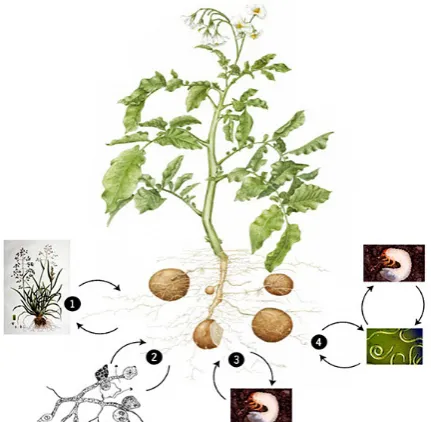
The multitrophic interactions pertinent to plant protection against herbivores describe the ecological influences of three or more trophic levels. These levels comprise the plants, the pests and their natural en-emies (Turlings et al. 1990; Dicke 1999; Kessler & Baldwin 2002; Heil 2008; Degenhardt 2009; Ali et al. 2010; Hiltpold et al. 2013; Jagodič et al. 2017; Voglar et al. 2019) (Figure 1). Entomopathogenic nematodes (EPNs) are organisms that can be used in classical, conservational, and augmentative biologi-cal control programmes. Several studies showed that EPNs can use belowground volatiles as a cue to locate
their hosts. In the review, we discuss the use of EPNs in agriculture, the role of belowground volatiles and their use in plant protection programmes.
The use of entomopathogenic nematodes in agriculture
Extensive research has demonstrated both their successes and failures in the control of insect pests of crops, trees, ornamental plants, lawn and turf (Ishibashi & Choi 1991; Hazir 2004; Head et al. 2004; Georgis et al. 2006; Laznik et al. 2010). EPNs naturally reside in the soil and are classified into the families of Steinernematidae and Heterorhabditidae (Ehlers 1998; Georgis et al. 2006; Poinar & Gre-wal 2012). EPNs form a dauer or stress-resistant stage known as the infective juvenile – IJ (Ehlers 1998). This developmentally arrested stage also plays a key role in the dispersal of the nematodes in the soil as they actively seek and infect suitable insect hosts (Campbell et al. 2003; Wilson et al. 2012). Additionally, the IJs are responsible for vectoring the entomopathogenic bacteria from one host to another. Upon locating and entering an insect host, IJs migrate to the haemolymph where they recover from their arrested state of development and release their bacte-rial symbionts. The bacteria reproduce, release toxins and kill the insect within 24–72 h (Shapiro-Ilan et al. 2003; Půža 2015). EPNs find their way through the soil by following chemical signals (chemotaxis). Through chemotaxis, they detect their hosts in the environment or detect the area in which the host is more likely to be present (Lewis 2002). Several studies have shown that the movement of EPNs in the soil is also affected by other factors – CO2, plant exudates, pH, temperature, electric potential, VOCs (Burman & Pye 1980; Grewal et al. 1993; Rasmann et al. 2005; Shapiro-Ilan et al. 2012; Turlings et al. 2012).
[image:2.595.63.279.465.676.2]The use of EPNs in a biological control has been tra-ditionally associated with suppressing soil-inhabiting insect pests (Ishibashi & Choi 1991; Georgis et al. 2006). Research results from the last two decades indicate that they also have the potential to suppress above-ground insect pests, but only under certain circumstances (Hazir 2004; Head et al. 2004; Laznik et al. 2010). The reduced efficiency of EPNs in the suppression of above-ground insect pests is primarily due to their exposure to ultraviolet radiation (Gaugler et al. 1992), thermal extremes (Grewal et al. 1994), and insufficient moisture (Lello et al. 1996). These Figure 1. The possible influences of the different soil
The multitrophic interactions between the plants, soil-dwelling pests
and entomopathogenic nematodes
The emission of belowground VOCs is a heredi-tary acquired characteristic similar to other plant characteristics. Studies in this field are scarce, so we have no direct proof that natural selection affects the emission of VOCs for the defence (direct and indirect) against herbivores (Hiltpold et al. 2013). Nevertheless, some authors report that the production of VOCs is hereditary (Ali et al. 2010; Hiltpold et al. 2013). Scientists have proven this concept in citruses and maize. In maize, the production of (E)-β-caryophyllene (E-β-C) reduces the attacks by harmful organisms and, subsequently, reduces the extent of the root destruction (Degenhardt et al. 2009). Several research teams have proven that the majority of maize cultivars known today have lost their ability to form such alarm signals due to the crossings and other plant-breeding procedures (Köllner et al. 2008; Laznik et al. 2011). Other authors consider that soil organisms exert a strong influence on the level of the variability of the emitted VOCs in plant populations (Maron & Kauffman 2006). Extensive attacks by soil organisms can cause increased emissions of more toxic VOCs.
Wang and Gaugler (1998) were among the first scientists who proved that VOCs released by roots of plants attract EPNs. They discovered that the IJs of Steinernema glaseri (Steiner, 1929) and Heterorha-bditis bacteriophora (Poinar, 1976) were attracted to the VOCs that were emitted by the roots of grasses. van Tol et al. (2001) studied the responsiveness of the EPN Heterorhabditis megidis (Poinar, Jackson and Klein, 1987) to the exudates emitted by conifer (Thuja occidentalis Linnaeus) roots damaged by the larvae of Otiorhynchus sulcatus (Fabricius, 1775). A similar study was also carried out by Boff et al. (2001). They discovered that the EPN H. megidis was attracted to the exudates of strawberry roots damaged by O. sulcatus larvae.
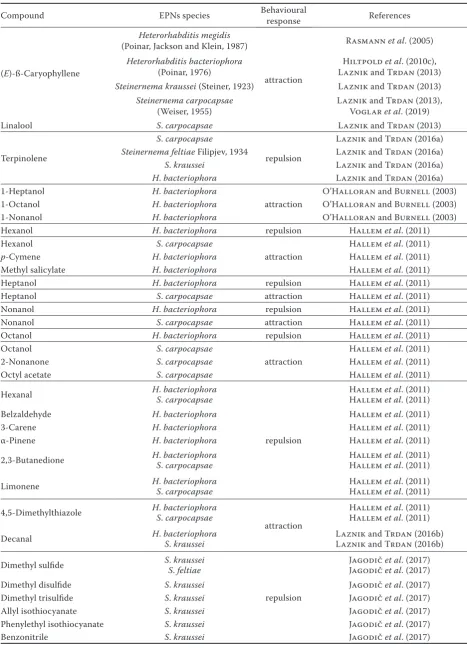
Laznik and Trdan (2016a) investigated the effects of VOCs [released from carrots (Daucus carota Lin-naeus) that were attacked by wireworms (Elateridae)] on EPNs. The key finding of their study was that un-damaged carrot roots excreted substances (terpinolene) that had a repellent effect on the EPNs (Table 1). This means that plants emit chemical signals into the en-vironment as a message that they are healthy and do not need additional protection (Laznik & Trdan factors are of crucial importance for the survival of
EPNs (Smits 1996). For this reason, EPNs are less efficient against above-ground insect pest outdoors, although previous laboratory tests showed a much higher efficiency (Laznik & Trdan 2011; Majić et al. 2019). The most common EPN formulation is an aqueous suspension (Cruz-Martínez et al. 2017). The equipment that is intended for spraying pesti-cides, manuring or irrigation can be used for EPN applications. For this purpose, a backpack, manual or tractor sprayers and sprinklers are suitable. IJs can pass through the spray tubes with diameters of at least 500 μm and are capable of withstanding pressures up to 2 000 kPa (Wright et al. 2005). Furthermore, IJs can tolerate short-term exposure (2–24 h) to many chemical and biological insecticides, fungicides, her-bicides, fertilisers, and growth regulators and can be tank-mixed and applied together with such prod-ucts (Head et al. 2000; Koppenhöfer et al. 2002; Krishnayya & Grewal 2002; De Nardo & Grewal 2003; Schroer et al. 2005; Laznik & Trdan 2014). Nematode-pesticide combinations in tank mixes could offer a cost-effective alternative to foliar integrated pest management (IPM) systems.
Due to the sensibility of the nematodes to ultravio-let radiation, they have to be applied to plants in the evening, early in the morning or in cloudy weather, when the radiation is less intense (Lello et al. 1996; Laznik et al. 2010). Nematode survival and efficacy on the foliage are enhanced to varying degrees by the addition of various adjuvants to the spray mix-ture, which have antidesiccant (e.g., glycerol, various polymers) or UV-protective (brighteners) actions (Glazer et al. 1992; Grewal 2002), although more needs to be done to enhance the post-application survival. The greatest potential for using EPNs against foliar pests is almost certainly in IPM programmes, in conjunction with other biocontrol agents (Sher & Parella 1999) or selective chemicals (Rovesti & Deseö 1990; Head et al. 2000).
Table 1. The attraction behaviour of entomopathogenic nematodes (EPNs) towards the different compounds
Compound EPNs species Behavioural response References
(E)-ß-Caryophyllene
Heterorhabditis megidis
(Poinar, Jackson and Klein, 1987)
attraction
Rasmann et al. (2005)
Heterorhabditis bacteriophora
(Poinar, 1976) Laznik and Trdan (2013)Hiltpold et al. (2010c),
Steinernema kraussei (Steiner, 1923) Laznik and Trdan (2013)
Steinernema carpocapsae
(Weiser, 1955) Laznik and Trdan (2013), Voglar et al. (2019)
Linalool S. carpocapsae Laznik and Trdan (2013)
Terpinolene
S. carpocapsae
repulsion
Laznik and Trdan (2016a)
Steinernemafeltiae Filipjev, 1934 Laznik and Trdan (2016a)
S. kraussei Laznik and Trdan (2016a)
H. bacteriophora Laznik and Trdan (2016a)
1-Heptanol H. bacteriophora
attraction
O’Halloran and Burnell (2003)
1-Octanol H. bacteriophora O’Halloran and Burnell (2003)
1-Nonanol H. bacteriophora O’Halloran and Burnell (2003)
Hexanol H. bacteriophora repulsion Hallem et al. (2011)
Hexanol S. carpocapsae
attraction
Hallem et al. (2011)
p-Cymene H. bacteriophora Hallem et al. (2011)
Methyl salicylate H. bacteriophora Hallem et al. (2011)
Heptanol H. bacteriophora repulsion Hallem et al. (2011)
Heptanol S. carpocapsae attraction Hallem et al. (2011)
Nonanol H. bacteriophora repulsion Hallem et al. (2011)
Nonanol S. carpocapsae attraction Hallem et al. (2011)
Octanol H. bacteriophora repulsion Hallem et al. (2011)
Octanol S. carpocapsae
attraction
Hallem et al. (2011)
2-Nonanone S. carpocapsae Hallem et al. (2011)
Octyl acetate S. carpocapsae Hallem et al. (2011)
Hexanal H. bacteriophora
repulsion
Hallem et al. (2011)
S. carpocapsae Hallem et al. (2011)
Belzaldehyde H. bacteriophora Hallem et al. (2011)
3-Carene H. bacteriophora Hallem et al. (2011)
α-Pinene H. bacteriophora Hallem et al. (2011)
2,3-Butanedione HS. . bacteriophoracarpocapsae Hallem Hallem et alet al. (2011). (2011)
Limonene HS. . bacteriophoracarpocapsae Hallem Hallem et alet al. (2011). (2011)
4,5-Dimethylthiazole H. bacteriophora
attraction
Hallem et al. (2011)
S. carpocapsae Hallem et al. (2011)
Decanal H. bacteriophoraS. kraussei Laznik and Trdan (2016b)Laznik and Trdan (2016b)
Dimethyl sulfide S. kraussei
repulsion
Jagodič et al. (2017)
S. feltiae Jagodič et al. (2017)
Dimethyl disulfide S. kraussei Jagodič et al. (2017)
Dimethyl trisulfide S. kraussei Jagodič et al. (2017)
Allyl isothiocyanate S. kraussei Jagodič et al. (2017)
Phenylethyl isothiocyanate S. kraussei Jagodič et al. (2017)
the H. bacteriophora. A follow-up field experiment established that the EPN affected the survival of the T. tetraophthalmus larvae, which consequently ena-bled the plants to regain their above-ground biomass (Rasmann et al. 2011). This experiment was among the first to prove that the natural enemies of herbi-vores contribute to the plants’ positive selection when producing signals in the case of herbivores.
Ali et al. (2010, 2011) discovered that certain spe-cies of EPNs were strongly attracted by exudates of citrus roots that had been damaged by the larvae of the diaprepes root weevil [Diaprepes abbreviatus (Lin-naeus, 1758)]. They discovered that the citrus roots emitted a simple mixture of terpenoids. This type of defence mechanism in plants can be constitutive or established only in the case of an attack; in both cases, the exudates attract EPNs (Ali et al. 2011). The researchers also discovered that the VOCs that attracted the EPNs could also attract phytoparasitic nematodes, which can pose a great danger to the plants. This explains the fact that the majority of the studied plants released the VOCs only when attacked. The only citrus cultivar studied by Ali et al. (2011), which released the VOCs constitutively, was also resistant to the phytoparasitic nematodes.
Hallem et al. (2011) tested a spectrum of differ-ent plant VOCs (Table 1). They discovered that the VOCs attracted/repelled the IJs of H. bacteriophora and Steinernema carpocapsae (Weiser, 1955). EPNs have exceptionally well-developed chemosensory apparatuses, which are very sensitive to plant com-ponents, which they efficiently use to locate suitable hosts (Rasmann et al. 2012).
The application of VOCs in agriculture
EPNs have exceptional potential for suppressing different species of soil pests (Toepfer et al. 2009). Accurate knowledge of the VOCs emitted by plants could help improve the protection of agriculturally important plants from harmful organisms in the future, especially for protecting plants with EPNs (Degenhardt et al. 2003; Pickett et al. 2006; Turl-ings & Ton 2006; Hiltpold & TurlTurl-ings 2008).
It has been discovered that the signals emitted by the above-ground parts of the plants can be im-proved or strengthened by the means of the genetic transformation of the plants. This has been proven both in laboratories and in greenhouses, where such manipulations improved the attractiveness of plants 2016a). These researchers continued their research
with the inclusion of the potato (Solanum tuberosum Linnaeus) (Laznik & Trdan 2016b), whose tubers had been damaged by the larvae of the forest cock-chafer (Melolontha hippocastani Fabricius, 1801). Their study included seven VOCs emitted by the damaged potato tubers: octanal, decanal, undecane, nonanal, 6-methyl-5-hepten-2-one, 1,2,4-trimethylbenzene and 2-ethyl-1-hexanol (Table 1). The research results showed that the EPNs were capable of distinguishing the individual VOCs that were released by the damaged or undamaged potato tubers, and the reaction of the EPNs to the VOCs was species-specific, prevailed over the host-seeking strategy and had been developed by the EPNs through evolution (Laznik & Trdan 2016b).
Crespo et al. (2012) confirmed that black mustard (Brassica nigra Linnaeus) roots damaged by the larvae of the cabbage fly (Delia radicum Linnaeus) emit glucosi-nolates and numerous sulfur compounds. Additional studies were carried out by Jagodič et al. (2017). They studied the effects of six VOCs that were emitted by damaged roots of the black mustard on the EPN movement. They discovered that certain glucosinolates (allyl isothiocyanate, phenylethyl isothiocyanate, and benzonitrile) as well as sulfur compounds (dimethyl sulfide, dimethyl disulfide, dimethyl trisulfide) act as repellents to certain species of EPNs (Steinernema kraussei Steiner, 1923) (Table 1) (Jagodič et al. 2017).
EPNs are efficient biotic agents for suppressing west-ern corn rootworm (WCR) larvae, which are among the most important pests in maize. The first studies with olfactometers showed that maize roots damaged by the larvae of the WCR attracted the EPN H. megidis to a greater extent than the undamaged or mechanically damaged maize roots (Rasmann et al. 2005). The dif-ference between the undamaged maize roots and the roots damaged by the larval WCR was that the former released the terpene E-β-C, which acted as an attract-ant for H. megidis (Table 1) (Rasmann et al. 2005). The importance of this research is augmented by the fact that the results obtained in the laboratory study were also confirmed by the field experiments.It has been discovered that EPNs can locate their hosts from longer distances, as far as 50 cm away from the plants.
to predatory mites (Kappers et al. 2005) and parasitic wasps (Schnee et al. 2006; Fontana et al. 2011). The identification of the terpene E-β-C, which was emit-ted by maize roots damaged by herbivores, provides a great starting point opportunity to test this kind of approach to protect plants against insect pests. The scientists who carried out the experiment used American maize cultivars that had lost the ability to release E-β-C (Rasmann et al. 2005; Köllner et al. 2008); thus, they could confirm that the plants’ signals, emitted under the herbivore attack, could be used to further improve the protection of the plants against the herbivores. The signalisation in the maize was restored in a non-productive line by means of the genetic transformation of the gene for the E-β-C synthesis, which was identified in oregano (Origanum vulgare Linnaeus) (Crocoll et al. 2010). The suc-cessful transformation of the maize plants made them release sesquiterpene in amounts equivalent to those released by normal maize plants when attacked by the WCR larvae. In contrast with the untransformed maize plants, the transformed plants emitted E-β-C constitutively and systemically (releasing the VOCs from the roots to the leaves) (Degenhardt et al. 2009). An extensive field experiment revealed that the transformed plants received much more EPN protection against root damage by the WCR larvae than the plants (Degenhardt et al. 2009). However, we should bear in mind that the constitutive release of such signals can negatively affect the agricultural applications. The emission of VOCs can also attract harmful organisms into the immediate vicinity of economically important field crops, and it can also be very energy inefficient, which can influence the qualities and quantities of the yields. For this reason, the scientists improved the procedure by placing an inducible promoter in front of the gene for the synthesis of E-β-C.
In addition to improving the signal itself, the re-sponsiveness of the EPNs to the signals can also be improved. A large number of IJs are produced by every generation of the EPNs, and the generations are short, which makes them ideal study subjects for the facilitation of host-finding and the infectiveness itself (Gaugler et al. 1989; Gaugler & Campbell 1991; Griffin & Downes 1994). The increased responsiveness of the EPNs to the plant VOCs was proven again with E-β-C (Hiltpold et al. 2010a). Using an olfactometer and sprayers, the researchers proved the increased E-β-C responsiveness (Hilt-pold et al. 2010a) in H. bacteriophora IJs. Unlike
H. megidis, H. bacteriophora does not usually react to E-β-C (Rasmann & Turlings 2008; Hiltpold et al. 2010c), yet it only took six generations of selection to obtain a strain with high-levels of responsiveness (Hiltpold et al. 2010a). In a field experiment in Hungary, this EPN strain was more efficient in sup-pressing WCR larvae near maize roots that emitted E-β-C than the original strain, but no difference was observed between the H. bacteriophora strains in the maize that did not emit E-β-C (Hiltpold et al. 2010a), and the durability of both EPN strains was the same (Hiltpold et al. 2010b). The experiment also proved that the responsiveness to E-β-C was not very specific, as the chosen strain also displayed responsiveness to other sesquiterpenes, such as E-β-farnesene, whereas it responded to the monoter-pene α-pinene to a lesser degree (Hiltpold et al. 2010a). These data, together with those from the study of diffusion (Hiltpold & Turlings 2008), show that the attractiveness of the evaporative plants is not specific, as it also depends on the way the VOC compounds are diffused into the soil.
Scientists have already found ways to improve plant signalisation and the responsiveness of the EPNs to these signals. However, the difficult and labour-intensive field application of EPNs undoubtedly remains one of the largest obstacles for their use in plant protection. Maintaining large numbers of EPNs in the soil is seldom successful (Shapiro-Ilan et al. 2006). Hiltpold et al. (2008) consequently intro-duced a new application method based on capsules that contained EPNs. The precise formulation of the capsule’s shell enables the controlled release of EPNs. In theory, it would be possible to adjust the sowing machines to enable the insertion of the EPN capsules into the soil during sowing, which would save time, reduce the labour intensity, and prevent large EPN losses. The applications of the capsules could be especially efficient if they also contained attractants and other stimulative substances that would attract harmful organisms to the capsules.
indirect defences would not be only a matter of the breeding procedures, and this could frequently com-promise the useful interactions between the plants and the third trophic level. For example, commercial varieties of cotton (Gossypium hirsutum Linnaeus) release seven times lower VOC quantities compared to natural cotton lines (Loughrin et al. 1995). Simi-larly, the roots of the North American maize varie-ties do not release the terpene E-β-C, which attracts EPNs (Rasmann et al. 2005). Therefore, it is not very probable that the VOCs were deliberately chosen in plant breeding programmes, though the amounts of released VOCs have not diminished in certain Bras-sica Linnaeus (Benrey et al. 1998) or maize cultivars (Gouinguené et al. 2001).
Agricultural ecosystems are complicated to ma-nipulate (Kaplan 2012), and substantial research on the protection of plants against harmful substances is required to thoroughly understand how such sys-tems work. What are the most frequent problems encountered by scientists during the integration of VOCs for agricultural purposes? We have already established that the increased attraction of parasitoids to VOCs did not increase the level of parasitism in the field (von Mérey et al. 2012; Vieira et al. 2013). Parasitised herbivores also grew larger and used more resources than unparasitised herbivores (Alleyne & Beckage 1997; Harvey et al. 2010). We should bear in mind that the VOCs represent information that is accessible to other organisms, and they can also be used by herbivores and hyperparasitoids to locate their hosts. For example, maize plants that were treated with evaporative components had more intense degrees of WCR and Spodoptera frugiperda (Smith, 1797) infestation, which resulted in more damage than in the control plants (von Mérey et al. 2011).
CONCLUSION
VOCs merely represent information, and parasi-toids and predators can quickly learn or adjust to avoid plants that emit VOCs without herbivores. It is also important to bear in mind that agricultural ecosystems are not always able to maintain popula-tions of the useful arthropods that are required for the stable biological control. Finally, the integration of such biologic strategies will require a large amount of effort, as these strategies do not enable the complete removal of the harmful organisms from the system.
The endeavours to develop an efficient biological strategy for the plant protection will have to adopt a broader perspective, paying more attention to the direct effects of the VOCs on the harmful organisms and pathogens. Repulsion was an important property when VOCs were successfully used in agricultural experiments (Hassanali et al. 2008; Braasch & Kaplan 2012; Xiao et al. 2012), but the antimicrobial properties of VOCs should be given more attention. In the defence against harmful organisms, wild plants do not rely solely on one defence strategy; consequently, the biological control strategies should also follow suit.
The quantity of the studies of multitrophic interac-tions with chemical mediation is multiplying rapidly. There is also a growing number of studies that show that root exudates are active players in the rhizosphere and that they can influence the formation of their growth environment, by protecting plants and opti-mising their efficiency. It has been proven that they chemically affect soil microorganisms and other useful soil organisms, such as EPNs (Voglar et al. 2019).
We primarily lack a solid understanding of the co-evolutionary perspectives in rhizosphere ecology and soil interactions. A solid understanding of these processes would facilitate approaches that preserve the well-established beneficial interactions between the domestication and cultivation of economically important cultivars. We should emphasise that the possible consequences of such manipulations should be evaluated prior to the actual practical applications of the plant protection techniques discussed herein. It is a fact that we can find hundreds of different species of microorganisms in a handful of soils and that a change in only one parameter can cause un-expected consequences in an established ecosystem and disturb the stability of the soil’s function. Since a soil is a complex and heterogeneous ecosystem, the application of different strategies cannot be gener-alised, and the strategies will require very precise assessments in the different cases. The knowledge acquired this way will further enable the improve-ment of sustainable practises.
References
Akhurst R., Smith K. (2002): Regulation and safety. In: Gaugler R. (ed.): Entomopathogenic Nematology. Wall-ingford, CABI Publishing: 311–332.
entomopath-ogenic nematodes. Journal of Chemical Ecology, 36: 361–368.
Ali J.G., Alborn H.T., Stelinski L.L. (2011): Constitutive and induced subterranean plant volatiles attract both en-tomopathogenic and plant parasitic nematodes. Journal of Ecology, 99: 26–35.
Alleyne M., Beckage N.E. (1997): Parasitism-induced effects on host growth and metabolic efficiency in tobacco horn-worm larvae parasitised by Cotesia congregata. Journal of Insect Physiology, 43: 407–424.
Bais H.P., Weir T.L., Perry L.G., Gilroy S., Vivanco J.M. (2006): The role of root exudates in rhizosphere intera-tions with plants and other organisms. Annual Review of Plant Biology, 57: 233–266.
Benrey B., Callejas A., Rios L., Oyama K., Denno R.F. (1998): The effects of domestification of Brassica and Phaseolus
on the interaction between phytophagus insects and parasitiods. Biological Control, 11: 130–140.
Boemare N.E., Laumond C., Luciani J. (1982): Mise en évidence d’une toxicogénèse provoquée par le nématode axénique entomophage Neoplectana carpocapsae, Weiser chez l’insecte Galleria mellonella L. Comptes rendus des séances de l’Academie des Sciences, 295: 543–546. Boff M.I.C., Zoon F.C., Smits P.H. (2001): Orientation of
Heterorhabditis megidis to insect hosts and plant roots in a Y-tube sand olfactometer. Entomologia Experimentalis et Applicata, 98: 329–337.
Braasch J., Kaplan I. (2012): Over what distance are plant volatiles bioactive? Estimating the spatial dimensions of attraction in an arthropod assemblage. Entomologia Experimentalis et Applicata, 145: 115–123.
Brillada C., Nishihara M., Shimoda T., Garms S., Boland W., Maffei M.E., Arimura G.I. (2013): Metabolic engineer-ing of the C16 homoterpene TMTT in Lotus japonicus
through overexpression of (E,E)-geranyllinalool synthase attracts generalist and specialist predators in different manners. New Phytologist Trust, 200: 1200–1211. Burman M., Pye A. (1980): Neoaplectana carpocapsae:
movement of nematode populations on thermal gradient. Experimental Parasitology, 49: 258–265.
Campbell J.F., Lewis E.E., Stock S.P., Nadler S., Kaya H.K. (2003): Evolution of host search strategies in entomopath-ogenic nematodes. Journal of Nematology, 35: 142–145. Cheng A.X., Xiang C.Y., Li J.X., Yang C.Q., Hu W.L.,
Wang L.J., Lou Y.G., Chen X.Y. (2007): The rice (E )-β-caryophyllene synthase (OsTPS3) accounts for the major inducible volatile sesquiterpenes. Phytochemistry, 68: 1632–1641.
Crespo E., Hordijk C.A., de Graff R.M., Samudrala D., Cristescu S.M., Harren F.J.M., van Dam N.M., (2012): On-line detection of root-induced volatiles in Brassica
nigra plants infested with Delia radicum L. root fly larvae. Phytochemistry, 84: 68–77.
Crocoll C., Asbach J., Novak J., Gershenzon J., Degenhardt J. (2010): Terpene synthases of oregano (Origanum vulgare
L.) and their roles in the pathway and regulation of ter-pene biosynthesis. Plant Molecular Biology, 73: 587–603. Cruz-Martínez H., Ruiz-Vega J., Matadamas-Ortíz P.T.,
Cortés-Martínez C.I., Rosas-Diaz, J. (2017): Formulation of entomopathogenic nematodes for crop pest control – a review. Plant Protection Science, 53: 15–24.
Degenhardt J. (2009): Indirect defense responses to her-bivory in grasses. Plant Physiology, 149: 96–102. Degenhardt J., Gershenzon J., Baldwin I.T., Kessler A. (2003):
Attracting friends to feast on foes: engineering terpene emission to make crop plants more attractive to herbivore enemies. Current Opinion in Biotechnology, 14: 169–176. De Nardo E.A.B., Grewal P.S. (2003): Compatibility of Stei-nernema feltiae (Nematoda: Steinernematidae) with pesti-cides and plant growth regulators used in glasshouse plant production. Biocontrol Science & Technology, 13: 441–448. Dicke M. (1999): Are herbivore-induced plant volatiles
reliable indicators of herbivore identity to foraging car-nivorous arthropods? Entomologia Experimentalis et Applicate, 91: 131–142.
Dudareva N., Negre F., Nagegowda D.A., Orlova I. (2006): Plant volatiles: Recent advances and future perspectievs. Critical Reviews in Plant Sciences, 25: 417–440. Ehlers R.U. (1998): Entomopathogenic nematodes – save
biocontrol agents for sustainable systems. Phytoprotec-tion, 79: 94–102.
Ehlers R.U. (2001): Mass production of entomopathogenic nematodes for plant protection. Applied Microbiology and Biotechnology, 56: 523–633.
Flores H.E., Vivanco J.M., Loyola-Vargas V.M. (1999): ‘Radi-cle’ biochemistry: The biology of root-specific metabo-lism. Trends in Plant Science, 4: 220–226.
Fontana A., Held M., Fantaye C.A., Turlings T.C.J., Degen-hardt J., Gershenzon J. (2011): Attractiveness of constitu-tive and herbivore-induced sesquiterpene blends of maize to the parasitic wasp Cotesia marginiventris (Cresson). Journal of Chemical Ecology, 37: 582–591.
Gaugler R., Campbell J.F. (1991): Selection for enhanced host-finding of scarab larvae (Coleoptera, Scarabaeidae) in an entomopathogenic nematode. Environmental En-tomology, 20: 700–706.
Gaugler R., Bednarek A., Campbell J.F. (1992): Ultraviolet inactivation of heterorhabditids and steinernematids. Journal of Invertebrate Pathology, 59: 155–160.
Georgis R., Koppenhöfer A.M., Lacey L.A., Bélair G., Dun-can L.W., Grewal P.S., Samish M., Tan L., Torr P., van Tol R.W.H.M. (2006): Successes and failures in the use of parasitic nematodes for pest control. Biological Control, 38: 103–123.
Glaser R.W., Farrell C.C. (1935): Field experiments with the Japanese beetle and its nematode parasite. Journal of New York Entomological Society, 43: 345–371.
Glazer I., Klein M., Navon A., Nakache Y. (1992): Com-parison of efficacy of entomopathogenic nematodes combined with antidesiccants applied by canopy sprays against three cotton pests (Lepidoptera: Noctuidae). Journal of Economic Entomology, 85: 1636–1641. Gosset V., Harmel N., Göbel C., Francis F., Haubruge E.,
Wathelet J.P., du Jardin P., Feussner I., Fauconnier M.L. (2009): Attacks by piercing-sucking insect (Myzus persicae
Sultzer) or a chewing insect (Leptinotarsa decemlineata
Say) on potato plants (Solanum tuberosum L.) induce differential changes in volatile compound release and oxylipin synthesis. Journal of Experimental Botany, 60: 1231–1240.
Gouinguene S., Degen T., Turlings T.J.C. (2001): Variability in herbivore-induced odour emissions among maize cul-tivars and their wild ancestors (teosinte). Chemoecology, 11: 9–16.
Grewal P.S., Gaugler R., Lewis E.E. (1993): Host recogni-tion behaviour by entomopathogenic nematodes during contact within insect gut contents. Journal of Parasitol-ogy, 79: 495–503.
Grewal P.S., Selvan S., Gaugler R. (1994): Thermal adapta-tion of entomopathogenic nematodes: niche breadth for infection, establishment, and reproduction. Journal of Thermal Biology, 19: 245–253.
Griffin C.T., Downes M.J. (1994): Selection of Heterorhab-ditis sp. for improved infectivity at low temperatures. In: Burnell A.M., Ehlers R.U., Masson J.P. (eds): Genetics of Entomopathogenic Nematode-bacterium Complexes. Luxembourg, Office for Official Publications of the Eu-ropean Communities: 120–128.
Hallem E.A., Dillman A.R., Hong A.V., Zhang Y.J., Yano J.M., DeMarco S.F., Sternberg P.W. (2011): A sensory code for host seeking in parasitic nematodes. Current Biology, 21: 377–383.
Harvey J.A., Sano T., Tanaka T. (2010): Differential host growth regulation by the solitary endoparasitoid Mete-orus pulchiornis in two hosts of greatly differing mass. Journal of Insect Physiology, 56: 1178–1183.
Hassanali A., Herren H., Khan Z.R., Pickett J.A., Woodcock C.M. (2008): Integrated pest management: The push-pull approach for controlling insect pest and weeds of cereals, and its potential for other agricultural systems including
animal husbandry. Philosophical Transactions of the Royal Society, 363: 611–621.
Hazir S., Kaya H.K., Stock S.P., Keskin N. (2004): Entomopath-ogenic nematodes (Steinernematidae and Heterorhabditi-dae) for biological control of soil pests. Turkish Journal of Biology, 27: 181–202.
Head J., Lawrence A.J., Walters K.F.A. (2004): Efficacy of the entomopathogenic nematode, Steinernema feltiae, against Bemisia tabaci in relation to plant species. Journal of Applied Entomology, 128: 543–547.
Head J., Walters K.F.A., Langton S. (2000): The compat-ibility of the entomopathogenic nematode, Steinernema feltiae, and chemical insecticides for the control of the South American leafminer, Liriomyza huidobrensis. Bio-control, 45: 345–353.
Heil M. (2008): “Indirect defence via tritrophic interactions”. New Phytologist, 178: 41–61.
Hiltpold I., Turlings T.C.J. (2008): Belowground chemical signaling in maize: When simplicity rhymes with effi-ciency. Journal of Chemical Ecology, 34: 628–635. Hiltpold I., Erb M., Robert C.A.M., Turlings T.C.J. (2011):
Systemic root signalling in a belowground, volatile-medi-ated tritrophic interaction. Plant Cell and Environment, 34: 1267–1275.
Hiltpold I., Toepfer S., Kuhlmann U., Turlings T.C.J. (2010c): How maize root volatiles influence the efficacy of en-tomopathogenic nematodes against the western corn rootworm? Chemoecology, 20: 155–162.
Hiltpold I., Baroni M., Toepfer S., Kuhlmann U., Turlings T.C.J. (2010a): Selection of entomopathogenic nematodes for enhanced responsiveness to a volatile root signal helps to control a major root pest. Journal of Experimental Biology, 213: 2417–2423.
Hiltpold I., Baroni M., Toepfer S., Kuhlmann U., Turlings T.C.J. (2010b): Selective breeding of entomopathogenic nematodes for enhanced attraction to a root signal did not reduce their establishment or persistence after field release. Plant Signalling and Behaviour, 5: 1450–1452. Hiltpold I., Bernklau E., Bjostad L.B., Alvarez N.,
Miller-Struttmann N.E., Lundgren J.G., Hibbard B.E. (2013): Nature, evolution and characterisation of rhizospheric chemical exudates affecting root herbivores. In: Johnson S.N., Hiltpold I., Turlings T. (eds): Behaviour and Physi-ology of Root Herbivores. New York, Academic Press: 97–157.
for entomopathogenic nematodes (Steinernema and He-terorhabditis)? BioControl, 62: 515–524.
Kaplan I. (2012): Attracting carnivorous arthropods with plant volatiles: The future of biocontrol or playing with fire? Biological Control, 60: 77–89.
Kappers I.F., Ahroni A., van Herpen T.W., Luckerhoff L.L., Dicke M., Bouwmeester H.J. (2005): Genetic engineering of terpenoid metabolism attracts bodyguards to Arabi-dopsis. Science, 309: 2070–2072.
Kessler A., Baldwin I.T. (2002): Plant responses to insect herbivory: The emerging molecular analysis. Annual Review of Plant Biology, 53: 299–328.
Khan Z.R., Ampong-Nyarko K., Chiliswa P., Hassanali A., Kimani S., Lwande W., Overholt W.A., Pickett J.A., Smart L.E., Wadhams L.J. (1997): Intercropping increases para-sitism of pests. Nature, 388: 631–632.
Köllner T.G., Held M., Lenk C., Hiltpold I., Turlings T.J.C., Gershenzon J., Degenhardt J. (2008): A maize (E )-β-caryophyllene synthase implicated in indirect defense responses against herbivores is not expressed in most American maize varieties. Plant Cell, 20: 482–494. Koppenhöfer A.M., Cowles R.S., Cowles E.A., Fuzy E.M.,
Baumgartner L. (2002): Comparison of neonicotinoid in-secticides as synergists for entomopathogenic nematodes. Biological Control, 24: 90–97.
Krishnayya P.V., Grewal P.S. (2002): Effect of neem and selected fungicides on viability and virulence of the en-tomopathogenic nematode Steinernema feltiae. Biocon-trol Science and Technology, 12: 259–266.
Laznik Ž., Trdan S. (2011): Entomopathogenic nematodes (Nematoda: Rhabditida) in Slovenia: From tabula rasa to implementation into crop production systems. In: Per-veen F.K. (ed.): Insecticides – Pest Engineering. Rijeka, InTechOpen: 627–656.
Laznik Ž., Trdan S. (2013): An investigation on the chemo-tactic responses of different entomopathogenic nema-tode strains to mechanically damaged root volatile compounds. Experimental Parasitology, 134: 349–355. Laznik Ž., Trdan S. (2014): The influence of insecticides on
the viability of entomopathogenic nematodes (Rhabditida: Steinernematidae and Heterorhabditidae) under labora-tory conditions. Pest Management Science, 70: 784–789. Laznik Ž., Trdan S. (2016a): Attraction behaviors of ento-mopatogenic nematodes (Steinernematidae and Hete-rorhabditidae) to synthetic volatiles emitted by insect damaged carrot roots. Journal of Pest Science, 4: 977–984. Laznik Ž., Trdan S. (2016b): Attraction behaviours of en-tomopathogenic nematodes (Steinernematidae and He-terorhabditidae) to synthetic volatiles emitted by insect damaged potato tubers. Journal of Chemical Ecology, 42: 314–322.
Laznik Ž., Trdan S. (2018): Are synthetic volatiles, typically emitted by insect-damaged peach cultivars, navigation sig-nals for two-spotted lady beetle (Adalia bipunctata L.) and green lacewing (Chrysoperla carnea [Stephens]) larvae? Journal of Plant Diseases and Protection, 125: 529–538. Laznik Ž., Košir I.J., Rozman L., Kač M., Trdan S. (2011):
Preliminary results of variability in mechanical-induced volatile root-emissions of different maize cultivars. May-dica, 56: 343–350.
Laznik Ž., Tóth T., Lakatos T., Vidrih M., Trdan S. (2010): Control of the Colorado potato beetle (Leptinotarsa de-cemlineata [Say]) on potato under field conditions: A com-parison of the efficacy of foliar application of two strains of
Steinernema feltiae (Filipjev) and spraying with thiametox-am. Journal of Plant Diseases and Protection, 117: 129–135. Lello E.R., Patel M.N., Mathews G.A., Wright D.J. (1996):
Application technology for entomopathogenic nematodes against foliar pests. Crop Protection, 15: 567–574. Lewis E.E. (2002): Behavioural ecology. In: Gaugler R. (ed.):
Entomopathogenic Nematology. Wallingford, CABI Pub-lishing: 205–223.
Loughrin J., Manukian A., Heath R., Tumlinson J. (1995): Volatiles emitted by different cotton varieties damaged by feeding beet armyworm larvae. Journal of Chemical Ecology, 21: 1217–1227.
Majić I., Sarajlić A., Lakatos T., Tóth T., Raspudić E., Puškadija Z., Kanižai Šarić G., Laznik Ž. (2019): Virulence of new strain of Heterorhabditis bacteriophora from Croatia against Lasioptera rubi. Plant Protection Science, 55: 134–141.
Maron J.L., Kauffman M.J. (2006): Habitat-specific impacts of multiple consumers on plant population dynamics. Ecology, 87: 113–124.
O’Halloran D.M., Burnell A.M. (2003): An investigation of chemotaxis in the insect parasitic nematode Heterorha-bditisbacteriophora. Parasitology, 127: 375–385. Pickett J.A., Bruce T.J.A., Chamberlain K., Hassanali A.,
Khan Z.R., Matthes M.C., Napier J.A., Smart L.E., Wad-hams L.J., Woodcock C.M. (2006): Plant volatiles yielding new ways to exploit plant defence. In: Dicke M., Takken W. (eds): Chemical Ecology: From Gene to Ecosystem. Dordrecht, Springer: 161–173.
Poinar G.O., Grewal P.S. (2012): History of entomopatho-genic nematology. Journal of Nematology, 44: 153–161. Půža V. (2015): Control of insect pests by
entomopatho-genic nematodes. In: Lugtenberg B. (ed.): Principles of Plant-microbe Interactions. Cham, Springer International Publishing: 175–183.
Rasmann S., Hiltpold I., Ali J. (2012): The role of root-pro-duced volatile secondary metabolites in mediating soil interactions. In: Montanaro G., Cichio B. (eds): Advances in Selected Plant Physiology Aspects. Rijeka, InTech: 269–290. Rasmann S., Erwin A.C., Halitschke R., Agrawal A.A. (2011):
Direct and indirect root defences of milkweed (Asclepias syriaca): Trophic cascades, trade-offs and novel methods for studying subterranean herbivory. Journal of Ecology, 99: 16–25.
Rasmann S., Köllner T.G., Degenhardt J., Hiltpold I., Toep-fer S., Kuhlmann U., Gershenzon J., Turlings T.C.J. (2005): Recruitment of entomopathogenic nematodes by insect-damaged maize roots. Nature, 434: 732–737.
Robert C.A.M., Zhang X., Machado R.A.R., Schirmer S., Lori M., Mateo P., Erb M., Gershenzon J. (2017): Seques-tration and activation of plant toxins protect the western corn rootworm from enemies at multiple trophic levels. eLife, 6: e29307. doi: 10.7554/eLife.29307
Rovesti L., Deseö K.V. (1990): Compatibility of chemical pesticides with the entomopathogenic nematodes, Stei-nernema carpocapsae Weiser and S. feltiae Filipjev (Nem-atoda: Steinernematidae). Nematologica, 36: 237–245. Schnee C., Köllner T.G., Held M., Turlings T.J.C.,
Gersh-enzon J., Degenhardt J. (2006): The products of a single maize sesquiterpene synthase form a volatile defense signal that attracts natural enemies of maize herbivores. Proceedings of the National Academy of Sciences of the United States of America, 103: 1129–1134.
Schroer S., Ziermann D., Ehlers R.U. (2005): Mode of action of a surfactant-polymer formulation to support perfor-mance of the entomopathogenic nematode Steinernema carpocapsae for control of diamondback moth larvae (Plutella xylostella). Biocontrol Science and Technology, 15: 601–613.
Shapiro-Ilan D.I., Lewis E.E., Tedders W.L. (2003): Supe-rior efficacy observed in entomopathogenic nematodes applied in infected-host cadavers compared with ap-plication in aqueous suspension. Journal of Invertebrate Pathology, 83: 270–272.
Shapiro-Ilan D.I., Gouge D.H., Piggott S.J., Fife J.P. (2006): Application technology and environmental considera-tions for use of entomopathogenic nematodes in biologi-cal control. Biologibiologi-cal Control, 38: 124–133.
Shapiro-Ilan D., Lewis E.E., Campbell J.F., Kim-Shapiro D.B. (2012): Directional movement of entomopathogenic nematodes in response to electrical field: Effect of spe-cies, magnitude of voltage, and infective juvenile age. Journal of Invertebrate Pathology, 109: 34–40.
Sher R.B., Parella M.P. (1999): Biological control of the leafminer, Liriomyza trifolii, in chrysanthemums: Impli-cations for intraguild predation between Diglyphus begini
and Steinernema carpocapsae. Bulletin of the Interna-tional Organization for Biological and Integrated Control of Noxious Animals and Plants: Integrated Control in Glasshouses, 22: 221–224.
Smits P.S. (1996): Post-application persistence of entomopath-ogenic nematodes. Biocontrol Science and Technology, 6: 379–387.
Toepfer S., Haye T., Erlandson M., Goettel M., Lundgren J.G., Kleespies R.G., Weber D.C., Walsh G.C., Peters A., Ehlers R.U., Strasser H., Moore D., Keller S., Vidal S., Kuhlmann U. (2009): A review of the natural enemies of beetles in the subtribe Diabroticina (Coleoptera: Chrysomelidae): Implications for sustainable pest management. Biocontrol Science and Technology, 19: 1–65.
Turlings T.C.J., Ton J. (2006): Exploiting scents of distress: The prospect of manipulating herbivore-induced plant odours to enhance the control of agricultural pests. Cur-rent Opinion in Plant Biology, 9: 421–427.
Turlings T.C.J., Hiltpold I., Rasmann S. (2012): The im-portance of root-produced volatiles as foraging cues for entomopathogenic nematodes. Plant Soil, 359: 51–60. Turlings T.C.J., Tumlinson J.H., Lewis W.J. (1990):
Exploi-tation of herbivore-induced plant odors by host-seeking parasitic wasps. Science, 250: 1251–1253.
van Tol R.W.H.M., van der Sommen A.T.C., Boff M.I.C., van Bezooijen J., Sabelis M.W., Smits P.H. (2001): Plants protect their roots by alerting the enemies of grubs. Ecol-ogy Letters, 4: 292–294.
Vieira C.R., Blassioli Moras M.C., Borges M., Sujii E.R., Laumann R.A. (2013): cis-Jasmone indirect action on egg parasitoids (Hymenoptera: Scelionidae) and its ap-plication in biological control of soybean stink bugs (He-miptera: Pentatomidae). Biological Control, 64: 75–82. Voglar G.E., Mrak T., Križman M., Jagodič A., Trdan S.,
Laznik Ž. (2019): Effect of contaminated soil on multi-trophic interactions in a terrestrial system. Plant and Soil, 435: 337–351.
von Mérey G., Veyrat N., Mahuku G., Valdez R.L., Turlings T.J.C., D’Alessandro M. (2011): Dispensing synthetic green leaf volatiles in maize fields increases the release of sesquiterpens by the plants, but has little effect on the attraction of pest and beneficial insects. Phytochemistry, 72: 1838–1847.
von Mérey G., Veyrat N., Mahuku G., Valdez R.L., Turlings T.J.C., D’Alessandro M. (2012): Minor effects of two elici-tors of insect and pathogen resistance on volatile emis-sions and parasitism of Spodopetra frugiperda in Mexican maize fields. Biological Control, 60: 7–15.
Wenke K., Kai M., Piechulla B. (2010): Belowground vola-tiles facilitate interactions between plant roots and soil organisms. Planta, 231: 499–506.
Wilson M.J., Ehlers R.U., Glazer I. (2012): Entomopatho-genic nematode foraging strategies – is Steinernema car-pocapsaereally an ambush forager? Nematology, 14: 389–394. Wright D.J., Peters A., Schroer S., Fife J.P. (2005): Applica-tion technology. In: Grewal P.S., Ehlers R.U., Shapiro-Ilan
D.I. (eds): Nematodes as Biocontrol Agents. Wallingford, CABI Publishing: 91–106.
Xiao Y., Wang Q., Erb M., Turlings T.J.C., Ge L., Hu L., Li J., Han X., Zhang T., Lu J. (2012): Specific herbivore-induced volatiles defend plants and determine insect community composition on the field. Ecology Letters, 15: 1130–1139.