FORMULATION AND EVALUATION OF SOLID NANO EMULSION
OF FUROSEMIDE
Sujatha S.1*, Siva Jyothi J.2, Krishnaveni M.1, Rami Reddy G.3 and Kishore Kumar K.4
1
Department of Pharmaceutics, Narayana Pharmacy College, Nellore-524 002.
2
Department of Pharmaceutics, St. Ann’s College of Pharmacy, Chirala-523 155.
3
Department of Pharmaceutics, Arobindo Pharma Limited, The Water Mark Building,
Kondapur, Hitech City, Hyderabad- 500 084.
4
Department of Pharmaceutics, Malla Reddy College of Pharmacy, Hyderabad-500 100.
ABSTRACT
The aim of the present work is to prepare solid nanoemulsion of a
poorly water soluble drug Furosemide with aerosil as carrier. Based on
solubility studies and pseudo ternary phase diagrams, five liquid
SNEDDS were prepared with selected systems in various proportions
and evaluated for self emulsification time, phase separation and
precipitation of the drug, robustness to dilution, percentage
transmittance, thermodynamic stability studies, droplet size, PDI and
zeta potential. From the evaluation studies it was found that
formulation consisting of oleic acid(15.4%w/w), tween80(57.1%w/w),
PEG400 (17.5%w/w) and drug(10%w/w) was stable and optimum and
selected for preparation of S-SNEDDS. With selected optimum
formulation solid nanoemulsion is prepared using aerosil as carrier in 1:2 ratio by adsorption
technique and evaluated for flow properties, drug content, effect of dilution, droplet size
determination, FT–IR studies, in–vitro drug release study and accelerated stability study for
6 months. Prepared solid nanoemulsion showed “good” flow properties and 95.162±1.24%
drug content. Reconstitution properties showed spontaneous nano emulsification with droplet
size 65.02 nm and PDI 0.648. Results of in-vitro dissolution revealed that % drug release
from solid nanoemulsion was higher than that of pure drug and marketed tablet. Results of
accelerated stability study for 6 months showed that formulation was stable and no alteration
in the dissolution rate was observed. The results of present study have proved the potential
Volume 5, Issue 7, 1164-1181. Research Article ISSN 2277– 7105
*Corresponding Author
Dr. Sujatha S.
Department of
Pharmaceutics, Narayana
Pharmacy College,
Nellore-524 002.
Article Received on 18 May 2016,
Revised on 08 June 2016, Accepted on 28 June 2016
use of solid nanoemulsion to improve solubility and dissolution rate of poorly water soluble
drug furosemide.
KEYWORDS: Solid nanoemulsion, Aerosil, Dissolution rate, accelerated stability Study and Furosemide.
1. INTRODUCTION
Therapeutic effectiveness of drug depends on bioavailability and ultimately upon the
solubility of drug molecules. Solubility is one of the important parameter to achieve desired
concentration of drug in systemic circulation for pharmacological response to be shown.
Currently only 8% of new drug candidates have both high solubility and permeability.[1]
Various approaches should use to improve the dissolution rate of the drug. Among them, Self
nano emulsifying drug delivery systems (SNEDDS) have shown great pledge for enhancing
bioavailability of poorly soluble compounds.[2-3] SNEDDS[4-7] are isotropic and
thermodynamically stable solutions consisting of an oil[8], surfactant, co-surfactant and drug
mixtures that spontaneously forms oil in- water nano emulsions[9] when mixed with water
under gentle stirring. The basic principle of this system is its ability to form fine oil-in-water
(o/w) nano emulsion under gentle agitation following dilution by aqueous phases. This
spontaneous formation of an emulsion in the GI tract presents the drug in a solubilized form,
and the small size of the formed droplet provides a large interfacial surface area for drug
absorption. Particularly for BCS class II substances, the bioavailability may be enhanced by
increasing the solubility and dissolution rate of the drug in the gastro-intestinal fluids.
SNEDDS are generally encapsulated either in hard or soft gelatin capsules. SNEDDS may
interact with the capsule resulting in either brittleness or softness of the shell.[10] To overcome
this problem SNEDDS need to convert into Solid SNEDDS. Many techniques are offered to
convert conventional liquid SNEDDS to solid such as adsorption to solid carriers, spray
drying, spray cooling, melt granulation, rotary evaporation, freeze drying and high pressure
homogenization.[11-14] But adsorption process is simple and involves simply addition of the
liquid formulation to solid carriers by mixing in a blender. The resulting powder may then be
filled directly into capsules or mixed with suitable excipients before compression into tablets.
Furosemide is a potent diuretic agent that induces a powerful diuresis, followed by the loss of
sodium, potassium and chloride into the urine by acting on thick ascending limb of the loop
of henle. It is used in the treatment of both acute and chronic renal failure. Its variable oral
Therefore solid nanoemulsions serves as a tool for the delivery of poorly aqueous soluble
drug furosemide, without affecting invitro drug release compared to that of liquid
nanoemulsion.
The aim of the present study was to develop novel solid nano emulsion from liquid
nanoemulsion formulation containing furosemide. The objective was to design a solid
nanoemulsion of furosemide that could improve its dissolution rate and stability.
2. MATERIALS AND METHODS 2.1. Materials
Furosemide, Cremophere RH 40, cotton seed oil, soya bean oil, aerosil and meglyol were
obtained as gift samples from Bright Labs pvt. Ltd. (Hyderabad, India). Tween 20, Tween 80,
PEG 400 and oleic acid were purchased from Merck specialities Pvt. Ltd. (Mumbai, India.)
Span 80, propylene glycol and potassium dihydrogen phosphate were purchased from S.D
Fine Chemicals (Mumbai, India.).
2.2. Methods
2.2.1. Solubility Studies
The saturation solubility of furosemide was determined in selected vehicles such as oils,
surfactants and co- surfactants. 1g of vehicle was taken in a screw capped glass vial and to
this excess amount of drug was added. The resultant drug-vehicle mixtures were cyclomixed
using cyclomixer (CM 101 DX) to aid solubilization. The mixtures were then heated in a
thermostatic water bath at 40°C for 10 minutes to facilitate solubilization. Then the mixtures
were shaken by using orbital shaking incubator (VIGNAN-OSR30) at 25°C for 48hrs and
kept for equilibration for another 24 hrs. After reaching equilibrium each vial was centrifuged
at a speed of 3500 rpm for 15 minutes. The supernatant was separated by filtration using
0.45µ filters and then suitably diluted with methanol. Samples were analyzed
spectrophotometrically[15,16] at 273 nm. Concentration of furosemide in each vehicle was
calculated using regression equation that was given along with previously constructed
calibration curve.
2.2.2. Construction of Pseudo-Ternary Phase Diagram
Pseudo- ternary phase diagrams were constructed for selected oil, surfactant, co-surfactant
with water at room temperature by water titration method. From solubility studies oleic acid
respectively. The surfactant was mixed with co- surfactant in the ratio of 4:1, 3:1, 2:1 and
1:1 respectively. Aliquots of surfactant/co-surfactant mixture was then mixed with oil at
ratios of 9:1, 8:2,7:3, 6:4, 5:5, 4:6, 3:7, 2:8 and 1:9 in different vials and then titrated with
water at room temperature.[17] The samples were then equilibrated for 30 seconds and visually
observed after each addition. Based on visual observation the systems were classified as
nanoemulsion, micro emulsion, coarse dispersion and gel formulation.[18] Pseudo ternary
phase diagrams were then constructed using Triplot software version 4.1.2. The samples
which were clear or bluish transparent in appearance were considered as nanoemulsions.
2.2.3. Preparation of liquid SNEDDS
Five different SNEDDS of furosemide were prepared using oleic acid as oil, Tween 80 as
surfactant and PEG 400 as co-surfactant. Concentration of Furosemide was kept constant
(10mg) in all formulations. Surfactant/co-surfactant mixture (Smix) was prepared by mixing
in suitable proportions and cyclomixed. Furosemide was accurately weighed and dissolved in
oil and then Smix was added to above oil-drug mixture. The components were cyclomixed
until transparent preparations were obtained. Finally prepared SNEDDS of Furosemide were
kept aside at room temperature to examine for signs of turbidity (or) phase separation prior to
characterization.
2.3. Characterization of liquid SNEDDS 2.3.1. Self emulsification and visual assessment
Self emulsification property of SNEDD formulations[19] was evaluated by visual assessment.
Time taken for the formation of nano emulsion was determined by drop wise addition of
formulation to 250 mL of distilled water, simulated gastric fluid and phosphate buffer of pH
6.8 in separate glass beakers at 37°C and the contents were gently stirred using magnetic
stirrer at 100rpm. The tendency to form an emulsion is assessed as “good” when
emulsification occurs rapidly in less than 1 minute with clear (or) transparent appearance.
The tendency to form an emulsion is assessed as “bad” when there is less clear emulsion
formation. Depending on visual appearance and time taken for self emulsification,
formulations are graded as.[20]
Grade A: Rapidly forming (within 1min) nano emulsion having a clear (or) bluish
appearance; Grade B: Rapidly forming, slightly less clear emulsion, having a bluish white
appearance; Grade C: Fine milky emulsion that formed within 2 minutes; Grade D: Dull,
minutes ); Grade E: Formulation Exhibiting either poor or minimal emulsification with large
oil globules present on the surface.
2.3.2. Phase separation and stability study of emulsions
Each SNEDDS formulation (50µL) was added to a vials containing 5mL of double distilled
water, simulated gastric fluid at room temperature and cyclomixed for 1 minute then each
mixture was stored and observed for phase separation and precipitation of drug at intervals 2,
4, 6, 8, 12, 24 h period of time.
2.3.3. Robustness to dilution
Prepared SNEDDS formulations were subjected to dilution[21] in ratios 1:100 and 1:1000
folds with distilled water, 0.1 N HCl and phosphate buffer of pH 6.8. The diluted nano
emulsions were stored for 24 h and visually observed for any signs of phase separation (or)
precipitation of drug.
2.3.4. Drug loading efficiency
Drug content in formulation was determined UV Spectrophotometer. 50 mg of each
formulation was accurately weighed and dilute to 100mL with methanol. Resultant solutions
were analyzed spectroscopically after suitable dilution. Drug loading efficiency[22] was
calculated by equation
100 load
drug Initial
n formulatio
of amount known in drug of Amount efficiency
loading
Drug (1)
2.3.5. Thermodynamic stability studies
The prepared SNEDDS formulations were subjected to thermodynamic stability studies to
study the effect of centrifugation and temperature on stability of nano emulsions.
2.3.6. Centrifugation study
The formulations were added to deionized water in the ratio 1:20 and centrifuged at 3500 rpm
for 30 minute and observed for phase separation (or) precipitation.[23]
2.3.7. Freeze thaw cycle
The formulations which are stable under centrifugation were subjected to freeze thaw
cycle.[24] In this study, SNEDDS formulations were diluted with deionized water in 1:20 ratio
temperature for 48hrs and after 48hrs samples were observed for phase separation (or)
precipitation.
2.3.8. Droplet size and Zeta potential determination
Prepared SNEDDS formulations were added to distilled water in ratio 1:1000 in test tube and
mixed for 1 minute using a cyclo mixer. The droplet size, PDI of the emulsions were
determined at 25°C by dynamic light scattering (DLS) technique at 90◦ angle and Zeta
potential was determined by electrophoretic light scattering technique using Zeta sizer 3000
HAS.
2.4. Formulation of Solid – SNEDDS
From the characterization studies done on five different furosemide SNEDDS[25], the
formulation with good stability, good self nano emulsification property with less particle size
and less PDI was selected to formulate as solid nanoemulsion. Solid nanoemulsion was
prepared by mixing liquid SNEDDS containing furosemide with Aerosil as carrier in ratio of
1:2. Liquid SNEDDS was added in drop wise manner over Aerosil contained in porcelain
dish. After each addition, contents were mixed using glass rod for uniform distribution of
formulation. Resultant damp mass was passed through sieve # 120 and dried at room
temperature and stored until further use.
2.5. Characterization of S-SNEDDS 2.5.1. Flow properties of S-SNEDDS
The angle of repose[26-28] of S-SNEDDS was determined by funnel method. Height of funnel
was adjusted in such a way that the tip of the funnel just touches the apex of the heap of
powder. Accurately weighed sample was allowed to flow through funnel freely onto the
surface. The diameter of the powder cone was measured and angle of repose was calculated
using the equation
r h
tan (2)
where h and r are height and radius of powder cone.
2.5.2. Bulk density and tapped density
A quantity of 2gm of S-SNEDDS was introduced into 10mL measuring cylinder. Initial
volume was noted and cylinder was allowed to fall under its own weight into a hard surface
in volume was noted. Bulk density and Tapped density were calculated using the following
equations[22];
packing the of Volume blend powder of Weight (BD) density
Bulk (3)
packing the of Volume Tapped blend powder of Weight (TD) density
Tapped (4)
2.5.3. Compressibility index
The compressibility index of the blend was determined by Carr’s compressibility index given
by the equation.
100 TD BD -TD (%) index ility compressib s
Carr' (5)
Hausner’s Ratio Hausner’s Ratio is a number that is correlated to the flowability of a powder (or) granular material. Hausner’s ratio can be calculated by the equation
BD TD Ratio s
Hausner' (6)
2.6. Drug content
S-SNEDDS of Furosemide was accurately weighed equivalent to 40mg and dissolved in
sufficient quantity of methanol. The solution was sonicated for 10min in order to extract the
drug in methanol and filtered.[29] The absorbance of filtrate was measured at 273 nm using
UV-Visible Spectrophotometer.
2.7. Reconstitution properties of S-SNEDDS 2.7.1. Effect of dilution on S-SNEDDS
100 mg S-SNEDDS was accurately weighed and introduced into 100 mL double distilled
water[29] in a beaker at 37oC and mixed gently using magnetic stirrer at 100rpm. The property
of rapid emulsification was observed. The tendency to form an emulsion is assessed as
“good” when emulsification occurs rapidly in less than 1 minute with clear (or) transparent
appearance. The tendency to form an emulsion is assessed as “bad” when there is less clear
emulsion formation.
2.7.2. Droplet size determination
100 mg of S-SNEDDS formulation was diluted with 100 mL distilled water in a test tube and
at 25°C by dynamic light scattering (DSC) technique at 90◦ angle using a Zeta sizer 3000
HAS.
2.7.3. FT-IR studies
FT-IR Spectrum of pure drug, Aerosil and Formulation were obtained by FT-IR
Spectrophotometer. The spectrums were taken with the accumulation 24 scans and a
resolution of 4 cm-1 over the range of 400-4000 cm-1. The spectrum of formulation so
obtained was compared with spectrum of pure drug for any interactions.
2.8. In-Vitro drug release study
The in-vitro dissolution study of S-SNEDDS which were filled into 0 size capsule, API and
marketed drug were carried out using USP-Type I dissolution test apparatus (Lab India DS
8000) in 500 mL buffer of pH 1.2 containing 0.3% w/w SLS at 37±0.5°C with 100 rpm.
Samples were withdrawn at 5, 10, 15, 30, 45 and 60 min time intervals and filtered through
0.45μm filter. An equal volume of dissolution medium was replenished after every sampling
to maintain constant volume. Samples were analyzed using a double beam
UV-Spectrophotometer at 273 nm. The cumulative percentage drug release was calculated and
graph was plotted against time.
2.9. Accelerated stability Testing
Accelerated stability studies of S-SNEDDS formulations were carried out according to ICH
guidelines. The formulation was stored at 40°C and 75% RH for 6 months in stability
chamber. Later the formulation was evaluated for parameters such as effect of dilution,
droplet size, PDI and in vitro drug release.
3. RESULTS AND DISCUSSION 3.1. Solubility studies
Solubility of Furosemide was determined in various Oils, Surfactants, Co-surfactants by
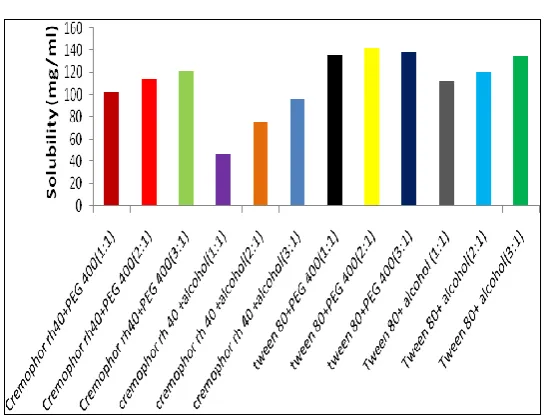
UV-Spectrophotometric method. Furosemide has shown maximum solubility in oils Oleic acid, in
surfactant tween 80 and in co-surfactant PEG 400. Results of solubility studies are given in
Fig. 1. Solubility of furosemide in various oils
Fig. 2. Solubility of Furosemide in various Surfactants
3.2. Construction of Pseudo-ternary Phase Diagrams
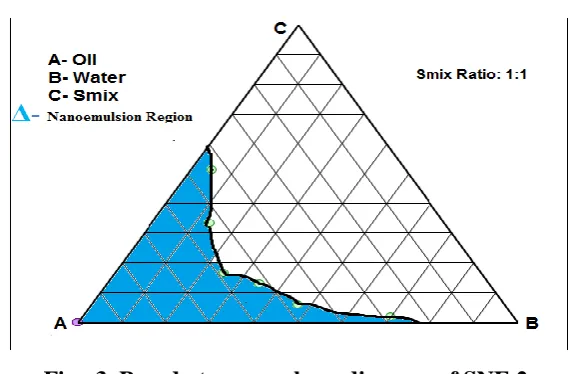
Pseudo–ternary Phase Diagrams were constructed to identify the nano emulsion regions and
to identify suitable composition of oil, surfactant and co-surfactant for formulation of
SNEDDS. From Pseudo–ternary phase diagrams it has been found that the systems consisting
of oleic acid as oily phase, Tween 80 as surfactant and systems PEG400 as co-surfactant
showed good nano emulsifying property. It was also found that by increasing oil content
systems show the appearance of coarse emulsion. It was also found that for systems
consisting of Oleic acid, Tween 80 and PEG 400 the increase in cosurfactant proportion in
Smix systems showed decreasing property of spontaneous nano emulsion formation. From
this observation it was also clear that Surfactant play role to form nano emulsion in a proper
Fig. 3. Pseudo ternary phase diagram of SNE 2.
3.3. Preparation of selected SNEDDS formulations
Five different SNEDDS formulations are prepared with varying ratios of Oil, Surfactant+
Co-surfactant and water. In all formulations the amount of furosemide is constant (40mg).
[image:10.595.75.472.377.494.2]Composition of prepared SNEDDS formulations was given in Table 1.
Table 1. Composition of prepared SNEDDS formulations Formulation
Code
Drug (mg)
Oleic Acid (%w/w)
Smix (1:1) (%w/w)
Water (%w/w)
SNE1 40 43.9 4.87 51.28
SNE2 40 53.3 13.3 33.33
SNE3 40 58.3 25 16.6
SNE4 40 52.17 34.7 13.04
SNE5 40 46.72 46.7 6.04
3.4. Evaluation of Furosemide liquid SNEDDS 3.4.1. Self emulsification and visual assessment
According to visual assessment formulations are graded for self-emulsification time. Self
emulsifying mixtures should disperse rapidly in aqueous medium with mild shaking. Self
emulsification time was determined for prepared SNEDDS and was given in Table 2. It was
found that all formulations are emulsified in 30 to 42 seconds i.e. performance of all
[image:10.595.80.517.667.768.2]formulations was said to be good.
Table 2. Self emulsification time (Seconds) (n=3)
Formulation Code Self emulsification time (sec) Performance of emulsion
SNE1 38.23±0.35 Good
SNE2 35.45±0.28 Good
SNE3 40.87±0.34 Good
SNE4 41.24±0.56 Good
3.4.2. Phase separation and precipitation study of emulsions
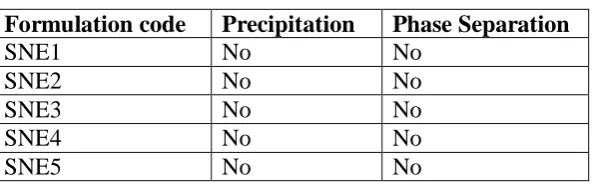
Prepared SNEDDS formulations were observed for precipitation and phase separation of drug
at intervals 2, 4, 6, 8, 12, 24 h period of time and it was found that all formulations showed
neither precipitation nor phase separation of the drug. Results are given in Table 3.
Table 3. Phase separation and precipitation of the drug (n = 3)
Formulation code Precipitation Phase Separation
SNE1 No No
SNE2 No No
SNE3 No No
SNE4 No No
SNE5 No No
3.4.3. Robustness to Dilution
Formulations are diluted with excess of Water, 0.1N HCl and Phosphate buffer of pH 6.8 and
the diluted samples are stored for 24hrs and visually observed for precipitation (or) phase
separation of drug. No precipitation (or) phase separation is found which indicates all
[image:11.595.152.452.185.277.2]formulations are robust to dilution. Results are given in Table 4.
Table 4. Robustness to dilution (n = 3)
Formulation Code Distilled Water 0.1N HCl Phosphate buffer pH 6.8
SNE1 Pass Pass Pass
SNE2 Pass Pass Pass
SNE3 Pass Pass Pass
SNE4 Pass Pass Pass
SNE5 Pass Pass Pass
3.4.4. Drug loading efficiency
It was found that all formulations have drug loading efficiency more than 90% & the Results
are given in Table 5.
Table 5. Drug loading efficiency of formulations (n=3)
Formulation Code Drug loading efficiency
SNE1 92.76±0.67
SNE2 98.67±0.98
SNE3 95.45±0.56
SNE4 97.59±0.45
3.4.5. Thermodynamic stability studies
Thermodynamic stability study is designed to identify metastable formulation. The SNEDDS
are subjected to Centrifugation study and Freeze thaw cycle. The emulsions are stable during
centrifugation at 3,500rpm and alternative temperature cycles of -20°C and +25°C. There is
[image:12.595.129.469.209.313.2]no precipitation and phase separation of formulations. The results are given in Table 6.
Table 6. Thermodynamic stability studies of SNEDDS Formulation code Centrifugation
(3500rpm for 30min)
Freeze Thaw cycle (-20°C and +25°C)
SNE1 Pass Pass
SNE2 Pass Pass
SNE3 Pass Pass
SNE4 Pass Pass
SNE5 Pass Pass
3.4.6. Droplet size and Zeta potential determination
Droplet size, PDI and Zeta potential of the prepared formulations were determined. Droplet
size was found to be in between 65 to 96 nm and PDI of all formulations was found to be
below 1.0 indicating that the particles are distributed uniformly. Zeta potential was found to
be in between – 3.25 to - 10.69 mV. The results are given in Table 7. From the results it was
found that formulation SNE-2 showed less droplet size than other formulations.
Table 7. Results of Droplet size, PDI and Zeta potential(n=3)
Formulation code Mean droplet size (nm) PDI Zeta potential(mV)
SNE1 70.84 0.942 -6.78
SNE2 65.02 0.648 -3.25
SNE3 68.08 0.871 -10.69
SNE4 96.56 0.728 -8.97
SNE5 87.27 0.812 -4.68
3.4.7. Preparation of Solid SNEDDS of Furosemide
Based on evaluation tests done for five liquid SNEDDS formulations the formulation SNE-2
was selected for preparation of solid SNEDDS of Furosemide. Compared to other
formulations SNE-2 showed good self emulsification property which was emulsified
spontaneously in 35.45±0.28 sec and also droplet size (65.02 nm) was less than other
formulations with more uniform distribution of particles (PDI = 0.648). From the evaluation
studies it was found that formulation consisting of oleic acid (15.4%w/w), tween
[image:12.595.91.505.475.570.2]selected for preparation of S-SNEDDS. With selected optimum formulation s-SNEDDS are
prepared using aerosil as carrier in 1:2 ratio by adsorption technique.
3.5. Evaluation of solid SNEDDS of furosemide 3.5.1. Flow properties of s-SNEDDS
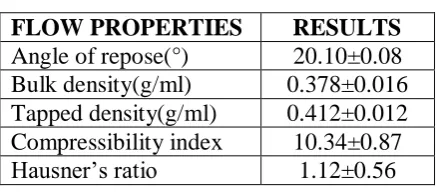
Flow properties such as Angle of Repose, Bulk density, Tapped density, Compressibility
Index and Hausner’s Ratio are determined and it was found that Prepared s-SNEDDS showed “Good” flow properties. Results are given in Table 8.
3.5.2. Drug Content
Amount of drug present in prepared solid nanoemulsion was determined. Drug content of the
[image:13.595.189.412.335.433.2]s-SNEDDS was found to be 95.136 ± 1.29%.
Table 8. Flow properties of solid nanoemulsion of Furosemide (n=3)
FLOW PROPERTIES RESULTS
Angle of repose(°) 20.10±0.08
Bulk density(g/ml) 0.378±0.016
Tapped density(g/ml) 0.412±0.012 Compressibility index 10.34±0.87
Hausner’s ratio 1.12±0.56
3.5.3. Effect of dilution on s-SNEDDS
Effect of dilution on solid nanoemulsion was studied and it was found that prepared solid
nanoemulsion showed spontaneous emulsification i.e. in less than 1min and it was also found
that there is no phase separation (or) phase inversion of nano emulsion after 24hrs storage of
diluted sample.
3.5.4. Droplet size Determination
Mean droplet size and Poly dispersibility index of reconstituted solid nanoemulsion were
found to be 64.98nm and 0.646. The solid nanoemulsion showed PDI less than 1.0 i.e. there
is distribution of uniform size particles.
3.5.6. FT – IR Studies
FT-IR Spectrum of pure drug, Aerosil and the sSNEDDS were obtained by FT-IR
Spectrophotometer. The spectrum of s-SNEDDS so obtained was compared with spectrum of
s-SNEDDS were almost similar because of same functional groups. It indicates there was no
interaction between Furosemide and excipients used in formulation. FT-IR spectrums of pure
drug, Aerosil and solid nanoemulsion are shown in Figures 4.
Fig. 4. (a) FT – IR Spectrum of solid nanoemulsion; (b) FT – IR Spectrum of Aerosil; (c) FT-IR Spectrum of pure drug (Furosemide)
3.5.7. In – Vitro drug release study
In – Vitro drug release study was done for pure drug, marketed tablet and s-SNEDDS of
Furosemide. The percentage drug release from s-SNEDDS was found to be higher than that
of pure drug and marketed tablet. Cumulative Percentage drug release (Fig. 5) from prepared
s-SNEDDS at 60 min was found to be 99.51 ± 1.24% whereas for pure drug and marketed
tablet it was only 16.28 ± 2.54% and 64.72 ± 2.06%.
[image:14.595.146.448.145.349.2]3.5.8. Accelerated Stability Testing After 6 months
Accelerated stability study formulation was evaluated for parameters such as effect of
Dilution, Droplet size, PDI and In–Vitro drug release. s-SNEDDS passed the test of Effect of
Dilution. Droplet size was found to be 17.67 nm with PDI 0.502 indicating no effect on
Droplet size after 6 months stability study. Cumulative percentage of Furosemide from
s-SNEDDS was 99.51 ± 2.56% at the end of 6 months indicating no change in % drug release
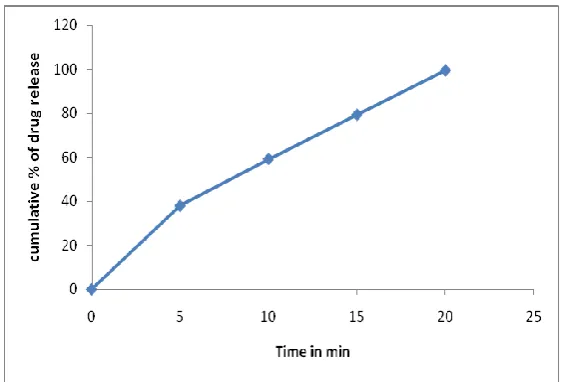
after 6 months stability study. Results are given in Table 9 and Fig. 6.
Fig. 6. In–vitro dissolution profile of s-SNEDDS at the end of 6 months accelerated stability study
Table 9: Accelerated stability study of s-SNEDDS after 6 months
Formulation Effect of dilution Droplet size (d. nm) PDI Drug release (AM ± SD for n=3)
SNE2 Passed 17.67 0.502 99.51 ± 2.56
4. CONCLUSION
A Solid nanoemulsion of a poorly water-soluble drug, furosemide was formulated. The
formula composition of liquid SNEDDS was identified based on solubility studies, pseudo
ternary phase diagram and droplet size analysis. SNEDDS formulation was converted into
s-SNEDDS using aerosil as carrier in 1:2 ratio by adsorption technique. Prepared s-s-SNEDDS
showed “Good” flow properties. Prepared s-SNEDDS showed spontaneous emulsification i.e.
in less than 1min with Droplet size 17.42nm and PDI 0.468. From In-Vitro drug release
profile it was clear that the percentage drug release from sSNEDDS is 6.1 times and 1.5 times
higher than that of pure drug and marketed tablet. Accelerated stability testing at 40°C and
[image:15.595.157.440.228.419.2]Hence the present study concluded that s-SNEDDS formulation could be used to improve the
solubility and dissolution of furosemide.
REFERENCES
1. Raj Kumar M, Soni G.C, Mishra R.P. A Review Article: On Nanoemulsion. World
Journal of Pharmacy And Pharmaceutical Sciences, 3(9): 258-274.
2. Kreilgaard, M, Pedersen EJ, Jaroszewski JW. “NMR characterization and transdermal
drug delivery potential of microemulsion systems”, J Control Release, 2000; 69: 421-433.
3. Gasco MR, Gallarate M, Pattarino F. In-Vitro permeation of azelaic acid from viscosized
microemulsions”, Int J Pharm, 1991; 69: 193-196.
4. Kim YH, Ghanem AH, Mahmoud H, Higuchi WI. Short chain alkanols as transport
enhancers for lipophilic and polar/ionic permeants in hairless mouse skin: mechanism(s)
of action”, Int J Pharm, 1992; 80: 17-31.
5. Trotta M. Influence of phase transformation on indomethacin release from
microemulsions”, J Control Release, 1999; 60: 399-405.
6. Alvarez-Figueroa MJ, Blanco-Méndez J. Transdermal delivery of methotrexate:
iontophoretic delivery from hydrogels and passive delivery from microemulsions”, Int J
Pharm, 2001; 215: 57-65.
7. Pershing LK, Parry GE, Lambert LD. Disparity of in vitro and in vivo oleic
acid-enhanced b-estradiol percutaneous absorption across human skin”, Pharm Res, 1993; 10:
1745-1750.
8. Tanojo H, Junginger HE, Boddé HE. In-vivo human skin permeability enhancement by
oleic acid: transepidermal water loss and Fourier-transform infrared spectroscopy
studies”, J Control Release, 1997; 47: 31-39.
9. Kanika Sarpal, Yogesh BP, Arvind KB. Selfemulsifying drug delivery systems: a strategy
to improve Oral Bioavailability. Current research and Information on Pharmaceutical
Sciences (CRIPS), 2010; 11(3): 42 – 49.
10.Amit Chaudhary; Upendra Nagaich; Neha Gulati, Sharma VK, Khosa RL. Enhancement
of Solubilization and bioavailability of poorly soluble drugs by physical and chemical
modifications: A recent review. Journal of Advanced Pharmacy Education and Research,
2012; 2(1): 2249 – 3379.
11.Monica RPR, Ghanshyam S, Munjapara, Ishwar AK. Preparation and Evaluation of
Self-Microemulsifying Drug Delivery System of Carvedilol. Lat Am J Pharm, 2011; 30(5):
12.Brahmankar D.M, Sunil BJ. Biopharmaceutics and Pharmacokinetics A Treatise,
345–357.
13.Durgacharan Arun Bhagwat, John Intru Dʹ Souza. Formulation and evaluation of solid
self micro emulsifying drug delivery system using Aerosil 200 as solid carrier.
International current pharmaceutical journal, 2012; 1(12): 414 – 419.
14.Preethi Sudheer, Nishanth KM, Satish P, Uma Shankar MS, Thakur RS. Approaches to
development of solid- self micron emulsifying drug delivery system: formulation
techniques and dosage forms – a review. Asian journal of pharmacy and life science,
2012; 2(2): 214 – 225.
15.Srinivas C, Vanitha SS. Enhancing the bioavailability of Simvastatin using
Microemulsion Drug Delivery System. Asian journal of Pharmaceutical and Clinical
research, 2012; 5(4): 134-139.
16.Urvashi Goyal, Ankit Gupta, Avtar Chand Rana, Geeta Aggarwal. Self micro emulsifying
drug delivery system: A method for enhancement of bioavailability. International journal
of pharmaceutical sciences and research, 2012; 3(1): 66–79.
17.Sunitha Reddy M, Srinivas Goud P, Apte SS. Solubility enhancement of Candesartan
cilexetil by self emulsifying drug delivery systems. Int J Pharm Sci Res., 2012; 3(7):
2098-2104.
18.Ajay T, Manpreet KW, Hari Kumar SL. Nanoemulsion in enhancement of bioavailability
of poorly soluble drugs: a review. Pharmacophore Int Res J., 2013; 4(1): 15-25.
19.Sukanya G, Shubhrajit M, Shireen A. Review on nanoemulsions. International Journal of
Innovative Pharmaceutical Science and Research, 2013; 1(2): 192-205.
20.Saifuddin Sheikh, Ateeq Ahamad, Shoukath M Ali. Topical delivery of lipid based
anphotericin B gel in the treatment of fungal infection: a clinical efficacy, safety and
tolerability study in patients. J Clinical & Experimental Dermatology Res., 2014; 5: 1-5.
21.Kotta S, Khan AW, Pramod K, Ansari SH, Sharma RK, Ali J. Exploring oral
nanoemulsions for bioavailability enhancement of poorly water-soluble drugs. Expert
Opin. Drug Deliv., 2012; 9(5): 585-598.
22.Dixit RP, Nagarsenker MS. Self-nanoemulsifying granules of ezetimibe: design,
optimization and evaluation. Eur J Pharm Sci., 2008; 35: 3183-3192.
23.Shafiq S, Shakeel F, Talegaonkar S (2007) Development and bioavailability assessment
of ramipril nanoemulsion formulation. Eur J Pharm Biopharm, 2007; 66: 2227-2243.
24.Sutradhar KB, Amin ML (2013) Nanoemulsions: increasing possibilities in drug delivery.
25.Hamed AC, Vitthal VC, Pravin DC (2013) Self emulsifying drug delivery system: A
review. Int J Pharm Chem Sci., 2013; 2(1): 34 – 44.
26.Robinson JR. Introduction: semi-solid formulations for oral drug delivery. Bull Tech
Gattefosse., 1996; 89: 11–3.
27.Cui SX, Nie SF, Li L, Wang CG, Pan WS, Sun JP, Preparation and evaluation of
self-microemulsifying drug delivery system containing Vinpocetine, Biol Pharm Bull, 2008;
31: 118–125.
28.Patel PA, Chauhang GM, Akolkotkar A, Mutha SS, Handicap SR and Bhosale AV. Self
Emulsifying Drug Delivery System: A Review”, Res J Pharm and Tech, 2008; 1(4):
313-323.
29.Wei LL, Sun PN, Nie SF, Pan WS. Preparation and evaluation of SEDDS and SMEDDS
containing Carvedilol. Drug Dev Ind Pharm., 2005; 31: 785–94.
30.Date AA, Nagarsenker MS. Design and evaluation of self- nanoemulsifying drug delivery