Abstract— Regionalization of local blood banks (LBBs) is
vital for blood supply to hospitals and clinics in the responsible area to fulfill demands in both normal and emergency cases. Determining locations of LBBs is a strategic decision-making in the blood supply chain. Poor location decision may lead to an excessive cost and an increase in mortality rate. This study also focuses on an analysis for location of blood banks based on emergency. A mathematical model to solve the location problem in regionalization of blood bank services is proposed. The model is extended from the P-median problem. Two additional conditions, emergency referral and capacity of each LBB, representing the real-world problem are incorporated in the model. The objective of the problem is to minimize three major costs, fixed costs of LBBs, periodic delivery costs, and emergency referral delivery costs. The model is formulated based on the assumptions that (a) the traveled distance for both periodic delivery and emergency referral may not exceed the maximum traveled distance specified in the problem, and (b) each hospital is allowed to acquire blood from only one LBB. The model is verified and solved using the data from Regional Blood Center V of the Thai Red Cross Society. Computational results are reported. The locations of LBB and the hospitals allocation to LBB are solved optimally in such a way that the total cost is minimized. As a result of our analysis and recommendations, 22 hospitals are selected as LBBs and the maximum distance from the hospital to the LBB is 45 kilometer.
Index Terms—Capacitated Location Problem, P-median Problem, Blood Logistics, Emergency Referral, Limited Traveled Distance
I. INTRODUCTION
HE location of facilities is the process of deciding where to place service facilities, as well as determining how to assign demand points to the located facilities in order to utilize resources effectively. Daskin and Dean [1] described that locating facility locations is critical for both industry and healthcare sectors. The implications of poor location decision in healthcare extend well beyond cost and customer service considerations. If only a small number of facilities are utilized without the consideration of location, it may result in increases in mortality and morbidity rates. Thus,
Manuscript received July 18, 2012; revised August 8, 2012. This work was supported and partially, financially by the Ministry of Science and Technology, and Suranaree University of Technology.
J. Banthao, is a Ph.D. candidate in the School of Industrial Engineering, Suranaree University of Technology, Nakhon Ratchasima, 30000, THAILAND. (e-mail: [email protected]).
P. Jittamai, Ph.D., is currently an Assistant Professor and a Chair of the School of Industrial Engineering, Suranaree University of Technology, Nakhon Ratchasima, 30000, THAILAND. (e-mail: [email protected]).
facility location takes on an even greater importance when applied to problems in determining healthcare facilities. In many developing nations, healthcare system design and planning occur principally at the federal or regional level. Regionalization of healthcare services is important to system planning. Moreover, regionalization is frequently sought to improve the cost or quality of a healthcare system through more effective distribution of services. Questions regarding to regionalization are mostly related to determining optimal service points (location problem) and calculating the allocation of resources to each service point (resource allocation problem). Blood is essential for medical treatment procedures, however, it is a scarce resource and need to be treated differently from other types of products or commodities. Blood logistics is an approach to manage and use blood effectively and efficiently. Determining location of blood banks is a strategic decision in the blood logistics. This paper is organized as follows: Section 2 introduces relevant literatures and related works. Section 3 introduces problem definition and assumptions. Section 4 presents a mathematical model. Computational results are given in section 5. Conclusions and recommendations for future work are outlined in section 6.
II. RELEVANT LITERATURES AND RELATED WORKS
In the literature, the research on blood logistics focuses on the complexity of effectiveness and efficiency of blood location-allocation. Or and Pierskalla [2] considered a regional blood management problem where hospitals were applied by a regional blood bank in their region, and developed a location-allocation model that minimizes the sum of the transportation costs and the system costs. Brodheim and Prastacos [3] presented a prototype for the regional blood center (RBC) and the hospital blood banks in order to optimize blood availability and utilization for a programmed blood distribution system. Sapountzis [4] developed an integer-programming model to allocate blood from a RBC to hospitals. The objective of the model is to minimize the total expected number of units of expired blood. Jacobs et al. [5] developed an integer-programming model for blood collection and distribution system. Their research presented an analysis of alternative locations and service areas of American Red Cross blood facilities. Şahin et al. [6] presented a blood bank location model and developed several location-allocation models to solve the problems of regionalization based on a hierarchical structure; however, the facilities fixed costs of the RBC were not considered. Recent research by Çetin and Sarul [7] presented a mathematical programming model for location of blood banks among hospitals or clinics. Their objectives aim to minimize the total fixed cost of LBBs and the total
An Analysis of Alternative Blood Bank
Locations with Emergency Referral
Jarupong Banthao, and Phongchai Jittamai,
Member, IAENG
traveled distance between the blood bank and hospitals. After a thorough review, we have found that the area of emergency costs in location problem has yet to be explored, especially in the topic of emergency referral.
One of the most popular models for public facility location problem is the P-median model. The P-median problem, originally proposed by Hakimi [8] is that of locating P facilities to minimize the sum of the demand-weighted total distance between each demand node and the nearest facility. Daskin and Dean [1] proposed the location model of P facilities to minimize the coverage distance subjected to a requirement that all demands are covered. Hriber and Daskin [9] proposed a greedy heuristic for the P -median problem. The heuristics restricts the size of the state space of a dynamic programming algorithm. Correa et al. [10] described an application of the capacitated P-median model to a real-world problem and proposed a genetic algorithm to solve the P-median model. Church [11] proposed the regionally constrained P-median problem (RCPMP), which can be described in terms of P-median problem with two additional sets of constraints, one to ensure a minimum number of facilities for each region and the other to prevent more than a specified maximum. Gerrard and Church [12] built upon the RCPMP by allowing regional constraints to be violated and formulating a model that sought to minimize both the total weighted distance and the number of regional constraints that were violated. Their model allows for identification of non-inferior combinations of system accessibility and regional constraint enforcement. However, the maximum traveled distance between supply node and demand node are not considered in P-median model.
III. PROBLEM DEFINITION AND ASSUMPTIONS
A. Problem definition
In this study, we focus on the area of 4 provinces in the Northeast of Thailand, which consists of 93 hospitals. A few hospitals in the region have given up blood collection and made a supply agreement with a regional blood center (RBC). Some of these hospitals order blood from RBC periodically. Each order quantity is determined by each hospital based on past experience and knowledge of the professionals. Each hospital sends blood request together with transportation to pick up blood from RBC and then return to the hospital. Generally, RBC is located far from each hospital in the responsible area. This causes a lot of lengthy and inefficient trips, leading to high transportation cost. Moreover, blood may not be available to hospitals in time of needs especially for those patients with emergency attention. In order to transport the blood in case of emergency, it is important to limit the maximum traveled distance between local blood banks (LBBs) and hospital.
The capacitated location problem with emergency referral model (CLPER) integrates the decision-making process to determine the optimal number and locations for LBBs as well as an optimal assignment of hospitals to LBBs. The objective of the problem is to minimize the total fixed costs of LBBs, periodic delivery costs, and emergency referral delivery costs associated with LBBs. In particular, given a set of candidate LBBs and a set of hospital locations, we seek to determine a set of candidate LBBs from the whole list of available LBBs to be opened at hospitals in such a
way that (a) each hospital must be assigned to only one LBB, and (b) the number of LBBs is exactly the number of available hospitals.
In the context of this research, a delivery route is a path that starts from a LBB and returns to the same LBB after visiting at least one hospital. Each hospital is allowed to only a single visit in each delivery route.
B. Basic assumption
The basic assumptions of this research are:
a) Some local hospitals are also functioned as LBBs. The number of LBBs is fixed, not to exceed the number of available hospitals.
b) The hospitals in a region receive their expected weekly requirements once a week. The blood deliveries are made by vehicles with temperature-controlled containers, starting from a LBB and returning to the same LBB.
c) In case of emergency referral, a delivery vehicle will be dispatched from LBB immediately to deliver blood to the needed hospital and then return to the LBB without making any further stops at other hospitals.
d) The information of the number of emergency referral and distance between hospitals is acquired based on actual in formation.
e) There is a limit on the maximum traveled distance. This assumption is strictly computational.
IV. MATHEMATICAL MODEL
In this section, we present a mathematical model for the location problem with emergency referral and limited traveled distance. Notations of the model and mathematical model formulation are shown below.
A. Notations
The subscripts, sets, parameters, and decision variables used in the model are as follows:
a) Subscripts:
i = index of hospitals j = index of LBBs b) Sets:
I = set of all hospitals
J = set of hospitals that are allowed to be LBBs c) Parameters:
dij = distance between points i and j fj= fixed cost for LBB j
ri = number of emergency referrals for hospital i qi= demand of hospital i
Qj= capacity of LBB j
c = cost per kilometer of a delivery vehicle p = number of LBBs
m = maximum traveled distance d) Decision Variables:
ij
x
otherwise 0
LBB to assigned is
hospital if
1 i j
j
z
otherwise 0
location at
d establishe is
LBB a if
1 j
B. Mathematical model formulation
i I j J
ij ij i I
i j J ij ij J
j j
jz cd x crd x
f
Min. (1)
Subject to
J j ijx 1 ;i (2)
J j j pz (3)
I i j j ij ix Q zq ;j (4) m
x
dij ij ;ij (5)
0,1 ij
x ;ij (6)
0,1 ij
z ;j (7)
The objective function (1) minimizes the total cost of LBBs fixed costs, periodic delivery costs, and emergency referral delivery costs. Constraint (2) states that each hospital must be assigned to exactly one LBB. Constraint (3) states that we must locate exactly p LBBs. Constraint (4) states that blood supply for each LBB must not exceed the blood capacity of each LBB. Constraint (5) states that the limitation of maximum traveled distance between hospital and LBB is not allowed to be greater than a specific m value. Constraints (6) and (7) are standard integrality constraints.
V. COMPUTATIONAL RESULTS
Computational experiments were performed using various data sets from Regional Blood Center V (RBC-V) of the Thai Red Cross Society, consisting of 93 hospitals. All hospitals are candidate LBBs. The RBC-V also provided us with realistic estimates of the number of emergency referrals, the weekly blood demands, the capacity of LBB, the delivery cost per unit distance and the fixed costs of LBBs determined by different sizes of the hospitals. The proposed mathematical model was solved using LINGO 11.0 on a computer with AMD Sempron (TM) 2.10 GHz and 3.00 GB memory. A time limit of 3,600 sec was imposed on the branch and bound algorithm, curtailing the search if a provable optimal solution had not been found within the time limit. The program managed to solve the problems optimally.
A. Overview results
In this section we reported overview results for the CLPER model using RBC-V data. In the restricted application of the CLPER model, 160 scenarios were run to provide RBC-V with alternative solutions, using various combinations of the maximum traveled distance and the number of LBBs allowed values. Forty values of the number of LBBs (p) allowed to established, ranging from 11 to 50 locations, were used in the computation. The maximum traveled distance between LBB and hospital (m) is assigned to be 25, 50, 75, and 100 kilometer. Each pair of (p, m) corresponds to a different scenario for computation. Our analysis does not test only the robustness of the solution for different parameters, but also generate different alternatives
for the decision maker. The results for the locations of different values of LBBs and maximum traveled distance between LBB and hospital are given in Table 1. Values of the number of LBBs and the maximum traveled distance have some effect on the total cost of the system in such a way that the higher the number of LBBs is, the lower the value of the maximum traveled distance will be. This leads to an increase of the overall cost of the system. For instance, with the number of LBBs equals to 21 locations and the maximum traveled distance equals to 75 kilometer yields an optimal solution value of 68,674 baht. When we expand the condition of maximum traveled distance from 50 to 75 kilometer, the value of optimal function is increased from 68,674 to 70,850 baht and the number of LBBs is increased from 21 to 22.
Moreover, when the number of LBBs is located up to and beyond some particular locations, the value of maximum traveled distance does not have significant effect on the total cost of the system. For example, the total cost for 28 LBB
TABLEI
RESULTS OF OBJECTIVE FUNCTION VALUES FOR THE CLPERLTD MODEL
No. LBBs
(p)
Maximum Traveled Distance (m) 25 50 75 100 11 - - - - 12 - - - - 13 - - - 88,867 14 - - 88,805 81,630 15 - - 78,002 74,693 16 - - 74,273 72,041 17 - - 71,763 69,832 18 - - 70,200 69,281 19 - 74,907 69,097 68,155 20 - 71,641 68,788 68,041* 21 - 71,227 68,674* 68,289 22 - 70,850* 69,218 68,853 23 - 71,017 69,571 69,223 24 - 71,285 70,132 69,817 25 - 71,733 70,747 70,432 26 - 72,164 71,453 71,138 27 - 72,758 72,161 72,136 28 - 73,464 73,159 73,159 29 - 74,379 74,304 74,304 30 - 75,577 75,482 75,482 31 - 76,800 76,720 76,720 32 - 78,038 77,988 77,988 33 - 79,336 79,308 79,308 34 - 80,696 80,696 80,696 35 - 82,084 82,084 82,084 36 - 83,527 83,527 83,527 37 - 84,985 84,985 84,985 38 - 86,458 86,458 86,458 39 - 87,956 87,956 87,956 40 - 89,459 89,459 89,459 41 - 90,962 90,962 90,962 42 - 92,477 92,477 92,477 43 - 93,995 93,995 93,995 44 102,719* 95,548 95,548 95,548 45 103,063 97,121 97,121 97,121 46 104,102 98,719 98,719 98,719 47 105,377 100,332 100,332 100,332 48 106,663 101,955 101,955 101,955 49 108,023 103,588 103,588 103,588 50 109,411 105,241 105,241 105,241
locations is the same for assigning maximum traveled distance equals to either 75 or 100 kilometer.
B. Results of costs
In this section we reported in terms of fixed costs of LBBs, periodic delivery costs, and emergency referral delivery costs. Fig. 1 shows a relationship between the total cost and the number of LBBs. Each function represents the different value of the maximum traveled distance. The total costs, when assigning the maximum traveled distance equals to 50, 75, and 100, decrease sharply when the number of LBBs is between 13 and 22 locations. Thereafter, the total cost increased gradually
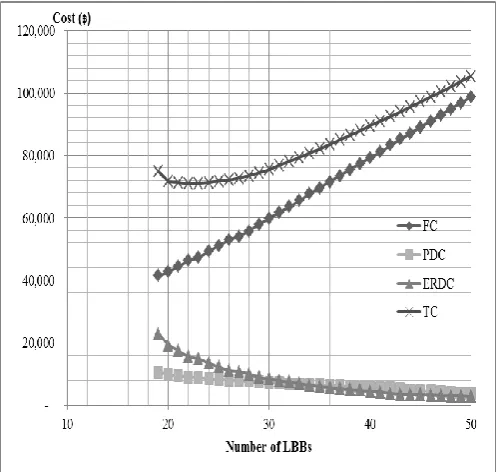
Fig. 2 shows the cost components of the CLPER model
when assigning maximum traveled distance equal to 50 kilometer. The fixed costs of LBBs increase linearly with the number of LBBs. The periodic delivery costs and the emergency referral delivery costs decrease gradually when the number of LBBs increases. The minimum number of LBBs is 22 locations.
C. Allocation results
To be more specific, a data set, consisting of 93 hospitals (H1, H2, H3,…, H93), 93 numbers of referrals and the maximum traveled distance of 50 kilometer, was solved as an example in this study. Hospitals are located all over RBC-V as illustrated in Fig 3. This problem was solved optimally and the result suggests that 22 candidate LBBs should be located at hospitals H1, H7, H9, H11, H14, H16, H21,
H28, H31, H34, H38, H41, H43, H51, H56, H62, H71, H76, H78, H82, H87,
and H92. For instance, H14is assigned to serve hospitals H12,
H13, H15, H18, H19, and H24. H87is assigned to serve hospitals
H85, and H88. According to the result, the maximum and the
minimum distances traveled between the LBB and the hospital are 45 kilometer (H7–H5), and 2 kilometer (H14–H18),
respectively. The total cost is 70,850 baht per week, which is 46,340 baht per week for the fixed costs of LBBs, 9,045 baht per week for the periodic delivery costs, and 15,465 baht per week for the emergency referral delivery costs.
VI. CONCLUSION
The CLPER model that we proposed in this paper is an extension of the P-median problem to accommodate blood demand fulfillment and blood referral in emergency scenarios with the conditions that capacity and limited traveled distance between LBB and hospital are incorporated to the model. The CLPER model is an integer programming model. The objective is to minimize the total cost of LBBs fixed costs, periodic delivery costs, and emergency referral delivery costs. The model is modified from the P-median problem, in which objective function is extended by adding fixed costs of LBBs and emergency
Fig. 2. The costs components for the CLPERLTD model
Note: FC is fixed costs of LBBs, PDC is periodic delivery costs, ERDC is emergency referral delivery costs, and TC is total cost.
[image:4.595.42.293.50.294.2]
Fig. 1. The total costs for the CLPERLTD model of each p and m.
[image:4.595.281.548.52.295.2][image:4.595.43.292.327.563.2]
referral delivery costs. Furthermore, the capacity of each LBB, and the maximum traveled distance limited are constrained in this proposed model.
The proposed mathematical model is able to solve for locations of LBBs optimally and can be conveniently used to allocate hospitals to each LBB. The model may be used for not only LBBs but also for other appropriate location issues in healthcare and other areas, such as location of hospitals and ambulance stations with emergency or disaster cases, or warehouse location with emergency demands. Some directions for future research can be done by modifying this model to help analyzing the impact of emergencies on the facilities locations and its related cost issues.
ACKNOWLEDGMENT
We would like to thank the Regional Blood Center V of the Thai Red Cross Society (TRCS), the Ministry of Science and Technology (MOST) of Thailand, and Suranaree University of Technology for their supports on this study.
REFERENCES
[1] M.S. Daskin and L.K. Dean, “Location of Health Care Facilities,” in Operations Research and Health Care: A Handbook of Methods and Applications, M.L. Brandeau, F. Sainfort, and W.P. Pierskalla, Ed. New York: Kluwer, 2004, pp. 43-76
[2] I. Or, and W.P. Pierskalla, “A transportation location-allocation model for regional blood banking,” AIIE Transactions., vol. 11, no. 2, pp. 86-95, June. 1979
[3] E. Brodheim, and G.P. Prastacos, “The Long Island Blood Distribution System as a Prototype for Regional Blood Management,”
Interfaces., vol. 9, no. 5, pp. 3-20, November 1979
[4] C. Sapountzis, “Allocating blood to hospitals from a central blood bank,” European Journal of Operational Research., vol. 16, issue 2, pp. 157-162, May 1984
[5] D.A. Jacobs, M.N. Silan, and B.A. Clemson, “An Analysis of Alternative Locations and Service Areas of American Red Cross Blood Facilities,” Interfaces., vol. 26, no. 3, pp. 40-50, May 1996 [6] G. Şahin, H. Süral, and S. Meral, “Locational Analysis for
Regionalization of Turkish Red Crescent Blood Service,” Computer & Operations Research., vol. 34, pp. 692-704, December 2007 [7] E. Çetin, and L.S. Sarul, “A Blood Bank Location Model: A
Multiobjective Approach,” European Journal of Pure and Applied Mathematics., vol. 2, no. 1, pp. 112-124, 2009
[8] S.L. Hakimi, “Optimum Locations of Switching Centers and the Absolute Centers and Medians of a Graph,” Operations Research.,
vol. 13, no. 3, pp. 450-459, 1964
[9] M. Hribar, and M.S. Daskin, “A Dynamic programming heuristic for
P-median Problem,” European Journal of Operational Research.,
vol. 101, pp. 499-508, 1997
[10] E.S. Correa, M.T.A. Steiner, A.A. Freitas, and C. Carnieri, “A Genetic Algorithm for Solving a Capacitated P-median Problem,”
Numerical Algorithms., vol. 35, pp. 373-388, 2004
[11] R.L. Church., “The Regionally Constrained P-median Problem,”
Geographical Analysis., vol. 22, no. 1, January 1990