• No results found

PHYLOGENETIC RELATIONSHIPS WITHIN

N/A
N/A
Protected

Academic year: 2020

Share "PHYLOGENETIC RELATIONSHIPS WITHIN"

Copied!
281
0
0

Loading.... (view fulltext now)

Full text

(1)

ANGUSTIFLORAE: INSIGHTS INTO FORCES DRIVING SPECIATION

by

Lacie Janelle Schulte

A thesis

submitted in partial fulfillment of the requirements for the degree of

Master of Science in Biology Boise State University

August 2012

(2)

© 2012

Lacie Janelle Schulte

ALL RIGHTS RESERVED

(3)

DEFENSE COMMITTEE AND FINAL READING APPROVALS

of the thesis submitted by

Lacie Janelle Schulte

Thesis Title: Phylogenetic Relationships within Columnea Section Angustiflorae:

Insights into Forces Driving Speciation Date of Final Oral Examination: 01 June 2012

The following individuals read and discussed the thesis submitted by student Lacie Janelle Schulte, and they evaluated her presentation and response to questions during the final oral examination. They found that the student passed the final oral examination.

James F. Smith, Ph.D. Chair, Supervisory Committee Steven J. Novak, Ph.D. Member, Supervisory Committee Merlin White, Ph.D. Member, Supervisory Committee John L. Clark, Ph.D. Member, Supervisory Committee

The final reading approval of the thesis was granted by James F. Smith, Ph.D., Chair of

the Supervisory Committee. The thesis was approved for the Graduate College by John

R. Pelton, Ph.D., Dean of the Graduate College.

(4)

iv DEDICATION

To my parents, Don and Vickie, and my brother, Alex, for their unending support

in all my endeavors. To Elizabeth Bader, for always encouraging me to spread my wings

and fly.

(5)

v

ACKNOWLEDGEMENTS

This thesis would not have been possible without the contributions and support of many people, but none were more important than my major advisor, Dr. James F. Smith.

I would like to thank Jim first for giving me this opportunity despite my lack of experience in both botany and phylogenetics. His passion and expertise in both fields made the learning process much easier. I am grateful that Jim has pushed me out of my comfort zone to become a better scientist and writer. I cannot express how much his patience and guidance have meant to me throughout this whole process.

I would also like to thank my committee members for their assistance throughout this process: Dr. Stephen J. Novak for his insightful suggestions and explanations; Dr.

Merlin White for his comments on brevity; and Dr. John L. Clark for his hours collecting plant material and knowledge of Columnea morphology.

This research was made possible by the many donations of plant material. Both Dr. James F. Smith and Dr. John L. Clark have spent countless hours collecting material, and the majority of specimens sampled came from their collections. I would also like to thank Larry Skog, Nancy and Jerry Kast, Bob Stewart, Bill Price, Carol Ann Bonner, Julie Mavity-Hudson, and Karen Cichocki, who have graciously donated plant material.

In addition, I would like to thank the Selby Botanical Garden, Missouri Botanical

Garden, Smithsonian Institute, National Herbarium of Colombia, University of the West

(6)

vi

Indies, and Institute of Jamaica Herbaria for donating material and allowing us to photograph their specimens.

I was also given the opportunity to do field work in Jamaica. This field work would not have been possible without Keron Campbell and Judeen Meikle at the Institute of Jamaica. Keron and Judeen were gracious enough to accompany us into the field and help us find our way around Jamaica.

I would also like to thank my fellow lab members. Shandra Jeffries and Maggie Ooi made this thesis possible by helping gather molecular data, georeferencing herbarium specimens, and making work fun each and every day. Thank you also to Danielle Clay who helped me with lab techniques and made me feel welcome when I first arrived at Boise State and Patrick Kolar for all his help with GIS. I would also like to say thank you to the many individuals who have made my time at Boise State a memorable experience:

Morgan Peters, Emma Wilson, Jessie Sherburne, Allison Korte, and many other friends and colleagues in the graduate program.

I must also acknowledge both Jane Wattrus and Gerald Cizadlo for their help in applying to the graduate program at Boise State. Without their initial encouragement and continued support, I would not have gone to graduate school.

No acknowledgement section would be complete without my family and friends.

I am lucky to have an amazing support group across the country that has seen me through

this entire process. I could not name them all, but I must say thank you to the people who

heard me complain during the hard times but do not hear thank you enough: Mom and

Dad, Al, Kathy and Randy, Linda and Jeff, Elizabeth, Kelly, and Caitie - thank you so

much for all your love and support.

(7)

vii

This research was made possible by funding from the National Science

Foundation and the Gesneriad Society Elvin McDonald Research Endowment Fund. I

would also like to thank the Gesneriad Society for awarding me the Student Travel Grant

that allowed me to attend the 2011 Gesneriad Convention and meet so many of these

Gesneriad enthusiasts who keep these plants growing and make Gesneriaceae research

possible.

(8)

viii ABSTRACT

Determining the specific factors that played a role in speciation previously took extensive resources that made such studies nearly intractable. Despite the difficulties presented by speciation studies, we are still interested in determining what forces drive the process of evolution to gain a better understanding of divergence among species.

Advances in technology allow for a new approach to speciation studies, beginning with molecular phylogenetic analyses that identify the species within a monophyletic clade and generate a species-level phylogeny. Molecular data are an independent source of data and provide a phylogeny to map both morphological characters and ecological

parameters. Identifying patterns among phylogenetic studies, morphological characters, and ecological variables highlight possible forces driving speciation.

Morphological characters have previously provided the foundation for

phylogenetics. However, convergence among characters has made phylogenetic studies difficult based on morphology alone. Molecular phylogenetic analyses provide better insight into relationships across the family and as a result, better classification systems that are a reflection of ancestral evolutionary history rather than convergent evolution.

As the largest Neotropical genus in the family Gesneriaceae, with over 200 species, Columnea has had a complex taxonomic history with classification systems based on morphological characters including vegetative, nectary, and floral characters.

Most recent classification systems had classified the species of Columnea into five

(9)

ix

sections: sections Columnea, Collandra, Ortholoma, Pentadenia, and Stygnanthe.

Section Stygnanthe encompassed eighteen species based on a similar floral morphology, characterized by small corollas that are slightly ventricose and constricted at the base, ranging in size from 1.4 to 5.2 cm in length.

A well-supported topology of the species of Columnea can test the previous subgeneric classifications. The phylogenetic analyses presented here sampled 129 accessions representing 90 species within Columnea. Of the 90 species included, fifteen of the eighteen species of Stygnanthe were sampled along with an additional three species, Columnea grisebachiana, C. moorei, and C. ulei, which had not been placed in Stygnanthe but share a similar corolla morphology. Based on five chloroplast DNA

(cpDNA) gene regions (trnQ-rps16 spacer, rpl32-trnL

UAG

spacer, rps16 intron, trnS-G spacer, and trnH-psbA spacer) and nuclear ribosomal internal transcribed spacers (ITS1 and ITS2, hereafter referred to as ITS) the results of this study indicated that the species of section Stygnanthe and the three additional species all with similar corolla

morphologies, belong in three separate clades within Columnea. Three of the species

from Stygnanthe (C. moesta, C. ultraviolacea, and C. xiphoidea), including the type

species and one of the additional species (C. moorei), were separated from the remaining

twelve species of Stygnanthe that were tested. Because the type species (C. moesta)

moved to another clade, most of the species of the former section Stygnanthe and one of

the additional tested species (C. ulei) belong within section Angustiflorae. The other

tested species, C. grisebachiana, fell out into a third separate clade. The results indicate

that within Columnea small corollas that are slightly ventricose and constricted at the

base are the result of convergent evolution.

(10)

x

Molecular phylogenetic analyses with five cpDNA gene regions and ITS provided phylogenetic support for seven monophyletic clades within Columnea but failed to

resolve species-level relationships within clades. Additional molecular phylogenetic analyses were conducted to resolve species level relationships with 36 accessions, representing thirteen of fifteen species within Angustiflorae. The external transcribed spacer (ETS) was added to the sequences from the five cpDNA gene regions and ITS from the genus wide analysis to generate a well-resolved species level phylogeny. In addition, two low-copy nuclear gene regions, glyceraldehyde 3-phosphate dehydrogenase (G3pdh) and NADP-dependent isocitrate dehydrogenase (idh) were included to boost phylogenetic support of the major branching events within the section.

This study used these molecular phylogenetic analyses along with morphological characters and climatic variables to determine driving forces of speciation within section Angustiflorae. The species in section Angustiflorae have morphological variation and

cover nearly the full geographic and climatic range of Columnea, making speciation studies interesting and possible. Studying evolutionary and ecological parameters

approaches speciation from a new angle, identifying patterns among phylogenetic studies, morphological characters, and ecological parameters. Correlation analyses between parameters identify possible forces that have driven evolutionary divergence by highlighting relationships between character states over the phylogenetic history.

Character state shifts may indicate the larger forces that are driving evolutionary

divergence. This study mapped fourteen morphological characters, phenology, and

nineteen climate variables onto the species level phylogeny of Angustiflorae, and patterns

were identified with ancestral state reconstructions and correlation analyses. Defining

(11)

xi

patterns among morphological characters (including phenology) and climatic variables

showed evidence for allopatric speciation, changes in photosynthetic ability, nectar

robbing, pollinator shifts, and climate changes in temperature and precipitation as

possible forces driving evolutionary divergence within Angustiflorae.

(12)

xii

TABLE OF CONTENTS

DEDICATION ... iv

ACKNOWLEDGEMENTS ... v

ABSTRACT ... viii

LIST OF TABLES ... xvi

LIST OF FIGURES ... xvii

CHAPTER ONE: MOLECULAR PHYLOGENETIC ANALYSIS OF MAJOR CLADES IN THE GENUS COLUMNEA (GESNERIACEAE): A TEST OF THE MONOPHYLY OF SECTION STYGNANTHE ... 1

Abstract ... 1

Introduction ... 2

Materials and Methods ... 7

DNA Extraction, Amplification, and Alignment ... 7

Test of Incongruence... 9

Phylogenetic Analyses ... 10

Results ... 11

DNA Amplification and Sequence Alignment ... 11

Test of Incongruence... 13

Phylogenetic Analyses ... 13

Phylogenetic Tree Topology ... 14

Discussion ... 17

(13)

xiii

Topology of Relationships among Columnea Species ... 17

Monophlyly of Species ... 18

Section Stygnanthe ... 18

Section Angustiflorae ... 19

Unsampled Species ... 21

Jamaican Species ... 23

Morphological Homology ... 23

Taxonomic Treatment ... 25

LITERATURE CITED ... 30

CHAPTER TWO: SPECIES LEVEL PHYLOGENY OF SECTION ANGUSTIFLORAE IN COLUMNEA (GESNERIACEAE) ... 50

Abstract ... 50

Introduction ... 51

Materials and Methods ... 53

DNA Extraction, Amplification, and Alignment ... 53

Test of Incongruence... 60

Phylogenetic Analyses ... 60

Results ... 62

DNA Amplification and Sequence Alignment ... 62

Test of Incongruence... 63

Phylogenetic Analyses ... 65

Phylogenetic Tree Topology: Full Data Set... 66

Phylogenetic Tree Topology: Reduced Data Set ... 68

Analyses of Data Sets Including Indel Event Scores ... 69

(14)

xiv

Discussion ... 71

Data Partitions ... 71

Monophyly of Section Angustiflorae ... 72

Subclades within Angustiflorae ... 73

Discrepancies among Data Partitions ... 75

Unsampled Species ... 78

Taxonomic Treatment ... 79

LITERATURE CITED ... 103

CHAPTER THREE: DRIVING FORCES OF SPEC IATION WITHIN SECTION ANGUSTIFLORAE: MORPHOLOGICAL AND CLIMATE VARIABLES... 129

Abstract ... 129

Introduction ... 130

Materials and Methods ... 135

Phylogenetic Analyses ... 135

Species Distributions ... 136

Morphological Characters ... 137

Climate Variables... 139

Correlation Analyses ... 144

Results ... 146

Species Distributions ... 146

Morphological Characters ... 147

Climate Variables... 148

Correlations ... 149

Discussion ... 150

(15)

xv

Distribution and Speciation of Sister Species Pairs ... 151

Ancestral State Reconstructions of Climate using SEEVA and Simmap ... 152

Correlation Analyses ... 154

Forces Driving Speciation... 162

LITERATURE CITED ... 167

APPENDIX A ... 198

Species and Voucher Specimen for Chapter One Phylogenetic Analyses ... 198

APPENDIX B ... 206

Species and Voucher Specimens for Chapter Two Phylogenetic Analyses ... 206

APPENDIX C ... 211

Latitude and Longitude Data for 493 Herbarium Collection Specimens ... 211

APPENDIX D ... 243

Extracted Environmental Data for All Herbarium Collection Specimens as Categorized by SEEVA Analyses ... 243

APPENDIX E ... 248

Maximum Likelihood Probability (MLP) and Bayesian Posterior Probability (BPP) Results from Ancestral State Reconstructions of Morphological Characters Using Both the Branch Length Model (BL) in Simmap 1.5 Analyses and Mk1 Model in Mesquite v. 2.75 Analyses for all Character States (Ch. State) ... 248

APPENDIX F... 256

Bayesian Posterior Probability Results for Ancestral State Reconstructions of

Climatic Variables Using the Branch Length Model in Simmap 1.5 Analyses for

all Character States (Ch. State) ... 256

(16)

xvi

LIST OF TABLES

Table 1.1 – History of Columnea Species Classifications ... 40

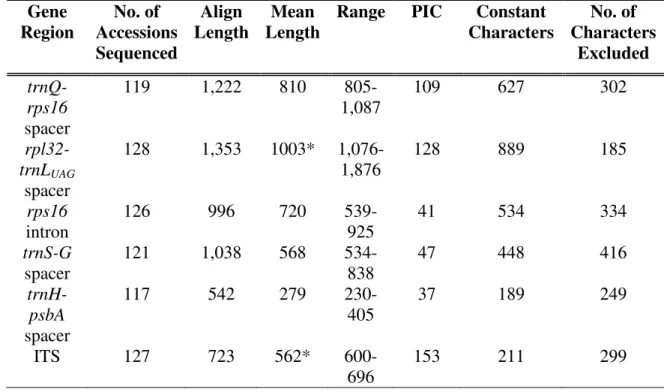
Table 1.2 – DNA Sequencing Results ... 43

Table 1.3 – Maximum Parsimony Results ... 44

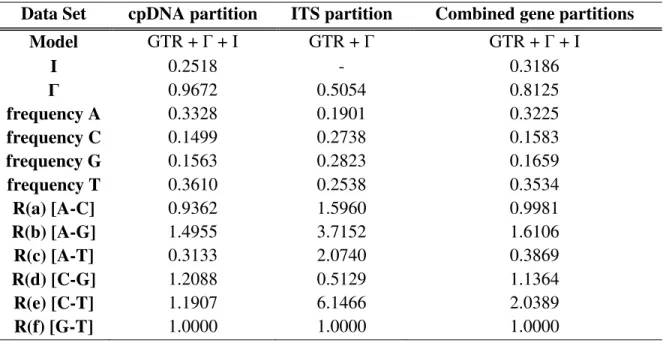
Table 1.4 – Model Test Results ... 44

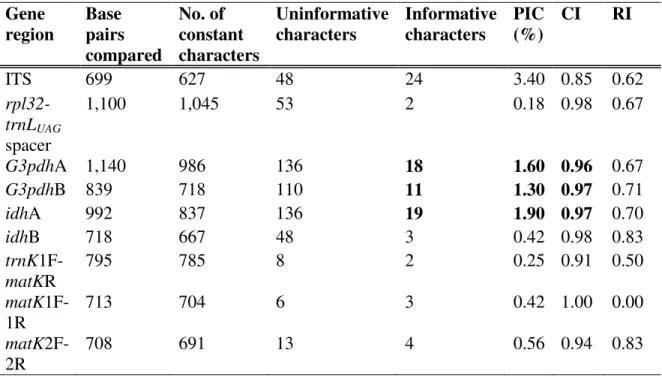
Table 2.1 – Results from Testing Seven Gene Regions to Determine the Ability to Resolve Species-level Relationships ... 111

Table 2.2 – Results for Ability of Two Low-copy Nuclear Gene Regions to Resolve Species-level Relationships within Section Angustiflorae ... 112

Table 2.3 – DNA Sequencing Results ... 113

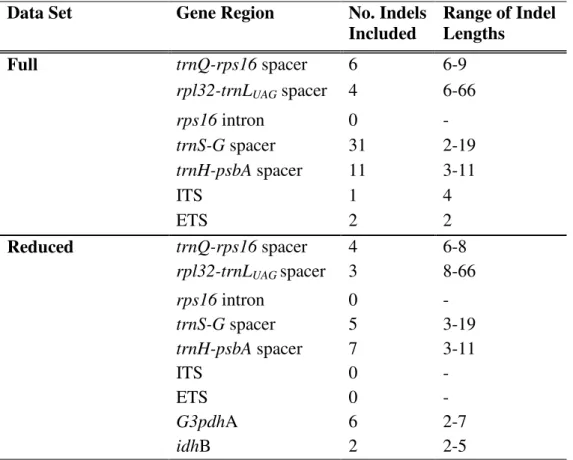
Table 2.4 – Results of Scoring Indel Events ... 115

Table 2.5 – Maximum Parsimony Results ... 116

Table 2.6 – Model Test Results ... 117

Table 3.1 – Character State Definitions and Scores ... 175

Table 3.2 – Morphological and Climatic Variables not Used in Analyses ... 179

Table 3.3 – SEEVA Results ... 181

Table 3.4 – Results from the False Discovery Rate Test ... 185

(17)

xvii

LIST OF FIGURES

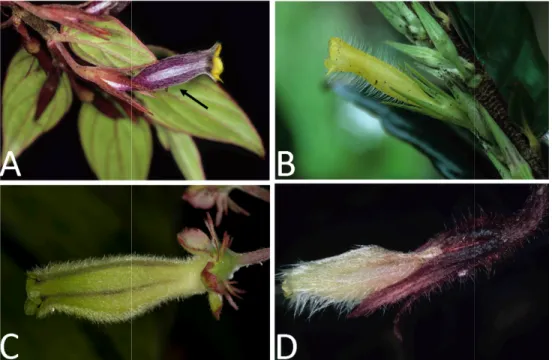
Figure 1.1 – Columnea katzensteiniae (A), C. tandapiana (B), C. isernii (C), and C.

moesta (D) demonstrating morphological characteristics. The arrow in plate A shows a ventricose corolla with slight swelling in the middle.

Plates A and B are species in Angustiflorae that show the larger corolla lobes and less corolla pubescence compared to species in Stygnanthe pictured in plates C and D with smaller corolla lobes and more corolla pubescence. ... 45 Figure 1.2 – Summary of maximum parsimony (MP), maximum likelihood (ML), and

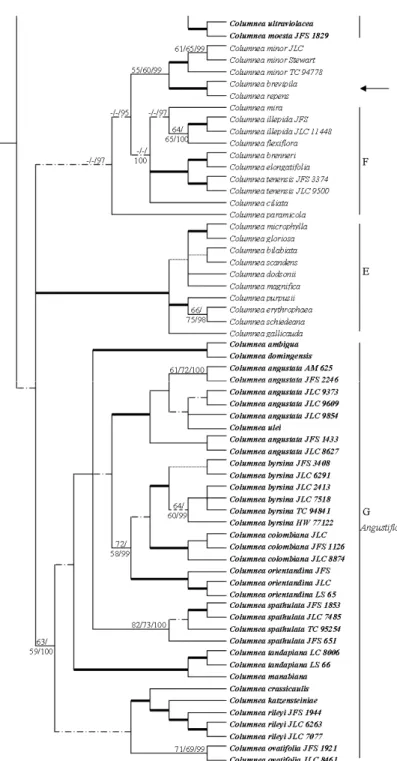
Bayesian inference (BI) partition model analyses mapped on BI partition analysis tree topology. Numbers above branches represent MP bootstrap (BS)/MLBS/BI posterior probability (PP). Bold branches are strongly supported in all three analyses (MPBS/MLBS > 75; PP > 95). Letters represent clades identified by Smith et al. (in review). Lines with dash dot dash pattern represent branches that collapse in either MP or ML analyses.

Accessions in bold represent species that have a similar corolla

morphology (tubular corolla with radially to subradially symmetric limbs) to species of section Stygnanthe sensu Smith (1994). The arrow represents the clade where C. grisebachiana was recovered (tree not shown), the third clade of species with radially to subradially symmetric tubular corolla. ... 47 Figure 1.3 – The AWTY results from the comparison of the two Bayesian inference one

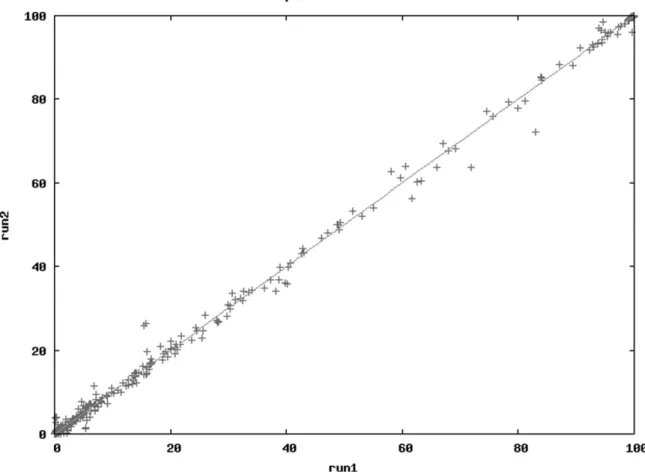
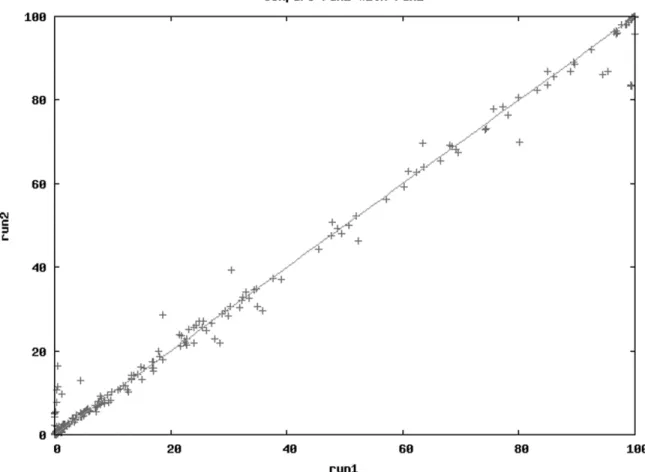
model analysis runs. ... 48 Figure 1.4 – The AWTY results from the comparison of the two Bayesian inference

partition model analysis runs. ... 49 Figure 2.1 – The Are We There Yet results from the comparison of the two Bayesian

inference one model analyses of the full data set. ... 118 Figure 2.2 – The Are We There Yet results from the comparison of the two Bayesian

inference one model analyses of the reduced data set. ... 119 Figure 2.3 – The Are We There Yet results from the comparison of the two Bayesian

inference partition model analyses of the full data set. ... 120 Figure 2.4 – The Are We There Yet results from the comparison of the two Bayesian

inference partition model analyses of the reduced data set... 121

(18)

xviii

Figure 2.5 – Summary of maximum parsimony (MP), maximum likelihood (ML), Bayesian inference (BI) one model, and BI partition model analyses mapped onto the BI partition analysis tree topology for the full data set.

Numbers above branches represent MP bootstrap (BS)/MLBS/BI one model posterior probability (PP)/BI partition model PP. Bold branches are strongly supported in all four analyses (BS > 75; PP > 95). Letters on the left of the tree represent the subclades within section Angustiflorae (A

s

, B

s

, C

s

, and D

s

). Letters on the far right represent clades identified by Smith et al. (in review) and Chapter One. Dotted lines represent branches that collapse in the MP analysis. Dashed and dotted lines represent branches that collapse in the MP and ML analyses. Asterisk indicates that the branch was not present in the MP analysis. Line with double strike

through indicates that the branch was not present in the ML analysis. .. 122 Figure 2.6 – Summary of maximum parsimony (MP), maximum likelihood (ML),

Bayesian inference (BI) partition model analyses model mapped on the BI partition analysis tree topology for the reduced data set. Numbers on branches represent MP bootstrap (BS)/MLBS/BI one model posterior probability (PP)/BI partition model PP. Bold branches are strongly supported in all four analyses (BS > 75; PP > 95). Letters on the left represent subclades in section Angustiflorae (A

s

, B

s

, C

s

, and D

s

). Letters on the far right represent clades identified by Smith et al. (in review) and Chapter One. Dashed and dotted lines represent branches that collapse in both MP and ML analyses. ... 123 Figure 2.7 – Distribution of Columnea ambigua, C. angustata, and C. domingensis. ... 124 Figure 2.8 – Distribution of Columnea antiocana, C. crassicaulis, and C. orientandina.

... 125 Figure 2.9 – Distribution of Columnea byrsina, C. colombiana, and C. suffruticosa. ... 126 Figure 2.10 – Distribution of Columnea katzensteiniae, C. manabiana, C. rileyi, C.

ovatifolia, and C. tandapiana... 127

Figure 2.11 – Distribution of Columnea spathulata. ... 128 Figure 3.1 – Ancestral State Reconstruction of Habit: Ancestral state reconstructions

from Mk1 model and branch length reconstruction mapped onto a species level phylogenetic tree of section Angustiflorae. Character states are upright [0] – black, pendent [1] – white, and horizontal [2] – gray. Circles at extant taxa represent character state for species (Table 3.1). Pie charts at nodes represent the Bayesian posterior probabilities (BPP) and

maximum likelihood probabilities (MLP) from ancestral state

reconstructions. Nodes with only one pie chart have equal BPP and MLP

values. Exact BPP and MLP values are available in Exact BPP and MLP

(19)

xix

values are available in Appendix E. Numbers below branches represent branch lengths with size corresponding to branch length. Letters to right represent subclades within section Angustiflorae (Chapter Two). ... 188 Figure 3.2 – Ancestral State Reconstruction of Leaf Isophylly: Ancestral state

reconstructions from Mk1 model and branch length reconstruction mapped onto a species level phylogenetic tree of section Angustiflorae. Character states are anisophyllous [0] – black and isophyllous [1] – white. Circles at extant taxa represent character state for species (Table 3.1). Pie charts at each node on the left are the Bayesian posterior probabilities and pie charts on the right are the maximum likelihood probabilities from ancestral state reconstructions. Exact probabilities are available in

Appendix E. ... 188 Figure 3.3 – Ancestral State Reconstruction of Lamina Surface Area: Ancestral state

reconstructions from Mk1 model and branch length reconstruction mapped onto a species level phylogenetic tree of section Angustiflorae. Character states are 0.0-30.0 cm2 [0] – black and > 30.0 cm2 [1] – white. Circles at extant taxa represent character state for species (Table 3.1). Pie charts at each node on the left are the Bayesian posterior probabilities (BPP) and pie charts on the right are the maximum likelihood probabilities (MLP) from ancestral state reconstructions. Nodes with only one pie chart have equal BPP and MLP values. Exact probabilities are available in Appendix E. ... 189 Figure 3.4 – Ancestral State Reconstruction of Petiole Length: Ancestral state

reconstructions from Mk1 model and branch length reconstruction mapped onto a species level phylogenetic tree of section Angustiflorae. Character states are 0.0-5.0 mm [0] – black, 5.0-20.0 mm [1] – white, and > 20.0 mm [2] – gray. Circles at extant taxa represent character state for species (Table 3.1). Pie charts at each node on the left are the Bayesian posterior probabilities and pie charts on the right are the maximum likelihood probabilities from ancestral state reconstructions. Exact probabilities are available in Appendix E. ... 190 Figure 3.5 – Ancestral State Reconstruction of Floral Bract Size: Ancestral state

reconstructions from Mk1 model and branch length reconstruction mapped

onto a species level phylogenetic tree of section Angustiflorae. Character

states are 0.0-6.0 mm [0] – black, 6.0-13.0 mm [1] – white, and > 13.0

mm [2] – gray. Circles at extant taxa represent character state for species

(Table 3.1). Pie charts at each node on the left are the Bayesian posterior

probabilities and pie charts on the right are the maximum likelihood

probabilities from ancestral state reconstructions. Exact probabilities are

available in Appendix E. ... 190

(20)

xx

Figure 3.6 – Ancestral State Reconstruction of Corolla to Calyx Ratio: Ancestral state reconstructions from Mk1 model and branch length reconstruction mapped onto a species level phylogenetic tree of section Angustiflorae. Character states are 0.0-2.5 [0] – black and > 2.5 [1] – white. Circles at extant taxa represent character state for species (Table 3.1). Pie charts at each node on the left are the Bayesian posterior probabilities and pie charts on the right are the maximum likelihood probabilities from ancestral state

reconstructions. Exact probabilities are available in Appendix E. ... 191 Figure 3.7 – Ancestral State Reconstruction of Calyx Margin: Ancestral state

reconstructions from Mk1 model and branch length reconstruction mapped onto a species level phylogenetic tree of section Angustiflorae. Character states are entire [0] – black and serrate [1] – white. Circles at extant taxa represent character state for species (Table 3.1). Pie charts at each node on the left are the Bayesian posterior probabilities and pie charts on the right are the maximum likelihood probabilities from ancestral state

reconstructions. Exact probabilities are available in Appendix E. ... 191 Figure 3.8 – Ancestral State Reconstruction of Corolla Color: Ancestral state

reconstructions from Mk1 model and branch length reconstruction mapped onto a species level phylogenetic tree of section Angustiflorae. Character states are yellow corolla [0] – black, red corolla [1] – white, purple corolla [2] – gray, and polymorphic for color [3] – stripes. Circles at extant taxa represent character state for species (Table 3.1). Pie charts at each node on the left are the Bayesian posterior probabilities and pie charts on the right are the maximum likelihood probabilities from ancestral state

reconstructions. Exact probabilities are available in Appendix E. ... 192 Figure 3.9 – Ancestral State Reconstruction of Corolla Lobe Color: Ancestral state

reconstructions from Mk1 model and branch length reconstruction mapped onto a species level phylogenetic tree of section Angustiflorae. Character states are same color as corolla [0] – black and different from corolla [1] – white. Circles at extant taxa represent character state for species (Table 3.1). Pie charts at each node on the left are the Bayesian posterior probabilities and pie charts on the right are the maximum likelihood probabilities from ancestral state reconstructions. Exact probabilities are available in Appendix E. ... 192 Figure 3.10 – Ancestral State Reconstruction of Phenology: Ancestral state

reconstructions from Mk1 model and branch length reconstruction mapped onto a species level phylogenetic tree of section Angustiflorae. Character states are flowering continuously [0] – black, flowering from January to March [1] – white, and flowering from March to October [2] – gray.

Circles at extant taxa represent character state for species (Table 3.1). Pie

charts at each node on the left are the Bayesian posterior probabilities

(BPP) and pie charts on the right are the maximum likelihood probabilities

(21)

xxi

(MLP) from ancestral state reconstructions. Nodes with only one pie chart have equal BPP and MLP values. Exact probabilities are available in Appendix E. ... 193 Figure 3.11 – Ancestral State Reconstruction of Annual Mean Temperature: Ancestral

state reconstructions from branch length reconstruction using Simmap 1.5 mapped onto a species level phylogenetic tree of section Angustiflorae.

Character states are < 18.667 °C [0] – black, 21.225-23.0 °C [1] – white, polymorphic [2] – gray, and < 21 °C [3] – stripes. Circles at extant taxa represent character state for species (Table 3.1). Pie charts at each node represent the Bayesian posterior probability values. Exact probabilities are available in Appendix F. ... 194 Figure 3.12 – Ancestral State Reconstruction of Temperature Seasonality: Ancestral state

reconstructions from branch length reconstruction using Simmap 1.5 mapped onto a species level phylogenetic tree of section Angustiflorae.

Character states are polymorphic [0] – black, 265.75-439.5 [1] – white, <

439.5 [2] – gray, and > 703.33 [3] – stripes. Circles at extant taxa represent character state for species (Table 3.1). Pie charts at each node represent the Bayesian posterior probability values. Exact probabilities are available in Appendix F. ... 194 Figure 3.13 – Ancestral State Reconstruction of Mean Temperature of Wettest, Driest,

Warmest, and Coldest Quarters: Ancestral state reconstructions from branch length reconstruction using Simmap 1.5 mapped onto a species level phylogenetic tree of section Angustiflorae. Character states are <

18.85 °C [0] – black, polymorphic [1] – white, < 21.5 °C [2] – gray, and >

23.667 °C [3] – stripes for mean temperature of the wettest quarter; < 18.3

°C [0] – black, polymorphic [1] – white, < 20.98 °C [2] – gray, and >

22.633 °C [3] – stripes for mean temperature of the driest quarter; <

19.375 °C [0] – black, polymorphic [1] – white, < 21.85 °C [2] – gray, and

> 23.9 °C [3] – stripes for mean temperature of the warmest quarter; <

18.133 °C [0] – black, polymorphic [1] – white, < 20.5 °C [2] – gray, and

> 22.433 °C [3] – stripes for mean temperature of the coldest quarter.

Though character states are different for each of the four bioclim variables represented on this tree, Bayesian posterior probabilities (BPP) were exactly the same for all four variables at all nodes and scores were the same for all extant species. Circles at extant taxa represent character state for species (Table 3.1). Pie charts at each node represent the BPP values.

Exact probabilities are available in Appendix F. ... 195 Figure 3.14 – Ancestral State Reconstruction of Precipitation of Coldest Quarter:

Ancestral state reconstructions from branch length reconstruction using

Simmap 1.5 mapped a onto species level phylogenetic tree of section

Angustiflorae. Character states are polymorphic [0] – black, < 382.0 mm

[1] – white, > 382.0 [2] – gray, and 158.0-829.0 mm [3] – stripes. Circles

(22)

xxii

at extant taxa represent character state for species (Table 3.1). Pie charts at each node represent the Bayesian posterior probabilities values. Exact probabilities are available in Appendix F. ... 196 Figure 3.15 – Summary of Forces Driving Speciation within Section Angustiflorae:

Pictures represent causes of speciation at each node and for individual species. An island represents allopatric speciation; the photosynthesis Z- scheme represents a shift in photosynthetic ability; a bee represents an adaptation to nectar robbing; a hummingbird represents a pollinator shift;

a raincloud represents a shift in precipitation; and a sun represents a shift

in temperature. ... 197

(23)

CHAPTER ONE: MOLECULAR PHYLOGENETIC ANALYSIS OF MAJOR CLADES IN THE GENUS COLUMNEA (GESNERIACEAE): A TEST OF THE MONOPHYLY

OF SECTION STYGNANTHE

Abstract

The use of morphological characters to analyze evolutionary relationships of species, genera, and higher taxa within Gesneriaceae has been problematic, producing conflicting results because of convergence causing unrelated taxa to be classified

together. Molecular phylogenetic analyses allow greater insights into relationships across the family, resulting in better classification systems that reflect the common ancestry of taxa rather than convergent evolutionary history. The taxonomic history of species considered Columnea, the largest Neotropical genus in Gesneriaceae subfamily Gesnerioideae, has been problematic due to convergent morphology. The over 200 species of Columnea have been placed in fourteen genera, with up to nine sections in Columnea. Most recently, species of Columnea have been classified in a single genus

with five sections. Stygnanthe, one of the five sections in Columnea, encompasses

eighteen species based on floral morphology. However, molecular phylogenetic analyses

have begun to deconstruct the five sections of Columnea. The phylogenetic analyses

presented here amplified 129 accessions representing 90 species for five chloroplast gene

regions (trnQ-rps16 spacer, rpl32-trnL

UAG

spacer, rps16 intron, trnS-G spacer, and trnH-

psbA spacer) and nuclear ribosomal internal transcribed spacers (ITS1 and ITS2) to build

a well-supported topology that can test the previously proposed subgeneric

(24)

classifications. Fifteen species of section Stygnanthe and four species that share a similar floral morphology but had not been classified in Stygnanthe were included in molecular phylogenetic analyses to test the utility of floral form as an indicator of evolutionary history. The results indicate that classifying species of Columnea in five sections is not a real reflection of the evolutionary history; rather, there is support for seven monophyletic clades within the genus. There is also support that the species of section Stygnanthe and those that share a similar floral morphology belong in three separate clades, evidence that floral form is the result of convergent evolution within Columnea.

Introduction

Historically, morphological characters provided the foundation for plant classification systems worldwide. Despite the apparent ease of assessing morphology, the underlying evolutionary and genetic homology of these phenotypic traits poses difficulties when evaluating characters in an evolutionary context. Without a critical evaluation to assess homology, convergence of phenotypic traits leads to flawed classification systems uniting unrelated taxa. Molecular methods have provided an alternative to morphological data, allowing for an easier assessment of homology and identification of phylogenetically informative characters while providing an independent source of data to build phylogenies.

Prior to the introduction of molecular methods, systematists had no alternative to morphological characters for building classification systems. As a result, many taxa that have not recently been revised lack the phylogenetic structure and support that molecular data provide. Many groups have been revised with molecular phylogenetic analyses.

The temperate family, the former Scrophulariaceae, is just one example of an angiosperm

(25)

family that has recently undergone major reclassifications based on molecular data (Olmstead et al. 2001; Oxelman et al. 2005; Albach et al. 2005; Xia et al. 2009).

Gesneriaceae, the tropical counterpart to the former Scrophulariaceae, is one of many angiosperm families in need of molecular systematic revision. With over 3500 species distributed pantropically, this family is divided into two subfamilies: the almost exclusively Paleotropical Cyrtandroideae and nearly exclusively Neotropical

Gesnerioideae (Weber 2004). Within the subfamily Gesnerioideae, the tribe Episcieae is easily delimited by a three-trace trilacunar node with split lateral bundles, generally superior ovaries and chromosome counts of x = 8 or 9 (Wiehler 1983). Columnea L. is the largest genus within tribe Episcieae with over 200 species.

As the largest Neotropical genus in Gesneriaceae subfamily Gesnerioideae, Columnea has had a problematic taxonomic history, summarized in Table 1.1, with

erroneous classification systems based on analogous rather than homologous

morphological characters. The type species, Columnea scandens L., was first described by Linnaeus in 1753. Several more species were subsequently described and placed in other genera during the early 1800’s. Most of these species were then combined by Hanstein (1854) to form the genus Columnea. He retained the generic status for both Ortholoma Benth. and Collandra Lem. and added four new genera (Hanstein 1854; Table

1.1). After a decade, Hanstein (1865) combined all the genera into a single genus,

Columnea, and recognized each former genus as a subgenus with the exception of

Stygnanthe J. Hanst (Table 1.1). Hanstein (1865) also added an additional subgenus,

bringing the total number of subgenera to seven (Table 1.1). Columnea was reclassified

by Fritsch (1894) who recognized the subgenera of Hanstein (1865) as sections and

(26)

considered Trichantha Hook. a separate genus from Columnea. Fritsch also combined the genera Stygnanthe and Systolostoma Benth. into Columnea and recognized each of them as sections (Fritsch 1894; Table 1.1). Morton (1971) and Morley (1974, 1976) each slightly altered the genus by recognizing different numbers of sections (Table 1.1).

These classification systems relied predominantly on floral characters (Hanstein 1854, 1865; Fritsch 1894; Morton 1971; Morley 1974, 1976).

Wiehler (1973, 1983) questioned the utility of floral form, considering the corolla characteristics a reflection of pollinator selection activity rather than ancestral

relationships. Wiehler (1973) proposed a reclassification of the family based on vegetative or nectary characteristics. Wiehler (1977, 1981) introduced the columneoid alliance by splitting the genus Columnea into four genera and adding a fifth genus Bucinellina Wiehler (Table 1.1).

However, Wiehler’s (1977, 1981) classification system was controversial because Columnea was no longer considered a single genus. The presence of an opaque, white to

pale colored berry fruit was an important unifying character and evidence for a single genus to encompass the species. Many researchers continued to treat Columnea as a single genus (Morley 1974, 1976; Smith 1991, 1994) including Kvist and Skog (1993) who combined Wiehler’s five genera back into a single genus and recognized six sections (Table 1.1) that largely corresponded to Wiehler’s (1977, 1981) genera.

Despite Wiehler’s attempt to reorganize Gesneriaceae using characters that

reflected ancestor descendent relationships, misinterpretations of homology among

morphological characters have been prevalent within the family. Studies of groups

within both Cyrtandroideae (Möller and Cronk 1997; Smith 1996; Smith et al. 1997,

(27)

1998; Mayer et al. 2003; Li and Wang 2007; Möller et al. 2009; Wang et al. 2010, 2011) as well as Gesnerioideae (Clark and Zimmer 2003; Smith et al. 2004; Roalson et al.

2005a, b, 2008; Woo et al. 2011; Clark et al. 2012) have shown evidence for varying relationships based on morphological verses molecular data, including species within Columnea (Smith et al. in review).

The first molecular phylogenetic analyses of Columnea were conducted by Smith and Sytsma (1994b, c) who studied Kvist and Skog’s (1993) sections Pentadenia

(Planch.) Hanst. and Stygnanthe using a combination of morphological characters and chloroplast DNA restriction site data. Although they did not have evidence for the monophyly of either of these sections, they were retained pending further molecular sampling. Smith (1994) recognized five sections within Columnea: sections Pentadenia and Stygnanthe, along with three others: sections Columnea, Ortholoma, and Collandra (Smith 1994; Table 1.1).

Since Smith and Sytsma (1994b, c), species of Columnea have been sampled in numerous DNA sequence based phylogenetic analyses (Smith and Carroll 1997; Smith 2000; Zimmer et al. 2002; Clark and Zimmer 2003; Clark et al. 2012) and have been recovered as either monophyletic or unresolved (Smith and Carroll 1997) among other closely related genera. However, none of those studies have provided sufficient

phylogenetic resolution or support to test the subgeneric classification of Columnea (Smith and Carroll 1997; Smith 2000; Zimmer et al. 2002; Clark and Zimmer 2003;

Clark et al. 2012).

Section Stygnanthe sensu Smith (1994) is one section that has lacked

phylogenetic support for its monophyly. Smith (1994) placed eighteen species in section

(28)

Stygnanthe characterized as sublignose (rarely succulent) epiphytes with anisophyllous or

slightly anisophyllous leaves, inflorescences of 1-12 flowers per axil, a calyx loosely clasping the corolla, and small corollas that are slightly ventricose (Figure 1.1) and constricted at the base ranging in size from 1.4 to 5.2 cm in length (Smith 1994).

Previously, many of the species of section Stygnanthe were placed in genus Pentadenia by Wiehler (1973, 1977, 1981, 1983; Appendix A). Kvist and Skog (1993) then

transferred most of the species to section Stygnanthe (Appendix A). Smith’s (1994) section Stygnanthe moved some of Kvist and Skog’s (1993) species into section Pentadenia and added others that had previously been untreated (Appendix A).

Molecular phylogenetic analyses have begun to resolve subgeneric relationships within Columnea (Smith et al. in review). Five chloroplast DNA (cpDNA) gene regions and nuclear ribosomal internal transcribed spacers, ITS1 and ITS2, show phylogenetic support for seven monophyletic clades within Columnea (Smith et al. in review) rather than five sections (Smith 1994; Table 1.1). The goal of this study to build on the study of Smith et al. (in review) to examine the relationships among species within Columnea to generate a well-supported phylogenetic tree to test the monophyly of the eighteen species in section Stygnanthe sensu Smith (1994).

Phylogenetic analyses were conducted to test the monophyly of section

Stygnanthe sensu Smith (1994) using five cpDNA gene regions (trnQ-rps16 and rpl32-

trnL

UAG

spacers: both from Shaw et al. 2007; rps16 intron: Oxelman et al. 1997; trnS-G

spacer: Hamilton 1999; and trnH-psbA spacer: Clark et al. 2012), along with nuclear

ribosomal internal transcribed spacers (ITS1 and ITS2, hereafter referred to as ITS;

(29)

Baldwin et al. 1995). These were chosen because previously they have resolved subgeneric clades within Columnea with broad sampling (Smith et al. in review).

Previous data indicated that section Stygnanthe was not monophyletic. Smith et al. (in review) sampled twelve of the eighteen species within Stygnanthe and 68 species within Columnea, represented by 93 accessions. This study included 40 accessions representing fifteen of the eighteen species of Stygnanthe sensu Smith (1994) and added an additional 22 species, sampling 90 species (129 accessions) in Columnea. In addition, species that were not previously placed in Stygnanthe by Smith (1994), but share a similar tubular corolla with radially to subradially symmetric limbs were sampled:

Columnea ulei, C. moorei, and C. grisebachiana. Columnea ulei and C. moorei were

classified by Wiehler (1973) as Trichantha and considered members of section Ortholoma by Kvist and Skog (1993) and Smith (1994; Appendix A). Columnea grisebachiana was previously classified in section Pterygoloma by Morley (1976).

Materials and Methods

DNA Extraction, Amplification, and Alignment

A complete list of samples and voucher specimens is in Appendix A. The

ingroup included 129 accessions of Columnea representing 90 species, based on

morphology. These represent multiple individuals from each of Wiehler’s (1983)

segregate genera and the sections of Kvist and Skog (1993), with the exception that only

one of the two species of Bucinellina was included (Appendix A). Outgroup samples

included species of Alloplectus, Corytoplectus, Crantzia, Drymonia, Glossoloma, and

Neomortonia (Appendix A) chosen based on a study of Episcieae by Clark et al. (2012).

(30)

DNA was extracted from silica-dried leaf material of one individual plant using Qiagen DNeasy plant mini kits (Valencia, California, U.S.A.) according to the

manufacturer’s instructions. Five cpDNA gene regions were chosen for amplification including the trnQ-rps16 spacer (Shaw et al. 2007), rpl32-trnL

UAG

spacer (Shaw et al.

2007), rps16 intron (Oxelman et al. 1997), trnS-G spacer (Hamilton 1999), and trnH- psbA (Clark et al. 2006). The sixth gene region used for this study was the nuclear DNA

region ITS (Baldwin et al. 1995).

Columnea xiphoidea had only herbarium leaf material available, making it

difficult to amplify and sequence the DNA. Therefore, only two gene regions, rpl32- trnL

UAG

spacer and ITS, were amplified for C. xiphoidea following the same procedure as the silica-dried leaf material. Columnea xiphoidea gene regions were analyzed separately from the six gene region combined analyses. The sequences for rpl32-trnL

UAG

spacer and ITS for the 129 accessions were combined, and the sequences from C. xiphoidea, for both gene regions, were added to the data set. The gene regions were combined into a single concatenated data set composed of two separate partitions and analyzed using maximum parsimony (MP) in PAUP* v4.0 b10 (Swofford 2002).

All double-stranded DNA was amplified via polymerase chain reaction (PCR) following the methods of Smith et al. (1997). Sequences were obtained either through the methods described in Smith et al. (2004) or through Genewiz (Plainfield, New Jersey, U. S. A.) with chromatograms viewed and sequences edited and aligned by hand in PhyDE (http://www.phyde.de/).

Due to the different sequencing methods, each gene region had missing data at the

beginning and end in the full alignment. Areas of missing data and ambiguous

(31)

alignments were excluded from phylogenetic analyses. Additionally, the alignment produced regions of ambiguity due to single base or microsatellite repeats. These repeats can be unambiguously aligned; however, the homology is uncertain. To test the impact of these single base and microsatellite repeats on phylogenetic analyses, I ran two additional MP analyses using PAUP* v4.0 b10 (Swofford 2002), one with the repeats included and one with them excluded. To assess the utility of including single base and microsatellite repeats, the resolution and support within the tree was compared. If the repeats are homoplastic there will be less resolution and support within the tree due to increased homoplasy, which would be reflected in a reduced consistency index (CI;

Kluge and Farris 1969).

The alignments also resulted in gaps to account for insertion or deletion (indel) events. The inclusion of indel events can be of phylogenetic significance (Simmons and Ochoterena 2000). Each indel event was scored as present or absent for all accessions.

An additional data partition was then added to the end of the concatenated data set representing the score for each indel event (Lewis 2001). The data set that included the indel event scores was then analyzed separately using MP in PAUP* v4.0 b10 (Swofford 2002).

Test of Incongruence

The partition homogeneity test (Farris et al. 1994) was performed as implemented

in PAUP* v4.0 b10 (Swofford 2002) with 10,000 bootstrap replicates (using a heuristic

search, simple addition, and no branch swapping). Because the cpDNA is a single non-

recombining unit, the cpDNA gene regions were treated as a single partition. The ITS

gene region was treated as a separate gene partition. As an additional measure of

(32)

congruence among partitions, bootstrap analyses were performed on each partition separately to assess areas of conflicting resolution and to determine if any conflict was strongly supported (Seelanen et al. 1997).

Phylogenetic Analyses

Phylogenetic trees were estimated using MP, maximum likelihood (ML), and Bayesian inference (BI). Maximum parsimony analyses were performed using PRAP2 (Müller 2004) in conjunction with PAUP* v4.0 b10 (Swofford 2002). Bootstrap support (BS) for nodes (Felsenstein 1985) was estimated with 1000 heuristic replicates using PRAP2 (Müller 2004). Descriptive statistics reflecting the amount of phylogenetic signal in the parsimony analysis were given by CI (Kluge and Farris 1969), retention index (RI;

Farris 1989), and the resulting rescaled consistency index (RC; Farris 1989).

Maximum likelihood and BI analyses were performed using optimal substitution models suggested by Modeltest 3.6 (Posada and Crandall 1998). The Akaike information criterion (AIC), which allows non-nested models to be evaluated, was used as a selection criterion (Posada and Buckley 2004) for the cpDNA and ITS partitions separately and as a concatenated data set.

Substitution models were determined for both cpDNA and ITS partitions

separately because two separate BI analyses were completed using MrBayes 3.1.1

(Huelsenbeck and Ronquist 2003). The first BI analysis, referred to as the one model

analysis, was performed using a single model for all data (cpDNA and ITS). The second

BI analysis, referred to as the partition model analysis, was performed with a separate

model for each of the two data partitions.

(33)

All analyses were run with 4 to 1 heated chains, for ten million generations.

Convergence was determined by viewing in Tracer v1.3 (Rambaut and Drummond 2005), and a burnin of 50,000 generations was discarded prior to sampling the posterior distribution for both BI analyses. Both of the BI analyses were repeated twice to ensure that parameter estimates converged to similar values. The separate runs were compared using the online version of Are We There Yet (AWTY; Nylander et al. 2008) as a means of determining if the separate chains approximated the same target distribution. The ML analysis was completed using GARLI v0.96 (Zwickl 2006) with 100 bootstrap replicates using a single model across the data.

Results

DNA Amplification and Sequence Alignment

Amplifications were successful for all individuals with some exceptions for each DNA gene region (Table 1.2). Length for the aligned sequence and the aligned

sequences with missing and ambiguous regions removed is in Table 1.2 for all regions.

The 5.8S gene between ITS1 and ITS2 was identical across ingroup species and was excluded from the analyses and calculations. There were a total of 4,129 base pairs included in the phylogenetic analyses. Out of these, 2,898 were constant, and 716 were uninformative leaving 515 (12.5%) as phylogenetically informative. An inversion in trnH-psbA spacer was detected in individuals of Columnea lophophora (J. L. Clark et al.

7888 and 8898), C. moesta (J. L. Clark 6690), C. eburnea, C. picta, and C. schimpfii

(Appendix A). This region was reverse complemented for all individuals prior to

analyses.

(34)

Maximum parsimony analyses to test the impact of single base and microsatellite repeats showed no major differences. The MP analysis including single base and

microsatellite repeats resulted in reduced resolution and support across the tree including a loss of support (trees not shown) for the monophyly of Clade G (Figure 1.2). However, there were some areas that showed slightly better resolution (trees not shown), including resolving Clade A (Figure 1.2) as monophyletic. Overall, BS was approximately the same in both analyses, though there was a drop in the CI (Kluge and Farris 1969) from analyses with single base and microsatellite repeats included compared to the analysis with repeats excluded (single base and microsatellite repeats included: CI = 0.4533;

excluded: CI = 0.4717). A lower CI is an indication of homoplasy among the included data. The reduced resolution and lower CI value in the analysis including single base and microsatellite repeats implies that the repeats are homoplastic, at least in part. Because the impact of including single base and microsatellite repeats resulted in lower resolution, support, and CI values, they were excluded from further analyses.

Analysis of the data set including scored indel events resulted in minimal

topological differences (trees not shown). The MP analysis of the data set including indel event scores recovered Clade A (Figure 1.2) as monophyletic, which is the only

difference between the MP results presented in Figure 1.2 and the MP results of the

analysis with the indel event scores included (trees not shown). Bootstrap support was

also similar between the two analyses with no changes in support resulting in BS > 75 in

the BI indel analysis (trees not shown) that were not already present in the MP analysis

without the indel event scores included (Figure 1.2).

(35)

Test of Incongruence

The result of the partition homogeneity test (p = 0.01) indicated significant differences between partitions. However, as has been reported on many occasions, this test often indicates incongruence when none exists (Reeves et al. 2001; Yoder et al.

2001), and as a result, comparing support for partitions may be a better indicator of incongruence (Seelanen et al. 1997). All regions for all accessions were in complete topological congruence or received BS < 50 for the individual analyses (trees not shown).

Therefore, a combined analysis of DNA regions was performed and is the basis for all results and discussion, with the exception of the C. xiphoidea DNA sequences (see “DNA Extraction, Amplification, and Alignment”).

Phylogenetic Analyses

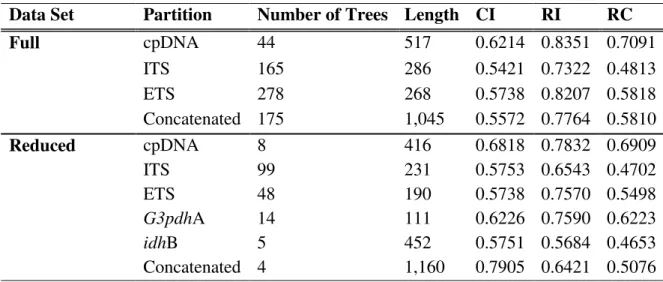
Maximum parsimony analysis resulted in 232 trees of 2262 steps (CI = 0.4717, RI

= 0.7318, RC = 0.4807) for the combined data set. Results for MP analyses of individual partitions are in Table 1.3 (individual MP trees not shown). The GTR + Γ + I model was chosen for both the cpDNA partition and the combined data. The GTR + I model was chosen for the ITS partition. Complete Modeltest 3.6 (Posada and Crandall 1998) results for individual partitions and combined data are in Table 1.4. I report the 50% majority- rule consensus tree sampled from the posterior probability (PP) distribution for each of the BI analyses separately (individual BI trees not shown). The AWTY (Nylander et al.

2008) output indicated that the separate chains approximated the same target distribution for both the BI one model analysis (Figure 1.3) and BI partition model analysis (Figure 1.4). The GTR + Γ + I model for the ML analysis resulted in one tree (-lnL =

21120.46019; individual ML tree not shown).

(36)

All analyses produced trees with congruent topologies that had varying amounts of resolution. The BI partition model produced the most resolved topology (Figure 1.2).

The two BI analyses resulted in similar trees with minimal changes in PP between nodes.

There were no nodes with PP > 95 in the BI one model consensus tree (tree not shown) that are not present in the BI partition model analysis (Figure 1.2). Therefore, a tree presenting the combined results of the MP, ML, and BI partition model is presented in Figure 1.2. Support for clades is represented by maximum parsimony bootstrap (MPBS), maximum likelihood bootstrap (MLBS), or Bayesian posterior probabilities from the partition model (PP) and is reported as MPBS/MLBS/PP hereafter in the text.

Phylogenetic Tree Topology

In all analyses, Columnea is recovered as a well-supported monophyletic group (Figure 1.2; 96/95/100) with Glossoloma supported as sister (Figure 1.2; 85/87/100).

Smith et al. (in review) identified seven clades (Figure 1.2: Clades A-G); however, support among the clades was not strong. This study shows support for the same seven clades within Columnea (Figure 1.2). The present analyses show strong support based on all three analyses for the monophyly of Clade B (Figure 1.2; 84/81/100), Clade D (Figure 1.2; 76/81/99), and Clade E (Figure 1.2; 91/95/100). There is also moderate support, based on the BI partition model PP, for the monophyly of Clade C (Figure 1.2;

68/61/100), Clade F (Figure 1.2; -/-/97), and Clade G (Figure 1.2; 63/59/100). The seventh clade, Clade A, is not resolved as monophyletic (Figure 1.2), but is recovered in MP analyses of the data set including scores for the indel events (trees not shown).

There is little support for relationships within each of the clades, though species

with multiple accessions are recovered as monophyletic with strong support, with the

(37)

exception of C. moesta. The C. moesta subclade (Figure 1.2, Clade B; 97/99/100) included all four accessions of C. moesta, but also included the only accession of C.

ultraviolacea (Figure 1.2; 81/90/99). However, these species are not the focus of this

study and, thus, will not be discussed further.

The monophyly of Clade G is maximally supported in BI partition model analysis and moderately supported in both MP and ML analyses (Figure 1.2; 63/59/100). The fifteen sampled species of section Stygnanthe sensu Smith (1994) are recovered in two separate clades. Twelve of the fifteen species are recovered as a monophyletic clade (Figure 1.2, Clade G; 63/59/100) that will herein be referred to as section Angustiflorae (Figure 1.2, Clade G; see “Taxonomic Treatment”). In addition, two species, C.

domingensis and C. ulei, that had not been placed in section Stygnanthe (Smith 1994),

were recovered as members of section Angustiflorae (Figure 1.2).

Most species of Angustiflorae represented by multiple accessions were recovered as monophyletic with the exception of C. angustata. Seven of the eight species with multiple accessions were recovered as monophyletic: C. byrsina (Figure 1.2;

100/100/100), C. colombiana (Figure 1.2; 80/75/100), C. orientandina (Figure 1.2;

100/100/100), C. spathulata (Figure 1.2; 82/73/100), C. rileyi (Figure 1.2; 99/100/100), C. ovatifolia (Figure 1.2; 71/69/99) and C. tandapiana (Figure 1.2;100/100/100). The C.

angustata clade (Figure 1.2; 98/87/100) included all the accessions of C. angustata, but

also included the only accession of C. ulei (Figure 1.2; 100/87/70). Four species were sampled with only a single accession, and therefore their monophyly was not tested.

Within section Angustiflorae there was minimal resolution for relationships

among species. There was strong support for C. ambigua as sister to C. domingensis

(38)

(Figure 1.2; 92/80/100). There was also evidence for a subclade grouping C.

crassicaulis, C. katzensteiniae, and C. rileyi (Figure 1.2; 78/77/100). The final grouping

within section Angustiflorae with strong support was C. manabiana as sister to C.

tandapiana (Figure 1.2; 100/100/100).

All three of the remaining species sampled from the Stygnanthe sensu Smith (1994), C. moesta, C. ultraviolacea, and C. xiphoidea were supported in Clade B (Figure 1.2). In all analyses, C. moesta and C. ultraviolacea were strongly supported in Clade B (Figure 1.2; 84/81/100). In the separate two gene region MP analysis, C. xiphoidea was supported as sister to C. moesta (trees not shown; MPBS = 99) and thus, also belongs within Clade B (Figure 1.2; C. xiphoidea not shown).

Columnea moorei and C. grisebachiana were thought to potentially belong in

section Angustiflorae because they share a similar corolla morphology to species placed

in Stygnanthe by Smith (1994). This study tested the phylogenetic placement of both

species with molecular data, which had not been done previously. In the MP strict

consensus tree of the ITS partition, C. moorei was resolved as sister to the Jamaican

species C. brevipila and C. repens (Figure 1.2) in 94% of the trees (trees not shown). In

the MP strict consensus tree of the cpDNA partition, C. moorei was resolved as part of

Clade E (Figure 1.2) in 100% of the trees (trees not shown). The placement of C. moorei

in two separate clades implies a hybrid origin; however, the placement of C. moorei in

either of these clades receives MPBS < 50 (trees not shown). Regardless, C. moorei is

not placed within section Angustiflorae. Columnea grisebachiana was analyzed and

found to be strongly supported in a monophyletic group (trees not shown, MPBS = 98)

(39)

with the other endemic Jamaican species C. brevipila and C. repens (Figure 1.2). Since neither species are within section Angustiflorae, they are not included in further analyses.

Discussion

Topology of Relationships among Columnea Species

Morphological characters have been the basis of classification systems, including that of Columnea, leading to problematic taxonomic histories due to convergence of morphological characters (Table 1.1). Characteristics such as the corolla, vegetation, and nectary can be used to circumscribe species boundaries; however, they are more

troublesome to delimit higher taxa relationships. Most recently, the subgeneric

classification within Columnea identified five sections based on morphology: Columnea, Collandra, Ortholoma, Pentadenia, and Stygnanthe (Smith 1994; Table 1.1).

Molecular analyses show evidence for seven clades within genus Columnea based on five cpDNA gene regions and one nuclear gene region. The phylogenetic tree

presented here can identify where species belong at the subgeneric level (Figure 1.2).

These seven clades were also identified in the study of Smith et al. (in review), which performed Shimodaira-Hasegawa (SH) tests (Shimodaira and Hasegawa 1999; Goldman et al. 2000) to determine whether the clades were significantly different from Wiehler’s (1983) genera and the sections of Kvist and Skog (1993) and Smith (1994; Appendix A).

Smith et al. (in review) rejected the monophlyly of all genera and sections for Columnea

based on their phylogenetic results. This study recovered a similar topology using the

same sequences (Figure 1.2) with additional species. All the added species fell in section

(40)

Angustiflorae, which was already determined as monophyletic by Smith et al. (in review), so further SH tests were not conducted here.

Monophlyly of Species

Most species represented by more than one accession were recovered as monophyletic. Monophyletic species groups indicate that species have correctly been delimited based on morphological characters. The one exception where species were not recovered as a monophyletic species group was C. angustata. The presence of C. ulei among C. angustata species (Figure 1.2) is evidence for C. ulei having been misclassified as a separate species. The morphological characters of C. ulei (Smith unpublished

results) fall within those of C. angustata (Smith 1994) and could thus be considered the same species.

Section Stygnanthe

As classified by Smith (1994), section Stygnanthe included eighteen species of Columnea. Here multiple accessions representing fifteen of the eighteen species of Stygnanthe sensu Smith (1994) were sampled for both partitions (cpDNA and ITS).

Species were found to split into two separate clades showing that section Stygnanthe (Smith 1994) does not represent a monophyletic group based on molecular analyses.

The phylogenetic analyses show support for Columnea moesta (Figure 1.2;

97/89/99), the type species for section Stygnanthe, and C. ultraviolacea (Figure 1.2;

81/90/100) in Clade B with at least three other species (Figure 1.2; 84/81/100): C.

atahualpae, C. lophophora, and C. isernii. Maximum parsimony analysis of C.

xiphoidea DNA sequences shows support for C. xiphoidea as sister to C. moesta (tree not

(41)

shown; MPBS = 99) providing evidence that it also belongs in Clade B. Although the clade contains only three of the species from Stygnanthe sensu Smith (1994), Clade B will be recognized as section Stygnanthe because it includes C. moesta, the type species for the section.

Morphological similarities can be found among the species of section Stygnanthe lending further support to the separation of this clade from section Angustiflorae. Both C. lophophora and C. moesta have leaves that cluster at the apex of the stem. Columnea moesta, C. ultraviolacea, and C. xiphoidea, also have dark purple spots on the interior

surface of the corolla lobe that distinguish them from the species of section Angustiflorae.

Furthermore, all six species of section Stygnanthe as defined here (Clade B, Figure 1.3) - C. moesta, C. ultraviolacea, C. xiphoidea, C. atahualpae, C. lophophora, and C. isernii -

are characterized by a sericeous or pilose pubescence that obscures the corolla (Smith 1994; Figure 1.1).

Section Angustiflorae

The remaining twelve species sampled from the Stygnanthe sensu Smith (1994) group together as a monophyletic clade (Figure 1.2; 63/59/100) that is recognized as section Angustiflorae (see “Taxonomic Treatment”). Species that had previously been unsampled were also included in these analyses. Columnea ulei was sampled and well- supported as part of section Angustiflorae (Figure 1.2). However, as mentioned above, C.

ulei was recovered among the C. angustata species, evidence that it belongs within section Angustiflorae but possibly should not be considered a separate species.

Columnea domingensis was previously classified as a species of Trichantha (Wiehler

(42)

1973) but was strongly supported as sister to C. ambigua in all analyses (Figure 1.2;

92/80/100).

The species of section Angustiflorae can also be characterized by similar morphological features. The species have similar leaf arrangements that are opposite, rarely dorsiventrally arranged, and isophyllous to anisophyllous. However, these traits are widely shared among other species of Columnea and cannot be diagnostic for this clade. The species in section Angustiflorae have corollas that are slightly ventricose and constricted at the base with a loosely clasping corolla (Figure 1.1). This combination of traits separates the species from most of the species in other clades in Columnea.

Species in section Stygnanthe (Figure 1.2, Clade B) and two Jamaican species, C.

grisebachiana and C. pubescens share a similar corolla morphology to the species of Angustiflorae. Generally, the species of Angustiflorae have a shorter corolla length with

proportionally longer and larger corolla lobes than the species in section Stygnanthe (Figure 1.1). The species in Angustiflorae can also be distinguished from Stygnanthe by the corolla pubescence. The species in Stygnanthe have a dense pubescence that obscures the corolla while species in Angustiflorae have a pilose pubescence where the corolla can still be seen (Figure 1.1). The species of Angustiflorae can be distinguished from C.

grisebachiana and C. pubescens by their geographic distribution. Columnea

grisebachiana and C. pubescens are endemic to the island of Jamaica; whereas the only

species of Angustiflorae found in the Caribbean are restricted to the islands of Puerto Rico (C. ambigua) and Hispaniola (C. domingensis). Although no obvious

morphological characters can be used to place either C. grisebachiana or C. pubescens

outside of Angustiflorae besides geographic distribution, it is possible that a detailed

Figure

Table 1.2 – DNA Sequencing Results
Table 1.4 – Model Test Results
Figure 1.1 – Columnea katzensteiniae
Figure 1.2 – Summary of
+7

References

Related documents