Supported by the National Natural Science Foundation of China (Project No. 31060310).
Effects of chitosan supplementation on the growth
performance, nutrient digestibility, and digestive
enzyme activity in weaned pigs
Y. Xu, B. Shi, S. Yan, J. Li, T. Li, Y. Guo, X. Guo
College of Animal Science, Inner Mongolia Agricultural University, Huhhot, P.R. China
ABSTRACT:The present experiments were conducted to investigate the effects of dietary chitosan on growth performance, nutrient digestibility, and digestive enzyme activities in weaned pigs. A total of 180 weaned pigs (35 days of age, 11.56 ± 1.61 kg of body weight (BW)) were selected and assigned randomly to 5 treatments con-taining 0, 100, 500, 1000, and 2000 mg chitosan per kg feed, respectively. Each treatment involved six replicate pens and six pigs per pen. On days 14 and 28, all pigs were weighed and six from each treatment (one from each replicate pen) were killed, and the contents of the stomach, jejunum, and rectum were collected and used for determining nutrient digestibility and digestive enzyme activity. The results showed that supplementation of chitosan improved quadratically average daily gain (ADG) (P < 0.05). Moreover, dietary chitosan quadratically (P < 0.05) increased apparent digestibility of crude protein (CP) on days 14 and 28, and quadratically increased apparent digestibility of dry matter (DM) on day 14 and of Ca and P on day 28, whereas decreased (P < 0.05) apparent digestibility of ether extract in comparison with the control diet. In addition, dietary chitosan quad-ratically increased (P = 0.062) amylase activity of proximal jejunum and decreased (P < 0.05) lipase activity of distal jejunum compared with the control. These data indicated that diets supplemented with increasing levels of chitosan (0, 100, 500, 1000, and 2000 mg chitosan per kg) quadratically improved ADG of weaned pigs. The growth-promoting action was achieved probably by improved digestibility of major nutrients (DM, CP, Ca, and P) and increased amylase activity of jejunum.
Keywords: dietary chitosan; piglet; body weight gain; apparent digestibility; trypsin; amylase; lipase
Reducing postweaning stress is a main challenge for the pig industry. The weaning transition is one of the most stressful events a young pig encounters in swine production, therefore, significant reduc-tions in performance and feed intake (Boudry et al., 2002, 2004), compromised intestinal health (Moeser et al., 2007), increased susceptibility to disease (Madec et al., 2000), and high mortality are commonly observed during the period. Although antibiotics have been used to control disease in pigs for many years, issues with bacterial antibi-otic resistance may cause problems for human health (Barton, 2000; Smith et al., 2002). The use of different additives instead of antibiotics has
been recommended as a way to improve growth and to enhance gut health of weaned pigs, which makes it possible to reduce or eliminate the use of antibiotics in feeds. Among these additives, chitosan, the second most abundant carbohydrate polymer in nature (Singla and Chawla, 2001; Luo and Wang, 2013), has been demonstrated to have positive effects on farm animals.
performance (Khajarern and Khajarern, 2002a, b; Shi et al., 2005), while other studies claimed the opposite (Kobayashi et al., 2002; Zhang et al., 2008). Because there have been only few reports on the effects of dietary chitosan on growth and nutrient digestion in piglets so far, the present experiment was conducted to extend the knowledge on the effects of dietary chitosan supplementation on growth performance, nutrient digestibility, and digestive enzyme activities in weaned pigs.
MATERIAL AND METHODS
The protocol of the present experiment was ap-proved by the Animal Care and Use Committee, Inner Mongolia Agricultural University, Huhhot, P.R. China.
Animals and experimental design.A total of 180 crossbred piglets (Duroc × Yorkshire × Land- race) were used in this experiment. The pigs were weaned at 28 days of age, and all pigs were visu-ally evaluated at weaning to check their health status, and only animals appraised as healthy were used in this study. After weaning, the pigs were moved into the nursery building and provided a 7-day adjustment period to adapt to the build-ing and the dietary treatment. The experimental period of 28 days followed. The animals (initial body weight (BW) 11.56 ±1.61 kg) were allotted into five treatments, and each treatment con-vered six replicate pens (three pens of females and three pens of males) with six pigs per pen. A randomized block design was adopted in the test. The 5 treatments were 0 (basal diet, the control), 100, 500, 1000, and 2000 mg chitosan per kg feed, respectively. Pigs were fed the same diets for all the experimental period.
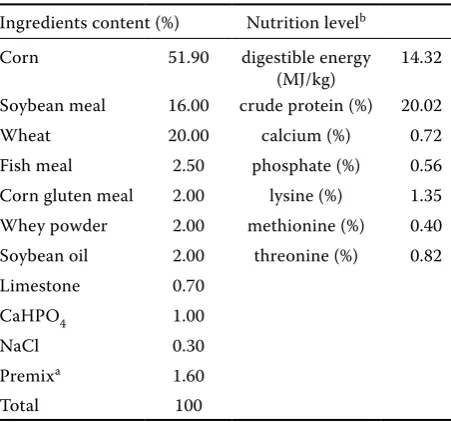
The basal diet was formulated referring to the nutrient requirements suggested by the National Research Council (1998), with no chitosan (Ta-ble 1). The chitosan used in this experiment was obtained from Haidebei Marine Bioengineering Co., Ltd. (Jinan, P.R. China) with the degree of deacetylation of 85.09% and viscosity of 45 cps (molecular weight about 40–60 kDa).
Pigs were housed in a temperature-controlled room. The pens were elevated 30 cm above the ground. The elevated pens contained a plastic floor which was raised off the ground in order to separate urine and faeces from the floor of the pen. Each pen sized 4.00 × 4.20 m and was sur-rounded by a metal side situated 40 cm apart from
the floor of the pen. The floor area provided to the pigs was partly occupied by the feeder. Natural ventilation was adopted in the nursing building and environmental temperature initially established at 28°C gradually declined to 20°C by the end of the experiment. There were one nipple drinker and one feeder per pen, and feed and water were provided ad libitum.
Sampling and measurements.The pigs were individually weighed at the start of the experiment and on days 14 and 28. Feed consumption was recorded at the end of each phase and the average daily gain (ADG), average daily feed intake (ADFI), and gain to feed ratio (G : F) were calculated.
[image:2.595.305.531.113.324.2]On days 14 and 28 of the experimental period, after an overnight fast, one pig was randomly selected from each pen and killed by intravenous injection of sodium pentobarbital. The abdominal cavity was opened and the entire gastrointestinal tract was quickly removed and ligatured at cardia, pylorus, the boundaries of each segment of the
Table 1.Composition and nutrition level of basal diets (air dry basis)
Ingredients content (%) Nutrition levelb
Corn 51.90 digestible energy
(MJ/kg) 14.32 Soybean meal 16.00 crude protein (%) 20.02
Wheat 20.00 calcium (%) 0.72
Fish meal 2.50 phosphate (%) 0.56 Corn gluten meal 2.00 lysine (%) 1.35 Whey powder 2.00 methionine (%) 0.40 Soybean oil 2.00 threonine (%) 0.82 Limestone 0.70
CaHPO4 1.00
NaCl 0.30
Premixa 1.60
Total 100
avitamin-mineralpremix provided the following nutrients per
kg diet: vitamin A 9000 IU, vitamin D3 2500 IU, vitamin E 60 IU, vitamin K3 4.5mg, vitamin B1 2.6 mg, vitamin B2 8.7 mg,
vitamin B6 7.0 mg, vitamin B12 0.03 mg, pantothenic acid 13 mg, nicotinic acid 35 mg, biotin 0.47 mg, folic acid 0.85 mg, Fe 155 mg as iron sulphate, Cu 8.8 mg as copper oxide, Zn 100 mg as zinc oxide, Mn 40 mg as manganous oxide, I 0.35 mg as ethylenediamine dihydroiodide, Se 0.25 mg as sodium selenite, choline chloride 750 mg, phytase 500 FTU
bcalculated from tabular value (National Research Council,
bowel and the ileocecal flap. The contents taken from the fundic part, proximal jejunum, and distal jejunum were transferred to tubes, snap frozen in liquid nitrogen, and stored at –70°C until analysis for enzyme activities. The contents collected from the rectum were used to determine nutrient ap-parent digestibility.
The faeces samples collected from rectum and feed samples were dried in a forced draft oven at 65°C for at least 48 h till constant weight, and ground through a 1-mm screen in a mill. Dry mat-ter (DM) content was assessed by oven drying at 105°C for 8 h, following the routine procedures given by AOAC (2004). The faeces and feed samples were analyzed for crude protein (CP), crude fat (CF), calcium (Ca), and phosphate (P) according to AOAC (2004). The CP content was calculated using Kjeldahl method of nitrogen analysis, and the CF content was analyzed using Soxhlet extrac-tion. Acid insoluble ash (AIA) content was used as an internal marker to determine the apparent digestibility of the experimental diets as reported by Van Keulen and Young (1977).
The digesta samples collected from stomach and jejunum were thawed and homogenized in 0.86% ice-cold NaCl solution which was nine times larger in volume than the digesta samples. The homogenate was centrifuged (3000 g at 4°C for 15 min), and the supernatants were collected for analysis of trypsin, amylase, and lipase activity. Digestive enzyme activity was determined using the kits for the analysis of trypsin, amylase, and
lipase (Nanjing Jiancheng Bioengineering Institute, Nanjing, P.R. China). The activities of the three enzymes were expressed in units (U), and 1 U of pepsin was defined as the amount of enzyme that hydrolyzed the protein in 1 ml of gastric juice to form 1 μg amino acid in 1 min at 37°C; and 1 U of amylase was defined as 1 mg of enzyme that hydrolyzed 10 mg starch in 30 min at 37°C; and 1 U of lipase was defined as 1 g of enzyme that hydrolyzed 1 μmol of substrate in 1 min at 37°C.
Statistical analysis.All experimental data were analyzed in accordance with the Regression Proce-dures of SAS (Statistical Analysis System, Version 9.2, 2008). The results obtained from pigs were compared via the regression method in order to determine the linear and quadratic effects of chi-tosan supplementation on growth performance, nutrient digestibility, and digestive enzyme activi-ties. A pen of pigs served as the experimental unit for all data. Variability of data was expressed as the standard error and a probability level of P < 0.05 was considered to be statistically significant, whereas P < 0.10 was considered to constitute a tendency.
RESULTS
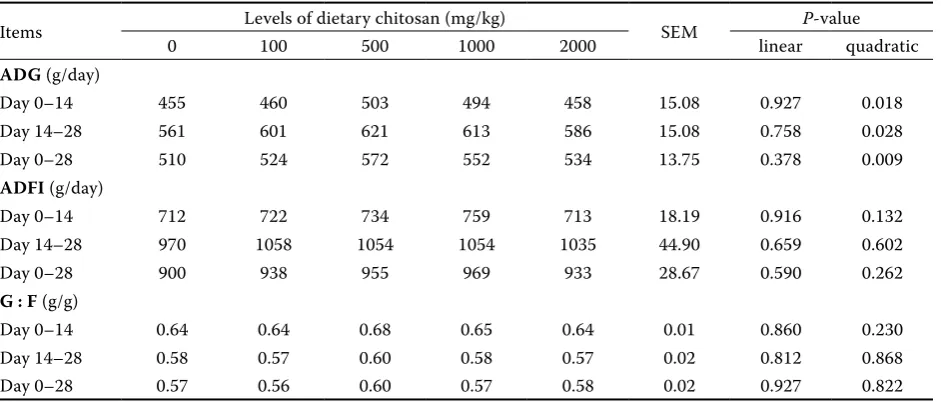
[image:3.595.64.535.536.737.2]Growth performance.The effects of chitosan supplementation on the performance of weaned pigs are shown in Table 2. Quadratic improving effect of chitosan supplementation on ADG was observed during the first 14 days (P < 0.05) and
Table 2.Effects of dietary chitosan supplementation on the growth performance in weaned piglets
Items Levels of dietary chitosan (mg/kg) SEM P-value
0 100 500 1000 2000 linear quadratic
ADG (g/day)
Day 0–14 455 460 503 494 458 15.08 0.927 0.018
Day 14–28 561 601 621 613 586 15.08 0.758 0.028
Day 0–28 510 524 572 552 534 13.75 0.378 0.009
ADFI (g/day)
Day 0–14 712 722 734 759 713 18.19 0.916 0.132
Day 14–28 970 1058 1054 1054 1035 44.90 0.659 0.602
Day 0–28 900 938 955 969 933 28.67 0.590 0.262
G : F (g/g)
Day 0–14 0.64 0.64 0.68 0.65 0.64 0.01 0.860 0.230
Day 14–28 0.58 0.57 0.60 0.58 0.57 0.02 0.812 0.868
Day 0–28 0.57 0.56 0.60 0.57 0.58 0.02 0.927 0.822
the last 14 days (P < 0.05) after weaning. The ADG during the entire experimental period was also improved quadratically (P < 0.01) with increasing chitosan inclusion, and the pigs fed the diet con-taining 500 mg/kg chitosan had the highest ADG among treatments. However, no significant linear or quadratic effect was observed for the ADFI or G : F ratio in response to increased chitosan sup-plementation during the entire experimental period. Nutrients digestibility.The effects of chitosan supplementation on nutrient digestibility are shown
[image:4.595.63.533.101.345.2]in Table 3. With increasing chitosan supplemen-tation, the digestibility of DM improved linearly (P < 0.01) and quadratically (P < 0.01) on day 14, and tended to increase (P = 0.052) quadratically on day 28. Compared with the control, diets with chitosan quadratically increased the digestibility of CP (P < 0.01), whereas linearly (P < 0.01) and quadratically (P < 0.01) decreased the digestibility of CF both on days 14 and 28. In addition, digest-ibility of Ca and P was not affected by chitosan supplementation on day 14. However, on day 28,
Table 3. Effects of dietary chitosan supplementation on apparent digestibility (%) of DM, CP, CF, Ca, and P in weaned piglets
Item Levels of dietary chitosan (mg/kg) SEM P-value
0 100 500 1000 2000 linear quadratic
DM
Day 14 88.16 89.38 90.78 89.44 85.47 0.732 0.001 < 0.001
Day 28 86.23 87.72 90.81 87.28 86.94 0.652 0.599 0.052
CP
Day 14 80.60 83.63 84.65 84.76 84.06 0.630 0.185 0.001
Day 28 81.36 84.49 87.28 84.98 84.56 0.809 0.232 0.007
CF
Day 14 54.52 50.39 45.06 42.45 39.66 2.319 < 0.001 < 0.001 Day 28 67.29 63.90 63.60 57.64 51.46 2.413 < 0.001 < 0.001 Ca
Day 14 53.01 54.19 54.06 54.70 53.53 0.446 0.850 0.159
Day 28 53.63 55.57 58.55 51.23 51.67 1.167 0.018 0.056
P
Day 14 47.10 48.98 52.29 47.44 44.09 2.137 0.173 0.201
Day 28 43.86 43.21 55.99 51.98 51.41 2.391 0.069 0.005
DM = dry matter, CP = crude protein, CF = crude fat
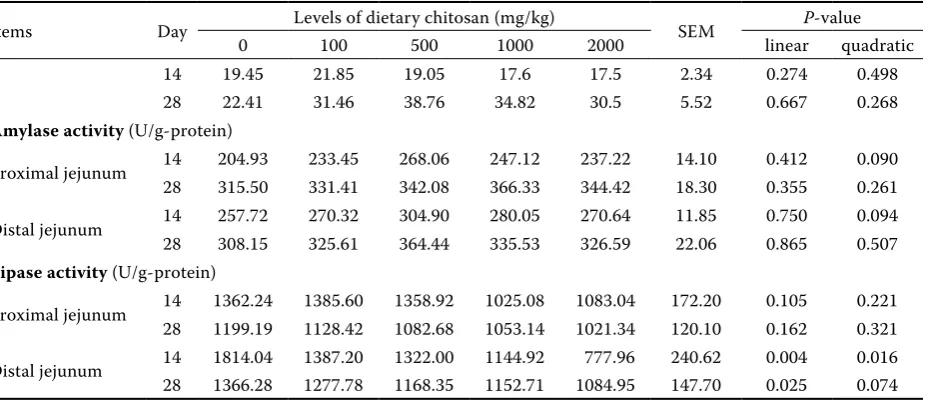
Table 4.Effects of dietary chitosan supplementation on digestive enzyme activities in weaned piglets
Items Day Levels of dietary chitosan (mg/kg) SEM P-value
0 100 500 1000 2000 linear quadratic
14 19.45 21.85 19.05 17.6 17.5 2.34 0.274 0.498
28 22.41 31.46 38.76 34.82 30.5 5.52 0.667 0.268
Amylase activity (U/g-protein)
Proximal jejunum 14 204.93 233.45 268.06 247.12 237.22 14.10 0.412 0.090 28 315.50 331.41 342.08 366.33 344.42 18.30 0.355 0.261
Distal jejunum 14 257.72 270.32 304.90 280.05 270.64 11.85 0.750 0.094 28 308.15 325.61 364.44 335.53 326.59 22.06 0.865 0.507
Lipase activity (U/g-protein)
Proximal jejunum 14 1362.24 1385.60 1358.92 1025.08 1083.04 172.20 0.105 0.221 28 1199.19 1128.42 1082.68 1053.14 1021.34 120.10 0.162 0.321
[image:4.595.69.533.559.760.2]linear increase tendency (P = 0.056) for digest-ibility of Ca and quadratic increase (P < 0.05) for digestibility of P were observed with increasing chitosan supplementation.
Digestive enzyme activities.The effects of chi-tosan supplementation on the activities of pepsin, amylase, and lipase are shown in Table 4. No sig-nificant difference was found for the activities of pepsin and amylase in the distal jejunum digesta among the five groups on days 14 and 28. Chitosan supplementation had no effect on the activity of amylase in proximal jejunum on day 14, however, on day 28, a quadratic increase tendency (P = 0.062) was observed with increasing chitosan supplementation. The lipase activity of proximal jejunum contents was not affected by increasing chitosan supplementation on days 14 and 28. Di-etary chitosan linearly decreased the lipase activity of distal jejunum compared with the control on days 14 (P < 0.01) and 28 (P < 0.05).
DISCUSSION
According to the limited published reports to date, the effects of chitosan on the growth per-formance of broilers, pigs or other livestock spe-cies are not consistent. Some studies in broilers indicated that dietary chitosan treatment groups could gain superior performance and feed con-version ratio than the control group (Suk, 2004; Khambualai et al., 2008, 2009). Tang et al. (2005) also reported that chitosan could improve the growth performance and feed efficiency of piglets. However, Razdan et al. (1997) observed that dietary supplementation of 30 g/kg chitosan significantly reduced body weights and feed intakes of broiler chickens compared with those fed on control diets on days 5 and 11 of the experiment, and Walsh et al. (2013) obtained similar results in pigs. As a possible explanation for these divergences the authors hypothesized that in different experi-ments different doses of chitosan had been used. The results of this study demonstrated that diets supplemented with chitosan promoted the ADG of weaned piglets, which was in agreement with the results of Tang et al. (2005). Because feed intake is one of the major factors limiting growth in young pigs, weight gain accompanies the improvement in feed intake. Previous study suggested that one possible reason for the improved growth perfor-mance with dietary chitosan supplementation was the increased feed intake (Yuan and Chen, 2012).
However, in the current study, feed intake was not increased by dietary supplementation of chitosan, and may be assumed that such a discrepancy is induced in part by the varying species of animals.
It is well known that one major reason of the improvement of growth performance was the in-crease of apparent digestibility of major nutrients. In the current study, apparent digestibility of major nutrients except fat was increased when pigs were offered increasing levels of dietary chitosan. This result was in agreement with that of previous stud-ies which indicated that dietary supplementation of chitosan was effective in increasing apparent total tract digestibility of nutrients (DM, CP, gross energy, crude fat, N, Ca, and P) in pigs and other farm animals (Lim et al., 2006; Liu et al., 2008; Chen et al., 2009). On the contrary, non-positive effects on nutrients’ digestibility were reported by some other authors (Razdan and Pettersson, 1994, 1996; O’Shea et al., 2011). Inconsistent results on nutrients’ digestibility might be due to the different molecular weights of chitosan. This observation is supported by previous study (Walsh et al., 2012). Early study (Hou and Gao, 2001) reported that chitosan may stimulate the secretion of digestive enzymes from the stomach, pancreas, and intestinal mucosa. Up to now, most of the related studies were focused on the rats and fishes. Chen et al. (2001) reported that compound chitosan enhanced the activity of pepsin in rats. Chen and Zhou (2005) indicated that the diet supplemented with 0.5% low molecular-weight chitosan enhanced the activity of protease in the intestine and the activities of amylase and protease in the hepatopancreas of allogynogenetic silver crucian carp. Hua et al. (2005) also indicated that the diet supplemented with 0.2% chitosan was effective on enhancing the activity of amylase of intestine in fugu obscures, suggesting that chitosan could promote growth of the fish by enhancing the activity of intestine amylase. The present results showed that diets supplemented with chitosan tended to promote amylase activity of proximal jejunum, which might improve feed digestibility and growth. However, the activity of pepsin was not affected by dietary chitosan in the current test and the reasons have still been unclear.
gain, and feed intake, whereas the concentration of lactobacilli was positively correlated with these parameters (Mozeš et al., 2008). Numerous previous studies showed that dietary chitosan supplemen-tation increased the population of Lactobacillus and decreased the counts of E. coli in guts (Li et al., 2007; Liu et al., 2008; Walsh et al., 2012; Yang et al., 2012). Our previous study also indicated that dietary chitosan could inhibit the prolifera-tion of E. coli in the intestine, and improve gut micro-ecological environment (Xu et al., 2012).
The present experiments also showed that diets supplemented with chitosan significantly reduced the apparent digestibility of fat and the lipase activ-ity of distal jejunum. This observation is supported by previous study (Walsh et al., 2013). To date the mechanism may be postulated as follows: firstly, chitosan might interrupt enterohepatic bile acid circulation. Bile salt is mixed with dietary lipids and emulsifies the lipid particle, and the lipid particle size is reduced. The smaller particle size allows for greater surface exposure to pancreatic and intestinal lipase which is adsorbed on to the particle surface, and lipase activity is stimulated (Kobayashi et al., 2002). Chitosan which differs from other dietary fibres because of its cationic characteristics can reduce fat absorption and interrupt enterohepatic bile acid circulation by electrostatic and hydropho-bic forces (Sumiyoshi and Kimura, 2006; Aranaz et al., 2009). Secondly, chitosan might increase the viscosity of the intestinal contents. It has been gen-erally accepted that the anti-fatty effects of chitosan originate from its unique fat-binding properties. Dietary chitosan dissolves in the stomach, emulsify-ing fat and formemulsify-ing a gel, which binds with the fat in the intestine (Gades and Stern, 2003; Zeng et al., 2008; Zhang et al., 2008), increasing the viscosity of the intestinal contents and the unstirred layer in the intestine and slowing nutrient diffusion, which resulted in a highly effective increase in the excretion of fat (Santas et al., 2012). Therefore, the inhibitory effect of chitosan on lipase activity may be attributed to the viscosity of chitosan which restricted the access of the pancreatic lipase to the lipids within the droplets and the reduction of bile acid concentration in the intestinal tract. Thirdly, chitosan has profound impact on circulating adipo-cytokines (e.g. leptin, resistin, IL-6, and C-reactive protein, etc.), which significantly suppress appetite, regulate energy metabolism, and prevent lipid ac-cumulation in peripheral tissues (Unger, 2003a, b), and therefore chitosan can lower fat mass, regulate
the level of circulating triglycerides, and reduce the accumulation of lipids both in the liver and in the muscle tissue (Neyrinck et al., 2009; Liu et al., 2012; Walsh et al., 2013). In this study, the reduc-tion of fat digestibility might have a negligible effect on growth performance of weaned pigs, because pigs accumulate body fat beginning at 45 kg body weight (Tan et al., 2009). All of the weaned pigs in this experiment weighed less than 45 kg, primarily developed skeletal and muscle rather than depos-ited fat. But, massive ingestion of chitosan might lead to a deficiency of fat-soluble vitamins such as vitamin E (Deuchi et al., 1995).
CONCLUSION
In conclusion, diets supplemented with increasing levels of chitosan (0, 100, 500, 1000, and 2000 mg chitosan per kg) quadratically improved ADG of weaned pigs. The optimal growth performance was obtained with 500 mg/kg chitosan. The growth-promoting action was partly achieved by improved digestibility of major nutrients (DM, CP, Ca, and P) and increased amylase activity of jejunum.
REFERENCES
AOAC (2004): Official Methods of Analysis. 18th Ed.
Asso-ciation of Official Analytical Chemists, Washington, USA. Aranaz I., Mengibar M., Harris R., Panos I., Miralles B.,
Acosta N., Galed G., Heras A. (2009): Functional char-acterization of chitin and chitosan. Current Opinion in Chemical Biology, 3, 203–230.
Barton M.D. (2000): Antibiotic use in animal feed and its impact on human health. Nutrition Research Reviews, 13, 279–299.
Boudry G., Lalles J.P., Malbert C.H., Bobillier E., Seve B. (2002): Diet-related adaptation of the small intestine at weaning in pigs is functional rather than structural. Journal of Pediatric Gastroenterology and Nutrition, 34, 180–187.
Boudry G., Guerin S., Malbert C.H. (2004): Effect of an abrupt switch from a milk-based to a fibre-based diet on gastric emptying rates in pigs: difference between origins of fibre. British Journal of Nutrition, 92, 913–920. Chen Y., Zhou H.Q. (2005): Effect of three kinds of
poly-saccharide on protease activity, amylase activity in in-testine and hepatopancreas of allogynogenetic silver crucian carp. Journal of Shanghai Fisheries University, 14, 468–471. (in Chinese)
supplementation on growth performance, nutrient digest-ibility, blood characteristics and immune responses after lipopolysaccharide challenge in weanling pigs. Livestock Science, 124, 255–260.
Chen Z.X., Yie M.M., Yie H., Lin L., Li S.G., Xu R.Q., Lin J.F. (2001): Effect of compound chitosan on digestive function. Strait Pharmaceutical Journal, 13, 24–25. (in Chinese)
Crini G. (2005): Recent developments in polysaccharide-based materials used as absorbents in wastewater treat-ment. Progress in Polymer Science, 30, 38–70.
Deuchi K., Kanauchi O., Shizukuishi M., Kobayashi E. (1995): Continuous and massive intake of chitosan af-fects mineral and fat-soluble vitamin status in rats fed on a high-fat diet. Bioscience, Biotechnology, and Bio-chemistry, 59, 1211–1216.
Gades M.D., Stern J.S. (2003): Chitosan supplementation and fecal fat excretion in men. Obesity Research, 11, 683–688.
Hou Q.L., Gao Q.S. (2001): Chitosan and Medicine. 1st Ed.
Shanghai Science Technology Press, Shanghai, P.R. China. (in Chinese)
Hua X.M., Zhou H.Q., Zhang Y.F., Zhou H. (2005): Effect of dietary supplemental chitosan and probiotics on growth and some digestive enzyme activities in juvenile Fugu obscurus. Acta Hydrobiologica Sinica, 29, 299–305. (in Chinese)
Khajarern J., Khajarern S. (2002a): Probiotic product lifts performance in layers. Asian Poultry, 4, 38–39.
Khajarern J., Khajarern S. (2002b): Probiotic product lifts performance and reduces diarrhoea. Asian Pork, 4/5, 44–45.
Khambualai O., Yamauchi K., Tangtaweewipat S., Cheva-Isarakul B. (2008): Effects of dietary chitosan diets on growth performance in broiler chickens. The Journal of Poultry Science, 45, 206–209.
Khambualai O., Yamauchi K., Tangtaweewipat S., Cheva-Isarakul B. (2009): Growth performance and intestinal histology in broiler chickens fed with dietary chitosan. British Poultry Science, 50, 592–597.
Kobayashi S., Terashima Y., Itoh H. (2002): Effects of dietary chitosan on fat deposition and lipase activity in digesta in broiler chickens. British Poultry Science, 43, 270–273. Li X.J., Piao X.S., Kim S.W., Liu P., Wang L., Shen Y.B., Jung
S.C., Lee H.S. (2007): Effects of chito-oligosaccharide supplementation on performance, nutrient digestibility, and serum composition in broiler chickens. Poultry Sci-ence, 86, 1107–1114.
Lim H.S., Paik I.K., Sohn T.I., Kim W.Y. (2006): Effects of supplementary copper chelates in the form of methionine, chitosan and yeast on the performance of broilers. Asian-Australasian Journal of Animal Science, 19, 1322–1327.
Liu P., Piao X.S., Kim S.W., Wang L., Shen Y.B., Lee H.S., Li S.Y. (2008): Effects of chito-oligosaccharide supplementa-tion on the growth performance, nutrient digestibility, intestinal morphology, and fecal shedding of Escherichia coli and Lactobacillus in weaning pigs. Journal of Animal Science, 86, 2609–2618.
Liu S.H., He S.P., Chiang M.T. (2012): Effects of long-term feeding of chitosan on postprandial lipid responses and lipid metabolism in a high-sucrose-diet-impaired glu-cose-tolerant rat model. Journal of Agricultural and Food Chemistry, 60, 4306–4313.
Luo Y.C., Wang Q. (2013): Recent advances of chitosan and its derivatives for novel applications in food science. Journal of Food Processing & Beverages, 1, 13.
Madec F., Bridoux N., Bounaix S., Cariolet R., Duval-Iflah Y., Hampson D.J., Jestin A. (2000): Experimental models of porcine post-weaning colibacillosis and their relationship to post-weaning diarrhoea and digestive disorders as encoun-tered in the field. Veterinary Microbiology, 72, 295–310. Moeser A.J., Ryan K.A., Nighot P.K., Blikslager A.T. (2007):
Gastrointestinal dysfunction induced by early weaning is attenuated by delayed weaning and mast cell blockade in pigs. American Journal of Physiology: Gastrointestinal and Liver Physiology, 293, 413–421.
Mozeš Š., Bujňáková D., Šefčíková Z., Kmeť V. (2008): Intes-tinal microflora and obesity in rats. Folia Microbiologica, 53, 225–228.
National Research Council (1998): Nutrient Requirements of Swine. 10th Ed. National Academies Press,
Washing-ton, USA.
Neyrinck A.M., Bindels L.B., De Backer F., Pachikian B.D., Cani P.D., Delzenne N.M. (2009): Dietary supplementa-tion with chitosan derived from mushrooms changes adipocytokine profile in diet-induced obese mice, a phe-nomenon linked to its lipid-lowering action. International Immunopharmacology, 9, 767–773.
O’Shea C.J., Sweeney T., Lynch M.B., Callan J.J., O’Doherty J.V. (2011): Modification of selected bacteria and markers of protein fermentation in the distal gastrointestinal tract of pigs upon consumption of chitosan is accompanied by heightened manure odor emissions. Journal of Animal Science, 89, 1366–1375.
Razdan A., Petterson D. (1994): Effect of chitin and chitosan on nutrient digestibility and plasma lipid concentra-tions in broiler chickens. British Journal of Nutrition, 72, 277–288.
Razdan A., Petterson D. (1996): Hypolipidaemic, gastro-intestinal and related responses of broiler chickens to chitosans of different viscosity. British Journal of Nutri-tion, 76, 387–397.
small-intestinal bile acid concentrations in response to feeding of chitosan and pectin. British Journal of Nutri-tion, 78, 283–291.
Santas J., Espadaler J., Mancebo R., Rafecas M. (2012): Se-lective in vivo effect of chitosan on fatty acid, neutral sterol and bile acid excretion: a longitudinal study. Food Chemistry, 134, 940–947.
Shi B.L., Li D.F., Piao X.S., Yan S.M. (2005): Effects of chi-tosan on growth performance and energy and protein utilisation in broiler chickens. British Poultry Science, 46, 516–519.
Singla A.K., Chawla M. (2001): Chitosan: some pharma-ceutical and biological aspects – an update. Journal of Pharmacy and Pharmacology, 53, 1047–1067.
Smith D.L., Harris A.D., Johnson J.A., Silbergeld E.K., Mor-ris Jr. J.G. (2002): Animal antibiotic use has an early but important impact on the emergence of antibiotic resist-ance in human commensal bacteria. Proceedings of the National Academy of Sciences of the United States of America, 99, 6434–6439.
Suk Y.O. (2004): Interaction of breed-by-chitosan supple-mentation on growth and feed efficiency at different sup-plementing ages in broiler chickens. Asian-Australasian Journal of Animal Science, 17, 1705–1711.
Sumiyoshi M., Kimura Y. (2006): Low molecular weight chitosan inhibits obesity induced by feeding a high-fat diet long-term in mice. Journal of Pharmacy and Pharma-cology, 58, 201–207.
Tan B., Yin Y.L., Liu Z.Q., Li X.G., Xu H.J., Kong X.F., Huang R.L., Tang W.J., Shinzato I., Smith S.B., Wu G.Y. (2009): Dietary l-arginine supplementation increases muscle gain and reduces body fat mass in growing finishing pigs. Amino Acids, 37, 169–175.
Tang Z.R., Yin Y.L., Nyachoti C.M., Huang R.L., Li T.J., Yang C.B., Yang X.J., Gong J., Peng J., Qi D.S., Xing J.J., Sun Z.H., Fan M.Z. (2005): Effect of dietary supplemen-tation of chitosan and galacto-mannan-oligosaccharide on serum parameters and the insulin-like growth factor-I mRNA expression in early-weaned piglets. Domestic Animal Endocrinology, 28, 430–441.
Unger R.H. (2003a): Minireview: Weapons of lean body mass destruction: the role of ectopic lipids in the meta-bolic syndrome. Endocrinology, 144, 5159–5165. Unger R.H. (2003b): The physiology of cellular
liporegula-tion. Annual Review of Physiology, 65, 333–347. Van Keulen J., Young B.A. (1977): Evaluation of
acid-in-soluble ash as a natural marker in ruminant digestibility studies. Journal of Animal Science, 44, 282–287. Walsh A.M., Sweeney T., Bahar B., Flynn B., O’Doherty V.J.
(2012): The effects of supplementing varying molecular weights of chitooligosaccharide on performance, selected microbial populations and nutrient digestibility in the weaned pig. Animal, 7, 571–579.
Walsh A.M., Sweeney T., Bahar B., O’Doherty V.J. (2013): Multi-functional roles of chitosan as a potential protec-tive agent against obesity. PloS One, 8, 1–7.
Xia W.S., Liu P., Zhang J.L., Chen J. (2011): Biological activi-ties of chitosan and chitooligosaccharides. Food Hydro-colloids, 25, 170–179.
Xu Y.Q., Shi B.L., Li J.L., Li T.Y., Guo Y.W., Tian L.X., Fu X.Z., Hong L. (2012): Effects of chitosan on gut microflora in weaned pigs. Feed Research, 10, 54–56. (in Chinese) Yang C.M., Ferket P.R., Hong Q.H., Zhou J., Cao G.T.,
Zhou L., Chen A.G. (2012): Effect of chito-oligosaccha-ride on growth performance, intestinal barrier function, intestinal morphology and cecal microflora in weaned pigs. Journal of Animal Science, 90, 2671–2676. Yuan S.B., Chen H. (2012): Effects of dietary
supplementa-tion of chitosan on growth performance and immune index in ducks. African Journal of Biotechnology, 11, 3490–3495.
Zeng L.T., Qin C.Q., Wang W., Chi W.L., Li W. (2008): Ab-sorption and distribution of chitosan in mice after oral administration. Carbohydrate Polymers, 71, 435–440. Zhang J.L., Liu J.N., Li L., Xia W.S. (2008): Dietary chitosan
improves hypercholesterolemia in rats fed high-fat diets. Nutrition Research, 28, 383–390.
Received: 2013–08–23 Accepted after corrections: 2013–12–28
Corresponding Author
Prof. Binlin Shi, Inner Mongolia Agricultural University, College of Animal Science, Zhaowuda Road No. 306, Huhhot 010018, P.R. China