AbstrAct
Streptococcus pneumoniae is the leading cause of
the community-acquired pneumonia. The mortality rate of invasive pneumococcal infections is high. Immunocompromised patients suffering from autoimmune inflammatory rheumatic diseases (AIRD) have a high risk for acquiring these infections. Protection against infection can be improved with vaccination. After using polysaccharide vaccines (PPV-23), in July 2013, a 13-valent conjugate vaccine (PCV-13) was approved for adults. Due to its conjugate form, this vaccine is the recommended choice in pneumococcal vaccine-naive patients. PCV-13 is also recommended in patients previously receiving PPV-23. Vaccination in AIRD is very important and needs deliberate scheduling to coordinate with the immunosuppressive therapy. Here, based on international and national vaccine guidelines, we provide a current review of PPV-23 and PCV-13 vaccines for specialists following patients with AIRD.
IntroductIon: the epIdemIology of pneumococcal InfectIons
The most common pneumococcal infection, such as community-acquired pneumonia (CAP), has been a large global challenge for healthcare providers. CAP caused by Strep-tococcus pneumoniae may exert both invasive and non-invasive forms. In 2010, pneumonia was the most common invasive infection accounted for 70% of all cases.1 In the USA, approximately 4 million cases of CAP are esti-mated annually among elderly patients1 and 17%–41% of these cases are caused by S. pneu-moniae.2 3 The incidence of invasive pneumo-coccal disease (IPD) depends on geographic regions, age group, comorbidities and immu-nosuppressive conditions. In 2012, the inci-dence of IPD in Europe was 4.3/100 000, the highest rates were seen in Denmark (15.8/100 000), Sweden (14.6/100 000) and Finland (13.9/100 000). The lowest rates were observed in Luxembourg (0.19/100 000), Lithuania (0.23/100 000) and Bulgaria (0.26/100 000).4 5 In children under the age of 1 year, this incidence was 10.9/100 000, while in adults aged ≥65 years the frequency of confirmed cases was 12.1/100 000 popu-lation.5 S. pneumoniae is the most frequently
isolated bacterium in European patients with CAP.6 The annual incidence of CAP in adults is 1.07–1.20/1000 person-years (PY), while in elderly aged ≥65 years it is 14/1000 PY.7 Comparing the normal adult population to special immunocompromised patient groups, the incidence is very high in HIV-infected patients (12/1000 PY). Among patients with autoimmune inflammatory rheumatic diseases (AIRD) treated with tumour necrosis factor alpha (TNF-α) inhibitors, the inci-dence is 5.97/1000 PY.7
lower respIratory tract InfectIons In aIrd
Patients with AIRD are immunocompro-mised and exert increased risk for infec-tions.8 9 Infection is the major cause of death in patients with AIRD. In patients with rheu-matoid arthritis (RA), after correction for age and gender, the mortality of respiratory infections is two to five times higher than that in the general population. Due to the severity of infections, hospital admissions of patients with RA are doubled.10 11 Infection is one of the most common causes of deaths in systemic lupus erythematosus (SLE) and it causes the same number of deaths as the active disease itself during the first 5 years of illness.12 13 Gharibdoost et al14 reviewed the mortality of 2021 Iranian patients with
ReVIew
Pneumococcal vaccination in
autoimmune rheumatic diseases
Éva Rákóczi,1,2 Zoltan Szekanecz2
to cite: Rákóczi É, Szekanecz Z. Pneumococcal vaccination in autoimmune rheumatic diseases. RMD Open 2017;3:e000484. doi:10.1136/ rmdopen-2017-000484
Received 24 April 2017 Revised 11 August 2017 Accepted 14 August 2017
1Institute of Infectious Diseases,
University of Debrecen Faculty of Medicine, Kenézy University Hospital, Debrecen, Hungary 2Division of Rheumatology,
Department of Medicine, University of Debrecen Faculty of Medicine, Debrecen, Hungary
correspondence to
Dr Zoltan Szekanecz, Division of Rheumatology, Department of MedicineUniversity of Debrecen Faculty of Medicine DebrecenHungary;
szekanecz. zoltan@ med. unideb. hu
Key messages
what is already known about this subject? ► Pneumococcal infections are common in rheumatic
diseases and various vaccines have become available.
what does this study add?
► This paper summarises the currently available data on pneumococcal infections and vaccinations providing a critical review.
how might this impact on clinical practice? ► This review may help practitioners to manage and
prevent pneumococcal infections.
on May 7, 2020 by guest. Protected by copyright.
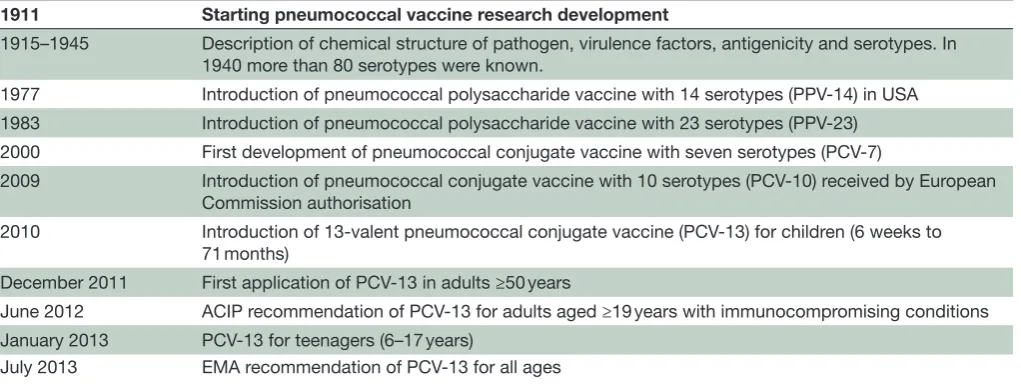
Table 1 Timeline of pneumococcal vaccine development
1911 Starting pneumococcal vaccine research development
1915–1945 Description of chemical structure of pathogen, virulence factors, antigenicity and serotypes. In 1940 more than 80 serotypes were known.
1977 Introduction of pneumococcal polysaccharide vaccine with 14 serotypes (PPV-14) in USA 1983 Introduction of pneumococcal polysaccharide vaccine with 23 serotypes (PPV-23) 2000 First development of pneumococcal conjugate vaccine with seven serotypes (PCV-7)
2009 Introduction of pneumococcal conjugate vaccine with 10 serotypes (PCV-10) received by European Commission authorisation
2010 Introduction of 13-valent pneumococcal conjugate vaccine (PCV-13) for children (6 weeks to 71 months)
December 2011 First application of PCV-13 in adults ≥50 years
June 2012 ACIP recommendation of PCV-13 for adults aged ≥19 years with immunocompromising conditions January 2013 PCV-13 for teenagers (6–17 years)
July 2013 EMA recommendation of PCV-13 for all ages
ACIP, Advisory Committee on Immunization Practices; EMA, European Medicines Agency.
SLE. The retrospective analysis indicated that infection was the most common cause of death (12.1%) between 1991 and 2000. In a systematic review published by Falagas et al,15 29% of 5411 patients with connective tissue disease had serious infections leading to death in 24% of the cases. The most common disease manifestations were bacteraemia and pneumonia.15
pneumococcal InfectIon Is a vaccIne preventable dIsease: Importance of capsular serotypes
The polysaccharide capsular serotypes of S. pneumo-niae are virulence factors responsible for invasive infec-tions.16 This bacterium has more than 90 serotypes. In humans, approximately 25–30 serotypes are responsible for 90% of invasive infectious cases.16 The effectivity of vaccine is the reduction in incidence of a disease among those who have been vaccinated relative to the incidence in the unvaccinated. The efficacy of pneu-mococcal vaccines highly depends on the coverage of the most common serotypes, as well as on their immu-nogenicity.16 17 The prevalence of serotypes is variable depending on age, chronic diseases, geographic region, administration of pneumococcal vaccines and the use of antibiotics.17 For example, in 2010, the most common serotypes were 1, 3, 4, 7F, 8, 14, 12F, 19A, 19F and 22F in the European Union countries.17 Immunogenicity refers to the ability of a vaccine to induce an immune response in a vaccinated individual. Protective pneu-mococcal antibody level has been established by the working group report of the Basic and Clinical Immu-nology Interest Section of the American Academy of Allergy, Asthma & Immunology: a twofold increase in the antibody level (baseline level before vaccination and after 4 weeks of vaccination) is an indicator of immune responsiveness.18
pneumococcal vaccIne development
In 1977, the first pneumococcal polysaccharide vaccine (PPV) approved in the USA included 14 serotypes (table 1). Six years later, the number of serotypes expanded from 14 to 23.16 The first pneumococcal conjugate vaccine (PCV) covering seven serotypes was developed in 2000.17 19 During the development of pneumococcal vaccines, the 19A, 1, 7F, 3, 14, 22F, 8, 4, 12F and 19F serotypes were most commonly targeted.17 19 Two PCVs containing 7 and 10 pneumococcal serotypes were licensed in 2000 and 2009, respectively. These vaccines were approved only for infants and children.17 19 20 It has been established that PCVs exert higher immunogenicity compared with PPVs due to T cell-dependent immune responses leading to stronger induction of memory B cells. PPVs are unable to trigger long-standing immunological memory.20 The 7-serotype PCV has been gradually removed from the market as it had limited coverage of serotypes causing serious pneumococcal infections in most developing countries.17 By 2010, a new PCV covering 13 serotypes had been developed and was first introduced only to chil-dren.21 In December 2011, the Food and Drug Adminis-tration licensed the 13-valent PCV for prevention of pneu-monia and invasive diseases in adults aged ≥50 years.22 23 In June 2012, the Advisory Committee on Immunization Practices (ACIP) recommended the routine use of PCV-13 for immunocompromised adults.24 25 Finally, the adminis-tration of this vaccine has been recommended from July 2013 for all ages in European countries as recommended by European Medicines Agency.24
The recently used pneumococcal vaccines are indi-cated in table 2. Most European countries have recom-mendations on immunisations for pneumococcal disease within their childhood vaccination schedule except for Croatia, Estonia and Malta. This routine use of PCVs in childhood has significantly reduced serotype-specific IPD in children.26
on May 7, 2020 by guest. Protected by copyright.
Table 2
Pneumococcal vaccines and ser
otypes
Vaccines
Ser
otypes
PCV
-7
4
6B
9V
14
18C
19F
23F
PCV
-10
1
4
5
6B
7F
9V
14
18C
19F
23F
PCV
-13*
1
3
4
5
6A
6B
7F
9V
14
18C
19A
19F
23F
PPV
-23*
1
2
3
4
5
6B
7F
8
9N
9V
10A
11A
12F
14
15B
17F
18C
19A
19F
20
22F
23F
33F
*V
accines only for adult population.
PCV
-7, pneumococcal conjugate vaccine with seven ser
otypes; PCV
-10, pneumococcal conjugate vaccine with 10 ser
otypes; PCV
-13, pneumococcal conjugate vaccine with 13 ser
otypes;
PPV
-23, pneumococcal polysaccharide vaccine with 23 ser
otypes.
pneumococcal vaccInatIon: general consIderatIons
Childhood vaccination impacts the incidence of serious invasive infection in the adult population as well. Large proportion of pneumococcal vaccination in children can reduce transmission of the infection to others, for example, adult contacts. This phenomenon is called herd immunity: if unvaccinated individuals get in contact with vaccinated ones, there is a lower chance to be infected by the organism.24 27 After 30-year experience with PPV-23, we know that the PPV-23, although it covers a high number of serotypes, lacks the booster effect of revaccination, which limits its use in all age groups.24 28 As described above, the PCV-13 exerts higher immunogenicity and induces B cell memory compared with PPV-23.24 27 28 Based on these data, the WHO declared and hastened that PCV-13 was required to prevent severe pneumococcal disease.24 29–31
pneumococcal vaccInatIon In ImmunocompromIsed populatIon
There have been limited data available about genicity and safety of PCV-13 administered in immuno-compromised conditions.
A phase 3, open-label, single-arm study evaluated immunogenicity and safety of PCV-13 administered to 301 pneumococcal vaccine-naive, HIV-infected individ-uals, who had CD4+ T cell counts ≥200/mL and viral load <50 000 copies/mL. Among them, 151 adult patients received three doses of PCV-13 followed by one dose of PPV-23 after 1 month. In this group, the PCV-13 vaccine was effective and well tolerated. Significantly increased antibody responses were seen after the first dose of PCV-13.32
Pasiarski et al33 investigated response to PCV-13 in 24 previously untreated adult patients with chronic lympho-cytic leukaemia (CLL). Patients did not require anti-cancer therapy. Thirty days after vaccination, specific pneumococcal antibody titres showed twofold increase, an adequate response to vaccination, in 58.3% of patients with CLL.33 Increased serum levels of IgG2 indicated effective immunogenicity of the PCV-13 vaccine in patients with CLL.33
pneumococcal vaccInatIon In patIents wIth aIrd: effIcacy and ImmunogenIcIty of vaccInatIon
Patients with AIRD exert increased risk for pneumo-coccal infections. AIRD may be associated with secondary immunodeficiency and these patients also receive immu-nosuppressive drugs or biological agents that might affect protective immune responses to vaccination.9 10 There have been limited amount of data with regard to the effectiveness and immunogenicity of pneumococcal vaccinations in patients with AIRD receiving immunosup-pressive therapy. In a prospective, multicentre, double-blind, randomised, placebo-controlled trial, Izumi et al34 used PPV-23 to vaccinate patients with RA. They found no differences in the incidence of pneumonia
on May 7, 2020 by guest. Protected by copyright.
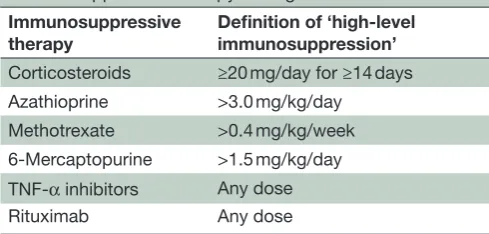
Table 3 ACIP recommendation for categories of immunosuppression therapy dosing
Immunosuppressive
therapy Definition of ‘high-level immunosuppression’ Corticosteroids ≥20 mg/day for ≥14 days Azathioprine >3.0 mg/kg/day
Methotrexate >0.4 mg/kg/week 6-Mercaptopurine >1.5 mg/kg/day TNF-α inhibitors Any dose
Rituximab Any dose
ACIP, Advisory Committee on Immunization Practices; TNF-α, tumour necrosis factor alpha.
between corticosteroid, methotrexate (MTX) or biologi-cally treated patients after a mean of 1.7 years postvacci-nation.34
There has been one systematic review and meta-anal-ysis published in 2014 by Hua et al.9 This meta-analysis included six studies related to pneumococcal vaccina-tion. In four of these studies, patients were vaccinated by PPV-23 (n=232), while two studies included 114 patients vaccinated by PCV-7. Responsiveness to pneumo-coccal vaccines was impaired in patients with RA treated with MTX or rituximab, but the response was intact in patients receiving TNF-α inhibitors.9 Nevertheless, this meta-analysis could not distinguish PPV-23 and PCV-7.9 Kapetanovic et al35 also reported that PPV-23 response was normal in anti-TNF, but reduced in MTX-treated patient. In another study, the anti-interleukin-6 receptor antibody tocilizumab, in combination with MTX, slightly attenuated humoral responses to PPV-23 in comparison to MTX monotherapy.36 Recently, Alten et al37 published the results of two multicentre, open-label substudies, which evaluated antibody responses to PPV-23 admin-istered to 125 abatacept-treated patients with RA. This study confirmed that the majority of patients with RA treated with abatacept had appropriate immune response to PPV-23 vaccine, with good safety profile. The concom-itant use of MTX (irrespective of dose) or corticosteroids had no significant impact on the proportion of patients achieving protective antibody levels in patients receiving abatacept.37
There have been some studies that investigated the immunogenicity or effectiveness of PCVs in patients with AIRD.38–41 Two studies confirmed that PCV-7, approved only for children, was immunogenic in adult patients with RA.38 39 Kapetanovic et al39 found reduced antibody responses to PCV-7 in MTX-treated patients, while the response was intact in patients receiving TNF-α inhibitors. Nagel et al40 studied efficacy of a PCV-7 vaccine in adult patients with AIRD. They observed statistically non-signif-icant reduction in the occurrence of serious infections in patients with RA and spondyloarthropathy after immu-nisation with PCV-7. Recently, we have prospectively evaluated the immunogenicity of the PCV-13 vaccine in
patients with RA receiving etanercept. Vaccination with PCV-13 was effectively immunogenic and safe. Higher age at vaccination was identified as a predictor of impaired antibody response.41 In a recent study, 47 patients with SLE receiving belimumab given in addition to standard of care therapy were immunised with PCV-13. The study confirmed that the efficacy of PCV-13 was not impaired by belimumab.42
long-term safety of pneumococcal vaccInes
Based on the literature on pneumococcal vaccine safety, there have been no appropriate epidemiological studies on serious side effects or postvaccination autoimmunity in patients with AIRD. Therefore, data are limited.
Autoimmune inflammatory syndrome induced by adju-vants (ASIA) or Shoenfeld’s syndrome has been most commonly reported after human papilloma and influenza vaccination, but there have also been scattered reports on Bacillus Calmette-Guerin, diphtheria-tetanus-per-tussis, hepatitis B and mumps-morbilli-rubella vaccina-tions.43 Vaccines contain preservatives and adjuvants in order to ensure their sterility. Preservatives prevent contamination of multidose containers, while adjuvants enhance the immunogenicity of the vaccine antigen. PPV and PCV contain phenol preservative and aluminium salt adjuvant, respectively. The most common adjuvants, such as aluminium salts, may cause fever, pain at the injection site and malaise. So far there have been no data on pneu-mococcal vaccine-induced ASIA syndrome.43
Between 2003 and 2014, spontaneous reports of vascu-litis as an adverse event following immunisation have been reported to three international spontaneous reporting systems (EudraVigilance, the Vaccine Adverse Event Reporting System and VigiBase). The most commonly reported pneumococcal vaccine-related event was Kawa-saki disease. This type of vasculitis occurred mainly in children less than 1 year of age. There were no data about the type of pneumococcal vaccine triggering vasculitis in these reporting systems.44
Altogether 67 patients with cryopyrin-associated peri-odic syndromes (CAPS) treated with canakinumab were followed in the b-CONFIDENT (Clinical Outcomes and Safety Registry) global, long-term, prospective, observational study. Out of these patients, 19 had pneu-mococcal vaccination including 15 PPV and 2 PCV-vac-cinated patients. In two cases, the nature of vaccine was unknown. Five PPV-related serious adverse events were reported (local inflammation, meningitis, progressive cellulitis), while two patients had systemic inflammation due to CAPS reactivation. After a period of 10–28 days, the adverse events resolved in all patients.45
recommendatIons on pneumococcal vaccInatIon In patIents wIth aIrd
Based on the data described above, four sets of clin-ical recommendations have become available on pneu-mococcal vaccination in AIRD. These include (1) the
on May 7, 2020 by guest. Protected by copyright.
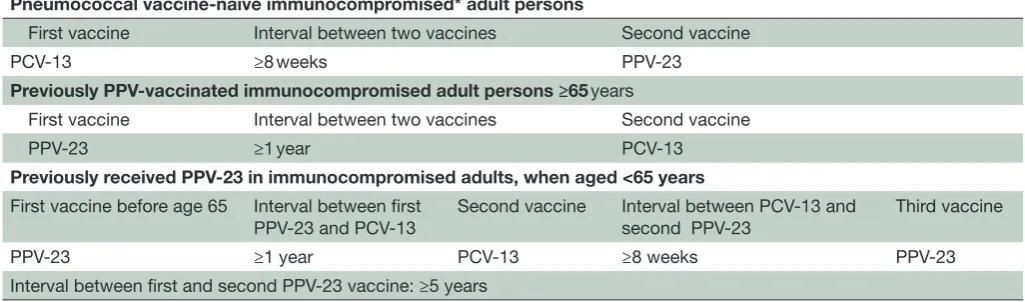
Table 4 Sequential administrations of PCV-13–PPV-23 among immunocompromised adults based on ACIP recommendation Pneumococcal vaccine-naive immunocompromised* adult persons
First vaccine Interval between two vaccines Second vaccine
PCV-13 ≥8 weeks PPV-23
Previously PPV-vaccinated immunocompromised adult persons ≥65 years
First vaccine Interval between two vaccines Second vaccine
PPV-23 ≥1 year PCV-13
Previously received PPV-23 in immunocompromised adults, when aged <65 years First vaccine before age 65 Interval between first
PPV-23 and PCV-13
Second vaccine Interval between PCV-13 and second PPV-23
Third vaccine
PPV-23 ≥1 year PCV-13 ≥8 weeks PPV-23
Interval between first and second PPV-23 vaccine: ≥5 years
*Immunocompromised conditions are defined as: congenital or acquired immunodeficiency, human immunodeficiency viral infection, chronic renal failure, nephrotic syndrome, leukaemia, lymphoma, Hodgkin disease, generalised malignancy, iatrogenic immunosuppression, solid organ transplant, multiple myeloma.
ACIP, Advisory Committee on Immunization Practices; PCV-13, pneumococcal conjugate vaccine with 13 serotypes; PPV-23, pneumococcal polysaccharide vaccine with 23 serotypes.
European League Against Rheumatism (EULAR) recommendations for vaccination in adult patients with autoimmune inflammatory rheumatic diseases46 47; (2) a WHO position paper on pneumococcal vaccines30 31; (3) ACIP recommendations on the use of 13-valent PCV and 23-valent PPV for adults with immunocompromising conditions25; and (4) Infectious Diseases Society of America (IDSA) Clinical Practice Guidelines for vacci-nation of the immunocompromised host: recommenda-tions for vaccination of patients with chronic inflamma-tory diseases on immunosuppressive medications.48
In 2017, a systematic review of vaccination recom-mendations for adult immunosuppressed patients was published. In this review, authors summarised 12 years of data on American, British, Canadian, Australian, French and German recommendations. Patients included those with primary immunodeficiency, solid organ and haematopoietic stem cell transplantation, inflammatory bowel diseases, rheumatic diseases, as well as patients who underwent splenectomy, with cancer and HIV.49 This review recommended pneumococcal vaccinations universally following sequential administration protocols for patients with AIRD. In rituximab-treated subjects, the first pneumococcal vaccine should be administered 2–3 weeks before initiation of biological treatment.49
These recommendations can now be summarised and applied as the currently licensed PCV-13 vaccine has been available for immunocompromised patients and appro-priate advice for sequential vaccination with PPV-23 has been developed. Both types of pneumococcal vaccines (PPV and PCV) are inactivated vaccines, so there is no risk of bacterial reactivation after vaccination. Before administration of the pneumococcal vaccine to a patient with AIRD, one should determine the optimal timing of vaccination, the type of vaccine (PCV-13, PPV-23) to be used and the strategy of vaccination (eg, sequential application).49
In 2011, EULAR developed the first evidence-based recommendations for vaccination in patients with AIRD. The committee included experts representing 11 Euro-pean countries.46 In 2014, the IDSA published the special vaccine recommendations for immunocompromised patients.48 In the recommendation, the definitions of high-level versus low-level immunosuppression were established (table 3). High-level immunosuppression includes more than 20 mg daily use of corticosteroids for more than 14 days; more than 3.0 mg/kg daily use of azathioprine; more than 0.4 mg/kg weekly use of MTX; more than 1.5 mg/kg daily use of 6-mercaptopu-rine and any dose of TNF-α inhibitors and rituximab. These categories may determine the protocol of vacci-nation48; however, vaccination is always recommended in these patients. ACIP recommended to administer pneu-mococcal vaccinations to adults with planned initiation of immunosuppressive therapy or in the status of low-level immunosuppression.25
ACIP also reviewed the best available evidence for sequential administrations of PCV-13 and PPV-23 to immunocompetent and immunocompromised adults.25 This recommendation includes immunocompromised individuals also including patients with acquired immu-nodeficiency and those receiving immunosuppressive agents. The key issue is the determination of optimal intervals between the two vaccines. The sequence of administration is determined by the high immunoge-nicity of PCV-13 and the high number of covered sero-types of PPV-23. Recent studies suggested that the best clinical results could be achieved if PCV-13 was admin-istered first to pneumococcal vaccine-naive patients. Patients prevaccinated with PPV-23 should receive PCV-13 after 1 year.25 ACIP does not recommend multiple revac-cinations (booster) with PPV-23 in the normal popula-tion due to insufficient data regarding its clinical benefit, particularly the degree and duration of protection and
on May 7, 2020 by guest. Protected by copyright.
safety but only in adults aged ≥19 years with immunocom-promising conditions. In this group, PPV-23 vaccination should be repeated at least 5 years after the most recent dose of PPV-23, following administration of PCV-13.25 Recommendations on sequential PCV-13 and PPV-23 vaccination are seen in table 4.
summary
Summarised recommendations of pneumococcal vacci-nation in patients with AIRD:
► The best time to start immunisation is before the ad-ministration of immunosuppressive therapy (at least 2–3 weeks before initiation), in stable condition, with-out disease activity.
► In patients receiving disease-modifying antirheu-matic drugs, the timing of vaccination has to be set in accordance with the status of immunosuppres-sion. Ideally, the vaccine should be performed in patients with low-level immunosuppression but the vaccine should still be administered even if its effi-cacy might be decreased, so even in patients with high-level immunosuppression taking into account the following:
– There is no requirement of treatment-free inter-vals before and after immunisation in patients re-ceiving TNF-α blockers, abatacept or tocilizumab.
– The vaccination must be started at least 2–3 weeks before initiation of rituximab treatment, or 5–7 months after completion of treatment; if not pos-sible, at least 6 months after the start and 4 weeks before the next course.
► Pneumococcal vaccinations have to be administered in a sequential manner based on the previous PPV-23 vaccination status.
► The vaccination programme of patients with AIRD must be established by approach of multidiscipli-nary team (rheumatologists, infectious disease spe-cialists, physicians expert in comorbidity manage-ment).
Patients with AIRD are prone to several infections, which may be a great challenge for the treating physician. Immunogenic PCV or PPV vaccines effectively reduce the risk of invasive infectious diseases and pneumonia mortality. In order to achieve an optimal response, the administrations of PCV-13 and PPV-23 are recommended as soon as possible following AIRD diagnosis. These vaccines are safe; serious adverse events have rarely been reported. There is an important role of all healthcare workers to suggest patients with AIRD and their family members to manage these vaccinations.
contributors ÉR and ZS wrote and reviewed the manuscript.
funding This work was supported by the european Union and the State of Hungary cofinanced by the european Social Fund in the framework of TAMOP-4.2.4.A/2-11/1-2012-0001 ‘National excellence Program’ (ZS).
competing interests None declared.
provenance and peer review Not commissioned; externally peer reviewed.
data sharing statement No additional data are available.
open access This is an Open Access article distributed in accordance with the Creative Commons Attribution Non Commercial (CC BY-NC 4.0) license, which permits others to distribute, remix, adapt, build upon this work non-commercially, and license their derivative works on different terms, provided the original work is properly cited and the use is non-commercial. See: http:// creativecommons. org/ licenses/ by- nc/ 4. 0/
© Article author(s) (or their employer(s) unless otherwise stated in the text of the article) 2017. All rights reserved. No commercial use is permitted unless otherwise expressly granted.
RefeRences
1. File TM, Marrie TJ. Burden of community-acquired pneumonia in North American adults. Postgrad Med 2010;122:130–41.
2. Kollef MH, Shorr A, Tabak YP, et al. Epidemiology and outcomes of health-care-associated pneumonia: results from a large US database of culture-positive pneumonia. Chest 2005;128:3854–62.
3. Micek ST, Kollef KE, Reichley RM, et al. Health care-associated pneumonia and community-acquired pneumonia: a single-center experience. Antimicrob Agents Chemother 2007;51:3568–73. 4. Wicker S, Maltezou HC. Vaccine-preventable diseases in Europe:
where do we stand? Expert Rev Vaccines 2014;13:979–87. 5. Annual epidemiological report. Vaccine-preventable diseases –
invasive bacterial diseases. 2014 www. ecdc. europa. eu. 6. Welte T, Torres A, Nathwani D. Clinical and economic burden of
community-acquired pneumonia among adults in Europe. Thorax
2012;67:71–9.
7. Torres A, Peetermans WE, Viegi G, et al. Risk factors for community-acquired pneumonia in adults in Europe: a literature review. Thorax
2013;68:1057–65.
8. Butler J. Epidemiology of pneumococcal disease. In: Tuomanen E, Mitchell T, Morrison D, Spratt B, eds. The Pneumococcus. 10. Washington DC: American Society for Microbiology, 2004:148–68. 9. Hua C, Barnetche T, Combe B, et al. Effect of methotrexate,
anti-tumor necrosis factor α, and rituximab on the immune response to influenza and pneumococcal vaccines in patients with rheumatoid arthritis: a systematic review and meta-analysis. Arthritis Care Res
2014;66:1016–26.
10. Franklin J, Lunt M, Bunn D, et al. Risk and predictors of infection leading to hospitalisation in a large primary-care-derived cohort of patients with inflammatory polyarthritis. Ann Rheum Dis
2007;66:308–12.
11. Hernández-Cruz B, Cardiel MH, Villa AR, et al. Development, recurrence, and severity of infections in Mexican patients with rheumatoid arthritis. A nested case-control study. J Rheumatol
1998;25:1900–7.
12. Trager J, Ward MM. Mortality and causes of death in systemic lupus erythematosus. Curr Opin Rheumatol 2001;13:345–51.
13. Blanco FJ, Gómez-Reino JJ, de la Mata J, et al. Survival analysis of 306 European Spanish patients with systemic lupus erythematosus.
Lupus 1998;7:159–63.
14. Gharibdoost F, Akbarian S, Akbarian M, et al. Evaluation of the mortality in systematic lupus erythematosus (SLE): analysis of 2021 patients. Acta medica Iranica 2003;41:62–5.
15. Falagas ME, Manta KG, Betsi GI, et al. Infection-related morbidity and mortality in patients with connective tissue diseases: a systematic review. Clin Rheumatol 2007;26:663–70.
16. O’Brien KL, Wolfson LJ, Watt JP, et al. Burden of disease caused by Streptococcus pneumoniae in children younger than 5 years: global estimates. Lancet 2009;374:893–902.
17. Hausdorff WP, Bryant J, Paradiso PR, et al. Which pneumococcal serogroups cause the most invasive disease: implications for conjugate vaccine formulation and use, part I. Clin Infect Dis
2000;30:100–21.
18. Orange JS, Ballow M, Stiehm ER, et al. Use and interpretation of diagnostic vaccination in primary immunodeficiency: a working group report of the Basic and Clinical Immunology Interest Section of the American Academy of Allergy, Asthma & Immunology. J Allergy Clin Immunol 2012;130(3 Suppl):S1–24.
19. Hausdorff WP, Bryant J, Kloek C, et al. The contribution of specific pneumococcal serogroups to different disease manifestations: implications for conjugate vaccine formulation and use, part II. Clin Infect Dis 2000;30:122–40.
20. Centers for Disease C, Prevention, Advisory Committee on Immunization P.Updated recommendations for prevention of invasive pneumococcal disease among adults using the 23-valent pneumococcal polysaccharide vaccine (PPSV23). MMWR Morb Mortal Wkly Rep 2010;59:1102–6.
on May 7, 2020 by guest. Protected by copyright.
21. Centers for Disease Control and Prevention (CDC). Licensure of a 13-valent pneumococcal conjugate vaccine (PCV13) and recommendations for use among chPreviously received PPV-23 in immunocompromised adult, when aged. MMWR Morb Mortal Wkly Rep 2010;59:258–61.
22. Frenck RW, Yeh S. The development of 13-valent pneumococcal conjugate vaccine and its possible use in adults. Expert Opin Biol Ther 2012;12:63–77.
23. Schwarz TF, Flamaing J, Rümke HC, et al. A randomized, double-blind trial to evaluate immunogenicity and safety of 13-valent pneumococcal conjugate vaccine given concomitantly with trivalent influenza vaccine in adults aged ≥65 years. Vaccine
2011;29:5195–202.
24. Moberley S, Holden J, Tatham DP, et al. Vaccines for preventing pneumococcal infection in adults. Cochrane Database Syst Rev
2013;1:CD000422.
25. Centers for Disease Control and Prevention (CDC). Use of 13-valent pneumococcal conjugate vaccine and 23-valent pneumococcal polysaccharide vaccine for adults with immunocompromising conditions: recommendations of the Advisory Committee on Immunization Practices (ACIP). MMWR Morb Mortal Wkly Rep
2012;61:816–9.
26. Lexau CA, Lynfield R, Danila R, et al. Changing epidemiology of invasive pneumococcal disease among older adults in the era of pediatric pneumococcal conjugate vaccine. JAMA
2005;294:2043–51.
27. Aliberti S, Mantero M, Mirsaeidi M, et al. The role of vaccination in preventing pneumococcal disease in adults. Clin Microbiol Infect
2014;20(Suppl 5):52–8.
28. Pollard AJ, Perrett KP, Beverley PC. Maintaining protection against invasive bacteria with protein-polysaccharide conjugate vaccines.
Nat Rev Immunol 2009;9:213–20.
29. Ortiz JR, Perut M, Dumolard L, et al. A global review of national influenza immunization policies: Analysis of the 2014 WHO/ UNICEF Joint Reporting Form on immunization. Vaccine
2016;34:5400–5.
30. Pneumococcal vaccines WHO position paper--2012. Wkly Epidemiol Rec 2012;87:129–44.
31. WHO Publication. Pneumococcal vaccines WHO position paper - 2012 - recommendations. Vaccine 2012;30:4717–8.
32. Bhorat AE, Madhi SA, Laudat F, et al. Immunogenicity and safety of the 13-valent pneumococcal conjugate vaccine in HIV-infected individuals naive to pneumococcal vaccination. AIDS
2015;29:1345–54.
33. Pasiarski M, Rolinski J, Grywalska E, et al. Antibody and plasmablast response to 13-valent pneumococcal conjugate vaccine in chronic lymphocytic leukemia patients--preliminary report. PLoS One
2014;9:e114966.
34. Izumi Y, Akazawa M, Akeda Y, et al. The 23-valent pneumococcal polysaccharide vaccine in patients with rheumatoid arthritis: a double-blinded, randomized, placebo-controlled trial. Arthritis Res Ther 2017;19:15.
35. Kapetanovic MC, Saxne T, Sjöholm A, et al. Influence of methotrexate, TNF blockers and prednisolone on antibody responses to pneumococcal polysaccharide vaccine in patients with rheumatoid arthritis. Rheumatology 2006;45:106–11.
36. Bingham CO, Rizzo W, Kivitz A, et al. Humoral immune response to vaccines in patients with rheumatoid arthritis treated with tocilizumab: results of a randomised controlled trial (VISARA). Ann Rheum Dis 2015;74:818–22.
37. Alten R, Bingham CO, Cohen SB, et al. Antibody response to pneumococcal and influenza vaccination in patients with rheumatoid arthritis receiving abatacept. BMC Musculoskelet Disord
2016;17:231.
38. Kapetanovic MC, Roseman C, Jönsson G, et al. Heptavalent pneumococcal conjugate vaccine elicits similar antibody response as standard 23-valent polysaccharide vaccine in adult patients with RA treated with immunomodulating drugs. Clin Rheumatol
2011;30:1555–61.
39. Kapetanovic MC, Roseman C, Jönsson G, et al. Antibody response is reduced following vaccination with 7-valent conjugate pneumococcal vaccine in adult methotrexate-treated patients with established arthritis, but not those treated with tumor necrosis factor inhibitors. Arthritis Rheum 2011;63:3723–32.
40. Nagel J, Geborek P, Saxne T, et al. The risk of pneumococcal infections after immunization with pneumococcal conjugate vaccine compared to non-vaccinated inflammatory arthritis patients. Scand J Rheumatol 2015;44:271–9.
41. Rákóczi É, Perge B, Végh E, et al. Evaluation of the immunogenicity of the 13-valent conjugated pneumococcal vaccine in rheumatoid arthritis patients treated with etanercept. Joint Bone Spine
2016;83:675–9.
42. Nagel J, Saxne T, Geborek P, et al. Treatment with belimumab in systemic lupus erythematosus does not impair antibody response to 13-valent pneumococcal conjugate vaccine. Lupus
2017;26:1072–81.
43. Watad A, Quaresma M, Brown S, et al. Autoimmune/inflammatory syndrome induced by adjuvants (Shoenfeld's syndrome) - An update. Lupus 2017;26:675–81.
44. Felicetti P, Trotta F, Bonetto C, et al. Spontaneous reports of vasculitis as an adverse event following immunization: a descriptive analysis across three international databases. Vaccine
2016;34:6634–40.
45. Jaeger VK, Hoffman HM, van der Poll T, et al. Safety of vaccinations in patients with cryopyrin-associated periodic syndromes: a prospective registry based study. Rheumatology 2017;56:1484–91. 46. van Assen S, Agmon-Levin N, Elkayam O, et al. EULAR
recommendations for vaccination in adult patients with autoimmune inflammatory rheumatic diseases. Ann Rheum Dis 2011;70:414–22. 47. van Assen S, Elkayam O, Agmon-Levin N, et al. Vaccination in
adult patients with auto-immune inflammatory rheumatic diseases: a systematic literature review for the European League Against Rheumatism evidence-based recommendations for vaccination in adult patients with auto-immune inflammatory rheumatic diseases.
Autoimmun Rev 2011;10:341–52.
48. Rubin LG, Levin MJ, Ljungman P, et al. 2013 IDSA clinical practice guideline for vaccination of the immunocompromised host. Clin Infect Dis 2014:58:e44–100.
49. Lopez A, Mariette X, Bachelez H, et al. Vaccination
recommendations for the adult immunosuppressed patient: A systematic review and comprehensive field synopsis. J Autoimmun
2017;80:10–27.
on May 7, 2020 by guest. Protected by copyright.