The implementation of Section 5(4) of the Mental Health
Act 1983.
ASHMORE, Russell John.
Available from Sheffield Hallam University Research Archive (SHURA) at:
http://shura.shu.ac.uk/20619/
This document is the author deposited version. You are advised to consult the publisher's version if you wish to cite from it.
Published version
ASHMORE, Russell John. (2012). The implementation of Section 5(4) of the Mental Health Act 1983. Doctoral, Sheffield Hallam University (United Kingdom)..
Copyright and re-use policy
L 'ciciI! lit ?y cii JU ! t v i u o o
Collegiate Learning Centre Collegiate Crescent Campus
Sheffield S10 2BP
ProQuest Number: 10701266
All rights reserved
INFORMATION TO ALL USERS
The quality of this reproduction is dependent upon the quality of the copy submitted.
In the unlikely event that the author did not send a com plete manuscript and there are missing pages, these will be noted. Also, if material had to be removed,
a note will indicate the deletion.
uest
ProQuest 10701266
Published by ProQuest LLC(2017). Copyright of the Dissertation is held by the Author.
All rights reserved.
This work is protected against unauthorized copying under Title 17, United States C ode Microform Edition © ProQuest LLC.
ProQuest LLC.
789 East Eisenhower Parkway P.O. Box 1346
THE IMPLEMENTATION OF SECTION 5(4)
OF THE MENTAL HEALTH ACT 1983
Russell John Ashmore
A thesis submitted in partial fulfilment of the requirements of
Sheffield Hallam University
for the degree of Doctor of Philosophy
Dedication
Abstract
Section 5(4) (nurse’s holding power) of the Mental Health Act 1983 empowers mental health nurses to legally prevent an informal in-patient from leaving hospital for up to six hours. The section may be applied for the patient’s health or safety or the protection of others. Since its introduction in September 1983 there have been 34,000 applications of the section, an average of 1460 per annum. The application of Section 5(4) is likely to: lead to further detention under the Act; have implications for the practice of nurses; and affect the care received by patients in the aftermath of its use. However, the literature review revealed a paucity of research on the subject. The existing research has focused on three main areas: nurses’ opinions of their holding power; their knowledge of Section 5(4); and trends associated with the implementation of the section. However, no attempts have been made to examine the events before, during and after the implementation of Section 5(4). This qualitative study sought to address this deficit by examining why and how Section 5(4) was implemented from the perspective of the nurses and patients involved in the process.
A collective case study approach was utilised to generate data from one mental health NHS Trust over a period of one year. Data were generated from three sources: archival (statistical) records on 803 applications of the section; documentary accounts of the detention process, for example nursing notes; and interviews with 30 nurses and four patients. Within- and cross-case narrative analysis was undertaken on the data set. The method of narrative analysis employed was developed specifically for this study.
The analysis produced a six-part typology of nurses’ stories that explained why Section 5(4) was implemented. The six types were: ‘health, safety or protection’; Tack of knowledge’; ‘catalyst’; ‘medical inaction’; ‘self-protection’; and ‘last resort’. The analysis also constructed a collective story of nurses’ experiences that identified the key stages in the detention process. Stories were also constructed from patients’ experiences of being detained. These stories generated in-depth accounts of patients’ admission to hospital, the events leading up to their detention, the implementation of Section 5(4), and the aftermath of their experiences.
Acknowledgements
I would like to acknowledge and thank a number of people, without whose help this thesis would not have been possible.
I would like to thank all the participants in this study who agreed to take part and gave up their time to do so. Without them there would have been no thesis.
I would like to thank Dr. Paul Ramcharan for his enthusiasm and help in the initial stages of this thesis. I wish to express my gratitude to my supervisors Emeritus Professor Gordon Grant and Dr. Alex McClimens for their guidance and support during the process of completing this thesis. A thank you must aiso go to Dr. Julie Repper and Dr. Peter Goward for their help.
A thank you to my friends and colleagues in the mental health nursing community (you know who you are) who have offered me support and encouragement.
Contents
Dedication i
Abstract ii
Acknowledgements iii
Chapter 1 The origins of the thesis 1
Chapter 2 Background 9
Chapter 3 Methodology 48
Chapter 4 Methods 69
Chapter 5 Data analysis 101
Chapter 6 Data set and trends associated with the implementation
of Section 5(4) 127
Chapter 7 Nurses’ stories of using Section 5(4): a six-part typology 138
Chapter 8 Patients’ stories of detention 177
Chapter 9 A collective story of implementing Section 5(4) 223
Chapter 10 Discussion 273
References 303
Appendices 337
Appendix 1 Form 13 338
Appendix 2 Local Incident Form 339
Appendix 3 Form 16 340
Appendix 4 Databases, search terms and the number of abstracts located 341
Appendix 5 Short version of the research protocol 342
Appendix 6 A4 summary of the study 344
Appendix 7 Final Local Research Ethics Committee approval letter 345
Appendix 8 LREC and Research Governance timetable 347
Appendix 9 The nurses’ information sheet 350
Appendix 10 The patients’ information sheet 353
Appendix 11 The nurses’ consent form 356
Appendix 13 Example of completed pro forma 358
Appendix 14 Timeline of events leading to Shaun’s detention 359
Appendix 15 Examples of vignettes constructed during the analysis 361 Appendix 16 Working titles given to the stories based on
the evaluative comments made by the nurses 362
Appendix 17 Definitions of preliminary story types 364
List of figures and tables
Figures
Figure 1 The ‘official’ process of implementing Section 5(4) 16 Figure 2 Summary of factors influencing the introduction of Section 5(4) 29
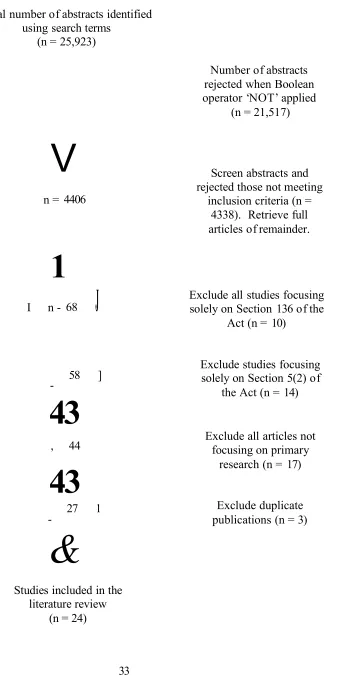
Figure 3 Flow chart of search strategy 33
Figure 4 The case, context and data generation methods 67
Figure 5 The process of ‘getting in’ and ‘getting permission’ 79
Figure 6 Recruiting the patient sample 91
Figure 7 The process of developing an emplotted story 118
Figure 8 Summary of the analysis undertaken on the interview data
generated in the study 126
Figure 9 The use of Section 5(4) by year 128
Figure 10 The implementation of Section 5(4) over the 24-hour period 131
Figure 11 Annual medical response time 1983-2006 132
Figure 12 Age and application of Section 5(4) 134
Figure 13 The use of Section 5(4) within the first week of admission 135 Figure 14 Nurses’ stories of using Section 5(4): A six-part typology 139
Figure 15 Nurses telling each type of story 140
Figure 16 Cycle of intervention in the last resort story 168
Figure 17 Summary of events leading to the implementation of
Section 5(4) in Shaun’s story 202
Figure 18 Summary of the process of implementing Section 5(4)
outlined in the collective story 224
Figure 19 Summary of the risk assessment process 234
Tables
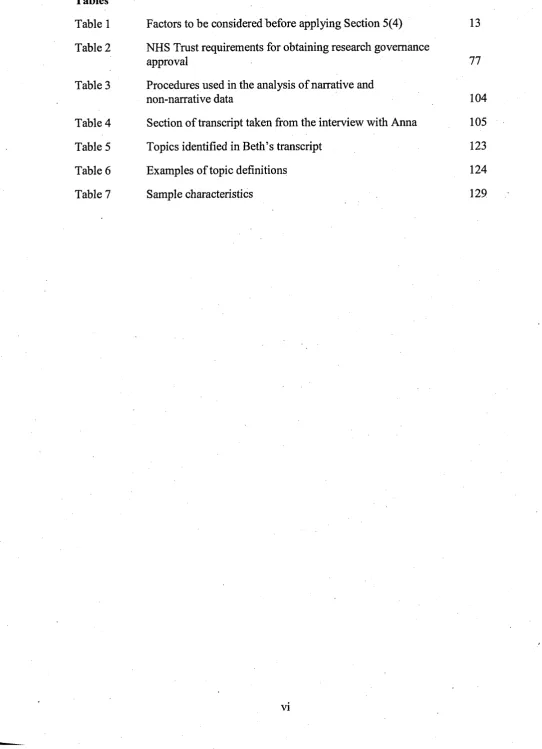
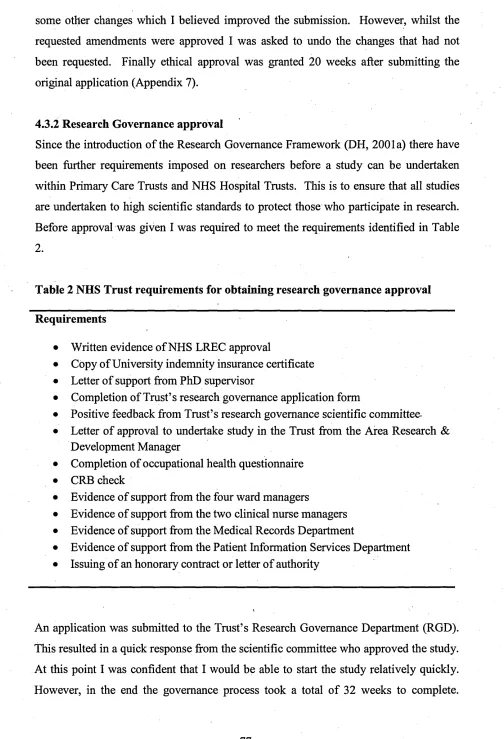
Table 1 Factors to be considered before applying Section 5(4) 13 Table 2 NHS Trust requirements for obtaining research governance
approval 77
Table 3 Procedures used in the analysis of narrative and
non-narrative data 104
Table 4 Section of transcript taken from the interview with Anna 105
Table 5 Topics identified in Beth’s transcript 123
Table 6 Examples of topic definitions 124
[image:10.620.24.567.38.787.2]‘Sometimes I might just put in a comma in the morning, and take it out again at night. But that’s the way it goes.’
Chapter 1
The origins of the thesis
At 3.00 p.m. on June 6th 1989, I used Section 5(4) (nurse’s holding power) of the Mental Health Act 1983 (Department of Health,1 1983) for the first time, to prevent a male patient2 from leaving hospital. This was the first of 11 patients I detained under Section 5(4) in the following two years as a staff nurse working on an acute psychiatric ward.3 This event also marked the beginning of my fascination with an aspect of mental health nursing practice that has been the focus of my academic interests for over 20 years and led to the generation of this thesis. It therefore seems important for me to begin this thesis by providing some background on the circumstances leading up to my first application of Section 5(4) and the associated issues.
Between 1980 and 1983 I was a psychology undergraduate student at the University of Manchester. Despite undertaking a clinical psychology module that explored the nature and treatment of mental illnesses there was no mention of mental health legislation; therefore I remained oblivious to the debates that were taking place regarding the reforms of the Mental Health Act 1959 (Department of Health and Social Security,4 1959). Following my graduation in 1983 I had no clear idea about what direction my career should take, although I did know I wanted to work’ in the field of psychology in some way. In the year following my graduation I secured a short-term contract working as a nursing assistant on an acute psychiatric ward, which resulted in the decision to undertake my training to become a registered mental nurse (RMN).
1 Hereafter DH.
2 In the UK a variety o f terms exist to describe people who use mental health services including ‘clients’, ‘patients’, ‘service users’, ‘people affected by mental illness’, ‘user?, and ‘survivor’ (Simmons et al., 2010). Despite some commentators arguing that some terms are more empowering or stigmatizing than others (for example, see Link and Phelan, 2001; McLaughlin, 2009), Dickens and Picchioni (2011) have reported that those who use mental health services prefer to be referred to as either ‘patient’ or ‘client’. I have chosen to use ‘patient’ throughout this thesis as this is the term adopted in the Mental Health Act 1983 to refer to people who use mental health service.
3 Acute psychiatric ward and acute in-patient ward are used interchangeably throughout the thesis. These wards provide mental health care for adult patients between the age o f 18 and 65 years, although the upper age limit may vary between NHS Trusts.
In May 1984 I started my nurse training at the Middlewood Hospital in Sheffield. As a nursing student (1984-1987) I received very little formal education on the Mental Health Act 1983 (DH, 1983). This amounted to no more than a basic introduction consisting of a one hour classroom discussion and a handout outlining the main sections contained in the Act. Furthermore, I do not recall any of the nursing tutors emphasising the new roles that had been given to mental health nurses by the 1983 Act or more specifically drawing my attention to the legal and ethical implications of the new holding powers. However, I do remember reading Larry Gostin’s (1983) ‘A Practical Guide to Mental Health Law’; although at the time I did not fully appreciate the implications of the Act for my future role as a RMN. On reflection, I now find this lack of education on the subject of Section 5(4) astonishing since the Act was less than eight months old at the start of my training. In addition, there had also been considerable debate within the profession and Parliament (see Chapter 2) about whether mental health and learning disability nurses should be given a holding power.
Similarly, during three years of clinical placements I do not remember Section 5(4) being used by nurses on the wards where I worked. Nor do I remember any of my supervisors making reference to it or alerting me to its existence, although I do remember discussions about other sections of the Act. This may simply reflect the fact that the section was not used during my time on individual placements or that I simply lacked an awareness of its use. However, I did witness numerous patients being prevented from leaving hospital either because they were already detained under a section of the Act or because, although informal, it was in their ‘best interests’.
On qualifying in July 1987 I duly forgot about any concerns I had about using Section 5(4) as my first staff nurse post was based in a day hospital working with older adults experiencing a variety of organic and functional mental health problems. As day patients cannot be detained under Section 5(4). I did not have to address the issue of detention. Such issues were dealt with by nurses working on in-patient wards or by the medical staff.
protection of others, patients could be legally prevented from leaving the ward by a nurse. More specifically, I also realised that as part of my new role I might be the one who had to prevent the patient leaving.
My first experience of using Section 5(4) occurred a month after starting on the ward (June 6th 1989) when I twice made the decision to prevent a patient from leaving within the space of one Friday afternoon shift. Whilst I do not remember all of the details of the events leading up to either of the detentions, the detention itself or its aftermath, I do remember some of my anxieties about making the decision to implement Section 5(4).
Firstly, I asked myself, Was I doing the right thing? ’ Specifically, I was concerned that I had in some way got it wrong and that I was depriving someone of their liberty inappropriately. In addition, in ‘getting it wrong’ I was also worried that I would be judged by experienced colleagues to be a custodial nurse who liked to exercise their power over the patients. This was something I had already come to believe as contrary to the philosophy of nursing care espoused on the ward.
Secondly, I asked myself, ‘ What were my grounds for detaining the patient? ’ I believe I had concerns for the patient’s and/or others’ safety and that he needed to stay on the ward but was unwilling to do so. I can only presume now that no doctor was available to undertake a medical assessment with a view to implementing Section 5(2) (doctors’ holding power) of the Act (DH, 1983). I am unclear about how I assessed the risks as the ward did not use any formal risk assessment tools and even if they had I am not certain there would have been time to use them. I recall consulting my colleagues about whether I was about to make the correct decision; an attempt perhaps to draw on their experience and clinical knowledge. There appeared to be a collective and culturally defined set of criteria used by the nurses to determine potential risk on the ward. However, it was not always clear where this knowledge had come from or whether any discussion had taken place as to the appropriateness of these criteria or what evidence, if any, was being used to support their use.
important question; that is, what does happen in those situations when nurses are faced with the possibility of having to prevent a patient from leaving the ward? The Mental Health Act 1983 (DH, 1983) and the Mental Health Act 1983 Code of Practice (DH, 1999) offer some guidelines about when, where, who, why and how a patient should be prevented from leaving by the nurse; however this is purely from a legal perspective. In reality, based on my own experience, implementing Section 5(4) is ‘messy’. That is, the circumstances of any situation frequently mean that plans cannot be followed and any pre-existing protocols are rarely followed. Cavadino (1989: 1) has made a distinction between the Taw in the books’ and Taw in practice’; that is, while legislation may tell us what the law is, it provides little guidance on how to use it. In my own case, the first time I implemented Section 5(4) I had some awareness of what the law said but I had no experience of applying it. Therefore, I was required to make sense of how to use the law there-and-then in order to manage the situation I found myself in at . that time. Despite this piece of legislation being over 28 years old, surprisingly there are still no accounts of how nurses interpret this law in practice.
My experience of using Section 5(4) gave me a desire to find out more about how it
4
‘should’ be implemented, and therefore I consulted my colleagues in an attempt to learn from their knowledge and experience. However, this proved frustrating as their replies consisted of comments such as, ‘It rarely happens so don’t worry about it’, ‘It only occurs at weekends or after five o’clock when there’s no doctors around’, ‘It’ll damage the therapeutic relationship with the patient’, and ‘It’ll result in the patient not being able to get a visa to travel to other countries.’ There was also a prevalent belief among my colleagues that the use of the Act was associated with the medical model and therefore a medical responsibility. For many of my colleagues, to use Section 5(4) also constituted a failure of the nurse’s therapeutic skills and therefore it was discouraged.
to my first publication (Ashmore, 1991) and from the findings I was able to dispel some of the myths about Section 5(4) raised by my colleagues.
Others studies followed this piece of research, both by myself and others but none attempted to explore the ‘law in practice’. I did on one occasion seek to explore nurses’ reasons for implementing the holding power by attempting to undertake a content analysis of nursing notes following the use of Section 5(4). Unfortunately this project had to be abandoned as either no entries existed or they simply stated that, ‘the patient had been detained under Section 5(4)’.
The patient’s perspective on their detention by a nurse was also an area of personal interest. This was prompted by the need in 1991 to detain a patient with whom I had been working closely. The implementation of the Section 5(4) was fairly straightforward. However, in the aftermath the patient Nikki (a pseudonym) refused to believe that I had detained her, and targeted her anger to the colleague who was assisting me, because, she said, ‘You wouldn’t do anything like that’. Intrigued by this, Nikki and I discussed the events surrounding her detention on a number of occasions. On her discharge from the ward I asked whether she would provide me with a written account of her experience. With her permission, I reproduce her thoughts in full:
‘Well when you are very chaotic it is the nurses’ only option to section you to keep you on the ward. At first you become very irate with the nurses because they are stopping you doing what you want to do.
One of the first things you learn is sectioning by the nurses can lead you to being detained for a very long time. A 5(4) can lead to a 5(2) - which is 72 hours, a 5(2) can lead to a Section 2 - which is 28 days - and a Section 2 can lead to a Section 3 which is a six month section.
So once you have calmed down a bit you have to walk around showing everyone that you are stable to be left alone until the doctor arrives but you can’t wait until you are informal again.
The power that the RMN has is very threatening but until you know your rights all you want to do is abscond. The more you attempt [to leave] the tighter the nurses get on you and it normally results in you being locked in the [seclusion] ‘room’.
The doctor - this is where you have to prove the nurses were wrong and you are perfectly stable.
Your relationship with the nurses changes. It starts to become a ‘them’ and ‘us’ feeling. You feel vulnerable; as if you try to leave they will section you.
If you can’t get away you just need to hope there is a good nurse on duty and a good doctor who you can wind around your finger.
I don’t think sections on the ward I was on are misused, most of the time it is done for your safety and that is the only way a nurse is able to get your respect back and to enable you to work as a team again.’
Nikki (September 1992)
The experiences - both my own and Nikki’s - described above have raised a number of issues that are not addressed in the literature and as a result have provided me with the motivation to undertake the study detailed in this thesis.
This thesis is divided into ten chapters. This chapter has provided an introduction to my background as a mental health nurse and how I became involved with the nursing practice of implementing Section 5(4) both clinical and academically. It has also begun the process of identifying issues associated with the implementation of Section 5(4) from both the nurse’s and patient’s perspective.
literature that have potential implications for how mental health nurses practice and the quality of care received by those who are detained under Section 5(4).
Chapter 3 focuses on the methodological aspects of the study. A rationale is given for undertaking a doctoral level study and the aims of the research are stated. The study is positioned within a relativist ontology and social constructionist epistemology. The choice of the case study as the most appropriate research strategy is also discussed as are the data generation methods used in the research.
Chapter 4 describes how the research design was unfolded and consists of three main sections. The first provides a detailed account of how access to the study site was negotiated. The second provides an account of how formal permissions were obtaining, the problems encountered and how they were addressed. The final part describes the process of generating data and the management of associated issues such as undertaking interviews with nurses and patients in clinical environments.
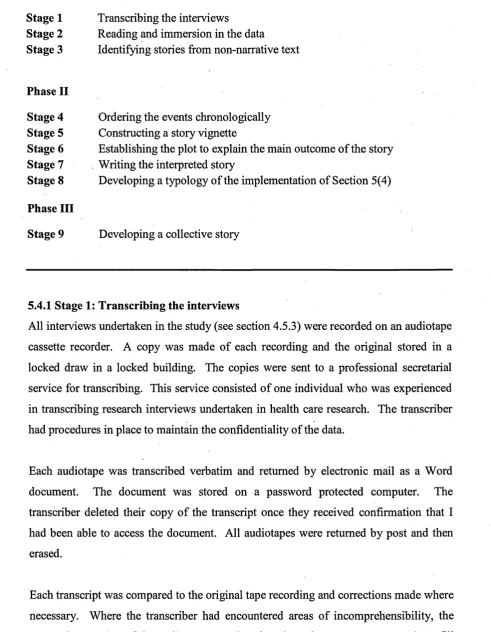
Chapter 5 provides a rationale for the analysis of the different types of data generated in the study and outlines in detail the stages and procedures involved in this process. Specifically, the chapter focuses on justifying the narrative approach to analysis used in the study and presents my own nine stage method for the generation of the stories reported in the thesis.
Chapters 6-9 present the findings of the study. Chapter 6 focuses on the data set and trends associated with the use .of Section 5(4) in the Trust. Some of the trends identified in this chapter led to the development of topic areas that were then explored in the interviews with both nurses and patients.
Chapter 7 outlines a six-part typology of how and why Section 5(4) was implemented. One example of each story type is presented to illustration its differences and similarities to other narratives outlined in the chapter.
events leading up to their detention, the implementation of Section 5(4), and the aftermath of their experiences.
Chapter 9 presents a collective story of the implementation of Section 5(4) that makes visible for the first time a process concerning the events before, during, and after the nurse makes the decision to implement Section 5(4). It demonstrates that the decision to implement Section 5(4) is a complex process involving a number of factors other than the patient being considered a risk to themselves and others, and a doctor being unavailable to undertake a medical assessment.
Chapter 2 Background
2.1 Introduction
This chapter consists of three parts. The first part outlines Section 5(4) as it is described in the Mental Health Act 1983 (DH, 1983). In addition, it also provides details of the guidance offered to nurses by the Mental Health Act 1983 Code of Practice (DH, 1999) on implementing Section 5(4) before, during and after the event. The second part explores the factors leading to the introduction of Section 5(4) under the 1983 Act (DH, 1983). The third and final part of the chapter is a review of the empirical literature relating to the implementation of Section 5(4).
2.2 Section 5(4) (nurse’s holding power) of the Mental Health Act 1983
The National Health Service Information Centre for Health and Social Care (NHS ICHSC, 2011) reported that in the one year period 2010-2011, 27,471 people were admitted to NHS facilities in England under a section of the Mental Health Act 1983 for their health or safety or for the protection of others.5 A further 16,448 people were detained after admission.6 This may be the result of an inappropriate informal admission, deterioration in the patient’s mental health and/or their unwillingness to remain in hospital at a time of perceived risk. One option available to mental health nurses when a patient who is considered at risk, expresses a desire to leave the ward and cannot be persuaded to wait until a doctor arrives to discuss the matter further, is to prevent them from leaving by applying Section 5(4) of the 1983 Act (DH, 1983).
Section 5(4) accounted for 10.6% (n = 1748) of all detentions after admission; that is 4% of all sections implemented during the period 2010-2011. Official statistics on the use of the Act (DH, 1995; NHS ICHSC, 2011) also report that the number of patients detained under Section 5(4) has risen significantly since its introduction in 1983 to an average of 1460 per annum (Range 789-1948 per annum). Between 1988 and 2011 approximately 34,000 people have been detained under Section 5(4) of the Act. In addition, the application of Section 5(4) leads to further detention under the Act in 70%
5 A further 2,621 people were formally admitted to independent hospitals in the same period.
of cases (NHS ICHSC, 2011) and may require nurses to lock the ward door or restrain, seclude or closely observe the patient to ensure they remain on the ward.
Section 5(4) of the Mental Health Act 19837 permits nurses of the ‘prescribed class’ to detain an informal in-patient receiving treatment for mental disorder for up to six hours or until a doctor arrives if it appears:
(a) that the patient is suffering from mental disorder to such a degree that it is necessary for his health or safety or for the protection of others for him to be immediately restrained from leaving hospital; and
(b) that it is not practical to secure the immediate attendance of a practitioner for the purpose of furnishing a report under subsection (2) above.8
Section 5(4) can only be used when the patient is still on the hospital premises. Implementing Section 5(4) is the personal decision of the nurse who cannot be instructed to exercise the holding power by anyone else. Section 5(4), should it lapse, is non-renewable.
2.2.1 The prescribed class
The Mental Health (Nurses) Order 1998 (SI 1998/2625) defines the ‘prescribed class’9 as a nurse registered in:
7 As data in this study were generated before 2007, all references to the Mental Health Act 1983, unless otherwise stated, refer to the original document (DH, 1983) rather than the recently amended version of the legislation (DH, 2007a).
8 This refers to Section 5(2) of the Act (doctor’s holding power). In the amended Act (DH, 2007a) Section 5(2) has been widen in scope to include ‘approved clinicians’, for example social workers and nurses. In the amended Act (DH, 2007a) this section now reads, ‘that it is not practical to secure the attendance o f a doctor or approved clinician who can submit a report under section 5(2).’
9 Since the introduction of the 1983 Act the types of nursing qualifications described in the register maintained in Section 7 o f the Nurses, Midwives and Health Visitors Act 1997 have changed. These changes are reflected in the amended Act (DH, 2007a) The ‘prescribed class’ now consists of: (i) Registered Nurse Level 1 Mental Health; (ii) Registered Nurse Level 2 Mental Health; (iii) Registered Nurse Level 1 Learning Disability; and (iv) Registered Nurse Level 2 Learning Disability. Part 3, 4, and
(a) Part 3 (first level nurse10 trained in the nursing of persons suffering from mental illness) or
(b) Part 4 (second level nurses trained in the nursing of persons suffering from . mental illness) or
(c) Part 5 (first level nurse trained in the nursing of persons suffering from learning disabilities) or
(d) Part 6 (second level nurses trained in the nursing of persons suffering from learning disabilities) or
(e) Part 13 (nurses qualified following a course of preparation in mental health nursing) or
(f) Part 14 (nurses qualified following a course of preparation in learning disabilities nursing).
2.2.2 Informal patient
The Mental Health Act 1983 is concerned with making provisions for compulsory admission to hospital of patients with a mental disorder. Section 131(1) is the only provision within the Act which relates to informal admission. It states:
‘Nothing in this Act shall be construed as preventing a patient who requires treatment for mental disorder from being admitted to any hospital or mental nursing home in pursuance of arrangements made in that behalf and without any application, order or direction rendering him liable to be detained under this Act, or from remaining in any hospital or mental nursing home in pursuance of such arrangements after he has ceased to be liable to be detained.’
If a person requires hospital admission and they are willing to be admitted informally, the Code of Practice11 (DH, 1999, 2.7: 10) states, ‘this should in general be arranged. Compulsory admission should only be the last resort.’ Furthermore, where the person is assessed as lacking the capacity to consent, ‘but does not object to entering hospital and receiving care or treatment, admission should be informal’ (DH, 1999, 2.8: 10).
10 First level refers to a registered nurse. Second level refers to an enrolled nurse. Enrolled nurses were introduced in 1943 in an attempt to overcome a shortage o f nursing staff (Nolan, 1993: 102).
Any person admitted informally to hospital for mental health care is not subject to the legal restrictions which apply to detained patients. Therefore, they are equivalent in law to those patients admitted to general hospitals. Informal patients differ from formal patients in two main ways. The informal patient can refuse to accept any form of treatment offered to them, and they may leave hospital whenever they like. However, in reality the patient may be prevented from leaving by a nurse or doctor implementing their holding powers. Therefore, as Houlihan (2000: 865) notes, ‘in practice the notion of informal status may be no more than a legal fiction.’
2.2.3 Procedure
Although the criteria outlined above (see section 2.2) may have been met, the Code of Practice (DH, 1999, 9.2: 40) recommends that before implementing Section 5(4) the nurse should assess, ‘the likely arrival time of the doctor as against the likely intention of the patient to leave.’ The Code also suggests that at such times, ‘most patients who express a wish to leave hospital can be persuaded to wait until a doctor arrives to discuss it further’ (ibid). When persuasion fails the Code suggests that the nurse attempts to assess the impact of any delays upon the patient and the consequences for the patient or others should they be allowed to leave hospital.
2.2.4 Assessment and acute emergencies
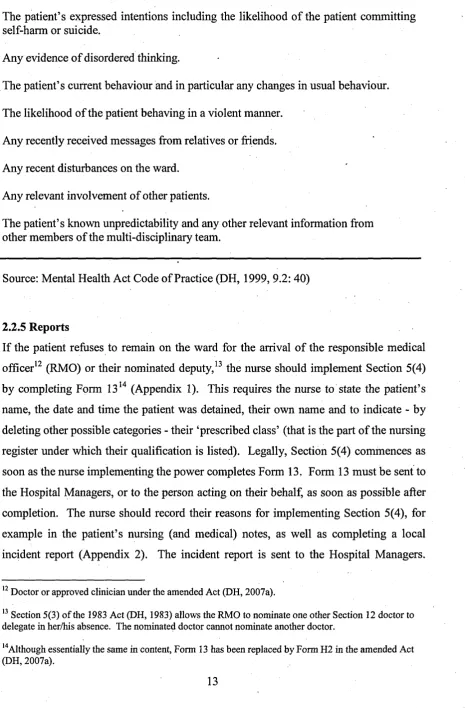
The decision to implement Section 5(4) should ideally be preceded by assessment taking into account the guidance offered in the Code of Practice (Table 1). However, it may not always be possible to conduct an assessment before the patient is restrained from leaving. The Code (DH, 1999, 9.3: 40) states that:
Table 1 Factors to be considered before applying Section 5(4)
The patient’s expressed intentions including the likelihood of the patient committing self-harm or suicide.
Any evidence of disordered thinking.
The patient’s current behaviour and in particular any changes in usual behaviour.
The likelihood of the patient behaving in a violent manner.
Any recently received messages from relatives or friends.
Any recent disturbances on the ward.
Any relevant involvement of other patients.
The patient’s known unpredictability and any other relevant information from other members of the multi-disciplinary team.
Source: Mental Health Act Code of Practice (DH, 1999, 9.2: 40)
2.2.5 Reports
If the patient refuses to remain on the ward for the arrival of the responsible medical officer12 (RMO) or their nominated deputy,13 the nurse should implement Section 5(4) by completing Form 1314 (Appendix 1). This requires the nurse to state the patient’s name, the date and time the patient was detained, their own name and to indicate - by deleting other possible categories - their ‘prescribed class’ (that is the part of the nursing register under which their qualification is listed). Legally, Section 5(4) commences as soon as the nurse implementing the power completes Form 13. Form 13 must be sent to the Hospital Managers, or to the person acting on their behalf, as soon as possible after completion. The nurse should record their reasons for implementing Section 5(4), for example in the patient’s nursing (and medical) notes, as well as completing a local incident report (Appendix 2). The incident report is sent to the Hospital Managers.
12 Doctor or approved clinician under the amended Act (DH, 2007a).
13 Section 5(3) of the 1983 Act (DH, 1983) allows the RMO to nominate one other Section 12 doctor to delegate in her/his absence. The nominated doctor cannot nominate another doctor.
Finally, it is recommended that good practice would mean that if the patient remains on Section 5(4) at the time of a shift change, relevant information is communicated to staff coming on duty (DH, 1999).
2.2.6 Informing the patient
Section 132 of the Act (DH, 1983) requires Hospital Managers to ensure that all patients who are detained receive information about their section. The Mental Health Act 1983 Leaflet 1 Section 5(4), Your rights under the Mental Health Act 1983 must be completed. Leaflet 1 should be given to the patient. In addition, the nurse should explain to the patient why they are being detained and their rights under the section. As far as possible the nurse should ensure the patient understands what has been said (Killen, 1992). This process and the degree to which the patient understood the information should be recorded in writing, for example in their nursing notes.
2.2.7 Restraint and medication
The nurse implementing Section 5(4) may use the minimum force necessary to prevent the patient from leaving hospital. Where force is necessary nurses are advised to follow the general principles of restraint set out-in paragraphs 19.6-19.8 of the Code of Practice (DH, 1999).
If medication has been prescribed before the implementation of Section 5(4) it may be offered to the patient. However, they retain the right to refuse the medication if they wish, and cannot be medicated against their will. If the patient lacks the capacity to consent and it is considered to be an ‘urgent necessity’, that is the nurse believes it should be administered to prevent serious harm to self or others, it may be given.
2.2.8 Medical responsibilities
possible and ‘not wait six hours before attending simply because this is the maximum time allowed’ (ibid: 41). It is expected that the doctor will arrive within four hours of the patient being detained. Section 5(4) lapses when the doctor arrives on the ward and this is recorded by the nurse completing Form 16 (Appendix 3). Any time spent on Section 5(4) counts as part of the 72 hour holding period if the doctor decides to detain the patient under Section 5(2) of the Act.
If the RMO or their nominated deputy has not arrived within four hours of Section 5(4) being implemented the nurse is advised to contact the duty consultant who should attend. If no doctor has arrived after six hours an ‘oral report (suitably recorded) should be made immediately to the responsible senior manager, and a written report should be submitted to that manager and the Hospital Managers on the next working day’ (DH, 1999, 9.7: 41). The patient becomes informal and should they be unwilling to stay in hospital then, ‘the responsible senior manager should nominate a suitable person to supervise the patient’s leaving’ (ibid).
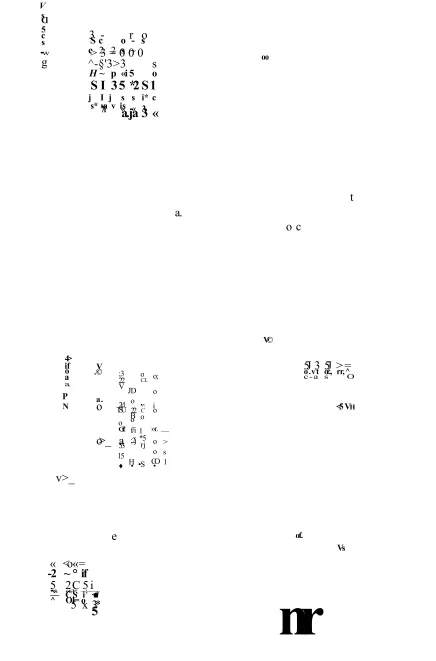
Fi gu re 1 Th e ‘o ff ic ia l’ pr oc es s of im pl em en tin g Se cti on 5( 4) V sCl 5 c s •w g
3 - S c o - sr o c > 3 = 0 0 02 2 s ~ ^-§'3>3 s
H ~ p «i 5 o S I 3 5 *2 S 1 j I j s s i* c
s* va v is7i « « 3 a.ja 3 «
a. 4> ifo a a. P N V .© a. o
o> _ a
;3 o o; 22 CL
V JD o 2d o •r. i
TSU 22C o B o o o
Cft f/i 1 »r. —
;2j *5 o > 53 rj
o s 15
1 ♦ H• •S CO•
v>_
e
« <o « =
-2 ~ ° if
5 2 C 5 i
•vs «-< r; —— C S i <■*; —
^ O 1= o5 'x 3* 5
o c
5J 3 5J > = o.vt or., rr, ^
c -a s O
<5 Vh
[image:27.617.70.506.40.701.2]2.3 The origins of Section 5(4) of the Mental Health Act 1983
This part of the chapter identifies and explores a number of factors that contributed to the introduction of Section 5(4) in the 1983 Act.
2.3.1 From certification to informal admission
One factor influencing the introduction of Section 5(4) is arguably the successive changes made to hospital admission procedures dating back to the 1890 Lunacy Act. The introduction of the 1890 Lunacy Act was, in part, a response to a number of well documented cases15 in which corrupt doctors colluded with relatives to unlawfully incarcerate their kin to mental asylums (Rose, 1986). The 1890 Act aimed to prevent this happening (Baruch and Treacher, 1978; Glover-Thomas, 2002). Jones (1993: 93) described the 1890 Act as the ‘triumph of legalism’, that is admission to hospital focused on the rules of law and these took priority over therapeutic considerations. Under the Lunacy Act the final decision for admitting a person to hospital (certification) was made by a justice of the peace in a court of law rather than by a doctor. Therefore, at this time there were no informal admissions to hospital. From the nurse’s (or attendants as they were at known that time) perspective the situation was clear; all patients were detained and they were legally empowered and protected in law to prevent a certified person from leaving the hospital should they attempt to do so. Furthermore, the likelihood of a patient being able to leave the hospital or ward was greatly reduced as most were locked.
The Mental Treatment Act 1930 saw the re-emergence of medicalism over legalism (Glover-Thomas, 2002); where the treatment of the mentally ill was seen as more important than guarding against wrongful detention in hospital. For the first time a distinction was made between involuntary and voluntary admission.16 A person could be admitted as a voluntary patient if they wished ‘of their own free will to undergo mental treatment’ (Jones, 1960: 120). The person was required to make an application in writing for voluntary admission to the person in charge of any approved establishment. A voluntary patient could discharge themselves at any time but had to
15 For example, see the case of Julie La Roche outlined in Jeffrey Masson’s (1988) book Against Therapy.
give 72 hours notice. This requirement was criticised by some in Parliament who believed that the voluntary patient ‘should be free to walk out at any moment’ (Jones, 1960: 116). While it was recognised that the three day'period might be considered detention ‘in a purely legal and technical sense’ (ibid) it was seen as having a number of advantages. Namely it: provided the patient with the opportunity to change their mind; allowed for the hospital to make arrangements for the patient’s discharge, or to make an assessment of whether the patient needed certifying. Therefore, .from a legal and practice perspective the introduction of ‘voluntary’ status did not present nurses with any problems when the patient expressed a desire to leave. As the patient was required to give 72 hours notice, nurses were legally able to enforce this should a person attempt to leave before this period expired. As with the 1890 Act, this was easily enforceable as most wards were still locked.
However, the introduction of the 1930 Act marked the beginning of a period of change that would ultimately lead to the introduction of Section 5(4). Jones (1960) argued that the distinction between involuntary and voluntary patients led to more and more ward doors being unlocked so that at least some patients could come and go more independently. Inevitably, this development resulted in nurses being placed in a potentially difficult position as their constant presence on the hospital wards meant that in all probability they were the professional group making the day-to-day decisions about whether it was safe for a voluntary patient to leave when they requested to do so. While mental health legislation protected nurses in law when enforcing the Act their position was less clear when they felt the need to prevent a voluntary patient leaving. Any uncertainties may also have been compounded by a history in many asylums of nurses being dismissed for losing the ward keys (Jones, 1960) or being held responsible for allowing a patient to escape (Clarke, 1993).
need of psychiatric care from being admitted to hospital. The patient no longer had to apply in writing for admission or more importantly, give 72 hours notice to leave. The new admission procedures also allowed non-volitional17 patients to be admitted informally. Therefore, in law this meant that the informal patient could leave hospital whenever they liked.
The management of both volitional and non-volitional informal patients, who could leave when they wanted, presented nurses with a new problem. Specifically, nurses had no statutory powers in law to prevent an informal patient from leaving hospital in circumstances where a nurse had made a clinical judgement that a patient should be prevented from doing so (Fennell, 1984; Houlihan, 2000; Houlihan, 2005). This problem was further compounded by the fact that by the time of the introduction of the 1959 Act a large number of hospital wards were now unlocked, therefore making it easier for patients to leave. Although there is no evidence to support the assertion, it is possible that nurses were uncertain about how to manage such situations and also concerned about the consequences for them of allowing an informal patient to leave who then harmed themselves or others. At the time the 1959 Act was introduced there had been public criticism about the consequences of allowing patients to leave the ward. For example, in October 1957, following the death of a patient the Southwark Coroner commented on ‘the doubtful legality of allowing voluntary patients to wander away from mental hospitals’ (Butler, 1985: 174).
2.3.2 Section 30(2) and its limitations
Under the 1959 Act nurses were dependent on the doctor responsible for the patient’s care being available to detain the patient under Section 30(2). Section 30(2) allowed the doctor responsible for the patient’s care to detain them for up to three days (72 hours) to provide time to make arrangements for compulsory admission for assessment and/or treatment. Section 30(2) required the doctor to be physically present to undertake an assessment of the patient and complete the paperwork to the effect that they required compulsory admission. The doctor was not allowed to ‘give authority over the telephone or leave a signed form in readiness for such an eventuality’ (DHSS, 1976: 16). In addition, the responsible doctor was not allowed to nominate a deputy in their
absence other than to cover temporary periods of absence such as sickness or holidays (Bean, 1986).
The review of the 1959 Act (DHSS, 1976; DHSS, 1978) identified several problems in the implementation of Section 30(2). The Royal College of Psychiatrists (RCP) reported that they believed that the section was widely ‘misunderstood and misinterpreted’ (DHSS, 1976: 16-17) and that doctors other than those designated in the Act were completing the section. In addition, because of the restrictive nature of the clause, there were practical difficulties in contacting a doctor at nights or at weekends. Furthermore, Gostin (1975) reported examples of doctors providing nurses with blank, signed and dated paperwork which allowed them to detain an informal patient for up to 72 hours in the absence of the responsible doctor. The RCP recommended that the implementation of the section should be made clearer and easier, for example widening the scope of the clause to enable any ‘approved’ doctor to act in the absence of the consultant.
2.3.3 Legal protection and nurses’ uncertainties
Mental health legislation has recognised for a long time that forcibly admitting a person to hospital, ensuring that they stay there and comply with treatment - sometimes against their will - carries ‘a risk that those responsible for operating the procedures may be faced with legal actions initiated by patients or ex-patients arising out of actions taken in the course of their duties’ (DHSS, 1976: 51). In recognition of this issue, legislation has provided protection for those implementing the statute. For example, Section 330 of the 1890 Lunacy Act allowed court proceedings against staff to be halted upon application to the High Court or one of its Judges if they were satisfied that the defendant had shown that they had acted in good faith and with reasonable care. Section 16 of the Mental Treatment Act 1930 strengthened the position of staff by requiring the plaintiff to show sufficient grounds that the action had been carried out in bad faith or without reasonable care. The Royal Commission’s review of the 1930 Act suggested that this protection should be retained in the 1959 Act and was provided under Section 141.18 This protection extended to ‘all those performing functions purporting to be carried out under the Act’ (DHSS, 1976: 51).19
However, what remained unclear was nurses’ legal position when preventing an informal patient from leaving whilst waiting for the doctor to arrive to complete Section 30(2), and their position in relation to the treatment and control of informal patients in general (DHSS, 1976: 2.17). It was argued that the protection offered under Section 141 did not extend to nurses when dealing with these situations. However, it was suggested at the time that nurses had a common law defence if acting to prevent a breach of the peace, or to prevent violence to save life or in self-defence. In addition, it was also noted that there existed a common law right to confine a person who was mentally ill, as illustrated in the case of Fletcher v Fletcher (1859) 1 El. & El. 420. Finally, Section 3(1) of the Criminal Law Act 1967 established the right to all citizens to use reasonable force to prevent a crime.
However, although it seemed that nurses could resort to common law to prevent a crime it was argued that there were occasions when nurses were concerned about a patient but no emergency had occurred since no harm to self or others had been committed, but the nurses believed it would. There were also times when the behaviour of an informal patient required nurses to physically restrain and seclude them to prevent them leaving the ward or hospital because of the danger of violence to others. It was suggested that in such circumstances nurses felt uncertain about the legal justification for their actions (DHSS, 1978:2.31).
The issue of nurses’ uncertainty was highlighted by the public inquiry published in November 1975 (South-West Thames Regional Health Authority, 1975) which investigated the circumstances leading to the death of Daniel Carey - a State Enrolled Nurse (S.E.N) - at Tooting Bee Hospital on 2nd August, 1974.20 The inquiry suggested
19 R v Bracknell Justices ex parte Griffiths (1975 3 WLR 140) established the protection given by section 141 to nurses while undertaking duties specified in the Act and also to the control o f detained patients. In this case, a nurse working at Broadmoor Hospital, having been convicted o f common assault, appealed to the High Court on the grounds that'his action, were necessary in controlling the patient and therefore should have been protected by Section 141. The High Court agreed, as did the House of Lords on appeal.
that the lack of clarity surrounding nurses’ legal position in such situations meant that they were increasingly reluctant to deal with difficult patients, particularly when some form of physical restraint may be required to prevent an informal patient from harming themselves or others or to prevent them from leaving hospital (DHSS, 1976). This was particularly relevant for Section 30(2) in that any delay in implementing the section as a result of the doctor’s absence, extended the period in which nurses had to manage the potentially increasingly difficult behaviour of the informal patient.
The review of the 1959 Act (DHSS, 1976) argued that nurses’ uncertainties could be resolved by amending the existing Section 30. In the first instance it was proposed that the section would be amended to allow the holding power to be applied by an experienced Registered Mental Nurse - it was suggested that this would be the senior
• 9 1 nurse on duty in the hospital - in conjunction with a doctor available at the time. The consultation document proposed that the need for two practitioners ‘would provide sufficient protection for the patient against unnecessary detention (DHSS, 1976, 2.18: 17).
It was suggested that granting legal powers to nurses recognised that they are, ‘likely to have a closer knowledge of the individual patient and his condition than other members of staff (DHSS, 1976, 2.19: 17) and would, ‘enable action to be taken more quickly [and] would help reduce the period of uncertainty for both staff and patients’ (DHSS, 1976, 9.10: 54). In addition, it was argued that the section would give nurses, ‘extra support in making the difficult decisions which confront them when the condition of an informal patient changes or deteriorates and when they feel positive action is required to prevent a potentially tragic incident either within or outside the hospital’ (DHSS, 1976, 2.19: 17). Finally, it was hoped that ‘nurses would welcome the extra responsibility’ (ibid).
However, it is argued that the original proposed amendment outlined in the consultation document (DHSS, 1976) seemed impractical and unlikely to resolve the difficulties faced by nurses should an informal patient wish to leave the ward immediately. For example, there would have been a need to make contact with both the senior nurse in
the hospital and a doctor who would have to then be present on the ward to implement the section before the patient attempted to leave. Therefore, two rather than one practitioner would be required to make the decision. Nor did the proposed amendment of Section 30(2) say what would happen should the nurse and doctor disagree about the patient’s detention. In addition, it could be argued that the proposed amendment implied - by the need to have a second practitioner present - that nurses were not perceived to be sufficiently competent to make an accurate clinical judgement as to whether the patient should be prevented from leaving or not.
In response to the proposals the RCP supported widening the number of doctors who could apply Section 30(2) but were opposed to extending legal powers to nurses. This was mainly on the grounds that they believed that it was, ‘inappropriate for nurses to be involved in medical decisions’ (DHSS, 1978, 2.30: 30). This seems ironic in view of the established medical practice at the time of leaving pre-signed Section 30(2) forms on the wards for nurses to complete should they wish to legally’ prevent an informal patient leaving the ward (Gostin, 1975; DHSS, 1978). In contrast, nursing opinion generally supported their involvement in the legal process.
The conflicting responses to the suggestions made in the consultation document (DHSS, 1976) were resolved by granting nurses a holding power22 of their own, ‘for a period of not more than six hours to enable the necessary report under Section 30 to be obtained from a doctor in charge of the patient’s treatment or his nominated deputy’ (DHSS, 1978, 2.32: 21). This proposal was accepted by Parliament and entered legislation as Section 5(4) of the Mental Health Act 1983.
2.3.4 Responses to the new legislation
While the RCP did not support the introduction of Section 5(4) the organisations23 representing nurses responded positively to the legislation. Both the Confederation of Health Service Employees (COHSE) and the National Union of Public Employees (NUPE) welcomed the new legislation unreservedly, believing that it would resolve the
22 Originally this was to be Section 30(4).
uncertainties faced by nurses in managing informal patients. The Psychiatric Nurses Association (PNA) reported that the holding power was, ‘generally welcomed by psychiatric nurses...but a small number of nurses [were] opposed to the clause.’24 The Royal College of Nursing (RCN) also offered their support for Section 5(4) but also reported that many nurses were, ‘fundamentally opposed to further restrictions on the liberty of patients as indicated in the Bill.’25 The RCN also suggested that a period of up to six hours was unacceptable and proposed that, ‘...the holding power should be no longer than one hour.’
Within the nursing literature there were also positive responses to the introduction of the new legislation. Summer (1983: 14) commented that it was, ‘another step in our quest for professional status’, as nurses had been granted powers that not all doctors had and therefore it recognised their ability to make a clinical judgement regarding the severity of the patient’s mental state. Meanwhile, Shanley (1983) argued that it secured nurses’ legal position and lessened the likelihood that they would face litigation. In addition, he also believed that it would lessen any potential abuse of patients’ liberty by making nurses’ detention of patients transparent and open to external scrutiny from the Mental Health Act Commission. Shanley (1983), like Summer (1983), believed that the legislation enhanced the professional standing of the profession. Shanley (1983: 10)
r
commented that:
‘A beneficial aspect for nurses of this legislation is that nurses are recognised as members of a responsible discipline who are capable of making important legal decisions... As a result nurses may be seen as having credibility as professionals.’
However, as noted above, the introduction of Section 5(4) was not accepted without reservations. For example, some were concerned that Section 5(4) would not reduce the legal restraints on patients as envisaged by the new Act but in fact introduced ‘new restrictions on patients’ liberties’ (Rogers and Pilgrim, 1996: 88). In addition, Shanley (1983: 10) believed that the possibility existed that some nurses may implement the
24 Hansard HC Volume XI Column 40 (10 May 1982)
25 Ibid Column 85 (27 April 1982)
power to, ‘play safe and avoid the possibility of being accused of negligence’ or that the legislation may be exploited by psychiatrists.
Others questioned the Government’s true motivation for introducing Section 5(4). Nolan (1993) believes that the introduction of the holding power was resource driven. He argues that the introduction of the 1983 Act should be viewed against the backdrop of cutbacks taking place in the National Health Service (NHS) at that time that resulted in staff shortages and lack of resources. Nolan (1993: 142) suggests that the granting of legal powers was, at least in part, an attempt to resolve a resource issue. He states that:
‘This apparent regard by Government for the authority and status of mental nurses was also a cost-cutting exercise in that the Act devolved power to a professional group within the mental health services who were less highly paid and therefore more cost-effective than doctors.’
Support for Nolan’s position came from the RCN who believed - as noted above - that
• 97 ,
the suggested period of up to six hours was ‘totally unacceptable’. The RCN representative argued that any debate for the section being longer than one hour was an attempt to use it to address resourcing issues. He commented that:
‘Whilst the implication for medical staff is recognised it cannot be expected that the nursing profession should cover for either manpower shortages or administrative disorganisation in the psychiatric medical services.’28
In addition, the Member of Parliament Christopher Price29 suggested that: 4
‘...we should hot amend legislation to provide an alibi for the deficiencies of the National Health Service. There is a suspicion that giving nurses the power to detain a patient for six hours will be an excuse for the DHSS to take no action to ensure that there are enough psychiatrists in hospitals.’
27 Ibid Column 85-86 (27 April 1982)
28 Ibid Column 86 (27 April 1982)
Bean (1986) conceded that the introduction of Section 5(4) ended the legal uncertainties experienced by nurses under the 1959 Act; however he believed that this could have been achieved without resorting to statute. He suggested that the widening of the role of the doctor under Section 30(2) was sufficient to address the problems faced by nurses. Bean (1986: 50) saw the solution to nurses’ difficulties as a simple one:
‘One would have thought the simplest thing to do would be [for nurses] to inform the registered medical practitioner, or his nominated deputy, and to allow the normal procedure to be followed. After all, these situations rarely develop without some warning. If they do, common law powers exist to restrain patients anyway.’
As an academic rather than a clinician, Bean failed to recognise the situation faced by nurses in managing difficult clinical situations and also the limitations of common law. Bean’s suggestion that, ‘these situations rarely develop without some warning’ .is not true for all situations. For example, based on my own clinical experience, a patient may attempt to leave there-and-then without warning and before the nurse has had the opportunity to contact the doctor. In other cases, even when the doctor has been contacted, the patient may attempt to leave before they arrive to make their assessment.
Bean (1986: 50) also proposed that the granting of legal powers to nurses was in fact the result of a political agenda fuelled by trade union activity. He argues that at the time of the review of the 1959 Act COSHE was, ‘demanding more and more status and influence for its members.’ He also suggests that nursing staff at this time were making demands, ‘for greater influence in the hospital in general and about which patients should or should not be admitted and the type of.treatment to be given...’ (ibid: 51). Bean (1986)30 cites as an example of this influence COSHE’s successful challenge to the European Commission of Human Rights which prevented the transfer of a patient from Broadmoor Hospital to an ordinary hospital in Oakwood, Kent because they did not have the resources for dealing with such patients.31 He suggests that the threat of union action that surrounded this case had the potential to, ‘seriously disrupt and place patients in a vulnerable position’ (Bean, 1986: 51). Bean (1986) believes that the
30 For other examples o f industrial action by psychiatric nurses at this time see Sedgwick (1982).
decision to grant legal powers to nurses was not based on the difficulties they faced in relation to informal patients but an attempt to placate trade union demands. He comments that the holding power was, ‘a sop to COSHE...to help secure cooperation to run the 1983 Act’ (Bean, 2001: 54).32 Bean (1986: 51) believed that the power ‘can do little to increase the respect for psychiatric nurses and may do harm to them’.
It was also suggested that granting nurses the holding power would negatively impact on their relationships with patients (Hoggett, 1984; Bean, 1986; Unsworth, 1987; Hoggett, 1996). For example, Unsworth (1987: 332) noted that:
‘Section 5(4) for the first time formalizes the role of the nurse as gaoler, accentuating the custodial aspect of the nurse-patient relationship...’
Hoggett (1984: 15) believed that the low usage of the section reflected the fact that nurses were:
‘...most reluctant to jeopardise their relationship with informal patients by holding this sort of threat over them’.
Hoggett (1996: 12) later conceded that there had been ‘considerable use of it in some hospitals’ but maintained that nurses were reluctant to use the section. However, she offered no rationale or evidence to support this claim other than there were less applications of Section 5 of the Act compared to other sections. However, during this debate there does not appear to have been any attempts to ask patients what they thought the potential impact of Section 5(4) on their relationships with nurses might be.
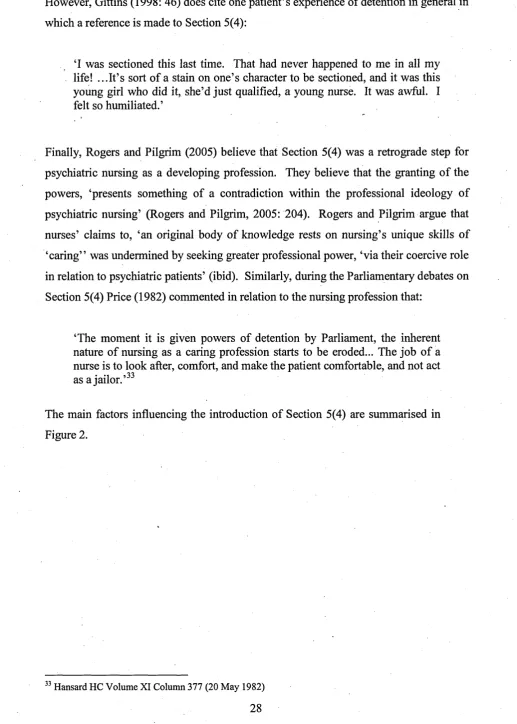
However, Gittins (1998: 46) does cite one patient’s experience of detention in general in which a reference is made to Section 5(4):
‘I was sectioned this last time. That had never happened to me in all my life! ...It’s sort of a stain on one’s character to be sectioned, and it was this young girl who did it, she’d just qualified, a young nurse. It was awful. I felt so humiliated.’
Finally, Rogers and Pilgrim (2005) believe that Section 5(4) was a retrograde step for psychiatric nursing as a developing profession. They believe that the granting of the powers, ‘presents something of a contradiction within the professional ideology of psychiatric nursing’ (Rogers and Pilgrim, 2005: 204). Rogers and Pilgrim argue that nurses’ claims to, ‘an original body of knowledge rests on nursing’s unique skills of
‘caring” was undermined by seeking greater professional power, ‘via their coercive role in relation to psychiatric patients’ (ibid). Similarly, during the Parliamentary debates on Section 5(4) Price (1982) commented in relation to the nursing profession that:
‘The moment it is given powers of detention by Parliament, the inherent nature of nursing as a caring profession starts to be eroded... The job of a nurse is to look after, comfort, and make the patient comfortable, and not act as a jailor.’
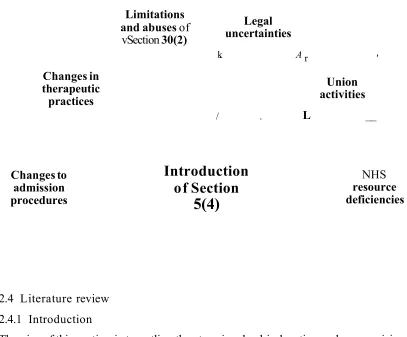
[image:39.617.45.563.34.759.2]The main factors influencing the introduction of Section 5(4) are summarised in Figure 2.
Figure 2 Summary of factors influencing the introduction of Section 5(4)
Changes in therapeutic practices
Limitations and abuses of
vSection 30(2)
Legal uncertainties
k. A
/ .
r '
Union activities
L __
Introduction
of Section
5(4)
Changes to admission procedures
NHS
resource deficiencies
2.4 Literature review 2.4.1 Introduction
The aim of this section is to outline the steps involved in locating and summarising the empirical literature relating to the implementation of Section 5(4). The main findings of the literature review are then presented.
1996-2011.34 This awareness of the literature provided me with valuable insights for substantiating my primary research question.
2.4.2 Search techniques
Following the guidance offered by a number of authors (for example; Alexis and Vydelinggum, 2005; Holopainen et al., 2008, Creswell, 2009) a number of systematic steps were taken to identify and summarise the empirical literature relating to the implementation of Section 5(4).
2.4.2,1 Step 1
The first step in developing a comprehensive literature search strategy was to identify a number of relevant search terms. Key and associated key words were generated from my awareness of existing literature and by reading literature on topics relevant to the Act. For example, the systematic review of research relating to the Mental Health Act (1983) undertaken by Churchill et al. (1999) using the keywords ‘Mental Health Act’, ‘the Act’, ‘MHA’, and ‘mental health legislation’. As many words as possible were written down that might help to generate material on the topic and then these were refined until a final smaller number remained that were used to search the literature. In addition, subject headings contained in electronic databases were also used to improve the sensitivity of the search.
2.4 2.2 Step 2
In Step 2 a literature search of the electronic databases Applied Social Sciences Index and Abstracts (ASSIA), Cumulative Index to Nursing and Allied Health Literature (CINAHL), British Nursing Index (BNI), Medline, PsycINFO, and Lawtel was undertaken using the search terms ‘Section 5(4)’, ‘nurse’s holding powers’, ‘holding powers’, ‘Mental Health Act 1983’, ‘MHA’, ‘compulsory detention’, ‘formal detention’, . ‘emergency psychiatric interventions’, ‘containment interventions’, and ‘involuntary commitment’ for the period 1st January 1983-31st December 2006 inclusive
of dates.35 Advanced search options were utilised in all databases which enabled the use of a thesaurus and/or Medical Subject Headings (MeSH). However, most searches were keyword searches as subject headings were not available for most search terms. The subject heading ‘involuntary commitment’ was available in CINAHL/BNI, Medline, and PsychlNFO.
The following inclusion criteria were used for this literature review. First, only articles published in peer reviewed journals between 1st January 1983 and 31st December 2006 were included in the review.36 It was reasoned that this period of time was likely to identify any research leading up to the introduction of the section along with more up- to-date and relevant empirical information up to the point when the data generation period in this study was concluded. Second, only articles written in English were included. This decision was unlikely to exclude any relevant articles as Section 5(4) relates specifically to mental health legislation in the United Kingdom, although nurses in New Zealand have a similar holding power. Articles that did not focus on primary research were excluded as were duplicate publications.
2.4.2.3 Step 3
The initial search of the databases generated a large number of abstracts (n = 25,923) (Appendix 4). In relation to the search terms ‘Section 5(4)’, ‘Mental Health Act 1983’, ‘MHA’, and ‘involuntary commitment’ an information management strategy was introduced to reduce the number of abstracts. This strategy was to utilise the Boolean operator ‘NOT’. ‘Section 5(4)’ was combined with NOT midwifery NOT caesarean, and the search terms ‘Mental Health Act 1983’, ‘MHA’, and ‘involuntary commitment’ were combined with NOT treatment. This reduced the number of abstracts to 4405.
35 Assia (1987-Present) provides a comprehensive source o f social science and health information for the practical and academic professional. It contains records from 650 journals in 16 different countries, including the UK and US. BNI (2004-Present) is an extensive and up-to-date nursing and midwifery database. CINAHL (1937-Present) is a database for nursing and allied health, provides full text for 760 journals. Lawtel (1980-Present) summarises articles from 50 legal journals. Medline (1950-Present) provides information on medicine, nursing, dentistry, veterinary medicine, the health care system and pre-clinical sciences. PsychlNFO (1806-Present) covers articles including 2,450 professional journals from a range of disciplines related to psychology such as psychiatry, education, business, medicine, nursing, law, linguistics, and social work.
The titles and abstracts for these articles were then read and a decision made regarding their relevance to the literature review, leading to the exclusion of a large number of publications. A complete copy of each of the remaining articles was obtained either electronically or as a hard copy from holdings in the University of Sheffield Library and Sheffield Hallam University Library. Where this was not possible a copy was obtained from The British Library.
2.4.2.4 Step 4
Articles were then read in full resulting in a number being excluded as they did not meet the review’s inclusion criteria. This step also