DOI: 10.4236/ym.2019.33016 Jun. 28, 2019 157 Yangtze Medicine
Application
Guoli Wu1, Haizheng Gao1, Yuan Wang2, Yikai Jin2, Yingwei Li1*, Chengbiao Lu2,3*
1College of Information Science and Engineering, Yanshan University, Qinhuangdao, China
2Basic Medical College, Xinxiang Medical College, Xinxiang, China 3College of Medicine, Yangtze University, Wuhan, China
Abstract
The terahertz wave is an electromagnetic wave with a spectrum ranged be-tween the microwave and the infrared. Some studies found that terahertz had the advantages of low energy, non-invasive, high resolution and penetration. Based on these advantages, THz is relatively safe for biomolecules and it has been applied in terahertz imaging. So we summarized these reports in this mini-review.
Keywords
Terahertz, THz Biomedical Interaction, THz Imaging
1. Introduction
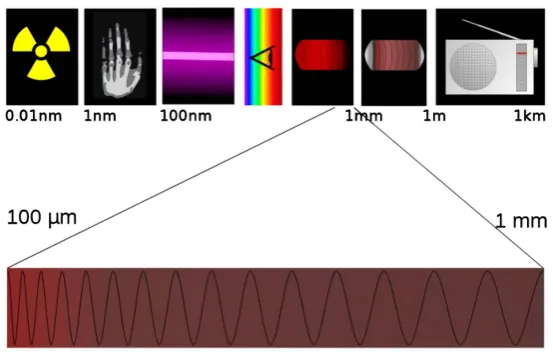
The terahertz wave in general term is a small electromagnetic wave between the
microwave and the infrared in the electromagnetic spectrum [1], as shown in
Figure 1. Terahertz frequency band is the only area with insufficient research in
the whole electromagnetic frequency range [2]. With the development of
elec-tronic and optical technologies, terahertz source and detection technology have made creative breakthroughs, resulting in the rapid development of THz tech-nology. At present, THz technology has been used in many scientific researches and application fields such as military, security inspection, biomedical health [3].
As the photon energy of THz waves is only one in a million of that of X-rays
[4][5], the THz does not cause chemical or physical damage to biological
sys-tems. One of the advantages for THz is safe in application. THz waves have very
high spectral resolution for macromolecules [6] and can be used for detection of
biomacromolecule conformation, which is difficult to detect by conventional How to cite this paper: Wu, G.L., Gao,
H.Z., Wang, Y., Jin, Y.K., Li, Y.W. and Lu, C.B. (2019) Terahertz Technology and Its Biomedical Application. Yangtze Medicine, 3, 157-162.
https://doi.org/10.4236/ym.2019.33016
Received: January 4, 2019 Accepted: June 25, 2019 Published: June 28, 2019
Copyright © 2019 by author(s) and Scientific Research Publishing Inc. This work is licensed under the Creative Commons Attribution International License (CC BY 4.0).
DOI:10.4236/ym.2019.33016 158 Yangtze Medicine
Figure 1. Terahertz band.
detection methods. THz wave has strong penetration [7], due to the interference
and diffraction ability, it interacts very strongly with polar molecules, thus it is better in biological tissue imaging than other electromagnetic waves such as
X-rays. The THz wave has very good coherence [8]. The parameters of the object
radiated by THz such as dielectric constant and refractive index, can be obtained more accurately [9], as shown in Figure 2.
2. The Biological Effect of Terahertz
In terms of the THz influence on biomolecules, the vibrational levels of many biomolecules such as sugars, proteins, DNA, RNA are in the range of THz wave band. When THz waves are radiated onto biomolecules or organisms, the high-intensity absorption of THz by biomolecules alter the biomolecule’s con-formation and function, which may have a series of unpredictable effects on or-ganisms. Therefore, we summarized several studies regarding the effects of THz wave on biological molecules.
Recent study by Turton et al. showed that THz vibrational motion affects
effi-ciency of protein-ligand binding and alters function of protein molecules [10].
Changes in protein conformation can also be caused by low-frequency
intramo-lecular [11]. Brandt et al. used THz wave to detect the interaction in proteins to
predict the changes of protein function [12]. Olshevskaya et al. found that long
term exposed to THz (40 - 50 hours) caused the morphological abnormalities of
the cell membranes and intracellular structures [13]. By using a 0.1 THz
conti-nuous laser to irradiate the separated lymphocytes and Korenstein et al. found that all stains of cells showed an unsynchronized replication after 24 h of radia-tion. The authors believe that these phenomena are caused by THz induction of
instability DNA molecules [14]. Kulipanovt et al. found that high-power THz
radiation (2.3 THz) can destroy DNA double-stranded hybridization and disrupt hydrogen bonds between target DNA double-strands in the absence of free water
[15]. In addition, Alexandrov et al. studied the response of mouse stem cells to
DOI: 10.4236/ym.2019.33016 159 Yangtze Medicine that non-ionizing electric field of THz waves influences the function of organ-isms by a non-thermal mechanism, which is quite different from the mechanism by which high-energy rays such as UV and X-ray. This kind of nonlinear
reso-nant mechanism often appears in THz stimulation [21] [22]. Conformational
changes resulting from this mechanism can subsequently interfere with protein transfer and binding processes, thus profoundly impacts on gene expression in cells. Research has found that terahertz radiation destroys the barrier properties of the membrane and this process is reversible, so terahertz can be an inducer
for the transmission of bioactive compounds [23]. BOROVKOVA has found
that terahertz radiation increases the number of apoptotic cells, they believe that the diagnostic application of THz radiation may be limited by radiation power density and irradiation time [24].
Taken together, THz affects biomolecules only under a condition of high power (>1 THz) and long time (>24 h), so THz is relatively safe for biomolecules.
3. Terahertz Imaging
THz imaging is one of the most promising methods in biomedical science. THz time-domain spectroscopy has been applied to biological macromolecules detec-tion, cancer research, determination of burn severity. THz waves are sensitive to polar molecules such as water molecules in biomolecules, thus THz imaging of biological tissues has more advantageous than other ways. THz imaging is of high spatial resolution, which reaches several tens of micrometers. Its penetra-tion ability is also very strong, which can be used for tomography of biological systems. Started by Hu [25], Fitzgerald et al. [26] tested the THz refractive index and absorptivity of human blood, muscle, skin, fat, vein and even nerve tissue. The results showed that THz had a good identification for different tissues, and confirmed the feasibility of its clinical application. The study of THz imaging on
22 isolated breast cancer patients [27] showed that a high correlation in breast
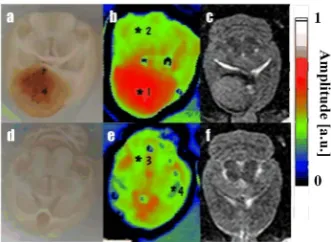
cancer detection between pathological examination microscopic image and THz image. The study of THz imaging on brain tissue demonstrated that THz wave spectrum can distinguish between gray matter (neuron body) and white matter (nerve axon) and that there are reflection spectrum differences between gray matter and white matter. Seung Jae Oh obtained the terahertz images of fresh brains with and without tumor by using reflection type terahertz pulses
imaging system [28], as shown in Figure 3. From terahertz images of different
DOI:10.4236/ym.2019.33016 160 Yangtze Medicine
Figure 2. Terahertz research direction.
Figure 3. Terahertz pulses imaging system.
and muscle tissue are accurately distinguished and the results show that tera-hertz imaging technology provides a valuable measuring platform for biological
sensing [29]. Zhang M found that terahertz can be combined with
nanotechnol-ogy to help improve terahertz biometric imaging capabilities and provide
ad-vanced imaging results [30]. The research of terahertz imaging have shown that
the amplitude of reflected signal in severely scalded tissues was lower than that in normal tissues, so the terahertz may be used to detect scald wounds.
4. Conclusion
Based on the low energy, non-invasive, high resolution and penetration, it is fo-reseeable that THz will be widely applied in biomolecules detection and clinical imaging.
Conflicts of Interest
The authors declare no conflicts of interest regarding the publication of this paper.
References
[1] Walther, M., Fischer, B.M., Ortner, A., et al. (2010) Chemical Sensing and Imaging with Pulsed THz Radiation. Analytical and Bioanalytical Chemistry, 397, 1009-1017. https://doi.org/10.1007/s00216-010-3672-1
[image:4.595.291.457.223.344.2]DOI: 10.4236/ym.2019.33016 161 Yangtze Medicine
https://doi.org/10.1063/1.2348871
[6] Yamamoto, K., Tominaga, K., Sasakaw, H., et al. (2005) THz Time-Domain Spec-troscopy of Amino Acids and Polypeptides. Biophysical Journal,89, 22-24. https://doi.org/10.1529/biophysj.105.067447
[7] Balu, R., Zhang, H., Zukowski, E., Chen, J.-Y., Markelz, A.G. and Gregurick, S.K. (2008) THz Spectroscopy of Bacteriorhodopsin and Rhodopsin: Similarities and Differences. Biophysical Journal, 94, 3217-3226.
https://doi.org/10.1529/biophysj.107.105163
[8] Markelz, A.G., Roitberg, A. and Heilweil, E.J. (2000) Pulsed THz Spectroscopy of DNA, Bovine Serum Albumin and Collagen between 0.1 and 2.0 THz. Chemical
Physics Letters, 320, 42-48.https://doi.org/10.1016/S0009-2614(00)00227-X
[9] Arora, A., Luong, T.Q., Kruger, M., et al. (2012) THz-Time Domain Spectroscopy for the Detection of PCR Amplified DNA in Aqueous Solution. Analyst, 137, 575-579.https://doi.org/10.1039/C2AN15820E
[10] Turton, D.A., Senn, H.M., Harwood, T., Lapthorn, A.J., Ellis, E.M. & Wynne, K. (2014) THz Underdamped Vibrational Motion Governs Protein-Ligand Binding in Solution. Nature Communications, 5, 3999.https://doi.org/10.1038/ncomms4999 [11] Cherkasova, O.P., Fedorov, V.I., Nemova, E.F., et al. (2009) Influence of THz Laser
Radiation on the Spectral Characteristics and Functional Properties of Albumin.
Optics and Spectroscopy, 107, 534-537.
https://doi.org/10.1134/S0030400X09100063
[12] Brandt, N.N., Chikisher, A.Y., Mankova, A.A. and Pogodin, A.S. (2012) THz and IR Spectroscopy of Molecular Systems That Simulate Function-Related Structural Changes of Proteins. Spectroscopy—An International Journal, 27, 429-432. https://doi.org/10.1155/2012/745136
[13] Olshevskaya, J.S., Ratushnyak, A.S., Petrov, A.K., Kozlov, A.S. and Zapara, T.A. (2008) Effect of THz Electromagnetic Waves on Neurons Systems. International Conference on Computational Technologies in Electrical and Electronics
Engi-neering, Novosibirsk, 21-25 July 2008, 210-211.
https://doi.org/10.1109/SIBIRCON.2008.4602607
[14] Korenstein-Ilan, A., Barbul, A., Hasin, P., Eliran, A., Gover, A. and Korenstein, R. (2008) THz Radiation Increases Genomic Instability in Human Lymphocytes.
Radi-ation Research, 170, 224-234.https://doi.org/10.1667/RR0944.1
[15] Kulipanov, G.N., Gavrilov, N.G., Knyazev, B.A., et al. (2008) Research Highlights from the Novosibirsk 400W Average Power THz FEL. Terahertz Science &
Tech-nology, 1, 107-125.
[16] Alexandrov, B.S., Rasmussen, K.O., Bishop, A., et al. (2011) Non-Thermal Effects of THz Radiation on Gene Expression in Mouse Stem Cells. Biomedical Optics
Ex-press, 2, 2679-2689.https://doi.org/10.1364/BOE.2.002679
DOI:10.4236/ym.2019.33016 162 Yangtze Medicine USA, 104, 20749-20752.https://doi.org/10.1073/pnas.0709207104
[18] Edwards, W.F., Young, D.D. and Deiters, A. (2009) The Effect of Microwave Irradi-ation on DNA HybridizIrradi-ation. Organic & Biomolecular Chemistry, 7, 2506-2508. https://doi.org/10.1039/b903609a
[19] Fischer, B.M., Walther, M. and Uhd Jepsen, P. (2002) Far-Infrared Vibrational Modes of DNA Components Studied by THz Time-Domain Spectroscopy. Physics
in Medicine & Biology, 47, 3807-3814.https://doi.org/10.1088/0031-9155/47/21/319
[20] Luong, T.Q., Verina, P.K., Mitra, R., et al. (2011) Do Hydration Dynamics Follow the Structural Perturbation during Thermal Denaturation of a Protein: A THz Ab-sorption Study. Biophysical Journal, 101, 925-933.
https://doi.org/10.1016/j.bpj.2011.05.011
[21] Alexandrov, B.S., Gelev, V., Bishop, A.R., et al. (2010) DNA Breathing Dynamics in the Presence of a THz Field. Physics Letters A, 374, 1214-1217.
https://doi.org/10.1016/j.physleta.2009.12.077
[22] Maniadis, P., Alexandrov, B.S., Bishop, A.R., et al. (2011) Feigenbaum Cascade of Discrete Breathers in a Model of DNA. Physical Review E, Statistical, Nonlinear,
and Soft Matter Physics, 83, Article ID: 011904.
https://doi.org/10.1103/PhysRevE.83.011904
[23] Zapara, T.A., Treskova, S.P. and Ratushniak, A.S. (2015) Effect of Antioxidants on the Interaction of Terahertz (Submillimeter) Laser Radiation and Neuronal Mem-brane. Journal of Surface Investigation. X-Ray, Synchrotron and Neutron
Tech-niques, 9, 869-871.https://doi.org/10.1134/S1027451015050195
[24] Borovkova, M., Serebriakova, M., Fedorov, V., et al. (2017) Investigation of Tera-hertz Radiation Influence on Rat Glial Cells. Biomedical Optics Express, 8, 273-280.
https://doi.org/10.1364/BOE.8.000273
[25] Hu, B.B. and Nuss, M.C. (1995) Imaging with THz Waves. Optics Letters, 20, 1716-1718.https://doi.org/10.1364/OL.20.001716
[26] Fitzgerald, A.J., Berry, E., Zinov’ev, N.N., Homer-Vanniasinkam, S., Miles, R.E., et al. (2003) Catalogue of Human Tissue Optical Properties at THz Frequencies.
Jour-nal of Biological Physics, 29, 123-128.https://doi.org/10.1023/A:1024428406218
[27] Anthony, J., Wallace, V.P., Jimenez-Linan, M., Bobrow, L., Pye, R.J., et al. (2006) THz Pulsed Imaging of Human Breast Tumors. Radiology, 239, 533-540.
https://doi.org/10.1148/radiol.2392041315
[28] Oh, S.J., Huh, Y.M., Kim, S.H., et al. (2011) THz Pulse Imaging of Fresh Brain Tu-mor. 36th International Conference on Infrared, Millimeter and THz Waves, Hou-ston, 2-7 October 2011, 1-2.https://doi.org/10.1109/irmmw-THz.2011.6105230 [29] Guo, L., Wang, X., Han, P., et al. (2017) Observation of Dehydration Dynamics in
Biological Tissues with Terahertz Digital Holography. Applied Optics, 56, F173. https://doi.org/10.1364/AO.56.00F173
[30] Zhang, M. and Yeow, J.T.W. (2016) Nanotechnology-Based Terahertz Biological Sensing: A Review of Its Current State and Things to Come. IEEE Nanotechnology