Green
Infrastructure
Research into Practice
Report commissioned by Innovation Programmes and Partnerships, Natural Environment Research Council.
CONTENTS
EXECUTIVE SUMMARY ... 1
DEFINITIONS OF GREEN INFRASTRUCTURE ... 4
THE UK PLANNING CONTEXT ... 4
OUR APPROACH TO THE REVIEW ... 6
INCORPORATING THE VIEWS OF THE GI COMMUNITY ... 7
Programme ... 9
EVIDENCE REVIEW ... 10
Approach and scope... 10
Biodiversity ... 12
Supporting services ... 12
Provisioning services ... 13
Regulating services ... 13
Cultural services ... 16
Economic value ... 19
Gaps in the evidence presented in grey literature ... 20
Patterns in access and use of grey literature and academic evidence ... 23
Summary ... 26
GREEN INFRASTRUCTURE EXPERTISE ... 27
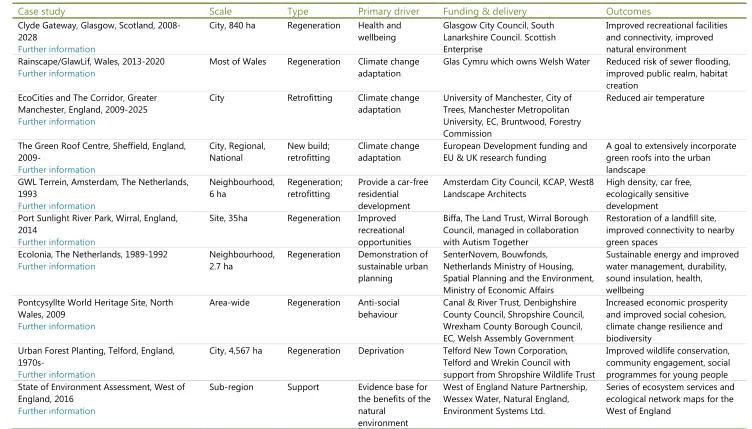
Case studies ... 27
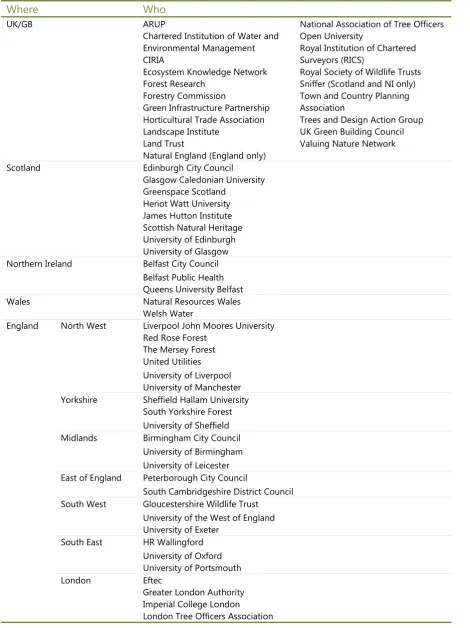
Analysis of clusters of expertise ... 53
The importance of proximity in collaboration and sharing good practice ... 55
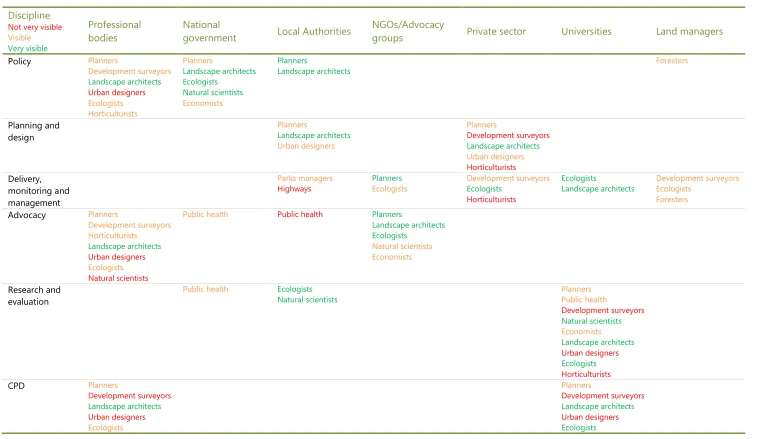
Analysis of disciplines and sectors ... 55
The representation of disciplines and sectors in green infrastructure ... 58
ORGANISATIONS AND NETWORKS THAT SHARE EVIDENCE AND GOOD PRACTICE ... 62
Green Infrastructure Partnership ... 62
Construction Industry Research and Information Association ... 63
Valuing Nature Network ... 63
Living with Environmental Change Network... 63
Adaptation and Resilience in the Context of Change ... 64
Biodiversity, Ecosystem Service and Sustainability ... 64
Ecosystems Knowledge Network ... 65
The role of organisations and networks responsible for sharing evidence and good practice ... 65
Summary ... 68
TRANSLATING GREEN INFRASTRUCTURE EVIDENCE INTO PRACTICE ... 68
Is the green infrastructure evidence available useful to practitioners? ... 69
What components and qualities of evidence make it useful? ... 70
Suggestions for making research and evidence be more useful ... 70
Green infrastructure research priorities ... 71
Summary ... 72
LITERATURE CITED ... 73
Biodiversity ... 73
Supporting services ... 74
Provisioning services ... 74
Regulating services ... 74
Cultural services ... 80
Economic benefits ... 89
REFERENCES ... 91
APPENDIX A: ADDITIONAL GREY LITERATURE ... 94
EXECUTIVE SUMMARY
The Centre for Sustainable Planning and Environments at the University of the West of England, Bristol have been commissioned by the Natural Environment Research Council (NERC) to conduct a review of how the evidence base for Green Infrastructure (GI) is being translated into practice. This review will inform the future investment in GI from Innovation Programme and Partnerships within NERC. First, a review of grey literature identified the evidence related to the benefits of GI to biodiversity, ecosystem services and where these have been monetised. This is summarised as:
• There is some evidence presented on the role of GI in enhancing biodiversity. This primarily focuses on green roofs, greenspaces and brownfields. Street trees are recognised as being important where there is an absence of greenspaces, and corridors, private gardens and greenery in general are highlighted for their role in habitat connectivity. Sustainable Drainage Systems (SuDS) are highlighted for their role in improving water quality and therefore
downstream biodiversity.
• Supporting ecosystem services are those that underpin the other services. There is limited evidence in the grey literature on the role of GI in providing supporting services.
• Provisioning ecosystem services are those that provide ‘products’ to people. There is limited evidence in the grey literature on the role of GI in providing these services.
• Regulating ecosystem services are those that improve or modify aspects of our environment, enhancing our safety and quality of life in urban environments. They are particularly important to our ability to adapt to climate change.
• There is substantial evidence cited in most pieces of grey literature on the role of GI in improving air quality, regulating air and surface temperatures and for stormwater management through reducing surface water run-off, increasing rainwater retention and reducing pollution to surface water. There are three primary types of GI that appear to contribute to these regulating services: trees, green roofs and greenspaces. Although the use of the SuDS approach is clearly recognised for its role in flood risk management it is perhaps more limited than expected; this may be because the evidence has focussed on specific GI features and their ability to manage water.
• There is limited evidence in the grey literature on the role of GI in delivering other regulating services including noise abatement, carbon storage, soil regulation and pollination.
• Cultural ecosystem services are those that provide people with opportunities for recreation, rest, relaxation and spiritual enhancement.
• There is substantial evidence in the grey literature on the recreational benefits of GI, with beneficial outcomes often reported in terms of mental and physical health. These benefits have been related to greenspaces, forests, community gardens, and greater levels of ‘greenness’.
greenspaces, community forests and soft landscaping in city centres have the potential to attract visitors. The impact of GI on anti-social behaviour or the perception of crime has also received some attention in the grey literature although it is recognised that this relationship is complex.
• There is limited evidence reported on the educational benefits of participating in outdoor learning in greenspace.
• There is some evidence that the ecosystem services provided by GI result in economic benefits to society and individuals. This has primarily focussed on the benefits to health and well-being (and resulting cost savings to health services) from air quality improvement and physical
activity, stormwater management, carbon storage and tourism. Some grey literature also cites the economic benefits to the wider economy from greater commercial and residential property values, economic activity and job creation.
The review identified a large number of disciplines and sectors that are involved in publishing evidence and guidance on GI for a range of audiences. Ecologists and landscape architects appear to be significant advocates, the former primarily concerned with the benefits of contact with both urban and rural nature for human health and well-being as opposed to the benefits of GI to nature. Landscape architects seem to be more explicitly focussed on GI, the urban environment and providing guidance for high quality GI. In addition, specific types of GI also have attracted particular groups and professions, the most notable being for urban trees and greenspaces.
However, there appear to be significant gaps in some sectors in setting the standard for GI. With the exception of the TCPA, which has been a longstanding champion of GI, planners and development surveyors appear to be under-represented in the grey literature. This matters because these professions have a pivotal role in the planning, delivery and long term success of GI.
Seven organisations and networks with a role in sharing evidence and good practice related to GI were also explored, termed here ‘amplifiers’. This included the networks: Valuing Nature Network (VNN), Living with Environmental Change (LWEC), Adaptation and Resilience in the Context of Change (ARCC), Biodiversity, Ecosystem Services and Sustainability (BESS) and Ecosystems Knowledge Network (EKN). These appear to be dominated by ecologist and environmental science communities which to be expected as several have been funded by NERC. Construction Industry Research and Information Association (CIRIA) has a long established record of reaching construction audiences, and through its work on SuDS may be able to gain traction with development surveyors. Only the Green Infrastructure Partnership, however, is solely focussed on GI and
therefore provides a unique opportunity to share knowledge and good practice in GI.
A series of case studies are also presented covering a range of GI projects, geographical areas and intended outcomes. They, and the evidence base, demonstrate that there are numerous excellent examples of GI research and practice happening across the UK.
research and knowledge exchange. Perhaps more importantly a number of suggestions were made as to how the current difficulties in accessing and using evidence related to GI could be addressed. There is an overload of evidence from both academia and those responsible for grey literature and some, particularly practitioners are struggling to navigate their way through this. The most common reasons for this seemed to be due to lack of resources (time, funding, skills or knowledge) on their part and/or the way research findings are presented. A need was expressed for a centralised web-based system for the GI community with evidence, links to tools, key organisations and case studies. The evidence is not reaching out to all the sectors and disciplines that it needs to in order to raise GI on the agenda of key decision makers and delivery agents. This includes policy makers, local authorities, financial professionals, development surveyors, planners, architects, urban designers, the general public, grey infrastructure professionals and public health professionals. There is a need to ensure that evidence is tailored for each individual audience, with the input of end-users, and shared through their networks and professional bodies.
Amplifier organisations were generally highly regarded. These organisations and networks were seen as important in the task of sharing evidence with the disciplines and sectors identified above. The different language and terminology used across the GI community was seen as problematic and amplifiers have a role to play here too.
Academic evidence was often respected (e.g. methodology, robustness) but was often seen as
divorced from the needs of the end-user. Generally, the involvement of end-users at the beginning and throughout the research process was seen as essential to its usefulness in practice. This
including end-users having a strong role in shaping the research question and the way findings are presented.
There is a need for research funding for high quality monitoring and evaluation studies in GI. This does not fit into current funding programmes as it is not discovery science or innovation but it critical to developing a greater understanding of the role of GI. Similarly, it was felt that applied research does not fit into traditional funding streams and this is hindering progress in GI.
DEFINITIONS OF GREEN INFRASTRUCTURE
“Green infrastructure is a network of multifunctional green space, urban and rural, which is capable of delivering a wide range of environmental and quality of life benefits for local communities. Green infrastructure is not simply an alternative description for conventional open space. As a network it includes parks, open spaces, playing fields, woodlands, but also street trees, allotments and private gardens. It can also include streams, canals and other water bodies and features such as green roofs and walls.” (DCLG, 2016)
Green infrastructure is “the use of ecosystems, green spaces and water in strategic land use planning to deliver environmental and quality of life benefits. It includes parks, open spaces, playing fields, woodlands, wetlands, road verges, allotments and private gardens. Green infrastructure can contribute to climate change mitigation and adaptation, natural disaster risk mitigation, protection against flooding and erosion as well as biodiversity conservation.” (European Commission, cited in Scottish Government, 2011)
“Green infrastructure should be a strategic network of high quality green spaces and other natural features, designed and managed to deliver the ecological services and quality of life benefits required by communities now, and in the future. Green Infrastructure includes established green spaces and new sites and should thread through and surround the built environment and connect the urban area to its wider rural hinterland.” (Natural Resource Wales, 2015)
Green infrastructure is “a strategically planned network of natural and semi-natural areas with other environmental features designed and managed to deliver a wide range of ecosystem services. It incorporates green spaces (or blue if aquatic ecosystems are concerned) and other physical features in terrestrial (including coastal) and marine areas. On land, GI is present in rural and urban settings.” (European Commission, 2013)
THE UK PLANNING CONTEXT
In England planning policy is defined by the National Planning Policy Framework (NPPF), published by the Department for Communities and Local Government in 2012 (DCLG, 2012). The document outlines the government’s objectives for a range of themes and sets expectations on how its policy goals need to be locally applied. The NPPF acts as an important reference point for local planning authorities, developers, communities and other stakeholders, both in the context of plan making and in the determination of planning applications. The NPPF is accompanied by more detailed guidance that extends the policy objectives of the NPPF. This online guidance, referred to as Planning Practice Guidance (PPG), is subject to regular updates (DCLG, 2016).
policies and proposals being developed to respond to the principles and requirements of the NPPF. Expectations are varied but include the promotion of high quality design, the provision of good quality amenity space, the re-use of previously developed land, and the encouragement of appropriate action to respond to flood risk (DCLG, 2012).
The definition of green infrastructure in the NPPF is shown above. Paragraph 114 sets out that local planning authorities should plan positively for the “creation, protection, enhancement and
management of networks of biodiversity and green infrastructure”. These principles extend to other parts of the NPPF, with paragraph 117 referring to the need for local planning policies to “identify and map components of local ecological networks” and promote their preservation, restoration and
recreation (DCLG, 2012). More detailed guidance is included via PPG which includes some of the benefits of green infrastructure, the type of strategic measures that local planning authorities will need to take to secure these, and how green infrastructure can help to deliver wider policy goals (DCLG, 2016, paragraphs 27 to 32). Significantly, in paragraph 34, the guidance also sets out how green infrastructure should be considered in planning decisions (DCLG, 2016).
Similar policy goals exist for the rest of the UK, with each nation adopting the same plan-led approach to planning.
In Scotland, the Scottish Planning Policy (SPP) was published in June 2014 (Scottish Government, 2014a). The document includes a number of objectives relating to green infrastructure with a dedicated section on ‘maximising the benefits of green infrastructure’ (pages 50 to 52). These principles align with those expressed through the Scottish National Planning Framework (NPF3) that was also published in June 2014 (Scottish Government, 2014b). This document presents a spatial expression of how Scotland should be developed over a 20-30-year period. The policies outlined in SPP continue the principles of the Scottish Government guide Green Infrastructure: Design and Placemaking that presents advice on how green infrastructure can be incorporated into master plans (Scottish Government, 2011).
In Wales, Planning Policy Wales, the eighth edition, was published in January 2016 (Welsh
Government, 2016). Although the term ‘green infrastructure’ is not explicitly used, the same principles are generally present. For instance, paragraph 11.1.11 outlines the need to protect formal and
informal green space, with particular emphasis being given to promoting multi-functionality (Welsh Government, 2016). Additional Technical Advice Notes (TANs) provide further policy direction on a series of policy themes. There is not a dedicated TAN for green infrastructure, but note 5 on ‘Nature Conservation and Planning’ (2009) is particularly helpful in reinforcing some of the principles that underpin successful green infrastructure planning (Welsh Government, 2009). The objectives that are contained within Planning Policy Wales are given a spatial dimension through the Wales Spatial Plan (Welsh Government, 2008)
Department of the Environment has also published, although there is not a specific document covering the topic. However, green infrastructure is promoted through the Regional Development Strategy that presents a vision to 2035 (DoE, 2012).
OUR APPROACH TO THE REVIEW
The Centre for Sustainable Planning and Environments at the University of the West of England, Bristol have been commissioned by the Natural Environment Research Council (NERC) to conduct a review of how the evidence base for Green Infrastructure (GI) is being translated into practice. This review will inform the future investment in GI from Innovation Programme and Partnerships within NERC. There are a myriad of definitions of GI from numerous different sources. An examination of some examples adopted by the EC and UK governments reveals some key aspects that in combination are critical features of GI:
It is a network of different elements including greenspaces, parks, open spaces, playing fields, woodlands, street trees, allotments, private gardens, wetlands, road verges, streams, canals and other water bodies, green roofs and walls;
It is multifunctional, providing a range of benefits or ecosystem services (to people/communities) both, now and in the future;
It is primarily urban or peri-urban, although it can be rural, but should provide connectivity between the built environment and the countryside;
It is planned and developed strategically.
With these characteristics of GI in mind the approach taken in this review is to first conduct a desk study of current good practice, networks and expertise that exists in GI in the UK. Second, supplement this review with the views of the wider GI community gained through two events in May 2016.
The scope of the work is to:
Review the grey literature as a means to assess how evidence from research and practice is reaching non-academic audiences;
Bring together a suite of case studies that illustrate current good practice;
Analyse key sectors and disciplines that are instrumental in the research, planning and delivery of GI;
Analyse key geographic, organisational and institutional clusters of expertise and delivery; Examine the role of specific organisations and networks and their role in sharing GI research
and good practice; here the term ‘amplifiers’ is used to describe organisations and networks fulfilling this role;
recent, representative of range of disciplines and stakeholders and freely available to download from the internet.
The analysis of sectors, disciplines, clusters of expertise and delivery has been drawn from the grey literature, case studies and the recent NERC Green Infrastructure Innovation Funds. Similarly, the organisations and networks have been drawn from similar sources as well as our own experiences. The sections of this report detail the key questions each is seeking to answer, what was examined and the findings. These are supplemented with additional information from the two events.
INCORPORATING THE VIEWS OF THE GI COMMUNITY
In order to gain further insight into GI practices and their relationship with academic research there were two events bringing together the GI community of research, policy and practice. These were held in May 2016 in Birmingham and Glasgow. The aims of these events were to:
Feedback on the findings of the desk study;
Gain additional information to supplement the desk based activities; Provide an opportunity for networking;
Disseminate examples of good practice in GI;
Share future initiatives and funding opportunities coming from NERC.
There was a series of presentations at the events outlining the findings from the desk study and introducing some of the key initiatives and networks related to GI. There was also two interactive sessions which provided opportunities for networking and allowed participants to input into the review. These were structured around a number of questions which are highlighted throughout this report.
The first session, Speed Networking, was structured to provide participants with the opportunity to introduce themselves to most of the other participants. The Speed Networking was also used to consider a series of ten questions developed from the key findings that we felt could be answered relatively quickly with little discussion and serve as useful ‘ice breakers’ to relax participants and encourage communication. Some of these questions were developed more fully in the later session; others were more simplistic in nature and highlighted where further research is needed (e.g. examples of good practice). The Speed Networking was, as its name suggests, fast paced giving groups of three to five participants a minute each to give their thoughts on the questions before moving on to the next question with different participants; in this session each participant should have answered most of the questions.
The second session provided an opportunity for larger groups of participants to discuss one of three questions for twenty minutes each before moving tables. These were structured around three themes:
Programme
Registration and refreshments 09:30-10:00
Welcome address and purpose of the day Lynne Porter, NERC
10:00-10:15 Scoping review: Key findings
Danielle Sinnett, Centre for Sustainable Planning and Environments, UWE 10:15-10:35 Format for the day
Lynne Porter, NERC
10:35-10:45
Speed networking (coffee available throughout) 10:45-11:45
Birmingham:
Green Infrastructure Partnership Julia Thrift, TCPA
Glasgow:
Urban green infrastructure assessment
Rohinton Emmanuel Glasgow Caledonian University
11:45-12:10
CIRIA Birmingham:
Paul Shaffer, Associate Glasgow:
Suzanne Simmons, Project Manager
12:10-12:30
Lunch 12:30-13:30
Birmingham:
Defra 25 year strategy Rob Bradburne, Defra Glasgow:
10,000 Raingardens project
Neil McClean, Associate, WSP Group, Chair, Scottish Infrastructure Forum
13:30-13:50
Breakout session (coffee available throughout) 13:50-15:30
Birmingham & Glasgow: Ecosystem Knowledge Network
Bruce Howard, NERC Knowledge Exchange Fellow Birmingham only:
Valuing Nature Programme
Anita Weatherby, Centre for Ecology & Hydrology
15.30-15.50
Future funding opportunities and next steps Lynne Porter, NERC
15:50-16:00
EVIDENCE REVIEW
Approach and scope
The primary aim of the review is to examine the extent to which academic research is translated into practice. Therefore the focus is grey literature aimed at a non-academic audience and specifically that which may draw evidence from the academic literature. The scope was grey literature focused on presenting the evidence related to GI or some aspect of it (e.g. trees, greenspaces). There is a substantial amount of grey literature available so the following was used to prioritise those considered:
Grey literature aimed at a UK audience, the only exception to this is Bowen & Parry (2015) which provides a very recent and thorough analysis of the health and well-being evidence; Grey literature written by a range of organisations for different disciplinary audiences; A mix of literature reviews, summaries of evidence and guidance to examine if, and how,
academic evidence is used in these different types of grey literature;
The grey literature was mainly focussed on GI in the urban environment although two Natural England (Sunderland, 2012; Rolls & Sunderland, 2014) reports considered more generally the benefits of investing in the environment;
The grey literature was available to download from the internet at no cost with a cut-off date of 28th February 2016.
In total twenty-six pieces of grey literature were reviewed (Table 1), from nineteen different authors or organisations. These include twelve literature reviews, six guidance documents, two evidence
summaries, five documents that are a mix between evidence summaries and guidance and one that is an evidence summary with some primary research (CABE Space, 2010). Grey literature that presented primary research only was not included as the aim of this review was to examine the use of academic evidence.
The evidence cited in the grey literature was organised by type of GI (e.g. street trees, greenspace), then by the ecosystem services delivered by these. Ecosystem services are used to describe the goods and services, or benefits, provided by nature to human health and well-being. It is a useful framework to consider the evidence for GI and so is used to structure this report and the summary table.
However, as it presupposes the existence of ‘nature’ the benefits that GI might provide to nature conservation and biodiversity do not fit into it so are summarised separately, before the ecosystem services. Similarly, often the next step in the assessment of ecosystem services is some form of economic valuation of these services so this evidence is summarised at the end.
Only evidence that includes a citation has been presented in this review and grey literature that is known not to report primary evidence has been omitted.
Table 1 Grey literature included in this report
Title
Year Organisation (Authorship)
Lit
erature
revi
ew
Evi
de
nc
e
sum
mary
Gui
danc
e
Case stud
ie
s
Health, Wellbeing and Open Space 2003 OPENSpace (Morris)
The Value of Public Space 2004 CABE Space
Green Infrastructure Guide 2008 NW Think Tank
Green Infrastructure: Connected and multifunctional landscapes 2009 Landscape Institute
GI Guidance 2009 Natural England
Community Green: Using local spaces to tackle inequality and improve health 2010 CABE Space
Benefits of Green Infrastructure 2010 Forest Research
Multifunctional Urban Green Infrastructure 2010 CIWEM
Green Infrastructure in Urban Areas 2011 RICS
Economic Benefits of Greenspace 2012 Forestry Commission (Saraev)
Green Space Design for Health and Well-being 2012 Forestry Commission (Shackwell & Walter)
Microeconomic Evidence for the Benefits of Investment in the Environment 2012 Natural England (Sunderland)
Multifunctional Green Infrastructure 2012 Science for Environment Policy, EC
Planning for a Healthy Environment: Green Infrastructure Guide 2012 TCPA, Royal Society of Wildlife Trusts
Trees in the Townscape 2012 Trees and Design Action Group
Air Temperature Regulation by Trees and Green Infrastructure 2013 Forest Research (Doick & Hutchings)
Green Infrastructure Contribution to Economic Growth: A Review 2013 Eftec, Sheffield Hallam
Urban Green Infrastructure 2013 Houses of Parliament
Cities Alive: Rethinking Green Infrastructure 2014 Arup
Microeconomic Evidence for the Benefits of Investment in the Environment 2 2014 Natural England (Rolls & Sunderland)
Trees in Hard Landscapes 2014 Trees and Design Action Group
Demystifying Green Infrastructure 2015 UK Green Building Council
Cities, Green Infrastructure and Health 2015 Landscape Institute (Kirby & Russell)
Green Bridges Guide 2015 Landscape Institute
Natural Capital: Investing in a green infrastructure for a future London 2015 GI Task Force
Biodiversity
Biodiversity is not an ecosystem service but is intrinsically linked to the ability of ecosystems to deliver these benefits to people. In order for ecosystems to function sustainably it is generally understood that they must be biodiverse at some level, for example, even agricultural monocultures need some genetic biodiversity or diversity in the soil community in order to function and be resilient to threats. There is a common understanding that GI inherently increases ‘nature’ in urban areas and there is a body of evidence that urban areas with greater amounts of GI, or where this is better connected internally and to the surrounding countryside, that includes native species and sensitive management practices are more biodiverse than areas without these features. However, this is not represented in the grey literature. There is some evidence reported of the potential for GI to contribute to
biodiversity enhancement and protection (Forest Research, 2010; Sunderland, 2012), for example green roofs, greenspaces, brownfield and derelict sites are all cited as having benefits in terms of species diversity, particularly for invertebrates and birds (Forest Research, 2010; RICS, 2011;
Sunderland, 2012; Rolls & Sunderland, 2014). Street trees are recognised as being important where there is an absence of greenspaces (Forest Research, 2010). The importance of corridors, private gardens and greenery in general are highlighted for their role in habitat connectivity (Forest Research, 2010; Sunderland, 2012). The role of SuDS in improving water quality is recognised for the resulting benefits to biodiversity as opposed to the biodiversity in the SuDS themselves (Forest Research, 2010).
The benefits of biodiversity are also generally pitched in terms of contact with nature (see Recreation, walking, physical activity section). However, Science for Environment Policy (2012) cites one study that reports that biodiversity increases species resilience.
Several other pieces of grey literature report on some of specific features or management of GI that can enhance biodiversity. For example the development of an ‘ecological network’ through the use of green corridors (Science for Environment Policy, 2012; TCPA & The Wildlife Trusts, 2012; Houses of Parliament, 2013) and organic farming practices (Sunderland, 2012).
Supporting services
Supporting services are those that underpin the other services. They are indicative of a well-functioning ecosystem and include services such as soil formation, water and nutrient cycling and photosynthesis. These services are generally under researched in the urban environment and therefore there is very little evidence presented in the grey literature relating to these services. They are often associated more with agricultural and forest ecosystems where the quality and productivity of the system is paramount and, particularly in soils, is degraded through intensive agriculture.
In the case of urban soils much of the research activity has examined soil contamination which clearly impacts on their function. However, the focus has not been on how this impacts their ability to deliver ecosystem services instead it has primarily concentrated on the risk that such contamination may pose to human (and in a few cases) ecological receptors. For example, soils in urban areas are often
characterised by greater contaminant concentrations, lower nutrient content and compaction of which will diminish their ability to deliver the ecosystem services that are underpinned by good soil quality. It is perhaps understandable that these services have not been prioritised in green infrastructure
research as they are often invisible compared to the other services.
The exception to this is the role of forests and forested wetlands in soil and peat formation (Science for Environment Policy, 2012).
Provisioning services
Another area that is largely absent from the grey literature is that of provisioning services. These include the provision of food, fuel, timber and clean water. As with water cycling the focus on the beneficial impacts of GI on water has been on flood management which is a regulating service. Although there are obvious links to water quality in reducing the impact of floods this has not been explicitly covered in the grey literature.
In terms of provisioning services urban GI is most commonly used for food production and this is becoming increasingly common with a renewed interest in allotments, community gardens and ‘grow your own’. There is considerable evidence in the academic literature concerning the health and well-being benefits of urban agriculture but this does not appear to be represented in the grey literature (see Social cohesion, social capital; Recreation, walking, physical activity sections). However, in these studies the outcomes are, for example, centred on the nutritional quality of ‘grow your own’, physical activity, community cohesion and other social benefits as opposed to the role of GI in delivering food per se. The exception was the use of a buffer zone between the rural and the urban fringe to promote sustainable organic agriculture (Science for Environment Policy, 2012).
Regulating services
There is evidence in the grey literature that GI can deliver a range of regulating services including improving air quality, water and climate regulation (see below). There is, however, limited evidence presented in the grey literature related to pollination, carbon storage or soil regulation. It is likely that there is a paucity in the academic evidence of the role of GI in soil regulation and carbon storage but there is a reasonable body of evidence related to the pollination in urban areas, linked to the
biodiversity of GI.
Air quality
There is substantial evidence presented in the grey literature that GI, particularly trees, can improve air quality. Most of this evidence relates to the ability of trees to intercept, and thereby reduce,
selection, tree health, planting position, weather and initial pollutant concentration plays a pivotal role in the extent to which trees can impact on both gaseous and particulate pollution (Forest Research, 2010; Sunderland, 2012; Rolls & Sunderland, 2014; Houses of Parliament, 2013). Some of the evidence cited in the grey literature relates these improvements in air quality to health benefits through
reductions in respiratory problems and mortality in urban populations (RICS, 2011; Science for Environment Policy, 2012; Saraev, 2012). Often the evidence is from modelling but in one case refers to a cross-sectional study looking at the association between asthma prevalence in children and the frequency of street trees (Forest Research, 2010; Sunderland, 2012, Rolls & Sunderland, 2014). Some of the grey literature recognised that in some cases trees can have a negative impact on air quality either through the production of volatile organic compounds or by forming a barrier to contain air pollution (RICS, 2011; Sunderland, 2012; TDAG, 2014).
There is also some recognition in the grey literature of the beneficial role of green roofs in mitigating NOx, PM and CO2 pollution (Science for Environment Policy, 2012; Rolls & Sunderland, 2014). Some work looking more generally at the ability of greenspace to improve particulate pollution has also been used in the grey literature (RICS, 2011; Eftec & Sheffield Hallam, 2013).
Climate regulation (local)
The grey literature also highlights the role of GI in reducing air and surface temperatures through evapotranspiration and shade provision, thereby mitigating the urban heat island effect. This has an obvious benefit in terms of climate change adaptation and is likely to become more important in the future. There are three primary types of GI that appear to contribute to this: trees, green roofs and greenspaces, although some of the grey literature refers generally to GI or vegetation cover.
Looking first at the evidence coming through on GI in general, several pieces of grey literature refer to evidence suggesting that urban areas with greater proportions of GI or percentage cover of vegetation are associated with lower temperatures (CABE, 2004; Gill et al., 2007; Natural England, 2009; CIWEM, 2010; Forest Research, 2010; RICS, 2011; Science for Environment Policy, 2012; Sunderland, 2012; Doick and Hutchings, 2013; Houses of Parliament, 2013; Bowen & Parry, 2015). In some cases the grey literature relates these positive effects with outcomes including reduced use of air conditioning (Doick and Hutchings, 2013). Although this evidence does not refer to specific types of GI, the importance of trees is highlighted either within greenspaces or as an urban forest network (Natural England, 2009; Sunderland, 2012; Rolls & Sunderland, 2014, Doick and Hutchings, 2013; Eftec & Sheffield Hallam, 2013). Similarly, the incorporation of water features is also highlighted for their role (CIWEM, 2010).
The beneficial role of green roofs in reducing the urban heat island effect features in a number of grey literature sources (Science for Environment Policy, 2012). Although not specifically related to the urban heat island, the role of green roofs in providing insulation, therefore improving the energy efficiency of buildings is also mentioned (Science for Environment Policy, 2012; Doick & Hutchings, 2013).
the size of greenspaces that are associated with lower temperatures; for example parks of at least 3 ha (Forest Research, 2010). The documents also point to the varied effects with different levels of paving in parks (Forest Research, 2010), different types, species and planting design of vegetation (Doick & Hutchings, 2013) and having smaller parks (Forest Research, 2010) and that these positive effects decrease further from the boundary of the space from 100 m to 2 km (Forest Research, 2010; Doick & Hutchings, 2013; Eftec & Sheffield Hallam, 2013). However others suggest a more nuanced picture, for example that a matrix of smaller spaces, corridors, green roofs and street trees may be more effective particularly for shade provision and if there is a need to mitigate flood risk as well as achieve urban cooling (CIWEM, 2010).
Some of the grey literature makes the connection between these positive impacts on urban temperatures and potential health outcomes through reducing the adverse effects of heat waves (Science for Environment Policy, 2012; Houses of Parliament, 2013).
Water regulation/purification
In addition to adapting to changing temperature, there is also substantial attention given to the role of GI in flood risk management as another means to adapt to climate change. Again the grey literature highlights the benefits of GI in stormwater management through reducing surface water run-off and increasing rainwater retention (CABE Space, 2004; Natural England, 2009; Forest Research, 2010; RICS, 2011; Science for Environment Policy, 2012; Doick & Hutchings, 2013), thereby reducing the pressure on traditional grey infrastructure. Many highlight the beneficial role of increasing vegetation cover across the urban environment (Natural England, 2009; CIWEM, 2010; RICS, 2011; Eftec & Sheffield Hallam, 2013; Science for Environment Policy, 2013).
As with temperature, the use of green roofs and trees within the mix of GI provision is given particular attention (CABE Space, 2004; CIWEM, 2010; Forest Research, 2010; RICS, 2011; Science for
Environment Policy, 2012). For example green roofs have been suggested to retain up to 100% rainfall (Forest Research, 2010; Science for Environment Policy, 2012; Doick & Hutchings, 2013; Rolls & Sunderland, 2014). Similarly tree cover can offer improved reductions in surface water run off
compared with other vegetation types (CIWEM, 2010; Forest Research, 2010; RICS, 2011; Eftec & Sheffield Hallam, 2013; Rolls & Sunderland, 2014), although the time taken to achieve these benefits will be far longer (Science for Environment Policy, 2012).
As well as flood regulation several types of GI are also recognised for their ability to improve water quality by preventing pollutants from entering rivers and streams. These are often those also
contributing to flood management including trees, green roofs (Forest Research, 2010, TDAG, 2014), SuDS (CIWEM, 2010; Science for Environment Policy, 2012; Sunderland, 2012), bioretention systems (TDAG, 2014), wetlands (Sunderland, 2012; Rolls & Sunderland, 2014) and woodlands (Forest
Research, 2010). SuDS can also reportedly reduce the need for salt to be applied to roads (Science for Environment Policy, 2012).
Noise pollution
The use of vegetation as a barrier against noise is long established, but interestingly this is not reflected a great deal in the grey literature (or perhaps this is why). Where it is only a few types of GI are highlighted for their ability to absorb sound: tall vegetation (Sunderland, 2012, Rolls &
Sunderland, 2014), trees, shrubs (WHO, 2010), green walls (Rolls & Sunderland, 2014) and
woodlands (Saraev, 2012). In addition, SuDS have been reported to reduce road noise (Science for Environment Policy, 2012).
Carbon storage
There is some recognition in the grey literature that GI can provide some carbon storage benefits. This primarily appears to relate to trees, as a network in the urban environment (CABE Space, 2004; Rolls & Sunderland, 2014), as forest blocks (Science for Environment Policy, 2012), green belt or national-scale woodlands (Rolls & Sunderland, 2014).
Soil regulation
The only aspect of soil regulation that is referred to in the grey literature is soil erosion. Only Forest Research (2010) cites the beneficial role of trees and woodlands in reducing soil erosion by intercepting rainfall and the potential positive impact of this in breaking pollutant pathways in contaminated soils.
Cultural services
Aesthetic experience, sense of place
There is very little specific evidence presented that GI increases the aesthetic experience in the built environment. Forest Research (2010) highlights the benefits of improving the aesthetics of an area through greenspace provision to both people’s enjoyment and inward investment.
also been highlighted as beneficial to those recovering from surgery and prison inmates (Morris, 2003).
Several pieces of grey literature point to the importance of GI in providing or improving sense of place (Forest Research, 2010; RICS, 2011). This effect seems to be particularly associated with greenspaces and natural features (Forest Research, 2010; RICS, 2011; Saraev, 2012).
Social cohesion, social capital
There is evidence that GI can facilitate social interaction and, through this, increase social cohesion and social capital in communities. Several sources of grey literature cite studies that report increased social interaction and activity through the use of greenspaces (CABE Space, 2004; Forest Research, 2010; WHO, 2010; RICS, 2011; Houses of Parliament, 2013) and community gardens (Bowen & Parry, 2015). Some of these also related this specifically to social cohesion and social capital (Forest
Research, 2010; WHO, 2010; RICS, 2011; Sunderland, 2012; Rolls & Sunderland, 2014; Bowen & Parry, 2015), particularly in neighbourhoods with different communities (Forest Research, 2010). There is also some evidence that the mental health benefits may be related to social interaction in greenspaces (Houses of Parliament, 2013).
Education, experience of nature
One of the negative consequences of urbanisation has been reported as the lack of connection to nature and, the resulting ‘extinction of experience’. However, the educational benefits from GI are only highlighted in a couple of the pieces of grey literature (Morris, 2003; RICS, 2011). They report that the positive impacts of greenspace and outdoor learning in them include increased awareness of natural processes and stewardship of the environment.
Recreation, walking, physical activity
Numerous sources of grey literature cite evidence related to the recreational benefits of GI. Some of these imply a recreational use, for example walking, physical activity, community gardening, through proximity or access to GI, whereas others explicitly measure use in some way. The beneficial outcomes are often reported in terms of mental and physical health, although evidence for the latter has been reported to be stronger (Forest Research, 2010).
Proximity to greenspace, measured through assessments of the quantity of greenspace, has been associated with reduced levels of self-reported depression symptoms and improved mental health (CABE Space, 2010; CIWEM, 2010; Forest Research, 2010; Bowen & Parry, 2015; Kirby & Russell, 2015), including in those moving to urban areas with higher levels of greenspace than their previous
Other evidence cited in the grey literature reports associations between the direct experience of GI and health outcomes. Spending time in greenspaces and forests can have a positive impact on mood, self-esteem, attention, meditation, blood pressure, stress levels, anxiety, frustration and general well-being (Forest Research, 2010; Houses of Parliament, 2013; Bowen & Parry, 2015). Again, these benefits have been reported over short periods of exposure to GI (Houses of Parliament, 2013), although they do appear to be greater with longer exposure (Bowen & Parry, 2015). Several sources of grey literature also cite studies where the use of greenspaces is associated with reduced risk of heart attacks, colon cancer and fracture of the femur (CABE Space, 2004), diabetes and obesity (Bowen & Parry, 2015), and increased physical activity (Natural England, 2011; Saraev, 2012) and longevity (Morris, 2003; CABE Space, 2004). Community gardens are also cited as having a beneficial role in increasing physical activity levels in participants (Bowen & Parry, 2015). Contact with nature or greater levels of biodiversity are also reported to have positive impacts on mental health and stress (Sunderland, 2012; Rolls & Sunderland, 2014; UK GBC, 2015).
There appears to be a strong link between mental health outcomes and physical activity in green settings. Several pieces of grey literature point to evidence that greater benefits to mental health are reported when physical activity, including walking, takes place in contact with greenery (Morris, 2003; Forest Research, 2010; Houses of Parliament, 2013) or in greenspaces (Houses of Parliament, 2013). There is also some evidence that the positive impacts of greenspaces and community gardens on mental and physical health can be particularly beneficial to those recovering from illness, including reducing cancer-associated fatigue (Bowen & Parry, 2015).
Another group that have received specific attention are children. Here, evidence has been cited that recreational activities undertaken in greenspace have a greater beneficial impact on the symptoms of Attention Deficit Disorder and Attention Deficit Hyperactivity Disorder (CABE Space, 2004; Forest Research, 2010; Bowen & Parry, 2015), greater levels of creative play and development of interpersonal skills (Forest Research, 2010; TCPA & The Wildlife Trusts, 2012). The literature also reports that the access to, and use of, greenspaces is positively associated with greater levels of physical activity and lower Body Mass Index in children (Bowen & Parry, 2015; UKGBC, 2015). It is impossible to ascertain causality from many of these associations (Houses of Parliament, 2013; Bowen & Parry, 2015) and there generally appears to be a lack of high quality longitudinal studies either in the academic literature or reported in the grey literature that would allow this to be determined. Indeed, some grey literature report studies that did not find significant associations between GI and various mental and physical health outcomes, including stress, depression, physical activity, obesity, mortality, foetal growth, blood pressure, heart rate (Bowen & Parry, 2015). In addition, many studies use self-reported health outcomes although more recent grey literature includes studies with objective measures (Bowen & Parry, 2015). These studies are often international and therefore it may be difficult to relate their findings directly to the UK.
safety do not detract from their use (WHO, 2010; RICS, 2011) especially as this disproportionately affects some groups (Sunderland, 2012). It is also reported that size and proximity to greenspace affects the likelihood of it being used for physical activity (WHO, 2010). The importance of species selection and management is also highlighted considering the health impacts from exposure to pollen, toxic berries, fruits and fungi, and pesticides (Morris, 2003; Science for Environment Policy, 2013).
Tourism
Three pieces of grey literature report on the benefits of GI to tourism, two of which are focused on the economic benefits of GI. Here measures such as increased visitor numbers are reported, where
monetised benefits have been cited these are reported in the Economic benefits section.
There is some evidence that new greenspaces, community forests and soft landscaping in city centres have the potential to attract new visitors and shoppers to an area (Saraev, 2012; Science for Environment and Policy, 2012; Sunderland, 2012; TDAG, 2014).
The role of landscape quality is also highlighted for its importance in attracting tourism (Sunderland, 2012) however it appears that this is in relatively rural settings. For example, specific reference is made to the countryside, villages and seasides as well as the South West and North and West Norfolk (Sunderland, 2012).
Crime and perception of crime
Several pieces of grey literature cite evidence that the presence of GI is related to levels of anti-social behaviour and the perception of crime in an area. There is some evidence reported that increased greenery is associated with lower levels of some crimes (Forest Research, 2010; Eftec & Sheffield Hallam, 2013) and greater levels of perceived safety in the neighbourhood (Eftec & Sheffield Hallam, 2013). The presence of trees and greenspaces are particularly highlighted as being associated with lower crime levels and anti-social behaviour (CABE Space, 2010; Forest Research, 2010; TDAG, 2014). However, the relationship between GI and anti-social behaviour is not straightforward as it is also reported that trees can be associated with greater criminality (Eftec & Sheffield Hallam, 2013) and greenspaces can increase fear of crime (WHO, 2010) and may be associated with anti-social behaviour (Rolls & Sunderland, 2014).
Economic value
Many of the reports reviewed cited evidence of some form of economic benefit as a result of the ecosystem services delivered by GI.
There is little evidence on supporting services, the exception to this being the role of forests and forested wetlands in soil and peat formation which are cited as delivering substantial economic benefits (Science for Environment Policy, 2012).
Improved health from the reduction of air pollution by forests and forested wetlands (Saraev, 2012; Science for Environment Policy, 2012) and trees (Eftec & Sheffield Hallam, 2013);
Storm protection and water purification by wetlands (Science for Environment Policy, 2012; Sunderland, 2012);
Reducing operational costs of buildings sheltered by trees (Eftec & Sheffield Hallam, 2012); Carbon dioxide sequestration by trees (Science for Environment Policy, 2012; Eftec & Sheffield
Hallam, 2013) and woodlands (Sunderland, 2012; Rolls & Sunderland, 2014).
Turning to the cultural services the grey literature reviewed cites the economic benefits of landscape enhancement from forest creation (Science for Environment Policy, 2012). It is also highlighted that the recreational benefits outweighed the cost of providing woodlands (Morris, 2003) and that those visiting forests and national trails were willing to pay for these benefits (Saraev, 2012).
Several pieces of grey literature cited evidence on the economic benefits of GI as a result of improved health and well-being. This is primarily due to increased physical activity in greenspaces (Saraev, 2012; Bowen & Parry, 2015), natural habitats (Bowen & Parry, 2015) and forests (Saraev, 2012). Most of these savings are accrued to society, for example through savings to the NHS. However, some studies point to the economic benefits of GI to the wider economy from increased visitors (Morris, 2003; Saraev, 2012; Science for Environment Policy, 2012; Sunderland, 2012, Rolls & Sunderland, 2014), greater commercial property values (Morris, 2003; Eftec & Sheffield Hallam, 2013), economic activity (Morris, 2003) and job creation (Forest Research, 2010; Eftec & Sheffield Hallam, 2013). Others cite several studies that have reported increased property prices in areas with a greater proportion of trees (RICS, 2011) and greenspaces (CABE Space 2004; Forest Research, 2010; RICS, 2011; Eftec & Sheffield Hallam, 2013). However, where greenspaces are associated with anti-social behaviour they may have a negative impact on property prices (Rolls & Sunderland, 2014). There also appears to be some variation depending on the land value, with those areas with lower land values having lower expectations that the landscape would affect property prices (Rolls & Sunderland, 2014).
Gaps in the evidence presented in grey literature
The evidence base reported in the grey literature is summarised in Table 2, organised by GI type and ecosystem service. The review of grey literature has allowed some insight into the evidence reaching practitioner audiences. However, it was not clear whether an absence of evidence was as a result of a true absence or whether this is simply not being used in the grey literature. The Ecosystem services transfer toolkit (Natural England, 2014) was used in attempt to answer this. This tool was queried using the ‘urban’ habitat and the strength of evidence cross-referenced with the findings from the grey literature. This revealed that:
Certain ecosystem services are under-represented in the grey literature compared with the strength of evidence; these are pollination and urban biodiversity;
There are genuine gaps in research concerning the role of certain types of GI, particularly elements of SuDS and soft landscaping (non-trees);
The public health evidence has increased in robustness in recent years but more longitudinal data are needed on the health outcomes of GI interventions.
Table 2 Overview of the amount of evidence presented in the grey literature (red=evidence in academic literature but largely absent from grey literature; orange=academic evidence reported in some of the grey literature; green=academic evidence featured in a range of grey literature)
Scale Green infrastructure type and examples
Bi od iver si ty Supporting
services Provisioning services Regulating services Cultural services
Econo m ic benefi ts So il fo rm atio n Photo sy nt hes is Pr im ar y pr od uct io n Nut rient /w at er cy cli ng Fo od , fib re, fuel Fr es h w ater A ir qual ity Cl im at e reg ula tio n (lo cal ) W ater reg ula tio n/ pur ifica tio n Po lli nat io n No is e ab atem ent Car bo n st or ag e So il reg ula tio n A es thet ic ex per ien ce, sens e of pl ace So cia l co hes io n, so cia l cap ital Ed ucat io n Recr eatio n, w al ki ng , phy si cal act ivi ty To ur is m Cr im e and p er cep tio n of cr im e
Micro Street trees (e.g. retained mature or newly planted tree/s; green verges) Building Green walls/roofs (e.g. vertical/
rooftop garden; private garden) Site Derelict/'waste' land (e.g. brownfield
land; temporary green)
Water management space (e.g. SuDS; flood storage area)
Neighbourhood Parks and gardens (e.g. urban park; country park; playground)
Urban agriculture (e.g. allotments; community garden; urban farm)
Civic spaces (e.g. square; public open space; outdoor market place)
Institutional (e.g. school/ hospital grounds; cemetery, sports facility) Settlement Green/blue corridor (e.g. riverbank;
cycle/foot path; railway cutting)
Natural and semi-natural space (e.g. meadow; woodland; wetland; lake) Landscape Agricultural/productive land (e.g.
farmland; vineyard; orchard; forest)
Coastal/wilderness (e.g. National Park; moorland; downs; mountains)
Patterns in access and use of grey literature and academic evidence
We wanted to explore at the events how participants access and use evidence related to GI, the types of evidence they prefer and the mechanisms of translating research into practice that were most beneficial to them. In the speed networking sessions participants were asked: ‘What is the one piece of grey literature related to GI that you would recommend and why?’, ‘How do you get to hear about new grey literature? How should you be able to hear about it?’, ‘Where do you go to get the latest academic evidence on GI?’ and ‘How often do you use the academic evidence, either directly or via grey literature, in your role?’
They were also asked to feedback any key pieces of grey literature or evidence that were missed in the review; these are listed in Appendix A and include tools, web resources and other resources.
In the breakout sessions participants were asked: ‘What are the key mechanisms that help translate academic evidence into practice?’, and ‘What can be done to help you prioritise and select which of the many pieces of academic evidence you spend time examining? Is this an important question?’ Participants cited a wide range of individual grey literature documents and sources that they would recommend. Those particularly highlighted included:
Planning for a health environment: Green infrastructure guide (TCPA, Royal Society of Wildlife Trusts), this was commended for being high quality, including good case studies and
providing a good, quick overview;
Fair Society, Healthy Lives (The Marmot Review), was commended for being very significant in terms of changing policy in GI, being evidence-based, feeding into a health white paper, being understood by public health officials and for facilitating the learning the of public health language;
MEBIE and MEBIE2 (Natural England), as providing a robust, balanced assessment of evidence to support decision making coming from a reliable source;
Demystifying Green Infrastructure (UKGBC), valued for its focus on the developer audience; SuDS Manual (CIRIA), for being good quality and free.
How participants hear about new grey literature related to green infrastructure
Some participants didn’t have a clear strategy for finding and accessing grey literature, for example, reporting finding it by accident, and the difficulty in finding it unless you know where to look. Participants were generally happy with the promotion of grey literature, but talked about the volume of grey literature that is available and their difficulty in keeping up to date. Potential solutions to this included: an annual national event to share news and activity and a centralised web-based repository (see below). It was felt that this could be particularly beneficial for people new to GI. Some participants also expressed difficulty in assessing the quality of the grey (and academic) literature (see below) and suggested that amplifier organisations and networks could have a role in providing an overview of new publications including some quality control, for example, through peer-review.
Participants felt that those producing grey literature could make better use of amplifier organisations and social media, using as many as possible to reach the maximum number of relevant end-users.
How participants access and use evidence related to green infrastructure
Participants highlighted a wide range of difficulties with accessing and using evidence in both grey literature and academic articles. Generally participants found academic evidence through narrower range of methods that the grey literature including academic search engines (e.g. Athens, Scopus, Google Scholar), discipline-specific alerts and systematic or literature reviews (e.g. grey literature). However, the difficulties they face accessing academic evidence are similar to those experienced when accessing grey literature and can be broadly grouped around the following themes:
Multidisciplinarity of GI is also a barrier: Although generally the multidisciplinary nature of GI is seen as a strength this can be a challenge when it comes to accessing evidence.
Participants commented that locating evidence related to GI, or even knowing where to look, can be problematic. This was felt to be due to the diverse, prolific and dispersed nature of this information. The breadth of language used to discuss GI across different disciplines can hinder those trying to find evidence, particularly when terms other than GI are used.
Participants suggested that finding the right keywords to enter into search engines or use to search documents was critical. It was commented there are a wide range of publishers, journals, and networks publishing around GI and that this added to the difficulty of locating evidence.
Uncertainty over the quality of evidence: As highlighted above participants, particularly those from practice or working across unfamiliar disciplines, expressed difficulty in assessing the quality of the evidence presented in both academic articles and the grey literature. Social media was also highlighted as being particularly problematic as the robustness is often unknown yet it is given equal status as academic articles by some. Participants recognised that critically reviewing evidence required skills and training that they may not have. They also expressed frustration that often grey literature reviews do not provide an indication as to how evidence has been assessed during the review which means they do not know how robust the evidence cited is. Some participants stated that they trusted some organisations more than others in the balance of the evidence provided in their reviews (e.g. Natural England) and questioned potential bias introduced in grey literature through only including evidence that supported the purpose of the review even if it was rather weak (e.g. if the aim is GI advocacy).
grey literature, but they were often unsure as to whether this was a genuine gap in research activity (‘unknown unknowns’) or whether it was not being included in grey literature (for example, if it was not supportive of GI). Participants from practice highlighted the challenges they face in accessing academic evidence which limits their ability to find evidence not included in grey literature. Some felt that the academic evidence is often there but needs to be promoted more effectively and disseminated either by academics or through a third party. Structural barriers to access: Some participants, again often from practice, stated that they did
not have sufficient time to search and review academic evidence. In some cases this was linked to the issues around skills required as already highlighted, but other barriers including the length of academic articles and the language used in them were also mentioned as was the sheer volume of GI-related research being published. Another structural barrier to accessing evidence was cost, many practitioners expressed frustration at not being able to access academic articles as well as some grey literature (e.g. those produced by professional bodies). They highlighted difficulty in making the case to their organisation for subscribing to a journal where only a small proportion of articles may be of use, or that when purchasing a single article it was often not as useful as the abstract suggested. Interestingly, there appeared to be little awareness of ‘open access’ journal papers or university repositories of publications (e.g. eprints) but some highlighted that academics would often share papers if asked.
Suggestions to improve access to evidence
As well as highlighting the difficulties in accessing evidence related to green infrastructure participants suggested a number of mechanisms that could support them in this endeavour. First, it is worth noting that participants felt that it was important to support practitioners to prioritise academic evidence. The mechanisms suggested to achieve this were:
A central website or portal to collect and organise GI evidence: at its simplest this could include signposting or links to evidence, tools and key organisations (including amplifiers), or a more sophisticated repository of academic (and other) evidence that is organised, reviewed and/or summarised as it becomes available (e.g. http://www.conservationevidence.com/).
Suggestions were that this could be carried out by a panel or a government agency. This should include links to international research and its relevance to the UK, more innovative case studies and those at city-scale. However, some also felt that there is a plethora of websites already and another was not the solution.
Grey literature: including books, technical summary documents and literature reviews were recognised for their value in bringing disparate strands of evidence together. Grey literature should be seen to be representing a range of disciplines and functions of GI; there was a feeling that some is too focussed on SuDS.
Feedback from practitioners: Although the emphasis was clearly on academic evidence reaching practitioners more effectively, participants felt that it would be beneficial for practitioners to communicate back to academia where research findings were being turned into successful practice. It was highlighted that there is no mechanism for academics to easily trace how their research is used particularly where, for example, it has been cited in grey literature and then used in practice.
Summary
The review identified a strong evidence base for the beneficial role of GI in the grey literature. However, there are gaps, both in terms of the research being conducted and in the translation into grey literature. Many grey literature documents rely on very similar evidence that has been
repackaged for a particular audience.
Participants at the events generally welcomed the grey literature available but feel that the evidence and guidance is often disparate and the sheer volume makes it difficult to navigate for non-experts. Similarly, they expressed some frustration with the accessibility of academic research and identified a number of barriers to translating this research into practice. More could be done to consolidate the evidence and guidance currently available and a number of suggestions were put forward by participants. These included a centralised resource and more effective collaboration across the GI community.
GREEN INFRASTRUCTURE EXPERTISE
Case studies
A selection of case studies are provided to give a flavour of the different types of GI projects and initiatives in the UK and internationally. They have been selected to represent a range of initiatives from policy to implementation, scales, types of GI, geographical coverage, and anticipated outcomes.
Clyde Gateway, Glasgow, Scotland
Dates Scale Type Primary driver Funding & delivery Outcomes
2008-2028
City, 840 ha Regeneration Health and wellbeing
Glasgow City Council, South Lanarkshire Council, Scottish Enterprise
Improved recreational facilities and connectivity, improved natural environment
Cuningar Loop. Photo courtesy of Clyde Gateway.
Context
Clyde Gateway is a large scale regeneration programme. The task, over a 20-year period, is to transform an area covering over 840 hectares including some of the most historically deprived communities in the east end of Glasgow and Rutherglen.
One of the areas benefitting from key green infrastructure improvements is the 30 hectares of the Cuningar Loop. A new woodland park, partially opened in summer 2015 and fully in spring 2016, has been created on this restored landfill site as a result of a partnership between Clyde Gateway and Forestry Commission Scotland. The Woodland Park takes up 15 hectares of the overall site.
designed open spaces, trails, paths, picnic areas and a variety of recreational areas including an amphitheatre and the first bouldering park in Scotland. This will help promote physical health and wellbeing for the surrounding communities and visitors as well as social interaction through events. The whole project has a central focus on wellbeing, social interaction and opportunities for local communities and using green infrastructure to deliver these outcomes.
Cuningar Adventure Playground. Photo courtesy of Clyde Gateway.
Green infrastructure features
Woodland area with nature trails for walkers and cycle routes Urban park for community events, including an amphitheatre Open spaces including wildflower meadows for picnics A boardwalk alongside the River Clyde.
Progress
Cuningar Loop Woodland Park fully opened in March 2016 with full access from Rutherglen. A new pedestrian bridge spanning the Clyde and linking to the site of the Athletes’ Village in Dalmarnock is due to be completed in late summer 2016. The initial outcome has been very positive with the park being well used by local residents and well as by visitors from further afield.
References and further information
RainScape/GlawLif, Wales
Dates Scale Type Primary driver Funding & delivery Outcomes
2013-2020
Most of Wales Regeneration Climate change adaptation
Glas Cymru which owns Welsh Water
Reduced risk of sewer flooding, improved public realm, habitat creation
RainScape/GlawLif. Photo courtesy of Welsh Water.
Context
RainScape is a Welsh Water approach that provides a sustainable solution to managing rain water, tackling the problem of too much surface water getting into our sewers at its root cause.
RainScape catches rain water and slows down the speed at which it goes into our sewer network or removes it completely. This helps reduce sewer flooding and pollution and creates greener, cleaner communities for us to live in.
RainScape/GlawLif. Photo courtesy of Welsh Water.
Green infrastructure features
Basins and planters Swales
Filter strips Grass channels.
Progress
There are several projects in Wales which have used the RainScape approach to deliver required outcomes. Two which are worth highlighting have been recognised as exemplars in the UK. Llanelli, which is an urban area prone to flooding has benefitted from the introduction of green infrastructure along with SuDS as a way to tackle these historical problems. The scale of retrofitting sustainable drainage is one of the most ambitious projects of its kind. Results from early schemes show that the schemes already delivered are exceeding targets for reducing the volume of surface water, performing well in the prolonged wet weather periods of recent winters.
Another project was the construction of Welsh Water’s water testing laboratory in Newport. Intended to be an exemplar in construction and adopting the RainScape approach, it redirects water from its 2300 m2 roof into planters. The planters naturally remove any pollutants the rain the water, before it is discharged into an ope